

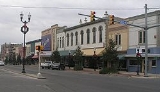
Fayetteville, Tennessee

Overview
Fayetteville is a city in Lincoln County
, Tennessee
, United States
. The population was 6,994 at the 2000 census. It is the county seat
of Lincoln County
.
The city was founded in 1809 in Lincoln County, Tennessee. It was named for Fayetteville, North Carolina
where some of its earliest residents had lived before moving to Tennessee. Its namesake in North Carolina was named for Marquis de Lafayette, a general who fought for the United States during the American Revolutionary War
. Lincoln County was named for Major General
Benjamin Lincoln
, second in command of the U.S.
Lincoln County, Tennessee
Lincoln County is a county located in the U.S. state of Tennessee. , the population was 31,340. Its county seat is Fayetteville. It is named for Major General Benjamin Lincoln, an officer in the American Revolutionary War.-History:...
, Tennessee
Tennessee
Tennessee is a U.S. state located in the Southeastern United States. It has a population of 6,346,105, making it the nation's 17th-largest state by population, and covers , making it the 36th-largest by total land area...
, United States
United States
The United States of America is a federal constitutional republic comprising fifty states and a federal district...
. The population was 6,994 at the 2000 census. It is the county seat
County seat
A county seat is an administrative center, or seat of government, for a county or civil parish. The term is primarily used in the United States....
of Lincoln County
Lincoln County, Tennessee
Lincoln County is a county located in the U.S. state of Tennessee. , the population was 31,340. Its county seat is Fayetteville. It is named for Major General Benjamin Lincoln, an officer in the American Revolutionary War.-History:...
.
The city was founded in 1809 in Lincoln County, Tennessee. It was named for Fayetteville, North Carolina
Fayetteville, North Carolina
Fayetteville is a city located in Cumberland County, North Carolina, United States. It is the county seat of Cumberland County, and is best known as the home of Fort Bragg, a U.S. Army post located northwest of the city....
where some of its earliest residents had lived before moving to Tennessee. Its namesake in North Carolina was named for Marquis de Lafayette, a general who fought for the United States during the American Revolutionary War
American Revolutionary War
The American Revolutionary War , the American War of Independence, or simply the Revolutionary War, began as a war between the Kingdom of Great Britain and thirteen British colonies in North America, and ended in a global war between several European great powers.The war was the result of the...
. Lincoln County was named for Major General
Major General
Major general or major-general is a military rank used in many countries. It is derived from the older rank of sergeant major general. A major general is a high-ranking officer, normally subordinate to the rank of lieutenant general and senior to the ranks of brigadier and brigadier general...
Benjamin Lincoln
Benjamin Lincoln
Benjamin Lincoln was an American army officer. He served as a major general in the Continental Army during the American Revolutionary War...
, second in command of the U.S.
