

Faux painting

Encyclopedia
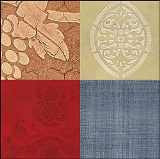
Faux painting or faux finishing are terms used to describe a wide range of decorative painting techniques. The naming comes from the French word faux, meaning false, as these techniques started as a form of replicating materials such as marble and wood with paint, but has subsequently come to encompass many other decorative finishes for walls and furniture.
to the tombs of ancient Egypt
, but what we generally think of as faux finishing in the decorative art
s began with plaster
and stucco
finishes in Mesopotamia
over 5000 years ago.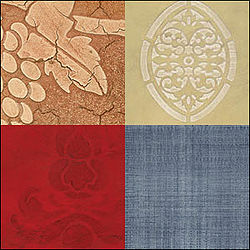 Faux painting became popular in classical times in the forms of faux marble
, faux wood
, and trompe l'oeil
murals. Artists would apprentice for 10 years or more with a master faux painter before working on their own. Great recognition was awarded to artists who could actually trick viewers into believing their work was the real thing. Faux painting has continued to be popular throughout the ages, but experienced major resurgences in the neoclassical
revival of the nineteenth century and the Art Deco
styles of the 1920s. During the recent history of decorative painting, faux finishing has been mainly used in commercial and public spaces.
In the late 1980s and early 1990s, faux finishing saw another major revival, as wallpaper
began to fall out of fashion. At this point, faux painting became extremely popular in home environments, with high-end homes leading the trend. While it can be quite expensive to hire a professional faux finisher, many faux painting methods are simple enough for a beginning home owner to create with a little instruction. People are also attracted to the simplicity of changing a faux finish, as it can be easily painted over compared with the hassle of removing wallpaper.
In modern day faux finishing, there are two major materials/processes used. Glaze
work involves using a translucent mixture of paint and glaze applied with a brush, roller, rag, or sponge, and often mimics textures, but it is always smooth to the touch. Plaster work can be done with tinted plasters, or washed over with earth pigments, and is generally applied with a trowel or spatula. The finished result can be either flat to the touch or textured.
History
Faux finishing has been used for millennia, from cave paintingCave painting
Cave paintings are paintings on cave walls and ceilings, and the term is used especially for those dating to prehistoric times. The earliest European cave paintings date to the Aurignacian, some 32,000 years ago. The purpose of the paleolithic cave paintings is not known...
to the tombs of ancient Egypt
Ancient Egypt
Ancient Egypt was an ancient civilization of Northeastern Africa, concentrated along the lower reaches of the Nile River in what is now the modern country of Egypt. Egyptian civilization coalesced around 3150 BC with the political unification of Upper and Lower Egypt under the first pharaoh...
, but what we generally think of as faux finishing in the decorative art
Decorative art
The decorative arts is traditionally a term for the design and manufacture of functional objects. It includes interior design, but not usually architecture. The decorative arts are often categorized in opposition to the "fine arts", namely, painting, drawing, photography, and large-scale...
s began with plaster
Plaster
Plaster is a building material used for coating walls and ceilings. Plaster starts as a dry powder similar to mortar or cement and like those materials it is mixed with water to form a paste which liberates heat and then hardens. Unlike mortar and cement, plaster remains quite soft after setting,...
and stucco
Stucco
Stucco or render is a material made of an aggregate, a binder, and water. Stucco is applied wet and hardens to a very dense solid. It is used as decorative coating for walls and ceilings and as a sculptural and artistic material in architecture...
finishes in Mesopotamia
Mesopotamia
Mesopotamia is a toponym for the area of the Tigris–Euphrates river system, largely corresponding to modern-day Iraq, northeastern Syria, southeastern Turkey and southwestern Iran.Widely considered to be the cradle of civilization, Bronze Age Mesopotamia included Sumer and the...
over 5000 years ago.
Marble
Marble is a metamorphic rock composed of recrystallized carbonate minerals, most commonly calcite or dolomite.Geologists use the term "marble" to refer to metamorphosed limestone; however stonemasons use the term more broadly to encompass unmetamorphosed limestone.Marble is commonly used for...
, faux wood
Wood
Wood is a hard, fibrous tissue found in many trees. It has been used for hundreds of thousands of years for both fuel and as a construction material. It is an organic material, a natural composite of cellulose fibers embedded in a matrix of lignin which resists compression...
, and trompe l'oeil
Trompe l'oeil
Trompe-l'œil, which can also be spelled without the hyphen in English as trompe l'oeil, is an art technique involving extremely realistic imagery in order to create the optical illusion that the depicted objects appear in three dimensions.-History in painting:Although the phrase has its origin in...
murals. Artists would apprentice for 10 years or more with a master faux painter before working on their own. Great recognition was awarded to artists who could actually trick viewers into believing their work was the real thing. Faux painting has continued to be popular throughout the ages, but experienced major resurgences in the neoclassical
Neoclassical architecture
Neoclassical architecture was an architectural style produced by the neoclassical movement that began in the mid-18th century, manifested both in its details as a reaction against the Rococo style of naturalistic ornament, and in its architectural formulas as an outgrowth of some classicizing...
revival of the nineteenth century and the Art Deco
Art Deco
Art deco , or deco, is an eclectic artistic and design style that began in Paris in the 1920s and flourished internationally throughout the 1930s, into the World War II era. The style influenced all areas of design, including architecture and interior design, industrial design, fashion and...
styles of the 1920s. During the recent history of decorative painting, faux finishing has been mainly used in commercial and public spaces.
In the late 1980s and early 1990s, faux finishing saw another major revival, as wallpaper
Wallpaper
Wallpaper is a kind of material used to cover and decorate the interior walls of homes, offices, and other buildings; it is one aspect of interior decoration. It is usually sold in rolls and is put onto a wall using wallpaper paste...
began to fall out of fashion. At this point, faux painting became extremely popular in home environments, with high-end homes leading the trend. While it can be quite expensive to hire a professional faux finisher, many faux painting methods are simple enough for a beginning home owner to create with a little instruction. People are also attracted to the simplicity of changing a faux finish, as it can be easily painted over compared with the hassle of removing wallpaper.
In modern day faux finishing, there are two major materials/processes used. Glaze
Glaze (painting technique)
Glazes can change the chroma, value, hue and texture of a surface. Drying time will depend on the amount and type of paint medium used in the glaze. The medium, base, or vehicle is the mixture to which the dry pigment is added...
work involves using a translucent mixture of paint and glaze applied with a brush, roller, rag, or sponge, and often mimics textures, but it is always smooth to the touch. Plaster work can be done with tinted plasters, or washed over with earth pigments, and is generally applied with a trowel or spatula. The finished result can be either flat to the touch or textured.
Faux finishes
- Marbleizing or faux marbling is used to make walls and furniture look like real marble. This can be done using either plaster or glaze techniques.
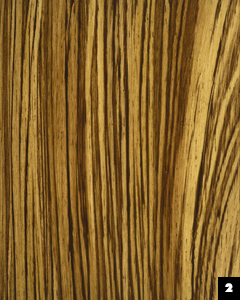
- GrainingGrainingGraining is the practice of imitating woodgrain on a non-wood surface in order to increase that surface's aesthetic appeal. Graining was common in the 19th century, as people were keen on imitating hard, expensive woods by applying a superficial layer of paint onto soft, inexpensive woods. Graining...
, wood graining, or faux bois (French for "fake wood") is often used to imitate exotic or hard-to-find wood varieties. - Trompe l'oeilTrompe l'oeilTrompe-l'œil, which can also be spelled without the hyphen in English as trompe l'oeil, is an art technique involving extremely realistic imagery in order to create the optical illusion that the depicted objects appear in three dimensions.-History in painting:Although the phrase has its origin in...
, "trick the eye" in French, is a realistic painting technique often used in murals, and to create architectural details. - Venetian plasterVenetian plasterVenetian plaster is a wall and ceiling finish using thin layers of plaster applied with a spatula or trowel which are then burnished to create a smooth surface with the illusion of depth and texture. Venetian plaster techniques include marmorino, scagliola, and sgraffito....
is a smooth and often shiny plaster design that appears textured but is smooth to the touch. Venetian plaster is one of the most popular and traditional plaster decorations. - Color washColor washthumb|250px|right|Example of a color wash in multiple huesA color wash is a popular technique in faux painting using paint thinned out with glaze to create a subtle wash of color over walls or other surfaces....
is a free-form finish that creates subtle variations of color using multiple hues of glaze blended together with a paint brush. - StriéStrieStrié is a popular form of faux painting using glaze and paint brushes to create a soft natural striped texture. thumb|250px|right|Example of the strie faux painting technique over raised stencil...
, from the French for 'stripe' or 'streak', is a glazing technique that creates soft thin streaks of color using a paint brush. It is a technique often used to simulate fabrics such as linen and denim. - Rag paintingRag paintingRag painting or ragging is a form of faux painting using paint thinned out with glaze and old rags to create a lively texture on walls and other surfaces....
or ragging is a glazing technique using twisted or bunched up rags to create a textural pattern.