


Fasting

Encyclopedia
Fasting is primarily the act of willingly abstaining
from some or all food
, drink
, or both, for a period of time. An absolute fast is normally defined as abstinence from all food and liquid for a defined period, usually a single day (24 hours), or several days. Other fasts may be only partially restrictive, limiting particular foods or substance. The fast may also be intermittent in nature
. Fasting practices may preclude sexual intercourse and other activities as well as food.
In a physiological context, fasting may refer to (1) the metabolic
status of a person who has not eaten overnight, and (2) to the metabolic state achieved after complete digestion
and absorption of a meal. Several metabolic adjustments occur during fasting, and some diagnostic tests are used to determine a fasting state. For example, a person is assumed to be fasting after 8–12 hours. Metabolic changes toward the fasting state begin after absorption of a meal (typically 3–5 hours after a meal); "post-absorptive state" is synonymous with this usage, in contrast to the "post-prandial" state of ongoing digestion. A diagnostic fast refers to prolonged fasting (from 8–72 hours depending on age) conducted under observation for investigation of a problem, usually hypoglycemia
. Finally, extended fasting has been recommended as therapy for various conditions by health professionals of most cultures, throughout history, from ancient to modern.
is the body's primary fuel source and is essential for the brain
's functioning. When denied glucose for more than 4–8 hours, the body turns to the liver
for glycogen
, a storage form of glucose, to be used for fuel. A process called glycogenolysis
converts glycogen into a usable form of fuel. At this point, the body also uses small amounts of protein to supplement this fuel. This fuel will last for up to 12 hours before the body needs to turn to glycogen stored in muscles, lasting for a few more days. If glucose is still denied at this point, muscle wasting is prevented by temporarily switching to fat as the fuel source, meaning fat is converted into ketone bodies
through catabolism
. Ketones, while not sugars, can be used by the brain as a fuel source as long as glucose is denied.
The body continues to use fat for as long as there is fat to consume. The body will generally indicate to the faster when fat levels are running extremely low (less than 7% and 10% of body weight for males and females, respectively) with an increased urge for food. Fasts are usually broken long before this point. If the fast is not broken, starvation
begins to occur, as the body begins to use protein for fuel. Health complications associated with fast-induced starvation include electrolyte imbalances, thinning hair, lanugo
, cardiac arrhythmia and renal failure
. Death can occur if fasting is pursued to the point of complete starvation.
Research suggests there are major health benefits to caloric restriction. Benefits include reduced risks of cancer
, cardiovascular disease
s, diabetes, insulin resistance, immune disorders, and more generally, the slowing of the aging process, and the potential to increase maximum life span. According to Dr. Mark P. Mattson, chief of the laboratory of neurosciences at the US National Institute on Aging
, fasting every other day (intermittent fasting
) shows beneficial effects in mice as strong as those of caloric-restriction diets, and a small study conducted on humans at the University of Illinois indicates the same results
According to the US National Academy of Sciences
, other health benefits include stress resistance, increased insulin sensitivity, reduced morbidity, and increased life span
. Long-term studies in humans have not been conducted. However, short-term human trials showed benefits in weight loss. The side effect was that the participants felt cranky during the three week trial. According to the study conducted by Dr. Eric Ravussin
, "Alternate-day fasting may be an alternative to prolonged diet restriction for increasing the life span".
Adherence to Greek Orthodox fasting periods contributes to an improvement in the blood lipid
profile, including a decrease in total and LDL cholesterol, and a decrease in the LDL to HDL cholesterol
ratio. A statistically insignificant reduction in HDL cholesterol was also observed. These results suggest a possible positive impact on the obesity
levels of individuals who adhere to these fasting periods.
Changes in blood chemistry during fasting, in combination with certain medications, may have dangerous effects, such as increased chance of acetaminophen
poisoning. Excessive fasting for calorie restrictive purposes, accompanied by intense fears of becoming overweight are associated with mental disturbances, including anorexia nervosa
.
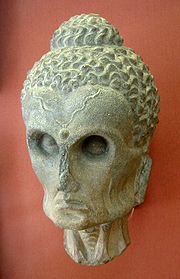 Buddhist
monks and nuns following the Vinaya
rules commonly do not eat each day after the noon meal. This is not considered a fast but rather a disciplined regimen aiding in meditation and good health.
Fasting is not practiced by lay Buddhists because it is seen as a deviation from the Middle Path
. This is because prior to attaining Buddhahood, prince Siddhartha
practiced a regime of six years of strict austerity during which he consumed very little food. Henceforth, prince Siddhartha practiced moderation in eating which he later advocated for his disciples. However, on Uposatha
days (roughly once a week) lay Buddhists are instructed to observe the eight precepts which includes refraining from eating after noon till the following morning. This eight precepts closely resemble the ten vinaya precepts for novice monks and nuns. The novice precepts are the same with the prohibition against handling money.
The Vajrayana
practice of Nyung Ne is based on the tantric practice of Chenrezig. It is said that Chenrezig appeared to an Indian nun who had contracted leprosy
and was on the verge of death. Chenrezig taught her the method of Nyung Ne in which one keeps the eight precepts on the first day, then refrains from both food and water on the second. Although seemingly against the Middle Way, this practice is to experience the negative karma of both oneself and all other sentient beings and, as such is seen to be of benefit. Other self-inflicted harm is discouraged.
, chapter 58:3-7. In essence, it means afflict the soul through abstaining from fulfilling the needs or wants of the flesh. The opening chapter of the Book of Daniel
, vv. 8-16, describes a partial fast and its effects on the health of its observers.
Some denominations do not practice it, considering it an external observance, but many individual believers choose to observe fasts at various times at their own behest. The Lenten fast observed in the Catholic Church and the Eastern Orthodox Church is a forty-day partial fast to commemorate the fast observed by Christ
during his temptation in the desert. This is similar to the partial fasting within the Ethiopian Orthodox Church
(abstaining from meat and milk) which takes place during certain times of the year and lasts for weeks.
The Bible sets aside one whole day a year for fasting, The Day of Atonement.
Leviticus 23:27, 32 (CEV) says "Everyone must go without eating from the evening of the ninth to the evening of the tenth on the seventh month which is the Day of Atonement."
, fasting is the reduction of one's intake of food to one full meal (which may not contain meat during Fridays in Lent) and two small meals (known liturgically as collations
, taken in the morning and the evening), both of which together should not equal the large meal. Eating solid food between meals is not permitted. Fasting is required of the faithful between the ages of 18 and 59 on specified days. Complete abstinence
, required of those 14 and older, is the avoidance of meat
for the entire day. Partial abstinence
prescribes that meat be taken only once during the course of the day.
Pope Pius XII
had initially relaxed some of the regulations concerning fasting in 1956. In 1966, Pope Paul VI
in his apostolic constitution Paenitemini
, changed the strictly regulated Roman Catholic fasting requirements. He recommended that fasting be appropriate to the local economic situation, and that all Catholics voluntarily fast and abstain. In the United States, there are only two obligatory days of fast - Ash Wednesday
and Good Friday
. The Fridays of Lent are days of abstinence: eating meat is not allowed. Pastoral teachings since 1966 have urged voluntary fasting during Lent and voluntary abstinence on the other Fridays of the year. The regulations concerning such activities do not apply when the ability to work or the health of a person would be negatively affected.
Prior to the changes made by Pius XII and Paul VI, fasting and abstinence were more strictly regulated. The church had prescribed that Roman Catholics observe fasting and/or abstinence on a number of days throughout the year.
In addition to the fasts mentioned above, Roman Catholics must also observe the Eucharist
ic Fast, which involves taking nothing but water and medicines into the body for one hour before receiving the Eucharist. The ancient practice was to fast from midnight until Mass that day, but as Masses after noon and in the evening became common, this was soon modified to fasting for three hours. Current law requires merely one hour of eucharistic fast, although some Roman Catholics still abide by the older rules.
The Catholic Church has also promoted a Black Fast
, in which in addition to water, bread is consumed. Typically, this form of fasting was only used by monks and other religious individuals who practice mortifications and asceticism, but all Catholics are invited to take part in it with the advice and consent of their Spiritual Director.
prescribes certain days as days for fasting and abstinence, but since the separation of the Church of England
from the Roman Catholic Church, there have been no regulations prescribing the mode of observance for these days, nor is any distinction made between fasting and abstinence. Observance of fast days declined until the 19th century, when under the influence of the Oxford Movement
many Anglicans began once again taking the prescribed fast days more seriously.
The Book of Common Prayer sets out the prescribed days as follows:
In the process of revising the Book of Common Prayer
in various parts of the Anglican Communion
the specification of abstinence or fast for certain days has been retained, though because each province is free to set its own calendar, there is no universal Anglican rule for which days are fast days. Generally Lent and Fridays are set aside, though Fridays during the Easter season are sometimes avoided. Often the Ember Days
or Rogation Days
are also specified, and the eves of certain feasts.
Individual Anglicans are free to determine for themselves what particular measures of abstinence they will follow in the observance of these days, though certain parishes and dioceses are more encouraging of fasting than others. The Anglican Diocese of Sydney
discourages its people from fasting during Lent.
Christians, fasting is an important spiritual discipline, found in both the Old Testament and the New, and is tied to the principle in Orthodox theology of the synergy
between the body
(Greek: soma) and the soul (pnevma). That is to say, Orthodox Christians do not see a dichotomy between the body and the soul but rather consider them as a united whole, and they believe that what happens to one affects the other (this is known as the psychosomatic union between the body and the soul). Saint Gregory Palamas
argued that man's body is not an enemy but a partner and collaborator with the soul. Christ, by taking a human body at the Incarnation
, has made the flesh an inexhaustible source of sanctification. This same concept is also found in the much earlier homilies of Saint Macarius the Great.
Fasting can take up a significant portion of the calendar year. The purpose of fasting is not to suffer, but according to Sacred Tradition
to guard against gluttony
and impure thoughts, deeds and words. Fasting must always be accompanied by increased prayer and alms
giving (donating to a local charity, or directly to the poor, depending on circumstances). To engage in fasting without them is considered useless or even spiritually harmful. To repent of one's sins and to reach out in love to others is part and parcel of true fasting.
There are four fasting seasons, which include:
Wednesdays and Fridays are also fast days throughout the year (with the exception of fast-free periods). In some Orthodox monasteries
, Mondays are also observed as fast days (Mondays are dedicated to the Angels, and monasticism
is called the "angelic life").
Other days occur which are always observed as fast days:
Fasting during these times includes abstention from:
When a feast day occurs on a fast day, the fast is often mitigated (lessened) to some degree (though meat and dairy are never consumed on any fast day). For example the Feast of the Annunciation
almost always occurs within the Great Lent in the Orthodox calendar: in this case fish (traditionally haddock
fried in olive oil) is the main meal of the day.
There are two degrees of mitigation: allowance of wine and oil; and allowance of fish, wine and oil. The very young and very old, nursing mothers, the infirm, as well as those for whom fasting could endanger their health somehow, are exempt from the strictest fasting rules.
On weekdays of the first week of Great Lent, fasting is particularly severe, and many observe it by abstaining from all food for some period of time. According to strict observance, on the first five days (Monday through Friday) there are only two meals eaten, one on Wednesday and the other on Friday, both after the Presanctified Liturgy. Those who are unable to follow the strict observance may eat on Tuesday and Thursday (but not, if possible, on Monday) in the evening after Vespers
, when they may take bread and water, or perhaps tea or fruit juice, but not a cooked meal. The same strict abstention is observed during Holy Week
, except that a vegan meal with wine and oil is allowed on Great Thursday.
On Wednesday and Friday of the first week of Great Lent the meals which are taken consist of xerophagy
(literally, "dry eating") i.e. boiled or raw vegetables, fruit, and nuts. In a number of monasteries, and in the homes of more devout laypeople, xerophagy is observed on every weekday (Monday through Friday) of Great Lent, except when wine and oil are allowed.
Those desiring to receive Holy Communion keep a total fast from all food and drink from midnight the night before (see Eucharistic discipline
). The sole exception is the Communion offered at the Easter Sunday midnight liturgy, when all are expressly invited and encouraged to receive the Eucharist, regardless of whether they have kept the prescribed fast.
During certain festal times the rules of fasting are done away with entirely, and everyone in the church is encouraged to feast with due moderation, even on Wednesday and Friday. Fast-free days are as follows:
in the Coptic Orthodox Church fish is not allowed during Lent
, or on Wednesdays, Fridays, and Baramon days. Other than that fish and shellfish are allowed during fasting days.
The discipline of fasting entails that, apart from Saturdays, Sundays, and holy feasts, one should keep a total fast from all food and drink from midnight the night before to a certain time in the day usually three o'clock in the afternoon (the hour Jesus
died on the Cross). Also, it is preferred that one reduce one's daily intake of food (typically, by eating only one full meal a day).
The Ethiopian Orthodox Tewahedo Church
has an especially rigorous fasting calendar.
Fasting in the Ethiopian Church implies abstention from food and drink. No animal products are consumed, including dairy, eggs, meat, and utensils that have touched such products must be washed before touching the strictly vegan foods that are consumed on fast days. During fast periods, Holy Liturgy (Mass) is held at noon (except on Saturdays and Sundays), and because no food can be consumed before communion, it is traditional for people to abstain from food until mass is over (around 2 to 3 in the afternoon). Every Wednesday and Friday are days of fasting because Wednesday is the day that the Lord was condemned and Friday is the day he was crucified (the Wednesdays and Fridays between Easter Sunday and Pentecost Sunday are an exception as well as when Christmas or Epiphany fall on a Wednesday or a Friday ). The fasts that are ordained in the canon of the Church of Ethiopia are:
In addition to these, there is the fast of repentance which a person keeps after committing sin, it being imposed as a penance by the priest for seven days, forty days or one year. There is also a fast which a bishop keeps at the time he is consecrated. Also there are fasts that are widely observed but which have not been included in the canon of the church and which are therefore considered strictly optional such as the "Tsige Tsom" or Spring Fast, also known as "Kweskwam Tsom" which marks the exile of the Holy Family in Egypt.
Monks and nuns observe additional fast days not required of the laity. All persons above the age of 13 are expected to observe the church fasts. Most children over age 7 are expected to observe at least the Fast of the Assumption of the Holy Virgin. Dispensations are granted to those who are ill.
The total number of fasting days amounts to about 250 a year. While many observe the Coptic churches allowance for fish during the longer fasts, it has increasingly become practice in the Ethiopian Church to abstain from fish during all fasts.
, the continental reformer
s criticized fasting as a purely external observance that can never gain a person salvation
. Martin Luther
believed that a Christian may choose to fast individually as a spiritual exercise to discipline his own flesh, but that the time and manner of fasting should be left to the individual's discretion; thus, he rejected the collective diet rules and prohibitions imposed by the canon law
of the Catholic Church. This position was upheld by Lutheran churches, in that collective fasting was not officially enforced, whereas individual voluntary fasting was encouraged. John Calvin
went further in arguing that in general, instead of relying on designated fasting periods, the entire life of the religious should be "tempered with frugality and sobriety" in such a way as to produce "a sort of perpetual fasting". He believed that collective public fasting could only be appropriate in times of calamity and grief for the community. Similarly, the Swiss Reformation
of the "Third Reformer" Huldrych Zwingli
began with an ostentatious public sausage
-eating during Lent—though Zwingli himself did not partake of the sausage.
In general, fasting remains optional in most Protestant groups and is less popular among Protestants than among other Christian denominations. Still, in more recent years, many churches affected by liturgical renewal movements have begun to encourage fasting as part of Lent
and sometimes Advent
, two penitential seasons of the liturgical year
.
Members of the Anabaptist
movement generally fast in private. The practice is not regulated by ecclesiastic authority.
Some other Protestants consider fasting, usually accompanied by prayer
, to be an important part of their personal spiritual experience, apart from any liturgical tradition. The United Methodist Church
fasts according to John Wesley
's way of sundown to sundown on Mondays to Tuesdays and Thursdays to Fridays to promote discipline among Christ's followers.
As explained above, the Lutheran
Churches encourage individual fasting. Certain modern Lutheran communities also advocate fasting during designated times such as Lent. It is also considered to be an appropriate physical preparation for partaking of the Eucharist
, but fasting is not necessary for receiving the sacrament. Martin Luther
wrote in his Small Catechism
"Fasting and bodily preparation are certainly fine outward training, but a person who has faith in these words, 'given for you' and 'shed for you for the forgiveness of sin' is really worthy and well prepared.".
Classical Pentecostalism
does not have set days of abstinence and lent, but individuals in the movement may feel they are being directed by the Holy Spirit to undertake either short or extended fasts. Although Pentecostalism has not classified different types of fasting, certain writers within the movement have done so. Arthur Wallis writes about the "Normal Fast" in which pure water alone is consumed. The "Black Fast" in which nothing, not even water, is consumed is also mentioned. Dr. Curtis Ward claims that undertaking a black fast beyond three days may lead to dehydration, may irreparably damage the kidneys, and result in possible death. He further notes that nowhere in the New Testament is it recorded that anyone ever undertook a black fast beyond three days and that one should follow this biblical guideline. Dr. Herbert Shelton advises that one should drink water according to natural thirst. In addition to the Normal Fast and the Black Fast, some undertake what is referred to as the Daniel Fast (or Partial Fast) in which only one type of food (e.g., fruit or fruit and non-starchy vegetables) is consumed. In a Daniel Fast, meat is almost always avoided, in following the example of Daniel and his friends' refusal to eat the meat of Gentiles, which had been offered to idols and not slaughtered in a kosher manner.
In some circles of Pentecostals, the term "fast" is simply used, and the decision to drink water is determined on an individual basis. In other circles profuse amounts of pure water is advised to be consumed during the fasting period to aid the cleansing of internal toxins. Most Pentecostal writers on fasting concur with Dr. Mark Mattson who says that sensible intermittent fasting with a sensible water intake can strengthen the organism and assist thwarting degenerative diseases.
For Charismatic Christians
fasting is undertaken at the leading of God. Fasting is done in order to seek a closer intimacy with God, as well as an act of petition. Some take up a regular fast of one or two days each week as a spiritual observance. Holiness movements, such as those started by John Wesley
, Charles Wesley
, and George Whitefield
in the early days of Methodism, often practice such regular fasts as part of their regimen.
. During Fast Sunday, members fast for two consecutive meals for a total of 24 hours. The money saved by not having to purchase and prepare meals is donated to the church as a fast offering
, which is then used to help people in need. The late LDS President Gordon B. Hinckley
asked: “What would happen if the principles of fast day and the fast offering were observed throughout the world[?] The hungry would be fed, the naked clothed, the homeless sheltered. ... A new measure of concern and unselfishness would grow in the hearts of people everywhere.”
Sunday worship meetings on Fast Sunday include opportunities for church members to publicly bear testimony during the sacrament meeting
portion, often referred to as fast and testimony meeting.
Fasting is also encouraged for members any time they desire to grow closer to Father in Heaven and to show self-mastery of spirit over body. Members may also implement personal, family or group fasts any time they desire to solicit special blessings from God, including health or comfort for themselves and/or others.
Individuals can also use fasting as a part of their repentance process or to show gratitude towards God.
religion. Individuals observe different kinds of fasts based on personal beliefs and local customs. Some are listed below.
Methods of fasting also vary widely and cover a broad spectrum. If followed strictly, the person fasting does not partake any food or water from the previous day's sunset until 48 minutes after the following day's sunrise. Fasting can also mean limiting oneself to one meal during the day and/or abstaining from eating certain food types and/or eating only certain food types. In any case, even if the fasting Hindu is non-vegetarian, he/she is not supposed to eat or even touch any animal products (i.e., meat, eggs) on a day of fasting. (Milk is an exception for animal products).
In Sri Vidya, one is forbidden to fast because the Devi is within them, and starving would in return starve the god. The only exception in Srividya for fasting is on the anniversary of the day one's parents died.
Mahatma Gandhi employed fasting as a tool in "Satyagraha
". In attempt to avoid elements of self and egoism Gandhi developed very clear rules of fasting. In essence, fasts were an expression of "suffering love". According to Bhikhu Parekh, in his book in the Past Masters series, Gandhi’s reasons for fasting were essentially fourfold:
, Ekadashi fasting...) it is said that one who fast on these days and properly doing spiritual practice on these days like associating with devotees (sadhu-sangha), chanting holy names of Hari
(Vishnu
, Narayana
, Rama
, Krishna
...) (kirtanam) and similar (shravanam, kirtanam vishno...) may be delivered from sins which s/he accumulated for hundreds of lifetimes.
On days like Krishna Janmashtami it is also said: "One who fasts, follows the Janmastami vow, and keeps an all-night vigil on this day becomes freed from the sins of ten million births
. Of this there is no doubt."
However, one who doesn't follow such vows is also to be considered a great sinner. So it is strongly advised that one celebrate such days like Ekadashi
, Caturmasya
, Janmashtami and other vaishnava holidays: "One who eats on Lord Krishna’s birthday is lowest of mankind. .. His pious credits of ten million births are at once destroyed. .. he becomes a vulture for ten billion births, a pig for a hundred births, a dog for a hundred births, and a jackal for a hundred births."
and involves fasting during the holy month of Ramadan
, which is probably the most notable time for fasting among Muslims.
In Islam
, fasting for a month is an obligatory practice during the holy month of Ramadan
, from fajr
(dawn), until the maghrib
(dusk). Muslim
s are prohibited from eating, drinking (including water), and engaging in sexual activity. They are also encouraged to temper negative emotions such as anger and addiction. Fasting in the month of Ramadan is one of the Pillars of Islam, and thus one of the most important acts of Islamic worship. By fasting, whether during Ramadan or other times, a Muslim draws closer to God by abandoning body pleasures, such as food and drink. This makes the sincerity of their faith and their devotion to God (Arabic: Allah
) all the more evident.
The Qur'an
states that fasting was prescribed for those before them (i.e., the Jews and Christian
s) and that by fasting a Muslim gains taqwa
, which can be described in one word as 'Godconsciousness' or 'Godwariness'. Fasting is believed to help promote chastity and humility and prevent sin, the outburst of uncontrolled lusts and desires and far-fetched hopes. To Muslims, fasting acts as a shield with which the Muslim protects him/herself from jahannam
(hell
).
Muslims believe that fasting is more than abstaining from food and drink. Fasting also includes abstaining from any falsehood in speech and action, abstaining from any ignorant and indecent speech, and from arguing, fighting, and having lustful thoughts. Therefore, fasting strengthens control of impulses and helps develop good behavior
. During the sacred month of Ramadan, believers strive to purify body and soul and increase their taqwa (good deeds and God-consciousness). This purification of body and soul harmonizes the inner and outer spheres of an individual. Muslims aim to improve their body by reducing food intake and maintaining a healthier lifestyle. Overindulgence in food is discouraged and eating only enough to silence the pain of hunger is encouraged. Muslims believe they should be active, tending to all their commitments and never falling short of any duty. On a moral level, believers strive to attain the most virtuous characteristics and apply them to their daily situations. They try to show compassion, generosity and mercy to others, exercise patience, and control their anger. In essence, Muslims are trying to improve what they believe to be good moral character and habits.
For Muslims, fasting also inculcates a sense of fraternity and solidarity, as Muslims believe they are feeling and experiencing what their needy and hungry brothers and sisters are feeling. Those who are already poor and hungry are often considered exempt from fasting, as their condition renders them effectively fasting all the time; however, many still refrain from eating during the day. Moreover, Ramadan is a month of giving charity
and sharing meals to break the fast together.
The Siyam is intended to teach Muslims patience and self-control, and to remind them of the less fortunate in the world. The fast is also seen as a debt owed by the Muslim to God. Faithful observance of the Siyam is believed to atone for personal faults and misdeeds, at least in part, and to help earn a place in paradise. It is also believed to be beneficial for personal conduct, that is, to help control impulses, passions and temper. The fast is also meant to provide time for meditation and to strengthen one's faith.
While fasting in the month of Ramadan is considered Fard
(obligatory), Islam also prescribes certain days for non-obligatory, voluntary fasting, such as:
Fasting is forbidden on these days:
Although fasting at Ramadan is fard (obligatory), exceptions are made for persons in particular circumstances:
. One is called Chauvihar Upwas, in which no food or water may be consumed until sunrise the next day. Another is called Tivihar Upwas, in which no food may be consumed, but boiled water is allowed. The main goal of any type of fasting in Jainism is to achieve complete Non-Violence (दया, ahimsa) during that period. Fasting is usually done during Paryushana
but can be done during other times. If one fasts for the eight days of Paryushana, it is called Atthai, and when it is for one month, it is known as Maskhamana. Also, it is common for Jains not to fast but only to limit their intake of food. When a person only eats lentils and tasteless food with salt and pepper as the only spices, the person is said to do Ayambil. There are other types of fasting in which a Jain eats only one meal a day, which is known as Ekassana. Similarly, another fast, called Beasana, allows for two meals a day. The goal of all these fastings is to decrease desire and passion for the physical world, and attain spirituality by meditation.
Self-starvation by fasting is known as Santhara
and is supposed to help shed karma
according to Jain philosophy. The ritual can be carried out to voluntary death. Supporters of the practice believe that santhara cannot be considered suicide, but rather something one does with full knowledge and intent, while suicide is viewed as emotional and hasty. Due to the prolonged nature of Santhara, the individual is given ample time to reflect on his or her life. The vow of Santhara is taken when one feels that one's life has served its purpose. The goal of Santhara is to purify the body and, with this, the individual strives to abandon desire.
, for the commandment of keeping Shabbat is biblically ordained and overrides the later rabbinically instituted fast days. (The fast of the 10th of Teveth would also override the Sabbath, but the current calendar system prevents this from ever occurring.)
Yom Kippur
is considered to be the most important day of the Jewish year and fasting as a means of repentance is expected of every Jewish man or woman above the age of bar mitzvah and bat mitzvah respectively. It is so important to fast on this day, that only those who would be put in mortal danger by fasting are exempt, such as the ill or frail (endangering a life is against a core principle of Judaism). Those that do eat on this day are encouraged to eat as little as possible at a time and to avoid a full meal. For some, fasting on Yom Kippur is considered more important than the prayers of this holy day. If one fasts, even if one is at home in bed, one is considered as having participated in the full religious service.
The second major day of fasting is Tisha B'Av
, the day approximately 2500 years ago on which the Babylonians destroyed the first Holy Temple in Jerusalem, as well as on which the Romans destroyed the second Holy Temple in Jerusalem about 2000 years ago, and the Jews were banished from their homeland. Tisha B'Av ends a three-week mourning period beginning with the fast of the 17th of Tammuz. This is also the day when observant Jews remember the many tragedies which have befallen the Jewish people, including the Holocaust. The atmosphere of this fast is serious and deeply sad (in contrast to Yom Kippur
which is a day of atonement.
Tisha B'Av
and Yom Kippur
are the major fasts and are observed from sunset to the following day's dusk. The remaining four fasts are considered minor and fasting is only observed from sunrise to dusk. Both men and women are expected to observe them, but a rabbi may give a dispensation if the fast represents too much of a hardship to a sick or weak person, or pregnant or nursing woman.
The four other public but minor fast days are:
There are other minor fast days, but these are not universally observed, and they include:
It is an Ashkenazic tradition for a bride and groom to fast on their wedding day before the ceremony as the day represents a personal Yom Kippur. In some congregations, repentance prayers that are said on Yom Kippur service are included by the bride and groom in their private prayers before the wedding ceremony.
Aside from these official days of fasting, Jews may take upon themselves personal or communal fasts, often to seek repentance in the face of tragedy or some impending calamity. For example, a fast is sometimes observed if a sefer torah
is dropped. The length of the fast varies, and some Jews will reduce the length of the fast through tzedakah
, or charitable acts. Mondays and Thursdays are considered especially auspicious days for fasting. Traditionally, one also fasted upon awakening from an unexpected bad dream although this tradition is rarely kept nowadays. In the time of the Talmud, drought seems to have been a particularly frequent inspiration for fasts. In modern times as well the Israeli Chief Rabbinate has occasionally declared fasts in periods of drought.
Judaism views three essential potential purposes of fasting, and a combination of some or all of these could apply to any given fast. One purpose in fasting is the achievement of atonement for sins and omissions in divine service. Fasting is not considered the primary means of acquiring atonement; rather, sincere regret for and rectification of a wrongdoing is key (see Isaiah
, 58:1-13, which appropriately is read as the haftorah on Yom Kippur
).
Nevertheless, fasting is conducive to atonement, for it tends to precipitate contrition (see Joel
, 2:12-18). This is why the Bible requires fasting (literally self affliction) on Yom Kippur (see Leviticus
, 23:27, 29,32; Numbers
, 29:7; Tractate Yoma, 8:1; ibid. (Babylonian Talmud
), 81a). Because, according to the Hebrew Bible, hardship and calamitous circumstances can occur as a result of wrongdoing (see, for example, Leviticus, 26:14-41), fasting is often undertaken by the community or by individuals to achieve atonement and avert catastrophe (see, for example, Esther
4:3,16; Jonah
3:7). Most of the Talmud's Tractate Ta'anit ("Fast[s]") is dedicated to the protocol involved in declaring and observing fast days.
The second purpose in fasting is commemorative mourning. Indeed, most communal fast days that are set permanently in the Jewish calendar fulfil this purpose. These fasts include: Tisha B'Av
, Seventeenth of Tammuz
, Tenth of Tevet
(all of the three dedicated to mourning the loss of the destroyed Temple in Jerusalem
), and the Fast of Gedaliah. The purpose of a fast of mourning is the demonstration that those fasting are impacted by and distraught over earlier loss. This serves to heighten appreciation of that which was lost. This is in line with Isaiah (66:10), who indicates that mourning over a loss leads to increased happiness upon return of the loss:
The third purpose in fasting is commemorative gratitude. Since food and drink are corporeal needs, abstinence from them serves to provide a unique opportunity for focus on the spiritual. Indeed, the Midrash
explains that fasting can potentially elevate one to the exalted level of the Mal'achay HaShareyt (ministering angels) (Pirkei d'Rabbi Eliezer, 46). This dedication is considered appropriate gratitude to God for providing salvation. Additionally, by refraining from such basic physical indulgence, one can more greatly appreciate the dependence of humanity on God, leading to appreciation of God's beneficence in sustaining His creations. Indeed, Jewish philosophy considers this appreciation one of the fundamental reasons for which God endowed mankind with such basic physical needs as food and drink. This is seen from the text of the blessing customarily recited after consuming snacks or drinks:
, fasting is observed from sunrise to sunset during the Bahá'í month of `Ala' (March 2-March 20). Bahá'u'lláh
established the guidelines in the Kitáb-i-Aqdas
. It is the complete abstaining from both food and drink during daylight hours(including abstaining from smoking). Consumption of prescribed medications is not restricted. Observing the fast is an individual obligation and is binding on Bahá'ís between 15 years (considered the age of maturity) and 70 years old. Exceptions to fasting include individuals younger than 15 or older than 70; those suffering illness; women who are pregnant, nursing, or menstruating; travellers who meet specific criteria; and individuals whose profession involves heavy labor and those who are very sick where fasting would be considered dangerous. For those involved in heavy labor, they are advised to eat in private and generally to have simpler and/or smaller meals than are normal.
Along with obligatory prayer, it is one of the greatest obligations of a Bahá'í. The guardian of the Bahá'í Faith, Shoghi Effendi
, explains: "It is essentially a period of meditation and prayer, of spiritual recuperation, during which the believer must strive to make the necessary readjustments in his inner life, and to refresh and reinvigorate the spiritual forces latent in his soul. Its significance and purpose are, therefore, fundamentally spiritual in character. Fasting is symbolic, and a reminder of abstinence from selfish and carnal desires."
does not promote fasting except for medical reasons. The Sikh Gurus
discourage the devotee from engaging in this ritual
as it "brings no spiritual benefit to the person". The Sikh
holy Scripture, Sri Guru Granth Sahib tell us: "Fasting, daily rituals, and austere self-discipline - those who keep the practice of these, are rewarded with less than a shell." (Guru Granth Sahib
page 216).
of gastric contents after induction of anesthesia (i.e., vomiting and inhaling the vomit, causing life-threatening aspiration pneumonia
). Additionally, certain medical tests, such as cholesterol
testing (lipid panel) or certain blood glucose measurements require fasting for several hours so that a baseline
can be established. In the case of cholesterol, fail to fast for a full 12 hours (including vitamins) will guarantee an elevated triglyceride
measurement.
People near the end of their lives sometimes consciously refuse food and/or water. The term in the medical literature is patient refusal of nutrition and hydration.
It has been shown in many empirical, scientific studies that fasting can improve health and help to eliminate a variety of diseases. Although some fasting methods use juice or various amounts of food, the health of such methods is questionable, according to Dr. Joel Fuhrman
. A true fast, he contends, consists of an intake solely of water, and can last (healthily) for extended periods of time when undertaken with the correct knowledge. Any fasts of such nature should be preceded and followed by a healthy diet, and should also be supervised by a knowledgeable physician to make sure that deficiencies of any nutrients do not take place and detract from the healthful benefits of such a fast
There are also recent studies on mice that show that fasting every other day while eating double the normal amount of food on non-fasting days can lead to improved insulin
and blood sugar
control, neuronal resistance to injury, and general health indicators. Punctuated fasting diets produced superior improvements compared with mice on 40% calorie restricted diets. Alternate-day calorie restriction may prolong lifespan and attenuate diseases associated with inflammation, oxidative stress and aging. Fasting has been shown to be an effective treatment for hypertension.
Many fasting protocols are used by integrative medicine practitioners as part of alleged detoxification or cleansing diets.
Fasting can be dangerous when the body is not able to perform gluconeogenesis
. If the body is not in ketosis
, then the brain and vital organs (which can burn either glucose or ketones) need 800 calories a day to have ample glucose. If less than 800 calories a day are consumed, the brain and vital organs are deprived of necessary glucose, causing damage and in some cases, death. Ideally these diets should be supervised by health care practitioners who are experienced with therapeutic fasts.
, or to bring awareness to a cause. A hunger strike
is a method of non-violent resistance in which participants fast as an act of political protest, or to provoke feelings of guilt, or to achieve a goal such as a policy change. A spiritual fast incorporates personal spiritual beliefs with the desire to express personal principles, commonly in the context of a social injustice.
Notable annual fasts include the famine events
(such as the 40 Hour Famine) coordinated by World Vision
to bring awareness to world poverty and hunger.
Activists have also used fasting to bring attention to a cause and to pressure authority or government to act. For example, Canadian medical doctor and politician
David Swann
launched a seven-day fast in December 2007 to bring attention to the world's inaction on the humanitarian crisis in Darfur
. On April 27, 2009, Mia Farrow
began fasting for as long as possible to raise awareness about the crisis in Darfur; after 12 days she was advised to stop immediately by doctors. Richard Branson
agreed to continue in her place, taking a 3 day fast. Congressman Donald M. Payne
and recording artist and Switchfoot
frontman Jon Foreman
took on the fast after Branson finished on May 11.
In Northern Ireland in 1981, a prisoner, Bobby Sands
, was part of the 1981 Irish hunger strike
, protesting for better rights in prison. Sands had just been elected to the British Parliament and died after 66 days of not eating. His funeral was attended by 100,000 people and the strike ended only after 9 other men died. In all, ten men survived without food for 46 to 73 days, taking only water and salt.
In British India, the political and religious leader Mahatma Gandhi
undertook several long fasts as political and social protests. Gandhi's fasts had a significant impact on the British Raj
and the Indian
population generally.
César Chávez
undertook a number of spiritual fasts, including a 25 day fast in 1968 promoting the principle of nonviolence, and a fast of 'thanksgiving and hope' to prepare for pre-arranged civil disobedience by farm workers. Chávez regarded a spiritual fast as "a personal spiritual transformation". Other progressive campaigns have adopted the tactic.
Anna Hazare also fasted successfully to reduce corruption in India and to bring lokpal bill. His fast was very succesful and got huge support from all parts of india.
It was victory for Anna Hazare and a triumph for people's power at Delhi's historic Ramlila Maidan. When Union minister Vilasrao Deshmukh handed over a letter from Prime Minister Manmohan Singh conveying Parliament's resolution on Hazare's demands to him, history was made.
Twelve days after he began his hunger strike, the anti-corruption crusader announced he would call off his fast at 10 am on Sunday, but he added that the battle was only half won. He said what had happened in Parliament on Saturday was a victory of the people. He said this after Deshmukh read out the letter appealing to him to end his fast.
Hazare, flanked by his team, said the struggle will go on till the Lokpal becomes a reality. But for now, he said the people who had stood by his campaign should celebrate.
Hazare hailed the people of India, who supported him "day in day out" for 12 days in course of his fight against corruption. He also thanked all the MPs for passing the resolution on the Lokpal Bill.
"This is a victory of the people," Hazare said, adding, he would end his fast on Sunday in the presence of the people, "but with your permission".
He appealed to the people across the nation to celebrate the great moment in India's democratic history "peacefully". "Jashna manana hai magar shanti se (celebrate with soberity)," he said.
Team Anna asked people to come to Ramlila Maidan in large numbers to celebrate the occasion when he breaks his fast on Sunday.
http://indiatoday.intoday.in/story/anna-hazare-fast-day-twelve/1/149300.html
Abstention
Abstention is a term in election procedure for when a participant in a vote either does not go to vote or, in parliamentary procedure, is present during the vote, but does not cast a ballot. Abstention must be contrasted with "blank vote", in which a voter casts a ballot willfully made invalid by...
from some or all food
Food
Food is any substance consumed to provide nutritional support for the body. It is usually of plant or animal origin, and contains essential nutrients, such as carbohydrates, fats, proteins, vitamins, or minerals...
, drink
Drink
A drink, or beverage, is a liquid which is specifically prepared for human consumption. In addition to fulfilling a basic human need, beverages form part of the culture of human society.-Water:...
, or both, for a period of time. An absolute fast is normally defined as abstinence from all food and liquid for a defined period, usually a single day (24 hours), or several days. Other fasts may be only partially restrictive, limiting particular foods or substance. The fast may also be intermittent in nature
Intermittent fasting
Intermittent fasting is a pattern of eating that alternates between periods of fasting and non-fasting. A specific form of IF is alternate day fasting , which is a 48-hour routine typically composed of a 24-hour fast followed by a 24-hour non-fasting period...
. Fasting practices may preclude sexual intercourse and other activities as well as food.
In a physiological context, fasting may refer to (1) the metabolic
Metabolism
Metabolism is the set of chemical reactions that happen in the cells of living organisms to sustain life. These processes allow organisms to grow and reproduce, maintain their structures, and respond to their environments. Metabolism is usually divided into two categories...
status of a person who has not eaten overnight, and (2) to the metabolic state achieved after complete digestion
Digestion
Digestion is the mechanical and chemical breakdown of food into smaller components that are more easily absorbed into a blood stream, for instance. Digestion is a form of catabolism: a breakdown of large food molecules to smaller ones....
and absorption of a meal. Several metabolic adjustments occur during fasting, and some diagnostic tests are used to determine a fasting state. For example, a person is assumed to be fasting after 8–12 hours. Metabolic changes toward the fasting state begin after absorption of a meal (typically 3–5 hours after a meal); "post-absorptive state" is synonymous with this usage, in contrast to the "post-prandial" state of ongoing digestion. A diagnostic fast refers to prolonged fasting (from 8–72 hours depending on age) conducted under observation for investigation of a problem, usually hypoglycemia
Hypoglycemia
Hypoglycemia or hypoglycæmia is the medical term for a state produced by a lower than normal level of blood glucose. The term literally means "under-sweet blood"...
. Finally, extended fasting has been recommended as therapy for various conditions by health professionals of most cultures, throughout history, from ancient to modern.
Health effects
GlucoseGlucose
Glucose is a simple sugar and an important carbohydrate in biology. Cells use it as the primary source of energy and a metabolic intermediate...
is the body's primary fuel source and is essential for the brain
Brain
The brain is the center of the nervous system in all vertebrate and most invertebrate animals—only a few primitive invertebrates such as sponges, jellyfish, sea squirts and starfishes do not have one. It is located in the head, usually close to primary sensory apparatus such as vision, hearing,...
's functioning. When denied glucose for more than 4–8 hours, the body turns to the liver
Liver
The liver is a vital organ present in vertebrates and some other animals. It has a wide range of functions, including detoxification, protein synthesis, and production of biochemicals necessary for digestion...
for glycogen
Glycogen
Glycogen is a molecule that serves as the secondary long-term energy storage in animal and fungal cells, with the primary energy stores being held in adipose tissue...
, a storage form of glucose, to be used for fuel. A process called glycogenolysis
Glycogenolysis
Glycogenolysis is the conversion of glycogen polymers to glucose monomers. Glycogen is catabolized by removal of a glucose monomer through cleavage with inorganic phosphate to produce glucose-1-phosphate...
converts glycogen into a usable form of fuel. At this point, the body also uses small amounts of protein to supplement this fuel. This fuel will last for up to 12 hours before the body needs to turn to glycogen stored in muscles, lasting for a few more days. If glucose is still denied at this point, muscle wasting is prevented by temporarily switching to fat as the fuel source, meaning fat is converted into ketone bodies
Ketone bodies
Ketone bodies are three water-soluble compounds that are produced as by-products when fatty acids are broken down for energy in the liver and kidney. They are used as a source of energy in the heart and brain. In the brain, they are a vital source of energy during fasting...
through catabolism
Catabolism
Catabolism is the set of metabolic pathways that break down molecules into smaller units and release energy. In catabolism, large molecules such as polysaccharides, lipids, nucleic acids and proteins are broken down into smaller units such as monosaccharides, fatty acids, nucleotides, and amino...
. Ketones, while not sugars, can be used by the brain as a fuel source as long as glucose is denied.
The body continues to use fat for as long as there is fat to consume. The body will generally indicate to the faster when fat levels are running extremely low (less than 7% and 10% of body weight for males and females, respectively) with an increased urge for food. Fasts are usually broken long before this point. If the fast is not broken, starvation
Starvation
Starvation is a severe deficiency in caloric energy, nutrient and vitamin intake. It is the most extreme form of malnutrition. In humans, prolonged starvation can cause permanent organ damage and eventually, death...
begins to occur, as the body begins to use protein for fuel. Health complications associated with fast-induced starvation include electrolyte imbalances, thinning hair, lanugo
Lanugo
Lanugo is fine, downy hair as a type of fur. It is often found in teratomas .-Fetal development:Lanugo grows on fetuses as a normal part of gestation, but is usually shed and replaced by vellus hair at about 33 to 36 weeks of gestational age...
, cardiac arrhythmia and renal failure
Renal failure
Renal failure or kidney failure describes a medical condition in which the kidneys fail to adequately filter toxins and waste products from the blood...
. Death can occur if fasting is pursued to the point of complete starvation.
Research suggests there are major health benefits to caloric restriction. Benefits include reduced risks of cancer
Cancer
Cancer , known medically as a malignant neoplasm, is a large group of different diseases, all involving unregulated cell growth. In cancer, cells divide and grow uncontrollably, forming malignant tumors, and invade nearby parts of the body. The cancer may also spread to more distant parts of the...
, cardiovascular disease
Cardiovascular disease
Heart disease or cardiovascular disease are the class of diseases that involve the heart or blood vessels . While the term technically refers to any disease that affects the cardiovascular system , it is usually used to refer to those related to atherosclerosis...
s, diabetes, insulin resistance, immune disorders, and more generally, the slowing of the aging process, and the potential to increase maximum life span. According to Dr. Mark P. Mattson, chief of the laboratory of neurosciences at the US National Institute on Aging
National Institute on Aging
The National Institute on Aging ' is a division of the U.S. National Institutes of Health , located in Baltimore, Maryland.The NIA leads a broad scientific effort to understand the nature of aging and to extend the healthy, active years of life...
, fasting every other day (intermittent fasting
Intermittent fasting
Intermittent fasting is a pattern of eating that alternates between periods of fasting and non-fasting. A specific form of IF is alternate day fasting , which is a 48-hour routine typically composed of a 24-hour fast followed by a 24-hour non-fasting period...
) shows beneficial effects in mice as strong as those of caloric-restriction diets, and a small study conducted on humans at the University of Illinois indicates the same results
According to the US National Academy of Sciences
United States National Academy of Sciences
The National Academy of Sciences is a corporation in the United States whose members serve pro bono as "advisers to the nation on science, engineering, and medicine." As a national academy, new members of the organization are elected annually by current members, based on their distinguished and...
, other health benefits include stress resistance, increased insulin sensitivity, reduced morbidity, and increased life span
Life expectancy
Life expectancy is the expected number of years of life remaining at a given age. It is denoted by ex, which means the average number of subsequent years of life for someone now aged x, according to a particular mortality experience...
. Long-term studies in humans have not been conducted. However, short-term human trials showed benefits in weight loss. The side effect was that the participants felt cranky during the three week trial. According to the study conducted by Dr. Eric Ravussin
Eric Ravussin
Eric Ravussin is a professor in Human Physiology and the Director of the Nutritional Obesity Research Center at Pennington Biomedical Research Center in Baton Rouge, Louisiana. He is also the Douglas L. Gordon Chair in Diabetes and Metabolism at the Center....
, "Alternate-day fasting may be an alternative to prolonged diet restriction for increasing the life span".
Adherence to Greek Orthodox fasting periods contributes to an improvement in the blood lipid
Lipid
Lipids constitute a broad group of naturally occurring molecules that include fats, waxes, sterols, fat-soluble vitamins , monoglycerides, diglycerides, triglycerides, phospholipids, and others...
profile, including a decrease in total and LDL cholesterol, and a decrease in the LDL to HDL cholesterol
Cholesterol
Cholesterol is a complex isoprenoid. Specifically, it is a waxy steroid of fat that is produced in the liver or intestines. It is used to produce hormones and cell membranes and is transported in the blood plasma of all mammals. It is an essential structural component of mammalian cell membranes...
ratio. A statistically insignificant reduction in HDL cholesterol was also observed. These results suggest a possible positive impact on the obesity
Obesity
Obesity is a medical condition in which excess body fat has accumulated to the extent that it may have an adverse effect on health, leading to reduced life expectancy and/or increased health problems...
levels of individuals who adhere to these fasting periods.
Changes in blood chemistry during fasting, in combination with certain medications, may have dangerous effects, such as increased chance of acetaminophen
Paracetamol
Paracetamol INN , or acetaminophen USAN , is a widely used over-the-counter analgesic and antipyretic . It is commonly used for the relief of headaches and other minor aches and pains and is a major ingredient in numerous cold and flu remedies...
poisoning. Excessive fasting for calorie restrictive purposes, accompanied by intense fears of becoming overweight are associated with mental disturbances, including anorexia nervosa
Anorexia nervosa
Anorexia nervosa is an eating disorder characterized by refusal to maintain a healthy body weight and an obsessive fear of gaining weight. Although commonly called "anorexia", that term on its own denotes any symptomatic loss of appetite and is not strictly accurate...
.
Buddhism
Buddhism
Buddhism is a religion and philosophy encompassing a variety of traditions, beliefs and practices, largely based on teachings attributed to Siddhartha Gautama, commonly known as the Buddha . The Buddha lived and taught in the northeastern Indian subcontinent some time between the 6th and 4th...
monks and nuns following the Vinaya
Vinaya
The Vinaya is the regulatory framework for the Buddhist monastic community, or sangha, based in the canonical texts called Vinaya Pitaka. The teachings of the Buddha, or Buddhadharma can be divided into two broad categories: 'Dharma' or doctrine, and 'Vinaya', or discipline...
rules commonly do not eat each day after the noon meal. This is not considered a fast but rather a disciplined regimen aiding in meditation and good health.
Fasting is not practiced by lay Buddhists because it is seen as a deviation from the Middle Path
Middle way
The Middle Way or Middle Path is the descriptive term that Siddhartha Gautama used to describe the character of the path he discovered that led to liberation. It was coined in the very first teaching that he delivered after his enlightenment...
. This is because prior to attaining Buddhahood, prince Siddhartha
Gautama Buddha
Siddhārtha Gautama was a spiritual teacher from the Indian subcontinent, on whose teachings Buddhism was founded. In most Buddhist traditions, he is regarded as the Supreme Buddha Siddhārtha Gautama (Sanskrit: सिद्धार्थ गौतम; Pali: Siddhattha Gotama) was a spiritual teacher from the Indian...
practiced a regime of six years of strict austerity during which he consumed very little food. Henceforth, prince Siddhartha practiced moderation in eating which he later advocated for his disciples. However, on Uposatha
Uposatha
The Uposatha is Buddhist day of observance, in existence from the Buddha's time , and still being kept today in Buddhist countries. The Buddha taught that the Uposatha day is for "the cleansing of the defiled mind," resulting in inner calm and joy...
days (roughly once a week) lay Buddhists are instructed to observe the eight precepts which includes refraining from eating after noon till the following morning. This eight precepts closely resemble the ten vinaya precepts for novice monks and nuns. The novice precepts are the same with the prohibition against handling money.
The Vajrayana
Vajrayana
Vajrayāna Buddhism is also known as Tantric Buddhism, Tantrayāna, Mantrayāna, Secret Mantra, Esoteric Buddhism and the Diamond Vehicle...
practice of Nyung Ne is based on the tantric practice of Chenrezig. It is said that Chenrezig appeared to an Indian nun who had contracted leprosy
Leprosy
Leprosy or Hansen's disease is a chronic disease caused by the bacteria Mycobacterium leprae and Mycobacterium lepromatosis. Named after physician Gerhard Armauer Hansen, leprosy is primarily a granulomatous disease of the peripheral nerves and mucosa of the upper respiratory tract; skin lesions...
and was on the verge of death. Chenrezig taught her the method of Nyung Ne in which one keeps the eight precepts on the first day, then refrains from both food and water on the second. Although seemingly against the Middle Way, this practice is to experience the negative karma of both oneself and all other sentient beings and, as such is seen to be of benefit. Other self-inflicted harm is discouraged.
Christianity
The "acceptable fast" is discussed in the biblical Book of IsaiahIsaiah
Isaiah ; Greek: ', Ēsaïās ; "Yahu is salvation") was a prophet in the 8th-century BC Kingdom of Judah.Jews and Christians consider the Book of Isaiah a part of their Biblical canon; he is the first listed of the neviim akharonim, the later prophets. Many of the New Testament teachings of Jesus...
, chapter 58:3-7. In essence, it means afflict the soul through abstaining from fulfilling the needs or wants of the flesh. The opening chapter of the Book of Daniel
Book of Daniel
The Book of Daniel is a book in the Hebrew Bible. The book tells of how Daniel, and his Judean companions, were inducted into Babylon during Jewish exile, and how their positions elevated in the court of Nebuchadnezzar. The court tales span events that occur during the reigns of Nebuchadnezzar,...
, vv. 8-16, describes a partial fast and its effects on the health of its observers.
Some denominations do not practice it, considering it an external observance, but many individual believers choose to observe fasts at various times at their own behest. The Lenten fast observed in the Catholic Church and the Eastern Orthodox Church is a forty-day partial fast to commemorate the fast observed by Christ
Christ
Christ is the English term for the Greek meaning "the anointed one". It is a translation of the Hebrew , usually transliterated into English as Messiah or Mashiach...
during his temptation in the desert. This is similar to the partial fasting within the Ethiopian Orthodox Church
Ethiopian Orthodox Tewahedo Church
The Ethiopian Orthodox Tewahedo Church is the predominant Oriental Orthodox Christian church in Ethiopia. The Ethiopian Church was administratively part of the Coptic Orthodox Church until 1959, when it was granted its own Patriarch by Coptic Orthodox Pope of Alexandria and Patriarch of All...
(abstaining from meat and milk) which takes place during certain times of the year and lasts for weeks.
The Bible sets aside one whole day a year for fasting, The Day of Atonement.
Leviticus 23:27, 32 (CEV) says "Everyone must go without eating from the evening of the ninth to the evening of the tenth on the seventh month which is the Day of Atonement."
Biblical accounts
- MosesMosesMoses was, according to the Hebrew Bible and Qur'an, a religious leader, lawgiver and prophet, to whom the authorship of the Torah is traditionally attributed...
fasted for forty days and forty nights, twice back-to-back, without food or water; the first, immediately before he received the tablets on the mountain with God. And the second, after coming down, seeing the Israelites practicing idolatry, and breaking the tablets in anger. (Deuteronomy ) - King David fasted when the son of his adulterous union with BathshebaBathshebaAccording to the Hebrew Bible, Bathsheba was the wife of Uriah the Hittite and later of David, king of the United Kingdom of Israel and Judah. She is most known for the Bible story in which King David seduced her....
was struck sick by God, in punishment for the adultery and for David's murder of Bathsheba's husband, Uriah the HittiteUriah the HittiteUriah the Hittite was a soldier in King David’s army mentioned in the Hebrew Bible. He was the husband of Bathsheba, and was murdered by order of David by having the soldiers retreat from him in battle. Uriah's wife was pregnant by King David through an adulterous affair...
. Nevertheless, the son died, upon which David broke his fast (2 Samuel ). - David used fasting as an act of humbling his soul .
- King JehoshaphatJehoshaphatJehoshaphat was the fourth king of the The Kingdom of Judah, and successor of his father Asa. His children included Jehoram, who succeeded him as king...
proclaimed a fast throughout JudahKingdom of JudahThe Kingdom of Judah was a Jewish state established in the Southern Levant during the Iron Age. It is often referred to as the "Southern Kingdom" to distinguish it from the northern Kingdom of Israel....
for victory over the Moabites and Ammonites who were attacking them (2 Chronicles ). - The prophet JoelJoel (prophet)Joel was a prophet of ancient Israel, the second of the twelve minor prophets and the author of the Book of Joel. He is mentioned by name only once in the Hebrew Bible/Old Testament, in the introduction to his own brief book, as the son of Pethuel...
called for a fast to avert the judgment of God. (Book of JoelBook of JoelThe Book of Joel is part of the Hebrew Bible. Joel is part of a group of twelve prophetic books known as the Minor Prophets or simply as The Twelve; the distinction 'minor' indicates the short length of the text in relation to the larger prophetic texts known as the "Major Prophets".-Content:After...
1:14,2:12, 15) - The people of NinevehNinevehNineveh was an ancient Assyrian city on the eastern bank of the Tigris River, and capital of the Neo Assyrian Empire. Its ruins are across the river from the modern-day major city of Mosul, in the Ninawa Governorate of Iraq....
, in response to JonahJonahJonah is the name given in the Hebrew Bible to a prophet of the northern kingdom of Israel in about the 8th century BC, the eponymous central character in the Book of Jonah, famous for being swallowed by a fish or a whale, depending on translation...
's prophecy, fasted to avert the judgment of God (JonahBook of JonahThe Book of Jonah is a book in the Hebrew Bible. It tells the story of a Hebrew prophet named Jonah ben Amittai who is sent by God to prophesy the destruction of Nineveh but tries to escape the divine mission...
). - The Jews of PersiaHistory of the Jews in IranThe beginnings of Jewish history in Iran date back to late Biblical times. The biblical books of Isaiah, Daniel, Ezra, Nehemiah, contain references to the life and experiences of Jews in Persia...
, following Mordechai's example, fasted because of the genocidalGenocideGenocide is defined as "the deliberate and systematic destruction, in whole or in part, of an ethnic, racial, religious, or national group", though what constitutes enough of a "part" to qualify as genocide has been subject to much debate by legal scholars...
decree of HamanHaman (Bible)Haman is the main antagonist in the Book of Esther, who, according to Old Testament tradition, was a 5th Century BC noble and vizier of the Persian empire under King Ahasuerus, traditionally identified as Artaxerxes II...
. Queen EstherEstherEsther , born Hadassah, is the eponymous heroine of the Biblical Book of Esther.According to the Bible, she was a Jewish queen of the Persian king Ahasuerus...
declared a three-day fast for all the Jews prior to risking her life in visiting King AhasuerusAhasuerusAhasuerus is a name used several times in the Hebrew Bible, as well as related legends and Apocrypha. This name is applied in the Hebrew Scriptures to three rulers...
uninvited (EstherBook of EstherThe Book of Esther is a book in the Ketuvim , the third section of the Jewish Tanakh and is part of the Christian Old Testament. The Book of Esther or the Megillah is the basis for the Jewish celebration of Purim...
). - The prophetess AnnaAnna (Bible)Anna or Anna the Prophetess was a biblical figure mentioned only in the Gospel of Luke. According to that Gospel, she was an aged Jewish prophetess who prophesied about Jesus at the Temple of Jerusalem. She appears in in the episode of the presentation of Jesus at the Temple.While Luke gave some...
, who proclaimed the baby Jesus to be the Messiah, prayed and fasted regularly in the Temple . - Jesus fasted for forty days and forty nights while in the desert, being tempted by Satan to turn stones into bread and eat them, among other temptations. (Matthew 4:2Matthew 4:2Matthew 4:2 is the second verse of the fourth chapter of the Gospel of Matthew in the New Testament. This verse is just preceding the section in Matthew dealing with the temptation of Christ by Satan...
). - Jesus teaches on the outward appearance and demeanor of a fasting person . It is also an assumed action of the believer (see: "And when you pray..." Matthew 6:5 - "When you fast..." Matthew 6:16)
- Saul, better known by the Greek variant of his name, PaulPaul of TarsusPaul the Apostle , also known as Saul of Tarsus, is described in the Christian New Testament as one of the most influential early Christian missionaries, with the writings ascribed to him by the church forming a considerable portion of the New Testament...
, did not eat or drink anything for three days after he converted on the road to Damascus. (Book of Acts 9:9) - The church in Antioch were worshipping the Lord and fasting when the Holy Spirit told them to send Barnabas and Paul for work .
- Paul and Barnabus appointed elders with prayer and fasting .
- There are indications in the New TestamentNew TestamentThe New Testament is the second major division of the Christian biblical canon, the first such division being the much longer Old Testament....
as well as from the DidacheDidacheThe Didache or The Teaching of the Twelve Apostles is a brief early Christian treatise, dated by most scholars to the late first or early 2nd century...
that members of an Early Christian Church fasted regularly.
Biblical teaching
- The prophet IsaiahIsaiahIsaiah ; Greek: ', Ēsaïās ; "Yahu is salvation") was a prophet in the 8th-century BC Kingdom of Judah.Jews and Christians consider the Book of Isaiah a part of their Biblical canon; he is the first listed of the neviim akharonim, the later prophets. Many of the New Testament teachings of Jesus...
chastised the Israelites in for the unrighteous methods and motives of their fasting. He clarified some of the best reasons for fasting and listed both physical and spiritual benefits that would result . - Jesus warned his followers against fasting only to make others admire them. He provided practical steps on how to fast in private. (Matthew 6:16Matthew 6:16Matthew 6:16 is the sixteenth verse of the sixth chapter of the Gospel of Matthew in the New Testament and is part of the Sermon on the Mount. This verse opens the discussion of fasting....
–18Matthew 6:18Matthew 6:18 is the eighteenth verse of the sixth chapter of the Gospel of Matthew in the New Testament and is part of the Sermon on the Mount. This verse concludes the discussion of fasting....
). - The PhariseesPhariseesThe Pharisees were at various times a political party, a social movement, and a school of thought among Jews during the Second Temple period beginning under the Hasmonean dynasty in the wake of...
and John's disciples in JesusJesusJesus of Nazareth , commonly referred to as Jesus Christ or simply as Jesus or Christ, is the central figure of Christianity...
' time fasted regularly and asked Jesus why his disciplesDisciple (Christianity)In Christianity, the disciples were the students of Jesus during his ministry. While Jesus attracted a large following, the term disciple is commonly used to refer specifically to "the Twelve", an inner circle of men whose number perhaps represented the twelve tribes of Israel...
did not. Jesus answered them using a parable (MatthewGospel of MatthewThe Gospel According to Matthew is one of the four canonical gospels, one of the three synoptic gospels, and the first book of the New Testament. It tells of the life, ministry, death, and resurrection of Jesus of Nazareth...
, MarkGospel of MarkThe Gospel According to Mark , commonly shortened to the Gospel of Mark or simply Mark, is the second book of the New Testament. This canonical account of the life of Jesus of Nazareth is one of the three synoptic gospels. It was thought to be an epitome, which accounts for its place as the second...
, LukeGospel of LukeThe Gospel According to Luke , commonly shortened to the Gospel of Luke or simply Luke, is the third and longest of the four canonical Gospels. This synoptic gospel is an account of the life and ministry of Jesus of Nazareth. It details his story from the events of his birth to his Ascension.The...
, see also Mark 2Mark 2Mark 2 is the second chapter of the Gospel of Mark in the New Testament of the Christian Bible. It has the first argument in Mark between Jesus and other Jewish religious teachers...
). - In some manuscripts Jesus ascribes the Disciples' inability to cast out spirits to a lack of prayer and fasting. These, however, are later manuscripts and the words "and fasting" are omitted from many modern translations.
Roman Catholicism
For Roman CatholicsRoman Catholic Church
The Catholic Church, also known as the Roman Catholic Church, is the world's largest Christian church, with over a billion members. Led by the Pope, it defines its mission as spreading the gospel of Jesus Christ, administering the sacraments and exercising charity...
, fasting is the reduction of one's intake of food to one full meal (which may not contain meat during Fridays in Lent) and two small meals (known liturgically as collations
Collation (meal)
The term "collation" originates in the Roman Catholic Church, where it refers to the two small meals allowed on days of fasting, with or without abstinence. Traditionally, the reading in Benedictine monasteries of excerpts from Collationes patrum in scetica eremo, written by John Cassian, was...
, taken in the morning and the evening), both of which together should not equal the large meal. Eating solid food between meals is not permitted. Fasting is required of the faithful between the ages of 18 and 59 on specified days. Complete abstinence
Abstinence
Abstinence is a voluntary restraint from indulging in bodily activities that are widely experienced as giving pleasure. Most frequently, the term refers to sexual abstinence, or abstention from alcohol or food. The practice can arise from religious prohibitions or practical...
, required of those 14 and older, is the avoidance of meat
Meat
Meat is animal flesh that is used as food. Most often, this means the skeletal muscle and associated fat and other tissues, but it may also describe other edible tissues such as organs and offal...
for the entire day. Partial abstinence
Abstinence
Abstinence is a voluntary restraint from indulging in bodily activities that are widely experienced as giving pleasure. Most frequently, the term refers to sexual abstinence, or abstention from alcohol or food. The practice can arise from religious prohibitions or practical...
prescribes that meat be taken only once during the course of the day.
Pope Pius XII
Pope Pius XII
The Venerable Pope Pius XII , born Eugenio Maria Giuseppe Giovanni Pacelli , reigned as Pope, head of the Catholic Church and sovereign of Vatican City State, from 2 March 1939 until his death in 1958....
had initially relaxed some of the regulations concerning fasting in 1956. In 1966, Pope Paul VI
Pope Paul VI
Paul VI , born Giovanni Battista Enrico Antonio Maria Montini , reigned as Pope of the Catholic Church from 21 June 1963 until his death on 6 August 1978. Succeeding Pope John XXIII, who had convened the Second Vatican Council, he decided to continue it...
in his apostolic constitution Paenitemini
Paenitemini
Paenitemini is a 1966 apostolic constitution by Pope Paul VI. In Paenitemini Paul changed the strictly regulated Catholic fasting requirements. He recommended that fasting be appropriate to the local economic situation, and that all Catholics voluntarily fast and abstain...
, changed the strictly regulated Roman Catholic fasting requirements. He recommended that fasting be appropriate to the local economic situation, and that all Catholics voluntarily fast and abstain. In the United States, there are only two obligatory days of fast - Ash Wednesday
Ash Wednesday
Ash Wednesday, in the calendar of Western Christianity, is the first day of Lent and occurs 46 days before Easter. It is a moveable fast, falling on a different date each year because it is dependent on the date of Easter...
and Good Friday
Good Friday
Good Friday , is a religious holiday observed primarily by Christians commemorating the crucifixion of Jesus Christ and his death at Calvary. The holiday is observed during Holy Week as part of the Paschal Triduum on the Friday preceding Easter Sunday, and may coincide with the Jewish observance of...
. The Fridays of Lent are days of abstinence: eating meat is not allowed. Pastoral teachings since 1966 have urged voluntary fasting during Lent and voluntary abstinence on the other Fridays of the year. The regulations concerning such activities do not apply when the ability to work or the health of a person would be negatively affected.
Prior to the changes made by Pius XII and Paul VI, fasting and abstinence were more strictly regulated. The church had prescribed that Roman Catholics observe fasting and/or abstinence on a number of days throughout the year.
In addition to the fasts mentioned above, Roman Catholics must also observe the Eucharist
Eucharist
The Eucharist , also called Holy Communion, the Sacrament of the Altar, the Blessed Sacrament, the Lord's Supper, and other names, is a Christian sacrament or ordinance...
ic Fast, which involves taking nothing but water and medicines into the body for one hour before receiving the Eucharist. The ancient practice was to fast from midnight until Mass that day, but as Masses after noon and in the evening became common, this was soon modified to fasting for three hours. Current law requires merely one hour of eucharistic fast, although some Roman Catholics still abide by the older rules.
The Catholic Church has also promoted a Black Fast
Black Fast
The Black Fast is a severe form of Catholic fasting. It is the most rigorous in the history of church legislation and is marked by austerity regarding the quantity and quality of food permitted on fasting days as well as the time when such food is legitimately taken...
, in which in addition to water, bread is consumed. Typically, this form of fasting was only used by monks and other religious individuals who practice mortifications and asceticism, but all Catholics are invited to take part in it with the advice and consent of their Spiritual Director.
Anglicanism
The Book of Common PrayerBook of Common Prayer
The Book of Common Prayer is the short title of a number of related prayer books used in the Anglican Communion, as well as by the Continuing Anglican, "Anglican realignment" and other Anglican churches. The original book, published in 1549 , in the reign of Edward VI, was a product of the English...
prescribes certain days as days for fasting and abstinence, but since the separation of the Church of England
Church of England
The Church of England is the officially established Christian church in England and the Mother Church of the worldwide Anglican Communion. The church considers itself within the tradition of Western Christianity and dates its formal establishment principally to the mission to England by St...
from the Roman Catholic Church, there have been no regulations prescribing the mode of observance for these days, nor is any distinction made between fasting and abstinence. Observance of fast days declined until the 19th century, when under the influence of the Oxford Movement
Oxford Movement
The Oxford Movement was a movement of High Church Anglicans, eventually developing into Anglo-Catholicism. The movement, whose members were often associated with the University of Oxford, argued for the reinstatement of lost Christian traditions of faith and their inclusion into Anglican liturgy...
many Anglicans began once again taking the prescribed fast days more seriously.
The Book of Common Prayer sets out the prescribed days as follows:
A Table of the Vigils, Fasts, and Days of Abstinence, to be Observed in the Year.
- The Evens or Vigils before:
- The Nativity of our Lord
ChristmasChristmas or Christmas Day is an annual holiday generally celebrated on December 25 by billions of people around the world. It is a Christian feast that commemorates the birth of Jesus Christ, liturgically closing the Advent season and initiating the season of Christmastide, which lasts twelve days...
.- The Purification
Ritual purificationRitual purification is a feature of many religions. The aim of these rituals is to remove specifically defined uncleanliness prior to a particular type of activity, and especially prior to the worship of a deity...
of the Blessed Virgin Mary.- The Annunciation
AnnunciationThe Annunciation, also referred to as the Annunciation to the Blessed Virgin Mary or Annunciation of the Lord, is the Christian celebration of the announcement by the angel Gabriel to Virgin Mary, that she would conceive and become the mother of Jesus the Son of God. Gabriel told Mary to name her...
of the Blessed Virgin.- Easter
EasterEaster is the central feast in the Christian liturgical year. According to the Canonical gospels, Jesus rose from the dead on the third day after his crucifixion. His resurrection is celebrated on Easter Day or Easter Sunday...
Day.- Ascension Day.
- Pentecost
PentecostPentecost is a prominent feast in the calendar of Ancient Israel celebrating the giving of the Law on Sinai, and also later in the Christian liturgical year commemorating the descent of the Holy Spirit upon the disciples of Christ after the Resurrection of Jesus...
.- St. Matthias.
- St. John Baptist
John the BaptistJohn the Baptist was an itinerant preacher and a major religious figure mentioned in the Canonical gospels. He is described in the Gospel of Luke as a relative of Jesus, who led a movement of baptism at the Jordan River...
.- St. Peter.
- St. James.
- St. Bartholomew.
- St. Matthew.
- St. Simon and St. Jude.
- St. Andrew.
- St. Thomas
Thomas the ApostleThomas the Apostle, also called Doubting Thomas or Didymus was one of the Twelve Apostles of Jesus. He is best known for questioning Jesus' resurrection when first told of it, then proclaiming "My Lord and my God" on seeing Jesus in . He was perhaps the only Apostle who went outside the Roman...
.- All Saints
All SaintsAll Saints' Day , often shortened to All Saints, is a solemnity celebrated on 1 November by parts of Western Christianity, and on the first Sunday after Pentecost in Eastern Christianity, in honour of all the saints, known and unknown...
.- Note: if any of these Fast-Days fall upon a Monday, then the Vigil or Fast-Day shall be kept upon the Saturday, and not upon the Sunday next before it.
- Days of Fasting, or Abstinence.
- I. The Forty Days of Lent
LentIn the Christian tradition, Lent is the period of the liturgical year from Ash Wednesday to Easter. The traditional purpose of Lent is the preparation of the believer – through prayer, repentance, almsgiving and self-denial – for the annual commemoration during Holy Week of the Death and...
.- II. The Ember-Days
Ember daysIn the liturgical calendar of the Western Christian churches, Ember days are four separate sets of three days within the same week — specifically, the Wednesday, Friday, and Saturday — roughly equidistant in the circuit of the year, that were formerly set aside for fasting and prayer...
at the Four Seasons, being the Wednesday, Friday, and Saturday after the First Sunday in Lent, the Feast of Pentecost, September 14, and December 13.- III. The Three Rogation Days
Rogation daysRogation days are, in the calendar of the Western Church, four days traditionally set apart for solemn processions to invoke God's mercy. They are April 25, the Major Rogation, coinciding with St...
, being the Monday, Tuesday, and Wednesday, before Holy Thursday, or the Ascension of our Lord.- IV. All the Fridays in the Year, except Christmas Day.
In the process of revising the Book of Common Prayer
Book of Common Prayer
The Book of Common Prayer is the short title of a number of related prayer books used in the Anglican Communion, as well as by the Continuing Anglican, "Anglican realignment" and other Anglican churches. The original book, published in 1549 , in the reign of Edward VI, was a product of the English...
in various parts of the Anglican Communion
Anglican Communion
The Anglican Communion is an international association of national and regional Anglican churches in full communion with the Church of England and specifically with its principal primate, the Archbishop of Canterbury...
the specification of abstinence or fast for certain days has been retained, though because each province is free to set its own calendar, there is no universal Anglican rule for which days are fast days. Generally Lent and Fridays are set aside, though Fridays during the Easter season are sometimes avoided. Often the Ember Days
Ember days
In the liturgical calendar of the Western Christian churches, Ember days are four separate sets of three days within the same week — specifically, the Wednesday, Friday, and Saturday — roughly equidistant in the circuit of the year, that were formerly set aside for fasting and prayer...
or Rogation Days
Rogation days
Rogation days are, in the calendar of the Western Church, four days traditionally set apart for solemn processions to invoke God's mercy. They are April 25, the Major Rogation, coinciding with St...
are also specified, and the eves of certain feasts.
Individual Anglicans are free to determine for themselves what particular measures of abstinence they will follow in the observance of these days, though certain parishes and dioceses are more encouraging of fasting than others. The Anglican Diocese of Sydney
Anglican Diocese of Sydney
The Diocese of Sydney is a diocese within the Anglican Church of Australia. The majority of the diocese is Evangelical and low church in tradition and committed to Reformed and Calvinist theology....
discourages its people from fasting during Lent.
Eastern Orthodoxy and Greek-Catholicism
For Eastern Orthodox and Greek-CatholicGreek Catholic Church
The Greek Catholic Church consists of the Eastern Catholic Churches which follow the Byzantine liturgical tradition and are thus in full communion with the Bishop of Rome, the Pope.-List of Greek Catholic Churches:...
Christians, fasting is an important spiritual discipline, found in both the Old Testament and the New, and is tied to the principle in Orthodox theology of the synergy
Synergy
Synergy may be defined as two or more things functioning together to produce a result not independently obtainable.The term synergy comes from the Greek word from , , meaning "working together".-Definitions and usages:...
between the body
Body
With regard to living things, a body is the physical body of an individual. "Body" often is used in connection with appearance, health issues and death...
(Greek: soma) and the soul (pnevma). That is to say, Orthodox Christians do not see a dichotomy between the body and the soul but rather consider them as a united whole, and they believe that what happens to one affects the other (this is known as the psychosomatic union between the body and the soul). Saint Gregory Palamas
Gregory Palamas
Gregory Palamas was a monk of Mount Athos in Greece and later the Archbishop of Thessaloniki known as a preeminent theologian of Hesychasm. The teachings embodied in his writings defending Hesychasm against the attack of Barlaam are sometimes referred to as Palamism, his followers as Palamites...
argued that man's body is not an enemy but a partner and collaborator with the soul. Christ, by taking a human body at the Incarnation
Incarnation (Christianity)
The Incarnation in traditional Christianity is the belief that Jesus Christ the second person of the Trinity, also known as God the Son or the Logos , "became flesh" by being conceived in the womb of a woman, the Virgin Mary, also known as the Theotokos .The Incarnation is a fundamental theological...
, has made the flesh an inexhaustible source of sanctification. This same concept is also found in the much earlier homilies of Saint Macarius the Great.
Fasting can take up a significant portion of the calendar year. The purpose of fasting is not to suffer, but according to Sacred Tradition
Sacred Tradition
Sacred Tradition or Holy Tradition is a theological term used in some Christian traditions, primarily in the Roman Catholic, Anglican, Eastern Orthodox and Oriental Orthodox traditions, to refer to the fundamental basis of church authority....
to guard against gluttony
Gluttony
Gluttony, derived from the Latin gluttire meaning to gulp down or swallow, means over-indulgence and over-consumption of food, drink, intoxicants or wealth items to the point of extravagance or waste...
and impure thoughts, deeds and words. Fasting must always be accompanied by increased prayer and alms
Alms
Alms or almsgiving is a religious rite which, in general, involves giving materially to another as an act of religious virtue.It exists in a number of religions. In Philippine Regions, alms are given as charity to benefit the poor. In Buddhism, alms are given by lay people to monks and nuns to...
giving (donating to a local charity, or directly to the poor, depending on circumstances). To engage in fasting without them is considered useless or even spiritually harmful. To repent of one's sins and to reach out in love to others is part and parcel of true fasting.
Fast days
There are four fasting seasons, which include:
- Great LentGreat LentGreat Lent, or the Great Fast, is the most important fasting season in the church year in Eastern Christianity, which prepares Christians for the greatest feast of the church year, Pascha . In many ways Great Lent is similar to Lent in Western Christianity...
(40 days) and Holy WeekHoly WeekHoly Week in Christianity is the last week of Lent and the week before Easter...
(7 days), - Nativity FastNativity FastThe Nativity Fast is a period of abstinence and penance practiced by the Eastern Orthodox, Oriental Orthodox, and Eastern Catholic Churches, in preparation for the Nativity of Christ, . The fast is similar to the Western Advent, except that it runs for 40 days instead of four weeks. The fast is...
(40 days), - Apostles' FastApostles' FastThe Apostles' Fast, also called the Fast of the Holy Apostles, the Fast of Peter and Paul, or sometimes St. Peter's Fast, is a fast observed by Eastern Orthodox, Oriental Orthodox and Eastern Catholic Christians...
(variable length), and - Dormition Fast (2 weeks)
Wednesdays and Fridays are also fast days throughout the year (with the exception of fast-free periods). In some Orthodox monasteries
Monastery
Monastery denotes the building, or complex of buildings, that houses a room reserved for prayer as well as the domestic quarters and workplace of monastics, whether monks or nuns, and whether living in community or alone .Monasteries may vary greatly in size – a small dwelling accommodating only...
, Mondays are also observed as fast days (Mondays are dedicated to the Angels, and monasticism
Monasticism
Monasticism is a religious way of life characterized by the practice of renouncing worldly pursuits to fully devote one's self to spiritual work...
is called the "angelic life").
Other days occur which are always observed as fast days:
- The paramony or Eve of ChristmasChristmas EveChristmas Eve refers to the evening or entire day preceding Christmas Day, a widely celebrated festival commemorating the birth of Jesus of Nazareth that takes place on December 25...
and of Theophany (Epiphany) - Beheading of John the Baptist
- Exaltation of the Cross
Rules
Fasting during these times includes abstention from:
- animal products, all dairy products, and—with the exception of some specific days—fish,
- oil (interpreted variously as abstention from olive oilOlive oilOlive oil is an oil obtained from the olive , a traditional tree crop of the Mediterranean Basin. It is commonly used in cooking, cosmetics, pharmaceuticals, and soaps and as a fuel for traditional oil lamps...
only, or as abstention from all cooking oils in general), and - red wine (which is often interpreted as including all wine or alcoholic beverages)
- sexual activity (where fasting is pre-communion)
When a feast day occurs on a fast day, the fast is often mitigated (lessened) to some degree (though meat and dairy are never consumed on any fast day). For example the Feast of the Annunciation
Annunciation
The Annunciation, also referred to as the Annunciation to the Blessed Virgin Mary or Annunciation of the Lord, is the Christian celebration of the announcement by the angel Gabriel to Virgin Mary, that she would conceive and become the mother of Jesus the Son of God. Gabriel told Mary to name her...
almost always occurs within the Great Lent in the Orthodox calendar: in this case fish (traditionally haddock
Haddock
The haddock , also known as the offshore hake, is a marine fish distributed on both sides of the North Atlantic. Haddock is a popular food fish and is widely fished commercially....
fried in olive oil) is the main meal of the day.
There are two degrees of mitigation: allowance of wine and oil; and allowance of fish, wine and oil. The very young and very old, nursing mothers, the infirm, as well as those for whom fasting could endanger their health somehow, are exempt from the strictest fasting rules.
On weekdays of the first week of Great Lent, fasting is particularly severe, and many observe it by abstaining from all food for some period of time. According to strict observance, on the first five days (Monday through Friday) there are only two meals eaten, one on Wednesday and the other on Friday, both after the Presanctified Liturgy. Those who are unable to follow the strict observance may eat on Tuesday and Thursday (but not, if possible, on Monday) in the evening after Vespers
Vespers
Vespers is the evening prayer service in the Western Catholic, Eastern Catholic, and Eastern Orthodox, Anglican, and Lutheran liturgies of the canonical hours...
, when they may take bread and water, or perhaps tea or fruit juice, but not a cooked meal. The same strict abstention is observed during Holy Week
Holy Week
Holy Week in Christianity is the last week of Lent and the week before Easter...
, except that a vegan meal with wine and oil is allowed on Great Thursday.
On Wednesday and Friday of the first week of Great Lent the meals which are taken consist of xerophagy
Xerophagy
Xerophagy is the practice of eating dry food, especially food cooked without oil.. In Eastern Christianity, xerophagy is the form of fasting observed during Great Lent and certain other fasts, in which vegetables cooked with water and salt are eaten, together with such things as fruit, nuts, bread...
(literally, "dry eating") i.e. boiled or raw vegetables, fruit, and nuts. In a number of monasteries, and in the homes of more devout laypeople, xerophagy is observed on every weekday (Monday through Friday) of Great Lent, except when wine and oil are allowed.
Those desiring to receive Holy Communion keep a total fast from all food and drink from midnight the night before (see Eucharistic discipline
Eucharistic discipline
Eucharistic discipline is the term applied to the regulations and practices associated with an individual preparing for the reception of the Eucharist...
). The sole exception is the Communion offered at the Easter Sunday midnight liturgy, when all are expressly invited and encouraged to receive the Eucharist, regardless of whether they have kept the prescribed fast.
Fast-free days
During certain festal times the rules of fasting are done away with entirely, and everyone in the church is encouraged to feast with due moderation, even on Wednesday and Friday. Fast-free days are as follows:
- Bright WeekBright WeekBright Week or Renewal Week is the name used by the Eastern Orthodox Church and Eastern Catholic Churches of the Byzantine Rite for the period of seven days beginning on Pascha and continuing up to the following Sunday, which is known as Thomas Sunday...
-the period from PaschaEasterEaster is the central feast in the Christian liturgical year. According to the Canonical gospels, Jesus rose from the dead on the third day after his crucifixion. His resurrection is celebrated on Easter Day or Easter Sunday...
(Easter Sunday) through Thomas Sunday (the Sunday after Pascha), inclusive. - The AfterfeastAfterfeastAn Afterfeast is a period of celebration attached to one of the Great Feasts celebrated by the Eastern Orthodox and Eastern Catholic Churches ....
of PentecostPentecostPentecost is a prominent feast in the calendar of Ancient Israel celebrating the giving of the Law on Sinai, and also later in the Christian liturgical year commemorating the descent of the Holy Spirit upon the disciples of Christ after the Resurrection of Jesus...
-the period from Pentecost Sunday until the Sunday of All SaintsAll SaintsAll Saints' Day , often shortened to All Saints, is a solemnity celebrated on 1 November by parts of Western Christianity, and on the first Sunday after Pentecost in Eastern Christianity, in honour of all the saints, known and unknown...
, inclusive. - The period from the Nativity of the LordChristmasChristmas or Christmas Day is an annual holiday generally celebrated on December 25 by billions of people around the world. It is a Christian feast that commemorates the birth of Jesus Christ, liturgically closing the Advent season and initiating the season of Christmastide, which lasts twelve days...
until (but not including) the eve of the Theophany (Epiphany). - The day of Theophany.
Oriental Orthodox Churches
With exception of the fifty days following EasterEaster
Easter is the central feast in the Christian liturgical year. According to the Canonical gospels, Jesus rose from the dead on the third day after his crucifixion. His resurrection is celebrated on Easter Day or Easter Sunday...
in the Coptic Orthodox Church fish is not allowed during Lent
Lent
In the Christian tradition, Lent is the period of the liturgical year from Ash Wednesday to Easter. The traditional purpose of Lent is the preparation of the believer – through prayer, repentance, almsgiving and self-denial – for the annual commemoration during Holy Week of the Death and...
, or on Wednesdays, Fridays, and Baramon days. Other than that fish and shellfish are allowed during fasting days.
The discipline of fasting entails that, apart from Saturdays, Sundays, and holy feasts, one should keep a total fast from all food and drink from midnight the night before to a certain time in the day usually three o'clock in the afternoon (the hour Jesus
Jesus
Jesus of Nazareth , commonly referred to as Jesus Christ or simply as Jesus or Christ, is the central figure of Christianity...
died on the Cross). Also, it is preferred that one reduce one's daily intake of food (typically, by eating only one full meal a day).
The Ethiopian Orthodox Tewahedo Church
Ethiopian Orthodox Tewahedo Church
The Ethiopian Orthodox Tewahedo Church is the predominant Oriental Orthodox Christian church in Ethiopia. The Ethiopian Church was administratively part of the Coptic Orthodox Church until 1959, when it was granted its own Patriarch by Coptic Orthodox Pope of Alexandria and Patriarch of All...
has an especially rigorous fasting calendar.
Fasting in the Ethiopian Church implies abstention from food and drink. No animal products are consumed, including dairy, eggs, meat, and utensils that have touched such products must be washed before touching the strictly vegan foods that are consumed on fast days. During fast periods, Holy Liturgy (Mass) is held at noon (except on Saturdays and Sundays), and because no food can be consumed before communion, it is traditional for people to abstain from food until mass is over (around 2 to 3 in the afternoon). Every Wednesday and Friday are days of fasting because Wednesday is the day that the Lord was condemned and Friday is the day he was crucified (the Wednesdays and Fridays between Easter Sunday and Pentecost Sunday are an exception as well as when Christmas or Epiphany fall on a Wednesday or a Friday ). The fasts that are ordained in the canon of the Church of Ethiopia are:
- 1. Lent including Holy Week and the 10 day Fast of the Cross proclaimed by Byzantine Emperor Hereaclus (known as Hudadi, Abiye Tsom or Tsome Eyesus), 56 days.
- 2. Fast of the Apostles, 10–40 days, which the Apostles kept after they had received the Holy Spirit. It begins after Pentecost (known as Tsome Hwariat).
- 3. The fast of Assumption of the Holy Virgin, 16 days in August (known as Tsome Filseta).
- 4. Christmas Eve (Gahad ze Lidet) and The Eve of Epiphany, (Gahad ze Timket).
- 5. Advent, 40 days (Known as Tsome Gena that begin with "Sibket" on 15th Hedar and ends on Christmas Eve).
- 6. The fast of Nineveh, commemorating the preaching of Jonah. (On the Monday, Tuesday and Wednesday of the third week before Lent.
- 7. All Wednesdays and Fridays of the year except the ones that fall between Easter Sunday and Pentecost Sunday.
In addition to these, there is the fast of repentance which a person keeps after committing sin, it being imposed as a penance by the priest for seven days, forty days or one year. There is also a fast which a bishop keeps at the time he is consecrated. Also there are fasts that are widely observed but which have not been included in the canon of the church and which are therefore considered strictly optional such as the "Tsige Tsom" or Spring Fast, also known as "Kweskwam Tsom" which marks the exile of the Holy Family in Egypt.
Monks and nuns observe additional fast days not required of the laity. All persons above the age of 13 are expected to observe the church fasts. Most children over age 7 are expected to observe at least the Fast of the Assumption of the Holy Virgin. Dispensations are granted to those who are ill.
The total number of fasting days amounts to about 250 a year. While many observe the Coptic churches allowance for fish during the longer fasts, it has increasingly become practice in the Ethiopian Church to abstain from fish during all fasts.
Protestant churches
In ProtestantismProtestantism
Protestantism is one of the three major groupings within Christianity. It is a movement that began in Germany in the early 16th century as a reaction against medieval Roman Catholic doctrines and practices, especially in regards to salvation, justification, and ecclesiology.The doctrines of the...
, the continental reformer
Protestant Reformation
The Protestant Reformation was a 16th-century split within Western Christianity initiated by Martin Luther, John Calvin and other early Protestants. The efforts of the self-described "reformers", who objected to the doctrines, rituals and ecclesiastical structure of the Roman Catholic Church, led...
s criticized fasting as a purely external observance that can never gain a person salvation
Salvation
Within religion salvation is the phenomenon of being saved from the undesirable condition of bondage or suffering experienced by the psyche or soul that has arisen as a result of unskillful or immoral actions generically referred to as sins. Salvation may also be called "deliverance" or...
. Martin Luther
Martin Luther
Martin Luther was a German priest, professor of theology and iconic figure of the Protestant Reformation. He strongly disputed the claim that freedom from God's punishment for sin could be purchased with money. He confronted indulgence salesman Johann Tetzel with his Ninety-Five Theses in 1517...
believed that a Christian may choose to fast individually as a spiritual exercise to discipline his own flesh, but that the time and manner of fasting should be left to the individual's discretion; thus, he rejected the collective diet rules and prohibitions imposed by the canon law
Canon law
Canon law is the body of laws & regulations made or adopted by ecclesiastical authority, for the government of the Christian organization and its members. It is the internal ecclesiastical law governing the Catholic Church , the Eastern and Oriental Orthodox churches, and the Anglican Communion of...
of the Catholic Church. This position was upheld by Lutheran churches, in that collective fasting was not officially enforced, whereas individual voluntary fasting was encouraged. John Calvin
John Calvin
John Calvin was an influential French theologian and pastor during the Protestant Reformation. He was a principal figure in the development of the system of Christian theology later called Calvinism. Originally trained as a humanist lawyer, he broke from the Roman Catholic Church around 1530...
went further in arguing that in general, instead of relying on designated fasting periods, the entire life of the religious should be "tempered with frugality and sobriety" in such a way as to produce "a sort of perpetual fasting". He believed that collective public fasting could only be appropriate in times of calamity and grief for the community. Similarly, the Swiss Reformation
Reformation in Switzerland
The Protestant Reformation in Switzerland was promoted initially by Huldrych Zwingli, who gained the support of the magistrate and population of Zürich in the 1520s. It led to significant changes in civil life and state matters in Zürich and spread to several other cantons of the Old Swiss...
of the "Third Reformer" Huldrych Zwingli
Huldrych Zwingli
Ulrich Zwingli was a leader of the Reformation in Switzerland. Born during a time of emerging Swiss patriotism and increasing criticism of the Swiss mercenary system, he attended the University of Vienna and the University of Basel, a scholarly centre of humanism...
began with an ostentatious public sausage
Sausage
A sausage is a food usually made from ground meat , mixed with salt, herbs, and other spices, although vegetarian sausages are available. The word sausage is derived from Old French saussiche, from the Latin word salsus, meaning salted.Typically, a sausage is formed in a casing traditionally made...
-eating during Lent—though Zwingli himself did not partake of the sausage.
In general, fasting remains optional in most Protestant groups and is less popular among Protestants than among other Christian denominations. Still, in more recent years, many churches affected by liturgical renewal movements have begun to encourage fasting as part of Lent
Lent
In the Christian tradition, Lent is the period of the liturgical year from Ash Wednesday to Easter. The traditional purpose of Lent is the preparation of the believer – through prayer, repentance, almsgiving and self-denial – for the annual commemoration during Holy Week of the Death and...
and sometimes Advent
Advent
Advent is a season observed in many Western Christian churches, a time of expectant waiting and preparation for the celebration of the Nativity of Jesus at Christmas. It is the beginning of the Western liturgical year and commences on Advent Sunday, called Levavi...
, two penitential seasons of the liturgical year
Liturgical year
The liturgical year, also known as the church year, consists of the cycle of liturgical seasons in Christian churches which determines when feast days, including celebrations of saints, are to be observed, and which portions of Scripture are to be read. Distinct liturgical colours may appear in...
.
Members of the Anabaptist
Anabaptist
Anabaptists are Protestant Christians of the Radical Reformation of 16th-century Europe, and their direct descendants, particularly the Amish, Brethren, Hutterites, and Mennonites....
movement generally fast in private. The practice is not regulated by ecclesiastic authority.
Some other Protestants consider fasting, usually accompanied by prayer
Prayer
Prayer is a form of religious practice that seeks to activate a volitional rapport to a deity through deliberate practice. Prayer may be either individual or communal and take place in public or in private. It may involve the use of words or song. When language is used, prayer may take the form of...
, to be an important part of their personal spiritual experience, apart from any liturgical tradition. The United Methodist Church
United Methodist Church
The United Methodist Church is a Methodist Christian denomination which is both mainline Protestant and evangelical. Founded in 1968 by the union of The Methodist Church and the Evangelical United Brethren Church, the UMC traces its roots back to the revival movement of John and Charles Wesley...
fasts according to John Wesley
John Wesley
John Wesley was a Church of England cleric and Christian theologian. Wesley is largely credited, along with his brother Charles Wesley, as founding the Methodist movement which began when he took to open-air preaching in a similar manner to George Whitefield...
's way of sundown to sundown on Mondays to Tuesdays and Thursdays to Fridays to promote discipline among Christ's followers.
Lutheranism
As explained above, the Lutheran
Lutheranism
Lutheranism is a major branch of Western Christianity that identifies with the theology of Martin Luther, a German reformer. Luther's efforts to reform the theology and practice of the church launched the Protestant Reformation...
Churches encourage individual fasting. Certain modern Lutheran communities also advocate fasting during designated times such as Lent. It is also considered to be an appropriate physical preparation for partaking of the Eucharist
Eucharist in the Lutheran Church
The Eucharist in the Lutheran Church refers to the liturgical commemoration of the Last Supper....
, but fasting is not necessary for receiving the sacrament. Martin Luther
Martin Luther
Martin Luther was a German priest, professor of theology and iconic figure of the Protestant Reformation. He strongly disputed the claim that freedom from God's punishment for sin could be purchased with money. He confronted indulgence salesman Johann Tetzel with his Ninety-Five Theses in 1517...
wrote in his Small Catechism
Luther's Small Catechism
Luther's Small Catechism was written by Martin Luther and published in 1529 for the training of children. Luther's Small Catechism reviews The Ten Commandments, The Apostles' Creed, The Lord's Prayer, The Sacrament of Holy Baptism, The Office of the Keys & Confession, and The Sacrament of the...
"Fasting and bodily preparation are certainly fine outward training, but a person who has faith in these words, 'given for you' and 'shed for you for the forgiveness of sin' is really worthy and well prepared.".
Classical Pentecostalism
Classical Pentecostalism
Pentecostalism
Pentecostalism is a diverse and complex movement within Christianity that places special emphasis on a direct personal experience of God through the baptism in the Holy Spirit, has an eschatological focus, and is an experiential religion. The term Pentecostal is derived from Pentecost, the Greek...
does not have set days of abstinence and lent, but individuals in the movement may feel they are being directed by the Holy Spirit to undertake either short or extended fasts. Although Pentecostalism has not classified different types of fasting, certain writers within the movement have done so. Arthur Wallis writes about the "Normal Fast" in which pure water alone is consumed. The "Black Fast" in which nothing, not even water, is consumed is also mentioned. Dr. Curtis Ward claims that undertaking a black fast beyond three days may lead to dehydration, may irreparably damage the kidneys, and result in possible death. He further notes that nowhere in the New Testament is it recorded that anyone ever undertook a black fast beyond three days and that one should follow this biblical guideline. Dr. Herbert Shelton advises that one should drink water according to natural thirst. In addition to the Normal Fast and the Black Fast, some undertake what is referred to as the Daniel Fast (or Partial Fast) in which only one type of food (e.g., fruit or fruit and non-starchy vegetables) is consumed. In a Daniel Fast, meat is almost always avoided, in following the example of Daniel and his friends' refusal to eat the meat of Gentiles, which had been offered to idols and not slaughtered in a kosher manner.
In some circles of Pentecostals, the term "fast" is simply used, and the decision to drink water is determined on an individual basis. In other circles profuse amounts of pure water is advised to be consumed during the fasting period to aid the cleansing of internal toxins. Most Pentecostal writers on fasting concur with Dr. Mark Mattson who says that sensible intermittent fasting with a sensible water intake can strengthen the organism and assist thwarting degenerative diseases.
Charismatic
For Charismatic Christians
Charismatic movement
The term charismatic movement is used in varying senses to describe 20th century developments in various Christian denominations. It describes an ongoing international, cross-denominational/non-denominational Christian movement in which individual, historically mainstream congregations adopt...
fasting is undertaken at the leading of God. Fasting is done in order to seek a closer intimacy with God, as well as an act of petition. Some take up a regular fast of one or two days each week as a spiritual observance. Holiness movements, such as those started by John Wesley
John Wesley
John Wesley was a Church of England cleric and Christian theologian. Wesley is largely credited, along with his brother Charles Wesley, as founding the Methodist movement which began when he took to open-air preaching in a similar manner to George Whitefield...
, Charles Wesley
Charles Wesley
Charles Wesley was an English leader of the Methodist movement, son of Anglican clergyman and poet Samuel Wesley, the younger brother of Anglican clergyman John Wesley and Anglican clergyman Samuel Wesley , and father of musician Samuel Wesley, and grandfather of musician Samuel Sebastian Wesley...
, and George Whitefield
George Whitefield
George Whitefield , also known as George Whitfield, was an English Anglican priest who helped spread the Great Awakening in Britain, and especially in the British North American colonies. He was one of the founders of Methodism and of the evangelical movement generally...
in the early days of Methodism, often practice such regular fasts as part of their regimen.
Mormonism
For members of The Church of Jesus Christ of Latter-day Saints, fasting is total abstinence from food and drink accompanied by prayer. Members are encouraged to fast on the first Sunday of each month, designated as Fast SundayFast Sunday
In The Church of Jesus Christ of Latter-day Saints, Fast Sunday is a Sunday set aside for fasting.- Overview :...
. During Fast Sunday, members fast for two consecutive meals for a total of 24 hours. The money saved by not having to purchase and prepare meals is donated to the church as a fast offering
Fast offering
Fast offering is the term used in The Church of Jesus Christ of Latter-day Saints to denote money or usable commodities donated to that church, which are then available to provide financial help to those in need...
, which is then used to help people in need. The late LDS President Gordon B. Hinckley
Gordon B. Hinckley
Gordon Bitner Hinckley was an American religious leader and author who served as the 15th President of The Church of Jesus Christ of Latter-day Saints from March 12, 1995 until his death...
asked: “What would happen if the principles of fast day and the fast offering were observed throughout the world[?] The hungry would be fed, the naked clothed, the homeless sheltered. ... A new measure of concern and unselfishness would grow in the hearts of people everywhere.”
Sunday worship meetings on Fast Sunday include opportunities for church members to publicly bear testimony during the sacrament meeting
Sacrament meeting
Sacrament meeting is the weekly worship service held on Sunday in The Church of Jesus Christ of Latter-day Saints .Sacrament meetings are held in individual wards or branches in the chapel of the meetinghouse. The bishop or branch president of the ward or branch presides, unless a higher authority...
portion, often referred to as fast and testimony meeting.
Fasting is also encouraged for members any time they desire to grow closer to Father in Heaven and to show self-mastery of spirit over body. Members may also implement personal, family or group fasts any time they desire to solicit special blessings from God, including health or comfort for themselves and/or others.
Individuals can also use fasting as a part of their repentance process or to show gratitude towards God.
Hinduism
Fasting is a very integral part of the HinduHindu
Hindu refers to an identity associated with the philosophical, religious and cultural systems that are indigenous to the Indian subcontinent. As used in the Constitution of India, the word "Hindu" is also attributed to all persons professing any Indian religion...
religion. Individuals observe different kinds of fasts based on personal beliefs and local customs. Some are listed below.
- Some Hindus fast on certain days of the month such as Ekadasi, PradoshaPradosha vrataPradosha vrata is a Hindu vrata for the worship of Lord Shiva and Parvati. The Pradosha worship is done in the evening twilight or sandhya kala on the Trayodashi of both lunar fortnights...
, or Purnima.
- Certain days of the week are also set aside for fasting depending on personal belief and favorite deity. For example, devotees of ShivaShivaShiva is a major Hindu deity, and is the destroyer god or transformer among the Trimurti, the Hindu Trinity of the primary aspects of the divine. God Shiva is a yogi who has notice of everything that happens in the world and is the main aspect of life. Yet one with great power lives a life of a...
tend to fast on Mondays, while devotees of VishnuVishnuVishnu is the Supreme god in the Vaishnavite tradition of Hinduism. Smarta followers of Adi Shankara, among others, venerate Vishnu as one of the five primary forms of God....
tend to fast on Thursdays.
- Tuesday fasting is common in southern India as well as northwestern India. In the south, it is believed that Tuesday is dedicated to Goddess MariammanMariammanMāri ,Tulu, also known as Mariamman , both meaning "Mother Mari", spelt also Maariamma , or simply Amman or Aatha is the South Indian Hindu goddess of disease and rain. She is the main South Indian mother goddess, predominant in the rural areas of Tamil Nadu, Karnataka, Andhra Pradesh and...
, a form of Goddess ShaktiShaktiShakti from Sanskrit shak - "to be able," meaning sacred force or empowerment, is the primordial cosmic energy and represents the dynamic forces that are thought to move through the entire universe in Hinduism. Shakti is the concept, or personification, of divine feminine creative power, sometimes...
. Devotees eat before sunrise and drink only liquids between sunrise and sunset. In the North, Tuesday is dedicated to Lord HanumanHanumanHanuman , is a Hindu deity, who is an ardent devotee of Rama, a central character in the Indian epic Ramayana and one of the dearest devotees of lord Rama. A general among the vanaras, an ape-like race of forest-dwellers, Hanuman is an incarnation of the divine and a disciple of Lord Rama in the...
and devotees are allowed only to consume milk and fruit between sunrise and sunset.
- Thursday fasting is common among the HinduHinduHindu refers to an identity associated with the philosophical, religious and cultural systems that are indigenous to the Indian subcontinent. As used in the Constitution of India, the word "Hindu" is also attributed to all persons professing any Indian religion...
s of northern IndiaIndiaIndia , officially the Republic of India , is a country in South Asia. It is the seventh-largest country by geographical area, the second-most populous country with over 1.2 billion people, and the most populous democracy in the world...
. On Thursdays devotees listen to a storyNarrativeA narrative is a constructive format that describes a sequence of non-fictional or fictional events. The word derives from the Latin verb narrare, "to recount", and is related to the adjective gnarus, "knowing" or "skilled"...
before opening their fast. On the Thursday fasters also worship Vrihaspati Mahadeva. They wear yellow clothes, and meals with yellow colour are preferred. Women worship the bananaBananaBanana is the common name for herbaceous plants of the genus Musa and for the fruit they produce. Bananas come in a variety of sizes and colors when ripe, including yellow, purple, and red....
tree and water it. Food items are made with yellow-coloured gheeGheeGhee is a class of clarified butter that originated in South Asia and is commonly used in South Asian cuisine....
. Thursday is also dedicated to Guru and many Hindus who follow a guru will fast on this day.
- Fasting during religious festivals is also very common. Common examples are Maha ShivaratriMaha ShivaratriMaha Shivratri or Maha Sivaratri or Shivaratri or Sivarathri is a Hindu festival celebrated every year on the 13th night/14th day in the Krishna Paksha of the month of Maagha or Phalguna...
(Most people conduct a strict fast on Maha Shivratri, not even consuming a drop of water ), or the nine days of Navratri (which occurs twice a year in the months of April and October/November during VijayadashamiVijayadashamiVijayadashami also known as Dasara, is one of the most important festivals celebrated in various forms, across India, Nepal and Bangladesh...
just before DiwaliDiwaliDiwali or DeepavaliThe name of the festival in various regional languages include:, , , , , , , , , , , , , popularly known as the "festival of lights," is a festival celebrated between mid-October and mid-December for different reasons...
, as per the Hindu calendarHindu calendarThe hindu calendar used in ancient times has undergone many changes in the process of regionalization, and today there are several regional Indian calendars, as well as an Indian national calendar. Nepali calendar, Bengali calendar, Malayalam calendar, Tamil calendar, Telugu calendar, Kannada...
). Karwa ChauthKarwa ChauthKarva Chauth is an annual one-day festival celebrated by Hindu and some Sikh women in North India and parts of Pakistan in which married women fast from sunrise to moonrise for the safety and longevity of their husbands...
is a form of fasting practiced in some parts of India where married women undertake a fast for the well-being, prosperity, and longevity of their husbands. The fast is broken after the wife views the moon through a sieve.
- In the state of Andhra Pradesh, the month of Kaarthika, which begins with the day after Deepavali is often a period of frequent (though not necessarily continuous) fasting for some people, especially women. Common occasions for fasting during this month include Mondays (for Lord Shiva), the full-moon day of Karthika and the occasion of Naagula Chaviti.
Methods of fasting also vary widely and cover a broad spectrum. If followed strictly, the person fasting does not partake any food or water from the previous day's sunset until 48 minutes after the following day's sunrise. Fasting can also mean limiting oneself to one meal during the day and/or abstaining from eating certain food types and/or eating only certain food types. In any case, even if the fasting Hindu is non-vegetarian, he/she is not supposed to eat or even touch any animal products (i.e., meat, eggs) on a day of fasting. (Milk is an exception for animal products).
In Sri Vidya, one is forbidden to fast because the Devi is within them, and starving would in return starve the god. The only exception in Srividya for fasting is on the anniversary of the day one's parents died.
Mahatma Gandhi employed fasting as a tool in "Satyagraha
Satyagraha
Satyagraha , loosely translated as "insistence on truth satya agraha soul force" or "truth force" is a particular philosophy and practice within the broader overall category generally known as nonviolent resistance or civil resistance. The term "satyagraha" was conceived and developed by Mahatma...
". In attempt to avoid elements of self and egoism Gandhi developed very clear rules of fasting. In essence, fasts were an expression of "suffering love". According to Bhikhu Parekh, in his book in the Past Masters series, Gandhi’s reasons for fasting were essentially fourfold:
- It was his way of expressing his own deep sense of sorrow at the way those he loved had disappointed him.
- It was his way, as their Leader, for atoning for their misdeeds.
- It was his last attempt to stir deep spiritual feelings in others and to appeal to their moral sense.
- It was his way of bringing the quarreling parties together.
Vaishnavism
In some specific periods of time (like CaturmasyaChaturmas
Chaturmas is a holy period of four months , beginning on Shayani Ekadashi—the eleventh day of the first bright half, Shukla paksha, of Ashadh —until Prabodhini Ekadashi, the eleventh day of the first bright half of Kartik in Hinduism, Buddhism and Jainism.Chaturmas is reserved the...
, Ekadashi fasting...) it is said that one who fast on these days and properly doing spiritual practice on these days like associating with devotees (sadhu-sangha), chanting holy names of Hari
Hari
Hari is an Avatar, another name of and , and appears as the 650th name in the Vishnu sahasranama of Mahabharata. In Sanskrit "hari" sometimes refers to a colour, green, yellow, or fawn-coloured/khaki. It is the colour of the Sun and of Soma...
(Vishnu
Vishnu
Vishnu is the Supreme god in the Vaishnavite tradition of Hinduism. Smarta followers of Adi Shankara, among others, venerate Vishnu as one of the five primary forms of God....
, Narayana
Narayana
Narayana or Narayan or Naraina is an important Sanskrit name for Vishnu, and in many contemporary vernaculars a common Indian name. Narayana is also identified as the original man, Purusha. The Puranas present divergent views on Narayana...
, Rama
Rama
Rama or full name Ramachandra is considered to be the seventh avatar of Vishnu in Hinduism, and a king of Ayodhya in ancient Indian...
, Krishna
Krishna
Krishna is a central figure of Hinduism and is traditionally attributed the authorship of the Bhagavad Gita. He is the supreme Being and considered in some monotheistic traditions as an Avatar of Vishnu...
...) (kirtanam) and similar (shravanam, kirtanam vishno...) may be delivered from sins which s/he accumulated for hundreds of lifetimes.
On days like Krishna Janmashtami it is also said: "One who fasts, follows the Janmastami vow, and keeps an all-night vigil on this day becomes freed from the sins of ten million births
Reincarnation
Reincarnation best describes the concept where the soul or spirit, after the death of the body, is believed to return to live in a new human body, or, in some traditions, either as a human being, animal or plant...
. Of this there is no doubt."
However, one who doesn't follow such vows is also to be considered a great sinner. So it is strongly advised that one celebrate such days like Ekadashi
Ekadashi
Ekadashi , also spelled as Ekadasi, is the eleventh lunar day of the shukla or krishna paksha of every lunar month in the Hindu calendar . In Hinduism and Jainism it is considered a spiritually beneficial day...
, Caturmasya
Chaturmas
Chaturmas is a holy period of four months , beginning on Shayani Ekadashi—the eleventh day of the first bright half, Shukla paksha, of Ashadh —until Prabodhini Ekadashi, the eleventh day of the first bright half of Kartik in Hinduism, Buddhism and Jainism.Chaturmas is reserved the...
, Janmashtami and other vaishnava holidays: "One who eats on Lord Krishna’s birthday is lowest of mankind. .. His pious credits of ten million births are at once destroyed. .. he becomes a vulture for ten billion births, a pig for a hundred births, a dog for a hundred births, and a jackal for a hundred births."
Islam
Fasting is the fourth of the Five Pillars of IslamFive Pillars of Islam
The Pillars of Islam are basic concepts and duties for accepting the religion for the Muslims.The Shi'i and Sunni both agree on the essential details for the performance of these acts, but the Shi'a do not refer to them by the same name .-Pillars of Shia:According to Shia Islam, the...
and involves fasting during the holy month of Ramadan
Ramadan
Ramadan is the ninth month of the Islamic calendar, which lasts 29 or 30 days. It is the Islamic month of fasting, in which participating Muslims refrain from eating, drinking, smoking and sex during daylight hours and is intended to teach Muslims about patience, spirituality, humility and...
, which is probably the most notable time for fasting among Muslims.
In Islam
Islam
Islam . The most common are and . : Arabic pronunciation varies regionally. The first vowel ranges from ~~. The second vowel ranges from ~~~...
, fasting for a month is an obligatory practice during the holy month of Ramadan
Ramadan
Ramadan is the ninth month of the Islamic calendar, which lasts 29 or 30 days. It is the Islamic month of fasting, in which participating Muslims refrain from eating, drinking, smoking and sex during daylight hours and is intended to teach Muslims about patience, spirituality, humility and...
, from fajr
Fajr
The Fajr prayer is the first of the five daily prayers offered by practising Muslims. The five daily prayers collectively form one pillar of the Five Pillars of Islam, in Sunni Islam, and one of the ten Practices of the Religion according to Shia Islam.The Fajr prayer is mentioned by name in the...
(dawn), until the maghrib
Maghrib
The Maghrib prayer , prayed just after sunset, is the fourth of five formal daily prayers performed by practicing Muslims.The formal daily prayers of Islam comprise different numbers of units, called rak'at. The Maghrib prayer has three obligatory rak'at. The first two fard rak'at are prayed...
(dusk). Muslim
Muslim
A Muslim, also spelled Moslem, is an adherent of Islam, a monotheistic, Abrahamic religion based on the Quran, which Muslims consider the verbatim word of God as revealed to prophet Muhammad. "Muslim" is the Arabic term for "submitter" .Muslims believe that God is one and incomparable...
s are prohibited from eating, drinking (including water), and engaging in sexual activity. They are also encouraged to temper negative emotions such as anger and addiction. Fasting in the month of Ramadan is one of the Pillars of Islam, and thus one of the most important acts of Islamic worship. By fasting, whether during Ramadan or other times, a Muslim draws closer to God by abandoning body pleasures, such as food and drink. This makes the sincerity of their faith and their devotion to God (Arabic: Allah
Allah
Allah is a word for God used in the context of Islam. In Arabic, the word means simply "God". It is used primarily by Muslims and Bahá'ís, and often, albeit not exclusively, used by Arabic-speaking Eastern Catholic Christians, Maltese Roman Catholics, Eastern Orthodox Christians, Mizrahi Jews and...
) all the more evident.
The Qur'an
Qur'an
The Quran , also transliterated Qur'an, Koran, Alcoran, Qur’ān, Coran, Kuran, and al-Qur’ān, is the central religious text of Islam, which Muslims consider the verbatim word of God . It is regarded widely as the finest piece of literature in the Arabic language...
states that fasting was prescribed for those before them (i.e., the Jews and Christian
Christian
A Christian is a person who adheres to Christianity, an Abrahamic, monotheistic religion based on the life and teachings of Jesus of Nazareth as recorded in the Canonical gospels and the letters of the New Testament...
s) and that by fasting a Muslim gains taqwa
Taqwa
Taqwá is the Islamic concept of the fear of God.-Etymology:The term taqwá comes from the Arabic root W-Q-Y from the 8th stem verb, ittaqá "be wary, Godfearing."...
, which can be described in one word as 'Godconsciousness' or 'Godwariness'. Fasting is believed to help promote chastity and humility and prevent sin, the outburst of uncontrolled lusts and desires and far-fetched hopes. To Muslims, fasting acts as a shield with which the Muslim protects him/herself from jahannam
Jahannam
Jahannam is the Arabic language equivalent to Hell. The term comes from the Greek Gehenna, itself derived from the Hebrew geographical name for the Valley of Hinnom.-Jahannam in the Qur'an:...
(hell
Hell
In many religious traditions, a hell is a place of suffering and punishment in the afterlife. Religions with a linear divine history often depict hells as endless. Religions with a cyclic history often depict a hell as an intermediary period between incarnations...
).
Muslims believe that fasting is more than abstaining from food and drink. Fasting also includes abstaining from any falsehood in speech and action, abstaining from any ignorant and indecent speech, and from arguing, fighting, and having lustful thoughts. Therefore, fasting strengthens control of impulses and helps develop good behavior
Behavior
Behavior or behaviour refers to the actions and mannerisms made by organisms, systems, or artificial entities in conjunction with its environment, which includes the other systems or organisms around as well as the physical environment...
. During the sacred month of Ramadan, believers strive to purify body and soul and increase their taqwa (good deeds and God-consciousness). This purification of body and soul harmonizes the inner and outer spheres of an individual. Muslims aim to improve their body by reducing food intake and maintaining a healthier lifestyle. Overindulgence in food is discouraged and eating only enough to silence the pain of hunger is encouraged. Muslims believe they should be active, tending to all their commitments and never falling short of any duty. On a moral level, believers strive to attain the most virtuous characteristics and apply them to their daily situations. They try to show compassion, generosity and mercy to others, exercise patience, and control their anger. In essence, Muslims are trying to improve what they believe to be good moral character and habits.
For Muslims, fasting also inculcates a sense of fraternity and solidarity, as Muslims believe they are feeling and experiencing what their needy and hungry brothers and sisters are feeling. Those who are already poor and hungry are often considered exempt from fasting, as their condition renders them effectively fasting all the time; however, many still refrain from eating during the day. Moreover, Ramadan is a month of giving charity
Charity (practice)
The practice of charity means the voluntary giving of help to those in need who are not related to the giver.- Etymology :The word "charity" entered the English language through the Old French word "charité" which was derived from the Latin "caritas".Originally in Latin the word caritas meant...
and sharing meals to break the fast together.
The Siyam is intended to teach Muslims patience and self-control, and to remind them of the less fortunate in the world. The fast is also seen as a debt owed by the Muslim to God. Faithful observance of the Siyam is believed to atone for personal faults and misdeeds, at least in part, and to help earn a place in paradise. It is also believed to be beneficial for personal conduct, that is, to help control impulses, passions and temper. The fast is also meant to provide time for meditation and to strengthen one's faith.
While fasting in the month of Ramadan is considered Fard
Fard
also is an Islamic term which denotes a religious duty. The word is also used in Persian, Turkish, and Urdu in the same meaning....
(obligatory), Islam also prescribes certain days for non-obligatory, voluntary fasting, such as:
- The 13th, 14th, and 15th of every lunar month
- Each Monday and Thursday of a week
- Six days in the month of ShawwalShawwalShawwāl is the tenth month of the lunar Islamic calendar. Shawwāl means to ‘lift or carry’; so named because she-camels normally would be carrying a fetus at this time of year.-Fasting during Shawwāl:...
(the month following Ramadan) - Every other day, also known as the fast of the prophet DavidDavidDavid was the second king of the united Kingdom of Israel according to the Hebrew Bible and, according to the Gospels of Matthew and Luke, an ancestor of Jesus Christ through both Saint Joseph and Mary...
- The Day of AshuraAshuraAshura may refer to:* Ashura, meaning "tenth" in Arabic** The Day of Ashura, , day of mourning in Shi'a Islam* King Ashura, character from the manga series Tsubasa: Reservoir Chronicle...
, which is the tenth day of MuharramMuharramMuharram is the first month of the Islamic calendar. It is one of the four sacred months of the year in which fighting is prohibited...
as well as either a day before, or a day after (while the Sunni majority take part in this, Shi'ites refrain due to their sect-specific regard for the day as one of mourningMourningMourning is, in the simplest sense, synonymous with grief over the death of someone. The word is also used to describe a cultural complex of behaviours in which the bereaved participate or are expected to participate...
.)
Fasting is forbidden on these days:
- Eid Fitr (1st Shawwal) and Eid Adha (10th Dhulhijjah)
- Tashriq (11th, 12th, 13th Dhulhijjah) in accordance with Sunni IslamSunni IslamSunni Islam is the largest branch of Islam. Sunni Muslims are referred to in Arabic as ʾAhl ūs-Sunnah wa āl-Ǧamāʿah or ʾAhl ūs-Sunnah for short; in English, they are known as Sunni Muslims, Sunnis or Sunnites....
. - Eid Al Adha (10th of Dhu al-Hijjah in the HijriIslamic calendarThe Hijri calendar , also known as the Muslim calendar or Islamic calendar , is a lunar calendar consisting of 12 lunar months in a year of 354 or 355 days. It is used to date events in many Muslim countries , and used by Muslims everywhere to determine the proper day on which to celebrate Islamic...
(Islamic calendarIslamic calendarThe Hijri calendar , also known as the Muslim calendar or Islamic calendar , is a lunar calendar consisting of 12 lunar months in a year of 354 or 355 days. It is used to date events in many Muslim countries , and used by Muslims everywhere to determine the proper day on which to celebrate Islamic...
)). (Not necessarily the belief of all sects and schools of thought within the body of Shia Islam as various Shi'ite sects have opposing views)
Although fasting at Ramadan is fard (obligatory), exceptions are made for persons in particular circumstances:
- Prepubescent children; though some parents will encourage their children to fast earlier for shorter periods, so the children get used to fasting.
- Unconditional vomiting because the food leaves through an unintentional part of the gut.
- Serious illness; the days lost to illness will have to be made up after recovery.
- If one is traveling but one must make up any days missed upon arriving at one's destination.
- A woman during her menstrual period; although she must count the days she missed and make them up later but before arrival of the next Ramadan.
- A woman till forty days after giving birth to child or miscarriage. But she must count the day she missed in Ramadan and make up later but before the arrival of the next Ramadan.
- An ill person or old person who is not physically able to fast. They should donate the amount of a normal person's diet for each day missed if they are financially capable.
- A mentally ill person.
- For elders who will not be able to fast, a lunch meal (or an equivalent amount of money) is to be donated to the poor or needy for each day of missed fasting.
Jainism
There are many types of fasting in JainismJainism
Jainism is an Indian religion that prescribes a path of non-violence towards all living beings. Its philosophy and practice emphasize the necessity of self-effort to move the soul towards divine consciousness and liberation. Any soul that has conquered its own inner enemies and achieved the state...
. One is called Chauvihar Upwas, in which no food or water may be consumed until sunrise the next day. Another is called Tivihar Upwas, in which no food may be consumed, but boiled water is allowed. The main goal of any type of fasting in Jainism is to achieve complete Non-Violence (दया, ahimsa) during that period. Fasting is usually done during Paryushana
Paryushana
Paryushana is one of the two most important festivals for the Jains, the other being Diwali. Normally Svetambara Jains refer it as Paryushana, while Digambara Jains refer it as Daslaksana. Paryushan means, literally, "abiding" or "coming together"...
but can be done during other times. If one fasts for the eight days of Paryushana, it is called Atthai, and when it is for one month, it is known as Maskhamana. Also, it is common for Jains not to fast but only to limit their intake of food. When a person only eats lentils and tasteless food with salt and pepper as the only spices, the person is said to do Ayambil. There are other types of fasting in which a Jain eats only one meal a day, which is known as Ekassana. Similarly, another fast, called Beasana, allows for two meals a day. The goal of all these fastings is to decrease desire and passion for the physical world, and attain spirituality by meditation.
Self-starvation by fasting is known as Santhara
Santhara
Santhara , is the Jain religious ritual of voluntary death by fasting. Supporters of the practice believe that Santhara cannot be considered suicide, but rather something one does with full knowledge and intent, while suicide is viewed as emotional and hasty...
and is supposed to help shed karma
Karma
Karma in Indian religions is the concept of "action" or "deed", understood as that which causes the entire cycle of cause and effect originating in ancient India and treated in Hindu, Jain, Buddhist and Sikh philosophies....
according to Jain philosophy. The ritual can be carried out to voluntary death. Supporters of the practice believe that santhara cannot be considered suicide, but rather something one does with full knowledge and intent, while suicide is viewed as emotional and hasty. Due to the prolonged nature of Santhara, the individual is given ample time to reflect on his or her life. The vow of Santhara is taken when one feels that one's life has served its purpose. The goal of Santhara is to purify the body and, with this, the individual strives to abandon desire.
Judaism
Fasting for Jews means completely abstaining from food and drink, including water. Traditionally observant Jews fast six days of the year. With the exception of Yom Kippur, fasting is never permitted on ShabbatShabbat
Shabbat is the seventh day of the Jewish week and a day of rest in Judaism. Shabbat is observed from a few minutes before sunset on Friday evening until a few minutes after when one would expect to be able to see three stars in the sky on Saturday night. The exact times, therefore, differ from...
, for the commandment of keeping Shabbat is biblically ordained and overrides the later rabbinically instituted fast days. (The fast of the 10th of Teveth would also override the Sabbath, but the current calendar system prevents this from ever occurring.)
Yom Kippur
Yom Kippur
Yom Kippur , also known as Day of Atonement, is the holiest and most solemn day of the year for the Jews. Its central themes are atonement and repentance. Jews traditionally observe this holy day with a 25-hour period of fasting and intensive prayer, often spending most of the day in synagogue...
is considered to be the most important day of the Jewish year and fasting as a means of repentance is expected of every Jewish man or woman above the age of bar mitzvah and bat mitzvah respectively. It is so important to fast on this day, that only those who would be put in mortal danger by fasting are exempt, such as the ill or frail (endangering a life is against a core principle of Judaism). Those that do eat on this day are encouraged to eat as little as possible at a time and to avoid a full meal. For some, fasting on Yom Kippur is considered more important than the prayers of this holy day. If one fasts, even if one is at home in bed, one is considered as having participated in the full religious service.
The second major day of fasting is Tisha B'Av
Tisha B'Av
|Av]],") is an annual fast day in Judaism, named for the ninth day of the month of Av in the Hebrew calendar. The fast commemorates the destruction of both the First Temple and Second Temple in Jerusalem, which occurred about 655 years apart, but on the same Hebrew calendar date...
, the day approximately 2500 years ago on which the Babylonians destroyed the first Holy Temple in Jerusalem, as well as on which the Romans destroyed the second Holy Temple in Jerusalem about 2000 years ago, and the Jews were banished from their homeland. Tisha B'Av ends a three-week mourning period beginning with the fast of the 17th of Tammuz. This is also the day when observant Jews remember the many tragedies which have befallen the Jewish people, including the Holocaust. The atmosphere of this fast is serious and deeply sad (in contrast to Yom Kippur
Yom Kippur
Yom Kippur , also known as Day of Atonement, is the holiest and most solemn day of the year for the Jews. Its central themes are atonement and repentance. Jews traditionally observe this holy day with a 25-hour period of fasting and intensive prayer, often spending most of the day in synagogue...
which is a day of atonement.
Tisha B'Av
Tisha B'Av
|Av]],") is an annual fast day in Judaism, named for the ninth day of the month of Av in the Hebrew calendar. The fast commemorates the destruction of both the First Temple and Second Temple in Jerusalem, which occurred about 655 years apart, but on the same Hebrew calendar date...
and Yom Kippur
Yom Kippur
Yom Kippur , also known as Day of Atonement, is the holiest and most solemn day of the year for the Jews. Its central themes are atonement and repentance. Jews traditionally observe this holy day with a 25-hour period of fasting and intensive prayer, often spending most of the day in synagogue...
are the major fasts and are observed from sunset to the following day's dusk. The remaining four fasts are considered minor and fasting is only observed from sunrise to dusk. Both men and women are expected to observe them, but a rabbi may give a dispensation if the fast represents too much of a hardship to a sick or weak person, or pregnant or nursing woman.
The four other public but minor fast days are:
- The Fast of Gedaliah on the day after Rosh Hashana
- The Fast of the 10th of TevetTenth of TevetTenth of Tevet , the tenth day of the Hebrew month of Tevet, is a minor fast day in Judaism. It is a "low fast" observed from sunrise to sunset. The day has no relationship to Hanukkah, but it happens to follow that festival by a week...
- The Fast of the 17th of TammuzSeventeenth of TammuzThe Seventeenth of Tammuz is a minor Jewish fast day commemorating the breach of the walls of Jerusalem before the destruction of the Second Temple. It falls on the 17th day of the Hebrew month of Tammuz and marks the beginning of the three-week mourning period leading up to Tisha B'Av.The day...
- The Fast of EstherFast of EstherThe Fast of Esther is a Jewish fast from dawn until dusk on Purim eve, commemorating the three-day fast observed by the Jewish people in the story of Purim...
, which takes place immediately before PurimPurimPurim is a Jewish holiday that commemorates the deliverance of the Jewish people in the ancient Persian Empire from destruction in the wake of a plot by Haman, a story recorded in the Biblical Book of Esther .Purim is celebrated annually according to the Hebrew calendar on the 14th...
There are other minor fast days, but these are not universally observed, and they include:
- "Bahab," (literally an acronym for "Monday, Thursday, Monday") the first two Mondays and first Thursday of the months Marcheshvan and IyarIyarIyar is the eighth month of the civil year and the second month of the ecclesiastical year on the Hebrew calendar. The name is Babylonian in origin. It is a spring month of 29 days. Iyar usually falls in April–June on the Gregorian calendar.In the Hebrew Bible, before the Babylonian Exile, the...
(postponed by a week if Monday is the first of the month) - "Yom Kippur Koton," (literally "Little Yom Kippur") the day before every Rosh ChodeshRosh ChodeshRosh Chodesh or Rosh ḥodesh is the name for the first day of every month in the Hebrew calendar, marked by the appearance of the new moon. The new moon is marked by the day and hour that the new crescent is observed...
, moved back to Thursday if that day is Saturday - The Fast of the FirstbornFast of the firstbornFast of the Firstborn ; is a unique fast day in Judaism which usually falls on the day before Passover...
, on the day before PassoverPassoverPassover is a Jewish holiday and festival. It commemorates the story of the Exodus, in which the ancient Israelites were freed from slavery in Egypt...
, which applies only to first-born sons; this obligation is usually avoided by participating in a siyumSiyumA siyum means the completion of any unit of Torah study, or book of the Mishnah or Talmud in Judaism. A siyum is usually followed by a celebratory meal, or seudat mitzvah, a meal in honor of a mitzvah, or commandment...
and ritual mealSeudat mitzvahA seudat mitzvah , in Judaism, is an obligatory festive meal, usually referring to the celebratory meal following the fulfillment of a mitzvah , such as a bar mitzvah, a wedding, a brit milah , or a siyum...
that takes precedence over fasting.
It is an Ashkenazic tradition for a bride and groom to fast on their wedding day before the ceremony as the day represents a personal Yom Kippur. In some congregations, repentance prayers that are said on Yom Kippur service are included by the bride and groom in their private prayers before the wedding ceremony.
Aside from these official days of fasting, Jews may take upon themselves personal or communal fasts, often to seek repentance in the face of tragedy or some impending calamity. For example, a fast is sometimes observed if a sefer torah
Sefer Torah
A Sefer Torah of Torah” or “Torah scroll”) is a handwritten copy of the Torah or Pentateuch, the holiest book within Judaism. It must meet extremely strict standards of production. The Torah scroll is mainly used in the ritual of Torah reading during Jewish services...
is dropped. The length of the fast varies, and some Jews will reduce the length of the fast through tzedakah
Tzedakah
Tzedakah or Ṣ'daqah in Classical Hebrew is a Hebrew word commonly translated as charity, though it is based on the Hebrew word meaning righteousness, fairness or justice...
, or charitable acts. Mondays and Thursdays are considered especially auspicious days for fasting. Traditionally, one also fasted upon awakening from an unexpected bad dream although this tradition is rarely kept nowadays. In the time of the Talmud, drought seems to have been a particularly frequent inspiration for fasts. In modern times as well the Israeli Chief Rabbinate has occasionally declared fasts in periods of drought.
Judaism views three essential potential purposes of fasting, and a combination of some or all of these could apply to any given fast. One purpose in fasting is the achievement of atonement for sins and omissions in divine service. Fasting is not considered the primary means of acquiring atonement; rather, sincere regret for and rectification of a wrongdoing is key (see Isaiah
Book of Isaiah
The Book of Isaiah is the first of the Latter Prophets in the Hebrew Bible, preceding the books of Ezekiel, Jeremiah and the Book of the Twelve...
, 58:1-13, which appropriately is read as the haftorah on Yom Kippur
Yom Kippur
Yom Kippur , also known as Day of Atonement, is the holiest and most solemn day of the year for the Jews. Its central themes are atonement and repentance. Jews traditionally observe this holy day with a 25-hour period of fasting and intensive prayer, often spending most of the day in synagogue...
).
Nevertheless, fasting is conducive to atonement, for it tends to precipitate contrition (see Joel
Book of Joel
The Book of Joel is part of the Hebrew Bible. Joel is part of a group of twelve prophetic books known as the Minor Prophets or simply as The Twelve; the distinction 'minor' indicates the short length of the text in relation to the larger prophetic texts known as the "Major Prophets".-Content:After...
, 2:12-18). This is why the Bible requires fasting (literally self affliction) on Yom Kippur (see Leviticus
Leviticus
The Book of Leviticus is the third book of the Hebrew Bible, and the third of five books of the Torah ....
, 23:27, 29,32; Numbers
Book of Numbers
The Book of Numbers is the fourth book of the Hebrew Bible, and the fourth of five books of the Jewish Torah/Pentateuch....
, 29:7; Tractate Yoma, 8:1; ibid. (Babylonian Talmud
Talmud
The Talmud is a central text of mainstream Judaism. It takes the form of a record of rabbinic discussions pertaining to Jewish law, ethics, philosophy, customs and history....
), 81a). Because, according to the Hebrew Bible, hardship and calamitous circumstances can occur as a result of wrongdoing (see, for example, Leviticus, 26:14-41), fasting is often undertaken by the community or by individuals to achieve atonement and avert catastrophe (see, for example, Esther
Book of Esther
The Book of Esther is a book in the Ketuvim , the third section of the Jewish Tanakh and is part of the Christian Old Testament. The Book of Esther or the Megillah is the basis for the Jewish celebration of Purim...
4:3,16; Jonah
Book of Jonah
The Book of Jonah is a book in the Hebrew Bible. It tells the story of a Hebrew prophet named Jonah ben Amittai who is sent by God to prophesy the destruction of Nineveh but tries to escape the divine mission...
3:7). Most of the Talmud's Tractate Ta'anit ("Fast[s]") is dedicated to the protocol involved in declaring and observing fast days.
The second purpose in fasting is commemorative mourning. Indeed, most communal fast days that are set permanently in the Jewish calendar fulfil this purpose. These fasts include: Tisha B'Av
Tisha B'Av
|Av]],") is an annual fast day in Judaism, named for the ninth day of the month of Av in the Hebrew calendar. The fast commemorates the destruction of both the First Temple and Second Temple in Jerusalem, which occurred about 655 years apart, but on the same Hebrew calendar date...
, Seventeenth of Tammuz
Seventeenth of Tammuz
The Seventeenth of Tammuz is a minor Jewish fast day commemorating the breach of the walls of Jerusalem before the destruction of the Second Temple. It falls on the 17th day of the Hebrew month of Tammuz and marks the beginning of the three-week mourning period leading up to Tisha B'Av.The day...
, Tenth of Tevet
Tenth of Tevet
Tenth of Tevet , the tenth day of the Hebrew month of Tevet, is a minor fast day in Judaism. It is a "low fast" observed from sunrise to sunset. The day has no relationship to Hanukkah, but it happens to follow that festival by a week...
(all of the three dedicated to mourning the loss of the destroyed Temple in Jerusalem
Temple in Jerusalem
The Temple in Jerusalem or Holy Temple , refers to one of a series of structures which were historically located on the Temple Mount in the Old City of Jerusalem, the current site of the Dome of the Rock. Historically, these successive temples stood at this location and functioned as the centre of...
), and the Fast of Gedaliah. The purpose of a fast of mourning is the demonstration that those fasting are impacted by and distraught over earlier loss. This serves to heighten appreciation of that which was lost. This is in line with Isaiah (66:10), who indicates that mourning over a loss leads to increased happiness upon return of the loss:
- Be glad with Jerusalem, and exult in her, all those who love her; rejoice with her in celebration, all those [who were] mourners over her.
The third purpose in fasting is commemorative gratitude. Since food and drink are corporeal needs, abstinence from them serves to provide a unique opportunity for focus on the spiritual. Indeed, the Midrash
Midrash
The Hebrew term Midrash is a homiletic method of biblical exegesis. The term also refers to the whole compilation of homiletic teachings on the Bible....
explains that fasting can potentially elevate one to the exalted level of the Mal'achay HaShareyt (ministering angels) (Pirkei d'Rabbi Eliezer, 46). This dedication is considered appropriate gratitude to God for providing salvation. Additionally, by refraining from such basic physical indulgence, one can more greatly appreciate the dependence of humanity on God, leading to appreciation of God's beneficence in sustaining His creations. Indeed, Jewish philosophy considers this appreciation one of the fundamental reasons for which God endowed mankind with such basic physical needs as food and drink. This is seen from the text of the blessing customarily recited after consuming snacks or drinks:
- You, Eternal One, are the Source of all blessing, our God, King of the universe, Creator of many souls, who gave needs for to all who You created, to give life through [fulfilling those needs] to every living soul. Blessed is the Life-giver to the universe.
Bahá'í Faith
In the Bahá'í FaithBahá'í Faith
The Bahá'í Faith is a monotheistic religion founded by Bahá'u'lláh in 19th-century Persia, emphasizing the spiritual unity of all humankind. There are an estimated five to six million Bahá'ís around the world in more than 200 countries and territories....
, fasting is observed from sunrise to sunset during the Bahá'í month of `Ala' (March 2-March 20). Bahá'u'lláh
Bahá'u'lláh
Bahá'u'lláh , born ' , was the founder of the Bahá'í Faith. He claimed to be the prophetic fulfilment of Bábism, a 19th-century outgrowth of Shí‘ism, but in a broader sense claimed to be a messenger from God referring to the fulfilment of the eschatological expectations of Islam, Christianity, and...
established the guidelines in the Kitáb-i-Aqdas
Kitáb-i-Aqdas
The Kitáb-i-Aqdas is a central book of the Bahá'í Faith written by Bahá'u'lláh, the founder of the religion. The work was written in Arabic under the Arabic title , but it is commonly referred to by its Persian title, Kitáb-i-Aqdas , which was given to the work by Bahá'u'lláh himself...
. It is the complete abstaining from both food and drink during daylight hours(including abstaining from smoking). Consumption of prescribed medications is not restricted. Observing the fast is an individual obligation and is binding on Bahá'ís between 15 years (considered the age of maturity) and 70 years old. Exceptions to fasting include individuals younger than 15 or older than 70; those suffering illness; women who are pregnant, nursing, or menstruating; travellers who meet specific criteria; and individuals whose profession involves heavy labor and those who are very sick where fasting would be considered dangerous. For those involved in heavy labor, they are advised to eat in private and generally to have simpler and/or smaller meals than are normal.
Along with obligatory prayer, it is one of the greatest obligations of a Bahá'í. The guardian of the Bahá'í Faith, Shoghi Effendi
Shoghi Effendi
Shoghí Effendí Rabbání , better known as Shoghi Effendi, was the Guardian and appointed head of the Bahá'í Faith from 1921 until his death in 1957...
, explains: "It is essentially a period of meditation and prayer, of spiritual recuperation, during which the believer must strive to make the necessary readjustments in his inner life, and to refresh and reinvigorate the spiritual forces latent in his soul. Its significance and purpose are, therefore, fundamentally spiritual in character. Fasting is symbolic, and a reminder of abstinence from selfish and carnal desires."
Sikhism
SikhismSikhism
Sikhism is a monotheistic religion founded during the 15th century in the Punjab region, by Guru Nanak Dev and continued to progress with ten successive Sikh Gurus . It is the fifth-largest organized religion in the world and one of the fastest-growing...
does not promote fasting except for medical reasons. The Sikh Gurus
Sikh Gurus
The Sikh Gurus established Sikhism from over the centuries beginning in the year 1469. Sikhism was founded by the first guru, Guru Nanak, and subsequently, all in order were referred to as "Nanak", and as "Lights", making their teachings in the holy scriptures, equivalent...
discourage the devotee from engaging in this ritual
Ritual
A ritual is a set of actions, performed mainly for their symbolic value. It may be prescribed by a religion or by the traditions of a community. The term usually excludes actions which are arbitrarily chosen by the performers....
as it "brings no spiritual benefit to the person". The Sikh
Sikh
A Sikh is a follower of Sikhism. It primarily originated in the 15th century in the Punjab region of South Asia. The term "Sikh" has its origin in Sanskrit term शिष्य , meaning "disciple, student" or शिक्ष , meaning "instruction"...
holy Scripture, Sri Guru Granth Sahib tell us: "Fasting, daily rituals, and austere self-discipline - those who keep the practice of these, are rewarded with less than a shell." (Guru Granth Sahib
Guru Granth Sahib
Sri Guru Granth Sahib , or Adi Granth, is the religious text of Sikhism. It is the final and eternal guru of the Sikhs. It is a voluminous text of 1430 angs, compiled and composed during the period of Sikh gurus, from 1469 to 1708...
page 216).
Other
- The Bridegroom Fast - This fast was initiated by the leaders of the International House of PrayerInternational House of PrayerThe International House of Prayer is an evangelical charismatic Christian missions organization based in Kansas City and Grandview, Missouri that focuses on prayer, worship, and evangelism....
, and is observed on the first Monday, Tuesday, and Wednesday of each month. Based on Matthew 9:15, its focus is intimacy with ChristChristChrist is the English term for the Greek meaning "the anointed one". It is a translation of the Hebrew , usually transliterated into English as Messiah or Mashiach...
, who is described in the Bible as the bridegroom of the Church. The fast is accompanied by services in Kansas City, which are freely accessible by webcast. It is observed largely in charismaticCharismatic movementThe term charismatic movement is used in varying senses to describe 20th century developments in various Christian denominations. It describes an ongoing international, cross-denominational/non-denominational Christian movement in which individual, historically mainstream congregations adopt...
circles. - Jeûne genevoisJeûne genevoisJeûne genevois is a public holiday in the canton of Geneva, Switzerland which occurs on the Thursday following the first Sunday of September. It dates back to the 16th century.-Background:...
(lit. "fast of Geneva") is a public holiday and day of fasting in the cantonCantons of SwitzerlandThe 26 cantons of Switzerland are the member states of the federal state of Switzerland. Each canton was a fully sovereign state with its own borders, army and currency from the Treaty of Westphalia until the establishment of the Swiss federal state in 1848...
of GenevaCanton of GenevaThe Republic and Canton of Geneva is the French speaking westernmost canton or state of Switzerland, surrounded on almost all sides by France. As is the case in several other Swiss cantons The Republic and Canton of Geneva is the French speaking westernmost canton or state of Switzerland,...
, SwitzerlandSwitzerlandSwitzerland name of one of the Swiss cantons. ; ; ; or ), in its full name the Swiss Confederation , is a federal republic consisting of 26 cantons, with Bern as the seat of the federal authorities. The country is situated in Western Europe,Or Central Europe depending on the definition....
, occurring on the Thursday following the first Sunday of September. - Rael teaches fasting for one 24-hour period per week, to give rest to the digestive system.
Medical application
Fasting is often indicated prior to surgery or other procedures that require general anesthetics, because of the risk of pulmonary aspirationPulmonary aspiration
Pulmonary aspiration is the entry of material from the oropharynx or gastrointestinal tract into the larynx and lower respiratory tract...
of gastric contents after induction of anesthesia (i.e., vomiting and inhaling the vomit, causing life-threatening aspiration pneumonia
Aspiration pneumonia
Aspiration pneumonia is bronchopneumonia that develops due to the entrance of foreign materials into the bronchial tree, usually oral or gastric contents...
). Additionally, certain medical tests, such as cholesterol
Cholesterol
Cholesterol is a complex isoprenoid. Specifically, it is a waxy steroid of fat that is produced in the liver or intestines. It is used to produce hormones and cell membranes and is transported in the blood plasma of all mammals. It is an essential structural component of mammalian cell membranes...
testing (lipid panel) or certain blood glucose measurements require fasting for several hours so that a baseline
Baseline (medicine)
A baseline in medicine is information found at the beginning of a study or other initial known value which is used for comparison with later data. The concept of a baseline is essential to the daily practice of medicine in order to establish a relative rather than absolute meaning to data...
can be established. In the case of cholesterol, fail to fast for a full 12 hours (including vitamins) will guarantee an elevated triglyceride
Triglyceride
A triglyceride is an ester derived from glycerol and three fatty acids. There are many triglycerides, depending on the oil source, some are highly unsaturated, some less so....
measurement.
People near the end of their lives sometimes consciously refuse food and/or water. The term in the medical literature is patient refusal of nutrition and hydration.
Therapeutic application
Prolonged fasting also has a long, albeit controversial, history as a form of medical treatment. Since the 1900s, hundreds of thousands of human fasts have been supervised and recorded.It has been shown in many empirical, scientific studies that fasting can improve health and help to eliminate a variety of diseases. Although some fasting methods use juice or various amounts of food, the health of such methods is questionable, according to Dr. Joel Fuhrman
Joel Fuhrman
Joel Fuhrman, MD , is an American board-certified family physician who specializes in nutrition-based treatments for obesity and chronic disease. He is a member of the board of directors of the American College of Lifestyle Medicine, and serves as Research Director of the Nutritional Research...
. A true fast, he contends, consists of an intake solely of water, and can last (healthily) for extended periods of time when undertaken with the correct knowledge. Any fasts of such nature should be preceded and followed by a healthy diet, and should also be supervised by a knowledgeable physician to make sure that deficiencies of any nutrients do not take place and detract from the healthful benefits of such a fast
There are also recent studies on mice that show that fasting every other day while eating double the normal amount of food on non-fasting days can lead to improved insulin
Insulin
Insulin is a hormone central to regulating carbohydrate and fat metabolism in the body. Insulin causes cells in the liver, muscle, and fat tissue to take up glucose from the blood, storing it as glycogen in the liver and muscle....
and blood sugar
Blood sugar
The blood sugar concentration or blood glucose level is the amount of glucose present in the blood of a human or animal. Normally in mammals, the body maintains the blood glucose level at a reference range between about 3.6 and 5.8 mM , or 64.8 and 104.4 mg/dL...
control, neuronal resistance to injury, and general health indicators. Punctuated fasting diets produced superior improvements compared with mice on 40% calorie restricted diets. Alternate-day calorie restriction may prolong lifespan and attenuate diseases associated with inflammation, oxidative stress and aging. Fasting has been shown to be an effective treatment for hypertension.
Many fasting protocols are used by integrative medicine practitioners as part of alleged detoxification or cleansing diets.
Fasting can be dangerous when the body is not able to perform gluconeogenesis
Gluconeogenesis
Gluconeogenesis is a metabolic pathway that results in the generation of glucose from non-carbohydrate carbon substrates such as lactate, glycerol, and glucogenic amino acids....
. If the body is not in ketosis
Ketosis
Ketosis is a state of elevated levels of ketone bodies in the body. It is almost always generalized throughout the body, with hyperketonemia, that is, an elevated level of ketone bodies in the blood. Ketone bodies are formed by ketogenesis when the liver glycogen stores are depleted...
, then the brain and vital organs (which can burn either glucose or ketones) need 800 calories a day to have ample glucose. If less than 800 calories a day are consumed, the brain and vital organs are deprived of necessary glucose, causing damage and in some cases, death. Ideally these diets should be supervised by health care practitioners who are experienced with therapeutic fasts.
Political application
Fasting is often used as a tool to make a political statement, to protestProtest
A protest is an expression of objection, by words or by actions, to particular events, policies or situations. Protests can take many different forms, from individual statements to mass demonstrations...
, or to bring awareness to a cause. A hunger strike
Hunger strike
A hunger strike is a method of non-violent resistance or pressure in which participants fast as an act of political protest, or to provoke feelings of guilt in others, usually with the objective to achieve a specific goal, such as a policy change. Most hunger strikers will take liquids but not...
is a method of non-violent resistance in which participants fast as an act of political protest, or to provoke feelings of guilt, or to achieve a goal such as a policy change. A spiritual fast incorporates personal spiritual beliefs with the desire to express personal principles, commonly in the context of a social injustice.
Notable annual fasts include the famine events
World Vision Famine events
Famine events are local events of voluntary fasting for 30 or 40 hours to raise money and awareness for world hunger. These events are usually coordinated by one of various World Vision organizations and are done by youth in church organizations...
(such as the 40 Hour Famine) coordinated by World Vision
World Vision
World Vision, founded in the USA in 1950, is an evangelical relief and development organization whose stated goal is "to follow our Lord and Saviour Jesus Christ in working with the poor and oppressed to promote human transformation, seek justice and bear witness to the good news of the Kingdom of...
to bring awareness to world poverty and hunger.
Activists have also used fasting to bring attention to a cause and to pressure authority or government to act. For example, Canadian medical doctor and politician
Member of the Legislative Assembly
A Member of the Legislative Assembly or a Member of the Legislature , is a representative elected by the voters of a constituency to the legislature or legislative assembly of a sub-national jurisdiction....
David Swann
David Swann
David Swann, MLA is a medical doctor and Alberta Liberal Member of the Legislative Assembly for Calgary Mountain View. He was until recently the leader of the Alberta Liberal Party and Leader of the Opposition in the Alberta Legislature....
launched a seven-day fast in December 2007 to bring attention to the world's inaction on the humanitarian crisis in Darfur
Darfur
Darfur is a region in western Sudan. An independent sultanate for several hundred years, it was incorporated into Sudan by Anglo-Egyptian forces in 1916. The region is divided into three federal states: West Darfur, South Darfur, and North Darfur...
. On April 27, 2009, Mia Farrow
Mia Farrow
Mia Farrow is an American actress, singer, humanitarian, and fashion model.Farrow first gained wide acclaim for her role as Allison Mackenzie in the soap opera Peyton Place, and for her subsequent short-lived marriage to Frank Sinatra...
began fasting for as long as possible to raise awareness about the crisis in Darfur; after 12 days she was advised to stop immediately by doctors. Richard Branson
Richard Branson
Sir Richard Charles Nicholas Branson is an English business magnate, best known for his Virgin Group of more than 400 companies....
agreed to continue in her place, taking a 3 day fast. Congressman Donald M. Payne
Donald M. Payne
Donald Milford "Don" Payne is the U.S. Representative for , serving since 1989. He is a member of the Democratic Party. The district encompasses most of the city of Newark, parts of Jersey City and Elizabeth, and some suburban communities in Essex and Union counties...
and recording artist and Switchfoot
Switchfoot
Switchfoot is an American rock band from San Diego, California. The band's members are Jon Foreman , Tim Foreman , Chad Butler , Jerome Fontamillas , and Drew Shirley .After early successes in the Christian rock scene, Switchfoot first gained mainstream...
frontman Jon Foreman
Jon Foreman
Jonathan Mark Foreman is the lead singer, lead guitarist, main songwriter and co-founder of the alternative rock band Switchfoot. He started Switchfoot in 1996 with drummer Chad Butler and bassist Tim Foreman ....
took on the fast after Branson finished on May 11.
In Northern Ireland in 1981, a prisoner, Bobby Sands
Bobby Sands
Robert Gerard "Bobby" Sands was an Irish volunteer of the Provisional Irish Republican Army and member of the United Kingdom Parliament who died on hunger strike while imprisoned in HM Prison Maze....
, was part of the 1981 Irish hunger strike
1981 Irish hunger strike
The 1981 Irish hunger strike was the culmination of a five-year protest during The Troubles by Irish republican prisoners in Northern Ireland. The protest began as the blanket protest in 1976, when the British government withdrew Special Category Status for convicted paramilitary prisoners...
, protesting for better rights in prison. Sands had just been elected to the British Parliament and died after 66 days of not eating. His funeral was attended by 100,000 people and the strike ended only after 9 other men died. In all, ten men survived without food for 46 to 73 days, taking only water and salt.
In British India, the political and religious leader Mahatma Gandhi
Mahatma Gandhi
Mohandas Karamchand Gandhi , pronounced . 2 October 1869 – 30 January 1948) was the pre-eminent political and ideological leader of India during the Indian independence movement...
undertook several long fasts as political and social protests. Gandhi's fasts had a significant impact on the British Raj
British Raj
British Raj was the British rule in the Indian subcontinent between 1858 and 1947; The term can also refer to the period of dominion...
and the Indian
Indian subcontinent
The Indian subcontinent, also Indian Subcontinent, Indo-Pak Subcontinent or South Asian Subcontinent is a region of the Asian continent on the Indian tectonic plate from the Hindu Kush or Hindu Koh, Himalayas and including the Kuen Lun and Karakoram ranges, forming a land mass which extends...
population generally.
César Chávez
César Chávez
César Estrada Chávez was an American farm worker, labor leader, and civil rights activist who, with Dolores Huerta, co-founded the National Farm Workers Association, which later became the United Farm Workers ....
undertook a number of spiritual fasts, including a 25 day fast in 1968 promoting the principle of nonviolence, and a fast of 'thanksgiving and hope' to prepare for pre-arranged civil disobedience by farm workers. Chávez regarded a spiritual fast as "a personal spiritual transformation". Other progressive campaigns have adopted the tactic.
Anna Hazare also fasted successfully to reduce corruption in India and to bring lokpal bill. His fast was very succesful and got huge support from all parts of india.
It was victory for Anna Hazare and a triumph for people's power at Delhi's historic Ramlila Maidan. When Union minister Vilasrao Deshmukh handed over a letter from Prime Minister Manmohan Singh conveying Parliament's resolution on Hazare's demands to him, history was made.
Twelve days after he began his hunger strike, the anti-corruption crusader announced he would call off his fast at 10 am on Sunday, but he added that the battle was only half won. He said what had happened in Parliament on Saturday was a victory of the people. He said this after Deshmukh read out the letter appealing to him to end his fast.
Hazare, flanked by his team, said the struggle will go on till the Lokpal becomes a reality. But for now, he said the people who had stood by his campaign should celebrate.
Hazare hailed the people of India, who supported him "day in day out" for 12 days in course of his fight against corruption. He also thanked all the MPs for passing the resolution on the Lokpal Bill.
"This is a victory of the people," Hazare said, adding, he would end his fast on Sunday in the presence of the people, "but with your permission".
He appealed to the people across the nation to celebrate the great moment in India's democratic history "peacefully". "Jashna manana hai magar shanti se (celebrate with soberity)," he said.
Team Anna asked people to come to Ramlila Maidan in large numbers to celebrate the occasion when he breaks his fast on Sunday.
See also
- Anorexia mirabilisAnorexia mirabilisAnorexia mirabilis literally means "miraculous lack of appetite". It refers almost exclusively to women and girls of the Middle Ages who would starve themselves, sometimes to the point of death, in the name of God...
- Anorexia nervosaAnorexia nervosaAnorexia nervosa is an eating disorder characterized by refusal to maintain a healthy body weight and an obsessive fear of gaining weight. Although commonly called "anorexia", that term on its own denotes any symptomatic loss of appetite and is not strictly accurate...
- AsceticismAsceticismAsceticism describes a lifestyle characterized by abstinence from various sorts of worldly pleasures often with the aim of pursuing religious and spiritual goals...
- Black FastBlack FastThe Black Fast is a severe form of Catholic fasting. It is the most rigorous in the history of church legislation and is marked by austerity regarding the quantity and quality of food permitted on fasting days as well as the time when such food is legitimately taken...
- Break fastBreak fastA break-fast is the meal eaten after Jewish fast days such as Yom Kippur and Tisha B'Av. During a Jewish fast, no food or drink is consumed, including bread and water. The major fasts last over 25 hours, from before sundown on the previous night until after sundown on the day of the fast...
- Calorie restrictionCalorie restrictionCaloric restriction , or calorie restriction, is a dietary regimen that restricts calorie intake, where the baseline for the restriction varies, usually being the previous, unrestricted, intake of the subjects...
- Famine responseFamine responseFamine response can refer to:*Famine relief, the societal response to famine*Starvation response, the physiological and biochemical response to starvation...
- FruitarianismFruitarianismFruitarianism involves the practice of following a diet that includes fruits, nuts and seeds, without animal products, vegetables and grains. Fruitarianism is a subset of dietary veganism....
- GastroenteritisGastroenteritisGastroenteritis is marked by severe inflammation of the gastrointestinal tract involving both the stomach and small intestine resulting in acute diarrhea and vomiting. It can be transferred by contact with contaminated food and water...
- Hunger strikeHunger strikeA hunger strike is a method of non-violent resistance or pressure in which participants fast as an act of political protest, or to provoke feelings of guilt in others, usually with the objective to achieve a specific goal, such as a policy change. Most hunger strikers will take liquids but not...
- InediaInediaInedia is the alleged ability to live without food. The word was first used to describe a fast-based lifestyle within Catholic tradition, which holds that certain saints were able to survive for extended periods of time without food or drink other than the Eucharist.Breatharianism is a related...
- Intermittent fastingIntermittent fastingIntermittent fasting is a pattern of eating that alternates between periods of fasting and non-fasting. A specific form of IF is alternate day fasting , which is a 48-hour routine typically composed of a 24-hour fast followed by a 24-hour non-fasting period...
- Juice fastingJuice fastingJuice fasting is a type of fasting and "detox diet" in which a person consumes only fruit and vegetable juices. Being available only in digestible carbohydrates, these foods are digested rapidly...
- PoustiniaPoustiniaA poustinia is a small sparsely furnished cabin or room where one goes to pray and fast alone in the presence of God. The word poustinia has its origin in the Russian word for desert...
- SantharaSantharaSanthara , is the Jain religious ritual of voluntary death by fasting. Supporters of the practice believe that Santhara cannot be considered suicide, but rather something one does with full knowledge and intent, while suicide is viewed as emotional and hasty...
- Simple livingSimple livingSimple living encompasses a number of different voluntary practices to simplify one's lifestyle. These may include reducing one's possessions or increasing self-sufficiency, for example. Simple living may be characterized by individuals being satisfied with what they need rather than want...
- Taboo food and drinkTaboo food and drinkTaboo food and drink are food and beverages which people abstain from consuming for religious, cultural or hygienic reasons. Many food taboos forbid the meat of a particular animal, including mammals, rodents, reptiles, amphibians, bony fish, and crustaceans...
- Vegetarianism and religionVegetarianism and religionVegetarianism and religion are strongly linked in a number of religions that originated in ancient India . In Jainism, vegetarianism is mandatory for everyone; in Hinduism and Mahayana Buddhism, it is advocated by some influential scriptures and religious authorities...
External links
- Purpose of Fasting in Islam: "And Fast Until The Onset Of Night"
- Ramadan & Fasting: Complete Interactive Online Guide
- Therapeutic Fasting - Worldwide Links
- Christian Fasting: A Theological Approach
http://indiatoday.intoday.in/story/anna-hazare-fast-day-twelve/1/149300.html