


Extended Industry Standard Architecture

Encyclopedia
The Extended Industry Standard Architecture (in practice almost always shortened to EISA and frequently pronounced "eee-suh") is a bus standard for IBM PC compatible
computer
s. It was announced in late 1988 by PC clone
vendors (the "Gang of Nine") as a counter to IBM's use of its proprietary
Micro Channel architecture
(MCA) in its PS/2
series.
EISA extends the AT bus, which the Gang of Nine retroactively renamed
to the ISA
bus to avoid infringing IBM's trademark on its PC/AT computer
, to 32 bit
s and allows more than one CPU
to share the bus. The bus mastering
support is also enhanced to provide access to 4 GB
of memory. Unlike MCA, EISA can accept older XT and ISA boards — the lines and slots for EISA are a superset of ISA.
EISA was much favoured by manufacturers due to the proprietary nature of MCA, and even IBM produced some machines supporting it. It was somewhat expensive to implement (though not as much as MCA), so it never became particularly popular in desktop PCs. However, it was reasonably successful in the server market, as it was better suited to bandwidth-intensive tasks (such as disk access and networking). Most EISA cards produced were either SCSI
or network cards. EISA was also available on some non-IBM compatible machines such as the AlphaServer
, HP 9000
-D, SGI Indigo2 and MIPS Magnum
.
By the time there was a strong market need for a bus of these speeds and capabilities, the VESA Local Bus
and later PCI
filled this niche and EISA vanished into obscurity.
, introduced in 1984, had three 8-bit slots and five 16-bit slots, all running at the system clock speed of 6 MHz in the earlier models and 8 MHz in the last version of the computer. The 16-bit slots were a superset of the 8-bit configuration, so most 8-bit cards were able to plug into a 16-bit slot (some cards used a "skirt" design that interfered with the extended portion of the slot) and continue to run in 8-bit mode. One of the key reasons for the success of the IBM PC (and the PC clones that followed it) was the active ecosystem of third-party expansion cards available for the machines. IBM was restricted from patenting the bus, and widely published the bus specifications.
As the PC-clone industry continued to build momentum in the mid- to late-1980s, several problems with the bus began to be apparent. First, because the "AT slot" (as it was known at the time) was not managed by any central standards group, there was nothing to prevent a manufacturer from "pushing" the standard. One of the most common issues was that as PC clones became more common, PC manufacturers began ratcheting up the processor speed to maintain a competitive advantage. Unfortunately, because the ISA bus was originally locked to the processor clock, this meant that some 286 machines had ISA buses that ran at 10, 12, or even 16 MHz. In fact, the first system to clock the ISA bus at 8 MHz was the turbo 8088 clones that clocked the processors at 8 MHz. This caused many issues with incompatibility, where a true IBM-compatible third-party card (designed for an 8 MHz or 4.77 MHz bus) might not work in a higher speed system (or even worse, would work unreliably). Most PC makers eventually decoupled the slot clock from the system clock, but there was still no standards body to "police" the industry.
The AT bus architecture was so well entrenched that no single clone manufacturer had the leverage to create a standardized alternative, and there was no compelling reason for them to cooperate on a new standard. Because of this, when the first 386
-based system (the Compaq
Deskpro
386) hit the market in 1986, it still supported 16-bit slots. Other 386 PCs followed suit, and the AT (later ISA) bus remained a part of most systems even into the late 1990s. Some of the 386 systems had proprietary 32-bit extensions to the ISA bus.
Meanwhile, IBM began to worry that it was losing control of the industry it had created. In 1987, IBM released the PS/2
line of computers, which included the MCA
bus. MCA included numerous enhancements over the 16-bit AT bus, including bus mastering
, burst mode
, software configurable resources, and 32-bit capabilities. However, in an effort to reassert its dominant role, IBM patented the bus, and placed stringent licensing and royalty policies on its use. A few manufacturers did produce licensed MCA machines (most notably NCR
), but overall the industry balked at IBM's restrictions.
In response, a group of PC manufacturers (the "Gang of Nine"), led by Compaq, created a new bus, which was named the Extended (or Enhanced) Industry Standard Architecture, or "EISA". (The Industry Standard Architecture
, or "ISA", name replaced the "AT" name commonly used for the 16-bit bus.) This provided virtually all of the technical advantages of MCA, while remaining compatible with existing 8-bit and 16-bit cards, and (most enticing to system and card makers) minimal licensing cost.
The first EISA computers to hit the market were the Compaq Deskpro 486 and the SystemPro
. The SystemPro, being one of the first PC-style systems designed as a network server
, was built from the ground up to take full advantage of the EISA bus. It included such features as multiprocessing
, hardware RAID
, and bus-mastering network cards.
Ironically, one of the benefits to come out of the EISA standard was a final codification of the standard to which ISA
slots and cards should be held (in particular, clock speed was fixed at an industry standard of 8.33MHz). Thus, even systems which didn't use the EISA bus gained the advantage of having the ISA standardized, which contributed to its longevity.
The member companies were:
(The name "Gang of Nine" is a reference to the Gang of Four
Chinese communist officials who fell into disfavor after the death of Mao Zedong
).
Although the EISA bus had a slight performance disadvantage over MCA (bus speed of 8.33 MHz, compared to 10 MHz), EISA contained almost all of the technological benefits that MCA boasted, including bus mastering
, burst mode
, software configurable resources, and 32-bit data/address buses. These brought EISA nearly to par with MCA from a performance standpoint, and EISA easily defeated MCA in industry support.
EISA replaced the tedious jumper
configuration common with ISA cards with software-based configuration. Every EISA system shipped with an EISA configuration utility; this was usually a slightly customized version of the standard utilities written by the EISA chipset makers. The user would boot into this utility, either from floppy disk
or on a dedicated hard drive partition. The utility software would detect all EISA cards in the system, and could configure any hardware resources (interrupt
s, memory ports, etc.) on any EISA card (each EISA card would include a disk with information that described the available options on the card), or on the EISA system motherboard
. The user could also enter information about ISA cards in the system, allowing the utility to automatically reconfigure EISA cards to avoid resource conflicts.
Similarly, Windows 95
, with its Plug-and-Play capability, was not able to change the configuration of EISA cards, but it could detect the cards, read their configuration, and reconfigure Plug and Play hardware to avoid resource conflicts. Windows 95 would also automatically attempt to install appropriate drivers for detected EISA cards.
On the other hand, when it became clear to IBM that Micro Channel was dying, IBM actually licensed EISA for use in a few server systems. As a final jab at their competitor, Compaq (leader of the EISA consortium) didn't cash the first check sent by IBM for the EISA license. Instead, the check was framed and put on display in the company museum at Compaq's main campus in Houston, Texas.
IBM PC compatible
IBM PC compatible computers are those generally similar to the original IBM PC, XT, and AT. Such computers used to be referred to as PC clones, or IBM clones since they almost exactly duplicated all the significant features of the PC architecture, facilitated by various manufacturers' ability to...
computer
Computer
A computer is a programmable machine designed to sequentially and automatically carry out a sequence of arithmetic or logical operations. The particular sequence of operations can be changed readily, allowing the computer to solve more than one kind of problem...
s. It was announced in late 1988 by PC clone
IBM PC compatible
IBM PC compatible computers are those generally similar to the original IBM PC, XT, and AT. Such computers used to be referred to as PC clones, or IBM clones since they almost exactly duplicated all the significant features of the PC architecture, facilitated by various manufacturers' ability to...
vendors (the "Gang of Nine") as a counter to IBM's use of its proprietary
Proprietary software
Proprietary software is computer software licensed under exclusive legal right of the copyright holder. The licensee is given the right to use the software under certain conditions, while restricted from other uses, such as modification, further distribution, or reverse engineering.Complementary...
Micro Channel architecture
Micro Channel architecture
Micro Channel Architecture was a proprietary 16- or 32-bit parallel computer bus introduced by IBM in 1987 which was used on PS/2 and other computers through the mid 1990s.- Background :...
(MCA) in its PS/2
IBM Personal System/2
The Personal System/2 or PS/2 was IBM's third generation of personal computers. The PS/2 line, released to the public in 1987, was created by IBM in an attempt to recapture control of the PC market by introducing an advanced proprietary architecture...
series.
EISA extends the AT bus, which the Gang of Nine retroactively renamed
Retronym
A retronym is a type of neologism that provides a new name for an object or concept to differentiate the original form or version of it from a more recent form or version. The original name is most often augmented with an adjective to account for later developments of the object or concept itself...
to the ISA
Industry Standard Architecture
Industry Standard Architecture is a computer bus standard for IBM PC compatible computers introduced with the IBM Personal Computer to support its Intel 8088 microprocessor's 8-bit external data bus and extended to 16 bits for the IBM Personal Computer/AT's Intel 80286 processor...
bus to avoid infringing IBM's trademark on its PC/AT computer
IBM Personal Computer/AT
The IBM Personal Computer AT, more commonly known as the IBM AT and also sometimes called the PC AT or PC/AT, was IBM's second-generation PC, designed around the 6 MHz Intel 80286 microprocessor and released in 1984 as machine type 5170...
, to 32 bit
Bit
A bit is the basic unit of information in computing and telecommunications; it is the amount of information stored by a digital device or other physical system that exists in one of two possible distinct states...
s and allows more than one CPU
Central processing unit
The central processing unit is the portion of a computer system that carries out the instructions of a computer program, to perform the basic arithmetical, logical, and input/output operations of the system. The CPU plays a role somewhat analogous to the brain in the computer. The term has been in...
to share the bus. The bus mastering
Bus mastering
In computing, bus mastering is a feature supported by many bus architectures that enables a device connected to the bus to initiate transactions...
support is also enhanced to provide access to 4 GB
Gigabyte
The gigabyte is a multiple of the unit byte for digital information storage. The prefix giga means 109 in the International System of Units , therefore 1 gigabyte is...
of memory. Unlike MCA, EISA can accept older XT and ISA boards — the lines and slots for EISA are a superset of ISA.
EISA was much favoured by manufacturers due to the proprietary nature of MCA, and even IBM produced some machines supporting it. It was somewhat expensive to implement (though not as much as MCA), so it never became particularly popular in desktop PCs. However, it was reasonably successful in the server market, as it was better suited to bandwidth-intensive tasks (such as disk access and networking). Most EISA cards produced were either SCSI
SCSI
Small Computer System Interface is a set of standards for physically connecting and transferring data between computers and peripheral devices. The SCSI standards define commands, protocols, and electrical and optical interfaces. SCSI is most commonly used for hard disks and tape drives, but it...
or network cards. EISA was also available on some non-IBM compatible machines such as the AlphaServer
AlphaServer
AlphaServer was the name given to a series of server computers, produced from 1994 onwards by Digital Equipment Corporation, and latterly by Compaq and HP. As the name suggests, the AlphaServers were based on the DEC Alpha 64-bit microprocessor...
, HP 9000
HP 9000
HP 9000 is the name for a line of workstation and server computer systems produced by the Hewlett-Packard Company . The native operating system for almost all HP 9000 systems is HP-UX, a derivative of Unix. The HP 9000 brand was introduced in 1984 to encompass several existing technical...
-D, SGI Indigo2 and MIPS Magnum
MIPS Magnum
The MIPS Magnum was a line of computer workstations designed by MIPS Computer Systems, Inc. and based on the MIPS series of RISC microprocessors. The first Magnum was released in March, 1990, and production of various models continued until 1993 when SGI bought MIPS Technologies. SGI cancelled the...
.
By the time there was a strong market need for a bus of these speeds and capabilities, the VESA Local Bus
VESA Local Bus
The VESA Local Bus was mostly used in personal computers. VESA Local Bus worked alongside the ISA bus; it acted as a high-speed conduit for memory-mapped I/O and DMA, while the ISA bus handled interrupts and port-mapped I/O.-Historical overview:In the early 1990s, the I/O bandwidth of...
and later PCI
Peripheral Component Interconnect
Conventional PCI is a computer bus for attaching hardware devices in a computer...
filled this niche and EISA vanished into obscurity.
History
The original IBM PC included five 8-bit slots, running at the system clock speed of 4.77 MHz. The PC/ATIBM Personal Computer/AT
The IBM Personal Computer AT, more commonly known as the IBM AT and also sometimes called the PC AT or PC/AT, was IBM's second-generation PC, designed around the 6 MHz Intel 80286 microprocessor and released in 1984 as machine type 5170...
, introduced in 1984, had three 8-bit slots and five 16-bit slots, all running at the system clock speed of 6 MHz in the earlier models and 8 MHz in the last version of the computer. The 16-bit slots were a superset of the 8-bit configuration, so most 8-bit cards were able to plug into a 16-bit slot (some cards used a "skirt" design that interfered with the extended portion of the slot) and continue to run in 8-bit mode. One of the key reasons for the success of the IBM PC (and the PC clones that followed it) was the active ecosystem of third-party expansion cards available for the machines. IBM was restricted from patenting the bus, and widely published the bus specifications.
As the PC-clone industry continued to build momentum in the mid- to late-1980s, several problems with the bus began to be apparent. First, because the "AT slot" (as it was known at the time) was not managed by any central standards group, there was nothing to prevent a manufacturer from "pushing" the standard. One of the most common issues was that as PC clones became more common, PC manufacturers began ratcheting up the processor speed to maintain a competitive advantage. Unfortunately, because the ISA bus was originally locked to the processor clock, this meant that some 286 machines had ISA buses that ran at 10, 12, or even 16 MHz. In fact, the first system to clock the ISA bus at 8 MHz was the turbo 8088 clones that clocked the processors at 8 MHz. This caused many issues with incompatibility, where a true IBM-compatible third-party card (designed for an 8 MHz or 4.77 MHz bus) might not work in a higher speed system (or even worse, would work unreliably). Most PC makers eventually decoupled the slot clock from the system clock, but there was still no standards body to "police" the industry.
The AT bus architecture was so well entrenched that no single clone manufacturer had the leverage to create a standardized alternative, and there was no compelling reason for them to cooperate on a new standard. Because of this, when the first 386
Intel 80386
The Intel 80386, also known as the i386, or just 386, was a 32-bit microprocessor introduced by Intel in 1985. The first versions had 275,000 transistors and were used as the central processing unit of many workstations and high-end personal computers of the time...
-based system (the Compaq
Compaq
Compaq Computer Corporation is a personal computer company founded in 1982. Once the largest supplier of personal computing systems in the world, Compaq existed as an independent corporation until 2002, when it was acquired for US$25 billion by Hewlett-Packard....
Deskpro
Compaq Deskpro
The Compaq Deskpro was a line of business-oriented personal computers manufactured by Compaq, discontinued after the merger with Hewlett-Packard...
386) hit the market in 1986, it still supported 16-bit slots. Other 386 PCs followed suit, and the AT (later ISA) bus remained a part of most systems even into the late 1990s. Some of the 386 systems had proprietary 32-bit extensions to the ISA bus.
Meanwhile, IBM began to worry that it was losing control of the industry it had created. In 1987, IBM released the PS/2
IBM Personal System/2
The Personal System/2 or PS/2 was IBM's third generation of personal computers. The PS/2 line, released to the public in 1987, was created by IBM in an attempt to recapture control of the PC market by introducing an advanced proprietary architecture...
line of computers, which included the MCA
Micro Channel architecture
Micro Channel Architecture was a proprietary 16- or 32-bit parallel computer bus introduced by IBM in 1987 which was used on PS/2 and other computers through the mid 1990s.- Background :...
bus. MCA included numerous enhancements over the 16-bit AT bus, including bus mastering
Bus mastering
In computing, bus mastering is a feature supported by many bus architectures that enables a device connected to the bus to initiate transactions...
, burst mode
Burst mode (computing)
Burst mode is a generic computing term referring to any situation in which a device is transmitting data repeatedly without waiting for input from another device or waiting for an internal process to terminate before continuing the transfer of data.In the case of DMA, the DMA controller and the...
, software configurable resources, and 32-bit capabilities. However, in an effort to reassert its dominant role, IBM patented the bus, and placed stringent licensing and royalty policies on its use. A few manufacturers did produce licensed MCA machines (most notably NCR
NCR Corporation
NCR Corporation is an American technology company specializing in kiosk products for the retail, financial, travel, healthcare, food service, entertainment, gaming and public sector industries. Its main products are self-service kiosks, point-of-sale terminals, automated teller machines, check...
), but overall the industry balked at IBM's restrictions.
In response, a group of PC manufacturers (the "Gang of Nine"), led by Compaq, created a new bus, which was named the Extended (or Enhanced) Industry Standard Architecture, or "EISA". (The Industry Standard Architecture
Industry Standard Architecture
Industry Standard Architecture is a computer bus standard for IBM PC compatible computers introduced with the IBM Personal Computer to support its Intel 8088 microprocessor's 8-bit external data bus and extended to 16 bits for the IBM Personal Computer/AT's Intel 80286 processor...
, or "ISA", name replaced the "AT" name commonly used for the 16-bit bus.) This provided virtually all of the technical advantages of MCA, while remaining compatible with existing 8-bit and 16-bit cards, and (most enticing to system and card makers) minimal licensing cost.
The first EISA computers to hit the market were the Compaq Deskpro 486 and the SystemPro
Compaq SystemPro
The SystemPro from Compaq was arguably the first true PC based server. It had a support for Intel's latest 486 chip, a 32-bit bus, RAID disk and dual-processor support well before its main rivals.-Innovative features:...
. The SystemPro, being one of the first PC-style systems designed as a network server
Server (computing)
In the context of client-server architecture, a server is a computer program running to serve the requests of other programs, the "clients". Thus, the "server" performs some computational task on behalf of "clients"...
, was built from the ground up to take full advantage of the EISA bus. It included such features as multiprocessing
Multiprocessing
Multiprocessing is the use of two or more central processing units within a single computer system. The term also refers to the ability of a system to support more than one processor and/or the ability to allocate tasks between them...
, hardware RAID
RAID
RAID is a storage technology that combines multiple disk drive components into a logical unit...
, and bus-mastering network cards.
Ironically, one of the benefits to come out of the EISA standard was a final codification of the standard to which ISA
Industry Standard Architecture
Industry Standard Architecture is a computer bus standard for IBM PC compatible computers introduced with the IBM Personal Computer to support its Intel 8088 microprocessor's 8-bit external data bus and extended to 16 bits for the IBM Personal Computer/AT's Intel 80286 processor...
slots and cards should be held (in particular, clock speed was fixed at an industry standard of 8.33MHz). Thus, even systems which didn't use the EISA bus gained the advantage of having the ISA standardized, which contributed to its longevity.
The "Gang of Nine"
The Gang of Nine was the informal name given to a group of personal computer manufacturing companies who came together in 1988 to create the EISA bus.The member companies were:
- AST ResearchAST ResearchAST Research, Inc. was a personal computer manufacturer, founded in Irvine, California in 1980 by Albert Wong, Safi Qureshey and Thomas Yuen. AST's original business was the manufacture and marketing of a broad range of microcomputer expansion cards, later focusing on higher-density replacements...
- Compaq ComputerCompaqCompaq Computer Corporation is a personal computer company founded in 1982. Once the largest supplier of personal computing systems in the world, Compaq existed as an independent corporation until 2002, when it was acquired for US$25 billion by Hewlett-Packard....
- Epson
- Hewlett-PackardHewlett-PackardHewlett-Packard Company or HP is an American multinational information technology corporation headquartered in Palo Alto, California, USA that provides products, technologies, softwares, solutions and services to consumers, small- and medium-sized businesses and large enterprises, including...
- NEC
- OlivettiOlivettiOlivetti S.p.A. is an Italian manufacturer of computers, printers and other business machines.- Founding :The company was founded as a typewriter manufacturer in 1908 in Ivrea, near Turin, by Camillo Olivetti. The firm was mainly developed by his son Adriano Olivetti...
- TandyTandy CorporationTandy Corporation was a family-owned leather goods company based in Fort Worth, Texas. Tandy was founded in 1919 as a leather supply store, and acquired RadioShack in 1963. The Tandy name was dropped in May 2000, when RadioShack Corporation was made the official name.-History:Tandy began in 1919...
- WYSEWyseWyse Technology is an American company that is a leading manufacturer in Cloud Client Computing. Products include thin client hardware and software as well as desktop virtualization. Other products include cloud software-supporting desktop computers, laptops, and mobile devices...
- Zenith Data SystemsZenith Data SystemsZenith Data Systems was a division of Zenith founded in 1979 after Zenith acquired Heathkit, which had, in 1977, entered the personal computer market. Headquartered in Benton Harbor, Michigan, Zenith sold personal computers under both the Heath/Zenith and Zenith Data Systems names...
.
(The name "Gang of Nine" is a reference to the Gang of Four
Gang of Four
The Gang of Four was the name given to a political faction composed of four Chinese Communist Party officials. They came to prominence during the Cultural Revolution and were subsequently charged with a series of treasonous crimes...
Chinese communist officials who fell into disfavor after the death of Mao Zedong
Mao Zedong
Mao Zedong, also transliterated as Mao Tse-tung , and commonly referred to as Chairman Mao , was a Chinese Communist revolutionary, guerrilla warfare strategist, Marxist political philosopher, and leader of the Chinese Revolution...
).
Technical data
| bus width | 32 bit Bit A bit is the basic unit of information in computing and telecommunications; it is the amount of information stored by a digital device or other physical system that exists in one of two possible distinct states... |
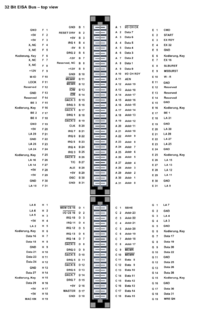
| compatible with | 8 bit ISA, 16 bit ISA, 32 bit EISA |
| pin Pin A pin is a device used for fastening objects or material together.Pin may also refer to:* Award pin, a small piece of metal or plastic with a pin attached given as an award for some achievement... s |
98 + 100 inlay |
| Vcc | +5 V, −5 V, +12 V, −12 V |
| clock | 8.33 MHz |
| theoretical data rate (32 bit) | about 33 MB Megabyte The megabyte is a multiple of the unit byte for digital information storage or transmission with two different values depending on context: bytes generally for computer memory; and one million bytes generally for computer storage. The IEEE Standards Board has decided that "Mega will mean 1 000... /s (8.33 MHz × 4 byte Byte The byte is a unit of digital information in computing and telecommunications that most commonly consists of eight bits. Historically, a byte was the number of bits used to encode a single character of text in a computer and for this reason it is the basic addressable element in many computer... s) |
| usable data rate (32 bit) | about 20 MB/s |
Although the EISA bus had a slight performance disadvantage over MCA (bus speed of 8.33 MHz, compared to 10 MHz), EISA contained almost all of the technological benefits that MCA boasted, including bus mastering
Bus mastering
In computing, bus mastering is a feature supported by many bus architectures that enables a device connected to the bus to initiate transactions...
, burst mode
Burst mode (computing)
Burst mode is a generic computing term referring to any situation in which a device is transmitting data repeatedly without waiting for input from another device or waiting for an internal process to terminate before continuing the transfer of data.In the case of DMA, the DMA controller and the...
, software configurable resources, and 32-bit data/address buses. These brought EISA nearly to par with MCA from a performance standpoint, and EISA easily defeated MCA in industry support.
EISA replaced the tedious jumper
Jumper (computing)
In electronics and particularly computing, a jumper is a short length of conductor used to close a break in or bypass part of an electrical circuit...
configuration common with ISA cards with software-based configuration. Every EISA system shipped with an EISA configuration utility; this was usually a slightly customized version of the standard utilities written by the EISA chipset makers. The user would boot into this utility, either from floppy disk
Floppy disk
A floppy disk is a disk storage medium composed of a disk of thin and flexible magnetic storage medium, sealed in a rectangular plastic carrier lined with fabric that removes dust particles...
or on a dedicated hard drive partition. The utility software would detect all EISA cards in the system, and could configure any hardware resources (interrupt
Interrupt request
The computing phrase "interrupt request" is used to refer to either the act of interrupting the bus lines used to signal an interrupt, or the interrupt input lines on a Programmable Interrupt Controller...
s, memory ports, etc.) on any EISA card (each EISA card would include a disk with information that described the available options on the card), or on the EISA system motherboard
Motherboard
In personal computers, a motherboard is the central printed circuit board in many modern computers and holds many of the crucial components of the system, providing connectors for other peripherals. The motherboard is sometimes alternatively known as the mainboard, system board, or, on Apple...
. The user could also enter information about ISA cards in the system, allowing the utility to automatically reconfigure EISA cards to avoid resource conflicts.
Similarly, Windows 95
Windows 95
Windows 95 is a consumer-oriented graphical user interface-based operating system. It was released on August 24, 1995 by Microsoft, and was a significant progression from the company's previous Windows products...
, with its Plug-and-Play capability, was not able to change the configuration of EISA cards, but it could detect the cards, read their configuration, and reconfigure Plug and Play hardware to avoid resource conflicts. Windows 95 would also automatically attempt to install appropriate drivers for detected EISA cards.
Industry Acceptance
EISA's success was far from guaranteed. Many manufacturers, including those in the "Gang of Nine", researched the possibility of using MCA. For example, Compaq actually produced prototype DeskPro systems using the bus. However, these were never put into production, and when it was clear that MCA had lost, Compaq allowed its MCA license to expire (the license actually cost relatively little; the primary costs associated with MCA, and at which the industry revolted, were royalties to be paid per system shipped).On the other hand, when it became clear to IBM that Micro Channel was dying, IBM actually licensed EISA for use in a few server systems. As a final jab at their competitor, Compaq (leader of the EISA consortium) didn't cash the first check sent by IBM for the EISA license. Instead, the check was framed and put on display in the company museum at Compaq's main campus in Houston, Texas.
See also
- Industry Standard ArchitectureIndustry Standard ArchitectureIndustry Standard Architecture is a computer bus standard for IBM PC compatible computers introduced with the IBM Personal Computer to support its Intel 8088 microprocessor's 8-bit external data bus and extended to 16 bits for the IBM Personal Computer/AT's Intel 80286 processor...
(ISA) - Micro Channel architectureMicro Channel architectureMicro Channel Architecture was a proprietary 16- or 32-bit parallel computer bus introduced by IBM in 1987 which was used on PS/2 and other computers through the mid 1990s.- Background :...
(MCA) - NuBusNuBusNuBus is a 32-bit parallel computer bus, originally developed at MIT as a part of the NuMachine workstation project. The first complete implementation of the NuBus and the NuMachine was done by Western Digital for their NuMachine, and for the Lisp Machines Inc. LMI-Lambda. The NuBus was later...
- VESA Local BusVESA Local BusThe VESA Local Bus was mostly used in personal computers. VESA Local Bus worked alongside the ISA bus; it acted as a high-speed conduit for memory-mapped I/O and DMA, while the ISA bus handled interrupts and port-mapped I/O.-Historical overview:In the early 1990s, the I/O bandwidth of...
(VESA) - Peripheral Component InterconnectPeripheral Component InterconnectConventional PCI is a computer bus for attaching hardware devices in a computer...
(PCI) - Accelerated Graphics PortAccelerated Graphics PortThe Accelerated Graphics Port is a high-speed point-to-point channel for attaching a video card to a computer's motherboard, primarily to assist in the acceleration of 3D computer graphics. Since 2004 AGP has been progressively phased out in favor of PCI Express...
(AGP) - PCI ExpressPCI ExpressPCI Express , officially abbreviated as PCIe, is a computer expansion card standard designed to replace the older PCI, PCI-X, and AGP bus standards...
(PCIe) - List of device bandwidths
- PCI-XPCI-XPCI-X, short for PCI-eXtended, is a computer bus and expansion card standard that enhances the 32-bit PCI Local Bus for higher bandwidth demanded by servers. It is a double-wide version of PCI, running at up to four times the clock speed, but is otherwise similar in electrical implementation and...
- PC/104PC/104PC/104 is an embedded computer standard controlled by the which defines both a form factor and computer bus. PC/104 is intended for specialized embedded computing environments where applications depend on reliable data acquisition despite an often extreme environment...
- CompactPCICompactPCIA CompactPCI system is a 3U or 6U Eurocard-based industrial computer, where all boards are connected via a passive PCI backplane. The connector pin assignments are standardized by the PICMG US and PICMG Europe organizations. PICMG stands for PCI Industrial Computers Manufacturers Group...
- MiniPCI
- PC cardPC cardIn computing, PC Card is the form factor of a peripheral interface designed for laptop computers. The PC Card standard was defined and developed by the Personal Computer Memory Card International Association which itself was created by a number of computer industry companies in the United States...
- Low Pin CountLow Pin CountThe Low Pin Count bus, or LPC bus, is used on IBM-compatible personal computers to connect low-bandwidth devices to the CPU, such as the boot ROM and the "legacy" I/O devices . The "legacy" I/O devices usually include serial and parallel ports, PS/2 keyboard, PS/2 mouse, floppy disk controller...
(LPC) - Universal Serial BusUniversal Serial BusUSB is an industry standard developed in the mid-1990s that defines the cables, connectors and protocols used in a bus for connection, communication and power supply between computers and electronic devices....