


Ex parte Milligan

Encyclopedia
Ex parte Milligan, , was a United States Supreme Court
case that ruled that the application of military tribunals to citizens when civilian courts are still operating is unconstitutional. It was also controversial because it was one of the first cases after the end of the American Civil War.
and four others were accused of planning to steal Union
weapons and invade Union prisoner-of-war camp
s. Once the first prisoner of war camp was liberated, they planned to use the liberated soldiers to help fight against the Government of Indiana
and free other camps of Confederate soldiers. They also planned to take over the state governments of Indiana, Ohio
, and Michigan
. When the plan leaked, they were charged, found guilty, and sentenced to hang by a military court in 1864. However, their execution was not set until May 1865, so they were able to argue the case after the Civil War
ended.
, a Massachusetts lawyer and state legislator, and future Governor of Massachusetts.
The argument for the petitioner was delivered by Jeremiah S. Black
, former United States Attorney General and Secretary of State, James A. Garfield, future President, and New York lawyer David Dudley Field.
 The Supreme Court decided that the suspension of habeas corpus
was lawful, but military tribunals did not apply to citizens in states that had upheld the authority of the Constitution and where civilian courts were still operating. In essence, the Court ruled that military tribunals could not try civilians in areas where civil courts were open, even when the military had been authorized to detain individuals without trial.
It observed further that during the suspension of the writ of habeas corpus, citizens may be only held without charges, not tried, and certainly not executed by military tribunals; the writ of habeas corpus is not the right itself but merely the ability to issue orders demanding the right's enforcement.
It is important to note the political environment of the decision. Post-Civil War, under a Republican
Congress
, the Court was reluctant to hand down any decision that questioned the legitimacy of military courts, especially in the occupied South. The President's ability to suspend habeas corpus independently of Congress, a central issue, was not addressed, probably because it was moot
with respect to the case at hand. Though President Lincoln suspended the writ nationwide on September 24, 1862, Congress ratified this action almost six months later, on March 3, 1863, with the Habeas Corpus Suspension Act
. Milligan was detained in 1864, well after Congress formally suspended the writ. That notwithstanding, military jurisdiction had been limited.
Supreme Court of the United States
The Supreme Court of the United States is the highest court in the United States. It has ultimate appellate jurisdiction over all state and federal courts, and original jurisdiction over a small range of cases...
case that ruled that the application of military tribunals to citizens when civilian courts are still operating is unconstitutional. It was also controversial because it was one of the first cases after the end of the American Civil War.
Background of the case
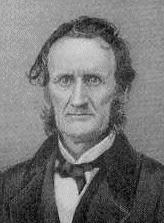
Lambdin P. MilliganLambdin P. Milligan
Lambdin Purdy Milligan was a lawyer, farmer, and a leader of the Knights of the Golden Circle during the American Civil War. In 1864, he was unlawfully given a capital sentence, and later set free by the United States Supreme Court, setting a precedent later named after him: Ex parte Milligan...
and four others were accused of planning to steal Union
Union (American Civil War)
During the American Civil War, the Union was a name used to refer to the federal government of the United States, which was supported by the twenty free states and five border slave states. It was opposed by 11 southern slave states that had declared a secession to join together to form the...
weapons and invade Union prisoner-of-war camp
Prisoner-of-war camp
A prisoner-of-war camp is a site for the containment of combatants captured by their enemy in time of war, and is similar to an internment camp which is used for civilian populations. A prisoner of war is generally a soldier, sailor, or airman who is imprisoned by an enemy power during or...
s. Once the first prisoner of war camp was liberated, they planned to use the liberated soldiers to help fight against the Government of Indiana
Indiana
Indiana is a US state, admitted to the United States as the 19th on December 11, 1816. It is located in the Midwestern United States and Great Lakes Region. With 6,483,802 residents, the state is ranked 15th in population and 16th in population density. Indiana is ranked 38th in land area and is...
and free other camps of Confederate soldiers. They also planned to take over the state governments of Indiana, Ohio
Ohio
Ohio is a Midwestern state in the United States. The 34th largest state by area in the U.S.,it is the 7th‑most populous with over 11.5 million residents, containing several major American cities and seven metropolitan areas with populations of 500,000 or more.The state's capital is Columbus...
, and Michigan
Michigan
Michigan is a U.S. state located in the Great Lakes Region of the United States of America. The name Michigan is the French form of the Ojibwa word mishigamaa, meaning "large water" or "large lake"....
. When the plan leaked, they were charged, found guilty, and sentenced to hang by a military court in 1864. However, their execution was not set until May 1865, so they were able to argue the case after the Civil War
American Civil War
The American Civil War was a civil war fought in the United States of America. In response to the election of Abraham Lincoln as President of the United States, 11 southern slave states declared their secession from the United States and formed the Confederate States of America ; the other 25...
ended.
Arguments
The argument for the United States was delivered by Benjamin F. ButlerBenjamin Franklin Butler (politician)
Benjamin Franklin Butler was an American lawyer and politician who represented Massachusetts in the United States House of Representatives and later served as the 33rd Governor of Massachusetts....
, a Massachusetts lawyer and state legislator, and future Governor of Massachusetts.
The argument for the petitioner was delivered by Jeremiah S. Black
Jeremiah S. Black
Jeremiah Sullivan Black was an American statesman and lawyer. He was the son of Representative Henry Black, and the father of writer and Lieutenant Governor of Pennsylvania Chauncey Forward Black....
, former United States Attorney General and Secretary of State, James A. Garfield, future President, and New York lawyer David Dudley Field.
The Court's decision
Habeas corpus
is a writ, or legal action, through which a prisoner can be released from unlawful detention. The remedy can be sought by the prisoner or by another person coming to his aid. Habeas corpus originated in the English legal system, but it is now available in many nations...
was lawful, but military tribunals did not apply to citizens in states that had upheld the authority of the Constitution and where civilian courts were still operating. In essence, the Court ruled that military tribunals could not try civilians in areas where civil courts were open, even when the military had been authorized to detain individuals without trial.
It observed further that during the suspension of the writ of habeas corpus, citizens may be only held without charges, not tried, and certainly not executed by military tribunals; the writ of habeas corpus is not the right itself but merely the ability to issue orders demanding the right's enforcement.
It is important to note the political environment of the decision. Post-Civil War, under a Republican
Republican Party (United States)
The Republican Party is one of the two major contemporary political parties in the United States, along with the Democratic Party. Founded by anti-slavery expansion activists in 1854, it is often called the GOP . The party's platform generally reflects American conservatism in the U.S...
Congress
United States Congress
The United States Congress is the bicameral legislature of the federal government of the United States, consisting of the Senate and the House of Representatives. The Congress meets in the United States Capitol in Washington, D.C....
, the Court was reluctant to hand down any decision that questioned the legitimacy of military courts, especially in the occupied South. The President's ability to suspend habeas corpus independently of Congress, a central issue, was not addressed, probably because it was moot
Mootness
In American law, a matter is moot if further legal proceedings with regard to it can have no effect, or events have placed it beyond the reach of the law...
with respect to the case at hand. Though President Lincoln suspended the writ nationwide on September 24, 1862, Congress ratified this action almost six months later, on March 3, 1863, with the Habeas Corpus Suspension Act
Habeas Corpus Suspension Act 1863
The Habeas Corpus Suspension Act, , entitled An Act relating to Habeas Corpus, and regulating Judicial Proceedings in Certain Cases, was an Act of Congress that authorized the president of the United States to suspend the privilege of the writ of habeas corpus in response to the United States...
. Milligan was detained in 1864, well after Congress formally suspended the writ. That notwithstanding, military jurisdiction had been limited.
See also
- Supreme Court cases of the American Civil WarSupreme Court cases of the American Civil WarA number of cases were tried before the Supreme Court of the United States during the period of the American Civil War. These cases focused on wartime civil liberties, and the ability of the various branches of the government to alter them...
- List of United States Supreme Court cases, volume 71
- Ex parte MerrymanEx parte MerrymanEx parte Merryman, 17 F. Cas. 144 , is a well-known U.S. federal court case which arose out of the American Civil War. It was a test of the authority of the President to suspend "the privilege of the writ of habeas corpus"...
- Ex parte QuirinEx parte QuirinEx parte Quirin, , is a Supreme Court of the United States case that upheld the jurisdiction of a United States military tribunal over the trial of several Operation Pastorius German saboteurs in the United States...
- Hamdi v. RumsfeldHamdi v. RumsfeldHamdi v. Rumsfeld, 542 U.S. 507 was a U.S. Supreme Court decision reversing the dismissal of a habeas corpus petition brought on behalf of Yaser Esam Hamdi, a U.S. citizen being detained indefinitely as an "illegal enemy combatant." The Court recognized the power of the government to detain enemy...
External links
- OyezOyez.orgThe Oyez Project at the Chicago-Kent College of Law is an unofficial online multimedia archive of the Supreme Court of the United States, especially audio of oral arguments...
, Official Supreme Court media, Ex Parte Milligan. - Historical analysis of the case - Elisheva Ruth Coleman Princeton University senior thesis