
Europol is the
European UnionThe European Union is an economic and political union of 27 independent member states which are located primarily in Europe. The EU traces its origins from the European Coal and Steel Community and the European Economic Community , formed by six countries in 1958...
's
criminal intelligenceCriminal Intelligence is information compiled, analyzed, and/or disseminated in an effort to anticipate, prevent, or monitor criminal activity....
agency. It became fully operational on 1 July 1999.
The establishment of Europol was agreed to in the 1992
Maastricht TreatyThe Maastricht Treaty was signed on 7 February 1992 by the members of the European Community in Maastricht, Netherlands. On 9–10 December 1991, the same city hosted the European Council which drafted the treaty...
, officially known as the Treaty on European Union (TEU) that came into effect in November 1993. The agency started limited operations on 3 January 1994, as the Europol Drugs Unit (EDU). In 1998 the Europol Convention was ratified by all the member states and came into force in October. Europol commenced its full activities on 1 July 1999.
Europol allocates its resources (625 staff, of these, approximately 120 Europol liaison officers (ELOs)) from its headquarters in
The HagueThe Hague is the capital city of the province of South Holland in the Netherlands. With a population of 500,000 inhabitants , it is the third largest city of the Netherlands, after Amsterdam and Rotterdam...
. The size of Europol belies the fact that they are in constant liaison with hundreds of different law enforcement organisations, each with their own individual or group seconded to assist Europol's activities.
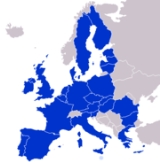
As of 2007, Europol covers all 27 member states of the European Union. In order to fight international organised crime effectively, Europol cooperates with a number of third countries and organisations as follows (in alphabetical order):
AlbaniaAlbania , officially known as the Republic of Albania , is a country in Southeastern Europe, in the Balkans region. It is bordered by Montenegro to the northwest, Kosovo to the northeast, the Republic of Macedonia to the east and Greece to the south and southeast. It has a coast on the Adriatic Sea...
,
AustraliaAustralia , officially the Commonwealth of Australia, is a country in the Southern Hemisphere comprising the mainland of the Australian continent, the island of Tasmania, and numerous smaller islands in the Indian and Pacific Oceans. It is the world's sixth-largest country by total area...
,
Bosnia and HerzegovinaBosnia and Herzegovina , sometimes called Bosnia-Herzegovina or simply Bosnia, is a country in Southern Europe, on the Balkan Peninsula. Bordered by Croatia to the north, west and south, Serbia to the east, and Montenegro to the southeast, Bosnia and Herzegovina is almost landlocked, except for the...
,
CanadaCanada is a North American country consisting of ten provinces and three territories. Located in the northern part of the continent, it extends from the Atlantic Ocean in the east to the Pacific Ocean in the west, and northward into the Arctic Ocean...
, CEPOL (
European Police CollegeCEPOL - European Police College was established as an agency of the European Union in 2005 . CEPOL brings together senior police officers across Europe with the aim to encourage cross-border cooperation in the fight against crime, maintenance of public security and law and order...
),
ColombiaColombia, officially the Republic of Colombia , is a unitary constitutional republic comprising thirty-two departments. The country is located in northwestern South America, bordered to the east by Venezuela and Brazil; to the south by Ecuador and Peru; to the north by the Caribbean Sea; to the...
,
CroatiaCroatia , officially the Republic of Croatia , is a unitary democratic parliamentary republic in Europe at the crossroads of the Mitteleuropa, the Balkans, and the Mediterranean. Its capital and largest city is Zagreb. The country is divided into 20 counties and the city of Zagreb. Croatia covers ...
,
EurojustEurojust is an agency of the European Union dealing with judicial co-operation in criminal matters....
,
European Central BankThe European Central Bank is the institution of the European Union that administers the monetary policy of the 17 EU Eurozone member states. It is thus one of the world's most important central banks. The bank was established by the Treaty of Amsterdam in 1998, and is headquartered in Frankfurt,...
,
European CommissionThe European Commission is the executive body of the European Union. The body is responsible for proposing legislation, implementing decisions, upholding the Union's treaties and the general day-to-day running of the Union....
,
European Monitoring Centre for Drugs and Drug AddictionThe European Monitoring Centre for Drugs and Drug Addiction is an agency of the European Union. Established in 1993, the EMCDDA is located in Lisbon, Portugal.-Mission and role:...
,
Republic of MacedoniaMacedonia , officially the Republic of Macedonia , is a country located in the central Balkan peninsula in Southeast Europe. It is one of the successor states of the former Yugoslavia, from which it declared independence in 1991...
,
FrontexFrontex is the European Union agency for external border security...
,
IcelandIceland , described as the Republic of Iceland, is a Nordic and European island country in the North Atlantic Ocean, on the Mid-Atlantic Ridge. Iceland also refers to the main island of the country, which contains almost all the population and almost all the land area. The country has a population...
,
InterpolInterpol, whose full name is the International Criminal Police Organization – INTERPOL, is an organization facilitating international police cooperation...
,
MoldovaMoldova , officially the Republic of Moldova is a landlocked state in Eastern Europe, located between Romania to the West and Ukraine to the North, East and South. It declared itself an independent state with the same boundaries as the preceding Moldavian Soviet Socialist Republic in 1991, as part...
,
NorwayNorway , officially the Kingdom of Norway, is a Nordic unitary constitutional monarchy whose territory comprises the western portion of the Scandinavian Peninsula, Jan Mayen, and the Arctic archipelago of Svalbard and Bouvet Island. Norway has a total area of and a population of about 4.9 million...
,
OLAFThe European Anti-fraud Office is charged by the European Union with protecting the financial interests of the European Union: Its tasks are to fight fraud affecting the EU budget, as well as corruption and any other irregular activity, including misconduct, within the European Institutions, in an...
(European Anti-Fraud Office),
Russian FederationRussia or , officially known as both Russia and the Russian Federation , is a country in northern Eurasia. It is a federal semi-presidential republic, comprising 83 federal subjects...
,
SerbiaSerbia , officially the Republic of Serbia , is a landlocked country located at the crossroads of Central and Southeast Europe, covering the southern part of the Carpathian basin and the central part of the Balkans...
,
SwitzerlandSwitzerland name of one of the Swiss cantons. ; ; ; or ), in its full name the Swiss Confederation , is a federal republic consisting of 26 cantons, with Bern as the seat of the federal authorities. The country is situated in Western Europe,Or Central Europe depending on the definition....
,
SitCenThe Joint Situation Centre is an intelligence body of the European Union . It is part of the European External Action Service and is under the authority of the EU's High Representative.-Role:...
(EU Joint Situation Centre),
TurkeyTurkey , known officially as the Republic of Turkey , is a Eurasian country located in Western Asia and in East Thrace in Southeastern Europe...
,
United Nations Office on Drugs and CrimeThe United Nations Office on Drugs and Crime is a United Nations agency that was established in 1997 as the Office for Drug Control and Crime Prevention by combining the United Nations International Drug Control Program and the Crime Prevention and Criminal Justice Division in the United Nations...
,
USAThe United States of America is a federal constitutional republic comprising fifty states and a federal district...
,
World Customs OrganisationThe World Customs Organization is an intergovernmental organization headquartered in Brussels, Belgium. With its worldwide membership, the WCO is recognized as the voice of the global customs community...
. The Europol External Strategy defines the framework within which Europol is to develop its activities with regard to third partners.
Europol was reformed as a full EU agency on 1 January 2010. This gave Europol increased powers to collect criminal information and
European ParliamentThe European Parliament is the directly elected parliamentary institution of the European Union . Together with the Council of the European Union and the Commission, it exercises the legislative function of the EU and it has been described as one of the most powerful legislatures in the world...
more control over Europol activities and budget.
Functions
Europol's aim is to improve the effectiveness and co-operation between the competent authorities of the member states primarily by sharing and pooling intelligence to prevent and combat serious international
organized crimeOrganized crime or criminal organizations are transnational, national, or local groupings of highly centralized enterprises run by criminals for the purpose of engaging in illegal activity, most commonly for monetary profit. Some criminal organizations, such as terrorist organizations, are...
. Its mission is to make a significant contribution to the
European UnionThe European Union is an economic and political union of 27 independent member states which are located primarily in Europe. The EU traces its origins from the European Coal and Steel Community and the European Economic Community , formed by six countries in 1958...
's law enforcement efforts targeting organized crime.
Europol has no executive powers. It is a support service for the
law enforcement agenciesIn North American English, a law enforcement agency is a government agency responsible for the enforcement of the laws.Outside North America, such organizations are called police services. In North America, some of these services are called police while others have other names In North American...
of the EU member states. This means that Europol officials are not entitled to conduct investigations in the member states or to
arrestAn arrest is the act of depriving a person of his or her liberty usually in relation to the purported investigation and prevention of crime and presenting into the criminal justice system or harm to oneself or others...
suspects. In providing support, Europol with its tools information exchange, intelligence analysis, expertise and training can contribute to the executive measures carried out by the relevant national authorities.
Europol is a multi-disciplinary agency, comprising not only regular
police officerA police officer is a warranted employee of a police force...
s but staff members from the member states' various law enforcement agencies:
customsCustoms is an authority or agency in a country responsible for collecting and safeguarding customs duties and for controlling the flow of goods including animals, transports, personal effects and hazardous items in and out of a country...
, immigration services,
borderThe border guard, frontier guard, border patrol, border police, or frontier police of a country is a national security agency that performs border control, i.e., enforces the security of the country's national borders....
and financial police, etc. Secondly, Europol helps to overcome the language barriers in international police co-operation. Any law enforcement officer from a member state can address a request to their Europol National Unit (ENU) in her/his mother tongue and receive the answer back in this language.
Three different levels of co-operation are possible: The first one is technical co-operation or to provide training. The next step is strategic co-operation aimed at exchanging general trends in organised crime and how to fight it and the exchange of threat assessments. The top level of co-operation includes the exchange of personal data and requires the fulfilment of Europol's standards in the field of data protection and
data securityData security is the means of ensuring that data is kept safe from corruption and that access to it is suitably controlled. Thus data security helps to ensure privacy. It also helps in protecting personal data. Data security is part of the larger practice of Information security.- Disk Encryption...
.
History
Europol has it origins in
TREVITREVI was an intergovernmental network - or forum - of national officials from ministries of justice and the interior in the European Community created during the European Council Summit in Rome, 1–2 December 1975...
, a forum for internal security cooperation amongst
EECEEC is an abbreviation that usually refers to the European Economic Community, the forerunner to the European Union.It may also refer to;* The East Erie Commercial Railroad, a shortline in Pennsylvania...
/EC interior and justice ministers created in 1975 and active until the
Maastricht TreatyThe Maastricht Treaty was signed on 7 February 1992 by the members of the European Community in Maastricht, Netherlands. On 9–10 December 1991, the same city hosted the European Council which drafted the treaty...
came into effect in 1993.
Germany, with its federal organisation of police forces, had long been in favour of a supranational police organisation at EC level. It tabled a surprise proposal to establish a European Police Office to the European Council meeting in Luxembourg in June 1991. By that December, the Intergovernmental Conference was coming to an end and the member states had pledged themselves to establishing Europol through Article K.1(9) of the
Maastricht TreatyThe Maastricht Treaty was signed on 7 February 1992 by the members of the European Community in Maastricht, Netherlands. On 9–10 December 1991, the same city hosted the European Council which drafted the treaty...
. Europol was given the modest role of establishing ‘a Union-wide system for exchanging information’ amongst EU police forces.
Delays in ratifying the Maastricht Treaty led to
TREVITREVI was an intergovernmental network - or forum - of national officials from ministries of justice and the interior in the European Community created during the European Council Summit in Rome, 1–2 December 1975...
ministers agreeing a "Ministerial Agreement on the Europol Drugs Unit" in June 1993. This intergovernmental agreement, outside of
EU lawEuropean Union law is a body of treaties and legislation, such as Regulations and Directives, which have direct effect or indirect effect on the laws of European Union member states. The three sources of European Union law are primary law, secondary law and supplementary law...
, led to the establishment of a small team headed by Jürgen Storbeck, a senior
German policeThe Bundespolizei is a uniformed federal police force in Germany. It is subordinate to the Federal Ministry of the Interior...
officer who initially operated from some temporary cabins in a Strasbourg suburb (shared with personnel of the
Schengen Information SystemThe Schengen Information System , is a governmental database used by European countries to maintain and distribute information on individuals and pieces of property of interest. The intended uses of this system are for national security, border control and law enforcement purposes...
) while more permanent arrangements were made.
Once the Maastricht Treaty had come into effect, the slow process of negotiating and ratifying a Europol Convention began. In the meantime, the Europol Drugs Unit (EDU) had its powers extended twice, in March 1995 and again in December 1996 to included a range of
traffickingSmuggling is the clandestine transportation of goods or persons, such as out of a building, into a prison, or across an international border, in violation of applicable laws or other regulations.There are various motivations to smuggle...
offences in its remit. During this period, information amongst officers could only be exchanged bilaterally, with a central database to be established once the Europol Convention was ratified. The Europol Convention finally came into effect in October 1998 after ratification by all 15 EU national parliaments though some outstanding legal issues (primarily data protection supervision and judicial supervision) ensured it could not formally take up duties until July 1999.
The Europol Convention was superseded by the Council Decision of 6 April 2009 establishing the European Police Office (Europol), converting Europol into a formal EU agency as well as increasing some of its powers. The European Parliament was given more control over Europol by the Council Decision as well.
Authorities
The Directorate of Europol is appointed by the
Council of the European UnionThe Council of the European Union is the institution in the legislature of the European Union representing the executives of member states, the other legislative body being the European Parliament. The Council is composed of twenty-seven national ministers...
(Ministers for Justice and Home Affairs). It currently consists of Director Rob Wainwright (UK) and Deputy Directors Michel Quillé (
FranceThe French Republic , The French Republic , The French Republic , (commonly known as France , is a unitary semi-presidential republic in Western Europe with several overseas territories and islands located on other continents and in the Indian, Pacific, and Atlantic oceans. Metropolitan France...
) and Eugenio Orlandi (
ItalyItaly , officially the Italian Republic languages]] under the European Charter for Regional or Minority Languages. In each of these, Italy's official name is as follows:;;;;;;;;), is a unitary parliamentary republic in South-Central Europe. To the north it borders France, Switzerland, Austria and...
).
Europol is politically accountable to the Justice and Home Affairs Council via the Europol Management Board. The Council controls the appointment of Europol's Director and Deputy Directors. It also controls Europol's budget, financed from member state contributions, rather than the EU budget and any legislative instruments it deems necessary for Europol. The Europol Management Board is staffed with Interior Ministry officials with one representative from every participating member state. It meets at least twice per year and exercises political control over more routine staffing and budgetary matters, amongst other things. The Joint Supervisory Body oversees data protection in Europol and has two representatives from each participating state's data protection supervisory body.
Financial supervisionFinancial regulation is a form of regulation or supervision, which subjects financial institutions to certain requirements, restrictions and guidelines, aiming to maintain the integrity of the financial system...
over Europol is aided by a committee of auditors drawn from the membership of the
European Court of AuditorsThe Court of Auditors is the fifth institution of the European Union . It was established in 1975 in Luxembourg to audit the accounts of EU institutions...
and known as the Joint Audit Committee. The Joint Audit Committee is not technically part of the European Court of Auditors as the Europol budget is not part of the overall EU budget. This unusual arrangement preserves the intergovernmental character of Europol.
The
European Court of JusticeThe Court can sit in plenary session, as a Grand Chamber of 13 judges, or in chambers of three or five judges. Plenary sitting are now very rare, and the court mostly sits in chambers of three or five judges...
has minimal jurisdiction over Europol with its remit extending only to limited interpretation of the Europol Convention.
The
European OmbudsmanThe European Ombudsman is an ombudsman for the European Union, based in the Salvador de Madariaga Building in Strasbourg.-History:...
, while not given a formal role in the Europol Convention, seems to have gained
de facto recognition as an arbitrator in Europol matters relating to requests for access to documents and Europol staff disputes.
See also
- Eurodac
EURODAC, which stands for European Dactyloscopy, is the European fingerprint database for identifying asylum seekers and irregular border-crossers. Asylum applicants and irregular border-crossers over the age of 14 have their fingerprints taken as a matter of European Community law...
- TREVI
TREVI was an intergovernmental network - or forum - of national officials from ministries of justice and the interior in the European Community created during the European Council Summit in Rome, 1–2 December 1975...
- Interpol
Interpol, whose full name is the International Criminal Police Organization – INTERPOL, is an organization facilitating international police cooperation...
- Visa Information System
The European Union Visa Information System is a database containing information, including biometrics, on visa applications by Third Country Nationals requiring a visa to enter the Schengen group....
- Area of freedom, security and justice
The area of freedom, security and justice is a collection of European Union policies designed to ensure security, rights and free movement within the EU. As internal borders have been removed within the EU, cross border police cooperation had to increase to counter cross border crime, and thus...
External links