


European microstates

Encyclopedia

Microstate
A microstate or ministate is a sovereign state having a very small population or very small land area, but usually both. Some examples include Liechtenstein, Malta, Monaco, Nauru, Singapore, and Vatican City....
state
Sovereign state
A sovereign state, or simply, state, is a state with a defined territory on which it exercises internal and external sovereignty, a permanent population, a government, and the capacity to enter into relations with other sovereign states. It is also normally understood to be a state which is neither...
s in Europe
Europe
Europe is, by convention, one of the world's seven continents. Comprising the westernmost peninsula of Eurasia, Europe is generally 'divided' from Asia to its east by the watershed divides of the Ural and Caucasus Mountains, the Ural River, the Caspian and Black Seas, and the waterways connecting...
. While Andorra
Andorra
Andorra , officially the Principality of Andorra , also called the Principality of the Valleys of Andorra, , is a small landlocked country in southwestern Europe, located in the eastern Pyrenees mountains and bordered by Spain and France. It is the sixth smallest nation in Europe having an area of...
, Liechtenstein
Liechtenstein
The Principality of Liechtenstein is a doubly landlocked alpine country in Central Europe, bordered by Switzerland to the west and south and by Austria to the east. Its area is just over , and it has an estimated population of 35,000. Its capital is Vaduz. The biggest town is Schaan...
, Malta
Malta
Malta , officially known as the Republic of Malta , is a Southern European country consisting of an archipelago situated in the centre of the Mediterranean, south of Sicily, east of Tunisia and north of Libya, with Gibraltar to the west and Alexandria to the east.Malta covers just over in...
, Monaco
Monaco
Monaco , officially the Principality of Monaco , is a sovereign city state on the French Riviera. It is bordered on three sides by its neighbour, France, and its centre is about from Italy. Its area is with a population of 35,986 as of 2011 and is the most densely populated country in the...
, San Marino
San Marino
San Marino, officially the Republic of San Marino , is a state situated on the Italian Peninsula on the eastern side of the Apennine Mountains. It is an enclave surrounded by Italy. Its size is just over with an estimated population of over 30,000. Its capital is the City of San Marino...
, and Vatican City
Vatican City
Vatican City , or Vatican City State, in Italian officially Stato della Città del Vaticano , which translates literally as State of the City of the Vatican, is a landlocked sovereign city-state whose territory consists of a walled enclave within the city of Rome, Italy. It has an area of...
are usually included, Luxembourg
Luxembourg
Luxembourg , officially the Grand Duchy of Luxembourg , is a landlocked country in western Europe, bordered by Belgium, France, and Germany. It has two principal regions: the Oesling in the North as part of the Ardennes massif, and the Gutland in the south...
and Cyprus
Cyprus
Cyprus , officially the Republic of Cyprus , is a Eurasian island country, member of the European Union, in the Eastern Mediterranean, east of Greece, south of Turkey, west of Syria and north of Egypt. It is the third largest island in the Mediterranean Sea.The earliest known human activity on the...
share certain features as well. Microstate
Microstate
A microstate or ministate is a sovereign state having a very small population or very small land area, but usually both. Some examples include Liechtenstein, Malta, Monaco, Nauru, Singapore, and Vatican City....
s are small independent states recognized by larger states, unlike micronation
Micronation
Micronations, sometimes also referred to as model countries and new country projects, are entities that claim to be independent nations or states but which are not recognized by world governments or major international organizations...
s, which are unrecognized creations of few people.
Andorra
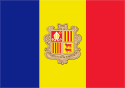
Andorra
Andorra , officially the Principality of Andorra , also called the Principality of the Valleys of Andorra, , is a small landlocked country in southwestern Europe, located in the eastern Pyrenees mountains and bordered by Spain and France. It is the sixth smallest nation in Europe having an area of...
used to be a feudal
Feudalism
Feudalism was a set of legal and military customs in medieval Europe that flourished between the 9th and 15th centuries, which, broadly defined, was a system for ordering society around relationships derived from the holding of land in exchange for service or labour.Although derived from the...
remnant high in the Pyrenees
Pyrenees
The Pyrenees is a range of mountains in southwest Europe that forms a natural border between France and Spain...
, a fiefdom
Fiefdom
A fee was the central element of feudalism and consisted of heritable lands granted under one of several varieties of feudal tenure by an overlord to a vassal who held it in fealty in return for a form of feudal allegiance and service, usually given by the...
held jointly by the Bishop of Urgell in Spain
Spain
Spain , officially the Kingdom of Spain languages]] under the European Charter for Regional or Minority Languages. In each of these, Spain's official name is as follows:;;;;;;), is a country and member state of the European Union located in southwestern Europe on the Iberian Peninsula...
and the Count of Foix in France
France
The French Republic , The French Republic , The French Republic , (commonly known as France , is a unitary semi-presidential republic in Western Europe with several overseas territories and islands located on other continents and in the Indian, Pacific, and Atlantic oceans. Metropolitan France...
, with a population of approximately 89,000. The County of Foix merged into the French Crown in 1607 and thus the King of France and then the President of France took the place of the Count of Foix. Since 1993 Andorra has been a parliamentary democracy, but it maintains two Co-Princes, one being France's elected head of state and the other being the Bishop of Urgell. It has been independent since 1278. Catalan
Catalan language
Catalan is a Romance language, the national and only official language of Andorra and a co-official language in the Spanish autonomous communities of Catalonia, the Balearic Islands and Valencian Community, where it is known as Valencian , as well as in the city of Alghero, on the Italian island...
is its official language.
Liechtenstein

Liechtenstein
The Principality of Liechtenstein is a doubly landlocked alpine country in Central Europe, bordered by Switzerland to the west and south and by Austria to the east. Its area is just over , and it has an estimated population of 35,000. Its capital is Vaduz. The biggest town is Schaan...
is the sole remaining polity
Polity
Polity is a form of government Aristotle developed in his search for a government that could be most easily incorporated and used by the largest amount of people groups, or states...
of the Holy Roman Empire
Holy Roman Empire
The Holy Roman Empire was a realm that existed from 962 to 1806 in Central Europe.It was ruled by the Holy Roman Emperor. Its character changed during the Middle Ages and the Early Modern period, when the power of the emperor gradually weakened in favour of the princes...
, having been created out of the counties of Vaduz
Vaduz
Vaduz is the capital of the principality of Liechtenstein and the seat of the national parliament. The town, located along the Rhine, has about 5,100 inhabitants , most of whom are Roman Catholic. Its cathedral is the seat of a Roman Catholic archbishop....
and Schellenberg
Schellenberg
Schellenberg is a municipality in the lowland area of Liechtenstein, on the banks of the Rhine. , it has a population of 952 and covers an area of .-Early history:...
in 1719 as a sovereign fief for the wealthy Austrian House of Liechtenstein
Princely Family of Liechtenstein
The Liechtenstein dynasty, from which the principality takes its name, is the family which reigns by constitutional, hereditary right over the nation of Liechtenstein...
. Its population is over 35,000. Owing to its geographic position between Switzerland
Switzerland
Switzerland name of one of the Swiss cantons. ; ; ; or ), in its full name the Swiss Confederation , is a federal republic consisting of 26 cantons, with Bern as the seat of the federal authorities. The country is situated in Western Europe,Or Central Europe depending on the definition....
and Austria
Austria
Austria , officially the Republic of Austria , is a landlocked country of roughly 8.4 million people in Central Europe. It is bordered by the Czech Republic and Germany to the north, Slovakia and Hungary to the east, Slovenia and Italy to the south, and Switzerland and Liechtenstein to the...
, it was not swallowed up during the massive reorganisation of Germany following the French Revolution
French Revolution
The French Revolution , sometimes distinguished as the 'Great French Revolution' , was a period of radical social and political upheaval in France and Europe. The absolute monarchy that had ruled France for centuries collapsed in three years...
, and avoided incorporation into the German Empire
German Empire
The German Empire refers to Germany during the "Second Reich" period from the unification of Germany and proclamation of Wilhelm I as German Emperor on 18 January 1871, to 1918, when it became a federal republic after defeat in World War I and the abdication of the Emperor, Wilhelm II.The German...
later in the 19th century.
Malta

Malta
Malta , officially known as the Republic of Malta , is a Southern European country consisting of an archipelago situated in the centre of the Mediterranean, south of Sicily, east of Tunisia and north of Libya, with Gibraltar to the west and Alexandria to the east.Malta covers just over in...
is an archipelago
Archipelago
An archipelago , sometimes called an island group, is a chain or cluster of islands. The word archipelago is derived from the Greek ἄρχι- – arkhi- and πέλαγος – pélagos through the Italian arcipelago...
of seven islands in the central Mediterranean Sea
Mediterranean Sea
The Mediterranean Sea is a sea connected to the Atlantic Ocean surrounded by the Mediterranean region and almost completely enclosed by land: on the north by Anatolia and Europe, on the south by North Africa, and on the east by the Levant...
and has a population of around 410,000, meaning it has a larger population than several non-microstates, notably Iceland
Iceland
Iceland , described as the Republic of Iceland, is a Nordic and European island country in the North Atlantic Ocean, on the Mid-Atlantic Ridge. Iceland also refers to the main island of the country, which contains almost all the population and almost all the land area. The country has a population...
which has a population of 319,368 (January 2009 estimate). People first arrived on Malta about 5200 BC from the nearby island of Sicily
Sicily
Sicily is a region of Italy, and is the largest island in the Mediterranean Sea. Along with the surrounding minor islands, it constitutes an autonomous region of Italy, the Regione Autonoma Siciliana Sicily has a rich and unique culture, especially with regard to the arts, music, literature,...
. It gained independence from the United Kingdom
United Kingdom
The United Kingdom of Great Britain and Northern IrelandIn the United Kingdom and Dependencies, other languages have been officially recognised as legitimate autochthonous languages under the European Charter for Regional or Minority Languages...
in 1964. Malta is a member of the Commonwealth of Nations
Commonwealth of Nations
The Commonwealth of Nations, normally referred to as the Commonwealth and formerly known as the British Commonwealth, is an intergovernmental organisation of fifty-four independent member states...
and a full member of the European Union
European Union
The European Union is an economic and political union of 27 independent member states which are located primarily in Europe. The EU traces its origins from the European Coal and Steel Community and the European Economic Community , formed by six countries in 1958...
. Roman Catholicism is the constitutionally protected religion of the islands.
Monaco

Monaco
Monaco , officially the Principality of Monaco , is a sovereign city state on the French Riviera. It is bordered on three sides by its neighbour, France, and its centre is about from Italy. Its area is with a population of 35,986 as of 2011 and is the most densely populated country in the...
on the French Riviera
French Riviera
The Côte d'Azur, pronounced , often known in English as the French Riviera , is the Mediterranean coastline of the southeast corner of France, also including the sovereign state of Monaco...
, ruled by the House of Grimaldi
House of Grimaldi
The House of Grimaldi is associated with the history of the Republic of Genoa and of the Principality of Monaco.-History:The Grimaldi family descends from Grimaldo, a Genoese statesman at the time of the early Crusades. He might have been a son of Otto Canella, a consul of the Republic of Genoa in...
since the 13th century, achieved full independence only following the cession of the surrounding Nice
Nice
Nice is the fifth most populous city in France, after Paris, Marseille, Lyon and Toulouse, with a population of 348,721 within its administrative limits on a land area of . The urban area of Nice extends beyond the administrative city limits with a population of more than 955,000 on an area of...
region from Piedmont
Kingdom of Sardinia
The Kingdom of Sardinia consisted of the island of Sardinia first as a part of the Crown of Aragon and subsequently the Spanish Empire , and second as a part of the composite state of the House of Savoy . Its capital was originally Cagliari, in the south of the island, and later Turin, on the...
to France in 1860.
Monaco is located on the Mediterranean Sea, tucked into the Maritime Alps
Maritime Alps
The Maritime Alps are a mountain range in the southwestern part of the Alps. They form the border between the French département Alpes-Maritimes and the Italian province of Cuneo. The Col de Tende separates them from the Ligurian Alps; the Maddalena Pass separates them from the Cottian Alps...
and has a population of around 35,000. Its constitutional monarchy is led by Prince Albert II
Albert II, Prince of Monaco
Albert II, Sovereign Prince of Monaco is the head of the House of Grimaldi and the ruler of the Principality of Monaco. He is the son of Rainier III, Prince of Monaco, and the American actress Grace Kelly...
. The population is 95% Roman Catholic. French, English, Italian, and Monégasque
Monégasque language
Monégasque is a dialect of the modern Ligurian language, spoken in Monaco.- Language family :Forming a part of the Western Romance dialect continuum, Monégasque shares many features with the variety of Ligurian spoken in Genoa, but differs from its neighboring dialects Intemelio and Mentonasc. It...
are the most widely spoken languages. Its economy is based on light manufacturing, banking and financial services, shipping and trade, R&D in biotechnology, marine environments, and tourism.
San Marino

San Marino
San Marino, officially the Republic of San Marino , is a state situated on the Italian Peninsula on the eastern side of the Apennine Mountains. It is an enclave surrounded by Italy. Its size is just over with an estimated population of over 30,000. Its capital is the City of San Marino...
, also known as the Most Serene Republic of San Marino, is the oldest surviving sovereign state and constitutional republic
Republic
A republic is a form of government in which the people, or some significant portion of them, have supreme control over the government and where offices of state are elected or chosen by elected people. In modern times, a common simplified definition of a republic is a government where the head of...
in the world. It is the continuation of a monastic community founded in 301 A.D. and is the last survivor of a large number of self-governing Italian communes from the Middle Ages, having survived the consolidation of Italy into medium-sized territorial states in the 15th century and the unification of Italy in the 19th century, largely owing to its remote location in a valley of the Apennine
Apennine mountains
The Apennines or Apennine Mountains or Greek oros but just as often used alone as a noun. The ancient Greeks and Romans typically but not always used "mountain" in the singular to mean one or a range; thus, "the Apennine mountain" refers to the entire chain and is translated "the Apennine...
s and its decision to offer sanctuary to leaders of the unification movement. It has a population of approximately 30,000.
Vatican City and Holy See

Vatican City
Vatican City , or Vatican City State, in Italian officially Stato della Città del Vaticano , which translates literally as State of the City of the Vatican, is a landlocked sovereign city-state whose territory consists of a walled enclave within the city of Rome, Italy. It has an area of...
is the last remnant of the former Papal States
Papal States
The Papal State, State of the Church, or Pontifical States were among the major historical states of Italy from roughly the 6th century until the Italian peninsula was unified in 1861 by the Kingdom of Piedmont-Sardinia .The Papal States comprised territories under...
, the lands in central Italy
Italy
Italy , officially the Italian Republic languages]] under the European Charter for Regional or Minority Languages. In each of these, Italy's official name is as follows:;;;;;;;;), is a unitary parliamentary republic in South-Central Europe. To the north it borders France, Switzerland, Austria and...
ruled directly by the Pope
Pope
The Pope is the Bishop of Rome, a position that makes him the leader of the worldwide Catholic Church . In the Catholic Church, the Pope is regarded as the successor of Saint Peter, the Apostle...
. After the unification of Italy in the 19th century the Papal States had become formally part of the Kingdom of Italy, but the Vatican disputed this claim of geographic authority, and the Papacy continued to exercise de facto political control over an area around St Peter's Basilica in Rome. A sovereign Vatican state was later established by the Lateran Treaty of 1929 between the Pope and the government of Benito Mussolini
Benito Mussolini
Benito Amilcare Andrea Mussolini was an Italian politician who led the National Fascist Party and is credited with being one of the key figures in the creation of Fascism....
, in which the Pope recognised the Italian state in exchange for establishing Roman Catholicism as the state religion
State religion
A state religion is a religious body or creed officially endorsed by the state...
, and recognition of the Pope's sovereignty over a tiny state located entirely within the city of Rome
Rome
Rome is the capital of Italy and the country's largest and most populated city and comune, with over 2.7 million residents in . The city is located in the central-western portion of the Italian Peninsula, on the Tiber River within the Lazio region of Italy.Rome's history spans two and a half...
. Its population is between 600 and 700.
The Holy See
Holy See
The Holy See is the episcopal jurisdiction of the Catholic Church in Rome, in which its Bishop is commonly known as the Pope. It is the preeminent episcopal see of the Catholic Church, forming the central government of the Church. As such, diplomatically, and in other spheres the Holy See acts and...
is a unique sovereign entity under international law distinct from Vatican City with the pope
Pope
The Pope is the Bishop of Rome, a position that makes him the leader of the worldwide Catholic Church . In the Catholic Church, the Pope is regarded as the successor of Saint Peter, the Apostle...
as the head of both, maintaining diplomatic and official relations with over 170 states and entities and participating in various international organization
International organization
An intergovernmental organization, sometimes rendered as an international governmental organization and both abbreviated as IGO, is an organization composed primarily of sovereign states , or of other intergovernmental organizations...
s either in its own capacity or on behalf of Vatican City.
Economic policies and relationship with the European Union
The European microstates are all of limited size and population, and have limited natural resources. As a result, they have adopted special economic policies, typically involving low levels of taxation and few restrictions on external financial investment. Malta is a full member of the European UnionEuropean Union
The European Union is an economic and political union of 27 independent member states which are located primarily in Europe. The EU traces its origins from the European Coal and Steel Community and the European Economic Community , formed by six countries in 1958...
, while the other five European microstates have obtained special relations with the European Union
Microstates and the European Union
There are a number of microstates in Europe; due to their size, they are often closely linked with another larger state. Currently, the European microstates have special relations with the European Union....
. Many of the microstates have also entered into a customs union
Customs union
A customs union is a type of trade bloc which is composed of a free trade area with a common external tariff. The participant countries set up common external trade policy, but in some cases they use different import quotas...
with their larger neighbours to improve their economic situation (Vatican City and San Marino with Italy
Italy
Italy , officially the Italian Republic languages]] under the European Charter for Regional or Minority Languages. In each of these, Italy's official name is as follows:;;;;;;;;), is a unitary parliamentary republic in South-Central Europe. To the north it borders France, Switzerland, Austria and...
, Liechtenstein with Switzerland
Switzerland
Switzerland name of one of the Swiss cantons. ; ; ; or ), in its full name the Swiss Confederation , is a federal republic consisting of 26 cantons, with Bern as the seat of the federal authorities. The country is situated in Western Europe,Or Central Europe depending on the definition....
and Monaco with France
France
The French Republic , The French Republic , The French Republic , (commonly known as France , is a unitary semi-presidential republic in Western Europe with several overseas territories and islands located on other continents and in the Indian, Pacific, and Atlantic oceans. Metropolitan France...
).
Dependencies
While the microstates have sovereignty over their own territory, there are also a number of small autonomous territories, which despite having (in almost all cases) their own independent government, executive branch, legislature, judiciary, police, and other trappings of independence, are nonetheless under the sovereignty of another stateSovereign state
A sovereign state, or simply, state, is a state with a defined territory on which it exercises internal and external sovereignty, a permanent population, a government, and the capacity to enter into relations with other sovereign states. It is also normally understood to be a state which is neither...
or monarch
Monarch
A monarch is the person who heads a monarchy. This is a form of government in which a state or polity is ruled or controlled by an individual who typically inherits the throne by birth and occasionally rules for life or until abdication...
.
- Akrotiri and DhekeliaAkrotiri and DhekeliaThe Sovereign Base Areas of Akrotiri and Dhekelia are two British-administered areas comprising a British Overseas Territory on the island of Cyprus administered as Sovereign Base Areas of the United Kingdom...
(British overseas territory, United KingdomUnited KingdomThe United Kingdom of Great Britain and Northern IrelandIn the United Kingdom and Dependencies, other languages have been officially recognised as legitimate autochthonous languages under the European Charter for Regional or Minority Languages...
) - Åland (Autonomous province, FinlandFinlandFinland , officially the Republic of Finland, is a Nordic country situated in the Fennoscandian region of Northern Europe. It is bordered by Sweden in the west, Norway in the north and Russia in the east, while Estonia lies to its south across the Gulf of Finland.Around 5.4 million people reside...
) - Faroe IslandsFaroe IslandsThe Faroe Islands are an island group situated between the Norwegian Sea and the North Atlantic Ocean, approximately halfway between Scotland and Iceland. The Faroe Islands are a self-governing territory within the Kingdom of Denmark, along with Denmark proper and Greenland...
(External territory, DenmarkDenmarkDenmark is a Scandinavian country in Northern Europe. The countries of Denmark and Greenland, as well as the Faroe Islands, constitute the Kingdom of Denmark . It is the southernmost of the Nordic countries, southwest of Sweden and south of Norway, and bordered to the south by Germany. Denmark...
) - GibraltarGibraltarGibraltar is a British overseas territory located on the southern end of the Iberian Peninsula at the entrance of the Mediterranean. A peninsula with an area of , it has a northern border with Andalusia, Spain. The Rock of Gibraltar is the major landmark of the region...
(British overseas territory, United Kingdom) - Bailiwick of GuernseyGuernseyGuernsey, officially the Bailiwick of Guernsey is a British Crown dependency in the English Channel off the coast of Normandy.The Bailiwick, as a governing entity, embraces not only all 10 parishes on the Island of Guernsey, but also the islands of Herm, Jethou, Burhou, and Lihou and their islet...
(BritishBritish monarchyThe monarchy of the United Kingdom is the constitutional monarchy of the United Kingdom and its overseas territories. The present monarch, Queen Elizabeth II, has reigned since 6 February 1952. She and her immediate family undertake various official, ceremonial and representational duties...
Crown dependencyCrown dependencyThe Crown Dependencies are British possessions of the Crown, as opposed to overseas territories of the United Kingdom. They comprise the Channel Island Bailiwicks of Jersey and Guernsey in the English Channel, and the Isle of Man in the Irish Sea....
), one of the Channel IslandsChannel IslandsThe Channel Islands are an archipelago of British Crown Dependencies in the English Channel, off the French coast of Normandy. They include two separate bailiwicks: the Bailiwick of Guernsey and the Bailiwick of Jersey...
and including AlderneyAlderneyAlderney is the most northerly of the Channel Islands. It is part of the Bailiwick of Guernsey, a British Crown dependency. It is long and wide. The area is , making it the third-largest island of the Channel Islands, and the second largest in the Bailiwick...
, HermHermHerm is the smallest of the Channel Islands that is open to the public and is part of the Bailiwick of Guernsey. Cars are banned from the small island just like its Channel Island neighbour, Sark. Unlike Sark, bicycles are also banned...
and SarkSarkSark is a small island in the Channel Islands in southwestern English Channel, off the French coast of Normandy. It is a royal fief, geographically located in the Channel Islands in the Bailiwick of Guernsey, with its own set of laws based on Norman law and its own parliament. It has a population... - Isle of ManIsle of ManThe Isle of Man , otherwise known simply as Mann , is a self-governing British Crown Dependency, located in the Irish Sea between the islands of Great Britain and Ireland, within the British Isles. The head of state is Queen Elizabeth II, who holds the title of Lord of Mann. The Lord of Mann is...
(British Crown dependency) - Bailiwick of JerseyJerseyJersey, officially the Bailiwick of Jersey is a British Crown Dependency off the coast of Normandy, France. As well as the island of Jersey itself, the bailiwick includes two groups of small islands that are no longer permanently inhabited, the Minquiers and Écréhous, and the Pierres de Lecq and...
(British Crown dependency), one of the Channel IslandsChannel IslandsThe Channel Islands are an archipelago of British Crown Dependencies in the English Channel, off the French coast of Normandy. They include two separate bailiwicks: the Bailiwick of Guernsey and the Bailiwick of Jersey... - Mount AthosMount AthosMount Athos is a mountain and peninsula in Macedonia, Greece. A World Heritage Site, it is home to 20 Eastern Orthodox monasteries and forms a self-governed monastic state within the sovereignty of the Hellenic Republic. Spiritually, Mount Athos comes under the direct jurisdiction of the...
or the Autonomous Monastic State of the Holy Mountain (Autonomous monastic state, GreeceGreeceGreece , officially the Hellenic Republic , and historically Hellas or the Republic of Greece in English, is a country in southeastern Europe....
)
Sovereign Military Order of Malta

Roman Catholic Church
The Catholic Church, also known as the Roman Catholic Church, is the world's largest Christian church, with over a billion members. Led by the Pope, it defines its mission as spreading the gospel of Jesus Christ, administering the sacraments and exercising charity...
order that is a sovereign entity under international law and has permanent observer status
United Nations General Assembly observers
In addition to the current 193 member states, the United Nations welcomes many international organizations, entities, and non-member states as observers. Observer status is granted by a United Nations General Assembly resolution...
at the United Nations
United Nations
The United Nations is an international organization whose stated aims are facilitating cooperation in international law, international security, economic development, social progress, human rights, and achievement of world peace...
. Although not having any sovereign territory, extraterritoriality
Extraterritoriality
Extraterritoriality is the state of being exempt from the jurisdiction of local law, usually as the result of diplomatic negotiations. Extraterritoriality can also be applied to physical places, such as military bases of foreign countries, or offices of the United Nations...
is granted by Italy
Italy
Italy , officially the Italian Republic languages]] under the European Charter for Regional or Minority Languages. In each of these, Italy's official name is as follows:;;;;;;;;), is a unitary parliamentary republic in South-Central Europe. To the north it borders France, Switzerland, Austria and...
to Palazzo Malta
Palazzo Malta
Palazzo Malta, which is sometimes referred to as Palazzo di Malta or Palazzo dell'Ordine di Malta, is the more important of the two headquarters of the Sovereign Military Order of Malta , an order of chivalry...
and Villa Malta
Villa Malta
Villa del Priorato di Malta, on the Aventine Hill is home to the Grand Priory in Rome of the Sovereign Military Order of Malta, an order of chivalry, which remains a sovereign entity. It also hosts the embassy of the Order of Malta to Italy...
, both located in Rome.
The Order is the direct successor to the medieval Knights Hospitaller
Knights Hospitaller
The Sovereign Military Hospitaller Order of Saint John of Jerusalem of Rhodes and of Malta , also known as the Sovereign Military Order of Malta , Order of Malta or Knights of Malta, is a Roman Catholic lay religious order, traditionally of military, chivalrous, noble nature. It is the world's...
, also known as the Knights of Malta, and today operates as a largely charitable and ceremonial organization. It is a traditional example of a sovereign entity other than a state. Its headquarters in Rome are granted extraterritoriality
Extraterritoriality
Extraterritoriality is the state of being exempt from the jurisdiction of local law, usually as the result of diplomatic negotiations. Extraterritoriality can also be applied to physical places, such as military bases of foreign countries, or offices of the United Nations...
by Italy; its historical headquarters are on Malta
Malta
Malta , officially known as the Republic of Malta , is a Southern European country consisting of an archipelago situated in the centre of the Mediterranean, south of Sicily, east of Tunisia and north of Libya, with Gibraltar to the west and Alexandria to the east.Malta covers just over in...
, in Fort St Angelo
Fort St Angelo
Fort St Angelo is a large fortification in Birgu, Malta, right at the centre of Grand Harbour.-History:Medieval TimesThe date of its original construction is unknown. However, there are claims of prehistoric or classical buildings near the site, due to some large ashlar blocks and an Egyptian pink...
. Unlike the Holy See, which is sovereign over the Vatican City, SMOM has no sovereign territory, yet it does have full diplomatic relations, including embassies, with 100 states and is in more informal relationship with five others. It issues its own stamps, coins, passports, and license plates, and has its own military.
Historical small territories
The wars of the French RevolutionFrench Revolution
The French Revolution , sometimes distinguished as the 'Great French Revolution' , was a period of radical social and political upheaval in France and Europe. The absolute monarchy that had ruled France for centuries collapsed in three years...
and the Napoleonic Wars
Napoleonic Wars
The Napoleonic Wars were a series of wars declared against Napoleon's French Empire by opposing coalitions that ran from 1803 to 1815. As a continuation of the wars sparked by the French Revolution of 1789, they revolutionised European armies and played out on an unprecedented scale, mainly due to...
caused the European map to be redrawn several times. A number of short-lived client republics
French client republic
During its occupation of neighboring parts of Europe during the French Revolutionary Wars, France established republican regimes in these territories...
were created, and the fall of the Holy Roman Empire
Holy Roman Empire
The Holy Roman Empire was a realm that existed from 962 to 1806 in Central Europe.It was ruled by the Holy Roman Emperor. Its character changed during the Middle Ages and the Early Modern period, when the power of the emperor gradually weakened in favour of the princes...
gave sovereignty to each of its many surviving component states. The situation was not stabilized until after the Congress of Vienna
Congress of Vienna
The Congress of Vienna was a conference of ambassadors of European states chaired by Klemens Wenzel von Metternich, and held in Vienna from September, 1814 to June, 1815. The objective of the Congress was to settle the many issues arising from the French Revolutionary Wars, the Napoleonic Wars,...
in 1815. Following World War I
World War I
World War I , which was predominantly called the World War or the Great War from its occurrence until 1939, and the First World War or World War I thereafter, was a major war centred in Europe that began on 28 July 1914 and lasted until 11 November 1918...
and World War II
World War II
World War II, or the Second World War , was a global conflict lasting from 1939 to 1945, involving most of the world's nations—including all of the great powers—eventually forming two opposing military alliances: the Allies and the Axis...
a number of territories gained temporary status as international zone
International zone
An international zone is a type of extraterritoriality governed by international law, or similar treaty between two or more nations. They can be found within international airports and can contain duty free shopping. In areas of conflict there may be international zones called green zones that form...
s, protectorate
Protectorate
In history, the term protectorate has two different meanings. In its earliest inception, which has been adopted by modern international law, it is an autonomous territory that is protected diplomatically or militarily against third parties by a stronger state or entity...
s or occupied territories. A few of them are mentioned here:
- Couto MixtoCouto MixtoCouto Misto was an independent microstate on the border between Spain and Portugal. It was composed of the villages of Santiago de Rubiás, Rubiás , and Meaus , all located in the Salas Valley, Ourense, Galiza...
, 10th Century-1864 (now divided between SpainSpainSpain , officially the Kingdom of Spain languages]] under the European Charter for Regional or Minority Languages. In each of these, Spain's official name is as follows:;;;;;;), is a country and member state of the European Union located in southwestern Europe on the Iberian Peninsula...
and PortugalPortugalPortugal , officially the Portuguese Republic is a country situated in southwestern Europe on the Iberian Peninsula. Portugal is the westernmost country of Europe, and is bordered by the Atlantic Ocean to the West and South and by Spain to the North and East. The Atlantic archipelagos of the...
) - SeborgaSeborgaThe Principality of Seborga is a micronation located in the northwestern Italian Province of Imperia in Liguria, near the French border, and in sight of Monaco....
, 10th Century-1729 (subsumed into ItalyItalyItaly , officially the Italian Republic languages]] under the European Charter for Regional or Minority Languages. In each of these, Italy's official name is as follows:;;;;;;;;), is a unitary parliamentary republic in South-Central Europe. To the north it borders France, Switzerland, Austria and...
) - SenaricaSenaricaSenarica is a village in the Abruzzo region of central Italy. With a population of fewer than 300 people, Senarica was an independent republic for about four centuries until the end of the eighteenth century...
, 14th century-end of 18th (subsumed into ItalyItalyItaly , officially the Italian Republic languages]] under the European Charter for Regional or Minority Languages. In each of these, Italy's official name is as follows:;;;;;;;;), is a unitary parliamentary republic in South-Central Europe. To the north it borders France, Switzerland, Austria and...
) (smallest independent state to hold that distinction for so long) - GersauGersauGersau is a municipality and district in the canton of Schwyz in Switzerland, sitting on the shores of Lake Lucerne. Gersau was for many centuries an independent micro-state in permanent alliance with the Swiss Confederation.-History:...
, 14th Century-1798 (now part of Canton of SchwyzCanton of SchwyzSchwyz is a canton in central Switzerland between the Alps in the south, Lake Lucerne in the east and Lake Zurich in the north, centered around and named after the town of Schwyz....
, SwitzerlandSwitzerlandSwitzerland name of one of the Swiss cantons. ; ; ; or ), in its full name the Swiss Confederation , is a federal republic consisting of 26 cantons, with Bern as the seat of the federal authorities. The country is situated in Western Europe,Or Central Europe depending on the definition....
) - Republic of RagusaRepublic of RagusaThe Republic of Ragusa or Republic of Dubrovnik was a maritime republic centered on the city of Dubrovnik in Dalmatia , that existed from 1358 to 1808...
, 14th Century-1808 (now DubrovnikDubrovnikDubrovnik is a Croatian city on the Adriatic Sea coast, positioned at the terminal end of the Isthmus of Dubrovnik. It is one of the most prominent tourist destinations on the Adriatic, a seaport and the centre of Dubrovnik-Neretva county. Its total population is 42,641...
, CroatiaCroatiaCroatia , officially the Republic of Croatia , is a unitary democratic parliamentary republic in Europe at the crossroads of the Mitteleuropa, the Balkans, and the Mediterranean. Its capital and largest city is Zagreb. The country is divided into 20 counties and the city of Zagreb. Croatia covers ...
) - CospaiaCospaiaCospaia was a small former republic in Italy. It unexpectedly gained independence in 1440 after Pope Eugene IV, embroiled in a struggle with the Council of Basel, made a sale of territory to the Republic of Florence. By error a small strip of land went unmentioned in the sale treaty, and its...
, 1440–1826 (subsumed into ItalyItalyItaly , officially the Italian Republic languages]] under the European Charter for Regional or Minority Languages. In each of these, Italy's official name is as follows:;;;;;;;;), is a unitary parliamentary republic in South-Central Europe. To the north it borders France, Switzerland, Austria and...
) - Free City of KrakówFree City of KrakówThe Free, Independent, and Strictly Neutral City of Kraków with its Territory , more commonly known as either the Free City of Kraków or Republic of Kraków , was a city-state created by the Congress of Vienna in 1815, and controlled by its three neighbours until 1846, when in the aftermath of the...
, 1815–1846 (now KrakówKrakówKraków also Krakow, or Cracow , is the second largest and one of the oldest cities in Poland. Situated on the Vistula River in the Lesser Poland region, the city dates back to the 7th century. Kraków has traditionally been one of the leading centres of Polish academic, cultural, and artistic life...
, PolandPolandPoland , officially the Republic of Poland , is a country in Central Europe bordered by Germany to the west; the Czech Republic and Slovakia to the south; Ukraine, Belarus and Lithuania to the east; and the Baltic Sea and Kaliningrad Oblast, a Russian exclave, to the north...
) - Neutral Moresnet, 1816–1919 (now KelmisKelmisKelmis is a municipality located in the Belgian province of Liège. On January 1, 2006, Kelmis had a total population of 10,396...
, BelgiumBelgiumBelgium , officially the Kingdom of Belgium, is a federal state in Western Europe. It is a founding member of the European Union and hosts the EU's headquarters, and those of several other major international organisations such as NATO.Belgium is also a member of, or affiliated to, many...
) - Kingdom of TavolaraKingdom of TavolaraThe Kingdom of Tavolara was a small independent state existing in the 19th and 20th centuries in Tavolara Island, off the northeast coast of Sardinia. Ruled by the Bertoleoni family, it was one of the smallest kingdoms in the world...
, 1836-1962 (subsumed into ItalyItalyItaly , officially the Italian Republic languages]] under the European Charter for Regional or Minority Languages. In each of these, Italy's official name is as follows:;;;;;;;;), is a unitary parliamentary republic in South-Central Europe. To the north it borders France, Switzerland, Austria and...
) - Free City of DanzigFree City of DanzigThe Free City of Danzig was a semi-autonomous city-state that existed between 1920 and 1939, consisting of the Baltic Sea port of Danzig and surrounding areas....
, 1920–1939 (now GdańskGdanskGdańsk is a Polish city on the Baltic coast, at the centre of the country's fourth-largest metropolitan area.The city lies on the southern edge of Gdańsk Bay , in a conurbation with the city of Gdynia, spa town of Sopot, and suburban communities, which together form a metropolitan area called the...
, PolandPolandPoland , officially the Republic of Poland , is a country in Central Europe bordered by Germany to the west; the Czech Republic and Slovakia to the south; Ukraine, Belarus and Lithuania to the east; and the Baltic Sea and Kaliningrad Oblast, a Russian exclave, to the north...
) - Free State of FiumeFree State of FiumeThe Free State of Fiume was an independent free state which existed between 1920 and 1924. Its territory of comprised the city of Fiume and rural areas to its north, with a corridor to its west connecting it to Italy.-History:Fiume gained autonomy for the first time in 1719 when it was proclaimed...
, 1920–1924 (now RijekaRijekaRijeka is the principal seaport and the third largest city in Croatia . It is located on Kvarner Bay, an inlet of the Adriatic Sea and has a population of 128,735 inhabitants...
, CroatiaCroatiaCroatia , officially the Republic of Croatia , is a unitary democratic parliamentary republic in Europe at the crossroads of the Mitteleuropa, the Balkans, and the Mediterranean. Its capital and largest city is Zagreb. The country is divided into 20 counties and the city of Zagreb. Croatia covers ...
) - SaarSaar (protectorate)The Saar Protectorate was a German borderland territory twice temporarily made a protectorate state. Since rejoining Germany the second time in 1957, it is the smallest Federal German Area State , the Saarland, not counting the city-states Berlin, Hamburg and Bremen...
, 1920–35 and 1945–1956 (now SaarlandSaarlandSaarland is one of the sixteen states of Germany. The capital is Saarbrücken. It has an area of 2570 km² and 1,045,000 inhabitants. In both area and population, it is the smallest state in Germany other than the city-states...
, GermanyGermanyGermany , officially the Federal Republic of Germany , is a federal parliamentary republic in Europe. The country consists of 16 states while the capital and largest city is Berlin. Germany covers an area of 357,021 km2 and has a largely temperate seasonal climate...
) - Free Territory of TriesteFree Territory of TriesteThe Free Territory of Trieste was to be a city-state situated in Central Europe between northern Italy and Yugoslavia, created by the United Nations Security Council in the aftermath of World War II and provisionally administered by an appointed military governor commanding the peacekeeping United...
, 1947–1954 (now divided between ItalyItalyItaly , officially the Italian Republic languages]] under the European Charter for Regional or Minority Languages. In each of these, Italy's official name is as follows:;;;;;;;;), is a unitary parliamentary republic in South-Central Europe. To the north it borders France, Switzerland, Austria and...
, SloveniaSloveniaSlovenia , officially the Republic of Slovenia , is a country in Central and Southeastern Europe touching the Alps and bordering the Mediterranean. Slovenia borders Italy to the west, Croatia to the south and east, Hungary to the northeast, and Austria to the north, and also has a small portion of...
, and CroatiaCroatiaCroatia , officially the Republic of Croatia , is a unitary democratic parliamentary republic in Europe at the crossroads of the Mitteleuropa, the Balkans, and the Mediterranean. Its capital and largest city is Zagreb. The country is divided into 20 counties and the city of Zagreb. Croatia covers ...
)
Popular culture
A 19551955 in literature
The year 1955 in literature involved some significant events and new books.-Events:*28 May - Philip Larkin makes a train journey from Hull to London which inspires his poem The Whitsun Weddings....
novel called The Mouse That Roared
The Mouse That Roared
The Mouse That Roared is a 1955 Cold War satirical novel by Irish-American writer Leonard Wibberley, which launched a series of satirical books about an imaginary country in Europe called the Duchy of Grand Fenwick...
by Irish
Ireland
Ireland is an island to the northwest of continental Europe. It is the third-largest island in Europe and the twentieth-largest island on Earth...
-American writer Leonard Wibberley
Leonard Wibberley
Leonard Patrick O'Connor Wibberley : a prolific and versatile Irish-born author who spent most of his life in the United States. Wibberley published, under his name and also three pen-names, over one hundred books...
features an imaginary European microstate called the Duchy
Duchy
A duchy is a territory, fief, or domain ruled by a duke or duchess.Some duchies were sovereign in areas that would become unified realms only during the Modern era . In contrast, others were subordinate districts of those kingdoms that unified either partially or completely during the Medieval era...
of Grand Fenwick
Grand Fenwick
The Duchy of Grand Fenwick is a tiny fictional country created by Leonard Wibberley in a series of comedic novels beginning with The Mouse That Roared , which was later made into a film.-History and topography:...
. The novel was later adapted to a play and film.
See also
- Microstates and the European UnionMicrostates and the European UnionThere are a number of microstates in Europe; due to their size, they are often closely linked with another larger state. Currently, the European microstates have special relations with the European Union....
- Enclave and exclaveEnclave and exclaveIn political geography, an enclave is a territory whose geographical boundaries lie entirely within the boundaries of another territory.An exclave, on the other hand, is a territory legally or politically attached to another territory with which it is not physically contiguous.These are two...
- Games of the Small States of EuropeGames of the Small States of EuropeThe Games of the Small States of Europe is a biennial, multi-sport event, launched by the Republic of San Marino, organized by and featuring the National Olympic Committees of eight European small states since 1985...