


Este

Encyclopedia

Dynasty
A dynasty is a sequence of rulers considered members of the same family. Historians traditionally consider many sovereign states' history within a framework of successive dynasties, e.g., China, Ancient Egypt and the Persian Empire...
. It is split into two branches; the elder is known as the House of Welf-Este or House of Welf historically rendered in English, Guelf or Guelph. The younger, as the House of Fulc-Este or later simply as the House of Este.
The elder branch of the House of Este included the dukes of Brunswick and Lüneburg (1208–1918) and produced England's Hanoverian monarchs
House of Hanover
The House of Hanover is a deposed German royal dynasty which has ruled the Duchy of Brunswick-Lüneburg , the Kingdom of Hanover, the Kingdom of Great Britain, the Kingdom of Ireland and the United Kingdom of Great Britain and Ireland...
.
The younger branch of the House of Este included rulers of Ferrara
Ferrara
Ferrara is a city and comune in Emilia-Romagna, northern Italy, capital city of the Province of Ferrara. It is situated 50 km north-northeast of Bologna, on the Po di Volano, a branch channel of the main stream of the Po River, located 5 km north...
(1240–1597), and Modena
Modena
Modena is a city and comune on the south side of the Po Valley, in the Province of Modena in the Emilia-Romagna region of Italy....
and Reggio
Reggio Emilia
Reggio Emilia is an affluent city in northern Italy, in the Emilia-Romagna region. It has about 170,000 inhabitants and is the main comune of the Province of Reggio Emilia....
(1288–1796).
Origins
The origins of the family, probably of FrankFranks
The Franks were a confederation of Germanic tribes first attested in the third century AD as living north and east of the Lower Rhine River. From the third to fifth centuries some Franks raided Roman territory while other Franks joined the Roman troops in Gaul. Only the Salian Franks formed a...
ish nobility, date back to the time of Charlemagne
Charlemagne
Charlemagne was King of the Franks from 768 and Emperor of the Romans from 800 to his death in 814. He expanded the Frankish kingdom into an empire that incorporated much of Western and Central Europe. During his reign, he conquered Italy and was crowned by Pope Leo III on 25 December 800...
in the early 9th century when they settled in Lombardy
Lombardy
Lombardy is one of the 20 regions of Italy. The capital is Milan. One-sixth of Italy's population lives in Lombardy and about one fifth of Italy's GDP is produced in this region, making it the most populous and richest region in the country and one of the richest in the whole of Europe...
. The first known member of the house was Margrave Adalbert of Mainz
Mainz
Mainz under the Holy Roman Empire, and previously was a Roman fort city which commanded the west bank of the Rhine and formed part of the northernmost frontier of the Roman Empire...
, known only as father of Oberto I
Oberto I
Oberto I Obizzo was an Italian count palatine and margrave and the oldest known member of the Obertenghi family. He was, by heredity, Count of Milan from 951...
, Count palatine
Count palatine
Count palatine is a high noble title, used to render several comital styles, in some cases also shortened to Palatine, which can have other meanings as well.-Comes palatinus:...
of Italy
Italy
Italy , officially the Italian Republic languages]] under the European Charter for Regional or Minority Languages. In each of these, Italy's official name is as follows:;;;;;;;;), is a unitary parliamentary republic in South-Central Europe. To the north it borders France, Switzerland, Austria and...
, who died around 975. Oberto's grandson Albert Azzo II, Margrave of Milan
Albert Azzo II, Margrave of Milan
Alberto Azzo II , Margrave of Milan, and Liguria, Count of Gavello and Padua, Rovigo, Lunigiana, Monselice, and Montagnana, aka, Albertezzo II, was a powerful nobleman in the Holy Roman Empire...
, (996–1097) built a castle at Este
Este, Italy
Este is a town and comune of the Province of Padua, in the Veneto region of northern Italy. It is situated at the foot of the Euganei Hills. The town is a centre for farming, crafts and industry worthy of note.-History:...
, near Padua
Padua
Padua is a city and comune in the Veneto, northern Italy. It is the capital of the province of Padua and the economic and communications hub of the area. Padua's population is 212,500 . The city is sometimes included, with Venice and Treviso, in the Padua-Treviso-Venice Metropolitan Area, having...
, and named himself after it. He had 3 sons from two marriages, two of whom became the ancestors of the two branches of the family:
- Welf IV, the eldest (d. 1101), was the son of Kunigunde (d. 1056), the last of the Elder Welfs. He inherited the property of his maternal uncle, Welf, Duke of CarinthiaWelf, Duke of CarinthiaWelf III , as he is numbered in the genealogy of the Swabian line of the Elder House of Welf, was the duke of Carinthia and margrave of Verona from 1047. He was the only son of Welf II, Count of Altdorf, and Imiza....
, became duke of BavariaBavariaBavaria, formally the Free State of Bavaria is a state of Germany, located in the southeast of Germany. With an area of , it is the largest state by area, forming almost 20% of the total land area of Germany...
in 1070, and is the ancestor of the elder branch, the House of Welf. - Hugh, issue of Azzo's second marriage to Garsend of Maine, inherited the County of Maine, his mother's dowry, but sold it one year later and died without heirs.
- Fulco I (d. about 1128/35), the third son, is the ancestor of the younger Italian line of Este.
The two surviving branches, with Duke Henry the Lion
Henry the Lion
Henry the Lion was a member of the Welf dynasty and Duke of Saxony, as Henry III, from 1142, and Duke of Bavaria, as Henry XII, from 1156, which duchies he held until 1180....
of Saxony and Bavaria on the German side, concluded an agreement in 1154 which allocated the family's Italian possessions to the younger line, the Fulc-Este, who in the course of time acquired Ferrara, Modena and Reggio. Este itself was taken over in 1275 by Padua
Padua
Padua is a city and comune in the Veneto, northern Italy. It is the capital of the province of Padua and the economic and communications hub of the area. Padua's population is 212,500 . The city is sometimes included, with Venice and Treviso, in the Padua-Treviso-Venice Metropolitan Area, having...
and in 1405 (together with Padua) by Venice
Venice
Venice is a city in northern Italy which is renowned for the beauty of its setting, its architecture and its artworks. It is the capital of the Veneto region...
.
Elder branch, Guelph, Electors of Hanover
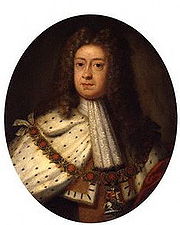
Bavaria
Bavaria, formally the Free State of Bavaria is a state of Germany, located in the southeast of Germany. With an area of , it is the largest state by area, forming almost 20% of the total land area of Germany...
(1070–1139, 1156–1180), dukes of Saxony
Duchy of Saxony
The medieval Duchy of Saxony was a late Early Middle Ages "Carolingian stem duchy" covering the greater part of Northern Germany. It covered the area of the modern German states of Bremen, Hamburg, Lower Saxony, North Rhine-Westphalia, and Saxony-Anhalt and most of Schleswig-Holstein...
(1138–1139, 1142–1180), a German
Germany
Germany , officially the Federal Republic of Germany , is a federal parliamentary republic in Europe. The country consists of 16 states while the capital and largest city is Berlin. Germany covers an area of 357,021 km2 and has a largely temperate seasonal climate...
King
Otto IV, Holy Roman Emperor
Otto IV of Brunswick was one of two rival kings of the Holy Roman Empire from 1198 on, sole king from 1208 on, and emperor from 1209 on. The only king of the Welf dynasty, he incurred the wrath of Pope Innocent III and was excommunicated in 1215.-Early life:Otto was the third son of Henry the...
(1198–1218), and the dukes of Brunswick and Lüneburg (1208–1918), later styled the "Electors of Hanover" when two branches of the family recombined in 1705.
After the peace ending
Congress of Vienna
The Congress of Vienna was a conference of ambassadors of European states chaired by Klemens Wenzel von Metternich, and held in Vienna from September, 1814 to June, 1815. The objective of the Congress was to settle the many issues arising from the French Revolutionary Wars, the Napoleonic Wars,...
the Napoleonic wars
Napoleonic Wars
The Napoleonic Wars were a series of wars declared against Napoleon's French Empire by opposing coalitions that ran from 1803 to 1815. As a continuation of the wars sparked by the French Revolution of 1789, they revolutionised European armies and played out on an unprecedented scale, mainly due to...
reshaped Europe ushering in the Modern era, the Electorate of Hanover
Electorate of Hanover
The Electorate of Brunswick-Lüneburg was the ninth Electorate of the Holy Roman Empire of the German Nation...
(duchy of Brunswick and Lüneburg
Brunswick-Lüneburg
The Duchy of Brunswick-Lüneburg , or more properly Duchy of Brunswick and Lüneburg, was an historical ducal state from the late Middle Ages until the late Early Modern era within the North-Western domains of the Holy Roman Empire of the German Nation, in what is now northern Germany...
held in personal union
Personal union
A personal union is the combination by which two or more different states have the same monarch while their boundaries, their laws and their interests remain distinct. It should not be confused with a federation which is internationally considered a single state...
by the king of Great Britain, George III) was dissolved by treaty, its lands were enlarged, and the state promoted to a kingdom
Kingdom of Hanover
The Kingdom of Hanover was established in October 1814 by the Congress of Vienna, with the restoration of George III to his Hanoverian territories after the Napoleonic era. It succeeded the former Electorate of Brunswick-Lüneburg , and joined with 38 other sovereign states in the German...
. The new kingdom existed from 1815 to 1866, but upon accession of Queen Victoria (who could not inherit Hanover under the Salic law
Salic law
Salic law was a body of traditional law codified for governing the Salian Franks in the early Middle Ages during the reign of King Clovis I in the 6th century...
) in 1837, it passed to her uncle
Ernest Augustus I of Hanover
Ernest Augustus I was King of Hanover from 20 June 1837 until his death. He was the fifth son and eighth child of George III, who reigned in both the United Kingdom and Hanover...
and thus ceased to be in personal union with the British Crown.
The House of Este hence gave Great Britain and the United Kingdom
United Kingdom
The United Kingdom of Great Britain and Northern IrelandIn the United Kingdom and Dependencies, other languages have been officially recognised as legitimate autochthonous languages under the European Charter for Regional or Minority Languages...
the "Hanoverian monarchs
House of Hanover
The House of Hanover is a deposed German royal dynasty which has ruled the Duchy of Brunswick-Lüneburg , the Kingdom of Hanover, the Kingdom of Great Britain, the Kingdom of Ireland and the United Kingdom of Great Britain and Ireland...
" (1714–1901).
Younger branch, the Margraves of Este

Obizzo I (d. 1193), the first margrave, battled against Emperor Frederick I Barbarossa
Frederick I, Holy Roman Emperor
Frederick I Barbarossa was a German Holy Roman Emperor. He was elected King of Germany at Frankfurt on 4 March 1152 and crowned in Aachen on 9 March, crowned King of Italy in Pavia in 1155, and finally crowned Roman Emperor by Pope Adrian IV, on 18 June 1155, and two years later in 1157 the term...
. His nephew Azzo d'Este VI
Azzo VI of Este
Azzo VI , known as Azzolino, was the Marquis of Este from the death of his father, Azzo V, in 1190 until his death...
(1170–1212) became podestà
Podestà
Podestà is the name given to certain high officials in many Italian cities, since the later Middle Ages, mainly as Chief magistrate of a city state , but also as a local administrator, the representative of the Emperor.The term derives from the Latin word potestas, meaning power...
of Mantua
Mantua
Mantua is a city and comune in Lombardy, Italy and capital of the province of the same name. Mantua's historic power and influence under the Gonzaga family, made it one of the main artistic, cultural and notably musical hubs of Northern Italy and the country as a whole...
and Verona
Verona
Verona ; German Bern, Dietrichsbern or Welschbern) is a city in the Veneto, northern Italy, with approx. 265,000 inhabitants and one of the seven chef-lieus of the region. It is the second largest city municipality in the region and the third of North-Eastern Italy. The metropolitan area of Verona...
. In 1146 with the last of the Adelardi Ferrara passed as the dowry
Dowry
A dowry is the money, goods, or estate that a woman brings forth to the marriage. It contrasts with bride price, which is paid to the bride's parents, and dower, which is property settled on the bride herself by the groom at the time of marriage. The same culture may simultaneously practice both...
of his niece the Marchesella, to Azzo VI d'Este. Azzo VII Novello was nominated podestà for his lifetime in 1242.
The lordship of Ferrara was made hereditary by Obizzo II (d. 1293) who was proclaimed Lord of Ferrara in 1264, Lord of Modena
Modena
Modena is a city and comune on the south side of the Po Valley, in the Province of Modena in the Emilia-Romagna region of Italy....
1288 and Lord of Reggio
Reggio Emilia
Reggio Emilia is an affluent city in northern Italy, in the Emilia-Romagna region. It has about 170,000 inhabitants and is the main comune of the Province of Reggio Emilia....
1289. Ferrara being a papal fief, the Este family were given the position of hereditary papal vicars in 1332.
Ferrara
Ferrara
Ferrara is a city and comune in Emilia-Romagna, northern Italy, capital city of the Province of Ferrara. It is situated 50 km north-northeast of Bologna, on the Po di Volano, a branch channel of the main stream of the Po River, located 5 km north...
became a significant center of culture under Niccolò d'Este III
Niccolò III d'Este
Niccolò III d'Este was Marquess of Ferrara from 1393 until his death. He was also a condottiero.-Biography:...
(1384–1441), who received several pope
Pope
The Pope is the Bishop of Rome, a position that makes him the leader of the worldwide Catholic Church . In the Catholic Church, the Pope is regarded as the successor of Saint Peter, the Apostle...
s with great magnificence, especially Eugene IV
Pope Eugene IV
Pope Eugene IV , born Gabriele Condulmer, was pope from March 3, 1431, to his death.-Biography:He was born in Venice to a rich merchant family, a Correr on his mother's side. Condulmer entered the Order of Saint Augustine at the monastery of St. George in his native city...
, who held a Council here in 1438, later known as the Council of Florence
Council of Florence
The Council of Florence was an Ecumenical Council of the Roman Catholic Church. It began in 1431 in Basel, Switzerland, and became known as the Council of Ferrara after its transfer to Ferrara was decreed by Pope Eugene IV, to convene in 1438...
.

Leonello d'Este
thumb|220px|Leonello D'Este portrayed by Pisanello.Leonello d'Este was marquis of Ferrara and Duke of Modena and Reggio Emilia from 1441 to 1450.-Biography:...
(1407–1450) and Borso
Borso d'Este
thumb|Borso d'Este, attributed to [[Vicino da Ferrara]], [[Pinacoteca]] of the [[Castello Sforzesco|Sforza Castle]] in [[Milan]], [[Italy]].Borso d'Este was the first Duke of Ferrara, which he ruled from 1450 until his death...
(1413–1471), who was elevated to Duke of Modena and Reggio by Emperor Frederick III
Frederick III, Holy Roman Emperor
Frederick the Peaceful KG was Duke of Austria as Frederick V from 1424, the successor of Albert II as German King as Frederick IV from 1440, and Holy Roman Emperor as Frederick III from 1452...
in 1452 and in return received these duchies as imperial fiefs. In 1471 he received the duchy of Ferrara as papal fief from Pope Paul II
Pope Paul II
Pope Paul II , born Pietro Barbo, was pope from 1464 until his death in 1471.- Early life :He was born in Venice, and was a nephew of Pope Eugene IV , through his mother. His adoption of the spiritual career, after having been trained as a merchant, was prompted by his uncle's election as pope...
, for which occasion splendid frescoes were executed at Palazzo Schifanoia
Palazzo Schifanoia
Palazzo Schifanoia is a Renaissance palace in Ferrara, Emilia-Romagna built for the Este family. The name "Schifanoia" is thought to originate from "schivar la noia" meaning literally to "escape from boredom" which describes accurately the original intention of the palazzo and the other villas...
.
Under Ercole
Ercole d'Este I
Ercole I d'Este was Duke of Ferrara from 1471 until 1505. He was a member of the house of Este. He was nicknamed North Wind and the Diamond.-Biography:...
(1431–1505), one of the most significant patrons of the arts in late 15th and early 16th century Italy, Ferrara grew into a cultural center, renowned especially for music; Josquin Des Prez
Josquin Des Prez
Josquin des Prez [Josquin Lebloitte dit Desprez] , often referred to simply as Josquin, was a Franco-Flemish composer of the Renaissance...
worked for Duke Ercole, Jacob Obrecht
Jacob Obrecht
Jacob Obrecht was a Flemish composer of the Renaissance. He was the most famous composer of masses in Europe in the late 15th century, being eclipsed by only Josquin des Prez after his death.-Life:...
came to Ferrara twice, and Antoine Brumel
Antoine Brumel
Antoine Brumel was a French composer. He was one of the first renowned French members of the Franco-Flemish school of the Renaissance, and, after Josquin des Prez, was one of the most influential composers of his generation....
served as principal musician from 1505. Ercole's daughter Beatrice
Beatrice d'Este
Beatrice d'Este , duchess of Milan, one of the most beautiful and accomplished princesses of the Italian Renaissance, was the daughter of Ercole I d'Este and younger sister of Isabella d'Este and Alfonso d'Este....
(1475–1497) married Ludovico Sforza
Ludovico Sforza
Ludovico Sforza , was Duke of Milan from 1489 until his death. A member of the Sforza family, he was the fourth son of Francesco Sforza. He was famed as a patron of Leonardo da Vinci and other artists, and presided over the final and most productive stage of the Milanese Renaissance...
, Duke of Milan, while his daughter Isabella
Isabella d'Este
Isabella d'Este was Marchesa of Mantua and one of the leading women of the Italian Renaissance as a major cultural and political figure. She was a patron of the arts as well as a leader of fashion, whose innovative style of dressing was copied by women throughout Italy and at the French court...
(1474–1539) married Francesco Gonzaga, Marquess of Mantua
Mantua
Mantua is a city and comune in Lombardy, Italy and capital of the province of the same name. Mantua's historic power and influence under the Gonzaga family, made it one of the main artistic, cultural and notably musical hubs of Northern Italy and the country as a whole...
.
Ercole I's successor was his son Alfonso I (1476–1534), third husband of the notorious Lucrezia Borgia
Lucrezia Borgia
Lucrezia Borgia [luˈkrɛtsia ˈbɔrʤa] was the illegitimate daughter of Rodrigo Borgia, the powerful Renaissance Valencian who later became Pope Alexander VI, and Vannozza dei Cattanei. Her brothers included Cesare Borgia, Giovanni Borgia, and Gioffre Borgia...
and the patron of Ariosto.

Renée of France
Renée de France was the younger daughter of Louis XII of France and Anne, Duchess of Brittany. Her elder sister was Queen Claude of France. She was the Duchess of Ferrara due to her marriage to Ercole II d'Este, grandson of Pope Alexander VI...
, daughter of Louis XII of France
Louis XII of France
Louis proved to be a popular king. At the end of his reign the crown deficit was no greater than it had been when he succeeded Charles VIII in 1498, despite several expensive military campaigns in Italy. His fiscal reforms of 1504 and 1508 tightened and improved procedures for the collection of taxes...
. His son Alfonso II first married Lucrezia, daughter of grand-duke Cosimo I of Tuscany, then after becoming a widower, Barbara, the sister of Maximilian II, Holy Roman Emperor
Maximilian II, Holy Roman Emperor
Maximilian II was king of Bohemia and king of the Romans from 1562, king of Hungary and Croatia from 1563, emperor of the Holy Roman Empire of the German Nation from 1564 until his death...
(1527–1576) and finally a third wife, Margherita Gonzaga
Margherita Gonzaga d'Este
Margherita Gonzaga d'Este, Duchess of Ferrara was an Italian noblewoman, the daughter of William I, Duke of Mantua and Eleonora of Austria, and the sister of Vincent I, Duke of Mantua and Anna Caterina Gonzaga. She was the wife of Alfonso II d'Este, Duke of Ferrara and Modena, whom she married...
, daughter of the duke of Mantua
Duchy of Mantua
The Duchy of Mantua was a duchy in Lombardy, Northern Italy, subject to the Holy Roman Empire.-History:After the fall of the Western Roman Empire, Mantua was invaded by Byzantines, Longobards and Franks. In the 11th century it became a possession of Boniface of Canossa, marquis of Toscana...
.
Though he raised the glory of Ferrara to its highest point, and was the patron of Torquato Tasso
Torquato Tasso
Torquato Tasso was an Italian poet of the 16th century, best known for his poem La Gerusalemme liberata , in which he depicts a highly imaginative version of the combats between Christians and Muslims at the end of the First Crusade, during the siege of Jerusalem...
and Giovanni Battista Guarini
Giovanni Battista Guarini
Giovanni Battista Guarini was an Italian poet, dramatist, and diplomat.- Life :He was born in Ferrara, and spent his early life both in Padua and Ferrara, entering the service of Alfonso II d'Este, Duke of Ferrara, in 1567...
, favouring the arts and sciences, as the princes of his house had always done, the legitimate line ended in 1597 with him. Emperor Rudolph II recognized as heir his first cousin Cesare d'Este
Cesare d'Este
Cesare d'Este was Duke of Modena and Reggio from 1597 until his death. During his reign, in 1598, the House of Este lost the Duchy of Ferrara.-Biography:...
(1533–1628), member of a cadet
Cadet
A cadet is a trainee to become an officer in the military, often a person who is a junior trainee. The term comes from the term "cadet" for younger sons of a noble family.- Military context :...
branch born out of wedlock, who continued to rule in the imperial duchies and carried on the family name. Ferrara, on the other hand, was annexed by force of arms in 1598 by Pope Clement VIII, on grounds of the heir's illegitimacy, and incorporated into the Papal States
Papal States
The Papal State, State of the Church, or Pontifical States were among the major historical states of Italy from roughly the 6th century until the Italian peninsula was unified in 1861 by the Kingdom of Piedmont-Sardinia .The Papal States comprised territories under...
.
The last duke, Ercole III, was deposed in 1796 by the French and his two duchies became the Cispadane Republic
Cispadane Republic
The Cispadane Republic was a short-lived republic located in Northern Italy, founded in 1796 with the protection of the French army, led by Napoleon Bonaparte. In the following year, it was merged into the Cisalpine Republic....
which one year later was merged into the Cisalpine Republic
Cisalpine Republic
The Cisalpine Republic was a French client republic in Northern Italy that lasted from 1797 to 1802.-Birth:After the Battle of Lodi in May 1796, Napoleon Bonaparte proceeded to organize two states: one to the south of the Po River, the Cispadane Republic, and one to the north, the Transpadane...
and then into the Napoleonic Kingdom of Italy. Ercole was compensated in 1801 with the small principality of Breisgau
Breisgau
Breisgau is the name of an area in southwest Germany, placed between the river Rhine and the foothills of the Black Forest around Freiburg im Breisgau in the state of Baden-Württemberg. The district Breisgau-Hochschwarzwald, which partly consists of the Breisgau, is named after that area...
in southwestern Germany, whose previous rulers, the Habsburgs, ceded it to him in anticipation of its eventual return to the Habsburgs, since Ercole's daughter Maria Beatrice Ricciarda d'Este
Maria Beatrice Ricciarda d'Este
Maria Beatrice d’Este was heiress of Modena and Reggio and Duchess of Massa and Carrara from 1790 until 1797 and from 1816 until her death in 1829.-Biography:...
was married to a cadet Habsburg, Archduke Ferdinand of Austria-Este
Archduke Ferdinand of Austria-Este
Archduke Ferdinand Karl Anton Joseph Johann Stanislaus of Austria-Este was a son of Holy Roman Emperor Franz I and Maria Theresa of Austria. He was the founder of the House of Austria-Este and Governor of the Duchy of Milan between 1765 and 1796...
. Ercole died in 1803 and Breisgau passed to his daughter and her husband, who then (1806) lost it during the Napoleonic reorganization of the western territories of the defunct Holy Roman Empire
Holy Roman Empire
The Holy Roman Empire was a realm that existed from 962 to 1806 in Central Europe.It was ruled by the Holy Roman Emperor. Its character changed during the Middle Ages and the Early Modern period, when the power of the emperor gradually weakened in favour of the princes...
to the enlarged and elevated Grand Duchy of Baden
Grand Duchy of Baden
The Grand Duchy of Baden was a historical state in the southwest of Germany, on the east bank of the Rhine. It existed between 1806 and 1918.-History:...
.
Austria-Este and the House of Habsburg
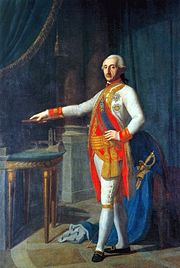
In 1814, when French rule in Italy ended (but after the death of Duke Ercole), Modena was returned to his daughter Mary Beatrice and her son, Archduke Francis of Austria-EsteFrancis IV, Duke of Modena
Francis IV Joseph Charles Ambrose Stanislaus was Duke of Modena, Reggio, and Mirandola , Duke of Massa and Prince of Carrara , Archduke of Austria-Este, Royal Prince of Hungary and Bohemia, Knight of the Order of the Golden Fleece...
. The family thus ruled the duchy of Modena and Reggio again from 1814 to 1859, using the names Asburgo-Este (Habsburg-Este) and Austria-Este
Austria-Este
Archduke of Austria-Este and Habsburg-Este are a title and a surname which have been used by several cadet branches of the House of Habsburg-Lorraine to denote a connection with the extinct Italian princely and feudal family of Este and the Duchy of Modena ruled by them...
. In 1859 the duchy lost its independence to the new united Italy, and Francis V, Duke of Modena
Francis V, Duke of Modena
Francesco Ferdinando Geminiano von Habsburg-Lothringen, known as Francis V of Modena , Archduke of Austria-Este, Royal Prince of Hungary and Bohemia, was Duke of Modena, Reggio, and Mirandola, Duke of Guastalla , Duke of Massa and Prince of Carrara from 1846 to 1859...
, was deposed.
Bavaria
Bavaria, formally the Free State of Bavaria is a state of Germany, located in the southeast of Germany. With an area of , it is the largest state by area, forming almost 20% of the total land area of Germany...
. The present head of this branch of the family is Franz, Duke of Bavaria
Franz, Duke of Bavaria
Franz Bonaventura Adalbert Maria Herzog von Bayern , styled as His Royal Highness The Duke of Bavaria, is head of the Wittelsbach family, the former ruling family of the Kingdom of Bavaria...
.
However, Francis V had decided to retain the Este name in the Habsburg
Habsburg
The House of Habsburg , also found as Hapsburg, and also known as House of Austria is one of the most important royal houses of Europe and is best known for being an origin of all of the formally elected Holy Roman Emperors between 1438 and 1740, as well as rulers of the Austrian Empire and...
family and willed his inheritance to the line of Archduke Charles Louis, younger brother of Emperor Francis Joseph
Franz Joseph I of Austria
Franz Joseph I or Francis Joseph I was Emperor of Austria, King of Bohemia, King of Croatia, Apostolic King of Hungary, King of Galicia and Lodomeria and Grand Duke of Cracow from 1848 until his death in 1916.In the December of 1848, Emperor Ferdinand I of Austria abdicated the throne as part of...
, on condition that the heir use the name Austria-Este. The first "adoptee" was Archduke Franz Ferdinand of Austria
Archduke Franz Ferdinand of Austria
Franz Ferdinand was an Archduke of Austria-Este, Austro-Hungarian and Royal Prince of Hungary and of Bohemia, and from 1889 until his death, heir presumptive to the Austro-Hungarian throne. His assassination in Sarajevo precipitated Austria-Hungary's declaration of war against Serbia...
(b. 1863, not descended from Maria Beatrice Ricciarda d'Este), who took the name Austria-Este
Austria-Este
Archduke of Austria-Este and Habsburg-Este are a title and a surname which have been used by several cadet branches of the House of Habsburg-Lorraine to denote a connection with the extinct Italian princely and feudal family of Este and the Duchy of Modena ruled by them...
and in 1896 became the heir presumptive
Heir Presumptive
An heir presumptive or heiress presumptive is the person provisionally scheduled to inherit a throne, peerage, or other hereditary honour, but whose position can be displaced by the birth of an heir or heiress apparent or of a new heir presumptive with a better claim to the position in question...
of the Habsburg Empire, but was murdered on 28 June 1914 in Sarajevo.

Sophie, Duchess of Hohenberg
Sophie, Duchess of Hohenberg ; 1 March 1868 – 28 June 1914) was a Czech aristocrat, the morganatic wife of Archduke Franz Ferdinand of Austria. Their assassination sparked World War I.- Early life :...
), the Habsburgs designated his soon-to-be born great-nephew Robert
Robert, Archduke of Austria-Este
Robert, Archduke of Austria-Este, Prince Imperial of Austria, Prince Royal of Hungary, Bohemia and Croatia , was born as the second son of Karl I, last Emperor of Austria-Hungary, and Zita of Bourbon-Parma.-Archduke of Austria-Este:On 16 April 1917, at the age of two, Robert was created Archduke of...
(b. 8 February 1915), second son of the future emperor Charles, as the next "adopted Austria-Este". Through his mother Zita of Bourbon-Parma
Zita of Bourbon-Parma
Princess Zita of Bourbon-Parma was the wife of Emperor Charles of Austria...
(a great-granddaughter of Maria Teresa of Savoy, Duchess of Lucca and Parma, who was a daughter of Maria Teresa of Austria-Este, Queen of Sardinia, who in turn was a daughter of Maria Beatrice Ricciarda d'Este
Maria Beatrice Ricciarda d'Este
Maria Beatrice d’Este was heiress of Modena and Reggio and Duchess of Massa and Carrara from 1790 until 1797 and from 1816 until her death in 1829.-Biography:...
and Archduke Ferdinand of Austria-Este
Archduke Ferdinand of Austria-Este
Archduke Ferdinand Karl Anton Joseph Johann Stanislaus of Austria-Este was a son of Holy Roman Emperor Franz I and Maria Theresa of Austria. He was the founder of the House of Austria-Este and Governor of the Duchy of Milan between 1765 and 1796...
, Duchess and Duke of Breisgau
Breisgau
Breisgau is the name of an area in southwest Germany, placed between the river Rhine and the foothills of the Black Forest around Freiburg im Breisgau in the state of Baden-Württemberg. The district Breisgau-Hochschwarzwald, which partly consists of the Breisgau, is named after that area...
and Modena), Robert was a descendant of Ercole III d'Este, and the blood of last Este dukes thus joined again with the name Austria-Este.
Today, the bearer of this tradition is the eldest son of Archduke Robert of Austria-Este (1915-1996), Lorenz Otto Charles of Austria-Este (b. 1955), who is married to Princess Astrid of Belgium, the only daughter of King Albert II
Albert II of Belgium
Albert II is the current reigning King of the Belgians, a constitutional monarch. He is a member of the royal house "of Belgium"; formerly this house was named Saxe-Coburg-Gotha...
. In 1995, Lorenz received the additional title of Prince of Belgium. Since 1991 the couple's children are titled Archduke (Archduchess) of Austria-Este, Princes(ss) of Belgium, Prince(ss) Imperial of Austria, Prince(ss) Royal of Hungary and Bohemia. Eldest of these is Prince Amedeo, Archduke of Austria-Este (b. 1986).
See also
- BradamanteBradamanteBradamante is the sister of Rinaldo, and one of the heroines in Orlando Innamorato by Matteo Maria Boiardo and Orlando Furioso by Ludovico Ariosto in their handling of the Charlemagne legends, also called the Matter of France.She falls in love with the Saracen warrior Ruggiero, but refuses to...
who with Rogero are legendary ancestors of the House of Este - Castello EstenseCastello EstenseThe Castle Estense or Castle of Saint Michele is a moated medieval structure in the center of Ferrara, northern Italy. It is a large block with four corner towers.- History :...
- Duchy of ReggioDuchy of ReggioThe Duchy of Reggio was one of the states that belonged to the Duchy of Modena and Reggio, ruled by the house of Este, in the north of Italy, in a territory now belonging to the Province of Reggio Emilia. The capital was Reggio....
- Duchy of Modena and ReggioDuchy of Modena and ReggioThe Duchy of Modena and Reggio |Italian]] state that existed from 1452 to 1859, with a break between 1796 and 1814. It was ruled by the noble House of Este, from 1814 Austria-Este.-House of Este:...
- Duchy of Massa and CarraraDuchy of Massa and CarraraThe Duchy of Massa and Carrara was the duchy that controlled the towns of Massa di Carrara and Carrara; the area is now part of unified Italy, but retains its local identity as the province of Massa-Carrara.-History:...
- FerraraFerraraFerrara is a city and comune in Emilia-Romagna, northern Italy, capital city of the Province of Ferrara. It is situated 50 km north-northeast of Bologna, on the Po di Volano, a branch channel of the main stream of the Po River, located 5 km north...
- Ivan VI of RussiaIvan VI of RussiaIvan VI Antonovich of Russia , was proclaimed Emperor of Russia in 1740, as an infant, although he never actually reigned. Within less than a year, he was overthrown by the Empress Elizabeth of Russia, Peter the Great's daughter...
- List of Dukes of Ferrara and of Modena
- List of members of the House of Este
- ModenaModenaModena is a city and comune on the south side of the Po Valley, in the Province of Modena in the Emilia-Romagna region of Italy....
- Reggio EmiliaReggio EmiliaReggio Emilia is an affluent city in northern Italy, in the Emilia-Romagna region. It has about 170,000 inhabitants and is the main comune of the Province of Reggio Emilia....
- RomagnaRomagnaRomagna is an Italian historical region that approximately corresponds to the south-eastern portion of present-day Emilia-Romagna. Traditionally, it is limited by the Apennines to the south-west, the Adriatic to the east, and the rivers Reno and Sillaro to the north and west...
Further reading
- Trevor Dean, Land and Power in Late Medieval Ferrara: The Rule of the Este, 1350–1450.(Cambridge University Press) 1987.
External links
- Il Castello Estense: genealogical tree