
All Topics  
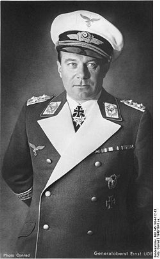
Ernst Udet

 
Ernst Udet

   Email Print
   Bookmark   Link


Ernst Udet


Colonel General
Colonel General

Colonel General is a senior military rank which is used in some of the world?s militaries. North Korea and Russia are two nations which have used the rank extensively throughout their histories....
 Ernst Udet (April 26, 1896 – November 17, 1941) was the second-highest scoring German
Germany

Germany , officially the Federal Republic of Germany , is a country in Central Europe. It is bordered to the north by the North Sea, Denmark, and the Baltic Sea; to the east by Poland and the Czech Republic; to the south by Austria and Switzerland; and to the west by France, Luxembourg, Belgium, and the Netherlands....
 flying ace
Flying ace

A flying ace or fighter ace is a military aviation credited with shooting down several enemy aircraft during aerial combat. The actual number of air victories required to officially qualify as an "ace" has varied, but is usually considered to be five or more....
 of World War I
World War I

World War I, or the First World War , was a global military conflict which involved the Great powers, organized into two opposing military alliances: the Allies of World War I and the Central Powers....
. He was one of the youngest aces and was the highest scoring German ace to survive the war (at the age of 22). His 62 victories were second only to Manfred von Richthofen
Manfred von Richthofen

Manfred Albrecht Freiherr von Richthofen was a German fighter pilot known as the "Red Baron". He was the most successful flying ace of World War I, being officially credited with 80 confirmed Aerial warfare victories....
, his commander in the Flying Circus
Jagdgeschwader 1 (World War 1)

The Jagdgeschwader 1 of World War I, was a fighter aircraft unit comprising four Jastas or 'fighter squadrons', originally raised by combining Jastas 4, 6, 10 & 11, on 24 June 1917 with Manfred von Richthofen as commander....
.

in Frankfurt am Main, Udet was known from early childhood for his sunny happy-go-lucky temperament.


Discussion
Ask a question about 'Ernst Udet'
Start a new discussion about 'Ernst Udet'
Answer questions from other users
Full Discussion Forum


Encyclopedia


Colonel General
Colonel General

Colonel General is a senior military rank which is used in some of the world?s militaries. North Korea and Russia are two nations which have used the rank extensively throughout their histories....
 Ernst Udet (April 26, 1896 – November 17, 1941) was the second-highest scoring German
Germany

Germany , officially the Federal Republic of Germany , is a country in Central Europe. It is bordered to the north by the North Sea, Denmark, and the Baltic Sea; to the east by Poland and the Czech Republic; to the south by Austria and Switzerland; and to the west by France, Luxembourg, Belgium, and the Netherlands....
 flying ace
Flying ace

A flying ace or fighter ace is a military aviation credited with shooting down several enemy aircraft during aerial combat. The actual number of air victories required to officially qualify as an "ace" has varied, but is usually considered to be five or more....
 of World War I
World War I

World War I, or the First World War , was a global military conflict which involved the Great powers, organized into two opposing military alliances: the Allies of World War I and the Central Powers....
. He was one of the youngest aces and was the highest scoring German ace to survive the war (at the age of 22). His 62 victories were second only to Manfred von Richthofen
Manfred von Richthofen

Manfred Albrecht Freiherr von Richthofen was a German fighter pilot known as the "Red Baron". He was the most successful flying ace of World War I, being officially credited with 80 confirmed Aerial warfare victories....
, his commander in the Flying Circus
Jagdgeschwader 1 (World War 1)

The Jagdgeschwader 1 of World War I, was a fighter aircraft unit comprising four Jastas or 'fighter squadrons', originally raised by combining Jastas 4, 6, 10 & 11, on 24 June 1917 with Manfred von Richthofen as commander....
.

Early life


From motorcycling to flying

Born in Frankfurt am Main, Udet was known from early childhood for his sunny happy-go-lucky temperament. He grew up in the Bavarian city of Munich. He was fascinated with aviation
Aviation

File:Norwegian military Bell 412SP helicopters.jpgAviation refers to activities involving man-made flying devices , including the people, organizations, and regulatory bodies involved with them....
 from early childhood and hung out at a nearby airplane manufactory and an army airship detachment. After crashing a glider he and a friend constructed, he finally flew with a test pilot in the nearby Otto Works, which he often visited, in 1913.

He tried to join the army on August 2, 1914, but was only 160 cm (5 feet 3 inches) tall and did not qualify. In August, when the Allgemeiner Deutscher Automobil-Club appealed for volunteers with motorcycles, Udet applied and was accepted. Udet's father had given him his motorcycle when Ernst passed his first year examination. Along with four friends, Udet was posted to the 26 Württembergischen Reserve Division as a "messenger rider." After injuring his shoulder when his motorcycle hit a shell hole, Udet went to a military hospital, and his bike went for repair. When he tried to track down the 26th Division, he was unable to locate it and decided to serve in the vehicle depot in Namur
Namur (city)

Namur is a city and Municipalities in Belgium in Wallonia, in southern Belgium. It is both the capital of the Provinces of Belgium of Namur and of the Walloon Region ....
. During this time, Udet met officers from the Chauny
Chauny

Chauny is a Communes of the Aisne department in the Aisne Departments of France in Picardie in northern France....
 flying sector who advised him to be transferred as an aerial observer
Aerial observer

Aerial Observer- Air Force Reconnaissance.An Aerial Observer is the functional position of gathering information visually from an airborne platform for use by military or commercial purposes....
. However, before he received his orders for Chauny, the army dispensed with the volunteer motorcyclists, and he was sent back to recruiting officials.

Udet tried in vain to return to the fighting, but was unable to get into the pilot or aircraft mechanic training offered by the army. He soon learned that if he were a trained pilot, he would be immediately accepted into the air force. Through a family friend, Gustav Otto
Gustav Otto

Gustav Otto was a Germany aircraft and aircraft-engine designer and manufacturer.Otto was born in Cologne to Nikolaus August Otto, the founder of N....
, owner of the aircraft factory he had haunted in his youth, Udet received private flight training. The training cost 2,000 marks and new bathroom equipment from his father's firm. Udet obtained his civilian pilot's license at the end of April 1915 and joined the German Army Air Service.

Military life


Artillery ranging

Originally, Udet flew in Flieger-Abteilung 206, an observation unit, as an Unteroffizier (staff sergeant) pilot with observer Lieutenant Justinius. He and his observer won the Iron Cross
Iron Cross

The Iron Cross was a military decoration of the Kingdom of Prussia, and later of Germany, which was established by King Frederick William III of Prussia and first awarded on 10 March 1813 in Breslau ....
 2nd class for nursing their Aviatik B.I
Aviatik B.I

The Aviatik B.I is a German two-seat reconnaissance biplane designed and built by the Automobil und Aviatik AG company, who until then had produced copies of French designs....
 two-seater back to German lines after a shackle on a wing-cable snapped. Justinius had climbed out to hold the wing and balance it rather than land and accept capture. As a result of the structural failure of the Aviatik that caused Udet and Justinius to go down, and a similar incident that cost Leutnant Winter and Viezefeldwebel Preiss their lives, the Aviatik B was retired from service. Udet and Justiniuas received Iron Crosses for their feat, Udet's being Second Class and Justinius's First Class.

Later, Udet was court-martialed for losing his aircraft in an incident the flying corps considered a result of bad judgement. The aircraft, overloaded with fuel and bombs, stalled after a sharp bank and plunged to the ground. Miraculously, both Udet and his fellow crew member survived. Udet was placed under arrest in the guardhouse for seven days.

On his way out of the guardhouse, he was asked to fly a Lieutenant Hartmann to observe a bombing raid on Belfort
Belfort

Belfort is a town and commune in France of northeastern France, pr?fecture of the Territoire de Belfort d?partement in France in the Franche-Comt? r?gion in France....
. A bomb thrown by hand by the lieutenant became stuck in the landing gear. Udet performed some aerobatics to shake it loose. As soon as the Air Staff Officer heard about it, he was transferred to fighter command. That was in early 1916.

Fighter pilot

Udet was given a new Fokker
Fokker

Fokker was a Dutch aircraft manufacturer named after its founder, Anthony Fokker. The company operated under several different names, starting out in 1912 in Germany, moving to the Netherlands in 1919....
 to fly to his new unit, Flieger Abteilung 68 (FA 68), at Habsheim. Mechanically defective, it crashed into a hangar on takeoff. An older Fokker was then sent to Udet. At Habsheim, his first aerial combat was a near disaster. Lining up on a French Caudron
Caudron

The Caudron Airplane Company was a France aircraft company founded in 1909 by brothers Gaston Caudron and Ren? Caudron . It was one of the earliest aircraft manufacturers in France and produced planes for the military in both World War I and World War II....
, he found he could not bring himself to pull the trigger and was subsequently strafed by the Frenchman. A bullet grazed his cheek and smashed his goggles.

From then on, he learned to attack aggressively and made a number of kills, downing his first French opponent on March 18, 1916. On that occasion, he scrambled to attack two French aircraft; instead, he found a formation of 22. He dove in from above and behind, giving his Fokker D.III
Fokker D.III

The Fokker D.III was a German single-seat fighter aircraft of World War I....
 full throttle, and opened fire on a Farman F.40
Farman F.40

The Farman F.40 was a France Pusher configuration biplane reconnaissance aircraft....
 from close range. He pulled away, leaving the flaming bomber trailing smoke, only to see the observer fall from the rear seat of the stricken craft. The fiery kill won Udet the Iron Cross
Iron Cross

The Iron Cross was a military decoration of the Kingdom of Prussia, and later of Germany, which was established by King Frederick William III of Prussia and first awarded on 10 March 1813 in Breslau ....
 First Class.

That year, FA 68 morphed into Kampfeinsitzer Kommando Habsheim before finally becoming Jagdstaffel 15 on September 28, 1916. It was in the latter unit that Udet would claim five more victims, before transferring to Jasta 37 in June 1917.

In January, 1917, Udet was commissioned as Leutnant der Reserve (lieutenant of reserves). That same month, Jasta 15 re-equipped with Albatros D.III
Albatros D.III

The Albatros D.III was a biplane fighter aircraft used by the Imperial Germany Army Air Service and the Austria-Hungary Air Service during the First World War....
s, hot new fighters with twin synchronized Spandau
Spandau

Spandau is the fifth and westernmost Boroughs of Berlin of Berlin, situated at the Confluence of the Havel and Spree rivers and along the western bank of the Havel....
 machine guns.

It was during his service with Jasta 15 that Udet wrote he had encountered Georges Guynemer
Georges Guynemer

Georges Guynemer was a France national hero during World War I, and a top fighter ace at the time of his death....
, the French ace, in single combat at 5000 metres. Guynemer preferred to hunt alone; by this time, he was the leading French ace, and one of the war's leading aces, with more than 30 victories.

Udet saw him coming and the two circled each other looking for an opening. They were close enough for Udet to read the "Vieux" of "Vieux Charles" on Guynemer's Spad S.7. The two opponents tried every tricky aerobatic they knew; the Frenchman ripped a burst of fire through the upper wing of Udet's plane. Udet evaded him and maneuvered for advantage. For an instant, Udet had him in his sights, but his guns jammed. While pretending to dogfight, he worked to unjam them. Guynemer saw his opponent's predicament, waved, and flew away. Udet wrote of the fight, "For seconds, I forgot that the man across from me was Guynemer, my enemy. It seems as though I were sparring with an older comrade over our own airfield."

Eventually, all the pilots of Jasta 15 were killed except Udet and his commander, Gontermann. Gontermann became somewhat gloomy, and remarked to Udet, "the bullets fall from the hand of God ... Sooner or later they will hit us."

Udet applied for a transfer to Jasta 37. Gontermann fell three months later, by accident, when the wing of his aircraft came off. He lingered for 24 hours without awakening, and Udet later remarked, "It was a good death."

On June 19, Udet transferred to Prussian Jasta 37.

By late November, Udet was a triple ace and Jastaführer. He modeled his attacks after those of Guynemer, coming in high out of the sun to pick off the rear aircraft in a squadron before the others knew what was happening. His commander in Jasta 37, Kurt Grasshoff
Kurt Grasshoff

Kurt Grasshoff was a German Empire pilot who commanded Jasta 37 in France and Jasta 38 in Macedonia in World War I. He commanded German ace Ernst Udet in Jasta 37, and chose Udet to command the unit upon his transfer to Jasta 38....
, witnessing one of these attacks, selected him for command over more senior men when Grasshoff was transferred. Udet's ascension to command on November 7, 1917, was followed six days later by award of the Royal House Order of Hohenzollern.

Despite his seemingly frivolous nature, drinking late into the night and womanizing, he proved an excellent squadron commander. He spent many hours coaching neophyte fighter pilots, with an emphasis on marksmanship as being essential for success.

In the Flying Circus

Udet's success attracted attention for his skill, earning him an invitation to join the Flying Circus
Flying Circus

Flying Circus may mean:*The Jagdgeschwader 1 , a German World War I fighter aircraft wing commanded by Manfred von Richthofen at one point*The American World War II air corps led by Joe Foss...
, Jagdgeschwader 1, an elite unit of German fighter aces under the command of the famed Red Baron Manfred von Richthofen
Manfred von Richthofen

Manfred Albrecht Freiherr von Richthofen was a German fighter pilot known as the "Red Baron". He was the most successful flying ace of World War I, being officially credited with 80 confirmed Aerial warfare victories....
. Richthofen drove up one day as Udet was trying to pitch a tent in Flanders
Flanders

Flanders is a geographical region located in parts of present-day Belgium, France, and the Netherlands. Over the course of history, the geographical territory that was called "Flanders" has varied....
 in the rain. Pointing out that Udet had 20 kills, Richthofen said, "Then you would actually seem ripe for us. Would you like to?"

Of course Udet would. After watching him down an artillery spotter by frontal attack, Richthofen gave Udet command of Jasta 11
Jasta 11

File:Bundesarchiv Bild 183-2004-0430-501, Jagdstaffel 11, Manfred v. Richthofen.jpgRoyal Prussian Jagdstaffel 11 was founded on 28 September 1916 from elements of 4 armee's Keks 1,2 and 3 and mobilized on 11 October as part of the Luftstreitkr?fte's expansion program, forming permanent specialised fighter squadrons, or "Jastas"....
, von Richthofen's own former squadron command. The group commanded by Richthofen also contained Jastas 4, 6 and 10. Udet's enthusiasm for Richthofen was unbounded. Richthofen demanded total loyalty and total dedication from his pilots, cashiering immediately anyone who did not give it. At the same time he treated them with every consideration. When it came time to requisition supplies, he traded favours for autographed photos of himself that read: "Dedicated to my esteemed fighting companion." Udet remarked that because of the signed photographs, " ... sausage and ham never ran out."

One night they invited a captured English flyer for dinner, treating him as a guest. When he excused himself for the 'W.C.' the Germans fell over themselves trying to hide from him that they were watching to see if he would try to escape. On his return the Englishman said, "I would never forgive myself for disappointing such hosts." However, the English flyer did escape later from another unit.

Udet considered Richthofen as scientific in battle and cold in his combats, describing his blue eyes and the sun shining off his blonde hair. Richthofen liked to strafe enemy columns in squadron formation, both guns firing, killing large numbers. He was the first to implement the concept of the forward base. While the enemy could mount three missions a day, Richthofen could mount five. In dogfights the head-on attack found favour.

Richthofen fell in April 1918, and Udet was not at the front. He had been sent on leave due to a painful ear infection, which he avoided having treated as long as he could. While at home he reacquainted himself with his childhood sweetheart, Eleanor "Lo" Zink. Notified that he had received the Pour le Mérite
Pour le Mérite

The Pour le M?rite, known informally during World War I as the Blue Max , was the Kingdom of Prussia's highest military Order until the end of World War I....
, he had one made up in advance so that he could impress her. He painted her name on the side of his Albatros fighters and Fokker D VII. Also on the tail of his Fokker D VII was the message "Du doch nicht" - "Definitely not you."

Of Richthofen, Udet said, "He was the least complicated man I ever knew. Entirely Prussian and the greatest of soldiers." Udet returned to JG 1 against the doctor's advice and remained there to the end of the war, commanding Jasta 4. He scored 20 victories in August alone, mainly against the British. Udet would become a national hero with 62 confirmed kills to his credit. But he did not enjoy Richthofen's successor, Hermann Goering, and, later, privately, he would question Göring's own achievements during the war.

Udet was one of the early fliers to be saved by parachuting from a disabled aircraft. On June 29, 1918 he jumped after a clash with a French Breguet
Breguet

Breguet may refer to:* Breguet , watch manufacturer* Breguet Aviation , a defunct French aircraft manufacturer; was formally known as "Soci?t? Anonyme des Ateliers d'Aviation Louis Breguet"...
. His harness caught on the rudder and he had to break off the rudder tip to escape. His parachute didn't open until he was 250 feet from the ground, causing him to sprain his ankle.

On September 28, 1918, Udet was wounded in the thigh. He was still recovering from this wound on Armistice Day, November 11, 1918, when the war ended.

Between the wars


Between the First and Second World Wars, Udet was known primarily for his work as a stunt pilot and for playboy-like behavior. He flew for movies
Film

Film encompasses individual motion pictures, the field of film as an art form, and the film industry. Films are produced by recording images from the world with cameras, or by creating images using animation techniques or special effects....
 and for airshow
Airshow

An air show is an event at which aviators display their flying skills and the capabilities of their aircraft to spectators. Air shows without aerobatic displays, having only aircraft displayed parked on the ground, are called "static air shows"....
s (e.g. picking the cloth from the ground with the top of the wing). He appeared with Leni Riefenstahl
Leni Riefenstahl

Helene Bertha Amalie "Leni" Riefenstahl was a Germany film director, actress and dancer widely noted for her aesthetics and innovations as a filmmaker....
 in three films: Die weiße Hölle vom Piz Palü (1929), Stürme über dem Montblanc (1930), and S.O.S. Eisberg
S.O.S. Eisberg

SOS Eisberg is a German-U.S. coproduction, released by Universal Studios in both Germany and the U.S. The film is a dramatic mountain film directed by Arnold Fanck, and filmed in Engadin, Switzerland and in Greenland....
 (1933). Udet's stunt pilot work in films took him to California. In the October 1933 issue of New Movie Magazine there is a photo of Carl Laemmle, Jr.'s party for Udet in Hollywood. Laemmle was head of Universal Studios
Universal Studios

Universal Studios , a subsidiary of NBC Universal, is one of the six Worldwide major American film studios. Its production studios are located at 100 Universal City Plaza Drive in Universal City, California....
 which made SOS Eisberg, a US-German co-production.

He married 'Lo' on February 25, 1920; however, the marriage lasted less than three years. They divorced on February 16, 1923. It has been said that Udet had many lovers on the side. His talents were numerous - juggling
Juggling

Juggling is a physical human skill involving the movement of one or more objects, usually through the air, for entertainment . The most recognizable form of juggling is toss juggling, where the juggler throws objects through the air....
, drawing cartoon
Cartoon

The word cartoon has various meanings, based on several very different forms of visual art and illustration. The term has evolved over time.The original meaning was in fine art, and there cartoon meant a preparatory drawing for a piece of art such as a painting or tapestry....
s, party entertainment, etc.

The adventure of Udet's life continued without pause after the war. On his way home, he had to defend himself against a Communist who wished to rip the medals off his chest. Udet and Ritter von Greim
Robert Ritter von Greim

Robert Ritter von Greim was a Germany Field Marshal, Aviator, army officer, and the last commander of the German Air Force until its recreation in 1956....
 performed mock dogfights on weekends for the POW Relief Organization, using surplus aircraft in Bavaria
Bavaria

Bavaria , with an area of and almost 12.5 million inhabitants, is a region located in the southeast of Germany and is the largest States of Germany of Germany by area....
. He was invited to start the first International Air Service between Germany and Austria, but after the first flight the Entente Commission confiscated his aircraft.

These efforts were good publicity for Udet. An American, William Pohl of Milwaukee, telephoned him with an offer to back an aircraft manufacturing company. Udet Flugzeug was born in a shed in Milbertshofen. Its intent was to build small aircraft that the general public could fly. It soon ran into trouble with the Entente Commission and transferred its operations to a beehive and chicken coop factory.

The first aeroplane that Udet's company produced was the U2. Udet took the second model, the U4, to the Wilbur Cup race in Buenos Aires
Buenos Aires

Buenos Aires is the Capital and largest city of Argentina. It is located on the southern shore of the R?o de la Plata, on the southeastern coast of the South American continent....
 at the expense of Aero Club Aleman. It was outclassed, and the club wanted him to do cigarette commercials to reimburse them for the expense, but he refused. He was rescued by the Chief of the Argentinian Railways, a man of Swedish descent named Tornquist, who picked up the tab.

In 1924, Udet left Udet Flugzeug when they decided to build a four-engine aircraft, which was larger and not for the general population. He and another friend from the war, Angermund, started an exhibition flying enterprise in Germany, which was also successful, but Udet remarked, "In time this too begins to get tiresome. ... We stand in the present, fighting for a living. It isn't always easy. ... But the thoughts wander back to the times when it was worthwhile to fight for your life."

Udet's war time friends were in seemingly inexhaustible supply. He and another, Suchocky, became pilots to an African filming expedition. The cameraman was another veteran, Schneeberger, whom Udet called "Flea," and the guide was Siedentopf, a former East African estate owner.

Udet described one incident in Africa in which lions jumped up to claw at the low-flying aircraft, one of them removing a strip of Suchocky's wing surface. Udet and his crew also ventured across the Figtree Hotel, built by Lord Lovelace, and went hunting with an American named Sullivan.

Building the Luftwaffe

Curtis Export Hawk Ii Cracow Aviation Museum
Though not interested in politics, Udet joined the Nazi party in 1933 when Göring promised to buy him two new US aeroplanes, the Curtiss Export Hawk II. The planes were used for evaluation purposes and thus indirectly influenced the German idea of dive bombing aeroplanes, such as the Junkers Ju 87
Junkers Ju 87

The Junkers Ju 87 or Stuka was a two-seat Nazi Germany ground-attack aircraft of World War II.Designed by Hermann Pohlmann, the Stuka first flew in 1935 and made its combat debut in 1936 as part of the Luftwaffe's Condor Legion during the Spanish Civil War....
 (Stuka) bombers. They were also used for aerobatic shows held during the 1936 Summer Olympics
1936 Summer Olympics

The 1936 Summer Olympics, officially known as the Games of the XI Olympiad, an international multi-sport event which was held in 1936 in Berlin, Nazi Germany....
. Udet piloted one of them, which luckily survived the war and is now on display in the Polish Aviation Museum (pictured). Udet became a major proponent of the dive bomber
Dive bomber

A dive bomber is a bomber aircraft that dives directly at its targets in order to provide greater accuracy and limit the exposure to and effectiveness of Anti-aircraft warfare fire....
, taking credit for having introduced it to the Luftwaffe
Luftwaffe

is a generic German term for an air force. It is also the official name for two of the four historic German air forces, the Wehrmacht air arm founded in 1933 and disbanded in 1946; and the current Bundeswehr air arm founded in 1956....
, which was already interested in such designs. By 1936 he had, due to his political connections, been placed in command of the T-Amt, the Reich Air Ministry's development wing. However, he had no real interest in this job, especially the bureaucracy of it, and the pressure led to his addiction to alcohol (brandy and cognac).

In January 1939, Udet visited Italian North Africa
Italian North Africa

Italian North Africa was the aggregate of territories and colonies controlled by Italy in North Africa from 1912 until World War II. Italian North Africa, unlike Italian East Africa existed in two phases: from 1912 to 1934, as Tripolitania and Cyrenaica, and after 1934, as Italian Libya....
 (Africa Settentrionale Italiana, or ASI). He accompanied Italian Marshal
Marshal

Marshal is a word used in several official titles of various branches of society. The word derives from Old High German marah "horse" and schalh "servant", and originally meant "stable keeper"....
 Italo Balbo
Italo Balbo

Italo Balbo was an Kingdom of Italy Blackshirt leader, Marshal of the Air Force , Governor-General of Italian Libya, Commander-in-Chief of Italian North Africa , and the "heir apparent" to Italian dictator Benito Mussolini....
 on a flight. In early 1939, there were distinct signs of German military and diplomatic co-operation with the Italians.

When World War II
World War II

World War II, or the Second World War , was a global military conflict which involved a Participants in World War II, including all of the great powers, organised into two opposing military alliances: the Allies of World War II and the Axis powers....
 began, his internal conflicts grew more intense. Aircraft production requirements were much more than the German industry could supply, given limited access to raw materials such as aluminium
Aluminium

Aluminium or aluminum is a silvery white and ductile member of the boron group of chemical elements. It has the symbol Al; its atomic number is 13....
. Göring responded to this problem by simply lying about it, which further upset Udet. After the Luftwaffes defeat in the Battle of Britain
Battle of Britain

The Battle of Britain is the name given to the sustained strategic effort by the Luftwaffe during the summer and autumn of 1940 to gain air superiority over the Royal Air Force , especially RAF Fighter Command....
, Göring tried to deflect Hitler's ire by blaming it on Udet. Hitler's attack on the Soviet Union
Operation Barbarossa

Operation Barbarossa was the code name for Nazi Germany's invasion of the Soviet Union during World War II that commenced on 22 June 1941. Over 4.5 million troops of the Axis powers invaded the USSR along a 2,900 kilometer front ....
 drove Udet further into despair.

Suicide

On November 17, 1941, Udet committed suicide, shooting himself in the head while on the phone to his girlfriend. Evidence indicates his unhappy relationship with Göring, Erhard Milch
Erhard Milch

Erhard Milch was a Germany field marshal who oversaw the development of the Luftwaffe as part of the re-armament of Germany following World War I....
 and the Nazi Party in general was the cause of his mental breakdown.

According to Udet's biography, The Fall of an Eagle, he wrote a suicide note in red pencil which included: "Ingelein, why have you left me?" and "Iron One, you are responsible for my death." "Ingelein" referred to his girlfriend, Inge Bleyle, and "Iron One" to Hermann Göring
Hermann Göring

Hermann Wilhelm G?ring was a Germany politician, military leader and a leading member of the Nazi Party. Among many offices, he was Hitler's designated successor and commander of the Luftwaffe ....
. The book The Luftwaffe War Diaries states something similar, that Udet wrote "Reichsmarschall, why have you deserted me?" in red on the headboard of his bed.

Udet's suicide was concealed from the public, and at his funeral he was lauded as a hero who had died in flight while testing a new weapon. On his way to attend Udet's funeral, the World War II fighter ace Werner Mölders
Werner Mölders

Werner M?lders was a Germany Luftwaffe flying ace. He became the first pilot in history to score 100 aerial kills. His final total stood at 101 victories in World War II as well as 14 in the Spanish Civil War....
 would die in a plane crash. Udet was buried in the Invalidenfriedhof Cemetery
Invalidenfriedhof Cemetery

The Invalidenfriedhof Cemetery is one of the oldest cemetery in Berlin. The cemetery was the traditional resting place of the Prussia military, and is regarded as particularly important as a memorial to the German Wars of Liberation of 1813-15....
, which is located in Berlin.

See also

  • Udet U 12
    Udet U 12

    The Udet U 12 Flamingo was an aerobatic sports plane and trainer aircraft developed in Germany in the mid 1920s. It was a conventional, single-bay biplane of wooden construction with the wings braced by large I-struts....
  • Carl Zuckmayer's play Des Teufels General ("The Devil's General"), whose main character is based upon Ernst Udet.
  • The character of "Ernst Kessler" in the 1975 film The Great Waldo Pepper
    The Great Waldo Pepper

    The Great Waldo Pepper is a 1975 in film drama film about a discontented Aviator played by Robert Redford....
     is clearly based upon Ernst Udet. It also contains superb dogfighting scenes between a Fokker Dr.I
    Fokker Dr.I

    The Fokker Dr.I Dreidecker was a World War I fighter aircraft built by Fokker. The Dr.I saw widespread service in the spring of 1918. It became renowned as the aircraft in which Manfred von Richthofen gained his last 20 victories, and in which he was killed on 21 April 1918....
     and a Sopwith Camel
    Sopwith Camel

    The Sopwith Camel was a British World War I single-seat fighter aircraft biplane, famous for its manoeuvrability....
    .


External links

  • Includes info on the films Udet was in with Leni Riefenstahl. Also has video downloads.