
All Topics  
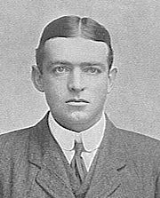
Ernest Shackleton

 
Ernest Shackleton

   Email Print
   Bookmark   Link


Ernest Shackleton


Sir Ernest Henry Shackleton CVO
Royal Victorian Order

The Royal Victorian Order is a dynastic order of knighthood and a House Order of chivalry in the Commonwealth realms. Created by Queen Victoria of the United Kingdom on 21 April 1896, with the motto Victoria and 20 June as the official day, the order was established to recognise those who have served the monarch with distinction, each be...
 OBE, (15 February 1874 – 5 January 1922) was an Anglo-Irish
Anglo-Irish

"Anglo-Irish" was a term used historically to describe a privileged social class in Ireland, whose members were the descendants and successors of the Protestant Ascendancy, mostly belonging to the Anglicanism Church of Ireland, which was the established church of Ireland until 1871, or to a lesser extent one of the English Dissenters churches...
 explorer who was one of the principal figures of the period known as the Heroic Age of Antarctic Exploration
Heroic Age of Antarctic Exploration

The Heroic Age of Antarctic Exploration describes an era which extended from the end of the 19th century to the early 1920s. During this 25-year period the Antarctic continent became the focus of an international effort which resulted in intensive scientific and geographical exploration, sixteen major expeditions being launched from eight d...
. His first experience of the polar regions was as third officer on Captain Scott
Robert Falcon Scott

Robert Falcon Scott Royal Victorian Order was a British Royal Naval officer and explorer who led two expeditions to the Antarctic regions: the Discovery Expedition, 1901–04, and the ill-fated Terra Nova Expedition, 1910–13....
’s Discovery Expedition
Discovery Expedition

The British National Antarctic Expedition, 1901–04, generally known as the Discovery Expedition, was the first official British exploration of the Antarctica regions since James Clark Ross voyage sixty years earlier....
, 1901–04, from which he was sent home early on health grounds. Determined to make amends for this perceived personal failure, he returned to Antarctica in 1907 as leader of the Nimrod Expedition
Nimrod Expedition

The British Antarctic Expedition 1907?09, otherwise known as the Nimrod Expedition, was the first of three expeditions to the Antarctic led by Ernest Shackleton....
.


Discussion
Ask a question about 'Ernest Shackleton'
Start a new discussion about 'Ernest Shackleton'
Answer questions from other users
Full Discussion Forum


Recent Posts


Encyclopedia


Sir Ernest Henry Shackleton CVO
Royal Victorian Order

The Royal Victorian Order is a dynastic order of knighthood and a House Order of chivalry in the Commonwealth realms. Created by Queen Victoria of the United Kingdom on 21 April 1896, with the motto Victoria and 20 June as the official day, the order was established to recognise those who have served the monarch with distinction, each be...
 OBE, (15 February 1874 – 5 January 1922) was an Anglo-Irish
Anglo-Irish

"Anglo-Irish" was a term used historically to describe a privileged social class in Ireland, whose members were the descendants and successors of the Protestant Ascendancy, mostly belonging to the Anglicanism Church of Ireland, which was the established church of Ireland until 1871, or to a lesser extent one of the English Dissenters churches...
 explorer who was one of the principal figures of the period known as the Heroic Age of Antarctic Exploration
Heroic Age of Antarctic Exploration

The Heroic Age of Antarctic Exploration describes an era which extended from the end of the 19th century to the early 1920s. During this 25-year period the Antarctic continent became the focus of an international effort which resulted in intensive scientific and geographical exploration, sixteen major expeditions being launched from eight d...
. His first experience of the polar regions was as third officer on Captain Scott
Robert Falcon Scott

Robert Falcon Scott Royal Victorian Order was a British Royal Naval officer and explorer who led two expeditions to the Antarctic regions: the Discovery Expedition, 1901–04, and the ill-fated Terra Nova Expedition, 1910–13....
’s Discovery Expedition
Discovery Expedition

The British National Antarctic Expedition, 1901–04, generally known as the Discovery Expedition, was the first official British exploration of the Antarctica regions since James Clark Ross voyage sixty years earlier....
, 1901–04, from which he was sent home early on health grounds. Determined to make amends for this perceived personal failure, he returned to Antarctica in 1907 as leader of the Nimrod Expedition
Nimrod Expedition

The British Antarctic Expedition 1907?09, otherwise known as the Nimrod Expedition, was the first of three expeditions to the Antarctic led by Ernest Shackleton....
. In January 1909 he and three companions made a southern march which established a record Farthest South
Farthest South

Farthest South describes the most southerly latitude reached by explorers before the conquest of the South Pole rendered the expression obsolete....
 latitude at 88°23'S, 97 geographical miles (114 statute miles, 190 km) from the South Pole
South Pole

The South Pole, also known as the Geographic South Pole or Terrestrial South Pole, is one of the two points where the Earth's rotation intersects the surface....
, by far the closest convergence on either Pole in exploration history up to that time. For this achievement, Shackleton was knighted by King Edward VII on his return home.

After the race to the South Pole ended in 1912 with Roald Amundsen
Roald Amundsen

Roald Engelbregt Gravning Amundsen , was a Norwegian people Exploration of polar regions. He led the first Antarctica expedition to reach the South Pole between 1910 and 1912....
's conquest, Shackleton turned his attention to what he said was the one remaining great object of Antarctic journeying—the crossing of the continent from sea to sea, via the pole. To this end he made preparations for what became the Imperial Trans-Antarctic Expedition
Imperial Trans-Antarctic Expedition

The Imperial Trans-Antarctic Expedition , also known as the Endurance Expedition, was the last major expedition of the Heroic Age of Antarctic Exploration....
, 1914–17. Disaster struck this expedition when its ship, Endurance
Endurance (1912 ship)

The Endurance was the three-masted barquentine in which Sir Ernest Shackleton sailed for the Antarctic on the 1914 Imperial Trans-Antarctic Expedition....
, was trapped in pack ice and slowly crushed, before the shore parties could be landed. There followed a sequence of exploits, and an ultimate escape with no lives lost, that would eventually assure Shackleton's heroic status, although this was not immediately evident. In 1921 he went back to the Antarctic with the Shackleton-Rowett Expedition
Shackleton-Rowett Expedition

The Shackleton?Rowett Expedition, 1921–22, was the last Antarctic expedition led by Sir Ernest Shackleton, and the final episode in the Heroic Age of Antarctic Exploration....
, intending to carry out a programme of scientific and survey activities. Before the expedition could begin this work Shackleton died of a heart attack while his ship, Quest, was moored in South Georgia. At his wife's request he was buried there.

Away from his expeditions, Shackleton's life was generally restless and unfulfilled. In his search for rapid pathways to wealth and security he launched many business ventures and other money-making schemes, none of which prospered. His financial affairs were generally muddled; when he died, he owed over £40,000 (more than £1.5 million in 2008 terms). On his death he was lauded in the press, but was thereafter largely forgotten, while the heroic reputation of his rival Scott was sustained for many decades. At the end of the 20th century Shackleton was "rediscovered", and rapidly became a cult figure, a role model for leadership as one who, in extreme circumstances, kept his team together to accomplish a survival story which polar historian Stephanie Barczewski describes as "incredible".

Early life


Childhood

Ernest Shackleton was born on 15 February 1874, in Kilkea near Athy
Athy

Athy Its population of 7,943 makes it the sixth largest town in Kildare and the 50th largest in the Republic of Ireland, with a growth rate of 31.3% since the 2002 census....
, County Kildare
County Kildare

County Kildare is an Republic of Ireland county located to the southwest of Dublin in the province of Leinster. The name comes from the Irish, meaning church of the oaks ....
, Ireland
Ireland

Ireland is the List of islands by area in Europe, and the twentieth-largest island in the world. It lies to the north-west of continental Europe and is surrounded by hundreds of islands and islet....
, about from Dublin
Dublin

Dublin is both the largest city and capital of Republic of Ireland. It is located near the midpoint of Ireland's east coast, at the mouth of the River Liffey and at the centre of the Dublin Region....
. Ernest's father, Henry, and mother, born Henrietta Letitia Sophia Gavan, were of Anglo-Irish ancestry. Ernest was the second of their ten children and the first of two sons. In 1880, when Ernest was six, Henry Shackleton gave up his life as a landowner to study medicine at Trinity College, Dublin
Trinity College, Dublin

Trinity College, Dublin , corporately designated as the Provost, Fellows and Scholars of the College of the Holy and Undivided Trinity of Queen Elizabeth near Dublin, was founded in 1592 by Queen Elizabeth I of England as the "mother of a university", and is the only constituent residential college of the University of Dublin....
, moving his family into the city. Four years later, the family moved again, from Ireland to Sydenham
Sydenham

Sydenham is a place and Wards of the United Kingdom in the London Borough of Lewisham; although some streets towards Crystal Palace Park and Penge are outside the ward and in the London Borough of Bromley, and some streets off Sydenham Hill are in the London Borough of Southwark....
 in suburban London. Partly this was in search of better professional prospects for the newly qualified doctor, but another factor may have been unease about their Anglo-Irish ancestry, following the assassination by Irish nationalists of Lord Frederick Cavendish
Lord Frederick Cavendish

Lord Frederick Charles Cavendish was an England The Liberal Party politician and prot?g? of the Prime Minister of the U.K., William Ewart Gladstone, who was appointed to the post of Chief Secretary for Ireland in May 1882....
, the British Chief Secretary for Ireland, in 1882.

From early childhood Shackleton was a voracious reader, which sparked a passion for adventure. He was schooled by a governess until the age of 11, when he began at Fir Lodge Preparatory School in West Hill, Dulwich
Dulwich

Dulwich is an affluent area of South East London. The settlement is mostly in the London Borough of Southwark with parts in the London Borough of Lambeth....
. At 13 he entered Dulwich College
Dulwich College

Dulwich College is a selective independent school for boys in Dulwich, a suburb of south-east London, United Kingdom. The College was founded in 1619 by Edward Alleyn, a successful Elizabethan era actor, with the original purpose of educating 12 poor scholars as the foundation of "God's Gift"....
, a leading public school
Independent school (UK)

An independent school in the United Kingdom is a school financed by private sources, predominantly in the form of school fees and charitable endowments; and so not subject to the conditions of "maintained status" imposed by accepting state financing....
 for boys. The young Shackleton did not distinguish himself as a scholar, and was reputedly said to be "bored" by his studies. He was quoted later as saying: "I never learned much geography at school....Literature, too, consisted in the dissection, the parsing, the analysing of certain passages from our great poets and prose-writers...teachers should be very careful not to spoil [their pupils'] taste for poetry for all time by making it a task and an imposition." In his final term at the school, however, he was able to achieve fifth place in his class of thirty-one.

Merchant Navy officer


Shackleton's restlessness at school was such that he was allowed to leave at 16 and go to sea. The options available were a Royal Naval cadetship at HMS Britannia
HMS Prince of Wales (1860)

HMS Prince of Wales was one of six 121-gun propeller first-rate ship of the line of the Royal Navy. She was launched on 25 January 1860.The Prince of Wales was originally a 3,186 ton 120 gun design by John Edye and Isaac Watts for a modified HMS Queen class sailing line-of-battle ship....
, which Dr Shackleton could not afford, the mercantile marine cadet ships Worcester and Conway
HMS Conway

Several ships of the Royal Navy have been named HMS Conway after the town of Conwy in Wales, formerly known by its English language name of Conway....
, or an apprenticeship "before the mast" on a sailing vessel. This third option was chosen. His father was able to secure him a berth with the North Western Shipping Company, aboard the square-rigged sailing ship Hoghton Tower. During the following four years at sea, Shackleton learned his trade, visiting the far corners of the earth and forming acquaintances with a variety of people from many walks of life, learning to be at home with all kinds of men. In August 1894 he passed his examination for Second Mate
Second Mate

A second mate or second officer is a licensed mariner of the deck department of a merchant ship. The second mate is the third in command and a watchkeeping officer, customarily the ship's navigator....
 and accepted a post as third officer
Third Officer

Third Officer may refer to:*A civilian aviation rank: Third Officer *A merchant marine rank: Third Mate, or*A naval rank in the Women's Royal Naval Service....
 on a tramp steamer
Tramp steamer

A ship engaged in the tramp trade is one which does not have a fixed schedule or published ports of call. As opposed to Freight liner , tramp ships trade on the spot market with no fixed schedule or itinerary/ports-of-call....
 of the Welsh Shire Line. Two years later he had obtained his First Mate's ticket, and in 1898 he was certified as a Master Mariner, which qualified him to command a British ship anywhere in the world.

In 1898 Shackleton joined the Union-Castle Line
Union-Castle Line

The Union-Castle Line was a prominent shipping line that operated a fleet of passenger liners and freighters between Europe and Africa from 1900 to 1977....
, the regular mail and passenger carrier between Southampton and Cape Town. He was, as a shipmate recorded, "a departure from our usual type of young officer", content with his own company though not aloof, "spouting lines from Keats and Browning", a mixture of sensitivity and aggression but withal, sympathetic. Following the outbreak of the Boer War
Boer War

Two Boer Wars were fought between the British empire and the two independent Boer republics, the Orange Free State and the South African Republic , founded by settlers known as Voortrekkers who made the Great Trek from the Cape Colony....
 in 1899, Shackleton transferred to the troopship Tintagel Castle where, in March 1900, he met an army lieutenant, Cedric Longstaff, whose father Llewellyn Longstaff was the main financial backer of the National Antarctic Expedition, then being organised in London. Shackleton used his acquaintance with the son to obtain an interview with Longstaff senior, with a view to obtaining a place on the expedition. Longstaff, impressed by Shackleton's keenness, recommended him to Sir Clements Markham, the expedition's overlord, making it clear that he wanted Shackleton accepted. On 17 February 1901 his appointment as third officer to the expedition's ship Discovery was confirmed; shortly afterwards he was commissioned a sub-lieutenant
Sub-Lieutenant

Sub-Lieutenant is a military rank. It is normally a junior officer rank.In many navies, a sub-lieutenant is a naval commissioned officer or subordinate officer, ranking below a Lieutenant....
 in the Royal Naval Reserve
Royal Naval Reserve

The Royal Naval Reserve is the volunteer reserve force of the Royal Navy in the United Kingdom....
. Although officially he was given leave by Union-Castle, this was in fact the end of Shackleton's Merchant Navy service.

Discovery Expedition, 1901–03

Discoveryboat
The National Antarctic Expedition, known as the Discovery Expedition after the ship Discovery
RRS Discovery

The Royal Research Ship Discovery was the last wooden three-masted ship to be built in United Kingdom, and was launched on 21 March 1901, designed for Antarctic research....
, was the brainchild of Sir Clements Markham, president of the Royal Geographical Society
Royal Geographical Society

The Royal Geographical Society is a United Kingdom learned society founded in 1830 with the name Geographical Society of London for the advancement of geographical sciences, under the patronage of William IV of the United Kingdom....
, and had been many years in preparation. It was led by Robert Falcon Scott
Robert Falcon Scott

Robert Falcon Scott Royal Victorian Order was a British Royal Naval officer and explorer who led two expeditions to the Antarctic regions: the Discovery Expedition, 1901–04, and the ill-fated Terra Nova Expedition, 1910–13....
, a Royal Navy torpedo lieutenant lately promoted Commander
Commander

Commander is a military rank which is also sometimes used as a military title depending on the individual customs of a given military service. Commander is also used as a rank or title in some organizations outside of the military, particularly in police and law enforcement....
, and had objectives that included scientific and geographical discovery. Although Discovery was not a Royal Navy unit, Scott required the crew, officers and scientific staff to accept voluntarily the conditions of the Naval Discipline Act, and the ship and expedition were run on Royal Navy lines. Shackleton accepted this, even though his own background and instincts favoured a different, more informal style of leadership. Shackleton's particular duties were listed as: "In charge of seawater analysis. Ward-room caterer. In charge of holds, stores and provisions [...] He also arranges the entertainments".

Discovery departed London on 31 July 1901, arriving at the Antarctic coast, via Cape Town
Cape Town

Cape Town is the second most populous city in South Africa, forming part of the metropolitan municipality of the City of Cape Town. It is the provincial Capital of the Western Cape, as well as the legislature capital of South Africa, where the Parliament of South Africa and many government offices are located....
 and New Zealand
New Zealand

New Zealand is an island country in the south-western Pacific Ocean comprising two main landmasses , and numerous Islands of New Zealand, most notably Stewart Island/Rakiura and the Chatham Islands....
, on 8 January 1902. After landing, Shackleton took part in an experimental balloon flight on 4 February. He also participated, with the scientists Edward Wilson
Edward Adrian Wilson

Dr Edward Adrian Wilson was a notable English polar List of explorers, physician, Natural history, Painting and ornithologist....
 and Hartley Ferrar, in the first sledging trip from the expedition's winter quarters in McMurdo Sound
McMurdo Sound

The ice-clogged waters of Antarctica's McMurdo Sound extend about 55 km long and wide. The sound encompasses 2,500 miles of shoreline which opens to the Ross Sea to the north....
, a journey which established a safe route on to the Great Ice Barrier
Ross Ice Shelf

File:Map-antarctica-ross-ice-shelf-red-x.pngThe Ross Ice Shelf is the largest ice shelf of Antarctica . It is several hundred meters thick. The nearly vertical ice front to the open sea is more than 600 km long, and between 15 and 50 meters high above the water surface....
. During the Antarctic winter of 1902, in the confines of the iced-in Discovery, Shackleton edited the expedition's magazine The South Polar Times. According to steward Clarence Hare, he was "the most popular of the officers among the crew, being a good mixer", though claims that this represented an unofficial rival leadership to Scott's are unsupported. Scott chose Shackleton to accompany Wilson and himself on the expedition's southern journey, a march southwards to achieve the highest possible latitude in the direction of the South Pole. This march was not a serious attempt on the Pole, although the attainment of a high latitude was of great importance to Scott, and the inclusion of Shackleton indicated a high degree of personal trust.
Robert Falcon Scott
The party set out on 2 November 1902. The march was, Scott wrote later, "a combination of success and failure". A record Farthest South
Farthest South

Farthest South describes the most southerly latitude reached by explorers before the conquest of the South Pole rendered the expression obsolete....
 latitude of 82°17' was reached, beating the previous record established in 1900 by Carsten Borchgrevink. The journey was marred by the poor performance of the dogs, whose food had become tainted, and who rapidly fell sick. All 22 dogs died during the march. The three men all suffered at times from snow blindness, frostbite and, ultimately, scurvy. On the return journey Shackleton had by his own admission "broken down" and could no longer carry out his share of the work. He would later strongly refute Scott's claims in The Voyage of the Discovery, that he had been carried on the sledge. However, he was in a seriously weakened condition; Wilson's diary entry for 14 January reads: "Shackleton has been anything but up to the mark, and today he is decidedly worse, very short winded and coughing constantly, with more serious symptoms that need not be detailed here but which are of no small consequence one hundred and sixty miles from the ship".

On 4 February 1903 the party finally reached the ship. After a medical examination (which proved inconclusive), Scott decided to send Shackleton home on the relief ship Morning
SY Morning

SY Morning is most famous for her role as a relief vessel to Robert Falcon Scott British National Antarctic Expedition . She made two voyages to the Antarctic to resupply the expedition....
, which had arrived in McMurdo Sound in January 1903. Scott wrote: "He ought not to risk further hardship in his present state of health." There is conjecture that Scott's motives for removing him was resentment of Shackleton's popularity, and that ill-health was used as an excuse to get rid of him. Years after the deaths of Scott, Wilson and Shackleton, Albert Armitage
Albert Armitage

Albert Borlase Armitage was a Scotland explorer of Antarctica and captain in the Royal Navy.He was first a member of the Jackson-Harmsworth Expedition exploring Franz Josef Land....
, the expedition's second-in-command, claimed that there had been a falling-out on the southern journey, and that Scott had told the ship's doctor that "if he does not go back sick he will go back in disgrace." There is no corroboration of Armitage's story. Shackleton and Scott stayed on friendly terms, at least until the publication of Scott's account of the southern journey in The Voyage of the Discovery. Although in public they remained mutually respectful and cordial, according to biographer Roland Huntford, Shackleton's attitude to Scott turned to "smouldering scorn and dislike"; salvage of wounded pride required "a return to the Antarctic and an attempt to outdo Scott".

Between the Discovery and Nimrod expeditions, 1903–07

After a period of convalescence in New Zealand, Shackleton returned to England via San Francisco and New York. As the first significant person to return from the Antarctic he found that he was in demand; in particular, the Admiralty wished to consult him about their further proposals for the rescue of Discovery. With Sir Clements Markham's blessing he accepted a temporary post assisting the outfitting of the Terra Nova for the second Discovery relief operation but turned down the offer to sail with her as chief officer. He also assisted in the equipping of the Argentinian gunboat Uruguay, which was being fitted out for the relief of the stranded Swedish Antarctic Expedition
Swedish Antarctic Expedition

The Swedish Antarctic Expedition was led by Otto Nordenskj?ld and Carl Anton Larsen .Two key Antarctic islands are associated with the expedition....
 under Nordenskiöld. In search of more permanent employment, Shackleton applied for a regular commission in the Royal Navy, via the back-door route of the Supplementary List, but despite the sponsorship of Markham and of the president of the Royal Society
Royal Society

The Royal Society of London for the Improvement of Natural Knowledge, known simply as the Royal Society, or even the Royal, is a learned society for science that was founded in 1660 and is considered by most to be the oldest such society still in existence....
 he was not successful. Instead, he became a journalist, working for the Royal Magazine, but found this unsatisfactory. He was then offered, and accepted, the secretaryship of the Royal Scottish Geographical Society
Royal Scottish Geographical Society

The Royal Scottish Geographical Society is a learned society founded in 1884 and based in Perth, Scotland. The Society has a membership of 2500 and aims to advance the science of geography world-wide by supporting education, research, expeditions, through its journal , its newsletter and other publications....
 (RSGS), a post which he took up on 11 January 1904.

In 1905 Shackleton became a shareholder in a speculative company that aimed to make a fortune transporting Russian troops home from the Far East. Despite his assurances to Emily that "we are practically sure of the contract" nothing came of this scheme. He also ventured into politics, unsuccessfully standing in the 1906 General Election
United Kingdom general election, 1906

The United Kingdom general election of 1906 was held from 12 January to 8 February 1906.The Liberal Party , led by sitting minority Prime Minister of the United Kingdom Henry Campbell-Bannerman, won a large majority in the election....
 as the Liberal Unionist Party
Liberal Unionist Party

The Liberal Unionists were a United Kingdom political party that split away from the Liberal Party in 1886. Led by Spencer Compton Cavendish, 8th Duke of Devonshire and Joseph Chamberlain the party formed a political alliance with the Conservative Party in opposition to Ireland Home Rule#Irish home rule ....
's candidate for Dundee
Dundee (UK Parliament constituency)

Dundee was a constituency of the British House of Commons of the Parliament of the United Kingdom from 1832 to 1950, when it was split into Dundee East and Dundee West ....
. Meantime he had taken a job with wealthy Clydeside industrialist William Beardmore
William Beardmore

William Beardmore, 1st Baron Invernairn was an England-Scotland Business magnate.Beardmore was born in Deptford, London, where his father, also William Beardmore, was a mechanical engineer....
 (later Lord Invernairn), with a roving commission which involved interviewing prospective clients and entertaining Beardmore's business friends. Shackleton by this time, however, was making no secret of his ambition to return to Antarctica at the head of his own expedition.

Beardmore was sufficiently impressed with Shackleton to offer financial support, but other donations proved hard to come by. Nevertheless, in February 1907 Shackleton presented his plans for an Antarctic expedition to the Royal Geographic Society, the details of which, under the name British Antarctic Expedition, were published in the Royal Society's newsletter, Geographic Journal. The aim was the conquest of both the geographical South Pole and the South Magnetic Pole
South Magnetic Pole

The Earth's South Magnetic Pole is the wandering point on the Earth's surface where the Earth's magnetic field lines are directed vertically upwards....
. Shackleton then worked hard to persuade others of his wealthy friends and acquaintances to contribute, including Sir Phillip Lee Brocklehurst, who subscribed £2,000 (2008 equivalent £150,000) to secure a place on the expedition, author Campbell Mackellar, and Guinness
Guinness

Guinness is a popular dry stout that originated in Arthur Guinness' first brewery in Leixlip, County Kildare but it then moved to its present home at St....
 baron Lord Iveagh whose contribution was secured less than two weeks before the departure of the expedition ship Nimrod.

Nimrod Expedition (1907–09)

On 1 January 1908, Nimrod
Nimrod Expedition

The British Antarctic Expedition 1907?09, otherwise known as the Nimrod Expedition, was the first of three expeditions to the Antarctic led by Ernest Shackleton....
 sailed for the Antarctic from Lyttleton Harbour, New Zealand
New Zealand

New Zealand is an island country in the south-western Pacific Ocean comprising two main landmasses , and numerous Islands of New Zealand, most notably Stewart Island/Rakiura and the Chatham Islands....
. Shackleton's original plans had envisaged using the old Discovery base in McMurdo Sound to launch his attempts on the South Pole and South Magnetic Pole. However, before leaving England he had been pressured to give an undertaking to Scott that he would not base himself in the McMurdo area, which Scott was claiming as his own field of work. Shackleton reluctantly agreed to look for winter quarters either at the Barrier Inlet
Bay of Whales

The Bay of Whales is an iceport indenting the front of Ross Ice Shelf just northward of Roosevelt Island, Antarctica.A natural ice harbor which generally forms here, it served as the base site for Roald Amundsen's successful expedition to the South Pole, 1911, the Richard E....
 (which Discovery had briefly visited in 1902) or at King Edward VII Land
Edward VII Peninsula

Edward VII Peninsula or King Edward VII Land or King Edward VII Peninsula or Kong Edward VII Land or K?nig Edward VII Land is a large, ice-covered peninsula which forms the northwestern extremity of Marie Byrd Land and projects into the Ross Sea between Sulzberger Bay and the northeast corner of the Ross Ice Shelf....
.

To conserve coal, the ship was towed by the steamer Koonya to the Antarctic ice, after Shackleton had persuaded the New Zealand
New Zealand

New Zealand is an island country in the south-western Pacific Ocean comprising two main landmasses , and numerous Islands of New Zealand, most notably Stewart Island/Rakiura and the Chatham Islands....
 government and the Union Steamship Company to share the cost. In accordance with Shackleton's promise to Scott the ship headed for the eastern sector of the Great Ice Barrier, arriving there on 21 January 1908. They found that the Barrier Inlet had expanded to form a large bay, in which were hundreds of whales, which led to the immediate christening of the area as the Bay of Whales
Bay of Whales

The Bay of Whales is an iceport indenting the front of Ross Ice Shelf just northward of Roosevelt Island, Antarctica.A natural ice harbor which generally forms here, it served as the base site for Roald Amundsen's successful expedition to the South Pole, 1911, the Richard E....
. It was noted that ice conditions were unstable, precluding the establishment of a safe base there. An extended search for an anchorage at King Edward VII Land proved equally fruitless, so Shackleton was forced to break his undertaking to Scott and set sail for McMurdo Sound, a decision which, according to second officer Arthur Harbord, was "dictated by common sense" in view of the difficulties of ice pressure, coal shortage and the lack of any nearer known base.

Nimrod arrived at McMurdo Sound on 29 January, but was stopped by ice north of Discoverys old base at Hut Point. After considerable weather delays, Shackleton's base was eventually established at Cape Royds
Cape Royds

Cape Royds is a dark rock cape forming the west extremity of Ross Island, facing on McMurdo Sound. Discovered by the Discovery Expedition and named for Lieutenant Charles Royds, Royal Navy, who acted as meteorologist for the expedition....
, about north of Hut Point. The party was in high spirits, despite the difficult conditions; Shackleton's ability to communicate with each man kept the party happy and focussed.

The "Great Southern Journey", as Frank Wild
Frank Wild

John Robert Francis Wild , known as Frank Wild, was an explorer on several expeditions to Antarctica including:* In 1901 he was a member of Robert Falcon Scott?s crew as a seaman on the ?Discovery?, along with Ernest Shackleton who was then a sub-Lieutenant....
 called it, began on 19 October 1908. On 9 January 1909 Shackleton and three companions (Wild, Eric Marshall
Eric Marshall

Eric Marshall was an Antarctica explorer with the Nimrod Expedition led by Ernest Shackleton in 1907-09, and was one of the party of four who reached Furthest South at on 9 January 1909...
 and Jameson Adams
Jameson Adams

Jameson Adams was an Antarctic explorer with the Nimrod Expedition, the first expedition led by Ernest Shackleton in an unsuccessful attempt to reach the South Pole....
) reached a new Farthest South
Farthest South

Farthest South describes the most southerly latitude reached by explorers before the conquest of the South Pole rendered the expression obsolete....
 latitude of 88°23'S, a point only from the Pole. En route the South Pole party discovered the Beardmore Glacier
Beardmore Glacier

The Beardmore Glacier in Antarctica is one of the largest glaciers in the world, with a length exceeding 160 km . The glacier is one of the main passages from the Ross Ice Shelf through the Queen Alexandra Range and Commonwealth Range ranges of the Transantarctic Mountains to the Antarctic Plateau, and was one of the early routes to the Sou...
, (named after Shackleton's patron), and became the first persons to see and travel on the South Polar Plateau. Their return journey to McMurdo Sound was a race against starvation, on half-rations for much of the way. At one point Shackleton gave his one biscuit allotted for the day to the ailing Frank Wild, who wrote in his diary: "All the money that was ever minted would not have bought that biscuit and the remembrance of that sacrifice will never leave me". They arrived at Hut Point just in time to catch the ship.

The expedition's other main accomplishments included the first ascent of Mount Erebus
Mount Erebus

Mount Erebus in Antarctica is the southernmost active volcano on Earth. With a summit elevation of , it is located on Ross Island, which is also home to three inactive volcanoes, notably Mount Terror ....
, and the discovery of the approximate location of the South Magnetic Pole, reached on 16 January 1909 by Edgeworth David
Edgeworth David

Sir Tannatt William Edgeworth David Order of the British Empire, Fellow of the Royal Society, was a Welsh Australian geologist and Antarctica explorer....
, Douglas Mawson
Douglas Mawson

Sir Douglas Mawson, Order of the British Empire, Australian Academy of Science, Fellow of the Royal Society was an Australian Antarctic List of explorers and geologist....
, and Alistair MacKay
Alistair Mackay

Alistair Mackay was a Scottish people doctor and Polar region explorer. He was one the trio of explorers, along with Douglas Mawson and T. W. Edgeworth David, who became the first humans to reach the magnetic South Pole....
. Shackleton returned to the United Kingdom
United Kingdom

The United Kingdom of Great Britain and Northern Ireland, commonly known as the United Kingdom , the UK or Britain,is a sovereign state located off the northwestern coast of continental Europe....
 as a hero, and soon afterwards published his expedition account,
The Heart of the Antarctic. Emily Shackleton later recorded: "The only comment he made to me about not reaching the Pole was "a live donkey is better than a dead lion, isn't it?" and I said "Yes darling, as far as I am concerned".

Between expeditions 1909–14


Public hero

On Shackleton's return home, public honours were quickly forthcoming. King Edward VII received him on 12 July and invested him as Commander of the Royal Victorian Order; in the king's Birthday Honours list in November he was made a knight
Knight Bachelor

The rank of Knight Bachelor is a part of the British honours system. It is the rank of a man who has been knighted by the monarch but not as a member of one of the organised Chivalric order....
 and thus became Sir Ernest Shackleton. He was honoured by the Royal Geographical Society, who awarded him a Gold Medal—a proposal that the medal be smaller than that earlier awarded to Captain Scott was not acted on. All the members of the Nimrod Expedition shore party received silver Polar Medals. Shackleton was also appointed a Younger Brother of Trinity House
Trinity House

The Corporation of Trinity House is the official General Lighthouse Authority for England, Wales and other British territorial waters . It is responsible for the provision and maintenance of navigational aids such as lighthouses, lightvessels, buoys and maritime radio/satellite communication systems....
, a significant honour for British mariners.

Besides the official honours, Shackleton's Antarctic feats were greeted in Britain with great enthusiasm. Proposing a toast to the explorer at a lunch given in Shackleton's honour by the Royal Societies Club, Lord Halsbury
Hardinge Giffard, 1st Earl of Halsbury

Hardinge Stanley Giffard, 1st Earl of Halsbury was a leading barrister, politician and government Political minister, serving as Solicitor General for England and Wales and Lord Chancellor of Great Britain....
, a former Lord Chancellor
Lord Chancellor

The Lord High Chancellor of Great Britain, or Lord Chancellor, is a senior and important functionary in the government of the United Kingdom....
, said: "When one remembers what he had gone through, one does not believe in the supposed degeneration of the British race. One does not believe that we have lost all sense of admiration for courage [and] endurance". The heroism was also claimed by Ireland: the Dublin
Evening Telegraph's headline read "South Pole Almost Reached By An Irishman", while the Dublin Express spoke of the "qualities that were his heritage as an Irishman". Shackleton's fellow-explorers expressed their admiration; Roald Amundsen
Roald Amundsen

Roald Engelbregt Gravning Amundsen , was a Norwegian people Exploration of polar regions. He led the first Antarctica expedition to reach the South Pole between 1910 and 1912....
 wrote, in a letter to RGS Secretary John Scott Keltie
John Scott Keltie

Sir John Scott Keltie Royal Geographic Society, Royal Statistical Society was a Scotland geographer, best known for his work with the Royal Geographic Society....
 that "the English nation has by this deed of Shackleton's won a victory that can never be surpassed". Nansen
Fridtjof Nansen

Fridtjof Wedel-Jarlsberg Nansen was a Norway explorer, scientist and diplomat. Nansen was awarded the Nobel Peace Prize in 1922 for his work as a League of Nations High Commissioner....
 sent an effusive private letter to Emily Shackleton, praising the "unique expedition which has been such a complete success in every respect". The reality was, however, that the expedition had left Shackleton deeply in debt, unable to meet the financial guarantees he had given to backers. Despite his efforts, it required government action, in the form of a grant of £20,000 (2008: £1.5 million) to clear the most pressing obligations. It is likely that many debts were not pressed and were written off.

Biding time

masterbation is fun

In the period immediately after his return, Shackleton engaged in a strenuous schedule of public appearances, lectures and social engagements. He then sought to cash in on his celebrity by making a fortune in the business world. Among the ventures which he hoped to promote were a tobacco company, a scheme for selling to collectors postage stamps overprinted "King Edward VII Land" (based on Shackleton's appointment as Antarctic postmaster by the New Zealand authorities), and the development of a Hungarian mining concession he had acquired near the city of Nagybanya, now part of Romania
Romania

Romania is a country located in Southeastern Europe Central Europe, North of the Balkan Peninsula, on the Lower Danube, within and outside the Carpathian Mountains, bordering on the Black Sea....
. None of these enterprises prospered, and his main source of income was his earnings from lecture tours. He still harboured thoughts of returning south, even though in September 1910, having recently moved with his family to Sheringham
Sheringham

Sheringham is a seaside town in Norfolk, England, located west of Cromer.Historically, the parish of Sheringham comprised the two villages of Upper Sheringham, a farming community, and Lower Sheringham, which combined farming with fishing....
 in Norfolk
Norfolk

Norfolk is a low-lying Counties of England in the East of England. It has borders with Lincolnshire to the west, Cambridgeshire to the west and southwest and with Suffolk to the south....
, he wrote to Emily: "I am never again going South and I have thought it all out and my place it at home now". He had been in discussions with Douglas Mawson about a scientific expedition to the Antarctic coast between Cape Adare
Cape Adare

Cape Adare is the northeastern most peninsula in Victoria Land, East Antarctica. The cape separates the Ross Sea to the east from the Southern Ocean to the west, and is backed by the high Admiralty Mountains....
 and Gaussberg
Gaussberg

Gaussberg is an extinct Volcanoes cone, 370 metres high, fronting on Davis Sea immediately west of the Posadowsky Glacier in Kaiser Wilhelm II Land in Antarctica....
, and had written to the RGS about this in February 1910.

Any future resumption by Shackleton of the quest for the South Pole depended on the results of Scott's Terra Nova Expedition
Terra Nova Expedition

The Terra Nova Expedition , officially the British Antarctic Expedition 1910, was led by Robert Falcon Scott who had previously commanded the Discovery Expedition to the Antarctic in 1901–04....
, which left from Cardiff in July 1910. By the spring of 1912 the world was aware that the pole had been conquered, by the Norwegian Roald Amundsen. The fate of Scott's expedition was not then known. Shackleton's mind turned to a project that had been announced, and then abandoned, by the Scottish explorer William Speirs Bruce
William Speirs Bruce

William Speirs Bruce was a London-born Scotland naturalist, polar region scientist and oceanographer who organized and led the Scottish National Antarctic Expedition ....
, for a continental crossing, from a landing in the Weddell Sea
Weddell Sea

The Weddell Sea is part of the Southern Ocean. Its land boundaries are defined by the bay formed from the coasts of Coats Land and the Antarctic Peninsula....
, via the South Pole to McMurdo Sound. Bruce, who had failed to acquire financial backing, was happy that Shackleton should adopt his plans, which were similar to those being followed by the German explorer Wilhelm Filchner
Wilhelm Filchner

Wilhelm Filchner was a Germany explorer.At the age of 21, he participated in his first expedition, which led him to Russia. Two years later, he travelled alone and on horseback through the Pamir Mountains, from Osh to Murgabh to the upper Wakhan to Tashkurgan and back....
. Filchner had left Bremerhaven
Bremerhaven

Bremerhaven is the port city of the free city and States of Germany of Bremen , Germany. It forms an enclave in the state of Lower Saxony and is located at the mouth of the Weser River on its eastern bank, opposite the town of Nordenham....
 in May 1911; in December 1912 the news arrived from South Georgia that his expedition had failed. The transcontinental journey, in Shackleton's words the "one great object of Antarctic journeyings" remaining, was now open to him.

Imperial Trans-Antarctic Expedition 1914–17


Preparations

Shackleton published details of his new expedition, grandly titled the Imperial Trans-Antarctic Expedition, early in 1914. Two ships would be employed;
Endurance
Endurance (1912 ship)

The Endurance was the three-masted barquentine in which Sir Ernest Shackleton sailed for the Antarctic on the 1914 Imperial Trans-Antarctic Expedition....
would carry the main party into the Weddell Sea, aiming for Vahsel Bay from where a team of six, led by Shackleton, would begin the crossing of the continent. Meanwhile a second ship, the Aurora
Aurora (ship)

The Aurora was a steam yacht built by Alexander Stephen & Sons Ltd. shipbuilders in Glasgow, Scotland, in 1876, for the Dundee Seal and Whale Fishing Company....
, would take a supporting party under Captain Aeneas Mackintosh
Aeneas Mackintosh

Aeneas Lionel Acton Mackintosh was a British Merchant Navy officer and Antarctic explorer who was a member of two of Sir Ernest Shackleton's expeditions: the Nimrod Expedition and the Imperial Trans-Antarctic Expedition ....
 to McMurdo Sound on the opposite side of the continent. This party would then lay supply depots across the Great Ice Barrier as far as the Beardmore Glacier, these depots holding the food and fuel that would enable Shackleton's party to complete their journey of across the continent.

Shackleton used his considerable fund-raising skills, and the expedition was financed largely by private donations, although the British government gave £10,000 (about £680,000 in 2008 terms). Scottish jute
Jute

Jute is a long, soft, shiny vegetable fiber that can be spun into coarse, strong threads. It is produced from plants in the genus Corchorus, family Tiliaceae....
 magnate Sir James Caird gave £24,000, Midlands industrialist Sir Dudley Docker gave £10,000 and tobacco heiress Janet Stancomb-Wills
Janet Stancomb-Wills

Dame Janet Stancomb Graham Stancomb-Wills, Order of the British Empire was the eldest daughter of George Perkins Stancomb and Catherine Janet Lobb, at Aldersgate, London, and niece of the first Baron Winterstoke ....
 gave an undisclosed but reportedly "generous" sum. Public interest in the expedition was considerable; Shackleton received more than 5,000 applications to join it. His interviewing and selection methods sometimes seemed eccentric; believing that character and temperament were as important as technical ability, he would ask unconventional questions. Thus physicist Reginald James was asked if he could sing; others were accepted on sight because Shackleton liked the look of them, or after the briefest of interrogations. Shackleton also loosened some traditional hierarchies, expecting all men, including the scientists, to take their share of ship's chores.

Despite the outbreak of the First World War on 3 August 1914,
Endurance was directed by the First Lord of the Admiralty, Winston Churchill
Winston Churchill

Sir Winston Leonard Spencer-Churchill, Order of the Garter, Order of Merit, Order of the Companions of Honour, Territorial Decoration, Fellow of the Royal Society, Her Majesty's Most Honourable Privy Council, Queen's Privy Council for Canada was a Politics of the United Kingdom known chiefly for his leadership of the United King...
, to "proceed", and left British waters on 8 August. Shackleton delayed his own departure until 27 September, meeting the ship in Buenos Aires
Buenos Aires

Buenos Aires is the Capital and largest city of Argentina. It is located on the southern shore of the R?o de la Plata, on the southeastern coast of the South American continent....
.

Loss of Endurance


Endurance departed from South Georgia for the Weddell Sea on 5 December, heading for Vahsel Bay. As the ship moved southward, early ice was encountered, which slowed progress. Deep in the Weddell Sea conditions gradually grew worse until, on 19 January 1915, Endurance became frozen fast in an ice floe
Sea ice

Sea ice is formed from ocean water that freezes. Because the oceans consist of saltwater, this occurs at about -1.8 ?Celsius .Sea ice may be contrasted with icebergs, which are chunks of ice shelf or glaciers that calve into the ocean....
. On 24 February, realising that she would be trapped until the following spring, Shackleton ordered the abandonment of ship's routine and her conversion to a winter station. She drifted slowly northward with the ice through the following months. When spring arrived in September the breaking of the ice and its subsequent movements put extreme pressures on the ship's hull. Until this point Shackleton had hoped that the ship, when freed from the ice, could work her way back towards Vahsel Bay. On 24 October, however, water began pouring in. After a few days, with the position at 69°05'S, 51°30'W, Shackleton gave the order to abandon ship; and men, provisions and equipment were transferred to camps on the ice. On 21 November 1915, the wreck finally slipped beneath the surface.

For almost two months Shackleton and his party camped on a large, flat floe, hoping that it would drift towards Paulet Island
Paulet Island

Paulet Island is a Circle island about in diameter, lying southeast of Dundee Island, off the northeastern end of the Antarctic Peninsula. It is composed of lava flows capped by a cinder cone with a small summit crater....
, approximately away, where it was known that stores were cached. After failed attempts to march across the ice to this island, Shackleton decided to set up another more permanent camp (Patience Camp) on another floe, and trust to the drift of the ice to take them towards a safe landing. By 17 March their ice camp was within of Paulet Island but, separated by impassable ice, they were unable to reach it. On 9 April their ice floe broke into two, and Shackleton ordered the crew into the lifeboats, to head for the nearest land. After five harrowing days at sea, at which time Shackleton watched over the men's health dilligently, even to the point of forcing expedition artist Frank Hurley
Frank Hurley

James Francis "Frank" Hurley, Order of the British Empire was an Australian photographer, film maker and adventurer. He participated in a number of expeditions to Antarctica and served as an official photographer with Australian forces during both world wars....
 to take his mittens to keep warm, the exhausted men landed their three lifeboats at Elephant Island.

The open-boat journey


Elephant Island was an inhospitable place, far from any shipping routes. Consequently, Shackleton decided to risk an open-boat journey to the distant South Georgia whaling stations, where he knew help was available. The strongest of the lifeboats, christened
James Caird
James Caird (boat)

The voyage of the James Caird was an open-boat journey which took place following the abandonment of Ernest Shackleton Imperial Trans-Antarctic Expedition, after the loss of its ship, Endurance , in October 1915....
after the expedition's chief sponsor, was chosen for the trip. Ship's carpenter Harry McNish
Harry McNish

Harry McNish was the carpenter on Sir Ernest Shackleton's Imperial Trans-Antarctic Expedition of 1914–1917. He was responsible for much of the work that ensured the crew's survival after their ship, the Endurance , was destroyed when it became trapped in pack ice in the Weddell Sea....
 made various improvements, including raising the sides, strengthening the keel, building a makeshift deck of wood and canvas, and sealing the work with oil paint and seal blood. Shackleton chose five companions for the journey: Frank Worsley
Frank Worsley

Frank Arthur Worsley Distinguished Service Order and Bar, Order of the British Empire, Decoration for Officers of the Royal Naval Reserve was a New Zealand sailor and explorer....
,
Endurance
s captain, who would be responsible for navigation; Tom Crean
Tom Crean

Tom Crean was an Ireland seaman and Antarctic explorer from County Kerry. He left the family farm near Annascaul to enlist in the British Royal Navy at the age of 15....
, who had "begged to go"; two strong sailors in John Vincent
John Vincent (sailor)

John Vincent was an England seaman and member of Ernest Shackleton's Imperial Trans-Antarctic Expedition. He was one of the five men who accompanied Shackleton on his epic crossing from Elephant Island to South Georgia and the South Sandwich Islands and was one of only four of the crew of Endurance not to receive the Polar Medal....
 and Timothy McCarthy, and finally the carpenter McNish. Shackleton had clashed with McNish during the time when the party was stranded on the ice but, while he would not forgive the carpenter's earlier insubordination, Shackleton recognised his value for this particular job.

Shackleton refused to pack supplies for more than four weeks, knowing that if they did not reach South Georgia within that time, the boat and its crew would be lost. The James Caird was launched on 24 April 1916; during the next fifteen days it sailed through the waters of the southern ocean, at the mercy of the stormy seas, in constant peril of capsizing. On 8 May, due to Worsley's navigational skills, the cliffs of South Georgia came into sight, but hurricane-force winds prevented the possibility of landing. The party were forced to ride out the storm offshore, in constant danger of being dashed against the rocks. They would later learn that the same hurricane had sunk a 500-ton steamer bound for South Georgia from Buenos Aires. On the following day they were able, finally, to land on the unoccupied southern shore. After a period of rest and recuperation, rather than risk putting to sea again to reach the whaling stations on the northern coast, Shackleton decided to attempt a land crossing of the island. Although it is likely that Norwegian whalers had previously crossed at other points on ski, no one had attempted this particular route before. Leaving McNish, Vincent and McCarthy at the landing point on South Georgia, Shackleton travelled with Worsley and Crean over mountainous terrain for 36 hours to reach the whaling station at Stromness
Stromness (South Georgia)

Stromness is a former whaling station on the northern coast of South Georgia Island in the South Atlantic. Its historical significance is that it represents the destination of Ernest Shackleton's epic rescue journey in 1916....
.

The next successful crossing of South Georgia was in October 1955, by the British explorer Duncan Carse
Duncan Carse

Duncan Carse was a British actor and explorer, who died on the 2nd May, 2004, aged 90. He had lived in Fittleworth, West Sussex, for over 40 years....
, who travelled much of the same route as Shackleton's party. In tribute to their achievement he wrote: "I do not know how they did it, except that they had to—three men of the heroic age of Antarctic exploration with 50 feet of rope between them—and a carpenter's adze".

Rescue

Shackleton immediately sent a boat to pick up the three men from the other side of South Georgia while he set to work to organise the rescue of the Elephant Island men. His first three attempts were foiled by sea ice, which blocked the approaches to the island. He appealed to the Chile
Chile

Chile, officially the Republic of Chile , is a country in South America occupying a long and narrow coastal strip wedged between the Andes mountains and the Pacific Ocean....
an government, which offered the use of Yelcho
Luis Pardo

Luis Pardo Villal?n was the captain of the Chilean steam tug Yelcho which rescued the 22 stranded crewmen of Sir Ernest Shackleton's ship Endurance from Elephant Island, Antarctica, in August 1916....
, a small seagoing tug
Tugboat

A tugboat, or tug, is a boat used to maneuver, primarily by towing or pushing, other ships in harbors, over the open sea or through rivers and canals....
 from its navy. Yelcho reached Elephant Island on 30 August, and Shackleton quickly evacuated all 22 men.

There remained the men of the Ross Sea Party
Ross Sea Party

The Ross Sea party was part of Ernest Shackleton's Imperial Trans-Antarctic Expedition 1914–17. Shackleton's plan was to land with a group on the Weddell Sea coast of Antarctica from his ship Endurance , and to march across the continent, via the South Pole, to McMurdo Sound, Ross Island....
, who were stranded at Cape Evans
Cape Evans

Cape Evans is a rocky cape on the west side of Ross Island, forming the north side of the entrance to Erebus Bay. It was discovered by the Discovery expedition under Robert Falcon Scott, who named it the Skuary....
 in McMurdo Sound, after Aurora had been blown from its anchorage and driven out to sea, unable to return. The ship, after a drift of many months, had returned to New Zealand. Shackleton travelled there to join Aurora, and sailed with her to the rescue of the Ross Sea party. This group, despite many hardships, had carried out its depot-laying mission to the full, but three lives had been lost, including that of its commander, Aeneas Mackintosh
Aeneas Mackintosh

Aeneas Lionel Acton Mackintosh was a British Merchant Navy officer and Antarctic explorer who was a member of two of Sir Ernest Shackleton's expeditions: the Nimrod Expedition and the Imperial Trans-Antarctic Expedition ....
.

World War I

Shackleton returned to England in May 1917, while Europe
Europe

Europe is, conventionally, one of the world's seven continents. Comprising the westernmost peninsula of Eurasia, Europe is generally divided from Asia to its east by the water divide of the Ural Mountains, the Ural , the Caspian Sea, and by the Caucasus Mountains to the southeast....
 was in the midst of the First World War. He suffered from a heart condition, most likely made worse by the fatigue of his arduous journeys. He was too old to be conscripted, but nevertheless he volunteered for the army, repeatedly requesting to be sent to the front in France. He was by now drinking heavily. In October 1917 he was sent to Buenos Aires
Buenos Aires

Buenos Aires is the Capital and largest city of Argentina. It is located on the southern shore of the R?o de la Plata, on the southeastern coast of the South American continent....
 to boost British propaganda in South America. Unqualified as a diplomat, he nevertheless tried, unsuccessfully, to persuade Argentina and Chile to enter the war on the side of the Allies. He returned home in April 1918.

Shackleton was then briefly involved in a mission to Spitsbergen
Spitsbergen

Spitsbergen is a Norway island, the largest island of the Svalbard archipelago in the Arctic Ocean. The island of Spitsbergen covers approximately 39,044 km? ....
, the purpose of which was to establish a British presence there, in the guise of a mining operation. On the way there, in Tromsø
Tromsø

is a List of cities in Norway and Municipalities of Norway in Troms Counties of Norway, Norway. The administrative centre of the municipality is the city of Troms?....
, he was taken ill, possibly with a heart attack; in any event he was required to return home, as he had been commissioned into the army and appointed to a military expedition to Murmansk
Murmansk

Murmansk is a types of inhabited localities in Russia and seaport in the extreme northwest part of Russia, on the Kola Bay, 12 km from the Barents Sea on the northern shore of the Kola Peninsula, not far from Russia's borders with Norway and Finland....
, in northern Russia. The Armistice
Armistice with Germany (Compiègne)

The armistice treaty between the Allies and German Empire was signed in a railway carriage in Compi?gne Forest on 11 November 1918, and marked the end of the World War I on the Western Front ....
 was signed on 11 November 1918, and four months later, in March 1919, Shackleton returned home. He was full of plans, however, for the economic development of Northern Russia, and began seeking capital to this end. These plans foundered as the region fell to the Bolsheviks. Shackleton returned to the lecture circuit, and in December 1919 published South, his own account of the Endurance expedition. For his war effort in North Russia, Shackleton was appointed an Officer of the Order of the British Empire (OBE).

Final expedition and death


In 1920, tired of the lecture circuit, Shackleton began to consider the possibility of a last expedition. He thought seriously of going to the Beaufort Sea
Beaufort Sea

The Beaufort Sea is the portion of the Arctic Ocean located north of the Northwest Territories, the Yukon, and Alaska and west of Canadian Arctic islands....
 area of the Arctic
Arctic

The Arctic is the region around the Earth's North Pole, opposite the Antarctica region around the South Pole. The Arctic includes the Arctic Ocean and parts of Canada, Greenland , Russia, the United States , Iceland, Norway, Sweden and Finland....
, a largely unexplored region, and raised some interest in this idea from the Canadian government. With funds supplied by a former schoolfriend John Quiller Rowett
John Quiller Rowett

John Quiller Rowett Notes and ReferencesSources*...
 he acquired a Norwegian whaler, which he renamed Quest. The plan changed; the destination became the Antarctic, and the project was defined by Shackleton as an "oceanographic and sub-antarctic expedition". The goals of the venture were imprecise, but a circumnavigation of the Antarctic continent and investigation of some "lost" sub-antarctic islands were mentioned as objectives. Rowett agreed to finance the entire expedition, which became known as the Shackleton-Rowett Expedition
Shackleton-Rowett Expedition

The Shackleton?Rowett Expedition, 1921–22, was the last Antarctic expedition led by Sir Ernest Shackleton, and the final episode in the Heroic Age of Antarctic Exploration....
, and which left England on 24 September 1921.

Although some of his former crew members had not received all of their pay from the Endurance expedition, many of them signed on with their former "Boss". When the party arrived in Rio de Janeiro
Rio de Janeiro

Rio de Janeiro , is the second largest city of Brazil and South America, behind S?o Paulo, and the third largest metropolitan area in South America, behind S?o Paulo and Buenos Aires....
, Shackleton suffered a suspected heart attack. He refused a proper medical examination and would not seek treatment, so Quest continued south, and on 4 January 1922 arrived at South Georgia. In the early hours of the next morning Shackleton summoned the expedition's physician, Alexander Macklin
Alexander Macklin

Alexander Hepburne Macklin OBE Military Cross Territorial Decoration was a United Kingdom Physician who served as one of the two surgery on Sir Ernest Shackleton's Imperial Trans-Antarctic Expedition of 1914–1917....
, to his cabin, complaining of back pains and other discomfort. According to Macklin's own account, Macklin told him he had been overdoing things and should try to "lead a more regular life", to which Shackleton answered: "You are always wanting me to give up things, what is it I ought to give up?" "Chiefly alcohol, Boss," replied Macklin. A few moments later, at 2:50 a.m. on 5 January 1922, Shackleton suffered a fatal heart attack.

Macklin, who conducted the autopsy, concluded that the cause of death was atheroma
Atheroma

In pathology, an atheroma is an accumulation and swelling in artery walls that is made up of cells , or cell debris, that contain lipids , calcium and a variable amount of fibrous connective tissue....
 of the coronary arteries exacerbated by "overstrain during a period of debility". Leonard Hussey, a veteran of the Imperial Trans-Antarctic expedition, offered to return the body to Britain; however, while he was in Montevideo
Montevideo

Montevideo is the largest city, the capital and chief port of Uruguay. Montevideo is the only city in the country with a population over 1,000,000....
 en route to England, a message was received from Emily Shackleton asking that her husband be buried in South Georgia. Hussey returned with the body, and on 5 March 1922 Shackleton was buried in the Grytviken
Grytviken

Grytviken is the principal Hamlet in the United Kingdom territory of South Georgia and the South Sandwich Islands in the South Atlantic. It was so named by a 1902 Swedish surveyor who found old English try pots used to render Pinniped oil at the site....
 cemetery, South Georgia, after a short service in the Lutheran church. Macklin wrote in his diary: "I think this is as "the Boss" would have had it himself, standing lonely in an island far from civilization, surrounded by stormy tempestuous seas, & in the vicinity of one of his greatest exploits."

Legacy

Before the return of Shackleton's body to South Georgia, there had been a memorial service held for him, with full military honours, at Holy Trinity Church, Montevideo
Montevideo

Montevideo is the largest city, the capital and chief port of Uruguay. Montevideo is the only city in the country with a population over 1,000,000....
, and on 2 March a service had been held at St Paul's Cathedral
St Paul's Cathedral

St Paul's Cathedral is the Anglicanism cathedral on Ludgate Hill, in the City of London, and the seat of the Bishop of London. The present building dates from the 17th century and is generally reckoned to be London's fifth St Paul's Cathedral, although the number is higher if every major medieval reconstruction is counted as a new cathedr...
, London, at which the King and other members of the royal family had been represented. Within a year the first biography, The Life of Sir Ernest Shackleton, by Hugh Robert Mill
Hugh Robert Mill

Hugh Robert Mill was a Scottish geography and meteorology who was influential in the reform of geography teaching, and in the development of meteorology as a science....
, had been published. This book, as well as being a tribute to the explorer, was a practical effort to assist his family; Shackleton had died some £40,000 in debt (2008: £1.5 million). A further initiative was the establishment of a Shackleton Memorial Fund, which was used to assist the education of his children and the support of his mother.
Shackletonstatue
During the ensuing decades Shackleton's status as a polar hero was generally outshone by that of Captain Scott. Scott's polar party had, by 1925, been commemorated in Britain alone by more than 30 monuments, including stained glass windows, statues, busts and memorial tablets. A statue of Shackleton designed by Sir Edwin Lutyens was unveiled at the Royal Geographical Society's Kensington
Kensington

Kensington is a district of West London, England within the Royal Borough of Kensington and Chelsea, located west of Charing Cross. An affluent and densely-populated area, its commercial heart is Kensington High Street and it contains the well-known museum district of South Kensington....
 headquarters in 1932, but public memorials to Shackleton were relatively few. Likewise, the printed word saw much more attention given to Scott—a forty-page booklet on Shackleton, published in 1943 by OUP as part of a "Great Exploits" series, is described by cultural historian Stephanie Barczewski as "a lone example of a popular literary treatment of Shackleton in a sea of similar treatments of Scott". This disparity continued into the 1950s.

In 1959 Alfred Lansing's Endurance: Shackleton's Incredible Voyage was published. This was the first of a number of books about Shackleton that began to appear, showing him in a highly positive light. At the same time, attitudes towards Scott were gradually changing, as a more critical note was sounded in the literature, culminating in Roland Huntford
Roland Huntford

Roland Huntford is an author, principally of biographies of Polar explorers.He has written biographies of Captain Scott, Ernest Shackleton and Nobel Peace Prize winner Fridtjof Nansen....
's 1979 treatment of him in his dual biography Scott and Amundsen, described by Barczewski as a "devastating attack". This negative picture of Scott became accepted as the popular truth, as the kind of heroism that Scott represented fell victim to the cultural shifts of the late twentieth century. Within a few years he had been thoroughly overtaken in public esteem by Shackleton, whose popularity surged while that of his erstwhile rival declined. In 2002, in a BBC poll conducted to determine the "100 Greatest Britons", Shackleton was ranked eleventh, while Scott was down in 54th place.

In 2001 Margaret Morrell and Stephanie Capparell presented Shackleton as a model for corporate leadership, in their book Shackleton's Way: Leadership Lessons from the Great Antarctic Explorer. They wrote: "Shackleton resonates with executives in today's business world. His people-centred approach to leadership can be a guide to anyone in a position of authority". Other management writers were soon following this lead, using Shackleton as an examplar for bringing order to chaos. The Centre for Leadership Studies at the University of Exeter
University of Exeter

The University of Exeter is a university in the South West England of England. Most of its activities are located in the city of Exeter, Devon, where it is the principal higher education institution....
 (United Kingdom) offers a course on Shackleton, who also features in the management education programmes of several American universities. In Boston USA a "Shackleton School" was set up on "Outward Bound
Outward Bound

Outward Bound is an international, non-profit, independent, outdoor educationorganization with approximately 40 schools around the world and 200,000 participants per year....
" principles, with the motto "The Journey is Everything". Shackleton has also been cited as a model leader by the US Navy, and in a textbook on Congressional leadership, Peter L Steinke calls Shackleton the archetype of the "nonanxious leader" whose "calm, reflective demeanor becomes the antibiotic warning of the toxicity of reactive behaviour".

Shackleton's death marked the end of the Heroic Age of Antarctic Exploration, a period of discovery characterized by journeys of geographical and scientific exploration in a largely unknown continent, without any of the benefits of modern travel methods or radio communication. In the preface to his book The Worst Journey in the World
The Worst Journey in the World

The Worst Journey in the World is a memoir of the 1910-1913 Terra Nova Expedition led by Robert Falcon Scott. It was written and published in 1922 by a survivor of the expedition, Apsley Cherry-Garrard, and has earned wide praise for its frank treatment of the difficulties of the expedition, the causes of its disastrous outcome, and the...
 Apsley Cherry-Garrard
Apsley Cherry-Garrard

Apsley George Benet Cherry-Garrard was an England explorer of Antarctica. He was a survivor of the Terra Nova Expedition and is acclaimed for his historical account of this expedition, The Worst Journey in the World....
, one of Scott's team on the Terra Nova Expedition, wrote: "For a joint scientific and geographical piece of organization, give me Scott; for a Winter Journey, Wilson; for a dash to the Pole and nothing else, Amundsen: and if I am in the devil of a hole and want to get out of it, give me Shackleton every time".

See Also

  • Avro Shackleton
    Avro Shackleton

    The Avro Shackleton was a United Kingdom long-range patrol bomber aircraft for use by the Royal Air Force. It was developed by Avro from the Avro Lincoln bomber with a new fuselage....


Sources


Further reading


External links

(Site managed on behalf of Shackleton family)