

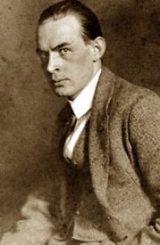
Erich Maria Remarque

Encyclopedia
Erich Maria Remarque was a German author
, best known for his novel All Quiet on the Western Front
.
, to Peter Franz Remark (b. 14 June 1867, Kaiserswerth) and Anna Maria (née Stallknecht; born 21 November 1871, Katernberg). At the age of 16 he made his first attempts at writing: essays, poems, and the beginnings of a novel that was finished later and published in 1920 as The Dream Room
(Die Traumbude).
At 18, Remarque was conscripted into the army. On 12 June 1917, he was transferred to the Western Front
, 2nd Company, Reserves, Field Depot of the 2nd Guards Reserve Division at Hem-Lenglet. On 26 June, he was posted to the 15th Reserve Infantry Regiment, 2nd Company, Sapper Platoon Bethe, and was stationed between Torhout and Houthulst. On 31 July, he was wounded by shrapnel in the left leg, right arm and neck, and was repatriated to an army hospital in Germany where he spent the rest of the war.
When he published All Quiet on the Western Front, he changed his middle name in memory of his mother and reverted to an earlier spelling of the family name to dissociate himself from his novel Die Traumbude. The original family name, Remarque, had been changed to Remark by his grandfather in the 19th century. He worked at a number of different jobs, including librarian, businessman, teacher, journalist and editor. His first paid writing job was as a technical writer for the Continental Rubber Company
, a German tire manufacturer.
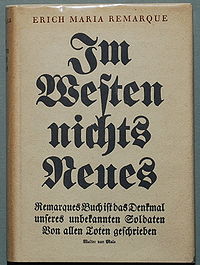
In 1927, Remarque made a second literary start with the novel Station at the Horizon (Station am Horizont), which was serialized in the sports journal "Sport im Bild" for which Remarque was working. It was published in book form only in 1998. His best known work, All Quiet on the Western Front
(Im Westen nichts Neues) was written in a few months in 1927, but Remarque was not immediately able to find a publisher. The novel, published in 1929, described the experiences of German soldiers during World War I
. A number of similar works followed; in simple, emotive language they described wartime and the postwar years.
In 1931, after finishing The Road Back
(Der Weg zurück) Remarque left Germany. He bought a villa in Porto Ronco in Switzerland and lived both there and in France until 1939, when he left Europe for the United States of America with his wife. They became naturalized citizens of the United States in 1947.
On 10 May 1933, the Nazis
, instigated by the then Nazi propaganda minister Joseph Goebbels
banned and publicly burned
Remarque's works and produced propaganda claiming that he was a descendant of French Jews and that his real last name was Kramer, a Jewish-sounding name, and his original name spelled backwards. This is still cited in some biographies despite the complete lack of evidence. The Nazis also claimed, falsely, that Remarque had not done active service during World War I.
In 1943, the Nazis arrested his sister, Elfriede Scholz, who had stayed behind in Germany with her husband and two children. After a short trial in the "Volksgerichtshof" (Hitler's extra-constitutional "People's Court"), she was found guilty of "undermining morale" for stating that she considered the war lost. Court President Roland Freisler
declared, "Ihr Bruder ist uns leider entwischt—Sie aber werden uns nicht entwischen" ("Your brother has unfortunately escaped us—you, however, will not escape us"). Scholz was guillotined on 16 December 1943.
His next novel, Three Comrades
(Drei Kameraden), spans the years of the Weimar Republic
, from the hyperinflation of 1923
to the end of the decade. Remarque's fourth novel, Flotsam (in German titled Liebe deinen Nächsten, or Love Thy Neighbour), first appeared in a serial version in English translation in Collier's magazine in 1939, and Remarque spent another year revising the text for its book publication in 1941, both in English and German. His next novel, Arch of Triumph
, first published in 1945 in English, and the next year in German as Arc de Triomphe, was another instant best-seller and reached worldwide sales of nearly five million.
In 1948, Remarque returned to Switzerland
, where he spent the rest of his life. There was a gap of seven years — a long silence for Remarque — between Arch of Triumph and his next work, Spark of Life
(Der Funke Leben), which appeared both in German and in English in 1952. While he was writing The Spark of Life Remarque was also working on a novel, Zeit zu leben und Zeit zu sterben (Time to Live and Time to Die). It was published first in English translation in 1954 with the not-quite-literal title A Time to Love and a Time to Die. In 1958, Douglas Sirk
directed the film A Time to Love and a Time to Die
in Germany, based on Remarque's novel. Remarque made a cameo appearance in the film in the role of the professor.
In 1955, Remarque wrote the screenplay for an Austrian film, The Last Act (Der letzte Akt), about Hitler's final days in the bunker
of the Reich Chancellery
in Berlin, which was based on the book Ten Days to Die (1950) by Michael Musmanno
. In 1956, Remarque wrote a drama for the stage, Full Circle (Die letzte Station), which played successfully in both Germany and on Broadway. An English translation was published in 1974. Heaven Has No Favorites
was serialized (as Borrowed Life) in 1959 before appearing as a book in 1961 and was made into the 1977 movie Bobby Deerfield
. The Night in Lisbon
(Die Nacht von Lissabon), published in 1962, is the last work Remarque finished. The novel sold some 900,000 copies in Germany and was a modest best-seller abroad as well.
(Der Weg zurück), Remarque left Germany. He bought a villa in Porto Ronco in Switzerland and lived both there and in France until 1939, when he left Europe for the United States of America with his wife. They became naturalized citizens of the United States in 1947. They divorced again on May 20, 1957, this time for good. Remarque married actress Paulette Goddard
the next year (1958). Ilse Remarque died on June 25, 1975.
Remarque and Goddard remained married until his death in Locarno
on 25 September 1970, aged 72. He was interred in the Ronco cemetery in Ronco, Ticino, Switzerland
. Goddard died in 1990 and was interred next to her husband. She left a bequest of $20 million to New York University
to fund an institute for European studies, which is named in honor of Remarque. The first Director of The Remarque Institute was Professor Tony Judt
. Remarque's papers are housed at NYU's Fales Library
.
NYU also named an undergraduate dormitory building after her: Paulette Goddard Hall.
German literature
German literature comprises those literary texts written in the German language. This includes literature written in Germany, Austria, the German part of Switzerland, and to a lesser extent works of the German diaspora. German literature of the modern period is mostly in Standard German, but there...
, best known for his novel All Quiet on the Western Front
All Quiet on the Western Front
All Quiet on the Western Front is a novel by Erich Maria Remarque, a German veteran of World War I. The book describes the German soldiers' extreme physical and mental stress during the war, and the detachment from civilian life felt by many of these soldiers upon returning home from the front.The...
.
Life and work
Erich Paul Remark was born on 22 June 1898 into a working-class family in the German city of OsnabrückOsnabrück
Osnabrück is a city in Lower Saxony, Germany, some 80 km NNE of Dortmund, 45 km NE of Münster, and some 100 km due west of Hanover. It lies in a valley penned between the Wiehen Hills and the northern tip of the Teutoburg Forest...
, to Peter Franz Remark (b. 14 June 1867, Kaiserswerth) and Anna Maria (née Stallknecht; born 21 November 1871, Katernberg). At the age of 16 he made his first attempts at writing: essays, poems, and the beginnings of a novel that was finished later and published in 1920 as The Dream Room
The Dream Room
The Dream Room was Erich Maria Remarque's first novel. He started writing it at the age of sixteen and completed it after his service in World War I....
(Die Traumbude).
At 18, Remarque was conscripted into the army. On 12 June 1917, he was transferred to the Western Front
Western Front (World War I)
Following the outbreak of World War I in 1914, the German Army opened the Western Front by first invading Luxembourg and Belgium, then gaining military control of important industrial regions in France. The tide of the advance was dramatically turned with the Battle of the Marne...
, 2nd Company, Reserves, Field Depot of the 2nd Guards Reserve Division at Hem-Lenglet. On 26 June, he was posted to the 15th Reserve Infantry Regiment, 2nd Company, Sapper Platoon Bethe, and was stationed between Torhout and Houthulst. On 31 July, he was wounded by shrapnel in the left leg, right arm and neck, and was repatriated to an army hospital in Germany where he spent the rest of the war.
When he published All Quiet on the Western Front, he changed his middle name in memory of his mother and reverted to an earlier spelling of the family name to dissociate himself from his novel Die Traumbude. The original family name, Remarque, had been changed to Remark by his grandfather in the 19th century. He worked at a number of different jobs, including librarian, businessman, teacher, journalist and editor. His first paid writing job was as a technical writer for the Continental Rubber Company
Continental AG
Continental AG, internally often called Conti for short, is a worldwide leading German manufacturer of tires, brake systems, vehicle stability control systems, engine injection systems, tachographs and other parts for the automotive and transport industries. The company is based in Hanover, Germany...
, a German tire manufacturer.
In 1927, Remarque made a second literary start with the novel Station at the Horizon (Station am Horizont), which was serialized in the sports journal "Sport im Bild" for which Remarque was working. It was published in book form only in 1998. His best known work, All Quiet on the Western Front
All Quiet on the Western Front
All Quiet on the Western Front is a novel by Erich Maria Remarque, a German veteran of World War I. The book describes the German soldiers' extreme physical and mental stress during the war, and the detachment from civilian life felt by many of these soldiers upon returning home from the front.The...
(Im Westen nichts Neues) was written in a few months in 1927, but Remarque was not immediately able to find a publisher. The novel, published in 1929, described the experiences of German soldiers during World War I
World War I
World War I , which was predominantly called the World War or the Great War from its occurrence until 1939, and the First World War or World War I thereafter, was a major war centred in Europe that began on 28 July 1914 and lasted until 11 November 1918...
. A number of similar works followed; in simple, emotive language they described wartime and the postwar years.
In 1931, after finishing The Road Back
The Road Back
The Road Back is a novel by German author Erich Maria Remarque. The novel was first serialized in the German newspaper Vossische Zeitung between December 1930 and January 1931, and published in book form in April 1931. It details the experience of young men in Germany who have returned from the...
(Der Weg zurück) Remarque left Germany. He bought a villa in Porto Ronco in Switzerland and lived both there and in France until 1939, when he left Europe for the United States of America with his wife. They became naturalized citizens of the United States in 1947.
On 10 May 1933, the Nazis
Nazism
Nazism, the common short form name of National Socialism was the ideology and practice of the Nazi Party and of Nazi Germany...
, instigated by the then Nazi propaganda minister Joseph Goebbels
Joseph Goebbels
Paul Joseph Goebbels was a German politician and Reich Minister of Propaganda in Nazi Germany from 1933 to 1945. As one of Adolf Hitler's closest associates and most devout followers, he was known for his zealous oratory and anti-Semitism...
banned and publicly burned
Nazi book burnings
The Nazi book burnings were a campaign conducted by the authorities of Nazi Germany to ceremonially burn all books in Germany which did not correspond with Nazi ideology.-The book-burning campaign:...
Remarque's works and produced propaganda claiming that he was a descendant of French Jews and that his real last name was Kramer, a Jewish-sounding name, and his original name spelled backwards. This is still cited in some biographies despite the complete lack of evidence. The Nazis also claimed, falsely, that Remarque had not done active service during World War I.
In 1943, the Nazis arrested his sister, Elfriede Scholz, who had stayed behind in Germany with her husband and two children. After a short trial in the "Volksgerichtshof" (Hitler's extra-constitutional "People's Court"), she was found guilty of "undermining morale" for stating that she considered the war lost. Court President Roland Freisler
Roland Freisler
Roland Freisler was a prominent and notorious Nazi lawyer and judge. He was State Secretary of the Reich Ministry of Justice and President of the People's Court , which was set up outside constitutional authority...
declared, "Ihr Bruder ist uns leider entwischt—Sie aber werden uns nicht entwischen" ("Your brother has unfortunately escaped us—you, however, will not escape us"). Scholz was guillotined on 16 December 1943.
His next novel, Three Comrades
Three Comrades (novel)
Three Comrades is a novel first published in 1936 by the German author Erich Maria Remarque. It is written in first person by the main character Robert Lohkamp, whose somewhat disillusioned outlook on life is due to his horrifying experiences in the trenches of the First World War's French-German...
(Drei Kameraden), spans the years of the Weimar Republic
Weimar Republic
The Weimar Republic is the name given by historians to the parliamentary republic established in 1919 in Germany to replace the imperial form of government...
, from the hyperinflation of 1923
Inflation in the Weimar Republic
The hyperinflation in the Weimar Republic was a three year period of hyperinflation in Germany between June 1921 and July 1924.- Analysis :...
to the end of the decade. Remarque's fourth novel, Flotsam (in German titled Liebe deinen Nächsten, or Love Thy Neighbour), first appeared in a serial version in English translation in Collier's magazine in 1939, and Remarque spent another year revising the text for its book publication in 1941, both in English and German. His next novel, Arch of Triumph
Arch of Triumph (novel)
Arch of Triumph is a 1945 novel by Erich Maria Remarque. In it, he writes about stateless refugees' life in Paris before World War II. It was the second book of his, after All Quiet on the Western Front, to appear on bestseller lists worldwide....
, first published in 1945 in English, and the next year in German as Arc de Triomphe, was another instant best-seller and reached worldwide sales of nearly five million.
In 1948, Remarque returned to Switzerland
Switzerland
Switzerland name of one of the Swiss cantons. ; ; ; or ), in its full name the Swiss Confederation , is a federal republic consisting of 26 cantons, with Bern as the seat of the federal authorities. The country is situated in Western Europe,Or Central Europe depending on the definition....
, where he spent the rest of his life. There was a gap of seven years — a long silence for Remarque — between Arch of Triumph and his next work, Spark of Life
Spark of Life (book)
Spark of Life is a novel by Erich Maria Remarque, which appeared both in German and in English in 1952.The novel is set in the fictional Mellern concentration/labor camp during the Holocaust.-Overview:...
(Der Funke Leben), which appeared both in German and in English in 1952. While he was writing The Spark of Life Remarque was also working on a novel, Zeit zu leben und Zeit zu sterben (Time to Live and Time to Die). It was published first in English translation in 1954 with the not-quite-literal title A Time to Love and a Time to Die. In 1958, Douglas Sirk
Douglas Sirk
Douglas Sirk was a Danish-German film director best known for his work in Hollywood melodramas in the 1950s.-Life and work:...
directed the film A Time to Love and a Time to Die
A Time to Love and a Time to Die
A Time to Love and a Time to Die is a 1958 CinemaScope drama film directed by Douglas Sirk and starring John Gavin. It is based on the book by the German author, Erich Maria Remarque, set on the Eastern Front , and in Nazi Germany.-Cast:...
in Germany, based on Remarque's novel. Remarque made a cameo appearance in the film in the role of the professor.
In 1955, Remarque wrote the screenplay for an Austrian film, The Last Act (Der letzte Akt), about Hitler's final days in the bunker
Führerbunker
The Führerbunker was located beneath Hitler's New Reich Chancellery in Berlin, Germany. It was part of a subterranean bunker complex which was constructed in two major phases, one part in 1936 and the other in 1943...
of the Reich Chancellery
Reich Chancellery
The Reich Chancellery was the traditional name of the office of the Chancellor of Germany in the period of the German Reich from 1871 to 1945...
in Berlin, which was based on the book Ten Days to Die (1950) by Michael Musmanno
Michael Musmanno
Michael Angelo Musmanno was an American jurist, politician, and naval officer of Italian heritage.Musmanno was born in Stowe Township, in Allegheny County, Pennsylvania, an industrial neighborhood a few miles west of Pittsburgh.Musmanno rose to the rank of Rear Admiral in the United States Navy...
. In 1956, Remarque wrote a drama for the stage, Full Circle (Die letzte Station), which played successfully in both Germany and on Broadway. An English translation was published in 1974. Heaven Has No Favorites
Heaven Has No Favorites
Heaven Has No Favorites is a novel by the German writer Erich Maria Remarque. This novel is a story about passion and love with a background of automobile racing....
was serialized (as Borrowed Life) in 1959 before appearing as a book in 1961 and was made into the 1977 movie Bobby Deerfield
Bobby Deerfield
Bobby Deerfield is a 1977 film based on the novel Heaven Has No Favorites by Erich Maria Remarque, and stars Al Pacino as the title character...
. The Night in Lisbon
The Night in Lisbon
The Night in Lisbon is a novel by Erich Maria Remarque published in 1962. It revolves around the plight of two German refugees in the opening months of World War II. It is the story of one refugee telling his story to another during the course of a single night in Lisbon...
(Die Nacht von Lissabon), published in 1962, is the last work Remarque finished. The novel sold some 900,000 copies in Germany and was a modest best-seller abroad as well.
Marriages
His first marriage was to the actress Ilse Jutta Zambona in 1925. Their marriage was stormy and unfaithful on both sides. After a divorce, they remarried each other in 1938. In 1931, after finishing The Road BackThe Road Back
The Road Back is a novel by German author Erich Maria Remarque. The novel was first serialized in the German newspaper Vossische Zeitung between December 1930 and January 1931, and published in book form in April 1931. It details the experience of young men in Germany who have returned from the...
(Der Weg zurück), Remarque left Germany. He bought a villa in Porto Ronco in Switzerland and lived both there and in France until 1939, when he left Europe for the United States of America with his wife. They became naturalized citizens of the United States in 1947. They divorced again on May 20, 1957, this time for good. Remarque married actress Paulette Goddard
Paulette Goddard
Paulette Goddard was an American film and theatre actress. A former child fashion model and in several Broadway productions as Ziegfeld Girl, she was a major star of the Paramount Studio in the 1940s. She was married to several notable men, including Charlie Chaplin, Burgess Meredith, and Erich...
the next year (1958). Ilse Remarque died on June 25, 1975.
Remarque and Goddard remained married until his death in Locarno
Locarno
Locarno is the capital of the Locarno district, located on the northern tip of Lake Maggiore in the Swiss canton of Ticino, close to Ascona at the foot of the Alps. It has a population of about 15,000...
on 25 September 1970, aged 72. He was interred in the Ronco cemetery in Ronco, Ticino, Switzerland
Ronco sopra Ascona
Ronco sopra Ascona is a municipality near Locarno in the canton of Ticino in Switzerland.-History:Ronco sopra Ascona is first mentioned in 1264 as Roncha. In 1498 it was mentioned as Ronca de Scona. Ronco sopra Ascona and Ascona a Vicinanza by 1321. The vicinanza had its own statutes by 1369,...
. Goddard died in 1990 and was interred next to her husband. She left a bequest of $20 million to New York University
New York University
New York University is a private, nonsectarian research university based in New York City. NYU's main campus is situated in the Greenwich Village section of Manhattan...
to fund an institute for European studies, which is named in honor of Remarque. The first Director of The Remarque Institute was Professor Tony Judt
Tony Judt
Tony Robert Judt FBA was a British historian, essayist, and university professor who specialized in European history. Judt moved to New York and served as the Erich Maria Remarque Professor in European Studies at New York University, and Director of NYU's Erich Maria Remarque Institute...
. Remarque's papers are housed at NYU's Fales Library
Fales Library
New York University's Fales Library and Special Collections is located on the third floor of the Elmer Holmes Bobst Library at 70 Washington Square South between LaGuardia Place and the Schwartz Plaza, in the Greenwich Village neighborhood of Manhattan, New York City. It houses nearly 200,000...
.
NYU also named an undergraduate dormitory building after her: Paulette Goddard Hall.
Casa Monte Tabor
The villa of Paulette Goddard and Erich Maria Remarque will be probably destroyed in 2012, if the necessary funds (approximately 6 million Swiss francs) are not found to make a cultural center for the peace.List of works
Note: the dates of English publications are those of the first publications in a book form.Novels
- (1920) Die Traumbude. Ein Künstlerroman; English translation: The Dream RoomThe Dream RoomThe Dream Room was Erich Maria Remarque's first novel. He started writing it at the age of sixteen and completed it after his service in World War I....
- (written 1924, published 1998) Gam
- (1928) Station am Horizont; English translation: Station at the Horizon
- (1929) Im Westen nichts Neues; English translation: All Quiet on the Western FrontAll Quiet on the Western FrontAll Quiet on the Western Front is a novel by Erich Maria Remarque, a German veteran of World War I. The book describes the German soldiers' extreme physical and mental stress during the war, and the detachment from civilian life felt by many of these soldiers upon returning home from the front.The...
(1929) - (1931) Der Weg zurück; English translation: The Road BackThe Road BackThe Road Back is a novel by German author Erich Maria Remarque. The novel was first serialized in the German newspaper Vossische Zeitung between December 1930 and January 1931, and published in book form in April 1931. It details the experience of young men in Germany who have returned from the...
(1931) - (1936) Drei Kameraden; English translation: Three ComradesThree Comrades (novel)Three Comrades is a novel first published in 1936 by the German author Erich Maria Remarque. It is written in first person by the main character Robert Lohkamp, whose somewhat disillusioned outlook on life is due to his horrifying experiences in the trenches of the First World War's French-German...
(1937) - (1939) Liebe deinen Nächsten; English translation: Flotsam (1941)
- (1945) Arc de Triomphe; English translation: Arch of TriumphArch of Triumph (novel)Arch of Triumph is a 1945 novel by Erich Maria Remarque. In it, he writes about stateless refugees' life in Paris before World War II. It was the second book of his, after All Quiet on the Western Front, to appear on bestseller lists worldwide....
(1945) - (1952) Der Funke Leben; English translation: Spark of Life (1952)
- (1954) Zeit zu leben und Zeit zu sterben; English translation: A Time to Love and a Time to DieA Time to Love and a Time to DieA Time to Love and a Time to Die is a 1958 CinemaScope drama film directed by Douglas Sirk and starring John Gavin. It is based on the book by the German author, Erich Maria Remarque, set on the Eastern Front , and in Nazi Germany.-Cast:...
(1954) - (1956) Der schwarze Obelisk; English translation: The Black ObeliskThe Black ObeliskThe Black Obelisk is a novel written in 1956 by the German author Erich Maria Remarque. This novel paints a portrait of Germany in the early 1920s, a period marked by hyperinflation and rising nationalism....
(1957) - (1961) Der Himmel kennt keine Günstlinge (serialized as Geborgtes Leben); English translation: Heaven Has No FavoritesHeaven Has No FavoritesHeaven Has No Favorites is a novel by the German writer Erich Maria Remarque. This novel is a story about passion and love with a background of automobile racing....
(1961) - (1962) Die Nacht von Lissabon; English translation: The Night in LisbonThe Night in LisbonThe Night in Lisbon is a novel by Erich Maria Remarque published in 1962. It revolves around the plight of two German refugees in the opening months of World War II. It is the story of one refugee telling his story to another during the course of a single night in Lisbon...
(1964) - (1970) Das gelobte Land; English translation: The Promised Land
- (1971) Schatten im Paradies; English translation: Shadows in Paradise (1972)
Other works
- (1931) Der Feind; English translation: The Enemy (1930–1931); short stories
- (1955) Der letzte Akt; English translation: The Last Act; screenplay
- (1956) Die letzte Station; English translation: Full Circle (1974); play
- (1988) Die Heimkehr des Enoch J. Jones; English translation: The Return of Enoch J. Jones; play
- (1994) Ein militanter Pazifist; English translation: A Militant Pacifist; interviews and essays
Further reading
- Mariana Parvanová: „... das Symbol der Ewigkeit ist der Kreis“. Eine Untersuchung der Motive in den Romanen von Erich Maria Remarque. GRIN-Verlag, München 2010, ISBN 978-3-640-64739-2 (in German)
- Mariana Parvanová: E.M.Remarque in der kommunistischen Literaturkritik in der Sowjetunion und in Bulgarien. ReDiRoma Verlag, Remscheid 2009, ISBN 978-3-86870-056-5 (in German)