

Ericameria

Encyclopedia
- For other species of rabbitbrush, see ChrysothamnusChrysothamnusChrysothamnus is a member of the plant family Asteraceae. It is a semi-deciduous shrub, sometimes also called sagebrush. The native distribution is in the arid western United States and northern Mexico...
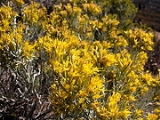
Ericameria is a genus of shrubs in the Asteraceae or daisy family
Asteraceae
The Asteraceae or Compositae , is an exceedingly large and widespread family of vascular plants. The group has more than 22,750 currently accepted species, spread across 1620 genera and 12 subfamilies...
known by the common names rabbitbrush, rabbitbush, and goldenbush. These are semi-deciduous
Deciduous
Deciduous means "falling off at maturity" or "tending to fall off", and is typically used in reference to trees or shrubs that lose their leaves seasonally, and to the shedding of other plant structures such as petals after flowering or fruit when ripe...
shrubs familiarly known as to sagebrush
Sagebrush
Sagebrush is a common name of a number of shrubby plant species in the genus Artemisia native to western North America;Or, the sagebrush steppe ecoregion, having one or more kinds of sagebrush, bunchgrasses and others;...
. They are distributed in the arid western United States and northern Mexico. Bright yellow flowers adorn the plants in late summer. Ericameria nauseosa, a synonym of Chrysothamnus nauseosus
Chrysothamnus nauseosus
Ericameria nauseosa , commonly known as Chamisa, rubber rabbitbrush, and gray rabbitbrush, is a shrub of the genus Ericameria that grows in the arid regions of western North America. Two subspecies have been described, nauseosa and consimilis...
, is known for its production of latex
Latex
Latex is the stable dispersion of polymer microparticles in an aqueous medium. Latexes may be natural or synthetic.Latex as found in nature is a milky fluid found in 10% of all flowering plants . It is a complex emulsion consisting of proteins, alkaloids, starches, sugars, oils, tannins, resins,...
.
Uses
This genus has a number of admirable landscapeLandscape
Landscape comprises the visible features of an area of land, including the physical elements of landforms such as mountains, hills, water bodies such as rivers, lakes, ponds and the sea, living elements of land cover including indigenous vegetation, human elements including different forms of...
plants for heavily alkaline soils, but most species need extensive rejuvination pruning
Pruning
Pruning is a horticultural practice involving the selective removal of parts of a plant, such as branches, buds, or roots. Reasons to prune plants include deadwood removal, shaping , improving or maintaining health, reducing risk from falling branches, preparing nursery specimens for...
every three years, making not ideal for common yards. Overwatering will kill the plants.
Ericameria species are used as food plants by the larva
Larva
A larva is a distinct juvenile form many animals undergo before metamorphosis into adults. Animals with indirect development such as insects, amphibians, or cnidarians typically have a larval phase of their life cycle...
e of some Lepidoptera
Lepidoptera
Lepidoptera is a large order of insects that includes moths and butterflies . It is one of the most widespread and widely recognizable insect orders in the world, encompassing moths and the three superfamilies of butterflies, skipper butterflies, and moth-butterflies...
species including Schinia argentifascia
Schinia
Schinia, commonly called Flower Moths, is a large genus of moths belonging to the family Noctuidae. The genus has a Holarctic distribution with the vast majority of species being found in North America, many with a very restricted range and larval food plant.-Species Information and Food Plants:...
, Schinia tertia
Schinia
Schinia, commonly called Flower Moths, is a large genus of moths belonging to the family Noctuidae. The genus has a Holarctic distribution with the vast majority of species being found in North America, many with a very restricted range and larval food plant.-Species Information and Food Plants:...
, Schinia unimacula
Schinia
Schinia, commonly called Flower Moths, is a large genus of moths belonging to the family Noctuidae. The genus has a Holarctic distribution with the vast majority of species being found in North America, many with a very restricted range and larval food plant.-Species Information and Food Plants:...
and Schinia walsinghami
Schinia
Schinia, commonly called Flower Moths, is a large genus of moths belonging to the family Noctuidae. The genus has a Holarctic distribution with the vast majority of species being found in North America, many with a very restricted range and larval food plant.-Species Information and Food Plants:...
.
Ericameria section Asiris
- Ericameria albida
- Ericameria cervina
- Ericameria discoideaEricameria discoideaEricameria discoidea is a species of flowering shrub in the daisy family known by the common name whitestem goldenbush. This plant is native to the western United States from California to Montana, where it grows in clumpy thickets on rocky slopes. This is a small shrub reaching a maximum height of...
- Ericameria gilmaniiEricameria gilmaniiEricameria gilmanii is a rare species of flowering plant in the aster family known by the common names Gilman's ericameria, Gilman's goldenbush, Gilman goldenweed, and whiteflower goldenbush. It is endemic to California, where it occurs east of the Sierra Nevada. It is a poorly known plant...
- Ericameria lignumviridis
- Ericameria nanaEricameria nanaEricameria nana is a species of flowering shrub in the daisy family known by the common names dwarf goldenbush and rubberweed. This plant is native to the western United States from California to Idaho, where it grows along cliffs and rocky hillsides. This is a small shrub rarely reaching a maximum...
- Ericameria nauseosa (syn. Chrysothamnus nauseosusChrysothamnus nauseosusEricameria nauseosa , commonly known as Chamisa, rubber rabbitbrush, and gray rabbitbrush, is a shrub of the genus Ericameria that grows in the arid regions of western North America. Two subspecies have been described, nauseosa and consimilis...
) - Ericameria obovata
- Ericameria ophitidis
- Ericameria parryi — Parry's Rabbitbrush
- Ericameria resinosa
- Ericameria watsonii
Ericameria section Ericameria
- Ericameria arborescensEricameria arborescensEricameria arborescens is a species of flowering shrub in the daisy family known by the common name goldenfleece. This plant is native to California and Oregon where it is a resident of chaparral communities and open woodlands. This is a resinous, glandular shrub exceeding two meters in maximum...
— Golden-fleece; exclusive food plant of the moth Bucculatrix ericameriaeBucculatricidaeBucculatricidae or is a family of moths. This small family has representatives in all parts of the world. Some authors place the group as a subfamily of the family Lyonetiidae.... - Ericameria brachylepisEricameria brachylepisEricameria brachylepis is a species of flowering shrub in the daisy family known by the common names chaparral goldenbush and boundary goldenbush. It is native to southern California and Baja California where it is a member of the chaparral plant community...
— Boundary Goldenbush - Ericameria cooperi
- Ericameria cuneataEricameria cuneataEricameria cuneata is a species of flowering shrub in the daisy family known by the common name cliff goldenbush. This plant is native to the southwestern United States and northern Mexico, where it grows on cliffs, mountainsides, and rocky hillsides. It is a small, glandular shrub reaching...
- Ericameria ericoidesEricameria ericoidesEricameria ericoides is a species of flowering shrub in the daisy family known by the common names Mock Heather, California goldenbush and California heathgoldenrod. This plant is endemic to California, where it grows in the sand dunes and coastal hills between the northern San Francisco Bay Area...
— Mock Heather, Goldenbush - Ericameria fasciculataEricameria fasciculataEricameria fasciculata is a rare species of flowering shrub in the daisy family known by the common name Eastwood's goldenbush. It is endemic to northern Monterey County, California, where it is known from fewer than twenty occurrences from the Monterey Peninsula north to near Prunedale...
— Eastwood's Goldenbush - Ericameria juarezensis
- Ericameria laricifoliaEricameria laricifoliaEricameria laricifolia is a species of flowering shrub in the daisy family known by the common name turpentine bush, or turpentine-brush. This plant is native to the southwestern United States and northern Mexico, where it grows in desert scrub and woodland. This shrub reaches one half to one meter...
- Ericameria linearifoliaEricameria linearifoliaEricameria linearifolia is a flowering plant in the daisy family known by the common names narrowleaf goldenbush and interior goldenbush. This is a standard bushy aster shrub which bears radiant yellow daisy flowers on long stems. It is native to the drier areas of California from the Central...
- Ericameria martirensis
- Ericameria palmeri — Palmer's Goldenweed, False Broomweed
- Ericameria paniculata — Sticky Rabbitbrush, Black-banded Rabbitbrush
- Ericameria parishii
- Ericameria pinifoliaEricameria pinifoliaEricameria pinifolia is a species of flowering shrub in the daisy family known by the common name pinebush. This plant is endemic to southern California where it is found in scrub and chaparral from the inland Peninsular and western Transverse Ranges foothills to the Colorado...
— Pine Goldenbush - Ericameria teretifolia — Needle-leaved Rabbitbrush
Ericameria section Macronema
- Ericameria bloomeriEricameria bloomeriEricameria bloomeri is a species of flowering shrub in the daisy family known by the common names Bloomer's rabbitbush and Bloomer's goldenbush. This plant is native to the mountains of western North America from British Columbia to California, where it grows in coniferous forests...
- Ericameria compacta
- Ericameria crispa
- Ericameria greeneiEricameria greeneiEricameria greenei is a species of flowering shrub in the daisy family known by the common name Greene's goldenbush. It is native to the western United States from Washington and Oregon to California, where it grows in rocky and open wooded habitat...
- Ericameria suffruticosa
- Ericameria zionis