
All Topics  
Equal Rights Amendment

 
Equal Rights Amendment

   Email Print
   Bookmark   Link


Equal Rights Amendment


The Equal Rights Amendment (ERA) was a proposed amendment
Article Five of the United States Constitution

Article Five of the United States Constitution describes the process whereby the Constitution may be altered. Such amendments may be proposed by the United States Congress or by a national Convention to propose amendment to U.S....
 to the United States Constitution
United States Constitution

The Constitution of the United States of America is the supreme law of the United States. It is the foundation and source of the legal authority underlying the existence of the United States of America; the Federal Government of the United States; and all the State & local governments and Territorial Administrative bodies contained therein....
 which was intended to guarantee equal rights
Women's rights

The term women's rights refers to Freedom and entitlements of women and girls of all ages. These rights may or may not be institutionalized, ignored or suppressed by law, local custom, and behavior in a particular society....
 under the law
LAW

LAW may refer to:* Anti-tank warfare, e.g. the US Army M72 LAW or the British Army LAW 80*Palestinian Society for the Protection of Human Rights ...
 for Americans
United States

The United States of America is a Federal government constitutional republic comprising U.S. state and a federal district. The country is situated mostly in central North America, where its Contiguous United States and Washington, D.C., the Capital districts and territories, lie between the Pacific Ocean and Atlantic Oceans, Borders of the U...
 regardless of sex
Sex

In biology, sex is a process of combining and mixing genetics traits, often resulting in the specialization of organisms into male and female types ....
. The ERA failed to gain ratification
Unsuccessful attempts to amend the U.S. Constitution

The United States Constitution has been amended 27 times since the Constitution was ratified in 1788. Far more proposals to amend the country's supreme law are unsuccessful....
 before its deadline and although it has been reintroduced in every Congress since 1982, public attention to it has greatly diminished.

ough the Nineteenth Amendment
Nineteenth Amendment to the United States Constitution

The Nineteenth Amendment to the United States Constitution prohibits each of the U.S. state and the federal government of the United States from denying any citizen the right to vote because of that citizen's sex....
 had prohibited the denial of the right to vote
Suffrage

Suffrage is the civil right to vote, or the exercise of that right. In that context, it is also called political franchise or simply the franchise....
 because of a person's sex
Women's suffrage

The term women's suffrage refers to the economic and political reform movement aimed at extending suffrage ? the right to vote ? to women. The movement's modern origins lie in France in the 18th century....
, Alice Paul
Alice Paul

Alice Stokes Paul was an United States suffragette leader. Along with Lucy Burns and others, she led a successful campaign for women's suffrage that resulted in the passage of the Nineteenth Amendment to the United States Constitution in 1920....
, a suffragette
Suffragette

File:British suffragette.jpgSuffragette is a term originally coined by the Daily Mail newspaper as a derogatory label for the more Political radicalism and militant members of the late-19th and early-20th century movement for women's suffrage Women's suffrage in the United Kingdom, in particular members of the Women's Social and Politica...
 leader, argued that this right alone would not end remaining vestiges of legal discrimination
Discrimination

Discrimination toward or against a person or group is the treatment or consideration based on class or category rather than individual merit. It is usually associated with prejudice....
 based upon sex.


Discussion
Ask a question about 'Equal Rights Amendment'
Start a new discussion about 'Equal Rights Amendment'
Answer questions from other users
Full Discussion Forum


Encyclopedia


The Equal Rights Amendment (ERA) was a proposed amendment
Article Five of the United States Constitution

Article Five of the United States Constitution describes the process whereby the Constitution may be altered. Such amendments may be proposed by the United States Congress or by a national Convention to propose amendment to U.S....
 to the United States Constitution
United States Constitution

The Constitution of the United States of America is the supreme law of the United States. It is the foundation and source of the legal authority underlying the existence of the United States of America; the Federal Government of the United States; and all the State & local governments and Territorial Administrative bodies contained therein....
 which was intended to guarantee equal rights
Women's rights

The term women's rights refers to Freedom and entitlements of women and girls of all ages. These rights may or may not be institutionalized, ignored or suppressed by law, local custom, and behavior in a particular society....
 under the law
LAW

LAW may refer to:* Anti-tank warfare, e.g. the US Army M72 LAW or the British Army LAW 80*Palestinian Society for the Protection of Human Rights ...
 for Americans
United States

The United States of America is a Federal government constitutional republic comprising U.S. state and a federal district. The country is situated mostly in central North America, where its Contiguous United States and Washington, D.C., the Capital districts and territories, lie between the Pacific Ocean and Atlantic Oceans, Borders of the U...
 regardless of sex
Sex

In biology, sex is a process of combining and mixing genetics traits, often resulting in the specialization of organisms into male and female types ....
. The ERA failed to gain ratification
Unsuccessful attempts to amend the U.S. Constitution

The United States Constitution has been amended 27 times since the Constitution was ratified in 1788. Far more proposals to amend the country's supreme law are unsuccessful....
 before its deadline and although it has been reintroduced in every Congress since 1982, public attention to it has greatly diminished.

Text


History


In the Congress

Although the Nineteenth Amendment
Nineteenth Amendment to the United States Constitution

The Nineteenth Amendment to the United States Constitution prohibits each of the U.S. state and the federal government of the United States from denying any citizen the right to vote because of that citizen's sex....
 had prohibited the denial of the right to vote
Suffrage

Suffrage is the civil right to vote, or the exercise of that right. In that context, it is also called political franchise or simply the franchise....
 because of a person's sex
Women's suffrage

The term women's suffrage refers to the economic and political reform movement aimed at extending suffrage ? the right to vote ? to women. The movement's modern origins lie in France in the 18th century....
, Alice Paul
Alice Paul

Alice Stokes Paul was an United States suffragette leader. Along with Lucy Burns and others, she led a successful campaign for women's suffrage that resulted in the passage of the Nineteenth Amendment to the United States Constitution in 1920....
, a suffragette
Suffragette

File:British suffragette.jpgSuffragette is a term originally coined by the Daily Mail newspaper as a derogatory label for the more Political radicalism and militant members of the late-19th and early-20th century movement for women's suffrage Women's suffrage in the United Kingdom, in particular members of the Women's Social and Politica...
 leader, argued that this right alone would not end remaining vestiges of legal discrimination
Discrimination

Discrimination toward or against a person or group is the treatment or consideration based on class or category rather than individual merit. It is usually associated with prejudice....
 based upon sex. In 1923, Paul drafted the Equal Rights Amendment and presented it as the "Lucretia Mott
Lucretia Mott

Lucretia Coffin Mott was an United States Religious Society of Friends, abolitionist, social reformer and proponent of women's rights. She is credited as the first American "feminist" in the early 1800s but was, more accurately, the initiator of women's political advocacy....
 Amendment" at the celebration of the 75th anniversary of the 1848 Seneca Falls Declaration of Sentiments
Declaration of Sentiments

The Declaration of Sentiments is a document signed in 1848 by 68 women and 32 men, delegates to the first women's rights convention, in Seneca Falls, New York, now known to historians as the 1848 Women's Rights Convention....
.

The National Woman's Party
National Woman's Party

The National Woman's Party , was a Woman's organization founded in 1916 that fought for women's rights during the early 20th century in the United States, particularly for the right to vote on the same terms as Man....
 took the ERA to Congress in the 1920s, where Senator Charles Curtis
Charles Curtis

  Charles Curtis was a United States United States House of Representatives, a longtime United States Senate from Kansas elected to Senate Majority Leader, as well as the List of Vice Presidents of the United States Vice President of the United States....
 and Representative Daniel R. Anthony, Jr.
Daniel Read Anthony, Jr.

Daniel Read Anthony, Jr. was an United States Republican Party of the United States politician and a nephew of suffragist and political leader Susan B....
—both Republicans
Republican Party (United States)

The Republican Party is one of the two major party contemporary political parties in the United States, along with the Democratic Party . It is often called the Grand Old Party or the GOP....
 and both from Kansas
Kansas

The State of Kansas is a Midwestern U.S. state in the Central United States of the United States of America, an area often referred to as the United States "Heartland"....
—introduced it for the first time as Senate Joint Resolution No. 21 on December 10, 1923, and as House Joint Resolution No. 75 on December 13, 1923, respectively. Though the ERA was introduced in every Congressional session between 1923 and 1970, it almost never reached the floor of either the Senate
United States Senate

The United States Senate is the upper house of the Bicameralism United States Congress, the lower house being the United States House of Representatives....
 or the House
United States House of Representatives

The United States House of Representatives, commonly referred to as "the House", is one of the bicameralism of the United States Congress; the other is the United States Senate....
 for a vote—instead, it was usually "bottled up" in committee
United States Congressional committee

A congressional committee is a legislative sub-organization in the United States Congress that handles a specific duty . Committee membership enables members to develop specialized knowledge of the matters under their jurisdiction....
. Exceptions occurred in 1946, when it was defeated in the Senate by a vote of 38 to 35, and in 1950, when it was passed by the Senate in a modified form unacceptable to its supporters.

The Republican Party included support of the ERA in its platform beginning in 1944
1944 Republican National Convention

The 1944 Republican National Convention was held in Chicago, Illinois, from June 26 to June 28, 1944. It nominated Thomas Dewey of New York for President and John Bricker of Ohio for Vice-President....
, renewing the plank every four years until 1980. The ERA was strongly opposed by the American Federation of Labor
American Federation of Labor

The American Federation of Labor was one of the first federations of labor unions in the United States. It was founded in Columbus, Ohio in 1886 by Samuel Gompers as a reorganization of its predecessor, the Federation of Organized Trades and Labor Unions....
 and other labor unions, who did not want to compete with women, as well as by Eleanor Roosevelt
Eleanor Roosevelt

Anna Eleanor Roosevelt was First Lady of the United States from 1933 to 1945. She supported the New Deal policies of her husband, President Franklin D....
 and most New Deal
New Deal

The New Deal was the name that United States President of the United States Franklin D. Roosevelt gave to a sequence of central economic planning and economic stimulus programs he initiated between 1933 and 1938 with the goal of giving aid to the unemployed, reform of business and financial practices, and recovery of the Economy of the Unite...
ers, who contended that women needed government protection that men did not. The Act was opposed by most northern Democrats, who aligned themselves with the anti-ERA labor unions and supported by southern Democrats. Beginning in 1972
1972 Democratic National Convention

The 1972 National Convention of the United States Democratic Party was held at Miami Beach Convention Center in Miami Beach, Florida from July 10 to July 13, 1972....
, the Democrats included support of the ERA in their platform.

Representative Martha W. Griffiths of Michigan
Michigan

Michigan is a Midwestern United States U.S. state of the United States of America. It was named after Lake Michigan, whose name is a French adaptation of the Anishinaabe language term mishigama, meaning "large water" or "large lake"....
, however, achieved success on Capitol Hill with her House Joint Resolution No. 208, which was adopted by the House on October 12, 1971, with a vote of 354 yeas, 24 nays and 51 not voting. Griffiths' joint resolution was then adopted by the Senate on March 22, 1972, with a vote of 84 yeas, 8 nays and 7 not voting. The Senate version passed after an amendment proposed by Senator Sam Ervin
Sam Ervin

Samuel James Ervin Jr. was a United States Democratic Party United States United States Senate from North Carolina from 1954 until 1974. He was a native of Morganton, North Carolina, Burke County, North Carolina, North Carolina....
 of North Carolina
North Carolina

North Carolina is a U.S. state located on the Atlantic Seaboard in the southeastern United States. The state borders South Carolina and Georgia to the south, Tennessee to the west and Virginia to the north....
 that would exempt women from the draft
Conscription

Conscription is a general term for involuntary labor demanded by an established authority. It is most often used in the specific sense of government policies that require citizens to serve in the military....
 failed.

With that, the ERA was finally presented by the 92nd Congress to the state legislatures for ratification as Article V of the Constitution prescribes, with a seven-year deadline for ratification by the required three-quarters of the legislatures (38 legislatures). President Richard Nixon
Richard Nixon

Richard Milhous Nixon was the List of Presidents of the United States President of the United States and the only president to resign the office....
 immediately endorsed the ERA's approval.

The national debate on the ERA has largely subsided, in part because of expanded interpretations of existing statutes and constitutional provisions which have afforded more equal legal treatment of men and women. Supporters of the ERA have re-introduced the amendment in the Congress every term since 1982 without success.

On March 27, 2007, new resolutions were introduced in the House of Representatives and Senate. They contain the traditional ERA language, but this time with no deadline attached. The Congressional sponsors referred to the new resolutions as the "Women's Equality Amendment," but this title does not appear in the resolutions and some groups backing the proposals continue to refer to them as the gender neutral
Gender-neutral language

Gender-neutral language, gender-inclusive language, or gender neutrality is Word usage that aims at minimizing assumptions regarding the gender of human reference....
 "Equal Right Amendment."

In the state legislatures and the courts

The initial pace of state legislative ratifications was rapid during 1972 and 1973. The rate of ratification then slowed considerably with only three ratifications during 1974, just one in 1975, none at all in 1976 and only one in 1977. The 92nd Congress
92nd United States Congress

The Ninety-second United States Congress was a meeting of the legislative branch of the United States federal government, composed of the United States Senate and the United States House of Representatives....
, in proposing the ERA, had set a seven-year time limit for the Amendment's ratification and, by the end of that deadline on March 22, 1979, a total of 35 of the required 38 states had ratified it. Five of these 35 states withdrew their ratifications before the deadline arrived.

According to David Frum
David Frum

David J. Frum is a Canadian-born neoconservative journalist active in the both United States and Canadian political arenas. A former economic speechwriter for President of the United States of America George W....
, the Supreme Court's
Supreme Court of the United States

The Supreme Court of the United States is the highest judicial body in the United States, and leads the federal United States federal courts. It consists of the Chief Justice of the United States and eight Associate Justice of the Supreme Court of the United States, who are nominated by the President of the United States and confirmed with th...
 decision in Roe v. Wade
Roe v. Wade

Roe v. Wade, Case citation , is a Supreme Court of the United States case that resulted in a landmark decision regarding abortion. According to the Roe decision, most laws against abortion in the United States violated a United States Constitution to privacy under the Due Process Clause of the Fourteenth Amendment to the United Stat...
had an adverse impact on the ERA's prospects. Of the 35 states that ratified the ERA, 22 did so before Roe, with 13 states following in the next 10 years.

In 1978, the Congress passed a controversial bill by simple majority
Majority

A majority, also known as a simple majority in the United States of America, is a subset of a group that is more than half of the entire group....
 (not a two-thirds supermajority
Supermajority

A supermajority or a qualified majority is a requirement for a proposal to gain a specified level or type of support which exceeds a majority in order to have effect....
) that extended the ratification deadline by 39 months. During this disputed extension, no new states ratified or rescinded. In
Idaho v. Freeman (1981), a federal district court ruled the extension to be unconstitutional
Constitutionality

Constitutionality is the status of a law, a procedure, or an act's accordance with the laws or guidelines set forth in the applicable constitution....
.

The National Organization for Women
National Organization for Women

The National Organization for Women is the largest United States feminist organization. It was founded in 1966 and has a membership of 500,000 contributing members and 550 chapters in all 50 U.S....
 appealed the district court's holding in
Idaho v. Freeman. In NOW v. Idaho, 459 U.S. 809 (1982), the U.S. Supreme Court declared the entire matter moot on the grounds that the 1972 ERA was dead with or without either the rescissions or the purported deadline extension.

As previously noted, five of the 35 states that ratified the ERA rescinded their ratifications before the original 1979 deadline.

Here are details of the five rescissions:

  1. Idaho
    Idaho

    The State of Idaho is a U.S. state in the Pacific Northwest region of the United States of America. The state's largest city and Capital is Boise, Idaho....
    , which ratified the ERA on March 24, 1972, by approving Senate Joint Resolution No. 133, adopted House Concurrent Resolution No. 10 on February 8, 1977, to rescind that ratification.
  2. Kentucky
    Kentucky

    The Commonwealth of Kentucky is a U.S. state located in the East Central United States of America. Kentucky is normally included in the group of Southern United States , but it is uncommonly included, geographically and culturally, in the Midwestern United States....
    , which ratified the ERA on June 26, 1972, by approving House (Joint) Resolution No. 2, adopted House (Joint) Resolution No. 20 on March 17, 1978, to rescind that ratification; the Lieutenant Governor of Kentucky
    Lieutenant Governor of Kentucky

    The office of lieutenant governor of Kentucky has existed under the last three of Kentucky's four constitutions, beginning in 1797. The lieutenant governor serves as governor of Kentucky under circumstances similar to the Vice President of the United States assuming the powers of the presidency....
    , Thelma Stovall
    Thelma Stovall

    Thelma Hawkins Stovall was a pioneering female Southern United States politician who won several statewide elective offices in Kentucky, capping her career as Lieutenant Governor of Kentucky under the administration of her fellow Democratic Party , Governor Julian Carroll....
    , who was acting as Governor in the Governor's absence, issued a veto
    Veto

    A veto, Latin for "I forbid", is used to denote that a certain party has the right to stop unilaterally a piece of legislation. In practice, the veto can be absolute or limited ...
     of the rescinding resolution, but the U.S. Constitution provides no role for a governor (nor for the President of the United States
    President of the United States

    The President of the United States is the head of state and head of government of the United States and is the highest political official in the United States by influence and recognition....
    ) in the constitutional amendment process.
  3. Nebraska
    Nebraska

    Nebraska is a U.S. state located on the Great Plains of the Midwestern United States and Western United States.Nebraska probably gets its name from the archaic Chiwere language words ?? Br?sge or the Omaha-Ponca language N? Bth?ska meaning "flat water," after the Platte River that flows through the state....
    , which ratified the ERA on March 29, 1972, by approving the erroneously worded Legislative Resolution No. 83 and then approving the correctly worded Legislative Resolution No. 86, adopted Legislative Resolution No. 9 on March 15, 1973, to rescind only the aforementioned Legislative Resolution No. 83. This
    could mean that Nebraska remains officially in the "ratified" column.
  4. Tennessee
    Tennessee

    Tennessee is a U.S. state located in the Southern United States United States. In 1796, it became the sixteenth state to join the United States....
     which ratified the ERA on April 4, 1972, by approving House Joint Resolution No. 371, adopted Senate Joint Resolution No. 29 on April 23, 1974, to rescind that ratification.
  5. South Dakota
    South Dakota

    South Dakota is a U.S. state located in the Midwestern United States of the United States of America. It is named after the Lakota people and Sioux Sioux Native Americans in the United States tribes....
    , where lawmakers ratified the ERA on February 5, 1973, by approving Senate Joint Resolution No. 1, adopted Senate Joint Resolution No. 2 on March 1, 1979, stipulating that the ERA's opportunity for ratification—by
    any state of the Union—would expire on March 22, 1979; furthermore, Senate Joint Resolution No. 2 made clear that South Dakota's own ratification of the ERA would only be valid up until March 22, 1979, and that any activities transpiring after that date would be considered by South Dakota to be null and void.


The U.S. District Court for Idaho held, in
Idaho v. Freeman, that the rescissions — all of which occurred before the original 1979 ratification deadline — were valid. According to research by Prof. Jules B. Gerard, professor of law at Washington University, of the 35 legislatures that passed ratification resolutions, 24 explicitly referred to the 1979 deadline.

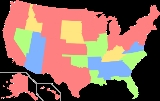
At various times, in eight of the 15 non-ratifying states, at least one chamber of the legislature approved the ERA, those eight states being:
  1. Florida
    Florida

    Florida is a U.S. state located in the Southeastern United States of the United States, bordering Alabama to the northwest and Georgia to the northeast....
    , whose House of Representatives voted to ratify the ERA on March 24, 1972, with a tally of 91 to 4; a second time on April 10, 1975, with a tally of 62 to 58; a third time on May 17, 1979, with a tally of 66 to 53; and a fourth time on June 21, 1982, with a tally of 60 to 58.
  2. Illinois
    Illinois

    The State of Illinois is a U.S. state of the United States, the 21st to be admitted to the United States. Illinois is the most populous and demographically diverse Midwestern United States state and the fifth most populous state in the nation....
    , whose Senate voted to ratify the ERA in May 1972, with a tally of 30 to 21; and whose House of Representatives voted to ratify the ERA on May 1, 1975, with a tally of 113 to 62, and again on May 21, 2003, with a tally of 76 to 41. At various times, votes were conducted in both chambers of the Illinois General Assembly
    Illinois General Assembly

    The Illinois General Assembly is the state legislature of the U.S. state of Illinois and comprises the Illinois House of Representatives and the Illinois Senate....
     on the question of ratifying the ERA, and while most members voted
    in favor of ratification, the result was often less than a three-fifths supermajority vote — a requirement that existed in Illinois when those votes were cast.
  3. Louisiana
    Louisiana

    The State of Louisiana is a U.S. state located in the U.S. Southern States of the United States of America. Its capital is Baton Rouge and largest city is New Orleans....
    , whose Senate voted to ratify the ERA on June 7, 1972, with a tally of 25 to 13.
  4. Missouri
    Missouri

    Missouri is a U.S. state in the Midwestern United States of the United States bordered by Iowa, Illinois, Kentucky, Tennessee, Arkansas, Oklahoma, Kansas and Nebraska....
    , whose House of Representatives voted to ratify the ERA on February 7, 1975, with a tally of 82 to 75.
  5. Nevada
    Nevada

    Nevada is a U.S. state located in the Western United States of the United States of America. The capital is Carson City and the largest city is Las Vegas, Nevada....
    , whose Assembly voted to ratify the ERA on February 17, 1975, with a tally of 27 to 13; and whose Senate voted to ratify the ERA on February 8, 1977, with a tally of 11 to 10.
  6. North Carolina
    North Carolina

    North Carolina is a U.S. state located on the Atlantic Seaboard in the southeastern United States. The state borders South Carolina and Georgia to the south, Tennessee to the west and Virginia to the north....
    , whose House of Representatives voted to ratify the ERA on February 9, 1977, with a tally of 61 to 55.
  7. Oklahoma
    Oklahoma

    Oklahoma is a U.S. state and a sovereignty located in the South Central United States and Southern United States of the United States of America ....
    , whose Senate voted to ratify the ERA on March 23, 1972, by a voice vote
    Voice vote

    A voice vote is a Voting methods used by Deliberative assembly in which a vote is taken on a topic or Motion by responding verbally.Typically the Chair of the assembly will put the question to the assembly, making it clear that the members understand the effect of an "aye" vote and a "no" vote, and will then ask first for all those in...
    .
  8. South Carolina
    South Carolina

    South Carolina is a U.S. state in the Southern United States of the United States. It borders Georgia to the south and North Carolina to the north....
    , whose House of Representatives voted to ratify the ERA on March 22, 1972, with a tally of 83 to 0.


Extension of ratification deadline

In 1978—as the 1979 deadline approached—the 95th Congress adopted House Joint Resolution No. 638 (H. J. Res. 638), by Representative Elizabeth Holtzman
Elizabeth Holtzman

Elizabeth Holtzman is a former United States Democratic Party politician, pioneer woman officeholder, four term U.S. Representative , two term District Attorney of Kings County , and New York City Comptroller ...
 of New York
New York

The State of New York is a U.S. state in the Mid-Atlantic States and Northeastern United States regions of the United States and is the nation's List of U.S....
, which purported to extend the ERA's ratification deadline to June 30, 1982. H. J. Res. 638 received less than two-thirds of the vote in both the House of Representatives and the Senate; for that reason, it was deemed necessary by ERA supporters that H. J. Res. 638 be transmitted to then President Jimmy Carter
Jimmy Carter

James Earl "Jimmy" Carter, Jr. served as the List of Presidents of the United States President of the United States from 1977 to 1981 and was the recipient of the 2002 Nobel Peace Prize....
 for signature as a safety precaution. Carter signed the joint resolution, though he questioned on procedural grounds the propriety of his doing so.

No additional states ratified the ERA during that extra period of slightly more than three years. On June 18, 1980, a resolution in the Illinois House of Representatives resulted in a vote of 102-71 in favor, but Illinois required a 3/5 majority on constitutional amendments and so the measure failed by five votes. In fact, the only occurrence favorable to the ERA between the original deadline of March 22, 1979 and the revised June 30, 1982, expiration date was—as noted earlier—its approval by the Florida House of Representatives on June 21, 1982. In the final week before the deadline, that ratifying resolution was
defeated in the Florida Senate by a vote of 16 yeas and 22 nays. Even if Florida had ratified the ERA, the amendment would still have been two states short of the required 38 (or seven states short, if the rescissions are valid).

On December 23, 1981, a United States District Court ruled that the ERA's deadline extension was unconstitutional and, further, that a state legislature may indeed rescind a prior ratification of a proposed amendment to the Federal Constitution. The case was appealed to the Supreme Court of the United States
Supreme Court of the United States

The Supreme Court of the United States is the highest judicial body in the United States, and leads the federal United States federal courts. It consists of the Chief Justice of the United States and eight Associate Justice of the Supreme Court of the United States, who are nominated by the President of the United States and confirmed with th...
. The United States Solicitor General
United States Solicitor General

The United States Solicitor General is the person appointed to argue for the Government of the United States in front of the Supreme Court of the United States whenever the government is party to a case....
 claimed that the required number of states (38) had not ratified the amendment even if the deadline extension and the rescissions were valid, and that "the Amendment has failed of adoption no matter what the resolution of the legal issues presented here." The Supreme Court agreed and ordered the case dismissed as moot on October 4, 1982, thereby recognizing that the 1972 ERA had failed to win ratification, but did not issue a ruling on the merits of the either the deadline extension issue or the rescission issue in this case.

Shift in political attitudes

The political tide changed direction in the late 1970s and throughout the 1980s. At the 1980 Republican National Convention in Detroit, Michigan, the Republican Party platform was amended to qualify its support for the ERA. One of the most prominent opponents of the ERA was Phyllis Schlafly
Phyllis Schlafly

Phyllis McAlpin Stewart Schlafly is an United States American conservatism political activist and U.S. Constitution attorney known for her antifeminism and the Equal Rights Amendment....
, a conservative
Conservatism

Conservatism is a political and social term whose meaning has changed in different countries and time periods, but which usually indicates support for the status quo or the status quo ante....
 Republican. According to its critic
Critic

The word critic comes from the Greek language ' , "able to discern", which in turn derives from the word ' , meaning a person who offers reasoned judgment or analysis, value judgment, interpretation, or observation....
s, the ERA would have granted more power
Political power

Political power is a type of power held by a political organization in a society which allows administration of some or all of public resources, including labour, and wealth....
 to Congress and to the federal courts
United States federal courts

The United States federal courts comprises the Judiciary of government organized under the United States Constitution and Law of the United States of the federal government of the United States....
, a stance unpopular at a time when public opposition to expanded federal government authority — and federal judicial activism
Judicial activism

Judicial activism may be either a descriptive or a normative term, but in common usage is primarily used in a way that is both normative and pejorative." As a descriptive term, it applies to the activities of judges who, in the course of carrying out their duties, go beyond the strictly judicial function and enter into the political policymak...
 in particular — was growing. The ERA's opponents, and most of its supporters, believe that, if re-proposed by the Congress, the ratifications the ERA received during the 1970s would not be counted toward a newly proposed ERA.

State constitutions

Twenty-one states have a version of the ERA in their state constitutions. Sixteen of them ratified the federal amendment, while five did not.

Three-state strategy

The
three-state strategy is an argument made by some ERA supporters that the earlier 35 state ratifications are still valid and therefore only three more are needed in order to add the ERA to the Constitution, without Congress resubmitting it to state lawmakers.

The
three-state strategy was publicly unveiled at a press conference held in Washington, D.C., in December, 1993. According to an Associated Press report, "a coalition of women's groups," operating under the name "ERA Summit," planned "to ask Congress to nullify 1982 deadline for ratification." Early the following year, Congressman Robert E. Andrews (D-NJ) introduced a resolution in the House of Representatives to require that "when the legislatures of an additional three states ratify the Equal Rights Amendment, the House of Representatives shall take any legislative action necessary to verify the ratification of the Equal Rights Amendment as a part of the Constitution." No action was taken on the resolution, which has also been introduced in subsequent Congresses.

An article published in the
William and Mary Journal of Women and the Law in 1997 explains a legal rationale for the "three-state strategy." It argues that:
  1. The 35 ratifications from state legislatures during the 1970s remain valid;
  2. Rescissions of prior ratifications are not constitutional;
  3. The 1978 extension of the ERA's deadline demonstrates that Congress can amend previously established deadlines; and
  4. The Twenty seventh Amendment's
    Twenty-seventh Amendment to the United States Constitution

    The Twenty-seventh Amendment is the most recent Article Five of the United States Constitution to the United States Constitution, having been ratified in 1992, more than 202 years after its initial submission in 1789....
     202½ year ratification period set a standard of "sufficiently contemporaneous"—a term used during the U.S. Supreme Court's 1921 ruling in
    Dillon v. Gloss
    Dillon v. Gloss

    Dillon v. Gloss, Case citation , was a case in which the Supreme Court of the United States held that if the Congress of the United States?when proposing an amendment to the Constitution of the United States?desires to place a deadline on that particular constitutional amendment's ratification, that Congress may indeed do precisely that a...
    —giving Congress the power to set time limits on constitutional amendments. Dillon v. Gloss was later modified by Coleman v. Miller
    Coleman v. Miller

    Coleman v. Miller, is a landmark decision of the United States Supreme Court which clarified that if the Congress of the United States—when proposing for ratification an amendment to the United States Constitution pursuant to Article Five of the United States Constitution thereof—chooses not to specify a deadline within w...
    , which is also a basis for the three state strategy.


The article further reasons that because the Constitution
Article Five of the United States Constitution

Article Five of the United States Constitution describes the process whereby the Constitution may be altered. Such amendments may be proposed by the United States Congress or by a national Convention to propose amendment to U.S....
 gives the Congress the power to propose amendments to the Constitution—and including changing aspects of the ratification process itself— that if and when three additional states ratify the ERA, the Congress has the power to deem the ERA properly ratified and duly added to the Constitution.

Opponents of the three-state strategy point out that the 1789 resolution proposing what is known today as the Twenty seventh Amendment ("Madison Amendment"), dealing with congressional pay raises, did not contain a deadline for ratification.

In 1996, the Library of Congress
Library of Congress

The Library of Congress is the de facto national library of the United States and the research arm of the United States Congress. Located in three buildings in Washington, D.C., it is the largest library in the world by shelf space and holds the largest number of books....
' Congressional Research Service
Congressional Research Service

The Congressional Research Service is the public policy research arm of the United States Congress. As a legislative branch agency within the Library of Congress, CRS works exclusively and directly for Members of Congress, their Committees and staff on a confidential, nonpartisan basis....
 issued a report that said, "There is no precedent for Congress promulgating an amendment based on state ratifications adopted after a ratification deadline has expired. However, proponents of this course cite as possible precedent the ratification activity of the states regarding the 27th Amendment
Twenty-seventh Amendment to the United States Constitution

The Twenty-seventh Amendment is the most recent Article Five of the United States Constitution to the United States Constitution, having been ratified in 1992, more than 202 years after its initial submission in 1789....
... proponents of the ERA might wish to adopt a strategy of urging its ratification by state legislatures because their actions might prompt this or a future Congress to proclaim the amendment had been ratified." CRS stressed that it "takes no position on any of the issues."

Several state legislatures have considered the three-state strategy, but none has passed a resolution:
  • The first state legislature to consider a ratification resolution based on the "three-state" theory was Virginia, in 1994. The resolution was not approved.
  • The Illinois House of Representatives on May 21, 2003, adopted a resolution ratifying the ERA—proposed in 1972. However, the Illinois Senate did not ratify the ERA and resolution died at the end of 2004.
  • On April 5, 2005, the Arkansas Senate voted 16 yeas, 15 nays and 4 "not voting" on a resolution to approve the ERA. Under the Arkansas Senate parliamentary rules, this type of resolution requires a majority vote—that is, at least 18 votes for the amendment.
  • During 2007, ERA ratification resolutions were introduced in Arizona, Arkansas, Florida, Illinois, Louisiana, Missouri, and Mississippi. The Arkansas resolution (HJR 1002) failed in a committee of the state House, after 20 legislators (including two members of the committee) withdrew their co-sponsorships of the resolution. Pro-life groups claim the change was due in part to their intervention. On May 15, 2007, the Committee on Civil Law and Procedure of the Louisiana House defeated a similar ERA ratification resolution (HCR 4), on a vote of 5 to 4.


Criticism of the ERA

Opponents of the ERA argue that its passage would have far-reaching implications, obliterating traditional distinctions between the sexes. Women, ERA opponents claim, would be required to register for the draft
Selective Service System

The Selective Service System serves at least two purposes. It is the means by which the United States administers conscription in the United States....
 just as men currently do, and would have to serve in combat
Combat

Combat, or fighting, is purposeful violence conflict intended to establish dominance over the opposition.The term "combat" typically refers to armed conflict between military forces in warfare, whereas the more general term "fighting" can refer to any violent conflict....
 just as men must. Opponents go on to assert that the ERA would also remove laws that specially protect women, such as labor laws in heavy industry. Some women in the 1970s feared that passage of the ERA would prevent them from being favored for alimony
Alimony

Alimony, maintenance or spousal support is an obligation established by law in many countries that is based on the premise that both spouses have an absolute obligation to support each other during the marriage unless they are legally separated....
 and custody in divorce
Divorce

Divorce or dissolution of marriage is a legal process in which a judge or other authority dissolves the bonds of matrimony existing between two persons, thus restoring them to the marital status of being single....
 cases.

Especially since the early 1980s, the potential impact of the ERA on abortion
Abortion

An abortion is the termination of a pregnancy by the removal or expulsion of an embryo or fetus from the uterus, resulting in or caused by its death....
-related laws has become a major factor in the ERA debate. On November 15, 1983, the majority (Democratic) leadership of the U.S. House of Representatives attempted to again pass the ERA (to begin the entire ratification process over again), under a procedure that did not allow consideration of any amendments. The ERA fell short of the required two-thirds vote (278-147) when 14 co-sponsors voted against it, many of them insisting on the need for an "abortion-neutral" amendment proposed by Representative Jim Sensenbrenner
Jim Sensenbrenner

Frank James Sensenbrenner, Jr. is an United States politician who has been a member of the Republican Party in the United States House of Representatives since 1979, representing ....
, which read, "Nothing in this Article shall be construed to grant, secure, or deny any right relating to abortion or the funding thereof." Neither House of the Congress has voted on any ERA since that day.

The ERA-abortion issue was further fueled by the use of ERAs in state constitutions in lawsuits attacking pro-life/anti-abortion policies in some states. ERA-based efforts to invalidate restrictions on tax-funded abortions succeeded in Connecticut
Connecticut

Connecticut is a U.S. state located in the New England region of the northeastern United States. The state borders New York to the west and south , Massachusetts to the north, and Rhode Island to the east....
 and, especially, in New Mexico
New Mexico

New Mexico is a U. S. State located in the Southwestern United States of the United States. Inhabited by Native Americans in the United States populations for many centuries, it has also has been part of the Spanish Empire viceroyalty of New Spain, part of Mexico, and a U.S....
. On November 25, 1998, the New Mexico Supreme Court
New Mexico Supreme Court

The New Mexico Supreme Court is the highest court in the U.S. state of New Mexico....
 ruled 5-0 that the state ERA — very similar to the proposed federal ERA — prohibited the state from restricting abortion differently from "medically necessary procedures" sought by men, and the court ordered the state to pay for abortions under the state's Medicaid
Medicaid

Medicaid is the United States American health care system program for eligible individuals and families with low incomes and resources. It is a means-tested program that is jointly funded by the states and federal government, and is managed by the states....
 program.

In its ruling, the court adopted the construction of the ERA urged in the case by the National Abortion and Reproductive Rights Action League, Planned Parenthood
Planned Parenthood

Planned Parenthood is the collective name of organizations worldwide who are members of the International Planned Parenthood Federation . The Planned Parenthood Federation of America is the U.S....
, the American Civil Liberties Union
American Civil Liberties Union

The American Civil Liberties Union consists of two separate non-profit organizations: the ACLU Foundation, a 501 organization which focuses on litigation and communication efforts, and the American Civil Liberties Union, a 501 organization which focuses on legislative lobbying....
, the Center for Reproductive Law and Policy, and the NOW Legal Defense and Education Fund. The doctrine that the ERA language invalidates limitations on tax-funded abortion was also supported in briefs filed by the state Women's Bar Association, Public Health Association, and League of Women Voters
League of Women Voters

The League of Women Voters is an United States political organization founded in 1920 by Carrie Chapman Catt during the last meeting of the National American Woman Suffrage Association approximately six months before the Nineteenth Amendment to the United States Constitution gave women the right to vote....
. This ruling is now often cited by pro-life/anti-abortion groups in debates over ERAs in Congress and various legislatures.

Other critics have argued that the courts could rule that the ERA would mandate the recognition of same-sex marriage
Same-sex marriage

Same-sex marriage and gay marriage are terms for a Law or socially recognized marriage between two people of the same sex. While state-sanctioned same-sex marriage is a relatively new phenomenon in the modern world, same-sex unions have been documented throughout human history....
. They point to various court decisions, including a Hawaii State Supreme Court
Hawaii State Supreme Court

The Hawaii State Supreme Court is the highest court of the Hawaii in the United States. Its decisions are binding on all other courts of the Hawaii State Judiciary....
 decision in 1993, a Baltimore, Maryland
Maryland

Maryland is a U.S. state located in the Mid Atlantic States of the United States, bordering Virginia, West Virginia and the Washington, D.C. to the south and west, Pennsylvania to the north, and Delaware to the east....
 circuit court decision in January 2006, the Massachusetts Supreme Judicial Court
Massachusetts Supreme Judicial Court

The Massachusetts Supreme Judicial Court is the highest court in the Commonwealth of Massachusetts. The SJC has the distinction of being the oldest continuously functioning appellate court in the Western Hemisphere....
 ruling for same-sex marriage in 2003, and to a decision by the Supreme Court of California
Supreme Court of California

The Supreme Court of California is the state supreme court of California. It is headquartered in San Francisco, California, and regularly holds sessions at its branch offices in Los Angeles, California and Sacramento, California....
 in May 2008, all of which used state bans on sex discrimination as partial justification for the rulings.

Critics also maintain that the ERA would prohibit single-sex school
School

File:Primary Student of Pakistan.JPGA school , is an institution designed to allow and encourage students to education, under the supervision of teachers....
s, sports teams
Team sport

Team sport refers to sports that are practiced between opposing teams, where the players interact directly and simultaneously between them to achieve an objective....
 or even restrooms— they point to a decision by a court in the State of Washington
Washington

Washington is a U.S. state in the Pacific Northwest region of the United States. Washington was carved out of the western part of Washington Territory which had been ceded by Britain in 1846 by the Oregon Treaty as settlement of the Oregon Boundary Dispute....
 which ordered a fraternal civic organization to admit women, based upon the ERA within its state constitution. Finally, some opponents of the ERA contend that the amendment simply is not necessary, that other provisions of the Constitution— as interpreted by various rulings by the U.S. Supreme Court and lower federal courts— provide sufficient support for equal rights for both genders and that the amendment would imply that women had never been equal under the law before the amendment's passage.

Supporters also point out that the likely legal interpretation of the ERA would be to review government, but not private, sponsored sex distinctions under strict scrutiny
Strict scrutiny

Strict scrutiny is the most stringent standard of judicial review used by United States courts reviewing federal law. Along with the lower standards of rational basis review and intermediate scrutiny, strict scrutiny is part of a hierarchy of standards courts employ to weigh an asserted government interest against a constitutional right or p...
 (the level of legal scrutiny currently afforded to racial discrimination). While strict scrutiny is a very high level of legal scrutiny, it does not preclude all governmental acts regarding a suspect class
Suspect classification

In United States Supreme Court jurisprudence, a suspect classification is a classification of groups which meets a series of criteria suggesting they are likely the subject of discrimination....
.

See also

  • Convention on the Elimination of All Forms of Discrimination Against Women
    Convention on the Elimination of All Forms of Discrimination Against Women

    The Convention on the Elimination of All Forms of Discrimination against Women is an international convention adopted in 1979 by the United Nations United Nations General Assembly....
     (CEDAW)
  • Equal pay for women
    Equal pay for women

    Equal pay for women is an issue regarding pay inequality between men and women. It is often introduced into domestic politics in many first world countries as an economic problem that needs governmental intervention via regulation....
  • Feminist history in the United States
  • History of feminism
    History of feminism

    The history of feminism is the history of feminist movements and their efforts to overturn gender inequality. Feminist scholars have divided feminism's history into three "waves"....
  • List of proposed amendments to the United States Constitution
    List of proposed amendments to the United States Constitution

    This is an incomplete list of proposed amendments to the United States Constitution, in reverse chronological order.Many amendments are proposed every year....


Further reading


External links

Organizations supportive of ERA
  • Business and Professional Women USA


Organizations opposed to ERA