

Eothyrididae

Encyclopedia
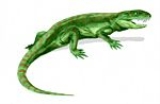
The Eothyrididae were a small group of very primitive, insectivorous
synapsids. Only two genera are known, Eothyris
and Oedaleops
, both from the early Permian
of North America
. Their main distinguishing feature is the large caniniform tooth in from of the maxilla
.
Eothyridids share with the Caseidae
a number of specialised features associated with the morphology of the snout and external naris and it is likely that they were ancestral to them. The two together form the clade Caseasauria
.
Eothyris is known from a single skull specimen; Oedaleops is known from three partial skulls and some parts of some limbs. The skulls are approximately 6 centimeters in length, suggesting that the total length of the animals was under 1 meter.
Both species were found in the lower Permian
in what is today North America
. In modern cladistics, the Eothyrididae are considered to be a basal group within the Caseasauria
. Caseasauria
forms a sister group of the Eupelycosauria
, out of which the Therapsids (the "mammal-like reptiles") evolved.
Insectivore
An insectivore is a type of carnivore with a diet that consists chiefly of insects and similar small creatures. An alternate term is entomophage, which also refers to the human practice of eating insects....
synapsids. Only two genera are known, Eothyris
Eothyris
Eothyris is an extinct genus of the family Eothyrididae. It was an insectivorous synapsid. It was closely related to Oedaleops.-Discovery and species:...
and Oedaleops
Oedaleops
Oedaleops is an extinct genus of the family Eothyrididae. It was closely related to Eothyris. Like Eothyris, it was probably an insectivore.-Discovery and species:...
, both from the early Permian
Permian
The PermianThe term "Permian" was introduced into geology in 1841 by Sir Sir R. I. Murchison, president of the Geological Society of London, who identified typical strata in extensive Russian explorations undertaken with Edouard de Verneuil; Murchison asserted in 1841 that he named his "Permian...
of North America
North America
North America is a continent wholly within the Northern Hemisphere and almost wholly within the Western Hemisphere. It is also considered a northern subcontinent of the Americas...
. Their main distinguishing feature is the large caniniform tooth in from of the maxilla
Maxilla
The maxilla is a fusion of two bones along the palatal fissure that form the upper jaw. This is similar to the mandible , which is also a fusion of two halves at the mental symphysis. Sometimes The maxilla (plural: maxillae) is a fusion of two bones along the palatal fissure that form the upper...
.
Eothyridids share with the Caseidae
Caseidae
The Caseidae were a widespread group of very primitive herbivorous synapsids, which appeared during the later early Permian and persisted until the late middle Permian. Although ranging in size from 1 to 5½ meters in body length, caseids were surprisingly conservative in their skeletal anatomy and...
a number of specialised features associated with the morphology of the snout and external naris and it is likely that they were ancestral to them. The two together form the clade Caseasauria
Caseasauria
The Caseasauria are one of the two main clades of early synapsids, the other being the Eupelycosauria. They are currently known only from the Permian, and include two superficially different families, the small insectivorous or carnivorous Eothyrididae, and the large herbivorous CaseidaeThese two...
.
Eothyris is known from a single skull specimen; Oedaleops is known from three partial skulls and some parts of some limbs. The skulls are approximately 6 centimeters in length, suggesting that the total length of the animals was under 1 meter.
Both species were found in the lower Permian
Permian
The PermianThe term "Permian" was introduced into geology in 1841 by Sir Sir R. I. Murchison, president of the Geological Society of London, who identified typical strata in extensive Russian explorations undertaken with Edouard de Verneuil; Murchison asserted in 1841 that he named his "Permian...
in what is today North America
North America
North America is a continent wholly within the Northern Hemisphere and almost wholly within the Western Hemisphere. It is also considered a northern subcontinent of the Americas...
. In modern cladistics, the Eothyrididae are considered to be a basal group within the Caseasauria
Caseasauria
The Caseasauria are one of the two main clades of early synapsids, the other being the Eupelycosauria. They are currently known only from the Permian, and include two superficially different families, the small insectivorous or carnivorous Eothyrididae, and the large herbivorous CaseidaeThese two...
. Caseasauria
Caseasauria
The Caseasauria are one of the two main clades of early synapsids, the other being the Eupelycosauria. They are currently known only from the Permian, and include two superficially different families, the small insectivorous or carnivorous Eothyrididae, and the large herbivorous CaseidaeThese two...
forms a sister group of the Eupelycosauria
Eupelycosauria
The Eupelycosauria originally referred to a suborder of 'pelycosaurs' , but has been redefined to designate a clade of synapsids that includes most pelycosaurs, as well as all therapsids and mammals...
, out of which the Therapsids (the "mammal-like reptiles") evolved.