

Emperor Temmu

Encyclopedia
was the 40th emperor
of Japan
, according to the traditional order of succession.
Temmu's reign lasted from 672 until his death in 686.
and Empress Saimei
, and the younger brother of the Emperor Tenji
. His name at birth was Prince Ōama (大海人皇子:Ōama no ōji). He was succeeded by Empress Jitō
, who was both his niece and his wife.
During the reign of his elder brother, Emperor Tenji, Temmu was forced to marry several of Tenji's daughters because Tenji thought those marriages would help to strengthen political ties between the two brothers. The nieces he married included Princess Unonosarara, today known as the Empress Jitō
, and Princess Ōta
. Temmu also had other consorts whose fathers were influential courtiers.
Temmu had many children, including his crown prince Kusakabe
by Princess Unonosarara; Princess Tōchi
; Prince Ōtsu
and Princess Ōku by Princess Ōta (whose father also was Tenji); and Prince Toneri
, the editor of Nihonshoki and father of Emperor Junnin
. Through Prince Kusakabe, Temmu had two emperors and two empresses among his descendents. Empress Shōtoku
was the last of these imperial rulers from his lineage.
The only document on his life was Nihonshoki. However, it was edited by his son, Prince Toneri, and the work was written during the reigns of his wife and children, causing one to suspect its accuracy and impartiality.
Temmu's father died while he was young, and he grew up mainly under the guidance of Empress Saimei. He was not expected to gain the throne, because his brother Tenji was the crown prince, being the older son of their mother, the reigning empress.
After Tenji ascended to the throne, Temmu was appointed crown prince. This was because Tenji had no appropriate heir among his sons at that time, as none of their mothers was of a rank high enough to give the necessary political support. Tenji was suspicious that Temmu might be so ambitious as to attempt to take the throne, and felt the necessity to strengthen his position through politically advantageous marriages.
Tenji was particularly active in improving the military institutions which had been established during the Taika reforms.
In his old age, Tenji had a son, Prince Ōtomo, by a low-ranking consort. Since Ōtomo had weak political support from his maternal relatives, the general wisdom of the time held that it was not a good idea for him to ascend to the throne, yet Tenji was obsessed with the idea.
In 671 Temmu felt himself to be in danger and volunteered to resign the office of crown prince to become a monk. He moved to the mountains in Yoshino, Yamato province
(now in Yoshino, Nara
), officially for reasons of seclusion. He took with him his sons and one of his wives, Princess Unonosarara, a daughter of Tenji. However, he left all his other consorts at the capital, Omikyō in Ōmi Province
(today in Otsu, Shiga
).
A year later, (in 672) Tenji died and Prince Ōtomo ascended to the throne as Emperor Kōbun
. Temmu assembled an army and marched from Yoshino to the east, to attack Omikyō in a counterclockwise movement. They marched through Yamato, Iga
and Mino province
s to threaten Omikyō in the adjacent province. The army of Temmu and the army of the young Emperor Kōbun fought in the northwestern part of Mino (nowadays Sekigahara, Gifu
). Temmu's army won and Kōbun committed suicide (Jinshin incident).
As might be expected, Emperor Temmu was no less active than former-Emperor Tenji in improving the Taika military institutions. Temmu's reign brought many changes, such as: (1) a centralized war department was organized; (2) the defenses of the Inner Country near the Capital were strengthened; (3) forts and castles were built near Capital and in the western parts of Honshū—and in Kyushu; (4) troops were reviewed; and all provincial governors were ordered to complete the collection of arms and to study tactics.
 In 673 Temmu moved the capital back to Yamato province on the Kiymihara plain, naming his new capital Asuka. The Man'yōshū includes a poem written after the Jinshin conflict ended:
At Asuka, Emperor Temmu was enthroned. He elevated Unonosarara to be his empress. Events of his reign include:
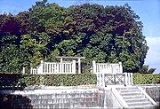
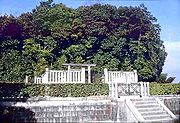
Timmu reigned from this capital until his death in 686. The actual site of his's grave
is known. This emperor is traditionally venerated at a memorial
Shinto
shrine
(misasagi) at Nara
. The Imperial Household Agency
designates this location as Temmu's mausoleum
. It is formally named Hinokuma no Ōuchi no misasagi.
and Soga
. He renewed the system of kabane
, the hereditary titles of duty and rank, but with alterations, including the abolition of some titles. Omi
and Muraji
, the highest kabane in the earlier period, were reduced in value in the new hierarchy, which consisted of eight kinds of kabane. Each clan received a new kabane according to its closeness to the imperial bloodline and its loyalty to Temmu.
Temmu attempted to keep a balance of power among his sons. Once he traveled to Yoshino together with his sons, and there had them swear to cooperate and not to make war on each other. This turned out to be ineffective: one of his sons, Prince Ōtsu, was later executed for treason after the death of Temmu.
Temmu's foreign policy favored the Korean kingdom Silla
, which took over the entire Korean peninsula in 676. After the unification of Korea by Silla, Temmu decided to break diplomatic relations with the Tang dynasty
of China, evidently in order to keep on good terms with Silla.
Temmu used religious structures to increase the authority of the imperial throne. During his reign there was increased emphasis on the tie between the imperial household and the Grand Shrine of Ise (dedicated to the ancestor goddess of the emperors, Amaterasu
) by sending his daughter Princess Oku as the newly established Saiō
of the shrine, and several festivals were financed from the national budget. He also showed favor to Buddhism
, and built several large temples and monasteries. It is said that Temmu asked that each household was encouraged to build an altar with a dais where a Buddha-image and a sutra could be placed so that family worshiping could be held, thus inventing the butsudan
. On the other hand, all Buddhist priests, monks and nuns were controlled by the state, and no one was allowed to become a monk without the state's permission. This was aimed at preventing cults and stopping farmers from turning into priests.
(公卿) is a collective term for the very few most powerful men attached to the court of the Emperor of Japan
in pre-Meiji
eras.
In general, this elite group included only three to four men at a time. These were hereditary courtiers whose experience and background would have brought them to the pinnacle of a life's career. During Temmu's reign, this apex of the Daijō-kan included:
In this context, Brown and Ishida's translation of Gukanshō offers an explanation about the years of Empress Jitō's reign which muddies a sense of easy clarity in the pre-Taihō time-frame:
: Princess Uno-no-sarara (鸕野讃良皇女)(Empress Jitō
) (645-703)
Hi
: Princess Ōta
(大田皇女) (644-667), daughter of Emperor Tenji
Hi
: Princess Ōe
(大江皇女) (?-699), daughter of Emperor Tenji
Hi
: Princess Niitabe
(新田部皇女) (?-699), daughter of Emperor Tenji
Bunin
: Fujiwara no Hikami-no-iratsume (藤原氷上娘) (?-682), daughter of Fujiwara no Kamatari
Bunin
: Soga no Ōnu-no-iratsume (蘇我大蕤娘) (?-724), daughter of Soga no Akae
Bunin
: Fujiwara no Ioe-no-iratsume (藤原五百重娘), daughter of Fujiwara no Kamatari
Court lady: Nukata no Ōkimi (額田王)
Court lady: Munakata no Amako-no-iratsume (胸形尼子娘), daughter of Munakata-no-Kimi Tokuzen
Court lady: Shishihito no Kajihime-no-iratsume (宍人梶媛娘), daughter of Shishihito-no-Omi Ōmaro
Emperor
An emperor is a monarch, usually the sovereign ruler of an empire or another type of imperial realm. Empress, the female equivalent, may indicate an emperor's wife or a woman who rules in her own right...
of Japan
Japan
Japan is an island nation in East Asia. Located in the Pacific Ocean, it lies to the east of the Sea of Japan, China, North Korea, South Korea and Russia, stretching from the Sea of Okhotsk in the north to the East China Sea and Taiwan in the south...
, according to the traditional order of succession.
Temmu's reign lasted from 672 until his death in 686.
Traditional narrative
Temmu was the youngest son of Emperor JomeiEmperor Jomei
was the 34th emperor of Japan, according to the traditional order of succession.Jomei's reign spanned the years from 629 through 641.-Traditional narrative:Before Jomei's ascension to the Chrysanthemum Throne, his personal name was or...
and Empress Saimei
Empress Kogyoku
, also known as , was the 35th and 37th emperor of Japan, according to the traditional order of succession.Kōgyoku's reign spanned the years from 642-645. Her reign as Saimei encompassed 655-661...
, and the younger brother of the Emperor Tenji
Emperor Tenji
, also known as Emperor Tenchi, was the 38th emperor of Japan, according to the traditional order of succession.Tenji's reign spanned the years from 661 through 671.-Traditional narrative:...
. His name at birth was Prince Ōama (大海人皇子:Ōama no ōji). He was succeeded by Empress Jitō
Empress Jito
was the 41st emperor of Japan, according to the traditional order of succession.Jitō's reign spanned the years from 686 through 697.In the history of Japan, Jitō was the third of eight women to take on the role of empress regnant. The two female monarchs before Jitō were Suiko and Kōgyoku/Saimei...
, who was both his niece and his wife.
During the reign of his elder brother, Emperor Tenji, Temmu was forced to marry several of Tenji's daughters because Tenji thought those marriages would help to strengthen political ties between the two brothers. The nieces he married included Princess Unonosarara, today known as the Empress Jitō
Empress Jito
was the 41st emperor of Japan, according to the traditional order of succession.Jitō's reign spanned the years from 686 through 697.In the history of Japan, Jitō was the third of eight women to take on the role of empress regnant. The two female monarchs before Jitō were Suiko and Kōgyoku/Saimei...
, and Princess Ōta
Princess Ota
was royalty in Japan during the Asuka Period. She was the eldest daughter of Emperor Tenji. She was the elder sister of Princess Uno-Sarara, and the mother of Princess Ōku and Prince Ōtsu. Her mother was Lady Ochi, whose father is Soga no Kurayamada no Ishikawamaro.She was not in good health by...
. Temmu also had other consorts whose fathers were influential courtiers.
Temmu had many children, including his crown prince Kusakabe
Kusakabe
Prince Kusakabe was a Japanese imperial crown prince from 681 until his death. He was the second son of Emperor Temmu. His mother was the empress Unonosarara, today known as Empress Jitō....
by Princess Unonosarara; Princess Tōchi
Princess Tochi
was a Japanese princess during the Asuka period of Japanese history. She was a daughter of Emperor Temmu and the Empress-consort of Emperor Kōbun.-Genealogy:...
; Prince Ōtsu
Prince Otsu
was a Japanese poet and the son of Emperor Temmu.-Background:His mother was Princess Ōta whose father was Emperor Tenji. He was therefore the younger full-blood brother of Princess Ōku. His consort was Princess Yamanobe, daughter of Emperor Tenji, thus his cousin...
and Princess Ōku by Princess Ōta (whose father also was Tenji); and Prince Toneri
Prince Toneri of Japan
was a Japanese imperial prince in the Nara period. He was a son of Emperor Temmu. He was given the posthumous name, , as the father of Emperor Junnin. In the beginning of the Nara period, he gained political power as a leader of imperial family together with Prince Nagaya...
, the editor of Nihonshoki and father of Emperor Junnin
Emperor Junnin
was the 47th emperor of Japan, according to the traditional order of succession.Junnin's reign spanned the years 758 to 764.-Traditional narrative:Before his ascension to the Chrysanthemum Throne, his personal name was Ōi-shinnō ....
. Through Prince Kusakabe, Temmu had two emperors and two empresses among his descendents. Empress Shōtoku
Empress Koken
, also known as , was the 46th and the 48th emperor of Japan respectively, according to the traditional order of succession. Empress Kōken first reigned from 749 to 758, then she reascended the throne as Empress Shōtoku from 765 until her death in 770....
was the last of these imperial rulers from his lineage.
Events of Temmu's life
Emperor Temmu is the first monarch of Japan, to whom the title tenno was assigned contemporaneously—not only by later generations.The only document on his life was Nihonshoki. However, it was edited by his son, Prince Toneri, and the work was written during the reigns of his wife and children, causing one to suspect its accuracy and impartiality.
Temmu's father died while he was young, and he grew up mainly under the guidance of Empress Saimei. He was not expected to gain the throne, because his brother Tenji was the crown prince, being the older son of their mother, the reigning empress.
After Tenji ascended to the throne, Temmu was appointed crown prince. This was because Tenji had no appropriate heir among his sons at that time, as none of their mothers was of a rank high enough to give the necessary political support. Tenji was suspicious that Temmu might be so ambitious as to attempt to take the throne, and felt the necessity to strengthen his position through politically advantageous marriages.
Tenji was particularly active in improving the military institutions which had been established during the Taika reforms.
In his old age, Tenji had a son, Prince Ōtomo, by a low-ranking consort. Since Ōtomo had weak political support from his maternal relatives, the general wisdom of the time held that it was not a good idea for him to ascend to the throne, yet Tenji was obsessed with the idea.
In 671 Temmu felt himself to be in danger and volunteered to resign the office of crown prince to become a monk. He moved to the mountains in Yoshino, Yamato province
Yamato Province
was a province of Japan, located in Kinai, corresponding to present-day Nara Prefecture in Honshū. It was also called . At first, the name was written with one different character , and for about ten years after 737, this was revised to use more desirable characters . The final revision was made in...
(now in Yoshino, Nara
Yoshino, Nara
is a town located in Yoshino District, Nara Prefecture, Japan.As of September 1, 2007, the town had an estimated population of 9397 and a density of 97.93 persons per km². The total area was 95.65 km².-Geography:...
), officially for reasons of seclusion. He took with him his sons and one of his wives, Princess Unonosarara, a daughter of Tenji. However, he left all his other consorts at the capital, Omikyō in Ōmi Province
Omi Province
is an old province of Japan, which today comprises Shiga Prefecture. It was one of the provinces that made up the Tōsandō circuit. It is nicknamed as .Lake Biwa, Japan's largest lake, is located at the center of the province...
(today in Otsu, Shiga
Otsu, Shiga
is the capital city of Shiga, Japan. The city was founded on October 1, 1898. As of October 1, 2010, the city has an estimated population of 338,629 with an average age of 40.7 years and a population density of 905.28 persons per km²...
).
A year later, (in 672) Tenji died and Prince Ōtomo ascended to the throne as Emperor Kōbun
Emperor Kobun
was the 39th emperor of Japan, according to the traditional order of succession.Kōbun's reign lasted only a few months in 671–672.-Traditional narrative:...
. Temmu assembled an army and marched from Yoshino to the east, to attack Omikyō in a counterclockwise movement. They marched through Yamato, Iga
Iga Province
was an old province of Japan in the area that is today western Mie Prefecture. It was sometimes called . Iga bordered on Ise, Ōmi, Yamato, and Yamashiro Provinces.-Geography:...
and Mino province
Mino Province
, one of the old provinces of Japan, encompassed part of modern-day Gifu Prefecture. It was sometimes called . Mino Province bordered Echizen, Hida, Ise, Mikawa, Ōmi, Owari, and Shinano Provinces....
s to threaten Omikyō in the adjacent province. The army of Temmu and the army of the young Emperor Kōbun fought in the northwestern part of Mino (nowadays Sekigahara, Gifu
Sekigahara, Gifu
is a town located in Fuwa District, Gifu Prefecture, Japan.As of July 2011, the town has an estimated population of 7,965. The total area is 49.29 km².In 1600, the Battle of Sekigahara took place here.-History:...
). Temmu's army won and Kōbun committed suicide (Jinshin incident).
- Post-Meiji chronology
- In the 10th year of TenjiTenji (period)The Tenji period is a brief span of years during the Asuka period of Japanese history. The Tenji period describes a span of years which were considered to have begun in the 1322nd year of the Yamato dynasty....
, in the 11th month (671): Emperor Tenji, in the 10th year of his reign (天智天皇10年), designated his son as his heir; and modern scholars construe this as meaning that the son would have received the succession (‘‘senso’’) after his father's death. Shortly thereafter, Emperor Kōbun is said to have acceded to the throne (‘‘sokui’’). If this understanding were valid, then it would it would follow:
-
- In the 1st year of KōbunKobun (period)The Kōbun period is a chronological timeframe during the Asuka period of Japanese history. The Kōbun period describes a span of years which were considered to have begun in the 1332nd year of the Yamato dynasty....
(672): Emperor Kōbun, in the 1st year of his reign (弘文天皇1年), died; and his uncle Ōaomi-shinnō received the succession (‘‘senso’’) after the death of his nephew. Shortly thereafter, Emperor Temmu could be said to have acceded to the throne (‘‘sokui’’).
- In the 1st year of Kōbun
- In the 10th year of Tenji
- Pre-Meiji chronology
- Prior to the 19th century, Otomo was understood to have been a mere interloper, a pretender, an anomaly; and therefore, if that commonly-accepted understanding were to have been valid, then it would have followed:
- In the 10th year of TenjiTenji (period)The Tenji period is a brief span of years during the Asuka period of Japanese history. The Tenji period describes a span of years which were considered to have begun in the 1322nd year of the Yamato dynasty....
, in the 11th month (671): Emperor Tenji, in the 10th year of his reign (天智天皇10年), died; and despite any military confrontations which ensued, the brother of the dead sovereign would have received the succession (senso); and after a time, it would have been understood that Emperor Temmu rightfully acceded to the throne (sokui).
- In the 10th year of Tenji
As might be expected, Emperor Temmu was no less active than former-Emperor Tenji in improving the Taika military institutions. Temmu's reign brought many changes, such as: (1) a centralized war department was organized; (2) the defenses of the Inner Country near the Capital were strengthened; (3) forts and castles were built near Capital and in the western parts of Honshū—and in Kyushu; (4) troops were reviewed; and all provincial governors were ordered to complete the collection of arms and to study tactics.
-
-
- Our Sovereign, a god,
- Has made his Imperial City
- Out of the stretch of swamps,
- Where chestnut horses sank
- To their bellies.
-
-
- -- Ōtomo Miyuki
-
-
-
At Asuka, Emperor Temmu was enthroned. He elevated Unonosarara to be his empress. Events of his reign include:
- 674 {TemmuTemmu (period)The Temmu period is a chronological timeframe during the Asuka period of Japanese history. The Temmu period describes a span of years which were considered to have begun in the 1333rd year of the Yamato dynasty....
2): Ambassadors of Tane no kuniTane Provincewas an old province of Japan in the area of Kagoshima Prefecture.-History:Kofun burial mounds on Tanegashima and two very old Shinto shrines on Yakushima suggest that these islands were the southern border of the Yamato state....
were received in the Japanese court.
- 680 (Temmu 8): Yakushi-jiYakushi-jiis one of the most famous imperial and ancient Buddhist temples in Japan, located in Nara. The temple is the headquarters of the Hossō school of Japanese Buddhism...
was founded in the Hakuhō periodHakuhō periodThe was an unofficial of Emperor Temmu after Hakuchi and before Suchō. The duration of this discrete non-nengō timespan lasted from 673 through 686.The Hakuhō period is more often used as a general term which describe a wider range of years....
.
Timmu reigned from this capital until his death in 686. The actual site of his's grave
Grave (burial)
A grave is a location where a dead body is buried. Graves are usually located in special areas set aside for the purpose of burial, such as graveyards or cemeteries....
is known. This emperor is traditionally venerated at a memorial
Memorial
A memorial is an object which serves as a focus for memory of something, usually a person or an event. Popular forms of memorials include landmark objects or art objects such as sculptures, statues or fountains, and even entire parks....
Shinto
Shinto
or Shintoism, also kami-no-michi, is the indigenous spirituality of Japan and the Japanese people. It is a set of practices, to be carried out diligently, to establish a connection between present day Japan and its ancient past. Shinto practices were first recorded and codified in the written...
shrine
Shrine
A shrine is a holy or sacred place, which is dedicated to a specific deity, ancestor, hero, martyr, saint, daemon or similar figure of awe and respect, at which they are venerated or worshipped. Shrines often contain idols, relics, or other such objects associated with the figure being venerated....
(misasagi) at Nara
Nara Prefecture
is a prefecture in the Kansai region on Honshū Island, Japan. The capital is the city of Nara.-History:The present-day Nara Prefecture was created in 1887, making it independent of Osaka Prefecture....
. The Imperial Household Agency
Imperial Household Agency
The is a government agency of Japan in charge of the state matters concerning Japan's imperial family and also keeping the Privy Seal and the State Seal...
designates this location as Temmu's mausoleum
Mausoleum
A mausoleum is an external free-standing building constructed as a monument enclosing the interment space or burial chamber of a deceased person or persons. A monument without the interment is a cenotaph. A mausoleum may be considered a type of tomb or the tomb may be considered to be within the...
. It is formally named Hinokuma no Ōuchi no misasagi.
Politics
In Nihonshoki Temmu is described as a great innovator, but the neutrality of this description is doubtful, since the work was written under the control of his descendants. It seems clear, however, that Temmu strengthened the power of the emperor and appointed his sons to the highest offices of his government, reducing the traditional influence of powerful clans such as the ŌtomoOtomo clan
The Ōtomo clan was a Japanese clan whose power stretched from the Kamakura period through the Sengoku period, spanning over 400 years. The clan's hereditary lands lay in Kyūshū....
and Soga
Soga clan
The was one of the most powerful clans in Yamato Japan and played a major role in the spread of Buddhism. For many generations, in the 5th and 7th centuries, the Soga monopolized the position of Great Royal Chieftain and was the first of many families to dominate the Imperial House of Japan by...
. He renewed the system of kabane
Kabane
were hereditary titles used in ancient Japan to denote rank and political standing. There were more than thirty. Some of the more common kabane were omi, muraji, , , , , , and ....
, the hereditary titles of duty and rank, but with alterations, including the abolition of some titles. Omi
Omi
was an ancient Japanese hereditary title denoting rank and political standing that, along with muraji, was reserved for the most powerful clans during the Kofun period...
and Muraji
Muraji
Muraji . Muraji was an ancient Japanese hereditary title denoting rank and political standing that was reserved for the most powerful among the Tomo no Miyatsuko clans, which were clans associated with particular occupations...
, the highest kabane in the earlier period, were reduced in value in the new hierarchy, which consisted of eight kinds of kabane. Each clan received a new kabane according to its closeness to the imperial bloodline and its loyalty to Temmu.
Temmu attempted to keep a balance of power among his sons. Once he traveled to Yoshino together with his sons, and there had them swear to cooperate and not to make war on each other. This turned out to be ineffective: one of his sons, Prince Ōtsu, was later executed for treason after the death of Temmu.
Temmu's foreign policy favored the Korean kingdom Silla
Silla
Silla was one of the Three Kingdoms of Korea, and one of the longest sustained dynasties in...
, which took over the entire Korean peninsula in 676. After the unification of Korea by Silla, Temmu decided to break diplomatic relations with the Tang dynasty
Tang Dynasty
The Tang Dynasty was an imperial dynasty of China preceded by the Sui Dynasty and followed by the Five Dynasties and Ten Kingdoms Period. It was founded by the Li family, who seized power during the decline and collapse of the Sui Empire...
of China, evidently in order to keep on good terms with Silla.
Temmu used religious structures to increase the authority of the imperial throne. During his reign there was increased emphasis on the tie between the imperial household and the Grand Shrine of Ise (dedicated to the ancestor goddess of the emperors, Amaterasu
Amaterasu
, or is apart of the Japanese myth cycle and also a major deity of the Shinto religion. She is the goddess of the sun, but also of the universe. the name Amaterasu derived from Amateru meaning "shining in heaven." The meaning of her whole name, Amaterasu-ōmikami, is "the great August kami who...
) by sending his daughter Princess Oku as the newly established Saiō
Saio
A , also known as "Itsuki no Miko", was an unmarried female relative of the Japanese emperor, sent to Ise to serve at Ise Grand Shrine from the late 7th century until the 14th century. The Saiō's residence, Saikū , was approximately 10 km north-west of the shrine...
of the shrine, and several festivals were financed from the national budget. He also showed favor to Buddhism
Buddhism
Buddhism is a religion and philosophy encompassing a variety of traditions, beliefs and practices, largely based on teachings attributed to Siddhartha Gautama, commonly known as the Buddha . The Buddha lived and taught in the northeastern Indian subcontinent some time between the 6th and 4th...
, and built several large temples and monasteries. It is said that Temmu asked that each household was encouraged to build an altar with a dais where a Buddha-image and a sutra could be placed so that family worshiping could be held, thus inventing the butsudan
Butsudan
A butsudan is a shrine commonly found in temples and homes in Japanese Buddhist cultures. A butsudan is a wooden cabinet with doors that enclose and protect a gohonzon or religious icon, typically a statue or painting of a Buddha or Bodhisattva, or a "script" mandala scroll...
. On the other hand, all Buddhist priests, monks and nuns were controlled by the state, and no one was allowed to become a monk without the state's permission. This was aimed at preventing cults and stopping farmers from turning into priests.
Kugyō
KugyōKugyo
is the collective term for the very few most powerful men attached to the court of the Emperor of Japan in pre-Meiji eras. The kugyō was broadly divided into two groups: the , comprising the Chancellor of the Realm, the Minister of the Left, and the Minister of the Right; and the , comprising the...
(公卿) is a collective term for the very few most powerful men attached to the court of the Emperor of Japan
Emperor of Japan
The Emperor of Japan is, according to the 1947 Constitution of Japan, "the symbol of the state and of the unity of the people." He is a ceremonial figurehead under a form of constitutional monarchy and is head of the Japanese Imperial Family with functions as head of state. He is also the highest...
in pre-Meiji
Meiji period
The , also known as the Meiji era, is a Japanese era which extended from September 1868 through July 1912. This period represents the first half of the Empire of Japan.- Meiji Restoration and the emperor :...
eras.
In general, this elite group included only three to four men at a time. These were hereditary courtiers whose experience and background would have brought them to the pinnacle of a life's career. During Temmu's reign, this apex of the Daijō-kan included:
- SadaijinSadaijin, most commonly translated as "Minister of the Left", was a government position in Japan in the late Nara and Heian periods. The position was consolidated in the Taihō Code of 702. The Asuka Kiyomihara Code of 689 marks the initial appearance of the Sadaijin in the context of a central...
, Soga no Akae no Omi - UdaijinUdaijinUdaijin , most commonly translated as the "Minister of the Right", was a government position in Japan in the late Nara and Heian periods. The position was consolidated in the Taihō Code of 702. The Asuka Kiyomihara Code of 689 marks the initial appearance of the Udaijin in the context of a central...
, Nakatomi no Kane no Muraji - Naidaijin
Era of Temmu's reign
The years of Temmu's reign were marked by only one era name or nengō which was proclaimed in the final months of the emperor's life; and Shuchō ended with Temmu's death.- ShuchōShucho, alternatively read as Suchō or Akamitori, was a after a gap following Hakuchi and before another gap lasting until Taihō . This Shuchō period briefly spanned a period of mere months, June through September of 686...
(686)
Non-nengō period
The early years of Temmu's reign are not linked by scholars to any era or nengō. The Taika era innovation of naming time periods -- nengō -- was discontinued during these years, but it was reestablished briefly in 686. The use of nengō languished yet again after Temmu's death until Emperor Mommu reasserted an imperial right by proclaiming the commencement of Taihō in 701.- See Japanese era name -- "Non-nengo periods"Japanese era nameThe Japanese era calendar scheme is a common calendar scheme used in Japan, which identifies a year by the combination of the and the year number within the era...
- See Temmu (period)Temmu (period)The Temmu period is a chronological timeframe during the Asuka period of Japanese history. The Temmu period describes a span of years which were considered to have begun in the 1333rd year of the Yamato dynasty....
(673-686).
In this context, Brown and Ishida's translation of Gukanshō offers an explanation about the years of Empress Jitō's reign which muddies a sense of easy clarity in the pre-Taihō time-frame:
-
- "The eras that fell in this reign were: (1) the remaining seven years of Shuchō [(686+7=692?)]; and (2) Taika, which was four years long [695-698]. (The first year of this era was kinoto-hitsuji [695].) ...In the third year of the Taika era [697], Empress Jitō yielded the throne to the Crown Prince."
Wives and Children
EmpressJapanese empresses
In Japan, empress may refer to either or .- Empresses regnant :There were eight female imperial reigns in Japan's early history between 593 and 770, and two more in the early modern period...
: Princess Uno-no-sarara (鸕野讃良皇女)(Empress Jitō
Empress Jito
was the 41st emperor of Japan, according to the traditional order of succession.Jitō's reign spanned the years from 686 through 697.In the history of Japan, Jitō was the third of eight women to take on the role of empress regnant. The two female monarchs before Jitō were Suiko and Kōgyoku/Saimei...
) (645-703)
- Prince Kusakabe (草壁皇子) (662-689), Father of Emperor MommuEmperor Mommuwas the 42nd emperor of Japan, according to the traditional order of succession.Mommu's reign spanned the years from 697 through 707.-Traditional narrative:Before his ascension to the Chrysanthemum Throne, his personal name was Karu-shinnō....
and Empress GenshōEmpress Genshowas the 44th emperor of Japan, according to the traditional order of succession.Genshō's reign spanned the years 715 through 724.In the history of Japan, Genshō was the fifth of eight women to take on the role of empress regnant. The four female monarchs before Genshō were: Suiko, Kōgyoku/Saimei,...
Hi
Kokyu
The is a traditional Japanese string instrument, the only one played with a bow. Although it was introduced to Japan from China along with the shamisen, its material, shape, and sound are unique to Japan...
: Princess Ōta
Princess Ota
was royalty in Japan during the Asuka Period. She was the eldest daughter of Emperor Tenji. She was the elder sister of Princess Uno-Sarara, and the mother of Princess Ōku and Prince Ōtsu. Her mother was Lady Ochi, whose father is Soga no Kurayamada no Ishikawamaro.She was not in good health by...
(大田皇女) (644-667), daughter of Emperor Tenji
Emperor Tenji
, also known as Emperor Tenchi, was the 38th emperor of Japan, according to the traditional order of succession.Tenji's reign spanned the years from 661 through 671.-Traditional narrative:...
- Princess Ōku (大伯皇女) (661-701), SaiōSaioA , also known as "Itsuki no Miko", was an unmarried female relative of the Japanese emperor, sent to Ise to serve at Ise Grand Shrine from the late 7th century until the 14th century. The Saiō's residence, Saikū , was approximately 10 km north-west of the shrine...
in Ise ShrineIse Shrineis a Shinto shrine dedicated to goddess Amaterasu-ōmikami, located in the city of Ise in Mie prefecture, Japan. Officially known simply as , Ise Jingū is in fact a shrine complex composed of a large number of Shinto shrines centered on two main shrines, and ....
(673-686) - Prince ŌtsuPrince Otsuwas a Japanese poet and the son of Emperor Temmu.-Background:His mother was Princess Ōta whose father was Emperor Tenji. He was therefore the younger full-blood brother of Princess Ōku. His consort was Princess Yamanobe, daughter of Emperor Tenji, thus his cousin...
(大津皇子) (663-686)
Hi
Kokyu
The is a traditional Japanese string instrument, the only one played with a bow. Although it was introduced to Japan from China along with the shamisen, its material, shape, and sound are unique to Japan...
: Princess Ōe
Princess Oe
was a person in Japan during the Asuka Period. She was a daughter of Emperor Tenji. Her mother was Lady Shikobuko , whose father is Oshiumi no Miyakko Otatsu . Her siblings include Prince Kawashima and Princess Izumi....
(大江皇女) (?-699), daughter of Emperor Tenji
Emperor Tenji
, also known as Emperor Tenchi, was the 38th emperor of Japan, according to the traditional order of succession.Tenji's reign spanned the years from 661 through 671.-Traditional narrative:...
- Prince NagaPrince NagaPrince Naga was a Japanese prince. He was the son of Emperor Temmu and Princess Ōe, daughter of Emperor Tenji. His full brother was Prince Yuge....
(長皇子) (?-715) - Prince YugePrince YugePrince Yuge was a Japanese prince. He was the son of Emperor Temmu and Princess Ōe, daughter of Emperor Tenji. His full brother was Prince Naga. He is notable as one of the candidates for the Takamatsuzuka Tomb....
(弓削皇子) (?-699)
Hi
Kokyu
The is a traditional Japanese string instrument, the only one played with a bow. Although it was introduced to Japan from China along with the shamisen, its material, shape, and sound are unique to Japan...
: Princess Niitabe
Princess Niitabe
was a person in Japan during the Asuka Period. She was a daughter of Emperor Tenji. Her mother was Lady Tachibana, whose father was Abe no Kurahashi Maro. Her elder sister is Princess Asuka....
(新田部皇女) (?-699), daughter of Emperor Tenji
Emperor Tenji
, also known as Emperor Tenchi, was the 38th emperor of Japan, according to the traditional order of succession.Tenji's reign spanned the years from 661 through 671.-Traditional narrative:...
- Prince ToneriPrince Toneri of Japanwas a Japanese imperial prince in the Nara period. He was a son of Emperor Temmu. He was given the posthumous name, , as the father of Emperor Junnin. In the beginning of the Nara period, he gained political power as a leader of imperial family together with Prince Nagaya...
(舎人皇子) (676-735), Father of Emperor JunninEmperor Junninwas the 47th emperor of Japan, according to the traditional order of succession.Junnin's reign spanned the years 758 to 764.-Traditional narrative:Before his ascension to the Chrysanthemum Throne, his personal name was Ōi-shinnō ....
Bunin
Kokyu
The is a traditional Japanese string instrument, the only one played with a bow. Although it was introduced to Japan from China along with the shamisen, its material, shape, and sound are unique to Japan...
: Fujiwara no Hikami-no-iratsume (藤原氷上娘) (?-682), daughter of Fujiwara no Kamatari
Fujiwara no Kamatari
Fujiwara no Kamatari was a Japanese statesman, courtier and politician during the Asuka period.Kamatari was the founder of the Fujiwara clan in Japan. His birth clan was the Nakatomi. He was the son of Nakatomi no Mikeko, and his birth name was Nakatomi no Kamatari...
- Princess TajimaPrincess Tajimawas a person in Japan during the Asuka Period. She was a daughter of Emperor Tenmu. Her mother was Lady Higami , whose father was Fujiwara no Kamatari, who co-worked with Naka-no-Ōe-no Ōji when they slew Soga no Iruka in the Taika Reform in 645....
(但馬皇女) (?-708), married to Prince Takechi
Bunin
Kokyu
The is a traditional Japanese string instrument, the only one played with a bow. Although it was introduced to Japan from China along with the shamisen, its material, shape, and sound are unique to Japan...
: Soga no Ōnu-no-iratsume (蘇我大蕤娘) (?-724), daughter of Soga no Akae
- Prince HozumiPrince Hozumiwas a Japanese prince, the son of Emperor Temmu and Soga no Ōnu-no-iratsume. His wife was the poet Ōtomo no Sakanoe no Iratsume....
(穂積皇子) (?-715) - Princess KiPrincess KiPrincess Ki was a Japanese princess during the Asuka period of Japanese history. She was a daughter of Emperor Temmu and Lady Ōnu, whose father was Soga no Akaye...
(紀皇女) (?-?) - Princess TakataPrincess TakataPrincess Takata was a Japanese princess during the Asuka period and Nara period of Japanese history. She was a daughter of Emperor Temmu and Lady Ōnu whose father is Soga no Akaye. Prince Hozumi is her older brother, and Princess Ki her older sister. She was a Saio.-Genealogy:She handed over the...
(田形皇女) (?-728), SaiōSaioA , also known as "Itsuki no Miko", was an unmarried female relative of the Japanese emperor, sent to Ise to serve at Ise Grand Shrine from the late 7th century until the 14th century. The Saiō's residence, Saikū , was approximately 10 km north-west of the shrine...
in Ise ShrineIse Shrineis a Shinto shrine dedicated to goddess Amaterasu-ōmikami, located in the city of Ise in Mie prefecture, Japan. Officially known simply as , Ise Jingū is in fact a shrine complex composed of a large number of Shinto shrines centered on two main shrines, and ....
(706-707), and married to Prince Mutobe later
Bunin
Kokyu
The is a traditional Japanese string instrument, the only one played with a bow. Although it was introduced to Japan from China along with the shamisen, its material, shape, and sound are unique to Japan...
: Fujiwara no Ioe-no-iratsume (藤原五百重娘), daughter of Fujiwara no Kamatari
Fujiwara no Kamatari
Fujiwara no Kamatari was a Japanese statesman, courtier and politician during the Asuka period.Kamatari was the founder of the Fujiwara clan in Japan. His birth clan was the Nakatomi. He was the son of Nakatomi no Mikeko, and his birth name was Nakatomi no Kamatari...
- Prince Niitabe (新田部皇子) (?-735)
Court lady: Nukata no Ōkimi (額田王)
- Princess TōchiPrincess Tochiwas a Japanese princess during the Asuka period of Japanese history. She was a daughter of Emperor Temmu and the Empress-consort of Emperor Kōbun.-Genealogy:...
(十市皇女) (648?-678), married to Emperor KōbunEmperor Kobunwas the 39th emperor of Japan, according to the traditional order of succession.Kōbun's reign lasted only a few months in 671–672.-Traditional narrative:...
Court lady: Munakata no Amako-no-iratsume (胸形尼子娘), daughter of Munakata-no-Kimi Tokuzen
- Prince TakechiPrince Takechiwas a member of the royal family in Japan during the Asuka Period. He was the eldest son of Emperor Tenmu. He fought on the side of his father in the Jinshin War , a battle of succession, which resulted in his father becoming Emperor...
(高市皇子) (654-696)
Court lady: Shishihito no Kajihime-no-iratsume (宍人梶媛娘), daughter of Shishihito-no-Omi Ōmaro
- Prince OsakabePrince OsakabePrince Osakabe was a Japanese imperial prince who helped write the Taihō Code, alongside Fujiwara no Fuhito...
(刑部皇子/忍壁皇子) (?-705) - Princess HatsusebePrincess Hatsusebewas a person in Japan during the Asuka Period and the Nara Period. She was a daughter of Emperor Temmu. Her mother was Lady Kajihime, whose father is Shishibito no Omi Ōmaro...
(泊瀬部皇女) (?-741), married to Prince Kawashima (son of Emperor Tenji) – - Princess TakiPrincess Takiwas a Japanese princess during the Asuka period of Japanese history. She was a daughter of Emperor Temmu, a wife of Prince Shiki and the mother of Prince Kasuga. She was a Saio.-Genealogy:...
(託基皇女/多紀皇女) (?-751), SaiōSaioA , also known as "Itsuki no Miko", was an unmarried female relative of the Japanese emperor, sent to Ise to serve at Ise Grand Shrine from the late 7th century until the 14th century. The Saiō's residence, Saikū , was approximately 10 km north-west of the shrine...
in Ise ShrineIse Shrineis a Shinto shrine dedicated to goddess Amaterasu-ōmikami, located in the city of Ise in Mie prefecture, Japan. Officially known simply as , Ise Jingū is in fact a shrine complex composed of a large number of Shinto shrines centered on two main shrines, and ....
(698-before701), and married to Prince Shiki(son of Emperor Tenji) later - Prince Shiki (磯城皇子) (?-?)
See also
- Asuka Historical National Government Park: image of Mausoleum Emperor Temmu and Empress Jitō, exterior view