


Emergency medical services

Encyclopedia
Emergency medical services (abbreviated to the initialism
EMS in some countries) are a type of emergency service
dedicated to providing out-of-hospital acute medical care and/or transport to definitive care, to patients with illnesses and injuries which the patient, or the medical practitioner, believes constitutes a medical emergency
. The use of the term emergency medical services may refer solely to the pre-hospital element of the care, or be part of an integrated system of care, including the main care provider
, such as a hospital.
Emergency medical services may also be locally known as: first aid squad, emergency squad, rescue squad
, ambulance squad, ambulance service, ambulance corps or life squad.
The goal of most emergency medical services is to either provide treatment to those in need of urgent medical care, with the goal of satisfactorily treating the presenting conditions, or arranging for timely removal of the patient
to the next point of definitive care. This is most likely an emergency department
at a hospital
or another place where physicians are available. The term emergency medical service evolved to reflect a change from a simple system of ambulances providing only transportation, to a system in which actual medical care is given on scene and during transport. In some developing regions, the term is not used, or may be used inaccurately, since the service in question does not provide treatment to the patients, but only the provision of transport to the point of care.
In most places in the world, the EMS is summoned by members of the public (or other emergency services, businesses or authority) via an emergency telephone number
which puts them in contact with a control facility, which will then dispatch a suitable resource to deal with the situation.
In some parts of the world, the emergency medical service also encompasses the role of moving patients from one medical facility to an alternative one; usually to facilitate the provision of a higher level or more specialised field of care. In such services, the EMS is not summoned by members of the public but by clinical professionals (e.g. physicians or nurses) in the referring facility. Specialized hospitals that provide higher levels of care may include services such as neonatal intensive care (NICU), pediatric intensive care (PICU), state regional burn centres, specialized care for spinal injury and/or neurosurgery
, regional stroke
centers, specialized cardiac care (cardiac catherization), and specialized/regional trauma
care.
In some jurisdictions, EMS units may handle technical rescue
operations such as extrication, water rescue, and search and rescue
. Training and qualification
levels for members and employees of emergency medical services vary widely throughout the world. In some systems, members may be present who are qualified only to drive the ambulance, with no medical training. In contrast, most systems have personnel who retain at least basic first aid
certifications, such as Basic Life Support
(BLS). Additionally many EMS systems are staffed with Advanced Life Support
(ALS) personnel, including paramedic
s, nurses, or, less commonly, physician
s.
contains the parable of the Good Samaritan, where a man who was beaten is cared for by a Samaritan. Luke 10:34 (NIV) - "He went to him and bandaged his wounds, pouring on oil and wine. Then he put the man on his own donkey, took him to an inn and took care of him." Also during the Middle Ages, the Knights Hospitaller
were known for rendering assistance to wounded soldiers in the battlefield.
 The first use of the ambulance as a specialized vehicle, in battle came about with the ambulances volantes designed by Dominique Jean Larrey
(1766–1842), Napoleon Bonaparte's chief physician. Larrey was present at the battle of Spires, between the French
and Prussia
ns, and was distressed by the fact that wounded soldiers were not picked up by the numerous ambulances (which Napoleon required to be stationed two and half miles back from the scene of battle) until after hostilities had ceased, and set about developing a new ambulance system. Having decided against using the Norman system of horse litters, he settled on two- or four-wheeled horse
-drawn wagons, which were used to transport fallen soldiers from the (active) battlefield after they had received early treatment in the field. These 'flying ambulances' were first used by Napoleon's Army of the Rhine is 1793. Larrey subsequently developed similar services for Napoleon's other armies, and adapted his ambulances to the conditions, including developing a litter which could be carried by a camel
for a campaign in Egypt
.
In civilian ambulances, a major advance was made (which in future years would come to shape policy on hospitals and ambulances) with the introduction of a transport carriage for cholera
patients in London during 1832. The statement on the carriage, as printed in The Times
, said "The curative process commences the instant the patient is put in to the carriage; time is saved which can be given to the care of the patient; the patient may be driven to the hospital so speedily that the hospitals may be less numerous and located at greater distances from each other". This tenet of ambulances providing instant care, allowing hospitals to be spaced further apart, displays itself in modern emergency medical planning.
The first known hospital-based ambulance service operated out of Commercial Hospital, Cincinnati, Ohio
(now the Cincinnati General) by 1865. This was soon followed by other services, notably the New York
service provided out of Bellevue Hospital which started in 1869 with ambulances carrying medical equipment, such as splint
s, a stomach pump, morphine
, and brandy
, reflecting contemporary medicine.
In June 1887 the St John Ambulance Brigade was established to provide first aid and ambulance services at public events in London
. It was modelled on a military-style command and discipline structure.
The earliest emergency medical service was reportedly the rescue society founded by Jaromir V. Mundy, Count J. N. Wilczek, and Eduard Lamezan-Salins in Vienna
after the disastrous fire at the Vienna Ring Theater in 1881. Named the "Vienna Voluntary Rescue Society," it served as a model for similar societies worldwide.
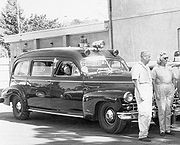 Also in the late 19th century, the automobile
was being developed, and in addition to horse-drawn models, early 20th century ambulances were powered by steam
, gasoline
, and electricity
, reflecting the competing automotive technologies then in existence. However, the first motorized ambulance was brought into service in the last year of the 19th century, with the Michael Reese Hospital
, Chicago
, taking delivery of the first automobile ambulance, donated by 500 prominent local businessmen, in February 1899. This was followed in 1900 by New York city, who extolled its virtues of greater speed, more safety for the patient, faster stopping and a smoother ride. These first two automobile ambulances were electrically powered with 2 hp motors on the rear axle.
American historians claim that the first component of pre-hospital care on scene began in 1928, when "Julien Stanley Wise started the Roanoke Life Saving and First Aid Crew in Roanoke, Virginia
, Virginia, which was the first land-based rescue squad in the nation." However the city of Toronto
takes this claim stating "The first formal training for ambulance attendants was conducted in 1892."
During World War One, further advances were made in providing care before and during transport – traction splint
s were introduced during World War I
, and were found to have a positive effect on the morbidity and mortality
of patients with leg fractures. Two-way radio
s became available shortly after World War I, enabling for more efficient radio dispatch
of ambulances in some areas. Shortly before World War II
, then, a modern ambulance carried advanced medical equipment, was staffed by a physician
, and was dispatched by radio. In many locations, however, ambulances were hearse
s - the only available vehicle that could carry a recumbent patient - and were thus frequently run by funeral home
s. These vehicles, which could serve either purpose, were known as combination car
s.
Prior to World War II, hospitals provided ambulance service in many large cities. With the severe manpower shortages imposed by the war effort, it became difficult for many hospitals to maintain their ambulance operations. City governments in many cases turned ambulance services over to the police or fire department. No laws required minimal training for ambulance personnel and no training programs existed beyond basic first aid. In many fire departments, assignment to ambulance duty became an unofficial form of punishment.
Advances in the 1960s, especially the development of CPR and defibrillation
as the standard form of care for out-of-hospital cardiac arrest
, along with new pharmaceuticals, led to changes in the tasks of the ambulances. In Belfast
, Northern Ireland
the first experimental mobile coronary care ambulance successfully resuscitated patients using these technologies. One well-known report in the USA during that time was Accidental Death and Disability: The Neglected Disease of Modern Society. This report is commonly known as The White Paper
. These studies, along with the White Paper report, placed pressure on governments to improve emergency care in general, including the care provided by ambulance services. In the USA prior to the 1970s, ambulance service was largely unregulated. While some areas ambulances were staffed by advanced first-aid-level responders, in other areas, it was common for the local undertaker, having the only transport in town in which one could lie down, to operate both the local furniture store (where he would make coffins as a sideline) and the local ambulance service. The the government reports resulted in the creation of standard
s in ambulance construction concerning the internal height of the patient care area (to allow for an attendant to continue to care for the patient during transport), and the equipment (and thus weight) that an ambulance had to carry, and several other factors.
In 1971, after release of the National Highway Traffic Safety Administration
's study, "Accidental Death and Disability: The Neglected Disease of Modern Society". A progress report was published at the annual meeting, by the then president of American Association of Trauma, Sawnie R. Gaston M.D. Dr. Gaston reported the study a "superb white paper" that "jolted and wakened the entire structure of organized medicine. This report was the "prime mover" and made the "single greatest contribution of it's kind to the improvement of emergency medical services". Since this time a concerted effort has been undertaken to improve emergency medical care in the pre-hospital setting. Such advancements included Dr. R Adams Cowley
creating the country's first statewide EMS program, in Maryland
.
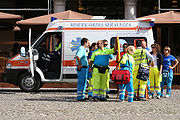 Some countries closely regulate the industry (and may require anyone working on an ambulance to be qualified to a set level), whereas others allow quite wide differences between types of operator.
 Emergency medical services exists to fulfill the basic principles of first aid
, which are to Preserve Life, Prevent Further Injury, and Promote Recovery.
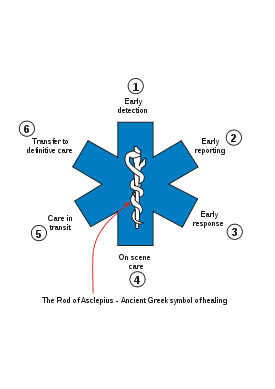
This common theme in medicine
is demonstrated by the "star of life". The Star of Life
shown here, where each of the 'arms' to the star represent one of the 6 points. These 6 points are used to represent the six stages of high quality pre-hospital care, which are:
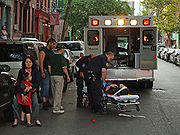

 Emergency Medical Service is provided by a variety of individuals, using a variety of methods. To some extent, these will be determined by country and locale, with each individual country having its own 'approach' to how EMS should be provided, and by whom. In some parts of Europe, for example, legislation insists that efforts at providing advanced life support
(ALS) Mobile Intensive Care Units (MICU)services must be physician-staffed, while other permit some elements of that skill set to specially trained nurses, but have no paramedics. Elsewhere, as in North America, the UK and Australia, ALS services are performed by paramedics, but rarely with the type of direct "hands-on" physician leadership seen in Europe. Increasingly, particularly in the UK and in South Africa, the role is being provided by specially-trained paramedics who are independent practitioners in their own right. Beyond the national model of care, the type Emergency Medical Service will be determined by local jurisdictions and medical authorities, based upon the needs of the community, and the economic resources to support it.
A category of emergency medical service which is known as 'medical retrieval' or rendez vous MICU protocol in some countries (Australia, NZ, Great Britain) refers to critical care transport of patients between hospitals (as opposed to pre-hospital). Such services are a key element in regionalised systems of hospital care where intensive care services are centralised to a few specialist hospitals. An example of this is the Emergency Medical Retrieval Service
in Scotland.
Generally speaking, the levels of service available will fall into one of three categories; Basic Life Support
(BLS), Advanced Life Support
(ALS), and care by traditional healthcare professionals, meaning nurses and/or physicians working in the pre-hospital setting and even on ambulances. In some jurisdictions, a fourth level, Intermediate Life Support (ILS), which is essentially a BLS provider with a moderately expanded skill set, may be present, but this level rarely functions independently, and where it is present may replace BLS in the emergency part of the service. When this occurs, any remaining staff at the BLS level is usually relegated to the non-emergency transportation function. Job titles typically include Emergency Medical Technician
, Ambulance Technician, or Paramedic
. These ambulance care givers are generally professionals or paraprofessionals and in some countries their use is controlled through training and registration. While these job titles are protected by legislation in some countries, this protection is by no means universal, and anyone might, for example, call themselves an 'EMT' or a 'paramedic', regardless of their training, or the lack of it. In some jurisdictions, both technicians and paramedics may be further defined by the environment in which they operate, including such designations as 'Wilderness', 'Tactical', and so on.
. First responders may be dispatched by the ambulance service, may be passers-by, citizen volunteers
, or may be members of other agencies such as the police
, fire department
, or search and rescue
who have some medical training—commonly CPR, basic first aid, and AED use.
s (ACAs) have varying levels of training across the world. In many countries, such staff are usually only required to perform patient transport duties (which can include stretcher or wheelchair cases), rather than acute care. However, there remain both countries and individual jurisdictions in which economics will not support ALS service, and the efforts of such individuals may represent the only EMS available. Dependent on the provider (and resources available), they may be trained in first aid or extended skills such as use of an AED
, oxygen therapy and other live-saving or palliative skills. In some services, they may also provide emergency cover when other units are not available, or when accompanied by a fully qualified technician or paramedic.
s, also known as Ambulance Technicians in the UK and EMT in the United States. In the United States, EMT is usually made up of 3 levels. EMT-B, EMT-I and EMT-Paramedic. Technicians are usually able to perform a wide range of emergency care skills, such as Automated defibrillation
, care of spinal injuries and oxygen therapy
. In few jurisdictions, some EMTs are able to perform duties as IV and IO cannulation, administration of a limited number of drugs, more advanced airway procedures, CPAP, and limited cardiac monitoring. Most advanced procedures and skills are not within the national scope of practice for an EMT-B. As such most states require additional training and certifications to perform above the national curriculum standards.
has a high level of prehospital medical training and usually involves key skills not performed by technicians, often including cannulation
(and with it the ability to use a range of drugs such as morphine), cardiac monitoring
, tracheal intubation
, needle decompression and other skills such as performing a cricothyrotomy
. In many countries, this is a protected title, and use of it without the relevant qualification may result in criminal prosecution. In the United States, paramedics represent the highest licensure level of prehospital emergency care. In addition, several certifications exist for Paramedics such as Wilderness ALS Care, Flight Paramedic Certification (FP-C
), and Critical Care Emergency Medical Transport Program
certification.
. These providers represent a higher level of licensure above that of the DOT or respective paramedic level curriculum. The training, permitted skills, and certification requirements vary from one jurisdiction to the next. These providers transport critically ill or injured patients from one hospital
to a receiving hospital
with higher level of care (ie.. cardiac catheterization
, trauma services or specialized ICU services) not available at referring facility.
These Paramedics receive additional training beyond normal EMS medicine. The Board for Critical Care Transport Certification (BCCTPC®) has developed a certification exam for flight and ground critical care paramedics Some educational facilities that provide this training are UMBC Critical Care Emergency Medical Transport Program
or . Individual services such as and in Fort Worth, Tx. have developed 'in-house' advanced practice paramedic providers. Some examples of skills include, but not limited to, life support systems normally restricted to the ICU or critical care hospital setting such as mechanical ventilators, Intra-aortic balloon pump (IABP) and external pacemaker monitoring. Depending on the service medical direction, these providers are trained on placement and use of UVCs (Umbilical Venous Catheter), UACs (Umbilical Arterial Catheter), surgical airways, central lines, arterial lines and chest tubes. These providers have a vast array of and medications to handle complex medical and trauma patients including administration of blood and blood products.
s receive additional university education to become practitioners in their own right, which gives them absolute responsibility for their clinical judgement, including the ability to autonomously prescribe medications, including drugs usually reserved for doctors, such as courses of antibiotics. An emergency care practitioner
is a position sometimes referred to as a 'super paramedic' and is designed to bridge the link between ambulance care and the care of a general practitioner
. ECPs are university graduates in Emergency Medical Care or qualified paramedics who have undergone further training, and are authorized to perform specialized techniques. Additionally some may prescribe medicines (from a limited list) for longer term care, such as antibiotics. With respect to a Primary Health Care setting, they are also educated in a range of Diagnostic techniques.
for medical transport work. These are mostly air-medical personnel or critical care transport providers, often working in conjunction with a technician or paramedic or physician on emergency interfacility transports. In the United States, the most common uses of ambulance-based Registered nurses is in the Critical Care/Mobile Intensive Care transport, and in Aeromedical EMS. Such nurses are normally required by their employers (in the US) to seek additional certifications beyond basic nursing registration. In Estonia
60% of ambulance teams are led by nurse. Ambulance nurses can do almost all emergency procedures and administer medicines pre-hospital such as physicians in Estonia.
care. In France and Italy, response to high-acuity emergency calls is physician-led, as with the French SMUR teams. Paramedic
s do not exist within those systems, and most ALS is performed by physicians. In the German-speaking countries, paramedics do exist, but special physicians (called Notarzt) respond directly to high-acuity calls, supervising the paramedics ALS procedures directly. Indeed, in these countries paramedics are not typically legally permitted to practice their ALS procedures unless the physician is physically present, unless they face immediate life-threatening emergencies. Some systems - most notably air ambulance
s in the UK. will employ physician
s to take the clinical lead in the ambulance; bringing a full range of additional skills such as use of medications that are beyond the paramedic skill set. The response of physicians to emergency calls is routine in many parts of Europe, but is uncommon in the UK, where physicians are generally tasked to high priority calls ona voluntary basis. Within the UK a sub-speciality of Pre-Hospital Care is being developed for Doctors, which would allow training programmes and consultant posts to be developed in this one area of practice.
This 'hands-on' approach is less common in the United States. While one will occasionally see a physician with an ambulance crew on an emergency call, this is much more likely to be the Medical Director or an associate, inducting newly trained paramedics, or performing routine medical quality assurance. In some jurisdictions adult or pediatric critical care transports sometimes use physicians, but generally only when it appears likely that the patient may require surgical or advanced pharmacologic intervention beyond the skills of an EMT, paramedic or nurse during transport. Physicians are leaders of medical retrieval teams in many western countries, where they may assist with the transport of a critically ill, injured, or special needs patient to a tertiary care hospital, particularly when longer transport times are involved.
The most basic emergency medical services are provided as a transport operation only, simply to take patients from their location to the nearest medical treatment. This was often the case in a historical context, and is still true in the developing world, where operators as diverse as taxi drivers and undertakers may operate this service.
Most developed countries now provide a government funded emergency medical service, which can be run on a national level, as is the case in the United Kingdom, where a national network of ambulance trusts operate an emergency service, paid for through central taxation, and available to anyone in need, or can be run on a more regional model, as is the case in the United States, where individual authorities have the responsibility for providing these services.
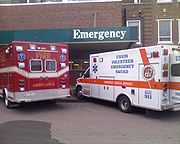 Ambulance services can be stand alone organisations, but in some cases, the emergency medical service is operated by the local fire or police service. This is particularly common in rural
areas, where maintaining a separate service is not necessarily cost effective. This can lead, in some instances, to an illness or injury being attended by a vehicle other than an ambulance, such as fire truck. In some locales, firefighters are the first responders to calls for emergency medical aid, with separate ambulance services providing transportation to hospital
s when necessary.
Some charities or non-profit companies also operate emergency medical services, often alongside a patient transport function. These often focus on providing ambulances for the community, or for cover at private events, such as sports matches. The Red Cross provides this service in many countries across the world on a volunteer basis (and in others as a Private Ambulance Service), as do some other smaller organizations such as St John Ambulance. and the Order of Malta Ambulance Corps
. In some countries, these volunteer ambulances may be seen providing support to the full time ambulance crews during times of emergency, or simply to help cover busy periods.
There are also private ambulance companies, with paid employees, but often on contract to the local or national government. Many private companies provide only the patient transport elements of ambulance care (i.e. non urgent), although in some places these private services are contracted to provide emergency care, or to form a 'second tier' response, where they only respond to emergencies when all of the full-time emergency ambulance crews are busy or to respond to non-emergency home calls. Private companies are often contracted by private clients to provide event specific cover, as is the case with voluntary EMS crews.
Many colleges and universities, especially in the United States, maintain their own EMS organizations. These organizations operate at capacities ranging from first response to ALS transport. Campus EMS in the United States is overseen by the National Collegiate Emergency Medical Services Foundation
.
, or advanced care resources are taken to the patient where they lie. The "scoop and run" approach is exemplified by the MEDEVAC
aeromedical evacuation helicopter, whereas the "stay and play" is exemplified by the French and Belgian SMUR emergency mobile resuscitation unit.
The strategy developed for prehospital trauma care in North America is based on the Golden Hour
theory, i.e., that a trauma victim's best chance for survival is in an operating room, with the goal of having the patient in surgery within an hour of the traumatic event. This appears to be true in cases of internal bleeding
, especially penetrating trauma such as gunshot or stab wounds. Thus, minimal time is spent providing prehospital care (spine immobilization; "ABCs", i.e. ensure airway, breathing and circulation; external bleeding control; endotracheal intubation
) and the victim is transported as fast as possible to a trauma centre.
The aim in "Scoop and Run" treatment is generally to transport the patient within ten minutes of arrival, hence the birth of the phrase, "the platinum ten minutes" (in addition to the "golden hour"), now commonly used in EMT training programs. The "Scoop and Run" is a method developed to deal with trauma
, rather than strictly medical situations (e.g. cardiac or respiratory emergencies), however, this may be changing. Increasingly, research into the management of S-T segment elevation myocardial infarctions (STEMI) occurring outside of the hospital, or even inside community hospitals without their own PCI
labs, suggests that time to treatment is a clinically significant factor in heart attacks, and that trauma patients may not be the only patients for whom 'load and go' is clinically appropriate. In such conditions, the gold standard is the door to balloon time. The longer the time interval, the greater the damage to the myocardium, and the poorer the long-term prognosis for the patient. Current research in Canada has suggested that door to balloon times are significantly lower when appropriate patients are identified by paramedics in the field, instead of the emergency room, and then transported directly to a waiting PCI lab. The STEMI program has reduced STEMI deaths in the Ottawa region by 50 per cent. In a related program in Toronto, EMS has begun to use a procedure of 'rescuing' STEMI patients from the Emergency Rooms of hospitals without PCI labs, and transporting them, on an emergency basis, to waiting PCI labs in other hospitals.
-led and the other led by pre-hosital specialists such as emergency medical technician
s or paramedic
s (which may, or may not have accompanying physician oversight). These models are typically identified by their locations of origin.
The Franco-German model is physician-led, with doctors responding directly to all major emergencies requiring more than simple first aid
. In some cases in this model, such as France, paramedics, as they exist in the Anglo-American model, are not used, although the term 'paramedic' is sometimes used generically, and those with that designation have training that is similar to an U.S. EMT-B. The team's physicians and in some cases, nurses, provide all medical interventions for the patient, and non-medical members of the team simply provide the driving and heavy lifting services. In other applications of this model, as in Germany, a paramedic equivalent does exist, but is sharply restricted in terms of scope of practice
; often not permitted to perform Advanced Life Support
(ALS) procedures unless the physician is physically present, or in cases of immediate life-threating conditions. Ambulances in this model tend to be better equipped with more advanced medical devices, in essence, bringing the emergency department to the patient. High-speed transport to hospitals is considered, in most cases, to be unnecessarily unsafe, and the preference is to remain and provide definitive care to the patient until they are medically stable, and then accomplish transport. In this model, the physician and nurse may actually staff an ambulance along with a driver, or may staff a rapid response vehicle instead of an ambulance, providing medical support to multiple ambulances.
The second care structure, termed the Anglo-American model, utilizes pre-hospital care specialists, such as emergency medical technician
s and paramedic
s, to staff ambulances, which may be classified according to the varying skill levels of the crews. In this model it is rare to find a physician actually working routinely in the pre-hospital setting, although they may be utilised on complex or major injuries or illnesses. In this system, a physicians involvement is most likely to be the provision of medical oversight
for the work of the ambulance crews, which may be accomplished in terms of off-line medical control, with protocols or 'standing orders' for certain types of medical procedures or care, or on-line medical control, in which the technician must establish contact with the physician, usually at the hospital
, and receive direct orders for various types of medical interventions. In some cases, such as in the UK, South Africa and Australia, a paramedic
may be an autonomous health care professional, and does not require the permission of a physician to administer interventions or medications from an agreed list, and can perform roles such as suturing or prescribing medication to the patient.
In this model, patients may still be treated at the scene up to the skill level of the attending crew, and subsequently transported to definitive care, but in many cases the reduced skill set of the ambulance crew and the needs of the patient indicate a shorter interval for transport of the patient than is the case in the Franco-German model.
(U.S.). In England, and in some parts of Canada, credentialing may occur by means of a College of Paramedicine. In these cases, paramedics are regarded as a self-regulating health profession. The final common method of credentialing is through certification by a Medical Director
and permission to practice as an extension of the Medical Director's license to practice some medical acts. The authority to practice in this semi-autonomous manner is granted in the form of standing order protocols
(off-line medical control) and in some cases direct physician consultation via phone or radio (on-line medical control). Under this paradigm, paramedics effectively assume the role of out-of-hospital field agents to regional emergency physician
s, with clinical decision-making authority using standing orders or protocols.
In some parts of the world, those in the paramedical professional role are only permitted to practise many of their advanced skills while assisting a physician who is physically present, or they face cases of immediately life-threatening emergencies. In many other parts in the world, most notably in France, Belgium, Luxembourg, Italy, and Spain, but also in Brazil and Chile. All MICU skills in the pre-hospital setting are performed by physicians and nurses and an On-line Permanent medical supervision is done by the SAMU. In certain other jurisdictions, such as the United Kingdom and South Africa, paramedics may be entirely autonomous practitioners capable of prescribing medications. In other jurisdictions, such as Australia and Canada, this expanded scope of practice
is under active consideration and discussion.
Acronym and initialism
Acronyms and initialisms are abbreviations formed from the initial components in a phrase or a word. These components may be individual letters or parts of words . There is no universal agreement on the precise definition of the various terms , nor on written usage...
EMS in some countries) are a type of emergency service
Emergency service
Emergency services are organizations which ensure public safety and health by addressing different emergencies. Some agencies exist solely for addressing certain types of emergencies whilst others deal with ad hoc emergencies as part of their normal responsibilities...
dedicated to providing out-of-hospital acute medical care and/or transport to definitive care, to patients with illnesses and injuries which the patient, or the medical practitioner, believes constitutes a medical emergency
Medical emergency
A medical emergency is an injury or illness that is acute and poses an immediate risk to a person's life or long term health. These emergencies may require assistance from another person, who should ideally be suitably qualified to do so, although some of these emergencies can be dealt with by the...
. The use of the term emergency medical services may refer solely to the pre-hospital element of the care, or be part of an integrated system of care, including the main care provider
Health care provider
A health care provider is an individual or an institution that provides preventive, curative, promotional or rehabilitative health care services in a systematic way to individuals, families or communities....
, such as a hospital.
Emergency medical services may also be locally known as: first aid squad, emergency squad, rescue squad
Rescue squad
A rescue company is a public service organization that uses specialized equipment and knowledge to rescue people. There are two typical applications: squads that rescue trapped people, and squads that rescue people who are having medical emergencies....
, ambulance squad, ambulance service, ambulance corps or life squad.
The goal of most emergency medical services is to either provide treatment to those in need of urgent medical care, with the goal of satisfactorily treating the presenting conditions, or arranging for timely removal of the patient
Patient
A patient is any recipient of healthcare services. The patient is most often ill or injured and in need of treatment by a physician, advanced practice registered nurse, veterinarian, or other health care provider....
to the next point of definitive care. This is most likely an emergency department
Emergency department
An emergency department , also known as accident & emergency , emergency room , emergency ward , or casualty department is a medical treatment facility specialising in acute care of patients who present without prior appointment, either by their own means or by ambulance...
at a hospital
Hospital
A hospital is a health care institution providing patient treatment by specialized staff and equipment. Hospitals often, but not always, provide for inpatient care or longer-term patient stays....
or another place where physicians are available. The term emergency medical service evolved to reflect a change from a simple system of ambulances providing only transportation, to a system in which actual medical care is given on scene and during transport. In some developing regions, the term is not used, or may be used inaccurately, since the service in question does not provide treatment to the patients, but only the provision of transport to the point of care.
In most places in the world, the EMS is summoned by members of the public (or other emergency services, businesses or authority) via an emergency telephone number
Emergency telephone number
Many countries' public telephone networks have a single emergency telephone number, sometimes known as the universal emergency telephone number or occasionally the emergency services number, that allows a caller to contact local emergency services for assistance. The emergency telephone number may...
which puts them in contact with a control facility, which will then dispatch a suitable resource to deal with the situation.
In some parts of the world, the emergency medical service also encompasses the role of moving patients from one medical facility to an alternative one; usually to facilitate the provision of a higher level or more specialised field of care. In such services, the EMS is not summoned by members of the public but by clinical professionals (e.g. physicians or nurses) in the referring facility. Specialized hospitals that provide higher levels of care may include services such as neonatal intensive care (NICU), pediatric intensive care (PICU), state regional burn centres, specialized care for spinal injury and/or neurosurgery
Neurosurgery
Neurosurgery is the medical specialty concerned with the prevention, diagnosis, treatment, and rehabilitation of disorders which affect any portion of the nervous system including the brain, spine, spinal cord, peripheral nerves, and extra-cranial cerebrovascular system.-In the United States:In...
, regional stroke
Stroke
A stroke, previously known medically as a cerebrovascular accident , is the rapidly developing loss of brain function due to disturbance in the blood supply to the brain. This can be due to ischemia caused by blockage , or a hemorrhage...
centers, specialized cardiac care (cardiac catherization), and specialized/regional trauma
Physical trauma
Trauma refers to "a body wound or shock produced by sudden physical injury, as from violence or accident." It can also be described as "a physical wound or injury, such as a fracture or blow." Major trauma can result in secondary complications such as circulatory shock, respiratory failure and death...
care.
In some jurisdictions, EMS units may handle technical rescue
Technical rescue
Technical rescue refers to those aspects of saving life or property that employ the use of tools and skills that exceed those normally reserved for fire fighting, medical emergency, and rescue. These disciplines include rope rescue, swiftwater rescue, confined space rescue, ski rescue, cave rescue,...
operations such as extrication, water rescue, and search and rescue
Search and rescue
Search and rescue is the search for and provision of aid to people who are in distress or imminent danger.The general field of search and rescue includes many specialty sub-fields, mostly based upon terrain considerations...
. Training and qualification
Professional certification
Professional certification, trade certification, or professional designation, often called simply certification or qualification, is a designation earned by a person to assure qualification to perform a job or task...
levels for members and employees of emergency medical services vary widely throughout the world. In some systems, members may be present who are qualified only to drive the ambulance, with no medical training. In contrast, most systems have personnel who retain at least basic first aid
First aid
First aid is the provision of initial care for an illness or injury. It is usually performed by non-expert, but trained personnel to a sick or injured person until definitive medical treatment can be accessed. Certain self-limiting illnesses or minor injuries may not require further medical care...
certifications, such as Basic Life Support
Basic life support
Basic life support is the level of medical care which is used for patients with life-threatening illnesses or injuries until the patient can be given full medical care at a hospital. It can be provided by trained medical personnel, including emergency medical technicians, paramedics, and by...
(BLS). Additionally many EMS systems are staffed with Advanced Life Support
Advanced Life Support
Advanced Life Support is a set of life-saving protocols and skills that extend Basic Life Support to further support the circulation and provide an open airway and adequate ventilation .-Components of ALS:These include:...
(ALS) personnel, including paramedic
Paramedic
A paramedic is a healthcare professional that works in emergency medical situations. Paramedics provide advanced levels of care for medical emergencies and trauma. The majority of paramedics are based in the field in ambulances, emergency response vehicles, or in specialist mobile units such as...
s, nurses, or, less commonly, physician
Physician
A physician is a health care provider who practices the profession of medicine, which is concerned with promoting, maintaining or restoring human health through the study, diagnosis, and treatment of disease, injury and other physical and mental impairments...
s.
History
Emergency care in the field has been rendered in different forms since the beginning of recorded history. The New TestamentNew Testament
The New Testament is the second major division of the Christian biblical canon, the first such division being the much longer Old Testament....
contains the parable of the Good Samaritan, where a man who was beaten is cared for by a Samaritan. Luke 10:34 (NIV) - "He went to him and bandaged his wounds, pouring on oil and wine. Then he put the man on his own donkey, took him to an inn and took care of him." Also during the Middle Ages, the Knights Hospitaller
Knights Hospitaller
The Sovereign Military Hospitaller Order of Saint John of Jerusalem of Rhodes and of Malta , also known as the Sovereign Military Order of Malta , Order of Malta or Knights of Malta, is a Roman Catholic lay religious order, traditionally of military, chivalrous, noble nature. It is the world's...
were known for rendering assistance to wounded soldiers in the battlefield.
Dominique Jean Larrey
Dominique Jean Larrey was a French surgeon in Napoleon's army and an important innovator in battlefield medicine.-Biography:...
(1766–1842), Napoleon Bonaparte's chief physician. Larrey was present at the battle of Spires, between the French
France
The French Republic , The French Republic , The French Republic , (commonly known as France , is a unitary semi-presidential republic in Western Europe with several overseas territories and islands located on other continents and in the Indian, Pacific, and Atlantic oceans. Metropolitan France...
and Prussia
Prussia
Prussia was a German kingdom and historic state originating out of the Duchy of Prussia and the Margraviate of Brandenburg. For centuries, the House of Hohenzollern ruled Prussia, successfully expanding its size by way of an unusually well-organized and effective army. Prussia shaped the history...
ns, and was distressed by the fact that wounded soldiers were not picked up by the numerous ambulances (which Napoleon required to be stationed two and half miles back from the scene of battle) until after hostilities had ceased, and set about developing a new ambulance system. Having decided against using the Norman system of horse litters, he settled on two- or four-wheeled horse
Horse
The horse is one of two extant subspecies of Equus ferus, or the wild horse. It is a single-hooved mammal belonging to the taxonomic family Equidae. The horse has evolved over the past 45 to 55 million years from a small multi-toed creature into the large, single-toed animal of today...
-drawn wagons, which were used to transport fallen soldiers from the (active) battlefield after they had received early treatment in the field. These 'flying ambulances' were first used by Napoleon's Army of the Rhine is 1793. Larrey subsequently developed similar services for Napoleon's other armies, and adapted his ambulances to the conditions, including developing a litter which could be carried by a camel
Camel
A camel is an even-toed ungulate within the genus Camelus, bearing distinctive fatty deposits known as humps on its back. There are two species of camels: the dromedary or Arabian camel has a single hump, and the bactrian has two humps. Dromedaries are native to the dry desert areas of West Asia,...
for a campaign in Egypt
Egypt
Egypt , officially the Arab Republic of Egypt, Arabic: , is a country mainly in North Africa, with the Sinai Peninsula forming a land bridge in Southwest Asia. Egypt is thus a transcontinental country, and a major power in Africa, the Mediterranean Basin, the Middle East and the Muslim world...
.
In civilian ambulances, a major advance was made (which in future years would come to shape policy on hospitals and ambulances) with the introduction of a transport carriage for cholera
Cholera
Cholera is an infection of the small intestine that is caused by the bacterium Vibrio cholerae. The main symptoms are profuse watery diarrhea and vomiting. Transmission occurs primarily by drinking or eating water or food that has been contaminated by the diarrhea of an infected person or the feces...
patients in London during 1832. The statement on the carriage, as printed in The Times
The Times
The Times is a British daily national newspaper, first published in London in 1785 under the title The Daily Universal Register . The Times and its sister paper The Sunday Times are published by Times Newspapers Limited, a subsidiary since 1981 of News International...
, said "The curative process commences the instant the patient is put in to the carriage; time is saved which can be given to the care of the patient; the patient may be driven to the hospital so speedily that the hospitals may be less numerous and located at greater distances from each other". This tenet of ambulances providing instant care, allowing hospitals to be spaced further apart, displays itself in modern emergency medical planning.
The first known hospital-based ambulance service operated out of Commercial Hospital, Cincinnati, Ohio
Ohio
Ohio is a Midwestern state in the United States. The 34th largest state by area in the U.S.,it is the 7th‑most populous with over 11.5 million residents, containing several major American cities and seven metropolitan areas with populations of 500,000 or more.The state's capital is Columbus...
(now the Cincinnati General) by 1865. This was soon followed by other services, notably the New York
New York
New York is a state in the Northeastern region of the United States. It is the nation's third most populous state. New York is bordered by New Jersey and Pennsylvania to the south, and by Connecticut, Massachusetts and Vermont to the east...
service provided out of Bellevue Hospital which started in 1869 with ambulances carrying medical equipment, such as splint
Splint (medicine)
A splint is a device used for support or immobilization of limbs or of the spine.It can be used:* By the emergency medical services or by volunteer first responders, to immobilize a fractured limb before the transportation; it is then a temporary immobilization;* By allied health professionals such...
s, a stomach pump, morphine
Morphine
Morphine is a potent opiate analgesic medication and is considered to be the prototypical opioid. It was first isolated in 1804 by Friedrich Sertürner, first distributed by same in 1817, and first commercially sold by Merck in 1827, which at the time was a single small chemists' shop. It was more...
, and brandy
Brandy
Brandy is a spirit produced by distilling wine. Brandy generally contains 35%–60% alcohol by volume and is typically taken as an after-dinner drink...
, reflecting contemporary medicine.
In June 1887 the St John Ambulance Brigade was established to provide first aid and ambulance services at public events in London
London
London is the capital city of :England and the :United Kingdom, the largest metropolitan area in the United Kingdom, and the largest urban zone in the European Union by most measures. Located on the River Thames, London has been a major settlement for two millennia, its history going back to its...
. It was modelled on a military-style command and discipline structure.
The earliest emergency medical service was reportedly the rescue society founded by Jaromir V. Mundy, Count J. N. Wilczek, and Eduard Lamezan-Salins in Vienna
Vienna
Vienna is the capital and largest city of the Republic of Austria and one of the nine states of Austria. Vienna is Austria's primary city, with a population of about 1.723 million , and is by far the largest city in Austria, as well as its cultural, economic, and political centre...
after the disastrous fire at the Vienna Ring Theater in 1881. Named the "Vienna Voluntary Rescue Society," it served as a model for similar societies worldwide.
Automobile
An automobile, autocar, motor car or car is a wheeled motor vehicle used for transporting passengers, which also carries its own engine or motor...
was being developed, and in addition to horse-drawn models, early 20th century ambulances were powered by steam
Steam
Steam is the technical term for water vapor, the gaseous phase of water, which is formed when water boils. In common language it is often used to refer to the visible mist of water droplets formed as this water vapor condenses in the presence of cooler air...
, gasoline
Gasoline
Gasoline , or petrol , is a toxic, translucent, petroleum-derived liquid that is primarily used as a fuel in internal combustion engines. It consists mostly of organic compounds obtained by the fractional distillation of petroleum, enhanced with a variety of additives. Some gasolines also contain...
, and electricity
Electricity
Electricity is a general term encompassing a variety of phenomena resulting from the presence and flow of electric charge. These include many easily recognizable phenomena, such as lightning, static electricity, and the flow of electrical current in an electrical wire...
, reflecting the competing automotive technologies then in existence. However, the first motorized ambulance was brought into service in the last year of the 19th century, with the Michael Reese Hospital
Michael Reese Hospital
Michael Reese Hospital and Medical Center was an American hospital founded in 1881. In its heyday, it was a major research and teaching hospital and one of the oldest and largest hospitals in Chicago, Illinois. It was located on the near south side of Chicago, next to Lake Shore Drive Michael...
, Chicago
Chicago
Chicago is the largest city in the US state of Illinois. With nearly 2.7 million residents, it is the most populous city in the Midwestern United States and the third most populous in the US, after New York City and Los Angeles...
, taking delivery of the first automobile ambulance, donated by 500 prominent local businessmen, in February 1899. This was followed in 1900 by New York city, who extolled its virtues of greater speed, more safety for the patient, faster stopping and a smoother ride. These first two automobile ambulances were electrically powered with 2 hp motors on the rear axle.
American historians claim that the first component of pre-hospital care on scene began in 1928, when "Julien Stanley Wise started the Roanoke Life Saving and First Aid Crew in Roanoke, Virginia
Roanoke, Virginia
Roanoke is an independent city in the Mid-Atlantic U.S. state of Virginia and is the tenth-largest city in the Commonwealth. It is located in the Roanoke Valley of the Roanoke Region of Virginia. The population within the city limits was 97,032 as of 2010...
, Virginia, which was the first land-based rescue squad in the nation." However the city of Toronto
Toronto
Toronto is the provincial capital of Ontario and the largest city in Canada. It is located in Southern Ontario on the northwestern shore of Lake Ontario. A relatively modern city, Toronto's history dates back to the late-18th century, when its land was first purchased by the British monarchy from...
takes this claim stating "The first formal training for ambulance attendants was conducted in 1892."
During World War One, further advances were made in providing care before and during transport – traction splint
Traction splint
A traction splint most commonly refers to a splinting device that uses straps attaching over the pelvis or hip as an anchor, a metal rod to mimic normal bone stability and limb length, and a mechanical device to apply traction to the limb...
s were introduced during World War I
World War I
World War I , which was predominantly called the World War or the Great War from its occurrence until 1939, and the First World War or World War I thereafter, was a major war centred in Europe that began on 28 July 1914 and lasted until 11 November 1918...
, and were found to have a positive effect on the morbidity and mortality
Death
Death is the permanent termination of the biological functions that sustain a living organism. Phenomena which commonly bring about death include old age, predation, malnutrition, disease, and accidents or trauma resulting in terminal injury....
of patients with leg fractures. Two-way radio
Two-way radio
A two-way radio is a radio that can both transmit and receive , unlike a broadcast receiver which only receives content. The term refers to a personal radio transceiver that allows the operator to have a two-way conversation with other similar radios operating on the same radio frequency...
s became available shortly after World War I, enabling for more efficient radio dispatch
Dispatch (logistics)
Dispatch is a procedure for assigning employees or vehicles to customers. Industries that dispatch include taxicabs, couriers, emergency services, as well as home and commercial services such as maid services, plumbing, HVAC, pest control and electricians.With vehicle dispatching, clients are...
of ambulances in some areas. Shortly before World War II
World War II
World War II, or the Second World War , was a global conflict lasting from 1939 to 1945, involving most of the world's nations—including all of the great powers—eventually forming two opposing military alliances: the Allies and the Axis...
, then, a modern ambulance carried advanced medical equipment, was staffed by a physician
Physician
A physician is a health care provider who practices the profession of medicine, which is concerned with promoting, maintaining or restoring human health through the study, diagnosis, and treatment of disease, injury and other physical and mental impairments...
, and was dispatched by radio. In many locations, however, ambulances were hearse
Hearse
A hearse is a funerary vehicle used to carry a coffin from a church or funeral home to a cemetery. In the funeral trade, hearses are often called funeral coaches.-History:...
s - the only available vehicle that could carry a recumbent patient - and were thus frequently run by funeral home
Funeral home
A funeral home, funeral parlor or mortuary, is a business that provides burial and funeral services for the deceased and their families. These services may include aprepared wake and funeral, and the provision of a chapel for the funeral....
s. These vehicles, which could serve either purpose, were known as combination car
Combination car
For the railroad vehicle, see Combine car.A combination car was a vehicle built upon a "professional car" chassis which could be employed either as a hearse or as an ambulance, and had the capability of being swapped between those roles without much difficulty...
s.
Prior to World War II, hospitals provided ambulance service in many large cities. With the severe manpower shortages imposed by the war effort, it became difficult for many hospitals to maintain their ambulance operations. City governments in many cases turned ambulance services over to the police or fire department. No laws required minimal training for ambulance personnel and no training programs existed beyond basic first aid. In many fire departments, assignment to ambulance duty became an unofficial form of punishment.
Advances in the 1960s, especially the development of CPR and defibrillation
Defibrillation
Defibrillation is a common treatment for life-threatening cardiac arrhythmias, ventricular fibrillation and pulseless ventricular tachycardia. Defibrillation consists of delivering a therapeutic dose of electrical energy to the affected heart with a device called a defibrillator...
as the standard form of care for out-of-hospital cardiac arrest
Cardiac arrest
Cardiac arrest, is the cessation of normal circulation of the blood due to failure of the heart to contract effectively...
, along with new pharmaceuticals, led to changes in the tasks of the ambulances. In Belfast
Belfast
Belfast is the capital of and largest city in Northern Ireland. By population, it is the 14th biggest city in the United Kingdom and second biggest on the island of Ireland . It is the seat of the devolved government and legislative Northern Ireland Assembly...
, Northern Ireland
Northern Ireland
Northern Ireland is one of the four countries of the United Kingdom. Situated in the north-east of the island of Ireland, it shares a border with the Republic of Ireland to the south and west...
the first experimental mobile coronary care ambulance successfully resuscitated patients using these technologies. One well-known report in the USA during that time was Accidental Death and Disability: The Neglected Disease of Modern Society. This report is commonly known as The White Paper
The White Paper
Accidental Death and Disability: The Neglected Disease of Modern Society, more commonly known as The White Paper, was an influential report published in 1966 by the National Academy of Sciences that is considered a landmark in the development of the emergency medical services system in the United...
. These studies, along with the White Paper report, placed pressure on governments to improve emergency care in general, including the care provided by ambulance services. In the USA prior to the 1970s, ambulance service was largely unregulated. While some areas ambulances were staffed by advanced first-aid-level responders, in other areas, it was common for the local undertaker, having the only transport in town in which one could lie down, to operate both the local furniture store (where he would make coffins as a sideline) and the local ambulance service. The the government reports resulted in the creation of standard
Standardization
Standardization is the process of developing and implementing technical standards.The goals of standardization can be to help with independence of single suppliers , compatibility, interoperability, safety, repeatability, or quality....
s in ambulance construction concerning the internal height of the patient care area (to allow for an attendant to continue to care for the patient during transport), and the equipment (and thus weight) that an ambulance had to carry, and several other factors.
In 1971, after release of the National Highway Traffic Safety Administration
National Highway Traffic Safety Administration
The National Highway Traffic Safety Administration is an agency of the Executive Branch of the U.S. government, part of the Department of Transportation...
's study, "Accidental Death and Disability: The Neglected Disease of Modern Society". A progress report was published at the annual meeting, by the then president of American Association of Trauma, Sawnie R. Gaston M.D. Dr. Gaston reported the study a "superb white paper" that "jolted and wakened the entire structure of organized medicine. This report was the "prime mover" and made the "single greatest contribution of it's kind to the improvement of emergency medical services". Since this time a concerted effort has been undertaken to improve emergency medical care in the pre-hospital setting. Such advancements included Dr. R Adams Cowley
R Adams Cowley
R Adams Cowley was an American surgeon considered a pioneer in emergency medicine and the treatment of shock trauma. He is also known for being one of the first to perform open-heart surgery and invented both a surgical clamp that bears his name and a prototype pacemaker that was used by Dwight D...
creating the country's first statewide EMS program, in Maryland
Maryland
Maryland is a U.S. state located in the Mid Atlantic region of the United States, bordering Virginia, West Virginia, and the District of Columbia to its south and west; Pennsylvania to its north; and Delaware to its east...
.
Service providers
- Government Ambulance Service
- Operating separately from (although alongside) the fire and police service of the area, these ambulances are funded by local, provincial or national government. In some countries, these only tend to be found in big cities, whereas in countries such as United Kingdom almost all emergency ambulances are part of a national health system. In the United States, ambulance service provided by a local government are often referred to as "third service" EMS (the Fire Department, Police Department, and separate EMS forming an emergency services trio) by the employees of said service, as well as other city officials and residents.
- Fire or Police Linked Service
- In countries such as the United States, Japan, France, and parts of India; ambulances can be operated by the local fire or police service. This is particularly common in ruralRuralRural areas or the country or countryside are areas that are not urbanized, though when large areas are described, country towns and smaller cities will be included. They have a low population density, and typically much of the land is devoted to agriculture...
areas, where maintaining a separate service is not necessarily cost effective. In some cases this can lead to an illness or injury being attended by a vehicle other than an ambulance, such as a fire truckFire apparatusA fire apparatus, fire engine, fire truck, or fire appliance is a vehicle designed to assist in fighting fires by transporting firefighters to the scene and providing them with access to the fire, along with water or other equipment...
.- Volunteer Ambulance Service
- Charities or non-profit companies operate ambulances, both in an emergency and patient transport function. This may be along similar lines to volunteer fire companies, providing the main service for an area, and either community or privately owned. They may be linked to a voluntary fire service, with volunteers providing both services. There are charities who focus on providing ambulances for the community, or for cover at private events (sports etc.). The Red Cross provides this service across the world on a volunteer basis. (and in others as a Private Ambulance Service), as do other smaller organisations such as St John Ambulance and the Order of Malta Ambulance CorpsOrder of Malta Ambulance CorpsThe Order of Malta Ambulance Corps is the largest voluntary ambulance and first aid organisation of its kind in Ireland. The Order of Malta is engaged in teaching first aid, providing ambulance cover at large events, patient transport, community and nursing services...
. These volunteer ambulances may be seen providing support to the full time ambulance crews during times of emergency. In some cases the volunteer charity may employ paid members of staff alongside volunteers to operate a full time ambulance service, such in some parts of Australia, Ireland and most importantly Germany and Austria.- Private Ambulance Service
- Normal commercial companies with paid employees, but often on contract to the local or national government. Private companies may provide only the patient transport elements of ambulance care (i.e. non urgent), but in some places, they are contracted to provide emergency care, or to form a 'second tier' response, where they only respond to emergencies when all of the full-time emergency ambulance crews are busy. This may mean that a government or other service provide the 'emergency' cover, whilst a private firm may be charged with 'minor injuries' such as cuts, bruises or even helping the mobility impaired if they have for example fallen and just need help to get up again, but do not need treatment. This system has the benefit of keeping emergency crews available all the time for genuine emergencies. These organisations may also provide services known as 'Stand-by' cover at industrial sites or at special events .
- Combined Emergency Service
- these are full service emergency service agencies, which may be found in places such as airports or large colleges and universities. Their key feature is that all personnel are trained not only in ambulance (EMT) care, but as a firefighter and a peace officer (police function). They may be found in smaller towns and cities, where size or budget does not warrant separate services. This multi-functionality allows to make the most of limited resource or budget, but having a single team respond to any emergency.
- Hospital Based Service
- Hospitals may provide their own ambulance service as a service to the community, or where ambulance care is unreliable or chargeable. Their use would be dependent on using the services of the providing hospital.
- Charity Ambulance
- This special type of ambulance is provided by a charity for the purpose of taking sick children or adults on trips or vacations away from hospitals, hospices or care homes where they are in long term care. Examples include the UK's 'Jumbulance' project.
- Company Ambulance
- Many large factories and other industrial centres, such as chemical plantChemical plantA chemical plant is an industrial process plant that manufactures chemicals, usually on a large scale. The general objective of a chemical plant is to create new material wealth via the chemical or biological transformation and or separation of materials. Chemical plants use special equipment,...
s, oil refineries, breweries and distilleries have ambulance services provided by employers as a means of protecting their interests and the welfare of their staff. These are often used as first response vehicles in the event of a fire or explosion.
Purpose
First aid
First aid is the provision of initial care for an illness or injury. It is usually performed by non-expert, but trained personnel to a sick or injured person until definitive medical treatment can be accessed. Certain self-limiting illnesses or minor injuries may not require further medical care...
, which are to Preserve Life, Prevent Further Injury, and Promote Recovery.
This common theme in medicine
Medicine
Medicine is the science and art of healing. It encompasses a variety of health care practices evolved to maintain and restore health by the prevention and treatment of illness....
is demonstrated by the "star of life". The Star of Life
Star of Life
The Star of Life is a blue, six-pointed star, outlined with a white border which features the Rod of Asclepius in the center, originally designed and governed by the U.S. National Highway Traffic Safety Administration...
shown here, where each of the 'arms' to the star represent one of the 6 points. These 6 points are used to represent the six stages of high quality pre-hospital care, which are:
- Early detection
- Members of the public, or another agency, find the incident and understand the problem
- Early reporting
- The first persons on scene make a call to the emergency medical services and provide details to enable a response to be mounted
- Early response
- The first professional (EMS) rescuers arrive on scene as quickly as possible, enabling care to begin
- Good on-scene care
- The emergency medical service provides appropriate and timely interventions to treat the patient at the scene of the incident
- Care in transit
- the emergency medical service load the patient in to suitable transport and continue to provide appropriate medical care throughout the journey
- Transfer to definitive care
- the patient is handed over to an appropriate care setting, such as the emergency department at a hospital, in to the care of physicians
Levels of care
Advanced Life Support
Advanced Life Support is a set of life-saving protocols and skills that extend Basic Life Support to further support the circulation and provide an open airway and adequate ventilation .-Components of ALS:These include:...
(ALS) Mobile Intensive Care Units (MICU)services must be physician-staffed, while other permit some elements of that skill set to specially trained nurses, but have no paramedics. Elsewhere, as in North America, the UK and Australia, ALS services are performed by paramedics, but rarely with the type of direct "hands-on" physician leadership seen in Europe. Increasingly, particularly in the UK and in South Africa, the role is being provided by specially-trained paramedics who are independent practitioners in their own right. Beyond the national model of care, the type Emergency Medical Service will be determined by local jurisdictions and medical authorities, based upon the needs of the community, and the economic resources to support it.
A category of emergency medical service which is known as 'medical retrieval' or rendez vous MICU protocol in some countries (Australia, NZ, Great Britain) refers to critical care transport of patients between hospitals (as opposed to pre-hospital). Such services are a key element in regionalised systems of hospital care where intensive care services are centralised to a few specialist hospitals. An example of this is the Emergency Medical Retrieval Service
Emergency Medical Retrieval Service
The Emergency Medical Retrieval Service , is an airborne medical initiative operating in the West of Scotland. It provides patients in remote and rural areas with rapid access to the skills of a consultant in emergency or intensive care medicine as well as facilitating transfers to larger, better...
in Scotland.
Generally speaking, the levels of service available will fall into one of three categories; Basic Life Support
Basic life support
Basic life support is the level of medical care which is used for patients with life-threatening illnesses or injuries until the patient can be given full medical care at a hospital. It can be provided by trained medical personnel, including emergency medical technicians, paramedics, and by...
(BLS), Advanced Life Support
Advanced Life Support
Advanced Life Support is a set of life-saving protocols and skills that extend Basic Life Support to further support the circulation and provide an open airway and adequate ventilation .-Components of ALS:These include:...
(ALS), and care by traditional healthcare professionals, meaning nurses and/or physicians working in the pre-hospital setting and even on ambulances. In some jurisdictions, a fourth level, Intermediate Life Support (ILS), which is essentially a BLS provider with a moderately expanded skill set, may be present, but this level rarely functions independently, and where it is present may replace BLS in the emergency part of the service. When this occurs, any remaining staff at the BLS level is usually relegated to the non-emergency transportation function. Job titles typically include Emergency Medical Technician
Emergency medical technician
Emergency Medical Technician or Ambulance Technician are terms used in some countries to denote a healthcare provider of emergency medical services...
, Ambulance Technician, or Paramedic
Paramedic
A paramedic is a healthcare professional that works in emergency medical situations. Paramedics provide advanced levels of care for medical emergencies and trauma. The majority of paramedics are based in the field in ambulances, emergency response vehicles, or in specialist mobile units such as...
. These ambulance care givers are generally professionals or paraprofessionals and in some countries their use is controlled through training and registration. While these job titles are protected by legislation in some countries, this protection is by no means universal, and anyone might, for example, call themselves an 'EMT' or a 'paramedic', regardless of their training, or the lack of it. In some jurisdictions, both technicians and paramedics may be further defined by the environment in which they operate, including such designations as 'Wilderness', 'Tactical', and so on.
First responder
A first responder is a person who arrives first at the scene of an incident, and whose job is to provide early critical care such as CPR or using an AEDAutomated external defibrillator
An automated external defibrillator or AED is a portable electronic device that automatically diagnoses the potentially life threatening cardiac arrhythmias of ventricular fibrillation and ventricular tachycardia in a patient, and is able to treat them through defibrillation, the application of...
. First responders may be dispatched by the ambulance service, may be passers-by, citizen volunteers
Certified first responder
A certified first responder is a person who has completed a course and received certification in providing pre-hospital care for medical emergencies. They have more skill than someone who is trained in basic first aid but they are not a substitute for advanced medical care rendered by emergency...
, or may be members of other agencies such as the police
Police
The police is a personification of the state designated to put in practice the enforced law, protect property and reduce civil disorder in civilian matters. Their powers include the legitimized use of force...
, fire department
Fire department
A fire department or fire brigade is a public or private organization that provides fire protection for a certain jurisdiction, which typically is a municipality, county, or fire protection district...
, or search and rescue
Search and rescue
Search and rescue is the search for and provision of aid to people who are in distress or imminent danger.The general field of search and rescue includes many specialty sub-fields, mostly based upon terrain considerations...
who have some medical training—commonly CPR, basic first aid, and AED use.
Ambulance driver
Some jurisdictions separate the 'driver' and 'attendant' functions, employing ambulance driving staff with no medical qualification (or just a first aid certificate), whose job is to drive the ambulance. While this approach persists in some countries, such as India, it is generally becoming increasingly rare. Ambulance drivers may be trained in radio communications, ambulance operations and emergency response driving skills.Ambulance care assistant
Ambulance Care AssistantAmbulance Care Assistant
Ambulance Care Assistants , transport non-emergency patients to and from hospital for pre-arranged appointments. They also work to discharge, transfer and admit patients. Working for the Patient Transport Service, they help patients in and out of the ambulance and take them to their appointment...
s (ACAs) have varying levels of training across the world. In many countries, such staff are usually only required to perform patient transport duties (which can include stretcher or wheelchair cases), rather than acute care. However, there remain both countries and individual jurisdictions in which economics will not support ALS service, and the efforts of such individuals may represent the only EMS available. Dependent on the provider (and resources available), they may be trained in first aid or extended skills such as use of an AED
Automated external defibrillator
An automated external defibrillator or AED is a portable electronic device that automatically diagnoses the potentially life threatening cardiac arrhythmias of ventricular fibrillation and ventricular tachycardia in a patient, and is able to treat them through defibrillation, the application of...
, oxygen therapy and other live-saving or palliative skills. In some services, they may also provide emergency cover when other units are not available, or when accompanied by a fully qualified technician or paramedic.
Emergency medical technician
Emergency medical technicianEmergency medical technician
Emergency Medical Technician or Ambulance Technician are terms used in some countries to denote a healthcare provider of emergency medical services...
s, also known as Ambulance Technicians in the UK and EMT in the United States. In the United States, EMT is usually made up of 3 levels. EMT-B, EMT-I and EMT-Paramedic. Technicians are usually able to perform a wide range of emergency care skills, such as Automated defibrillation
Defibrillation
Defibrillation is a common treatment for life-threatening cardiac arrhythmias, ventricular fibrillation and pulseless ventricular tachycardia. Defibrillation consists of delivering a therapeutic dose of electrical energy to the affected heart with a device called a defibrillator...
, care of spinal injuries and oxygen therapy
Oxygen therapy
Oxygen therapy is the administration of oxygen as a medical intervention, which can be for a variety of purposes in both chronic and acute patient care...
. In few jurisdictions, some EMTs are able to perform duties as IV and IO cannulation, administration of a limited number of drugs, more advanced airway procedures, CPAP, and limited cardiac monitoring. Most advanced procedures and skills are not within the national scope of practice for an EMT-B. As such most states require additional training and certifications to perform above the national curriculum standards.
Emergency medical dispatcher
An emergency medical dispatcher is also called an EMD. An increasingly common addition to the EMS system is the use of highly trained dispatch personnel who can provide "pre-arrival" instructions to callers reporting medical emergencies. They use carefully structured questioning techniques and provide scripted instructions to allow callers or bystanders to begin definitive care for such critical problems as airway obstructions, bleeding, childbirth, and cardiac arrest. Even with a fast response time by a first responder measured in minutes, some medical emergencies evolve in seconds. Such a system provides, in essence, a "zero response time," and can have an enormous impact on positive patient outcomes.Paramedic
A paramedicParamedic
A paramedic is a healthcare professional that works in emergency medical situations. Paramedics provide advanced levels of care for medical emergencies and trauma. The majority of paramedics are based in the field in ambulances, emergency response vehicles, or in specialist mobile units such as...
has a high level of prehospital medical training and usually involves key skills not performed by technicians, often including cannulation
Intravenous therapy
Intravenous therapy or IV therapy is the infusion of liquid substances directly into a vein. The word intravenous simply means "within a vein". Therapies administered intravenously are often called specialty pharmaceuticals...
(and with it the ability to use a range of drugs such as morphine), cardiac monitoring
Cardiac monitoring
The phrase cardiac monitoring generally refers to continuous monitoring with electrocardiography with assessment of the patients condition relative to their cardiac rhythm. It is different from hemodynamic monitoring, which monitors the pressure and flow of blood within the circulatory system. The...
, tracheal intubation
Tracheal intubation
Tracheal intubation, usually simply referred to as intubation, is the placement of a flexible plastic or rubber tube into the trachea to maintain an open airway or to serve as a conduit through which to administer certain drugs...
, needle decompression and other skills such as performing a cricothyrotomy
Cricothyrotomy
A cricothyrotomy is an incision made through the skin and cricothyroid membrane to establish a patent airway during certain life-threatening situations, such as airway obstruction by a foreign body, angioedema, or massive...
. In many countries, this is a protected title, and use of it without the relevant qualification may result in criminal prosecution. In the United States, paramedics represent the highest licensure level of prehospital emergency care. In addition, several certifications exist for Paramedics such as Wilderness ALS Care, Flight Paramedic Certification (FP-C
FP-C
FP-C is an abbreviation indicating that an individual is Flight Paramedic-Certified. This certification is for paramedics who have demonstrated their knowledge of critical care medicine by successfully passing a two-and-a-half-hour exam consisting of 125 multiple-choice questions...
), and Critical Care Emergency Medical Transport Program
Critical Care Emergency Medical Transport Program
The Critical Care Emergency Medical Transport Program is an educational program for paramedics, registered nurses, and registered respiratory therapists who perform interfacility transports, moving very sick patients from one hospital to another for further care and treatment. It was developed by...
certification.
Critical care paramedic
Recently studies have looked at new level of pre-hospital care. . What has developed is the critical care paramedic, also called an advanced practice Paramedic in some parts of USA and CanadaCanada
Canada is a North American country consisting of ten provinces and three territories. Located in the northern part of the continent, it extends from the Atlantic Ocean in the east to the Pacific Ocean in the west, and northward into the Arctic Ocean...
. These providers represent a higher level of licensure above that of the DOT or respective paramedic level curriculum. The training, permitted skills, and certification requirements vary from one jurisdiction to the next. These providers transport critically ill or injured patients from one hospital
Hospital
A hospital is a health care institution providing patient treatment by specialized staff and equipment. Hospitals often, but not always, provide for inpatient care or longer-term patient stays....
to a receiving hospital
Hospital
A hospital is a health care institution providing patient treatment by specialized staff and equipment. Hospitals often, but not always, provide for inpatient care or longer-term patient stays....
with higher level of care (ie.. cardiac catheterization
Cardiac catheterization
Cardiac catheterization is the insertion of a catheter into a chamber or vessel of the heart. This is done for both investigational and interventional purposes...
, trauma services or specialized ICU services) not available at referring facility.
These Paramedics receive additional training beyond normal EMS medicine. The Board for Critical Care Transport Certification (BCCTPC®) has developed a certification exam for flight and ground critical care paramedics Some educational facilities that provide this training are UMBC Critical Care Emergency Medical Transport Program
Critical Care Emergency Medical Transport Program
The Critical Care Emergency Medical Transport Program is an educational program for paramedics, registered nurses, and registered respiratory therapists who perform interfacility transports, moving very sick patients from one hospital to another for further care and treatment. It was developed by...
or . Individual services such as and in Fort Worth, Tx. have developed 'in-house' advanced practice paramedic providers. Some examples of skills include, but not limited to, life support systems normally restricted to the ICU or critical care hospital setting such as mechanical ventilators, Intra-aortic balloon pump (IABP) and external pacemaker monitoring. Depending on the service medical direction, these providers are trained on placement and use of UVCs (Umbilical Venous Catheter), UACs (Umbilical Arterial Catheter), surgical airways, central lines, arterial lines and chest tubes. These providers have a vast array of and medications to handle complex medical and trauma patients including administration of blood and blood products.
Paramedic practitioner / Emergency care practitioner
In the United Kingdom and South Africa, some serving paramedicParamedic
A paramedic is a healthcare professional that works in emergency medical situations. Paramedics provide advanced levels of care for medical emergencies and trauma. The majority of paramedics are based in the field in ambulances, emergency response vehicles, or in specialist mobile units such as...
s receive additional university education to become practitioners in their own right, which gives them absolute responsibility for their clinical judgement, including the ability to autonomously prescribe medications, including drugs usually reserved for doctors, such as courses of antibiotics. An emergency care practitioner
Emergency Care Practitioner
An Emergency Care Practitioner may come from either a paramedic, nursing or allied health professional background and most have additional academic qualifications, usually at university, with enhanced skills in medical assessment and extra clinical skills over and above those of a standard...
is a position sometimes referred to as a 'super paramedic' and is designed to bridge the link between ambulance care and the care of a general practitioner
General practitioner
A general practitioner is a medical practitioner who treats acute and chronic illnesses and provides preventive care and health education for all ages and both sexes. They have particular skills in treating people with multiple health issues and comorbidities...
. ECPs are university graduates in Emergency Medical Care or qualified paramedics who have undergone further training, and are authorized to perform specialized techniques. Additionally some may prescribe medicines (from a limited list) for longer term care, such as antibiotics. With respect to a Primary Health Care setting, they are also educated in a range of Diagnostic techniques.
Registered nurse
The use of registered nurses (RNs) in the pre-hospital setting is more common in countries that have a limited EMS infrastructure in place. Some European countries such as France or Italy, which do not use paramedics as we understand them, also use nurses as a means of providing ALS services. These nurses may work under the direct supervision of a physician, or, in rarer cases, independently. In some places in Europe, notably Norway, paramedics do exist, but the role of the 'ambulance nurse' continues to be developed, as it is felt that nurses may bring unique skills to some situations encountered by ambulance crews. In North America, and to a lesser extent elsewhere in the English-speaking world, some jurisdictions use specially trained nursesRegistered nurse
A registered nurse is a nurse who has graduated from a nursing program at a university or college and has passed a national licensing exam. A registered nurse helps individuals, families, and groups to achieve health and prevent disease...
for medical transport work. These are mostly air-medical personnel or critical care transport providers, often working in conjunction with a technician or paramedic or physician on emergency interfacility transports. In the United States, the most common uses of ambulance-based Registered nurses is in the Critical Care/Mobile Intensive Care transport, and in Aeromedical EMS. Such nurses are normally required by their employers (in the US) to seek additional certifications beyond basic nursing registration. In Estonia
Estonia
Estonia , officially the Republic of Estonia , is a state in the Baltic region of Northern Europe. It is bordered to the north by the Gulf of Finland, to the west by the Baltic Sea, to the south by Latvia , and to the east by Lake Peipsi and the Russian Federation . Across the Baltic Sea lies...
60% of ambulance teams are led by nurse. Ambulance nurses can do almost all emergency procedures and administer medicines pre-hospital such as physicians in Estonia.
Physician
There are many places in Europe, most notably in France, Italy, and the German-speaking countries (Germany, Switzerland, Austria) where the model of EMS is different, and physicians take a more direct, 'hands-on' approach to pre-hospitalHospital
A hospital is a health care institution providing patient treatment by specialized staff and equipment. Hospitals often, but not always, provide for inpatient care or longer-term patient stays....
care. In France and Italy, response to high-acuity emergency calls is physician-led, as with the French SMUR teams. Paramedic
Paramedic
A paramedic is a healthcare professional that works in emergency medical situations. Paramedics provide advanced levels of care for medical emergencies and trauma. The majority of paramedics are based in the field in ambulances, emergency response vehicles, or in specialist mobile units such as...
s do not exist within those systems, and most ALS is performed by physicians. In the German-speaking countries, paramedics do exist, but special physicians (called Notarzt) respond directly to high-acuity calls, supervising the paramedics ALS procedures directly. Indeed, in these countries paramedics are not typically legally permitted to practice their ALS procedures unless the physician is physically present, unless they face immediate life-threatening emergencies. Some systems - most notably air ambulance
Air ambulance
An air ambulance is an aircraft used for emergency medical assistance in situations where either a traditional ambulance cannot reach the scene easily or quickly enough, or the patient needs to be transported over a distance or terrain that makes air transportation the most practical transport....
s in the UK. will employ physician
Physician
A physician is a health care provider who practices the profession of medicine, which is concerned with promoting, maintaining or restoring human health through the study, diagnosis, and treatment of disease, injury and other physical and mental impairments...
s to take the clinical lead in the ambulance; bringing a full range of additional skills such as use of medications that are beyond the paramedic skill set. The response of physicians to emergency calls is routine in many parts of Europe, but is uncommon in the UK, where physicians are generally tasked to high priority calls ona voluntary basis. Within the UK a sub-speciality of Pre-Hospital Care is being developed for Doctors, which would allow training programmes and consultant posts to be developed in this one area of practice.
This 'hands-on' approach is less common in the United States. While one will occasionally see a physician with an ambulance crew on an emergency call, this is much more likely to be the Medical Director or an associate, inducting newly trained paramedics, or performing routine medical quality assurance. In some jurisdictions adult or pediatric critical care transports sometimes use physicians, but generally only when it appears likely that the patient may require surgical or advanced pharmacologic intervention beyond the skills of an EMT, paramedic or nurse during transport. Physicians are leaders of medical retrieval teams in many western countries, where they may assist with the transport of a critically ill, injured, or special needs patient to a tertiary care hospital, particularly when longer transport times are involved.
Prehospital Delivery of care
Depending on country, area within in country, or clinical need, emergency medical services may be provided by one or more different types of organisation. This variation may lead to large differences in levels of care and expected scope of practice.The most basic emergency medical services are provided as a transport operation only, simply to take patients from their location to the nearest medical treatment. This was often the case in a historical context, and is still true in the developing world, where operators as diverse as taxi drivers and undertakers may operate this service.
Most developed countries now provide a government funded emergency medical service, which can be run on a national level, as is the case in the United Kingdom, where a national network of ambulance trusts operate an emergency service, paid for through central taxation, and available to anyone in need, or can be run on a more regional model, as is the case in the United States, where individual authorities have the responsibility for providing these services.
Rural
Rural areas or the country or countryside are areas that are not urbanized, though when large areas are described, country towns and smaller cities will be included. They have a low population density, and typically much of the land is devoted to agriculture...
areas, where maintaining a separate service is not necessarily cost effective. This can lead, in some instances, to an illness or injury being attended by a vehicle other than an ambulance, such as fire truck. In some locales, firefighters are the first responders to calls for emergency medical aid, with separate ambulance services providing transportation to hospital
Hospital
A hospital is a health care institution providing patient treatment by specialized staff and equipment. Hospitals often, but not always, provide for inpatient care or longer-term patient stays....
s when necessary.
Some charities or non-profit companies also operate emergency medical services, often alongside a patient transport function. These often focus on providing ambulances for the community, or for cover at private events, such as sports matches. The Red Cross provides this service in many countries across the world on a volunteer basis (and in others as a Private Ambulance Service), as do some other smaller organizations such as St John Ambulance. and the Order of Malta Ambulance Corps
Order of Malta Ambulance Corps
The Order of Malta Ambulance Corps is the largest voluntary ambulance and first aid organisation of its kind in Ireland. The Order of Malta is engaged in teaching first aid, providing ambulance cover at large events, patient transport, community and nursing services...
. In some countries, these volunteer ambulances may be seen providing support to the full time ambulance crews during times of emergency, or simply to help cover busy periods.
There are also private ambulance companies, with paid employees, but often on contract to the local or national government. Many private companies provide only the patient transport elements of ambulance care (i.e. non urgent), although in some places these private services are contracted to provide emergency care, or to form a 'second tier' response, where they only respond to emergencies when all of the full-time emergency ambulance crews are busy or to respond to non-emergency home calls. Private companies are often contracted by private clients to provide event specific cover, as is the case with voluntary EMS crews.
Many colleges and universities, especially in the United States, maintain their own EMS organizations. These organizations operate at capacities ranging from first response to ALS transport. Campus EMS in the United States is overseen by the National Collegiate Emergency Medical Services Foundation
National Collegiate Emergency Medical Services Foundation
The National Collegiate Emergency Medical Services Foundation is a non-profit organization founded to promote and advocate for campus based emergency medical services. The organization was founded in 1993 with the goal of facilitating the exchange of information amongst collegiate EMS agencies...
.
Strategies for delivering care
The essential decision in prehospital care is whether the patient should be immediately taken to the hospitalHospital
A hospital is a health care institution providing patient treatment by specialized staff and equipment. Hospitals often, but not always, provide for inpatient care or longer-term patient stays....
, or advanced care resources are taken to the patient where they lie. The "scoop and run" approach is exemplified by the MEDEVAC
MEDEVAC
Medical evacuation, often termed Medevac or Medivac, is the timely and efficient movement and en route care provided by medical personnel to the wounded being evacuated from the battlefield or to injured patients being evacuated from the scene of an accident to receiving medical facilities using...
aeromedical evacuation helicopter, whereas the "stay and play" is exemplified by the French and Belgian SMUR emergency mobile resuscitation unit.
The strategy developed for prehospital trauma care in North America is based on the Golden Hour
Golden hour (medicine)
In emergency medicine, the golden hour refers to a time period lasting from a few minutes to several hours following traumatic injury being sustained by a casualty, during which there is the highest likelihood that prompt medical treatment will prevent death...
theory, i.e., that a trauma victim's best chance for survival is in an operating room, with the goal of having the patient in surgery within an hour of the traumatic event. This appears to be true in cases of internal bleeding
Bleeding
Bleeding, technically known as hemorrhaging or haemorrhaging is the loss of blood or blood escape from the circulatory system...
, especially penetrating trauma such as gunshot or stab wounds. Thus, minimal time is spent providing prehospital care (spine immobilization; "ABCs", i.e. ensure airway, breathing and circulation; external bleeding control; endotracheal intubation
Intubation
Tracheal intubation, usually simply referred to as intubation, is the placement of a flexible plastic or rubber tube into the trachea to maintain an open airway or to serve as a conduit through which to administer certain drugs...
) and the victim is transported as fast as possible to a trauma centre.
The aim in "Scoop and Run" treatment is generally to transport the patient within ten minutes of arrival, hence the birth of the phrase, "the platinum ten minutes" (in addition to the "golden hour"), now commonly used in EMT training programs. The "Scoop and Run" is a method developed to deal with trauma
Physical trauma
Trauma refers to "a body wound or shock produced by sudden physical injury, as from violence or accident." It can also be described as "a physical wound or injury, such as a fracture or blow." Major trauma can result in secondary complications such as circulatory shock, respiratory failure and death...
, rather than strictly medical situations (e.g. cardiac or respiratory emergencies), however, this may be changing. Increasingly, research into the management of S-T segment elevation myocardial infarctions (STEMI) occurring outside of the hospital, or even inside community hospitals without their own PCI
Percutaneous coronary intervention
Percutaneous coronary intervention , commonly known as coronary angioplasty or simply angioplasty, is one therapeutic procedure used to treat the stenotic coronary arteries of the heart found in coronary heart disease. These stenotic segments are due to the build up of cholesterol-laden plaques...
labs, suggests that time to treatment is a clinically significant factor in heart attacks, and that trauma patients may not be the only patients for whom 'load and go' is clinically appropriate. In such conditions, the gold standard is the door to balloon time. The longer the time interval, the greater the damage to the myocardium, and the poorer the long-term prognosis for the patient. Current research in Canada has suggested that door to balloon times are significantly lower when appropriate patients are identified by paramedics in the field, instead of the emergency room, and then transported directly to a waiting PCI lab. The STEMI program has reduced STEMI deaths in the Ottawa region by 50 per cent. In a related program in Toronto, EMS has begun to use a procedure of 'rescuing' STEMI patients from the Emergency Rooms of hospitals without PCI labs, and transporting them, on an emergency basis, to waiting PCI labs in other hospitals.
Models of care
Although a variety of differing philosophical approaches are used in the provision of EMS care around the world, they can generally be placed into one of two categories; one physicianPhysician
A physician is a health care provider who practices the profession of medicine, which is concerned with promoting, maintaining or restoring human health through the study, diagnosis, and treatment of disease, injury and other physical and mental impairments...
-led and the other led by pre-hosital specialists such as emergency medical technician
Emergency medical technician
Emergency Medical Technician or Ambulance Technician are terms used in some countries to denote a healthcare provider of emergency medical services...
s or paramedic
Paramedic
A paramedic is a healthcare professional that works in emergency medical situations. Paramedics provide advanced levels of care for medical emergencies and trauma. The majority of paramedics are based in the field in ambulances, emergency response vehicles, or in specialist mobile units such as...
s (which may, or may not have accompanying physician oversight). These models are typically identified by their locations of origin.
The Franco-German model is physician-led, with doctors responding directly to all major emergencies requiring more than simple first aid
First aid
First aid is the provision of initial care for an illness or injury. It is usually performed by non-expert, but trained personnel to a sick or injured person until definitive medical treatment can be accessed. Certain self-limiting illnesses or minor injuries may not require further medical care...
. In some cases in this model, such as France, paramedics, as they exist in the Anglo-American model, are not used, although the term 'paramedic' is sometimes used generically, and those with that designation have training that is similar to an U.S. EMT-B. The team's physicians and in some cases, nurses, provide all medical interventions for the patient, and non-medical members of the team simply provide the driving and heavy lifting services. In other applications of this model, as in Germany, a paramedic equivalent does exist, but is sharply restricted in terms of scope of practice
Scope of Practice
Scope of Practice is a terminology used by national and state/provincial licensing boards for various professions that defines the procedures, actions, and processes that are permitted for the licensed individual. The scope of practice is limited to that which the law allows for specific education...
; often not permitted to perform Advanced Life Support
Advanced Life Support
Advanced Life Support is a set of life-saving protocols and skills that extend Basic Life Support to further support the circulation and provide an open airway and adequate ventilation .-Components of ALS:These include:...
(ALS) procedures unless the physician is physically present, or in cases of immediate life-threating conditions. Ambulances in this model tend to be better equipped with more advanced medical devices, in essence, bringing the emergency department to the patient. High-speed transport to hospitals is considered, in most cases, to be unnecessarily unsafe, and the preference is to remain and provide definitive care to the patient until they are medically stable, and then accomplish transport. In this model, the physician and nurse may actually staff an ambulance along with a driver, or may staff a rapid response vehicle instead of an ambulance, providing medical support to multiple ambulances.
The second care structure, termed the Anglo-American model, utilizes pre-hospital care specialists, such as emergency medical technician
Emergency medical technician
Emergency Medical Technician or Ambulance Technician are terms used in some countries to denote a healthcare provider of emergency medical services...
s and paramedic
Paramedic
A paramedic is a healthcare professional that works in emergency medical situations. Paramedics provide advanced levels of care for medical emergencies and trauma. The majority of paramedics are based in the field in ambulances, emergency response vehicles, or in specialist mobile units such as...
s, to staff ambulances, which may be classified according to the varying skill levels of the crews. In this model it is rare to find a physician actually working routinely in the pre-hospital setting, although they may be utilised on complex or major injuries or illnesses. In this system, a physicians involvement is most likely to be the provision of medical oversight
Regulation
Regulation is administrative legislation that constitutes or constrains rights and allocates responsibilities. It can be distinguished from primary legislation on the one hand and judge-made law on the other...
for the work of the ambulance crews, which may be accomplished in terms of off-line medical control, with protocols or 'standing orders' for certain types of medical procedures or care, or on-line medical control, in which the technician must establish contact with the physician, usually at the hospital
Hospital
A hospital is a health care institution providing patient treatment by specialized staff and equipment. Hospitals often, but not always, provide for inpatient care or longer-term patient stays....
, and receive direct orders for various types of medical interventions. In some cases, such as in the UK, South Africa and Australia, a paramedic
Paramedic
A paramedic is a healthcare professional that works in emergency medical situations. Paramedics provide advanced levels of care for medical emergencies and trauma. The majority of paramedics are based in the field in ambulances, emergency response vehicles, or in specialist mobile units such as...
may be an autonomous health care professional, and does not require the permission of a physician to administer interventions or medications from an agreed list, and can perform roles such as suturing or prescribing medication to the patient.
In this model, patients may still be treated at the scene up to the skill level of the attending crew, and subsequently transported to definitive care, but in many cases the reduced skill set of the ambulance crew and the needs of the patient indicate a shorter interval for transport of the patient than is the case in the Franco-German model.
Clinical governance
Paramedics in Anglosaxon countries normally function under the authority (medical direction) of one or more physicians charged with legally establishing the emergency medical directives for a particular region. Paramedics are credentialed and authorized by these physicians to use their own clinical judgment and diagnostic tools to identify medical emergencies and to administer the appropriate treatment, including drugs that would normally require a physician order. Credentialing may occur as the result of a State Medical Board examination (U.S.) or the National Registry of Emergency Medical TechniciansNational Registry of Emergency Medical Technicians
The National Registry of Emergency Medical Technicians is a US certification agency covering prehospital medical providers.- History :NREMT was established in 1970 in response to President Lyndon Johnson's Committee on Highway Traffic Safety recommended a national certifying agency for Emergency...
(U.S.). In England, and in some parts of Canada, credentialing may occur by means of a College of Paramedicine. In these cases, paramedics are regarded as a self-regulating health profession. The final common method of credentialing is through certification by a Medical Director
Medical director
As laboratory director,means that you are responsible for the overall operation and administration of the laboratory, including the employment of competentqualified personnel. Even though you have the option to delegate some...
and permission to practice as an extension of the Medical Director's license to practice some medical acts. The authority to practice in this semi-autonomous manner is granted in the form of standing order protocols
Guideline (medical)
A medical guideline is a document with the aim of guiding decisions and criteria regarding diagnosis, management, and treatment in specific areas of healthcare...
(off-line medical control) and in some cases direct physician consultation via phone or radio (on-line medical control). Under this paradigm, paramedics effectively assume the role of out-of-hospital field agents to regional emergency physician
Emergency physician
An emergency physician is a physician who works at an emergency department to care for acutely ill patients. The emergency physician is a specialist in advanced cardiac life support , trauma care such as fractures and soft tissue injuries, and management of other life-threatening situations.In...
s, with clinical decision-making authority using standing orders or protocols.
In some parts of the world, those in the paramedical professional role are only permitted to practise many of their advanced skills while assisting a physician who is physically present, or they face cases of immediately life-threatening emergencies. In many other parts in the world, most notably in France, Belgium, Luxembourg, Italy, and Spain, but also in Brazil and Chile. All MICU skills in the pre-hospital setting are performed by physicians and nurses and an On-line Permanent medical supervision is done by the SAMU. In certain other jurisdictions, such as the United Kingdom and South Africa, paramedics may be entirely autonomous practitioners capable of prescribing medications. In other jurisdictions, such as Australia and Canada, this expanded scope of practice
Scope of Practice
Scope of Practice is a terminology used by national and state/provincial licensing boards for various professions that defines the procedures, actions, and processes that are permitted for the licensed individual. The scope of practice is limited to that which the law allows for specific education...
is under active consideration and discussion.
Organization in different countries
- Emergency medical services in AustriaEmergency medical services in AustriaEmergency Medical Service in Austria is a service of public pre-hospital emergency healthcare, including ambulance service, provided by individual Austrian municipalities, cities and counties...
- Emergency medical services in AustraliaEmergency medical services in AustraliaEmergency medical services in Australia are provided by state ambulance services, which are a division of each state or territorial government, and by St John Ambulance in both Western Australia and the Northern Territory.-Land Ambulance:...
- Emergency medical services in CanadaEmergency medical services in CanadaEmergency medical services in Canada are the responsibility of each Canadian province or territory. As such, the services, including both ambulance and paramedic services, may be provided directly by the province, may be contracted to a private provider, or may be delegated to the local government...
- Emergency medical services in FranceEmergency medical services in FranceEmergency medical services in France are provided by a mix of organisations under public health control , with the lead taken by a central control function called SAMU, which stands for 'Service d'Aide Médicale Urgente' or urgent medical aid service...
- Emergency medical services in GermanyEmergency medical services in GermanyEmergency Medical Service in Germany is a service of public pre-hospital emergency healthcare, including ambulance service, provided by individual German cities and counties...
- Emergency medical services in IsraelEmergency medical services in IsraelEmergency medical services in Israel are provided by the Magen David Adom organization, supplemented in some areas by Hatzalah, and the Palestinian Red Crescent Society.-Land Ambulance:...
- Emergency medical services in ItalyEmergency medical services in ItalyEmergency medical services in Italy currently consist primarily of a combination of volunteer organizations providing ambulance service, supplemented by physicians and nurses who perform all advanced life support procedures...
- Emergency medical services in the NetherlandsEmergency medical services in the NetherlandsEmergency medical services in the Netherlands is a system of pre hospital care provided by the government in partnership with private companies.-Land Ambulance:...
- Emergency medical services in New ZealandEmergency medical services in New ZealandEmergency medical services in New Zealand are operated by three organisations. In each case, the service consists of both volunteers and paid staff, and is subsidised by the government of New Zealand through NASO a government department combining the Ministry of Health and the Accident...
- Emergency medical services in NorwayEmergency medical services in NorwayEmergency medical services in Norway are operated both by the government and private organizations such as the Red Cross and commercial transportation companies...
- Emergency medical services in PolandEmergency medical services in PolandEmergency Medical Services in Poland is a service of public pre-hospital emergency healthcare, including ambulance service, provided by individual Polish cities and counties. These services are typically provided by the local, publicly operated hospital, and funded by the government of Poland...
- Emergency medical services in PortugalEmergency medical services in PortugalThe Portuguese Integrated Emergency Medical Service is managed by INEM that depends on Ministry of Health . It works like other SAMU/IEMS networks of Europe or Brazil....
- Emergency medical services in SpainEmergency medical services in SpainEmergency Medical Services in Spain are public services usually provided by regional Governments.-Organization:...
- Emergency medical services in South AfricaEmergency medical services in South AfricaEmergency medical services in South Africa are a public/private system aimed at the provision of emergency ambulance service, including emergency care and transportation to hospital.- Land Ambulance :...
- Emergency medical services in Sri LankaEmergency medical services in Sri LankaEmergency medical services in Sri Lanka is being established using a public/private system aimed at the provision of emergency ambulance service, including emergency care and transportation to hospitals. The Pre-Hospital Care Committee is part of the Trauma Secretariat of the Sri Lanka Ministry...
- Emergency medical services in the United Kingdom
- Emergency medical services in the United StatesEmergency medical services in the United StatesEmergency Medical Services in the United States, provide out-of-hospital acute medical care and/or transport to definitive care for those in need...
See also
- Emergency telephone numberEmergency telephone numberMany countries' public telephone networks have a single emergency telephone number, sometimes known as the universal emergency telephone number or occasionally the emergency services number, that allows a caller to contact local emergency services for assistance. The emergency telephone number may...
s - In case of emergencyIn case of emergencyIn case of emergency is a programme that enables first responders, such as paramedics, firefighters, police officers, and Hospital personnel, to contact the phone owner's next of kin to obtain important medical/support information...
, a programme that enables EMS workers to identify victims and contact their next of kin to obtain important medical information - Public Utility ModelPublic Utility ModelPublic Utility Model , is an Emergency Medical Service system. In a Public Utility Model system, the government is a "purchaser" of Dispatchers, EMT’s and Paramedic providers from a EMS provider . In most cases, this is a private ambulance company...
, a model for organizing Emergency Medical Services
Similar practices and professions
- Prehospital Medicine
- Emergency medicineEmergency medicineEmergency medicine is a medical specialty in which physicians care for patients with acute illnesses or injuries which require immediate medical attention. While not usually providing long-term or continuing care, emergency medicine physicians diagnose a variety of illnesses and undertake acute...
- Battlefield medicineBattlefield medicineBattlefield medicine, also called field surgery and later combat casualty care, is the treatment of wounded soldiers in or near an area of combat. Civilian medicine has been greatly advanced by procedures that were first developed to treat the wounds inflicted during combat...
- Wilderness medicineWilderness medicineWilderness medicine is defined by difficult patient access, limited equipment, and environmental extremes. Today, wilderness or expedition medicine is practiced by Wilderness First Responders, Wilderness EMTs, Remote/Offshore/Wilderness Paramedics and Physicians on expeditions, in outdoor...
Legal and reports
- Good Samaritan lawGood Samaritan lawGood Samaritan laws are laws or acts protecting those who choose to serve and tend to others who are injured or ill. They are intended to reduce bystanders' hesitation to assist, for fear of being sued or prosecuted for unintentional injury or wrongful death...
- CEN 1789CEN 1789CEN 1789:2007 is the European Union standard for ambulances and medical transportation vehicles. This European standard specifies requirements for the design, testing, performance and equipping of road ambulances used for the transport and care of patients...
- The White PaperThe White PaperAccidental Death and Disability: The Neglected Disease of Modern Society, more commonly known as The White Paper, was an influential report published in 1966 by the National Academy of Sciences that is considered a landmark in the development of the emergency medical services system in the United...
(Official title "Accidental Death and Disability: The Neglected Disease of Modern Society" - a 1966 report that prompted the development of organized EMS in the United State) - Medical amnesty policyMedical amnesty policyMedical Amnesty Policies are laws or acts enacted protecting from liability those who seek medical attention as a result of illegal actions. Such policies have been developing most notably in colleges in the United States regarding alcohol and drug use by students...
- U.S.A. Federal Specifications For The Star-Of-Life Ambulance
Further reading
- Planning Emergency Medical Communications: Volume 2, Local/Regional Level Planning Guide, (Washington, D.C.: National Highway Traffic Safety Administration, US Department of Transportation, 1995).