
All Topics  
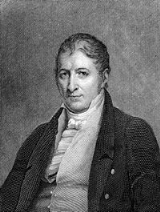
Eli Whitney

 
Eli Whitney

   Email Print
   Bookmark   Link


Eli Whitney


Eli Whitney (December 8, 1765 – January 8, 1825) was an American inventor
Inventor

An inventor is a person who creates or discovers a new method, form, device or other useful means. The word inventor comes form the latin verb invenire, invent-, to find....
 best known as the inventor of the cotton gin
Cotton gin

A cotton gin is a machine that quickly and easily separates the cotton fibers from the seedpods and the sometimes sticky seeds, a job previously done by hand....
. This was one of the key inventions of the industrial revolution
Industrial Revolution

The Industrial Revolution was a period in the late 18th and early 19th centuries when major changes in agriculture, manufacturing, production, and transportation had a profound effect on the socioeconomics and cultural conditions in United Kingdom....
 and shaped the economy of the antebellum South. Whitney's invention made short staple cotton into a profitable crop, which strengthened the economic foundation of slavery. Despite the social and economic impact of his invention, Whitney lost his profits in legal battles over patent infringement, closed his business, and nearly filed bankruptcy.

ney was born in Westborough
Westborough, Massachusetts

Westborough is a town in Worcester County, Massachusetts, Massachusetts, United States. The population was 17,997 at the 2000 United States Census....
, Massachusetts
Massachusetts

The Commonwealth of Massachusetts is a U.S. state located in the New England region of the Northeastern United States United States. It borders Rhode Island and Connecticut to the south, New York to the west, and Vermont and New Hampshire to the north....
, on December 8, 1765, the eldest child of Eli Whitney Sr., a prosperous farmer and his mother, Elizabeth Fay of Westborough, who died when he was eleven.


Discussion
Ask a question about 'Eli Whitney'
Start a new discussion about 'Eli Whitney'
Answer questions from other users
Full Discussion Forum


Recent Posts


Encyclopedia


Eli Whitney (December 8, 1765 – January 8, 1825) was an American inventor
Inventor

An inventor is a person who creates or discovers a new method, form, device or other useful means. The word inventor comes form the latin verb invenire, invent-, to find....
 best known as the inventor of the cotton gin
Cotton gin

A cotton gin is a machine that quickly and easily separates the cotton fibers from the seedpods and the sometimes sticky seeds, a job previously done by hand....
. This was one of the key inventions of the industrial revolution
Industrial Revolution

The Industrial Revolution was a period in the late 18th and early 19th centuries when major changes in agriculture, manufacturing, production, and transportation had a profound effect on the socioeconomics and cultural conditions in United Kingdom....
 and shaped the economy of the antebellum South. Whitney's invention made short staple cotton into a profitable crop, which strengthened the economic foundation of slavery. Despite the social and economic impact of his invention, Whitney lost his profits in legal battles over patent infringement, closed his business, and nearly filed bankruptcy.

Early life

Whitney was born in Westborough
Westborough, Massachusetts

Westborough is a town in Worcester County, Massachusetts, Massachusetts, United States. The population was 17,997 at the 2000 United States Census....
, Massachusetts
Massachusetts

The Commonwealth of Massachusetts is a U.S. state located in the New England region of the Northeastern United States United States. It borders Rhode Island and Connecticut to the south, New York to the west, and Vermont and New Hampshire to the north....
, on December 8, 1765, the eldest child of Eli Whitney Sr., a prosperous farmer and his mother, Elizabeth Fay of Westborough, who died when he was eleven. At age fourteen he operated a profitable nail manufacturing operation in his father's workshop during the Revolutionary War
American Revolutionary War

The American Revolutionary War , also known as the American War of Independence, began as a war between the Kingdom of Great Britain and Thirteen Colonies on the North America, and ended in a global war between several European great powers....
. Because his stepmother opposed his wish to attend college, Whitney worked as a farm laborer and schoolteacher to save money. He prepared for Yale
YALE

RapidMiner is an environment for machine learning and data mining experiments. It allows experiments to be made up of a large number of arbitrarily nestable operators, described in XML files which can easily be created with RapidMiner's graphical user interface....
 at Leicester Academy (now Becker College
Becker College

Becker College is a college in Massachusetts, United States with campuses in Worcester, Massachusetts and Leicester, Massachusetts....
) and under the tutelage of Rev.Elizur Goodrich of Durham
Durham, Connecticut

Durham is a New England town in Middlesex County, Connecticut, Connecticut, United States. Durham is a former farming village on the Coginchaug River in central Connecticut....
, Connecticut
Connecticut

Connecticut is a U.S. state located in the New England region of the northeastern United States. The state borders New York to the west and south , Massachusetts to the north, and Rhode Island to the east....
 he entered the Class of 1789.

Whitney expected to study law but, finding himself short of funds, accepted an offer to go to South Carolina as a private tutor. Instead of reaching his destination, he was convinced to visit Georgia. In the closing years of the eighteenth century, Georgia was a magnet for New Englanders seeking their fortunes (its Revolutionary era governor had been Lyman Hall
Lyman Hall

Lyman Hall , physician, clergyman, and statesman, was a signer of the United States United States Declaration of Independence as a representative of Georgia ....
, a migrant from Connecticut). When he initially sailed for South Carolina, among his shipmates were the widow and family of Revolutionary hero, General Nathanael Greene
Nathanael Greene

Nathanael Greene was a major general of the Continental Army in the American Revolutionary War. When the war began, Greene was a militia private , the lowest rank possible; he emerged from the war with a reputation as George Washington's most gifted and dependable officer....
 of Rhode Island. Mrs. Greene invited Whitney to visit her Georgia plantation, Mulberry Grove. Her plantation manager and husband-to-be was Phineas Miller, another Connecticut migrant and Yale graduate (Class of 1785), who would become Whitney's business partner.

Whitney is most famous for two innovations which later divided the United States in the mid-19th century: the cotton gin
Cotton gin

A cotton gin is a machine that quickly and easily separates the cotton fibers from the seedpods and the sometimes sticky seeds, a job previously done by hand....
 (1793), and his advocacy of interchangeable parts
Interchangeable parts

Interchangeable parts are components of any device designed to specifications which ensure that they will fit within any device of the same type....
. In the South, the cotton gin revolutionized the way cotton was harvest
Harvest

In agriculture, the harvest is the process of gathering mature crop from the field s. Reaping is the cutting of grain or Pulse for harvest, typically using a scythe, sickle, or reaper....
ed and reinvigorated slavery. While in the North, the adoption of interchangeable parts revolutionized the manufacturing industry, and in time contributed greatly to their victory in the Civil War
American Civil War

The American Civil War , also known as the War Between the States and several Naming the American Civil War, was a civil war in the United States....
.

Career inventions


Interchangeable parts


Though Whitney is popularly credited with the invention of a musket
Musket

A musket is a Muzzle -loaded, smoothbore long gun, which is intended to be fired from the shoulder.Usually, the musket is thought to be the weapon that replaced the arquebus, and was in turn replaced by the rifle....
 that could be manufactured with interchangeable parts
Interchangeable parts

Interchangeable parts are components of any device designed to specifications which ensure that they will fit within any device of the same type....
, the idea predated him. The idea is credited to Jean Baptiste Vaquette de Gribeauval
Jean Baptiste Vaquette de Gribeauval

Lieutenant General Jean-Baptiste Vaquette de Gribeauval was a France artillery Officer and engineer who revolutionized French cannon, creating a new production system that allowed lighter, more uniform guns without sacrificing range....
, a French artillerist
Artillery

Artillery is a military Combat Arms which employs any apparatus, machine, an assortment of tools or instruments, a system or systems used as weapons for the discharge of large projectiles in combat as a major contribution of fire power within the overall military capability of an armed force....
, and credits for finally perfecting the "armory system," or American system of manufacturing
American system of manufacturing

The American system of manufacturing involves semi-skilled labor using machine tools and Stencils to make standardized, identical, interchangeable parts, manufactured to a tolerance ....
, is given by historian Merritt Roe Smith to Captain John H. Hall
Captain John H. Hall

John H. Hall was the inventor of the M1819 Hall rifle breech-loading weapon, and a mass production innovator....
 and by historian Diana Muir
Diana Muir

Diana Muir, also known as Diana Muir Appelbaum, is a Newton, Massachusetts writer and historian. Muir was born and raised in the small town of Old Lyme, Conn....
 writing in Reflections in Bullough's Pond
Reflections in Bullough's Pond

Reflections in Bullough's Pond: Economy and Ecosystem in New England is a book by Diana Muir. The Providence Journal called Bullough?s Pond "a masterpiece," and Publishers Weekly called it "lyrical"....
 to Simeon North
Simeon North

Simeon North was a Middletown, Connecticut gun manufacturer, who developed America's first milling machine in 1818 and played an important role in the development of interchangeable parts manufacturing....
. In From the American System to Mass Production, historian David A. Hounshell
David A. Hounshell

David A. Hounshell is the David M. Roderick Professor of Technology and Social Change in the Department of History, Engineering and Public Policy program at Carnegie Mellon University....
 described how de Gribeauval's idea propagated from France to the colonies via two routes: from Honoré Blanc
Honoré Blanc

Honor? Blanc was a French gunsmith and a pioneer of the use of interchangeable parts. His career spanned the decades from circa 1770 to 1801, a time period that included the reigns of Louis XV of France and Louis XVI of France, the American Revolution , the French Revolution, and the French First Republic....
 through his friend Thomas Jefferson
Thomas Jefferson

Thomas Jefferson was the List of Presidents of the United States President of the United States , the principal author of the United States Declaration of Independence , and one of the most influential Founding Fathers of the United States for his promotion of the ideals of republicanism in the United States....
, and via Major Louis de Tousard
Louis de Tousard

Major Louis de Tousard was a France artillery who served in the Continental Army under Gilbert du Motier, marquis de La Fayette. Tousard wrote two very influential books: one was a proposal for a school for officers which became the blueprint for West Point, and the other was a manual for artillery officers which became standard in the young...
, another French artillerist who was instrumental in establishing West Point, teaching the young officer corps of the Continental Army
Continental Army

The American Continental Army was an army formed after the outbreak of the American Revolutionary War by the colonies that became the United States. Established by a resolution of the Continental Congress on June 15, 1775, the army was created to coordinate the military efforts of the Thirteen Colonies in their struggle against the rule of Kingdom...
, and establishing the armories
Armory (military)

File:Armeria001.JPGAn armory is a military depot used for the storage of weapons and ammunition. The term may also apply to an area within a building, used for the storage of weapons....
 at Springfield
Springfield Armory

This is an article about the US Government Arsenal. For the contemporary commercial manufacturer see Springfield Armory, Inc.The Springfield Armory was the primary center for the manufacture of United States military small arms and the site of many important technological advances in gun manufacture....
 and Harpers Ferry
Harpers Ferry Armory

File:Harpers Ferry guns.jpgHarpers Ferry Armory, more formally known as the United States Armory and Arsenal at Harpers Ferry, was the second federal armory commissioned by the United States government located in Harpers Ferry, West Virginia , the first federal armory being the Springfield Armory located in Springfield, Massachusetts....
.

By the late 1790s, Whitney was on the verge of bankruptcy
Bankruptcy

Bankruptcy is a legally declared inability or impairment of ability of an individual or organization to pay its creditors. Creditors may file a bankruptcy petition against a debtor in an effort to recoup a portion of what they are owed or initiate a restructuring....
 and cotton gin litigation had left him deeply in debt
Debt

Debt is that which is owed; usually referencing assets owed, but the term can cover other obligations. In the case of assets, debt is a means of using future purchasing power in the present before a summation has been earned....
. His New Haven cotton gin factory had burned to the ground, and litigation sapped his remaining resources. The French Revolution
French Revolution

The French Revolution was a period of political and social upheaval and radical change in the history of France, during which the French governmental structure, previously an absolute monarchy with feudalism for the aristocracy and Roman Catholic Church clergy, underwent radical change to forms based on Age of Enlightenment principles of cit...
 had ignited new conflicts between Great Britain, France, and the United States. The new American government, realizing the need to prepare for war, began to rearm. The War Department
United States Department of War

The United States Department of War, sometimes also called the War Office, was the department of the United States Federal government of the United States's Federal government of the United States#Executive branch responsible for the operation and maintenance of land Military of the United States from 1789 until September 18, 1947,...
 issued contracts for the manufacture of 10,000 muskets. Whitney, who had never made a gun in his life, obtained a contract in January, 1798 to deliver ten to fifteen thousand muskets in 1800. He had not mentioned interchangeable parts
Interchangeable parts

Interchangeable parts are components of any device designed to specifications which ensure that they will fit within any device of the same type....
 at that time. Ten months later, Treasury Secretary Wolcott
Oliver Wolcott, Jr.

Oliver Wolcott Jr. was United States Secretary of the Treasury from 1795 to 1800 and List of Governors of Connecticut of Connecticut from 1817 to 1827....
 sent him a "foreign pamphlet on arms manufacturing techniques," possibly one of Honoré Blanc's reports, after which Whitney first began to talk about interchangeability. After spending most of 1799-1801 in cotton gin litigation, Whitney began promoting the idea of interchangeable parts, and even arranged a public demonstration of the concept in order to gain time. He did not deliver on the contract until 1809, but then spent the rest of his life publicizing the idea of interchangeability.

Whitney's defenders have claimed that he invented the American system of manufacturing
American system of manufacturing

The American system of manufacturing involves semi-skilled labor using machine tools and Stencils to make standardized, identical, interchangeable parts, manufactured to a tolerance ....
 -- the combination of power machinery, interchangeable parts
Interchangeable parts

Interchangeable parts are components of any device designed to specifications which ensure that they will fit within any device of the same type....
, and division of labor that would underlie the nation's subsequent industrial revolution. While there is persuasive evidence that he failed to achieve interchangeability, his use of power machinery and specialized division of labor are well documented . When the government complained that Whitney's price per musket compared unfavorably with those produced in government armories, Whitney was able to calculate an actual price per musket by including fixed cost
Fixed cost

In economics, fixed costs are business expenses that are not dependent on the activities of the business They tend to be time-related, such as salaries or rents being paid per month....
s such as insurance
Insurance

Insurance, in law and economics, is a form of risk management primarily used to Hedge against the risk of a contingent loss. Insurance is defined as the equitable transfer of the risk of a loss, from one entity to another, in exchange for a premium, and can be thought of as a guaranteed small loss to prevent a large, possibly devastating los...
 and machinery, which the government had not included. He thus made early contributions to both the concept of cost accounting
Cost accounting

In management accounting, cost accounting is that part of management accounting which establishes budget and actual cost of operations, processes, departments or product and the analysis of variances, profitability or social use of funds....
, and the concept of the efficiency
Efficiency (economics)

Economic efficiency is used to refer to a number of related concepts. It is the using resources in such a way as to maximize the production of goods and services....
 of private industry.

Cotton gin


The cotton gin
Cotton gin

A cotton gin is a machine that quickly and easily separates the cotton fibers from the seedpods and the sometimes sticky seeds, a job previously done by hand....
 is a mechanical device which removes the seeds from cotton
Cotton

Cotton is a soft, staple fiber that grows in a form known as a boll around the seeds of the cotton plant a shrub native to tropical and subtropical regions around the world, including the Americas, India and Africa....
, a process which, until the time of its invention, had been extremely labor-intensive. The cotton gin was a wooden drum stuck with hooks, which pulled the cotton fibers through a mesh. The cotton seeds
SEEDS

SEEDS is a voluntary organisation registered under the Societies Act of India.SEEDS was formed in 1994 as an informal group of students and pedagogues of the School of Planning and Architecture, New Delhi, whose common interests brought them together and made them carry human habitat environment related exercises beyond set academic target...
 would not fit through the mesh and fell outside. Whitney occasionally told a story where he was pondering an improved method of seeding the cotton and he was inspired by observing a cat
Cat

The cat , also known as the Domestication cat or house cat to distinguish it from other Felinae and Felidae, is a small predationy carnivore species of crepuscular mammal that is valued by humans for its companionship and its ability to hunt vermin, snakes, scorpions, and other unwanted household pests....
 attempting to pull a chicken
Chicken

The chicken is a Domestication fowl. Recent evidence suggests that domestication of the chicken was under way in Vietnam over 10,000 years ago....
 through a fence, and could only pull through some of the feathers.

A single cotton gin could generate up to fifty-five pounds of cleaned cotton daily. This contributed to the economic development of the Southern states
Southern States

Southern States may refer to:*The Southern United States or, more broadly, those U.S. states comprising the Sun Belt.*The Southern States Cooperative....
 of the United States, a prime cotton growing area; some historians believe that this invention allowed for the African slavery system
History of slavery in the United States

Slavery in the United States began soon after British colonization of the Americas first settled Colony of Virginia in 1607 and lasted as a legal institution until the passage of the Thirteenth Amendment to the United States Constitution in 1865....
 in the Southern United States
Southern United States

The Southern United States—commonly referred to as the American South, Dixie, or simply the South—constitutes a large distinctive region in the southeastern and south-central United States....
 to become more sustainable at a critical point in its development.

Whitney received a patent
Patent

A patent is a set of exclusive rights granted by a state to an inventor or his assignee for a term of patent in exchange for a disclosure of an invention....
 (later numbered as X72) for his cotton gin on March 14, 1794; however, it was not validated until 1807. Whitney and his partner Miller did not intend to sell the gins. Rather, like the proprietors of grist
Gristmill

A gristmill or grist mill is a building where grain is ground into flour, or the grinding mechanism itself. In many countries these are referred to as corn mills or flour mills....
 and sawmill
Sawmill

A sawmill is a facility where logging are cut into lumbers....
s, they expected to charge farmers for cleaning their cotton - two-fifths of the profits, paid in cotton. Resentment at this scheme, the mechanical simplicity of the device, and the primitive state of patent law
History of patent law

The history of patents and patent laws is generally considered to have started in Italy with a Venetian Statute of 1474 which was issued by the Republic of Venice....
, made infringement
Patent infringement

Patent infringement is the act of utilizing a patented invention without permission from the patent holder. Permission may typically be granted in the form of a licence....
 inevitable. As Whitney and Miller were unable to produce enough gins to meet demand, imitation gins began to spread. Ultimately, patent infringement lawsuits consumed the profits and their cotton gin company went out of business in 1797.

While the cotton gin did not earn Whitney the fortune he had hoped for, it did give him fame and the cotton gin transformed Southern agriculture and the national economy. Southern cotton found ready markets in Europe and in the burgeoning textile mill
Textile mill

The term Textile Mill covers mills producing textiles of various kinds including:*Cotton mill*Flax mill*Silk mill, first built at Derby by John Lombe....
s of New England
New England

New England is a region of the United States located in the northeastern corner of the country, bounded by the Atlantic Ocean, Canada and New York State, and consisting of the modern U.S....
. Cotton agriculture revived the profitability of slavery and the political power of supporters of the South's "peculiar institution
Peculiar institution

" peculiar institution" was a euphemism for slavery and the economic ramifications of it in the Southern U.S.. The meaning of "peculiar" in this expression is "one's own", that is, referring to something distinctive to or characteristic of a particular place or people....
." By the 1820s, the dominant issues in American politics were driven by "King Cotton
King Cotton

King Cotton was a phrase used in the Southern United States mainly by Southern politicians and authors who wanted to illustrate the importance of the cotton agriculture to the Confederate States of America economy during the American Civil War....
": maintaining the political balance between slave
Slave state

A slave state was a U.S. state in which slavery of African Americans was legal. Slavery was one of the Origins of the American Civil War of the American Civil War and was abolished by the Thirteenth Amendment of the United States Constitution in 1865....
 and free state
Free State

The Free State is a Provinces of South Africa of South Africa. The name is a popular contraction of the previous name the Orange Free State. Its capital is Bloemfontein which is also South Africa's judicial capital....
s and tariff
Tariff

A tariff is a tax imposed on goods when they are moved across a political boundary. They are usually associated with protectionism, the economic policy of restraining trade between nations....
 protection for American industry. Cotton exports from the South boomed after the cotton gin's appearance (going from 180,000 pounds of total cotton production in 1793 to 93 million tons by 1810) while New England manufacturing companies struggled to compete against imported goods and clamored for tariff protection. The cotton interests led the country into war with Mexico, expecting a vast expansion of cotton agriculture. Cotton was a staple that could be stored for long periods and shipped long distances, unlike most agricultural food production.

Paradoxically, the cotton gin, a labor-saving device, helped preserve the weakening arguments for slavery, since cheap (slave) labor was needed to pick cotton. Later, the 20th century invention of the cotton-picker reduced the labor-intensive demands of cotton farming, and brought unemployment to many poor Southerners.

Milling machine


Machine tool historian Joseph W. Roe credited Eli Whitney with inventing the first milling machine
Milling machine

A milling machine is a machine tool used for the shaping of metal and other solid materials. Its basic form is that of a rotating cutter which rotates about the spindle axis , and a table to which the workpiece is affixed....
. Subsequent work by other historians (Woodbury, Smith, Muir) suggests that Whitney was among a group of contemporaries all developing milling machines at about the same time (1814 to 1818). Therefore, no one person can properly be described as "the inventor of the milling machine".

Later life and legacy

Despite his humble origins, Whitney was keenly aware of the value of social and political connections. In building his arms business, he took full advantage of the access that his status as a Yale
YALE

RapidMiner is an environment for machine learning and data mining experiments. It allows experiments to be made up of a large number of arbitrarily nestable operators, described in XML files which can easily be created with RapidMiner's graphical user interface....
 alumnus gave him to other well-placed graduates, such as Secretary of War
United States Secretary of War

File:Swearing in of Secretary Dwight Davis.jpgThe Secretary of War was a member of the United States President of the United States United States Cabinet, beginning with George Washington's administration....
 Oliver Wolcott
Oliver Wolcott

Oliver Wolcott , was a signer of the United States Declaration of Independence and also the Articles of Confederation as a Representation of Connecticut....
 (Class of 1778) and New Haven developer and political leader James Hillhouse
James Hillhouse

James Hillhouse was an United States lawyer, real estate developer, and politician from New Haven, Connecticut. He represented Connecticut in both the U.S....
. His 1817 marriage to Henrietta Edwards, granddaughter of the famed evangelist
Evangelism

Evangelism is the practice of attempting to convert people to a religion. The term is used most often in reference to Christianity, but is also used to refer to other religions, including Judaism, Islam, and less frequently, Buddhism and Hinduism....
 Jonathan Edwards, daughter of Pierpont Edwards
Pierpont Edwards

Pierpont Edwards was a delegate to the American Continental Congress. He has been described as "a brilliant but erratic member of the Connecticut Bar association, tolerant in religious matters and bitterly hated by stern Calvinists, a man whose personal morality resembled greatly that of Aaron Burr." Pierpont Edwards was the founder of the T...
, head of the Democratic Party in Connecticut, and first cousin of Yale's president, Timothy Dwight
Timothy Dwight

Timothy Dwight may refer to:*Timothy Dwight College, a residential college at Yale University*Timothy Dwight IV , President of Yale University from 1795?1817...
, the state's leading Federalist
Federalist

The term "'federalist'" describes several political beliefs around the world. It also has reference to the concept of federalism or the type of government called a federation....
, further tied him to Connecticut's ruling elite. In a business dependent on government contracts, such connections were essential to success.

Whitney died at age 59 of prostate cancer
Prostate cancer

Prostate cancer is a disease in which cancer develops in the prostate, a gland in the male reproductive system. It occurs when cell s of the prostate Mutation and begin to multiply out of control....
 on January 8, 1825, in New Haven, CT, leaving a widow and four children. During the course of his illness, he invented and constructed several devices to ease his pain mechanically. These devices, drawings of which are in his collected papers, were effective but were never manufactured for use of others due to his heirs' reluctance to trade in "indelicate" items.

At his death, his armory
Armory

Armory or armoury may mean:*Armory , a military location used for the storage of arms and ammunition.*Armory , the study of coats of arms....
 was left in the charge of his talented nephews, Eli Whitney Blake
Eli Whitney Blake

Eli Whitney Blake, Sr. was an United States inventor, best known for his mortise lock and stone-crushing machine, the latter of which earned him a place into the National Inventors Hall of Fame....
 and Philos Blake, notable inventors and manufacturers in their own right (they invented the mortise lock
Mortise lock

A mortise lock is one that requires a pocket?the mortise?to be cut into the door or piece of furniture into which the lock is to be fitted. In most parts of the world, mortise locks are generally found on older buildings constructed before the advent of bored cylindrical locks, but they have recently become more common in commercial and upm...
 and the stone-crushing machine).

Eli Whitney Blake (1820-1894) assumed control of the armory in 1841. Working under contract
Contract

A contract is an exchange of promises between two or more parties to do, or refrain from doing, an act which is enforceable in a court of law. It is a binding legal agreement....
 to inventor Samuel Colt
Samuel Colt

Samuel Colt was an United States inventor and industrialist. He was the founder of Colt's Patent Fire-Arms Manufacturing Company , and is widely credited with popularizing the revolver....
, the younger Whitney manufactured the famous "Whitneyville Walker Colts" for the Texas Rangers
Texas Ranger Division

The Texas Ranger Division, commonly called the Texas Rangers, is a police with statewide jurisdiction based in Austin, Texas, the capital of Texas, in the United States....
. The success of this contract rescued Colt from financial ruin and enabled him to establish his own famous arms company
Colt's Manufacturing Company

Colt's Manufacturing Company is a United States firearms manufacturer founded in 1847. It is best known for the engineering, production, and marketing of dozens of different firearms over the later half of the 19th and the 20th century....
. Whitney's marriage to Sarah Dalliba, daughter of the U.S. Army's chief of ordinance
Ordnance Corps

The mission of the Ordnance Corps is to "support the development, production, acquisition and sustainment of weapons systems and munitions, and to provide explosive ordnance disposal, during peace and war, to provide superior combat power to current and future forces of the United States Army."...
, helped to assure the continuing success of his business.

The younger Whitney organized the New Haven Water Company, which began operations in 1862. While this enterprise addressed the city's need for water, it also enabled Whitney to increase the amount of power available for his manufacturing operations at the expense of the water company's stockholders. A new dam made it possible to consolidate his operations—originally located in three sites along the Mill River—in a single plant. This dam still exists.

Whitney's grandson, Eli Whitney IV (1847-1924), sold the Whitney Armory to Winchester Repeating Arms, another notable New Haven gun company, in 1888. He served as president of the water company until his death and was a major New Haven business and civic leader. He played an important role in the development of New Haven's Ronan-Edgehill Neighborhood.

Following the closure of the armory, the factory site continued to be used for a variety of industrial purposes, including the water company. Many of the original armory buildings remained intact until the 1960s. In the 1970s, as part of the Bicentennial
United States Bicentennial

The United States Bicentennial was celebrated on Sunday, July 4, 1976, the 200th anniversary of the adoption of the United States Declaration of Independence....
 celebration, interested citizens organized the Eli Whitney Museum
Eli Whitney Museum

The Eli Whitney Museum, in Hamden, Connecticut, Connecticut, focuses on design and invention with hands-on projects and exhibits on Eli Whitney and A....
, which opened to the public in 1984. The site today includes the boarding house and barn that served Eli Whitney's original workers and a stone storage building from the original armory. Museum exhibits and programs are housed in a factory building constructed c. 1910. A water company office building constructed in the 1880s now houses educational programs operated by the South Central Connecticut Regional Water Authority (which succeeded the New Haven Water Company).

Eli Whitney and his descendants are buried in New Haven's historic Grove Street Cemetery
Grove Street Cemetery, New Haven

Grove Street Cemetery or Grove Street Burial Ground in New Haven, Connecticut is located in the center of the Yale University campus. It was organized in 1796 as the New Haven Burying Ground and incorporated in October 1797 to replace the crowded burial ground on the New Haven Green....
. Yale College's Eli Whitney Students Program
Eli Whitney Students Program

The Eli Whitney Students Program is an admissions program of Yale College. It was designed to attract undergraduates from non-traditional backgrounds to Yale College....
, which is one of the four doors into Yale College, is named after Whitney in recognition of his venerable age at the time of his entrance to Yale College in 1789; he was twenty-three years old.

Further reading

  • Battison, Edwin. (1960). "Eli Whitney and the Milling Machine." Smithsonian Journal of History I.
  • Cooper, Carolyn, & Lindsay, Merrill K. (1980). Eli Whitney and the Whitney Armory.
  • Whitneyville, CT: Eli Whitney Museum.
  • Dexter, Franklin B. (1911). "Eli Whitney." Yale Biographies and Annals, 1792-1805. New York, NY: Henry Holt & Company.
  • Hall, Karyl Lee Kibler, & Cooper, Carolyn. (1984). Windows on the Works: Industry on the Eli Whitney Site, 1798-1979.
  • Hamden, CT: Eli Whitney Museum*Lakwete, Angela. (2004). Inventing the Cotton Gin: Machine and Myth in Antebellum America. Baltimore, MD: Johns Hopkins University Press.
  • Smith, Merritt Roe. 1973. "John H. Hall, Simeon North, and the Milling Machine: The Nature of Innovation among Antebellum Arms Makers." Technology & Culture 14.
  • Woodbury, Robert S. (1960). "The Legend of Eli Whitney and Interchangeable Parts." Technology & Culture 1.


External links