
Home      Discussion      Topics      Dictionary      Almanac
Signup       Login
Elaeagnus

Elaeagnus

Overview
Elaeagnus silverberry or oleaster, is a genus
Genus
In biology, a genus is a low-level taxonomic rank used in the biological classification of living and fossil organisms, which is an example of definition by genus and differentia...

 of about 50–70 species
Species
In biology, a species is one of the basic units of biological classification and a taxonomic rank. A species is often defined as a group of organisms capable of interbreeding and producing fertile offspring. While in many cases this definition is adequate, more precise or differing measures are...

 of flowering plant
Flowering plant
The flowering plants , also known as Angiospermae or Magnoliophyta, are the most diverse group of land plants. Angiosperms are seed-producing plants like the gymnosperms and can be distinguished from the gymnosperms by a series of synapomorphies...

s in the family
Family (biology)
In biological classification, family is* a taxonomic rank. Other well-known ranks are life, domain, kingdom, phylum, class, order, genus, and species, with family fitting between order and genus. As for the other well-known ranks, there is the option of an immediately lower rank, indicated by the...

 Elaeagnaceae
Elaeagnaceae
Elaeagnaceae, the oleaster family, is a plant family of the order Rosales comprising small trees and shrubs, native to temperate regions of the Northern Hemisphere, south into tropical Asia and Australia. The family has 45-50 species in three genera....

.
Discussion
Ask a question about 'Elaeagnus'
Start a new discussion about 'Elaeagnus'
Answer questions from other users
Full Discussion Forum
 
Unanswered Questions
Encyclopedia
Elaeagnus silverberry or oleaster, is a genus
Genus
In biology, a genus is a low-level taxonomic rank used in the biological classification of living and fossil organisms, which is an example of definition by genus and differentia...

 of about 50–70 species
Species
In biology, a species is one of the basic units of biological classification and a taxonomic rank. A species is often defined as a group of organisms capable of interbreeding and producing fertile offspring. While in many cases this definition is adequate, more precise or differing measures are...

 of flowering plant
Flowering plant
The flowering plants , also known as Angiospermae or Magnoliophyta, are the most diverse group of land plants. Angiosperms are seed-producing plants like the gymnosperms and can be distinguished from the gymnosperms by a series of synapomorphies...

s in the family
Family (biology)
In biological classification, family is* a taxonomic rank. Other well-known ranks are life, domain, kingdom, phylum, class, order, genus, and species, with family fitting between order and genus. As for the other well-known ranks, there is the option of an immediately lower rank, indicated by the...

 Elaeagnaceae
Elaeagnaceae
Elaeagnaceae, the oleaster family, is a plant family of the order Rosales comprising small trees and shrubs, native to temperate regions of the Northern Hemisphere, south into tropical Asia and Australia. The family has 45-50 species in three genera....

.

The vast majority of the species are native to temperate and subtropical regions of Asia
Asia
Asia is the world's largest and most populous continent, located primarily in the eastern and northern hemispheres. It covers 8.7% of the Earth's total surface area and with approximately 3.879 billion people, it hosts 60% of the world's current human population...

. Elaeagnus triflora extends from Asia south into northeastern Australia
Australia
Australia , officially the Commonwealth of Australia, is a country in the Southern Hemisphere comprising the mainland of the Australian continent, the island of Tasmania, and numerous smaller islands in the Indian and Pacific Oceans. It is the world's sixth-largest country by total area...

, while E. commutata is native to North America
North America
North America is a continent wholly within the Northern Hemisphere and almost wholly within the Western Hemisphere. It is also considered a northern subcontinent of the Americas...

, and Elaeagnus philippinensis is native to the Philippines
Philippines
The Philippines , officially known as the Republic of the Philippines , is a country in Southeast Asia in the western Pacific Ocean. To its north across the Luzon Strait lies Taiwan. West across the South China Sea sits Vietnam...

. One of the Asian species, E. angustifolia, may also be native in southeasternmost Europe
Europe
Europe is, by convention, one of the world's seven continents. Comprising the westernmost peninsula of Eurasia, Europe is generally 'divided' from Asia to its east by the watershed divides of the Ural and Caucasus Mountains, the Ural River, the Caspian and Black Seas, and the waterways connecting...

, though it may instead be an early human introduction
Introduced species
An introduced species — or neozoon, alien, exotic, non-indigenous, or non-native species, or simply an introduction, is a species living outside its indigenous or native distributional range, and has arrived in an ecosystem or plant community by human activity, either deliberate or accidental...

 there. Also, several Asiatic species of Elaeagnus have become established as introduced species
Introduced species
An introduced species — or neozoon, alien, exotic, non-indigenous, or non-native species, or simply an introduction, is a species living outside its indigenous or native distributional range, and has arrived in an ecosystem or plant community by human activity, either deliberate or accidental...

 in North America, with some of these species being considered invasive
Invasive species
"Invasive species", or invasive exotics, is a nomenclature term and categorization phrase used for flora and fauna, and for specific restoration-preservation processes in native habitats, with several definitions....

, or even designated as noxious, in portions of the United States
United States
The United States of America is a federal constitutional republic comprising fifty states and a federal district...

.

Elaeagnus plants are deciduous
Deciduous
Deciduous means "falling off at maturity" or "tending to fall off", and is typically used in reference to trees or shrubs that lose their leaves seasonally, and to the shedding of other plant structures such as petals after flowering or fruit when ripe...

 or evergreen
Evergreen
In botany, an evergreen plant is a plant that has leaves in all seasons. This contrasts with deciduous plants, which completely lose their foliage during the winter or dry season.There are many different kinds of evergreen plants, both trees and shrubs...

 shrub
Shrub
A shrub or bush is distinguished from a tree by its multiple stems and shorter height, usually under 5–6 m tall. A large number of plants may become either shrubs or trees, depending on the growing conditions they experience...

s or small tree
Tree
A tree is a perennial woody plant. It is most often defined as a woody plant that has many secondary branches supported clear of the ground on a single main stem or trunk with clear apical dominance. A minimum height specification at maturity is cited by some authors, varying from 3 m to...

s. The alternate leaves
Leaf
A leaf is an organ of a vascular plant, as defined in botanical terms, and in particular in plant morphology. Foliage is a mass noun that refers to leaves as a feature of plants....

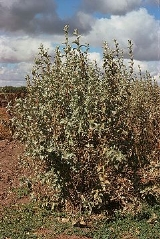
 and the shoots are usually covered with tiny silvery to brownish scales, giving the plants a whitish to grey-brown colour from a distance. The flower
Flower
A flower, sometimes known as a bloom or blossom, is the reproductive structure found in flowering plants . The biological function of a flower is to effect reproduction, usually by providing a mechanism for the union of sperm with eggs...

s are small, with a four-lobed calyx
Sepal
A sepal is a part of the flower of angiosperms . Collectively the sepals form the calyx, which is the outermost whorl of parts that form a flower. Usually green, sepals have the typical function of protecting the petals when the flower is in bud...

 and no petals; they are often fragrant. The fruit
Fruit
In broad terms, a fruit is a structure of a plant that contains its seeds.The term has different meanings dependent on context. In non-technical usage, such as food preparation, fruit normally means the fleshy seed-associated structures of certain plants that are sweet and edible in the raw state,...

 is a fleshy drupe
Drupe
In botany, a drupe is a fruit in which an outer fleshy part surrounds a shell of hardened endocarp with a seed inside. These fruits develop from a single carpel, and mostly from flowers with superior ovaries...

 containing a single seed
Seed
A seed is a small embryonic plant enclosed in a covering called the seed coat, usually with some stored food. It is the product of the ripened ovule of gymnosperm and angiosperm plants which occurs after fertilization and some growth within the mother plant...

; it is edible in many species. Several species are cultivated for their fruit, including E. angustifolia, E. umbellata and E. multiflora (gumi). Although they are cultivated more in China than elsewhere, they are growing in popularity in the rest of the world.

The thorny shrubs can provide good nesting sites for birds.

E. umbellata is reputed to have a high amount of the carotenoid
Carotenoid
Carotenoids are tetraterpenoid organic pigments that are naturally occurring in the chloroplasts and chromoplasts of plants and some other photosynthetic organisms like algae, some bacteria, and some types of fungus. Carotenoids can be synthesized fats and other basic organic metabolic building...

 antioxidant
Antioxidant
An antioxidant is a molecule capable of inhibiting the oxidation of other molecules. Oxidation is a chemical reaction that transfers electrons or hydrogen from a substance to an oxidizing agent. Oxidation reactions can produce free radicals. In turn, these radicals can start chain reactions. When...

, lycopene
Lycopene
Lycopene is a bright red carotene and carotenoid pigment and phytochemical found in tomatoes and other red fruits and vegetables, such as red carrots, watermelons and papayas...

 and has been shown to display antioxidant properties effective against cancer
Cancer
Cancer , known medically as a malignant neoplasm, is a large group of different diseases, all involving unregulated cell growth. In cancer, cells divide and grow uncontrollably, forming malignant tumors, and invade nearby parts of the body. The cancer may also spread to more distant parts of the...

 mechanisms in vitro
In vitro
In vitro refers to studies in experimental biology that are conducted using components of an organism that have been isolated from their usual biological context in order to permit a more detailed or more convenient analysis than can be done with whole organisms. Colloquially, these experiments...

. E. multiflora is among the nutraceutical
Nutraceutical
Nutraceutical, a portmanteau of the words “nutrition” and “pharmaceutical”, is a food or food product that reportedly provides health and medical benefits, including the prevention and treatment of disease. Health Canada defines the term as "a product isolated or purified from foods that is...

 plants that Chinese use both for food and medicine. Both of these species have small but abundant tasty berries.

Nitrogen fixation


Many Elaeagnus species harbor nitrogen fixing organisms in their roots, and are therefore able to grow well in low-nitrogen soil. This ability results in multiple ecological consequences where these Elaeagnus species are present:
  • They can become invasive
    Invasive species
    "Invasive species", or invasive exotics, is a nomenclature term and categorization phrase used for flora and fauna, and for specific restoration-preservation processes in native habitats, with several definitions....

     in many locations where they are established as exotic species. Two species (E. pungens and E. umbellata
    Elaeagnus umbellata
    Elaeagnus umbellata, also referred to as Japanese silverberry, umbellate oleaster or autumn-olive, is a species of Elaeagnus native to eastern Asia from the Himalayas east to Japan...

    ) are currently rated as Category II exotic invasive species by the Florida Exotic Pest Plant Council.
  • Because they increase fixed nitrogen levels in the soil, they can alter habitats by enabling species which require more fixed nitrogen to be more competitive, replacing other species which are themselves tolerant of soils with low levels of fixed nitrogen.
  • The extra availability of fixed nitrogen in the plant makes its leaves more nutritious. Elaeagnus species are used as food plants by the larva
    Larva
    A larva is a distinct juvenile form many animals undergo before metamorphosis into adults. Animals with indirect development such as insects, amphibians, or cnidarians typically have a larval phase of their life cycle...

    e of some Lepidoptera
    Lepidoptera
    Lepidoptera is a large order of insects that includes moths and butterflies . It is one of the most widespread and widely recognizable insect orders in the world, encompassing moths and the three superfamilies of butterflies, skipper butterflies, and moth-butterflies...

     species including Coleophora elaeagnisella
    Coleophora
    Coleophora is a very large genus of moths of the family Coleophoridae. It contains some 1,350 described species. The genus is represented on all continents, but the majority are found in the Nearctic and Palaearctic regions...

    and the gothic
    Gothic (moth)
    The Gothic is a moth of the family Noctuidae. It is distributed in temperate Eurasia.This species has a wingspan of 36–46 mm. The forewings are broader than most other noctuids, blackish with a network of fine white lines . The hindwings are grey. The species flies at night in June and July...

     moths
    Moths
    Moths may refer to:* Gustav Moths , German rower* The Moths!, an English indie rock band* MOTHS, members of the Memorable Order of Tin Hats...

    .

Selected species


  • Elaeagnus angustata (Rehd.) C. Y. Chang (China
    China
    Chinese civilization may refer to:* China for more general discussion of the country.* Chinese culture* Greater China, the transnational community of ethnic Chinese.* History of China* Sinosphere, the area historically affected by Chinese culture...

    )
  • Elaeagnus angustifolia
    Elaeagnus angustifolia
    Elaeagnus angustifolia, commonly called silver berry, oleaster, Russian olive, or wild olive, is a species of Elaeagnus, native to western and central Asia, from southern Russia and Kazakhstan to Turkey and Iran...

    L. (Oleaster, Russian silverberry or Russian-olive; western Asia).
  • Elaeagnus argyi Levl. (China)
  • Elaeagnus bambusetorum Hand.-Mazz. (China)
  • Elaeagnus bockii Diels (China)
  • Elaeagnus cinnamomifolia W. K. Hu et H. F. Chow (China)
  • Elaeagnus commutata
    Elaeagnus commutata
    Elaeagnus commutata , is a species of Elaeagnus native to western and boreal North America, from southern Alaska through British Columbia east to Quebec, south to Utah, and across the upper Midwestern United States to South Dakota and western Minnesota...

    Bernh. (American silverberry or wolf-willow; North America
    North America
    North America is a continent wholly within the Northern Hemisphere and almost wholly within the Western Hemisphere. It is also considered a northern subcontinent of the Americas...

    )
  • Elaeagnus conferta Roxb. (southern Asia).
  • Elaeagnus courtoisi Belval (China)
  • Elaeagnus davidii Franch. (China)
  • Elaeagnus delavayi Lecomte (China)
  • Elaeagnus difficilis Serv. (China)
  • Elaeagnus formosana Nakai (Taiwan
    Taiwan
    Taiwan , also known, especially in the past, as Formosa , is the largest island of the same-named island group of East Asia in the western Pacific Ocean and located off the southeastern coast of mainland China. The island forms over 99% of the current territory of the Republic of China following...

    )
  • Elaeagnus glabra Thunb. (eastern Asia)
  • Elaeagnus gonyanthes Benth. (China)
  • Elaeagnus griffithii Serv. (China)
  • Elaeagnus grijsii Hance (China)
  • Elaeagnus guizhouensis C.Y. Chang (China)
  • Elaeagnus henryi Warb. (China)
  • Elaeagnus jiangxiensis C.Y. Chang (China)
  • Elaeagnus jingdonensis C.Y. Chang (China)
  • Elaeagnus kanaii Momily. (China)
  • Elaeagnus lanceolata Warb. (China)
  • Elaeagnus lanpingensis C.Y. Chang (China)
  • Elaeagnus latifolia L. (southern Asia)
  • Elaeagnus liuzhouensis C.Y. Chang (China)
  • Elaeagnus longiloba C.Y. Chang (China)
  • Elaeagnus loureirii Champ. (southern China)
  • Elaeagnus luoxiangensis C.Y. Chang (China)
  • Elaeagnus luxiensis C.Y. Chang (China)
  • Elaeagnus macrantha Rehd. (China)
  • Elaeagnus macrophylla Thunb. (eastern Asia)
  • Elaeagnus magna Rehd. (China)
  • Elaeagnus micrantha C.Y. Chang (China)
  • Elaeagnus mollis Diels (China)
  • Elaeagnus morrisonensis Hayata (Taiwan
    Taiwan
    Taiwan , also known, especially in the past, as Formosa , is the largest island of the same-named island group of East Asia in the western Pacific Ocean and located off the southeastern coast of mainland China. The island forms over 99% of the current territory of the Republic of China following...

    )
  • Elaeagnus multiflora Thunb. (Cherry silverberry or Gumi; eastern Asia)
  • Elaeagnus nanchuanensis C.Y. Chang (China)
  • Elaeagnus obovata Li (China)
  • Elaeagnus obtusa C.Y. Chang (China)
  • Elaeagnus oldhami Maxim. (China)
  • Elaeagnus ovata Serv. (China)
  • Elaeagnus oxycarpa Schltdl. (China)
  • Elaeagnus pallidiflora C.Y. Chang (China)
  • Elaeagnus parvifolia Wallich ex Royle (central Asia)
  • Elaeagnus pauciflora C.Y. Chang (China)
  • Elaeagnus philippinensis Perrott. ([Philippines)
  • Elaeagnus pilostyla C.Y. Chang (China)
  • Elaeagnus pingnanensis C.Y. Chang (China)
  • Elaeagnus pungens Thunb. (Silverthorn; Japan
    Japan
    Japan is an island nation in East Asia. Located in the Pacific Ocean, it lies to the east of the Sea of Japan, China, North Korea, South Korea and Russia, stretching from the Sea of Okhotsk in the north to the East China Sea and Taiwan in the south...

    )
  • Elaeagnus pyriformis Hook.f. (eastern Himalaya).
  • Elaeagnus retrostyla C.Y. Chang (China)
  • Elaeagnus sarmentosa Rehd. (China)
  • Elaeagnus schlechtendalii Serv. (China)
  • Elaeagnus stellipila Rehd. (China)
  • Elaeagnus taliensis C.Y. Chang (China)
  • Elaeagnus thunbergii Serv. (China)
  • Elaeagnus tonkinensis Serv. (southeastern Asia)
  • Elaeagnus triflora Roxb. (southeastern Asia, northeast Australia).
  • Elaeagnus tubiflora C.Y. Chang (China)
  • Elaeagnus tutcheri Dunn (southern China).
  • Elaeagnus umbellata
    Elaeagnus umbellata
    Elaeagnus umbellata, also referred to as Japanese silverberry, umbellate oleaster or autumn-olive, is a species of Elaeagnus native to eastern Asia from the Himalayas east to Japan...

    Thunb. (Japanese silverberry or autumn-olive; eastern Asia).
  • Elaeagnus viridis Serv. (China)
  • Elaeagnus wenshanensis C.Y. Chang (China)
  • Elaeagnus wilsonii Li (China)
  • Elaeagnus wushanensis C.Y. Chang (China)
  • Elaeagnus xichouensis C.Y. Chang (China)
  • Elaeagnus xizangensis C.Y. Chang (China)

Hybrids
  • Elaeagnus × ebbingei (E. macrophylla × E. pungens)
  • Elaeagnus × pyramidalis (E. commutata × E. multiflora)
  • Elaeagnus × reflexa (E. pugens × E. glabra)

Standard for Human Consumption

  • ISO 23394 has been promulgated to cover dried E. angustifolia
    Elaeagnus angustifolia
    Elaeagnus angustifolia, commonly called silver berry, oleaster, Russian olive, or wild olive, is a species of Elaeagnus, native to western and central Asia, from southern Russia and Kazakhstan to Turkey and Iran...

    for human consumption.

External links