


Eight Banners

Encyclopedia
The Eight Banners were administrative divisions into which all Manchu
families were placed. They provided the basic framework for the Manchu military organization. The fundamental building block of the banners was the company (Manchu: niru, Chinese: 佐領 zuoling), some of which reflected pre-existing lineage or tribal connections in their membership, while others deliberately overrode such connections in an effort to create a more centralized military force. Each company was, in principle, required to furnish 300 troops to the larger banner army.
, the Han
, and the Mongols. Beginning in the late 1620s, Nurhachi's successors incorporated allied and conquered Mongol tribes into the Eight Banner system. The first Chinese additions were merely sprinkled into existing banners as replacements. Eventually, the sheer numbers of Chinese soldiers caused Manchu leaders to form them into the "Old Han Army" (舊漢軍), mainly for infantry support. In 1631, a separate Chinese artillery corps was formed. Four Chinese banners were created in 1639 and finally the full eight were established in 1642.
, followed by Xi'an
and Hangzhou
. Sizable banner populations were also placed in Manchuria
and at strategic points along the Great Wall, the Yangtze River
and Grand Canal
.
garrisons were reclassified as civilian or placed in the Green Standard Army
. At the end of the Qing dynasty, all members of the Eight Banners, regardless of their original ethnicity, were considered by the Republic of China
to be Manchu.
in the 17th century from the Ming Empire, they began to fall behind rising Western powers in the 18th century, and were to ultimately become highly ineffective in modern warfare by the second half of the 19th century. The later banners proved unable to defeat Western powers, such as Britain
, in the Opium Wars and were also seriously challenged by the Taiping Rebellion
.
The Manchu "soldiers" stationed in the capital and throughout the empire constituted a great, aggregate enormous, and utterly useless drain on the imperial exchequer. Their claim to be military men was based rather on their descent than on their skill in arms; and their pay is given them because of their fathers' prowess, and not at all from any hopes of their efficiency as soldiers. Their soldierly qualities are included in the accomplishments of idleness, riding, and the use of the bow and arrow, at which they practice on a few rare occasions each year.
However, during the Boxer Rebellion
, three units of Manchu Bannermen were organized, recruited from the Metropolitan Banners, and given modernized training and weapons. One of these was the Hushenying
.
units based on Western training, equipment and organization. Nevertheless, the banner system remained in existence until the fall of the Qing in 1911, and even beyond, with a rump organization
continuing to function until the expulsion
of Puyi
(the former Xuantong emperor) from the Forbidden City in 1924.
Manchu
The Manchu people or Man are an ethnic minority of China who originated in Manchuria . During their rise in the 17th century, with the help of the Ming dynasty rebels , they came to power in China and founded the Qing Dynasty, which ruled China until the Xinhai Revolution of 1911, which...
families were placed. They provided the basic framework for the Manchu military organization. The fundamental building block of the banners was the company (Manchu:
niru, Chinese: 佐領 zuoling), some of which reflected pre-existing lineage or tribal connections in their membership, while others deliberately overrode such connections in an effort to create a more centralized military force. Each company was, in principle, required to furnish 300 troops to the larger banner army.Establishment
The banner system was established by Nurhachi in the early seventeenth century. By 1601 Nurhachi was reorganizing his military forces into the basic structure of the banners and some evidence suggests that he might have started as much as a decade earlier. There are clear references to military units called "banners" in Korean sources in 1607 and sources dating from 1615 describe the "banner" unit structure. Details are uncertain due to the scarcity of source material and a lack of cultural referents; compounding the matter is a linguistic difficulty: In Manchu the term gūsa denotes a large military formation called a "banner" and tu refers to a flag known as a "banner", but in Chinese (the language nearly all the pertinent records are in) the word qi is used for both meanings. Thus it is often somewhat difficult to tell whether the material refers to the use of cloth flags in battle or a unit of troops.Ethnic components
The Eight Banners consisted of three ethnic components: the ManchuManchu
The Manchu people or Man are an ethnic minority of China who originated in Manchuria . During their rise in the 17th century, with the help of the Ming dynasty rebels , they came to power in China and founded the Qing Dynasty, which ruled China until the Xinhai Revolution of 1911, which...
, the Han
Han Chinese
Han Chinese are an ethnic group native to China and are the largest single ethnic group in the world.Han Chinese constitute about 92% of the population of the People's Republic of China , 98% of the population of the Republic of China , 78% of the population of Singapore, and about 20% of the...
, and the Mongols. Beginning in the late 1620s, Nurhachi's successors incorporated allied and conquered Mongol tribes into the Eight Banner system. The first Chinese additions were merely sprinkled into existing banners as replacements. Eventually, the sheer numbers of Chinese soldiers caused Manchu leaders to form them into the "Old Han Army" (舊漢軍), mainly for infantry support. In 1631, a separate Chinese artillery corps was formed. Four Chinese banners were created in 1639 and finally the full eight were established in 1642.
Banner soldiers
From the time China was brought under the rule of the Qing dynasty (1644 – 1683), the banner soldiers became more professional and bureaucratised. Once the Manchus took over governing, they could no longer satisfy the material needs of soldiers by garnishing and distributing booty; instead, a salary system was instituted, ranks standardised, and the Eight Banners became a sort of hereditary military caste, though with a strong ethnic inflection. Banner soldiers took up permanent positions, either as defenders of the capital, Beijing, where roughly half of them lived with their families, or in the provinces, where some eighteen garrisons were established. The largest banner garrisons throughout most of the Qing dynasty were at BeijingBeijing
Beijing , also known as Peking , is the capital of the People's Republic of China and one of the most populous cities in the world, with a population of 19,612,368 as of 2010. The city is the country's political, cultural, and educational center, and home to the headquarters for most of China's...
, followed by Xi'an
Xi'an
Xi'an is the capital of the Shaanxi province, and a sub-provincial city in the People's Republic of China. One of the oldest cities in China, with more than 3,100 years of history, the city was known as Chang'an before the Ming Dynasty...
and Hangzhou
Hangzhou
Hangzhou , formerly transliterated as Hangchow, is the capital and largest city of Zhejiang Province in Eastern China. Governed as a sub-provincial city, and as of 2010, its entire administrative division or prefecture had a registered population of 8.7 million people...
. Sizable banner populations were also placed in Manchuria
Manchuria
Manchuria is a historical name given to a large geographic region in northeast Asia. Depending on the definition of its extent, Manchuria usually falls entirely within the People's Republic of China, or is sometimes divided between China and Russia. The region is commonly referred to as Northeast...
and at strategic points along the Great Wall, the Yangtze River
Yangtze River
The Yangtze, Yangzi or Cháng Jiāng is the longest river in Asia, and the third-longest in the world. It flows for from the glaciers on the Tibetan Plateau in Qinghai eastward across southwest, central and eastern China before emptying into the East China Sea at Shanghai. It is also one of the...
and Grand Canal
Grand Canal of China
The Grand Canal in China, also known as the Beijing-Hangzhou Grand Canal is the longest canal or artificial river in the world. Starting at Beijing, it passes through Tianjin and the provinces of Hebei, Shandong, Jiangsu and Zhejiang to the city of Hangzhou...
.
Green Standard Army
Over time, many Chinese banner companies in the provincialProvince
A province is a territorial unit, almost always an administrative division, within a country or state.-Etymology:The English word "province" is attested since about 1330 and derives from the 13th-century Old French "province," which itself comes from the Latin word "provincia," which referred to...
garrisons were reclassified as civilian or placed in the Green Standard Army
Green Standard Army
Green Standard Army is the name of a category of military units under the control of the Qing Dynasty in China. It was made up mostly of ethnic Han soldiers and operated concurrently with the Manchu-Mongol-Han Eight Banner armies...
. At the end of the Qing dynasty, all members of the Eight Banners, regardless of their original ethnicity, were considered by the Republic of China
Republic of China
The Republic of China , commonly known as Taiwan , is a unitary sovereign state located in East Asia. Originally based in mainland China, the Republic of China currently governs the island of Taiwan , which forms over 99% of its current territory, as well as Penghu, Kinmen, Matsu and other minor...
to be Manchu.
Hierarchical structure
The banners had a hierarchical structure. The smallest unit was niru (or 佐領 zuoling in Chinese; 300 men). The next was jalan (or 參領 canling); 5 niru and 5 jalan constituted a gūsa (banner). Of course, these were ideal numbers and their actual sizes varied substantially.| niru | jalan | gūsa |
|---|---|---|
| |
 |
 |
Eight Banners
| English | Manchu | Mongolian | Chinese | L/R | U/L | Image |
|---|---|---|---|---|---|---|
| Plain Yellow Banner |  gulu suwayan i gūsa gulu suwayan i gūsa | Шүлүүн Шар Хошуу | 正黃旗 zhèng huáng qí | Right | Upper | 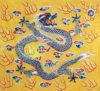 |
| Bordered Yellow Banner |  kubuhe suwayan i gūsa kubuhe suwayan i gūsa | Хөвөөт Шар Хошуу | 鑲黃旗 xiāng huáng qí | Left | Upper | 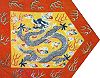 |
| Plain White Banner |  gulu šanggiyan i gūsa gulu šanggiyan i gūsa | Шүлүүн Цагаан Хошуу | 正白旗 zhèng bái qí | Left | Upper |  |
| Bordered White Banner |  kubuhe šanggiyan i gūsa kubuhe šanggiyan i gūsa | Хөвөөт Цагаан Хошуу | 鑲白旗 xiāng bái qí | Left | Lower | 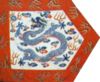 |
| Plain Red Banner |  gulu fulgiyan i gūsa gulu fulgiyan i gūsa | Шүлүүн Улаан Хошуу | 正紅旗 zhèng hóng qí | Right | Lower | 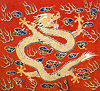 |
| Bordered Red Banner |  kubuhe fulgiyan i gūsa kubuhe fulgiyan i gūsa | Хөвөөт Улаан Хошуу | 鑲紅旗 xiāng hóng qí | Right | Lower | 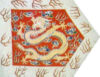 |
| Plain Blue Banner |  gulu lamun i gūsa gulu lamun i gūsa | Шүлүүн Хөх Хошуу | 正藍旗 zhèng lán qí | Left | Lower |  |
| Bordered Blue Banner |  kubuhe lamun i gūsa kubuhe lamun i gūsa | Хөвөөт Хөх Хошуу | 鑲藍旗 xiāng lán qí | Right | Lower | 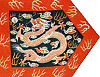 |
Effectiveness
Although the banners were instrumental in the Qing Empire takeover of China properChina proper
China proper or Eighteen Provinces was a term used by Western writers on the Qing Dynasty to express a distinction between the core and frontier regions of China. There is no fixed extent for China proper, as many administrative, cultural, and linguistic shifts have occurred in Chinese history...
in the 17th century from the Ming Empire, they began to fall behind rising Western powers in the 18th century, and were to ultimately become highly ineffective in modern warfare by the second half of the 19th century. The later banners proved unable to defeat Western powers, such as Britain
United Kingdom of Great Britain and Ireland
The United Kingdom of Great Britain and Ireland was the formal name of the United Kingdom during the period when what is now the Republic of Ireland formed a part of it....
, in the Opium Wars and were also seriously challenged by the Taiping Rebellion
Taiping Rebellion
The Taiping Rebellion was a widespread civil war in southern China from 1850 to 1864, led by heterodox Christian convert Hong Xiuquan, who, having received visions, maintained that he was the younger brother of Jesus Christ, against the ruling Manchu-led Qing Dynasty...
.
The Manchu "soldiers" stationed in the capital and throughout the empire constituted a great, aggregate enormous, and utterly useless drain on the imperial exchequer. Their claim to be military men was based rather on their descent than on their skill in arms; and their pay is given them because of their fathers' prowess, and not at all from any hopes of their efficiency as soldiers. Their soldierly qualities are included in the accomplishments of idleness, riding, and the use of the bow and arrow, at which they practice on a few rare occasions each year.
However, during the Boxer Rebellion
Boxer Rebellion
The Boxer Rebellion, also called the Boxer Uprising by some historians or the Righteous Harmony Society Movement in northern China, was a proto-nationalist movement by the "Righteous Harmony Society" , or "Righteous Fists of Harmony" or "Society of Righteous and Harmonious Fists" , in China between...
, three units of Manchu Bannermen were organized, recruited from the Metropolitan Banners, and given modernized training and weapons. One of these was the Hushenying
Hushenying
The Hushenying were a unit of 10,000 Manchu Bannermen under the command of Zaiyi during the Boxer Rebellion.-Summary:Hushenying can be translated as "Tiger and Divine Corps", "Tiger Spirit Division", or "Tiger Spirit Battalion"....
.
Existence
By the late 19th century, the Qing Dynasty began training and creating New ArmyNew Army
The New Armies were the modernized Qing armies, trained and equipped according to Western standards...
units based on Western training, equipment and organization. Nevertheless, the banner system remained in existence until the fall of the Qing in 1911, and even beyond, with a rump organization
Rump organization
In Politics, a Rump organization is a remnant of a larger political grouping that continues to exist after the group has formally dissolved, split or been abolished.-See also:* Rump party* Rump legislature* Rump state* Rump Parliament...
continuing to function until the expulsion
Exile
Exile means to be away from one's home , while either being explicitly refused permission to return and/or being threatened with imprisonment or death upon return...
of Puyi
Puyi
Puyi , of the Manchu Aisin Gioro clan, was the last Emperor of China, and the twelfth and final ruler of the Qing Dynasty. He ruled as the Xuantong Emperor from 1908 until his abdication on 12 February 1912. From 1 to 12 July 1917 he was briefly restored to the throne as a nominal emperor by the...
(the former Xuantong emperor) from the Forbidden City in 1924.
See also
- Banner (Inner Mongolia), as an organizational structure, were also used in MongoliaMongoliaMongolia is a landlocked country in East and Central Asia. It is bordered by Russia to the north and China to the south, east and west. Although Mongolia does not share a border with Kazakhstan, its western-most point is only from Kazakhstan's eastern tip. Ulan Bator, the capital and largest...
.