

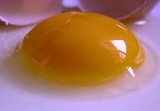
Egg yolk

Overview
An egg yolk is a part of an egg
which feeds the developing embryo
. The egg yolk is suspended in the egg white
(known alternatively as albumen or glair/glaire) by one or two spiral bands of tissue called the chalaza
e. Prior to fertilization, the yolk together with the germinal disc
is a single cell
, one of the few single cells that can be seen by the naked eye.
As a food
, yolks are a major source of vitamin
s and minerals.
Egg (biology)
An egg is an organic vessel in which an embryo first begins to develop. In most birds, reptiles, insects, molluscs, fish, and monotremes, an egg is the zygote, resulting from fertilization of the ovum, which is expelled from the body and permitted to develop outside the body until the developing...
which feeds the developing embryo
Embryo
An embryo is a multicellular diploid eukaryote in its earliest stage of development, from the time of first cell division until birth, hatching, or germination...
. The egg yolk is suspended in the egg white
Egg white
Egg white is the common name for the clear liquid contained within an egg. In chickens it is formed from the layers of secretions of the anterior section of the hen's oviduct during the passage of the egg. It forms around either fertilized or unfertilized egg yolks...
(known alternatively as albumen or glair/glaire) by one or two spiral bands of tissue called the chalaza
Chalaza
The chalaza is a structure inside bird and reptile eggs and plant ovules. It attaches or suspends the yolk or nucellus within the larger structure.-In animals:...
e. Prior to fertilization, the yolk together with the germinal disc
Germinal disc
-Birds:The germinal disc, also called the blastodisc, is a small, circular, white spot on the surface of the yellow yolk of a bird's egg.-Mammals:...
is a single cell
Cell (biology)
The cell is the basic structural and functional unit of all known living organisms. It is the smallest unit of life that is classified as a living thing, and is often called the building block of life. The Alberts text discusses how the "cellular building blocks" move to shape developing embryos....
, one of the few single cells that can be seen by the naked eye.
As a food
Egg (food)
Eggs are laid by females of many different species, including birds, reptiles, amphibians, and fish, and have probably been eaten by mankind for millennia. Bird and reptile eggs consist of a protective eggshell, albumen , and vitellus , contained within various thin membranes...
, yolks are a major source of vitamin
Vitamin
A vitamin is an organic compound required as a nutrient in tiny amounts by an organism. In other words, an organic chemical compound is called a vitamin when it cannot be synthesized in sufficient quantities by an organism, and must be obtained from the diet. Thus, the term is conditional both on...
s and minerals.
Unanswered Questions
