
All Topics  
Edward the Confessor

 
Edward the Confessor

   Email Print
   Bookmark   Link


Edward the Confessor


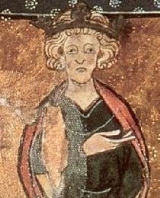
Saint Edward the Confessor (c. 1003 – 5 January 1066), son of Ethelred the Unready
Ethelred the Unready

Ethelred II , also known as ?thelred II, Aethelred II, Ethelred the Unready, ?thelred the Unready and Aethelred the Unready , was Kingdom of England ....
 and Emma of Normandy
Emma of Normandy

Emma , was daughter of Richard I of Normandy, Duke of Normandy, by his second wife Gunnora. She was Queen consort of the Kingdom of England twice, by successive marriages: initially as the second wife to Ethelred the Unready of England ; and then to Canute the Great of Denmark ....
, was the penultimate Anglo-Saxon
Anglo-Saxons

Anglo-Saxons is the term usually used to describe the invading tribes in the south and east of Great Britain starting from the early 5th century AD, and their creation of the English nation, lasting until the Norman conquest of England of 1066....
 King of England
List of the monarchs of the Kingdom of England

The first person to assume the title King of the English was apparently Offa of Mercia, though his power did not survive him. In the 9th century the kings of Wessex, who conquered Kent and Sussex from Mercia in 825, became increasingly dominant over the other kingdoms of England....
 and the last of the House of Wessex
House of Wessex

The House of Wessex, also known as the House of Cerdic, refers to the family that ruled a monarchy in southwest England known as Wessex. This House was in power from the 6th century under Cerdic of Wessex to the unification of the Heptarchy....
, ruling from 1042 until his death. His reign marked the continuing disintegration of royal power in England and the advancement in power of the earls. It foreshadowed the country's domination by the Normans
Normans

The Normans were the people who gave their names to Normandy, a region in northern France. They descended from Viking conquerors of the territory and the native population of mostly Frankish and Gallo-Roman stock....
, whose duke William of Normandy
William I of England

William I , better known as William the Conqueror , was Duke of Normandy from 1035 and English monarchy from later 1066 to his death. William is sometimes also referred to as "William II" in relation to his position as the second Duke of Normandy of that name....
 was to defeat Edward's successor, Harold II
Harold Godwinson

Harold Godwinson also known as Harold II, was the last Anglo-Saxons King of Kingdom of England before the Norman Conquest of England. Harold reigned from 5 January 1066, until his death at the Battle of Hastings on 14 October of that same year, fighting the Normans invaders, led by William I of England....
, and seize the crown.

Edward had succeeded Canute
Canute the Great

Canute the Great, also known as Cnut in the Anglo-Saxon Chronicles, or Knut was a Viking king of England, Denmark, Norway, and parts of Sweden ....
's son Harthacanute
Harthacanute

Harthacanute was King of Denmark from 1035 to 1042 as well as King of England from 1040 to 1042. He came from Northmannia according to Adam of Bremen and was the only son of Canute the Great and Emma of Normandy....
, restoring the rule of the House of Wessex after the period of Danish rule since Canute had conquered England in 1016.


Discussion
Ask a question about 'Edward the Confessor'
Start a new discussion about 'Edward the Confessor'
Answer questions from other users
Full Discussion Forum


Recent Posts


Encyclopedia


Saint Edward the Confessor (c. 1003 – 5 January 1066), son of Ethelred the Unready
Ethelred the Unready

Ethelred II , also known as ?thelred II, Aethelred II, Ethelred the Unready, ?thelred the Unready and Aethelred the Unready , was Kingdom of England ....
 and Emma of Normandy
Emma of Normandy

Emma , was daughter of Richard I of Normandy, Duke of Normandy, by his second wife Gunnora. She was Queen consort of the Kingdom of England twice, by successive marriages: initially as the second wife to Ethelred the Unready of England ; and then to Canute the Great of Denmark ....
, was the penultimate Anglo-Saxon
Anglo-Saxons

Anglo-Saxons is the term usually used to describe the invading tribes in the south and east of Great Britain starting from the early 5th century AD, and their creation of the English nation, lasting until the Norman conquest of England of 1066....
 King of England
List of the monarchs of the Kingdom of England

The first person to assume the title King of the English was apparently Offa of Mercia, though his power did not survive him. In the 9th century the kings of Wessex, who conquered Kent and Sussex from Mercia in 825, became increasingly dominant over the other kingdoms of England....
 and the last of the House of Wessex
House of Wessex

The House of Wessex, also known as the House of Cerdic, refers to the family that ruled a monarchy in southwest England known as Wessex. This House was in power from the 6th century under Cerdic of Wessex to the unification of the Heptarchy....
, ruling from 1042 until his death. His reign marked the continuing disintegration of royal power in England and the advancement in power of the earls. It foreshadowed the country's domination by the Normans
Normans

The Normans were the people who gave their names to Normandy, a region in northern France. They descended from Viking conquerors of the territory and the native population of mostly Frankish and Gallo-Roman stock....
, whose duke William of Normandy
William I of England

William I , better known as William the Conqueror , was Duke of Normandy from 1035 and English monarchy from later 1066 to his death. William is sometimes also referred to as "William II" in relation to his position as the second Duke of Normandy of that name....
 was to defeat Edward's successor, Harold II
Harold Godwinson

Harold Godwinson also known as Harold II, was the last Anglo-Saxons King of Kingdom of England before the Norman Conquest of England. Harold reigned from 5 January 1066, until his death at the Battle of Hastings on 14 October of that same year, fighting the Normans invaders, led by William I of England....
, and seize the crown.

Edward had succeeded Canute
Canute the Great

Canute the Great, also known as Cnut in the Anglo-Saxon Chronicles, or Knut was a Viking king of England, Denmark, Norway, and parts of Sweden ....
's son Harthacanute
Harthacanute

Harthacanute was King of Denmark from 1035 to 1042 as well as King of England from 1040 to 1042. He came from Northmannia according to Adam of Bremen and was the only son of Canute the Great and Emma of Normandy....
, restoring the rule of the House of Wessex after the period of Danish rule since Canute had conquered England in 1016. When Edward died in 1066 he had no son to take over the throne so a conflict arose as three men claimed the throne of England.

Edward was canonized in 1161 by Pope Alexander III
Pope Alexander III

Pope Alexander III , born Rolando of Siena, was Pope from 1159 to 1181....
, and is commemorated on 13 October by the Roman Catholic Church
Roman Catholic Church

The Roman Catholic Church, officially known as the Catholic Church is the world's largest Christianity Ecclesia , representing over half of all Christians and one-sixth of the world population....
, the Church of England
Church of England

The Church of England is the State religion Christianity Ecclesia in England, the Mother Church of the worldwide Anglican Communion and the oldest among the communion's thirty-eight independent national and regional churches....
 and other Anglican Churches. He is regarded as the patron saint
Patron saint

A patron saint is a saint who is regarded as the intercessor and advocate in heaven of a nation, place, craft, activity, class, or person. Patron saints, because they have already transcended to the metaphysical, are able to intercede effectively for the needs of their special charges....
 of kings, difficult marriages, and separated spouses. From the reign of Henry II of England
Henry II of England

Henry II, called Curtmantle ruled as King of England , Count of Anjou, Duke of Normandy, Duke of Aquitaine, Duke of Gascony, Count of Nantes, Lord of Ireland and, at various times, controlled parts of Wales, Scotland and western France....
 to 1348 he was considered to be the patron saint of England, when he was replaced in this role by Saint George
Saint George

Saint George of Lydda was according to tradition, a Roman soldier in the Guard of Emperor Diocletian, venerated as a Christian martyr.In Hagiography Saint George is one of the most venerated saints in the Anglican Church, Eastern Orthodox Church, Oriental Orthodoxy, and the Eastern Catholic Churches....
, and he has remained the patron saint of the Royal Family.

Early years

Edward was born c. 1003 in Islip, Oxfordshire
Islip, Oxfordshire

Islip is a village in Oxfordshire, England. It is situated on the western edge of the fens of Otmoor, on the River Ray and River Cherwell, just east of Kidlington, and about 10 km south west of Bicester....
. In 1013 Ethelred sent Edward and his brother Alfred to Normandy to escape the Danish
Denmark

Denmark is a Scandinavian country in northern Europe and the senior member of the Kingdom of Denmark. It is the southernmost of the Nordic countries....
 invasion of England. Ethelred died in April 1016, and he was succeeded by Edward's older half brother Edmund Ironside
Edmund Ironside

Edmund Ironside or Eadmund , surnamed "Ironside" for his efforts to fend off the Denmark invasion led by Canute the Great, was Kingdom of England from 23 April to 30 November 1016....
, who carried on the fight against the Danes until his own death seven months later. According to Scandinavian tradition, Edward, by then back in England, fought alongside his brother, and distinguished himself by almost cutting Canute in two, although as Edward was at most thirteen years old at the time, the story is highly unlikely.

Edward then returned to Normandy, and although he is traditionally said to have developed an intense personal piety in his quarter-century of Norman exile, during his most formative years, while England formed part of a great Danish empire, some modern historians dispute this claim. His familiarity with Normandy and its leaders would also influence his later rule: the refuge he was given in Normandy, vis a vis the disregard the Normans paid him whilst he was there, would leave him both grateful and bitter towards his kinsmen there. It is believed that when Duke Robert
Robert II, Duke of Normandy

Robert the Magnificent , also called Robert the Devil and Robert I or II, was the Duke of Normandy from 1027 until his death. He was the son of Richard II, Duke of Normandy and Judith of Brittany, daughter of Conan I of Rennes....
, who was his cousin, went on his pilgrimage to the Holy Land (where he died) that Edward was named as one of the guardians of his son William.

Harthacanute had been considered the legitimate successor following Canute's death in 1035, but his half-brother, Harold Harefoot
Harold Harefoot

Harold Harefoot was King of England from 1035 to 1040. His cognomen "Harefoot" was for his speed, and the skill of his huntsmanship. He was the son of Canute the Great, King of England, Denmark, Norway, and some of the Kingdom of Sweden, through his handfast wife ?lfgifu of Northampton....
, usurped the crown. Edward and his brother Alfred unsuccessfully attempted to depose Harold in 1036. Edward then returned to Normandy, but Alfred was captured by Godwin, Earl of Wessex
Godwin, Earl of Wessex

Godwin of Wessex, also known as Godwine, Goodwin, Godwyn or Goodwyn was one of the most powerful lords in Kingdom of England under the Denmark king Canute the Great and his successors....
 who then turned him over to Harold Harefoot
Harold Harefoot

Harold Harefoot was King of England from 1035 to 1040. His cognomen "Harefoot" was for his speed, and the skill of his huntsmanship. He was the son of Canute the Great, King of England, Denmark, Norway, and some of the Kingdom of Sweden, through his handfast wife ?lfgifu of Northampton....
, who blinded him to make him unsuitable for kingship. Alfred died soon after as a result of his torture. This murder of Edward's brother is thought to be the source of much of Edward's later hatred for the Earl and one of the primary reasons for Godwin's banishment in autumn 1051; Edward said that the only way in which Godwin could be forgiven was if he brought back the murdered Alfred, an impossible task. Harthacanute succeeded on Harold's death in 1040, just as Harthacanute was preparing an invasion, but he died two years later.

The Anglo-Saxon lay and ecclesiastical nobility invited Edward back to England in 1041; this time he became part of the household of his half-brother Harthacanute
Harthacanute

Harthacanute was King of Denmark from 1035 to 1042 as well as King of England from 1040 to 1042. He came from Northmannia according to Adam of Bremen and was the only son of Canute the Great and Emma of Normandy....
 (son of Emma and Canute
Canute the Great

Canute the Great, also known as Cnut in the Anglo-Saxon Chronicles, or Knut was a Viking king of England, Denmark, Norway, and parts of Sweden ....
), and according to the Anglo-Saxon Chronicle
Anglo-Saxon Chronicle

The Anglo-Saxon Chronicle is a collection of annals in Old English language chronicling the history of the Anglo-Saxons. The annals were created late in the 9th century, probably in Wessex, during the reign of Alfred the Great....
 was sworn in as king alongside him. Following Harthacanute's death on 8 June 1042, Edward ascended the throne. The Anglo-Saxon Chronicle indicates the popularity he enjoyed at his accession — "before Harthacanute
Harthacanute

Harthacanute was King of Denmark from 1035 to 1042 as well as King of England from 1040 to 1042. He came from Northmannia according to Adam of Bremen and was the only son of Canute the Great and Emma of Normandy....
 was buried, all the people chose Edward as king in London." Edward was crowned at the cathedral of Winchester
Winchester Cathedral

Winchester Cathedral at Winchester, Hampshire in Hampshire is one of the largest cathedrals in England, with the longest nave and overall length of any Gothic architecture cathedral in Europe....
, the royal seat of the West Saxons on 3 April 1043.

Reign

Edward's reign began in 1042 on the death of his half brother Harthacanute.Edward's reign was marked by peace and prosperity, but effective rule in England required coming to terms with three powerful earls: Godwin, Earl of Wessex
Godwin, Earl of Wessex

Godwin of Wessex, also known as Godwine, Goodwin, Godwyn or Goodwyn was one of the most powerful lords in Kingdom of England under the Denmark king Canute the Great and his successors....
, who was firmly in control of the thegn
Thegn

File:Map of thegn runestones.jpgThe term thegn , from Old English ?egn, ?egn "servant, attendant, retainer", is commonly employed by historians to describe either an aristocratic retainer of a king or nobleman in Anglo-Saxon England, or as a class term, the majority of the aristocracy below the ranks of ealdormen and high-reeves....
s of Wessex
Wessex

West Saxon redirects here. For other meanings of Wessex or West Saxon see Wessex .Wessex , from the Old English Westseaxe , was an Anglo-Saxon kingdom of the West Saxons, in South West England, from the 6th century, until the emergence of the English state in the 9th century, under the Wessex dynasty....
, which had formerly been the heart of the Anglo-Saxon monarchy; Leofric, Earl of Mercia
Leofric, Earl of Mercia

Leofric was the Earl of Mercia and founded monasteries at Coventry and Much Wenlock. Leofric is remembered as the husband of Lady Godiva....
, whose legitimacy was strengthened by his marriage to Lady Godiva
Lady Godiva

Godiva , c. 997 ? 10 September 1067, was an Anglo-Saxons noblewoman who, according to legend, rode nudity through the streets of Coventry, in England, in order to gain a remission of the oppressive taxation imposed by her husband on his tenants....
, and in the north, Siward, Earl of Northumbria. Edward's sympathies for Norman favourites frustrated Saxon and Danish nobles alike, fuelling the growth of anti-Norman opinion led by Godwin
Godwin, Earl of Wessex

Godwin of Wessex, also known as Godwine, Goodwin, Godwyn or Goodwyn was one of the most powerful lords in Kingdom of England under the Denmark king Canute the Great and his successors....
, who had become the king's father-in-law in 1045. The breaking point came over the appointment of an archbishop of Canterbury
Archbishop of Canterbury

The Archbishop of Canterbury is the chief bishop and principal leader of the Church of England, the symbolic head of the worldwide Anglican Communion and the Diocesan Bishop of the Diocese of Canterbury, the Episcopal see that churches must be in communion with in order to be a part of the Anglican Communion....
: Edward rejected Godwin's man and appointed the bishop of London, Robert of Jumičges
Robert of Jumičges

Robert of Jumi?ges was the first Normans Archbishop of Canterbury. He had previously served as prior of the Church of St. Ouen, Rouen at Rouen in France, before becoming abbot of Jumi?ges Abbey, near Rouen, in 1037....
, a trusted Norman.

Matters came to a head over a bloody riot at Dover between the townsfolk and Edward's kinsman Eustace, count of Boulogne
Eustace II of Boulogne

Eustace II, was count of Boulogne from 1049-1093, fought on the Norman side at the Battle of Hastings, and afterwards received a large honour in England....
. Godwin
Godwin, Earl of Wessex

Godwin of Wessex, also known as Godwine, Goodwin, Godwyn or Goodwyn was one of the most powerful lords in Kingdom of England under the Denmark king Canute the Great and his successors....
 refused to punish them, Leofric
Leofric, Earl of Mercia

Leofric was the Earl of Mercia and founded monasteries at Coventry and Much Wenlock. Leofric is remembered as the husband of Lady Godiva....
 and Siward backed the King, and Godwin
Godwin, Earl of Wessex

Godwin of Wessex, also known as Godwine, Goodwin, Godwyn or Goodwyn was one of the most powerful lords in Kingdom of England under the Denmark king Canute the Great and his successors....
 and his family were all exiled in September 1051. Queen Edith
Edith of Wessex

Edith of Wessex, , married King Edward the Confessor of England in 1045. The marriage produced no children. Later ecclesiastical writers claimed that this was either because Edward took a vow of celibacy, or because he refused to consummate the marriage because of his antipathy to Edith's family, the Godwins....
 was sent to a nunnery at Wherwell
Wherwell

Wherwell is a village in Hampshire, England. The village is located on the River Test.Before the Protestant Reformation, the parish of Wherwell was in the hands of an important Abbey of Benedictine nuns, whose Abbess was Lord of the Manor of an area much larger than the existing parish....
. Earl Godwin returned with an army following a year later, however, forcing the king to restore his title and send away his Norman advisors. Godwin died in 1053 and the Norman Ralph the Timid
Ralph the Timid

Ralph the Timid was the Earl of Hereford from 1052 until his death in 1057. He was the son of Drogo of Mantes, Count of the Vexin, and Goda, daughter of King Ethelred the Unready of England and Emma of Normandy....
 received Herefordshire
Herefordshire

Herefordshire is a Historic counties of England and Ceremonial counties of England Counties of England in the West Midlands Regions of England of England....
, but his son Harold accumulated even greater territories for the Godwins, who held all the earldoms save Mercia
Mercia

Mercia was one of the kingdoms of the Anglo-Saxons Heptarchy. It was centred on the valley of the River Trent and its tributaries in the region now known as the English Midlands....
 after 1057. Harold
Harold Godwinson

Harold Godwinson also known as Harold II, was the last Anglo-Saxons King of Kingdom of England before the Norman Conquest of England. Harold reigned from 5 January 1066, until his death at the Battle of Hastings on 14 October of that same year, fighting the Normans invaders, led by William I of England....
 led successful raiding parties into Wales
Wales

native_name = Cymru|conventional_long_name = Wales|common_name = Wales|image_flag = Flag of Wales 2.svg|national_motto = ...
 in 1063 and negotiated with his inherited rivals in Northumbria in 1065, and in January 1066, upon Edward's death, he was proclaimed the King.

Relations with his Mother

Edward's mother was Emma of Normandy
Emma of Normandy

Emma , was daughter of Richard I of Normandy, Duke of Normandy, by his second wife Gunnora. She was Queen consort of the Kingdom of England twice, by successive marriages: initially as the second wife to Ethelred the Unready of England ; and then to Canute the Great of Denmark ....
, second wife of his father, Ethelred the Unready
Ethelred the Unready

Ethelred II , also known as ?thelred II, Aethelred II, Ethelred the Unready, ?thelred the Unready and Aethelred the Unready , was Kingdom of England ....
. She remarried King Canute the Great
Canute the Great

Canute the Great, also known as Cnut in the Anglo-Saxon Chronicles, or Knut was a Viking king of England, Denmark, Norway, and parts of Sweden ....
 and Edward and his brother Alfred were sent away to Normandy whilst Canute attempted to assassinate all the sons of Ethelred and his first wife, Aelgifu. Emma's son Hardicanute preceded Edward who had Alfred killed.

When Edward succeeded, Queen Emma supported another candidate, Magnus the Noble, and Edward had his mother arrested. Later she survived trial by ordeal
Trial by ordeal

Trial by ordeal is a judicial practice by which the guilt or innocence of the accused is determined by subjecting them to a painful task. If either the task is completed without injury, or the injuries sustained are healed quickly, the accused is considered innocent....
 on a trumped up charge of adultery with a bishop.Emma died in 1052.

Aftermath


The details of the succession have been widely debated: the Norman position was that William the Conqueror had been designated the heir, and that Harold had been publicly sent to him as emissary from Edward, to apprise him of Edward's decision. However, even William's eulogistic biographer, William of Poitiers
William of Poitiers

William of Poitiers , Normans chronicler, was born in Les Pr?aux, near Pont-Audemer, and belonged to an influential Norman family. After serving as a soldier he studied at Poitiers, and then returning to Normandy became chaplain to Duke William and archdeacon of Lisieux....
, admitted that the old king had made a deathbed bestowal of the crown on Harold. On Edward's death, Harold was approved by the Witenagemot
Witenagemot

The Witenagemot or the Witena gemot , also known as the Witan was a political institution in Anglo-Saxon England which operated from before the seventh century until the eleventh century....
 which, under Anglo-Saxon
Anglo-Saxons

Anglo-Saxons is the term usually used to describe the invading tribes in the south and east of Great Britain starting from the early 5th century AD, and their creation of the English nation, lasting until the Norman conquest of England of 1066....
 law, held the ultimate authority to convey kingship.

Edward had married Godwin's daughter Edith
Edith of Wessex

Edith of Wessex, , married King Edward the Confessor of England in 1045. The marriage produced no children. Later ecclesiastical writers claimed that this was either because Edward took a vow of celibacy, or because he refused to consummate the marriage because of his antipathy to Edith's family, the Godwins....
 on 23 January 1045, but the union was childless. The reason for this has been the subject of much speculation. Within a few years of Edward's death, and possibly in his old age, rumours were circulating that he had not consummated his marriage, either because he had taken a vow of chastity for religious reasons, or because of hostility to the Godwin family. However, in the view of Edward's biographer, Frank Barlow
Frank Barlow (historian)

Frank Barlow CBE British Academy FRSL is a British historian, known particularly for biographies of medieval figures. He has been Emeritus Professor of History, since 1977, at the University of Exeter....
, it is extremely unlikely that Edward's childlessness was due to deliberate abstention from sexual relations.

Edward's nearest heir would have been his nephew Edward the Exile
Edward the Exile

Edward the Exile , also called Edward ?theling, son of King of England Edmund II of England and of Ealdgyth , gained the name of "Exile" from his life spent mostly far from the England of his forefathers....
, who was born in England, but spent most of his life in Hungary. He had returned from exile in 1056 and died not long after, in February the following year. So Edward made his great nephew Edgar Atheling his heir. But Edgar had no secure following among the earls: the resultant succession crisis on Edward's death without a direct "throneworthy" heir — the "foreign" Edgar was a stripling of fourteen — opened the way for Harold's coronation and the invasions of two effective claimants to the throne, the unsuccessful invasion of Harald Hardrada in the north and the successful one of William of Normandy.

Edward's cousin's son, William of Normandy
William I of England

William I , better known as William the Conqueror , was Duke of Normandy from 1035 and English monarchy from later 1066 to his death. William is sometimes also referred to as "William II" in relation to his position as the second Duke of Normandy of that name....
, who had visited England during Godwin's exile, claimed that the childless Edward had promised him the succession to the throne, and his successful bid for the English crown
Norman conquest of England

The Norman conquest of England began in 1066 AD with the invasion of the Kingdom of England by the troops of William I of England, Duke of Normandy , and his victory at the Battle of Hastings....
 put an end to Harold's nine-month kingship following a 7,000-strong Norman invasion. Edgar Ętheling
Edgar Ętheling

Edgar ?theling, also known as Edgar the Outlaw was the last male member of the West Saxon royal house of Cerdic of Wessex....
 was elected king by the Witan after Harold's death but was brushed aside by William. Edward, or more especially the medięval cult which would later grow up around him under the later Plantagenet kings, had a lasting impact on English history. Westminster Abbey
Westminster Abbey

The Collegiate Church of St Peter at Westminster, which is almost always referred to popularly and informally as Westminster Abbey, is a large, mainly Gothic architecture Church , in Westminster, London, just to the west of the Palace of Westminster....
 was founded by Edward between 1045 and 1050 on land upstream from the City of London, and was consecrated on 28 December 1065. Centuries later, Westminster
Westminster

Westminster is an area of Central London, within the City of Westminster. It lies on the north bank of the River Thames, southwest of the City of London and southwest of Charing Cross....
 was deemed symbolic enough to become the permanent seat of English government under Henry III
Henry III of England

Henry III was the son and successor of John of England as King of England, reigning for fifty-six years from 1216 to his death. His contemporaries knew him as Henry of Winchester....
. The Abbey contains a shrine to Edward which was the centrepiece to the Abbey's redesign during the mid-thirteenth century. In 2005, Edward's remains were found beneath the pavement in front of the high altar. His remains had been moved twice in the 12th and 13th centuries, and the original tomb has since been found on the central axis of the Abbey in front of the original high altar.

Historically, Edward's reign marked a transition between the 10th century West Saxon kingship of England and the Norman monarchy which followed Harold's death. Edward's allegiances were split between England and his mother's Norman ties. The great earldoms established under Canute
Canute the Great

Canute the Great, also known as Cnut in the Anglo-Saxon Chronicles, or Knut was a Viking king of England, Denmark, Norway, and parts of Sweden ....
 grew in power, while Norman influence became a powerful factor in government and in the leadership of the Church
Roman Catholic Church

The Roman Catholic Church, officially known as the Catholic Church is the world's largest Christianity Ecclesia , representing over half of all Christians and one-sixth of the world population....
.

It was during the reign of Edward that some features of the English monarchy familiar today were introduced. Edward is regarded as responsible for introducing the royal seal and coronation regalia. Also under Edward, a marked change occurred in Anglo-Saxon art, with continental influences becoming more prominent (including the "Winchester Style" which had become known in the 10th century but prominent in the 11th), supplanting Celtic influences prominent in preceding painting, sculpture, calligraphy and jewellery (see Benedictional of St. Ęthelwold
Benedictional of St. Ęthelwold

The Benedictional of St. ?thelwold is a 10th century illuminated manuscript benedictional, the most important surviving work of the Anglo-Saxon Winchester School of illumination....
 for an example of the Winchester Style). His crown is believed to have survived until the English Civil War
English Civil War

The English Civil War was a series of armed conflicts and political machinations between Roundhead and Cavalier. The First English Civil War and Second English Civil War civil wars pitted the supporters of Charles I of England against the supporters of the Long Parliament, while the Third English Civil War saw fighting between supporters...
 when Oliver Cromwell
Oliver Cromwell

Oliver Cromwell was an English people Military history of the United Kingdom and Politics of England leader best known for his involvement in making England into a republican Commonwealth and for his later role as Lord Protector of England, Scotland, and Ireland....
 allegedly ordered it to be destroyed. Gold from it is understood to have been integrated into the St. Edward's Crown
St. Edward's Crown

St Edward's Crown was one of the English Crown Jewels and remains one of the senior Crown Jewels of the United Kingdom. It is the official coronation crown used exclusively in the Coronation of the British monarch of a new monarch....
, which has been used in coronations since Charles II of England
Charles II of England

Charles II was the Monarchy of Kingdom of England, Kingdom of Scotland, and Kingdom of Ireland.His father Charles I of England Regicide#The regicide of Charles I of England at Palace of Whitehall on 30 January 1649, at the climax of the English Civil War....
 in 1661.

Canonization

When Henry II
Henry II of England

Henry II, called Curtmantle ruled as King of England , Count of Anjou, Duke of Normandy, Duke of Aquitaine, Duke of Gascony, Count of Nantes, Lord of Ireland and, at various times, controlled parts of Wales, Scotland and western France....
 came to the throne in 1154, he promoted the cult
Cult (religious practice)

In traditional usage, the cult of a religion, quite apart from its sacred writings , its theology or mythologys, or the personal faith of its believers, is the totality of external religious practice and observance, the neglect of which is the definition of impiety....
 of King Edward the Confessor. Osbert de Clare was a monk of Westminster
Westminster

Westminster is an area of Central London, within the City of Westminster. It lies on the north bank of the River Thames, southwest of the City of London and southwest of Charing Cross....
, elected Prior in 1136, and remembered for his lives of saints Edmund
Edmund the Martyr

Edmund the Martyr was a List of monarchs of East Anglia and martyr of Kingdom of the East Angles. He succeeded to the East Anglian throne in 855, while still a boy....
, Ethelbert and Edburga
Edburga of Winchester

Saint Eadburh or Edburga was the daughter of King Edward the Elder of England and his third wife, Edgiva of Kent. There is little contemporary information for her life, but in a Winchester Anglo-Saxon Charters dated 939, she appears as the beneficiary of land in Hampshire granted by her brother King Athelstan....
, in addition to one of Edward, in which the king was represented as a holy man, reported to have performed several miracles and to have healed people by his touch. Osbert was, as his surviving letters demonstrate, an active ecclesiastical politician, and went to Rome
Rome

Rome is the capital city of Italy and Lazio, and is Italy's largest and most populous city, with 2,724,347 residents in an urban area of some ....
 to advocate the cause for Edward to be declared a saint, successfully securing his canonization
Canonization

Canonization is the act by which a particular Christian church declares a deceased person to be a saint and is included in the canon, or list, of recognized saints....
 by Pope Alexander III
Pope Alexander III

Pope Alexander III , born Rolando of Siena, was Pope from 1159 to 1181....
 in 1161.

St Edward the Confessor
In 1163, the newly sainted king's remains were enshrined in Westminster Abbey
Westminster Abbey

The Collegiate Church of St Peter at Westminster, which is almost always referred to popularly and informally as Westminster Abbey, is a large, mainly Gothic architecture Church , in Westminster, London, just to the west of the Palace of Westminster....
 with solemnities presided over by Thomas Becket
Thomas Becket

Thomas Becket was Archbishop of Canterbury from 1162 to his death. He is venerated as a saint and martyr by both the Roman Catholic Church and the Anglican Communion....
, Archbishop of Canterbury
Archbishop of Canterbury

The Archbishop of Canterbury is the chief bishop and principal leader of the Church of England, the symbolic head of the worldwide Anglican Communion and the Diocesan Bishop of the Diocese of Canterbury, the Episcopal see that churches must be in communion with in order to be a part of the Anglican Communion....
. On this occasion the honour of preparing a sermon was given to Aelred, the revered Abbot of Rievaulx
Rievaulx

Rievaulx is a small village near Helmsley in North Yorkshire and is located in what was the inner court of Rievaulx Abbey, close to the River Rye ....
, to whom is generally attributed the vita in Latin, a hagiography
Hagiography

Hagiography is the study of saints. A hagiography, from Greek ' and ' , refers literally to writings on the subject of such holy people, and specifically the biography of ecclesiastical and secular leaders....
 partly based on materials in an earlier vita by Osbert de Clare and which in its turn provided the material for a rhymed version in octasyllabic Anglo-Norman
Anglo-Norman language

The Anglo-Norman language is a term traditionally used to refer to the variety of French used in England and to some extent elsewhere in the British Isles following the Norman conquest in 1066....
, possibly written by the chronicler Matthew Paris
Matthew Paris

Matthew Paris was a Benedictine monk, English historians in the Middle Ages, artist in illuminated manuscripts and cartographer, based at St Albans Cathedral in Hertfordshire....
. At the time of Edward's canonisation, saints were broadly categorised as either martyr
Martyr

The term martyr is most commonly used today to describe an individual who sacrifices his or her life in order to further a cause or belief for many....
s or confessor
Confessor

The title confessor is used within Christianity in several ways....
s: martyrs were people who had been killed for their faith, while confessors were saints who had died natural deaths. Edward was accordingly styled Edward the Confessor, partly to distinguish him from his canonised predecessor Edward the Martyr
Edward the Martyr

Edward the Martyr or Eadweard II was king of England from 975 until he was murdered in 978. Edward was the eldest son of King Edgar of England, but not his father's acknowledged heir apparent....
.

The Roman Catholic Church
Roman Catholic Church

The Roman Catholic Church, officially known as the Catholic Church is the world's largest Christianity Ecclesia , representing over half of all Christians and one-sixth of the world population....
 regards St Edward the Confessor as the patron saint of kings, difficult marriages, and separated spouses. After the reign of Henry II, Edward was considered to be the "Patron Saint of England", until 1348 when he was replaced in this role by Saint George
Saint George

Saint George of Lydda was according to tradition, a Roman soldier in the Guard of Emperor Diocletian, venerated as a Christian martyr.In Hagiography Saint George is one of the most venerated saints in the Anglican Church, Eastern Orthodox Church, Oriental Orthodoxy, and the Eastern Catholic Churches....
. St Edward remains the "Patron Saint of the Royal Family".

Edward's reign is memorialized in an eight panel stained glass window
Stained Glass Window

Stained Glass Window is the third and final studio album released by American country music artist Mila Mason. It was her first album after a five-year hiatus from the music industry....
 within St Laurence Church, Ludlow
St Laurence Church, Ludlow

St Laurence Church, Ludlow is a parish church in the Church of England in Ludlow....
, England.

The shrine of Saint Edward the Confessor remains where it was after the final relocation of his body in the 13th century - at the heart of Westminster Abbey, where the date of his translation
Translation (relics)

In Christianity, the translation of relics is the removal of holy objects from one locality to another . This translation took different forms, including all-night vigils, and the carrying of the precious remains in a bier of gold or silver, overshadowed with silken canopy....
, 13 October, is observed as a major feast. For some time the Abbey had claimed that it possessed a set of coronation regalia that Edward had left for use in all future coronations. Following Edward's canonization, these were regarded as holy relics, and thereafter they were used at all English coronations from the 13th Century until the destruction of the regalia by Oliver Cromwell
Oliver Cromwell

Oliver Cromwell was an English people Military history of the United Kingdom and Politics of England leader best known for his involvement in making England into a republican Commonwealth and for his later role as Lord Protector of England, Scotland, and Ireland....
 in 1649.

The main liturgical
Liturgy

A liturgy is the customary public worship done by a specific religious group, according to their particular traditions. The word may refer to an elaborate formal ritual such as the Eastern Orthodox Divine Liturgy and Mass , or a daily activity such as the Muslim salat and Jewish Jewish services....
 commemoration of Saint Edward is on the date of his translation, 13 October, rather than the date of his death. This feast was removed from the General Roman Calendar
Roman Catholic calendar of saints

The General Roman Calendar indicates the days of the year to which are assigned the liturgical celebrations of Saint and of the mysteries of the Jesus Christ that are to be observed wherever the Roman Rite is used....
 when it was reformed in 1969, but remains in the Calendar of the Traditional Latin Mass
Tridentine Mass

The Tridentine Mass is a common name for the form of the Roman Rite Mass contained in the typical editions of the Roman Missal that were published from 1570 to 1962....
, as well as the National Calendar
Roman Catholic calendar of saints

The General Roman Calendar indicates the days of the year to which are assigned the liturgical celebrations of Saint and of the mysteries of the Jesus Christ that are to be observed wherever the Roman Rite is used....
 of the Roman Catholic Church in England. The Church of England has included this feast in its Calendar since the Book of Common Prayer
Book of Common Prayer

The Book of Common Prayer is the common title of a number of prayer books of the Church of England and used throughout the Anglican Communion. The first book, published in 1549 , in the reign of Edward VI of England, was a product of the English Reformation following the break with Roman Catholic Church....
 of 1662.

In popular culture

Edward the Confessor is referenced by characters in Shakespeare's play The Tragedy of Macbeth as the saintly king of England.

On screen he has been portrayed by Eduard Franz
Eduard Franz

Eduard Franz was an United States actor of theater, film, and television. Franz portrayed King Ahab in the 1953 biblical low-budget film Sins of Jezebel and Jethro in The Ten Commandments three years later....
 in the film Lady Godiva of Coventry
Lady Godiva of Coventry

Lady Godiva of Coventry is an American historical film, directed by Arthur Lubin and released in 1955 in film. It starred Maureen O'Hara in the title role....
 (1955), George Howe
George Howe (actor)

George Winchester Howe was an England actor and comedian who appeared in numerous film and television roles.External links...
 in the BBC TV drama series Hereward the Wake
Hereward the Wake

Hereward the Wake , known in his own times as Hereward the Outlaw or Hereward the Exile, was an 11th-century Anglo-Saxons leader involved in resistance to the Norman conquest of England....
 (1965), Donald Eccles in the two-part BBC TV play Conquest (1966; part of the series Theatre 625
Theatre 625

Theatre 625 is a British television drama anthology series, produced by the BBC and transmitted on BBC Two from 1964 to 1968. It was one of the first regular programmes in the line-up of the channel, and the title highlighted the fact that it was produced and transmitted on the higher-definition 625-line format, which at the time only BBC...
), Brian Blessed
Brian Blessed

Brian Blessed is an England actor, author and adventurer....
 in Macbeth (1997), based on the Shakespeare play (although he does not appear in the play itself), and Adam Woodroffe in an episode of the British TV series Historyonics entitled "1066" (2004). In 2002, he was portrayed by Lennox Greaves in the Doctor Who
Doctor Who

Doctor Who is a British Science fiction on television programme produced by the BBC. The programme depicts the adventures of a mysterious alien Time travel known as "Doctor " who travels in his space and time-ship, the TARDIS, which normally appears from the exterior to be a blue 1950s police box....
 audio adventure Seasons of Fear
Seasons of Fear

Seasons of Fear is a Big Finish Productions List of Doctor Who audio plays by Big Finish based on the long-running United Kingdom science fiction on television series Doctor Who....
.

See also

  • House of Wessex family tree
    House of Wessex family tree

    The following chart is a family tree of the kings of the House of Wessex, a dynasty whose members were Kings of Wessex, and then, from Athelstan onwards, King of England....
    .
  • St. Edward's Crown
    St. Edward's Crown

    St Edward's Crown was one of the English Crown Jewels and remains one of the senior Crown Jewels of the United Kingdom. It is the official coronation crown used exclusively in the Coronation of the British monarch of a new monarch....


External links


Further reading

  • Aelred of Rievaulx, Life of St. Edward the Confessor, translated Fr. Jerome Bertram (first English translation) St. Austin Press ISBN 1-901157-75-X
  • O'Brien, Bruce R.: God's peace and king's peace : the laws of Edward the Confessor, Philadelphia, Pa. : University of Pennsylvania Press, 1999, ISBN 0-8122-3461-8