
Home      Discussion      Topics      Dictionary      Almanac
Signup       Login
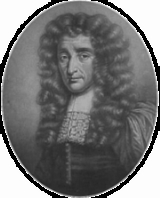
Edmund Berry Godfrey

Edmund Berry Godfrey

Overview
Sir Edmund Berry Godfrey (23 December 1621 – 12 October 1678) was an English
England
England is a country that is part of the United Kingdom. It shares land borders with Scotland to the north and Wales to the west; the Irish Sea is to the north west, the Celtic Sea to the south west, with the North Sea to the east and the English Channel to the south separating it from continental...

 magistrate
Magistrate
A magistrate is an officer of the state; in modern usage the term usually refers to a judge or prosecutor. This was not always the case; in ancient Rome, a magistratus was one of the highest government officers and possessed both judicial and executive powers. Today, in common law systems, a...

 whose mysterious death caused anti-Catholic uproar in England. Contemporary documents also spell the name Edmundbury Godfrey.
Discussion
Ask a question about 'Edmund Berry Godfrey'
Start a new discussion about 'Edmund Berry Godfrey'
Answer questions from other users
Full Discussion Forum
 
Recent Discussions
Encyclopedia
Sir Edmund Berry Godfrey (23 December 1621 – 12 October 1678) was an English
England
England is a country that is part of the United Kingdom. It shares land borders with Scotland to the north and Wales to the west; the Irish Sea is to the north west, the Celtic Sea to the south west, with the North Sea to the east and the English Channel to the south separating it from continental...

 magistrate
Magistrate
A magistrate is an officer of the state; in modern usage the term usually refers to a judge or prosecutor. This was not always the case; in ancient Rome, a magistratus was one of the highest government officers and possessed both judicial and executive powers. Today, in common law systems, a...

 whose mysterious death caused anti-Catholic uproar in England. Contemporary documents also spell the name Edmundbury Godfrey.

Early life


Edmund Berry Godfrey was probably born in Sellindge, Kent, between Hythe
Hythe
Hythe may refer to a landing-place, port or haven, or to:Placenames in Canada*Hythe, Alberta Placenames in England*Hythe, Essex *Hythe, Hampshire...

 and Ashford
Ashford, Kent
Ashford is a town in the borough of Ashford in Kent, England. In 2005 it was voted the fourth best place to live in the United Kingdom. It lies on the Great Stour river, the M20 motorway, and the South Eastern Main Line and High Speed 1 railways. Its agricultural market is one of the most...

, the eleventh son of eighteen children born to Thomas Godfrey (1586–1664), a member of an old Kentish family and his second wife Sarah née Isles. His father had been MP for New Romney
New Romney
New Romney is a small town in Kent, England, on the edge of Romney Marsh, an area of flat, rich agricultural land reclaimed from the sea after the harbour began to be silted up. New Romney was once a sea port, with the harbour adjacent to the church, but is now more than a mile from the sea...

 in the Short Parliament
Short Parliament
The Short Parliament was a Parliament of England that sat from 13 April to 5 May 1640 during the reign of King Charles I of England, so called because it lasted only three weeks....

 and owned Hodiford Farm.
He studied at Westminster School
Westminster School
The Royal College of St. Peter in Westminster, almost always known as Westminster School, is one of Britain's leading independent schools, with the highest Oxford and Cambridge acceptance rate of any secondary school or college in Britain...

 and at Christ Church, Oxford
Christ Church, Oxford
Christ Church or house of Christ, and thus sometimes known as The House), is one of the largest constituent colleges of the University of Oxford in England...

 and after entering Gray's Inn
Gray's Inn
The Honourable Society of Gray's Inn, commonly known as Gray's Inn, is one of the four Inns of Court in London. To be called to the Bar and practise as a barrister in England and Wales, an individual must belong to one of these Inns...

 became a prominent wood and coal merchant. He became justice of the peace
Justice of the Peace
A justice of the peace is a puisne judicial officer elected or appointed by means of a commission to keep the peace. Depending on the jurisdiction, they might dispense summary justice or merely deal with local administrative applications in common law jurisdictions...

 for Westminster
Westminster
Westminster is an area of central London, within the City of Westminster, England. It lies on the north bank of the River Thames, southwest of the City of London and southwest of Charing Cross...

 and received a knighthood in September 1666 for his services during the Great Plague
Bubonic plague
Plague is a deadly infectious disease that is caused by the enterobacteria Yersinia pestis, named after the French-Swiss bacteriologist Alexandre Yersin. Primarily carried by rodents and spread to humans via fleas, the disease is notorious throughout history, due to the unrivaled scale of death...

 when he had stayed in his post regardless of the circumstances. In 1669 Godfrey was briefly imprisoned for a few days because he had the King's physician, Sir Alexander Fraizer, arrested for owing him money. Pepys Diary of 24 May 1669 mentions that he went on hunger strike, claiming that the Judges had found for him, but the King had overridden them. He was held at the Porter's Lodge of Whitehall Palace.

He was in business with his brother-in-law, James Harrison. Originally their premises was in Greene's Lane (beneath Charing Cross station) but moved in 1670 to Hartshorn Lane, having use of a wharf. This is now Northumberland Avenue.
His grave in St Martin's-in-the-Fields has since been concreted over. After his death his papers were retrieved from a trunk in a coffee house at Swan's Court, by Somerset House. He lived with a maid named Elzabeth Curtis and his secretary, Henry More and a housekeeper, who were questioned at his inquest.
He was considered eccentric in choosing to socialise with members of the working class instead of persons of his own class.
Recently correspondence has been retrieved from Ireland detailing his relations with a faith-healer Valentine Greatrakes
Valentine Greatrakes
Valentine Greatrakes , also known as 'Greatorex' or 'The Stroker', was an Irish faith healer who toured England in 1666, claiming to cure people by the laying on of hands.-Biography:...

 - the "Irish stroker".
Strictly Anglican in religion, Godfrey had a number of Catholic acquaintances, including Edward Colman
Edward Colman
Edward Colman or Coleman was an English Catholic courtier under Charles II of England. He was hanged, drawn and quartered on a treason charge, having been implicated by Titus Oates in his false accusations concerning a Popish Plot...

, Catholic secretary of the Duke of York, the future James II
James II of England
James II & VII was King of England and King of Ireland as James II and King of Scotland as James VII, from 6 February 1685. He was the last Catholic monarch to reign over the Kingdoms of England, Scotland, and Ireland...

.

Peyton Gang


In a letter to the Secretary of State, Sir Joseph Williamson, the Lieutenant of the Tower Hamlets named Godfrey as a member of the so-called "Peyton Gang". Sir Robert Peyton was MP for Middlesex and a prominent member of the Green Ribbon Club. This had been founded by Ashley Cooper, the Earl of Shaftesbury after he had become aware of the Secret Treaty of Dover
Secret treaty of Dover
The Treaty of Dover, also known as the Secret Treaty of Dover, was a treaty between England and France signed at Dover on June 1 in 1670. It required France to assist England in the king's aim that it would rejoin the Roman Catholic Church and England to assist France in her war of conquest...

 in which Charles II
Charles II of England
Charles II was monarch of the three kingdoms of England, Scotland, and Ireland.Charles II's father, King Charles I, was executed at Whitehall on 30 January 1649, at the climax of the English Civil War...

 agreed to convert himself and England to Roman Catholicism in return for money paid by the French King Louis XIV. The Club, unable to confront the king directly, stirred up popular ill feeling against the Roman Catholic Church. Peyton hand-picked twelve (including himself) men who plotted to replace the King with a republic, nominally led by Richard Cromwell
Richard Cromwell
At the same time, the officers of the New Model Army became increasingly wary about the government's commitment to the military cause. The fact that Richard Cromwell lacked military credentials grated with men who had fought on the battlefields of the English Civil War to secure their nation's...

, one of which was Godfrey. The founding meeting of the Green Ribbon Club was in the Swan tavern in King Street, Hammersmith. This was owned by Sir Edmund Godfrey, who left it in his will. It has been said that after Titus Oates
Titus Oates
Titus Oates was an English perjurer who fabricated the "Popish Plot", a supposed Catholic conspiracy to kill King Charles II.-Early life:...

 had left his deposition with Godfrey that Godfrey warned one of the intended scapegoats, Edward Colman
Edward Colman
Edward Colman or Coleman was an English Catholic courtier under Charles II of England. He was hanged, drawn and quartered on a treason charge, having been implicated by Titus Oates in his false accusations concerning a Popish Plot...

 who was later hanged, drawn and quartered, and who was a personal friend.

Mystery


In 1678 Godfrey became involved with the schemes of Titus Oates
Titus Oates
Titus Oates was an English perjurer who fabricated the "Popish Plot", a supposed Catholic conspiracy to kill King Charles II.-Early life:...

 when Oates invented the Popish Plot
Popish Plot
The Popish Plot was a fictitious conspiracy concocted by Titus Oates that gripped England, Wales and Scotland in Anti-Catholic hysteria between 1678 and 1681. Oates alleged that there existed an extensive Catholic conspiracy to assassinate Charles II, accusations that led to the execution of at...

 and began an anti-Catholic campaign. Titus Oates and Israel Tonge
Israel Tonge
Israel Tonge , aka Ezerel or Ezreel Tongue, was an English divine and an informer in the "Popish" plot. He was born at Tickhill, near Doncaster, the son of Henry Tongue, minister of Holtby, Yorkshire...

 appeared before Godfrey and asked him to take their oath that the papers they presented as evidence were based on truth. Godfrey demanded first to know the contents of the papers and when he had received a copy on September 28, took their depositions. He might have warned Coleman of the content of the accusations.

When Oates's accusations became known, the public became concerned. Godfrey has been supposed to have been concerned that he might be one of the victims of the scare but made no extra security precautions. On 12 October 1678 he did not return home and was found dead in a ditch on Primrose Hill
Primrose Hill
Primrose Hill is a hill of located on the north side of Regent's Park in London, England, and also the name for the surrounding district. The hill has a clear view of central London to the south-east, as well as Belsize Park and Hampstead to the north...

 on 17 October. Godfrey was lying face down and had been impaled with his own sword.

Two committees unsuccessfully investigated the murder. They received conflicting statements about Godfrey's whereabouts before the murder. There was no evidence of struggle on the spot where the body had been found and Godfrey still had his money and rings. On the other hand, curious people had already trampled the ground when investigators arrived. The body was covered with bruises and a circular mark around Godfrey's neck revealed that he had been strangled. The sword wound had not bled, meaning that Godfrey was already dead when he was impaled, maybe for 4–5 days. Authorities announced a reward of £500 for information about the murderers.

Oates exploited the situation and encouraged the public perception that the murder was the work of Catholic plotters. There was a commemorative dagger and medal, sermons and pamphlets.

Later "Captain" William Bedloe
William Bedloe
William Bedloe was an English fraudster and informer, born at Chepstow.He appears to have been well educated; he was certainly clever, and after moving to London in 1670 he became acquainted with some Jesuits and was occasionally employed by them...

, who claimed to be a "reformed" Catholic plotter, claimed that he had been taken to Somerset House
Somerset House
Somerset House is a large building situated on the south side of the Strand in central London, England, overlooking the River Thames, just east of Waterloo Bridge. The central block of the Neoclassical building, the outstanding project of the architect Sir William Chambers, dates from 1776–96. It...

 on the night of 14 October to see the body of Godfrey (although on the previous day he had claimed just the opposite). He said he had seen two men, including Samuel Atkins
Samuel Atkins
Samuel Atkins , was a British marine painter.Atkins contributed to the Royal Academy between 1787 and 1796. From 1796 to 1804 he was in the East Indies, when he returned to England, and continued to exhibit until 1808. He worked in oil and water-colour. The water-colour collections of South...

, secretary to Samuel Pepys
Samuel Pepys
Samuel Pepys FRS, MP, JP, was an English naval administrator and Member of Parliament who is now most famous for the diary he kept for a decade while still a relatively young man...

. Atkins was arrested but was able to prove that he had been on a yacht at Greenwich
Greenwich
Greenwich is a district of south London, England, located in the London Borough of Greenwich.Greenwich is best known for its maritime history and for giving its name to the Greenwich Meridian and Greenwich Mean Time...

 at that time. Bedloe claimed that Catholic plotters had killed Godfrey in order to steal his papers about the depositions (note that the witnesses whose words had been recorded were still alive). He changed his story several times afterwards but the House of Lords
House of Lords
The House of Lords is the upper house of the Parliament of the United Kingdom. Like the House of Commons, it meets in the Palace of Westminster....

 retained him as a witness.

On 21 December, Miles Prance
Miles Prance
Miles Prance was an English Roman Catholic who was caught up in and perjured himself during the Popish Plot and the anti-Catholicism of London during the reign of Charles II. He was born on the Isle of Ely, the son of a Roman Catholic, and he rose quickly from humble origins as an apprentice...

, Catholic servant-in-ordinary to England's Catholic Queen consort, Catherine of Braganza
Catherine of Braganza
Catherine of Braganza was a Portuguese infanta and queen consort of England, Scotland and Ireland as the wife of King Charles II.She married the king in 1662...

, was arrested and taken to Newgate prison
Newgate Prison
Newgate Prison was a prison in London, at the corner of Newgate Street and Old Bailey just inside the City of London. It was originally located at the site of a gate in the Roman London Wall. The gate/prison was rebuilt in the 12th century, and demolished in 1777...

. His lodger (who was in debt to Prance), John Wren, testified that he had been away for the four nights before Godfrey's body was discovered. Bedloe claimed to recognize him.

On 23 December-24 December, Prance announced that he had had a part in the murder but that the main instigators were some Catholic priests. Three of the priests would have witnessed the murder in the courtyard of Somerset House where Godfrey had been lured. Godfrey would have been strangled and body taken to Hampstead
Hampstead
Hampstead is an area of London, England, north-west of Charing Cross. Part of the London Borough of Camden in Inner London, it is known for its intellectual, liberal, artistic, musical and literary associations and for Hampstead Heath, a large, hilly expanse of parkland...

. Prance named three men, Robert Green, Henry Berry and Lawrence Hill, who were arrested.

Prance later recanted his confession before the king and the council and was thrown back to prison. As a result he recanted his recantation and recanted two more times, ending up verifying his original story. The three men were sentenced to death 5 February 1679 and hanged at Primrose Hill
Primrose Hill
Primrose Hill is a hill of located on the north side of Regent's Park in London, England, and also the name for the surrounding district. The hill has a clear view of central London to the south-east, as well as Belsize Park and Hampstead to the north...

. For a time this was known as "Greenberry Hill", because of the hangings of Green, Berry and Hill.

Prance's story was later discredited and he pleaded guilty to perjury
Perjury
Perjury, also known as forswearing, is the willful act of swearing a false oath or affirmation to tell the truth, whether spoken or in writing, concerning matters material to a judicial proceeding. That is, the witness falsely promises to tell the truth about matters which affect the outcome of the...

. Because the three men were executed on false evidence, the murder remains officially unsolved.

There have been many theories of what really happened to Godfrey and who killed him. He might have been murdered either by Catholics, who could have been afraid that he knew some of their real secrets; supporters of Oates because of his contacts to Catholics or because he knew Oates was lying; or just by random hooligans. Some claim suicide
Suicide
Suicide is the act of intentionally causing one's own death. Suicide is often committed out of despair or attributed to some underlying mental disorder, such as depression, bipolar disorder, schizophrenia, alcoholism, or drug abuse...

, either because Godfrey was in a quandary between Catholics and Anglicans and, due to his contacts to Coleman, possibly under suspicion or just because of his melancholy nature. L'Estrange (1687) claimed that Godfrey had hanged himself; his brothers would have concealed the evidence lest his estate had been forfeit. John Dickson Carr
John Dickson Carr
John Dickson Carr was an American author of detective stories, who also published under the pen names Carter Dickson, Carr Dickson and Roger Fairbairn....

 wrote that suicide by hanging was impossible as the marks on his neck showed that he had had his neck broken with his cravat, which was too short to effect a breakage by "drop".
An investigation by pathologist Keith Simpson
Keith Simpson
Keith Robert Simpson is a British politician and military historian. A member of the Conservative Party, he has been the Member of Parliament for Broadland since the 2010 general election, having previously served as the MP for Mid Norfolk from 1997 to 2010...

 in the 1960s concluded that had the body been in suspension, the marks would have been higher up.
The circumstances of his death were established and documented by two doctors, Zachariah Skillard and Cambridge for an inquest held at the White House tavern in Primrose Hill
Primrose Hill
Primrose Hill is a hill of located on the north side of Regent's Park in London, England, and also the name for the surrounding district. The hill has a clear view of central London to the south-east, as well as Belsize Park and Hampstead to the north...

.
It has also been surmised that the Whig leaders were responsible for killing Godfrey, partly because they understood how much he knew of the falsehood of the plot, and partly because his death could so easily and so usefully be blamed on the Catholics. J.P. Kenyon argues that neither Catholics nor Whigs had a sufficient motive. The Catholics were almost certain to be blamed for the murder, with calamitous consequences; while neither Shaftesbury nor his colleagues, whatever their faults , were capable of murdering an innocent man whom they knew on the mere speculation that it would bring them some benefit.

Modern analysis


John Dickson Carr
John Dickson Carr
John Dickson Carr was an American author of detective stories, who also published under the pen names Carter Dickson, Carr Dickson and Roger Fairbairn....

, in his book The Murder of Sir Edmund Godfrey (1936), analyzed all the above mentioned theories and exposes their weak points and contradictions. Then he scrutinizes the evidence, and concludes that Godfrey was murdered by Philip Herbert, 7th Earl of Pembroke
Philip Herbert, 7th Earl of Pembroke
Philip Herbert, 7th Earl of Pembroke, 4th Earl of Montgomery was an English nobleman who succeeded to the titles and estates of two earldoms on 8 July 1674 on the death of his brother William Herbert, 6th Earl of Pembroke...

 who took his revenge for having been prosecuted for murder some time earlier by Godfrey. The earl had been found guilty but had escaped execution by means of a pardon from the House of Lords. This same theory was expounded by English historian Hugh Ross Williamson
Hugh Ross Williamson
Hugh Ross Williamson was a prolific British historian, and a dramatist. Starting from a career in the literary world, and having a Nonconformist background, he became an Anglican clergyman in 1943....

, in his Historical Whodunits (1955).The introduction to the 1999 film Magnolia
Magnolia (film)
Magnolia is a 1999 American drama film written, produced, and directed by Paul Thomas Anderson, narrated by Ricky Jay, and starring Tom Cruise, Philip Baker Hall, Philip Seymour Hoffman, William H. Macy, Julianne Moore, John C. Reilly, and Jason Robards in his last feature film appearance...

 contains a sequence based on the death of Godfrey.

Stephen Knight's book The Killing of Justice Godfrey, published 1984, also suggests Pembroke as the assassin upon the orders of the "Peyton Gang". J.P. Kenyon, while conceding that the Pembroke theory has some attractions, concludes that the mystery is now beyond solution.

Dr. Alan Marshall, in his more recent book "The Strange Death of Edmund Godfrey" is sceptical that a definite conclusion can be reached, but suggests that the most likely explanation of Godfrey's death was suicide by self-strangulation.

Popular culture


Godfrey was played by the actor David Bradley
David Bradley (actor)
David Bradley is an English character actor. He has recently become known for playing the caretaker of Hogwarts, Argus Filch, in the Harry Potter film franchise.-Life and career :...

 in the TV mini-series "Charles II;The Power and the Passion".

The murder of Godfrey is featured as an opening naration in the Paul Thomas Anderson
Paul Thomas Anderson
Paul Thomas Anderson is an American film director, screenwriter, and producer. He has written and directed five feature films: Hard Eight , Boogie Nights , Magnolia , Punch-Drunk Love and There Will Be Blood...

 film Magnolia
Magnolia (film)
Magnolia is a 1999 American drama film written, produced, and directed by Paul Thomas Anderson, narrated by Ricky Jay, and starring Tom Cruise, Philip Baker Hall, Philip Seymour Hoffman, William H. Macy, Julianne Moore, John C. Reilly, and Jason Robards in his last feature film appearance...

.

External links