
Home      Discussion      Topics      Dictionary      Almanac
Signup       Login
Economy of Morocco

Economy of Morocco

Overview
Morocco
Morocco
Morocco, officially the Kingdom of Morocco, is a country located in North Africa with a population of nearly 32 million and an area just under . Its capital is Rabat, and its largest city is Casablanca. Morocco has a coast on the Atlantic Ocean that reaches past the Strait of Gibraltar into the...

's economy
is considered a relatively liberal economy governed by the law of supply and demand
Supply and demand
Supply and demand is an economic model based on price, utility and quantity in a market. It concludes that in a competitive market, price will function to equalize the quantity demanded by consumers, and the quantity supplied by producers, resulting in an economic equilibrium of price and...

. Since 1993, the country has followed a policy of privatization
Privatization
Privatization is the incidence or process of transferring ownership of a business, enterprise, agency or public service from the public sector to the private sector...

 of certain economic sectors which used to be in the hands of the government
Politics of Morocco
Politics of Morocco take place in a framework of a parliamentary constitutional monarchy, whereby the Prime Minister of Morocco is the head of government, and of a multi-party system. Executive power is exercised by the government...

.

Tough government reforms and steady yearly growth in the region of 4-5% from 2000 to 2007, including 4.9% year-on-year growth in 2003-2007 the Moroccan economy is much more robust than just a few years ago.
Discussion
Ask a question about 'Economy of Morocco'
Start a new discussion about 'Economy of Morocco'
Answer questions from other users
Full Discussion Forum
 
Encyclopedia
Morocco
Morocco
Morocco, officially the Kingdom of Morocco, is a country located in North Africa with a population of nearly 32 million and an area just under . Its capital is Rabat, and its largest city is Casablanca. Morocco has a coast on the Atlantic Ocean that reaches past the Strait of Gibraltar into the...

's economy
is considered a relatively liberal economy governed by the law of supply and demand
Supply and demand
Supply and demand is an economic model based on price, utility and quantity in a market. It concludes that in a competitive market, price will function to equalize the quantity demanded by consumers, and the quantity supplied by producers, resulting in an economic equilibrium of price and...

. Since 1993, the country has followed a policy of privatization
Privatization
Privatization is the incidence or process of transferring ownership of a business, enterprise, agency or public service from the public sector to the private sector...

 of certain economic sectors which used to be in the hands of the government
Politics of Morocco
Politics of Morocco take place in a framework of a parliamentary constitutional monarchy, whereby the Prime Minister of Morocco is the head of government, and of a multi-party system. Executive power is exercised by the government...

.

Tough government reforms and steady yearly growth in the region of 4-5% from 2000 to 2007, including 4.9% year-on-year growth in 2003-2007 the Moroccan economy is much more robust than just a few years ago. Economic growth is far more diversified, with new service and industrial poles, like Casablanca
Casablanca
Casablanca is a city in western Morocco, located on the Atlantic Ocean...

 and Tangier
Tangier
Tangier or Tangiers [pronounce] is a city of northern Morocco with a population of about 700,000...

, developing. The agriculture sector
Agriculture in Morocco
Agriculture in Morocco employs about 40% of the nations workforce. And thus, is the largest employer in the country. In the rainy sections of the northeast, barley, wheat, and other cereals can be raised without irrigation. On the Atlantic coast, where there are extensive plains, olives, citrus...

 is being rehabilitated, which in combination with good rainfalls led to a growth of over 20% in 2009.

The services sector accounts for just over half of GDP and industry, made up of mining, construction and manufacturing, is an additional quarter. The sectors who recorded the highest growth are the tourism
Tourism in Morocco
Tourism in Morocco is well developed, with a strong tourist industry focused on the country's coast, culture, and history. Most of Morocco's tourists are European....

, telecoms and textile sectors. Morocco , however, still depends to an inordinate degree on agriculture. The sector accounts for only around 14% of GDP but employs 40-45% of the Moroccan population
Demographics of Morocco
This article is about the demographic features of the population of Morocco, including population density, ethnicity, education level, health of the populace, economic status, religious affiliations and other aspects of the population....

. With a semi-arid climate, it is difficult to assure good rainfall and Morocco’s GDP varies depending on the weather. Fiscal prudence has allowed for consolidation, with both the budget deficit and debt falling as a percentage of GDP.

The economic system of the country presents several facets. It is characterized by a large opening towards the outside world. France
France
France , officially the French Republic , is a country located in Western Europe, with several overseas islands and territories located on other continents. Metropolitan France extends from the Mediterranean Sea to the English Channel and the North Sea, and from the Rhine to the Atlantic Ocean...

 remains the primary trade
Trade
Trade is the voluntary exchange of goods, services, or both. Trade is also called commerce or transaction. A mechanism that allows trade is called a market. The original form of trade was barter, the direct exchange of goods and services. Later one side of the barter were the metals, precious...

 partner (supplier and customer) of Morocco. France is also the primary creditor
Creditor
A creditor is a party that has a claim to the services of a second party. It is a person or institution to whom money is owed. The first party, in general, has provided some property or service to the second party under the assumption that the second party will return an equivalent property or...

 and foreign investor in Morocco. In the Arab world
Arab world
The Arab World refers to Arabic-speaking countries stretching from the Atlantic Ocean in the west to the Arabian Sea in the east, and from the Mediterranean Sea in the north to the Horn of Africa and the Indian Ocean in the southeast...

, Morocco has the second-largest non-oil GDP, behind Egypt, as of 2005.

Since the early 1980s, the Moroccan government
Politics of Morocco
Politics of Morocco take place in a framework of a parliamentary constitutional monarchy, whereby the Prime Minister of Morocco is the head of government, and of a multi-party system. Executive power is exercised by the government...

 has pursued an economic program toward accelerating real economy growth with the support of the International Monetary Fund
International Monetary Fund
The International Monetary Fund is an international organization that oversees the global financial system by following the macroeconomic policies of its member countries, in particular those with an impact on exchange rates and the balance of payments...

, the World Bank
World Bank
The World Bank is an international financial institution that provides leveraged loans to poorer countries for capital programs, tied to neoliberal market restructurings...

, and the Paris Club
Paris Club
The Paris Club is an informal group of financial officials from 19 of the world's richest countries, which provides financial services such as debt restructuring, debt relief, and debt cancellation to indebted countries and their creditors...

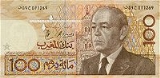
 of creditors. The country's currency, the dirham
Moroccan dirham
The dirham is the currency of Morocco. The plural form is pronounced darahim, although in French and English "dirhams" is commonly used. Its ISO 4217 code is "MAD". It is subdivided into 100 santimat . The dirham is issued by the Bank Al-Maghrib, the central bank of Morocco...

, is now fully convertible for current account transactions; reforms of the financial sector have been implemented; and state enterprises are being privatized.

The major resources of the Moroccan economy are agriculture
Agriculture
Agriculture is the production of food and goods through farming and forestry. Agriculture was the key development that led to the rise of human civilization, with the husbandry of domesticated animals and plants creating food surpluses that enabled the development of more densely populated and...

, phosphate
Phosphate
A phosphate, an inorganic chemical, is a salt of phosphoric acid. In organic chemistry, a phosphate, or organophosphate, is an ester of phosphoric acid. Organic phosphates are important in biochemistry and biogeochemistry or ecology. Inorganic phosphates are mined to obtain phosphorus for use in...

s, and tourism
Tourism
Tourism is travel for recreational, leisure or business purposes. The World Tourism Organization defines tourists as people who "travel to and stay in places outside their usual environment for more than twenty-four hours and not more than one consecutive year for leisure, business and other...

. Sales of fish and seafood are important as well. Industry
Industry
An industry is the manufacturing of a good or service within a category. Although industry is a broad term for any kind of economic production, in economics and urban planning industry is a synonym for the secondary sector, which is a type of economic activity involved in the manufacturing of raw...

 and mining contribute about one-third of the annual GDP. Morocco is the world's third-largest producer of phosphates (after the United States
United States
The United States of America is a federal constitutional republic comprising fifty states and a federal district...

 and China
China
China is a cultural region, an ancient civilization, and, depending on perspective, a national or multinational entity extending over a large area in East Asia....

), and the price fluctuations of phosphates on the international market greatly influence Morocco's economy. Tourism and workers' remittances have played a critical role since independence. The production of textiles and clothing is part of a growing manufacturing sector that accounted for approximately 34% of total exports in 2002, employing 40% of the industrial workforce. The government wishes to increase textile and clothing exports from $1.27 billion in 2001 to $3.29 billion in 2010.

The high cost of imports, especially of petroleum
Petroleum
Petroleum or crude oil is a naturally occurring, flammable liquid found in rock formations in the Earth consisting of a complex mixture of hydrocarbons of various molecular weights, plus other organic compounds.The term "petroleum" was first used in the treatise De Natura Fossilium, published in...

 imports, is a major problem. Another chronic problem is unreliable rainfall, which produces drought
Drought
A drought is an extended period of months or years when a region notes a deficiency in its water supply. Generally, this occurs when a region receives consistently below average precipitation. It can have a substantial impact on the ecosystem and agriculture of the affected region...

 or sudden floods; in 1995, the country's worst drought in 30 years forced Morocco to import grain and adversely affected the economy. Another drought occurred in 1997, and one in 1999–2000. Reduced incomes due to drought caused GDP to fall by 7.6% in 1995, by 2.3% in 1997, and by 1.5% in 1999. During the years between drought, good rains brought bumper crops to market. Good rainfall in 2001 led to a 5% GDP growth rate. Morocco suffers both from unemployment (9.6% in 2008), and a large external debt estimated at around $20 billion, or half of GDP in 2002.

Among the various free trade
Free trade
Free trade is a type of trade policy that allows traders to act and transact without interference from government. According to the law of comparative advantage the policy permits trading partners mutual gains from trade of goods and services....

 agreements that Morocco has ratified with its principal economic partners, are The Euro-Mediterranean free trade area
Euro-Mediterranean free trade area
The Europe-Mediterranean Free Trade Area is based on the Barcelona Process and European Neighbourhood Policy . The Barcelona Process, developed after the Barcelona Conference in successive annual meetings, is a set of goals designed to lead to a free trade area in the Middle East by 2010.It is...

 agreement with the European Union
European Union
The European Union is an economic and political union of 27 Member States, located primarily in Europe. Committed to regional integration, the EU was established by the Treaty of Maastricht on 1 November 1993 upon the foundations of the pre-existing European Economic Community...

 with the objective of integrating the European Free Trade Association
European Free Trade Association
The European Free Trade Association was established on 3 May 1960 as a trade bloc-alternative for European states who were either unable to, or chose not to, join the then-European Economic Community .The EFTA Convention was signed on 4 January 1960 in...

 at the horizons of 2012; the Agadir Agreement, signed with Egypt, Jordan, and Tunisia, within the framework of the installation of the Greater Arab Free Trade Area; the US-Morocco Free Trade Agreement with United States
United States
The United States of America is a federal constitutional republic comprising fifty states and a federal district...

 which came into force in January 1 2006 and lately the agreement of free exchange with Turkey
Turkey
Turkey , known officially as the Republic of Turkey , is a Eurasian country that stretches across the Anatolian peninsula in Western Asia and Thrace in the Balkan region of southeastern Europe...

. (See section below)

Macro-economic trend


Morocco is a fairly stable economy with continuous growth over the past half-a-century. Current GDP per capita grew 47% in the Sixties reaching a peak growth of 274% in the Seventies. However this proved unsustainable and growth scaled back sharply to just 8.2% in the Eighties and 8.9% in the Nineties.

This is a chart of trend of gross domestic product of Morocco at market prices estimated by the International Monetary Fund with figures in millions of Moroccan dirhams.
Year Gross Domestic Product US Dollar Exchange Inflation Index
(2000=100)
Per Capita Income
(as % of USA)
1980 74,090 3.93 Dirhams 33 8.87
1985 129,507 10.06 Dirhams 53 3.72
1990 212,819 8.24 Dirhams 67 5.17
1995 281,702 8.54 Dirhams 91 5.03
2000 354,208 10.62 Dirhams 100 3.73
2005 460,855 8.86 Dirhams 107 4.68
2006 503,714 8.72 Dirhams 72


For purchasing power parity comparisons, the US Dollar is exchanged at over 8 Dirhams. Average wages in 2007 hover around $11–14 per day.

Economic History (1960-recent)


1960s


Morocco instituted a series of development plans to modernize the economy and increase production during the 1960s. Net investment under the five-year plan for 1960–64 was about $1.3 billion. The plan called for a growth rate of 6.2%, but by 1964 the growth rate had only reached only 3%. A new three-year plan (1965–67) targeted an annual growth rate of 3.7%. The main emphasis of the plan was on the development and modernization of the agricultural sector. The five-year development plan for 1968–72 called for increased agriculture and irrigation. The development of the tourist industry also figured prominently in the plan. The objective was to attain an annual 5% growth rate in GDP; the real growth rate actually exceeded 6%.

1970s


Investment during the 1970s included industry and tourism development. The five-year plan for 1973–77 envisaged a real economic growth of 7.5% annually. Industries singled out for development included chemicals (especially phosphoric acid), phosphate production, paper products, and metal fabrication. Tourist development was also stressed. In 1975, King Hassan II announced a 50% increase in investment targets to allow for the effects of inflation. The 1978–80 plan was one of stabilization and retrenchment, designed to improve Morocco's balance-of payments position, but the 4% annual growth rate achieved was disappointing.

1980s


The ambitious five-year plan for 1981–85, estimated to cost more than $18 billion, aimed at achieving a growth rate of 6.5% annually. The plan's principal priority was to create some 900,000 new jobs and to train managers and workers in modern agricultural and industrial techniques. Other major goals were to increase production in agriculture and fisheries to make the country self-sufficient in food, and to develop energy (by building more hydroelectric installations and by finding more petroleum and other fossil fuels), industry, and tourism to enable Morocco to lessen its dependence on foreign loans. The plan called for significant expansion of irrigated land, for increased public works projects such as hospitals and schools, and for economic decentralization and regional development through the construction of 25 new industrial parks outside the crowded Casablanca-Kénitra coastal area. Proposed infrastructural improvements included the $2-billion rail line from Marrakech to El Aaiún; a new fishing port at Ad-Dakhla, near Argoub in the Western Sahara; and a bridge-tunnel complex across the Strait of Gibraltar to link Morocco directly with Spain. Large industrial projects included phosphoric acid plants, sugar refineries, mines to exploit cobalt, coal, silver, lead, and copper deposits, and oil-shale development.

1990s


Moroccan economic policies brought macroeconomic stability to the country in the early 1990s but did not spurred growth sufficient to reduce unemployment despite Moroccan Government's ongoing efforts to diversify the economy.

Drought
Drought
A drought is an extended period of months or years when a region notes a deficiency in its water supply. Generally, this occurs when a region receives consistently below average precipitation. It can have a substantial impact on the ecosystem and agriculture of the affected region...

 conditions depressed activity in the key agricultural sector, and contributed to an economic slowdown in 1999. Favourable rainfalls have led Morocco to a growth of 6% for 2000. Formidable long-term challenges included: servicing the external debt
External debt
External debt is that part of the total debt in a country that is owed to creditors outside the country. The debtors can be the government, corporations or private households...

; preparing the economy for freer trade with the EU
European Union
The European Union is an economic and political union of 27 Member States, located primarily in Europe. Committed to regional integration, the EU was established by the Treaty of Maastricht on 1 November 1993 upon the foundations of the pre-existing European Economic Community...

; and improving education and attracting foreign investment to improve living standards and job prospects for Morocco's youthful population.

2000s


Macroeconomic indicators
GDP (PPP
Purchasing power parity
The purchasing power parity theory uses the long-term equilibrium exchange rate of two currencies to equalize their purchasing power...

)
US $
United States dollar
The United States dollar is the unit of currency of the United States. The U.S. dollar is normally abbreviated as the dollar sign, $, or as USD or US$ to distinguish it from other dollar-denominated currencies and from others that use the $ symbol. It is divided into 100 cents .The U.S...

148.1 billion (2009 est.)
GDP growth 5.7% (2009 est.)
GDP per capita PPP
Purchasing power parity
The purchasing power parity theory uses the long-term equilibrium exchange rate of two currencies to equalize their purchasing power...

US $4,725 (2009 est.)
GNI
GNI
GNI may stand for:* Gross National Income* Gesher New Instructions, a computer processor instruction set* Greater Nagoya Initiative, a Japanese business model project* Gay Naturists International, The world's foremost association of male naturists...

(PPP) per capita
US $3,990 (2009 est.)
Inflation
Inflation
In economics, inflation is a rise in the general level of prices of goods and services in an economy over a period of time.When the price level rises, each unit of currency buys fewer goods and services; consequently, inflation is also an erosion in the purchasing power of money – a loss of real...

 (CPI)
4,6% (2009 est.)
Gini index 40.0 (2005)
Unemployment
Unemployment
Unemployment occurs when a person is available to work and seeking work but currently without work. The prevalence of unemployment is usually measured using the unemployment rate, which is defined as the percentage of those in the labor force who are unemployed...

9.1% in Q2 2008
HDI
Human Development Index
The Human Development Index is an index used to rank countries by level of "human development", which usually also implies whether a country is developed, developing, or underdeveloped.-Summary:...

0.646 (2007)
Labor force 11.5 million (2008 est.)
Pop. in poverty 15% (2008)

Macroeconomic
Macroeconomics
Macroeconomics is a branch of economics that deals with the performance, structure, and behavior of a national or regional economy as a whole. Along with microeconomics, macroeconomics is one of the two most general fields in economics. It is the study of the behavior and decision-making of entire...

 stability coupled with relatively slow economic growth
Economic growth
Economic growth is a term used to indicate the increase of total GDP. It is often measured as the rate of change of gross domestic product . Economic growth refers only to the quantity of goods and services produced; it says nothing about the way in which they are produced...

 characterized the Moroccan economy over the period 2000-2005. The government introduced a number of important economic reforms in that period. The economy, however, remained overly dependent on the agricultural
Agriculture
Agriculture is the production of food and goods through farming and forestry. Agriculture was the key development that led to the rise of human civilization, with the husbandry of domesticated animals and plants creating food surpluses that enabled the development of more densely populated and...

 sector. Morocco's primary economic challenge was to accelerate growth in order to reduce high levels of unemployment.

External debt stood at around $19 billion in 2002, but the country had strong foreign exchange reserves
Foreign exchange reserves
Foreign exchange reserves in a strict sense are only the foreign currency deposits and bonds held by central banks and monetary authorities. However, the term in popular usage commonly includes foreign exchange and gold, SDRs and IMF reserve positions...

 and active external debt management, which was allowing it to service its debts. The government continued liberalizing the telecommunications sector in 2002, as well as the rules for oil
Oil exploration
Hydrocarbon exploration is the search by petroleum geologists and geophysicists for hydrocarbon deposits beneath the Earth's surface, such as oil and natural gas...

 and gas exploration. This process started with the sale of a second GSM license in 1999. The government in 2003 was using revenue from privatization
Privatization
Privatization is the incidence or process of transferring ownership of a business, enterprise, agency or public service from the public sector to the private sector...

s to finance increased spending. Although Morocco's economy grew in the early 2000s, it was not enough to significantly reduce poverty
Poverty
Poverty is the condition of lacking basic human needs such as nutrition, clean water, health care, clothing, and shelter because of the inability to afford them. This is also referred to as absolute poverty or destitution...

.

Through a foreign exchange rate
Exchange rate
In finance, the exchange rates between two currencies specifies how much one currency is worth in terms of the other. It is the value of a foreign nation’s currency in terms of the home nation’s currency...

 anchor and well-managed monetary policy, Morocco has held inflation
Inflation
In economics, inflation is a rise in the general level of prices of goods and services in an economy over a period of time.When the price level rises, each unit of currency buys fewer goods and services; consequently, inflation is also an erosion in the purchasing power of money – a loss of real...

 rates to industrial country levels over the past decade. Inflation in 2000 and 2001 were below 2%. Despite criticism among exporters that the dirham
Moroccan dirham
The dirham is the currency of Morocco. The plural form is pronounced darahim, although in French and English "dirhams" is commonly used. Its ISO 4217 code is "MAD". It is subdivided into 100 santimat . The dirham is issued by the Bank Al-Maghrib, the central bank of Morocco...

 has become badly overvalued, the current account deficit remains modest. Foreign exchange reserves
Foreign exchange reserves
Foreign exchange reserves in a strict sense are only the foreign currency deposits and bonds held by central banks and monetary authorities. However, the term in popular usage commonly includes foreign exchange and gold, SDRs and IMF reserve positions...

 were strong, with more than $7 billion in reserves at the end of 2001. The combination of strong foreign exchange reserves and active external debt management gives Morocco the capacity to service its debt. Current external debt stands at about $16.6 billion. https://www.cia.gov/library/publications/the-world-factbook/geos/mo.html#Econ

Economic growth
Economic growth
Economic growth is a term used to indicate the increase of total GDP. It is often measured as the rate of change of gross domestic product . Economic growth refers only to the quantity of goods and services produced; it says nothing about the way in which they are produced...

, however, has been erratic and relatively slow, partially as a result of an over-reliance on the agricultural sector. Agriculture production is extremely susceptible to rainfall levels and ranges from 13% to 20% of GDP
Gross domestic product
The gross domestic product or gross domestic income is a basic measure of a country's economic performance and is the market value of all final goods and services made within the borders of a country in a year...

. Given that 36% of Morocco's population
Demographics of Morocco
This article is about the demographic features of the population of Morocco, including population density, ethnicity, education level, health of the populace, economic status, religious affiliations and other aspects of the population....

 depends directly on agriculture production, drought
Drought
A drought is an extended period of months or years when a region notes a deficiency in its water supply. Generally, this occurs when a region receives consistently below average precipitation. It can have a substantial impact on the ecosystem and agriculture of the affected region...

s have a severe knock-on effect to the economy. Two successive years of drought led to a 1% incline in real GDP in 1999 and stagnation in 2000. Better rains during the 2000 to 2001 growing season led to an 6,5 % growth rate in 2001. Growth in 2006 went above 9%, this was achieved by a booming real-estate market.Over the long term, Morocco will have to diversify its economy away from [agriculture] to develop a more stable economic basis for growth.

The strongest point of Moroccan industry is phosphate
Phosphate
A phosphate, an inorganic chemical, is a salt of phosphoric acid. In organic chemistry, a phosphate, or organophosphate, is an ester of phosphoric acid. Organic phosphates are important in biochemistry and biogeochemistry or ecology. Inorganic phosphates are mined to obtain phosphorus for use in...

 mining near Khouribga
Khouribga
Khouribga is a city in the Chaouia-Ouardigha region of Morocco with a population of approximately 172,000. Khouribga owes its growth to the phosphate deposits nearby.-See also:* Office Cherifien des Phosphates...

 and in Western Sahara
Western Sahara
Western Sahara is a territory of North Africa, bordered by Morocco to the north, Algeria to the northeast, Mauritania to the east and south, and the Atlantic Ocean to the west. Its surface area amounts to . It is one of the most sparsely populated territories in the world, mainly consisting of...

. Morocco controls approximately two thirds of the world's phosphate reserves, placing it in a higher league than its major competitors, the People's Republic of China
People's Republic of China
The People's Republic of China , commonly known as China, is the largest country in East Asia and the most populous in the world with over 1.3 billion people, approximately one-fifth of the world's population...

, Russia
Russia
Russia , officially known as both Russia and the Russian Federation , is a country in northern Eurasia . It is a semi-presidential republic, comprising 83 federal subjects...

, and the United States
United States
The United States of America is a federal constitutional republic comprising fifty states and a federal district...

. Although it employs only 2% of the population, phosphate mining is responsible for half of the nation's income.

The government introduced a series of structural reforms in recent years. The most promising reforms have been in the liberalization of the telecommunications sector. In 2001, the process continued with the privatization of 35% of the state operator Maroc Telecom
Maroc Telecom
Maroc Telecom is the main telecommunication company in Morocco.IAM employs around 11,178 employees. It has 8 regional delegations with 220 offices present on all the territory of Morocco....

. Morocco has announced plans to sell two fixed licenses in 2002. Morocco also has liberalized rules for oil and gas exploration and has granted concessions for many public services
Public services
Public services is a term usually used to mean services provided by government to its citizens, either directly or by financing private provision of services. The term is associated with a social consensus that certain services should be available to all, regardless of income...

 in major cities. The tender process in Morocco is becoming increasingly transparent. Many believe, however, that the process of economic reform must be accelerated in order to reduce urban unemployment below the current rates above 20%.

Morocco has signed Free Trade Agreement
Free trade agreement
A free trade agreement is a trade treaty between two or more countries. Usually these agreements are between two countries and are meant to reduce or completely remove tariffs to trade. According to the World Trade Organization there are more than 200 FTAs in force...

s with the United States
United States
The United States of America is a federal constitutional republic comprising fifty states and a federal district...

 and the European Union
European Union
The European Union is an economic and political union of 27 Member States, located primarily in Europe. Committed to regional integration, the EU was established by the Treaty of Maastricht on 1 November 1993 upon the foundations of the pre-existing European Economic Community...

. The agreement with the United States has been ratified on July 22, 2004 in the United States Senate
United States Senate
The United States Senate is the upper house of the bicameral United States Congress, the lower house being the House of Representatives. The composition and powers of the Senate and the House are established in Article One of the U.S. Constitution . Each U.S state is represented by two senators,...

, by a vote of 85 to 13, while the agreement with the EU is to take effect by 2010.

Recent Developments


2008


In a statement ,released on July 2008, the IMF called Morocco "a pillar of development in the region
Maghreb
The Maghreb , also rendered Maghrib , meaning "place of sunset" or "western" in Arabic, is a region in North Africa. The term is generally applied to all of Morocco, Algeria, and Tunisia, but in older Arabic usage pertained only to the area of the three countries between the high ranges of the...

" and congratulated King Mohammed VI and the Central Bank
Bank Al-Maghrib
The Bank Al-Maghrib is the central bank of the Kingdom of Morocco. It was founded in 1959, and is based in Rabat. It holds reserves of foreign currency with an estimated worth of USD 36 billion . In addition to currency management, the Bank Al-Maghrib also supervises a number of privatized banks...

 on Morocco's continued strong economic progress and effective management of monetary policy
Monetary policy
Monetary policy is the process by which the government, central bank, or monetary authority of a country controls the supply of money, availability of money, and cost of money or rate of interest, in order to attain a set of objectives oriented towards the growth and stability of the economy...

.

Morocco's economy is expected to grow by 6.5% in 2008, according to the Morrocan finance minister. While the forecast is slightly lower than the earlier 6.8% projected growth it still remains quite an achievement considering the circumstances. GDP growth in 2007 was only 2.2% due to a poor harvest caused by prolonged periods of drought
Drought
A drought is an extended period of months or years when a region notes a deficiency in its water supply. Generally, this occurs when a region receives consistently below average precipitation. It can have a substantial impact on the ecosystem and agriculture of the affected region...

; Morocco experienced nonagricultural GDP growth of 6.6 percent in 2007. Inflation
Inflation
In economics, inflation is a rise in the general level of prices of goods and services in an economy over a period of time.When the price level rises, each unit of currency buys fewer goods and services; consequently, inflation is also an erosion in the purchasing power of money – a loss of real...

 is expected to reach 2.9% in 2008 due to the rising costs of energy.
In an increasingly challenging global economic
World economy
The world economy can be evaluated in various ways, depending on the model used, and this valuation can then be represented in various ways...

 climate, the IMF expects continued nonagricultural expansion of the Moroccan economy.

The global financial crisis affected the Moroccan economy in only a limited way. Morocco may be affected, by the slowdown of international economy, stirred by the global financial crisis, and whose maximum impact on national economy could decrease the GDP growth rate by at least one point in 2009, according to the Bank Al-Maghrib
Bank Al-Maghrib
The Bank Al-Maghrib is the central bank of the Kingdom of Morocco. It was founded in 1959, and is based in Rabat. It holds reserves of foreign currency with an estimated worth of USD 36 billion . In addition to currency management, the Bank Al-Maghrib also supervises a number of privatized banks...


In a report issued on July 2008, the IMF noted that Morocco's financial sector is sound and resilient to shocks, and that the remarkable fiscal consolidation efforts of recent years have allowed the Moroccan economy to absorb the impact of difficult international economic conditions and increasing global prices for essential commodities such as petroleum and energy.
International economic experts recognize that Morocco's exemplary economic performance is beneficial not only to Moroccans, but also for the nearly 90 million people who live the Maghreb
Maghreb
The Maghreb , also rendered Maghrib , meaning "place of sunset" or "western" in Arabic, is a region in North Africa. The term is generally applied to all of Morocco, Algeria, and Tunisia, but in older Arabic usage pertained only to the area of the three countries between the high ranges of the...

.

Morocco is expected to close the year 2008 with a budgetary surplus ranging between MAD 3-bln and MAD3.5bln ($348mln to $407mln), despite a difficult international context marked by a severe economic crisis. At the end of November 2008, the state's budget registered a surplus of MAD 3.2bln ($372 mln), while at the end of November 2009, the budgetary surplus is projected at MAD 6.9bln ($803 mln).

The diversification of the Economy includes a multi-disciplinary approach to the development of non-agricultural sector, icluding the creation of special sectorial zones in industry, tourism and services outsourcing. In addition, reforms to the higher educational system and business law are also planified in the new program-contract signed in 2009 between the government, the banking sector and some zone-development companies. The approach also include a better sustaining of smal-business development and prospection of external markets. The objective is to become an emerging industrial country of the likes of Vietnam by 2015.

US Ambassador to the EU noted that:
"Morocco stands out as a model of economic reform for the region and for other developing countries. The kind of economic progress that Morocco has made, and which the rest of the Maghreb has the potential to accomplish, is the best antidote to the new threat of terrorism in the region."

Moroccan GDP growth compared to region (IMF) 2006 2007 2008 2009
Maghreb
Maghreb
The Maghreb , also rendered Maghrib , meaning "place of sunset" or "western" in Arabic, is a region in North Africa. The term is generally applied to all of Morocco, Algeria, and Tunisia, but in older Arabic usage pertained only to the area of the three countries between the high ranges of the...

 GDP growth
4.3 4.3 5.5 4.9
Moroccan GDP growth 7.8 2.7 6.5 5.5
Algerian GDP growth
Economy of Algeria
By far Algeria's most significant exports today are petroleum and natural gas. The reserves are mostly in the Eastern Sahara; the Algerian government curbed the exports in the 1980s to slow depletion; exports increased again somewhat in the 1990s...

2.0 4.6 4.9 4.5
Tunisian GDP growth
Economy of Tunisia
Tunisia is in the process of economic reform and liberalization after decades of heavy state direction and participation in the economy. Prudent economic and fiscal planning have resulted in moderate but sustained growth for over a decade. Tunisia's economic growth historically has depended on oil,...

5.5 6.3 5.5 5.0

2009


Morocco's economy is expected to achieve a 6.6% growth in the first quarter of 2009 up from 4.8% in the past quarter thanks to prospects for an agricultural campaign
Agriculture in Morocco
Agriculture in Morocco employs about 40% of the nations workforce. And thus, is the largest employer in the country. In the rainy sections of the northeast, barley, wheat, and other cereals can be raised without irrigation. On the Atlantic coast, where there are extensive plains, olives, citrus...

 above the average of the past five years.

By end December 2008, rainfalls exceeded that of an ordinary year by 106%. This surplus has benefited to all agricultural regions and increased the water stored in dams destined for agriculture to 40.7%. In these conditions and taking into consideration a cereal campaign nearing 70 million quintals, the agricultural value added could increase by 22.2% in the first quarter of 2009, thus contributing 2.9% to the national economic growth.

Due to a decrease of activity among Morocco’s main commercial partners, foreign demand of goods destined towards Morocco would moderately slow down in 2009 compared to the 9% rise in 2008. This trend could continue in Q1 of 2009 with a growth rate not exceeding 2% due to a lackluster economic growth outlook and the slowdown of international trade.

Economic growth


Morocco is a fairly stable economy with continuous growth over the past half-a-century. Current GDP per capita grew 47% in the Sixties reaching a peak growth of 274% in the Seventies. However this proved unsustainable and growth scaled back sharply to just 8.2% in the Eighties and 8.9% in the Nineties.

Real GDP growth is expected to average 5.5% in the 2009-13 period, seen the prospects in the tourism and the non-agricultural industry, as demand growth in the Eurozone
Eurozone
The eurozone is an economic and monetary union of 16 European Union member states which have adopted the euro currency as their sole legal tender. It currently consists of Austria, Belgium, Cyprus, Finland, France, Germany, Greece, Ireland, Italy, Luxembourg, Malta, the Netherlands, Portugal,...

 — Morocco's key export market and source of tourists is projected to be more subdued. Growth will be well below the 8-10% levels that are widely regarded as necessary to have a major impact on poverty
Poverty
Poverty is the condition of lacking basic human needs such as nutrition, clean water, health care, clothing, and shelter because of the inability to afford them. This is also referred to as absolute poverty or destitution...

 and unemployment
Unemployment
Unemployment occurs when a person is available to work and seeking work but currently without work. The prevalence of unemployment is usually measured using the unemployment rate, which is defined as the percentage of those in the labor force who are unemployed...

. Economic growth will also be intermittently hindered by the impact of periodic droughts on the rain-fed agricultural sector, the country's largest employer.
Moroccan GDP growth (IMF) 2004 2005 2006 2007 2008 2009 2010 2004-2010
Moroccan GDP(PPP) 101.904 108.171 120.365 126.943 138.177 148.109 159.007 NA
Moroccan GDP(Nominal) 56.948 59.524 65.640 75.116 90.470 97.68 106.59 NA
Moroccan GDP(PPP) per capita 3,409 3,585 3,945 4,093 4,432 4,725 5,025 NA
Percentage of GDP growth 4.8 3.0 7.8 2.7 6.5 4.4 (est.) 4.4 (est.) Av. of 5.2%
Public Debt (percentage of GDP) 59.4 63.1 58.1 53.6 51.9 51.8 (est.) 50.1 (est.) NA

Fiscal Policies and Debt Managing


Morocco has made great progress toward fiscal consolidation in recent years, under
the combined effect of a strong revenue performance and efforts to tackle expenditure
rigidities, notably the wage bill. The overall fiscal deficit shrank by more than 4 percentage
points of GDP during the last four years, bringing the budget close to balance in 2007.2

However, the overall deficit is projected to widen to 3.5 percent of GDP in 2008, driven by
the upward surge in the fiscal cost of Morocco’s universal subsidy scheme following the
sharp increase in world commodity and oil prices.

Fiscal policy decisions so far have been mostly discretionary, as there is no explicit
goal for fiscal policy. Looking forward, the question of a possible anchor for medium-term
fiscal policy is worth exploring. Morocco’s low social indicators and large infrastructure
needs could justify an increase in social spending and public investment. Further, some
nominal tax rates remain high by international standards, possibly warranting a lowering of
some rates. At the same time, the relatively high level of public debt remains a constraining
factor, particularly as heightened attractiveness to investors is a key component of Morocco’s
strategy of deepening its integration in the global economy.

Public Finances


Morocco has made major progress in recent years to increase economic growth and
strengthen the economy’s resilience to shocks. The gains reflect sound macroeconomic policies
and sustained structural reforms, and are reflected in the gradual improvement in living
standards and per capita income.

The turnaround in the fiscal performance is particularly noteworthy. At the
turn of the century, Morocco’s overall deficit stood at 5.3 percent of GDP, and gross total
government debt amounted to three-fourths of GDP. In 2007, reflecting a strong improvement
in revenue performance and moderate growth in expenditure, the budget was close to balance.
Under the combined effect of a prudent fiscal policy and sizeable privatization receipts, the
total debt stock had shrunk by 20 percentage points, and now stands at a little over half of
GDP. As a result, perceptions of Morocco’s creditworthiness have improved.

In 2008, soaring world prices for oil and some commodities have drastically altered the
budgetary environment. The decision to not pass on the increase in world prices to domestic
prices to protect purchasing power has led to a significant increase in spending on subsidies,
which could double as a share of GDP to reach about 5 percent at year-end.

Taxation


Tax revenues provide the largest part of the general budget. Taxes are levied on individuals, corporations, goods and services, and tobacco and petroleum products.

Agriculture


Agriculture
Agriculture
Agriculture is the production of food and goods through farming and forestry. Agriculture was the key development that led to the rise of human civilization, with the husbandry of domesticated animals and plants creating food surpluses that enabled the development of more densely populated and...

 employs about 40% of Morocco's workforce. In the rainy sections of the northeast, barley
Barley
Barley is a cereal grain derived from the annual grass Hordeum vulgare. It serves as a major animal feed crop, with smaller amounts used for malting and in health food. It is used in soups, stews and barley bread in various countries, such as Scotland and in Africa...

, wheat
Wheat
Wheat is a worldwide cultivated grass from the Fertile Crescent region of the Near East. In 2007 world production of wheat was 607 million tons, making it the third most-produced cereal after maize and rice...

, and other cereals can be raised without irrigation. On the Atlantic coast, where there are extensive plains, olives, citrus fruits, and wine grapes are grown, largely with water supplied by artesian wells. Morocco also produces a significant amount of illicit hashish
Hashish
Hashish is a preparation of cannabis composed of the compressed stalked resin glands called trichomes, collected from the cannabis plant. It contains the same active ingredients but in higher concentrations than other parts of the plant such as the buds or the leaves...

, much of which is shipped to Western Europe
Western Europe
Western Europe is the collection of countries in the westernmost region of Europe, though this definition is context-dependent and carries cultural and political connotations. One definition describes Western Europe as a cultural entity—the region lying west of Central Europe...

. Livestock
Livestock
Livestock are one or more domesticated animals raised in an agricultural setting to produce commodities such as food or fiber, or labor...

 are raised and forests yield cork, cabinet wood, and building materials. Part of the maritime population fishes for its livelihood. Agadir
Agadir
Agadir is a major city in southwest Morocco, capital of the Agadir province and the Sous-Massa-Draa economic region .-Etymology:...

, Essaouira
Essaouira
Essaouira is an isolated city in the western Moroccan economic region of Marrakech-Tensift-Al Haouz , on the Atlantic coast.-History:...

, El Jadida
El Jadida
El Jadida is a port city on the Atlantic coast of Morocco, in the province of El Jadida. It has a population of 144,440...

, and Larache
Larache
'Larache' العرائش in Arabic is an important harbour town in the region Tanger-Tétouan in northern Morocco. It was founded in the 7th century when a group of Muslim soldiers from Arabia extended their camp at Lixus onto the south bank of the Loukkos River.In 1471, the Portuguese settlers from Asilah...

 are among the important fishing harbors.

After a year of catastrophic droughts resulted in Morocco’s worst harvest in recent history and caused Morocco’s GDP growth to shrink to 3% from 7.9% in 2007. 2008 has been a period of relief and recovery for Moroccan farmers. The cereals harvest, mostly wheat, reached 5m tonnes – a dramatic improvement over 2007, when just 2.2m tonnes were grown. This is in line with the last decade’s average but was still far from the 1996 record of 10m tonnes. The drought meant that Morocco brought in five times the average amount of wheat imports in the beginning of 2008, which coincided with skyrocketing prices for cereals worldwide and strained the government’s Compensation Fund (Caisse de Compensation), a subsidy meant to stabilise the price of staple supplies. The agriculture sector is the foremost job provider and, together with agro-industry, accounts for approximately one-fifth of the country’s GDP and some 35% of exports. Although agriculture is an important sector, the country is not self-sufficient and Morocco imports a percentage of its cereal, sugar, meat and milk consumption. The sector is heavily dependent on the weather, but its performance should be aided by improvements in irrigation and water conservation. The government’s new Green Morocco Plan (Maroc Vert) should boost the sector’s productivity, turnover and investment levels.

Moroccan agricultural production also consists of orange, tomatoes, potatoes, olives, and olive oil. High quality agricultural products are usually exported to Europe. Morocco produces enough food for domestic consumption except for grains, sugar, coffee and tea. More than 40% of Morocco's consumption of grains and flour is imported from the United States
United States
The United States of America is a federal constitutional republic comprising fifty states and a federal district...

 and France
France
France , officially the French Republic , is a country located in Western Europe, with several overseas islands and territories located on other continents. Metropolitan France extends from the Mediterranean Sea to the English Channel and the North Sea, and from the Rhine to the Atlantic Ocean...

.

Agriculture industry in Morocco enjoys a complete tax exemption. Many Moroccan critics say that rich farmers and large agricultural companies are taking too much benefit of not paying the taxes, and that poor farmers are struggling with high costs and are getting very poor support from the state.

Land


Morocco is endowed with numerous exploitable resources. With approximately 33,000 square miles (85,000 square km) of arable land (one-seventh of which can be irrigated) and its generally temperate Mediterranean climate
Mediterranean climate
A hi Mediterranean climate resembles the climate of the lands in the Mediterranean Basin, which includes most of the area with this climate type worldwide...

, Morocco’s agricultural potential is matched by few other Arab or African countries. It is one of the few Arab countries that has the potential to achieve self-sufficiency in food production. In a normal year Morocco produces two-thirds of the grains (chiefly wheat, barley, and corn [maize]) needed for domestic consumption. The country exports citrus fruits and early vegetables to the European market; its wine industry is developed, and production of commercial crops (cotton, sugarcane, sugar beets, and sunflowers) is expanding. Newer crops such as tea, tobacco, and soybeans have passed the experimental stage, the fertile Gharb plain being favourable for their cultivation. The country is actively developing its irrigation potential that ultimately will irrigate more than 2.5 million acres (1 million hectares).

Drought


Nevertheless, the danger of drought is ever present. Especially at risk are the cereal-growing lowlands, which are subject to considerable variation in annual precipitation. On average, drought occurs in Morocco every third year, creating a volatility in agricultural production that is the main constraint on expansion in the sector.

Cannabis


Morocco consistently ranks among the world's largest producers and exporters of cannabis
Cannabis
Cannabis is a genus of flowering plants that includes three putative species, Cannabis sativa L., Cannabis indica Lam., and Cannabis ruderalis Janisch. These three taxa are indigenous to Central Asia, and South Asia. Cannabis has long been used for fibre , for medicinal purposes, and as a...

, and its cultivation and sale provide the economic base for much of northern Morocco. The cannabis is typically processed into hashish
Hashish
Hashish is a preparation of cannabis composed of the compressed stalked resin glands called trichomes, collected from the cannabis plant. It contains the same active ingredients but in higher concentrations than other parts of the plant such as the buds or the leaves...

. This activity represents 0.57% of Morocco's Gross Domestic Product (GDP). A UN survey in 2003 estimated cannabis cultivation at about 1340 km² in Morocco's five northern provinces. This represented 10% of the total area and 23% of the arable lands of the surveyed territory and 1% of Morocco's total arable land. Morocco is a party to the 1988 UN Drug Convention and in 1992 Morocco passed legislation designed to implement it and its new national strategy against drugs formulated by its National Committee on Narcotics was adopted in 2005. That same year, the International Narcotics Control Board
International Narcotics Control Board
The International Narcotics Control Board is the independent and quasi-judicial control organ for the implementation of the United Nations drug conventions...

 commended the Government of Morocco for its efforts to eradicate cannabis plant cultivation on its territory, which has resulted in the total potential production of cannabis resin in the Rif
Rif
The Rif is a mainly mountainous region of northern Morocco, stretching from Cape Spartel and Tangier in the west to Ras Kebdana and the Moulouya River in the east, and from the Mediterranean Sea in the north to the river of Ouargha in the south.It is part of the Cordillera Bética that also...

 region decreasing by 10 per cent over the previous year. At the same time the board called upon the international community to support its efforts where possible.

Fishing


The fishing grounds in the Canary Current
Canary Current
The Canary Current is an ocean current which branches south from the North Atlantic Current and flows toward the south-west about as far as Senegal where it turns west. The cool temperature is caused by the upwelling nutrient-rich water drawn up from below the surface by the current. It is named...

 off Morocco’s west coast are exceptionally rich in sardines, bonito, and tuna, but the country lacks the modern fleets and processing facilities to benefit fully from these marine resources. An important part of a major trade agreement Morocco concluded with the European Union (EU) in 1996 concerned fishing rights, by which the EU pays Morocco an annual fee to allow vessels (mainly Spanish) to fish Moroccan waters.

The country is the largest fish market in Africa, with an estimated total catch of 1,084,638 MT in 2001. A new four-year fishery agreement with the European Union
European Union
The European Union is an economic and political union of 27 Member States, located primarily in Europe. Committed to regional integration, the EU was established by the Treaty of Maastricht on 1 November 1993 upon the foundations of the pre-existing European Economic Community...

 will allow European vessels, mostly from Spain
Spain
Spain , officially the Kingdom of Spain , is a country located in southwestern Europe on the Iberian Peninsula.The Spanish constitution does not establish any official denomination of the country, even though España , Estado español and Nación española are used interchangeably...

, to operate in Moroccan and Western Saharan waters in exchange for an economic compensation programme, which the National Fishery Office of Morocco intends to use to boost modernisation of its domestic fishery sector. There have been constant disputes with Spain over fishing rights since 1973 when Morocco declared a Exclusive Economic Zone
Exclusive Economic Zone
Under the law of the sea, an Exclusive Economic Zone is a seazone over which a state has special rights over the exploration and use of marine resources. It stretches from the edge of the state's territorial sea out to 200 nautical miles from its coast...

 (EEZ), resulting on a coastal fishing limit. This was extended to 200 nautical miles (370 km) in 1981. This "fish war" with Spain and the EU made daily headlines in Morocco.

Industry


The Moroccan industrial sector looks set to continue the strong growth it has enjoyed in recent years. Industrial activity recorded a 5.5% increase in 2007, a slight rise over 2006, when the sector grew by 4.7%. Added value in the sector increased by 5.6% in 2007. Overall the contribution of industrial activity to GDP fluctuates between about 25% and 35% every year, depending on the performance of the agriculture sector. The industrial sector accounted for about 21.1% of employment in 2007 and the sector is a key component of the government’s effort to curb unemployment. The sector also attracts high levels of FDI and authorities have announced initiatives to improve the investment climate, with particular attention to off-shoring activities, automotive, aeronautics, electronics, food processing activities, products from the sea and textiles. Other important industrial sectors include mining, chemicals, construction materials and pharmaceuticals. The future of Morocco’s industrial segment looks bright, particularly as new initiatives make it more globally competitive in a variety of sectors.

Manufacturing


Manufacturing accounts for about one-sixth of GDP and is steadily growing in importance in the economy. Two particularly important components of the country’s industrial makeup are processing raw materials for export and manufacturing consumer goods for the domestic market. Many operations date to the colonial period
French Morocco
French protectorate of Morocco was a French protectorate in Morocco, established by the Treaty of Fez. French Morocco did not include the north of the country, which was a Spanish protectorate...

. Until the early 1980s, government involvement was dominant and the major focus was on import substitution. Since then the emphasis has shifted to privatizing state operations and attracting new private investment
Investment in Morocco
Foreign direct investments in Morocco grew to $2.57bln in 2007 from $2.4bln a year earlier to position the country in the fourth rank in Africa among FDI recipients...

, including foreign sources. Processing phosphate ore into fertilizers and phosphoric acid
Phosphoric acid
Phosphoric acid, also known as orthophosphoric acid or phosphoric acid, is a mineral acid having the chemical formula H3PO4. Orthophosphoric acid molecules can combine with themselves to form a variety of compounds which are also referred to as phosphoric acids, but in a more...

 for export is a major economic activity. Food processing for export (canning fish, fresh vegetables, and fruit) as well as for domestic needs (flour milling and sugar refining) is also important, and the manufacture of textiles and clothes using domestically produced cotton and wool is a major source of foreign exchange. Morocco’s iron and steel manufacturing industry is small but provides a significant share of the country’s domestic needs.

The manufacturing sector produces light consumer goods, especially foodstuffs, beverages, textiles, matches, and metal and leather products. Heavy industry is largely limited to petroleum refining, chemical fertilizers, automobile and tractor assembly, foundry work, asphalt, and cement. Many of the processed agricultural products and consumer goods are primarily for local consumption, but Morocco exports canned fish and fruit, wine, leather goods, and textiles, as well as such traditional Moroccan handicrafts as carpets and brass, copper, silver, and wood implements.

Ownership in the manufacturing sector is largely private, but the government owns the phosphate-chemical fertilizer industry and much of the sugar-milling capacity, through either partnership or joint financing. It is also a major participant in the car and truck assembly industry and in tire manufacturing.

Textiles


Textiles form a major industry in Morocco. The European Union
European Union
The European Union is an economic and political union of 27 Member States, located primarily in Europe. Committed to regional integration, the EU was established by the Treaty of Maastricht on 1 November 1993 upon the foundations of the pre-existing European Economic Community...

 is Morocco's top client as regards textile and clothing, with France
France
France , officially the French Republic , is a country located in Western Europe, with several overseas islands and territories located on other continents. Metropolitan France extends from the Mediterranean Sea to the English Channel and the North Sea, and from the Rhine to the Atlantic Ocean...

 importing 46 % of hosiery, 28.5 % of basic textile and 27.6 % of ready-to-wear clothing from Morocco, managing director of the Moroccan Export Development Center underlined. Recalling that Morocco's textile and clothing exports totaled some $ 3.7 bln in 2007, Saad Benabdallah ascribed this performance to the many assets that Morocco enjoys, namely, geographical proximity, flexibility, sourcing skills and the multiple opportunities offered by Free Trade Agreements sealed with several countries, including the EU, the US and Turkey
Turkey
Turkey , known officially as the Republic of Turkey , is a Eurasian country that stretches across the Anatolian peninsula in Western Asia and Thrace in the Balkan region of southeastern Europe...

.

Mining


The mining sector is one of the pillars of Morocco’s economy. It represented a turnover of USD 2.7 billion in 2005, including MAD 2.17 billion in exports and 20% of energy consumption. It also employs about 39,000 people with an estimated MAD 571 million in salaries (2005). The Kingdom produces a number of minerals and metals, most importantly, phosphates, silver and lead. http://www.moroccobusinessnews.com/Sectors/Energy_Mining.asp

Morocco possesses 75 percent of the world's phosphate reserves. It is the world's first exporter (28% of the global market) and third producer (20% of global production). In 2005, Morocco produced 27,254 million tons of phosphates and 5,895 million tons of phosphate derivatives.http://www.moroccobusinessnews.com/Sectors/Energy_Mining.asp

Services


Services, including government and military expenditures, account for about one-fourth of Morocco’s GDP. Government spending alone, despite an ongoing effort on the part of the government to sell much of its assets to private concerns, accounts for fully half of the service economy. Since the mid-1980s tourism
Tourism in Morocco
Tourism in Morocco is well developed, with a strong tourist industry focused on the country's coast, culture, and history. Most of Morocco's tourists are European....

 and associated services have been an increasingly significant sector of the Moroccan economy and by the late 1990s had become the country’s largest source of foreign currency. During that time the Moroccan government committed significant resources — by way of loans and tax exemptions — to the development of the tourist industry and associated services. The government also made direct capital investments in the development of the service sector, but since the early 1990s it has begun to divest itself of these properties. Several million visitors enter Morocco yearly, most of them from Europe
Europe
Europe is, by convention, one of the world's seven continents. Comprising the westernmost peninsula of Eurasia, Europe is generally divided from Asia to its east by the water divide of the Ural Mountains, the Ural River, the Caspian Sea, the Caucasus Mountains , and the Black Sea to the southeast...

. Tourists also arrive from Algeria
Algeria
Algeria , officially the People's Democratic Republic of Algeria, is a country located in North Africa. It is the largest country on the Mediterranean sea, the second largest on the African continent and the eleventh-largest country in the world in terms of land area.It is bordered by Tunisia in...

, the United States
United States
The United States of America is a federal constitutional republic comprising fifty states and a federal district...

, and East Asia
East Asia
East Asia or Eastern Asia is a subregion of Asia that can be defined in either geographical or cultural terms. Geographically and geo-politically, it covers about , or about 28 percent of the Asian continent, about 15 percent bigger than the area of Europe, though some categorize Tibet, Xinjiang,...

, mainly Japan
Japan
is an island country in East Asia. Located in the Pacific Ocean, it lies to the east of the Sea of Japan, People's Republic of China, North Korea, South Korea and Russia, stretching from the Sea of Okhotsk in the north to the East China Sea and Taiwan in the south...

.

Tourism


Morocco is a major touristic destination.
Tourism
Tourism
Tourism is travel for recreational, leisure or business purposes. The World Tourism Organization defines tourists as people who "travel to and stay in places outside their usual environment for more than twenty-four hours and not more than one consecutive year for leisure, business and other...

 is thus a major contributor to both the economic output and the current account balance, as well as a main job provider. In 2008 8 million tourists have visited the kingdom. Tourist receipts in 2007 totalled US$7,55 billion. Morocco has developed an ambitious strategy, dubbed "Vision 2010", aimed at attracting 10 million tourists by 2010. This strategy provides for creating 160,000 beds, thus bringing the national capacity to 230,000 beds. It also aims to create some 600,000 new jobs.

Marrakech
Marrakech
Marrakech or Marrakesh , known as the "Red City", is an important and former imperial city in Morocco...

 continues to be the market leader, but the case of Fez
Fes, Morocco
Fes or Fez is the third largest city in Morocco, after Casablanca and Rabat with a population of 946,815 . It is the capital of the Fès-Boulemane region....

, showing a 20% increase of visitors in 2004, gives hope that better organisation can bring results in diversifying the sector as a whole. Like other regions, Fez has its Centre Regional du Tourisme (CRT), a local tourism body which coordinates the local industry and the authorities. Fez's plan involves a substantial restructuring of the old city and an upgrading of hotel capacity. Crucially, however, it is improved transport that has brought the city into more direct contact with potential visitors. There are now direct flights from France
France
France , officially the French Republic , is a country located in Western Europe, with several overseas islands and territories located on other continents. Metropolitan France extends from the Mediterranean Sea to the English Channel and the North Sea, and from the Rhine to the Atlantic Ocean...

, where previously it was necessary to change plane in Casablanca
Casablanca
Casablanca is a city in western Morocco, located on the Atlantic Ocean...

.

The "Plan Azur
Plan Azur
The Plan Azur is an investment project initiated by the Moroccan government and will see the creation of six state-of-the-art coastal resorts. Five on the Atlantic coast and one on the Mediterranean coast...

", is a large scale project initiated by king Mohammed VI, is meant to internationalise Morocco. The plan provides for creating six coastal resorts for holiday-home owners and tourists. Five on the Atlantic coast
Atlantic Ocean
The Atlantic Ocean is the second-largest of the world's oceanic divisions. With a total area of about 106.4 million square kilometres , it covers approximately one-fifth of the Earth's surface and about one-quarter of its water surface area. The first part of its name refers to the Atlas of Greek...

 and one on the Mediterranean
Mediterranean Sea
The Mediterranean Sea is a sea connected to the Atlantic Ocean surrounded by the Mediterranean region and almost completely enclosed by land: on the north by Anatolia and Europe, on the south by Africa, and on the east by the Levant. The sea is technically a part of the Atlantic Ocean, although it...

. The plan also includes other large-scale development projects such as upgrading regional airports to attract budget airlines, and building new train and road links.

Thus, the country achieved an 11% rise in tourism in the first five months of 2008 compared with the same period last year, it said, adding that French visitors topped the list with 927,000 followed by Spaniards (587,000) and Britons (141,000).
Morocco, which is close to Europe, has a mix of culture and the exotic that makes it popular with Europeans buying holiday homes.

Information Technology


The information technology
Information technology
Information technology , as defined by the Information Technology Association of America , is "the study, design, development, implementation, support or management of computer-based information systems, particularly software applications and computer hardware." IT deals with the use of electronic...

 and communications sectors have been witnessing significant expansion as well. Morocco is the first country in North Africa
North Africa
North Africa or Northern Africa is the northernmost region of the African continent, linked by the Sahara to Sub-Saharan Africa.Geopolitically, the UN definition of Northern Africa includes the following seven countries or territories; Algeria, Egypt, Libya, Morocco, Sudan, Tunisia,Mauritania, and...

 to install a 3G network. The number of Internet
Internet
The Internet is a global system of interconnected computer networks that use the standardized Internet Protocol Suite to serve billions of users worldwide...

 subscribers in the country jumped 73% in 2006 over the year-ago period. Further, a new offshore site at Casablanca
Casablanca
Casablanca is a city in western Morocco, located on the Atlantic Ocean...

, with state-of-the-art technologies and other incentives, has grabbed the attention of many global multinationals. Setting up offshore service centers in the nation has become tempting. Such is the rate of growth, that off-shoring and IT activities are estimated to contribute $500 million to the country’s GDP and employ 30,000 people by 2015. The communications sector already accounts for half of all foreign direct investments Morocco received over the past five years.

The IT sector generated a turnover of Dh7bn ($910,000m) in 2007, which represented an 11% increase compared to 2006. The number of Moroccan internet subscribers in 2007 amounted to 526,080, representing an increase of 31.6% compared to the previous year and a 100% increase compared to 2005. The national penetration for internet subscription remains low, even though it increased from 0.38% in 2004 to 1.72% in 2007. Yet over 90% of subscribers have a broadband ADSL connection, which is one of the highest ratios in the world. The future of the Moroccan IT sector was laid out in M@roc 2006-12. The plan aims to increased the combined value of the telecoms and IT sector from Dh24bn ($3.1bn) in 2004 to Dh60bn ($7.8bn) in 2012. While the telecoms sector remains the big earner, with Dh33bn ($4.3bn), the IT and off shore industries should generate Dh21bn ($2.7bn) each by 2012. In addition, the number of employees should increase from 40,000 to 125,000. The government hopes that adding more local content to the internet will increase usage. There have also been efforts to add more computers to schools and universities. E-commerce is likely to take off in the next few years, especially as the use of credit cards is gaining more ground in Morocco. Although computer and internet use have made a great leap forward in the past five years, the IT market still finds itself in infancy and offers great potential for further development.

Retail


The retail industry represents 12.8% of Morocco’s GDP and 1.2m people – 13% of the total workforce – are employed in the sector. Organised retail, however, represents only a fraction of domestic trade, as shoppers rely on the country’s 1151 souks, markets and approximately 700,000 independent groceries and shops. The rapid emergence of a middle class – around 30% of the population – combined with a young and increasingly urban population and a craving for international brands, is rapidly changing the ways Moroccans spend their money. Still average purchasing power remains low overall, forcing retailers to cater to a broad section of the population and to keep prices low. Despite the challenges, the retail sector has strong growth potential. The franchising segment will continue to grow, and while strong local brands are emerging, international brand names will continue to account for the biggest percentage increase in the sector’s turnover. Changing consumption habits, increasing purchasing power and the growing number of tourists should boost the development of malls and luxury shopping. However, independent stores and markets should continue to account for most domestic trade in the foreseeable future.

Construction sector


The construction and real estate sectors are also a part of the investment boom in the country. Increasing public investment in ports, housing development projects, and roads as well as the boom in the tourism sector have been a big shot in the arm for the construction sector. The rise in construction activities and efforts to improve infrastructure are creating many opportunities for public-private partnerships. The real estate sector has also been seeing record investments. In fact, Morocco is being touted as the most popular retirement destination among Europeans because it is inexpensive compared to other European tourist destinations. Most of the demand in Morocco is for moderate housing, and a decrease in lending rates has made home-ownership easier.

Financial Sector


In 2007 the economic environment remained conducive to further growth of banking activity in Morocco following a very good year for the sector in 2006. In 2007 macroeconomic growth, excluding the agricultural sector
Agriculture in Morocco
Agriculture in Morocco employs about 40% of the nations workforce. And thus, is the largest employer in the country. In the rainy sections of the northeast, barley, wheat, and other cereals can be raised without irrigation. On the Atlantic coast, where there are extensive plains, olives, citrus...

, remained quite robust, providing the background for dynamic growth in banking credits. Total assets of the banking sector increased by 21.6% to MAD 654.7bn ($85.1bn), which is above the previous year’s high annual growth rate of 18.1%. The structure of the domestic sector has remained steady in the past two years, with the landscape dominated by three major local banks. The state has started to remove itself from the domestic sector by surrendering part of its share capital in public banks. At end-2007 public capital still held controlling stakes in five banks and four financing companies. Meanwhile, foreign ownership in the local financial sector continues to grow, with foreign institutions controlling five banks and eight financing companies as well as holding significant stakes in four banks and three financing companies. The introduction of additional Islamic banking products is also likely in the future.

The financial system, though robust, has to take on excessive quantities of low risk-low return government debt
Government debt
Government debt is money owed by any level of government; either central government, federal government, municipal government or local government...

 at the expense of riskier, but more productive private sector lending. This crowding–out of private sector investment reduces the profitability and growth incentives of the financial sector.

Insurance


The insurance sector in Morocco is witnessing dynamic growth, driven foremost by developments in life insurance, which has superseded motor insurance in the past two years as the leading segment of the market with around one-third of total premiums. Behind life and auto insurance, accident, work-related accident, fire and transport insurance were the largest contributors. Total premiums reached Dh17.7bn ($2.3bn) in 2007, ranking Morocco as one of the largest insurance markets in the Arab world behind Saudi Arabia and the UAE. The insurance penetration rate is 2.87% of GDP, while the insurance density is $69 per person. More broadly, the Moroccan insurance sector is already consolidated, with five large players controlling the market. The sector is set to be opened up to foreign competition from 2010 onward, and the consolidation of insurance companies into larger entities should strengthen the local players to better compete with eventual competition from foreign insurers. There is also the possibility that new insurance niches such as takaful (Islamic insurance) and microinsurance products will become part of the Moroccan market in the medium-term, but they are unlikely to appear in the near future.

Bank Al-Maghrib


The Central Bank of Morocco, Bank Al-Maghrib
Bank Al-Maghrib
The Bank Al-Maghrib is the central bank of the Kingdom of Morocco. It was founded in 1959, and is based in Rabat. It holds reserves of foreign currency with an estimated worth of USD 36 billion . In addition to currency management, the Bank Al-Maghrib also supervises a number of privatized banks...

, was granted enhanced autonomy in 2006. The bank, which follows the dual policy of controlling inflation
Inflation
In economics, inflation is a rise in the general level of prices of goods and services in an economy over a period of time.When the price level rises, each unit of currency buys fewer goods and services; consequently, inflation is also an erosion in the purchasing power of money – a loss of real...

 and promoting growth, seems to be doing a good job. Morocco has largely had low levels of inflation. In 2006, its annual inflation was only 2.7%. The central bank plays a preeminent role in the country’s banking system. It issues the Moroccan dirham, maintains Morocco’s foreign currency reserves, controls the credit supply, oversees the government’s specialized lending organizations, and regulates the commercial banking industry.

Market capitalisation


In 2007 the capitalisation of the Moroccan stock market increased by 40.5% to Dh586.3bn ($76.2bn), up from the Dh417.1bn ($54.2bn) recorded the previous year. This substantial jump is largely attributed to the 10 new share issues on the Casablanca Stock Exchange over the course of the year, as well as the several secondary issues that also took place in 2007. The market capitalisation-to-GDP ratio also moved in step with the upward trend, now accounting for 96.5% of GDP, up from 71.1% of GDP in 2006, and is comparable to the ratios characteristic of many developed Western economies. The major industrial leaders of the market are banking, telecoms and real estate, which together make up almost two-thirds of market capitalisation. The volume of activity on the stock market, including shares and bonds, also increased significantly in 2007, reaching Dh359.7bn ($46.8bn), an increase of 161.1% on 2006, when total volumes amounted to Dh166.4bn ($21.6bn). There is a widespread belief among market professionals that the market capitalisation and trading volumes will probably continue their upward trend, supported by a positive macroeconomic background, and the latest technology developments, such as on-line securities trading, and the potential introduction of derivatives trading. Education of the public is also seen as an important issue and despite the improvements made in recent years, there is still a need to develop a level of professionalism of operators and to make professional training courses compulsory, as they are still offered on a voluntary basis.

Casablanca Stock Exchange


Privatization
Privatization
Privatization is the incidence or process of transferring ownership of a business, enterprise, agency or public service from the public sector to the private sector...

 has stimulated activity on the Casablanca Stock Exchange
Casablanca Stock Exchange
The Casablanca Stock Exchange is a stock exchange in Casablanca, Morocco. The Casablanca Stock Exchange , which achieves one of the best performances in the region of the Middle East and North Africa , is Africa's second largest Bourse after Johannesburg Stock Exchange and is the oldest stock...

(Bourse de Casablanca) notably trough trade in shares of large former state-owned operation. Founded in 1929, it is one of the oldest stock exchanges in Africa
Africa
Africa is the world's second-largest and second most-populous continent, after Asia. At about 30.2 million km² including adjacent islands, it covers 6% of the Earth's total surface area and 20.4% of the total land area. With a billion people in 61 territories, it accounts for about 14.8% of the...

, but it came into reckoning after financial reforms in 1993. The stock market capitalisation of listed companies in Morocco was valued at $75,495 billion in 2007 by the World Bank
World Bank
The World Bank is an international financial institution that provides leveraged loans to poorer countries for capital programs, tied to neoliberal market restructurings...

.http://web.worldbank.org/WBSITE/EXTERNAL/DATASTATISTICS/0,,contentMDK:20394793~menuPK:1192714~pagePK:64133150~piPK:64133175~theSitePK:239419,00.html That is an increase of 74% compared with the year 2005.

Media and advertising


According to the Moroccan Advertisers Group, Dh3.9bn ($507m) was spent in 2007, a near-fourfold increase on the Dh1.1bn ($143m) spent in 2000. There is still room for growth, as the market remains underdeveloped by international standards. Advertising expenditure represented just over 0.6% of GDP in 2007, compared with 1% in Egypt
Egypt
Egypt , officially the Arab Republic of Egypt, is a country mainly in North Africa, with the Sinai Peninsula forming a land bridge in Western Asia...

 and 1.5 % to 2% in EU countries. Morocco’s 10 biggest advertising spenders account for about 35% of the total, with telecoms, consumer goods and services companies making up a large percentage of that amount. Television retained the lion’s share of advertising expenditure, with 55% of above-the-line advertising. In a 2006 poll, GAM found that 94% of its members used outdoor advertising, although 81% companied about problems, mainly caused by quality issues and delays. The potential for expansion is huge, and while telecoms should remain the largest advertising segment, fast-growing sectors of the economy such as retail, automobile and real estate are providing advertising companies with new opportunities.

Telecommunications sector


The telecoms sector increased in value from Dh25.6bn ($3.3bn) in 2006 to Dh33.3bn ($4.2bn) in 2007. With a workforce of some 41,000 employees, the sector contributes 7% to annual GDP and is one of the country’s leading recipients of foreign direct investment (FDI). Under the development plan, the sector should employ 125,000 people by 2012 and contribute 10% of GDP. With the penetration rates of 69.4% from mobile phones and 8.95% for fixed lines, the Moroccan telecoms industry is set to continue to grow. The call centre industry – partially as a result of offshore initiatives, such as Casanearshore and Rabat Technoplis – will continue to expand. However, the worldwide call centre industry is highly competitive and education is the key to success if Morocco truly intends to become a leading international player in this industry.

Telephone system


In the late 1980s and early ’90s the government undertook a major expansion and modernization of the telecommunications system. This nearly quadrupled the number of internal telephone lines and greatly improved international communications. In 1996 the state-owned telecommunications industry was opened up to privatization by a new law that allowed private investment in the retail sector, while the state retained control of fixed assets. In 1998 the government created Maroc Telecom (Ittiṣālāt al-Maghrib), which provides telephone, cellular, and Internet service for the country. Satellite dishes are found on the roofs of houses in even the poorest neighbourhoods, suggesting that Moroccans at every social and economic level have access to the global telecommunications network. The Internet has made steady inroads in Morocco; major institutions have direct access to it, while private individuals can connect via telecommunications “boutiques,” a version of the cyber cafés found in many Western countries, and through home computers.

Morocco has a good system composed of open-wire lines, cables, and microwave radio relay links. The internet
Internet
The Internet is a global system of interconnected computer networks that use the standardized Internet Protocol Suite to serve billions of users worldwide...

 is available . The principal switching centers are Casablanca
Casablanca
Casablanca is a city in western Morocco, located on the Atlantic Ocean...

 and Rabat
Rabat
Rabat , population 2 million , is the capital of the Kingdom of Morocco. It is also the capital of the Rabat-Salé-Zemmour-Zaer region....

. The national network is nearly 100% digital using fiber-optic links. An improved rural service employs microwave radio relay. The international system has seven submarine cables, three satellite earth stations, two Intelsat
Intelsat
Intelsat, Ltd. is the world’s largest commercial satellite communications services provider. Originally formed as International Telecommunications Satellite Organization , it was an intergovernmental consortium owning and managing a constellation of communications satellites providing international...

 (over the Atlantic Ocean
Atlantic Ocean
The Atlantic Ocean is the second-largest of the world's oceanic divisions. With a total area of about 106.4 million square kilometres , it covers approximately one-fifth of the Earth's surface and about one-quarter of its water surface area. The first part of its name refers to the Atlas of Greek...

) and one Arabsat. There is a microwave radio relay to Gibraltar
Gibraltar
Gibraltar is a self-governing British overseas territory located on the southern end of the Iberian Peninsula and Europe at the entrance of the Mediterranean overlooking the Strait of Gibraltar. The territory covers and shares a land border with Spain to the north...

, Spain
Spain
Spain , officially the Kingdom of Spain , is a country located in southwestern Europe on the Iberian Peninsula.The Spanish constitution does not establish any official denomination of the country, even though España , Estado español and Nación española are used interchangeably...

 and the Western Sahara
Western Sahara
Western Sahara is a territory of North Africa, bordered by Morocco to the north, Algeria to the northeast, Mauritania to the east and south, and the Atlantic Ocean to the west. Its surface area amounts to . It is one of the most sparsely populated territories in the world, mainly consisting of...

. Coaxial cable
Coaxial cable
Coaxial cable, or coax, is an electrical cable with an inner conductor surrounded by a tubular insulating layer typically of a flexible material with a high dielectric constant, all of which are surrounded by a conductive layer , and finally covered with a thin insulating layer on the outside...

s and microwave radio relays exist to Algeria
Algeria
Algeria , officially the People's Democratic Republic of Algeria, is a country located in North Africa. It is the largest country on the Mediterranean sea, the second largest on the African continent and the eleventh-largest country in the world in terms of land area.It is bordered by Tunisia in...

. Morocco is a participant in Medarabtel and a fiber-optic cable links from Agadir
Agadir
Agadir is a major city in southwest Morocco, capital of the Agadir province and the Sous-Massa-Draa economic region .-Etymology:...

 to Algeria and Tunisia
Tunisia
Tunisia , officially the Tunisian Republic , is a country located in North Africa. It is bordered by Algeria to the west and Libya to the southeast. Tunisia is located southwest of the island of Sicily and south of Sardinia. Its size is almost 165,000 km² with an estimated population of just...

.
  • Main lines in use: 2.394 million (2007) : estimation
  • Mobile cellular: 21 million (2007) : estimation
  • Internet users: 7.4 million (2007): estimation

Radio

  • AM
    Amplitude modulation

    Amplitude modulation is a technique used in electronic communication, most commonly for transmitting information via a radio carrier wave. AM works by varying the strength of the transmitted signal in relation to the information being sent...

     stations 25,
  • FM
    Frequency modulation
    In telecommunications, frequency modulation conveys information over a carrier wave by varying its frequency . In analog applications, the instantaneous frequency of the carrier is directly proportional to the instantaneous value of the input signal...

     stations 31,
  • shortwave 11 (2007)
  • Radio sets: 7.78 million (2007)

Broadband Internet access


Operated by Maroc Telecom
Maroc Telecom
Maroc Telecom is the main telecommunication company in Morocco.IAM employs around 11,178 employees. It has 8 regional delegations with 220 offices present on all the territory of Morocco....

. The service started as a test in November 2002 before it was launched in October 2003. The service is offered by the subsidiary Menara
Menara, Maroc Telecom
Menara is a subsidiary company of Maroc Telecom. It is the principal Internet service provider in Morocco.-See also:* Communications in Morocco* Broadband Internet access in Morocco...

.

External trade


In recent years, Morocco has reduced its dependence on phosphate exports, emerging as an exporter of manufactured and agricultural products, and as a growing tourism destination. However, its competitiveness in basic manufactured goods, such as textiles, is hampered by low labour productivity and high wages. Morocco is dependent on imported fuel and its food import requirement can rise substantially in drought years, as in 2007. Although Morocco runs a structural trade deficit, this is typically offset by substantial services earnings from tourism and large remittance inflows from the diaspora, and the country normally runs a small current-account surplus.

Morocco signed in 1996 an agreement of association with the European Union
European Union
The European Union is an economic and political union of 27 Member States, located primarily in Europe. Committed to regional integration, the EU was established by the Treaty of Maastricht on 1 November 1993 upon the foundations of the pre-existing European Economic Community...

 which came into effect in 2000. This agreement, which lies within the scope of the Barcelona Process (euro-Mediterranean partnership) started in 1995 and envisages the progressive implementation of a free trade area
Free trade area
Free trade area is a type of trade bloc, a designated group of countries that have agreed to eliminate tariffs, quotas and preferences on most goods and services traded between them. It can be considered the second stage of economic integration. Countries choose this kind of economic integration...

 planned for 2012.

After a good performance in the 1st half of 2008, exports of goods slowed in the 3rd quarter before plummeting in the 4th quarter (-16.3%), following the fall in foreign sales of phosphates and their derivatives, after a sharp rise in the 1st and 2nd quarters.

Trade imbalance


Morocco's trade imbalance rose from 86 billion to 118 billion dirhams between 2006 and 2007 – a 26.6% increase bringing the total amount to 17% of GDP. The Caisse de Dépôt et de Gestion forecasts that if imports continue to rise faster than exports, the disparity could reach 21% of GDP.
Foreign Trade Minister Abdellatif Maâzouz said earlier in September that members of the government have agreed to a plan focused on four major areas: a concerted export development strategy, the regulation of imports, market and economic monitoring, and the adaptation of regulations and working practices.
The plan, Maâzouz said, "will enable us to redress the external trade situation and to reduce Morocco’s trade deficit." The minister added that that he expects to see a reversal of the imbalance by 2010.

Investment


Moroccan officials have heralded a significant increase in the amount of money Moroccan expatriates
Moroccan diaspora
The Moroccan diaspora consists of emigrants from Morocco and their descendants. Of the estimated 4.5 million Moroccans living abroad, roughly two thirds live in Europe; the remainder are distributed throughout the Americas , Australia, Africa , and the countries of the Arab World.-History:Europe...

 are sending home. Government efforts are underway to encourage Moroccans living abroad to increase their investments at home, and to allay concerns about bureaucracy and corruption. With money sent home by Moroccan migrants
Moroccan diaspora
The Moroccan diaspora consists of emigrants from Morocco and their descendants. Of the estimated 4.5 million Moroccans living abroad, roughly two thirds live in Europe; the remainder are distributed throughout the Americas , Australia, Africa , and the countries of the Arab World.-History:Europe...

 reaching $5.7 billion in 2007, Morocco came in second, behind Egypt
Egypt
Egypt , officially the Arab Republic of Egypt, is a country mainly in North Africa, with the Sinai Peninsula forming a land bridge in Western Asia...

, on the recent World Bank
World Bank
The World Bank is an international financial institution that provides leveraged loans to poorer countries for capital programs, tied to neoliberal market restructurings...

 list of the top 10 MENA remittance recipient countries. Neighbouring Algeria
Algeria
Algeria , officially the People's Democratic Republic of Algeria, is a country located in North Africa. It is the largest country on the Mediterranean sea, the second largest on the African continent and the eleventh-largest country in the world in terms of land area.It is bordered by Tunisia in...

 ($2.9 billion) came in at number five. In fact according to the World Bank, remittances constituted 9.5% of GDP in Morocco in 2006.

Foreign Direct Investments in Morocco grew to $2.57bln in 2007 from $2.4bln a year earlier to position the country in the fourth rank in Africa
Africa
Africa is the world's second-largest and second most-populous continent, after Asia. At about 30.2 million km² including adjacent islands, it covers 6% of the Earth's total surface area and 20.4% of the total land area. With a billion people in 61 territories, it accounts for about 14.8% of the...

 among FDI recipients, according to the United Nations Conference on Trade and Development
United Nations Conference on Trade and Development
The United Nations Conference on Trade and Development was established in 1964 as a permanent intergovernmental body. It is the principal organ of the United Nations General Assembly dealing with trade, investment, and development issues....

. Although other studies have showm much higher figures. Expectations for 2008 are promising noting that 72 projects were approved for a global amount of $9.28bln. These are due to open 40,023 direct and stable job opportunities. Morocco is also a source of foreign investments. In 2007, it has injected $652mln in projects abroad, which put the kingdom in the third position in Africa
Africa
Africa is the world's second-largest and second most-populous continent, after Asia. At about 30.2 million km² including adjacent islands, it covers 6% of the Earth's total surface area and 20.4% of the total land area. With a billion people in 61 territories, it accounts for about 14.8% of the...

.

Investment by country


Most of the FDI
FDI
FDI can refer to:* Foreign direct investment, Investment outside the economy of the investor* Formatted Disk Image, A disc image format * Fraudulent Device Inhibitor, security device to prevent skimming devices from being installed on ATM...

s injected in Morocco came from the European Union
European Union
The European Union is an economic and political union of 27 Member States, located primarily in Europe. Committed to regional integration, the EU was established by the Treaty of Maastricht on 1 November 1993 upon the foundations of the pre-existing European Economic Community...

 with France
France
France , officially the French Republic , is a country located in Western Europe, with several overseas islands and territories located on other continents. Metropolitan France extends from the Mediterranean Sea to the English Channel and the North Sea, and from the Rhine to the Atlantic Ocean...

, the major economic partner of the North Africa
North Africa
North Africa or Northern Africa is the northernmost region of the African continent, linked by the Sahara to Sub-Saharan Africa.Geopolitically, the UN definition of Northern Africa includes the following seven countries or territories; Algeria, Egypt, Libya, Morocco, Sudan, Tunisia,Mauritania, and...

n kingdom, topping the list with investments worth $1.86bln, followed by Spain
Spain
Spain , officially the Kingdom of Spain , is a country located in southwestern Europe on the Iberian Peninsula.The Spanish constitution does not establish any official denomination of the country, even though España , Estado español and Nación española are used interchangeably...

 ($783mln), the report said.
The influx of European countries in Morocco's FDI represents 73.5% of the global amount received in 2007. 19.3% of the investments came from Arab countries, whose share in Morocco's FDI showed a marked rise, as they only represented 9.9% of the entire FDIs in 2006.
A number of Arab countries, mainly from the Gulf
Persian Gulf
The Persian Gulf, in the Southwest Asian region, is an extension of the Indian Ocean located between Iran and the Arabian Peninsula. Historically and commonly known as the Persian Gulf, this body of water is sometimes controversially referred to as the Arabian Gulf by most Arab states or simply The...

 are involved in large-scale projects in Morocco, including the giant Tanger Med port on the Mediterranean. Morocco remains the preferred destination of foreign investors in the Maghreb
Maghreb
The Maghreb , also rendered Maghrib , meaning "place of sunset" or "western" in Arabic, is a region in North Africa. The term is generally applied to all of Morocco, Algeria, and Tunisia, but in older Arabic usage pertained only to the area of the three countries between the high ranges of the...

 region (Algeria
Algeria
Algeria , officially the People's Democratic Republic of Algeria, is a country located in North Africa. It is the largest country on the Mediterranean sea, the second largest on the African continent and the eleventh-largest country in the world in terms of land area.It is bordered by Tunisia in...

, Libya
Libya
Libya , officially the Great Socialist People's Libyan Arab Jamahiriya , is a country located in North Africa...

, Mauritania
Mauritania
Mauritania , officially the Islamic Republic of Mauritania, is a country in northwest Africa. It is bordered by the Atlantic Ocean on the west, by Senegal on the southwest, by Mali on the east and southeast, by Algeria on the northeast, and by the Morocco-controlled Western Sahara on the northwest...

, Morocco and Tunisia
Tunisia
Tunisia , officially the Tunisian Republic , is a country located in North Africa. It is bordered by Algeria to the west and Libya to the southeast. Tunisia is located southwest of the island of Sicily and south of Sardinia. Its size is almost 165,000 km² with an estimated population of just...

), with a total of $13.6bln between 2001 and 2007, which puts it largely on the top of the list.

Investment by sector


In terms of sectors, tourism has the lion’s share with $1.55bln, that is 33% of the total FDIs, followed by the real estate sector and the industrial sector, with respectively $930mln and $374mln. Moroccan expatriates’
Moroccan diaspora
The Moroccan diaspora consists of emigrants from Morocco and their descendants. Of the estimated 4.5 million Moroccans living abroad, roughly two thirds live in Europe; the remainder are distributed throughout the Americas , Australia, Africa , and the countries of the Arab World.-History:Europe...

 share of the FDI
FDI
FDI can refer to:* Foreign direct investment, Investment outside the economy of the investor* Formatted Disk Image, A disc image format * Fraudulent Device Inhibitor, security device to prevent skimming devices from being installed on ATM...

 stood at $92mln in 2007, up from $57mln in 2006, and they touch mainly the sectors of real estate, tourism and catering, according to the report.

Recent Developments


Morocco has become an attractive destination for European investors thanks to its relocation sites "Casashore" and "Rabatshore", and to the very rapid cost escalation in Eastern Europe. The offshoring sector in Morocco is of great importance as it creates high-level jobs that are generally accompanied by an influx of Moroccan immigrants. Noting however that human resources remain the major concern for companies seeking to gain a foothold in Morocco. In this regard, it has been deemed an important decision of the Moroccan government to accelerate training in the required disciplines.

In a bid to promote foreign investments, Morocco in 2007 adopted a series of measures and legal provisions to simplify procedures and secure appropriate conditions for projects launching and completing. Foreign trade minister, Abdellatif Maazouz cited that these measures include financial incentives and tax exemptions provided for in the investment code and the regional investment centres established to accompany projects.
These measures combined with actions carried out by the Hassan II Fund for Development increased foreign investments in Morocco by $ 544,7 mln in 2007. 20% of these investments came from islamic countries.

Economy of Western Sahara


The majority of the territory of Western Sahara
Western Sahara
Western Sahara is a territory of North Africa, bordered by Morocco to the north, Algeria to the northeast, Mauritania to the east and south, and the Atlantic Ocean to the west. Its surface area amounts to . It is one of the most sparsely populated territories in the world, mainly consisting of...

 is currently administered by the Kingdom of Morocco. As such, the economical activity of Western Sahara happens in the framework of the economy of Morocco. However, there are no patent laws in Western Sahara.

In the Moroccan-administered territory, fishing
Fishing
Fishing is the activity of catching fish. Fish are normally caught in the wild. Techniques for catching fish include hand gathering, spearing, netting, angling and trapping....

 and phosphate
Phosphate
A phosphate, an inorganic chemical, is a salt of phosphoric acid. In organic chemistry, a phosphate, or organophosphate, is an ester of phosphoric acid. Organic phosphates are important in biochemistry and biogeochemistry or ecology. Inorganic phosphates are mined to obtain phosphorus for use in...

 mining are the 2001 signed contracts to explore for oil
Oil exploration
Hydrocarbon exploration is the search by petroleum geologists and geophysicists for hydrocarbon deposits beneath the Earth's surface, such as oil and natural gas...

 off the coast of Western Sahara.

The area east of the Moroccan defensive wall
Moroccan Wall
The Berm of Western Sahara is an approximately 2,700 km-long defensive structure, mostly a sand wall , running through Western Sahara and the southeastern portion of Morocco...

 is mainly uninhabited. There is practically no economical infrastructure and the only activity is camel herding kept by beduins and also many Tuaregs who depend on pastoral nomadism. The government-in-exile of the Polisario front has signed oil contracts of its own http://www.sadroilandgas.com/,but there is no practical exploration.

Fishing and oil exploration contracts concerning Western Sahara
Western Sahara
Western Sahara is a territory of North Africa, bordered by Morocco to the north, Algeria to the northeast, Mauritania to the east and south, and the Atlantic Ocean to the west. Its surface area amounts to . It is one of the most sparsely populated territories in the world, mainly consisting of...

 are sometimes sources of political tension. Key agricultural products include fruits and vegetables (grown in the few oases); camels, sheep, goats (kept by nomads.)

Development of the Northern Region


Historically, the Casablanca
Casablanca
Casablanca is a city in western Morocco, located on the Atlantic Ocean...

-Rabat
Rabat
Rabat , population 2 million , is the capital of the Kingdom of Morocco. It is also the capital of the Rabat-Salé-Zemmour-Zaer region....

 axis has been more prosperous and has received more government attention than the predominantly mountainous northern provinces and the Western Sahara
Western Sahara
Western Sahara is a territory of North Africa, bordered by Morocco to the north, Algeria to the northeast, Mauritania to the east and south, and the Atlantic Ocean to the west. Its surface area amounts to . It is one of the most sparsely populated territories in the world, mainly consisting of...

 region. Although the latter region has received government attention since the 1990s because of its phosphate deposits, the northern provinces, which include the Rif Mountains, home to 6 million Moroccans, had been largely neglected. The uneven development among Morocco's regions
Regions of Morocco
Regions of Morocco As part of a 1997 decentralization/regionalization law passed by the legislature 16 new regions were created. It is the current highest administrative division of Morocco. The regions are subdivided into a total of 61 second-order administrative divisions, which are prefectures...

 fueled a cycle of rural-urban migration that has shown no signs of slowing down.

In 1998, the government launched a program to develop the northern region, largely with international help. Spain
Spain
Spain , officially the Kingdom of Spain , is a country located in southwestern Europe on the Iberian Peninsula.The Spanish constitution does not establish any official denomination of the country, even though España , Estado español and Nación española are used interchangeably...

 had shown particular interest in the development of the region, because its underdevelopment has fueled illegal immigration
Immigration
Immigration is the arrival of new individuals into a habitat or population. It is a biological concept and is important in population ecology, differentiated from emigration and migration.-As a political term:...

 and drug trafficking across the Strait of Gibraltar
Strait of Gibraltar
The Strait of Gibraltar is a narrow strait that connects the Atlantic Ocean to the Mediterranean Sea and separates Spain from Morocco...

.

When king Hassan II, past on his son Mohammed VI, made it his duty to develop the Northern Region and especially its biggest city Tangier
Tangier
Tangier or Tangiers [pronounce] is a city of northern Morocco with a population of about 700,000...

.

The state-owned railway company will engage some $755 million in investment in the northern region, including building a railway line between Tangier and Tangier-Med port (43 km), improving the Tangier-Casablanca
Casablanca
Casablanca is a city in western Morocco, located on the Atlantic Ocean...

 railway line and modernizing many train stations over the next few years.

Tangier


Before 1956, Tangier
Tangier
Tangier or Tangiers [pronounce] is a city of northern Morocco with a population of about 700,000...

 was a city with international status. It had a great image and attracted many artists. After Morocco regained control over Tangier, this attention slacked off. Investment was low and the city lost its economic importance. But when Mohammed VI became king in 1999, he developed a plan for the economic revival of Tangier. New developments include a new airport terminal, a soccer stadium with seating for 45,000 spectators, a high-speed train line and a new highway to connect the city with Casablanca
Casablanca
Casablanca is a city in western Morocco, located on the Atlantic Ocean...

. Additionally, a new train station was constructed, called Tanger-Ville.

The creation of a free economic zone
Free economic zone
Many countries have, or have had at some time, designated areas where companies are taxed very lightly or not at all to encourage development or for some other reason...

 increased the economic output of the city significantly. It allowed Tangier
Tangier
Tangier or Tangiers [pronounce] is a city of northern Morocco with a population of about 700,000...

 to become an industrial pillar of the country. But the biggest investment was the creation of the new port Tan-Med. It's the largest port in Africa
Africa
Africa is the world's second-largest and second most-populous continent, after Asia. At about 30.2 million km² including adjacent islands, it covers 6% of the Earth's total surface area and 20.4% of the total land area. With a billion people in 61 territories, it accounts for about 14.8% of the...

 and on the Mediterranean. The city is undergoing an economic boom. This increased the need for a commercial district, Tangier City Center
Tangier City Center
The Tangier City Center is a bold new project in Tangier, Morocco.It will become the new center of the city, featuring modern business facilities and shoppingcenters.- Location :...

. Which is now under construction.

Infrastructure


With billions of dollars committed to improving the country’s infrastructure, Morocco aims to become a world player in terms of marine transport. The government is well aware that a well-oiled transport sector is essential to accelerate growth in such key economic sectors as agriculture, tourism and industry. The 2008-2012 investment plan aims to invest $16.3bn and will contribute to major projects such as the combined port and industrial complex of the Tanger-Med and the construction of a high-speed train between Tangier and Casablanca. The plan will also improve and expand the existing highway system and expand the Casablanca Mohammed V International Airport. Morocco’s transport sector is one of the kingdom’s most dynamic, and will remain so for years to come. The improvements in infrastructure will boost other sectors and will also help the country in its goal of attracting 10m tourists by 2010.

Morocco plans to invest more than $15 billion to upgrade its basic infrastructure, including roads, ports, airports for the 2002-2015 period to bolster its economic competitiveness amid efforts to turn the country into a platform of investment
Investment
Investment or investing is a term with several closely-related meanings in business management, finance and economics, related to saving or deferring consumption. Investing is the active redirection of resources: from being consumed today, to creating benefits in the future; the use of assets to...

 and exports to the European Union
European Union
The European Union is an economic and political union of 27 Member States, located primarily in Europe. Committed to regional integration, the EU was established by the Treaty of Maastricht on 1 November 1993 upon the foundations of the pre-existing European Economic Community...

 and United States
United States
The United States of America is a federal constitutional republic comprising fifty states and a federal district...

.

Morocco’s road network effectively integrates the country’s diverse regions. Established during the colonial period, the network has been well maintained and gradually expanded since. The railway system connects the principal urban centres of the north, and new rail links, together with improved roads, are being established to Laâyoune in Western Sahara
Western Sahara
Western Sahara is a territory of North Africa, bordered by Morocco to the north, Algeria to the northeast, Mauritania to the east and south, and the Atlantic Ocean to the west. Its surface area amounts to . It is one of the most sparsely populated territories in the world, mainly consisting of...

. Morocco has some two dozen ports along its lengthy coastline. Casablanca
Casablanca
Casablanca is a city in western Morocco, located on the Atlantic Ocean...

 alone accounts for about half of all port tonnage handled, although port facilities in Tangier
Tangier
Tangier or Tangiers [pronounce] is a city of northern Morocco with a population of about 700,000...

 are of increasing significance. Other major ports include Safi
Safi
Safi may refer to:*Safi Airways, an Afghan Airline based in Dubai*Safi, Morocco*Safi of Persia, a Safavid Shah of Iran*Safi, Malta, a local council on Malta*Safi , an Unani herbal medicine...

, Mohammedia
Mohammedia
Mohammédia is a port city located 15 miles northeast of Casablanca in western Morocco. It has a population of 188,619 . The city was originally named Fedala, but was renamed in 1959 in honor of King Muhammad V...

, Agadir
Agadir
Agadir is a major city in southwest Morocco, capital of the Agadir province and the Sous-Massa-Draa economic region .-Etymology:...

, Nador
Nador
Nador is a northeastern Moroccan city located in the Rif region. The city is a Mediterranean port on the Bhar Amezzyan lagoon and a trading centre for fish, fruit, and livestock...

, Kenitra
Kenitra
Kenitra is a city in Morocco, formerly known as Port Lyautey...

, and El Jorf Lasfar
Jorf Lasfar
Jorf Lasfar is a commercial port on the Atlantic coast of Morocco. It is a useful port of refuge for yachts as its harbour faces south and allows for entry in many kinds of weather....

. About a dozen airports capable of accommodating large aircraft service the country; the principal international airport is located near Casablanca. The state-owned Royal Air Maroc
Royal Air Maroc
Royal Air Maroc is the flag carrier airline of Morocco, headquartered on the grounds of Casablanca-Anfa Airport in Casablanca...

 airline provides regular service to Europe
Europe
Europe is, by convention, one of the world's seven continents. Comprising the westernmost peninsula of Eurasia, Europe is generally divided from Asia to its east by the water divide of the Ural Mountains, the Ural River, the Caspian Sea, the Caucasus Mountains , and the Black Sea to the southeast...

, North America
North America
North America is the northern continent of the Americas, situated in the Earth's northern hemisphere and in the western hemisphere. It is bordered on the north by the Arctic Ocean, on the east by the North Atlantic Ocean, on the southeast by the Caribbean Sea, and on the west by the North Pacific...

, the Middle East
Middle East
The Middle East is a region that spans southwestern Asia, southeastern Europe, and northeastern Africa. It has no clear boundaries, often used as a synonym to Near East, in opposition to Far East...

, and Western Africa.

Development


Morocco plans to implement a USD 16.3Bn transport infrastructure program in the period 2008-2012
This program covers several projects such as developing the Tangier-Med port complex, modernizing the rail network, and achieving the first high speed train connection between Tangiers and Casablanca. The program also touches on developing Morocco's airports capacity to accommodate 30Mn passengers in 2010, establishing 630 km of expressways and completing 1,500 km of highways. In November 2008 there was an estimated 900 km of highways in Morocco

The highways construction pace jumped to 160 km currently from 40 km annually in the 90s and 100 km during the 2002-2005 period, noting that investments rose from USD 81.7Mn to USD 543Mn currently.

Labour


Roughly one-third of the population is employed in agriculture
Agriculture
Agriculture is the production of food and goods through farming and forestry. Agriculture was the key development that led to the rise of human civilization, with the husbandry of domesticated animals and plants creating food surpluses that enabled the development of more densely populated and...

, another one-third make their living in mining, manufacturing, and construction, and the remainder are occupied in the trade
Trade in Morocco
Moroccan trade is still dominated by its main import and export partner France, although France's share in Moroccan trade is declining, in favour of the US, the Gulf Region and China...

, finance, and service sectors. Not included in these estimates is a large informal economy
Informal economy
The informal sector is economic activity that is neither taxed nor monitored by a government; and is not included in that government's Gross National Product ; as opposed to a formal economy....

 of street vendors, domestic workers, and other underemployed and poorly paid individuals. High unemployment is a problem; the official figure is roughly on tenth of the workforce, but unofficial estimates are much higher, and—in a pattern typical of most Middle East
Middle East
The Middle East is a region that spans southwestern Asia, southeastern Europe, and northeastern Africa. It has no clear boundaries, often used as a synonym to Near East, in opposition to Far East...

ern and North Africa
North Africa
North Africa or Northern Africa is the northernmost region of the African continent, linked by the Sahara to Sub-Saharan Africa.Geopolitically, the UN definition of Northern Africa includes the following seven countries or territories; Algeria, Egypt, Libya, Morocco, Sudan, Tunisia,Mauritania, and...

n countries—unemployment among university graduates holding nontechnical degrees is especially high. Several trade unions exist in the country; the largest of these, with nearly 700,000 members, is L’Union Marocaine du Travail, which is affiliated with the International Confederation of Free Trade Unions.

Unemployment


Morocco's unemployment
Unemployment
Unemployment occurs when a person is available to work and seeking work but currently without work. The prevalence of unemployment is usually measured using the unemployment rate, which is defined as the percentage of those in the labor force who are unemployed...

 rate, long a cause for concern, has been dropping steadily in 2008, on the back of job growth in services and construction. Further institutional reforms to bolster competitiveness and financial openness are expected to help the trend to continue.

On the whole, the growth rate of the economy will not reduce the unemployment rate
significantly, also taking account of the constant rise in the number of first entrants on the
labour market. The growth level of the last five years did, however, reduce urban
unemployment from 22% in 1999 to 18.3% in 2005, and the national rate from 13.9% in 1999
to 10.8% in 2005. The State High Planning Commission that Morocco's official unemployment rate dropped to 9.1% in Q2 2008, down from 9.6% in Q1. This leaves Morocco with some 1.03m unemployed, compared to 1.06m at the end of March. Unemployment stood at 9.8% at the end of 2007, up 0.1% from the end of 2006.

Urban areas saw particularly strong job growth, and the services and construction sectors were the two leading drivers of job creation. Services generated some 152,000 new jobs, with the business process outsourcing (BPO) and telecoms sector proving particularly dynamic. Meanwhile, government infrastructure projects, as well as heavy private investment
Investment in Morocco
Foreign direct investments in Morocco grew to $2.57bln in 2007 from $2.4bln a year earlier to position the country in the fourth rank in Africa among FDI recipients...

 in real estate and tourism helped boost the construction sector, which created 80,000 new jobs in the second quarter of 2008.

Evidently, this trend of falling unemployment rates is a positive one. Joblessness has long been a cause for serious concern in North Africa. Morocco has a lower rate than its Maghreb
Maghreb
The Maghreb , also rendered Maghrib , meaning "place of sunset" or "western" in Arabic, is a region in North Africa. The term is generally applied to all of Morocco, Algeria, and Tunisia, but in older Arabic usage pertained only to the area of the three countries between the high ranges of the...

 neighbours - Tunisia
Tunisia
Tunisia , officially the Tunisian Republic , is a country located in North Africa. It is bordered by Algeria to the west and Libya to the southeast. Tunisia is located southwest of the island of Sicily and south of Sardinia. Its size is almost 165,000 km² with an estimated population of just...

 has a rate of around 13.9%, and in Algeria
Algeria
Algeria , officially the People's Democratic Republic of Algeria, is a country located in North Africa. It is the largest country on the Mediterranean sea, the second largest on the African continent and the eleventh-largest country in the world in terms of land area.It is bordered by Tunisia in...

 it is around 12.3% - but the issue is still a pressing one, both for economic and for social reasons. A 2006 government report suggested that the country needed a net increase of 400,000 jobs annually for the next two decades in order to provide enough employment for its people, given the underlying demographic dynamic.

Moreover, with Spanish construction firms facing much harder times, Morocco may soon face the additional challenge of workers returning from across the Gibraltar Straits
Strait of Gibraltar
The Strait of Gibraltar is a narrow strait that connects the Atlantic Ocean to the Mediterranean Sea and separates Spain from Morocco...

, potentially putting further pressure on the authorities to create jobs.

With 30.5% of Morocco's population
Demographics of Morocco
This article is about the demographic features of the population of Morocco, including population density, ethnicity, education level, health of the populace, economic status, religious affiliations and other aspects of the population....

 of 34.3m aged 14 or younger, according to the CIA, job creation for the young is one of the government's major priorities. 2007 data indicate that 17.6% of those in the 15-24 age group are unemployed. This rises to around one third in urban areas - rural communities often employ the young in agriculture, including on the family farm, as soon as they leave school, contributing to relatively high youth employment rates (lower levels of official unemployment registration are also a factor).

Energy


Morocco has very few reserves of its own and has been affected by the high oil prices of 2007 and early 2008. The country has to import 96% of its energy requirements and the national oil bill for the first quarter of 2008 was $1.1bn—69% higher than for the same period in 2007. The kingdom is working to diversify its energy sources, especially to develop renewable energy, with a particular focus on wind energy. Solar power and nuclear energy are also part of the strategy, but development of the former has been slow and there has been minimal progress on the latter, aside from an announcement of collaboration with France in 2007. The government plans to reorganise its subsidy system, which is a heavy burden on government finances. In the short term these subsidies are helping to ease the burden but they cannot keep rising indefinitely, and sooner or later the load will have to be shared out. In the short term, national consumption per capita is expected to rise from the current level of 0.4 tonnes of oil equivalent (toe) to as much as 0.90 toe in 2030, a good indication of development, but a massive challenge as well. The input of renewable energy is a matter of particular importance.

According to a 2006 estimate by the Oil and Gas Journal (OGJ), Morocco has proven oil reserves of 1.07 million barrels and natural gas reserves of 60 billion cubic feet (Bcf). Morocco may have additional hydrocarbon reserves, as many of the country's sedimentary basins have not yet been explored. The Moroccan Office of Hydrocarbons and Mining (ONHYM) has become optimistic about finding additional reserves - particularly offshore - following discoveries in neighboring Mauritania.

Recent activity in Western Sahara
Western Sahara
Western Sahara is a territory of North Africa, bordered by Morocco to the north, Algeria to the northeast, Mauritania to the east and south, and the Atlantic Ocean to the west. Its surface area amounts to . It is one of the most sparsely populated territories in the world, mainly consisting of...

, which is believed to contain viable hydrocarbon reserves, has been controversial. In 2001, Morocco granted exploration contracts to Total
Total S.A.
Total S.A. is a French oil company and one of the six "Supermajor" oil companies in the world. Its businesses cover the entire oil and gas chain, from crude oil and natural gas exploration and production to power generation, transportation, refining, petroleum product marketing, and international...

 and Kerr-McGee
Kerr-McGee
The Kerr-McGee Corporation was an energy company involved in the exploration and production of oil and gas resources. The company, founded in 1929, had about 1.4 billion U.S...

, angering Premier Oil and Sterling Energy, which previously had obtained licenses from the Polisario government. In 2005, the government-in-exile of the Western Sahara invited foreign companies to bid on 12 contracts for offshore exploration, with hopes of awarding production sharing contracts by the end of 2005.

Environment


The shift to an environment-conscious approach in Morocco has brought about scores of investment opportunities, most being in the utility and renewable energy industries. In addition to the rise in sales of photovoltaic panels, the business of wind turbines is also surging despite soaring prices on international markets because of the growing demand. To work towards a programme of sustainable development, a number of technological updates need to be made, including improvements to automobiles, the quality of energy products and increasing the number of renewable energy-producing plants. The government also needs to promote water conservation and efficiency in order to prevent further scarcity. Despite these challenges, Morocco is working to conserve and protect its environment and its efforts were recognised when its Mohammed VI Foundation for Environment won the environmental prize National Energy Globe Award in Brussels in 2007.

See also

  • Economy of Africa
    Economy of Africa
    The economy of Africa consists of the trade, industry, and resources of the people of Africa. , approximately 922 million people were living in 54 different countries. Africa is the world's poorest inhabited continent...

  • Bank Al-Maghrib
    Bank Al-Maghrib
    The Bank Al-Maghrib is the central bank of the Kingdom of Morocco. It was founded in 1959, and is based in Rabat. It holds reserves of foreign currency with an estimated worth of USD 36 billion . In addition to currency management, the Bank Al-Maghrib also supervises a number of privatized banks...

     - Central bank of Morocco
  • Morocco and the European Union
    Morocco and the European Union
    The relationship between Morocco and the European Union was established some decades ago. However, the beginning of Moroccan King Mohammed VI's reign marked a major shift toward more cooperation, comprehension and partnership.-Membership application:...

  • Investment in Morocco
    Investment in Morocco
    Foreign direct investments in Morocco grew to $2.57bln in 2007 from $2.4bln a year earlier to position the country in the fourth rank in Africa among FDI recipients...

  • Economy of Tangier
    Economy of Tangier
    Tangiers economy is the third biggest of all Moroccan cities, after the economic capital Casablanca and the political capital Rabat.Tangier is Morocco's second most important industrial center after Casablanca. The industrial sectors are diversified: textile, chemical, mechanical, metallurgical and...


External links