
All Topics  
Easter Island


   Email Print
   Bookmark   Link


Easter Island


Easter Island () is a Polynesian island in the southeastern Pacific Ocean, at the southeastern most point of the Polynesian triangle
Polynesian Triangle

The Polynesian Triangle is a region of the Pacific Ocean anchored by three island groups: Hawaii, Easter Island and New Zealand.The many island cultures within this vast triangle speak Polynesian languages, which are classified by linguists as part of the Malayo-Polynesian languages subgroup....
. The island is a special territory of Chile
Chile

Chile, officially the Republic of Chile , is a country in South America occupying a long and narrow coastal strip wedged between the Andes mountains and the Pacific Ocean....
. Easter Island is famous for its monumental statues, called moai
Moai

'Moai' are monolithic human figures carved from rock on the Polynesian island of Rapa Nui between 1250 and 1500 Common Era. Nearly half are still at Rano Raraku, the main moai quarry, but hundreds were transported from there and set on stone platforms called Easter Island#Ahu around the island's perimeter....
 , created by the Rapanui
Rapanui

The Rapanui or Rapa Nui are the native Polynesian culture inhabitants of Easter Island in the Pacific Ocean . Today, Rapanui people make up 60% of Easter Island's population....
 people. It is a world heritage site
World Heritage Site

A UNESCO World Heritage Site is a site that is on the list maintained by the international World Heritage Programme administered by the UNESCO World Heritage Committee, composed of 21 Sovereign state which are elected by their General Assembly for a four-year term....
 with much of the island protected within the Rapa Nui National Park
Rapa Nui National Park

Rapa Nui National Park is a world heritage site located on Easter Island, Chile. The park is divided into seven sections. :*Rano Kau *Puna Pau ....
.

name "Easter Island" was given by the island's first recorded European visitor, the Dutch
Dutch people

The Dutch are the people native to the Netherlands, a country in north-western Europe.Dutch people, or descendants of Dutch people, are also found in migrant communities world wide,See the Dutch #Dutch diaspora. and form a mentionable part of the population of Canada,Australia, South Africa and the United States....
 explorer Jacob Roggeveen, who encountered it on Easter Sunday 1722, while searching for Davis or David's island
Edward Davis

Edward Davis or Davies was an English buccaneer active in the Caribbean during the 1680s and would lead successful raids against Le?n and Panama in 1685, the latter considered one of the last major buccaneer raids against a Spanish stronghold....
.


Discussion
Ask a question about 'Easter Island'
Start a new discussion about 'Easter Island'
Answer questions from other users
Full Discussion Forum


Encyclopedia


Easter Island () is a Polynesian island in the southeastern Pacific Ocean, at the southeastern most point of the Polynesian triangle
Polynesian Triangle

The Polynesian Triangle is a region of the Pacific Ocean anchored by three island groups: Hawaii, Easter Island and New Zealand.The many island cultures within this vast triangle speak Polynesian languages, which are classified by linguists as part of the Malayo-Polynesian languages subgroup....
. The island is a special territory of Chile
Chile

Chile, officially the Republic of Chile , is a country in South America occupying a long and narrow coastal strip wedged between the Andes mountains and the Pacific Ocean....
. Easter Island is famous for its monumental statues, called moai
Moai

'Moai' are monolithic human figures carved from rock on the Polynesian island of Rapa Nui between 1250 and 1500 Common Era. Nearly half are still at Rano Raraku, the main moai quarry, but hundreds were transported from there and set on stone platforms called Easter Island#Ahu around the island's perimeter....
 , created by the Rapanui
Rapanui

The Rapanui or Rapa Nui are the native Polynesian culture inhabitants of Easter Island in the Pacific Ocean . Today, Rapanui people make up 60% of Easter Island's population....
 people. It is a world heritage site
World Heritage Site

A UNESCO World Heritage Site is a site that is on the list maintained by the international World Heritage Programme administered by the UNESCO World Heritage Committee, composed of 21 Sovereign state which are elected by their General Assembly for a four-year term....
 with much of the island protected within the Rapa Nui National Park
Rapa Nui National Park

Rapa Nui National Park is a world heritage site located on Easter Island, Chile. The park is divided into seven sections. :*Rano Kau *Puna Pau ....
.

Name

The name "Easter Island" was given by the island's first recorded European visitor, the Dutch
Dutch people

The Dutch are the people native to the Netherlands, a country in north-western Europe.Dutch people, or descendants of Dutch people, are also found in migrant communities world wide,See the Dutch #Dutch diaspora. and form a mentionable part of the population of Canada,Australia, South Africa and the United States....
 explorer Jacob Roggeveen, who encountered it on Easter Sunday 1722, while searching for Davis or David's island
Edward Davis

Edward Davis or Davies was an English buccaneer active in the Caribbean during the 1680s and would lead successful raids against Le?n and Panama in 1685, the latter considered one of the last major buccaneer raids against a Spanish stronghold....
. The island's official Spanish name, Isla de Pascua, is Spanish for "Easter Island".

The current Polynesian name of the island, "Rapa Nui" or "Big Rapa
Rapa

Rapa may refer to:*Rapa, another name for the plant rapeseed *Rapa, a freguesia in Portugal*Rapa Iti, an island in French Polynesia, the southernmost of the Austral Islands...
", was coined by labor immigrants from Rapa
Rapa Iti

Rapa or Rapa Iti as it is sometimes called in more recent years , is the largest and only inhabited island of the Bass Islands in French Polynesia....
 in the Bass Islands
Bass Islands (French Polynesia)

The Bass Islands consist primarily of Rapa Iti and Marotiri . They are usually considered to be the southernmost of the Austral Islands, although this classification is one of geographic and political expediency more so than because of similarities between them and the rest of the Austral Islands....
, who likened it to their home island in the aftermath of the Peruvian slave deportations in the 1870s. However, Thor Heyerdahl
Thor Heyerdahl

Thor Heyerdahl was a Norway ethnographer and adventurer with a scientific background in zoology and geography. Heyerdahl became famous for his Kon-Tiki expedition, in which he sailed 4,300 miles by raft from South America to the Tuamotu Islands....
 has claimed that the naming would have been the opposite, Rapa being the original name of Easter Island, and Rapa Iti was named by its refugees.

There are several hypotheses about the "original" Polynesian name for Easter Island, including Te pito o te henua, or "The Navel of the World
Navel of the World

Navel of the World is a term which may refer to:* Baboquivari Peak Wilderness in Arizona* Cusco, Peru, in Creation myth* Easter Island, a location in the south Pacific Ocean...
" due to its isolation. Legends claim that the island was first named as Te pito o te kainga a Hau Maka, or the "Little piece of land of Hau Maka". Another name, Mata-ki-Te-rangi, means "Eyes that talk to the sky."

Location and physical geography

Orthographic Projection Centred Over Easter Island
Easter Island is one of the world's most isolated inhabited islands. It is 3,600 km (2,237 mi) west of continental Chile and 2,075 km (1,290 mi) east of Pitcairn
Pitcairn Islands

The Pitcairn Islands , officially named the Pitcairn, Henderson Island , Ducie Island and Oeno Island Islands, are a group of four volcano islands in the southern Pacific Ocean....
 (Sala y Gómez
Sala y Gómez

Isla Salas y G?mez, also known as Isla Sala y G?mez, is a small uninhabited Chilean island in the Pacific Ocean. It is the easternmost point in the Polynesian Triangle....
, 415 kilometres to the east, is closer but uninhabited).

It has a latitude close to that of Caldera, Chile
Caldera, Chile

Caldera is a seaport in Copiap? Province in the region of Atacama Region . It has an excellent harbor, protected by breakwaters, being the port city for the productive mining district centring on Copiap? to which it is connected by the first railroad constructed in Chile....
, an area of 163.6 km² (63 sq mi), and a maximum altitude of 507 metres. There are three Rano (freshwater crater lake
Crater Lake

Crater Lake is a caldera lake located in the U.S. state of Oregon. It is the main feature of Crater Lake National Park and famous for its deep blue color and water clarity....
s), at Rano Kau
Rano Kau

Rano Kau is a tall extinct volcano that forms the southwestern headland of Easter Island, a Chilean island in the Pacific Ocean; it was formed of basaltic lava flows in the Pleistocene with its youngest rocks dated at between 150,000 and 210,000 years ago....
, Rano Raraku
Rano Raraku

Rano Raraku is a volcanic crater formed of consolidated volcanic ash, or tuff, and located on the lower slopes of Terevaka in the Rapa Nui National Park on Easter Island....
 and Rano Aroi, near the summit of Terevaka, but no permanent streams or rivers.

Climate and weather in Easter Island


The island's climate is subtropical marine. The lowest temperatures are registered in July and August (64° Fahrenheit) and the highest temperatures in February, which corresponds to the summer season in the southern hemisphere. The rainiest month is April, though the island experiences year-round rainfall.

Geology

Easter Island is a volcanic high island
High Island

High Island may refer to:...
, consisting mainly of three extinct volcanoes: Terevaka
Terevaka

Terevaka is the largest, tallest and youngest of three main extinct volcanoes that form Rapa Nui . Several smaller volcanic cones and craters dot its slopes, including a crater hosting one of the island's three lakes, Rano Aroi....
 (altitude 507 metres) forms the bulk of the island. Two other volcanoes, Poike
Poike

Poike is one of three main extinct volcanoes that form Rapa Nui , at 370 metres it is the island's second highest peak after Terevaka.Poike forms the eastern headland of Rapa Nui, and there is an abrupt cliff "the Poike ditch" across the island marking the boundary between flows from Terevaka and Poike....
 and Rano Kau
Rano Kau

Rano Kau is a tall extinct volcano that forms the southwestern headland of Easter Island, a Chilean island in the Pacific Ocean; it was formed of basaltic lava flows in the Pleistocene with its youngest rocks dated at between 150,000 and 210,000 years ago....
, form the eastern and southern headlands and give the island its approximately triangular shape. There are numerous lesser cones and other volcanic features, including the crater Rano Raraku
Rano Raraku

Rano Raraku is a volcanic crater formed of consolidated volcanic ash, or tuff, and located on the lower slopes of Terevaka in the Rapa Nui National Park on Easter Island....
, the cinder cone
Cinder cone

According to the , Cinder Cone is the proper name of 1 cinder cone in Canada and 7 cinder cones in the United States:In Canada: Cinder Cone ...
 Puna Pau
Puna Pau

Punau Pau is a quarry in a small crater or cinder cone on the outskirts of Hanga Roa in the South West of Easter Island . Puna Pau also gives its name to one of the seven regions of the Rapa Nui National Park....
 and many volcanic caves including lava tubes. Poike used to be an island until volcanic material from Terevaka united it to Easter Island. The island is dominated by hawaiite
Hawaiite

Hawaiite is an olivine basalt with intermediate composition between alkali olivine and mugearite. It was first described at the island of Hawaii . In mineralogy hawaiite is gem variety of olivine peridot....
 and basalt
Basalt

Basalt is a common extrusive volcanic rock. It is usually gray to black and fine-grained due to rapid cooling of lava at the surface of a planet....
 flows which are rich in iron and shows affinity with igneous rock
Igneous rock

Igneous rock is one of the three main Rock types . Igneous rock is formed by magma being cooled and becoming solid . They may form with or without crystallization, either below the surface as Intrusion rocks or on the surface as extrusive rocks....
s found in Galapagos Islands
Galápagos Islands

Gal?pagos Islands are an archipelago of Island#Volcanic islands distributed around the equator in the Pacific Ocean, 972 km west of continental Ecuador....
.

Easter Island and surrounding islets such as Motu Nui
Motu Nui

Motu Nui is the largest of three islets just south of Easter Island and is the List of extreme points of Chile place in Chile. All three islets have Sea birds but Motu Nui was also an essential location for the Tangata manu cult which was the island religion between the Moai era and the Christian times ....
, Motu Iti
Motu Iti (Rapa Nui)

This is about an islet off Easter Island not Motu Iti Motu Iti, or Little island is a small uninhabited islet near Motu Nui, about a mile from Rano Kau on the south western corner of Easter Island, a Chilean island in the Pacific....
 are the summit of a large volcanic mountain which rises over two thousand metres from the sea bed. It is part of the Sala y Gómez Ridge, a (mostly submarine) mountain range with dozens of seamount
Seamount

A seamount is a mountain rising from the ocean seafloor that does not reach to the water's surface , and thus is not an island. These are typically formed from extinct volcanoes, that rise abruptly and are usually found rising from a seafloor of 1,000?4,000 meters depth....
s starting with Pukao
Pukao (seamount)

The Pukao Seamount is a submarine volcano, the most westerly in the Easter Seamount Chain or Sala y G?mez ridge. To the east are Moai and then Easter Island....
 and then Moai
Moai (seamount)

The Moai Seamount is a submarine volcano, the second most westerly in the Easter Seamount Chain or Sala y G?mez ridge it is east of Pukao seamount and west of Easter Island....
, two seamounts to the west of Easter Island, and extending east to the Nazca Seamount.

Pukao, Moai and Easter Island were formed in the last 750,000 years, with the most recent eruption a little over a hundred thousand years ago. They are the youngest mountains of the Sala y Gómez Ridge, which has been formed by the Nazca Plate
Nazca Plate

The Nazca Plate, named after the Nazca region of southern Peru, is an oceanic tectonic plate in the eastern Pacific Ocean basin off the west coast of South America....
 floating over the Easter hotspot
Easter hotspot

The Easter hotspot is a volcano hotspot located in the southeastern Pacific Ocean. The hotspot created the Sala y G?mez Ridge which includes Easter Island and the Pukao Seamount which is at the ridges's young western edge....
. Only at Easter Island, its surrounding islets and Sala y Gómez
Sala y Gómez

Isla Salas y G?mez, also known as Isla Sala y G?mez, is a small uninhabited Chilean island in the Pacific Ocean. It is the easternmost point in the Polynesian Triangle....
 does the Sala y Gómez Ridge form dry land.

In the first half of the 20th century, steam came out of the Rano Kau crater wall. This was photographed by the island's manager, Mr Edmunds.

History


The history of Easter Island is rich and controversial. Its inhabitants have endured famine
Famine

A famine is a widespread shortage of food that may apply to any faunal species, which phenomenon is usually accompanied by regional malnutrition, starvation, epidemic, and increased death....
s, epidemic
Epidemic

In epidemiology, an infection that is epidemic appears as new cases in a given human population, during a given period, at a rate that substantially exceeds what is "expected," based on recent experience ....
s, civil war
Civil war

A civil war is a war between organized groups to take control of a nation or region, or to change government policies. It is high-intensity conflict, often involving Regular Army, that is sustained, organized and large-scale....
, slave
Slavery

Slavery is a form of forced labor where a person is compelled to Labor for another . Slaves are held against their will from the time of their capture, purchase, or birth, and are deprived of the right to leave, to refuse to work, or to receive Remuneration in return for their labor....
 raids and colonialism
Colonialism

Colonialism is the extension of a nation's sovereignty over Territory beyond its borders by the establishment of either settler or exploitation colony in which Indigenous people populations are direct rule, Population transfers, or Genocide....
, and the crash of their ecosystem; their population has declined precipitously more than once. They have left a cultural legacy that has brought them fame disproportionate to their population.

Contemporary to the arrival of the first settlers of Hawaii, 300-400 CE
Common Era

Common Era, abbreviated as CE, is a designation for the calendar system most commonly used in the Western world, and also internationally, for numbering the year part of the calendar date....
 was published as a date for initial settlement of Easter Island. Although some scholars argue for initial settlement of 700-800 CE, there is an on-going study by archaeologists Terry Hunt and Carl Lipo that states: “Radiocarbon dates for the earliest stratigraphic layers at Anakena
Anakena

?Anakena is a white coral sand beach in Rapa Nui National Park on Rapa Nui a Chilean island in the Pacific Ocean.?Anakena has two Easter Island#Ahu one with a single Moai and the other with six....
, Easter Island, and analysis of previous radiocarbon dates imply that the island was colonized late, about 1200 CE. Significant ecological impacts and major cultural investments in monumental architecture and statuary thus began soon after initial settlement.”

Ahutongariki
The island was populated by Polynesians who navigated in canoes or catamarans from the Marquises islands (3200 km, away) or Tuamotou islands (Mangareva, 2600 km away) or Pitcairn (2000 km, away). When Captain Cook visited the island, one of his crew member, who was a Polynesian from Bora Bora, was able to communicate with the Rapa Nui. In 1999, a reconstitution with polynesian boats was carried out, rallying the Easter Island from Mangareva in 17 days.

According to legends recorded by the missionaries in the 1860s, the island originally had a very clear class system, with an ariki, king, wielding absolute god-like power ever since Hotu Matu'a
Hotu Matu'a

Hotu Matu'a was the legendary first settler and ariki mau of Easter Island. Hotu Matua and his two canoe colonising party were Polynesians from the now unknown land of Hiva ....
 had arrived on the island. The most visible element in the culture was production of massive moai
Moai

'Moai' are monolithic human figures carved from rock on the Polynesian island of Rapa Nui between 1250 and 1500 Common Era. Nearly half are still at Rano Raraku, the main moai quarry, but hundreds were transported from there and set on stone platforms called Easter Island#Ahu around the island's perimeter....
 that were part of the ancestral worship. With a strictly unified appearance, moai were erected along most of the coastline, indicating a homogeneous culture and centralized governance.

For unknown reasons, a coup by military leaders called matatoa had brought a new cult based around a previously unexceptional god Makemake
Makemake (mythology)

Makemake in the Rapa Nui mythology of Easter Island, was the creator of humanity, the god of fertility and the chief god of the "Tangata manu" or bird-man cult ....
. The cult of the birdman (Rapanui: tangata manu
Tangata manu

The 'Tangata manu' , was the winner of a traditional competition on Rapa Nui . The ritual was an annual competition to collect the first Sooty Tern egg of the season from the islet of Motu Nui, swim back to Rapa Nui and climb the sea cliff of Rano Kau to the clifftop village of Orongo....
) was largely to blame for the island's misery of the late 18th and 19th centuries. With the island's ecosystem fading, destruction of crops quickly resulted in famine, sickness and death.

European accounts from 1722 and 1770 still saw only standing statues, but by Cook's visit in 1774 many were reported toppled. The huri mo'ai - the "statue-toppling" - continued into the 1830s as a part of fierce internecine wars. By 1838 the only standing Moai
Moai

'Moai' are monolithic human figures carved from rock on the Polynesian island of Rapa Nui between 1250 and 1500 Common Era. Nearly half are still at Rano Raraku, the main moai quarry, but hundreds were transported from there and set on stone platforms called Easter Island#Ahu around the island's perimeter....
 were on the slopes of Rano Raraku
Rano Raraku

Rano Raraku is a volcanic crater formed of consolidated volcanic ash, or tuff, and located on the lower slopes of Terevaka in the Rapa Nui National Park on Easter Island....
 and Hoa Hakananai'a
Hoa Hakananai'a

Hoa Hakananai'a is a moai housed in the British Museum in London. The name Hoa hakanani'a is from the Rapa Nui language; it means "stolen or hidden friend." It was removed from Orongo, Easter Island on 7 November 1868 by the crew of the English ship HMS Topaze , and arrived in Portsmouth on 25 August 1869....
 at Orongo
Orongo

?Orongo is a stone village and ceremonial center at the southwestern tip of Rapa Nui . The first half of the ceremonial village's 53 stone masonry houses was investigated and restored in 1974 by American archaeologist William MulloyIn 1976 Mulloy assisted by Chilean archaeologists Claudio Cristino and Patricia Vargas completed the restorat...
.

The first recorded European contact with the island was on April 5 (Easter Sunday
Easter

Easter is the most important religious feast in the Christianity liturgical year.Christians believe that Jesus was Resurrection of Jesus from the dead three days after his Crucifixion of Jesus, and celebrate this resurrection on Easter Day or Easter Sunday , two days after Good Friday....
) 1722 when Dutch
Netherlands

The Netherlands is a country that is part of the Kingdom of the Netherlands. It is a parliamentary democratic constitutional monarchy. The Netherlands is located in North-West Europe, and bordered by the North Sea to the north and west, Belgium to the south, and Germany to the east....
 navigator Jacob Roggeveen visited for a week and estimated there were 2,000 to 3,000 inhabitants on the island. The next foreign visitors (on November 15, 1770) were two Spanish ships, San Lorenzo and Santa Rosalia. They reported the island as largely uncultivated, with a seashore lined with stone statues. Four years later, in 1774, British explorer James Cook
James Cook

Captain James Cook Royal Society Royal Navy was an English explorer, navigator and cartographer, ultimately rising to the rank of Captain in the Royal Navy....
 visited Easter Island, he reported the statues as being neglected with some having fallen down. In 1825, the British ship, HMS Blossom, visited and reported no standing statues. Easter Island was approached many times during the 19th century, but by now the islanders had become openly hostile towards any attempt to land, and very little new information was reported before the 1860s.

Rano Kau 2b Birdman Cult
A series of devastating events killed or removed almost the entire population of Easter Island in the 1860s. In December 1862, Peru
Peru

Peru , officially the Republic of Peru , is a country in western South America. It is bordered on the north by Ecuador and Colombia, on the east by Brazil, on the southeast by Bolivia, on the south by Chile, and on the west by the Pacific Ocean....
vian slave raiders struck Easter Island. Violent abductions continued for several months, eventually capturing or killing around 1500 men and women, about half of the island's population. A dozen islanders managed to return from their slavery, but brought with them smallpox and started an epidemic, which reduced the island's population to the point where some of the dead were not even buried. Contributing to the chaos were violent clan wars with the remaining people fighting over the newly available lands of the deceased, bringing further famine and death among the dwindling population. The first Christian missionary, Eugène Eyraud
Eugène Eyraud

Eug?ne Eyraud was a lay friar of the Congregation of the Sacred Hearts of Jesus and Mary and the first Westerner to live on Easter Island. He was a mechanic by profession....
, brought tuberculosis to the island in 1867 which took a quarter of the island's remaining population of 1,200.

Jean-Baptiste Dutrou-Bornier

Jean-Baptiste Dutrou-Bornier ? arms dealer, gambler, bigamist, murderer, slave dealer, encourager of apostasy and alleged ship wrecker ? was to have a long lasting impact on Easter Island....
 bought up all of the island apart from the missionaries' area around Hanga Roa
Hanga Roa

Hanga Roa is the main town, harbour and capital of the Chilean province of Easter Island. It is located in the southern part of the island's west coast, in the lowlands between the extinct volcanoes of Terevaka and Rano Kau....
 and moved a couple of hundred Rapanui to Tahiti
Tahiti

O Tahiti is the largest island in the Windward Islands group of French Polynesia, located in the archipelago of Society Islands in the southern Pacific Ocean....
 to work for his backers. In 1871 the missionaries, having fallen out with Dutrou-Bornier, evacuated all but 171 Rapanui to the Gambier islands
Gambier Islands

The Gambier Islands are a small group of islands in French Polynesia, located at the southeast terminus of the Tuamotu archipelago. They are generally considered a separate island group from Tuamotu both because their culture and language are much more closely related to those of the Marquesas Islands, and because, while the Tuamotus compr...
. Those who remained were mostly older men. Six years later, there were just 111 people living on Easter Island, and only 36 of them had any offspring. From that point on and into the present day, the island's population slowly recovered. But with over 97% of the population dead or having left in less than a decade, much of the island's cultural knowledge had been lost.

Easter Island was annexed by Chile on September 9, 1888, by Policarpo Toro
Policarpo Toro

Policarpo Toro Hurtado was a Chilean naval officer, born in Melipilla on 1856. He enrolled in the Chilean Navy in 1871 and visited Easter Island in 1875....
, by means of the "Treaty of Annexation of the island" (Tratado de Anexión de la isla), that the government of Chile signed with the Rapanui
Rapanui

The Rapanui or Rapa Nui are the native Polynesian culture inhabitants of Easter Island in the Pacific Ocean . Today, Rapanui people make up 60% of Easter Island's population....
 people.

Until the 1960s, the surviving Rapanui were confined to the settlement of Hanga Roa
Hanga Roa

Hanga Roa is the main town, harbour and capital of the Chilean province of Easter Island. It is located in the southern part of the island's west coast, in the lowlands between the extinct volcanoes of Terevaka and Rano Kau....
 and the rest of the island was rented to the Williamson-Balfour Company
Williamson-Balfour Company

The Williamson-Balfour Company , today referred to as Williamson Balfour Agrocomercial Ltda, was a Chile-based Scotland sheep-farming company....
 as a sheep farm until 1953. The island was then managed by the Chilean Navy
Chilean Navy

The Chilean Navy is the naval force of Chile....
 until 1966 and at that point the rest of the island was reopened. In 1966, the Rapanui were given Chilean citizenship.

On July 30, 2007, a constitutional reform gave Easter Island and Juan Fernández Islands
Juan Fernández Islands

The Juan Fern?ndez Islands is a sparsely inhabited island group reliant on tourism and fishing in the Pacific Ocean, situated about 667 km off the coast of Chile, and is composed of several volcanic islands:...
 the status of special territories of Chile. Pending the enactment of a special charter, the island will continue to be governed as a province of the Valparaíso Region
Valparaíso Region

The V Valpara?so Region is one of Chile's 15 first order administrative divisions. Its capital is the port city of Valpara?so....
.

Ecology

Rapanui L7 03jan01
Easter Island, together with its closest neighbour, the tiny island of Isla Sala y Gómez 415 km further east, is recognized by ecologists as a distinct ecoregion
Ecoregion

An ecoregion , sometimes called a bioregion, is an ecology and geographically defined area smaller than a "realm" or "ecozone". Ecoregions cover relatively large areas of land or water, and contain characteristic, geographically distinct assemblages of natural community and species....
, the Rapa Nui subtropical broadleaf forests. Having relatively little rainfall contributed to eventual deforestation. The original subtropical moist broadleaf forests
Tropical and subtropical moist broadleaf forests

Tropical and subtropical moist broadleaf forests , also known as tropical moist forests, are a tropical and subtropical forest biome.Tropical and subtropical forest regions with lower rainfall are home to tropical and subtropical dry broadleaf forests and tropical and subtropical coniferous forests....
 are now gone, but paleobotanical
Paleobotany

Paleobotany, also spelled as palaeobotany , is the branch of paleontology or paleobiology dealing with the recovery and identification of plant remains from geology contexts, and their use for the biological reconstruction of paleogeographys, and the evolution of both the Evolutionary history of plants kingdom and Evolution of life in...
 studies of fossil pollen
Pollen

Pollen is a fine to coarse powder consisting of Gametophyte , which produce the male gametes of spermatophyta. A hard coat covering the pollen grain protects the sperm cells during the process of their movement between the stamens of the flower to the pistil of the next flower....
 and tree moulds left by lava flows indicate that the island was formerly forested, with a range of trees, shrubs, ferns, and grasses. A large now extinct palm
Arecaceae

Palm or Palmae or Panamea , the palm family, is a family of flowering plants belonging to the Monocotyledon order, Arecales. There are roughly 202 currently known Genus with around 2600 species, most of which are restricted to tropics, subtropics, and warm temperate climates....
, Paschalococos disperta
Paschalococos

Paschalococos disperta , formerly Jubaea disperta, was the native cocoid Arecaceae species of Easter Island. It disappeared from the pollen core circa 1650 AD....
,
related to the Chilean wine palm (Jubaea
Jubaea

Jubaea chilensis is the sole living species in the genus Jubaea in the palm family Arecaceae. It is native to southwestern South America, where it is Endemism to a small area of central Chile, between 32?S and 35?S in southern Coquimbo Region, Valpara?so Region, Santiago Metropolitan Region, O'Higgins Region and northern Maule...
 chilensis)
, was one of the dominant trees as attested by fossil evidence; human overpopulation in the period 1200 to 350 years before present led to deforestation
Deforestation

Deforestation is the logging or burning of trees in forested areas. There are several reasons for doing so: trees or derived charcoal can be sold as a commodity and are used by humans while cleared land is used as pasture, plantations of commodities and human settlement....
 of this palm and its resultant extinction. The toromiro
Toromiro

Toromiro is a species of tree formerly common in the forests of Easter Island. The toromiro fell victim to the deforestation that eliminated the island's forests by the first half of the 17th century , and it later became extinct in the wild....
 tree (Sophora
Sophora

Sophora is a genus of about 45 species of small trees and shrubs in the subfamily Faboideae of the pea family Fabaceae. The species are native to southeast Europe, southern Asia, Australasia, the islands of the Pacific Ocean and western South America....
 toromiro)
was prehistorically present on Easter Island, and is now extinct in the wild. However, the Royal Botanic Gardens, Kew
Royal Botanic Gardens, Kew

The Royal Botanic Gardens, Kew, usually referred to simply as Kew Gardens, are extensive gardens and Greenhouses between Richmond, London and Kew in southwest London, England....
, and the Göteborg Botanical Garden
Göteborg Botanical Garden

The Gothenburg Botanical Garden is located in Gothenburg, Sweden, and one of the leading botanical gardens in Europe....
 are jointly leading a scientific program to reintroduce the toromiro to Easter Island. The island is, and has been for at least the last three centuries, mainly covered in grassland
Grassland

Grasslands are areas where the vegetation is dominated by grasses and other herbaceous plants . However, sedge and rush families can also be found....
 with nga'atu or bulrush
Totora (plant)

Totora is a subspecies of the Schoenoplectus californicus. It is found in South America - notably on Lake Titicaca - and on Easter island in the Pacific Ocean....
 in the crater lakes of Rano Raraku
Rano Raraku

Rano Raraku is a volcanic crater formed of consolidated volcanic ash, or tuff, and located on the lower slopes of Terevaka in the Rapa Nui National Park on Easter Island....
 and Rano Kau
Rano Kau

Rano Kau is a tall extinct volcano that forms the southwestern headland of Easter Island, a Chilean island in the Pacific Ocean; it was formed of basaltic lava flows in the Pleistocene with its youngest rocks dated at between 150,000 and 210,000 years ago....
. Presence of these reeds (which are called totora in the Andes) was used to support the argument of a South American origin of the statue builders, but pollen analysis of lake sediments shows these reeds have grown on the island for over 30,000 years. Before the arrival of humans, Easter Island had vast seabird colonies, no longer found on the main island, and there is fossil
Fossil

Fossils are the preserved remains or trace fossil of animals, plants, and other organisms from the remote past. The totality of fossils, both discovered and undiscovered, and their placement in fossiliferous Rock formations and sedimentary rock layers is known as the fossil record....
 evidence for five species of landbirds, which have become extinct
Extinction

In biology and ecology, extinction is the death of every member of a species or group of taxon. The moment of extinction is generally considered to be the death of the last individual of that species ....
.

Destruction of the ecosystem


Trees are sparse on modern Easter Island, rarely forming small grove
Grove (nature)

A grove is a small group of trees, such as a sequoia grove, or a small orchard planted for the cultivation of fruits or nut . Other words for groups of trees include woodland, copse, woodlot, thicket or spinney....
s. The island once had a forest of palms, and it has been argued that native Easter Islanders deforested the island in the process of erecting their statues, and in providing sustenance for an overpopulated
Overpopulation

Overpopulation is a condition where an organism's numbers exceed the carrying capacity of its habitat. In common parlance, the term usually refers to the relationship between the world population and its environment , the Earth....
 island. Experimental archaeology has demonstrated that some statues certainly could have been placed on "Y" shaped wooden frames called miro manga erua and then pulled to their final destinations on ceremonial sites. Other theories involve the use of "ladders" (parallel wooden rails) over which the statues could have been dragged. Rapanui traditions metaphorically refer to spiritual power (mana) as the means by which the moai were "walked" from the quarry. But, given the island's southern latitude, the climatic effects of the Little Ice Age
Little Ice Age

The Little Ice Age was a period of cooling occurring after a warmer North Atlantic era known as the Medieval Warm Period or Medieval Climate Optimum....
 (about 1650 to 1850) may have exacerbated deforestation, though such speculation is unproven.

Jared Diamond
Jared Diamond

Jared Mason Diamond is an American evolutionary biologist, physiologist, biogeography, lecturer, and nonfiction author. Diamond works as a professor of geography and physiology at University of California, Los Angeles....
 dismisses past climate change as a dominant factor on the island's deforestation in his book Collapse
Collapse (book)

Collapse: How Societies Choose to Fail or Succeed is a 2005 book by Jared Diamond, professor of geography and physiology at University of California, Los Angeles....
 which presents an extensive look into the collapse of the ancient Easter Islanders. Diamond argues that the disappearance of the island's trees seems to coincide with a decline of its civilization around the 17th and 18th century. Midden
Midden

A midden, also known as a kitchen midden, or a shell heap, is a landfill. The word is of Scandinavian via Middle English derivation, but is used by archaeology worldwide to describe any kind of feature containing waste products relating to day-to-day human life....
 contents show a sudden drop in quantities of fish
Fish

A fish is any marine biology vertebrate animal that is typically ectothermic , covered with scale , and equipped with two sets of paired fins and several unpaired fins....
 and bird
Bird

Birds are wing, Bipedalismal, endothermic , vertebrate animals that lay egg . There are around 10,000 living species, making them the most numerous tetrapod vertebrates....
 bone
Bone

Bones are rigid organ that form part of the endoskeleton of vertebrates. They function to move, support, and protect the various organs of the body, produce red blood cell and white blood cells and store minerals....
s as the islanders lost the means to construct fishing vessels and the birds lost their nesting sites. Soil erosion due to lack of trees is apparent in some places. Sediment samples document that up to half of the native plants had become extinct and that the vegetation of the island was drastically altered. Chickens and rat
Rat

Rats are various medium sized, long-tailed rodents of the Family Muroidea. "True rats" are members of the genus Rattus, the most important of which to humans are the black rat, Rattus rattus, and the brown rat, Rattus norvegicus....
s became leading items of diet and there are contested hints that cannibalism
Cannibalism

Cannibalism is the act or practice of humans eating other humans. The ritualistic eating of human flesh is also known as anthropophagy, from Greek: ?????p??, anthropos, "human being"; and fa?e??, phagein, "to eat"....
 occurred, based on human remains associated with cooking sites, especially in caves.

In his article "From Genocide to Ecocide: The Rape of Rapa Nui", Benny Peiser
Benny Peiser

Benny Peiser, born 1957 in Haifa, is a senior lecturer in the School of Sport and Exercise Sciences at Liverpool's Liverpool John Moores University University.....
 notes evidence of self-sufficiency on Easter Island when Europeans first arrived. Although stressed, the island may still have had some (small) trees, mainly toromiro
Toromiro

Toromiro is a species of tree formerly common in the forests of Easter Island. The toromiro fell victim to the deforestation that eliminated the island's forests by the first half of the 17th century , and it later became extinct in the wild....
. Cornelis Bouman, Jakob Roggeveen
Jakob Roggeveen

Jacob Roggeveen was a Netherlands explorer who was sent to find Terra Australis, but he instead came across Easter Island by chance....
's captain, stated in his log book
Log book

A log book can be:* A truck driver's Hours of service#Log book* An inventor's notebook* A ship's log* A race car log book* A car/truck ownership document in the UK, Ireland and Australia...
, "... of yam
Yam

Yam may refer to:*Yam , common name for members of Dioscorea*Sweet potato, particularly in its yellow- or orange-fleshed cultivars, often colloquially called 'yams'...
s, banana
Banana

File:Banana and cross section.jpgBanana is the common name for a fruit and also the herbaceous plants of the genus Musa which produce this commonly eaten fruit....
s and small coconut palms we saw little and no other trees or crops." According to Carl Friedrich Behrens, Roggeveen's officer, "The natives presented palm branches as peace offerings. Their houses were set up on wooden stakes, daubed over with luting and covered with palm leaves," (presumably from banana
Banana

File:Banana and cross section.jpgBanana is the common name for a fruit and also the herbaceous plants of the genus Musa which produce this commonly eaten fruit....
 plants as the island was by then deforested). The stakes indicate that either driftwood
Driftwood

Driftwood is wood that has been washed onto a shore or beach of a sea or river by the action of winds, tides, waves or man. It is a form of marine debris....
 or living trees were still available, though the reliability of Behrens as a source is questionable. By contrast, Peiser considers these reports to indicate that considerable numbers of large trees still existed at that time, which is explicitly contradicted by the Bouman quote above.

In his book A Short History of Progress, Ronald Wright speculates that for a generation or so, "there was enough old lumber to haul the great stones and still keep a few canoe
Canoe

A canoe is a small narrow boat, typically human-powered, though it may also be powered by sails or small electric or gas motors. Canoes usually are pointed at both bow and stern and are normally open on top, but can be covered....
s seaworthy for deep water". When the day came that the last boat was gone, wars broke out over "ancient planks and wormeaten bits of jetsam". But this statement is flawed since the sea going craft the islanders used were not made of wood, but of bundles of freshwater reeds planted in the Rano Kao crater which, according to Wright, were planted by one of the first "long-ear" settlers. A one-man craft of bound Scirpus totora
Totora (plant)

Totora is a subspecies of the Schoenoplectus californicus. It is found in South America - notably on Lake Titicaca - and on Easter island in the Pacific Ocean....
 reeds was called a pora. There were larger reed ships, some containting three masts with reed sails and capable of holding over 400 individuals, and are depicted in petroglyphs, roof paintings and sculptures.

By the end of the third epoch in the island's history, with only one "long-ear" surviving, there were more than a thousand moai (stone statues), which was one for every ten islanders (Wright, 2004). When the Europeans arrived in the 18th century, the worst was over and they only found one or two living souls per statue.

Easter Island has suffered from heavy soil erosion in recent centuries, perhaps aggravated by agriculture and massive deforestation
Deforestation

Deforestation is the logging or burning of trees in forested areas. There are several reasons for doing so: trees or derived charcoal can be sold as a commodity and are used by humans while cleared land is used as pasture, plantations of commodities and human settlement....
. This process seems to have been gradual and may have been aggravated by extensive sheep farming of the Williamson-Balfour Company
Williamson-Balfour Company

The Williamson-Balfour Company , today referred to as Williamson Balfour Agrocomercial Ltda, was a Chile-based Scotland sheep-farming company....
 throughout most of the 20th century. Jakob Roggeveen
Jakob Roggeveen

Jacob Roggeveen was a Netherlands explorer who was sent to find Terra Australis, but he instead came across Easter Island by chance....
 reported that Easter Island was exceptionally fertile. "Fowls are the only animals they keep. They cultivate bananas, sugar cane, and above all sweet potatoes." In 1786 M. de La Pérouse visited Easter Island and his gardener declared that "three days' work a year" would be enough to support the population.

Rollin, a major in the Perouse expedition of 1786, wrote, "Instead of meeting with men exhausted by famine... I found, on the contrary, a considerable population, with more beauty and grace than I afterwards met in any other island; and a soil, which, with very little labour, furnished excellent provisions, and in an abundance more than sufficient for the consumption of the inhabitants."

That oral traditions of the islanders are obsessed with cannibalism is sometimes taken as evidence supporting a rapid collapse. For example, to severely insult an enemy one would say, "The flesh of your mother sticks between my teeth." Diamond suggests that this means the food supply of the people ultimately ran out; however, cannibalism was widespread across Polynesian cultures, rendering his conclusion speculative.

Culture

Easter Island Cave

Mythology

The most important myth
Mythology

The word mythology refers to a body of folklore/myths/legends that a particular culture believes to be true and that often use the supernatural to interpret natural events and to explain the nature of the universe and humanity....
s are:
  • Tangata manu
    Tangata manu

    The 'Tangata manu' , was the winner of a traditional competition on Rapa Nui . The ritual was an annual competition to collect the first Sooty Tern egg of the season from the islet of Motu Nui, swim back to Rapa Nui and climb the sea cliff of Rano Kau to the clifftop village of Orongo....
    , the Birdman cult which was practiced until the 1860s.
  • Makemake
    Makemake (mythology)

    Makemake in the Rapa Nui mythology of Easter Island, was the creator of humanity, the god of fertility and the chief god of the "Tangata manu" or bird-man cult ....
    , an important god.
  • Aku-aku, the guardians of the sacred family caves.
  • Moai-kava-kava a ghost man of the Hanau epe
    Hanau epe

    The Hanau epe or Long-ears were a group of semi-legendary people who are said to have arrived at Easter Island. According to some theories , they were a South America indigenous people; but most evidence suggests that the original Easter Islanders were Polynesian in origin....
     (long-ears.)
  • Hekai ite umu pare haonga takapu Hanau epe kai noruego, the sacred chant to appease the aku-aku before entering a family cave.


Stone work

Rapa Nui is a volcanic island consisting of geologically recent igneous rock. The Rapa Nui people had a Stone Age civilization and made extensive use of several different types of indigenous stone:
  • Basalt
    Basalt

    Basalt is a common extrusive volcanic rock. It is usually gray to black and fine-grained due to rapid cooling of lava at the surface of a planet....
    , a hard, dense stone used for toki and at least one of the moai
    Hoa Hakananai'a

    Hoa Hakananai'a is a moai housed in the British Museum in London. The name Hoa hakanani'a is from the Rapa Nui language; it means "stolen or hidden friend." It was removed from Orongo, Easter Island on 7 November 1868 by the crew of the English ship HMS Topaze , and arrived in Portsmouth on 25 August 1869....
    .
  • Obsidian
    Obsidian

    Obsidian is a naturally occurring glass formed as an extrusive igneous rock. It is produced when felsic lava extruded from a volcano cools without crystal growth....
    , a volcanic glass with sharp edges used for sharp-edged implements such as Mataa and also for the black pupils of the eyes of the moai.
  • Red Scoria
    Scoria

    Scoria is a textural term for Vesicular texturevolcanic rock. It is commonly, but not exclusively, basaltic or andesite in composition. Scoria is light as a result of numerous macroscopic ellipsoidal vesicles, but most scoria has a specific gravity greater than 1, and sinks in water....
     from Puna Pau
    Puna Pau

    Punau Pau is a quarry in a small crater or cinder cone on the outskirts of Hanga Roa in the South West of Easter Island . Puna Pau also gives its name to one of the seven regions of the Rapa Nui National Park....
    , a very light red stone used for the pukao and a few moai
    Moai

    'Moai' are monolithic human figures carved from rock on the Polynesian island of Rapa Nui between 1250 and 1500 Common Era. Nearly half are still at Rano Raraku, the main moai quarry, but hundreds were transported from there and set on stone platforms called Easter Island#Ahu around the island's perimeter....
    .
  • Tuff
    Tuff

    Tuff is a type of Rock consisting of consolidated volcanic ash ejected from vents during a volcanic eruption. Tuff is also sometimes called tufa, particularly when used as construction material....
     from Rano Raraku
    Rano Raraku

    Rano Raraku is a volcanic crater formed of consolidated volcanic ash, or tuff, and located on the lower slopes of Terevaka in the Rapa Nui National Park on Easter Island....
    , a much more easily worked rock than basalt, and was used for most of the moai.


Moai (statues)
Moai and Esmeralda
The large stone statues, or moai, for which Easter Island is world-famous, were carved during a relatively short and intense burst of creative and productive megalithic activity. A total of 887 monolithic stone statues have been inventoried on the island and in museum collections. Although often identified as "Easter Island heads", the statues are actually complete torsos, the figures kneeling on bent knees with their hands over their stomach. Some upright moai have become buried up to their necks by shifting soils.

The period when the statues were produced remains disputed, with estimates ranging from 400 CE to 1500–1700 CE. Almost all (95%) moais were carved out of distinctive, compressed, easily worked volcanic ash or tuff
Tuff

Tuff is a type of Rock consisting of consolidated volcanic ash ejected from vents during a volcanic eruption. Tuff is also sometimes called tufa, particularly when used as construction material....
 found at a single site inside the extinct volcano Rano Raraku
Rano Raraku

Rano Raraku is a volcanic crater formed of consolidated volcanic ash, or tuff, and located on the lower slopes of Terevaka in the Rapa Nui National Park on Easter Island....
. The native islanders who carved them used only stone hand chisels, mainly basalt toki, which still lie in place all over the quarry. The stone chisels were re-sharpened by chipping off a new edge when dulled. The volcanic stone the moai were carved from was first wetted to soften it before sculpting began, then again periodically during the process. While many teams worked on different statues at the same time, a single moai would take a team of five or six men approximately one year to complete. Each statue represents a deceased long-ear chief or important person, their body interred within the ahu
Easter Island

Easter Island is a Polynesian island in the southeastern Pacific Ocean, at the southeastern most point of the Polynesian triangle. The island is a special territory of Chile....
, or coastal platforms, the moai stand upon.

Only a quarter of the statues were installed, while nearly half still remain in the quarry at Rano Raraku and the rest elsewhere on the island, probably on their way to final locations. The largest Moai is known as "Paro" weighing 82 tons. There are several others close to this size. Pictures of these can be found in Thor Heyerdahl's books. Moving the huge statues required a miro manga erua, a Y-shaped sledge with cross pieces, pulled with ropes made from the tough bark of the hau-hau tree, and tied fast around the statue's neck. Anywhere from 180 to 250 men were required for pulling, depending on the size of the moai. There is some doubt about whether this method could be used successfully. For more information about past experiments and some far fetched theories see the following PBS site. Some 50 of the now standing statues have been re-erected in modern times. The first moai was re-erected on the beach of Anakena
Anakena

?Anakena is a white coral sand beach in Rapa Nui National Park on Rapa Nui a Chilean island in the Pacific Ocean.?Anakena has two Easter Island#Ahu one with a single Moai and the other with six....
 in 1958 using traditional methods during an expedition to the island by Thor Heyerdahl.

While the vast majority of moai follow a fairly standard design, a few are radically different, in most parts badly eroded and broken. These are believed to predate the better-known moai, including a kneeling statue with hands on its knees, parts of a statue with clearly carved ribs and a headless, rectangularly shaped torso. Similarities to Indian stone statues around Lake Titicaca
Lake Titicaca

Lake Titicaca is a lake located on the border of Bolivia and Peru. It sits 3,812 m above sea level making it one of the highest commercially navigable lakes in the world....
 in South America are striking, whether this is accidental or not.

Ahu

Ahu are stone platforms which vary greatly in layout. Many have been significantly reworked during or after the huri mo'ai or statue-toppling
Moai

'Moai' are monolithic human figures carved from rock on the Polynesian island of Rapa Nui between 1250 and 1500 Common Era. Nearly half are still at Rano Raraku, the main moai quarry, but hundreds were transported from there and set on stone platforms called Easter Island#Ahu around the island's perimeter....
 era; many became ossuaries
Ossuary

An ossuary is a chest, building, well, or site made to serve as the final resting place of human skeleton remains. They are frequently used where burial space is scarce....
; one was dynamited open; and Ahu Tongariki
Ahu Tongariki

Ahu Tongariki is the largest Easter Island#Ahu on Rapa Nui/Easter Island . Its Moai were toppled during History of Easter Island#The "statue-toppling" and in the twentieth century the Ahu was swept inland by a tidal wave....
 was swept inland by a tsunami
Tsunami

A is a series of ocean surface wave that is created when a large volume of a body of water, such as an ocean, is rapidly displaced. The Japanese term is literally translated into " harbor wave."...
. Of the 313 known ahu, 125 carried stone moai
Moai

'Moai' are monolithic human figures carved from rock on the Polynesian island of Rapa Nui between 1250 and 1500 Common Era. Nearly half are still at Rano Raraku, the main moai quarry, but hundreds were transported from there and set on stone platforms called Easter Island#Ahu around the island's perimeter....
—usually just one, probably due to the shortness of the moai period and difficulties in transporting them. Ahu Tongariki
Ahu Tongariki

Ahu Tongariki is the largest Easter Island#Ahu on Rapa Nui/Easter Island . Its Moai were toppled during History of Easter Island#The "statue-toppling" and in the twentieth century the Ahu was swept inland by a tidal wave....
, one kilometer from Rano Raraku, had the most and tallest moai, 15 in total. Other notable ahu with moai are Ahu Akivi
Ahu Akivi

Ahu Akivi is an Easter Island#Ahu with seven moai on Rapa Nui in Chilean Polynesia. The ahu and its moai were restored in 1960 by the American archaeologist William Mulloy and his Chilean colleague, Gonzalo Figueroa Garc?a-Huidobro....
, restored in 1960 by William Mulloy
William Mulloy

William Thomas Mulloy, Jr. was an United States anthropologist. While his early research established him as a formidable scholar and skillful fieldwork supervisor in the province of Plains Indians, he is best known for his studies of Polynesian prehistory, especially his investigations into the production, transportation and erection of the...
, Nau Nau at Anakena
Anakena

?Anakena is a white coral sand beach in Rapa Nui National Park on Rapa Nui a Chilean island in the Pacific Ocean.?Anakena has two Easter Island#Ahu one with a single Moai and the other with six....
 and Tahai. Ahu without stone moai may have had statues made of wood, now lost.

The classic elements of ahu design are:
  • A retaining rear wall several feet high, usually facing the sea.
  • A platform behind the wall.
  • Pads or cushions on the platform.
  • A sloping ramp covered with evenly sized, wave-rounded boulders on the inland side of the platform rising most of, but not all, the way up the side of the platform.
  • A pavement in front of the ramp.
  • Inside the Ahu was a fill of rubble.


Ahu Akivi 1
On top of many Ahu would have been:
  • Moai
    Moai

    'Moai' are monolithic human figures carved from rock on the Polynesian island of Rapa Nui between 1250 and 1500 Common Era. Nearly half are still at Rano Raraku, the main moai quarry, but hundreds were transported from there and set on stone platforms called Easter Island#Ahu around the island's perimeter....
     on the pads looking out over the pavement with their backs to the rear wall.
  • Pukao on the moai's heads.
  • And in their eye sockets, white coral eyes with black obsidian pupils.


Ahu evolved from the traditional Polynesian marae
Marae

A marae malae , malae , is a sacred place which served both religious and social purposes in pre-Christian Polynesian societies. In all these languages, the word also means "cleared, free of weeds, trees, etc." It generally consists of an area of cleared land roughly rectangular , bordered with stones or wooden posts perhaps w...
 in which the word ahu was only used for the central stone platform, though on Easter Island ahu and moai evolved to a much greater size. The biggest ahu contained 20 times as much stone as a moai; however, most of this stone was sourced very locally (apart from broken, old moai, fragments of which have also been used in the fill). Also individual stones are mostly far smaller than the moai, so less work was needed to transport the raw material.

Ahu are found mostly on the coast, where they are distributed fairly evenly except on the western slopes of Mount Terevaka
Terevaka

Terevaka is the largest, tallest and youngest of three main extinct volcanoes that form Rapa Nui . Several smaller volcanic cones and craters dot its slopes, including a crater hosting one of the island's three lakes, Rano Aroi....
 and the Rano Kau
Rano Kau

Rano Kau is a tall extinct volcano that forms the southwestern headland of Easter Island, a Chilean island in the Pacific Ocean; it was formed of basaltic lava flows in the Pleistocene with its youngest rocks dated at between 150,000 and 210,000 years ago....
 and Poike
Poike

Poike is one of three main extinct volcanoes that form Rapa Nui , at 370 metres it is the island's second highest peak after Terevaka.Poike forms the eastern headland of Rapa Nui, and there is an abrupt cliff "the Poike ditch" across the island marking the boundary between flows from Terevaka and Poike....
 headlands. These are the three areas with the least low-lying coastal land, and apart from Poike the furthest areas from Rano Raraku
Rano Raraku

Rano Raraku is a volcanic crater formed of consolidated volcanic ash, or tuff, and located on the lower slopes of Terevaka in the Rapa Nui National Park on Easter Island....
. One ahu with several moai was recorded on the cliffs at Rano Kau in the 1880s, but had fallen to the beach by the time of the Routledge expedition
Katherine Routledge

Katherine Maria Routledge, n?e Pease was a United Kingdom archaeologist who initiated the first true survey of Easter Island.She was the second child of Kate and Pease family , and was born into a wealthy Quakers family in Darlington, northern England....
 in 1914.

Stone walls
One of the highest-quality examples of Easter Island stone masonry is the rear wall of the Ahu at Vinapu. Made without mortar by shaping hard basalt
Basalt

Basalt is a common extrusive volcanic rock. It is usually gray to black and fine-grained due to rapid cooling of lava at the surface of a planet....
 rocks of up to seven ton
Ton

Units of massThere are several similar units of mass or volume called the ton:Others*The long ton is used for petroleum products such as aviation fuel....
s to match each other exactly, it has a superficial similarity to some Inca
Inca

The Inca civilization began as a tribe in the Cuzco area, where the legendary first Sapa Inca, Manco Capac founded the Kingdom of Cuzco around 1200....
 stone walls in South America.

Stone houses
Some 1,233 prehistoric stone "houses", called tupa in earlier times and hare moa ("chicken house") later, are more conspicuous than the remains of the prehistoric human houses which only had stone foundations (except for those at Orongo
Orongo

?Orongo is a stone village and ceremonial center at the southwestern tip of Rapa Nui . The first half of the ceremonial village's 53 stone masonry houses was investigated and restored in 1974 by American archaeologist William MulloyIn 1976 Mulloy assisted by Chilean archaeologists Claudio Cristino and Patricia Vargas completed the restorat...
). Stone houses were up to 6 meters long, with a distinctive boat-shaped structure combined with a stick and palm
Banana

File:Banana and cross section.jpgBanana is the common name for a fruit and also the herbaceous plants of the genus Musa which produce this commonly eaten fruit....
 leaf or thatch superstructure. The entrances were very low, and getting in required crawling.

Germans excavated some of the Hare Moa in 1882 and found human remains inside. Locals told them that they were resting places for the ariki, Easter Island kings and chiefs. Each house had two small holes—if a hostile spirit entered through one, the spirit of the deceased could escape through the other. As such and also by their old name, the stone houses are seen similar to Indian chullpa
Chullpa

A chullpa is an ancient Aymara funerary tower originally constructed for a noble person or noble family. The tallest are about 12m high. The tombs at Sillustani are most famous, but chullpas are found across the Altiplano in Peru and Bolivia....
s
in Peru
Peru

Peru , officially the Republic of Peru , is a country in western South America. It is bordered on the north by Ecuador and Colombia, on the east by Brazil, on the southeast by Bolivia, on the south by Chile, and on the west by the Pacific Ocean....
 and Bolivia
Bolivia

The Republic of Bolivia , named after Sim?n Bol?var, is a landlocked country in central South America. It is bordered by Brazil on the north and east, Paraguay and Argentina on the south, and Chile and Peru on the west....
. Noteworthy is that the remaining numbers of the stone houses and moais are quite close to each other, possibly meaning that for each person buried in a stone house, a moai was immediately constructed. Usage of stone houses as graves seems to have ceased around the same time when production of moai
Moai

'Moai' are monolithic human figures carved from rock on the Polynesian island of Rapa Nui between 1250 and 1500 Common Era. Nearly half are still at Rano Raraku, the main moai quarry, but hundreds were transported from there and set on stone platforms called Easter Island#Ahu around the island's perimeter....
s
ended and ancestral worship declined. During the turmoils of the late 18th century, the islanders seem to have started to bury their dead among the ruined ahus—the moai platforms—and use the stone houses as chicken shelters. There are no human remains in them any more.

Petroglyphs
Petroglyph
Petroglyph

Petroglyphs are s created by removing part of a Rock surface by incising, pecking, carving, and abrading. Outside North America, scholars often use terms such as "carving", "engraving", or other descriptions of the technique to refer to such images....
s
are pictures carved into rock, and Easter Island has one of the richest collections in all Polynesia
Polynesia

Polynesia is a subregion of Oceania, comprising a large grouping of over 1,000 islands scattered over the central and southern Pacific Ocean....
. Around 1,000 sites with more than 4,000 petroglyphs are catalogued. Designs and images were carved out of rock for a variety of reasons: to create totems, to mark territory or to memorialize a person or event. There are distinct variations around the island in terms of the frequency of particular themes among petroglyphs, with a concentration of Birdmen at Orongo
Orongo

?Orongo is a stone village and ceremonial center at the southwestern tip of Rapa Nui . The first half of the ceremonial village's 53 stone masonry houses was investigated and restored in 1974 by American archaeologist William MulloyIn 1976 Mulloy assisted by Chilean archaeologists Claudio Cristino and Patricia Vargas completed the restorat...
. Other subjects include sea turtles, Komari (vulvas) and Makemake, the chief god of the Tangata manu
Tangata manu

The 'Tangata manu' , was the winner of a traditional competition on Rapa Nui . The ritual was an annual competition to collect the first Sooty Tern egg of the season from the islet of Motu Nui, swim back to Rapa Nui and climb the sea cliff of Rano Kau to the clifftop village of Orongo....
 or Birdman cult. (Lee 1992)

Petroglyphs are also common in the Marquesas islands.
Caves
The island and neighbouring Motu Nui
Motu Nui

Motu Nui is the largest of three islets just south of Easter Island and is the List of extreme points of Chile place in Chile. All three islets have Sea birds but Motu Nui was also an essential location for the Tangata manu cult which was the island religion between the Moai era and the Christian times ....
 are riddled with caves, many of which show signs of past human use and fortification, including narrowed entrances and crawl spaces with ambush points. Many caves feature in the myths and legends of the Rapa Nui.

Rongorongo


Rongo Rongo Script
The undeciphered Easter island script rongorongo
Rongorongo

Rongorongo is a system of glyphs discovered in the 19th century on Easter Island that appears to be writing system or proto-writing. It has not been deciphered despite numerous attempts....
 may be one of the very few writing systems created ex nihilo
Ex nihilo

The Latin phrase ex nihilo means "out of nothing". It often appears in conjunction with the concept of creation, as in creatio ex nihilo, meaning "creation out of nothing"....
, without outside influence. Alternatively, the islanders' brief to Western writing during the Spanish visit in 1770 may have inspired the ruling class to establish rongorongo as a religious tool. Rongorongo has few similarities to the petroglyph
Easter Island

Easter Island is a Polynesian island in the southeastern Pacific Ocean, at the southeastern most point of the Polynesian triangle. The island is a special territory of Chile....
 corpus; and there is not a single line of rongorongo carved in stone despite thousands of petroglyphs and other stonework.

Rongorongo was first reported by a French missionary, Eugène Eyraud
Eugène Eyraud

Eug?ne Eyraud was a lay friar of the Congregation of the Sacred Hearts of Jesus and Mary and the first Westerner to live on Easter Island. He was a mechanic by profession....
, in 1864. At that time, several islanders claimed to be able to understand the writing, but all attempts to read them were unsuccessful. According to tradition, only a small part of the population was ever literate, rongorongo being a privilege of the ruling families and priests. This contributed to the total loss of knowledge of how to read rongorongo in the 1860s, when the island's elite was annihilated by slave raids and disease.

Of the hundreds of wooden tablets and staffs reportedly having rongorongo writing carved on them, only two dozen survive, scattered in museums around the world with none remaining on Easter Island. Decades of numerous attempts to decipher them have proved unfruitful, and the academic community does not agree on whether rongorongo was truly a form of writing.

Wood carving


Wood was scarce on Easter Island during the 18th and 19th centuries, but a number of highly detailed and distinctive carvings have found their way to the world's museums. Particular forms include:

  • Reimiro
    Reimiro

    A reimiro is a decorative crescent-shaped pectoral ornament once worn by the women of Easter Island. The name comes from the Rapa Nui language rei 'stern' or 'prow' and miro 'boat'....
    , a gorget
    Gorget

    File:Gorget .pngA gorget originally was a steel Collar designed to protect the throat. It was a feature of older types of armour and intended to protect against swords and other non-projectile weapons ....
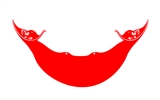
     or breast ornament of crescent shape with a head at one or both tips. The same design appears on the flag of Rapa Nui
    Flag of Rapa Nui

    File:Flag of Rapa Nui, Chile.svgThe flag of Rapa Nui is a white flag charged with a red Reimiro, an Easter Island wood carving....
    . Two Rei Miru at the British Museum are inscribed with Rongorongo.
  • Moko Miro, a man with a lizard head.
  • Moai kavakava
    Moai kavakava

    A Moai kavakava is a small wooden figure of a standing, slightly stooped male with an emaciated body.These figures originate from Easter Island ....
    , grotesque and highly detailed human figures carved from Toromiro pine and represent deceased ancestors. The earlier figures are rare and generally depict a male figure with an emaciated body and a goatee. The figures' ribs and vertebrae are exposed and many examples show carved glyphs on various parts of the body but more generally, on the top of the head. The female figures, which are far rarer then the males are, depict the body as flat and often the female's hand lying across the body. The figures, although some quit large, were worn as ornamental pieces around a tribesman's neck, the more figures worn, the more important the man. The figures have a shiny surface, this patina developed from constant handling and contact with human skin.
  • Ao
    AO

    AO may refer to:...
    , a large dancing paddle.


Contemporary culture


The Rapanui
Rapanui

The Rapanui or Rapa Nui are the native Polynesian culture inhabitants of Easter Island in the Pacific Ocean . Today, Rapanui people make up 60% of Easter Island's population....
 have:
  • An annual cultural festival, the Tapati, held since 1975 around the beginning of February to celebrate Rapanui culture.
  • A national football team
    Easter Island national football team

    The Easter Island national football team is the official football team for Rapa Nui/Easter Island. They are not affiliated with FIFA, CONMEBOL or OFC, and therefore cannot compete for the FIFA World Cup, Copa Am?rica or OFC Nations Cup....
    .
  • Three disco
    Disco

    Disco is a genre of dance music that originated in and was initially popular among African American, gay and Hispanic and Latino Americans communities in the United States in the late 1960s....
    s in the town of Hanga Roa
    Hanga Roa

    Hanga Roa is the main town, harbour and capital of the Chilean province of Easter Island. It is located in the southern part of the island's west coast, in the lowlands between the extinct volcanoes of Terevaka and Rano Kau....
    .
  • A musical tradition that combines South American and Polynesian influences (see music of Easter Island
    Music of Easter Island

    Easter Island is located in the Pacific Ocean. Though its earliest inhabitants are ethnically Polynesian, the island is controlled by the South American state of Chile....
    )
    .
  • A vibrant carving tradition.


Demography


2002 census

Population at the 2002 census was 3,791 (3,304 in Hanga Roa
Hanga Roa

Hanga Roa is the main town, harbour and capital of the Chilean province of Easter Island. It is located in the southern part of the island's west coast, in the lowlands between the extinct volcanoes of Terevaka and Rano Kau....
 alone). 60% were Rapanui, Chileans
Demographics of Chile

This article is about the demographics features of the population of Chile, including population density, Ethnic group, education level, health of the popula.ce, economic status, religious affiliations and other aspects of the population....
 of European or mestizo
Mestizo

Mestizo is a Spanish language term that was used in the Spanish Empire to refer to people of mixed Europe and Indigenous peoples of the Americas ancestry in Latin America....
 descent were 39% of the population, and the remaining 1% were Native Americans
Indigenous peoples of the Americas

The indigenous peoples of the Americas are the pre-Columbian inhabitants of the Americas, their descendants, and many ethnic groups who identify with those peoples....
 from mainland Chile.

Rapanui have also migrated out of the island. At the 2002 census, 2,269 Rapanui lived on Easter Island, while 2,378 lived in the mainland of Chile (half of them in the metropolitan area of Santiago
Santiago, Chile

Santiago , is the Capital and largest city of Chile, and the center of its largest conurbation . It is located in the country's central valley, at an elevation of 520 m Above mean sea level....
).

Population density on Easter Island is only 23 inhabitants per km² (60 per sq mi), much lower than in the 17th century heyday of the moai building when there were possibly as many as 15,000 inhabitants, or roughly 92 inhabitants per km² (214 per sq mi).

Demographic history

The population was 1,936 inhabitants in 1982. This increase in population is partly due to the arrival of people of European
European ethnic groups

The European peoples are the various nations and ethnic groups of Europe. European ethnology is the field of anthropology focusing on Europe....
 or mestizo
Mestizo

Mestizo is a Spanish language term that was used in the Spanish Empire to refer to people of mixed Europe and Indigenous peoples of the Americas ancestry in Latin America....
 descent from the mainland of Chile. Consequently, the island is losing its native Polynesian
Polynesian culture

Polynesian culture refers to the indigenous peoples culture of the Polynesian languages-speaking peoples of Polynesia and the Polynesian outliers....
 identity. In 1982 around 70% of the population were Rapanui
Rapanui

The Rapanui or Rapa Nui are the native Polynesian culture inhabitants of Easter Island in the Pacific Ocean . Today, Rapanui people make up 60% of Easter Island's population....
 (the native Polynesian inhabitants). Population had already declined to only 2,000–3,000 inhabitants before the slave raids of 1862. In the 19th century, disease
Infectious disease

An infectious disease is a clinically evident disease resulting from the presence of pathogenic microbial agents, including pathogenic viruses, pathogenic bacteria, Mycosis, protozoa, multicellular parasites, and aberrant proteins known as prions....
 due to contacts with Europeans, as well as deportation of 2,000 Rapanui to work as slaves in Peru, and the forced departure of the remaining Rapanui to Chile, carried the population of Easter Island to the all-time low of 111 inhabitants in 1877. Out of these 111 Rapanui, only 36 had descendants, but all of today's Rapanui claim descent from those 36.

Administration and legal status


Easter Island shares with Juan Fernández Islands
Juan Fernández Islands

The Juan Fern?ndez Islands is a sparsely inhabited island group reliant on tourism and fishing in the Pacific Ocean, situated about 667 km off the coast of Chile, and is composed of several volcanic islands:...
 the sui generis
Sui generis

Sui generis is a Neo-Latin expression, literally meaning of its own kind/genus or unique in its characteristics. The expression was effectively created by Scholasticism philosophy to indicate an idea, an entity or a reality that cannot be included in a wider concept....
 constitutional status of special territory of Chile, granted in 2007. A special charter for the island is currently being discussed, therefore it continues to be considered a province of the Valparaíso Region
Valparaíso Region

The V Valpara?so Region is one of Chile's 15 first order administrative divisions. Its capital is the port city of Valpara?so....
, containing a single commune. Both the province and the commune are called "Easter Island" and encompass the whole island and its surrounding islets and rocks, plus Isla Salas y Gómez, some 380 km to the east.

Authorities

  • Provincial governor: Melania Carolina Hotu Hey
    Melania Carolina Hotu Hey

    Melania Carolina Hotu Hey is the provincial governor of Rapa Nui , in Chilean Polynesia. She was appointed in 2006 by Michelle Bachelet Jeria in partial fulfillment of the newly elected Chilean president's promise to place more women into governmental positions....
    . Appointed by the President of the Republic.
  • Mayor: Pedro Pablo Edmunds Paoa
    Pedro Pablo Edmunds Paoa

    Pedro Pablo Edmunds Paoa is a Rapanui politician.He is a member of the Partido Dem?crata Cristiano de Chile, and the Mayor of Hanga Roa, the only town on Rapa Nui....
     (PDC
    Partido Demócrata Cristiano

    Partido Dem?crata Cristiano may refer to:* Christian Democratic Party , a political party in Argentina* Christian Democratic Party , a political party in Bolivia...
    ). Directly-elected for four years. Municipality located in Hanga Roa
    Hanga Roa

    Hanga Roa is the main town, harbour and capital of the Chilean province of Easter Island. It is located in the southern part of the island's west coast, in the lowlands between the extinct volcanoes of Terevaka and Rano Kau....
    .
  • Municipal council
    Municipal council

    A municipal council is the local government of a municipality. Specifically the term can refer to the institutions of various countries that can be translated by this term....
    :
    • Hipólito Juan Icka Nahoe (PH
      Humanist Party (Chile)

      The Humanist Party is a progressive left-wing political party in Chile, founded in 1984.In December 1990, Laura Rodr?guez became the first elected representative of any Humanist Party in the world after winning a seat as part of the Coalition of Parties for Democracy coalition, after Augusto Pinochet handed over power....
      )
    • Eliana Amelia Olivares San Juan (UDI
      Independent Democrat Union

      The Independent Democrat Union is a Chilean Conservatism political party. Its current president is Juan Antonio Coloma. UDI and National Renewal form a coalition of right-wing parties called Alianza por Chile ....
      )
    • Nicolás Haoa Cardinali (Ind., center-right)
    • Marcelo Icka Paoa (PDC
      Partido Demócrata Cristiano

      Partido Dem?crata Cristiano may refer to:* Christian Democratic Party , a political party in Argentina* Christian Democratic Party , a political party in Bolivia...
      )
    • Alberto Hotus Chávez (PPD
      Party for Democracy

      The Party for Democracy is a governing political party in Chile; it is social democratic in its political orientation.The party nominated, as part of the Concertacion , in the 1999/2000 president of Chile elections Ricardo Lagos Escobar, the main leader of the party, who won 48.0 % in the first round and was elected with 51.3 % in the secon...
      )
    • Marcelo Pont Hill (PPD
      Party for Democracy

      The Party for Democracy is a governing political party in Chile; it is social democratic in its political orientation.The party nominated, as part of the Concertacion , in the 1999/2000 president of Chile elections Ricardo Lagos Escobar, the main leader of the party, who won 48.0 % in the first round and was elected with 51.3 % in the secon...
      )


Notable figures

  • Hotu Matu‘a - Island founder
  • King Nga‘ara
    King Nga'ara

    Nga?araThe name Nga?ara has been variously spelled Gnaara, Gaara, Ngaara, Nga-Ara, Gahara, and Gobara. G is a common convention for in the Pacific, and Hippolyte Roussel, who transcribed the name as Gahara, frequently used h for glottal stop....
     - last great ‘ariki
    Ariki

    An ariki , aliki , ?ariki , ali?i , or ari'i in the Society Islands... is or was a member of a hereditary chiefly or noble rank in Polynesia....
  • Fr Sebastian Englert, OFM Cap.
    Sebastian Englert

    Father Sebastian Englert OFM Cap., was a Capuchin Franciscan friar, Roman Catholic priest, missionary, linguist and ethnologist from Germany....
     - Missionary and ethnologist
  • William Mulloy
    William Mulloy

    William Thomas Mulloy, Jr. was an United States anthropologist. While his early research established him as a formidable scholar and skillful fieldwork supervisor in the province of Plains Indians, he is best known for his studies of Polynesian prehistory, especially his investigations into the production, transportation and erection of the...
     - Archaeologist
  • Melania Carolina Hotu Hey
    Melania Carolina Hotu Hey

    Melania Carolina Hotu Hey is the provincial governor of Rapa Nui , in Chilean Polynesia. She was appointed in 2006 by Michelle Bachelet Jeria in partial fulfillment of the newly elected Chilean president's promise to place more women into governmental positions....
     - Governor
  • Sergio Rapu Haoa - Former Governor
  • Pedro Pablo Edmunds Paoa
    Pedro Pablo Edmunds Paoa

    Pedro Pablo Edmunds Paoa is a Rapanui politician.He is a member of the Partido Dem?crata Cristiano de Chile, and the Mayor of Hanga Roa, the only town on Rapa Nui....
     - Mayor
  • Juan Edmunds Rapahango
    Juan Edmunds Rapahango

    Juan Edmunds Rapahango is a retired Rapanui politician, the former Mayor of Hanga Roa, the municipality of Rapa Nui , in Chilean Polynesia. He is the son of Henry Percy Edmunds, director of the Williamson-Balfour Company, and Victoria Rapahango, an important native respondent for early ethnologists visiting the island....
     - Former island mayor
  • Iohan "Itto" HauMoana - Musician and surfer
  • Hotuiti Teao - Television host and model


See also

  • Rapa Nui language
    Rapa Nui language

    The Rapa Nui language is an Eastern Polynesian languages spoken by the Rapanui, the inhabitants of Easter Island....
  • Moai
    Moai

    'Moai' are monolithic human figures carved from rock on the Polynesian island of Rapa Nui between 1250 and 1500 Common Era. Nearly half are still at Rano Raraku, the main moai quarry, but hundreds were transported from there and set on stone platforms called Easter Island#Ahu around the island's perimeter....
  • Rongorongo
    Rongorongo

    Rongorongo is a system of glyphs discovered in the 19th century on Easter Island that appears to be writing system or proto-writing. It has not been deciphered despite numerous attempts....
  • Orongo
    Orongo

    ?Orongo is a stone village and ceremonial center at the southwestern tip of Rapa Nui . The first half of the ceremonial village's 53 stone masonry houses was investigated and restored in 1974 by American archaeologist William MulloyIn 1976 Mulloy assisted by Chilean archaeologists Claudio Cristino and Patricia Vargas completed the restorat...
  • Rapa Nui mythology
    Rapa Nui mythology

    The Rapa Nui mythology, also known as Pascuense mythology or Easter Island mythology, is the name given to the mythology formed by myths, legends and beliefs of the native Rapa Nui people of the island of Rapa Nui , located in the south eastern Pacific Ocean, almost four thousand kilometers from continental Chile....
  • Rapa Nui National Park
    Rapa Nui National Park

    Rapa Nui National Park is a world heritage site located on Easter Island, Chile. The park is divided into seven sections. :*Rano Kau *Puna Pau ....
  • Omphalos
    Omphalos

    An omphalos is an ancient religious stone Artifact , or baetylus. In Greek language, the word omphalos means "navel" . According to the ancient Greeks, Zeus sent out two eagles to fly across the world to meet at its center, the "navel" of the world....
  • Mataveri International Airport
    Mataveri International Airport

    Mataveri International Airport or Isla de Pascua Airport is located at Hanga Roa on Rapa Nui . It is from Santiago, Chile which has scheduled flights to it on the Chilean carrier LAN Airlines , and from Mangareva in the Gambier Islands....
  • List of megalithic sites
    List of megalithic sites

    This is a list of ancient sites that moved megalithic stones, organized according to the size of the largest megalith on the site. A megalith is a large stone which has been used to construct a structure or monument, either alone or together with other stones....
  • Podesta (island)
    Podesta (island)

    Podesta is a phantom island reported at by the Italian people Captain Pinocchio of the vessel Barone Podest? in 1879 claiming it to be just over a kilometre in circumference located 1390 km due west of El Quisco, Chile....


Selected bibliography

  • ALTMAN, Ann M. 2004. Early Visitors to Easter Island 1864-1877 (translations of the accounts of Eugène Eyraud, Hippolyte Roussel, Pierre Loti and Alphonse Pinart; with an Introduction by Georgia Lee). Los Osos, CA: Easter Island Foundation.
  • BARTHEL, Thomas. 1958. Grundlagen zur Entzifferung der Osterinselschrift. Hamburg: Cram, de Gruyter.
  • BUTINOV, Nikolai A., & Yuri V. KNOROZOV. 1957. Preliminary Report on the Study of the Written Language of Easter Island. Journal of the Polynesian Society 66. 1.
  • Diamond, Jared.
    Jared Diamond

    Jared Mason Diamond is an American evolutionary biologist, physiologist, biogeography, lecturer, and nonfiction author. Diamond works as a professor of geography and physiology at University of California, Los Angeles....
     2005. Collapse. How Societies Choose to Fail or Succeed.
    Collapse (book)

    Collapse: How Societies Choose to Fail or Succeed is a 2005 book by Jared Diamond, professor of geography and physiology at University of California, Los Angeles....
     New York: Viking. ISBN 0-14-303655-6.
  • ENGLERT, Sebastian F. 1970. Island at the Center of the World. Translated and Edited by William Mulloy. New York: Charles Scribner's Sons.
  • FEDOROVA, Irina K. 1965. Versions of Myths and Legends in Manuscripts from Easter Island. In: Heyerdahl et al (eds.), Miscellaneous Papers: Reports of the Norwegian Archaeological Expedition to Easter Island and East Pacific 2. 395-401. Stockholm: Forum.
  • FISCHER, Steven Roger. 1995. Preliminary Evidence for Cosmogonic Texts in Rapanui’s Rongorongo Inscriptions. Journal of the Polynesian Society 104. 303-21.
  • FISCHER, Steven Roger. 1997. Glyph-breaker: A Decipherer's Story. N.Y.: Copernicus/Springer-Verlag.
  • FISCHER, Steven Roger. 1997. RongoRongo, the Easter Island Script: History, Traditions, Texts. Oxford and N.Y.: Oxford University Press.
  • GUY, Jacques B.M. 1985. On a fragment of the “Tahua” Tablet. Journal of the Polynesian Society 94. 367-87.
  • GUY, Jacques B.M. 1988. Rjabchikov’s Decipherments Examined. Journal of the Polynesian Society 97. 321-3.
  • GUY, Jacques B.M. 1990. On the Lunar Calendar of Tablet Mamari. Journal de la Société des Océanistes 91:2.135-49.
  • HEYERDAHL, Thor. 1965. The Concept of Rongorongo Among the Historic Population of Easter Island. In: Thor Heyerdahl & Edwin N. Ferdon Jr. (eds. and others.), 1961-65. Stockholm: Forum.
  • HEYERDAHL, THOR Aku-Aku; The 1958 Expedition to Easter Island.
  • HUNT, Terry L. 2006. Rethinking the Fall of Easter Island. American Scientist, 94, 412 (Sept-October 2006)
  • HUNTER-ANDERSON, R. 1998. Human vs climatic impacts at Rapa Nui: did the people really cut down all those trees? In:Stevenson, C.M.; Lee, G. & Morin, F.J. (eds): Easter Island in Pacific Context. South Seas Symposium: Proceedings of the Fourth International Conference on Easter Island and East Polynesia: 85–99. Easter Island Foundation.
  • LEE, Georgia. 1992. The Rock Art of Easter Island. Symbols of Power, Prayers to the Gods. Los Angeles: The Institute of Archaeology Publications (UCLA).
  • MELLÉN BLANCO, Francisco. 1986. Manuscritos y documentos españoles para la historia de la isla de Pascua. Madrid: CEHOPU.
  • MÉTRAUX, Alfred
    Alfred Metraux

    Alfred M?traux , often described as "an ethnographer's ethnographer," was one of the most significant anthropologists and human rights leaders of the twentieth century....
    . 1940. Ethnology of Easter Island. Bernice P. Bishop Museum Bulletin 160. Honolulu: Bernice P. Bishop Museum Press.
  • POZDNIAKOV, Konstantin. 1996. Les Bases du Déchiffrement de l'Écriture de l'Ile de Pâques. Journal de la Societé des Océanistes 103:2.289-303.
  • ROUTLEDGE, Katherine
    Katherine Routledge

    Katherine Maria Routledge, n?e Pease was a United Kingdom archaeologist who initiated the first true survey of Easter Island.She was the second child of Kate and Pease family , and was born into a wealthy Quakers family in Darlington, northern England....
    . 1919. The Mystery of Easter Island. The story of an expedition. London.
  • STEADMAN
    David Steadman

    David William Steadman is the curator of ornithology at the Florida Museum of Natural History at the University of Florida.His research has concentrated on the evolution, biogeography, conservation biology, and extinction of tropical birds, particularly in the islands of the Pacific Ocean....
     D, (2006). Extinction and Biogeography in Tropical Pacific Birds, University of Chicago Press. ISBN 978-0-226-77142-7
  • THOMSON, William J. 1891. Te Pito te Henua, or Easter Island. Report of the United States National Museum for the Year Ending June 30, 1889. Annual Reports of the Smithsonian Institution for 1889. 447-552. Washington: Smithsonian Institution.
  • VAN TILBURG, Jo Anne. 1994. Easter Island: Archaeology, Ecology and Culture. Washington D.C.: Smithsonian Institution Press.
  • VARGAS, Patricia; CRISTINO, Claudio and IZAURIETA, Roberto. 2006. 1000 AÑOS EN RAPA NUI. Arqueologia del Asentamiento. Santiago, Universidad de Chile, Editorial Universitaria. ISBN 956-11-1879-3.


External links