Home      Discussion      Topics      Dictionary      Almanac
Signup       Login
Earned income tax credit

Earned income tax credit

Overview
The United States federal earned income tax credit or earned income credit (EITC or EIC) is a refundable tax credit primarily for individuals and families who have low to moderate earned income. Greater tax credit is given to those who also have qualifying children. When the tax credit exceeds the amount of taxes owed, it results in a tax refund to those who claim and qualify for the credit. This tax credit is provided, in part, to offset the burden of social security taxes and to provide an incentive to work.
Discussion
Ask a question about 'Earned income tax credit'
Start a new discussion about 'Earned income tax credit'
Answer questions from other users
Full Discussion Forum
 
Unanswered Questions
Encyclopedia
The United States federal earned income tax credit or earned income credit (EITC or EIC) is a refundable tax credit primarily for individuals and families who have low to moderate earned income. Greater tax credit is given to those who also have qualifying children. When the tax credit exceeds the amount of taxes owed, it results in a tax refund to those who claim and qualify for the credit. This tax credit is provided, in part, to offset the burden of social security taxes and to provide an incentive to work.
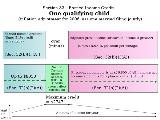
For tax year 2010, the maximum EIC for a person or couple without qualifying children is $457, with one qualifying child is $3,050, with two qualifying children is $5,036, and with three or more qualifying children is $5,666. Most people do not receive the maximum as EIC phases in slowly, has a medium-length plateau, and then phases out more slowly than it phased in. Since the credit phases out at 21% (two or more children) or 16% (one child), it is always preferable to have an extra increment of fifty dollars of earned income (the table for the credit moves by fifty dollar increments).

Enacted in 1975, the initially modest EIC has been expanded by tax legislation on a number of occasions, including the widely-publicized Reagan Tax Reform Act of 1986, and was further expanded in 1990, 1993, and 2001, regardless of whether the act in general raised taxes (1990, 1993), lowered taxes (2001), or eliminated other deductions and credits (1986). Today, the EITC is one of the largest anti-poverty tools in the United States (despite the fact that most income measures, including the poverty rate, do not account for the credit).

Other countries with programs similar to the EITC include the United Kingdom (see: working tax credit
Working tax credit
The Working Tax Credit is a state benefit in the United Kingdom made to people who work on a low income. It is a part of the current system of refundable tax credits introduced in April 2003 and is a means-tested social security benefit...

), Canada, Ireland, New Zealand, Austria, Belgium
Belgium
Belgium , officially the Kingdom of Belgium, is a federal state in Western Europe. It is a founding member of the European Union and hosts the EU's headquarters, and those of several other major international organisations such as NATO.Belgium is also a member of, or affiliated to, many...

, Denmark, Finland
Finland
Finland , officially the Republic of Finland, is a Nordic country situated in the Fennoscandian region of Northern Europe. It is bordered by Sweden in the west, Norway in the north and Russia in the east, while Estonia lies to its south across the Gulf of Finland.Around 5.4 million people reside...

, Sweden, France and the Netherlands
Netherlands
The Netherlands is a constituent country of the Kingdom of the Netherlands, located mainly in North-West Europe and with several islands in the Caribbean. Mainland Netherlands borders the North Sea to the north and west, Belgium to the south, and Germany to the east, and shares maritime borders...

. In some cases, these are small. For example, the maximum EITC in Finland is €290. Sweden has a medium credit with the maximum slightly above 21 000 Swedish kronor or about $3000 US. The ("jobbskatteavdrag" was introduced in 2006 and expanded in consecutive steps 2007–2010). Others are larger than the U.S. credit, such as the UK's working tax credit, which is worth up to £7782.

As of tax year 2009, eleven states (Kansas
Kansas
Kansas is a US state located in the Midwestern United States. It is named after the Kansas River which flows through it, which in turn was named after the Kansa Native American tribe, which inhabited the area. The tribe's name is often said to mean "people of the wind" or "people of the south...

, Maryland
Maryland
Maryland is a U.S. state located in the Mid Atlantic region of the United States, bordering Virginia, West Virginia, and the District of Columbia to its south and west; Pennsylvania to its north; and Delaware to its east...

, Massachusetts
Massachusetts
The Commonwealth of Massachusetts is a state in the New England region of the northeastern United States of America. It is bordered by Rhode Island and Connecticut to the south, New York to the west, and Vermont and New Hampshire to the north; at its east lies the Atlantic Ocean. As of the 2010...

, Michigan
Michigan
Michigan is a U.S. state located in the Great Lakes Region of the United States of America. The name Michigan is the French form of the Ojibwa word mishigamaa, meaning "large water" or "large lake"....

, Minnesota
Minnesota
Minnesota is a U.S. state located in the Midwestern United States. The twelfth largest state of the U.S., it is the twenty-first most populous, with 5.3 million residents. Minnesota was carved out of the eastern half of the Minnesota Territory and admitted to the Union as the thirty-second state...

, Nebraska
Nebraska
Nebraska is a state on the Great Plains of the Midwestern United States. The state's capital is Lincoln and its largest city is Omaha, on the Missouri River....

, New Jersey
New Jersey
New Jersey is a state in the Northeastern and Middle Atlantic regions of the United States. , its population was 8,791,894. It is bordered on the north and east by the state of New York, on the southeast and south by the Atlantic Ocean, on the west by Pennsylvania and on the southwest by Delaware...

, New York, Rhode Island
Rhode Island
The state of Rhode Island and Providence Plantations, more commonly referred to as Rhode Island , is a state in the New England region of the United States. It is the smallest U.S. state by area...

, Vermont
Vermont
Vermont is a state in the New England region of the northeastern United States of America. The state ranks 43rd in land area, , and 45th in total area. Its population according to the 2010 census, 630,337, is the second smallest in the country, larger only than Wyoming. It is the only New England...

, Wisconsin
Wisconsin
Wisconsin is a U.S. state located in the north-central United States and is part of the Midwest. It is bordered by Minnesota to the west, Iowa to the southwest, Illinois to the south, Lake Michigan to the east, Michigan to the northeast, and Lake Superior to the north. Wisconsin's capital is...

, plus the District of Columbia
Washington, D.C.
Washington, D.C., formally the District of Columbia and commonly referred to as Washington, "the District", or simply D.C., is the capital of the United States. On July 16, 1790, the United States Congress approved the creation of a permanent national capital as permitted by the U.S. Constitution....

) have a refundable state EIC which is at least 10% of the federal EIC. In addition, a few small local EICs have been enacted in San Francisco, New York City, and Montgomery County, Maryland
Montgomery County, Maryland
Montgomery County is a county in the U.S. state of Maryland, situated just to the north of Washington, D.C., and southwest of the city of Baltimore. It is one of the most affluent counties in the United States, and has the highest percentage of residents over 25 years of age who hold post-graduate...

.

Earned income


Earned income is a technical term defined by the United States tax code
Internal Revenue Code
The Internal Revenue Code is the domestic portion of Federal statutory tax law in the United States, published in various volumes of the United States Statutes at Large, and separately as Title 26 of the United States Code...

. The following are the main sources:
  • Wages, salaries
    Salary
    A salary is a form of periodic payment from an employer to an employee, which may be specified in an employment contract. It is contrasted with piece wages, where each job, hour or other unit is paid separately, rather than on a periodic basis....

    , tips, commissions, and other taxable employee pay.
  • Net earnings from self-employment.
  • Gross income received as a statutory employee.
  • If retired on disability, taxable benefits received under an employer’s disability plan are considered earned income up to minimum retirement age.
  • Nontaxable combat pay that a member of the U.S. armed services elects to include solely for purposes of EIC calculation—the service member must include all or none of the combat pay in this calculation.


Qualifying children


When one claims EIC with one or more qualifying children, they need to fill out and attach Schedule EIC to their 1040 or 1040A. This form asks for the child(ren)'s name, social security number, year of birth, whether an older "child" age 19 to 23 was classified as a student for the year (full-time status for at least one long semester, or equivalent time period), whether an older "child" is classified as disabled during the year (doctor states one year on more), the relationship to the child, and the number of months the child lived with the claimant in the United States.

To claim a person as one's qualifying child, the child must meet the following requirements of relationship, age, and shared residence:

Relationship


The claimant must be related to their qualifying child through law, marriage, or blood. The qualifying child can be:
  • a person or couple's daughter, son, stepchild, or any further descendant (such as grandchild, great grandchild, etc.),
  • or a person or couple's brother, sister, half sister, half brother, stepbrother, stepsister, or any further descendant (such as niece, nephew, great-nephew, great-great-niece, etc.),
  • or a foster child not in one's extended family as above but instead officially placed by an agency, court, or American Indian tribal government. An authorized placement agency includes a tax-exempt organization licensed by a state, and also includes an organization authorized by an Indian tribal government to place Native American children.
  • or an adopted child including a child in the process of being adopted provided he or she been lawfully placed.


A child might classify as the qualifying child of more than one adult family member, at least initially. For example, in an extended family situation, both a parent and an uncle may meet the initial standards of relationship, age, and residency to claim a particular child. In such a case, there is a further rule: If a single parent or both parents, whether married or not, can claim the child (residency and age) but choose to waive the child to a non-parent, such as a grandparent or uncle or aunt, this non-parent can claim the child only if they have a higher adjusted gross income (AGI) than any parent who has lived with the child for at least six months.

This still remains the parent's choice. Provided the parent has lived with the child for at least six months and one day, the parent can always choose to claim his or her child for purposes of the earned income credit. In a tiebreaker situation between two parents, the tiebreak goes to the parent who lived with the child the longest. In a tiebreaker between two non-parents, the tiebreak goes to the person with the higher AGI. And in a tiebreaker between a parent and non-parent, the parent wins by definition. These tiebreaker situations only occur if more than one family member actually file tax returns in which they claim credit for the same child. On the other hand, if the family can agree, per the above and following rules, they can engage in a limited amount of tax planning as to which family member claims the child.

Age


The claimant must be older than their qualifying child unless the "child" is classified as "permanently and totally disabled" (physician states one year or more), in which case this person can be any age and still classify as their qualifying child as long as the other requirements are met. More fully, the definition of "permanently and totally disabled" is that a person has a mental or physical disability, cannot engage in substantial gainful activity, and a physician has determined that the condition has lasted or is expected to last one year or more, or that it can lead to death. If the person is so classified, the age requirement is considered to be automatically met.

The standard age requirement is that the qualifying child must be under the age of 19 at the end of the tax year. That is, the person can be 18 years and 364 days old on December 31 and still classify as a "qualifying child" as long as the other requirements are met.

A full-time student during some part of five calendar months must be under age 24 at the end of the tax year. That is, this older student can be 23 years and 364 days old on December 31 and still classify as a "qualifying child", as long as the other requirements are met (relationship and residence). The standard Fall semester of a university, in which classes start in late August and continue through September, October, November, and early December, counts as part of five calendar months. And a similar conclusion applies to the standard Spring semester. However, the five months need not be consecutive and can be obtained with any combination of shorter periods. A full-time student is a student enrolled for the number of hours or courses the school considers to be full-time attendance. Schools also include technical, trade, and mechanical schools. High school students who work in co-op jobs or who are in a vocational high school program are classied as full-time students.

Shared residence


The claimant must live with their qualifying child(ren) within the fifty states and/or District of Columbia of the United States for more than half the tax year (per instructions, six months and one day is listed as 7 months on Schedule EIC). U.S. military personnel stationed outside the United States on extended active duty are considered to live in the U.S. for purposes of the EIC. Extended active duty means the person is called to duty for an indefinite period or for a period of more than 90 days (this is still considered to be extended active duty even if the period ends up being less than 90 days).

Temporary absences, for either the claimant or the child, due to school, hospital stays, business trips, vacations, shorter periods of military service, or jail or detention, are ignored and instead count as time lived at home. "Temporary" is perhaps unavoidably vague and generally hinges or whether the claimant and/or the child are expected to return, and the IRS does not provide any substantial guidance past this. If the child was born or died in the year and the claimant's home was the child's home, or potential home, for the entire time the child was alive during the year, this counts as living with the claimant, and per instructions, 12 months is entered on Schedule EIC.

Unlike the rules for claiming a dependent, there is no rule that qualifying children not support themselves. A child who supports himself or herself can still qualify as a qualifying child for purposes of the EIC. There is an exception, however. If the qualifying child is married, the claimant needs to be able to claim this child as a dependent or be waiving this dependency to the child's other parent.

Other requirements


Investment income cannot be greater than $3,100.

A claimant must be either a United States citizen or resident alien. In the case of married filing jointly where one spouse is and one isn't, the couple can elect to treat the nonresident spouse as resident and have their entire worldwide income subject to U.S. tax, and will then be eligible for EIC.

Filers both with and without qualifying children must have lived in the 50 states and/or District of Columbia of the United States for more than half the tax year (six months and one day). Puerto Rico, American Samoa, the Northern Mariana Islands, and other U.S. territories do not count in this regard. However, a person on extended military duty is considered to have met this requirement for the period of the duty served.

For persons without a qualifying child, there is an age requirement in that the person must be from age 25 to 64. For persons with a qualifying child, there is no age requirement per se, other than the fact that the filer themselves must not claimable as a qualifying child (which can happen in some extended family situations, including up to and including age 23 if the filer is enrolled as a full-time college student for at least one long semester).

All filers (and children being claimed) must have a valid social security number. This includes social security cards printed with "Valid for work only with INS authorization" or "Valid for work only with DHS authorization."

Single, Head of Household, Qualifying Widow(er), and Married Filing Jointly are all equally valid filing statuses for EIC. In fact, depending on the income of both spouses, Married Filing Jointly can be advantageous in some circumstances because, in 2009, the phase-out for MFJ for begins at $21,450 whereas phase-out begins at $16,450 for the other filing statuses. A couple who is legally married can file MFJ even if they lived apart the entire year and even if they shared no revenues or expenses for the year, as long as both spouses agree. However, if both spouses do not agree, or if there are other circumstances such as domestic violence, a spouse who lived apart with children for the last six months of the year and who meets other requirements can file as Head of Household. Or, for a couple that is split up but still legally married, they might consider visiting an accountant at separate times and perhaps even signing a joint return on separate visits. There is even an IRS form that can be used to request direct deposit into up to three separate accounts. In addition, if a person obtains a divorce by December 31, that will carry, since it is marital status on the last day of the year that controls for tax purposes. In addition, if a person is "legally separated" according to state law by December 31, that will also carry. The only disqualifying filing status for purposes of the EIC is married filing separately.

EIC phases out by the greater of earned income or adjusted gross income.

A married couple in 2010, whose total income was just shy of $21,500, but who had more than $3,100 of investment income, would have received the maximum credit for their number of qualifying children, but because of the rule that for any claimant—whether single of married, with or without children—that investment income cannot be greater than $3,100, will instead receive zero EIC. This is an edge case, but there are income ranges and situations in which an increase of investment dollars can result in a loss of after-tax dollars. (Instead of $21,500, the phase-out for Single, Head of Household, and Qualifying Widow(er) begins at $16,450.)

In normal circumstances, EIC phases out relatively slowly, at 16% or 21% depending on the number of children.

2 year disallowance for 'reckless' EIC claim, 10 year disallowance for fraudulent claim


A person or couple will be disallowed EIC for two years if they claim EIC when not eligible and the IRS determines the "error is due to reckless or intentional disregard of the EIC rules." A person or couple will be disallowed for ten years if they make a fraudulent claim. Form 8862 is required after this time period in order to be reinstated. However, this form is not required if EIC was reduced solely because of math or clerical error.

EIC Table, 2010


The credit is characterized by a three-stage structure that includes phase-in, plateau, and phase-out.
Size of credit (tax year 2010) for Single, Head of Household, and Qualifying Widow(er).
Earned income (x) Stage Credit (3+ children)
$1–$12,549 phase in 45% * x
$12,550–$16,449 plateau $5,666
$16,450–$43,349 phase out $5,666 – 21% * (x – $16,450)
>= $43,350 no credit $0
Earned income (x) Stage Credit (2 children)
$1–$12,549 phase in 40% * x
$12,550–$16,449 plateau $5,036
$16,450–$40,362 phase out $5,036 – 21% * (x – $16,450)
>= $40,363 no credit $0
Earned income (x) Stage Credit (1 child)
$1–$8,949 phase in 34% * x
$8,950–$16,449 plateau $3,050
$16,450–$35,534 phase out $3,050 – 16% * (x – $16,450)
>= $35,535 no credit $0
Earned income (x) Stage Credit (no children)
$1–$5,949 phase in 7.65% * x
$5,950–$7,499 plateau $457
$7,500–$13,449 phase out $457 – 7.65% * (x – $7,500)
>= $13,450 no credit $0


The actual credit is given by an IRS table which breaks down yearly income into $50 increments.

For Married Filing Jointly in 2010, the credit is no greater; however, the plateaus travel $5,000 further. Thus, the phase-outs for MFJ both begin and end $5,000 later than do the phase-outs for Single, Head of Household, Qualifying Widow(er).

The same data, in words: for a person with two qualifying children, the credit is equal to 40% of the first $12,550 of earned income, thus reaching a plateau of $5,036 of credit received and staying there until earnings increase beyond $16,450, at which point the credit begins to phase out at 21% of income past this point.

The dollar amounts are indexed annually for inflation.

Impact


The EITC is the largest poverty reduction program in the United States. Almost 21 million American families received more than $36 billion in payments through the EITC in 2004. These EITC dollars had a significant impact on the lives and communities of the nation's lowest paid working people. The Census Bureau, using an alternative calculation of poverty, found that the EITC lifted 5.4 million above the poverty line in 2010.

Further, economists suggest that every increased dollar received by low and moderate-income families has a multiplier
Multiplier
The term multiplier may refer to:In electrical engineering:* Binary multiplier, a digital circuit to perform rapid multiplication of two numbers in binary representation* Analog multiplier, a device that multiplies two analog signals...

 effect of between 1.5 to 2 times the original amount, in terms of its impact on the local economy and how much money is spent in and around the communities where these families live. Using the conservative estimate that for every $1 in EITC funds received, $1.50 ends up being spent locally, would mean that low income neighborhoods are effectively gaining as much as $18.4 billion.

The stimulus effects of the EITC and other consumption-augmenting policies have been challenged by more recent and rigorous studies. Haskell (2006) finds that the unique spending patterns of lump-sum tax credit recipients and the increasingly global supply chain for consumer goods is counter-productive to producing high, localized multipliers. He places the local multiplier effect somewhere in the range of 1.07 to 1.15, more in line with typical economic returns. The lower multiplier is due to recipients emphasizing "big-ticket" durable good purchases, which are typically produced elsewhere, versus locally-produced products and services such as agricultural products or restaurant visits. However, Haskell points to a silver lining: there are perhaps more important benefits from recipients who use the credit for savings or investment in big-ticket purchases that promote social mobility, such as automobiles, school tuition, or health-care services.

Due to its structure, the EIC is effective at targeting assistance to low-income families. By contrast, only 30% of minimum wage
Minimum wage
A minimum wage is the lowest hourly, daily or monthly remuneration that employers may legally pay to workers. Equivalently, it is the lowest wage at which workers may sell their labour. Although minimum wage laws are in effect in a great many jurisdictions, there are differences of opinion about...

 workers live in families near or below the federal poverty line, as most are teenagers, young adults, students, or spouses supplementing their studies or family income. Opponents of the minimum wage argue that it is a less efficient means to help the poor than adjusting the EITC.

EIC follows a pattern of going up a hill, traveling along a plateau, and then going back down the hill more slowly than it went up. For example, a married couple with two qualifying children and yearly income of seven thousand dollars will receive EIC of $2,810 (going up the hill). At fifteen thousand dollars, this couple will receive EIC of $5,036 (plateau). And at twenty-five and thirty-five thousand dollars, this same couple with their two children will receive EIC of $4,285 and $2,179 respectively.

A single person (such as a single parent, aunt, uncle, grandparent, older sibling, etc.) goes up the hill at the same rate and will receive the same maximum EIC for two qualifying children of $5,036 at plateau. But the single person has a shorter plateau. And thus, a single person with two qualifying children and income of twenty-five and thirty-five thousand will receive EIC of $3,230 and $1,124 respectively (going down the hill).

EIC phases out at 16% with one qualifying child and at 21% for two children and three or more children. And thus it is always preferable to have an extra fifty dollars of actual earned income (the table for EIC steps in increments of fifty dollars).

The plateau range for Married Filing Jointly continues for five thousand dollars longer than does the plateau for the other filing statuses and thus MFJ can be advantageous for some income ranges. Single, Head of Household, and Qualifying Widow(er) are all equally valid and eligible filing statuses for claiming EIC. The only disqualifying status is Married Filing Separately. However, a couple can file as Married Filing Jointly even if they lived apart for the entire year if legally married and both agree.

Cost


It is difficult to measure the cost of the EITC to the U.S. federal government. At the most basic level, federal revenues are decreased by the lower, and often negative, tax burden on the working poor for which the EITC is responsible. In this basic sense, the cost of the EITC to the Federal Government was more than $36 billion in 2004.

It is also estimated that between 22% and 30% of taxpayers claiming the EITC on their tax returns do not actually qualify for it. This led to an additional cost to the government (in 2010) of between $8 and $10 billion.

At the same time, however, this cost may be at least partially offset by two factors:
  • any new taxes (such as payroll taxes paid by employers) generated by new workers drawn by the EITC into the labor force;
  • taxes generated on additional spending done by families receiving earned income tax credit.


Additionally, some economists have noted that the EITC might cause a reductions in entitlement
Entitlement
An entitlement is a guarantee of access to benefits based on established rights or by legislation. A "right" is itself an entitlement associated with a moral or social principle, such that an "entitlement" is a provision made in accordance with legal framework of a society...

 spending that result from individuals being lifted out of poverty. However, because the pre-tax income determines eligibility for most state and federal benefits, the EITC rarely changes a taxpayer's eligibility for state or federal aid.

Uncollected tax credits


Millions of American families who are eligible for the EITC do not receive it, leaving billions of additional tax credit dollars unclaimed. Research by the Government Accountability Office
Government Accountability Office
The Government Accountability Office is the audit, evaluation, and investigative arm of the United States Congress. It is located in the legislative branch of the United States government.-History:...

 (GAO) and Internal Revenue Service
Internal Revenue Service
The Internal Revenue Service is the revenue service of the United States federal government. The agency is a bureau of the Department of the Treasury, and is under the immediate direction of the Commissioner of Internal Revenue...

 indicates that between 15% and 25% of households who are entitled to the EITC do not claim their credit, or between 3.5 million and 7 million households.

Many nonprofit organizations around the United States, sometimes in partnership with government and with some public financing, have begun programs designed to increase EITC utilization by raising awareness of the credit and assisting with the filing of the relevant tax forms.

The state of California requires employers to notify every employee about the EITC every year, in writing, at the same time W-2 forms are distributed.

Storefront "RALs" (Refund Anticipation Loans)


The combination of EIC and "RALs" (Refund Anticipation Loans) has been the primary engine of the storefront tax preparation industry, including the very familiar companies of H&R Block, Jackson Hewitt, and Liberty Tax, as well as smaller chains and independent practitioners. RALs have been criticized on various grounds including the high interest rates common to short-term loans. The loans are often not as easy to be approved for as the advertising implies. In fact, RAL advertisement phrases such as "Rapid Refund" have been deemed deceptive and illegal. Customers denied these loans then have their RAL application converted to a RAC (Refund Anticipation Check), which is an estimated two-week bank product (10 days or more, no set date, no guarantee), in which the account merely sits empty waiting for the IRS refund (if any). And although such customers do not pay interest, they pay other fees. In addition, there is the practice known as "cross-collection" or more vaguely as "previous debt," in which the loan-issuing bank (such as HSBC or Santa Barbara Bank & Trust in recent years) engages in debt collection for other banks who issued RALs in previous years to persons whose expected tax refunds then went uncollected. That is, HSBC or Santa Barbara will take all or part of a client's tax refund for purposes of third-party debt collection. And this practice may not be adequately disclosed to the tax preparation client, just as some clients fail to disclose obligations that result in government taking their refunds. Of course, modernization of tax return processing may reduce or eliminate the remittance delay on which these short-term loans are based. For the upcoming 2010 tax season, the IRS will no longer be providing preparers and financial institutions with the “debt indicator.” Presumably, the result will be that fewer RALs are approved and that more RALs are then converted to RACS (estimated two-week product).

See also

  • Guaranteed minimum income
    Guaranteed minimum income
    Guaranteed minimum income is a system of social welfare provision that guarantees that all citizens or families have an income sufficient to live on, provided they meet certain conditions. Eligibility is typically determined by citizenship, a means test and either availability for the labour...

  • Negative income tax
    Negative income tax
    In economics, a negative income tax is a progressive income tax system where people earning below a certain amount receive supplemental pay from the government instead of paying taxes to the government. Such a system has been discussed by economists but never fully implemented...

  • Taxation in the United States
    Taxation in the United States
    The United States is a federal republic with autonomous state and local governments. Taxes are imposed in the United States at each of these levels. These include taxes on income, property, sales, imports, payroll, estates and gifts, as well as various fees.Taxes are imposed on net income of...


External links


Taxpayer info/tools:
  • IRS EITC Assistant, which can help determine if you qualify for EITC
  • IRS 1040 Instructions 2010, Earned Income Credit instructions on pages 45–48, optional worksheets 49–51, credit table itself 51–58. Only required attachment is Schedule EIC if one is claiming a qualifying child.
  • IRS Schedule EIC. A person or couple claiming qualifying child(ren) needs to attach this form to the 1040 or 1040A tax return.
  • IRS Publication 596 – Earned Income Credit, a publication aimed at people who will potentially be claiming the credit.


Organizations/campaigns:

Background:
  • Section 13 ("Tax Provisions Related to Retirement, Health, Poverty, Employment, Disability, and Other Social Issues") of the House Ways and Means Committee's Green Book provides historical information, including previous EITC parameters. (The version linked to here is the 2004 edition. Note: it's not published anuually.)


Policy Analysis:

Podcast:
  • http://bostontaxhelp.libsyn.com/ Boston Tax Help podcast. Produced by Craig Far-Corporate/Community Partnerships/Boston EITC Campaign
