

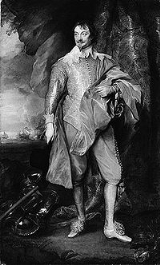
Earl of Warwick

Encyclopedia
Earl of Warwick is a title that has been created four times in British history and is one of the most prestigious titles in the peerage
s of the British Isles
.
. The heraldic device of the Earls of Warwick, the bear and ragged staff, is believed to derive from two legendary Earls, Arthal and Morvidus. Arthal is to mean "bear", while Morvidus was to have slain a giant "with a young ash tree torn up by the roots."
The first Earl of Warwick was Henry Beaumont
, younger son of Roger
, count of Meulan and brother to Robert, 1st earl of Leicester
. This family was also known as de Bellomont, de Novo Burgo and de Newburgh. Henry changed his named to de Newburgh, after his home in Normandy (Castle de Neubourg). Hutchins, John, The History and Antiquities of the County of Dorset, Vols. 1-4,1815.
Henry became constable
of Warwick castle in 1068 and Earl in 1088 as reward for his support for the king during the Rebellion of 1088
.
The title passed through several generations of the Beaumont family until Thomas
, the 6th earl, died in 1242 without a male heir. The earldom then went to his sister Margaret and her husbands and on her death to her cousin William Maudit
.
When he died also without a male heir the title passed to his daughter Isabel and her husband William Beauchamp and thence her son William
, who became 9th earl.
During this period the earldom and the Beauchamps were elevated to the highest levels until Henry
, the 14th earl was created Duke of Warwick with precedence over all except the Duke of Norfolk
.
This precedence was disputed however and with Henry’s death in 1445, also without male heir, the dukedom was extinguished. The earldom went to his infant daughter, and on her death a few years later passed to Henry's sister Anne
and her husband Richard Neville
, who became 16th earl and was known to history as "Warwick the Kingmaker".
After Richard Neville’s death the title was created for his son-in-law, George Plantagenet, 1st Duke of Clarence
, husband of Neville's eldest daughter Isabella Neville, on 25 March 1472. It then passed to Richard and Anne’s grandson Edward
, son of George, Duke of Clarence
, and with his death in 1499 the title became extinct.
. He had already been created Viscount Lisle
in right of his deceased mother, Elizabeth Grey, in 1543, and was made Earl of Warwick in the Peerage of England
in 1547. In 1551 he was further honoured when he was created Duke of Northumberland
. In January 1553 Parliament passed the earldom to his eldest son John
, the second Earl. He died young in 1554, and having been attainted along with his father in August 1553, the title became extinct until it was revived in 1561 for his younger brother Ambrose
, the third Earl. He served as Master-General of the Ordnance
and Lord Lieutenant of Warwickshire
. On his death in 1590 the earldom became extinct.
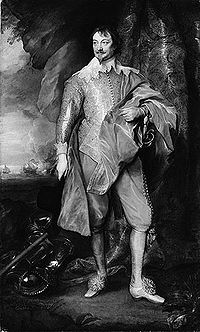 The title was re-created when Robert Rich
, 3rd Baron Rich
, was made Earl of Warwick in 1618. This was despite the fact that the Rich family were not in possession of Warwick Castle (this was in the hands of the Greville family; see the 1759 creation below). His second son the Hon. Henry Rich
was created Baron Kensington in 1623 and Earl of Holland
in 1624. Lord Warwick was succeeded by his eldest son, the second Earl. He represented Maldon
in the House of Commons
and served as Lord Lieutenant of Essex
.
His eldest son, the third Earl, sat as Member of Parliament
for Essex
. He died without surviving male issue and was succeeded by his younger brother, the fourth Earl. He represented Sandwich
and Essex in Parliament. On his death the line of the second Earl of Warwick failed and the titles were inherited by his first cousin Robert Rich, 2nd Earl Holland, who became the fifth Earl of Warwick as well. He was the son of the aforementioned Henry Rich, 1st Earl of Holland, younger son of the first Earl of Warwick (see the Earl of Holland for earlier history of this branch of the family). This line of the family failed on the early death of his grandson, the seventh Earl, in 1721. The late Earl was succeeded by his second cousin Edward Rich, the eighth Earl. He was the grandson of the Hon. Cope Rich, younger son of the first Earl of Holland. On his death in 1759 all the titles became extinct.
Lady Mary Rich, daughter of the first Earl of Holland, married Sir John Campbell, 5th Baronet
, who was created Earl of Breadalbane and Holland
in 1681. Also, Lady Elizabeth Rich, only daughter and heiress of the fifth Earl of Warwick and second Earl of Holland, married Francis Edwardes
. Their son William Edwardes
succeeded to parts of the Rich estates and was created Baron Kensington
in the Peerage of Ireland
in 1776
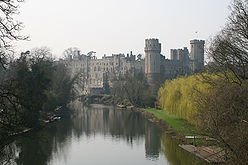 The title was again re-created when Francis Greville, 8th Baron Brooke
was made Earl of Warwick in the Peerage of Great Britain. In 1746 he had been created Earl Brooke, of Warwick Castle, in the Peerage of Great Britain
. The earldom of Warwick created in 1618 for a member of the Rich family became extinct in September 1759, and in November of the same year Lord Brooke was created Earl of Warwick, re-uniting the earldom and Warwick Castle for the first time in over a century. In 1767 the Earl petitioned the House of Lords
for permission to use just the more prestigious title and style of "Earl of Warwick" only, with the precedence of 1746. Such permission was never granted but the Earls nevertheless ceased to use the Brooke earldom in style, and have always been known (except in the House of Lords) simply as The Earl of Warwick.
The Earl was succeeded by his eldest son, the second Earl. He represented Warwick in Parliament and served as a Lord of Trade and as Lord Lieutenant of Warwickshire. His eldest son from his second marriage, the third Earl, sat as Member of Parliament
for Warwick and held minor office in the second administration
of Sir Robert Peel
. He was also Lord Lieutenant of Warwickshire. He was succeeded by his son, the fourth Earl. He represented Warwickshire South in the House of Commons. His eldest son, the fifth Earl, was Conservative
Member of Parliament for Somerset East
and served as Lord Lieutenant of Essex
. As of 2007 the titles are held the latter's great-great-grandson, the eighth earl, who succeeded his father in 1996.
Another member of the Greville family was the Liberal
politician Fulke Southwell Greville-Nugent, 1st Baron Greville. He was a descendant of the fifth Baron Brooke.
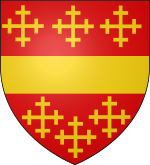
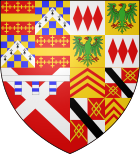
The heir apparent
is the present holder's son Charles Fulke Chester Greville, Lord Brooke (b. 1982)
Peerage
The Peerage is a legal system of largely hereditary titles in the United Kingdom, which constitute the ranks of British nobility and is part of the British honours system...
s of the British Isles
British Isles
The British Isles are a group of islands off the northwest coast of continental Europe that include the islands of Great Britain and Ireland and over six thousand smaller isles. There are two sovereign states located on the islands: the United Kingdom of Great Britain and Northern Ireland and...
.
1088 creation
The medieval earldom created in 1088 was held to be inheritable through a female line of descent, and thus was held by members of several families. It was traditionally associated with possession of Warwick CastleWarwick Castle
Warwick Castle is a medieval castle in Warwick, the county town of Warwickshire, England. It sits on a bend on the River Avon. The castle was built by William the Conqueror in 1068 within or adjacent to the Anglo-Saxon burh of Warwick. It was used as a fortification until the early 17th century,...
. The heraldic device of the Earls of Warwick, the bear and ragged staff, is believed to derive from two legendary Earls, Arthal and Morvidus. Arthal is to mean "bear", while Morvidus was to have slain a giant "with a young ash tree torn up by the roots."
The first Earl of Warwick was Henry Beaumont
Henry de Beaumont, 1st Earl of Warwick
Henry de Beaumont, 1st Earl of Warwick was a Norman nobleman. Henry was the younger son of Roger de Beaumont and Adeline of Meulan, daughter of Waleran I, Count of Meulan. He was given by his father the modest lordship of Le Neubourg, in central Normandy...
, younger son of Roger
Roger de Beaumont
Roger de Beaumont-le-Roger, Seigneur de Beaumont-le-Roger et de Pont-Audemer was son of Humphrey de Vielles and his wife Albreda de la Haye Auberie...
, count of Meulan and brother to Robert, 1st earl of Leicester
Robert de Beaumont, 1st Earl of Leicester
Robert de Beaumont, 1st Earl of Leicester, Count of Meulan was a powerful English and French nobleman, revered as one of the wisest men of his age...
. This family was also known as de Bellomont, de Novo Burgo and de Newburgh. Henry changed his named to de Newburgh, after his home in Normandy (Castle de Neubourg). Hutchins, John, The History and Antiquities of the County of Dorset, Vols. 1-4,1815.
Henry became constable
Constable
A constable is a person holding a particular office, most commonly in law enforcement. The office of constable can vary significantly in different jurisdictions.-Etymology:...
of Warwick castle in 1068 and Earl in 1088 as reward for his support for the king during the Rebellion of 1088
Rebellion of 1088
The Rebellion of 1088 occurred after the death of William the Conqueror and concerned the division of lands in the Kingdom of England and the Duchy of Normandy between his two sons William Rufus and Robert Curthose...
.
The title passed through several generations of the Beaumont family until Thomas
Thomas de Beaumont, 6th Earl of Warwick
Thomas de Beaumont, 6th Earl of Warwick , Earl of Warwick, Baron of Hocknorton and Hedenton, was the son of Henry de Beaumont, 5th Earl of Warwick and Margaret D'Oili...
, the 6th earl, died in 1242 without a male heir. The earldom then went to his sister Margaret and her husbands and on her death to her cousin William Maudit
William Maudit, 8th Earl of Warwick
William Maudit , 8th Earl of Warwick was an English nobleman and participant in the Barons' War....
.
When he died also without a male heir the title passed to his daughter Isabel and her husband William Beauchamp and thence her son William
William de Beauchamp, 9th Earl of Warwick
William de Beauchamp, 9th Earl of Warwick was an English nobleman and soldier, described as a “vigorous and innovative military commander”...
, who became 9th earl.
During this period the earldom and the Beauchamps were elevated to the highest levels until Henry
Henry de Beauchamp, 1st Duke of Warwick
Henry de Beauchamp, 1st Duke of Warwick was an English nobleman.He was the son of Richard de Beauchamp, 13th Earl of Warwick and Isabel le Despenser...
, the 14th earl was created Duke of Warwick with precedence over all except the Duke of Norfolk
Duke of Norfolk
The Duke of Norfolk is the premier duke in the peerage of England, and also, as Earl of Arundel, the premier earl. The Duke of Norfolk is, moreover, the Earl Marshal and hereditary Marshal of England. The seat of the Duke of Norfolk is Arundel Castle in Sussex, although the title refers to the...
.
This precedence was disputed however and with Henry’s death in 1445, also without male heir, the dukedom was extinguished. The earldom went to his infant daughter, and on her death a few years later passed to Henry's sister Anne
Anne Neville, 16th Countess of Warwick
Anne de Beauchamp, 16th Countess of Warwick was the daughter of Richard de Beauchamp, 13th Earl of Warwick, and his second wife Isabel le Despenser. Isabel was a daughter of Thomas le Despenser Anne de Beauchamp, 16th Countess of Warwick (13 July 1426 – 20 September 1492) was the daughter of...
and her husband Richard Neville
Richard Neville, 16th Earl of Warwick
Richard Neville KG, jure uxoris 16th Earl of Warwick and suo jure 6th Earl of Salisbury and 8th and 5th Baron Montacute , known as Warwick the Kingmaker, was an English nobleman, administrator, and military commander...
, who became 16th earl and was known to history as "Warwick the Kingmaker".
After Richard Neville’s death the title was created for his son-in-law, George Plantagenet, 1st Duke of Clarence
George Plantagenet, 1st Duke of Clarence
George Plantagenet, 1st Duke of Clarence, 1st Earl of Salisbury, 1st Earl of Warwick, KG was the third son of Richard Plantagenet, 3rd Duke of York, and Cecily Neville, and the brother of kings Edward IV and Richard III. He played an important role in the dynastic struggle known as the Wars of the...
, husband of Neville's eldest daughter Isabella Neville, on 25 March 1472. It then passed to Richard and Anne’s grandson Edward
Edward Plantagenet, 17th Earl of Warwick
Edward Plantagenet, 17th Earl of Warwick was the son of George Plantagenet, 1st Duke of Clarence and a potential claimant to the English throne during the reigns of both Richard III and his successor, Henry VII...
, son of George, Duke of Clarence
George Plantagenet, 1st Duke of Clarence
George Plantagenet, 1st Duke of Clarence, 1st Earl of Salisbury, 1st Earl of Warwick, KG was the third son of Richard Plantagenet, 3rd Duke of York, and Cecily Neville, and the brother of kings Edward IV and Richard III. He played an important role in the dynastic struggle known as the Wars of the...
, and with his death in 1499 the title became extinct.
1547 creation
The title was next conferred upon the powerful statesman and soldier John Dudley, 1st Viscount LisleJohn Dudley, 1st Duke of Northumberland
John Dudley, 1st Duke of Northumberland, KG was an English general, admiral, and politician, who led the government of the young King Edward VI from 1550 until 1553, and unsuccessfully tried to install Lady Jane Grey on the English throne after the King's death...
. He had already been created Viscount Lisle
Viscount Lisle
The title of Viscount Lisle has been created six times in the Peerage of England. The first creation, on 30 October 1451, was for John Talbot, 1st Baron Lisle. Upon the death of his son Thomas at the Battle of Nibley Green in 1470, the viscountcy became extinct and the barony abeyant.In 1475, the...
in right of his deceased mother, Elizabeth Grey, in 1543, and was made Earl of Warwick in the Peerage of England
Peerage of England
The Peerage of England comprises all peerages created in the Kingdom of England before the Act of Union in 1707. In that year, the Peerages of England and Scotland were replaced by one Peerage of Great Britain....
in 1547. In 1551 he was further honoured when he was created Duke of Northumberland
Duke of Northumberland
The Duke of Northumberland is a title in the peerage of Great Britain that has been created several times. Since the third creation in 1766, the title has belonged to the House of Percy , which held the title of Earl of Northumberland from 1377....
. In January 1553 Parliament passed the earldom to his eldest son John
John Dudley, 2nd Earl of Warwick
John Dudley, 2nd Earl of Warwick, KG, KB was an English nobleman and the heir of John Dudley, 1st Duke of Northumberland, leading minister and de facto ruler under Edward VI of England from 1550–1553. As his father's career progressed, John Dudley respectively assumed his father's former...
, the second Earl. He died young in 1554, and having been attainted along with his father in August 1553, the title became extinct until it was revived in 1561 for his younger brother Ambrose
Ambrose Dudley, 3rd Earl of Warwick
Ambrose Dudley, 3rd Earl of Warwick, KG was an English nobleman and general, and an elder brother of Queen Elizabeth I's favourite, Robert Dudley, Earl of Leicester...
, the third Earl. He served as Master-General of the Ordnance
Master-General of the Ordnance
The Master-General of the Ordnance was a very senior British military position before 1855, when the Board of Ordnance was abolished.-Responsibilities:...
and Lord Lieutenant of Warwickshire
Lord Lieutenant of Warwickshire
This is an incomplete list of people who have served as Lord Lieutenant of Warwickshire. Since 1728, all Lord Lieutenants have also been Custos Rotulorum of Warwickshire.-Lord Lieutenants of Warwickshire:*Ambrose Dudley, 3rd Earl of Warwick 1569–1570*vacant...
. On his death in 1590 the earldom became extinct.
1618 creation
Robert Rich, 1st Earl of Warwick
Robert Rich, 3rd Baron Rich, created 1st Earl of Warwick was the son of Robert Rich, 2nd Baron Rich, and Elizabeth Baldry.-Marriages and children:First married Penelope Devereux on 10 January, 1581...
, 3rd Baron Rich
Baron Rich
Baron Rich is a title in the Peerage of England. It was created in 1547 and was absorbed into the Earldom of Warwick in 1618. It became extinct in 1759.-History:The title was created in 1547 for Sir Richard Rich who was made Baron Rich, of Leez...
, was made Earl of Warwick in 1618. This was despite the fact that the Rich family were not in possession of Warwick Castle (this was in the hands of the Greville family; see the 1759 creation below). His second son the Hon. Henry Rich
Henry Rich, 1st Earl of Holland
Henry Rich, 1st Earl of Holland was an English aristocrat, courtier and soldier.-Life:He was the son of Robert Rich, 1st Earl of Warwick and of Penelope Devereux, Lady Rich, and the younger brother of Robert Rich, 2nd Earl of Warwick...
was created Baron Kensington in 1623 and Earl of Holland
Earl of Holland
Earl of Holland was a title in the Peerage of England. It was created in 1624 for Henry Rich, 1st Baron Kensington. He was the younger son of Robert Rich, 1st Earl of Warwick. and had already been created Baron Kensington in 1623, also in the Peerage of England. His eldest son, the second Earl,...
in 1624. Lord Warwick was succeeded by his eldest son, the second Earl. He represented Maldon
Maldon (UK Parliament constituency)
Maldon is a county constituency represented in the House of Commons of the Parliament of the United Kingdom. It elects one Member of Parliament by the first past the post system of election...
in the House of Commons
British House of Commons
The House of Commons is the lower house of the Parliament of the United Kingdom, which also comprises the Sovereign and the House of Lords . Both Commons and Lords meet in the Palace of Westminster. The Commons is a democratically elected body, consisting of 650 members , who are known as Members...
and served as Lord Lieutenant of Essex
Lord Lieutenant of Essex
This is a list of people who have served as Lord Lieutenant of Essex. Since 1688, all the Lord Lieutenants have also been Custos Rotulorum of Essex.*John Petre, 1st Baron Petre*John de Vere, 16th Earl of Oxford 1558–?...
.
His eldest son, the third Earl, sat as Member of Parliament
Member of Parliament
A Member of Parliament is a representative of the voters to a :parliament. In many countries with bicameral parliaments, the term applies specifically to members of the lower house, as upper houses often have a different title, such as senate, and thus also have different titles for its members,...
for Essex
Essex (UK Parliament constituency)
Essex was a constituency represented in the House of Commons of the Parliament of the United Kingdom from 1290 until 1832. It elected two MPs, traditionally referred to as Knights of the Shire, to the House of Commons...
. He died without surviving male issue and was succeeded by his younger brother, the fourth Earl. He represented Sandwich
Sandwich (UK Parliament constituency)
Sandwich was a parliamentary constituency in Kent, which elected two Members of Parliament to the House of Commons from 1366 until 1885, when it was disfranchised for corruption.-History:...
and Essex in Parliament. On his death the line of the second Earl of Warwick failed and the titles were inherited by his first cousin Robert Rich, 2nd Earl Holland, who became the fifth Earl of Warwick as well. He was the son of the aforementioned Henry Rich, 1st Earl of Holland, younger son of the first Earl of Warwick (see the Earl of Holland for earlier history of this branch of the family). This line of the family failed on the early death of his grandson, the seventh Earl, in 1721. The late Earl was succeeded by his second cousin Edward Rich, the eighth Earl. He was the grandson of the Hon. Cope Rich, younger son of the first Earl of Holland. On his death in 1759 all the titles became extinct.
Lady Mary Rich, daughter of the first Earl of Holland, married Sir John Campbell, 5th Baronet
John Campbell, 1st Earl of Breadalbane and Holland
John Campbell, 1st Earl of Breadalbane and Holland , son of Sir John Campbell of Glen Orchy, and of the Lady Mary Graham, daughter of William Graham, 1st Earl of Airth and 7th Earl of Menteith, was a member of Scottish nobility during the Glorious Revolution and Jacobite risings and also known as...
, who was created Earl of Breadalbane and Holland
Earl of Breadalbane and Holland
Earl of Breadalbane and Holland is a dormant title in the Peerage of Scotland. It was created in 1681 for Sir John Campbell, 5th Baronet, of Glenorchy, who had previously been deprived of the title Earl of Caithness. He, as a principal creditor, had "acquired" the estates of George Sinclair, 6th...
in 1681. Also, Lady Elizabeth Rich, only daughter and heiress of the fifth Earl of Warwick and second Earl of Holland, married Francis Edwardes
Francis Edwardes
Francis Edwardes was a British Member of Parliament.Edwardes was the member of a family that owned extensive lands in Pembrokeshire, Carmarthenshire and Cardiganshire. He was elected to the House of Commons for Haverfordwest in 1722, a seat he held until 1725...
. Their son William Edwardes
William Edwardes, 1st Baron Kensington
William Edwardes, 1st Baron Kensington , was a long-standing British Member of Parliament.Kensington was the son of Francis Edwardes, Member of Parliament for Haverfordwest, and Lady Elizabeth Rich, only daughter and heiress of Robert Rich, 5th Earl of Warwick. The Edwardes family owned extensive...
succeeded to parts of the Rich estates and was created Baron Kensington
Baron Kensington
Baron Kensington is a title that has been created three times, in the Peerages of England, Ireland and the United Kingdom.-English title :...
in the Peerage of Ireland
Peerage of Ireland
The Peerage of Ireland is the term used for those titles of nobility created by the English and later British monarchs of Ireland in their capacity as Lord or King of Ireland. The creation of such titles came to an end in the 19th century. The ranks of the Irish peerage are Duke, Marquess, Earl,...
in 1776
1759 creation
Francis Greville, 1st Earl of Warwick
Francis Greville, 1st Earl of Warwick KT , known as Lord Brooke from 1727 to 1746 and Earl Brooke from 1746 to 1759, was a British nobleman....
was made Earl of Warwick in the Peerage of Great Britain. In 1746 he had been created Earl Brooke, of Warwick Castle, in the Peerage of Great Britain
Peerage of Great Britain
The Peerage of Great Britain comprises all extant peerages created in the Kingdom of Great Britain after the Act of Union 1707 but before the Act of Union 1800...
. The earldom of Warwick created in 1618 for a member of the Rich family became extinct in September 1759, and in November of the same year Lord Brooke was created Earl of Warwick, re-uniting the earldom and Warwick Castle for the first time in over a century. In 1767 the Earl petitioned the House of Lords
House of Lords
The House of Lords is the upper house of the Parliament of the United Kingdom. Like the House of Commons, it meets in the Palace of Westminster....
for permission to use just the more prestigious title and style of "Earl of Warwick" only, with the precedence of 1746. Such permission was never granted but the Earls nevertheless ceased to use the Brooke earldom in style, and have always been known (except in the House of Lords) simply as The Earl of Warwick.
The Earl was succeeded by his eldest son, the second Earl. He represented Warwick in Parliament and served as a Lord of Trade and as Lord Lieutenant of Warwickshire. His eldest son from his second marriage, the third Earl, sat as Member of Parliament
Member of Parliament
A Member of Parliament is a representative of the voters to a :parliament. In many countries with bicameral parliaments, the term applies specifically to members of the lower house, as upper houses often have a different title, such as senate, and thus also have different titles for its members,...
for Warwick and held minor office in the second administration
Conservative Government 1841-1846
Sir Robert Peel's second government came to power in 1841 after the Conservative victory in the General Election caused the Whig government of Lord Melbourne to resign. Henry Goulburn was Chancellor of the Exchequer, the future Prime Minister Lord Aberdeen Foreign Secretary and Sir James Graham...
of Sir Robert Peel
Robert Peel
Sir Robert Peel, 2nd Baronet was a British Conservative statesman who served as Prime Minister of the United Kingdom from 10 December 1834 to 8 April 1835, and again from 30 August 1841 to 29 June 1846...
. He was also Lord Lieutenant of Warwickshire. He was succeeded by his son, the fourth Earl. He represented Warwickshire South in the House of Commons. His eldest son, the fifth Earl, was Conservative
Conservative Party (UK)
The Conservative Party, formally the Conservative and Unionist Party, is a centre-right political party in the United Kingdom that adheres to the philosophies of conservatism and British unionism. It is the largest political party in the UK, and is currently the largest single party in the House...
Member of Parliament for Somerset East
East Somerset (UK Parliament constituency)
East Somerset was the name of a parliamentary constituency in Somerset, represented in the House of Commons of the Parliament of the United Kingdom between 1832 and 1918....
and served as Lord Lieutenant of Essex
Lord Lieutenant of Essex
This is a list of people who have served as Lord Lieutenant of Essex. Since 1688, all the Lord Lieutenants have also been Custos Rotulorum of Essex.*John Petre, 1st Baron Petre*John de Vere, 16th Earl of Oxford 1558–?...
. As of 2007 the titles are held the latter's great-great-grandson, the eighth earl, who succeeded his father in 1996.
Another member of the Greville family was the Liberal
Liberal Party (UK)
The Liberal Party was one of the two major political parties of the United Kingdom during the 19th and early 20th centuries. It was a third party of negligible importance throughout the latter half of the 20th Century, before merging with the Social Democratic Party in 1988 to form the present day...
politician Fulke Southwell Greville-Nugent, 1st Baron Greville. He was a descendant of the fifth Baron Brooke.
Earls of Warwick; First creation (1088)
- Henry de Beaumont, 1st Earl of WarwickHenry de Beaumont, 1st Earl of WarwickHenry de Beaumont, 1st Earl of Warwick was a Norman nobleman. Henry was the younger son of Roger de Beaumont and Adeline of Meulan, daughter of Waleran I, Count of Meulan. He was given by his father the modest lordship of Le Neubourg, in central Normandy...
(c. 1048–1119) - Roger de Beaumont, 2nd Earl of WarwickRoger de Beaumont, 2nd Earl of WarwickRoger de Beaumont, 2nd Earl of Warwick was the elder son of Henry de Beaumont, 1st Earl of Warwick and Marguerite, daughter of Geoffrey II of Perche and Beatrix of Montdidier...
(c. 1102–1153), son of Henry - William de Beaumont, 3rd Earl of WarwickWilliam de Beaumont, 3rd Earl of WarwickWilliam de Beaumont, 3rd Earl of Warwick was an English nobleman.He inherited the earldom from Roger de Beaumont, 2nd Earl of Warwick. He died, probably on Crusade, in 1184, and was succeeded by his brother Waleran de Beaumont, 4th Earl of Warwick....
(before 1140–1184), son of Roger - Waleran de Beaumont, 4th Earl of WarwickWaleran de Beaumont, 4th Earl of WarwickWaleran de Beaumont, 4th Earl of Warwick was the younger son of Roger de Beaumont, 2nd Earl of Warwick and Gundred de Warrenne, daughter of William de Warenne, 2nd Earl of Surrey and Elizabeth de Vermandois...
(1153–1204), son of Roger - Henry de Beaumont, 5th Earl of WarwickHenry de Beaumont, 5th Earl of WarwickHenry de Beaumont, 5th Earl of Warwick , Earl of Warwick, Baron of Hocknorton and Hedenton, was the son of Waleran de Beaumont, 4th Earl of Warwick and Margaret, daughter of Henry de Bohun, 1st Earl of Hereford and Maud of Essex...
(c. 1195–1229), son of Waleran - Thomas de Beaumont, 6th Earl of WarwickThomas de Beaumont, 6th Earl of WarwickThomas de Beaumont, 6th Earl of Warwick , Earl of Warwick, Baron of Hocknorton and Hedenton, was the son of Henry de Beaumont, 5th Earl of Warwick and Margaret D'Oili...
(1208–1242), son of Henry - Margaret de Beaumont, 7th Countess of WarwickMargaret de Newburg, Countess of WarwickMargaret de Newburg, 7th Countess of Warwick was the daughter of Henry de Beaumont, 5th Earl of Warwick and Margaret D'Oili. She was sister and heiress of Thomas de Beaumont, 6th Earl of Warwick....
(d. 1253), daughter of Henry (5th)- John Marshal, jure uxoris, 7th Earl of Warwick (d. 1242)
- John du Plessis, jure uxoris 7th Earl of Warwick (d. 1263)
- William Maudit, 8th Earl of WarwickWilliam Maudit, 8th Earl of WarwickWilliam Maudit , 8th Earl of Warwick was an English nobleman and participant in the Barons' War....
(c. 1220–1268), grandson of Waleran - William de Beauchamp, 9th Earl of WarwickWilliam de Beauchamp, 9th Earl of WarwickWilliam de Beauchamp, 9th Earl of Warwick was an English nobleman and soldier, described as a “vigorous and innovative military commander”...
(c. 1240–1298), great-grandson of Waleran - Guy de Beauchamp, 10th Earl of WarwickGuy de Beauchamp, 10th Earl of WarwickGuy de Beauchamp, 10th Earl of Warwick was an English magnate, and one of the principal opponents of King Edward II and his favourite Piers Gaveston. Guy de Beauchamp was the son of William de Beauchamp, the first Beauchamp earl of Warwick, and succeeded his father in 1298...
(d. 1315), son of William (9th) - Thomas de Beauchamp, 11th Earl of WarwickThomas de Beauchamp, 11th Earl of WarwickThomas de Beauchamp, 11th Earl of Warwick, KG was an English nobleman and military commander during the Hundred Years' War...
(d. 1369), son of Guy - Thomas de Beauchamp, 12th Earl of WarwickThomas de Beauchamp, 12th Earl of WarwickThomas de Beauchamp, 12th Earl of Warwick, KG was an English medieval nobleman, and one of the primary opponents of Richard II.- Birth and Marriage:...
(c. 1339–1401), son of Thomas (11th) - Richard de Beauchamp, 13th Earl of WarwickRichard de Beauchamp, 13th Earl of WarwickRichard de Beauchamp, 13th Earl of Warwick, Count of Aumale, KG was an English medieval nobleman and military commander.-Early Life:...
(1382–1439), son of Thomas (12th) - Henry de Beauchamp, 1st Duke of WarwickHenry de Beauchamp, 1st Duke of WarwickHenry de Beauchamp, 1st Duke of Warwick was an English nobleman.He was the son of Richard de Beauchamp, 13th Earl of Warwick and Isabel le Despenser...
(1425–1446), son of Richard - Anne de Beauchamp, 15th Countess of WarwickAnne de Beauchamp, 15th Countess of WarwickAnne Beauchamp, 15th Countess of Warwick was born in Cardiff, the only child of Henry de Beauchamp, 1st Duke of Warwick and Lady Cecily Neville. Her maternal grandparents were Richard Neville, 5th Earl of Salisbury and Alice Montagu, Countess of Salisbury...
(1443–1449), daughter of Henry - Anne de BeauchampAnne Neville, 16th Countess of WarwickAnne de Beauchamp, 16th Countess of Warwick was the daughter of Richard de Beauchamp, 13th Earl of Warwick, and his second wife Isabel le Despenser. Isabel was a daughter of Thomas le Despenser Anne de Beauchamp, 16th Countess of Warwick (13 July 1426 – 20 September 1492) was the daughter of...
(1426–1492), daughter of Richard- Richard Neville, jure uxoris 16th Earl of WarwickRichard Neville, 16th Earl of WarwickRichard Neville KG, jure uxoris 16th Earl of Warwick and suo jure 6th Earl of Salisbury and 8th and 5th Baron Montacute , known as Warwick the Kingmaker, was an English nobleman, administrator, and military commander...
(1428–1471) ("Warwick the Kingmaker")
- Richard Neville, jure uxoris 16th Earl of Warwick
- Edward Plantagenet, 17th Earl of WarwickEdward Plantagenet, 17th Earl of WarwickEdward Plantagenet, 17th Earl of Warwick was the son of George Plantagenet, 1st Duke of Clarence and a potential claimant to the English throne during the reigns of both Richard III and his successor, Henry VII...
(1475–1499), grandson of Anne (16th)
Earls of Warwick; Second creation (1547)
- John Dudley, 1st Duke of Northumberland, 1st Earl of WarwickJohn Dudley, 1st Duke of NorthumberlandJohn Dudley, 1st Duke of Northumberland, KG was an English general, admiral, and politician, who led the government of the young King Edward VI from 1550 until 1553, and unsuccessfully tried to install Lady Jane Grey on the English throne after the King's death...
(1504–1553) - John Dudley, 2nd Earl of WarwickJohn Dudley, 2nd Earl of WarwickJohn Dudley, 2nd Earl of Warwick, KG, KB was an English nobleman and the heir of John Dudley, 1st Duke of Northumberland, leading minister and de facto ruler under Edward VI of England from 1550–1553. As his father's career progressed, John Dudley respectively assumed his father's former...
(c. 1527–1554) - Ambrose Dudley, 3rd Earl of WarwickAmbrose Dudley, 3rd Earl of WarwickAmbrose Dudley, 3rd Earl of Warwick, KG was an English nobleman and general, and an elder brother of Queen Elizabeth I's favourite, Robert Dudley, Earl of Leicester...
(c. 1530–1590)
Barons Rich (1537)
- Richard Rich, 1st Baron RichRichard Rich, 1st Baron RichSir Richard Rich, 1st Baron Rich , was Lord Chancellor during the reign of King Edward VI of England. He was the founder of Felsted School with its associated alms houses in Essex in 1564....
(c. 1496–1567) - Robert Rich, 2nd Baron Rich (c. 1538–1581)
- Robert Rich, 3rd Baron RichRobert Rich, 1st Earl of WarwickRobert Rich, 3rd Baron Rich, created 1st Earl of Warwick was the son of Robert Rich, 2nd Baron Rich, and Elizabeth Baldry.-Marriages and children:First married Penelope Devereux on 10 January, 1581...
(d. 1619) (created Earl of Warwick in 1618)
Earls of Warwick; Third creation (1618)
- Robert Rich, 1st Earl of WarwickRobert Rich, 1st Earl of WarwickRobert Rich, 3rd Baron Rich, created 1st Earl of Warwick was the son of Robert Rich, 2nd Baron Rich, and Elizabeth Baldry.-Marriages and children:First married Penelope Devereux on 10 January, 1581...
(d. 1619) - Robert Rich, 2nd Earl of WarwickRobert Rich, 2nd Earl of WarwickRobert Rich, 2nd Earl of Warwick was an English colonial administrator, admiral, and puritan.Rich was the eldest son of Robert Rich, 1st Earl of Warwick and his wife Penelope Devereux, Lady Rich, and succeeded to his father's title in 1619...
(1587–1658) - Robert Rich, 3rd Earl of WarwickRobert Rich, 3rd Earl of WarwickRobert Rich, 3rd Earl of Warwick , was the son of Robert Rich, 2nd Earl of Warwick and Frances Hatton. His only son, also Robert, predeceased him by 15 months dying of consumption...
(1611–1659) - Charles Rich, 4th Earl of WarwickCharles Rich, 4th Earl of WarwickCharles Rich, 4th Earl of Warwick was an English peer and member of the House of Lords. He represented the constituencies of Essex and Sandwich....
(1619–1673) - Robert Rich, 5th Earl of Warwick, 2nd Earl of Holland (1620–1675)
- Henry Rich, Lord Kensington (1642–1659)
- Edward Rich, 6th Earl of Warwick, 3rd Earl of HollandEdward Rich, 6th Earl of WarwickEdward Rich, 6th Earl of Warwick and 3rd Earl of Holland was an English peer and member of the House of Lords, styled Lord Rich until 1675.Rich succeeded his father Robert as Earl of Warwick and Holland in 1675...
(1673–1701) - Edward Henry Rich, 7th Earl of Warwick, 4th Earl of HollandEdward Rich, 7th Earl of WarwickEdward Rich, 7th Earl of Warwick and 4th Earl of Holland was an English peer and member of the House of Lords, styled Lord Rich until 1701....
(1697–1721) - Edward Rich, 8th Earl of Warwick, 5th Earl of Holland (1695–1759)
Earls of Warwick; Fourth creation (1759); also Earls Brooke (1746)
- Francis Greville, 1st Earl of Warwick, 1st Earl BrookeFrancis Greville, 1st Earl of WarwickFrancis Greville, 1st Earl of Warwick KT , known as Lord Brooke from 1727 to 1746 and Earl Brooke from 1746 to 1759, was a British nobleman....
(1719–1773) - George Greville, 2nd Earl of Warwick, 2nd Earl BrookeGeorge Greville, 2nd Earl of WarwickGeorge Greville, 2nd Earl of Warwick, FRS, FSA , styled Lord Greville until 1773, was a British nobleman and politician....
(1746–1816)- George Greville, Lord Brooke (1772–1786)
- Henry Richard Greville, 3rd Earl of Warwick, 3rd Earl BrookeHenry Greville, 3rd Earl of WarwickHenry Richard Greville, 3rd Earl of Warwick, 3rd Earl Brooke KT , styled Lord Brooke from 1786 to 1816, was a British Tory politician....
(1779–1853) - George Guy Greville, 4th Earl of Warwick, 4th Earl BrookeGeorge Greville, 4th Earl of WarwickGeorge Guy Greville, 4th Earl of Warwick, 4th Earl Brooke , styled Lord Brooke from 1818 to 1853, was an English Tory politician....
(1818–1893) - Francis Richard Charles Greville, 5th Earl of Warwick, 5th Earl BrookeFrancis Greville, 5th Earl of WarwickFrancis Richard Charles Greville, 5th Earl of Warwick , styled Lord Brooke until 1893, was a British Conservative politician....
(1853–1924) - Leopold Guy Francis Maynard Greville, 6th Earl of Warwick, 6th Earl BrookeLeopold Greville, 6th Earl of WarwickLeopold Guy Francis Maynard Greville, 6th Earl of Warwick MVO was simultaneously Earl Brooke of Warwick Castle and Baron Brooke of Beauchamps Court....
(1882–1928) - Charles Guy Fulke Greville, 7th Earl of Warwick, 7th Earl BrookeCharles Greville, 7th Earl of WarwickCharles Guy Fulke Greville, 7th Earl of Warwick, 7th Earl Brooke was born on March 4, 1911 and died on January 20, 1984.On January 31, 1928, he succeeded to the title of 7th Earl Brooke of Warwick Castle [Great Britain, 1746]; and he also succeeded to the title of 7th Earl of Warwick [Great...
(1911–1984) - David Robin Francis Guy Greville, 8th Earl of Warwick, 8th Earl Brooke (1934–1996)
- Guy David Greville, 9th Earl of Warwick, 9th Earl Brooke (b. 1957)
The heir apparent
Heir apparent
An heir apparent or heiress apparent is a person who is first in line of succession and cannot be displaced from inheriting, except by a change in the rules of succession....
is the present holder's son Charles Fulke Chester Greville, Lord Brooke (b. 1982)
Line of succession
- Charles Fulke Chester Greville, Lord Brooke (b. 1982) (elder son of the 9th Earl)
- Rudolf Maxwell Greville (b. 2003) (younger son of the 9th Earl)
See also
- Duke of Northumberland (1551 creation)Duke of NorthumberlandThe Duke of Northumberland is a title in the peerage of Great Britain that has been created several times. Since the third creation in 1766, the title has belonged to the House of Percy , which held the title of Earl of Northumberland from 1377....
- Daisy Greville, Countess of WarwickDaisy Greville, Countess of WarwickFrances Evelyn "Daisy" Greville, Countess of Warwick was a society beauty, and mistress to King Edward VII.-Family:...
- Baron Willoughby de BrokeBaron Willoughby de BrokeBaron Willoughby de Broke is a title in the Peerage of England. It was created by writ in 1491 for Sir Robert Willoughby, of Brooke/Broke manor, Heywood, near Westbury, Wiltshire, de jure 9th Baron Latimer...
- Baron GrevilleBaron GrevilleBaron Greville, of Clonyn in the County of Westmeath, was a title in the Peerage of the United Kingdom. It was created on 15 December 1869 for the Liberal politician Fulke Southwell Greville-Nugent, Member of Parliament for Longford from 1852 to 1869...
- Earl of HollandEarl of HollandEarl of Holland was a title in the Peerage of England. It was created in 1624 for Henry Rich, 1st Baron Kensington. He was the younger son of Robert Rich, 1st Earl of Warwick. and had already been created Baron Kensington in 1623, also in the Peerage of England. His eldest son, the second Earl,...
- Earl of Breadalbane and HollandEarl of Breadalbane and HollandEarl of Breadalbane and Holland is a dormant title in the Peerage of Scotland. It was created in 1681 for Sir John Campbell, 5th Baronet, of Glenorchy, who had previously been deprived of the title Earl of Caithness. He, as a principal creditor, had "acquired" the estates of George Sinclair, 6th...
- Baron KensingtonBaron KensingtonBaron Kensington is a title that has been created three times, in the Peerages of England, Ireland and the United Kingdom.-English title :...
Other uses
- Earl of Warwick was one of the GWR 3031 ClassGWR 3031 ClassThe Dean Single, 3031 Class, or Achilles Class was a type of steam locomotive built by the Great Western Railway between 1891 and 1899. They were designed by William Dean for passenger work...
locomotives that were built for and run on the Great Western Railway between 1891 and 1915.