


Doctors' Trial

Encyclopedia
War crime
War crimes are serious violations of the laws applicable in armed conflict giving rise to individual criminal responsibility...
s that the United States
United States
The United States of America is a federal constitutional republic comprising fifty states and a federal district...
authorities held in their occupation zone in Nuremberg
Nuremberg
Nuremberg[p] is a city in the German state of Bavaria, in the administrative region of Middle Franconia. Situated on the Pegnitz river and the Rhine–Main–Danube Canal, it is located about north of Munich and is Franconia's largest city. The population is 505,664...
, Germany
Germany
Germany , officially the Federal Republic of Germany , is a federal parliamentary republic in Europe. The country consists of 16 states while the capital and largest city is Berlin. Germany covers an area of 357,021 km2 and has a largely temperate seasonal climate...
after the end of World War II
World War II
World War II, or the Second World War , was a global conflict lasting from 1939 to 1945, involving most of the world's nations—including all of the great powers—eventually forming two opposing military alliances: the Allies and the Axis...
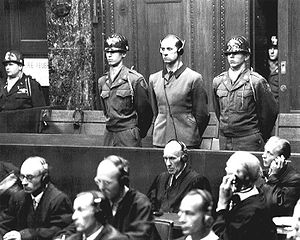
. These trials were held before U.S. military courts, not before the International Military Tribunal, but took place in the same rooms at the Palace of Justice. The trials are collectively known as the "Subsequent Nuremberg Trials
Subsequent Nuremberg Trials
The Subsequent Nuremberg Trials were a series of twelve U.S...
", formally the "Trials of War Criminals before the Nuremberg Military Tribunals" (NMT).
Twenty of the 23 defendants were medical doctors (Brack, Rudolf Brandt, and Sievers being Nazi officials instead) and were accused of having been involved in Nazi human experimentation
Nazi human experimentation
Nazi human experimentation was a series of medical experiments on large numbers of prisoners by the Nazi German regime in its concentration camps mainly in the early 1940s, during World War II and the Holocaust. Prisoners were coerced into participating: they did not willingly volunteer and there...
and mass murder under the guise of euthanasia. Josef Mengele
Josef Mengele
Josef Rudolf Mengele , also known as the Angel of Death was a German SS officer and a physician in the Nazi concentration camp Auschwitz-Birkenau. He earned doctorates in anthropology from Munich University and in medicine from Frankfurt University...
, one of the leading Nazi doctors, had evaded capture.
The judges in this case, heard before Military Tribunal I, were Walter B. Beals (presiding judge) from Washington, Harold L. Sebring from Florida
Florida
Florida is a state in the southeastern United States, located on the nation's Atlantic and Gulf coasts. It is bordered to the west by the Gulf of Mexico, to the north by Alabama and Georgia and to the east by the Atlantic Ocean. With a population of 18,801,310 as measured by the 2010 census, it...
, and Johnson T. Crawford
Johnson T. Crawford
Johnson Tal Crawford was a district judge in Pontotoc County, Oklahoma, United States. He was a member of the Military Tribunal which conducted the Nazi War Crimes Trials at Nuremberg. His papers are held in the Linscheid Library of East Central University....
from Oklahoma
Oklahoma
Oklahoma is a state located in the South Central region of the United States of America. With an estimated 3,751,351 residents as of the 2010 census and a land area of 68,667 square miles , Oklahoma is the 28th most populous and 20th-largest state...
, with Victor C. Swearingen, a former special assistant to the Attorney General
Attorney General
In most common law jurisdictions, the attorney general, or attorney-general, is the main legal advisor to the government, and in some jurisdictions he or she may also have executive responsibility for law enforcement or responsibility for public prosecutions.The term is used to refer to any person...
of the United States, as an alternate judge. The Chief of Counsel for the Prosecution was Telford Taylor
Telford Taylor
Telford Taylor was an American lawyer best known for his role in the Counsel for the Prosecution at the Nuremberg Trials after World War II, his opposition to Senator Joseph McCarthy in the 1950s, and his outspoken criticism of U.S...
and the chief prosecutor James M. McHaney. The indictment
Indictment
An indictment , in the common-law legal system, is a formal accusation that a person has committed a crime. In jurisdictions that maintain the concept of felonies, the serious criminal offence is a felony; jurisdictions that lack the concept of felonies often use that of an indictable offence—an...
was filed on October 25, 1946; the trial lasted from December 9 that year until August 20, 1947. Of the 23 defendants, seven were acquitted and seven received death sentences; the remainder received prison sentences ranging from 10 years to life imprisonment.
Indictment
The accused faced 4,000 charges, including:- Conspiracy to commit war crimeWar crimeWar crimes are serious violations of the laws applicable in armed conflict giving rise to individual criminal responsibility...
s and crimes against humanity as described in counts 2 and 3; - War crimes: performing medical experiments, without the subjects' consent, on prisoners of war and civilians of occupied countries, in the course of which experiments the defendants committed murders, brutalities, cruelties, tortures, atrocities, and other inhuman acts. Also planning and performing the mass murder of prisoners of war and civilians of occupied countries, stigmatized as aged, insane, incurably ill, deformed, and so on, by gas, lethal injections, and diverse other means in nursing homes, hospitals, and asylums during the Euthanasia Program and participating in the mass murder of concentration camp inmates.
- Crimes against humanity: committing crimes described under count 2 also on German nationals.
- Membership in a criminal organization, the SS.
The tribunal largely dropped count 1, stating that the charge was beyond its jurisdiction.
Defendants' fates
| Name | Function | Charges | Verdict and sentence | ||||
|---|---|---|---|---|---|---|---|
| 1 | 2 | 3 | 4 | ||||
| Hermann Becker-Freyseng Hermann Becker-Freyseng Hermann Becker-Freyseng was a German physician and consultant for aviation medicine with the Luftwaffe. He was recognised as a leading specialist in aviation medicine... |
Stabsarzt in the Luftwaffe Luftwaffe Luftwaffe is a generic German term for an air force. It is also the official name for two of the four historic German air forces, the Wehrmacht air arm founded in 1935 and disbanded in 1946; and the current Bundeswehr air arm founded in 1956.... (Captain, Medical Service of the Air Force); and Chief of the Department for Aviation Medicine of the Chief of the Medical Service of the Luftwaffe |
I | G | G | 20 years' imprisonment, commuted Commutation of sentence Commutation of sentence involves the reduction of legal penalties, especially in terms of imprisonment. Unlike a pardon, a commutation does not nullify the conviction and is often conditional. Clemency is a similar term, meaning the lessening of the penalty of the crime without forgiving the crime... to 10 years-died 1961 |
||
| Wilhelm Beiglböck Wilhelm Beiglböck Prof. Dr. Wilhelm Beiglböck was an internist and held the title of Consulting Physician to the German Luftwaffe during World War II.... |
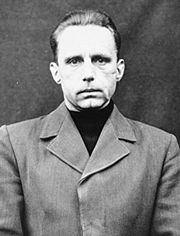 |
Consulting Physician to the Luftwaffe | I | G | G | 15 years' imprisonment, commuted to 10 years-died 1963 | |
| Kurt Blome Kurt Blome Kurt Blome was a high-ranking Nazi scientist before and during World War II. He was the Deputy Reich Health Leader and Plenipotentiary for Cancer Research in the Reich Research Council... |
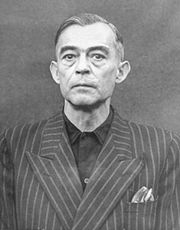 |
Deputy [of the] Reich Health Leader (Reichsgesundheitsführer); and Plenipotentiary for Cancer Research in the Reich Research Council | I | I | I | acquitted Acquittal In the common law tradition, an acquittal formally certifies the accused is free from the charge of an offense, as far as the criminal law is concerned. This is so even where the prosecution is abandoned nolle prosequi... at Doctors' Trial but later convicted by French authorities and sentenced to 20 years-died 1969 |
|
| Viktor Brack Viktor Brack Viktor Brack , was a Nazi war criminal, the organiser of the Euthanasia Programme, Action T4, where the Nazi state systematically murdered disabled German people... |
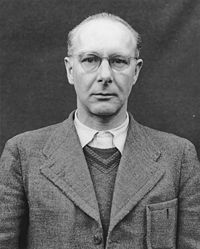 |
Oberführer (Senior Colonel) in the SS and Sturmbannführer (Major) in the Waffen SS; and Chief Administrative Officer in the Chancellery of the Führer of the NSDAP (Oberdienstleiter, Kanzlei des Führers der NSDAP) | I | G | G | G | death |
| Karl Brandt | 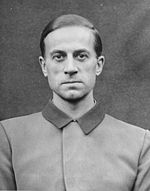 |
Personal physician to Adolf Hitler; Gruppenführer in the SS and Generalleutnant (Lieutenant General) in the Waffen SS; Reich Commissioner for Health and Sanitation (Reichskommissar für Sanitäts- und Gesundheitswesen); and member of the Reich Research Council (Reichsforschungsrat Reichsforschungsrat The Reichsforschungsrat was created in Germany in 1937 under the Education Ministry for the purpose of centralized planning of all basic and applied research, with the exception of aeronautical research... ) |
I | G | G | G | death |
| Rudolf Brandt Rudolf Brandt Rudolf Brandt was a German SS officer during 1933-1945 and a civil servant.A lawyer by profession, Brandt was Personal Administrative Officer to the Reichsführer-SS Heinrich Himmler, and a defendant at the Doctors' Trial at Nuremberg for his part in securing the 86 victims of the Jewish skeleton... |
.jpg) |
Standartenführer (Colonel); in the Allgemeine SS; Personal Administrative Officer to Reichsführer SS Himmler Heinrich Himmler Heinrich Luitpold Himmler was Reichsführer of the SS, a military commander, and a leading member of the Nazi Party. As Chief of the German Police and the Minister of the Interior from 1943, Himmler oversaw all internal and external police and security forces, including the Gestapo... (Persönlicher Referent von Himmler); and Ministerial Counsellor and Chief of the Ministerial Office in the Reich Ministry of the Interior |
I | G | G | G | death |
| Fritz Fischer Fritz Fischer (medical doctor) Fritz Fischer was a German medical doctor who, under the Nazi regime, participated in "medical experiments" conducted on inmates of the Ravensbrück concentration camp.... |
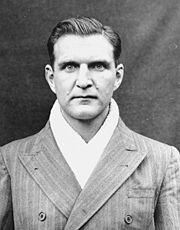 |
Sturmbannführer (Major) in the Waffen SS; and Assistant Physician to the defendant Gebhardt at the Hospital at Hohenlychen | I | G | G | G | lifetime imprisonment, commuted to 15 years released 1954; died 2003 |
| Karl Gebhardt Karl Gebhardt Karl Gebhardt was a German medical doctor; personal physician of Heinrich Himmler; and one of the main coordinators and perpetrators of surgical experiments performed on inmates of the concentration camps at Ravensbrück and Auschwitz.-Career in the Third Reich:Gebhardt's Nazi career began with his... |
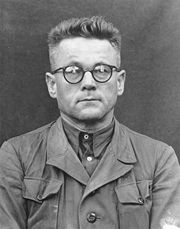 |
Gruppenführer in the SS and Generalleutnant (Lieutenant General) in the Waffen SS; personal physician to Reichsfuehrer SS Himmler; Chief Surgeon of the Staff of the Reich Physician SS and Police (Oberster Kliniker, Reichsarzt SS und Polizei); and President of the German Red Cross | I | G | G | G | death |
| Karl Genzken Karl Genzken Karl August Genzken , a physician, he conducted human experiments on prisoners of several concentration camps. He was a Major General of the Waffen-SS and the Chief of the Medical Office of the Waffen-SS... |
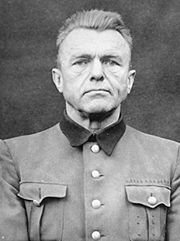 |
Gruppenführer in the SS and Generalleutnant (Lieutenant General) in the Waffen SS; and Chief of the Medical Department of the Waffen SS (Chef des Sanitätsamts der Waffen SS) | I | G | G | G | lifetime imprisonment, commuted to 20 years released 1954-died 1957 |
| Siegfried Handloser Siegfried Handloser Siegfried Adolf Handloser was a Doctor, Prof. Dr. med., Colonel General of the German Armed Forces Medical Services, Chief of the German Armed Forces Medical Services... |
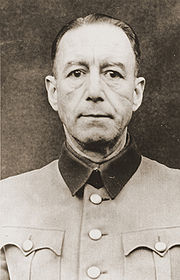 |
Generaloberstabsarzt (Colonel General, Medical Service); Medical Inspector of the Army (Heeressanitätsinspekteur); and Chief of the Medical Services of the Armed Forces (Chef des Wehrmachtsanitätswesens) | I | G | G | lifetime imprisonment, commuted to 20 years-released/died 1954 | |
| Waldemar Hoven Waldemar Hoven Waldemar Hoven was a Nazi and a physician at Buchenwald concentration camp.Hoven was born in Freiburg, Germany. Between the years 1919 and 1933, he visited Denmark, Sweden, the United States, and France, returning in 1933 to Freiburg, where he completed his high school studies. He then attended... |
Hauptsturmführer (Captain) in the Waffen SS; and Chief Doctor of the Buchenwald concentration camp Buchenwald concentration camp Buchenwald concentration camp was a German Nazi concentration camp established on the Ettersberg near Weimar, Germany, in July 1937, one of the first and the largest of the concentration camps on German soil.Camp prisoners from all over Europe and Russia—Jews, non-Jewish Poles and Slovenes,... |
I | G | G | G | death | |
| Joachim Mrugowsky Joachim Mrugowsky Joachim Mrugowsky Hygienist. Associate Professor, Medical Doctorate, Chief of Hygiene Institute of the Waffen-SS... |
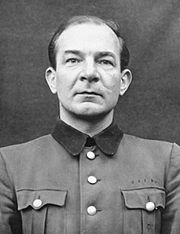 |
Oberführer (Senior Colonel) in the Waffen SS; Chief Hygienist of the Reich Physician SS and Police (Oberster Hygieniker, Reichsarzt SS und Polizei); and Chief of the Hygienic Institute of the Waffen SS (Chef des Hygienischen Institutes der Waffen SS) | I | G | G | G | death |
| Herta Oberheuser Herta Oberheuser Herta Oberheuser was a physician at the Ravensbrück concentration camp from 1940 until 1943.-Medical experiments:She worked there under the supervision of Dr... |
 |
Physician at the Ravensbrück concentration camp Ravensbrück concentration camp Ravensbrück was a notorious women's concentration camp during World War II, located in northern Germany, 90 km north of Berlin at a site near the village of Ravensbrück .... ; and Assistant Physician to the defendant Gebhardt at the Hospital at Hohenlychen |
I | G | G | 20 years' imprisonment, commuted to 10 years released 1952-died 1978 | |
| Adolf Pokorny Adolf Pokorny Adolf Pokorny was born on July 26, 1895 in Vienna, Austria. He was a dermatologist and Medical Doctorate. He was a defendant in the Doctors' Trial.Pokorny participated from March 1915 to September 1918 in the First World War... |
Physician, Specialist in Skin and Venereal Diseases | I | I | I | acquitted | ||
| Helmut Poppendick Helmut Poppendick Helmut Poppendick Internist. Medical Doctorate, Chief of the Personal Staff of the Reich Physician SS and Police. Defendant in the Doctors' Trial.... |
Oberführer (Senior Colonel) in the SS; and Chief of the Personal Staff of the Reich Physician SS and Police (Chef des Persönlichen Stabes des Reichsarztes SS und Polizei) | I | I | I | G | 10 years imprisonment, released 1951-died 1994 | |
| Hans Wolfgang Romberg | Doctor on the Staff of the Department for Aviation Medicine at the German Experimental Institute for Aviation | I | I | I | acquitted | ||
| Gerhard Rose Gerhard Rose Gerhard Rose was a German expert on tropical medicine who was tried for war crimes at the end of World War II.... |
Generalarzt of the Luftwaffe (Brigadier General, Medical Service of the Air Force); Vice President, Chief of the Department for Tropical Medicine, and Professor of the Robert Koch Institute; and Hygienic Adviser for Tropical Medicine to the Chief of the Medical Service of the Luftwaffe | I | G | G | lifetime imprisonment, commuted to 20 years released 1955-died 1992 | ||
| Paul Rostock Paul Rostock Paul Rostock was a German official, surgeon, and university professor. He was Chief of the Office for Medical Science and Research under Third Reich Commissioner Karl Brandt and a Full Professor, Medical Doctorate, Medical Superintendent of the University of Berlin Surgical... |
.jpg) |
Chief Surgeon of the Surgical Clinic in Berlin; Surgical Adviser to the Army; and Chief of the Office for Medical Science and Research (Amtschef der Dienststelle Medizinische Wissenschaft und Forschung) under the defendant Karl Brandt, Reich Commissioner for Health and Sanitation | I | I | I | acquitted-died 1956 | |
| Siegfried Ruff | Director of the Department for Aviation Medicine at the German Experimental Institute for Aviation (Deutsche Versuchsanstalt für Luftfahrt); still researching and publishing in the field of aviation as late as 1989 | I | I | I | acquitted | ||
| Konrad Schäfer | Doctor on the Staff of the Institute for Aviation Medicine in Berlin | I | I | I | acquitted | ||
| Oskar Schröder | Generaloberstabsarzt (Colonel General Medical Service); Chief of Staff of the Inspectorate of the Medical Service of the Luftwaffe (Chef des Stabes, Inspekteur des Luftwaffe-Sanitätswesens); and Chief of the Medical Service of the Luftwaffe (Chef des Sanitätswesens der Luftwaffe) | I | G | G | lifetime imprisonment, commuted to 15 years | ||
| Wolfram Sievers Wolfram Sievers Wolfram Sievers was Reichsgeschäftsführer, or managing director, of the Ahnenerbe from 1935 to 1945.-Early life:... |
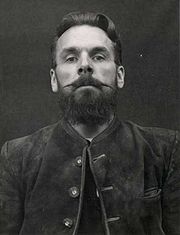 |
Standartenführer (Colonel) in the SS; Reich Manager of the "Ahnenerbe Ahnenerbe The Ahnenerbe was a Nazi German think tank that promoted itself as a "study society for Intellectual Ancient History." Founded on July 1, 1935, by Heinrich Himmler, Herman Wirth, and Richard Walther Darré, the Ahnenerbe's goal was to research the anthropological and cultural history of the Aryan... " Society and Director of its Institute for Military Scientific Research (Institut für Wehrwissenschaftliche Zweckforschung); and Deputy Chairman of the Managing Board of Directors of the Reich Research Council |
I | G | G | G | death |
| Georg August Weltz | Oberfeldarzt in the Luftwaffe (Lieutenant Colonel, Medical Service, of the Air Force); and Chief of the Institute for Aviation Medicine in Munich | I | I | I | acquitted |
I — Indicted G — Indicted and found guilty
Those sentenced to death were hanged on June 2, 1948 in Landsberg prison
Landsberg Prison
Landsberg Prison is a penal facility located in the town of Landsberg am Lech in the southwest of the German state of Bavaria, about west of Munich and south of Augsburg....
, Bavaria
Bavaria
Bavaria, formally the Free State of Bavaria is a state of Germany, located in the southeast of Germany. With an area of , it is the largest state by area, forming almost 20% of the total land area of Germany...
.
For some, the difference between receiving a prison term and the death sentence was membership of "an organization declared criminal by the judgement of the International Military Tribunal", the SS. However, some SS medical personnel received prison sentences. The degree of personal involvement and/or presiding over groups involved was a factor in others.
See also
- Bruno BegerBruno BegerBruno Beger was a German Racial anthropologist who worked for the Ahnenerbe...
- Hans Conrad Julius Reiter
- Command responsibilityCommand responsibilityCommand responsibility, sometimes referred to as the Yamashita standard or the Medina standard, and also known as superior responsibility, is the doctrine of hierarchical accountability in cases of war crimes....
- Declaration of GenevaDeclaration of GenevaThe Declaration of Geneva was adopted by the General Assembly of the World Medical Association at Geneva in 1948 and amended in 1968, 1984, 1994, 2005 and 2006. It is a declaration of physicians' dedication to the humanitarian goals of medicine, a declaration that was especially important in view...
- Declaration of HelsinkiDeclaration of HelsinkiThe Declaration of Helsinki is a set of ethical principles regarding human experimentation developed for the medical community by the World Medical Association . It is widely regarded as the cornerstone document of human research ethics...
- Medical ethicsMedical ethicsMedical ethics is a system of moral principles that apply values and judgments to the practice of medicine. As a scholarly discipline, medical ethics encompasses its practical application in clinical settings as well as work on its history, philosophy, theology, and sociology.-History:Historically,...
- Medical tortureMedical tortureMedical torture describes the involvement and sometimes active participation of medical professionals in acts of torture, either to judge what victims can endure, to apply treatments which will enhance torture, or as torturers in their own right...
- Nazi eugenicsNazi eugenicsNazi eugenics were Nazi Germany's racially-based social policies that placed the improvement of the Aryan race through eugenics at the center of their concerns...
- Nuremberg CodeNuremberg CodeThe Nuremberg Code is a set of research ethics principles for human experimentation set as a result of the Subsequent Nuremberg Trials at the end of the Second World War.-Background:...
- Nuremberg PrinciplesNuremberg PrinciplesThe Nuremberg principles were a set of guidelines for determining what constitutes a war crime. The document was created by the International Law Commission of the United Nations to codify the legal principles underlying the Nuremberg Trials of Nazi party members following World War II.- Principle...
- Research Materials: Max Planck Society ArchiveResearch Materials: Max Planck Society ArchiveAt the end of World War II, the Kaiser Wilhelm Society was renamed the Max Planck Society, and the institutes associated with the Kaiser Wilhelm Society were renamed "Max Planck" institutes. The records that were archived under the former Kaiser Wilhelm Society and its institutes were placed in the...
Further reading
(first edition, 1986, London, Macmillan)- Weindling, P.J. (2005). Nazi Medicine and the Nuremberg Trials: From Medical War Crimes to Informed Consent. Palgrave Macmillan. ISBN 1-4039-3911-X
External links
- Original documents and transcripts of the trial at Harvard's library
- Rogue's Gallery of Doctors Trial Defendants
- Trial proceedings (first part) and Trial proceedings (second part) from the Mazal library.(link seems dead)
- Description from the U.S. Holocaust Memorial Museum.
- Opening and closing statements and eyewitness testimony, at the U.S. Holocaust Memorial Museum
- The Ethics Of Using Medical Data From Nazi Experiments
- Life Unworthy of Life
- Biddiss M. (1997). "Disease and dictatorship: the case of Hitler's Reich" United States National Library of MedicineUnited States National Library of MedicineThe United States National Library of Medicine , operated by the United States federal government, is the world's largest medical library. Located in Bethesda, Maryland, the NLM is a division of the National Institutes of Health...
1997 Jun;90(6):342-6.