

Digitigrade

Encyclopedia
A digitigrade is an animal that stands or walks on its digits, or toes. Digitigrades include walking birds (what many assume to be bird knees are actually ankles), cats, dogs, and many other mammal
s, but not plantigrade
s or unguligrades. Digitigrades are generally quicker and move more quietly than other mammals.
There are anatomical differences between the limbs of plantigrades, like humans, and both unguligrade and digitigrade limb
s. Digitigrade and unguligrade animals have relatively long carpals and tarsal
s, and the bones which would correspond to the human ankle
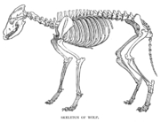
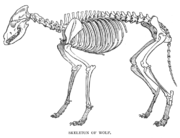
are thus set much higher in the limb than in a human. In a digigrade animal, this effectively lengthens the foot, so much so that a digitigrade animal's "hands" and "feet" are often thought to correspond only to what would be the bones of the human finger or toe.
Humans usually walk with the sole
s of their feet on the ground, in plantigrade
locomotion. In contrast, digitigrade animals walk on their distal
and intermediate phalanges
. Digitigrade locomotion is responsible for the distinctive hooked shape of dog legs.
Unguligrade
animals, such as horses and cattle, walk only on the distal-most tips of their digits, while in digitigrade animals, more than one segment of the digit makes contact with the ground, either directly (as in birds) or via paw-pads (as in dogs).
Mammal
Mammals are members of a class of air-breathing vertebrate animals characterised by the possession of endothermy, hair, three middle ear bones, and mammary glands functional in mothers with young...
s, but not plantigrade
Plantigrade
right|151px|thumb|Human skeleton, showing plantigrade habitIn terrestrial animals, plantigrade locomotion means walking with the podials and metatarsals flat on the ground. It is one of three forms of locomotion adopted by mammals...
s or unguligrades. Digitigrades are generally quicker and move more quietly than other mammals.
There are anatomical differences between the limbs of plantigrades, like humans, and both unguligrade and digitigrade limb
Limb (anatomy)
A limb is a jointed, or prehensile , appendage of the human or other animal body....
s. Digitigrade and unguligrade animals have relatively long carpals and tarsal
Tarsus (skeleton)
In tetrapods, the tarsus is a cluster of articulating bones in each foot situated between the lower end of tibia and fibula of the lower leg and the metatarsus. In the foot the tarsus articulates with the bones of the metatarsus, which in turn articulate with the bones of the individual toes...
s, and the bones which would correspond to the human ankle
Ankle
The ankle joint is formed where the foot and the leg meet. The ankle, or talocrural joint, is a synovial hinge joint that connects the distal ends of the tibia and fibula in the lower limb with the proximal end of the talus bone in the foot...
are thus set much higher in the limb than in a human. In a digigrade animal, this effectively lengthens the foot, so much so that a digitigrade animal's "hands" and "feet" are often thought to correspond only to what would be the bones of the human finger or toe.
Humans usually walk with the sole
Sole (foot)
The sole is the bottom of the foot.In humans the sole of the foot is anatomically referred to as the plantar aspect. The equivalent surface in ungulates is the hoof.- Human sole :...
s of their feet on the ground, in plantigrade
Plantigrade
right|151px|thumb|Human skeleton, showing plantigrade habitIn terrestrial animals, plantigrade locomotion means walking with the podials and metatarsals flat on the ground. It is one of three forms of locomotion adopted by mammals...
locomotion. In contrast, digitigrade animals walk on their distal
Distal phalanges
The distal or terminal phalanges are the terminal limb bones located at the tip of the digits...
and intermediate phalanges
Intermediate phalanges
Intermediate phalanges are bones found in the limbs of most vertebrates. In humans, they are the bones of the finger and toe which lie in the middle, between the two wrinkly joints. The thumb and big toe do not have intermediate phalanges...
. Digitigrade locomotion is responsible for the distinctive hooked shape of dog legs.
Unguligrade
Ungulate
Ungulates are several groups of mammals, most of which use the tips of their toes, usually hoofed, to sustain their whole body weight while moving. They make up several orders of mammals, of which six to eight survive...
animals, such as horses and cattle, walk only on the distal-most tips of their digits, while in digitigrade animals, more than one segment of the digit makes contact with the ground, either directly (as in birds) or via paw-pads (as in dogs).
Examples of digitigrades
- Dinosaurs (both digitigrade and semi-digitigrade)
- Birds
- CanidaeCanidaeCanidae is the biological family of carnivorous and omnivorous mammals that includes wolves, foxes, jackals, coyotes, and domestic dogs. A member of this family is called a canid . The Canidae family is divided into two tribes: Canini and Vulpini...
- Wolf
- DogDogThe domestic dog is a domesticated form of the gray wolf, a member of the Canidae family of the order Carnivora. The term is used for both feral and pet varieties. The dog may have been the first animal to be domesticated, and has been the most widely kept working, hunting, and companion animal in...
- CoyoteCoyoteThe coyote , also known as the American jackal or the prairie wolf, is a species of canine found throughout North and Central America, ranging from Panama in the south, north through Mexico, the United States and Canada...
- FelidaeFelidaeFelidae is the biological family of the cats; a member of this family is called a felid. Felids are the strictest carnivores of the thirteen terrestrial families in the order Carnivora, although the three families of marine mammals comprising the superfamily pinnipedia are as carnivorous as the...
- CatCatThe cat , also known as the domestic cat or housecat to distinguish it from other felids and felines, is a small, usually furry, domesticated, carnivorous mammal that is valued by humans for its companionship and for its ability to hunt vermin and household pests...
- LionLionThe lion is one of the four big cats in the genus Panthera, and a member of the family Felidae. With some males exceeding 250 kg in weight, it is the second-largest living cat after the tiger...
- Cat
- ElephantElephantElephants are large land mammals in two extant genera of the family Elephantidae: Elephas and Loxodonta, with the third genus Mammuthus extinct...
(semi-digitigrade)