
Home      Discussion      Topics      Dictionary      Almanac
Signup       Login
Dicamba

Dicamba

Overview
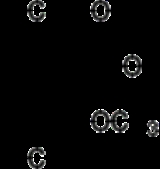
Dicamba is an herbicide
Herbicide
Herbicides, also commonly known as weedkillers, are pesticides used to kill unwanted plants. Selective herbicides kill specific targets while leaving the desired crop relatively unharmed. Some of these act by interfering with the growth of the weed and are often synthetic "imitations" of plant...

. Brand names for formulations of this herbicide include Banvel, Oracle and Vanquish. This chemical compound is an organochloride and a derivative of benzoic acid
Benzoic acid
Benzoic acid , C7H6O2 , is a colorless crystalline solid and the simplest aromatic carboxylic acid. The name derived from gum benzoin, which was for a long time the only source for benzoic acid. Its salts are used as a food preservative and benzoic acid is an important precursor for the synthesis...

.
Discussion
Ask a question about 'Dicamba'
Start a new discussion about 'Dicamba'
Answer questions from other users
Full Discussion Forum
 
Unanswered Questions
Encyclopedia
Dicamba is an herbicide
Herbicide
Herbicides, also commonly known as weedkillers, are pesticides used to kill unwanted plants. Selective herbicides kill specific targets while leaving the desired crop relatively unharmed. Some of these act by interfering with the growth of the weed and are often synthetic "imitations" of plant...

. Brand names for formulations of this herbicide include Banvel, Oracle and Vanquish. This chemical compound is an organochloride and a derivative of benzoic acid
Benzoic acid
Benzoic acid , C7H6O2 , is a colorless crystalline solid and the simplest aromatic carboxylic acid. The name derived from gum benzoin, which was for a long time the only source for benzoic acid. Its salts are used as a food preservative and benzoic acid is an important precursor for the synthesis...

.

Role as herbicide


Dicamba controls annual and perennial rose weeds in grain crops and highlands, and it is used to control brush and bracken in pastures, as well as legumes and cacti
Cacti
-See also:* RRDtool The underlying software upon which Cacti is built* MRTG The original Multi Router Traffic Grapher from which RRDtool was "extracted".* Munin -External links:******...

. It kills broadleaf weeds before and after they sprout. In combination with a phenoxy herbicide
Phenoxy herbicide
A phenoxy herbicide is any member of a family of chemicals related to the growth hormone indoleacetic acid . When sprayed on broad-leaf plants they induce rapid, uncontrolled growth, eventually killing them. When sprayed on crops such as wheat or corn, it selectively kills just the broad-leaf...

 or with other herbicides, dicamba is used in pastures, range land, and noncrop areas (fence rows, roadways, and wastage) to control weeds. Dicamba is toxic to conifer species but is in general less toxic to grasses.

Dicamba functions by increasing plant growth rate. At sufficient concentrations, the plant outgrows its nutrient supplies and dies.

Resistance


Some weed species have developed resistance to dicamba. Dicamba resistance in kochia
Kochia
Kochia is a synonym of the genus Bassia, that belongs to the subfamily Camphorosmoideae of family Amaranthaceae.Two american species traditionally included in Kochia are now in genus Neokochia: Neokochia americana and Neokochia californica....

 was discovered in 1994 and has not been explained by common modes of resistance such as absorption, translocation, or metabolism.

Genetically modified crops


The soil bacterium Pseudomonas maltophilia (strain DI-6) converts dicamba to 3,6-dichlorosalicylic acid (3,6-DCSA), which is adsorbed to soil much more strongly than is dicamba but lacks herbicidal activity. Little information is available on the toxicity of this breakdown intermediate. The enzymes responsible for this first breakdown step is a three-component system called dicamba O-demethylase. Monsanto
Monsanto
The Monsanto Company is a US-based multinational agricultural biotechnology corporation. It is the world's leading producer of the herbicide glyphosate, marketed in the "Roundup" brand of herbicides, and in other brands...

 has recently incorporated one component of the three enzymes into the genome of soybean and other broadleaf crop plants, making them resistant to dicamba.

Toxicological effects


Dicamba does not present unusual handling hazards. It is moderately toxic by ingestion and slightly toxic by inhalation or dermal exposure (oral in rats: 757 mg/kg body weight, dermal LD502,000 mg/kg, inhalation LC50200 mg/L).

In a 3-generation study, dicamba did not affect the reproductive capacity of rats. When rabbits were given doses of 0, 0.5, 1, 3, 10, or 20 (mg/kg)/day of technical dicamba from days 6 through 18 of pregnancy, toxic effects on the mothers, slightly reduced fetal body weights, and increased loss of fetuses occurred at the 10 mg/kg dose. U.S. Environmental Protection Agency‎ (EPA) has set the NOAEL for this study at 3 (mg/kg)/day.

In dog tests, some enlargement of liver cells has occurred, but a similar effect has not been shown in humans.

Soil


Dicamba is released directly to the environment by its application as a herbicide for the control of annual broadleaf weeds. It may cause damage to plants as a result of its absorption from the soil by plant roots. Dicamba is mobile in most soils and significant leaching is possible. The adsorption of dicamba to organo-clay soil is influenced by soil pH with the greatest adsorption to soil occurring in acidic soils. Dicamba is moderately persistent in soil. Its reported half-life in soil ranges from 1 to 6 weeks. Dicamba is likely to be more rapidly degraded in soils with high microbial populations, but dissipates more slowly in hardwood forests and wetlands than would be expected from the results of laboratory studies.

At a level of 10 mg/kg in sandy loam soil, dicamba caused a transient decrease in nitrification
Nitrification
Nitrification is the biological oxidation of ammonia with oxygen into nitrite followed by the oxidation of these nitrites into nitrates. Degradation of ammonia to nitrite is usually the rate limiting step of nitrification. Nitrification is an important step in the nitrogen cycle in soil...

 after two but not three weeks of incubation. The investigator determined that the decrease in nitrification is not substantial and does not suggest the potential for a prolonged impact on microbial activity. In the same study, dicamba did not affect ammonia formation or sulfur oxidation. In a more recent laboratory study, dicamba, at a concentration of 1 mg/kg soil, did not affect urea hydrolysis or nitrification in four soil types.

Water


Dicamba salts used in some herbicides are highly soluble in water. A recent study conducted by the U.S. Geologic Survey (USGS 1998) found dicamba in 0.11%-0.15% of the ground waters surveyed. The maximum level detected was 0.0025 mg/L. The prevalence of dicamba in groundwater from agricultural areas (0.11%) did not correlate with nonagricultural urban areas (0.35%).

Dicamba was tested for acute toxicity in a variety of aquatic animals. The studies accepted by the U.S. EPA found dicamba acid and DMA salt to be practically nontoxic to aquatic invertebrates. Studies accepted by the U.S. EPA found dicamba acid to be slightly toxic to cold water fish (rainbow trout), and practically nontoxic to warm water fish.

External links