


Democratic peace theory

Encyclopedia
Democratic peace theory (or simply the "democratic peace") is the theory that democracies
don't go to war
with each other. How well the theory matches reality depends a great deal on one's definition of "democracy" and "war". For example,
Some have preferred terms like "mutual democratic pacifism" or "inter-democracy nonaggression hypothesis" for the theory, to clarify that it is not the peace
itself that is democratic, but rather the countries involved.
Among proponents of the theory, several explanations have been offered for it:
Among those who dispute the theory, there are also several opinions: that the claim is a statistical artifact, explicable by chance; and that definitions of democracy and war can be deliberately cherry-picked to show a pattern that may not be there.
.jpg) Although the philosophical idea has circulated since Immanuel Kant
Although the philosophical idea has circulated since Immanuel Kant
and Thomas Paine
, it was not scientifically evaluated until the 1960s. Kant foreshadowed the theory in his essay Perpetual Peace
written in 1795, although he thought that a world with only constitutional republics was only one of several necessary conditions for a perpetual peace. Kant's theory was that a majority of the people would never vote to go to war, unless in self-defense. Therefore, if all nations were republics, it would end war, because there would be no aggressors. In earlier but less cited works, Thomas Paine made similar or stronger claims about the peaceful nature of republics. Paine wrote in "Common Sense" in 1776: "The Republics of Europe are all (and we may say always) in peace." Paine argued that kings would go to war out of pride in situations where republics would not.
Dean Babst
, a criminologist, was the first to do statistical research on this topic. He wrote an academic paper supporting the theory in 1964 in Wisconsin Sociologist; he published a slightly more popularized version, in 1972, in the trade journal Industrial Research. Both versions initially received little attention.
Melvin Small and J. David Singer (1976: 50—69) responded; they found an absence of wars between democratic states with two "marginal exceptions", but denied that this pattern had statistical significance. This paper was published in the Jerusalem Journal of International Relations which finally brought more widespread attention to the theory, and started the academic debate. A 1983 paper by Michael Doyle contributed further to popularizing the theory. Rudolph J. Rummel
was another early researcher and drew considerable lay attention to the subject in his later works.
Maoz & Abdolali (1989) extended the research to lesser conflicts than wars. Bremer (1992) and Maoz & Russett (1993) found the correlation between democracy and peacefulness remained significant after controlling for many possible confounding variables. This moved the theory into the mainstream of social science. Supporters of realism in international relations and others responded by raising many new objections. Other researchers attempted more systematic explanations of how democracy might cause peace (Köchler 1995), and of how democracy might also affect other aspects of foreign relations such as alliances and collaboration (Ray 2003).
There have been numerous further studies in the field since these pioneering works. Most studies have found some form of democratic peace exists, although neither methodological disputes nor doubtful cases are entirely resolved (Kinsella 2005).
fallacy.
Small and Singer (1976) define democracy as a nation that (1) holds periodic elections in which the opposition parties are as free to run as government parties, (2) allows at least 10% of the adult population to vote, and (3) has a parliament that either controls or enjoys parity with the executive branch of the government.
Doyle (1983) requires (1) that "liberal régimes" have market or private property economics, (2) they have polities that are externally sovereign, (3) they have citizens with juridical rights, and (4) they have representative governments. Either 30% of the adult males were able to vote or it was possible for every man to acquire voting rights as by attaining enough property. He allows greater power to hereditary monarchs than other researchers; for example, he counts the rule of Louis-Philippe of France
as a liberal régime.
Ray (1995) requires that at least 50% of the adult population is allowed to vote and that there has been at least one peaceful, constitutional transfer of executive power from one independent political party to another by means of an election. This definition excludes long periods often viewed as democratic. For example, the United States until 1800, India from independence until 1979, and Japan until 1993 were all under one-party rule, and thus would not be counted under this definition (Ray 1995, p. 100).
Rummel (1997) states that "By democracy is meant liberal democracy, where those who hold power are elected in competitive elections with a secret ballot and wide franchise (loosely understood as including at least 2/3 of adult males); where there is freedom of speech, religion, and organization; and a constitutional framework of law to which the government is subordinate and that guarantees equal rights."
which scores each state on two scales, one for democracy and one for autocracy, for each year since 1800; as well as several others. The use of the Polity Data has varied. Some researchers have done correlations between the democracy scale and belligerence; others have treated it as a binary classification by (as its maker does) calling all states with a high democracy score and a low autocracy score democracies; yet others have used the difference of the two scores, sometimes again making this into a binary classification (Gleditsch 1992).
Mansfield and Snyder (2002, 2005), while agreeing that there have been no wars between mature liberal democracies, state that countries in transition to democracy are especially likely to be involved in wars. They find that democratizing countries are even more warlike than stable democracies, stable autocracies or even countries in transition towards autocracy. So, they suggest caution in eliminating these wars from the analysis, because this might hide a negative aspect of the process of democratization. A reanalysis of the earlier study's statistical results emphasizes that the above relationship between democratization and war can only be said to hold for those democratizing countries where the executive lacks sufficient power, independence, and institutional strength. A review cites several other studies finding that the increase in the risk of war in democratizing countries happens only if many or most of the surrounding nations are undemocratic. If wars between young democracies are included in the analysis, several studies and reviews still find enough evidence supporting the stronger claim that all democracies, whether young or established, go into war with one another less frequently (Ray 1998), (Ray 2003), , while some do not .
which has also supplied the data for many studies on war. It turns out that most of the military conflicts in question fall clearly above or below this threshold (Ray 1995, p. 103).
Some researchers have used different definitions. For example, Weart (1998) defines war as more than 200 battle deaths. Russett (1993, p. 50), when looking at Ancient Greece, only requires some real battle engagement, involving on both sides forces under state authorization.
Militarized Interstate Disputes (MIDs), in the Correlates of War Project classification, are lesser conflicts than wars. Such a conflict may be no more than military display of force with no battle deaths. MIDs and wars together are "militarized interstate conflicts" or MICs. MIDs include the conflicts that precede a war; so the difference between MIDs and MICs may be less than it appears.
Statistical analysis and concerns about degrees of freedom
are the primary reasons for using MID's instead of actual wars. Wars are relatively rare. An average ratio of 30 MIDs to one war provides a richer statistical environment for analysis.
Historically, cases commonly cited as exceptions include the Sicilian Expedition
, the Spanish-American War
, the Continuation War
and more recently the Kargil War
. Doyle (1983) cites the Paquisha War
and the Lebanese air force's intervention in the Six Day War. The data set Bremer (1993) was using showed one exception, the French-Thai War
of 1940; Gleditsch (1995) sees the (somewhat technical - no military action was taken) state of war between Finland
and UK during World War II
, as a special case, which should probably be treated separately: an incidental state of war between democracies during large multi-polar wars. (Gowa 1999) (Maoz 1997, p. 165). Page Fortna (2004) discusses the 1974 Turkish invasion of Cyprus
and the Kargil War
as exceptions, finding the latter to be the most significant. However, the status of these countries as being truly democratic is a matter of debate.
One advocate of the democratic peace explains that his reason to choose a definition of democracy sufficiently restrictive to exclude all wars between democracies are what "might be disparagingly termed public relations": students and politicians will be more impressed by such a claim than by claims that wars between democracies are less likely.
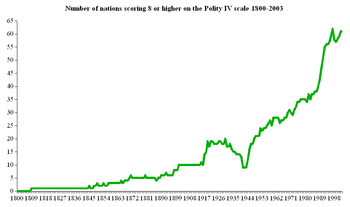 One problem with the research on wars is that, as the Realist Mearsheimer (1990, p. 50) put it, "democracies have been few in number over the past two centuries, and thus there have been few opportunities where democracies were in a position to fight one another". Especially if using a strict definition of democracy, as by those finding no wars. Democracies have been very rare until recently. Even looser definitions of democracy, such as Doyle's, find only a dozen democracies before the late nineteenth century, and many of them short-lived or with limited franchise (Doyle 1983), (Doyle 1997, p. 261). Freedom House
finds no independent state with universal suffrage
in 1900.
Wayman (1998), a supporter of the theory, states that "If we rely solely on whether there has been an inter-democratic war, it is going to take many more decades of peace to build our confidence in the stability of the democratic peace".
Another study finds that after both states have become democratic, there is a decreasing probability for MIDs within a year and this decreases almost to zero within five years.
When examining the inter-liberal MIDs in more detail, one study finds that they are less likely to involve third parties, and that the target of the hostility is less likely to reciprocate, if the target reciprocates the response is usually proportional to the provocation, and the disputes are less likely to cause any loss of life. The most common action was "Seizure of Material or Personnel".
Studies find that the probability that disputes between states will be resolved peacefully is positively affected by the degree of democracy exhibited by the lesser democratic state involved in that dispute. Disputes between democratic states are significantly shorter than disputes involving at least one undemocratic state. Democratic states are more likely to be amenable to third party mediation when they are involved in disputes with each other .
In international crises that include the threat or use of military force, one study finds that if the parties are democracies, then relative military strength has no effect on who wins. This is different from when nondemocracies are involved. These results are the same also if the conflicting parties are formal allies . Similarly, a study of the behavior of states that joined ongoing militarized disputes reports that power is important only to autocracies: democracies do not seem to base their alignment on the power of the sides in the dispute .
states, but also more likely to be targeted in a war having other initiators.
s, and intermediate regimes the most. The probability for a civil war is also increased by political change, regardless whether toward greater democracy or greater autocracy. Intermediate regimes continue to be the most prone to civil war, regardless of the time since the political change. In the long run, since intermediate regimes are less stable than autocracies, which in turn are less stable than democracies, durable democracy is the most probable end-point of the process of democratization
. Abadie (2004) study finds that the most democratic nations have the least terrorism. Harff (2003) finds that genocide
and politicide
are rare in democracies. Rummel (1997) finds that the more democratic a regime, the less its democide
. He finds that democide has killed six times as many people as battles.
Davenport and Armstrong (2004) lists several other studies and states: "Repeatedly, democratic political systems have been found to decrease political bans, censorship, torture, disappearances and mass killing, doing so in a linear fashion across diverse measurements, methodologies, time periods, countries, and contexts." It concludes: "Across measures and methodological techniques, it is found that below a certain level, democracy has no impact on human rights violations, but above this level democracy influences repression in a negative and roughly linear manner." Davenport and Armstrong (2003) states that thirty years worth of statistical research has revealed that only two variables decrease human rights violations: political democracy and economic development.
political structures , . Note that they usually are meant to be explanations for little violence between democracies, not for a low level of internal violence in democracies.
Several of these mechanisms may also apply to countries of similar systems. The book Never at War
finds evidence for an oligarchic peace. One example is the Polish-Lithuanian Commonwealth
, in which the Sejm
resisted and vetoed most royal proposals for war, like those of Władysław IV Vasa
.
Bruce Russett (1993, p. 5-11, 35, 59-62, 73-4) also argues that the democratic culture affects the way leaders resolve conflicts. In addition, he holds that a social norm emerged toward the end of the nineteenth century; that democracies should not fight each other, which strengthened when the democratic culture and the degree of democracy increased, for example by widening the franchise. Increasing democratic stability allowed partners in foreign affairs to perceive a nation as reliable democratic. The alliances between democracies during the two World Wars and the Cold War also strengthened the norms. He sees less effective traces of this norm in Greek antiquity.
Hans Köchler
(1995) relates the question of transnational democracy to empowering the individual citizen by involving him, through procedures of direct democracy
, in a country's international affairs, and he calls for the restructuring of the United Nations Organization according to democratic norms. He refers in particular to the Swiss practice of participatory democracy
.
Mousseau (2000, 2005) argues that it is market-oriented development that creates the norms and values that explain both democracy and the peace. In less developed countries individuals often depend on social networks that impose conformity to in-group norms and beliefs, and loyalty to group leaders. When jobs are plentiful on the market, in contrast, as in market-oriented developed countries, individuals depend on a strong state that enforces contracts equally. Cognitive routines emerge of abiding by state law rather than group leaders, and, as in contracts, tolerating differences among individuals. Voters in marketplace democracies thus accept only impartial ‘liberal’ governments, and constrain leaders to pursue their interests in securing equal access to global markets and in resisting those who distort such access with force. Marketplace democracies thus share common foreign policy interests in the supremacy—and predictability—of international law over brute power politics, and equal and open global trade over closed trade and imperial preferences. When disputes do originate between marketplace democracies, they are less likely than others to escalate to violence because both states, even the stronger one, perceive greater long-term interests in the supremacy of law over power politics.
argues that liberal norms of conflict resolution vary because liberalism takes many forms. By examining survey results from the newly independent states of the former Soviet Union, the author demonstrates that liberalism in that region bears a stronger resemblance to 19th-century liberal nationalism than to the sort of universalist, Wilsonian liberalism described by democratic peace theorists, and that, as a result, liberals in the region are more, not less, aggressive than non-liberals.
Democracy thus gives influence to those most likely to be killed or wounded in wars, and their relatives and friends (and to those who pay the bulk of the war taxes) Russett (1993, p. 30). This monadic theory must, however, explain why democracies do attack non-democratic states. One explanation is that these democracies were threatened or otherwise were provoked by the non-democratic states. Doyle (1997, p. 272) argued that the absence of a monadic peace is only to be expected: the same ideologies that cause liberal states to be at peace with each other inspire idealistic wars with the illiberal, whether to defend oppressed foreign minorities or avenge countrymen settled abroad. Doyle also notes (p. 292) liberal states do conduct covert operations against each other; the covert nature of the operation, however, prevents the publicity otherwise characteristic of a free state from applying to the question
Studies show that democratic states are more likely than autocratic states to win the wars. One explanation is that democracies, for internal political and economic reasons, have greater resources. This might mean that democratic leaders are unlikely to select other democratic states as targets because they perceive them to be particularly formidable opponents. One study finds that interstate wars have important impacts on the fate of political regimes, and that the probability that a political leader will fall from power in the wake of a lost war is particularly high in democratic states .
As described in , several studies have argued that liberal leaders face institutionalized constraints that impede their capacity to mobilize the state’s resources for war without the consent of a broad spectrum of interests. Survey results that compare the attitudes of citizens and elites in the Soviet successor states are consistent with this argument . Moreover, these constraints are readily apparent to other states and cannot be manipulated by leaders. Thus, democracies send credible signals to other states of an aversion to using force. These signals allow democratic states to avoid conflicts with one another, but they may attract aggression from nondemocratic states. Democracies may be pressured to respond to such aggression—perhaps even preemptively—through the use of force. Also as described in , studies have argued that when democratic leaders do choose to escalate international crises, their threats are taken as highly credible, since there must be a relatively large public opinion for these actions. In disputes between liberal states, the credibility of their bargaining signals allows them to negotiate a peaceful settlement before mobilization.
An explanation based on game theory
similar to the last two above is that the participation of the public and the open debate send clear and reliable information regarding the intentions of democracies to other states. In contrast, it is difficult to know the intentions of nondemocratic leaders, what effect concessions will have, and if promises will be kept. Thus there will be mistrust and unwillingness to make concessions if at least one of the parties in a dispute is a nondemocracy .
The risk factors for certain types of state have, however, changed since Kant's time. In the quote above, Kant points to the lack of popular support for war - given that the populace will directly or indirectly suffer in the event of war - as a reason why republics will not tend to go to war. The number of American troops killed or maimed versus the number of Iraqi soldiers and civilians maimed and killed in the American-Iraqi conflict is indicative. This may explain the relatively great willingness of democratic states to attack weak opponents: the Iraq war was, initially at least, highly popular in the United States. The case of the Vietnam War
might, nonetheless, indicate a tipping point where publics may no longer accept continuing attrition of their soldiers (even while remaining relatively indifferent to the much higher loss of life on the part of the populations attacked).
Others , , state that, although there may be some evidence for democratic peace, the data sample or the time span may be too small to assess any definitive conclusions. For example, Gowa finds evidence for democratic peace to be insignificant before 1939, because of the too small number of democracies, and offers an alternate explanation for the following period (see the section on Realist Explanations). Gowa's use of statistics has been criticized, with several other studies and reviews finding different or opposing results , . However, this can be seen as the longest-lasting criticism to the theory; as noted earlier, also some supporters agree that the statistical sample for assessing its validity is limited or scarce, at least if only full scale wars are considered.
According to one study, which uses a rather restrictive definition of democracy and war, there were no wars between jointly democratic couples of states in the period from 1816 to 1992. Assuming a purely random distribution of wars between states, regardless of their democratic character, the predicted number of conflicts between democracies would be around ten. So, Ray argues that the evidence is statistically significant, but that it is still conceivable that, in the future, even a small number of inter-democratic wars would cancel out such evidence.
Some democratic peace researchers have been criticized for post hoc reclassifying some specific conflicts as non-wars or political systems as non-democracies without checking and correcting the whole data set used similarly. Supporters and opponents of the democratic peace agree that this is bad use of statistics, even if a plausible case can be made for the correction (Bremer 1992), (Gleditsch 1995), (Gowa 1999). A military affairs columnist of the newspaper Asia Times has summarized the above criticism in a journalist's fashion describing the theory as subject to the no true Scotsman
problem: exceptions are explained away as not being between "real" democracies or "real" wars.
Some democratic peace researchers require that the executive result from a substantively contested election. This may be a restrictive definition: For example, the National Archives of the United States notes that "For all intents and purposes, George Washington
was unopposed for election as President, both in 1789 and 1792". (Under the original provisions for the Electoral College
, there was no distinction between votes for President and Vice-President: each elector was required to vote for two distinct candidates, with the runner-up to be Vice-President. Every elector cast one of his votes for Washington, John Adams received a majority of the other votes; there were several other candidates: so the election for Vice President was contested.)
Spiro (1994) made several other criticisms of the statistical methods used. Russett (1995) and a series of papers described by Ray (2003) responded to this, for example with different methodology.
Sometimes the datasets used have also been criticized. For example, some authors have criticized the Correlates of War data for not including civilian deaths in the battle deaths count, especially in civil wars . Weeks and Cohen (2006) argue that most fishing disputes, which include no deaths and generally very limited threats of violence, should be excluded even from the list of military disputes. Gleditsch (2004) made several criticisms to the Correlates of War data set, and produced a revised set of data. Maoz and Russett (1993) made several criticisms to the Polity I and II data sets, which have mostly been addressed in later versions. These criticisms are generally considered minor issues.
Perhaps the simplest explanation to such perceived anomaly (but not the one the Realist Rosato prefers, see the section on Realist explanations below) is that democracies are not peaceful to each other because they are democratic, but rather because they are similar. This line of thought started with several independent observations of an "Autocratic Peace" effect, a reduced probability of war (obviously no author claims its absence) between states which are both non-democratic, or both highly so , , This has led to the hypothesis that democratic peace emerges as a particular case when analyzing a subset of states which are, in fact, similar . Or, that similarity in general does not solely affect the probability of war, but only coherence of strong political regimes such as full democracies and stark autocracies.
Autocratic peace and the explanation based on political similarity is a relatively recent development, and opinions about its value are varied. Henderson (2002) builds a model considering political similarity, geographic distance and economic interdependence as its main variables, and concludes that democratic peace is a statistical artifact which disappears when the above variables are taken into account. Werner (2000) finds a conflict reducing effect from political similarity in general, but with democratic dyads being particularly peaceful, and noting some differences in behavior between democratic and autocratic dyads with respect to alliances and power evaluation. Beck, King and Zeng (2004) use neural networks to show two distinct low probability zones, corresponding to high democracy and high autocracy. Petersen (2004) uses a different statistical model and finds that autocratic peace is not statistically significant, and that the effect attributed to similarity is mostly driven by the pacifying effect of joint democracy. Ray (2005) similarly disputes the weight of the argument on logical grounds, claiming that statistical analysis on "political similarity" uses a main variable which is an extension of "joint democracy" by linguistic redefinition, and so it is expected that the war reducing effects are carried on in the new analysis. Bennett (2006) builds a direct statistical model based on a triadic classification of states into "democratic", "autocratic" and "mixed". He finds that autocratic dyads have a 35% reduced chance of going into any type of armed conflict with respect to a reference mixed dyad. Democratic dyads have a 55% reduced chance. This effect gets stronger when looking at more severe conflicts; for wars (more than 1000 battle deaths), he estimates democratic dyads to have an 82% lower risk than autocratic dyads. He concludes that autocratic peace exists, but democratic peace is clearly stronger. However, he finds no relevant pacifying effect of political similarity, except at the extremes of the scale.
To summarize a rather complex picture, there are no less than four possible stances on the value of this criticism:
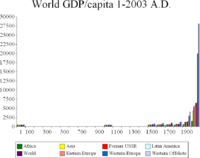 A majority of researchers on the determinants of democracy agree that economic development is a primary factor which allows the formation of a stable and healthy democracy (Hegre, 2003; Weede, 2004). Thus, some researchers have argued that economic development also plays a factor in the establishment of peace.
Mousseau argues that a culture of contracting in advanced market-oriented economies may cause both democracy and peace (2000; 2002; 2003; 2005). These studies indicate that democracy, alone, is an unlikely cause of the democratic peace. A low level of market-oriented economic development may hinder development of liberal institutions and values. Hegre (2000) and Souva (2003) confirmed these expectations. Mousseau (2005) finds that democracy is a significant factor only when both democracies have levels of economic development well above the global median. In fact, the poorest 21% of the democracies studied, and the poorest 4-5% of current democracies, are significantly more likely than other kinds of countries to fight each other. Mousseau, Hegre & Oneal (2003) confirm that if at least one of the democracies involved has a very low level of economic development, democracy is ineffective in preventing war; however, they find that when also controlling for trade, 91% of all the democratic pairs had high enough development for the pacifying effect of democracy to be important during the 1885–1992 period and all in 1992. The difference in results of Mousseau (2005) and Mousseau, Hegre & Oneal (2003) may be due to sampling: Mousseau (2005) observed only neighboring states where poor countries actually can fight each other. In fact, fully 89% of militarized conflicts between less developed countries from 1920 and 2000 were among directly contiguous neighbors (Mousseau 2005:68-69). He argues that it is not likely that the results can be explained by trade: Because developed states have large economies, they do not have high levels of trade interdependence (2005:70 and footnote 5; Mousseau, Hegre & Oneal 2003:283). In fact, the correlation of developed democracy with trade interdependence is a scant 0.06 (Pearson's r - considered substantively no correlation by statisticians)(2005:77).
Both World War
s were fought between countries which can be considered economically developed. Mousseau argues that both Germany and Japan - like the USSR during the Cold War and Saudi Arabia today - had state-managed economies and thus lacked his market norms (Mousseau 2002-03:29). Hegre (2003) finds that democracy is correlated with civil peace only for developed countries, and for countries with high levels of literacy. Conversely, the risk of civil war decreases with development only for democratic countries.
Gartzke (2005) argues that economic freedom
(a quite different concept from Mousseau's market norms) or financial dependence (2007) explains the developed democratic peace, and these countries may be weak on these dimensions too. Rummel (2005) criticizes Gartzke's methodology and argues that his results are invalid.
Several studies find that democracy, more trade
causing greater economic interdependence
, and membership in more intergovernmental organizations reduce the risk of war. This is often called the Kantian peace theory since it is similar to Kant's earlier theory about a perpetual peace; it is often also called "liberal peace" theory, especially when one focuses on the effects of trade and democracy. (The theory that free trade
can cause peace is quite old and referred to as Cobdenism
.) Many researchers agree that these variables positively affect each other but each has a separate pacifying effect. For example, in countries exchanging a substantial amount of trade, economic interest groups may exist that oppose a reciprocal disruptive war, but in democracy such groups may have more power, and the political leaders be more likely to accept their requests. (Russett & Oneal 2001), , . Weede (2004) argues that the pacifying effect of free trade and economic interdependence may be more important than that of democracy, because the former affects peace both directly and indirectly, by producing economic development and ultimately, democracy. Weede also lists some other authors supporting this view. However, some recent studies find no effect from trade but only from democracy , .
None of the authors listed argues that free trade alone causes peace. Even so, the issue of whether free trade or democracy is more important in maintaining peace may have potentially significant practical consequences, for example on evaluating the effectiveness of applying economic sanctions and restrictions to autocratic countries.
It was Michael Doyle (1983, 1997) who reintroduced Kant's three articles into democratic peace theory. He argued that a pacific union of liberal states has been growing for the past two centuries. He denies that a pair of states will be peaceful simply because they are both liberal democracies; if that were enough, liberal states would not be aggressive towards weak non-liberal states (as the history of American relations with Mexico shows they are). Rather, liberal democracy is a necessary condition for international organization and hospitality (which are Kant's other two articles)—and all three are sufficient to produce peace. Other Kantians have not repeated Doyle's argument that all three in the triad must be present, instead stating that all three reduce the risk of war.
Several studies have also controlled for the possibility of reverse causality from peace to democracy. For example, one study supports the theory of simultaneous causation, finding that dyads involved in wars are likely to experience a decrease in joint democracy, which in turn increases the probability of further war. So they argue that disputes between democratizing or democratic states should be resolved externally at a very early stage, in order to stabilize the system. Another study finds that peace does not spread democracy, but spreading democracy is likely to spread peace. A different kind of reverse causation lies in the suggestion that impending war could destroy or decrease democracy, because the preparation for war might include political restrictions, which may be the cause for the findings of democratic peace. However, this hypothesis has been statistically tested in a study whose authors find, depending on the definition of the pre-war period, no such effect or a very slight one. So, they find this explanation unlikely. Note also that this explanation would predict a monadic effect, although weaker than the dyadic one.
Weart (1998) argues that the peacefulness appears and disappears rapidly when democracy appears and disappears. This in his view makes it unlikely that variables that change more slowly are the explanation. Weart, however, has been criticized for not offering any quantitative analysis supporting his claims (Ray, 2000).
Wars tend very strongly to be between neighboring states. Gleditsch (1995) showed that the average distance between democracies is about 8000 miles, the same as the average distance between all states. He believes that the effect of distance in preventing war, modified by the democratic peace, explains the incidence of war as fully as it can be explained.
For example, Farber and Gowa (1995) find evidence for peace between democracies to be statistically significant only in the period from 1945 on, and consider such peace an artifact of the Cold War
, when the threat from the communist states forced democracies to ally with one another. Mearsheimer (1990) offers a similar analysis of the Anglo-American peace before 1945, caused by the German threat. Spiro (1994) finds several instances of wars between democracies, arguing that evidence in favor of the theory might be not so vast as other authors report, and claims that the remaining evidence consists of peace between allied states with shared objectives. He acknowledges that democratic states might have a somewhat greater tendency to ally with one another, and regards this as the only real effect of democratic peace. Rosato (2003) argues that most of the significant evidence for democratic peace has been observed after World War II; and that it has happened within a broad alliance, which can be identified with NATO and its satellite nations, imposed and maintained by American dominance (see Pax Americana
). One of the main points in Rosato's argument is that, although never engaged in open war with another liberal democracy during the Cold War, the United States intervened openly or covertly in the political affairs of democratic states several times, for example in the Chilean coup of 1973
, the 1953 coup in Iran
and 1954 coup in Guatemala
; in Rosato's view, these interventions show the United States' determination to maintain an "imperial peace".
The most direct counter arguments to such criticisms have been studies finding peace between democracies to be significant even when controlling for "common interests" as reflected in alliance ties , . Regarding specific issues, Ray (1998) objects that explanations based on the Cold War should predict that the Communist bloc would be at peace within itself also, but exceptions include the Soviet Invasion of Afghanistan, the Cambodian-Vietnamese War
, and the Sino-Vietnamese War
. Ray also argues that the external threat did not prevent conflicts in the Western bloc when at least one of the involved states was a nondemocracy, such as the Turkish Invasion of Cyprus
(against Greek Junta supported Cypriot Greeks), the Falklands War
, and the Football War
. Also, one study notes that the explanation "goes increasingly stale as the post-Cold War world accumulates an increasing number of peaceful dyad-years between democracies". Rosato's argument about American dominance has also been criticized for not giving supporting statistical evidence (Slantchev, Alexandrova & Gartzke 2005).
Some realist authors also criticize in detail the explanations given by supporters of democratic peace, pointing to supposed inconsistencies or weaknesses.
Rosato (2003) criticizes most explanations to how democracy might cause peace. Arguments based on normative constraints, he argues, are not consistent with the fact that democracies do go to war no less than other states, thus violating norms preventing war; for the same reason he refutes arguments based on the importance of public opinion. Regarding explanations based on greater accountability of leaders, he finds that historically autocratic leaders have been removed or punished more often than democratic leaders when they get involved in costly wars. Finally, he also criticizes the arguments that democracies treat each other with trust and respect even during crises; and that democracy might be slow to mobilize its composite and diverse groups and opinions, hindering the start of a war, drawing support from other authors. Another realist, Layne (1994) analyzes the crises and brinkmanship
that took place between non-allied democratic great powers, during the relatively brief period when such existed. He finds no evidence either of institutional or cultural constraints against war; indeed, there was popular sentiment in favor of war on both sides. Instead, in all cases, one side concluded that it could not afford to risk that war at that time, and made the necessary concessions.
Rosato's objections have been criticized for claimed logical and methodological errors, and for being contradicted by existing statistical research (Kinsella 2005). Russett (1995) replies to Layne by re-examining some of the crises studied in his article, and reaching different conclusions; Russett argues that perceptions of democracy prevented escalation, or played a major role in doing so. Also, a recent study (Gelpi & Griesdorf 2001) finds that, while in general the outcome of international disputes is highly influenced by the contenders' relative military strength, this is not true if both contenders are democratic states; in this case the authors find the outcome of the crisis to be independent of the military capabilities of contenders, which is contrary to realist expectations. Finally, both the realist criticisms here described ignore new possible explanations, like the game-theoretic one discussed below.
preventing both sides from foreseeing what could be reasonably called a "victory". The 1999 Kargil War
between India and Pakistan has been cited as a counterexample to this argument (Page Fortna, 2004).
Some supporters of the democratic peace do not deny that realist factors are also important (Russett 1995). Research supporting the theory has also shown that factors such as alliance ties and major power status influence interstate conflict behavior .
has argued that it is the global capitalist system that creates shared interests among the dominant parties, thus inhibiting potentially harmful belligerence.
Negri and Hardt
take a similar stance, arguing that the intertwined network of interests in the global capitalism leads to the decline of individual nation states
, and the rise of a global Empire
which has no outside, and no external enemies. As a result, they write, "The era of imperialist, interimperialist, and anti-imperialist wars is over. (...) we have entered the era of minor and internal conflicts. Every imperial war is a civil war, a police action." (Hardt & Negri 2000).
Democratic peace researchers do in general not count as wars conflicts which do not kill a thousand on the battlefield; thus they exclude for example the bloodless Cod Wars. However, as noted earlier, research has also found a peacefulness between democracies when looking at lesser conflicts.
Democracies were involved in more colonial and imperialistic wars than other states during the 1816-1945 period. On the other hand, this relation disappears if controlling for factors like power and number of colonies. Liberal democracies have less of these wars than other states after 1945. This might be related to changes in the perception of non-European peoples, as embodied in the Universal Declaration of Human Rights
(Ravlo & Glieditsch 2000).
Related to this is the human rights violations committed against native people
, sometimes by liberal democracies. One response is that many of the worst crimes were committed by nondemocracies, like in the European colonies before the nineteenth century, in King Leopold II of Belgium
's privately owned Congo Free State
, and in Joseph Stalin
's Soviet Union
. The United Kingdom abolished slavery in British territory in 1833, immediately after the Reform Act 1832
had significantly enlarged the franchise. (Of course, the abolition of the slave trade had been enacted in 1807; and many DPT supporters would deny that the UK was a liberal democracy in 1833 when examining interstate wars.)
Hermann and Kegley (1995) argue that interventions between democracies are more likely to happen than projected by an expected model. They further argue (1996) that democracies are more likely to intervene in other liberal states than against countries that are non-democracies. Finally, they argue that these interventions between democracies have been increasing over time and that the world can expect more of these interventions in the future. The methodology used has been criticized and more recent studies have found opposing results (Gleditsch, Christiansen & Hegre 2004).
Rummel argues that the continuing increase in democracy worldwide will soon lead to an end to wars and democide
, possibly around or even before the middle of this century. The fall of Communism
and the increase in the number of democratic states were accompanied by a sudden and dramatic decline in total warfare, interstate wars, ethnic wars, revolutionary
wars, and the number of refugees and displaced person
s. One report claims that the two main causes of this decline in warfare are the end of the Cold War itself and decolonization
; but also claims that the three Kantian factors have contributed materially.
Imre Lakatos
suggested that what he called a "progressive research program" is better than a "degenerative" one when it can explain the same phenomena as the "degenerative" one, but is also characterized by growth of its research field and the discovery of important novel facts. In contrast, the supporters of the "degenerative" program do not make important new empirical discoveries, but instead mostly apply adjustments to their theory in order to defend it from competitors. Some researchers argue that democratic peace theory is now the "progressive" program in international relations. According to these authors, the theory can explain the empirical phenomena previously explained by the earlier dominant research program, realism in international relations; in addition, the initial statement that democracies do not, or rarely, wage war on one another, has been followed by a rapidly growing literature on novel empirical regularities. , , .
Other examples are several studies finding that democracies are more likely to ally with one another than with other states, forming alliances which are likely to last longer than alliances involving nondemocracies ; several studies including showing that democracies conduct diplomacy differently and in a more conciliatory way compared to nondemocracies; one study finding that democracies with proportional representation
are in general more peaceful regardless of the nature of the other party involved in a relationship ; and another study reporting that proportional representation system and decentralized territorial autonomy is positively associated with lasting peace in postconflict societies .
In The Lexus and the Olive Tree
, Thomas L. Friedman coins the "Golden Arches Theory of Conflict Prevention" - that no two countries that both have a McDonald's
franchise would be likely to fight a war. The 2008 South Ossetia war
, however, is a counterexample.
and classical liberalist
traditions and is opposed to the previously dominant theory of realism
. However, democratic peace theory has come to be more widely accepted and has in some democracies effected policy change.
In the United States, presidents from both major parties have expressed support for the theory. In his 1994 State of the Union
address, then-President Bill Clinton
, a member of the Democratic Party
, said: "Ultimately, the best strategy to ensure our security and to build a durable peace is to support the advance of democracy elsewhere. Democracies don't attack each other." In a 2004 press conference, then-President George W. Bush
, a member of the Republican Party
, said: "And the reason why I'm so strong on democracy is democracies don't go to war with each other. And the reason why is the people of most societies don't like war, and they understand what war means.... I've got great faith in democracies to promote peace. And that's why I'm such a strong believer that the way forward in the Middle East, the broader Middle East, is to promote democracy."
In a 1999 speech, Chris Patten
, the then-European Commissioner
for External Relations, said: "Inevitable because the EU was formed partly to protect liberal values, so it is hardly surprising that we should think it appropriate to speak out. But it is also sensible for strategic reasons. Free societies tend not to fight one another or to be bad neighbours." The A Secure Europe in a Better World, European Security Strategy states: "The best protection for our security is a world of well-governed democratic states." Tony Blair
has also claimed the theory is correct.
in 1917 asked Congress to declare war against Imperial Germany, citing Germany's sinking of American ships due to unrestricted submarine warfare
and the Zimmermann telegram
, but also stating that "A steadfast concert for peace can never be maintained except by a partnership of democratic nations" and "The world must be made safe for democracy." R. J. Rummel
is a notable proponent of war for the purpose of spreading democracy, based on this theory.
Some point out that the democratic peace theory has been used to justify the 2003 Iraq War, others argue that this justification was used only after the war had already started (Russett 2005). Furthermore, Weede (2004) has argued that the justification is extremely weak, because forcibly democratizing a country completely surrounded by non-democracies, most of which are full autocracies, as Iraq was, is at least as likely to increase the risk of war as it is to decrease it (some studies show that dyads formed by one democracy and one autocracy are the most warlike, and several find that the risk of war is greatly increased in democratizing countries surrounded by nondemocracies). According to Weede, if the United States and its allies wanted to adopt a rationale strategy of forced democratization based on democratic peace, which he still does not recommend, it would be best to start intervening in countries which border with at least one or two stable democracies, and expand gradually. Also, research shows that attempts to create democracies by using external force has often failed. Gleditsch, Christiansen and Hegre (2004) argue that forced democratization by interventionism may initially have partial success, but often create an unstable democratizing country, which can have dangerous consequences in the long run. Those attempts which had a permanent and stable success, like democratization in Austria, West Germany
and Japan
after World War II
, mostly involved countries which had an advanced economic and social structure already, and implied a drastic change of the whole political culture. Supporting internal democratic movements and using diplomacy may be far more successful and less costly. Thus, the theory and related research, if they were correctly understood, may actually be an argument against a democratic crusade (Weart 1998), (Owen 2005), (Russett 2005).
Critical
Democracy
Democracy is generally defined as a form of government in which all adult citizens have an equal say in the decisions that affect their lives. Ideally, this includes equal participation in the proposal, development and passage of legislation into law...
don't go to war
War
War is a state of organized, armed, and often prolonged conflict carried on between states, nations, or other parties typified by extreme aggression, social disruption, and usually high mortality. War should be understood as an actual, intentional and widespread armed conflict between political...
with each other. How well the theory matches reality depends a great deal on one's definition of "democracy" and "war". For example,
Some have preferred terms like "mutual democratic pacifism" or "inter-democracy nonaggression hypothesis" for the theory, to clarify that it is not the peace
Peace
Peace is a state of harmony characterized by the lack of violent conflict. Commonly understood as the absence of hostility, peace also suggests the existence of healthy or newly healed interpersonal or international relationships, prosperity in matters of social or economic welfare, the...
itself that is democratic, but rather the countries involved.
Among proponents of the theory, several explanations have been offered for it:
- that democratic leaders must answer to the voters for war, and therefore have an incentive to seek alternatives;
- that such statesmen have practice settling matters by discussion, not by arms, and do the same in foreign policy;
- that democracies view non-democracies as threatening, and go to war with them over issues which would have been settled peacefully between democracies;
- that democracies tend to be wealthier than other countries, and the wealthy tend to avoid war, having more to lose.
- Physicist turned historian Spencer R. WeartSpencer R. WeartSpencer R. Weart was the director of the Center for History of Physics of the American Institute of Physics from 1971 until his retirement in 2009. Originally trained as a physicist, he is now a historian....
disagrees with this, saying, "It is not because of their advanced economic development--wealthy countries fight wars about as often as poor ones."
- Physicist turned historian Spencer R. Weart
Among those who dispute the theory, there are also several opinions: that the claim is a statistical artifact, explicable by chance; and that definitions of democracy and war can be deliberately cherry-picked to show a pattern that may not be there.
History
Immanuel Kant
Immanuel Kant was a German philosopher from Königsberg , researching, lecturing and writing on philosophy and anthropology at the end of the 18th Century Enlightenment....
and Thomas Paine
Thomas Paine
Thomas "Tom" Paine was an English author, pamphleteer, radical, inventor, intellectual, revolutionary, and one of the Founding Fathers of the United States...
, it was not scientifically evaluated until the 1960s. Kant foreshadowed the theory in his essay Perpetual Peace
Perpetual peace
Perpetual peace refers to a state of affairs where peace is permanently established over a certain area .Many would-be world conquerors have promised that their rule would enforce perpetual peace...
written in 1795, although he thought that a world with only constitutional republics was only one of several necessary conditions for a perpetual peace. Kant's theory was that a majority of the people would never vote to go to war, unless in self-defense. Therefore, if all nations were republics, it would end war, because there would be no aggressors. In earlier but less cited works, Thomas Paine made similar or stronger claims about the peaceful nature of republics. Paine wrote in "Common Sense" in 1776: "The Republics of Europe are all (and we may say always) in peace." Paine argued that kings would go to war out of pride in situations where republics would not.
Dean Babst
Dean Babst
Dean Voris Babst was an American sociologist, who wrote the first academic paper arguing that democracies do not fight among themselves...
, a criminologist, was the first to do statistical research on this topic. He wrote an academic paper supporting the theory in 1964 in Wisconsin Sociologist; he published a slightly more popularized version, in 1972, in the trade journal Industrial Research. Both versions initially received little attention.
Melvin Small and J. David Singer (1976: 50—69) responded; they found an absence of wars between democratic states with two "marginal exceptions", but denied that this pattern had statistical significance. This paper was published in the Jerusalem Journal of International Relations which finally brought more widespread attention to the theory, and started the academic debate. A 1983 paper by Michael Doyle contributed further to popularizing the theory. Rudolph J. Rummel
R. J. Rummel
Rudolph Joseph Rummel is professor emeritus of political science at the University of Hawaii. He has spent his career assembling data on collective violence and war with a view toward helping their resolution or elimination...
was another early researcher and drew considerable lay attention to the subject in his later works.
Maoz & Abdolali (1989) extended the research to lesser conflicts than wars. Bremer (1992) and Maoz & Russett (1993) found the correlation between democracy and peacefulness remained significant after controlling for many possible confounding variables. This moved the theory into the mainstream of social science. Supporters of realism in international relations and others responded by raising many new objections. Other researchers attempted more systematic explanations of how democracy might cause peace (Köchler 1995), and of how democracy might also affect other aspects of foreign relations such as alliances and collaboration (Ray 2003).
There have been numerous further studies in the field since these pioneering works. Most studies have found some form of democratic peace exists, although neither methodological disputes nor doubtful cases are entirely resolved (Kinsella 2005).
Definitions
Research on the democratic peace theory has to define "democracy" and "peace" (or, more often, "war"). Similarly, the main criticism contends that the theory is an example of equivocation, particularly, the No true ScotsmanNo true Scotsman
No true Scotsman is an informal logical fallacy, an ad hoc attempt to retain an unreasoned assertion. When faced with a counterexample to a universal claim, rather than denying the counterexample or rejecting the original universal claim, this fallacy modifies the subject of the assertion to...
fallacy.
Defining democracy
Democracies have been defined differently by different theorists and researchers; this accounts for some of the variations in their findings. Some examples:Small and Singer (1976) define democracy as a nation that (1) holds periodic elections in which the opposition parties are as free to run as government parties, (2) allows at least 10% of the adult population to vote, and (3) has a parliament that either controls or enjoys parity with the executive branch of the government.
Doyle (1983) requires (1) that "liberal régimes" have market or private property economics, (2) they have polities that are externally sovereign, (3) they have citizens with juridical rights, and (4) they have representative governments. Either 30% of the adult males were able to vote or it was possible for every man to acquire voting rights as by attaining enough property. He allows greater power to hereditary monarchs than other researchers; for example, he counts the rule of Louis-Philippe of France
Louis-Philippe of France
Louis Philippe I was King of the French from 1830 to 1848 in what was known as the July Monarchy. His father was a duke who supported the French Revolution but was nevertheless guillotined. Louis Philippe fled France as a young man and spent 21 years in exile, including considerable time in the...
as a liberal régime.
Ray (1995) requires that at least 50% of the adult population is allowed to vote and that there has been at least one peaceful, constitutional transfer of executive power from one independent political party to another by means of an election. This definition excludes long periods often viewed as democratic. For example, the United States until 1800, India from independence until 1979, and Japan until 1993 were all under one-party rule, and thus would not be counted under this definition (Ray 1995, p. 100).
Rummel (1997) states that "By democracy is meant liberal democracy, where those who hold power are elected in competitive elections with a secret ballot and wide franchise (loosely understood as including at least 2/3 of adult males); where there is freedom of speech, religion, and organization; and a constitutional framework of law to which the government is subordinate and that guarantees equal rights."
Non-binary classifications
The above definitions are binary, classifying nations into either democracies or nondemocracies. Many researchers have instead used more finely grained scales. One example is the Polity data seriesPolity data series
The Polity data series is a widely used data series in political science research. The latest version, Polity IV, contains coded annual information on regime authority characteristics and transitions for all independent states with greater than 500,000 total population and covers the years...
which scores each state on two scales, one for democracy and one for autocracy, for each year since 1800; as well as several others. The use of the Polity Data has varied. Some researchers have done correlations between the democracy scale and belligerence; others have treated it as a binary classification by (as its maker does) calling all states with a high democracy score and a low autocracy score democracies; yet others have used the difference of the two scores, sometimes again making this into a binary classification (Gleditsch 1992).
Young democracies
Several researchers have observed that many of the possible exceptions to the democratic peace have occurred when at least one of the involved democracies was very young. Many of them have therefore added a qualifier, typically stating that the peacefulness apply to democracies older than three years (Doyle 1983), (Russett 1993), (Rummel 1997), (Weart 1998). Rummel (1997) argues that this is enough time for "democratic procedures to be accepted, and democratic culture to settle in." Additionally, this may allow for other states to actually come to the recognition of the state as a democracy.Mansfield and Snyder (2002, 2005), while agreeing that there have been no wars between mature liberal democracies, state that countries in transition to democracy are especially likely to be involved in wars. They find that democratizing countries are even more warlike than stable democracies, stable autocracies or even countries in transition towards autocracy. So, they suggest caution in eliminating these wars from the analysis, because this might hide a negative aspect of the process of democratization. A reanalysis of the earlier study's statistical results emphasizes that the above relationship between democratization and war can only be said to hold for those democratizing countries where the executive lacks sufficient power, independence, and institutional strength. A review cites several other studies finding that the increase in the risk of war in democratizing countries happens only if many or most of the surrounding nations are undemocratic. If wars between young democracies are included in the analysis, several studies and reviews still find enough evidence supporting the stronger claim that all democracies, whether young or established, go into war with one another less frequently (Ray 1998), (Ray 2003), , while some do not .
Defining war
Quantitative research on international wars usually define war as a military conflict with more than 1000 killed in battle in one year. This is the definition used in the Correlates of War ProjectCorrelates of War
The Correlates of War project is an academic study of the history of warfare. It was started in 1963 at the University of Michigan by political scientist J. David Singer. Concerned with collecting data about the history of wars and conflict among states, the project has driven forward quantitative...
which has also supplied the data for many studies on war. It turns out that most of the military conflicts in question fall clearly above or below this threshold (Ray 1995, p. 103).
Some researchers have used different definitions. For example, Weart (1998) defines war as more than 200 battle deaths. Russett (1993, p. 50), when looking at Ancient Greece, only requires some real battle engagement, involving on both sides forces under state authorization.
Militarized Interstate Disputes (MIDs), in the Correlates of War Project classification, are lesser conflicts than wars. Such a conflict may be no more than military display of force with no battle deaths. MIDs and wars together are "militarized interstate conflicts" or MICs. MIDs include the conflicts that precede a war; so the difference between MIDs and MICs may be less than it appears.
Statistical analysis and concerns about degrees of freedom
Degrees of freedom (statistics)
In statistics, the number of degrees of freedom is the number of values in the final calculation of a statistic that are free to vary.Estimates of statistical parameters can be based upon different amounts of information or data. The number of independent pieces of information that go into the...
are the primary reasons for using MID's instead of actual wars. Wars are relatively rare. An average ratio of 30 MIDs to one war provides a richer statistical environment for analysis.
Monadic vs. Dyadic peace
Most research is regarding the dyadic peace, that democracies do not fight one another. Very few researchers have supported the monadic peace, that democracies are more peaceful in general. There are some recent papers that find a slight monadic effect. Müller and Wolff (2004), in listing them, agree "that democracies on average might be slightly, but not strongly, less warlike than other states," but general "monadic explanations is neither necessary nor convincing". They note that democracies have varied greatly in their belligerence against non-democracies.Possible exceptions
Many scholars support the democratic peace on probabilistic grounds: since many wars have been fought since democracies first arose, we might expect a proportionate number of wars to have occurred between democracies, if democracies fought each other as freely as other pairs of states; but the number is much less than might be expected.Historically, cases commonly cited as exceptions include the Sicilian Expedition
Sicilian Expedition
The Sicilian Expedition was an Athenian expedition to Sicily from 415 BC to 413 BC, during the Peloponnesian War. The expedition was hampered from the outset by uncertainty in its purpose and command structure—political maneuvering in Athens swelled a lightweight force of twenty ships into a...
, the Spanish-American War
Spanish-American War
The Spanish–American War was a conflict in 1898 between Spain and the United States, effectively the result of American intervention in the ongoing Cuban War of Independence...
, the Continuation War
Continuation War
The Continuation War was the second of two wars fought between Finland and the Soviet Union during World War II.At the time of the war, the Finnish side used the name to make clear its perceived relationship to the preceding Winter War...
and more recently the Kargil War
Kargil War
The Kargil War ,, also known as the Kargil conflict, was an armed conflict between India and Pakistan that took place between May and July 1999 in the Kargil district of Kashmir and elsewhere along the Line of Control...
. Doyle (1983) cites the Paquisha War
Paquisha War
The Paquisha War was a brief military clash that took place between January and February 1981 between Ecuador and Peru over the control of three watchposts. While Peru felt that the matter was already decided in the Ecuadorian-Peruvian War of 1941, Ecuador did not agree with the Rio de Janeiro...
and the Lebanese air force's intervention in the Six Day War. The data set Bremer (1993) was using showed one exception, the French-Thai War
French-Thai War
The Franco-Thai War was fought between Thailand and Vichy France over certain areas of French Indochina that had once belonged to Thailand....
of 1940; Gleditsch (1995) sees the (somewhat technical - no military action was taken) state of war between Finland
Finland
Finland , officially the Republic of Finland, is a Nordic country situated in the Fennoscandian region of Northern Europe. It is bordered by Sweden in the west, Norway in the north and Russia in the east, while Estonia lies to its south across the Gulf of Finland.Around 5.4 million people reside...
and UK during World War II
World War II
World War II, or the Second World War , was a global conflict lasting from 1939 to 1945, involving most of the world's nations—including all of the great powers—eventually forming two opposing military alliances: the Allies and the Axis...
, as a special case, which should probably be treated separately: an incidental state of war between democracies during large multi-polar wars. (Gowa 1999) (Maoz 1997, p. 165). Page Fortna (2004) discusses the 1974 Turkish invasion of Cyprus
Turkish invasion of Cyprus
The Turkish invasion of Cyprus, launched on 20 July 1974, was a Turkish military invasion in response to a Greek military junta backed coup in Cyprus...
and the Kargil War
Kargil War
The Kargil War ,, also known as the Kargil conflict, was an armed conflict between India and Pakistan that took place between May and July 1999 in the Kargil district of Kashmir and elsewhere along the Line of Control...
as exceptions, finding the latter to be the most significant. However, the status of these countries as being truly democratic is a matter of debate.
One advocate of the democratic peace explains that his reason to choose a definition of democracy sufficiently restrictive to exclude all wars between democracies are what "might be disparagingly termed public relations": students and politicians will be more impressed by such a claim than by claims that wars between democracies are less likely.
Statistical difficulties due to newness of democracy
Freedom House
Freedom House is an international non-governmental organization based in Washington, D.C. that conducts research and advocacy on democracy, political freedom and human rights...
finds no independent state with universal suffrage
Universal suffrage
Universal suffrage consists of the extension of the right to vote to adult citizens as a whole, though it may also mean extending said right to minors and non-citizens...
in 1900.
Wayman (1998), a supporter of the theory, states that "If we rely solely on whether there has been an inter-democratic war, it is going to take many more decades of peace to build our confidence in the stability of the democratic peace".
Studying lesser conflicts
Many researchers have reacted to this limitation by studying lesser conflicts instead, since they have been far more common. There have been many more MIDs than wars; the Correlates of War Project counts several thousand during the last two centuries. A review lists many studies that have reported that democratic pairs of states are less likely to be involved in MIDs than other pairs of states.Another study finds that after both states have become democratic, there is a decreasing probability for MIDs within a year and this decreases almost to zero within five years.
When examining the inter-liberal MIDs in more detail, one study finds that they are less likely to involve third parties, and that the target of the hostility is less likely to reciprocate, if the target reciprocates the response is usually proportional to the provocation, and the disputes are less likely to cause any loss of life. The most common action was "Seizure of Material or Personnel".
Studies find that the probability that disputes between states will be resolved peacefully is positively affected by the degree of democracy exhibited by the lesser democratic state involved in that dispute. Disputes between democratic states are significantly shorter than disputes involving at least one undemocratic state. Democratic states are more likely to be amenable to third party mediation when they are involved in disputes with each other .
In international crises that include the threat or use of military force, one study finds that if the parties are democracies, then relative military strength has no effect on who wins. This is different from when nondemocracies are involved. These results are the same also if the conflicting parties are formal allies . Similarly, a study of the behavior of states that joined ongoing militarized disputes reports that power is important only to autocracies: democracies do not seem to base their alignment on the power of the sides in the dispute .
Conflict initiation
Most studies have looked only at who is involved in the conflicts and ignored the question of who initiated the conflict. In many conflicts both sides argue that the other side was initiator. Several researchers, as described in (Gleditsch, Christiansen & Hegre 2004), have argued that studying conflict initiation is of limited value, because existing data about conflict initiation may be especially unreliable. Even so, several studies have examined this. Reiter and Stam (2003) argue that autocracies initiate conflicts against democracies more frequently than democracies do against autocracies. Quackenbush and Rudy (2006), while confirming Reiter and Stam's results, find that democracies initiate wars against nondemocracies more frequently than nondemocracies do to each other. Several following studies (Peceny & Beer 2003), (Peceny & Butler 2004), (Lai & Slater 2006) have studied how different types of autocracies with different institutions vary regarding conflict initiation. Personalistic and military dictatorships may be particularly prone to conflict initiation, as compared to other types of autocracy such as one partySingle-party state
A single-party state, one-party system or single-party system is a type of party system government in which a single political party forms the government and no other parties are permitted to run candidates for election...
states, but also more likely to be targeted in a war having other initiators.
Internal violence and genocide
Most of this article discusses research on relations between states. However, there is also evidence that democracies have less internal systematic violence. For instance, one study finds that the most democratic and the most authoritarian states have few civil warCivil war
A civil war is a war between organized groups within the same nation state or republic, or, less commonly, between two countries created from a formerly-united nation state....
s, and intermediate regimes the most. The probability for a civil war is also increased by political change, regardless whether toward greater democracy or greater autocracy. Intermediate regimes continue to be the most prone to civil war, regardless of the time since the political change. In the long run, since intermediate regimes are less stable than autocracies, which in turn are less stable than democracies, durable democracy is the most probable end-point of the process of democratization
Democratization
Democratization is the transition to a more democratic political regime. It may be the transition from an authoritarian regime to a full democracy, a transition from an authoritarian political system to a semi-democracy or transition from a semi-authoritarian political system to a democratic...
. Abadie (2004) study finds that the most democratic nations have the least terrorism. Harff (2003) finds that genocide
Genocide
Genocide is defined as "the deliberate and systematic destruction, in whole or in part, of an ethnic, racial, religious, or national group", though what constitutes enough of a "part" to qualify as genocide has been subject to much debate by legal scholars...
and politicide
Politicide
Politicide has three related but distinct meanings. It can mean a gradual but systematic attempt to cause the annihilation of an independent political and social entity. For example the destruction of the apartheid system in South Africa...
are rare in democracies. Rummel (1997) finds that the more democratic a regime, the less its democide
Democide
Democide is a term revived and redefined by the political scientist R. J. Rummel as "the murder of any person or people by a government, including genocide, politicide, and mass murder." Rummel created the term as an extended concept to include forms of government murder that are not covered by the...
. He finds that democide has killed six times as many people as battles.
Davenport and Armstrong (2004) lists several other studies and states: "Repeatedly, democratic political systems have been found to decrease political bans, censorship, torture, disappearances and mass killing, doing so in a linear fashion across diverse measurements, methodologies, time periods, countries, and contexts." It concludes: "Across measures and methodological techniques, it is found that below a certain level, democracy has no impact on human rights violations, but above this level democracy influences repression in a negative and roughly linear manner." Davenport and Armstrong (2003) states that thirty years worth of statistical research has revealed that only two variables decrease human rights violations: political democracy and economic development.
Explanations
These theories have traditionally been categorized into two groups: explanations that focus on democratic norms and explanations that focus on democraticpolitical structures , . Note that they usually are meant to be explanations for little violence between democracies, not for a low level of internal violence in democracies.
Several of these mechanisms may also apply to countries of similar systems. The book Never at War
Never at War
Never at War: Why Democracies Will Not Fight One Another is a book by the historian and physicist Spencer R. Weart published by Yale University Press in 1998...
finds evidence for an oligarchic peace. One example is the Polish-Lithuanian Commonwealth
Polish-Lithuanian Commonwealth
The Polish–Lithuanian Commonwealth was a dualistic state of Poland and Lithuania ruled by a common monarch. It was the largest and one of the most populous countries of 16th- and 17th‑century Europe with some and a multi-ethnic population of 11 million at its peak in the early 17th century...
, in which the Sejm
Sejm
The Sejm is the lower house of the Polish parliament. The Sejm is made up of 460 deputies, or Poseł in Polish . It is elected by universal ballot and is presided over by a speaker called the Marshal of the Sejm ....
resisted and vetoed most royal proposals for war, like those of Władysław IV Vasa
Władysław IV Vasa
Władysław IV Vasa was a Polish and Swedish prince from the House of Vasa. He reigned as King of the Polish–Lithuanian Commonwealth from 8 November 1632 to his death in 1648....
.
Democratic norms
One example from the first group is that liberal democratic culture may make the leaders accustomed to negotiation and compromise , (Müller & Wolff 2004). Another that a belief in human rights may make people in democracies reluctant to go to war, especially against other democracies. The decline in colonialism, also by democracies, may be related to a change in perception of non-European peoples and their rights .Bruce Russett (1993, p. 5-11, 35, 59-62, 73-4) also argues that the democratic culture affects the way leaders resolve conflicts. In addition, he holds that a social norm emerged toward the end of the nineteenth century; that democracies should not fight each other, which strengthened when the democratic culture and the degree of democracy increased, for example by widening the franchise. Increasing democratic stability allowed partners in foreign affairs to perceive a nation as reliable democratic. The alliances between democracies during the two World Wars and the Cold War also strengthened the norms. He sees less effective traces of this norm in Greek antiquity.
Hans Köchler
Hans Köchler
Hans Köchler is a professor of philosophy at the University of Innsbruck, Austria, and president of the International Progress Organization, a non-governmental organization in consultative status with the United Nations...
(1995) relates the question of transnational democracy to empowering the individual citizen by involving him, through procedures of direct democracy
Direct democracy
Direct democracy is a form of government in which people vote on policy initiatives directly, as opposed to a representative democracy in which people vote for representatives who then vote on policy initiatives. Direct democracy is classically termed "pure democracy"...
, in a country's international affairs, and he calls for the restructuring of the United Nations Organization according to democratic norms. He refers in particular to the Swiss practice of participatory democracy
Participatory democracy
Participatory Democracy, also known as Deliberative Democracy, Direct Democracy and Real Democracy , is a process where political decisions are made directly by regular people...
.
Mousseau (2000, 2005) argues that it is market-oriented development that creates the norms and values that explain both democracy and the peace. In less developed countries individuals often depend on social networks that impose conformity to in-group norms and beliefs, and loyalty to group leaders. When jobs are plentiful on the market, in contrast, as in market-oriented developed countries, individuals depend on a strong state that enforces contracts equally. Cognitive routines emerge of abiding by state law rather than group leaders, and, as in contracts, tolerating differences among individuals. Voters in marketplace democracies thus accept only impartial ‘liberal’ governments, and constrain leaders to pursue their interests in securing equal access to global markets and in resisting those who distort such access with force. Marketplace democracies thus share common foreign policy interests in the supremacy—and predictability—of international law over brute power politics, and equal and open global trade over closed trade and imperial preferences. When disputes do originate between marketplace democracies, they are less likely than others to escalate to violence because both states, even the stronger one, perceive greater long-term interests in the supremacy of law over power politics.
argues that liberal norms of conflict resolution vary because liberalism takes many forms. By examining survey results from the newly independent states of the former Soviet Union, the author demonstrates that liberalism in that region bears a stronger resemblance to 19th-century liberal nationalism than to the sort of universalist, Wilsonian liberalism described by democratic peace theorists, and that, as a result, liberals in the region are more, not less, aggressive than non-liberals.
Democratic political structures
The case for institutional constraints goes back to Kant (1795), who wrote:- "[I]f the consent of the citizens is required in order to decide that war should be declared (and in this constitution it cannot but be the case), nothing is more natural than that they would be very cautious in commencing such a poor game, decreeing for themselves all the calamities of war. Among the latter would be: having to fight, having to pay the costs of war from their own resources, having painfully to repair the devastation war leaves behind, and, to fill up the measure of evils, load themselves with a heavy national debt that would embitter peace itself and that can never be liquidated on account of constant wars in the future"
Democracy thus gives influence to those most likely to be killed or wounded in wars, and their relatives and friends (and to those who pay the bulk of the war taxes) Russett (1993, p. 30). This monadic theory must, however, explain why democracies do attack non-democratic states. One explanation is that these democracies were threatened or otherwise were provoked by the non-democratic states. Doyle (1997, p. 272) argued that the absence of a monadic peace is only to be expected: the same ideologies that cause liberal states to be at peace with each other inspire idealistic wars with the illiberal, whether to defend oppressed foreign minorities or avenge countrymen settled abroad. Doyle also notes (p. 292) liberal states do conduct covert operations against each other; the covert nature of the operation, however, prevents the publicity otherwise characteristic of a free state from applying to the question
Studies show that democratic states are more likely than autocratic states to win the wars. One explanation is that democracies, for internal political and economic reasons, have greater resources. This might mean that democratic leaders are unlikely to select other democratic states as targets because they perceive them to be particularly formidable opponents. One study finds that interstate wars have important impacts on the fate of political regimes, and that the probability that a political leader will fall from power in the wake of a lost war is particularly high in democratic states .
As described in , several studies have argued that liberal leaders face institutionalized constraints that impede their capacity to mobilize the state’s resources for war without the consent of a broad spectrum of interests. Survey results that compare the attitudes of citizens and elites in the Soviet successor states are consistent with this argument . Moreover, these constraints are readily apparent to other states and cannot be manipulated by leaders. Thus, democracies send credible signals to other states of an aversion to using force. These signals allow democratic states to avoid conflicts with one another, but they may attract aggression from nondemocratic states. Democracies may be pressured to respond to such aggression—perhaps even preemptively—through the use of force. Also as described in , studies have argued that when democratic leaders do choose to escalate international crises, their threats are taken as highly credible, since there must be a relatively large public opinion for these actions. In disputes between liberal states, the credibility of their bargaining signals allows them to negotiate a peaceful settlement before mobilization.
An explanation based on game theory
Game theory
Game theory is a mathematical method for analyzing calculated circumstances, such as in games, where a person’s success is based upon the choices of others...
similar to the last two above is that the participation of the public and the open debate send clear and reliable information regarding the intentions of democracies to other states. In contrast, it is difficult to know the intentions of nondemocratic leaders, what effect concessions will have, and if promises will be kept. Thus there will be mistrust and unwillingness to make concessions if at least one of the parties in a dispute is a nondemocracy .
The risk factors for certain types of state have, however, changed since Kant's time. In the quote above, Kant points to the lack of popular support for war - given that the populace will directly or indirectly suffer in the event of war - as a reason why republics will not tend to go to war. The number of American troops killed or maimed versus the number of Iraqi soldiers and civilians maimed and killed in the American-Iraqi conflict is indicative. This may explain the relatively great willingness of democratic states to attack weak opponents: the Iraq war was, initially at least, highly popular in the United States. The case of the Vietnam War
Vietnam War
The Vietnam War was a Cold War-era military conflict that occurred in Vietnam, Laos, and Cambodia from 1 November 1955 to the fall of Saigon on 30 April 1975. This war followed the First Indochina War and was fought between North Vietnam, supported by its communist allies, and the government of...
might, nonetheless, indicate a tipping point where publics may no longer accept continuing attrition of their soldiers (even while remaining relatively indifferent to the much higher loss of life on the part of the populations attacked).
Criticism
There are several logically distinguishable classes of criticism. Note that they usually apply to no wars or few MIDs between democracies, not to little systematic violence in established democracies. (But see List of wars between democracies.)Statistical significance
Only one study appears to have argued that there have been as many wars between democracies as one would expect between any other couple of states. However, its authors include wars between young and dubious democracies, and very small wars.Others , , state that, although there may be some evidence for democratic peace, the data sample or the time span may be too small to assess any definitive conclusions. For example, Gowa finds evidence for democratic peace to be insignificant before 1939, because of the too small number of democracies, and offers an alternate explanation for the following period (see the section on Realist Explanations). Gowa's use of statistics has been criticized, with several other studies and reviews finding different or opposing results , . However, this can be seen as the longest-lasting criticism to the theory; as noted earlier, also some supporters agree that the statistical sample for assessing its validity is limited or scarce, at least if only full scale wars are considered.
According to one study, which uses a rather restrictive definition of democracy and war, there were no wars between jointly democratic couples of states in the period from 1816 to 1992. Assuming a purely random distribution of wars between states, regardless of their democratic character, the predicted number of conflicts between democracies would be around ten. So, Ray argues that the evidence is statistically significant, but that it is still conceivable that, in the future, even a small number of inter-democratic wars would cancel out such evidence.
Definitions, methodology and data
Some authors criticize the definition of democracy by arguing that states continually reinterpret other states' regime types as a consequence of their own objective interests and motives, such as economic and security concerns . For example, one study reports that Germany was considered a democratic state by Western opinion leaders at the end of the 19th century; yet in the years preceding World War I, when its relations with the United States, France and Britain started deteriorating, Germany was gradually reinterpreted as an autocratic state, in absence of any actual regime change. Shimmin moves a similar criticism regarding the western perception of Milosevic's Serbia between 1989 and 1999. Rummel replies to this criticism by stating that, in general, studies on democratic peace do not focus on other countries' perceptions of democracy; and in the specific case of Serbia, by arguing that the limited credit accorded by western democracies to Milosevic in the early '90s did not amount to a recognition of democracy, but only to the perception that possible alternative leaders could be even worse.Some democratic peace researchers have been criticized for post hoc reclassifying some specific conflicts as non-wars or political systems as non-democracies without checking and correcting the whole data set used similarly. Supporters and opponents of the democratic peace agree that this is bad use of statistics, even if a plausible case can be made for the correction (Bremer 1992), (Gleditsch 1995), (Gowa 1999). A military affairs columnist of the newspaper Asia Times has summarized the above criticism in a journalist's fashion describing the theory as subject to the no true Scotsman
No true Scotsman
No true Scotsman is an informal logical fallacy, an ad hoc attempt to retain an unreasoned assertion. When faced with a counterexample to a universal claim, rather than denying the counterexample or rejecting the original universal claim, this fallacy modifies the subject of the assertion to...
problem: exceptions are explained away as not being between "real" democracies or "real" wars.
Some democratic peace researchers require that the executive result from a substantively contested election. This may be a restrictive definition: For example, the National Archives of the United States notes that "For all intents and purposes, George Washington
George Washington
George Washington was the dominant military and political leader of the new United States of America from 1775 to 1799. He led the American victory over Great Britain in the American Revolutionary War as commander-in-chief of the Continental Army from 1775 to 1783, and presided over the writing of...
was unopposed for election as President, both in 1789 and 1792". (Under the original provisions for the Electoral College
United States Electoral College
The Electoral College consists of the electors appointed by each state who formally elect the President and Vice President of the United States. Since 1964, there have been 538 electors in each presidential election...
, there was no distinction between votes for President and Vice-President: each elector was required to vote for two distinct candidates, with the runner-up to be Vice-President. Every elector cast one of his votes for Washington, John Adams received a majority of the other votes; there were several other candidates: so the election for Vice President was contested.)
Spiro (1994) made several other criticisms of the statistical methods used. Russett (1995) and a series of papers described by Ray (2003) responded to this, for example with different methodology.
Sometimes the datasets used have also been criticized. For example, some authors have criticized the Correlates of War data for not including civilian deaths in the battle deaths count, especially in civil wars . Weeks and Cohen (2006) argue that most fishing disputes, which include no deaths and generally very limited threats of violence, should be excluded even from the list of military disputes. Gleditsch (2004) made several criticisms to the Correlates of War data set, and produced a revised set of data. Maoz and Russett (1993) made several criticisms to the Polity I and II data sets, which have mostly been addressed in later versions. These criticisms are generally considered minor issues.
Other explanations
Some researchers, while accepting the empirical findings of democratic peace, have looked for alternate explanations other than simply the direct claim that democracy causes peace.Political similarity
One general criticism motivating research of different explanations is that actually the theory cannot claim that "democracy causes peace", because the evidence for democracies being, in general, more peaceful is very slight or non existent; it only can support the claim that "joint democracy causes peace". According to Rosato (2003), this casts doubts on whether democracy is actually the cause because, if so, a monadic effect would be expected.Perhaps the simplest explanation to such perceived anomaly (but not the one the Realist Rosato prefers, see the section on Realist explanations below) is that democracies are not peaceful to each other because they are democratic, but rather because they are similar. This line of thought started with several independent observations of an "Autocratic Peace" effect, a reduced probability of war (obviously no author claims its absence) between states which are both non-democratic, or both highly so , , This has led to the hypothesis that democratic peace emerges as a particular case when analyzing a subset of states which are, in fact, similar . Or, that similarity in general does not solely affect the probability of war, but only coherence of strong political regimes such as full democracies and stark autocracies.
Autocratic peace and the explanation based on political similarity is a relatively recent development, and opinions about its value are varied. Henderson (2002) builds a model considering political similarity, geographic distance and economic interdependence as its main variables, and concludes that democratic peace is a statistical artifact which disappears when the above variables are taken into account. Werner (2000) finds a conflict reducing effect from political similarity in general, but with democratic dyads being particularly peaceful, and noting some differences in behavior between democratic and autocratic dyads with respect to alliances and power evaluation. Beck, King and Zeng (2004) use neural networks to show two distinct low probability zones, corresponding to high democracy and high autocracy. Petersen (2004) uses a different statistical model and finds that autocratic peace is not statistically significant, and that the effect attributed to similarity is mostly driven by the pacifying effect of joint democracy. Ray (2005) similarly disputes the weight of the argument on logical grounds, claiming that statistical analysis on "political similarity" uses a main variable which is an extension of "joint democracy" by linguistic redefinition, and so it is expected that the war reducing effects are carried on in the new analysis. Bennett (2006) builds a direct statistical model based on a triadic classification of states into "democratic", "autocratic" and "mixed". He finds that autocratic dyads have a 35% reduced chance of going into any type of armed conflict with respect to a reference mixed dyad. Democratic dyads have a 55% reduced chance. This effect gets stronger when looking at more severe conflicts; for wars (more than 1000 battle deaths), he estimates democratic dyads to have an 82% lower risk than autocratic dyads. He concludes that autocratic peace exists, but democratic peace is clearly stronger. However, he finds no relevant pacifying effect of political similarity, except at the extremes of the scale.
To summarize a rather complex picture, there are no less than four possible stances on the value of this criticism:
- Political similarity, plus some complementary variables, explains everything. Democratic peace is a statistical artifact. Henderson subscribes to this view.
- Political similarity has a pacifying effect, but democracy makes it stronger. Werner would probably subscribe to this view.
- Political similarity in general has little or no effect, except at the extremes of the democracy-autocracy scale: a democratic peace and an autocratic peace exist separately, with the first one being stronger, and may have different explanations. Bennett holds this view, and Kinsella mentions this as a possibility
- Political similarity has little or no effect and there is no evidence for autocratic peace. Petersen and Ray are among defendants of this view.
Economic factors
Mousseau argues that a culture of contracting in advanced market-oriented economies may cause both democracy and peace (2000; 2002; 2003; 2005). These studies indicate that democracy, alone, is an unlikely cause of the democratic peace. A low level of market-oriented economic development may hinder development of liberal institutions and values. Hegre (2000) and Souva (2003) confirmed these expectations. Mousseau (2005) finds that democracy is a significant factor only when both democracies have levels of economic development well above the global median. In fact, the poorest 21% of the democracies studied, and the poorest 4-5% of current democracies, are significantly more likely than other kinds of countries to fight each other. Mousseau, Hegre & Oneal (2003) confirm that if at least one of the democracies involved has a very low level of economic development, democracy is ineffective in preventing war; however, they find that when also controlling for trade, 91% of all the democratic pairs had high enough development for the pacifying effect of democracy to be important during the 1885–1992 period and all in 1992. The difference in results of Mousseau (2005) and Mousseau, Hegre & Oneal (2003) may be due to sampling: Mousseau (2005) observed only neighboring states where poor countries actually can fight each other. In fact, fully 89% of militarized conflicts between less developed countries from 1920 and 2000 were among directly contiguous neighbors (Mousseau 2005:68-69). He argues that it is not likely that the results can be explained by trade: Because developed states have large economies, they do not have high levels of trade interdependence (2005:70 and footnote 5; Mousseau, Hegre & Oneal 2003:283). In fact, the correlation of developed democracy with trade interdependence is a scant 0.06 (Pearson's r - considered substantively no correlation by statisticians)(2005:77).
Both World War
World war
A world war is a war affecting the majority of the world's most powerful and populous nations. World wars span multiple countries on multiple continents, with battles fought in multiple theaters....
s were fought between countries which can be considered economically developed. Mousseau argues that both Germany and Japan - like the USSR during the Cold War and Saudi Arabia today - had state-managed economies and thus lacked his market norms (Mousseau 2002-03:29). Hegre (2003) finds that democracy is correlated with civil peace only for developed countries, and for countries with high levels of literacy. Conversely, the risk of civil war decreases with development only for democratic countries.
Gartzke (2005) argues that economic freedom
Economic freedom
Economic freedom is a term used in economic and policy debates. As with freedom generally, there are various definitions, but no universally accepted concept of economic freedom...
(a quite different concept from Mousseau's market norms) or financial dependence (2007) explains the developed democratic peace, and these countries may be weak on these dimensions too. Rummel (2005) criticizes Gartzke's methodology and argues that his results are invalid.
Several studies find that democracy, more trade
Trade
Trade is the transfer of ownership of goods and services from one person or entity to another. Trade is sometimes loosely called commerce or financial transaction or barter. A network that allows trade is called a market. The original form of trade was barter, the direct exchange of goods and...
causing greater economic interdependence
Interdependence
Interdependence is a relation between its members such that each is mutually dependent on the others. This concept differs from a simple dependence relation, which implies that one member of the relationship can function or survive apart from the other....
, and membership in more intergovernmental organizations reduce the risk of war. This is often called the Kantian peace theory since it is similar to Kant's earlier theory about a perpetual peace; it is often also called "liberal peace" theory, especially when one focuses on the effects of trade and democracy. (The theory that free trade
Free trade
Under a free trade policy, prices emerge from supply and demand, and are the sole determinant of resource allocation. 'Free' trade differs from other forms of trade policy where the allocation of goods and services among trading countries are determined by price strategies that may differ from...
can cause peace is quite old and referred to as Cobdenism
Cobdenism
Cobdenism is an economic theory, focusing on the free market and free trade named for the British statesman and economist Richard Cobden.Whilst the term Cobdenism is largely unused nowadays, Cobdenism traditionally has a stronger focus on international free trade and a belief that a result of free...
.) Many researchers agree that these variables positively affect each other but each has a separate pacifying effect. For example, in countries exchanging a substantial amount of trade, economic interest groups may exist that oppose a reciprocal disruptive war, but in democracy such groups may have more power, and the political leaders be more likely to accept their requests. (Russett & Oneal 2001), , . Weede (2004) argues that the pacifying effect of free trade and economic interdependence may be more important than that of democracy, because the former affects peace both directly and indirectly, by producing economic development and ultimately, democracy. Weede also lists some other authors supporting this view. However, some recent studies find no effect from trade but only from democracy , .
None of the authors listed argues that free trade alone causes peace. Even so, the issue of whether free trade or democracy is more important in maintaining peace may have potentially significant practical consequences, for example on evaluating the effectiveness of applying economic sanctions and restrictions to autocratic countries.
It was Michael Doyle (1983, 1997) who reintroduced Kant's three articles into democratic peace theory. He argued that a pacific union of liberal states has been growing for the past two centuries. He denies that a pair of states will be peaceful simply because they are both liberal democracies; if that were enough, liberal states would not be aggressive towards weak non-liberal states (as the history of American relations with Mexico shows they are). Rather, liberal democracy is a necessary condition for international organization and hospitality (which are Kant's other two articles)—and all three are sufficient to produce peace. Other Kantians have not repeated Doyle's argument that all three in the triad must be present, instead stating that all three reduce the risk of war.
Other explanations
Many studies, as those discussed in , , , supporting the theory have controlled for many possible alternative causes of the peace. Examples of factors controlled for are geographic distance, geographic contiguity, power status, alliance ties, militarization, economic wealth and economic growth, power ratio, and political stability. These studies have often found very different results depending on methodology and included variables, which has caused criticism. It should be noted that DPT does not state democracy is the only thing affecting the risk of military conflict. Many of the mentioned studies have found that other factors are also important. However, a common thread in most results is an emphasis on the relationship between democracy and peace.Several studies have also controlled for the possibility of reverse causality from peace to democracy. For example, one study supports the theory of simultaneous causation, finding that dyads involved in wars are likely to experience a decrease in joint democracy, which in turn increases the probability of further war. So they argue that disputes between democratizing or democratic states should be resolved externally at a very early stage, in order to stabilize the system. Another study finds that peace does not spread democracy, but spreading democracy is likely to spread peace. A different kind of reverse causation lies in the suggestion that impending war could destroy or decrease democracy, because the preparation for war might include political restrictions, which may be the cause for the findings of democratic peace. However, this hypothesis has been statistically tested in a study whose authors find, depending on the definition of the pre-war period, no such effect or a very slight one. So, they find this explanation unlikely. Note also that this explanation would predict a monadic effect, although weaker than the dyadic one.
Weart (1998) argues that the peacefulness appears and disappears rapidly when democracy appears and disappears. This in his view makes it unlikely that variables that change more slowly are the explanation. Weart, however, has been criticized for not offering any quantitative analysis supporting his claims (Ray, 2000).
Wars tend very strongly to be between neighboring states. Gleditsch (1995) showed that the average distance between democracies is about 8000 miles, the same as the average distance between all states. He believes that the effect of distance in preventing war, modified by the democratic peace, explains the incidence of war as fully as it can be explained.
Realist explanations
Supporters of realism in international relations in general argue that not democracy or its absence, but considerations and evaluations of power, cause peace or war. Specifically, many realist critics claim that the effect ascribed to democratic, or liberal, peace, is in fact due to alliance ties between democratic states which in turn are caused, one way or another, by realist factors.For example, Farber and Gowa (1995) find evidence for peace between democracies to be statistically significant only in the period from 1945 on, and consider such peace an artifact of the Cold War
Cold War
The Cold War was the continuing state from roughly 1946 to 1991 of political conflict, military tension, proxy wars, and economic competition between the Communist World—primarily the Soviet Union and its satellite states and allies—and the powers of the Western world, primarily the United States...
, when the threat from the communist states forced democracies to ally with one another. Mearsheimer (1990) offers a similar analysis of the Anglo-American peace before 1945, caused by the German threat. Spiro (1994) finds several instances of wars between democracies, arguing that evidence in favor of the theory might be not so vast as other authors report, and claims that the remaining evidence consists of peace between allied states with shared objectives. He acknowledges that democratic states might have a somewhat greater tendency to ally with one another, and regards this as the only real effect of democratic peace. Rosato (2003) argues that most of the significant evidence for democratic peace has been observed after World War II; and that it has happened within a broad alliance, which can be identified with NATO and its satellite nations, imposed and maintained by American dominance (see Pax Americana
Pax Americana
Pax Americana is an appellation applied to the historical concept of relative peace in the Western hemisphere and, later, the Western world, resulting from the preponderance of power enjoyed by the United States of America starting around the turn of the 20th century...
). One of the main points in Rosato's argument is that, although never engaged in open war with another liberal democracy during the Cold War, the United States intervened openly or covertly in the political affairs of democratic states several times, for example in the Chilean coup of 1973
Chilean coup of 1973
The 1973 Chilean coup d'état was a watershed event of the Cold War and the history of Chile. Following an extended period of political unrest between the conservative-dominated Congress of Chile and the socialist-leaning President Salvador Allende, discontent culminated in the latter's downfall in...
, the 1953 coup in Iran
Operation Ajax
The 1953 Iranian coup d'état was the overthrow of the democratically elected government of Iranian Prime Minister Mohammad Mosaddegh on 19 August 1953, orchestrated by the intelligence agencies of the United Kingdom and the United States under the name TPAJAX Project...
and 1954 coup in Guatemala
Operation PBSUCCESS
The 1954 Guatemalan coup d'état was a covert operation organized by the United States Central Intelligence Agency to overthrow Jacobo Árbenz Guzmán, the democratically-elected President of Guatemala....
; in Rosato's view, these interventions show the United States' determination to maintain an "imperial peace".
The most direct counter arguments to such criticisms have been studies finding peace between democracies to be significant even when controlling for "common interests" as reflected in alliance ties , . Regarding specific issues, Ray (1998) objects that explanations based on the Cold War should predict that the Communist bloc would be at peace within itself also, but exceptions include the Soviet Invasion of Afghanistan, the Cambodian-Vietnamese War
Cambodian-Vietnamese War
The Cambodian–Vietnamese War was an armed conflict between the Socialist Republic of Vietnam and Democratic Kampuchea. The war began with isolated clashes along the land and maritime boundaries of Vietnam and Kampuchea between 1975 and 1977, occasionally involving division-sized military formations...
, and the Sino-Vietnamese War
Sino-Vietnamese War
The Sino–Vietnamese War , also known as the Third Indochina War, known in the PRC as and in Vietnam as Chiến tranh chống bành trướng Trung Hoa , was a brief but bloody border war fought in 1979 between the People's Republic of China and the Socialist Republic of Vietnam...
. Ray also argues that the external threat did not prevent conflicts in the Western bloc when at least one of the involved states was a nondemocracy, such as the Turkish Invasion of Cyprus
Turkish invasion of Cyprus
The Turkish invasion of Cyprus, launched on 20 July 1974, was a Turkish military invasion in response to a Greek military junta backed coup in Cyprus...
(against Greek Junta supported Cypriot Greeks), the Falklands War
Falklands War
The Falklands War , also called the Falklands Conflict or Falklands Crisis, was fought in 1982 between Argentina and the United Kingdom over the disputed Falkland Islands and South Georgia and the South Sandwich Islands...
, and the Football War
Football War
The Football War , also known as the Soccer War or 100 hour War, was a four-day war fought by El Salvador and Honduras in 1969. It was caused by political conflicts between Hondurans and Salvadorans, namely issues concerning immigration from El Salvador to Honduras...
. Also, one study notes that the explanation "goes increasingly stale as the post-Cold War world accumulates an increasing number of peaceful dyad-years between democracies". Rosato's argument about American dominance has also been criticized for not giving supporting statistical evidence (Slantchev, Alexandrova & Gartzke 2005).
Some realist authors also criticize in detail the explanations given by supporters of democratic peace, pointing to supposed inconsistencies or weaknesses.
Rosato (2003) criticizes most explanations to how democracy might cause peace. Arguments based on normative constraints, he argues, are not consistent with the fact that democracies do go to war no less than other states, thus violating norms preventing war; for the same reason he refutes arguments based on the importance of public opinion. Regarding explanations based on greater accountability of leaders, he finds that historically autocratic leaders have been removed or punished more often than democratic leaders when they get involved in costly wars. Finally, he also criticizes the arguments that democracies treat each other with trust and respect even during crises; and that democracy might be slow to mobilize its composite and diverse groups and opinions, hindering the start of a war, drawing support from other authors. Another realist, Layne (1994) analyzes the crises and brinkmanship
Brinkmanship
Brinkmanship is the practice of pushing dangerous events to the verge of disaster in order to achieve the most advantageous outcome...
that took place between non-allied democratic great powers, during the relatively brief period when such existed. He finds no evidence either of institutional or cultural constraints against war; indeed, there was popular sentiment in favor of war on both sides. Instead, in all cases, one side concluded that it could not afford to risk that war at that time, and made the necessary concessions.
Rosato's objections have been criticized for claimed logical and methodological errors, and for being contradicted by existing statistical research (Kinsella 2005). Russett (1995) replies to Layne by re-examining some of the crises studied in his article, and reaching different conclusions; Russett argues that perceptions of democracy prevented escalation, or played a major role in doing so. Also, a recent study (Gelpi & Griesdorf 2001) finds that, while in general the outcome of international disputes is highly influenced by the contenders' relative military strength, this is not true if both contenders are democratic states; in this case the authors find the outcome of the crisis to be independent of the military capabilities of contenders, which is contrary to realist expectations. Finally, both the realist criticisms here described ignore new possible explanations, like the game-theoretic one discussed below.
Nuclear deterrent
A different kind of realist criticism (see for a discussion) is centered around the role of nuclear weapons in maintaining peace. In realist terms, this means that, in the case of disputes between nuclear powers, respective evaluation of power might be irrelevant because of Mutual assured destructionMutual assured destruction
Mutual Assured Destruction, or mutually assured destruction , is a doctrine of military strategy and national security policy in which a full-scale use of high-yield weapons of mass destruction by two opposing sides would effectively result in the complete, utter and irrevocable annihilation of...
preventing both sides from foreseeing what could be reasonably called a "victory". The 1999 Kargil War
Kargil War
The Kargil War ,, also known as the Kargil conflict, was an armed conflict between India and Pakistan that took place between May and July 1999 in the Kargil district of Kashmir and elsewhere along the Line of Control...
between India and Pakistan has been cited as a counterexample to this argument (Page Fortna, 2004).
Some supporters of the democratic peace do not deny that realist factors are also important (Russett 1995). Research supporting the theory has also shown that factors such as alliance ties and major power status influence interstate conflict behavior .
Marxist explanations
Immanuel WallersteinImmanuel Wallerstein
Immanuel Maurice Wallerstein is a US sociologist, historical social scientist, and world-systems analyst...
has argued that it is the global capitalist system that creates shared interests among the dominant parties, thus inhibiting potentially harmful belligerence.
Negri and Hardt
Michael Hardt
Michael Hardt is an American literary theorist and political philosopher perhaps best known for Empire, written with Antonio Negri and published in 2000...
take a similar stance, arguing that the intertwined network of interests in the global capitalism leads to the decline of individual nation states
Nation-state
The nation state is a state that self-identifies as deriving its political legitimacy from serving as a sovereign entity for a nation as a sovereign territorial unit. The state is a political and geopolitical entity; the nation is a cultural and/or ethnic entity...
, and the rise of a global Empire
Empire (book)
Empire is a text written by post-Marxist philosophers Antonio Negri and Michael Hardt. The book, written in the mid-1990s, was published in 2000 and quickly sold beyond its expectations as an academic work.-Summary:...
which has no outside, and no external enemies. As a result, they write, "The era of imperialist, interimperialist, and anti-imperialist wars is over. (...) we have entered the era of minor and internal conflicts. Every imperial war is a civil war, a police action." (Hardt & Negri 2000).
Limited consequences
The peacefulness may have various limitations and qualifiers and may not actually mean very much in the real-world.Democratic peace researchers do in general not count as wars conflicts which do not kill a thousand on the battlefield; thus they exclude for example the bloodless Cod Wars. However, as noted earlier, research has also found a peacefulness between democracies when looking at lesser conflicts.
Democracies were involved in more colonial and imperialistic wars than other states during the 1816-1945 period. On the other hand, this relation disappears if controlling for factors like power and number of colonies. Liberal democracies have less of these wars than other states after 1945. This might be related to changes in the perception of non-European peoples, as embodied in the Universal Declaration of Human Rights
Universal Declaration of Human Rights
The Universal Declaration of Human Rights is a declaration adopted by the United Nations General Assembly . The Declaration arose directly from the experience of the Second World War and represents the first global expression of rights to which all human beings are inherently entitled...
(Ravlo & Glieditsch 2000).
Related to this is the human rights violations committed against native people
Indigenous peoples
Indigenous peoples are ethnic groups that are defined as indigenous according to one of the various definitions of the term, there is no universally accepted definition but most of which carry connotations of being the "original inhabitants" of a territory....
, sometimes by liberal democracies. One response is that many of the worst crimes were committed by nondemocracies, like in the European colonies before the nineteenth century, in King Leopold II of Belgium
Leopold II of Belgium
Leopold II was the second king of the Belgians. Born in Brussels the second son of Leopold I and Louise-Marie of Orléans, he succeeded his father to the throne on 17 December 1865 and remained king until his death.Leopold is chiefly remembered as the founder and sole owner of the Congo Free...
's privately owned Congo Free State
Congo Free State
The Congo Free State was a large area in Central Africa which was privately controlled by Leopold II, King of the Belgians. Its origins lay in Leopold's attracting scientific, and humanitarian backing for a non-governmental organization, the Association internationale africaine...
, and in Joseph Stalin
Joseph Stalin
Joseph Vissarionovich Stalin was the Premier of the Soviet Union from 6 May 1941 to 5 March 1953. He was among the Bolshevik revolutionaries who brought about the October Revolution and had held the position of first General Secretary of the Communist Party of the Soviet Union's Central Committee...
's Soviet Union
Soviet Union
The Soviet Union , officially the Union of Soviet Socialist Republics , was a constitutionally socialist state that existed in Eurasia between 1922 and 1991....
. The United Kingdom abolished slavery in British territory in 1833, immediately after the Reform Act 1832
Reform Act 1832
The Representation of the People Act 1832 was an Act of Parliament that introduced wide-ranging changes to the electoral system of England and Wales...
had significantly enlarged the franchise. (Of course, the abolition of the slave trade had been enacted in 1807; and many DPT supporters would deny that the UK was a liberal democracy in 1833 when examining interstate wars.)
Hermann and Kegley (1995) argue that interventions between democracies are more likely to happen than projected by an expected model. They further argue (1996) that democracies are more likely to intervene in other liberal states than against countries that are non-democracies. Finally, they argue that these interventions between democracies have been increasing over time and that the world can expect more of these interventions in the future. The methodology used has been criticized and more recent studies have found opposing results (Gleditsch, Christiansen & Hegre 2004).
Rummel argues that the continuing increase in democracy worldwide will soon lead to an end to wars and democide
Democide
Democide is a term revived and redefined by the political scientist R. J. Rummel as "the murder of any person or people by a government, including genocide, politicide, and mass murder." Rummel created the term as an extended concept to include forms of government murder that are not covered by the...
, possibly around or even before the middle of this century. The fall of Communism
Communism
Communism is a social, political and economic ideology that aims at the establishment of a classless, moneyless, revolutionary and stateless socialist society structured upon common ownership of the means of production...
and the increase in the number of democratic states were accompanied by a sudden and dramatic decline in total warfare, interstate wars, ethnic wars, revolutionary
Revolutionary
A revolutionary is a person who either actively participates in, or advocates revolution. Also, when used as an adjective, the term revolutionary refers to something that has a major, sudden impact on society or on some aspect of human endeavor.-Definition:...
wars, and the number of refugees and displaced person
Displaced person
A displaced person is a person who has been forced to leave his or her native place, a phenomenon known as forced migration.- Origin of term :...
s. One report claims that the two main causes of this decline in warfare are the end of the Cold War itself and decolonization
Decolonization
Decolonization refers to the undoing of colonialism, the unequal relation of polities whereby one people or nation establishes and maintains dependent Territory over another...
; but also claims that the three Kantian factors have contributed materially.
Academic relevance and derived studies
Democratic peace theory is a well established research field with more than a hundred authors having published articles about it. Several peer-reviewed studies mention in their introduction that most researchers accept the theory as an empirical fact.Imre Lakatos
Imre Lakatos
Imre Lakatos was a Hungarian philosopher of mathematics and science, known for his thesis of the fallibility of mathematics and its 'methodology of proofs and refutations' in its pre-axiomatic stages of development, and also for introducing the concept of the 'research programme' in his...
suggested that what he called a "progressive research program" is better than a "degenerative" one when it can explain the same phenomena as the "degenerative" one, but is also characterized by growth of its research field and the discovery of important novel facts. In contrast, the supporters of the "degenerative" program do not make important new empirical discoveries, but instead mostly apply adjustments to their theory in order to defend it from competitors. Some researchers argue that democratic peace theory is now the "progressive" program in international relations. According to these authors, the theory can explain the empirical phenomena previously explained by the earlier dominant research program, realism in international relations; in addition, the initial statement that democracies do not, or rarely, wage war on one another, has been followed by a rapidly growing literature on novel empirical regularities. , , .
Other examples are several studies finding that democracies are more likely to ally with one another than with other states, forming alliances which are likely to last longer than alliances involving nondemocracies ; several studies including showing that democracies conduct diplomacy differently and in a more conciliatory way compared to nondemocracies; one study finding that democracies with proportional representation
Proportional representation
Proportional representation is a concept in voting systems used to elect an assembly or council. PR means that the number of seats won by a party or group of candidates is proportionate to the number of votes received. For example, under a PR voting system if 30% of voters support a particular...
are in general more peaceful regardless of the nature of the other party involved in a relationship ; and another study reporting that proportional representation system and decentralized territorial autonomy is positively associated with lasting peace in postconflict societies .
In The Lexus and the Olive Tree
The Lexus and the Olive Tree
The Lexus and the Olive Tree is a 1999 book by Thomas L. Friedman that posits that the world is currently undergoing two struggles: the drive for prosperity and development, symbolized by the Lexus, and the desire to retain identity and traditions, symbolized by the olive tree...
, Thomas L. Friedman coins the "Golden Arches Theory of Conflict Prevention" - that no two countries that both have a McDonald's
McDonald's
McDonald's Corporation is the world's largest chain of hamburger fast food restaurants, serving around 64 million customers daily in 119 countries. Headquartered in the United States, the company began in 1940 as a barbecue restaurant operated by the eponymous Richard and Maurice McDonald; in 1948...
franchise would be likely to fight a war. The 2008 South Ossetia war
2008 South Ossetia war
The 2008 South Ossetia War or Russo-Georgian War was an armed conflict in August 2008 between Georgia on one side, and Russia and separatist governments of South Ossetia and Abkhazia on the other....
, however, is a counterexample.
Influence
The democratic peace theory has been extremely divisive among political scientists. It is rooted in the idealistIdealism (international relations)
In the American study of international relations, idealism usually refers to the school of thought personified in American diplomatic history by Woodrow Wilson, such that it is sometimes referred to as Wilsonianism, or Wilsonian Idealism. Idealism holds that a state should make its internal...
and classical liberalist
Classical liberalism
Classical liberalism is the philosophy committed to the ideal of limited government, constitutionalism, rule of law, due process, and liberty of individuals including freedom of religion, speech, press, assembly, and free markets....
traditions and is opposed to the previously dominant theory of realism
Realism (international relations)
In the study of international relations, Realism or political realism prioritizes national interest and security over ideology, moral concerns and social reconstructions...
. However, democratic peace theory has come to be more widely accepted and has in some democracies effected policy change.
In the United States, presidents from both major parties have expressed support for the theory. In his 1994 State of the Union
State Of The Union
"State Of The Union" is the debut single from British singer-songwriter David Ford. It had previously been featured as a demo on his official website, before appearing as a track on a CD entitled "Apology Demos EP," only on sale at live shows....
address, then-President Bill Clinton
Bill Clinton
William Jefferson "Bill" Clinton is an American politician who served as the 42nd President of the United States from 1993 to 2001. Inaugurated at age 46, he was the third-youngest president. He took office at the end of the Cold War, and was the first president of the baby boomer generation...
, a member of the Democratic Party
Democratic Party (United States)
The Democratic Party is one of two major contemporary political parties in the United States, along with the Republican Party. The party's socially liberal and progressive platform is largely considered center-left in the U.S. political spectrum. The party has the lengthiest record of continuous...
, said: "Ultimately, the best strategy to ensure our security and to build a durable peace is to support the advance of democracy elsewhere. Democracies don't attack each other." In a 2004 press conference, then-President George W. Bush
George W. Bush
George Walker Bush is an American politician who served as the 43rd President of the United States, from 2001 to 2009. Before that, he was the 46th Governor of Texas, having served from 1995 to 2000....
, a member of the Republican Party
Republican Party (United States)
The Republican Party is one of the two major contemporary political parties in the United States, along with the Democratic Party. Founded by anti-slavery expansion activists in 1854, it is often called the GOP . The party's platform generally reflects American conservatism in the U.S...
, said: "And the reason why I'm so strong on democracy is democracies don't go to war with each other. And the reason why is the people of most societies don't like war, and they understand what war means.... I've got great faith in democracies to promote peace. And that's why I'm such a strong believer that the way forward in the Middle East, the broader Middle East, is to promote democracy."
In a 1999 speech, Chris Patten
Chris Patten
Christopher Francis Patten, Baron Patten of Barnes, CH, PC , is the last Governor of British Hong Kong, a former British Conservative politician, and the current chairman of the BBC Trust....
, the then-European Commissioner
European Commissioner
A European Commissioner is a member of the 27-member European Commission. Each Member within the college holds a specific portfolio and are led by the President of the European Commission...
for External Relations, said: "Inevitable because the EU was formed partly to protect liberal values, so it is hardly surprising that we should think it appropriate to speak out. But it is also sensible for strategic reasons. Free societies tend not to fight one another or to be bad neighbours." The A Secure Europe in a Better World, European Security Strategy states: "The best protection for our security is a world of well-governed democratic states." Tony Blair
Tony Blair
Anthony Charles Lynton Blair is a former British Labour Party politician who served as the Prime Minister of the United Kingdom from 2 May 1997 to 27 June 2007. He was the Member of Parliament for Sedgefield from 1983 to 2007 and Leader of the Labour Party from 1994 to 2007...
has also claimed the theory is correct.
As justification for initiating war
Some fear that the democratic peace theory may be used to justify wars against nondemocracies in order to bring lasting peace, in a democratic crusade (Chan 1997, p. 59). Woodrow WilsonWoodrow Wilson
Thomas Woodrow Wilson was the 28th President of the United States, from 1913 to 1921. A leader of the Progressive Movement, he served as President of Princeton University from 1902 to 1910, and then as the Governor of New Jersey from 1911 to 1913...
in 1917 asked Congress to declare war against Imperial Germany, citing Germany's sinking of American ships due to unrestricted submarine warfare
Unrestricted submarine warfare
Unrestricted submarine warfare is a type of naval warfare in which submarines sink merchantmen without warning, as opposed to attacks per prize rules...
and the Zimmermann telegram
Zimmermann Telegram
The Zimmermann Telegram was a 1917 diplomatic proposal from the German Empire to Mexico to make war against the United States. The proposal was caught by the British before it could get to Mexico. The revelation angered the Americans and led in part to a U.S...
, but also stating that "A steadfast concert for peace can never be maintained except by a partnership of democratic nations" and "The world must be made safe for democracy." R. J. Rummel
R. J. Rummel
Rudolph Joseph Rummel is professor emeritus of political science at the University of Hawaii. He has spent his career assembling data on collective violence and war with a view toward helping their resolution or elimination...
is a notable proponent of war for the purpose of spreading democracy, based on this theory.
Some point out that the democratic peace theory has been used to justify the 2003 Iraq War, others argue that this justification was used only after the war had already started (Russett 2005). Furthermore, Weede (2004) has argued that the justification is extremely weak, because forcibly democratizing a country completely surrounded by non-democracies, most of which are full autocracies, as Iraq was, is at least as likely to increase the risk of war as it is to decrease it (some studies show that dyads formed by one democracy and one autocracy are the most warlike, and several find that the risk of war is greatly increased in democratizing countries surrounded by nondemocracies). According to Weede, if the United States and its allies wanted to adopt a rationale strategy of forced democratization based on democratic peace, which he still does not recommend, it would be best to start intervening in countries which border with at least one or two stable democracies, and expand gradually. Also, research shows that attempts to create democracies by using external force has often failed. Gleditsch, Christiansen and Hegre (2004) argue that forced democratization by interventionism may initially have partial success, but often create an unstable democratizing country, which can have dangerous consequences in the long run. Those attempts which had a permanent and stable success, like democratization in Austria, West Germany
Bizone
The Bizone, or Bizonia was the combination of the American and the British occupation zones in 1947 during the occupation of Germany after World War II. With the addition of the French occupation zone in March 1948, the entity became the Trizone...
and Japan
Occupied Japan
At the end of World War II, Japan was occupied by the Allied Powers, led by the United States with contributions also from Australia, India, New Zealand and the United Kingdom. This foreign presence marked the first time in its history that the island nation had been occupied by a foreign power...
after World War II
World War II
World War II, or the Second World War , was a global conflict lasting from 1939 to 1945, involving most of the world's nations—including all of the great powers—eventually forming two opposing military alliances: the Allies and the Axis...
, mostly involved countries which had an advanced economic and social structure already, and implied a drastic change of the whole political culture. Supporting internal democratic movements and using diplomacy may be far more successful and less costly. Thus, the theory and related research, if they were correctly understood, may actually be an argument against a democratic crusade (Weart 1998), (Owen 2005), (Russett 2005).
See also
- International relations theoryInternational relations theoryInternational relations theory is the study of international relations from a theoretical perspective; it attempts to provide a conceptual framework upon which international relations can be analyzed. Ole Holsti describes international relations theories act as a pair of coloured sunglasses,...
- List of wars between democracies
- Perpetual peacePerpetual peacePerpetual peace refers to a state of affairs where peace is permanently established over a certain area .Many would-be world conquerors have promised that their rule would enforce perpetual peace...
- World peaceWorld peaceWorld Peace is an ideal of freedom, peace, and happiness among and within all nations and/or people. World peace is an idea of planetary non-violence by which nations willingly cooperate, either voluntarily or by virtue of a system of governance that prevents warfare. The term is sometimes used to...
External links
Supportive- Rummell's website
- "Parliamentary Control of Security Policy" (paks) Parliamentary Control of Military Security Policy in the EU-25 and the Iraq War 2003. A DFG funded research project at the Heinrich-Heine-University Düsseldorf, Germany
Critical