

David Gower

Encyclopedia
David Ivon Gower OBE
(born 1 April 1957) is a former English
cricket
er who became a commentator for Sky Sports
. Although he eventually rose to the captaincy of the England cricket team during the 1980s, he is best known for being one of the most stylish left-handed batsmen of the modern era. Gower played 117 Test matches
, scoring 8,231 runs. He is thus one of the most capped
and highest scoring players in his country's history. He is also one of England's most capped One Day International players, with 114 matches.
Gower led England during the 1985 Ashes series against Australia, and his team was victorious, however two 5-0 whitewash
es at the hands of the West Indies (in 1984 and 1985–86) reflected poorly on his captaincy, and Gower was replaced in 1986. Gower was briefly reinstated for the 1989 Ashes series
, before being replaced as captain by Graham Gooch
. The strained relationship between the pair contributed to Gower's complete retirement in 1993. Nevertheless, he ended with an impressive record in first-class cricket, having accumulated 26,339 runs at 40.08, and 53 centuries. His Test match tally includes the world record feat of 119 consecutive innings without registering a duck
. Following his retirement, Gower became a successful cricket commentator, and on 16 July 2009, was inducted into the ICC Cricket Hall of Fame
.
in a position in Dar es Salaam
, capital of the then British administered territory of Tanganyika
, where Gower spent his early childhood. The family returned to England after Tanganyika
was granted independence, when Gower was six years old, settling in Kent
and later moving to Loughborough
. Gower attended prep school
at Marlborough House School
from the age of 8 to 13, where he started to lean towards cricket as his preferred sport.
He was awarded a scholarship to attend The King's School Canterbury
—where his father was an earlier Head Boy
—as a boarder
. Gower made the school cricket First XI aged 14 and he would later be made captain
. He also played for the rugby
First XV before being dropped from the team for "lack of effort". While at school, Gower would play representative cricket for Public Schools against English Schools at under-16 level.
Gower finished school with eight O levels, three A levels and one S level
in history. He sat the History exam for Oxford University
and was offered an interview at St Edmund Hall
, but missed a place. Spurning a place at University College, London, Gower returned to school in an attempt to gain two more A levels but lost interest partway through the year. Having played some matches for the Leicestershire
Second XI the previous summer, Gower tried his luck at the club as a professional for the remainder of the year, for £25 per week. In the summer, Gower returned to University College, where he studied law, but after six months he returned to professional cricket.
He is nicknamed "Lord Gower" by his Sky Sports colleagues, in allusion to his aristocratic background: he is related to the Leveson-Gower
family, Dukes of Sutherland
with 133 and Graham Gooch with 118. Gower's career run total is also the third highest by an English player, again behind only Stewart with 8,463, and Gooch with 8,900. With 18 centuries
he is also joint fourth with fellow captain Michael Vaughan
in the most hundreds scored by an England player. He played domestic cricket from 1975 until 1993, largely with Leicestershire
until 1989, where he moved to Hampshire
, a stalwart batsman at both clubs.
at Stanley Park, Blackpool
. Winning the toss, Lancashire chose to bat first and amassed 259 thanks largely to a century by David Lloyd
, who would later become Gower's co-commentator. Gower, batting at number seven, scored 32 before he was dismissed by Ken Shuttleworth
, Leicestershire making 321 and taking a first-innings lead. Lloyd made 90 in the second innings as Lancashire declared on 305, with Gower taking one catch to dismiss Jack Simmons for 17. The match, lasting only three days with 100 overs as a maximum limit imposed on both teams for each innings, ended in a draw, with Leicestershire reaching 90 without Gower getting to bat again. Gower continued to make little impression during the rest of the 1975 season, playing in only two more matches and ending the season with 65 runs at 13.00. He enjoyed greater success in his debut List A season, playing in eight matches, scoring 175 runs at 25.00 with two fifties.
Gower was retained for the 1976 season, however, playing in a total of seven first-class matches. He enjoyed greater success, with 323 runs at 35.88 including a maiden century, 102*
, and a second fifty. In one day cricket, he played another eight matches, scoring 188 runs at 23.50 however failing to reach fifty, falling short on one occasion with a season-best of 48. The 1977 season saw Gower play 25 matches, with another career best of 144*, his only century of the season. He amassed 745 runs at 23.28, with three other half centuries. In the one day format he was far more prolific, he played 24 matches, scoring 867 with a best of 135*, one of two hundreds that year, along with four fifties, all at 48.16. After two first-class matches against Sri Lankan domestic teams over the winter of 1977-78, in which he scored 76 runs at 38.00 in first-class and a score of 22 in the only one day fixture, Gower topped 1,000 runs in a season for the first time in his career, scoring 1098 runs at 37.86 including two hundreds, five fifties and a call up to the national team.
Gower returned to England in 1979 from an international tour with a career best 200*, forming part of his 957 runs for the season at 41.60, with eight fifties to go with that one hundred. For his efforts that season, Gower was awarded Wisden Cricketer of the Year. Wisden recorded that "The sun scarcely graced the English cricket scene with its presence in 1978, but when it did it seemed to adorn the blond head of David Gower. The young Leicestershire left-hander could do little wrong. He typified a new, precocious breed of stroke-players, imperious and exciting, who added colour and glamour to an otherwise bedraggled English summer." The 1980 season in England saw Gower again top 1,000 runs, with 1142 at 48.89, including five hundreds and a career best 156*. This was the most prolific first-class season of Gower's career thus far. He also played 21 one day matches, with 616 runs including another century. His winter international tour was then followed up with a prolific performance during the 1981 season, which including the 1981 Ashes series. During this season, Gower played 19 matches, scoring a career best 1418 runs at 48.89, including one knock of 156*. Against Essex at Grace Road he shared an unbroken county record second wicket stand of 289 with Chris Balderstone
.
After another successful international tour, Gower returned to England to peak 1,000 runs again with a career-best 1530 at 46.36, with two hundreds, and scored five further hundreds for only the second time in 1983, where he again topped 1,000 runs, 1,253 this time at 46.40. He came narrowly close to 1,000 runs in the 1984 season, ending with 999 at 35.67, and then scored 1,000 runs, including a then career-best of 215, at 54.70, in 1985. Gower scored one century in England and Australia in the next two seasons, before topping 1,000 runs for three consecutive series', in 1987, 1988 and 1989, with a total of seven centuries including his career best 228.
In 1989, he moved to Hampshire, and upon return from the 1989–90 tour of the West Indies, where he scored only four in one match, he scored 1,263 runs for his new club at 46.77, and he scored 1,142, 1,225 and 1,136 in his final three seasons, ending his last, 1993, with four centuries at 42.07. This was despite being so out of form at times that Brian Mason, a personal counsellor, was asked to work with Gower on his poor form. His final three seasons had seen poorer returns in one day cricket, with his last century coming in 1992, and with his final season returning 347 runs at 26.69. In his final first-class match, Gower faced Essex
at Chelmsford
on 16 September 1993. Batting at number four, he made a farewell century of 134 before he was stumped in the first innings, and with future captain Nasser Hussain
and then captain Graham Gooch both making centuries as Essex fell short of Hampshire's 347 with their own innings of 268, Gower came out to bat fo the final time in Hampshire's second innings. He made 25. Gooch, then the England captain having succeeded Gower, came back onto the field for Essex to score his second century of the match.
 Gower was selected to play for the England Young Cricketers in 1976 against the West Indies equivalent team. Gower played one match, on 27 August, at the Queen's Park Oval
in Port of Spain
. Opening the batting, Gower made only 10 runs in the first innings as England were bowled out for 164, however after the West Indies had made 201 Gower fell short with 49 in the second innings, stumped off a spin bowler. England were dismissed for 202, and bowled the West Indies out for 143 to take a 22-run victory. He made his debut in Test cricket in 1978 at Edgbaston
, scoring a boundary via a pull shot off his first delivery, bowled by Pakistan's Liaqat Ali
. He went on to make 58 in England's only innings, followed by 56 at Lord's
and 39 at Headingley
. On 27 July, Gower played against New Zealand, scoring his maiden Test hundred, 111 off of 253 deliveries in the first innings, and making 11 in the second. He made scores of 46, 71 and 46 in the rest of the series, the latter including his first Test six, earning him selection for the following Ashes Tests in Australia.
Gower made his Ashes début at The Gabba, Brisbane
on 1 December 1978. He made 44 and 48* in the first Test, before making his maiden Ashes hundred, 102 from 221 balls in Perth
. These were to be his only significant contributions, however, and he saw out the rest of the series with scores of 29, 49, 7, 34, 9 and 21, until a meticulous 65 in the final Test at Sydney
. He then faced four Test matches against India over the summer of 1979, beginning the series with a fast-paced 200* at Edgbaston, followed by an 82 at Lord's. Ducks at Leeds and The Oval
followed, however, and he struggled against Australia in the winter of 1979 with 17, 23 and three. A battling 98* at Sydney was again followed by another duck and 11 as Gower's form deserted him. After 16 against India in February 1980, and 20 and one against the West Indies, Gower's form picked up marginally with scores of 45, 35 and 48 against Australia and the West Indies. One more fifty followed at Bridgetown
, however Gower eventually broke the run of poor form with a hard-fought 154* from 403 deliveries at Kingston
.
Gower's timely revival of form ensured his selection for the 1981 Ashes series, however apart from an 89 at Lord's, Gower failed to convert the success he was having in the domestic game to the Test matches, with many scores in the 20s or lower. Two scores in the 80s against India, one against Sri Lanka and two 70s against Pakistan over the winter of 1981/82 kept in him contention for an international place, however centuries were lacking in his game. In August 1982, however, Australia received the England touring team at Perth, where Gower made 72 and 28. He followed this with 18, 34 and 60 at Brisbane and Adelaide
before a compact 114 in the second innings of the Adelaide match revived his hundred count. Two more hundreds in the summer of 1983 against New Zealand, and knocks of 152 and 173* against Pakistan in 1984 ensured his place in the side.
Following his 173* in the last Test against Pakistan, Gower suffered another drop in form, managing only three fifties in the next 18 Test innings against the West Indies, Sri Lanka and India. In 1985, however, after low scores at Leeds, Gower enjoyed a "golden season". He scored 86 and 22 at Lord's against Australia, and 166 at Trent Bridge
. Following this, he scored 47 at Old Trafford, and then at Edgbaston on 15 August, scored 215 from 314 balls, his career best score, and immediately followed this with 157 at The Oval. In addition, he forged two partnerships over three-hundred runs, with 331 scored with Tim Robinson
(148) during Gower's own double-century, and 351 with Gooch's 196 at The Oval. He ended the series with 732 runs at 81.33, leading England to a 3-1 victory.
In 1987 Gower declined to play in that year's Cricket World Cup
as he did not wish to travel, having been on nine successive winter tours since his debut. He never again declined an opportunity to play for England, however. Yet rumours that Gower lacked serious commitment gained currency in 1989 when, as England captain he walked out of a press conference claiming he had tickets for the theatre.
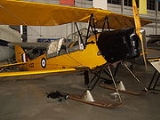
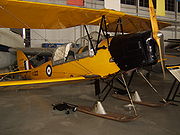
More controversially, during the 1991 Ashes Tour in Australia, England were playing a warm up match in Queensland
when Gower together with batsman John Morris
, chose to go for a joy-ride in two Tiger Moth
biplane without telling the England team management. Both had been dismissed earlier that day, however they decided not to remain at the ground to "watch Allan Lamb
and Robin Smith
flat the Queensland attack before a small crowd". For this, Gower was fined £1000, a penalty that could have been steeper had he released the water bombs he had also prepared. Gower also posed for press photographs with the plane the next day.
Gooch was enraged, as he was by Gower's mode of dismissal at a crucial stage of one of the Test matches. During the fourth Test at Adelaide
, Gower walked out to the crease to the tune of Those Magnificent Men in their Flying Machines
. The last ball before lunch was bowled down the leg side to a leg trap, and all Gower needed to do was block. However, Gower flicked idly at the delivery and was caught at leg-slip. According to Michael Atherton in his autobiography, "Gooch was at the other end and as he walked off his face was thunderous". This was another example of the strained relationship between the two. His score of nought in the second innings at Melbourne in 1991, when England were chasing quick runs for victory, ended his world record, unbroken sequence, of 119 Test innings without registering a duck. Gower scored 73 and 31* in the following matches against Pakistan, however on 9 August 1992 he was dismissed for one by Waqar Younis
in what would be his last Test match, at The Oval
. It is often thought that Gooch was instrumental in Gower being left out of the following tour of India. The selection decision prompted a vote no confidence in the selectors at the MCC
, but it was to no avail as Gower was not included. Gower retired from international cricket and Gooch's perceived "tote-that-barge regime" in early 1993.
described him as "fluffy-haired, ethereal-looking" who played "beautifully, until the moment he made a mistake. Sometimes, the mistake was put off long enough for him to play an innings of unforgettable brilliance." Gower, a left-handed batsmen, played with a dominant top hand, and a "liquid, graceful" style.
He was repeatedly lambasted by the media as being "laid back" or "nonchalant" with a "devil-may-care" approach found infuriating, as Wisden records, "the difference between an exquisite stroke and a nick was little more than an inch" in his style of batting. Peter Roebuck recorded that "Gower never moves, he drifts" while Frances Edmonds in the Daily Express
spoke of Gower in 1985: "Difficult to be more laid back without being actually comatose." Gower himself commented in 1995 in an interview in The Independent
"I was never destined to be on the ball 100 per cent of the time. I don't have the same ability that Graham Gooch has, to produce something very close to his best every time he plays. There were Test matches where I suddenly felt, at the end of it, 'Well, I wish I'd really been at that one.'
Gower was also a right-arm off break
spin bowler despite batting left-handed, who took one Test wicket at 20.00 out of the six overs he sent down in the occasional instances when called on to bowl. His domestic cricket added another three wickets to give him an overall average of 56.75, however Martin Williamson, the managing editor of ESPNcricinfo, records Gower, along with James Whitaker
, as "probably two of the worst bowlers in the country" in 1983. On one occasion, during Steven O'Shaughnessy
's 35-minute century for Lancashire
, Gower conceded 0 for 102 from nine overs.
In the field, Gower is noted by biographer Meher-Homji
as being a "magnificent outfielder who took amazing catches and threw with accuracy and power to run out the blasé batsman." Ambidextrous in the field and when bowling, Gower also plays both golf and hockey, writes and kicks right-handed. However, he was far less effective as a fielder late in his career, especially in one day matches, since a chronic shoulder injury - usually described as the shoulder being "thrown out" - meant that he usually bowled the ball in when fielding, rather than throwing it in, significantly reducing the speed of the return and allowing batsmen easy runs.
comedy sports quiz, They Think It's All Over
from 1995 till 2003. He also presented four series of the BBC2 cricket magazine show, Gower's Cricket Monthly from 1995–1998 and, at the same time was one of the BBC's main cricket commentators. Gower also spent time commentating on several cricket series in Australia
in the 1990s. His commentary for Channel Nine
, with his trademark relaxed calls of play and generous attitude to the players and fellow commentators, proved extremely popular with Australian cricket viewing audiences.
He is now the main presenter of international cricket coverage for Sky Sports
and also commentates on the matches - a role he has also played in Brian Lara International Cricket series - and has found success. Matthew Engel of ESPNcricinfo wrote that Gower's commentating career has been "so successful that his cricket seemed mere preparation."
Gower is also a Patron of the David Shepherd Foundation
, the World Land Trust
, Vice-President of the Nature in Art
Trust, and a director of an Internet wine company. He was also awarded the "Oldie Of The Year" award in 1993 by The Oldie
magazine. He is the author of a number of written works on cricket, including Gower: The Autobiography with The Independent
journalist
Martin Johnson in 1992, David Gower: With Time to Spare with Alan Lee in 1995 and Can't Bat, Can't Bowl, Can't Field also with Johnson.
 Career performance:
Man of the match awards:
Career performance:
Man of the match awards:
Order of the British Empire
The Most Excellent Order of the British Empire is an order of chivalry established on 4 June 1917 by George V of the United Kingdom. The Order comprises five classes in civil and military divisions...
(born 1 April 1957) is a former English
English people
The English are a nation and ethnic group native to England, who speak English. The English identity is of early mediaeval origin, when they were known in Old English as the Anglecynn. England is now a country of the United Kingdom, and the majority of English people in England are British Citizens...
cricket
Cricket
Cricket is a bat-and-ball game played between two teams of 11 players on an oval-shaped field, at the centre of which is a rectangular 22-yard long pitch. One team bats, trying to score as many runs as possible while the other team bowls and fields, trying to dismiss the batsmen and thus limit the...
er who became a commentator for Sky Sports
Sky Sports
Sky Sports is the brand name for a group of sports-oriented television channels operated by the UK and Ireland's main satellite pay-TV company, British Sky Broadcasting. Sky Sports is the dominant subscription television sports brand in the United Kingdom and Ireland...
. Although he eventually rose to the captaincy of the England cricket team during the 1980s, he is best known for being one of the most stylish left-handed batsmen of the modern era. Gower played 117 Test matches
Test cricket
Test cricket is the longest form of the sport of cricket. Test matches are played between national representative teams with "Test status", as determined by the International Cricket Council , with four innings played between two teams of 11 players over a period of up to a maximum five days...
, scoring 8,231 runs. He is thus one of the most capped
Cap (sport)
In sports, a cap is a metaphorical term for a player's appearance on a select team, such as a national team. The term dates from the practice in the United Kingdom of awarding a cap to every player in an international match of association football...
and highest scoring players in his country's history. He is also one of England's most capped One Day International players, with 114 matches.
Gower led England during the 1985 Ashes series against Australia, and his team was victorious, however two 5-0 whitewash
Whitewash
Whitewash, or calcimine, kalsomine, calsomine, or lime paint is a very low-cost type of paint made from slaked lime and chalk . Various other additives are also used...
es at the hands of the West Indies (in 1984 and 1985–86) reflected poorly on his captaincy, and Gower was replaced in 1986. Gower was briefly reinstated for the 1989 Ashes series
1989 Ashes series
The 1989 Ashes series was that year's edition of the long-standing and storied cricket rivalry between England and Australia. Starting on 8 June 1989, England and Australia played six Tests, with the Ashes previously having been held by England since the 1985 Ashes series.The final result was a 4-0...
, before being replaced as captain by Graham Gooch
Graham Gooch
Graham Alan Gooch OBE DL is a former cricketer who captained Essex and England. He was one of the most successful international batsmen of his generation, and through a career spanning from 1973 until 2000, he became the most prolific run scorer of all time with 67,057 runs...
. The strained relationship between the pair contributed to Gower's complete retirement in 1993. Nevertheless, he ended with an impressive record in first-class cricket, having accumulated 26,339 runs at 40.08, and 53 centuries. His Test match tally includes the world record feat of 119 consecutive innings without registering a duck
Duck (cricket)
In the sport of cricket, a duck refers to a batsman's dismissal for a score of zero.-Origin of the term:The term is a shortening of the term "duck's egg", the latter being used long before Test cricket began...
. Following his retirement, Gower became a successful cricket commentator, and on 16 July 2009, was inducted into the ICC Cricket Hall of Fame
ICC Cricket Hall of Fame
The ICC Cricket Hall of Fame "recognises the achievements of the legends of the game from cricket's long and illustrious history". A hall of fame, it was launched by the International Cricket Council on 2 January 2009, in association with the Federation of International Cricketers'...
.
Early life
Gower was born in Tunbridge Wells in 1957. At the time his father, Richard Gower OBE, was working for the Colonial ServiceColonial Service
The Colonial Service was the British government service which administered Britain's colonies and protectorates, under the authority of the Secretary of State for the Colonies and the Colonial Office in London....
in a position in Dar es Salaam
Dar es Salaam
Dar es Salaam , formerly Mzizima, is the largest city in Tanzania. It is also the country's richest city and a regionally important economic centre. Dar es Salaam is actually an administrative province within Tanzania, and consists of three local government areas or administrative districts: ...
, capital of the then British administered territory of Tanganyika
Tanganyika
Tanganyika , later formally the Republic of Tanganyika, was a sovereign state in East Africa from 1961 to 1964. It was situated between the Indian Ocean and the African Great Lakes of Lake Victoria, Lake Malawi and Lake Tanganyika...
, where Gower spent his early childhood. The family returned to England after Tanganyika
Tanganyika
Tanganyika , later formally the Republic of Tanganyika, was a sovereign state in East Africa from 1961 to 1964. It was situated between the Indian Ocean and the African Great Lakes of Lake Victoria, Lake Malawi and Lake Tanganyika...
was granted independence, when Gower was six years old, settling in Kent
Kent
Kent is a county in southeast England, and is one of the home counties. It borders East Sussex, Surrey and Greater London and has a defined boundary with Essex in the middle of the Thames Estuary. The ceremonial county boundaries of Kent include the shire county of Kent and the unitary borough of...
and later moving to Loughborough
Loughborough
Loughborough is a town within the Charnwood borough of Leicestershire, England. It is the seat of Charnwood Borough Council and is home to Loughborough University...
. Gower attended prep school
Preparatory school (UK)
In English language usage in the former British Empire, the present-day Commonwealth, a preparatory school is an independent school preparing children up to the age of eleven or thirteen for entry into fee-paying, secondary independent schools, some of which are known as public schools...
at Marlborough House School
Marlborough House School
Marlborough House School is a co-educational preparatory school situated in of countryside in Hawkhurst, Kent. The school currently has just over 320 pupils between the ages of 3 and 13 with a teaching staff of 40. Marlborough House is predominantly a day school, but operates a flexi-boarding...
from the age of 8 to 13, where he started to lean towards cricket as his preferred sport.
He was awarded a scholarship to attend The King's School Canterbury
Canterbury
Canterbury is a historic English cathedral city, which lies at the heart of the City of Canterbury, a district of Kent in South East England. It lies on the River Stour....
—where his father was an earlier Head Boy
Head boy
Head Boy and Head Girl are terms commonly used in the British education system, and in private schools throughout the Commonwealth.-United Kingdom:...
—as a boarder
Boarding school
A boarding school is a school where some or all pupils study and live during the school year with their fellow students and possibly teachers and/or administrators. The word 'boarding' is used in the sense of "bed and board," i.e., lodging and meals...
. Gower made the school cricket First XI aged 14 and he would later be made captain
Captain (cricket)
The captain of a cricket team often referred to as the skipper is the appointed leader, having several additional roles and responsibilities over and above those of a regular player...
. He also played for the rugby
Rugby union
Rugby union, often simply referred to as rugby, is a full contact team sport which originated in England in the early 19th century. One of the two codes of rugby football, it is based on running with the ball in hand...
First XV before being dropped from the team for "lack of effort". While at school, Gower would play representative cricket for Public Schools against English Schools at under-16 level.
Gower finished school with eight O levels, three A levels and one S level
Scholarship Level
The GCE S-level, Scholarship level, or Special paper was a British public examination taken by the most able A-level students. The S-level was typically used to support UK university entrance applications though in practice it was directed almost exclusively to Oxford or Cambridge applications...
in history. He sat the History exam for Oxford University
University of Oxford
The University of Oxford is a university located in Oxford, United Kingdom. It is the second-oldest surviving university in the world and the oldest in the English-speaking world. Although its exact date of foundation is unclear, there is evidence of teaching as far back as 1096...
and was offered an interview at St Edmund Hall
St Edmund Hall, Oxford
St Edmund Hall is one of the constituent colleges of the University of Oxford in England. Better known within the University by its nickname, "Teddy Hall", the college has a claim to being "the oldest academical society for the education of undergraduates in any university"...
, but missed a place. Spurning a place at University College, London, Gower returned to school in an attempt to gain two more A levels but lost interest partway through the year. Having played some matches for the Leicestershire
Leicestershire County Cricket Club
Leicestershire County Cricket Club is one of the 18 major county clubs which make up the English and Welsh national cricket structure, representing the historic county of Leicestershire. It has also been representative of the county of Rutland....
Second XI the previous summer, Gower tried his luck at the club as a professional for the remainder of the year, for £25 per week. In the summer, Gower returned to University College, where he studied law, but after six months he returned to professional cricket.
He is nicknamed "Lord Gower" by his Sky Sports colleagues, in allusion to his aristocratic background: he is related to the Leveson-Gower
Leveson-Gower
Leveson-Gower is the name of a powerful noble family.*Several members of the family:**Baronets of Sittenham**Barons Gower**Earls Gower**Earls Granville**Earls of Sutherland**Marquesses of Stafford...
family, Dukes of Sutherland
Duke of Sutherland
Duke of Sutherland, derived from Sutherland in Scotland, is a title in the Peerage of the United Kingdom held by the head of the Leveson-Gower family. It was created by William IV in 1833 for George Leveson-Gower, 2nd Marquess of Stafford...
Playing career
Gower enjoyed one of the most prolific first-class cricket careers in English history, in both domestic and international competitions. His 117 Test matches currently lies behind only Alec StewartAlec Stewart
Alec James Stewart OBE is a retired English cricketer, a right-handed batsman-wicketkeeper and former captain of the England cricket team...
with 133 and Graham Gooch with 118. Gower's career run total is also the third highest by an English player, again behind only Stewart with 8,463, and Gooch with 8,900. With 18 centuries
Century (cricket)
In the sport of cricket, a batsman reaches his century when he scores 100 or more runs in a single innings. The term is also included in "century partnership" which occurs when two batsmen add 100 runs to the team total when they are batting together. A century is regarded as a landmark score for...
he is also joint fourth with fellow captain Michael Vaughan
Michael Vaughan
Michael Paul Vaughan OBE is a retired cricketer who represented Yorkshire and England. A classically elegant right-handed batsman and occasional off-spinner, Vaughan was ranked one of the best batsmen in the world following the 2002/3 Ashes, in which he scored 633 runs, including three centuries...
in the most hundreds scored by an England player. He played domestic cricket from 1975 until 1993, largely with Leicestershire
Leicestershire County Cricket Club
Leicestershire County Cricket Club is one of the 18 major county clubs which make up the English and Welsh national cricket structure, representing the historic county of Leicestershire. It has also been representative of the county of Rutland....
until 1989, where he moved to Hampshire
Hampshire County Cricket Club
Hampshire County Cricket Club represents the historic county of Hampshire in cricket's County Championship. The club was founded in 1863 as a successor to the Hampshire county cricket teams and has played at the Antelope Ground from then until 1885, before moving to the County Ground where it...
, a stalwart batsman at both clubs.
Domestic career
Gower made his debut for Leicestershire on 30 July 1975, during that season's County Championship, against LancashireLancashire County Cricket Club
Lancashire County Cricket Club represents the historic county of Lancashire in cricket's County Championship. The club was founded in 1864 as a successor to Manchester Cricket Club and has played at Old Trafford since then...
at Stanley Park, Blackpool
Blackpool
Blackpool is a borough, seaside town, and unitary authority area of Lancashire, in North West England. It is situated along England's west coast by the Irish Sea, between the Ribble and Wyre estuaries, northwest of Preston, north of Liverpool, and northwest of Manchester...
. Winning the toss, Lancashire chose to bat first and amassed 259 thanks largely to a century by David Lloyd
David Lloyd (cricketer)
David Lloyd is a former English cricketer who played county cricket for Lancashire and Test and One Day International cricket for England. He also played semi-professional football for Accrington Stanley...
, who would later become Gower's co-commentator. Gower, batting at number seven, scored 32 before he was dismissed by Ken Shuttleworth
Ken Shuttleworth (cricketer)
Kenneth Shuttleworth is an English former cricketer. He played five Test matches and one One Day International for England in the early 1970s.-Life and career:...
, Leicestershire making 321 and taking a first-innings lead. Lloyd made 90 in the second innings as Lancashire declared on 305, with Gower taking one catch to dismiss Jack Simmons for 17. The match, lasting only three days with 100 overs as a maximum limit imposed on both teams for each innings, ended in a draw, with Leicestershire reaching 90 without Gower getting to bat again. Gower continued to make little impression during the rest of the 1975 season, playing in only two more matches and ending the season with 65 runs at 13.00. He enjoyed greater success in his debut List A season, playing in eight matches, scoring 175 runs at 25.00 with two fifties.
Gower was retained for the 1976 season, however, playing in a total of seven first-class matches. He enjoyed greater success, with 323 runs at 35.88 including a maiden century, 102*
Not out
In cricket, a batsman will be not out if he comes out to bat in an innings and has not been dismissed by the end of the innings. One may similarly describe a batsman as not out while the innings is still in progress...
, and a second fifty. In one day cricket, he played another eight matches, scoring 188 runs at 23.50 however failing to reach fifty, falling short on one occasion with a season-best of 48. The 1977 season saw Gower play 25 matches, with another career best of 144*, his only century of the season. He amassed 745 runs at 23.28, with three other half centuries. In the one day format he was far more prolific, he played 24 matches, scoring 867 with a best of 135*, one of two hundreds that year, along with four fifties, all at 48.16. After two first-class matches against Sri Lankan domestic teams over the winter of 1977-78, in which he scored 76 runs at 38.00 in first-class and a score of 22 in the only one day fixture, Gower topped 1,000 runs in a season for the first time in his career, scoring 1098 runs at 37.86 including two hundreds, five fifties and a call up to the national team.
Gower returned to England in 1979 from an international tour with a career best 200*, forming part of his 957 runs for the season at 41.60, with eight fifties to go with that one hundred. For his efforts that season, Gower was awarded Wisden Cricketer of the Year. Wisden recorded that "The sun scarcely graced the English cricket scene with its presence in 1978, but when it did it seemed to adorn the blond head of David Gower. The young Leicestershire left-hander could do little wrong. He typified a new, precocious breed of stroke-players, imperious and exciting, who added colour and glamour to an otherwise bedraggled English summer." The 1980 season in England saw Gower again top 1,000 runs, with 1142 at 48.89, including five hundreds and a career best 156*. This was the most prolific first-class season of Gower's career thus far. He also played 21 one day matches, with 616 runs including another century. His winter international tour was then followed up with a prolific performance during the 1981 season, which including the 1981 Ashes series. During this season, Gower played 19 matches, scoring a career best 1418 runs at 48.89, including one knock of 156*. Against Essex at Grace Road he shared an unbroken county record second wicket stand of 289 with Chris Balderstone
Chris Balderstone
John Christopher Balderstone was an English professional in cricket and football, and one of the last sportsmen to combine both sports over a prolonged period. He played football as a midfielder for Huddersfield Town, Carlisle United, Doncaster Rovers and Queen of the South...
.
After another successful international tour, Gower returned to England to peak 1,000 runs again with a career-best 1530 at 46.36, with two hundreds, and scored five further hundreds for only the second time in 1983, where he again topped 1,000 runs, 1,253 this time at 46.40. He came narrowly close to 1,000 runs in the 1984 season, ending with 999 at 35.67, and then scored 1,000 runs, including a then career-best of 215, at 54.70, in 1985. Gower scored one century in England and Australia in the next two seasons, before topping 1,000 runs for three consecutive series', in 1987, 1988 and 1989, with a total of seven centuries including his career best 228.
In 1989, he moved to Hampshire, and upon return from the 1989–90 tour of the West Indies, where he scored only four in one match, he scored 1,263 runs for his new club at 46.77, and he scored 1,142, 1,225 and 1,136 in his final three seasons, ending his last, 1993, with four centuries at 42.07. This was despite being so out of form at times that Brian Mason, a personal counsellor, was asked to work with Gower on his poor form. His final three seasons had seen poorer returns in one day cricket, with his last century coming in 1992, and with his final season returning 347 runs at 26.69. In his final first-class match, Gower faced Essex
Essex County Cricket Club
Essex County Cricket Club is one of the 18 major county clubs which make up the English and Welsh national cricket structure, representing the historic county of Essex. Its limited overs team is called the Essex Eagles, their team colours this season are blue.The club plays most of its home games...
at Chelmsford
County Cricket Ground, Chelmsford
The County Cricket Ground, is a cricket venue in Chelmsford, Essex, England. It is home to Essex County Cricket Club.Chelmsford is a small ground, and therefore suits big-hitting batsmen. Essex stalwart Graham Gooch scored many of his runs here and Graham Napier scored 152 of 58 balls in a...
on 16 September 1993. Batting at number four, he made a farewell century of 134 before he was stumped in the first innings, and with future captain Nasser Hussain
Nasser Hussain
Nasser Hussain OBE is a former Essex and England cricketer.Beginning his career in a strong Essex side in the late 1980s, he was an outstanding fielder and a stylish but inconsistent batsman. In first-class cricket from 1987 to 2004 Hussain scored 20,698 runs in 334 matches at an average of 42.06,...
and then captain Graham Gooch both making centuries as Essex fell short of Hampshire's 347 with their own innings of 268, Gower came out to bat fo the final time in Hampshire's second innings. He made 25. Gooch, then the England captain having succeeded Gower, came back onto the field for Essex to score his second century of the match.
International career
Queen's Park Oval
Queen's Park Oval, in Port of Spain, Trinidad and Tobago, is currently the largest capacity cricket ground in the West Indies and has hosted more Test matches than any other ground in the Caribbean. It also hosted a number of matches in the 2007 Cricket World Cup. It is privately owned by the...
in Port of Spain
Port of Spain
Port of Spain, also written as Port-of-Spain, is the capital of the Republic of Trinidad and Tobago and the country's third-largest municipality, after San Fernando and Chaguanas. The city has a municipal population of 49,031 , a metropolitan population of 128,026 and a transient daily population...
. Opening the batting, Gower made only 10 runs in the first innings as England were bowled out for 164, however after the West Indies had made 201 Gower fell short with 49 in the second innings, stumped off a spin bowler. England were dismissed for 202, and bowled the West Indies out for 143 to take a 22-run victory. He made his debut in Test cricket in 1978 at Edgbaston
Edgbaston Cricket Ground
Edgbaston Cricket Ground, also known as the County Ground or Edgbaston Stadium, is a cricket ground in the Edgbaston area of Birmingham, England...
, scoring a boundary via a pull shot off his first delivery, bowled by Pakistan's Liaqat Ali
Liaqat Ali (cricketer)
Liaqat Ali Khan is a former Pakistani cricketer who played in 5 Tests and 3 ODIs from 1975 to 1978....
. He went on to make 58 in England's only innings, followed by 56 at Lord's
Lord's Cricket Ground
Lord's Cricket Ground is a cricket venue in St John's Wood, London. Named after its founder, Thomas Lord, it is owned by Marylebone Cricket Club and is the home of Middlesex County Cricket Club, the England and Wales Cricket Board , the European Cricket Council and, until August 2005, the...
and 39 at Headingley
Headingley Stadium
Headingley Stadium is a sporting complex in the Leeds suburb of Headingley in West Yorkshire, England. It is the home of Yorkshire County Cricket Club, rugby league team Leeds Rhinos and rugby union team Leeds Carnegie ....
. On 27 July, Gower played against New Zealand, scoring his maiden Test hundred, 111 off of 253 deliveries in the first innings, and making 11 in the second. He made scores of 46, 71 and 46 in the rest of the series, the latter including his first Test six, earning him selection for the following Ashes Tests in Australia.
Gower made his Ashes début at The Gabba, Brisbane
Brisbane
Brisbane is the capital and most populous city in the Australian state of Queensland and the third most populous city in Australia. Brisbane's metropolitan area has a population of over 2 million, and the South East Queensland urban conurbation, centred around Brisbane, encompasses a population of...
on 1 December 1978. He made 44 and 48* in the first Test, before making his maiden Ashes hundred, 102 from 221 balls in Perth
WACA Ground
The WACA is a sports stadium in Perth, Western Australia. WACA are the initials of its owners and operators, the Western Australian Cricket Association....
. These were to be his only significant contributions, however, and he saw out the rest of the series with scores of 29, 49, 7, 34, 9 and 21, until a meticulous 65 in the final Test at Sydney
Sydney
Sydney is the most populous city in Australia and the state capital of New South Wales. Sydney is located on Australia's south-east coast of the Tasman Sea. As of June 2010, the greater metropolitan area had an approximate population of 4.6 million people...
. He then faced four Test matches against India over the summer of 1979, beginning the series with a fast-paced 200* at Edgbaston, followed by an 82 at Lord's. Ducks at Leeds and The Oval
The Oval
The Kia Oval, still commonly referred to by its original name of The Oval, is an international cricket ground in Kennington, in the London Borough of Lambeth. In the past it was also sometimes called the Kennington Oval...
followed, however, and he struggled against Australia in the winter of 1979 with 17, 23 and three. A battling 98* at Sydney was again followed by another duck and 11 as Gower's form deserted him. After 16 against India in February 1980, and 20 and one against the West Indies, Gower's form picked up marginally with scores of 45, 35 and 48 against Australia and the West Indies. One more fifty followed at Bridgetown
Kensington Oval
The Kensington Oval is located to the west of the capital-city Bridgetown on the island of Barbados. "The Oval" is one of the major sporting facilities on the island and is primarily used for cricket...
, however Gower eventually broke the run of poor form with a hard-fought 154* from 403 deliveries at Kingston
Sabina Park
Sabina Park is the home of the Kingston Cricket Club, and is the only Test cricket ground in Kingston, Jamaica and is often referred to as "The Holiday Home of Cricket"....
.
Gower's timely revival of form ensured his selection for the 1981 Ashes series, however apart from an 89 at Lord's, Gower failed to convert the success he was having in the domestic game to the Test matches, with many scores in the 20s or lower. Two scores in the 80s against India, one against Sri Lanka and two 70s against Pakistan over the winter of 1981/82 kept in him contention for an international place, however centuries were lacking in his game. In August 1982, however, Australia received the England touring team at Perth, where Gower made 72 and 28. He followed this with 18, 34 and 60 at Brisbane and Adelaide
Adelaide Oval
The Adelaide Oval is a sports ground in Adelaide, South Australia, located in the parklands between the Central Business District and North Adelaide...
before a compact 114 in the second innings of the Adelaide match revived his hundred count. Two more hundreds in the summer of 1983 against New Zealand, and knocks of 152 and 173* against Pakistan in 1984 ensured his place in the side.
Following his 173* in the last Test against Pakistan, Gower suffered another drop in form, managing only three fifties in the next 18 Test innings against the West Indies, Sri Lanka and India. In 1985, however, after low scores at Leeds, Gower enjoyed a "golden season". He scored 86 and 22 at Lord's against Australia, and 166 at Trent Bridge
Trent Bridge
Trent Bridge is a Test, One-day international and County cricket ground located in West Bridgford, Nottinghamshire, England and is also the headquarters of Nottinghamshire County Cricket Club. As well as International cricket and Nottinghamshire's home games, the ground has hosted the Finals Day of...
. Following this, he scored 47 at Old Trafford, and then at Edgbaston on 15 August, scored 215 from 314 balls, his career best score, and immediately followed this with 157 at The Oval. In addition, he forged two partnerships over three-hundred runs, with 331 scored with Tim Robinson
Tim Robinson
Tim Robinson is an English former cricketer, and current cricket umpire, who played in 29 Tests and 26 ODIs for England from 1984 to 1989....
(148) during Gower's own double-century, and 351 with Gooch's 196 at The Oval. He ended the series with 732 runs at 81.33, leading England to a 3-1 victory.
In 1987 Gower declined to play in that year's Cricket World Cup
Cricket World Cup
The ICC Cricket World Cup is the premier international championship of men's One Day International cricket. The event is organised by the sport's governing body, the International Cricket Council , with preliminary qualification rounds leading up to a finals tournament which is held every four years...
as he did not wish to travel, having been on nine successive winter tours since his debut. He never again declined an opportunity to play for England, however. Yet rumours that Gower lacked serious commitment gained currency in 1989 when, as England captain he walked out of a press conference claiming he had tickets for the theatre.
More controversially, during the 1991 Ashes Tour in Australia, England were playing a warm up match in Queensland
Queensland
Queensland is a state of Australia, occupying the north-eastern section of the mainland continent. It is bordered by the Northern Territory, South Australia and New South Wales to the west, south-west and south respectively. To the east, Queensland is bordered by the Coral Sea and Pacific Ocean...
when Gower together with batsman John Morris
John Morris (cricketer)
John Morris is a former English cricketer, who played for England in three Tests and eight ODIs from 1990 to 1991...
, chose to go for a joy-ride in two Tiger Moth
De Havilland Tiger Moth
The de Havilland DH 82 Tiger Moth is a 1930s biplane designed by Geoffrey de Havilland and was operated by the Royal Air Force and others as a primary trainer. The Tiger Moth remained in service with the RAF until replaced by the de Havilland Chipmunk in 1952, when many of the surplus aircraft...
biplane without telling the England team management. Both had been dismissed earlier that day, however they decided not to remain at the ground to "watch Allan Lamb
Allan Lamb
Allan Joseph Lamb is a former England cricketer and captain who played for the first class teams of Western Province and Northamptonshire, the latter as an Overseas player...
and Robin Smith
Robin Smith (cricketer)
Robin Arnold Smith is a former cricketer for Hampshire and England.Smith was nicknamed Judge or Judgie for his resemblance to a judge when he grew his hair long...
flat the Queensland attack before a small crowd". For this, Gower was fined £1000, a penalty that could have been steeper had he released the water bombs he had also prepared. Gower also posed for press photographs with the plane the next day.
Gooch was enraged, as he was by Gower's mode of dismissal at a crucial stage of one of the Test matches. During the fourth Test at Adelaide
Adelaide Oval
The Adelaide Oval is a sports ground in Adelaide, South Australia, located in the parklands between the Central Business District and North Adelaide...
, Gower walked out to the crease to the tune of Those Magnificent Men in their Flying Machines
Those Magnificent Men in Their Flying Machines
Those Magnificent Men in their Flying Machines, Or How I Flew from London to Paris in 25 Hours 11 Minutes is a 1965 British comedy film starring Stuart Whitman and directed and co-written by Ken Annakin...
. The last ball before lunch was bowled down the leg side to a leg trap, and all Gower needed to do was block. However, Gower flicked idly at the delivery and was caught at leg-slip. According to Michael Atherton in his autobiography, "Gooch was at the other end and as he walked off his face was thunderous". This was another example of the strained relationship between the two. His score of nought in the second innings at Melbourne in 1991, when England were chasing quick runs for victory, ended his world record, unbroken sequence, of 119 Test innings without registering a duck. Gower scored 73 and 31* in the following matches against Pakistan, however on 9 August 1992 he was dismissed for one by Waqar Younis
Waqar Younis
Waqar Younis Maitla is a former Pakistani right arm fast bowler in cricket and widely regarded as one of the greatest fast bowlers of all time...
in what would be his last Test match, at The Oval
The Oval
The Kia Oval, still commonly referred to by its original name of The Oval, is an international cricket ground in Kennington, in the London Borough of Lambeth. In the past it was also sometimes called the Kennington Oval...
. It is often thought that Gooch was instrumental in Gower being left out of the following tour of India. The selection decision prompted a vote no confidence in the selectors at the MCC
Marylebone Cricket Club
Marylebone Cricket Club is a cricket club in London founded in 1787. Its influence and longevity now witness it as a private members' club dedicated to the development of cricket. It owns, and is based at, Lord's Cricket Ground in St John's Wood, London NW8. MCC was formerly the governing body of...
, but it was to no avail as Gower was not included. Gower retired from international cricket and Gooch's perceived "tote-that-barge regime" in early 1993.
Playing style
Gower was a "most graceful" left hand batsman and had a reputation for being aloof. His languid style was often misinterpreted as indifference and a lack of seriousness, an air he bolstered with a variety of "misdemeanours" from apparently "lazy" shots, to practical jokes, even to his preference for blue (not white) socks. WisdenWisden Cricketers' Almanack
Wisden Cricketers' Almanack is a cricket reference book published annually in the United Kingdom...
described him as "fluffy-haired, ethereal-looking" who played "beautifully, until the moment he made a mistake. Sometimes, the mistake was put off long enough for him to play an innings of unforgettable brilliance." Gower, a left-handed batsmen, played with a dominant top hand, and a "liquid, graceful" style.
He was repeatedly lambasted by the media as being "laid back" or "nonchalant" with a "devil-may-care" approach found infuriating, as Wisden records, "the difference between an exquisite stroke and a nick was little more than an inch" in his style of batting. Peter Roebuck recorded that "Gower never moves, he drifts" while Frances Edmonds in the Daily Express
Daily Express
The Daily Express switched from broadsheet to tabloid in 1977 and was bought by the construction company Trafalgar House in the same year. Its publishing company, Beaverbrook Newspapers, was renamed Express Newspapers...
spoke of Gower in 1985: "Difficult to be more laid back without being actually comatose." Gower himself commented in 1995 in an interview in The Independent
The Independent
The Independent is a British national morning newspaper published in London by Independent Print Limited, owned by Alexander Lebedev since 2010. It is nicknamed the Indy, while the Sunday edition, The Independent on Sunday, is the Sindy. Launched in 1986, it is one of the youngest UK national daily...
"I was never destined to be on the ball 100 per cent of the time. I don't have the same ability that Graham Gooch has, to produce something very close to his best every time he plays. There were Test matches where I suddenly felt, at the end of it, 'Well, I wish I'd really been at that one.'
Gower was also a right-arm off break
Off break
Off break is a type of delivery in the sport of cricket. It is the attacking delivery of an off spin bowler. Off breaks are known as off spinners....
spin bowler despite batting left-handed, who took one Test wicket at 20.00 out of the six overs he sent down in the occasional instances when called on to bowl. His domestic cricket added another three wickets to give him an overall average of 56.75, however Martin Williamson, the managing editor of ESPNcricinfo, records Gower, along with James Whitaker
James Whitaker (cricketer)
John James Whitaker is an English former cricketer, who played in one Test and two ODIs for England in 1986.-Life and career:...
, as "probably two of the worst bowlers in the country" in 1983. On one occasion, during Steven O'Shaughnessy
Steven O'Shaughnessy
Steven Joseph O'Shaughnessy, often known as Steve is a former English cricketer, who played for Lancashire and Worcestershire in the 1980s, and then had a substantial career in Minor Counties cricket with Cumberland...
's 35-minute century for Lancashire
Lancashire County Cricket Club
Lancashire County Cricket Club represents the historic county of Lancashire in cricket's County Championship. The club was founded in 1864 as a successor to Manchester Cricket Club and has played at Old Trafford since then...
, Gower conceded 0 for 102 from nine overs.
In the field, Gower is noted by biographer Meher-Homji
Kersi Meher-Homji
Kersi Meher-Homji is an Australian journalist, author and biographer. He writes often for the Sydney Morning Herald, and his most notable biography is The Waugh Twins , about Steve and Mark Waugh...
as being a "magnificent outfielder who took amazing catches and threw with accuracy and power to run out the blasé batsman." Ambidextrous in the field and when bowling, Gower also plays both golf and hockey, writes and kicks right-handed. However, he was far less effective as a fielder late in his career, especially in one day matches, since a chronic shoulder injury - usually described as the shoulder being "thrown out" - meant that he usually bowled the ball in when fielding, rather than throwing it in, significantly reducing the speed of the return and allowing batsmen easy runs.
Commentating and later life
Since leaving the game, Gower has enjoyed a new career as a cricket broadcaster and television personality, including being one of the team captains on the popular BBCBBC
The British Broadcasting Corporation is a British public service broadcaster. Its headquarters is at Broadcasting House in the City of Westminster, London. It is the largest broadcaster in the world, with about 23,000 staff...
comedy sports quiz, They Think It's All Over
They Think It's All Over (TV series)
They Think It's All Over was a British comedy panel game with a sporting theme produced by Talkback Thames and shown on BBC One. The show's name is taken from Kenneth Wolstenholme's famous 1966 World Cup commentary quotation, "they think it's all over...it is now!" and the show used the phrase as...
from 1995 till 2003. He also presented four series of the BBC2 cricket magazine show, Gower's Cricket Monthly from 1995–1998 and, at the same time was one of the BBC's main cricket commentators. Gower also spent time commentating on several cricket series in Australia
Australia
Australia , officially the Commonwealth of Australia, is a country in the Southern Hemisphere comprising the mainland of the Australian continent, the island of Tasmania, and numerous smaller islands in the Indian and Pacific Oceans. It is the world's sixth-largest country by total area...
in the 1990s. His commentary for Channel Nine
Nine Network
The Nine Network , is an Australian television network with headquarters based in Willoughby, a suburb located on the North Shore of Sydney. For 50 years since television's inception in Australia, between 1956 and 2006, it was the most watched television network in Australia...
, with his trademark relaxed calls of play and generous attitude to the players and fellow commentators, proved extremely popular with Australian cricket viewing audiences.
He is now the main presenter of international cricket coverage for Sky Sports
Sky Sports
Sky Sports is the brand name for a group of sports-oriented television channels operated by the UK and Ireland's main satellite pay-TV company, British Sky Broadcasting. Sky Sports is the dominant subscription television sports brand in the United Kingdom and Ireland...
and also commentates on the matches - a role he has also played in Brian Lara International Cricket series - and has found success. Matthew Engel of ESPNcricinfo wrote that Gower's commentating career has been "so successful that his cricket seemed mere preparation."
Gower is also a Patron of the David Shepherd Foundation
David Shepherd (artist)
Richard David Shepherd CBE FRSA FGRA is a British artist and one of the world's most outspoken conservationists. He is most famous for his paintings of wildlife, although he also often paints steam railways, aircraft and landscapes...
, the World Land Trust
World Land Trust
The World Land Trust is a UK-based nonprofit environmental organization established in 1989. Its primary aims are to ensure conservation of plants, animals and natural communities in areas at risk...
, Vice-President of the Nature in Art
Nature in Art
Nature in Art is a museum and art gallery at Wallsworth Hall, Twigworth, Gloucester, England, dedicated exclusively to art inspired by nature in all forms, styles and media...
Trust, and a director of an Internet wine company. He was also awarded the "Oldie Of The Year" award in 1993 by The Oldie
The Oldie
The Oldie is a monthly magazine launched in 1992 by Richard Ingrams, who for 23 years was the editor of Private Eye. It carries general interest articles, humour and cartoons, and has an eclectic list of contributors, including James Le Fanu, John Sweeney, Thomas Stuttaford, Virginia Ironside,...
magazine. He is the author of a number of written works on cricket, including Gower: The Autobiography with The Independent
The Independent
The Independent is a British national morning newspaper published in London by Independent Print Limited, owned by Alexander Lebedev since 2010. It is nicknamed the Indy, while the Sunday edition, The Independent on Sunday, is the Sindy. Launched in 1986, it is one of the youngest UK national daily...
journalist
Journalist
A journalist collects and distributes news and other information. A journalist's work is referred to as journalism.A reporter is a type of journalist who researchs, writes, and reports on information to be presented in mass media, including print media , electronic media , and digital media A...
Martin Johnson in 1992, David Gower: With Time to Spare with Alan Lee in 1995 and Can't Bat, Can't Bowl, Can't Field also with Johnson.
Awards
- Wisden Cricketer of the Year for 1979.
- Inducted into the ICC Hall of Fame.
- Officer of the Most Excellent Order of the British EmpireOrder of the British EmpireThe Most Excellent Order of the British Empire is an order of chivalry established on 4 June 1917 by George V of the United Kingdom. The Order comprises five classes in civil and military divisions...
(OBE), 1992
Test match performance
Records:| Statistics correct as of 9 March 2009 | Batting | Bowling | |||||||
|---|---|---|---|---|---|---|---|---|---|
| Opposition | Matches | Runs | Average | High Score | 100 / 50 | Runs | Wickets | Average | Best (Inns) |
| Australia | 42 | 3269 | 44.78 | 215 | 9 / 12 | - | - | - | - |
| India | 24 | 1391 | 44.87 | 200* | 2 / 6 | 15 | 1 | 15.00 | 1/1 |
| New Zealand | 13 | 1051 | 50.04 | 131 | 4 / 4 | 5 | 0 | - | - |
| Pakistan | 17 | 1185 | 49.37 | 173* | 2 / 9 | - | - | - | - |
| Sri Lanka | 2 | 186 | 93.00 | 89 | 0 / 2 | - | - | - | - |
| West Indies | 19 | 1149 | 32.82 | 154* | 1 / 6 | - | - | - | - |
Man of the match awards:
| Date | Opponent | Ground | Record/Scorecards |
|---|---|---|---|
| 27 July 1978 | New Zealand | The Oval The Oval The Kia Oval, still commonly referred to by its original name of The Oval, is an international cricket ground in Kennington, in the London Borough of Lambeth. In the past it was also sometimes called the Kennington Oval... |
111 and 11 |
| 12 July 1979 | India | Edgbaston Edgbaston Cricket Ground Edgbaston Cricket Ground, also known as the County Ground or Edgbaston Stadium, is a cricket ground in the Edgbaston area of Birmingham, England... |
200* |
| 11 August 1983 | New Zealand | Lord's Lord's Cricket Ground Lord's Cricket Ground is a cricket venue in St John's Wood, London. Named after its founder, Thomas Lord, it is owned by Marylebone Cricket Club and is the home of Middlesex County Cricket Club, the England and Wales Cricket Board , the European Cricket Council and, until August 2005, the... |
108 and 34 |
| 12 March 1984 | Pakistan | Iqbal Iqbal Stadium Iqbal Stadium is a Test cricket ground in Faisalabad, Pakistan. Previous names for the ground include Lyallpur Stadium, National Stadium, and City Stadium. The current name honours Pakistani poet Sir Allama Muhammad Iqbal. Capacity is 25,000. It has hosted 25 Test matches and 14 One Day... |
152 |
| 11 July 1985 | Australia | Trent Bridge Trent Bridge Trent Bridge is a Test, One-day international and County cricket ground located in West Bridgford, Nottinghamshire, England and is also the headquarters of Nottinghamshire County Cricket Club. As well as International cricket and Nottinghamshire's home games, the ground has hosted the Finals Day of... |
166 and 17 |
One Day International performance
Records:Career performance:
| Statistics correct as of 9 March 2009 | Batting | Bowling | |||||||
|---|---|---|---|---|---|---|---|---|---|
| Opposition | Matches | Runs | Average | High Score | 100 / 50 | Runs | Wickets | Average | Best |
| Australia | 32 | 794 | 28.35 | 102 | 2 / 3 | - | - | - | - |
| Canada | 1 | - | - | - | - | - | - | - | - |
| India | 16 | 469 | 31.26 | 81 | 0 / 4 | - | - | - | - |
| New Zealand | 24 | 874 | 39.72 | 158 | 3 / 4 | - | - | - | - |
| Pakistan | 15 | 451 | 34.69 | 114* | 1 / 0 | - | - | - | - |
| Sri Lanka | 4 | 178 | 59.33 | 130 | 1 / 0 | - | - | - | - |
| West Indies | 22 | 404 | 18.36 | 59 | 0 / 1 | 14 | 0 | - | - |
Man of the match awards:
| Date | Opponent | Ground | Record/Scorecards |
|---|---|---|---|
| 26 May 1978 | Pakistan | The Oval The Oval The Kia Oval, still commonly referred to by its original name of The Oval, is an international cricket ground in Kennington, in the London Borough of Lambeth. In the past it was also sometimes called the Kennington Oval... |
114* |
| 4 February 1979 | Australia | Melbourne Cricket Ground Melbourne Cricket Ground The Melbourne Cricket Ground is an Australian sports stadium located in Yarra Park, Melbourne and is home to the Melbourne Cricket Club. It is the tenth largest stadium in the world, the largest in Australia, the largest stadium for playing cricket, and holds the world record for the highest light... |
101* |
| 13 January 1983 | New Zealand | Melbourne Cricket Ground Melbourne Cricket Ground The Melbourne Cricket Ground is an Australian sports stadium located in Yarra Park, Melbourne and is home to the Melbourne Cricket Club. It is the tenth largest stadium in the world, the largest in Australia, the largest stadium for playing cricket, and holds the world record for the highest light... |
122 |
| 15 January 1983 | New Zealand | The Gabba | 158 |
| 30 January 1983 | Australia | Adelaide Oval Adelaide Oval The Adelaide Oval is a sports ground in Adelaide, South Australia, located in the parklands between the Central Business District and North Adelaide... |
77 |
| 11 June 1983 | Sri Lanka | Taunton | 130 |
| 3 June 1985 | Australia | Lord's Lord's Cricket Ground Lord's Cricket Ground is a cricket venue in St John's Wood, London. Named after its founder, Thomas Lord, it is owned by Marylebone Cricket Club and is the home of Middlesex County Cricket Club, the England and Wales Cricket Board , the European Cricket Council and, until August 2005, the... |
102* |
| 26 May 1986 | India | Old Trafford | 81 |
External links
| David Gower's career achievements |
|---|
| David Gower at the Cricket World Cup Cricket World Cup The ICC Cricket World Cup is the premier international championship of men's One Day International cricket. The event is organised by the sport's governing body, the International Cricket Council , with preliminary qualification rounds leading up to a finals tournament which is held every four years... |
|---|