


Culture of the Ottoman Empire

Encyclopedia
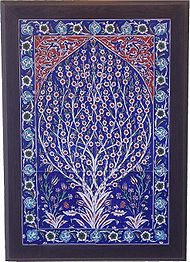
Ottoman Empire
The Ottoman EmpireIt was usually referred to as the "Ottoman Empire", the "Turkish Empire", the "Ottoman Caliphate" or more commonly "Turkey" by its contemporaries...
evolved over several centuries as the ruling administration of the Turks
Turkic peoples
The Turkic peoples are peoples residing in northern, central and western Asia, southern Siberia and northwestern China and parts of eastern Europe. They speak languages belonging to the Turkic language family. They share, to varying degrees, certain cultural traits and historical backgrounds...
absorbed, adapted and modified the cultures of conquered lands and their peoples. There was a strong influence from the customs and languages of Islamic societies, notably Arab
Arab
Arab people, also known as Arabs , are a panethnicity primarily living in the Arab world, which is located in Western Asia and North Africa. They are identified as such on one or more of genealogical, linguistic, or cultural grounds, with tribal affiliations, and intra-tribal relationships playing...
ic, while Persian
Persian people
The Persian people are part of the Iranian peoples who speak the modern Persian language and closely akin Iranian dialects and languages. The origin of the ethnic Iranian/Persian peoples are traced to the Ancient Iranian peoples, who were part of the ancient Indo-Iranians and themselves part of...
culture had a significant contribution through the heavily Persianized
Persianization
Persianization or Persianisation is a sociological process of cultural change in which something non-Persian becomes Persianate. It is a specific form of cultural assimilation that often includes linguistic assimilation...
regime of the Seljuq Turks
Great Seljuq Empire
The Great Seljuq Empire was a medieval Persianate, Turko-Persian Sunni Muslim empire, originating from the Qynyq branch of Oghuz Turks. The Seljuq Empire controlled a vast area stretching from the Hindu Kush to eastern Anatolia and from Central Asia to the Persian Gulf...
, the Ottomans' predecessors. Throughout its history, the Ottoman Empire had substantial subject populations of Byzantine Greek
Ottoman Greece
Most of Greece gradually became part of the Ottoman Empire from the 15th century until its declaration of independence in 1821, a historical period also known as Tourkokratia ....
s, Armenian
Armenians in the Ottoman Empire
Armenians in the Ottoman Empire or Ottoman Armenians were ethnic Armenian people of the Armenian Apostolic Church, the Armenian Catholic Church or the Armenian Protestant Church who lived in the Ottoman Empire...
s, Jews and Assyrians, who were allowed a certain amount of autonomy under the confessional
Confessional state
A confessional state is a state which officially practices a particular religion, and at least encourages its citizens to do likewise.Over human history, most states have been confessional states; the idea of religious pluralism in modern terms is relatively recent, and until the beginning of the...
millet
Millet (Ottoman Empire)
Millet is a term for the confessional communities in the Ottoman Empire. It refers to the separate legal courts pertaining to "personal law" under which communities were allowed to rule themselves under their own system...
system of Ottoman government, and whose distinctive cultures enriched that of the Ottoman state.
As the early Ottoman Turks drove the Byzantine
Byzantine Empire
The Byzantine Empire was the Eastern Roman Empire during the periods of Late Antiquity and the Middle Ages, centred on the capital of Constantinople. Known simply as the Roman Empire or Romania to its inhabitants and neighbours, the Empire was the direct continuation of the Ancient Roman State...
administration from Anatolia
Anatolia
Anatolia is a geographic and historical term denoting the westernmost protrusion of Asia, comprising the majority of the Republic of Turkey...
, later pursuing them into Europe
Europe
Europe is, by convention, one of the world's seven continents. Comprising the westernmost peninsula of Eurasia, Europe is generally 'divided' from Asia to its east by the watershed divides of the Ural and Caucasus Mountains, the Ural River, the Caspian and Black Seas, and the waterways connecting...
, it was perceived as part of the Jihad
Jihad
Jihad , an Islamic term, is a religious duty of Muslims. In Arabic, the word jihād translates as a noun meaning "struggle". Jihad appears 41 times in the Quran and frequently in the idiomatic expression "striving in the way of God ". A person engaged in jihad is called a mujahid; the plural is...
(struggle) against the Christians: the first Ottoman rulers called themselves Gazi, or Warriors. However, as the Ottomans moved further west and the assimilation of the Greek and Balkan populations progressed, the Turkic and Persian-Arabic-Greek influenced culture of its leaders itself absorbed some of the culture of the conquered peoples.
Poetry
As with many Ottoman Turkish art forms, the poetry produced for the Ottoman court circle had a strong influence from classical Persian traditions; a large number of Persian loanwords entered the literary language, and Persian metres and forms (such as those of GhazalGhazal
The ghazal is a poetic form consisting of rhyming couplets and a refrain, with each line sharing the same meter. A ghazal may be understood as a poetic expression of both the pain of loss or separation and the beauty of love in spite of that pain. The form is ancient, originating in 6th century...
) were used.
By the 19th century and the era of Tanzimat
Tanzimat
The Tanzimât , meaning reorganization of the Ottoman Empire, was a period of reformation that began in 1839 and ended with the First Constitutional Era in 1876. The Tanzimât reform era was characterized by various attempts to modernize the Ottoman Empire, to secure its territorial integrity against...
reforms, the influence of Turkish folk literature
Turkish folk literature
Turkish folk literature is an oral tradition deeply rooted, in its form, in Central Asian nomadic traditions. However, in its themes, Turkish folk literature reflects the problems peculiar to a settling people who have abandoned the nomadic lifestyle...
, until then largely oral, began to appear in Turkish poetry, and there was increasing influence from the literature of Europe; there was a corresponding decline in classical court poetry. Tevfik Fikret
Tevfik Fikret
Tevfik Fikret was an Ottoman poet who is considered the founder of the modern school of Turkish poetry.-Biography:...
, born in 1867, is often considered the founder of modern Turkish poetry.
Prose
Prior to the 19th century, Ottoman prose was exclusively non-fictionNon-fiction
Non-fiction is the form of any narrative, account, or other communicative work whose assertions and descriptions are understood to be fact...
al, and was much less highly developed than Ottoman poetry, in part because much of it followed the rules of the originally Arabic tradition of rhymed prose (Saj'
Saj'
Saj‘, is a form of rhymed prose in Arabic literature. It is named so because of its evenness or monotony, or from a fancied resemblance between its rhythm and the cooing of a dove. It is a highly artificial style of prose, characterized by a kind of rhythm as well as rhyme...
). Nevertheless, a number of genres - the travelogue, the political treatise and biography - were current.
From the 19th century, the increasing influence of the European novel
Novel
A novel is a book of long narrative in literary prose. The genre has historical roots both in the fields of the medieval and early modern romance and in the tradition of the novella. The latter supplied the present generic term in the late 18th century....
, and particularly that of the French novel, began to be felt. Şemsettin Sami's Taaşuk-u Tal'at ve Fitnat, widely considered the first Turkish novel, was published in 1872; other notable Ottoman writers of prose were Ahmet Mithat and Halit Ziya Uşaklıgil
Halit Ziya Usakligil
Halit Ziya Uşaklıgil/Uşakizâde ) was a Turkish author.-Biography:Halit Ziya Uşaklıgil was born in Istanbul in 1865. He went to primary school and then attended the secondary school Fatih Rustiyesi in the same city. His family moved to Izmir in 1879. He completed his secondary education in Izmir...
.
Architecture
Ottoman architecture was a synthesis of Iranian-influenced SeljukSeljuq dynasty
The Seljuq ; were a Turco-Persian Sunni Muslim dynasty that ruled parts of Central Asia and the Middle East from the 11th to 14th centuries...
architectural traditions, as seen in the buildings of Konya
Konya
Konya is a city in the Central Anatolia Region of Turkey. The metropolitan area in the entire Konya Province had a population of 1,036,027 as of 2010, making the city seventh most populous in Turkey.-Etymology:...
, Mamluk
Mamluk
A Mamluk was a soldier of slave origin, who were predominantly Cumans/Kipchaks The "mamluk phenomenon", as David Ayalon dubbed the creation of the specific warrior...
architecture, and Byzantine architecture
Byzantine architecture
Byzantine architecture is the architecture of the Byzantine Empire. The empire gradually emerged as a distinct artistic and cultural entity from what is today referred to as the Roman Empire after AD 330, when the Roman Emperor Constantine moved the capital of the Roman Empire east from Rome to...
; it reached its greatest development in the large public buildings, such as mosques and caravanserai
Caravanserai
A caravanserai, or khan, also known as caravansary, caravansera, or caravansara in English was a roadside inn where travelers could rest and recover from the day's journey...
s, of the 16th century.
The most significant figure in the field, the 16th century architect and engineer Mimar Sinan, was a Muslim convert of Armenian
Armenians
Armenian people or Armenians are a nation and ethnic group native to the Armenian Highland.The largest concentration is in Armenia having a nearly-homogeneous population with 97.9% or 3,145,354 being ethnic Armenian....
descent, having a background in the Janissaries. His most famous works were the Selimiye Mosque in Edirne
Edirne
Edirne is a city in Eastern Thrace, the northwestern part of Turkey, close to the borders with Greece and Bulgaria. Edirne served as the capital city of the Ottoman Empire from 1365 to 1453, before Constantinople became the empire's new capital. At present, Edirne is the capital of the Edirne...
and the Suleiman Mosque
Suleiman Mosque
The Süleymaniye Mosque is an Ottoman imperial mosque located on the Third Hill of Istanbul, Turkey. It is the second largest mosque in the city, and one of the best-known sights of Istanbul.-History:...
in Constantinople
Constantinople
Constantinople was the capital of the Roman, Eastern Roman, Byzantine, Latin, and Ottoman Empires. Throughout most of the Middle Ages, Constantinople was Europe's largest and wealthiest city.-Names:...
. One of his pupils, Sedefkar Mehmed Agha, designed the early 17th century Blue Mosque
Sultan Ahmed Mosque
The Sultan Ahmed Mosque is a historical mosque in Istanbul, the largest city in Turkey and the capital of the Ottoman Empire . The mosque is popularly known as the Blue Mosque for the blue tiles adorning the walls of its interior....
, considered the last great building of classical Ottoman architecture.
Calligraphy
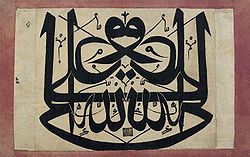
Abbasid
The Abbasid Caliphate or, more simply, the Abbasids , was the third of the Islamic caliphates. It was ruled by the Abbasid dynasty of caliphs, who built their capital in Baghdad after overthrowing the Umayyad caliphate from all but the al-Andalus region....
calligrapher Yaqut al-Mustasimi of Baghdad
Baghdad
Baghdad is the capital of Iraq, as well as the coterminous Baghdad Governorate. The population of Baghdad in 2011 is approximately 7,216,040...
, whose influence had spread across the Islamic world, al-Mustasimi himself possibly being of Anatolia
Anatolia
Anatolia is a geographic and historical term denoting the westernmost protrusion of Asia, comprising the majority of the Republic of Turkey...
n origin.
The Diwani
Diwani
Diwani is a calligraphic variety of Arabic script, a cursive style developed during the reign of the early Ottoman Turks...
script is a cursive
Cursive
Cursive, also known as joined-up writing, joint writing, or running writing, is any style of handwriting in which the symbols of the language are written in a simplified and/or flowing manner, generally for the purpose of making writing easier or faster...
and distinctively Ottoman style of Arabic calligraphy
Islamic calligraphy
Islamic calligraphy, colloquially known as Perso-Arabic calligraphy, is the artistic practice of handwriting, or calligraphy, and by extension, of bookmaking, in the lands sharing a common Islamic cultural heritage. This art form is based on the Arabic script, which for a long time was used by all...
developed in the 16th and early 17th centuries. It was invented by Housam Roumi, reaching its greatest development under Süleyman I the Magnificent (1520–66). The highly-decorative script was distinguished by its complexity of line and by the close juxtaposition of the letters within words. Other forms included the flowing, rounded Nashki
Naskh (script)
Naskh is a specific calligraphic style for writing in the Arabic alphabet, thought to be invented by the Iranian calligrapher Ibn Muqlah Shirazi . The root of this Arabic term means "to copy". It either refers to the fact that it replaced its predecessor, Kufic script, or that this style allows...
script, invented by the 10th-century Abbasid calligrapher Ali Muhammad ibn Muqlah
Ibn Muqlah
Abu 'ali Muhammad Ibn 'ali Ibn Muqlah Shirazi was a Persian calligrapher, one of the foremost of the Abbasid age. It is thought that he invented the thuluth script, the first cursive style of Arabic, though none of his original work remains.Ibn Muqlah was also a government official...
, and Ta'liq, based on the Persian Nastalīq style.
Noted Ottoman calligraphers include Seyyid Kasim Gubari
Seyyid Kasim Gubari
Seyyid Kasim Gubari of Diyarbakır is recorded as being responsible for much of the calligraphy of the Sultan Ahmed Mosque in Istanbul, he was commissioned to write verses from the Koran throughout the mosque. He was also said to be one of the greatest calligraphers of his day....
, Şeyh Hamdullah, Ahmed Karahisari, and Hafiz Osman.
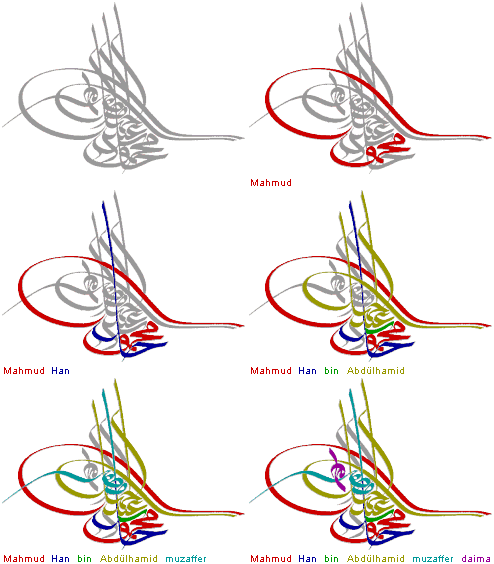
- TughraTughraA tughra is a calligraphic monogram, seal or signature of an Ottoman sultan that was affixed to all official documents and correspondence. It was also carved on his seal and stamped on the coins minted during his reign...
- Arabic calligraphy
- Islamic artIslamic artIslamic art encompasses the visual arts produced from the 7th century onwards by people who lived within the territory that was inhabited by or ruled by culturally Islamic populations...
Miniatures
The Ottoman tradition of painting miniatures, to illustrate manuscripts or used in dedicated albums, was heavily influenced by the PersianPersian miniature
A Persian miniature is a small painting on paper, whether a book illustration or a separate work of art intended to be kept in an album of such works called a muraqqa. The techniques are broadly comparable to the Western and Byzantine traditions of miniatures in illuminated manuscripts...
art form, though it also included elements of the Byzantine
Byzantine art
Byzantine art is the term commonly used to describe the artistic products of the Byzantine Empire from about the 5th century until the Fall of Constantinople in 1453....
tradition of illumination and painting. A Greek academy of painters, the Nakkashane-i-Rum was established in the Topkapi Palace
Topkapi Palace
The Topkapı Palace is a large palace in Istanbul, Turkey, that was the primary residence of the Ottoman Sultans for approximately 400 years of their 624-year reign....
in the 15th century, while early in the following century a similar Persian academy, the Nakkashane-i-Irani, was added.
Carpet-weaving and textile arts
The art of carpetCarpet
A carpet is a textile floor covering consisting of an upper layer of "pile" attached to a backing. The pile is generally either made from wool or a manmade fibre such as polypropylene,nylon or polyester and usually consists of twisted tufts which are often heat-treated to maintain their...
weaving
Weaving
Weaving is a method of fabric production in which two distinct sets of yarns or threads are interlaced at right angles to form a fabric or cloth. The other methods are knitting, lace making and felting. The longitudinal threads are called the warp and the lateral threads are the weft or filling...
was particularly significant in the Ottoman Empire, carpets having an immense importance both as decorative furnishings, rich in religious and other symbolism, and as a practical consideration, as it was customary to remove one's shoes in living quarters. The weaving of such carpets originated in the nomad
Nomad
Nomadic people , commonly known as itinerants in modern-day contexts, are communities of people who move from one place to another, rather than settling permanently in one location. There are an estimated 30-40 million nomads in the world. Many cultures have traditionally been nomadic, but...
ic cultures of central Asia (carpets being an easily-transportable form of furnishing), and was eventually spread to the settled societies of Anatolia. Turks used carpets, rugs and kilim
Kilim
Kilims are flat tapestry-woven carpets or rugs produced from the Balkans to Pakistan. Kilims can be purely decorative or can function as prayer rugs. Recently-made kilims are popular floor-coverings in Western households.-Etymology:...
s not just on the floors of a room, but also as a hanging on walls and doorways, where they provided additional insulation. They were also commonly donated to mosques, which often amassed large collections of them.
Hereke carpets were of particularly high status, being made of silk
Silk
Silk is a natural protein fiber, some forms of which can be woven into textiles. The best-known type of silk is obtained from the cocoons of the larvae of the mulberry silkworm Bombyx mori reared in captivity...
or a combination of silk and cotton
Cotton
Cotton is a soft, fluffy staple fiber that grows in a boll, or protective capsule, around the seeds of cotton plants of the genus Gossypium. The fiber is almost pure cellulose. The botanical purpose of cotton fiber is to aid in seed dispersal....
, and intricately knotted. Other significant designs included "Palace", "Yörük
Yörük
The Yorouks, also Yuruks or Yörüks are immigrants, ultimately of Thracian descent,some of whom are still nomadic, primarily inhabiting the mountains of Anatolia and partly Balkan peninsula...
", Ushak
Ushak Carpet
Uşak carpets, Ushak carpets or Oushak Carpets are Turkish carpets that use a particular family of designs, called by convention after the city of Uşak, Turkey – one of the larger towns in Western Anatolia, which was a major center of rug production from the early days of the Ottoman Empire,...
, and Milas or "Türkmen" carpets. "Yörük" and "Türkmen" represented more stylized designs, whereas naturalistic designs were prevalent in "Palace".
Jewelry
The Ottoman Empire was noted for the quality of its gold-Goldsmith
A goldsmith is a metalworker who specializes in working with gold and other precious metals. Since ancient times the techniques of a goldsmith have evolved very little in order to produce items of jewelry of quality standards. In modern times actual goldsmiths are rare...
and silversmith
Silversmith
A silversmith is a craftsperson who makes objects from silver or gold. The terms 'silversmith' and 'goldsmith' are not synonyms as the techniques, training, history, and guilds are or were largely the same but the end product varies greatly as does the scale of objects created.Silversmithing is the...
s, and particularly for the jewelry they produced. Jewelry had particular importance as it was commonly given at weddings, as a gift that could be used as a form of savings. Silver was the most common material used, with gold reserved for more high-status pieces; designs often displayed complex filigree work and incorporated Persian and Byzantine motifs. Developments in design reflected the tastes of the Ottoman court, with Persian Safavid art, for example, becoming an influence after the Ottoman defeat of Ismail I
Ismail I
Ismail I , known in Persian as Shāh Ismāʿil , was a Shah of Iran and the founder of the Safavid dynasty which survived until 1736. Isma'il started his campaign in Azerbaijan in 1500 as the leader of the Safaviyya, an extremist heterodox Twelver Shi'i militant religious order and unified all of Iran...
after the Battle of Chaldiran
Battle of Chaldiran
The Battle of Chaldiran or Chaldoran occurred on 23 August 1514 and ended with a victory for the Ottoman Empire over the Safavid Empire of Persia . As a result, the Ottomans gained immediate control over eastern Anatolia and northern Iraq...
in 1514. In the rural areas of the Empire, jewelry was simpler and often incorporated gold coins (the Ottoman altin), but the designs of Constantinople nevertheless spread throughout Ottoman territory and were reflected even in the metalwork of Egypt
Egypt
Egypt , officially the Arab Republic of Egypt, Arabic: , is a country mainly in North Africa, with the Sinai Peninsula forming a land bridge in Southwest Asia. Egypt is thus a transcontinental country, and a major power in Africa, the Mediterranean Basin, the Middle East and the Muslim world...
and North Africa.
Most jewelers and goldsmiths were Christian Armenians and Jews, but the interest of the Ottomans in the related art of watchmaking
Watchmaker
A watchmaker is an artisan who makes and repairs watches. Since virtually all watches are now factory made, most modern watchmakers solely repair watches. However, originally they were master craftsmen who built watches, including all their parts, by hand...
resulted in many European goldsmiths, watchmakers and gem engravers moving to Constantinople
Constantinople
Constantinople was the capital of the Roman, Eastern Roman, Byzantine, Latin, and Ottoman Empires. Throughout most of the Middle Ages, Constantinople was Europe's largest and wealthiest city.-Names:...
, where they worked in the foreigners' quarter, Galata
Galata
Galata or Galatae is a neighbourhood in the Beyoğlu district on the European side of Istanbul, the largest city of Turkey. Galata is located at the northern shore of the Golden Horn, the inlet which separates it from the historic peninsula of old Constantinople. The Golden Horn is crossed by...
.
Music
Apart from the music traditions of its constituent peoples, the Ottoman Empire evolved a distinct style of court music, Ottoman classical musicOttoman classical music
Ottoman classical music developed in Istanbul and major Ottoman towns from Skopje to Cairo, from Tabriz to Morocco through the palace, mosques, and sufi lodges of the Ottoman Empire. Above all a vocal music, Ottoman music traditionally accompanies a solo singer with a small instrumental ensemble...
. This was a principally vocal form, with instrumental accompaniment, built on makam
Makam
Makam In Turkish classical music, a system of melody types called makam provides a complex set of rules for composing and performance...
lar, a set of melodic systems, with a corresponding set of rhythmic patterns called usul.
Another distinctive feature of Ottoman music were the mehterân
Ottoman military band
Ottoman military bands are thought to be the oldest variety of military marching band in the world. Though they are often known by the Persian-derived word mahtar in the West, that word, properly speaking, refers only to a single musician in the band...
, the military bands used by the Janissaries and in the retinues of high-ranking officials. These bands were the ancestors of modern military bands, as well as of the brass ensembles
Balkan Brass Band
Balkan Brass Band or Chochek is a distinctive style of music originating in 19th century Serbia when trumpeters in the military transposed folk music during harsh times. It is popular throughout the Balkans, especially Serbia, Macedonia and Bulgaria. The beats are usually fast and accompanied by...
popular in traditional Balkan music.
Dance
Dancing was an important element of Ottoman culture, which incorporated the folkloric dancing traditions of many different countries and lands on three continents; from the BalkanBalkans
The Balkans is a geopolitical and cultural region of southeastern Europe...
peninsula and the Black Sea
Black Sea
The Black Sea is bounded by Europe, Anatolia and the Caucasus and is ultimately connected to the Atlantic Ocean via the Mediterranean and the Aegean seas and various straits. The Bosphorus strait connects it to the Sea of Marmara, and the strait of the Dardanelles connects that sea to the Aegean...
regions to the Caucasus
Caucasus
The Caucasus, also Caucas or Caucasia , is a geopolitical region at the border of Europe and Asia, and situated between the Black and the Caspian sea...
, the Middle East
Middle East
The Middle East is a region that encompasses Western Asia and Northern Africa. It is often used as a synonym for Near East, in opposition to Far East...
and North Africa
North Africa
North Africa or Northern Africa is the northernmost region of the African continent, linked by the Sahara to Sub-Saharan Africa. Geopolitically, the United Nations definition of Northern Africa includes eight countries or territories; Algeria, Egypt, Libya, Morocco, South Sudan, Sudan, Tunisia, and...
.
Dancing was also one of the most popular pastimes in the Harem
Harem
Harem refers to the sphere of women in what is usually a polygynous household and their enclosed quarters which are forbidden to men...
of Topkapı Palace
Topkapi Palace
The Topkapı Palace is a large palace in Istanbul, Turkey, that was the primary residence of the Ottoman Sultans for approximately 400 years of their 624-year reign....
.
The female belly dancers, named Çengi, were mostly from the Roma community. Today, living in Istanbul's Roma neighbourhoods like Sulukule, Kuştepe, Cennet and Kasımpaşa, they still dominate the traditional belly dancing and musical entertainment shows throughout the city's traditional taverns.
There were also male dancers, named Köçek
Köçek
The köçek phenomenon is one of the significant features of Ottoman Empire culture...
, who took part in the entertainment shows and celebrations, accompanied by circus
Circus
A circus is commonly a travelling company of performers that may include clowns, acrobats, trained animals, trapeze acts, musicians, hoopers, tightrope walkers, jugglers, unicyclists and other stunt-oriented artists...
acrobats
Acrobatics
Acrobatics is the performance of extraordinary feats of balance, agility and motor coordination. It can be found in many of the performing arts, as well as many sports...
, named Cambaz, performing difficult tricks, and other shows which attracted curiosity.
Median (open stage show)
.png)
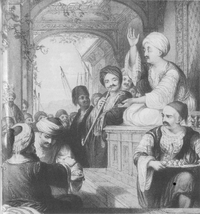
Meddah (one person show)
Story Teller
Story Teller was a magazine partwork published by Marshall Cavendish between 1982 and 1985.-Publishing history:...
played in front of a small group of viewers, such as a coffeehouse
Coffeehouse
A coffeehouse or coffee shop is an establishment which primarily serves prepared coffee or other hot beverages. It shares some of the characteristics of a bar, and some of the characteristics of a restaurant, but it is different from a cafeteria. As the name suggests, coffeehouses focus on...
audience. The play was generally about a single topic, the meddah playing different characters, and was usually introduced by drawing attention to the moral
Moral
A moral is a message conveyed or a lesson to be learned from a story or event. The moral may be left to the hearer, reader or viewer to determine for themselves, or may be explicitly encapsulated in a maxim...
contained in the story. The meddah would use props such as an umbrella, a handkerchief, or different headwear, to signal a change of character, and was skilled at manipulating his voice and imitating different dialects. There was no time limitation on the shows; a good meddah had the skill to adjust the story depending on interaction with the audience.
Meddahs were generally traveling artists whose route took them from one large city to another, such along the towns of the spice road
Spice trade
Civilizations of Asia were involved in spice trade from the ancient times, and the Greco-Roman world soon followed by trading along the Incense route and the Roman-India routes...
; the tradition supposedly goes back to Homer
Homer
In the Western classical tradition Homer , is the author of the Iliad and the Odyssey, and is revered as the greatest ancient Greek epic poet. These epics lie at the beginning of the Western canon of literature, and have had an enormous influence on the history of literature.When he lived is...
's time. The methods of meddahs were the same as the methods of the itinerant storytellers who related Greek epics such as the Iliad
Iliad
The Iliad is an epic poem in dactylic hexameters, traditionally attributed to Homer. Set during the Trojan War, the ten-year siege of the city of Troy by a coalition of Greek states, it tells of the battles and events during the weeks of a quarrel between King Agamemnon and the warrior Achilles...
and Odyssey
Odyssey
The Odyssey is one of two major ancient Greek epic poems attributed to Homer. It is, in part, a sequel to the Iliad, the other work ascribed to Homer. The poem is fundamental to the modern Western canon, and is the second—the Iliad being the first—extant work of Western literature...
, even though the main stories were now Ferhat ile Şirin or Leyla ile Mecnun
Leyla ile Mecnun
Leyla ile Mecnun is a Turkish television comedy series. The show is set in Istanbul, Turkey and premiered on 2011 on TRT. The series is a surreal and absurd comedy which revolves around the fictional love story between Leyla and Mecnun. Leyla and Mecnun born in the same hospital and they were put...
. The repertoires of the meddahs also included true stories, modified depending on the audience, artist and political situation.
The Istanbul meddahs were known to integrate musical instruments into their stories: this was a main difference between them and the East Anatolian Dengbejin.
Karagöz (shadow play)
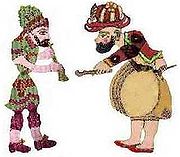
Shadow Theatre
The Shadow Theatre is an Edmonton-based theatre company born of the Edmonton International Fringe Festival in 1990.-History:Shadow Theatre was incorporated in 1992, operating under the governance of a volunteer Board of Directors...
. Today, scholars generally consider the technique of a single puppeteer creating voices for a dialogue, narrating a story, and possibly even singing, all while manipulating puppets, to be an Indonesian
Culture of Indonesia
Indonesian culture has been shaped by long interaction between original indigenous customs and multiple foreign influences. Indonesia is central along ancient trading routes between the Far East and the Middle East, resulting in many cultural practices being strongly influenced by a multitude of...
invention.
Sports
Turkish WrestlingYagli güres
Oil wrestling , also called grease wrestling, is the Turkish national sport. It is so called because the wrestlers douse themselves with olive oil. It is related to the Uzbeki kurash, Tuvan khuresh and Tatar köräş...
is a very old tradition among the Turks.
- Yağlı güreşYagli güresOil wrestling , also called grease wrestling, is the Turkish national sport. It is so called because the wrestlers douse themselves with olive oil. It is related to the Uzbeki kurash, Tuvan khuresh and Tatar köräş...
(Oil wrestling) - Cirit (Equestrian javelin throw)
- OkçulukArcheryArchery is the art, practice, or skill of propelling arrows with the use of a bow, from Latin arcus. Archery has historically been used for hunting and combat; in modern times, however, its main use is that of a recreational activity...
(Turkish archeryTurkish archery- Origins :Traditional Turkish archery’s origins go back to the first millennium B.C. to Scythian, Hun and other early Asian archery tradition. The horseback archers of Central Asian steppes have used very similar archery tackle and fighting strategies throughout entire history and the nomadic life...
) - Horoz DövüşüCockfightA cockfight is a blood sport between two roosters , held in a ring called a cockpit. Cockfighting is now illegal throughout all states in the United States, Brazil, Australia and in most of Europe. It is still legal in several U.S. territories....
(Cockfight)
Ottoman Turkish cuisine
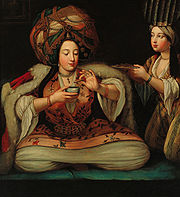
The cuisine of Ottoman Turkey can be divided between that of the Ottoman court itself, which was a highly sophisticated and elaborate fusion of many of the culinary traditions found in the Empire, and the regional cuisines of the peasantry and of the Empire's minorities, which were influenced by the produce of their respective areas. Rice
Rice
Rice is the seed of the monocot plants Oryza sativa or Oryza glaberrima . As a cereal grain, it is the most important staple food for a large part of the world's human population, especially in East Asia, Southeast Asia, South Asia, the Middle East, and the West Indies...
, for example, was a staple of high-status cookery (Imperial cooks were hired according to the skill they displayed in cooking it) but would have been regarded as a luxury item through most of Anatolia, where bread was the staple grain food.
Drinks
- Turkish CoffeeTurkish coffeeTurkish coffee is a method of preparing coffee where finely powdered roast coffee beans are boiled in a pot , with sugar according to taste, before being served into a cup where the dregs settle...
- probably introduced from Levantine ArabArabArab people, also known as Arabs , are a panethnicity primarily living in the Arab world, which is located in Western Asia and North Africa. They are identified as such on one or more of genealogical, linguistic, or cultural grounds, with tribal affiliations, and intra-tribal relationships playing...
ic culture, coffee became central to Ottoman society - often accompanied with a Nargile (Narguile / Hookkah). - AyranAyranAyran or laban is a cold beverage of yogurt mixed with cold water and sometimes salt; it is popular in many Central Asian, Middle Eastern and South-eastern European countries....
- a traditional yoghurtYoghurtYoghurt, yogurt or yogourt is a dairy product produced by bacterial fermentation of milk. The bacteria used to make yoghurt are known as "yoghurt cultures"...
-based drink still popular throughout many areas of the former Empire. - SherbetSharbatSharbat or Sherbet is a popular Middle Eastern and South Asian drink that is prepared from fruits or flower petals. It is sweet and served chilled...
- a spiced cold fruit drink. - RakıRaki-Alcoholic beverages:*Rakı, an anise-flavored spirit popular in Turkey*Any anise-flavored drink.-Fictional characters:*Raki, a character in the manga/anime series Claymore*Raki, a character in the game Ar tonelico II: Melody of Metafalica...
- a traditional Turkish alcoholic drink.
Food
- LokumTurkish DelightTurkish delight or lokum is a family of confections based on a gel of starch and sugar. Premium varieties consist largely of chopped dates, pistachios and hazelnuts or walnuts bound by the gel; the cheapest are mostly gel, generally flavored with rosewater, mastic, or lemon...
(Turkish DelightTurkish DelightTurkish delight or lokum is a family of confections based on a gel of starch and sugar. Premium varieties consist largely of chopped dates, pistachios and hazelnuts or walnuts bound by the gel; the cheapest are mostly gel, generally flavored with rosewater, mastic, or lemon...
) - ŞekerShekerSheker is a village in the Kara-Buura District of Talas Province of Kyrgyzstan. It is the birthplace of Chinghiz Aitmatov....
(Candies)- Akide Şekeri
- MacunMacunMesir paste tradition is a very old tradition in the history of Manisa, an Anatolian city in the Aegean region, dating back to almost 500 years...
(Majoon) - Pestil
- Sucuk
- Shish Kebab
- Çörek
- BaklavaBaklavaBaklava is a rich, sweet pastry made of layers of filo pastry filled with chopped nuts and sweetened with syrup or honey. It is characteristic of the cuisines of the former Ottoman Empire and much of central and southwest Asia....
- LahmacunLahmacunLahmacun or lahmajoun , from , , "meat with dough", is an item of prepared food originating in the early Syrian cuisine of the Levant, consisting of a round, thin piece of dough topped with minced meat...
- Döner
- Kebap
Timeline
- April 1, 1847 - Institution of the Ministry of Education founded
- July 18, 1851 - Inauguration of the Academy of Sciences
- Civil Service School founded 1859
- Imperial Ottoman Lycée of Galatasaray founded 1868
External links
- Hatvesanat.com Source on Islamic Calligraphy Art (mainly )
- http://www.osmanlimedeniyeti.com Many articles about the Ottoman history and culture including art, culture, literature, economics, architecture
- KalemGuzeli.net Traditional arts in Ottoman Empire (mainly )