

Culture of Spain

Encyclopedia
The culture
of Spain
is based on a variety of influences.
The Visigothic Kingdom
left a sense of a united Christian
Hispania
that was going to be welded in the Reconquista
. Muslim influences were strong during the period of 711 AD to the 15th century, especially linguistically. The Spanish language
derives directly from Vulgar Latin
and has minor influences from pre-Roman languages like Gothic
, Arabic, and Basque
. Another influence was the minority Jewish population in some cities, but after the defeat of the Muslims during the Christian Reconquista ("Reconquest") period between 1000 and 1492, Spain became an almost entirely Roman Catholic country. In addition, the history of the nation and its Mediterranean and Atlantic environment have played a significant role in shaping its culture.
By the end of the 19th and 20th centuries, the Spaniards made expressions of cultural diversity easier than it had been for the last seven centuries. This occurred at the same period that Spain became increasingly drawn into a diverse international culture.
Spain has the second highest number of UNESCO World Heritage Sites in the world, with a total of 42.
written in the Spanish language
, including literature composed by Spanish and Latin American writers. It may include Spanish poetry
, prose
, and novel
s.
Spanish literature is the name given to the literary works written in Spain throughout time, and those by Spanish authors worldwide. Due to historic, geographic, and generational diversity, Spanish literature has known a great number of influences and is very diverse. Some major movements can be identified within it.
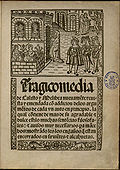 Highlights include the Cantar de Mio Cid
, the oldest preserved Spanish cantar de gesta
. It is written in medieval Spanish, the ancestor of modern Spanish.
The Celestina is a book published anonymously by Fernando de Rojas
in 1499. This book is considered to be one of the greatest in Spanish literature, and traditionally marks the end of medieval literature and the beginning of the literary renaissance in Spain.
Besides its importance in the Spanish literature of the Golden Centuries, Lazarillo de Tormes
is credited with founding a literary genre, the picaresque novel
, so called from Spanish pícaro, meaning "rogue" or "rascal". In these novels, the adventures of the pícaro expose injustice while simultaneously amusing the reader.
Published by Miguel de Cervantes
in two volumes a decade apart, Don Quixote is the most influential work of literature to emerge from the Spanish Golden Age
and perhaps the entire Spanish literary canon. As a founding work of modern Western literature, it regularly appears at or near the top of lists of the greatest works of fiction ever published.
period included El Greco
, Bartolomé Esteban Murillo
, Diego Venezuela, and Francisco Goya
, who became world-renowned artists between the period of the 16th century to 19th century. However, Spain's best known artist since the 20th century has been Pablo Picasso, who is known for his abstract sculptures, drawings, graphics, and ceramics in addition to his paintings. Other leading artists include Salvador Dalí, Juan Gris, Joan Miró, and Antoni Tàpies.
 During the Prehistoric period, the megalithic Iberian and Celtic architectures developed. Through the Roman period, both urban development (ex. the Emerita Augusta
) and construction projects (ex. the Aqueduct of Segovia
) flourished. After the pre-Romanesque period, in the architecture of Al-Andalus
, important contributions were made by the Caliphate of Córdoba (the Great Mosque of Córdoba
), the Taifas (Aljafería
, in Zaragoza), the Almoravids and Almohads (La Giralda, Seville), and the Nasrid of the Kingdom of Granada (Alhambra
, Generalife
).
Spanish architecture encompasses a wide range of both secular and religious styles from the foundation of Islam to the present day, influencing the design and construction of buildings and structures in Islamic culture. The principal Islamic architectural types are the mosque, the tomb, the palace and the fort. From these four types, the vocabulary of Islamic architecture is derived and used for buildings of lesser importance such as public baths, fountains, and domestic architecture.[1][2]
Islamic art prohibited the painting of people or figures, so beautiful designs and floral patterns covered every wall of important buildings. Art was very important in Spain at that time. The three main religions in Spain then were Islam, Christianity, and Judaism. The places of worship involved all three different aspects.
Later, several currents appear: the Mudéjar Style (ex. the Alcázar of Seville
), the Romanesque period (ex. the Cathedral of Santiago de Compostela
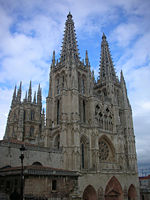
), the Gothic period (ex. the Cathedrals of Burgos, León and Toledo
), the Renaissance (Palace of Charles V
in Granada), the Baroque period (Granada Cathedral
), the Spanish colonial architecture, and Neoclassical style (ex. the Museo del Prado
) are the most significant. In the 19th century eclecticism and regionalism, the Neo-Mudéjar style and glass architecture bloom. In the 20th century, the Catalan Modernisme
(ex. La Sagrada Família
by Gaudí), modernist architecture
, and contemporary architecture
germinated.
In recent years, Spanish cinema has achieved high marks of recognition as a result of its creative and technical excellence. In the long history of Spanish cinema, the great filmmaker Luis Buñuel
was the first to achieve universal recognition, followed by Pedro Almodóvar
in the 1980s. Spanish cinema has also seen international success over the years with films by directors
like Segundo de Chomón
, Florián Rey
, Luis García Berlanga, Carlos Saura
, Julio Medem
and Alejandro Amenábar
. Woody Allen
, upon receiving the prestigious Prince of Asturias Award in 2002 in Oviedo
remarked: "when I left New York, the most exciting film in the city at the time was Spanish, Pedro Almodovar's one. I hope that Europeans will continue to lead the way in filmmaking because at the moment not much is coming from the United States."
Non-directors have obtained less international notability. Only the cinematographer
Néstor Almendros
, the actress Penélope Cruz
and the actor
s Fernando Rey
, Antonio Banderas
, Javier Bardem
and Fernando Fernán Gómez
have obtained some recognition outside of Spain. Mexican actor Gael García Bernal
has also recently received international notoriety in films by Spanish directors.
Today, only 10 to 20% of box office receipts in Spain are generated by domestic films, a situation that repeats itself in many nations of Europe and the Americas. The Spanish government has therefore implemented various measures aimed at supporting local film production and movie theaters, which include the assurance of funding from the main national television stations. The trend is being reversed with the recent screening of mega productions such as the €30 million film Alatriste
(starring Viggo Mortensen
), the Academy Award winning Spanish/Mexican film Pan's Labyrinth
(El Laberinto del Fauno), Volver
(starring Penélope Cruz
), and Los Borgia (€10 million), all of them hit blockbusters in Spain.
Another aspect of Spanish cinema mostly unknown to the general public is the appearance of English-language Spanish films such as The Machinist
(starring Christian Bale
) The Others
(starring Nicole Kidman
), Basic Instinct 2
(starring Sharon Stone
), and Milos Forman
’s Goya's Ghosts
(starring Javier Bardem
and Natalie Portman
). All of these films were produced by Spanish firms. This attests to the dynamism and creativity of Spanish directors and producers.
" or "Castilian" (Castellano) is a Romance language
originally from the northern area of Spain. From there, its use gradually spread inside the Kingdom of Castile
, where it evolved and eventually became the principal language of the government and trade. It was later taken to Africa, the Americas
and the Philippines
when they were brought under Spanish colonial rule between the 15th and 19th centuries.
Today, it is one of the official languages of Spain, most Latin American countries and Equatorial Guinea
. In total, 21 nations use Spanish as their primary language. Spanish is also one of six official languages of the United Nations
.
", with its "Valencian
" dialect is a Romance language
, the national language
of Andorra
, and a co-official language
in the Spanish autonomous communities
of The Balearic Islands
, Catalonia
and Valencian Community
, and in the city
of Alghero
in the Italian
island of Sardinia
. It is also spoken, although with no official recognition, in the autonomous communities
of Aragon
(in La Franja
) and Murcia
(in Carche
) in Spain
, and in the Roussillon
region of southern France
, which is more or less equivalent to the département of the Pyrénées-Orientales
.
(Euskera or Euskara) is a non-Indo-European language. Until the 1970s it was in recession, but with the democracy it is taught in schools and it is more common to hear Basque in the cities and in the areas where it was lost.
Basque is the only non-Indo-European language in all of western Europe. The origins of this language are unknown. It is thought that the language was spoken before the Romans came to the Iberian Peninsula.
(Galician: Galego ɡaˈleɡo) is a language of the Western Ibero-Romance
branch, spoken in Galicia, an autonomous community
with the constitutional status of "historic nationality," located in northwestern Spain and small bordering zones in neighbouring autonomous communities of Asturias
and Castilla y León.
Galician and Portuguese
were, in medieval times, a single language which linguists call Galician-Portuguese
, Medieval Galician, or Old Portuguese, spoken in the territories initially ruled by the medieval Kingdom of Galicia
. Both languages are even today united by a dialect continuum
located mainly in the northern regions of Portugal.
variety of the Occitan language spoken in the Val d'Aran
, in north western Catalonia
on the border between Spain
and France, where it is one of the three official languages besides Catalan
and Spanish
.
with large parades and other religious events. Spaniards also hold celebrations to honour their local patron saints in churches, cities, towns and villages. The people decorate the streets, build bonfires, set off fireworks and hold large parades, bullfights, and beauty contests.
One of the best known Spanish celebrations is the festival of "San Fermin
," which is celebrated every year in July in Pamplona
. Bulls are released into the streets, while people run ahead of the animals to the bullring
.
, FC Barcelona
, Real Sociedad
, Valencia CF
and Real Madrid C. F..
, and Arab
traditions. The Moorish people were a strong influence in Spain for many centuries. However, pork is popular and for centuries eating pork was also a statement of Christian ethnicity or "cleanliness of blood", because it was not eaten by Jews or Muslims. Several native foods of the Americas were introduced to Europe through Spain, and a modern Spanish cook could not do without potatoes, tomatoes, peppers, and beans. These are some of the primary influences that have differentiated Spanish cuisine from Mediterranean cuisine, of which Spanish cuisine shares many techniques and food items.
The essential ingredient for real Spanish cooking is olive oil
, as Spain produces 44% of the world's olives. However, butter or lard are also important, especially in the north.
Daily meals eaten by Spaniards in many areas of the country are still very often made traditionally by hand, from fresh ingredients bought daily from the local market. This practice is more common in the rural areas and less common in the large urban areas like Barcelona
or Madrid, where supermarkets are beginning to displace the open air markets. However, even in Madrid food can be bought from the local shops; bread from the "panadería" and meat from the "carnicería".
One popular custom when going out is to be served tapas
with a drink, including sherry
, wine
and beer
. In some areas, like Almería
, Granada
or Jaén
in Andalusia
and Madrid
or Salamanca
in the centre tapas are given for free with a drink and have become very famous for that reason. It should be noted that almost every bar serves something edible when a drink is ordered, without charge. However many bars exist primarily to serve a purchased "tapa".
Another traditional favorite is the churro
with a mug of thick hot chocolate
to dip churros in. "Churrerías," or stores that serve churros, are quite common. The Chocolatería San Ginés
in Madrid is especially famous as a place to stop and have some chocolate with churros, often late into the night (even dawn) after being out on the town. Often traditional Spanish singers and musicians will entertain the guests. http://www.spain-info.com/madrid/Classic-Cafes-Madrid.html
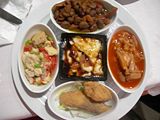 As is true in many countries, the cuisines of Spain differ widely from one region to another, even though they all share certain common characteristics, which include:
. The monarch
is the head of state, and the president of the government
is the head of government. There are multiple parties and free elections. Executive power
is vested in the government. Central legislative power is vested in the two chambers of parliament. The judiciary
is independent of the executive and the legislative powers.
identity exists in many regions of Spain. These regions or nationalities—even those that least identify themselves as Spanish—have contributed greatly to many aspects of mainstream Spanish culture.
Most notably, the Basque Country
and Catalonia
have widespread nationalist
sentiment. Many Basque
and Catalan nationalists
demand statehood
for their respective territories. Basque aspirations to statehood have been a cause of violence (notably by ETA
), although most Basque nationalists (like virtually all Catalan nationalists) currently seek to fulfill their aspirations peacefully.
There are also several communities where there is a great sense of regional identity: Galicia, Andalusia
, Asturias
, Navarre
, Aragon
, Balearic Islands
and Valencia
(the last two feeling attached to Catalan culture in different ways) each have their own version of nationalism, but generally with a smaller percentage of nationalists than in the Basque Country and Catalonia.
There are other regions which, despite a broad Spanish nationalist feeling, have strong regional identities: Cantabria
, Rioja
, and Extremadura
.
There are also the cases of Madrid
, an administrative autonomous community inside the two Castilles; the two north African autonomous cities of Ceuta
and Melilla
, and the autonomous community of Murcia
. Castile
was the core kingdom under which Spain eventually unified after centuries of evolution and incorporations. Yet there are also strong movements in the provinces of the extinct region of Leon, pushing to separate from Castile and León
.
Spain has a long history of tension between centralism and regionalism. The current organisation of the state into autonomous communities
(similar to a federal organisation) under the Spanish Constitution of 1978
is intended as a way to incorporate these communities into the state.
While everyone in Spain can speak Spanish
, other languages figure prominently in many regions: Basque
or Euskara in the Basque Country and Navarre; Catalan
in Catalonia, Balearic Islands and Valencia (where it is usually referred to as Valencian), and Galician
in Galicia. Spanish is official throughout the country; the rest of these have co-official status in their respective regions and all are major enough that there are numerous daily newspapers in these languages and, especially in Catalan, a significant book publishing industry. Many citizens in these regions consider their regional language as their primary language and Spanish as secondary; these languages cover broad enough regions to have multiple distinct dialects. Spanish itself also has distinct dialects around the country, with the Andalusian ('Andaluz') dialect being closer to the Spanish of the Americas, which it heavily influenced.
Culture
Culture is a term that has many different inter-related meanings. For example, in 1952, Alfred Kroeber and Clyde Kluckhohn compiled a list of 164 definitions of "culture" in Culture: A Critical Review of Concepts and Definitions...
of Spain
Spain
Spain , officially the Kingdom of Spain languages]] under the European Charter for Regional or Minority Languages. In each of these, Spain's official name is as follows:;;;;;;), is a country and member state of the European Union located in southwestern Europe on the Iberian Peninsula...
is based on a variety of influences.
The Visigothic Kingdom
Visigothic Kingdom
The Visigothic Kingdom was a kingdom which occupied southwestern France and the Iberian Peninsula from the 5th to 8th century AD. One of the Germanic successor states to the Western Roman Empire, it was originally created by the settlement of the Visigoths under King Wallia in the province of...
left a sense of a united Christian
Christian
A Christian is a person who adheres to Christianity, an Abrahamic, monotheistic religion based on the life and teachings of Jesus of Nazareth as recorded in the Canonical gospels and the letters of the New Testament...
Hispania
Hispania
Another theory holds that the name derives from Ezpanna, the Basque word for "border" or "edge", thus meaning the farthest area or place. Isidore of Sevilla considered Hispania derived from Hispalis....
that was going to be welded in the Reconquista
Reconquista
The Reconquista was a period of almost 800 years in the Middle Ages during which several Christian kingdoms succeeded in retaking the Muslim-controlled areas of the Iberian Peninsula broadly known as Al-Andalus...
. Muslim influences were strong during the period of 711 AD to the 15th century, especially linguistically. The Spanish language
Spanish language
Spanish , also known as Castilian , is a Romance language in the Ibero-Romance group that evolved from several languages and dialects in central-northern Iberia around the 9th century and gradually spread with the expansion of the Kingdom of Castile into central and southern Iberia during the...
derives directly from Vulgar Latin
Vulgar Latin
Vulgar Latin is any of the nonstandard forms of Latin from which the Romance languages developed. Because of its nonstandard nature, it had no official orthography. All written works used Classical Latin, with very few exceptions...
and has minor influences from pre-Roman languages like Gothic
Gothic language
Gothic is an extinct Germanic language that was spoken by the Goths. It is known primarily from the Codex Argenteus, a 6th-century copy of a 4th-century Bible translation, and is the only East Germanic language with a sizable Text corpus...
, Arabic, and Basque
Basque language
Basque is the ancestral language of the Basque people, who inhabit the Basque Country, a region spanning an area in northeastern Spain and southwestern France. It is spoken by 25.7% of Basques in all territories...
. Another influence was the minority Jewish population in some cities, but after the defeat of the Muslims during the Christian Reconquista ("Reconquest") period between 1000 and 1492, Spain became an almost entirely Roman Catholic country. In addition, the history of the nation and its Mediterranean and Atlantic environment have played a significant role in shaping its culture.
By the end of the 19th and 20th centuries, the Spaniards made expressions of cultural diversity easier than it had been for the last seven centuries. This occurred at the same period that Spain became increasingly drawn into a diverse international culture.
Spain has the second highest number of UNESCO World Heritage Sites in the world, with a total of 42.
Literature
The term "Spanish literature" refers to literatureLiterature
Literature is the art of written works, and is not bound to published sources...
written in the Spanish language
Spanish language
Spanish , also known as Castilian , is a Romance language in the Ibero-Romance group that evolved from several languages and dialects in central-northern Iberia around the 9th century and gradually spread with the expansion of the Kingdom of Castile into central and southern Iberia during the...
, including literature composed by Spanish and Latin American writers. It may include Spanish poetry
Spanish poetry
Spanish poetry is the poetic tradition of Spain. It may include elements of Spanish literature, and literatures written in languages of Spain other than Castilian, such as Catalan literature....
, prose
Prose
Prose is the most typical form of written language, applying ordinary grammatical structure and natural flow of speech rather than rhythmic structure...
, and novel
Novel
A novel is a book of long narrative in literary prose. The genre has historical roots both in the fields of the medieval and early modern romance and in the tradition of the novella. The latter supplied the present generic term in the late 18th century....
s.
Spanish literature is the name given to the literary works written in Spain throughout time, and those by Spanish authors worldwide. Due to historic, geographic, and generational diversity, Spanish literature has known a great number of influences and is very diverse. Some major movements can be identified within it.
Cantar de Mio Cid
El Cantar de Myo Çid , also known in English as The Lay of the Cid and The Poem of the Cid is the oldest preserved Spanish epic poem...
, the oldest preserved Spanish cantar de gesta
Cantar de gesta
A cantar de gesta is the Spanish equivalent of the Old French medieval chanson de geste or "songs of heroic deeds".The most important cantares de gesta of Castile were:...
. It is written in medieval Spanish, the ancestor of modern Spanish.
The Celestina is a book published anonymously by Fernando de Rojas
Fernando de Rojas
Fernando de Rojas was a Spanish author about whom little information is known. He possibly attended the University of Salamanca. Although his family was of Jewish ancestry, they were conversos, or Jews who had converted to Christianity under pressure from the Spanish crown...
in 1499. This book is considered to be one of the greatest in Spanish literature, and traditionally marks the end of medieval literature and the beginning of the literary renaissance in Spain.
Besides its importance in the Spanish literature of the Golden Centuries, Lazarillo de Tormes
Lazarillo de Tormes
The Life of Lazarillo de Tormes and of His Fortunes and Adversities is a Spanish novella, published anonymously because of its heretical content...
is credited with founding a literary genre, the picaresque novel
Picaresque novel
The picaresque novel is a popular sub-genre of prose fiction which is usually satirical and depicts, in realistic and often humorous detail, the adventures of a roguish hero of low social class who lives by his wits in a corrupt society...
, so called from Spanish pícaro, meaning "rogue" or "rascal". In these novels, the adventures of the pícaro expose injustice while simultaneously amusing the reader.
Published by Miguel de Cervantes
Miguel de Cervantes
Miguel de Cervantes Saavedra was a Spanish novelist, poet, and playwright. His magnum opus, Don Quixote, considered the first modern novel, is a classic of Western literature, and is regarded amongst the best works of fiction ever written...
in two volumes a decade apart, Don Quixote is the most influential work of literature to emerge from the Spanish Golden Age
Spanish Golden Age
The Spanish Golden Age is a period of flourishing in arts and literature in Spain, coinciding with the political rise and decline of the Spanish Habsburg dynasty. El Siglo de Oro does not imply precise dates and is usually considered to have lasted longer than an actual century...
and perhaps the entire Spanish literary canon. As a founding work of modern Western literature, it regularly appears at or near the top of lists of the greatest works of fiction ever published.
Painting and sculpture
Spain's greatest painters during the Golden ageGolden Age
The term Golden Age comes from Greek mythology and legend and refers to the first in a sequence of four or five Ages of Man, in which the Golden Age is first, followed in sequence, by the Silver, Bronze, and Iron Ages, and then the present, a period of decline...
period included El Greco
El Greco
El Greco was a painter, sculptor and architect of the Spanish Renaissance. "El Greco" was a nickname, a reference to his ethnic Greek origin, and the artist normally signed his paintings with his full birth name in Greek letters, Δομήνικος Θεοτοκόπουλος .El Greco was born on Crete, which was at...
, Bartolomé Esteban Murillo
Bartolomé Estéban Murillo
Bartolomé Esteban Murillo was a Spanish Baroque painter. Although he is best known for his religious works, Murillo also produced a considerable number of paintings of contemporary women and children...
, Diego Venezuela, and Francisco Goya
Francisco Goya
Francisco José de Goya y Lucientes was a Spanish romantic painter and printmaker regarded both as the last of the Old Masters and the first of the moderns. Goya was a court painter to the Spanish Crown, and through his works was both a commentator on and chronicler of his era...
, who became world-renowned artists between the period of the 16th century to 19th century. However, Spain's best known artist since the 20th century has been Pablo Picasso, who is known for his abstract sculptures, drawings, graphics, and ceramics in addition to his paintings. Other leading artists include Salvador Dalí, Juan Gris, Joan Miró, and Antoni Tàpies.
Architecture
Emerita Augusta
The Archaeological Ensemble of Mérida is one of the largest and most extensive archaeological sites in Spain. Mainly of Emerita Augusta, ancient capital of Lusitania . It was declared a World Heritage Site by UNESCO in 1993....
) and construction projects (ex. the Aqueduct of Segovia
Aqueduct of Segovia
The Aqueduct of Segovia is a Roman aqueduct and one of the most significant and best-preserved ancient monuments left on the Iberian Peninsula...
) flourished. After the pre-Romanesque period, in the architecture of Al-Andalus
Al-Andalus
Al-Andalus was the Arabic name given to a nation and territorial region also commonly referred to as Moorish Iberia. The name describes parts of the Iberian Peninsula and Septimania governed by Muslims , at various times in the period between 711 and 1492, although the territorial boundaries...
, important contributions were made by the Caliphate of Córdoba (the Great Mosque of Córdoba
Mezquita
The Cathedral and former Great Mosque of Córdoba, in ecclesiastical terms the Catedral de Nuestra Señora de la Asunción , and known by the inhabitants of Córdoba as the Mezquita-Catedral , is today a World Heritage Site and the cathedral of the Diocese of Córdoba...
), the Taifas (Aljafería
Aljafería
The Aljafería Palace is a fortified medieval Islamic palace built during the second half of the 11th century in the Moorish taifa of Zaragoza of Al-Andalus, present day Zaragoza, Spain. It was the residence of the Banu Hud dynasty during the era of Abu Jaffar Al-Muqtadir after abolishing Banu...
, in Zaragoza), the Almoravids and Almohads (La Giralda, Seville), and the Nasrid of the Kingdom of Granada (Alhambra
Alhambra
The Alhambra , the complete form of which was Calat Alhambra , is a palace and fortress complex located in the Granada, Andalusia, Spain...
, Generalife
Generalife
The Palacio de Generalife was the summer palace and country estate of the Nasrid Emirs of the Emirate of Granada in Al-Andalus, now beside the city of Granada in the autonomous community of Andalusia, Spain.-History:...
).
Spanish architecture encompasses a wide range of both secular and religious styles from the foundation of Islam to the present day, influencing the design and construction of buildings and structures in Islamic culture. The principal Islamic architectural types are the mosque, the tomb, the palace and the fort. From these four types, the vocabulary of Islamic architecture is derived and used for buildings of lesser importance such as public baths, fountains, and domestic architecture.[1][2]
Islamic art prohibited the painting of people or figures, so beautiful designs and floral patterns covered every wall of important buildings. Art was very important in Spain at that time. The three main religions in Spain then were Islam, Christianity, and Judaism. The places of worship involved all three different aspects.
Later, several currents appear: the Mudéjar Style (ex. the Alcázar of Seville
Alcázar of Seville
thumb|right|250px|Baths of Lady María de PadillaThe Alcázar of Seville is a royal palace in Seville, Spain, originally a Moorish fort....
), the Romanesque period (ex. the Cathedral of Santiago de Compostela
Cathedral of Santiago de Compostela
Santiago de Compostela Cathedral is a Roman Catholic cathedral of the archdiocese of Santiago de Compostela in Galicia, Spain. The cathedral is the reputed burial-place of Saint James the Greater, one of the apostles of Jesus Christ. It is the destination of the Way of St...
), the Gothic period (ex. the Cathedrals of Burgos, León and Toledo
Cathedral of Toledo
The Primate Cathedral of Saint Mary of Toledo is a Roman Catholic cathedral in Toledo, Spain, seat of the Metropolitan Archdiocese of Toledo....
), the Renaissance (Palace of Charles V
Palace of Charles V
The Palace of Charles V is a Renacentist construction in Granada, southern Spain, located on the top of the hill of the Assabica, inside the Nasrid fortification of the Alhambra. It was commanded by Charles V, Holy Roman Emperor, who wished to establish his residence close to the Alhambra palaces...
in Granada), the Baroque period (Granada Cathedral
Granada Cathedral
Granada Cathedral is the cathedral in the city of Granada, capital of the province of the same name in the Autonomous Region of Andalusia, Spain.-History:...
), the Spanish colonial architecture, and Neoclassical style (ex. the Museo del Prado
Museo del Prado
The Museo del Prado is the main Spanish national art museum, located in central Madrid. It features one of the world's finest collections of European art, from the 12th century to the early 19th century, based on the former Spanish Royal Collection, and unquestionably the best single collection of...
) are the most significant. In the 19th century eclecticism and regionalism, the Neo-Mudéjar style and glass architecture bloom. In the 20th century, the Catalan Modernisme
Modernisme
Modernisme was a cultural movement associated with the search for Catalan national identity. It is often understood as an equivalent to a number of fin-de-siècle art movements, such as Art Nouveau, Jugendstil, Secessionism, and Liberty style, and was active from roughly 1888 to 1911 Modernisme ...
(ex. La Sagrada Família
Sagrada Familia
The ' , commonly known as the Sagrada Família, is a large Roman Catholic church in Barcelona, Catalonia, Spain, designed by Catalan architect Antoni Gaudí...
by Gaudí), modernist architecture
Modern architecture
Modern architecture is generally characterized by simplification of form and creation of ornament from the structure and theme of the building. It is a term applied to an overarching movement, with its exact definition and scope varying widely...
, and contemporary architecture
Contemporary architecture
Contemporary architecture is generally speaking the architecture of the present time.The term contemporary architecture is also applied to a range of styles of recently built structures and space which are optimized for current use....
germinated.
Cinema
The art of motion picture making within the nation of Spain or by Spanish filmmakers abroad is collectively known as "Spanish cinema".In recent years, Spanish cinema has achieved high marks of recognition as a result of its creative and technical excellence. In the long history of Spanish cinema, the great filmmaker Luis Buñuel
Luis Buñuel
Luis Buñuel Portolés was a Spanish-born filmmaker — later a naturalized citizen of Mexico — who worked in Spain, Mexico, France and the US..-Early years:...
was the first to achieve universal recognition, followed by Pedro Almodóvar
Pedro Almodóvar
Pedro Almodóvar Caballero is a Spanish film director, screenwriter and producer.Almodóvar is arguably the most successful and internationally known Spanish filmmaker of his generation. His films, marked by complex narratives, employ the codes of melodrama and use elements of pop culture, popular...
in the 1980s. Spanish cinema has also seen international success over the years with films by directors
Film director
A film director is a person who directs the actors and film crew in filmmaking. They control a film's artistic and dramatic nathan roach, while guiding the technical crew and actors.-Responsibilities:...
like Segundo de Chomón
Segundo de Chomón
Segundo Víctor Aurelio Chomón y Ruiz was a pioneering Spanish film director. He produced many short films in France while working for Pathé Frères and has been compared to Georges Méliès, due to his frequent camera tricks and optical illusions.-Selected filmography:*1902: Choque de trenes,...
, Florián Rey
Florián Rey
Florián Rey , born at La Almunia de Doña Godina, , 25 January 1894 - death at Benidorm , 11 April 1962 was the most successful Spanish film director in the 20's and 30's....
, Luis García Berlanga, Carlos Saura
Carlos Saura
Carlos Saura Atarés is a Spanish film director and photographer.-Early life:Born into a family of artists , he developed his artistic sense in childhood as a photography enthusiast.He obtained his directing diploma in Madrid in 1957 at the Institute of Cinema Research and Studies...
, Julio Medem
Julio Medem
Julio Médem is a Spanish writer and film director.Medem was born in San Sebastián, Basque Country, Spain and showed an interest in movies since childhood, when he would take his father's Super 8 camera and shoot at night, while nobody was paying attention...
and Alejandro Amenábar
Alejandro Amenábar
Alejandro Fernando Amenábar Cantos is a Spanish- Chilean film director. Amenábar was born in Santiago, Chile to a Spanish mother and Chilean father, but the family moved to Spain just one year after his birth...
. Woody Allen
Woody Allen
Woody Allen is an American screenwriter, director, actor, comedian, jazz musician, author, and playwright. Allen's films draw heavily on literature, sexuality, philosophy, psychology, Jewish identity, and the history of cinema...
, upon receiving the prestigious Prince of Asturias Award in 2002 in Oviedo
Oviedo
Oviedo is the capital city of the Principality of Asturias in northern Spain. It is also the name of the municipality that contains the city....
remarked: "when I left New York, the most exciting film in the city at the time was Spanish, Pedro Almodovar's one. I hope that Europeans will continue to lead the way in filmmaking because at the moment not much is coming from the United States."
Non-directors have obtained less international notability. Only the cinematographer
Cinematographer
A cinematographer is one photographing with a motion picture camera . The title is generally equivalent to director of photography , used to designate a chief over the camera and lighting crews working on a film, responsible for achieving artistic and technical decisions related to the image...
Néstor Almendros
Néstor Almendros
Néstor Almendros, ASC was an Oscar winning Spanish cinematographer. One of the highest appraised contemporary cinematographers, "Almendros was an artist of deep integrity, who believed the most beautiful light was natural light...he will always be remembered as a cinematographer of absolute...
, the actress Penélope Cruz
Penélope Cruz
Penélope Cruz Sánchez is a Spanish actress. Signed by an agent at age 15, she made her acting debut at 16 on television and her feature film debut the following year in Jamón, jamón , to critical acclaim...
and the actor
Actor
An actor is a person who acts in a dramatic production and who works in film, television, theatre, or radio in that capacity...
s Fernando Rey
Fernando Rey
Fernando Casado Arambillet , best known as Fernando Rey, was a Spanish film, theatre, and TV actor, who worked in both Europe and the United States...
, Antonio Banderas
Antonio Banderas
José Antonio Domínguez Banderas , better known as Antonio Banderas, is a Spanish film actor, film director, film producer and singer...
, Javier Bardem
Javier Bardem
Javier Ángel Encinas Bardem is a Spanish actor. In 2007 he won the Academy Award for Best Supporting Actor for his role as sociopathic assassin Anton Chigurh in No Country for Old Men, and has also garnered critical acclaim for roles in films such as Jamón, jamón, Carne trémula, Boca a boca, Los...
and Fernando Fernán Gómez
Fernando Fernán Gómez
Fernando Fernán-Gómez was a Spanish actor and director. He was born in Lima, Peru as his mother, Spanish actress Carola Fernán-Gómez, was making a tour of Latin America. Inheriting his surname as a stage name, he moved to Spain in 1924.After the Spanish Civil War he began a study of Law but...
have obtained some recognition outside of Spain. Mexican actor Gael García Bernal
Gael García Bernal
Gael García Bernal is a Mexican film actor and director.-Early life:García Bernal was born in Guadalajara, Mexico, the son of Patricia Bernal, an actress and former model, and José Ángel García, an actor and director. His stepfather is Sergio Yazbek, whom his mother married when García Bernal was...
has also recently received international notoriety in films by Spanish directors.
Today, only 10 to 20% of box office receipts in Spain are generated by domestic films, a situation that repeats itself in many nations of Europe and the Americas. The Spanish government has therefore implemented various measures aimed at supporting local film production and movie theaters, which include the assurance of funding from the main national television stations. The trend is being reversed with the recent screening of mega productions such as the €30 million film Alatriste
Alatriste
Alatriste is a 2006 Spanish historical film directed by Agustín Díaz Yanes, based on the main character of a series of novels written by Arturo Pérez-Reverte, The Adventures of Captain Alatriste ....
(starring Viggo Mortensen
Viggo Mortensen
Viggo Peter Mortensen, Jr. is a Danish-American actor, poet, musician, photographer and painter. He made his film debut in Peter Weir's 1985 thriller Witness, and subsequently appeared in many notable films of the 1990s, including The Indian Runner , Carlito's Way , Crimson Tide , Daylight , The...
), the Academy Award winning Spanish/Mexican film Pan's Labyrinth
Pan's Labyrinth
Pan's Labyrinth is a 2006 Spanish Spanish-language dark fantasy film, written and directed by Mexican film-maker Guillermo del Toro. It was produced and distributed by the Mexican film company Esperanto Films...
(El Laberinto del Fauno), Volver
Volver
Volver is a 2006 Spanish dramatic comedy film written and directed by Pedro Almodóvar. Headed by actress Penélope Cruz, the film features an ensemble cast starring Carmen Maura, Lola Dueñas, Blanca Portillo, Yohana Cobo, and Chus Lampreave...
(starring Penélope Cruz
Penélope Cruz
Penélope Cruz Sánchez is a Spanish actress. Signed by an agent at age 15, she made her acting debut at 16 on television and her feature film debut the following year in Jamón, jamón , to critical acclaim...
), and Los Borgia (€10 million), all of them hit blockbusters in Spain.
Another aspect of Spanish cinema mostly unknown to the general public is the appearance of English-language Spanish films such as The Machinist
The Machinist
The Machinist is a 2004 English-language Spanish psychological thriller film directed by Brad Anderson and written by Scott Kosar....
(starring Christian Bale
Christian Bale
Christian Charles Philip Bale is an English actor. Best known for his roles in American films, Bale has starred in both big budget Hollywood films and the smaller projects from independent producers and art houses....
) The Others
The Others (2001 film)
The Others is a 2001 psychological horror film by the Spanish-Chilean director Alejandro Amenábar, starring Nicole Kidman. It is inspired partly by the novella The Turn of the Screw....
(starring Nicole Kidman
Nicole Kidman
Nicole Mary Kidman, AC is an American-born Australian actress, singer, film producer, spokesmodel, and humanitarian. After starring in a number of small Australian films and TV shows, Kidman's breakthrough was in the 1989 thriller Dead Calm...
), Basic Instinct 2
Basic Instinct 2
Basic Instinct 2, also known as Basic Instinct 2: Risk Addiction, is a 2006 German/British/American/Spanish thriller film and the sequel to 1992's Basic Instinct. The film was directed by Michael Caton-Jones and produced by Mario Kassar, Joel B. Michaels, and Andrew G. Vajna. The screenplay was by...
(starring Sharon Stone
Sharon Stone
Sharon Vonne Stone is an American actress, film producer, and former fashion model. She achieved international recognition for her role in the erotic thriller Basic Instinct...
), and Milos Forman
Miloš Forman
Jan Tomáš Forman , better known as Miloš Forman , is a Czech-American director, screenwriter, professor, and an emigrant from Czechoslovakia. Two of his films, One Flew Over the Cuckoo's Nest and Amadeus, are among the most celebrated in the history of film, both gaining him the Academy Award for...
’s Goya's Ghosts
Goya's Ghosts
Goya's Ghosts is a 2006 Spanish/American film directed by Miloš Forman, and produced by Xuxa Producciones and by Saul Zaentz, and written by Miloš Forman and Jean-Claude Carrière. The film stars Natalie Portman, Javier Bardem, and Stellan Skarsgård, and was filmed on location in Spain during late...
(starring Javier Bardem
Javier Bardem
Javier Ángel Encinas Bardem is a Spanish actor. In 2007 he won the Academy Award for Best Supporting Actor for his role as sociopathic assassin Anton Chigurh in No Country for Old Men, and has also garnered critical acclaim for roles in films such as Jamón, jamón, Carne trémula, Boca a boca, Los...
and Natalie Portman
Natalie Portman
Natalie Hershlag , better known by her stage name Natalie Portman, is an actress with dual American and Israeli citizenship. Her first role was as an orphan taken in by a hitman in the 1994 French action film Léon, but major success came when she was cast as Padmé Amidala in the Star Wars prequel...
). All of these films were produced by Spanish firms. This attests to the dynamism and creativity of Spanish directors and producers.
- The following category is a list of percentages of attendance and gross revenues.
| Year | Total number of spectators (millions) | Spectators of Spanish cinema (millions) | Percentage | Film | Spectators (millions) | Percentage over the total of Spanish cinema |
|---|---|---|---|---|---|---|
| 1996 | 96.2 | 10.4 | 10.8% | Two Much Two Much Two Much is a 1995 romantic screwball comedy film based on Donald Westlake's novel of the same name, and is also a remake of the 1984 French comedy film Le Jumeau, which was also based on Westlake's novel. Directed by Fernando Trueba, Two Much stars Antonio Banderas, Melanie Griffith, Daryl Hannah... (Fernando Trueba Fernando Trueba Fernando Trueba is a Spanish book editor, screenwriter, film director and producer.Between 1974 and 1979 worked as a film critic for Spain's leading daily newspaper EL PAIS. In 1980, founded the monthly film magazine CASABLANCA, which he edited and directed during its first two years... ) |
2.1 | 20.2% |
| 1997 | 107.1 | 13.9 | 14.9% | Airbag Airbag (film) Airbag is a 1997 Spanish film written and directed by Juanma Bajo Ulloa.- Cast:* Fernando Guillén Cuervo as Konradín* Karra Elejalde as Juantxo* Alberto San Juan as Pako* Manuel Manquiña as Pazos* Maria de Medeiros as Fátima do Espíritu Santo... (Juanma Bajo Ulloa Juanma Bajo Ulloa Juan Manuel Bajo Ulloa is a Spanish Basque film director.- Biography :Juanma Bajo Ulloa was born in Vitoria-Gasteiz, Spain in 1967. He mortgage his house to obtain the money to produce his first film in 35mm, Alas de Mariposa... ) |
2.1 | 14.1% |
| 1998 | 119.8 | 14.1 | 13.3% | Torrente, the stupid arm of the law Torrente, el brazo tonto de la ley Torrente, el brazo tonto de la ley is a 1998 Spanish dark comedy written, directed and starred by Santiago Segura.- Plot:Torrente is a lazy, rude, drunkard, sexist, racist, extreme-right-wing Madrid cop; a despicable character who only cares about himself. He lives in a decrepit slum with his... (Santiago Segura Santiago Segura Santiago Segura Silva is a Spanish film actor, screenwriter, producer and director.Santiago was born in the Carabanchel neighbourhood in Madrid. After studying Arts at the Complutense University of Madrid, he decided to pursue a career as a film-maker and in 1989 he directed the short Relatos de... ) |
3 | 21.3% |
| 1999 | 131.3 | 18.1 | 16% | All About My Mother (Pedro Almodóvar Pedro Almodóvar Pedro Almodóvar Caballero is a Spanish film director, screenwriter and producer.Almodóvar is arguably the most successful and internationally known Spanish filmmaker of his generation. His films, marked by complex narratives, employ the codes of melodrama and use elements of pop culture, popular... ) |
2.5 | 13.8% |
| 2000 | 135.3 | 13.4 | 11% | Commonwealth La comunidad (film) La comunidad is a 2000 Spanish black comedy film directed by Álex de la Iglesia.-Plot:Carmen Maura plays a real estate agent who discovers a fortune in the apartment of a dead man... (Álex de la Iglesia Álex de la Iglesia Alejandro "Álex" de la Iglesia Mendoza is a Spanish film director, screenwriter, film producer and former comic book artist.Most of De La Iglesia's films reached cult status due to their weird sense of humour.- Biography :... ) |
1.6 | 11.9% |
| 2001 | 146.8 | 26.2 | 17.9% | The Others The Others (2001 film) The Others is a 2001 psychological horror film by the Spanish-Chilean director Alejandro Amenábar, starring Nicole Kidman. It is inspired partly by the novella The Turn of the Screw.... (Alejandro Amenábar Alejandro Amenábar Alejandro Fernando Amenábar Cantos is a Spanish- Chilean film director. Amenábar was born in Santiago, Chile to a Spanish mother and Chilean father, but the family moved to Spain just one year after his birth... ) |
6.2 | 23.8% |
| 2002 | 140.7 | 19.0 | 13.5% | The Other Side of the Bed (Emilio Martínez Lázaro Emilio Martínez Lázaro Emilio Martínez Lázaro is a Spanish film director famous for such films as The Other Side of the Bed and His Master's Voice.... ) |
2.7 | 14.3% |
| 2003 | 137.5 | 21.7 | 15.8% | Mortadelo & Filemón: The Big Adventure La gran aventura de Mortadelo y Filemón La gran aventura de Mortadelo y Filemón is a 2003 Spanish language film based on the popular Spanish comic book series Mortadelo y Filemón by Francisco Ibáñez Talavera. The film was directed by Javier Fesser and stars Benito Pocino and Pepe Viyuela.... (Javier Fesser Javier Fesser Javier Fesser is a Spanish film director and publicist.Fesser earned his degree in Communication studies at the Universidad Complutense de Madrid... ) |
5.0 | 22.9% |
| 2004 | 143.9 | 19.3 | 13.4% | The Sea Inside Mar adentro The Sea Inside is a 2004 film by the Spanish director Alejandro Amenábar. It is based on the real-life story of Ramón Sampedro , a Spanish ship mechanic left quadriplegic after a diving accident and his 29-year campaign in support of euthanasia and the right to end his life.- Plot summary :This is... (Alejandro Amenábar Alejandro Amenábar Alejandro Fernando Amenábar Cantos is a Spanish- Chilean film director. Amenábar was born in Santiago, Chile to a Spanish mother and Chilean father, but the family moved to Spain just one year after his birth... ) |
4.0 | 20.7% |
| 2005 | 126.0 | 21.0 | 16.7% | Torrente 3: The Protector (Santiago Segura Santiago Segura Santiago Segura Silva is a Spanish film actor, screenwriter, producer and director.Santiago was born in the Carabanchel neighbourhood in Madrid. After studying Arts at the Complutense University of Madrid, he decided to pursue a career as a film-maker and in 1989 he directed the short Relatos de... ) |
3.6 | 16.9% |
| 2006 (provisional) | 67.8 | 6.3 | 9.3% | Volver Volver Volver is a 2006 Spanish dramatic comedy film written and directed by Pedro Almodóvar. Headed by actress Penélope Cruz, the film features an ensemble cast starring Carmen Maura, Lola Dueñas, Blanca Portillo, Yohana Cobo, and Chus Lampreave... (Pedro Almodóvar Pedro Almodóvar Pedro Almodóvar Caballero is a Spanish film director, screenwriter and producer.Almodóvar is arguably the most successful and internationally known Spanish filmmaker of his generation. His films, marked by complex narratives, employ the codes of melodrama and use elements of pop culture, popular... ) |
1.8 | 28.6% |
Castilian
"SpanishSpanish language
Spanish , also known as Castilian , is a Romance language in the Ibero-Romance group that evolved from several languages and dialects in central-northern Iberia around the 9th century and gradually spread with the expansion of the Kingdom of Castile into central and southern Iberia during the...
" or "Castilian" (Castellano) is a Romance language
Romance languages
The Romance languages are a branch of the Indo-European language family, more precisely of the Italic languages subfamily, comprising all the languages that descend from Vulgar Latin, the language of ancient Rome...
originally from the northern area of Spain. From there, its use gradually spread inside the Kingdom of Castile
Kingdom of Castile
Kingdom of Castile was one of the medieval kingdoms of the Iberian Peninsula. It emerged as a political autonomous entity in the 9th century. It was called County of Castile and was held in vassalage from the Kingdom of León. Its name comes from the host of castles constructed in the region...
, where it evolved and eventually became the principal language of the government and trade. It was later taken to Africa, the Americas
Spanish colonization of the Americas
Colonial expansion under the Spanish Empire was initiated by the Spanish conquistadores and developed by the Monarchy of Spain through its administrators and missionaries. The motivations for colonial expansion were trade and the spread of the Christian faith through indigenous conversions...
and the Philippines
Spanish East Indies
Spanish East Indies was a term used to describe Spanish territories in Asia-Pacific which lasted for three centuries . With the seat of government in Manila, the territory encompassed the Philippine Islands, Guam and the Mariana Islands, the Caroline Islands, and for a period of time, parts of...
when they were brought under Spanish colonial rule between the 15th and 19th centuries.
Today, it is one of the official languages of Spain, most Latin American countries and Equatorial Guinea
Equatorial Guinea
Equatorial Guinea, officially the Republic of Equatorial Guinea where the capital Malabo is situated.Annobón is the southernmost island of Equatorial Guinea and is situated just south of the equator. Bioko island is the northernmost point of Equatorial Guinea. Between the two islands and to the...
. In total, 21 nations use Spanish as their primary language. Spanish is also one of six official languages of the United Nations
United Nations
The United Nations is an international organization whose stated aims are facilitating cooperation in international law, international security, economic development, social progress, human rights, and achievement of world peace...
.
Catalan or Valencian
"CatalanCatalan language
Catalan is a Romance language, the national and only official language of Andorra and a co-official language in the Spanish autonomous communities of Catalonia, the Balearic Islands and Valencian Community, where it is known as Valencian , as well as in the city of Alghero, on the Italian island...
", with its "Valencian
Valencian
Valencian is the traditional and official name of the Catalan language in the Valencian Community. There are dialectical differences from standard Catalan, and under the Valencian Statute of Autonomy, the Acadèmia Valenciana de la Llengua has been established as its regulator...
" dialect is a Romance language
Romance languages
The Romance languages are a branch of the Indo-European language family, more precisely of the Italic languages subfamily, comprising all the languages that descend from Vulgar Latin, the language of ancient Rome...
, the national language
National language
A national language is a language which has some connection—de facto or de jure—with a people and perhaps by extension the territory they occupy. The term is used variously. A national language may for instance represent the national identity of a nation or country...
of Andorra
Andorra
Andorra , officially the Principality of Andorra , also called the Principality of the Valleys of Andorra, , is a small landlocked country in southwestern Europe, located in the eastern Pyrenees mountains and bordered by Spain and France. It is the sixth smallest nation in Europe having an area of...
, and a co-official language
Official language
An official language is a language that is given a special legal status in a particular country, state, or other jurisdiction. Typically a nation's official language will be the one used in that nation's courts, parliament and administration. However, official status can also be used to give a...
in the Spanish autonomous communities
Autonomous communities of Spain
An autonomous community In other languages of Spain:*Catalan/Valencian .*Galician .*Basque . The second article of the constitution recognizes the rights of "nationalities and regions" to self-government and declares the "indissoluble unity of the Spanish nation".Political power in Spain is...
of The Balearic Islands
Balearic Islands
The Balearic Islands are an archipelago of Spain in the western Mediterranean Sea, near the eastern coast of the Iberian Peninsula.The four largest islands are: Majorca, Minorca, Ibiza and Formentera. The archipelago forms an autonomous community and a province of Spain with Palma as the capital...
, Catalonia
Catalonia
Catalonia is an autonomous community in northeastern Spain, with the official status of a "nationality" of Spain. Catalonia comprises four provinces: Barcelona, Girona, Lleida, and Tarragona. Its capital and largest city is Barcelona. Catalonia covers an area of 32,114 km² and has an...
and Valencian Community
Valencian Community
The Valencian Community is an autonomous community of Spain located in central and south-eastern Iberian Peninsula. Its capital and largest city is Valencia...
, and in the city
City
A city is a relatively large and permanent settlement. Although there is no agreement on how a city is distinguished from a town within general English language meanings, many cities have a particular administrative, legal, or historical status based on local law.For example, in the U.S...
of Alghero
Alghero
Alghero , is a town of about 44,000 inhabitants in Italy. It lies in the province of Sassari in northwestern Sardinia, next to the sea.-History:The area of today's Alghero has been settled since pre-historic times...
in the Italian
Italy
Italy , officially the Italian Republic languages]] under the European Charter for Regional or Minority Languages. In each of these, Italy's official name is as follows:;;;;;;;;), is a unitary parliamentary republic in South-Central Europe. To the north it borders France, Switzerland, Austria and...
island of Sardinia
Sardinia
Sardinia is the second-largest island in the Mediterranean Sea . It is an autonomous region of Italy, and the nearest land masses are the French island of Corsica, the Italian Peninsula, Sicily, Tunisia and the Spanish Balearic Islands.The name Sardinia is from the pre-Roman noun *sard[],...
. It is also spoken, although with no official recognition, in the autonomous communities
Autonomous communities of Spain
An autonomous community In other languages of Spain:*Catalan/Valencian .*Galician .*Basque . The second article of the constitution recognizes the rights of "nationalities and regions" to self-government and declares the "indissoluble unity of the Spanish nation".Political power in Spain is...
of Aragon
Aragon
Aragon is a modern autonomous community in Spain, coextensive with the medieval Kingdom of Aragon. Located in northeastern Spain, the Aragonese autonomous community comprises three provinces : Huesca, Zaragoza, and Teruel. Its capital is Zaragoza...
(in La Franja
La Franja
La Franja is a term that refers to the Catalan-speaking territories of Aragon bordering Catalonia, in Spain. It literally means "the strip" and can also more properly be called Franja d'Aragó or Franja de Ponent in Catalan ....
) and Murcia
Murcia
-History:It is widely believed that Murcia's name is derived from the Latin words of Myrtea or Murtea, meaning land of Myrtle , although it may also be a derivation of the word Murtia, which would mean Murtius Village...
(in Carche
Carche
El Carche is a mountainous, sparsely populated area in Region of Murcia, Spain, lying between the municipalities Jumilla and Yecla. The mountains reach an altitude of 1,371 metres at the Pico de la Madama and part of the region has the status of regional park...
) in Spain
Spain
Spain , officially the Kingdom of Spain languages]] under the European Charter for Regional or Minority Languages. In each of these, Spain's official name is as follows:;;;;;;), is a country and member state of the European Union located in southwestern Europe on the Iberian Peninsula...
, and in the Roussillon
Roussillon
Roussillon is one of the historical counties of the former Principality of Catalonia, corresponding roughly to the present-day southern French département of Pyrénées-Orientales...
region of southern France
France
The French Republic , The French Republic , The French Republic , (commonly known as France , is a unitary semi-presidential republic in Western Europe with several overseas territories and islands located on other continents and in the Indian, Pacific, and Atlantic oceans. Metropolitan France...
, which is more or less equivalent to the département of the Pyrénées-Orientales
Pyrénées-Orientales
Pyrénées-Orientales is a department of southern France adjacent to the northern Spanish frontier and the Mediterranean Sea. It also surrounds the tiny Spanish enclave of Llívia, and thus has two distinct borders with Spain.- History :...
.
Basque
BasqueBasque language
Basque is the ancestral language of the Basque people, who inhabit the Basque Country, a region spanning an area in northeastern Spain and southwestern France. It is spoken by 25.7% of Basques in all territories...
(Euskera or Euskara) is a non-Indo-European language. Until the 1970s it was in recession, but with the democracy it is taught in schools and it is more common to hear Basque in the cities and in the areas where it was lost.
Basque is the only non-Indo-European language in all of western Europe. The origins of this language are unknown. It is thought that the language was spoken before the Romans came to the Iberian Peninsula.
Galician
GalicianGalician language
Galician is a language of the Western Ibero-Romance branch, spoken in Galicia, an autonomous community located in northwestern Spain, where it is co-official with Castilian Spanish, as well as in border zones of the neighbouring territories of Asturias and Castile and León.Modern Galician and...
(Galician: Galego ɡaˈleɡo) is a language of the Western Ibero-Romance
Iberian Romance languages
The Iberian Romance languages or Ibero-Romance languages are the Romance languages that developed on the Iberian Peninsula, an area consisting primarily of Spain, Portugal, and Andorra....
branch, spoken in Galicia, an autonomous community
Autonomous communities of Spain
An autonomous community In other languages of Spain:*Catalan/Valencian .*Galician .*Basque . The second article of the constitution recognizes the rights of "nationalities and regions" to self-government and declares the "indissoluble unity of the Spanish nation".Political power in Spain is...
with the constitutional status of "historic nationality," located in northwestern Spain and small bordering zones in neighbouring autonomous communities of Asturias
Asturias
The Principality of Asturias is an autonomous community of the Kingdom of Spain, coextensive with the former Kingdom of Asturias in the Middle Ages...
and Castilla y León.
Galician and Portuguese
Portuguese language
Portuguese is a Romance language that arose in the medieval Kingdom of Galicia, nowadays Galicia and Northern Portugal. The southern part of the Kingdom of Galicia became independent as the County of Portugal in 1095...
were, in medieval times, a single language which linguists call Galician-Portuguese
Galician-Portuguese
Galician-Portuguese or Old Portuguese was a West Iberian Romance language spoken in the Middle Ages, in the northwest area of the Iberian Peninsula. It was first spoken in the area bounded in the north and west by the Atlantic Ocean and the Douro River in the south but it was later extended south...
, Medieval Galician, or Old Portuguese, spoken in the territories initially ruled by the medieval Kingdom of Galicia
Kingdom of Galicia
The Kingdom of Galicia was a political entity located in southwestern Europe, which at its territorial zenith occupied the entire northwest of the Iberian Peninsula. Founded by Suebic king Hermeric in the year 409, the Galician capital was established in Braga, being the first kingdom which...
. Both languages are even today united by a dialect continuum
Dialect continuum
A dialect continuum, or dialect area, was defined by Leonard Bloomfield as a range of dialects spoken across some geographical area that differ only slightly between neighboring areas, but as one travels in any direction, these differences accumulate such that speakers from opposite ends of the...
located mainly in the northern regions of Portugal.
Aranese
Aranese is a standardized form of the Pyrenean GasconGascon language
Gascon is usually considered as a dialect of Occitan, even though some specialists regularly consider it a separate language. Gascon is mostly spoken in Gascony and Béarn in southwestern France and in the Aran Valley of Spain...
variety of the Occitan language spoken in the Val d'Aran
Val d'Aran
The Val d'Aran is a valley in the Pyrenees mountains and a comarca in the northwestern part of the province of Lleida, in Catalonia, northern Spain. Most of the valley constitutes the only part of Spain, and of Catalonia, on the north face of the Pyrenees, hence the only part of Catalonia whose...
, in north western Catalonia
Catalonia
Catalonia is an autonomous community in northeastern Spain, with the official status of a "nationality" of Spain. Catalonia comprises four provinces: Barcelona, Girona, Lleida, and Tarragona. Its capital and largest city is Barcelona. Catalonia covers an area of 32,114 km² and has an...
on the border between Spain
Spain
Spain , officially the Kingdom of Spain languages]] under the European Charter for Regional or Minority Languages. In each of these, Spain's official name is as follows:;;;;;;), is a country and member state of the European Union located in southwestern Europe on the Iberian Peninsula...
and France, where it is one of the three official languages besides Catalan
Catalan language
Catalan is a Romance language, the national and only official language of Andorra and a co-official language in the Spanish autonomous communities of Catalonia, the Balearic Islands and Valencian Community, where it is known as Valencian , as well as in the city of Alghero, on the Italian island...
and Spanish
Spanish language
Spanish , also known as Castilian , is a Romance language in the Ibero-Romance group that evolved from several languages and dialects in central-northern Iberia around the 9th century and gradually spread with the expansion of the Kingdom of Castile into central and southern Iberia during the...
.
Other languages
Other languages of Spain:- Astur-Leonese
- AragoneseAragonese languageAragonese is a Romance language now spoken in a number of local varieties by between 10,000 and 30,000 people over the valleys of the Aragón River, Sobrarbe and Ribagorza in Aragon, Spain...
- Caló language (Spanish Romani)
- ExtremaduranExtremaduran languageExtremaduran is a Romance language, spoken by several hundred thousand people in Spain, in an area covering the north-western part of the autonomous community of Extremadura and adjoining areas in the province of Salamanca....
- Fala languageFala languageFala is a Romance linguistic variety commonly classified in the Portuguese-Galician subgroup, with some traits from Leonese, spoken in Spain by about 10,500 people, of whom 5,500 live in a valley of the northwestern part of Extremadura near the border with Portugal...
- Quinqui jargon
Religion
About 79% of Spaniards identify as belonging to the Roman Catholic religion; 2% identify with another religious faith, and about 19% as non-religious.Holidays
The most important Spanish holiday is "Semana Santa" (Holy Week), celebrated the week before EasterEaster
Easter is the central feast in the Christian liturgical year. According to the Canonical gospels, Jesus rose from the dead on the third day after his crucifixion. His resurrection is celebrated on Easter Day or Easter Sunday...
with large parades and other religious events. Spaniards also hold celebrations to honour their local patron saints in churches, cities, towns and villages. The people decorate the streets, build bonfires, set off fireworks and hold large parades, bullfights, and beauty contests.
One of the best known Spanish celebrations is the festival of "San Fermin
San Fermín
The festival of San Fermín in the city of Pamplona , is a deeply rooted celebration held annually from 12:00, 6 July, when the opening of the fiesta is marked by setting off the pyrotechnic chupinazo, to midnight 14 July, with the singing of the Pobre de Mí...
," which is celebrated every year in July in Pamplona
Pamplona
Pamplona is the historial capital city of Navarre, in Spain, and of the former kingdom of Navarre.The city is famous worldwide for the San Fermín festival, from July 6 to 14, in which the running of the bulls is one of the main attractions...
. Bulls are released into the streets, while people run ahead of the animals to the bullring
Bullring
A bullring is an arena where bullfighting is performed. Bullrings are often associated with Spain, but they can also be found in neighboring countries and the New World...
.
Sport
Association Football is highly appreciated and it is regarded to be the most popular contemporary recreation in the country. Notable teams include Atlético de MadridAtlético de Madrid
Club Atlético de Madrid, S.A.D., commonly known as Atlético Madrid, is a Spanish football club based in Madrid who play in La Liga. Atlético have won both La Liga and the Copa del Rey on nine occasions, including a double in 1996; in Europe, they won the European Cup Winners' Cup in 1962, were...
, FC Barcelona
FC Barcelona
Futbol Club Barcelona , also known as Barcelona and familiarly as Barça, is a professional football club, based in Barcelona, Catalonia, Spain....
, Real Sociedad
Real Sociedad
Real Sociedad de Fútbol, S.A.D. is a Spanish football club based in the city of San Sebastián, Basque Country, founded on 7 September 1909...
, Valencia CF
Valencia CF
Valencia Club de Fútbol is a Spanish football club based in Valencia, Spain. They play in La Liga and are one of the most successful and biggest clubs in Spanish Football and European Football. Valencia have won six La Liga titles, seven Copa del Rey trophies, two Fairs Cups which was the...
and Real Madrid C. F..
Cuisine
A significant portion of Spanish cuisine derives from the Roman, JewishJewish cuisine
Jewish Cuisine is a collection of the different cooking traditions of the Jewish people worldwide. It is a diverse cuisine that has evolved over many centuries, shaped by Jewish dietary laws and Jewish Festival and Sabbath traditions...
, and Arab
Arab cuisine
Arab cuisine is defined as the various regional cuisines spanning the Arab World, from Morocco and Tunisia to Saudi Arabia, and incorporating Levantine, Egyptian .-History:...
traditions. The Moorish people were a strong influence in Spain for many centuries. However, pork is popular and for centuries eating pork was also a statement of Christian ethnicity or "cleanliness of blood", because it was not eaten by Jews or Muslims. Several native foods of the Americas were introduced to Europe through Spain, and a modern Spanish cook could not do without potatoes, tomatoes, peppers, and beans. These are some of the primary influences that have differentiated Spanish cuisine from Mediterranean cuisine, of which Spanish cuisine shares many techniques and food items.
The essential ingredient for real Spanish cooking is olive oil
Olive oil
Olive oil is an oil obtained from the olive , a traditional tree crop of the Mediterranean Basin. It is commonly used in cooking, cosmetics, pharmaceuticals, and soaps and as a fuel for traditional oil lamps...
, as Spain produces 44% of the world's olives. However, butter or lard are also important, especially in the north.
Daily meals eaten by Spaniards in many areas of the country are still very often made traditionally by hand, from fresh ingredients bought daily from the local market. This practice is more common in the rural areas and less common in the large urban areas like Barcelona
Barcelona
Barcelona is the second largest city in Spain after Madrid, and the capital of Catalonia, with a population of 1,621,537 within its administrative limits on a land area of...
or Madrid, where supermarkets are beginning to displace the open air markets. However, even in Madrid food can be bought from the local shops; bread from the "panadería" and meat from the "carnicería".
One popular custom when going out is to be served tapas
Tapas
Tapas are a wide variety of appetizers, or snacks, in Spanish cuisine. They may be cold or warm ....
with a drink, including sherry
Sherry
Sherry is a fortified wine made from white grapes that are grown near the town of Jerez , Spain. In Spanish, it is called vino de Jerez....
, wine
Wine
Wine is an alcoholic beverage, made of fermented fruit juice, usually from grapes. The natural chemical balance of grapes lets them ferment without the addition of sugars, acids, enzymes, or other nutrients. Grape wine is produced by fermenting crushed grapes using various types of yeast. Yeast...
and beer
Beer
Beer is the world's most widely consumed andprobably oldest alcoholic beverage; it is the third most popular drink overall, after water and tea. It is produced by the brewing and fermentation of sugars, mainly derived from malted cereal grains, most commonly malted barley and malted wheat...
. In some areas, like Almería
Almería
Almería is a city in Andalusia, Spain, on the Mediterranean Sea. It is the capital of the province of the same name.-Toponym:Tradition says that the name Almería stems from the Arabic المرية Al-Mariyya: "The Mirror", comparing it to "The Mirror of the Sea"...
, Granada
Granada
Granada is a city and the capital of the province of Granada, in the autonomous community of Andalusia, Spain. Granada is located at the foot of the Sierra Nevada mountains, at the confluence of three rivers, the Beiro, the Darro and the Genil. It sits at an elevation of 738 metres above sea...
or Jaén
Jaén, Spain
Jaén is a city in south-central Spain, the name is derived from the Arabic word Jayyan, . It is the capital of the province of Jaén. It is located in the autonomous community of Andalusia....
in Andalusia
Andalusia
Andalusia is the most populous and the second largest in area of the autonomous communities of Spain. The Andalusian autonomous community is officially recognised as a nationality of Spain. The territory is divided into eight provinces: Huelva, Seville, Cádiz, Córdoba, Málaga, Jaén, Granada and...
and Madrid
Madrid
Madrid is the capital and largest city of Spain. The population of the city is roughly 3.3 million and the entire population of the Madrid metropolitan area is calculated to be 6.271 million. It is the third largest city in the European Union, after London and Berlin, and its metropolitan...
or Salamanca
Salamanca
Salamanca is a city in western Spain, in the community of Castile and León. Because it is known for its beautiful buildings and urban environment, the Old City was declared a UNESCO World Heritage Site in 1988. It is the most important university city in Spain and is known for its contributions to...
in the centre tapas are given for free with a drink and have become very famous for that reason. It should be noted that almost every bar serves something edible when a drink is ordered, without charge. However many bars exist primarily to serve a purchased "tapa".
Another traditional favorite is the churro
Churro
A churro, sometimes referred to as a Spanish doughnut, is a fried-dough pastry-based snack that has disputed origins. Churros are also popular in Latin America, France, Portugal, Morocco, the United States, Australia, and Spanish-speaking Caribbean islands. There are two types of churros in Spain....
with a mug of thick hot chocolate
Chocolate
Chocolate is a raw or processed food produced from the seed of the tropical Theobroma cacao tree. Cacao has been cultivated for at least three millennia in Mexico, Central and South America. Its earliest documented use is around 1100 BC...
to dip churros in. "Churrerías," or stores that serve churros, are quite common. The Chocolatería San Ginés
Chocolatería San Ginés
The Chocolatería San Ginés is a café at Pasadizo de San Ginés, 5, in central Madrid, in a passageway close to San Ginés church, west of the Puerta del Sol. It has served principally chocolate con churros since 1894...
in Madrid is especially famous as a place to stop and have some chocolate with churros, often late into the night (even dawn) after being out on the town. Often traditional Spanish singers and musicians will entertain the guests. http://www.spain-info.com/madrid/Classic-Cafes-Madrid.html
- The use of olive oil as a cooking ingredient in items such as fritterFritterA fritter is any kind of food coated in batter and deep fried. Although very similar to a doughnut it differs in the fact that it requires some base ingredient beyond the dough it is cooked with.-Anglo-American fritters:...
s. It is also used raw. - The use of sofritoSofritoSofrito is a combination of aromatic ingredients which have been cut in very small pieces, and slowly sauteed or braised in cooking oil for 15-30 minutes....
to start the preparation of many dishes. - The use of garlicGarlicAllium sativum, commonly known as garlic, is a species in the onion genus, Allium. Its close relatives include the onion, shallot, leek, chive, and rakkyo. Dating back over 6,000 years, garlic is native to central Asia, and has long been a staple in the Mediterranean region, as well as a frequent...
and onionOnionThe onion , also known as the bulb onion, common onion and garden onion, is the most widely cultivated species of the genus Allium. The genus Allium also contains a number of other species variously referred to as onions and cultivated for food, such as the Japanese bunching onion The onion...
s as major seasonings. - The custom of drinking wineWineWine is an alcoholic beverage, made of fermented fruit juice, usually from grapes. The natural chemical balance of grapes lets them ferment without the addition of sugars, acids, enzymes, or other nutrients. Grape wine is produced by fermenting crushed grapes using various types of yeast. Yeast...
during meals. - Serving breadBreadBread is a staple food prepared by cooking a dough of flour and water and often additional ingredients. Doughs are usually baked, but in some cuisines breads are steamed , fried , or baked on an unoiled frying pan . It may be leavened or unleavened...
with the vast majority of meals. - Consumption of saladSaladSalad is any of a wide variety of dishes, including vegetable salads; salads of pasta, legumes, eggs, or grains; mixed salads incorporating meat, poultry, or seafood; and fruit salads. They may include a mixture of cold and hot, often including raw vegetables or fruits.Green salads include leaf...
s, especially in the summer. - The consumption of a piece of fruit or a dairy product as dessertDessertIn cultures around the world, dessert is a course that typically comes at the end of a meal, usually consisting of sweet food. The word comes from the French language as dessert and this from Old French desservir, "to clear the table" and "to serve." Common Western desserts include cakes, biscuits,...
. Desserts such as tartTartA tart is a baked dish consisting of a filling over a pastry base with an open top not covered with pastry. The pastry is usually shortcrust pastry; the filling may be sweet or savoury, though modern tarts are usually fruit-based, sometimes with custard....
s and cakeCakeCake is a form of bread or bread-like food. In its modern forms, it is typically a sweet and enriched baked dessert. In its oldest forms, cakes were normally fried breads or cheesecakes, and normally had a disk shape...
s are typically reserved for special occasions.
Obligatory education
| Age | Name | |
|---|---|---|
| Primary Education | 5-6 | 1st grade |
| 6-7 | 2nd Grade | |
| 8-9 | 3rd Grade | |
| 9-10 | 4th Grade | |
| 10-11 | 5th Grade | |
| 11-12 | 6th Grade | |
| Secondary School | ||
| 12-13 | First grade | |
| 13-14 | Second grade | |
| 14-15 | Third grade | |
| 15-16 | Fourth grade | |
Optional education: Bachillerato
- Common subjects are in red
- Optional Subjects are in pink
- Modality Subjects are in blue
- Technology Via are in yellow
- Natural Sciences Via are in green
- Humanities Via are in olive
- Social Sciences Via are in brown
- Arts Via are in beige
| Natural Sciences/Technology | Humanities and Social Sciences | Arts |
|---|---|---|
| Physics Physics Physics is a natural science that involves the study of matter and its motion through spacetime, along with related concepts such as energy and force. More broadly, it is the general analysis of nature, conducted in order to understand how the universe behaves.Physics is one of the oldest academic... |
History History History is the discovery, collection, organization, and presentation of information about past events. History can also mean the period of time after writing was invented. Scholars who write about history are called historians... /Geography Geography Geography is the science that studies the lands, features, inhabitants, and phenomena of Earth. A literal translation would be "to describe or write about the Earth". The first person to use the word "geography" was Eratosthenes... |
|
| Chemistry Chemistry Chemistry is the science of matter, especially its chemical reactions, but also its composition, structure and properties. Chemistry is concerned with atoms and their interactions with other atoms, and particularly with the properties of chemical bonds.... |
Economy Economy An economy consists of the economic system of a country or other area; the labor, capital and land resources; and the manufacturing, trade, distribution, and consumption of goods and services of that area... |
Technical drawing Technical drawing Technical drawing, also known as drafting or draughting, is the act and discipline of composing plans that visually communicate how something functions or has to be constructed.Drafting is the language of industry.... |
| Biology Biology Biology is a natural science concerned with the study of life and living organisms, including their structure, function, growth, origin, evolution, distribution, and taxonomy. Biology is a vast subject containing many subdivisions, topics, and disciplines... |
Maths | Painting Painting Painting is the practice of applying paint, pigment, color or other medium to a surface . The application of the medium is commonly applied to the base with a brush but other objects can be used. In art, the term painting describes both the act and the result of the action. However, painting is... |
| Maths | Latin Latin Latin is an Italic language originally spoken in Latium and Ancient Rome. It, along with most European languages, is a descendant of the ancient Proto-Indo-European language. Although it is considered a dead language, a number of scholars and members of the Christian clergy speak it fluently, and... |
Sculpture Sculpture Sculpture is three-dimensional artwork created by shaping or combining hard materials—typically stone such as marble—or metal, glass, or wood. Softer materials can also be used, such as clay, textiles, plastics, polymers and softer metals... |
| Technology Technology Technology is the making, usage, and knowledge of tools, machines, techniques, crafts, systems or methods of organization in order to solve a problem or perform a specific function. It can also refer to the collection of such tools, machinery, and procedures. The word technology comes ;... |
Ancient Greek Ancient Greek Ancient Greek is the stage of the Greek language in the periods spanning the times c. 9th–6th centuries BC, , c. 5th–4th centuries BC , and the c. 3rd century BC – 6th century AD of ancient Greece and the ancient world; being predated in the 2nd millennium BC by Mycenaean Greek... |
Audiovisual |
| Technical drawing Technical drawing Technical drawing, also known as drafting or draughting, is the act and discipline of composing plans that visually communicate how something functions or has to be constructed.Drafting is the language of industry.... |
Art History Art history Art history has historically been understood as the academic study of objects of art in their historical development and stylistic contexts, i.e. genre, design, format, and style... |
|
| 2nd Foreign Language French French language French is a Romance language spoken as a first language in France, the Romandy region in Switzerland, Wallonia and Brussels in Belgium, Monaco, the regions of Quebec and Acadia in Canada, and by various communities elsewhere. Second-language speakers of French are distributed throughout many parts... , German German language German is a West Germanic language, related to and classified alongside English and Dutch. With an estimated 90 – 98 million native speakers, German is one of the world's major languages and is the most widely-spoken first language in the European Union.... , Italian Italian language Italian is a Romance language spoken mainly in Europe: Italy, Switzerland, San Marino, Vatican City, by minorities in Malta, Monaco, Croatia, Slovenia, France, Libya, Eritrea, and Somalia, and by immigrant communities in the Americas and Australia... |
||
| Communication and Information Technologies Informatics (academic field) Informatics is the science of information, the practice of information processing, and the engineering of information systems. Informatics studies the structure, algorithms, behavior, and interactions of natural and artificial systems that store, process, access and communicate information... |
||
| Psychology Psychology Psychology is the study of the mind and behavior. Its immediate goal is to understand individuals and groups by both establishing general principles and researching specific cases. For many, the ultimate goal of psychology is to benefit society... |
||
| Spanish Language Spanish language Spanish , also known as Castilian , is a Romance language in the Ibero-Romance group that evolved from several languages and dialects in central-northern Iberia around the 9th century and gradually spread with the expansion of the Kingdom of Castile into central and southern Iberia during the... |
||
| Philosophy Philosophy Philosophy is the study of general and fundamental problems, such as those connected with existence, knowledge, values, reason, mind, and language. Philosophy is distinguished from other ways of addressing such problems by its critical, generally systematic approach and its reliance on rational... |
||
| 1st Foreign Language English language English is a West Germanic language that arose in the Anglo-Saxon kingdoms of England and spread into what was to become south-east Scotland under the influence of the Anglian medieval kingdom of Northumbria... |
||
| Physical Education Physical education Physical education or gymnastics is a course taken during primary and secondary education that encourages psychomotor learning in a play or movement exploration setting.... only the first year |
||
| Autonomical Languages (only in the autonomies where is spoken) Catalan Catalan language Catalan is a Romance language, the national and only official language of Andorra and a co-official language in the Spanish autonomous communities of Catalonia, the Balearic Islands and Valencian Community, where it is known as Valencian , as well as in the city of Alghero, on the Italian island... , Valencian, Basque Basque language Basque is the ancestral language of the Basque people, who inhabit the Basque Country, a region spanning an area in northeastern Spain and southwestern France. It is spoken by 25.7% of Basques in all territories... , Galician Galician language Galician is a language of the Western Ibero-Romance branch, spoken in Galicia, an autonomous community located in northwestern Spain, where it is co-official with Castilian Spanish, as well as in border zones of the neighbouring territories of Asturias and Castile and León.Modern Galician and... |
||
| Religion Catholicism Catholicism is a broad term for the body of the Catholic faith, its theologies and doctrines, its liturgical, ethical, spiritual, and behavioral characteristics, as well as a religious people as a whole.... only the first year |
||
Politics
Spain is a democratic parliamentary constitutional monarchyConstitutional monarchy
Constitutional monarchy is a form of government in which a monarch acts as head of state within the parameters of a constitution, whether it be a written, uncodified or blended constitution...
. The monarch
Spanish monarchy
The Monarchy of Spain, constitutionally referred to as The Crown and commonly referred to as the Spanish monarchy or Hispanic Monarchy, is a constitutional institution and an historic office of Spain...
is the head of state, and the president of the government
Prime Minister of Spain
The President of the Government of Spain , sometimes known in English as the Prime Minister of Spain, is the head of Government of Spain. The current office is established under the Constitution of 1978...
is the head of government. There are multiple parties and free elections. Executive power
Executive Power
Executive Power is Vince Flynn's fifth novel, and the fourth to feature Mitch Rapp, an American agent that works for the CIA as an operative for a covert counter terrorism unit called the "Orion Team."-Plot summary:...
is vested in the government. Central legislative power is vested in the two chambers of parliament. The judiciary
Judiciary
The judiciary is the system of courts that interprets and applies the law in the name of the state. The judiciary also provides a mechanism for the resolution of disputes...
is independent of the executive and the legislative powers.
Regionalism
A strong sense of regionalRégional
Régional Compagnie Aérienne Européenne, or Régional for short, is a subsidiary airline wholly owned by Air France which connects hubs at Paris, Lyon, Clermont-Ferrand, and Bordeaux to 49 airports in Europe. The airline operates in Air France livery, retaining its name in small titles and logo on...
identity exists in many regions of Spain. These regions or nationalities—even those that least identify themselves as Spanish—have contributed greatly to many aspects of mainstream Spanish culture.
Most notably, the Basque Country
Basque Country (autonomous community)
The Basque Country is an autonomous community of northern Spain. It includes the Basque provinces of Álava, Biscay and Gipuzkoa, also called Historical Territories....
and Catalonia
Catalonia
Catalonia is an autonomous community in northeastern Spain, with the official status of a "nationality" of Spain. Catalonia comprises four provinces: Barcelona, Girona, Lleida, and Tarragona. Its capital and largest city is Barcelona. Catalonia covers an area of 32,114 km² and has an...
have widespread nationalist
Nationalism
Nationalism is a political ideology that involves a strong identification of a group of individuals with a political entity defined in national terms, i.e. a nation. In the 'modernist' image of the nation, it is nationalism that creates national identity. There are various definitions for what...
sentiment. Many Basque
Basque nationalism
Basque nationalism is a political movement advocating for either further political autonomy or, chiefly, full independence of the Basque Country in the wider sense...
and Catalan nationalists
Catalan nationalism
Catalan nationalism or Catalanism , is a political movement advocating for either further political autonomy or full independence of Catalonia....
demand statehood
Sovereign state
A sovereign state, or simply, state, is a state with a defined territory on which it exercises internal and external sovereignty, a permanent population, a government, and the capacity to enter into relations with other sovereign states. It is also normally understood to be a state which is neither...
for their respective territories. Basque aspirations to statehood have been a cause of violence (notably by ETA
ETA
ETA , an acronym for Euskadi Ta Askatasuna is an armed Basque nationalist and separatist organization. The group was founded in 1959 and has since evolved from a group promoting traditional Basque culture to a paramilitary group with the goal of gaining independence for the Greater Basque Country...
), although most Basque nationalists (like virtually all Catalan nationalists) currently seek to fulfill their aspirations peacefully.
There are also several communities where there is a great sense of regional identity: Galicia, Andalusia
Andalusia
Andalusia is the most populous and the second largest in area of the autonomous communities of Spain. The Andalusian autonomous community is officially recognised as a nationality of Spain. The territory is divided into eight provinces: Huelva, Seville, Cádiz, Córdoba, Málaga, Jaén, Granada and...
, Asturias
Asturias
The Principality of Asturias is an autonomous community of the Kingdom of Spain, coextensive with the former Kingdom of Asturias in the Middle Ages...
, Navarre
Navarre
Navarre , officially the Chartered Community of Navarre is an autonomous community in northern Spain, bordering the Basque Country, La Rioja, and Aragon in Spain and Aquitaine in France...
, Aragon
Aragon
Aragon is a modern autonomous community in Spain, coextensive with the medieval Kingdom of Aragon. Located in northeastern Spain, the Aragonese autonomous community comprises three provinces : Huesca, Zaragoza, and Teruel. Its capital is Zaragoza...
, Balearic Islands
Balearic Islands
The Balearic Islands are an archipelago of Spain in the western Mediterranean Sea, near the eastern coast of the Iberian Peninsula.The four largest islands are: Majorca, Minorca, Ibiza and Formentera. The archipelago forms an autonomous community and a province of Spain with Palma as the capital...
and Valencia
Valencian Community
The Valencian Community is an autonomous community of Spain located in central and south-eastern Iberian Peninsula. Its capital and largest city is Valencia...
(the last two feeling attached to Catalan culture in different ways) each have their own version of nationalism, but generally with a smaller percentage of nationalists than in the Basque Country and Catalonia.
There are other regions which, despite a broad Spanish nationalist feeling, have strong regional identities: Cantabria
Cantabria
Cantabria is a Spanish historical region and autonomous community with Santander as its capital city. It is bordered on the east by the Basque Autonomous Community , on the south by Castile and León , on the west by the Principality of Asturias, and on the north by the Cantabrian Sea.Cantabria...
, Rioja
La Rioja (Spain)
La Rioja is an autonomous community and a province of northern Spain. Its capital is Logroño. Other cities and towns in the province include Calahorra, Arnedo, Alfaro, Haro, Santo Domingo de la Calzada, and Nájera.-History:...
, and Extremadura
Extremadura
Extremadura is an autonomous community of western Spain whose capital city is Mérida. Its component provinces are Cáceres and Badajoz. It is bordered by Portugal to the west...
.
There are also the cases of Madrid
Madrid
Madrid is the capital and largest city of Spain. The population of the city is roughly 3.3 million and the entire population of the Madrid metropolitan area is calculated to be 6.271 million. It is the third largest city in the European Union, after London and Berlin, and its metropolitan...
, an administrative autonomous community inside the two Castilles; the two north African autonomous cities of Ceuta
Ceuta
Ceuta is an autonomous city of Spain and an exclave located on the north coast of North Africa surrounded by Morocco. Separated from the Iberian peninsula by the Strait of Gibraltar, Ceuta lies on the border of the Mediterranean Sea and the Atlantic Ocean. Ceuta along with the other Spanish...
and Melilla
Melilla
Melilla is a autonomous city of Spain and an exclave on the north coast of Morocco. Melilla, along with the Spanish exclave Ceuta, is one of the two Spanish territories located in mainland Africa...
, and the autonomous community of Murcia
Murcia
-History:It is widely believed that Murcia's name is derived from the Latin words of Myrtea or Murtea, meaning land of Myrtle , although it may also be a derivation of the word Murtia, which would mean Murtius Village...
. Castile
Kingdom of Castile
Kingdom of Castile was one of the medieval kingdoms of the Iberian Peninsula. It emerged as a political autonomous entity in the 9th century. It was called County of Castile and was held in vassalage from the Kingdom of León. Its name comes from the host of castles constructed in the region...
was the core kingdom under which Spain eventually unified after centuries of evolution and incorporations. Yet there are also strong movements in the provinces of the extinct region of Leon, pushing to separate from Castile and León
Castile and León
Castile and León is an autonomous community in north-western Spain. It was so constituted in 1983 and it comprises the historical regions of León and Old Castile...
.
Spain has a long history of tension between centralism and regionalism. The current organisation of the state into autonomous communities
Autonomous communities of Spain
An autonomous community In other languages of Spain:*Catalan/Valencian .*Galician .*Basque . The second article of the constitution recognizes the rights of "nationalities and regions" to self-government and declares the "indissoluble unity of the Spanish nation".Political power in Spain is...
(similar to a federal organisation) under the Spanish Constitution of 1978
Spanish Constitution of 1978
-Structure of the State:The Constitution recognizes the existence of nationalities and regions . Preliminary Title As a result, Spain is now composed entirely of 17 Autonomous Communities and two autonomous cities with varying degrees of autonomy, to the extent that, even though the Constitution...
is intended as a way to incorporate these communities into the state.
While everyone in Spain can speak Spanish
Spanish language
Spanish , also known as Castilian , is a Romance language in the Ibero-Romance group that evolved from several languages and dialects in central-northern Iberia around the 9th century and gradually spread with the expansion of the Kingdom of Castile into central and southern Iberia during the...
, other languages figure prominently in many regions: Basque
Basque language
Basque is the ancestral language of the Basque people, who inhabit the Basque Country, a region spanning an area in northeastern Spain and southwestern France. It is spoken by 25.7% of Basques in all territories...
or Euskara in the Basque Country and Navarre; Catalan
Catalan language
Catalan is a Romance language, the national and only official language of Andorra and a co-official language in the Spanish autonomous communities of Catalonia, the Balearic Islands and Valencian Community, where it is known as Valencian , as well as in the city of Alghero, on the Italian island...
in Catalonia, Balearic Islands and Valencia (where it is usually referred to as Valencian), and Galician
Galician language
Galician is a language of the Western Ibero-Romance branch, spoken in Galicia, an autonomous community located in northwestern Spain, where it is co-official with Castilian Spanish, as well as in border zones of the neighbouring territories of Asturias and Castile and León.Modern Galician and...
in Galicia. Spanish is official throughout the country; the rest of these have co-official status in their respective regions and all are major enough that there are numerous daily newspapers in these languages and, especially in Catalan, a significant book publishing industry. Many citizens in these regions consider their regional language as their primary language and Spanish as secondary; these languages cover broad enough regions to have multiple distinct dialects. Spanish itself also has distinct dialects around the country, with the Andalusian ('Andaluz') dialect being closer to the Spanish of the Americas, which it heavily influenced.
External links
- Official Spanish Culture Website 162,000 pages of information.
- Spain Cultural Blog