

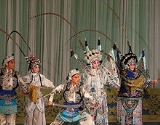
Culture of China

Encyclopedia
Province (China)
A province, in the context of Chinese government, is a translation of sheng formally provincial level divisions, which is an administrative division. Provinces, municipalities, autonomous regions, and the special administrative regions, make up the four types of province of administrative division...
. Important components of Chinese culture includes literature
Literature
Literature is the art of written works, and is not bound to published sources...
, music
Music
Music is an art form whose medium is sound and silence. Its common elements are pitch , rhythm , dynamics, and the sonic qualities of timbre and texture...
, visual arts
Visual arts
The visual arts are art forms that create works which are primarily visual in nature, such as ceramics, drawing, painting, sculpture, printmaking, design, crafts, and often modern visual arts and architecture...
, martial arts
Martial arts
Martial arts are extensive systems of codified practices and traditions of combat, practiced for a variety of reasons, including self-defense, competition, physical health and fitness, as well as mental and spiritual development....
, cuisine
Cuisine
Cuisine is a characteristic style of cooking practices and traditions, often associated with a specific culture. Cuisines are often named after the geographic areas or regions that they originate from...
, etc.
People in the culture
Identity
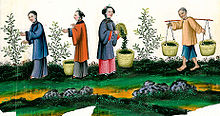
Today there are 56 distinct recognized ethnic groups in China. In terms of numbers however, the pre-eminent ethnic group is the Han ChineseHan Chinese
Han Chinese are an ethnic group native to China and are the largest single ethnic group in the world.Han Chinese constitute about 92% of the population of the People's Republic of China , 98% of the population of the Republic of China , 78% of the population of Singapore, and about 20% of the...
. Throughout history, many groups have been assimilated into neighboring ethnicities or disappeared without a trace. At the same time, many within the Han identity have maintained distinct linguistic and regional cultural traditions. The term Zhonghua Minzu
Zhonghua minzu
Zhonghua minzu , usually translated as Chinese ethnic groups or Chinese nationality, refers to the modern notion of a Chinese nationality transcending ethnic divisions, with a central identity for China as a whole...
has been used to describe the notion of Chinese nationalism
Chinese nationalism
Chinese nationalism , sometimes synonymous with Chinese patriotism refers to cultural, historiographical, and political theories, movements and beliefs that assert the idea of a cohesive, unified Chinese people and culture in a unified country known as China...
in general. Much of the traditional identity within the community has to do with distinguishing the family name
Chinese surname
Chinese family names have been historically used by Han Chinese and Sinicized Chinese ethnic groups in mainland China, Taiwan, Hong Kong, and among overseas Chinese communities. In ancient times two types of surnames, family names and clan names , existed.The colloquial expressions laobaixing...
.
Regional
Traditional Chinese Culture covers large geographical territories, where each region is usually divided into distinct sub-cultures. Each region is often represented by three ancestral items. For example GuangdongGuangdong
Guangdong is a province on the South China Sea coast of the People's Republic of China. The province was previously often written with the alternative English name Kwangtung Province...
is represented by chenpi
Chenpi
Chenpi or chen pi is sun-dried tangerine peel used as a traditional seasoning in Chinese cooking and traditional medicine. They are aged by storing them dry...
, aged ginger
Ginger
Ginger is the rhizome of the plant Zingiber officinale, consumed as a delicacy, medicine, or spice. It lends its name to its genus and family . Other notable members of this plant family are turmeric, cardamom, and galangal....
and hay
Hay
Hay is grass, legumes or other herbaceous plants that have been cut, dried, and stored for use as animal fodder, particularly for grazing livestock such as cattle, horses, goats, and sheep. Hay is also fed to pets such as rabbits and guinea pigs...
. Others include ancient cities like Lin'an (Hangzhou
Hangzhou
Hangzhou , formerly transliterated as Hangchow, is the capital and largest city of Zhejiang Province in Eastern China. Governed as a sub-provincial city, and as of 2010, its entire administrative division or prefecture had a registered population of 8.7 million people...
), which include tea leaf, bamboo shoot
Bamboo shoot
Bamboo shoots or bamboo sprouts are the edible shoots of many bamboo species including Bambusa vulgaris and Phyllostachys edulis. They are used in numerous Asian dishes and broths...
trunk
Trunk (botany)
In botany, trunk refers to the main wooden axis of a tree that supports the branches and is supported by and directly attached to the roots. The trunk is covered by the bark, which is an important diagnostic feature in tree identification, and which often differs markedly from the bottom of the...
and hickory nut. Such distinctions give rise to the old Chinese proverb: "十里不同風,百里不同俗/十里不同风,百里不同俗" (Shí lǐ bùtóng fēng, bǎi lǐ bùtóng sú), literally "the wind varies within ten li, customs vary within a hundred li."""
Society
Structure
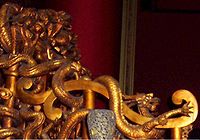
Since the Three Sovereigns and Five Emperors period, some form of Chinese monarchChinese sovereign
Chinese sovereign is the ruler of a particular period in ancient China. Several titles and naming schemes have been used throughout history.-Emperor Title:...
has been the main ruler above all. Different periods of history have different names for the various positions within society. Conceptually each imperial or feudal period is similar, with the government and military officials ranking high in the hierarchy, and the rest of the population under regular Chinese law
Chinese law
Chinese law is one of the oldest legal traditions in the world. In the 20th and 21st century, law in China has been a complex mix of traditional Chinese approaches and Western influences....
. From the late Zhou Dynasty
Zhou Dynasty
The Zhou Dynasty was a Chinese dynasty that followed the Shang Dynasty and preceded the Qin Dynasty. Although the Zhou Dynasty lasted longer than any other dynasty in Chinese history, the actual political and military control of China by the Ji family lasted only until 771 BC, a period known as...
(1046–256 BCE) onwards, traditional Chinese society was organized into a hierarchic system of socio-economic classes known as the four occupations
Four occupations
The four occupations or "four categories of the people" was a hierarchic social class structure developed in ancient China by either Confucian or Legalist scholars as far back as the late Zhou Dynasty and is considered a central part of the Fengjian social structure...
.
However, this system did not cover all social groups while the distinctions between all groups became blurred ever since the commercialization
Commercialism
Commercialism, in its original meaning, is the practices, methods, aims, and spirit of commerce or business. Today, however, it primarily refers to the tendency within open-market capitalism to turn everything into objects, images, and services sold for the purpose of generating profit...
of Chinese culture in the Song Dynasty
Song Dynasty
The Song Dynasty was a ruling dynasty in China between 960 and 1279; it succeeded the Five Dynasties and Ten Kingdoms Period, and was followed by the Yuan Dynasty. It was the first government in world history to issue banknotes or paper money, and the first Chinese government to establish a...
(960–1279 CE). Ancient Chinese education
History of education in China
The history of education in China began with the birth of Chinese civilization. The nobles often set up the educational establishments for their offspring...
also has a long history; ever since the Sui Dynasty
Sui Dynasty
The Sui Dynasty was a powerful, but short-lived Imperial Chinese dynasty. Preceded by the Southern and Northern Dynasties, it ended nearly four centuries of division between rival regimes. It was followed by the Tang Dynasty....
(581–618 CE) educated candidates prepared for the Imperial examinations which drafted exam graduates into government as scholar-bureaucrats
Scholar-bureaucrats
Scholar-officials or Scholar-bureaucrats were civil servants appointed by the emperor of China to perform day-to-day governance from the Sui Dynasty to the end of the Qing Dynasty in 1912, China's last imperial dynasty. These officials mostly came from the well-educated men known as the...
.
This led to the creation of a meritocracy
Meritocracy
Meritocracy, in the first, most administrative sense, is a system of government or other administration wherein appointments and responsibilities are objectively assigned to individuals based upon their "merits", namely intelligence, credentials, and education, determined through evaluations or...
, although success was available only to males who could afford test preparation. Imperial examinations required applicants to write essays and demonstrate mastery of the Confucian classics. Those who passed the highest level of the exam became elite scholar-officials known as jinshi, a highly esteemed socio-economic position. Trades and crafts were usually taught by a shifu. The female historian Ban Zhao
Ban Zhao
Bān Zhāo , courtesy name Huiban , was the first known female Chinese historian. She completed her brother Ban Gu's work as he was imprisoned and executed in the year 92 BCE. because of his association with the family of Empress Dowager Dou. It was said her works could have filled eight volumes...
wrote the Lessons for Women
Lessons for Women
Lessons for Women , also translated as Admonitions for Women, is a work by the Han Dynasty female intellectual Ban Zhao.-Outline:Lessons for Women outlines the four virtues a woman must abide by, proper virtue, proper speech, proper countenance, and proper conduct. The book itself describes the...
in the Han Dynasty
Han Dynasty
The Han Dynasty was the second imperial dynasty of China, preceded by the Qin Dynasty and succeeded by the Three Kingdoms . It was founded by the rebel leader Liu Bang, known posthumously as Emperor Gaozu of Han. It was briefly interrupted by the Xin Dynasty of the former regent Wang Mang...
and outlined the four virtues women must abide to, while scholars such as Zhu Xi
Zhu Xi
Zhū Xī or Chu Hsi was a Song Dynasty Confucian scholar who became the leading figure of the School of Principle and the most influential rationalist Neo-Confucian in China...
and Cheng Yi
Cheng Yi (philosopher)
Cheng Yi , courtesy name Zhengshu , also known as Mr. Yichuan , was a Chinese philosopher born in Luoyang during the Song Dynasty. He worked with his older brother Cheng Hao . Like his brother, he was a student of Zhou Dunyi, a friend of Shao Yong, and a nephew of Zhang Zai...
would expand upon this. Chinese marriage
Chinese marriage
Traditional Chinese marriage is a ceremonial ritual within Chinese societies that involve a marriage established by pre-arrangement between families. Within Chinese culture, romantic love was allowed, and monogamy was the norm for most ordinary citizens....
and Taoist sexual practices
Taoist sexual practices
Taoist sexual practices , literally "the bedroom arts", are the way some Taoists practiced sex. These practices were also known as "Joining Energy" or "The Joining of the Essences"...
are some of the customs and rituals found in society.
Values
Most social values are derived from ConfucianismConfucianism
Confucianism is a Chinese ethical and philosophical system developed from the teachings of the Chinese philosopher Confucius . Confucianism originated as an "ethical-sociopolitical teaching" during the Spring and Autumn Period, but later developed metaphysical and cosmological elements in the Han...
and Taoism
Taoism
Taoism refers to a philosophical or religious tradition in which the basic concept is to establish harmony with the Tao , which is the mechanism of everything that exists...
. The subject of which school was the most influential is always debated as many concepts such as Neo-Confucianism
Neo-Confucianism
Neo-Confucianism is an ethical and metaphysical Chinese philosophy influenced by Confucianism, that was primarily developed during the Song Dynasty and Ming Dynasty, but which can be traced back to Han Yu and Li Ao in the Tang Dynasty....
, Buddhism
Buddhism in China
Chinese Buddhism refers collectively to the various schools of Buddhism that have flourished in China since ancient times. Buddhism has played an enormous role in shaping the mindset of the Chinese people, affecting their aesthetics, politics, literature, philosophy and medicine.At the peak of the...
and many others have come about. Reincarnation
Reincarnation
Reincarnation best describes the concept where the soul or spirit, after the death of the body, is believed to return to live in a new human body, or, in some traditions, either as a human being, animal or plant...
and other rebirth
Rebirth (Buddhism)
Rebirth in Buddhism is the doctrine that the evolving consciousness or stream of consciousness upon death , becomes one of the contributing causes for the arising of a new aggregation...
concept is a reminder of the connection between real-life and the after-life. In Chinese business culture, the concept of guanxi
Guanxi
Guanxi describes the basic dynamic in personalized networks of influence, and is a central idea in Chinese society. In Western media, the pinyin romanization of this Chinese word is becoming more widely used instead of the two common translations—"connections" and "relationships"—as neither of...
, indicating the primacy of relations over rules, has been well documented.
Confucianism was the official philosophy throughout most of Imperial China's history, and mastery of Confucian texts was the primary criterion for entry into the imperial bureaucracy
Imperial examination
The Imperial examination was an examination system in Imperial China designed to select the best administrative officials for the state's bureaucracy. This system had a huge influence on both society and culture in Imperial China and was directly responsible for the creation of a class of...
. A number of more authoritarian
Authoritarianism
Authoritarianism is a form of social organization characterized by submission to authority. It is usually opposed to individualism and democracy...
strains of thought have also been influential, such as Legalism.
There was often conflict between the philosophies, e.g. the Song Dynasty
Song Dynasty
The Song Dynasty was a ruling dynasty in China between 960 and 1279; it succeeded the Five Dynasties and Ten Kingdoms Period, and was followed by the Yuan Dynasty. It was the first government in world history to issue banknotes or paper money, and the first Chinese government to establish a...
Neo-Confucians
Neo-Confucianism
Neo-Confucianism is an ethical and metaphysical Chinese philosophy influenced by Confucianism, that was primarily developed during the Song Dynasty and Ming Dynasty, but which can be traced back to Han Yu and Li Ao in the Tang Dynasty....
believed Legalism departed from the original spirit of Confucianism. Examinations and a culture of merit
Meritocracy
Meritocracy, in the first, most administrative sense, is a system of government or other administration wherein appointments and responsibilities are objectively assigned to individuals based upon their "merits", namely intelligence, credentials, and education, determined through evaluations or...
remain greatly valued in China today. In recent years, a number of New Confucians
New Confucianism
New Confucianism is an intellectual movement of Confucianism that began in the early 20th century in Republican China, and revived in post-Mao era contemporary China. It is deeply influenced by, but not identical with, the Neo-Confucianism of the Song and Ming dynasties...
(not to be confused with Neo-Confucianism) have advocated that democratic ideals and human rights are quite compatible with traditional Confucian "Asian values".
With the rise of European economic and military power beginning in the mid-19th century, non-Chinese systems of social and political organization gained adherents in China. Some of these would-be reformers totally rejected China's cultural legacy, while others sought to combine the strengths of Chinese and European cultures. In essence, the history of 20th-century China is one of experimentation with new systems of social, political, and economic organization that would allow for the reintegration of the nation in the wake of dynastic collapse.
Language
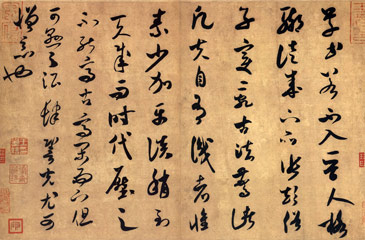
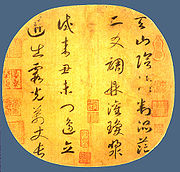
The ancient written standard was Classical Chinese
Classical Chinese
Classical Chinese or Literary Chinese is a traditional style of written Chinese based on the grammar and vocabulary of ancient Chinese, making it different from any modern spoken form of Chinese...
. It was used for thousands of years, but was mostly reserved for scholars and intellectuals which forms the "top" class of the society called "shi da fu (士大夫)". Calligraphy later became commercialized, and works by famous artists became prized possessions. Chinese literature
Chinese literature
Chinese literature extends thousands of years, from the earliest recorded dynastic court archives to the mature fictional novels that arose during the Ming Dynasty to entertain the masses of literate Chinese...
has a long past; the earliest classic work in Chinese, the I Ching
I Ching
The I Ching or "Yì Jīng" , also known as the Classic of Changes, Book of Changes and Zhouyi, is one of the oldest of the Chinese classic texts...
or "Book of Changes" dates to around 1000 BC. A flourishing of philosophy during the Warring States Period
Warring States Period
The Warring States Period , also known as the Era of Warring States, or the Warring Kingdoms period, covers the Iron Age period from about 475 BC to the reunification of China under the Qin Dynasty in 221 BC...
produced such noteworthy works as Confucius's Analects and Laozi
Laozi
Laozi was a mystic philosopher of ancient China, best known as the author of the Tao Te Ching . His association with the Tao Te Ching has led him to be traditionally considered the founder of Taoism...
's Tao Te Ching
Tao Te Ching
The Tao Te Ching, Dao De Jing, or Daodejing , also simply referred to as the Laozi, whose authorship has been attributed to Laozi, is a Chinese classic text...
. (See also: the Chinese classics.) Dynastic histories were often written, beginning with Sima Qian
Sima Qian
Sima Qian was a Prefect of the Grand Scribes of the Han Dynasty. He is regarded as the father of Chinese historiography for his highly praised work, Records of the Grand Historian , a "Jizhuanti"-style general history of China, covering more than two thousand years from the Yellow Emperor to...
's seminal Records of the Grand Historian
Records of the Grand Historian
The Records of the Grand Historian, also known in English by the Chinese name Shiji , written from 109 BC to 91 BC, was the Magnum opus of Sima Qian, in which he recounted Chinese history from the time of the Yellow Emperor until his own time...
, which was written from 109 BC to 91 BC.
The Tang Dynasty witnessed a poetic
Chinese poetry
Chinese poetry is poetry written, spoken, or chanted in the Chinese language, which includes various versions of Chinese language, including Classical Chinese, Standard Chinese, Mandarin Chinese, Cantonese, Yue Chinese, as well as many other historical and vernacular varieties of the Chinese language...
flowering, while the Four Great Classical Novels
Four Great Classical Novels
The Four Great Classical Novels, or the Four Major Classical Novels of Chinese literature, are the four novels commonly regarded by scholars to be the greatest and most influential of pre-modern Chinese fiction. Dating from the Ming and Qing dynasties, they are well known to most Chinese readers...
of Chinese literature were written during the Ming and Qing Dynasties. Printmaking
Printmaking
Printmaking is the process of making artworks by printing, normally on paper. Printmaking normally covers only the process of creating prints with an element of originality, rather than just being a photographic reproduction of a painting. Except in the case of monotyping, the process is capable...
in the form of movable type
Movable type
Movable type is the system of printing and typography that uses movable components to reproduce the elements of a document ....
was developed during the Song Dynasty
Song Dynasty
The Song Dynasty was a ruling dynasty in China between 960 and 1279; it succeeded the Five Dynasties and Ten Kingdoms Period, and was followed by the Yuan Dynasty. It was the first government in world history to issue banknotes or paper money, and the first Chinese government to establish a...
. Academies of scholars sponsored by the empire were formed to comment on the classics in both printed and handwritten form. Royalty frequently participated in these discussions as well. Chinese philosophers, writers and poets were highly respected and played key roles in preserving and promoting the culture of the empire. Some classical scholars, however, were noted for their daring depictions of the lives of the common people, often to the displeasure of authorities.
By the 20th century, millions of citizens , especially those outside of the "shi da fu" social class were still illiterate. Only after the May 4th Movement did the push for written vernacular Chinese begin. This allowed common citizens to read since it was modeled after the linguistics and phonology of the standard spoken language. Nowadays there are many different dialects among different regions. These dialects are just like "local codes". People could not understand each other if they are not from related areas.
Mythology and spirituality
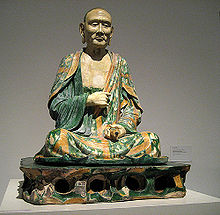
Chinese religion was originally oriented to worshipping the supreme god Shang Di during the Xia and Shang dynasties, with the king and diviners acting as priests and using oracle bones. The Zhou dynasty oriented it to worshipping the broader concept of heaven. A large part of Chinese culture is based on the notion that a spiritual world exists. Countless methods of divination
Methods of divination
Innumerable methods of divination can be found around the world, and many cultures practice the same methods under different names. During the Middle Ages, scholars coined terms for many of these methods — some of which had hitherto been unnamed — in Medieval Latin, very often utilizing the suffix...
have helped answer questions, even serving as an alternate to medicine. Folklores
Chinese folklore
Chinese folklore includes songs, dances, puppetry, and tales. It often tells stories of human nature, historical or legendary events, love, and the supernatural, or stories explaining natural phenomena and distinctive landmarks.-Folktales:...
have helped fill the gap for things that cannot be explained. There is often a blurred line between myth, religion and unexplained phenomenon.
While many deities are part of the tradition, some of the most recognized holy figures include Guan Yin, Jade Emperor
Jade Emperor
The Jade Emperor in Chinese folk culture, is the ruler of Heaven and all realms of existence below including that of Man and Hell, according to a version of Taoist mythology. He is one of the most important gods of the Chinese traditional religion pantheon...
and Buddha
Gautama Buddha
Siddhārtha Gautama was a spiritual teacher from the Indian subcontinent, on whose teachings Buddhism was founded. In most Buddhist traditions, he is regarded as the Supreme Buddha Siddhārtha Gautama (Sanskrit: सिद्धार्थ गौतम; Pali: Siddhattha Gotama) was a spiritual teacher from the Indian...
. Many of the stories have since evolved into traditional Chinese holidays
Traditional Chinese holidays
The traditional Chinese holidays are an essential part of Chinese culture. Many holidays are associated with Chinese mythology and folklore tales, but more realistically, they probably originated from ancient farmer rituals for celebrating harvests or prayer offerings...
. Other concepts have extended to outside of mythology into spiritual symbols such as Door god
Door god
A door god is a Chinese decoration placed on each side of an entry to a temple, home, business, etc., which is believed to keep evil spirits from entering....
and the Imperial guardian lions
Imperial guardian lions
Chinese guardian lions, known as Shishi lions or Imperial guardian lion, and often incorrectly called "Foo Dogs" in the West, are a common representation of the lion in pre-modern China...
. Along with the belief of the holy, there is also the evil. Practices such as Taoist exorcism
Exorcism
Exorcism is the religious practice of evicting demons or other spiritual entities from a person or place which they are believed to have possessed...
fighting mogwai and jiang shi with peachwood swords are just some of the concepts passed down from generations. A few Chinese fortune telling rituals are still in use today after thousands of years of refinement.
Literature
Chinese literature began with record keeping and divination on Oracle Bones. The extensive collection of books that have been preserved since the Zhou DynastyZhou Dynasty
The Zhou Dynasty was a Chinese dynasty that followed the Shang Dynasty and preceded the Qin Dynasty. Although the Zhou Dynasty lasted longer than any other dynasty in Chinese history, the actual political and military control of China by the Ji family lasted only until 771 BC, a period known as...
demonstrate just how advanced the intellectuals were at one time. Indeed, the era of the Zhou Dynasty is often looked to as the touchstone of Chinese cultural development. The Five Cardinal Points are the foundation for almost all major studies. Concepts covered within the Chinese classic texts
Chinese classic texts
Chinese classic texts, or Chinese canonical texts, today often refer to the pre-Qin Chinese texts, especially the Neo-Confucian titles of Four Books and Five Classics , a selection of short books and chapters from the voluminous collection called the Thirteen Classics. All of these pre-Qin texts...
present a wide range of subjects including poetry
Chinese poetry
Chinese poetry is poetry written, spoken, or chanted in the Chinese language, which includes various versions of Chinese language, including Classical Chinese, Standard Chinese, Mandarin Chinese, Cantonese, Yue Chinese, as well as many other historical and vernacular varieties of the Chinese language...
, astrology
Chinese astrology
Chinese astrology is based on the traditional astronomy and calendars. The development of Chinese astrology is tied to that of astronomy, which came to flourish during the Han Dynasty ....
, astronomy
Chinese astronomy
Astronomy in China has a very long history, with historians considering that "they [the Chinese] were the most persistent and accurate observers of celestial phenomena anywhere in the world before the Arabs."...
, calendar
Chinese calendar
The Chinese calendar is a lunisolar calendar, incorporating elements of a lunar calendar with those of a solar calendar. It is not exclusive to China, but followed by many other Asian cultures as well...
, constellations
Chinese constellation
Chinese constellations are the way the ancient Chinese grouped the stars. They are very different from the modern IAU recognized constellations. This is because the IAU was based on Greco-Roman astronomy instead of Chinese astronomy....
and many others. Some of the most important early texts include I Ching
I Ching
The I Ching or "Yì Jīng" , also known as the Classic of Changes, Book of Changes and Zhouyi, is one of the oldest of the Chinese classic texts...
and Shujing
Classic of History
The Classic of History is a compilation of documentary records related to events in ancient history of China. It is also commonly known as the Shàngshū , or simply Shū...
within the Four Books and Five Classics
Four Books and Five Classics
The Four Books and Five Classics are the authoritative books of Confucianism in China written before 300 BC.-Four Books:The Four Books are Chinese classic texts illustrating the core value and belief systems in Confucianism...
. Many Chinese concepts such as Yin and Yang
Yin and yang
In Asian philosophy, the concept of yin yang , which is often referred to in the West as "yin and yang", is used to describe how polar opposites or seemingly contrary forces are interconnected and interdependent in the natural world, and how they give rise to each other in turn. Opposites thus only...
, Qi
Qi
In traditional Chinese culture, qì is an active principle forming part of any living thing. Qi is frequently translated as life energy, lifeforce, or energy flow. Qi is the central underlying principle in traditional Chinese medicine and martial arts...
, Four Pillars of Destiny
Four Pillars of Destiny
Four Pillars of Destiny is a Chinese and Japanese conceptual term that describes the four components creating a person's destiny or fate. The four components within the moment of birth are year, month, day, and hour...
in relation to heaven and earth were all theorized in the dynastic periods.
The Song Dynasty was also a period of great scientific literature, and saw the creation of works such as Su Song
Su Song
Su Song was a renowned Chinese polymath who specialized himself as a statesman, astronomer, cartographer, horologist, pharmacologist, mineralogist, zoologist, botanist, mechanical and architectural engineer, poet, antiquarian, and ambassador of the Song Dynasty .Su Song was the engineer of a...
's Xin Yixiang Fayao and Shen Kuo
Shen Kuo
Shen Kuo or Shen Gua , style name Cunzhong and pseudonym Mengqi Weng , was a polymathic Chinese scientist and statesman of the Song Dynasty...
's Dream Pool Essays
Dream Pool Essays
The Dream Pool Essays was an extensive book written by the polymath Chinese scientist and statesman Shen Kuo by 1088 AD, during the Song Dynasty of China...
. There were also enormous works of historiography and large encyclopedias, such as Sima Guang
Sima Guang
Sīmǎ Guāng was a Chinese historian, scholar, and high chancellor of the Song Dynasty, jinshi 1038.-Life, profession, and works:...
's Zizhi Tongjian
Zizhi Tongjian
The Zizhi Tongjian was a pioneering reference work in Chinese historiography, published in 1084, under the form of a chronicles. In 1065 CE, Emperor Yingzong of Song ordered the great historian Sima Guang to lead with other scholars such as his chief assistants Liu Shu, Liu Ban and Fan Zuyu, the...
of 1084 AD or the Four Great Books of Song
Four Great Books of Song
The Four Great Books of Song was compiled by Li Fang and others during the Song Dynasty . The term was coined after the last book was finished during the 11th century...
fully compiled and edited by the 11th century. Notable confucianists, taoists and scholars of all classes have made significant contributions to and from documenting history to authoring saintly concepts that seem hundred of years ahead of time. Many novels such as Four Great Classical Novels
Four Great Classical Novels
The Four Great Classical Novels, or the Four Major Classical Novels of Chinese literature, are the four novels commonly regarded by scholars to be the greatest and most influential of pre-modern Chinese fiction. Dating from the Ming and Qing dynasties, they are well known to most Chinese readers...
spawned countless fictional stories. By the end of the Qing Dynasty, Chinese culture would embark on a new era with written vernacular Chinese for the common citizens. Hu Shih
Hu Shih
Hu Shih , born Hu Hung-hsing , was a Chinese philosopher, essayist and diplomat. His courtesy name was Shih-chih . Hu is widely recognized today as a key contributor to Chinese liberalism and language reform in his advocacy for the use of written vernacular Chinese...
and Lu Xun
Lu Xun
Lu Xun or Lu Hsün , was the pen name of Zhou Shuren , one of the major Chinese writers of the 20th century. Considered by many to be the leading figure of modern Chinese literature, he wrote in baihua as well as classical Chinese...
would be pioneers in modern literature.
Music
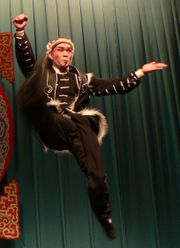
The music
Music
Music is an art form whose medium is sound and silence. Its common elements are pitch , rhythm , dynamics, and the sonic qualities of timbre and texture...
of China
China
Chinese civilization may refer to:* China for more general discussion of the country.* Chinese culture* Greater China, the transnational community of ethnic Chinese.* History of China* Sinosphere, the area historically affected by Chinese culture...
dates back to the dawn of Chinese civilization
History of China
Chinese civilization originated in various regional centers along both the Yellow River and the Yangtze River valleys in the Neolithic era, but the Yellow River is said to be the Cradle of Chinese Civilization. With thousands of years of continuous history, China is one of the world's oldest...
with documents and artifacts providing evidence of a well-developed musical culture as early as the Zhou Dynasty
Zhou Dynasty
The Zhou Dynasty was a Chinese dynasty that followed the Shang Dynasty and preceded the Qin Dynasty. Although the Zhou Dynasty lasted longer than any other dynasty in Chinese history, the actual political and military control of China by the Ji family lasted only until 771 BC, a period known as...
(1122 BCE - 256 BCE). Some of the oldest written music dates back to Confucius
Confucius
Confucius , literally "Master Kong", was a Chinese thinker and social philosopher of the Spring and Autumn Period....
's time. The first major well-documented flowering of Chinese music was for the qin
Guqin
The guqin is the modern name for a plucked seven-string Chinese musical instrument of the zither family...
during the Tang Dynasty
Tang Dynasty
The Tang Dynasty was an imperial dynasty of China preceded by the Sui Dynasty and followed by the Five Dynasties and Ten Kingdoms Period. It was founded by the Li family, who seized power during the decline and collapse of the Sui Empire...
, although the instrument is known to have played a major part before the Han Dynasty.
There are many musical instrument
Musical instrument
A musical instrument is a device created or adapted for the purpose of making musical sounds. In principle, any object that produces sound can serve as a musical instrument—it is through purpose that the object becomes a musical instrument. The history of musical instruments dates back to the...
s that are integral to Chinese culture, such as the zheng
Guzheng
The guzheng or "gu zheng", also called zheng is a Chinese plucked zither. It has 18-23 or more strings and movable bridges....
(zither with movable bridges), qin
Guqin
The guqin is the modern name for a plucked seven-string Chinese musical instrument of the zither family...
(bridgeless zither), sheng
Sheng (instrument)
The Chinese sheng is a mouth-blown free reed instrument consisting of vertical pipes.Traditionally, the sheng has been used as an accompaniment instrument for solo suona or dizi performances. It is one of the main instruments in kunqu and some other forms of Chinese opera...
and xiao
Xiao (flute)
The xiao is a Chinese vertical end-blown flute. It is generally made of dark brown bamboo . It is also sometimes called dòngxiāo , dòng meaning "hole." An ancient name for the xiāo is shùdí The xiao is a Chinese vertical end-blown flute. It is generally made of dark brown bamboo (called...
(vertical flute), the erhu
Erhu
The erhu is a two-stringed bowed musical instrument, more specifically a spike fiddle, which may also be called a "southern fiddle", and sometimes known in the Western world as the "Chinese violin" or a "Chinese two-stringed fiddle". It is used as a solo instrument as well as in small ensembles...
(alto fiddle or bowed lute), pipa
Pipa
The pipa is a four-stringed Chinese musical instrument, belonging to the plucked category of instruments . Sometimes called the Chinese lute, the instrument has a pear-shaped wooden body with a varying number of frets ranging from 12–26...
(pear-shaped plucked lute), and many others.
Arts
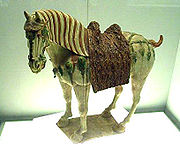
Different forms of art have swayed under the influence of great philosophers, teachers, religious figures and even political figures. Chinese art encompasses all facets of fine art
Fine art
Fine art or the fine arts encompass art forms developed primarily for aesthetics and/or concept rather than practical application. Art is often a synonym for fine art, as employed in the term "art gallery"....
, folk art
Chinese folk art
Chinese folk art are artistic forms inherited from a regional or ethnic scene in China. Usually there are some variation between provinces. Individual folk arts have a long history, and many traditions are still practiced today...
and performance art
Performance art
In art, performance art is a performance presented to an audience, traditionally interdisciplinary. Performance may be either scripted or unscripted, random or carefully orchestrated; spontaneous or otherwise carefully planned with or without audience participation. The performance can be live or...
. Porcelain pottery was one of the first forms of art in the Palaeolithic period. Early Chinese music and poetry was influenced by the Book of Songs
Shi Jing
The Classic of Poetry , translated variously as the Book of Songs, the Book of Odes, and often known simply as its original name The Odes, is the earliest existing collection of Chinese poems and songs. It comprises 305 poems and songs, with many range from the 10th to the 7th centuries BC...
, and the Chinese poet and statesman Qu Yuan
Qu Yuan
Qu Yuan was a Chinese poet who lived during the Warring States Period in ancient China. He is famous for his contributions to the poetry collection known as the Chu-ci...
.
Chinese painting
Chinese painting
Chinese painting is one of the oldest continuous artistic traditions in the world. The earliest paintings were not representational but ornamental; they consisted of patterns or designs rather than pictures. Early pottery was painted with spirals, zigzags, dots, or animals...
became a highly appreciated art in court circles encompassing a wide variety of Shan shui
Shan shui
Shan shui refers to a style of Chinese painting that involves or depicts scenery or natural landscapes, using a brush and ink rather than more conventional paints. Mountains, rivers and often waterfalls are prominent in this art form.-History:...
with specialized styles such as Ming Dynasty painting
Ming Dynasty painting
During the Ming Dynasty , Chinese painting developed greatly from the achievements in painted art during the earlier Song Dynasty and Yuan Dynasty. The painting techniques which were invented and developed before the Ming period became classical during this period. More colours were used in...
. Early Chinese music was based on percussion instruments, which later gave away to stringed and reed instruments. By the Han dynasty
Han Dynasty
The Han Dynasty was the second imperial dynasty of China, preceded by the Qin Dynasty and succeeded by the Three Kingdoms . It was founded by the rebel leader Liu Bang, known posthumously as Emperor Gaozu of Han. It was briefly interrupted by the Xin Dynasty of the former regent Wang Mang...
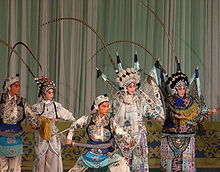
papercutting became a new art form after the invention of paper. Chinese opera
Chinese opera
Chinese opera is a popular form of drama and musical theatre in China with roots going back as far as the third century CE...
would also be introduced and branched regionally in additional to other performance formats such as variety arts.
Martial arts
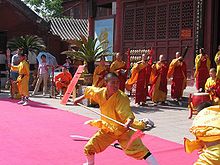
China is one of the main birth places
Asian martial arts (origins)
Theories of the origins of Asian martial arts range from the highly diffusionist to models which show greater recognition of independent invention.-India:...
of Eastern martial arts. Chinese martial arts are collectively given the name Kung Fu ((gong) "achievement" or "merit", and (fu) "man", thus "human achievement") or (previously and in some modern contexts) Wushu ("martial arts" or "military arts"). China also includes the home to the well-respected Shaolin Monastery and Wudang Mountains
Wudang Mountains
The Wudang Mountains , also known as Wu Tang Shan or simply Wudang, are a small mountain range in the northwestern part of Hubei Province of People's Republic of China, just to the south of the city of Shiyan.-Geography:...
. The first generation of art started more for the purpose of survival and warfare than art. Over time, some art forms have branched off, while others have retained a distinct Chinese flavor. Regardless, China has produced some of the most renowned martial artists including Wong Fei Hung
Wong Fei Hung
Wong Fei-hung was a Chinese martial artist, a traditional Chinese medicine physician, acupuncturist and revolutionary who became a folk hero and the subject of numerous television series and films. He was considered an expert in the Hung Gar style of Chinese martial arts. Wong is visibly the most...
and many others. The arts have also co-existed with a variety of weapons including the more standard 18 arms
Eighteen Arms of Wushu
The Eighteen Arms is a list of the eighteen main weapons of Chinese martial arts. The origin of the list is unclear and there have been disputes with regards to what the eighteen weapons actually are...
. Legendary and controversial moves like Dim Mak are also praised and talked about within the culture.
Fashion
Different social classes in different eras boast different fashion trends, the colour yellow is usually reserved for the emperor. China's fashion history covers hundreds of years with some of the most colourful and diverse arrangements. During the Qing Dynasty
Qing Dynasty
The Qing Dynasty was the last dynasty of China, ruling from 1644 to 1912 with a brief, abortive restoration in 1917. It was preceded by the Ming Dynasty and followed by the Republic of China....
, China's last imperial dynasty dramatic shift of clothing occurred, the clothing of the era before the Qing Dynasty is referred to as Hanfu or traditional Han Chinese clothing. Many symbols such as phoenix
Fenghuang
Fenghuang are mythological birds of East Asia that reign over all other birds. The males are called Feng and the females Huang. In modern times, however, such a distinction of gender is often no longer made and the Feng and Huang are blurred into a single feminine entity so that the bird can be...
have been used for decorative as well as economic purposes.
Architecture
Chinese architectureArchitecture
Architecture is both the process and product of planning, designing and construction. Architectural works, in the material form of buildings, are often perceived as cultural and political symbols and as works of art...
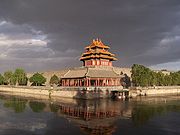
, examples for which can be found from over 2,000 years ago, has long been a hallmark of the culture. There are certain features common to Chinese architecture, regardless of specific region or use. The most important is its emphasis on width, as the wide halls of the Forbidden City
Forbidden City
The Forbidden City was the Chinese imperial palace from the Ming Dynasty to the end of the Qing Dynasty. It is located in the middle of Beijing, China, and now houses the Palace Museum...
serve as an example. In contrast, Western architecture emphasize on height, though there are exceptions such as pagodas.
Another important feature is symmetry
Symmetry
Symmetry generally conveys two primary meanings. The first is an imprecise sense of harmonious or aesthetically pleasing proportionality and balance; such that it reflects beauty or perfection...
, which connotes a sense of grandeur as it applies to everything from palaces to farmhouses. One notable exception is in the design of gardens, which tends to be as asymmetrical as possible. Like Chinese scroll paintings, the principle underlying the garden's composition is to create enduring flow, to let the patron wander and enjoy the garden without prescription, as in nature herself. Feng shui
Feng shui
Feng shui ' is a Chinese system of geomancy believed to use the laws of both Heaven and Earth to help one improve life by receiving positive qi. The original designation for the discipline is Kan Yu ....
has played an important part in structural development.
Cuisine
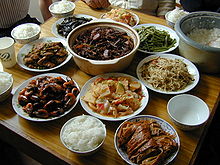
Emperor of China
The Emperor of China refers to any sovereign of Imperial China reigning between the founding of Qin Dynasty of China, united by the King of Qin in 221 BCE, and the fall of Yuan Shikai's Empire of China in 1916. When referred to as the Son of Heaven , a title that predates the Qin unification, the...
would host banquets with 100 dishes per meal. A countless number of imperial kitchen staff and concubines were involved in the food preparation process. Over time, many dishes became part of the everyday-citizen culture. Some of the highest quality restaurants with recipes close to the dynastic periods include Fangshan
Fangshan
Fangshan may refer to the following places in mainland China or Taiwan:*Fangshan County , of Lüliang, Shanxi*Fangshan District , Beijing*Fangshan, Pingtung , township in Pingtung County, TaiwanTowns...
restaurant in Beihai Park
Beihai Park
Beihai Park is an imperial garden to the northwest of the Forbidden City in Beijing. First built in the 10th century, it is amongst the largest of Chinese gardens, and contains numerous historically important structures, palaces and temples. Since 1925, the place has been open to the public as a...
Beijing
Beijing
Beijing , also known as Peking , is the capital of the People's Republic of China and one of the most populous cities in the world, with a population of 19,612,368 as of 2010. The city is the country's political, cultural, and educational center, and home to the headquarters for most of China's...
and the Oriole Pavilion. Arguably all branches of Hong Kong eastern style or even American Chinese food are in some ways rooted from the original dynastic cuisines.
Leisure
A number of games and pastimes are popular within Chinese culture. The most common game is Mah Jong. The same pieces are used for other styled games such as Shanghai SolitaireMahjong solitaire
Mahjong solitaire is a solitaire matching game that uses a set of Mahjong tiles rather than cards. It is also known as Shanghai solitaire, electronic or computerized mahjong, MahJong solitaire, solitaire Mahjong and, erroneously, as Mahjong...
. Others include Pai Gow
Pai Gow
Pai gow is a Chinese gambling game, played with a set of Chinese dominoes. Pai gow is played in unsanctioned casinos in most Chinese communities...
, Pai gow poker
Pai gow poker
Pai Gow poker is an Americanized version of Pai Gow . The games of Pai Gow poker and Super Pan-9 were created by Sam Torosian and Fred Wolf.The game is played with a standard 52-card deck, plus a single joker...
and other bone domino
Chinese dominoes
Chinese dominoes are used in several tile-based games, namely, Tien Gow, Pai Gow, Che Deng, Tiu U and Kap Tai Shap. In Cantonese they are called 骨牌 "Gwat Pai", which literally means "bone tiles", it is also the name of a northern Chinese game, where the rules are quite different from the southern...
games. Weiqi and Xiangqi
Xiangqi
Xiangqi is a two-player Chinese board game in the same family as Western chess, chaturanga, shogi, Indian chess and janggi. The present-day form of Xiangqi originated in China and is therefore commonly called Chinese chess in English. Xiangqi is one of the most popular board games in China...
are also popular. Ethnic games like Chinese yo-yo
Chinese yo-yo
The Chinese yo-yo is a toy from China consisting of two equally-sized discs connected with a long axle. The Chinese yo-yo is kept spinning on a string tied to two sticks at its ends. Each stick is held in one hand. In modern times, it is used as a children's toy and as a performance tool in...
are also part of the culture.
External links
- A Classification of Chinese Culture by Ying Fan
- Article on Chinese culture
- Traditional Chinese Culture
- Exploring Ancient World Cultures - Ancient China, University of Evansville
- Yin Yu Tang: A Chinese Home explored
- Chinese Culture Articles
- Embracing Chinese Culture
- Oriental Style -- The Genuine Soul of Chinese Culture