

Counter-Enlightenment

Encyclopedia
"Counter-Enlightenment" is a term used to refer to a movement that arose in the late-18th and early-19th centuries in opposition to the 18th century Enlightenment
. The term is usually associated with Isaiah Berlin
, who is often credited with coining it, perhaps taking up a passing remark of the German
philosopher Friedrich Nietzsche
, who used the term Gegenaufklärung at the end of the 19th century. It has not been widely used since. The first known use of the term 'counter-enlightenment' in English was in 1949. Berlin published widely about the Enlightenment and its enemies and did much to popularise the concept of a Counter-Enlightenment movement that he characterised as relativist
, anti-rationalist
, vitalist
and organic, and which he associated most closely with German Romanticism
. Some recent scholarship has challenged this view for focusing too narrowly on Germany and stopping abruptly in the early 19th century, thereby ignoring the Enlightenment's many subsequent critics, particularly in the 20th century. Some scholars reject the use of the term 'the Counter-Enlightenment' on the grounds that there was no single Enlightenment for its alleged enemies to oppose.
 Although the term 'the Counter-Enlightenment' was first used in English (in passing) by William Barrett in a 1949 article ("Art, Aristocracy and Reason") in Partisan Review
, it was Isaiah Berlin who established its place in the history of ideas
. He used the term to refer to a movement that arose primarily in late 18th and early 19th century Germany against the rationalism
, universalism
and empiricism
commonly associated with the Enlightenment. Berlin's widely read essay "The Counter-Enlightenment" was first published in 1973, and later reprinted in a popular collection of his essays (Against the Current) in 1981. The term has only had wide currency since then.
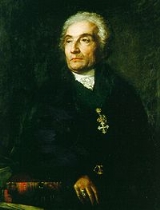
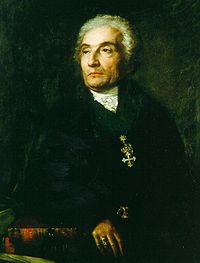
 Berlin argues that, while there were enemies of the Enlightenment outside of Germany (e.g. Joseph de Maistre
) and before the 1770s (e.g. Giambattista Vico
), Counter-Enlightenment thought did not really 'take off' until the Germans 'rebelled against the dead hand of France in the realms of culture, art and philosophy, and avenged themselves by launching the great counter-attack against the Enlightenment.' This reaction was led by the Konigsberg philosopher J. G. Hamann, 'the most passionate, consistent, extreme and implacable enemy of the Enlightenment', according to Berlin. This German reaction to the imperialistic universalism of the French Enlightenment and Revolution, which had been forced on them first by the Francophile Frederick II of Prussia
, then by the armies of Revolutionary France, and finally by Napoleon, was crucial to the epochal shift of consciousness that occurred in Europe at this time, leading eventually to Romanticism
. According to Berlin, the surprising and unintended consequence
of this revolt against the Enlightenment has been pluralism, which owes more to the Enlightenment's enemies than it does to its proponents, most of whom were monists whose political, intellectual and ideological offspring have often been terror and totalitarianism
. Richard Wolin (The Seduction of Unreason 2004) has traced the modern descendants of the Counter-Enlightenment in postmodernism
’s deep suspicion of “universalism,” paralleled by its endorsement of “identity politics
,” and concludes that it has worked against the values of toleration and mutual recognition, not merely of diversity but of commonality.
In his book "Enemies of the Enlightenment" (2001), historian Darrin McMahon
extends the Counter-Enlightenment both back to pre-Revolutionary France and down to the level of 'Grub Street
,' thereby marking a major advance on Berlin's intellectual and Germanocentric view. McMahon focuses on the early enemies of the Enlightenment in France, unearthing a long-forgotten 'Grub Street' literature in the late-18th and early 19th centuries aimed at the philosophes. He delves into the obscure and at times unseemly world of the 'low Counter-Enlightenment' that attacked the encyclopedistes and fought an often dirty battle to prevent the dissemination of Enlightenment ideas in the second half of the century. A great many of these early opponents of the Enlightenment attacked it for undermining religion and the social and political order. This later became a major theme of conservative criticism of the Enlightenment after the French Revolution appeared to vindicate the warnings of the anti-philosophes in the decades prior to 1789.
.jpg) In his 1996 article for The American Political Science Review (Vol. 90, No. 2), Arthur M. Melzer identifies the origin of the Counter-Enlightenment in the religious writings of Jean-Jacques Rousseau, showing Rousseau as the man who fired the first major shot in the war between the Enlightenment and its enemies. Graeme Garrard follows Melzer in his "Rousseau's Counter-Enlightenment" (2003). This contradicts Berlin's depiction of Rousseau as a philosophe
In his 1996 article for The American Political Science Review (Vol. 90, No. 2), Arthur M. Melzer identifies the origin of the Counter-Enlightenment in the religious writings of Jean-Jacques Rousseau, showing Rousseau as the man who fired the first major shot in the war between the Enlightenment and its enemies. Graeme Garrard follows Melzer in his "Rousseau's Counter-Enlightenment" (2003). This contradicts Berlin's depiction of Rousseau as a philosophe
(albeit an erratic one) who shared the basic beliefs of his Enlightenment contemporaries. Also, like McMahon, it traces the beginning of Counter-Enlightenment thought back to France and prior to the German 'Sturm und Drang
' movement of the 1770s. Garrard's book "Counter-Enlightenments" (2006) broadens the term even further, arguing against Berlin that there was no single 'movement' called 'The Counter-Enlightenment'. Rather, there have been many Counter-Enlightenments, from the middle of the 18th century through to 20th century Enlightenment critics among critical theorists, postmodernists and feminists. The Enlightenment has enemies on all points of the ideological compass, from the far left to the far right, and all points in between. Each of the Enlightenment's enemies depicted it as they saw it or wanted others to see it, resulting in a vast range of portraits, many of which are not only different but incompatible.
This argument has been taken a step further by some, like intellectual historian James Schmidt, who question the idea of 'the Enlightenment' and therefore of the existence of a movement opposing it. As our conception of 'the Enlightenment' has become more complex and difficult to maintain, so too has the idea of 'the Counter-Enlightenment'. Advances in Enlightenment scholarship in the last quarter century have challenged the stereotypical view of the 18th century as an 'Age of Reason', leading Schmidt to speculate on whether 'the Enlightenment' might not actually be a creation of its enemies, rather than the other way round. The fact that the term 'the Enlightenment' was first used in English to refer to a historical period in 1894 (see Schmidt 2003) lends some support to this argument that it was a later construction projected back on to the 18th century.
 Although serious doubts were raised about the Enlightenment prior to the 1790s (e.g. in the works of Jean-Jacques Rousseau in France and J. G. Hamann in Germany in particular), the Reign of Terror
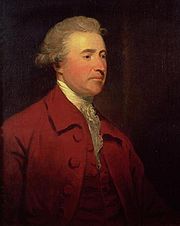
during the French revolution fueled a major reaction against the Enlightenment, which many writers blamed for undermining traditional beliefs that sustained the ancien regime, thereby fomenting revolution. Counter-Revolutionary conservatives like Edmund Burke
, Joseph de Maistre
and Augustin Barruel
all asserted a close link between the Enlightenment and the Revolution, as did many of the revolutionary leaders themselves, so that the Enlightenment became increasingly discredited as the Revolution became increasingly bloody. That is why the French Revolution and its aftermath was also a major phase in the development of Counter-Enlightenment thought. For example, while Edmund Burke's "Reflections on the Revolution in France
" (1790) contains no systematic account of the connection between the Enlightenment and the Revolution, it is heavily spiced with hostile references to the French Revolutionaries as merely politicised philosophes. Barruel argues in his best-selling Memoirs Illustrating the History of Jacobinism
(1797)—one of the most widely read books of its period—that the Revolution was the consequence of a conspiracy of philosophes and freemasons. In "Considerations on France" (1797), Maistre interprets the Revolution as divine punishment for the sins of the Enlightenment.
' (Georg Philipp 'Friedrich Freiherr von Hardenberg') and Samuel Taylor Coleridge
inherited this Counter-Revolutionary antipathy towards the philosophes. All three directly blamed the philosophes (in France) and Aufklärer (in Germany) for devaluing beauty, spirit and history in favour of a view of man as a soulless machine and the universe as a meaningless, disenchanted void lacking richness and beauty. Of particular concern to early Romantic writers was the allegedly anti-religious nature of the Enlightenment, even though very few of the philosophes and Aufklarer were actually atheists. (Most were deists.) This view of the Enlightenment as an age hostile to religion is common ground between these Romantic writers and many of their conservative, Counter-Revolutionary predecessors. However, Chateaubriand, 'Novalis' and Coleridge are exceptions here; few Romantic writers had much to say for or against the Enlightenment. (The term itself didn't even exist at the time.) For the most part, they ignored it.
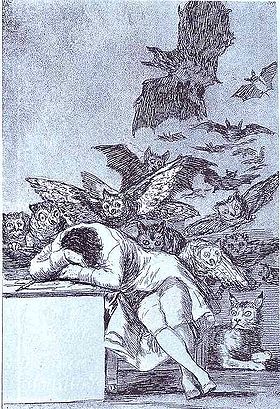 The philosopher Jacques Barzun
argues that Romanticism had its roots in the Enlightenment. It was not anti-rational, but balanced rationality against the competing claims of intuition and the sense of justice. This view is expressed in Goya's "Sleep of Reason" (left), in which one of the nightmarish owls offers the dozing social critic of Los Caprichos
a piece of drawing chalk: even the rational critic is inspired by irrational dream-content, under the gaze of the sharp-eyed lynx
http://www.worldandi.com/newhome/public/2004/february/bkpub1.asp. Marshall Brown makes much the same argument as Barzun in 'Romanticism and Enlightenment', questioning the stark opposition between these two periods.
By the middle of the 19th century, the memory of the French Revolution was fading and Romanticism had more or less run its course. In this optimistic age of science and industry, there were few critics of the Enlightenment, and few explicit defenders. The German philosopher Friedrich Nietzsche is a notable (and highly influential) exception. After an initial defence of the Enlightenment during his so-called 'middle period' (late-1870s to early 1880s), Nietzsche turned vehemently against it and subscribed to the earlier view of conservative Counter-Revolutionaries like Burke and Maistre, who blamed the French Revolution (which Nietzsche always hated) on the Enlightenment.
that 'the Enlightenment' re-emerged as a key organising concept in social and political thought and the history of ideas. Shadowing it has been a resurgent Counter-Enlightenment literature blaming the 18th century faith in reason for 20th century totalitarianism
. The locus classicus of this view is Max Horkheimer
and Theodor Adorno's "Dialectic of Enlightenment
" (1947), which traces the degeneration of the general concept of enlightenment from ancient Greece (epitomised by the cunning 'bourgeois' hero Odysseus) to 20th century fascism. (They say little about soviet communism
, referring to it as a regressive totalitarianism that "clung all too desperately to the heritage of bourgeois philosophy").
While this influential book takes 'enlightenment' as its target, this includes its 18th century form – which we now call 'the Enlightenment' – epitomised by the Marquis de Sade
. Many postmodern writers and some feminists (e.g. Jane Flax) have made similar arguments, likewise seeing the Enlightenment conception of reason as totalitarian, and as not having been enlightened enough since, for Adorno and Horkheimer, though it banishes myth it falls back into a further myth, that of individualism and formal (or mythic) equality under instrumental reason.
Michel Foucault
, for example, argued that attitudes towards the "insane" during the late-18th and early 19th centuries show that supposedly enlightened notions of humane treatment
were not universally adhered to, but instead, that the Age of Reason
had to construct an image of "Unreason" against which to take an opposing stand. Berlin himself, although no postmodernist, argues that the Enlightenment's legacy in the 20th century has been monism (which he claims favours political authoritarianism), whereas the legacy of the Counter-Enlightenment has been pluralism (something he associates with liberalism). These are two of the 'strange reversals' of modern intellectual history.
: the distorted conceptions of reason of the kind each associates with the Enlightenment in favour of a more restricted view of the nature, scope and limits of human rationality.
However, very few of the enemies of the Enlightenment have abandoned reason entirely. The battle has been over the scope, meaning and application of reason, not over whether it is good or bad, desirable or undesirable, essential or inessential per se. The conflict between the Enlightenment and the Counter-Enlightenment is not a conflict between friends and enemies of reason, any more than it is between friends and enemies of the notion of "enlightenment."
Although objections have consistently been raised against what has been taken as the 'typical' Enlightenment view of reason by its opponents (on all points of the ideological spectrum, left, right, and centre), this has almost never been generalised to reason as such by Counter-Enlightenment thinkers. Some charge that the Enlightenment inflated the power and scope of reason, while others claim that it narrowed it.
Age of Enlightenment
The Age of Enlightenment was an elite cultural movement of intellectuals in 18th century Europe that sought to mobilize the power of reason in order to reform society and advance knowledge. It promoted intellectual interchange and opposed intolerance and abuses in church and state...
. The term is usually associated with Isaiah Berlin
Isaiah Berlin
Sir Isaiah Berlin OM, FBA was a British social and political theorist, philosopher and historian of ideas of Russian-Jewish origin, regarded as one of the leading thinkers of the twentieth century and a dominant liberal scholar of his generation...
, who is often credited with coining it, perhaps taking up a passing remark of the German
Germans
The Germans are a Germanic ethnic group native to Central Europe. The English term Germans has referred to the German-speaking population of the Holy Roman Empire since the Late Middle Ages....
philosopher Friedrich Nietzsche
Friedrich Nietzsche
Friedrich Wilhelm Nietzsche was a 19th-century German philosopher, poet, composer and classical philologist...
, who used the term Gegenaufklärung at the end of the 19th century. It has not been widely used since. The first known use of the term 'counter-enlightenment' in English was in 1949. Berlin published widely about the Enlightenment and its enemies and did much to popularise the concept of a Counter-Enlightenment movement that he characterised as relativist
Relativism
Relativism is the concept that points of view have no absolute truth or validity, having only relative, subjective value according to differences in perception and consideration....
, anti-rationalist
Rationalism
In epistemology and in its modern sense, rationalism is "any view appealing to reason as a source of knowledge or justification" . In more technical terms, it is a method or a theory "in which the criterion of the truth is not sensory but intellectual and deductive"...
, vitalist
Vitalism
Vitalism, as defined by the Merriam-Webster dictionary, is#a doctrine that the functions of a living organism are due to a vital principle distinct from biochemical reactions...
and organic, and which he associated most closely with German Romanticism
German Romanticism
For the general context, see Romanticism.In the philosophy, art, and culture of German-speaking countries, German Romanticism was the dominant movement of the late 18th and early 19th centuries. German Romanticism developed relatively late compared to its English counterpart, coinciding in its...
. Some recent scholarship has challenged this view for focusing too narrowly on Germany and stopping abruptly in the early 19th century, thereby ignoring the Enlightenment's many subsequent critics, particularly in the 20th century. Some scholars reject the use of the term 'the Counter-Enlightenment' on the grounds that there was no single Enlightenment for its alleged enemies to oppose.
The Counter-Enlightenment Movement vs Enlightenment Thinkers
Partisan Review
Partisan Review was an American political and literary quarterly published from 1934 to 2003, though it suspended publication between October 1936 and December 1937.-Overview:...
, it was Isaiah Berlin who established its place in the history of ideas
History of ideas
The history of ideas is a field of research in history that deals with the expression, preservation, and change of human ideas over time. The history of ideas is a sister-discipline to, or a particular approach within, intellectual history...
. He used the term to refer to a movement that arose primarily in late 18th and early 19th century Germany against the rationalism
Rationalism
In epistemology and in its modern sense, rationalism is "any view appealing to reason as a source of knowledge or justification" . In more technical terms, it is a method or a theory "in which the criterion of the truth is not sensory but intellectual and deductive"...
, universalism
Universalism
Universalism in its primary meaning refers to religious, theological, and philosophical concepts with universal application or applicability...
and empiricism
Empiricism
Empiricism is a theory of knowledge that asserts that knowledge comes only or primarily via sensory experience. One of several views of epistemology, the study of human knowledge, along with rationalism, idealism and historicism, empiricism emphasizes the role of experience and evidence,...
commonly associated with the Enlightenment. Berlin's widely read essay "The Counter-Enlightenment" was first published in 1973, and later reprinted in a popular collection of his essays (Against the Current) in 1981. The term has only had wide currency since then.
Joseph de Maistre
Joseph-Marie, comte de Maistre was a French-speaking Savoyard philosopher, writer, lawyer, and diplomat. He defended hierarchical societies and a monarchical State in the period immediately following the French Revolution...
) and before the 1770s (e.g. Giambattista Vico
Giambattista Vico
Giovanni Battista ' Vico or Vigo was an Italian political philosopher, rhetorician, historian, and jurist....
), Counter-Enlightenment thought did not really 'take off' until the Germans 'rebelled against the dead hand of France in the realms of culture, art and philosophy, and avenged themselves by launching the great counter-attack against the Enlightenment.' This reaction was led by the Konigsberg philosopher J. G. Hamann, 'the most passionate, consistent, extreme and implacable enemy of the Enlightenment', according to Berlin. This German reaction to the imperialistic universalism of the French Enlightenment and Revolution, which had been forced on them first by the Francophile Frederick II of Prussia
Frederick II of Prussia
Frederick II was a King in Prussia and a King of Prussia from the Hohenzollern dynasty. In his role as a prince-elector of the Holy Roman Empire, he was also Elector of Brandenburg. He was in personal union the sovereign prince of the Principality of Neuchâtel...
, then by the armies of Revolutionary France, and finally by Napoleon, was crucial to the epochal shift of consciousness that occurred in Europe at this time, leading eventually to Romanticism
Romanticism
Romanticism was an artistic, literary and intellectual movement that originated in the second half of the 18th century in Europe, and gained strength in reaction to the Industrial Revolution...
. According to Berlin, the surprising and unintended consequence
Unintended consequence
In the social sciences, unintended consequences are outcomes that are not the outcomes intended by a purposeful action. The concept has long existed but was named and popularised in the 20th century by American sociologist Robert K. Merton...
of this revolt against the Enlightenment has been pluralism, which owes more to the Enlightenment's enemies than it does to its proponents, most of whom were monists whose political, intellectual and ideological offspring have often been terror and totalitarianism
Totalitarianism
Totalitarianism is a political system where the state recognizes no limits to its authority and strives to regulate every aspect of public and private life wherever feasible...
. Richard Wolin (The Seduction of Unreason 2004) has traced the modern descendants of the Counter-Enlightenment in postmodernism
Postmodernism
Postmodernism is a philosophical movement evolved in reaction to modernism, the tendency in contemporary culture to accept only objective truth and to be inherently suspicious towards a global cultural narrative or meta-narrative. Postmodernist thought is an intentional departure from the...
’s deep suspicion of “universalism,” paralleled by its endorsement of “identity politics
Identity politics
Identity politics are political arguments that focus upon the self interest and perspectives of self-identified social interest groups and ways in which people's politics may be shaped by aspects of their identity through race, class, religion, sexual orientation or traditional dominance...
,” and concludes that it has worked against the values of toleration and mutual recognition, not merely of diversity but of commonality.
In his book "Enemies of the Enlightenment" (2001), historian Darrin McMahon
Darrin McMahon
Dr. Darrin M. McMahon is the Ben Weider Professor of History at Florida State University.Trained as a historian of France, his first book Enemies of the Enlightenment: The French Counter-Enlightenment and the Making of Modernity dealt with opposition within France to the Enlightenment legacy in the...
extends the Counter-Enlightenment both back to pre-Revolutionary France and down to the level of 'Grub Street
Grub Street
Until the early 19th century, Grub Street was a street close to London's impoverished Moorfields district that ran from Fore Street east of St Giles-without-Cripplegate north to Chiswell Street...
,' thereby marking a major advance on Berlin's intellectual and Germanocentric view. McMahon focuses on the early enemies of the Enlightenment in France, unearthing a long-forgotten 'Grub Street' literature in the late-18th and early 19th centuries aimed at the philosophes. He delves into the obscure and at times unseemly world of the 'low Counter-Enlightenment' that attacked the encyclopedistes and fought an often dirty battle to prevent the dissemination of Enlightenment ideas in the second half of the century. A great many of these early opponents of the Enlightenment attacked it for undermining religion and the social and political order. This later became a major theme of conservative criticism of the Enlightenment after the French Revolution appeared to vindicate the warnings of the anti-philosophes in the decades prior to 1789.
Philosophe
The philosophes were the intellectuals of the 18th century Enlightenment. Few were primarily philosophers; rather they were public intellectuals who applied reason to the study of many areas of learning, including philosophy, history, science, politics, economics and social issues...
(albeit an erratic one) who shared the basic beliefs of his Enlightenment contemporaries. Also, like McMahon, it traces the beginning of Counter-Enlightenment thought back to France and prior to the German 'Sturm und Drang
Sturm und Drang
Sturm und Drang is a proto-Romantic movement in German literature and music taking place from the late 1760s through the early 1780s, in which individual subjectivity and, in particular, extremes of emotion were given free expression in reaction to the perceived constraints of rationalism...
' movement of the 1770s. Garrard's book "Counter-Enlightenments" (2006) broadens the term even further, arguing against Berlin that there was no single 'movement' called 'The Counter-Enlightenment'. Rather, there have been many Counter-Enlightenments, from the middle of the 18th century through to 20th century Enlightenment critics among critical theorists, postmodernists and feminists. The Enlightenment has enemies on all points of the ideological compass, from the far left to the far right, and all points in between. Each of the Enlightenment's enemies depicted it as they saw it or wanted others to see it, resulting in a vast range of portraits, many of which are not only different but incompatible.
This argument has been taken a step further by some, like intellectual historian James Schmidt, who question the idea of 'the Enlightenment' and therefore of the existence of a movement opposing it. As our conception of 'the Enlightenment' has become more complex and difficult to maintain, so too has the idea of 'the Counter-Enlightenment'. Advances in Enlightenment scholarship in the last quarter century have challenged the stereotypical view of the 18th century as an 'Age of Reason', leading Schmidt to speculate on whether 'the Enlightenment' might not actually be a creation of its enemies, rather than the other way round. The fact that the term 'the Enlightenment' was first used in English to refer to a historical period in 1894 (see Schmidt 2003) lends some support to this argument that it was a later construction projected back on to the 18th century.
Counter-Enlightenment and Counter-Revolution
Reign of Terror
The Reign of Terror , also known simply as The Terror , was a period of violence that occurred after the onset of the French Revolution, incited by conflict between rival political factions, the Girondins and the Jacobins, and marked by mass executions of "enemies of...
during the French revolution fueled a major reaction against the Enlightenment, which many writers blamed for undermining traditional beliefs that sustained the ancien regime, thereby fomenting revolution. Counter-Revolutionary conservatives like Edmund Burke
Edmund Burke
Edmund Burke PC was an Irish statesman, author, orator, political theorist and philosopher who, after moving to England, served for many years in the House of Commons of Great Britain as a member of the Whig party....
, Joseph de Maistre
Joseph de Maistre
Joseph-Marie, comte de Maistre was a French-speaking Savoyard philosopher, writer, lawyer, and diplomat. He defended hierarchical societies and a monarchical State in the period immediately following the French Revolution...
and Augustin Barruel
Augustin Barruel
Abbé Augustin Barruel was a French Jesuit priest. He is now mostly known for setting forth the conspiracy theory involving the Bavarian Illuminati and the Jacobins in his book Memoirs Illustrating the History of Jacobinism published in 1797...
all asserted a close link between the Enlightenment and the Revolution, as did many of the revolutionary leaders themselves, so that the Enlightenment became increasingly discredited as the Revolution became increasingly bloody. That is why the French Revolution and its aftermath was also a major phase in the development of Counter-Enlightenment thought. For example, while Edmund Burke's "Reflections on the Revolution in France
Reflections on the Revolution in France
Reflections on the Revolution in France , by Edmund Burke, is one of the best-known intellectual attacks against the French Revolution...
" (1790) contains no systematic account of the connection between the Enlightenment and the Revolution, it is heavily spiced with hostile references to the French Revolutionaries as merely politicised philosophes. Barruel argues in his best-selling Memoirs Illustrating the History of Jacobinism
Memoirs Illustrating the History of Jacobinism
Memoirs Illustrating the History of Jacobinism is a book by the French Jesuit, the Abbé Augustin Barruel....
(1797)—one of the most widely read books of its period—that the Revolution was the consequence of a conspiracy of philosophes and freemasons. In "Considerations on France" (1797), Maistre interprets the Revolution as divine punishment for the sins of the Enlightenment.
The Romantic Revolt Against the Eighteenth Century
Many, but by no means all, early Romantic writers like Chateaubriand, 'NovalisNovalis
Novalis was the pseudonym of Georg Philipp Friedrich Freiherr von Hardenberg , an author and philosopher of early German Romanticism.-Biography:...
' (Georg Philipp 'Friedrich Freiherr von Hardenberg') and Samuel Taylor Coleridge
Samuel Taylor Coleridge
Samuel Taylor Coleridge was an English poet, Romantic, literary critic and philosopher who, with his friend William Wordsworth, was a founder of the Romantic Movement in England and a member of the Lake Poets. He is probably best known for his poems The Rime of the Ancient Mariner and Kubla...
inherited this Counter-Revolutionary antipathy towards the philosophes. All three directly blamed the philosophes (in France) and Aufklärer (in Germany) for devaluing beauty, spirit and history in favour of a view of man as a soulless machine and the universe as a meaningless, disenchanted void lacking richness and beauty. Of particular concern to early Romantic writers was the allegedly anti-religious nature of the Enlightenment, even though very few of the philosophes and Aufklarer were actually atheists. (Most were deists.) This view of the Enlightenment as an age hostile to religion is common ground between these Romantic writers and many of their conservative, Counter-Revolutionary predecessors. However, Chateaubriand, 'Novalis' and Coleridge are exceptions here; few Romantic writers had much to say for or against the Enlightenment. (The term itself didn't even exist at the time.) For the most part, they ignored it.
Jacques Barzun
Jacques Martin Barzun is a French-born American historian of ideas and culture. He has written on a wide range of topics, but is perhaps best known as a philosopher of education, his Teacher in America being a strong influence on post-WWII training of schoolteachers in the United...
argues that Romanticism had its roots in the Enlightenment. It was not anti-rational, but balanced rationality against the competing claims of intuition and the sense of justice. This view is expressed in Goya's "Sleep of Reason" (left), in which one of the nightmarish owls offers the dozing social critic of Los Caprichos
Los Caprichos
Los Caprichos are a set of 80 aquatint prints created by the Spanish artist Francisco Jose de Goya in 1797 and 1798, and published as an album in 1799. The prints were an artistic experiment: a medium for Goya's condemnation of the universal follies and foolishness in the Spanish society in which...
a piece of drawing chalk: even the rational critic is inspired by irrational dream-content, under the gaze of the sharp-eyed lynx
Lynx
A lynx is any of the four Lynx genus species of medium-sized wildcats. The name "lynx" originated in Middle English via Latin from Greek word "λύγξ", derived from the Indo-European root "*leuk-", meaning "light, brightness", in reference to the luminescence of its reflective eyes...
http://www.worldandi.com/newhome/public/2004/february/bkpub1.asp. Marshall Brown makes much the same argument as Barzun in 'Romanticism and Enlightenment', questioning the stark opposition between these two periods.
By the middle of the 19th century, the memory of the French Revolution was fading and Romanticism had more or less run its course. In this optimistic age of science and industry, there were few critics of the Enlightenment, and few explicit defenders. The German philosopher Friedrich Nietzsche is a notable (and highly influential) exception. After an initial defence of the Enlightenment during his so-called 'middle period' (late-1870s to early 1880s), Nietzsche turned vehemently against it and subscribed to the earlier view of conservative Counter-Revolutionaries like Burke and Maistre, who blamed the French Revolution (which Nietzsche always hated) on the Enlightenment.
Enlightened Totalitarianism
It was not until after World War IIWorld War II
World War II, or the Second World War , was a global conflict lasting from 1939 to 1945, involving most of the world's nations—including all of the great powers—eventually forming two opposing military alliances: the Allies and the Axis...
that 'the Enlightenment' re-emerged as a key organising concept in social and political thought and the history of ideas. Shadowing it has been a resurgent Counter-Enlightenment literature blaming the 18th century faith in reason for 20th century totalitarianism
Totalitarianism
Totalitarianism is a political system where the state recognizes no limits to its authority and strives to regulate every aspect of public and private life wherever feasible...
. The locus classicus of this view is Max Horkheimer
Max Horkheimer
Max Horkheimer was a German-Jewish philosopher-sociologist, famous for his work in critical theory as a member of the 'Frankfurt School' of social research. His most important works include The Eclipse of Reason and, in collaboration with Theodor Adorno, The Dialectic of Enlightenment...
and Theodor Adorno's "Dialectic of Enlightenment
Dialectic of Enlightenment
Dialectic of Enlightenment , is one of the core texts of Critical Theory explaining the socio-psychological status quo that had been responsible for what the Frankfurt School considered the failure of the Enlightenment...
" (1947), which traces the degeneration of the general concept of enlightenment from ancient Greece (epitomised by the cunning 'bourgeois' hero Odysseus) to 20th century fascism. (They say little about soviet communism
Communism
Communism is a social, political and economic ideology that aims at the establishment of a classless, moneyless, revolutionary and stateless socialist society structured upon common ownership of the means of production...
, referring to it as a regressive totalitarianism that "clung all too desperately to the heritage of bourgeois philosophy").
While this influential book takes 'enlightenment' as its target, this includes its 18th century form – which we now call 'the Enlightenment' – epitomised by the Marquis de Sade
Marquis de Sade
Donatien Alphonse François, Marquis de Sade was a French aristocrat, revolutionary politician, philosopher, and writer famous for his libertine sexuality and lifestyle...
. Many postmodern writers and some feminists (e.g. Jane Flax) have made similar arguments, likewise seeing the Enlightenment conception of reason as totalitarian, and as not having been enlightened enough since, for Adorno and Horkheimer, though it banishes myth it falls back into a further myth, that of individualism and formal (or mythic) equality under instrumental reason.
Michel Foucault
Michel Foucault
Michel Foucault , born Paul-Michel Foucault , was a French philosopher, social theorist and historian of ideas...
, for example, argued that attitudes towards the "insane" during the late-18th and early 19th centuries show that supposedly enlightened notions of humane treatment
Moral treatment
Moral treatment was an approach to mental disorder based on humane psychosocial care or moral discipline that emerged in the 18th century and came to the fore for much of the 19th century, deriving partly from psychiatry or psychology and partly from religious or moral concerns...
were not universally adhered to, but instead, that the Age of Reason
Age of reason
Age of reason may refer to:* 17th-century philosophy, as a successor of the Renaissance and a predecessor to the Age of Enlightenment* Age of Enlightenment in its long form of 1600-1800* The Age of Reason, a book by Thomas Paine...
had to construct an image of "Unreason" against which to take an opposing stand. Berlin himself, although no postmodernist, argues that the Enlightenment's legacy in the 20th century has been monism (which he claims favours political authoritarianism), whereas the legacy of the Counter-Enlightenment has been pluralism (something he associates with liberalism). These are two of the 'strange reversals' of modern intellectual history.
The Enlightenment's Perversion of Reason
What seems to unite all of the Enlightenment's disparate enemies (from 18th century religious opponents, counter-revolutionaries and Romantics to 20th century conservatives, feminists, critical theorists and environmentalists) is a rejection of what they consider to be the Enlightenment's perversion of reasonReason
Reason is a term that refers to the capacity human beings have to make sense of things, to establish and verify facts, and to change or justify practices, institutions, and beliefs. It is closely associated with such characteristically human activities as philosophy, science, language, ...
: the distorted conceptions of reason of the kind each associates with the Enlightenment in favour of a more restricted view of the nature, scope and limits of human rationality.
However, very few of the enemies of the Enlightenment have abandoned reason entirely. The battle has been over the scope, meaning and application of reason, not over whether it is good or bad, desirable or undesirable, essential or inessential per se. The conflict between the Enlightenment and the Counter-Enlightenment is not a conflict between friends and enemies of reason, any more than it is between friends and enemies of the notion of "enlightenment."
Although objections have consistently been raised against what has been taken as the 'typical' Enlightenment view of reason by its opponents (on all points of the ideological spectrum, left, right, and centre), this has almost never been generalised to reason as such by Counter-Enlightenment thinkers. Some charge that the Enlightenment inflated the power and scope of reason, while others claim that it narrowed it.
See also
- Jean-Jacques Lefranc de Pompignan
- Friedrich Heinrich JacobiFriedrich Heinrich JacobiFriedrich Heinrich Jacobi was an influential German philosopher, literary figure, socialite and the younger brother of poet Johann Georg Jacobi...
- Joseph de MaistreJoseph de MaistreJoseph-Marie, comte de Maistre was a French-speaking Savoyard philosopher, writer, lawyer, and diplomat. He defended hierarchical societies and a monarchical State in the period immediately following the French Revolution...
- Augustin BarruelAugustin BarruelAbbé Augustin Barruel was a French Jesuit priest. He is now mostly known for setting forth the conspiracy theory involving the Bavarian Illuminati and the Jacobins in his book Memoirs Illustrating the History of Jacobinism published in 1797...
- Chateaubriand
- NovalisNovalisNovalis was the pseudonym of Georg Philipp Friedrich Freiherr von Hardenberg , an author and philosopher of early German Romanticism.-Biography:...
- Friedrich NietzscheFriedrich NietzscheFriedrich Wilhelm Nietzsche was a 19th-century German philosopher, poet, composer and classical philologist...
- Sigmund FreudSigmund FreudSigmund Freud , born Sigismund Schlomo Freud , was an Austrian neurologist who founded the discipline of psychoanalysis...
- Norbert EliasNorbert EliasNorbert Elias was a German sociologist of Jewish descent, who later became a British citizen.-Biography:...
- Leo StraussLeo StraussLeo Strauss was a political philosopher and classicist who specialized in classical political philosophy. He was born in Germany to Jewish parents and later emigrated to the United States...
- Zeev SternhellZeev SternhellZeev Sternhell is an Israeli historian and one of the world's leading experts on Fascism. Sternhell headed the Department of Political Science at the Hebrew University of Jerusalem and writes for Haaretz newspaper.-Biography:...
- Charles TaylorCharles Taylor (philosopher)Charles Margrave Taylor, is a Canadian philosopher from Montreal, Quebec best known for his contributions in political philosophy, the philosophy of social science, and in the history of philosophy. His contributions to these fields have earned him both the prestigious Kyoto Prize and the...
- John N. Gray
- Alasdair MacIntyreAlasdair MacIntyreAlasdair Chalmers MacIntyre is a British philosopher primarily known for his contribution to moral and political philosophy but known also for his work in history of philosophy and theology...
- Natural philosophyNatural philosophyNatural philosophy or the philosophy of nature , is a term applied to the study of nature and the physical universe that was dominant before the development of modern science...
- VoltaireVoltaireFrançois-Marie Arouet , better known by the pen name Voltaire , was a French Enlightenment writer, historian and philosopher famous for his wit and for his advocacy of civil liberties, including freedom of religion, free trade and separation of church and state...
External links
- Isaiah Berlin,"The Counter-Enlightenment", in Dictionary of the History of Ideas (1973)
- Darrin M. McMahon, "The counter-Enlightenment and the low-life of literature in pre-Revolutionary France," from Past & Present, May 1998