


Copenhagen Consensus

Encyclopedia
Copenhagen Consensus is a project that seeks to establish priorities for advancing global welfare using methodologies based on the theory of welfare economics
. It was conceived and organized by Bjørn Lomborg
, the author of The Skeptical Environmentalist
and the then director of the Danish government's Environmental Assessment Institute
. It is now run by The Copenhagen Consensus Center under Lomborg's directorship at the Copenhagen Business School
. The project considers possible solutions to a wide range of problems, presented by experts in each field. These are evaluated and ranked by a panel of leading economists. The emphasis is on rational prioritization by economic analysis, justified as a corrective to standard practice in international development
, where, it is alleged, media attention and the "court of public opinion" results in priorities that are often far from optimal.
The project has held conferences in 2004, 2008 and 2009. The 2008 report identified supplementing vitamins for undernourished children as the world’s best investment. The 2009 conference, dealing specifically with climate change, proposed research into marine cloud whitening (ships spraying seawater into clouds to make them reflect more sunlight and thereby reduce temperature) as the top climate change priority, though climate change itself is ranked well below other world problems.
The initial project was co-sponsored by the Danish government and The Economist
. A book summarizing the Copenhagen Consensus 2004 conclusions, Global Crises, Global Solutions
, edited by Lomborg, was published in October 2004 by Cambridge University Press
. A book summarizing the 2008 conclusions is in the process of publication.
. A series of background papers had been prepared in advance to summarize the current knowledge about the welfare economics of 32 proposals ("opportunities") from 10 categories ("challenges"). For each category, one assessment article and two critiques were produced. After a closed-door review of the background papers, each of the participants gave economic priority rankings to 17 of the proposals (the rest were deemed inconclusive).

and AIDS
. The economists estimated that an investment of $27 billion could avert nearly 30 million new infections by 2010.
Policies to reduce malnutrition and hunger were chosen as the second priority. Increasing the availability of micronutrient
s, particularly reducing iron deficiency anemia
through dietary supplement
s, was judged to have an exceptionally high ratio of benefits to costs, which were estimated at $12 billion.
 Third on the list was trade liberalization
; the experts agreed that modest costs could yield large benefits for the world as a whole and for developing nations.
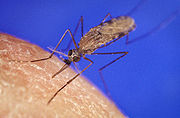
The fourth priority identified was controlling and treating malaria
; $13 billion costs were judged to produce very good benefits, particularly if applied toward chemically-treated mosquito
netting for beds.
appropriate for developing nations. Three proposals for improving sanitation and water quality for a billion of the world’s poorest followed in priority (ranked sixth to eighth: small-scale water technology for livelihoods, community-managed water supply and sanitation, and research on water productivity in food production). Completing this group was the 'government' project concerned with lowering the cost of starting new businesses.
s. Eleventh and twelfth on the list were malnutrition projects - improving infant and child nutrition and reducing the prevalence of low birth weight
. Ranked thirteenth was the plan for scaled-up basic health services to fight diseases.
and value-at-risk carbon tax), which the panel judged to be least cost-efficient of the proposals.
In regard to the science of global warming, the paper presented by Cline relied primarily on the framework set by Intergovernmental Panel on Climate Change
, and accepted the consensus view on global warming that greenhouse gas emissions from human activities are the primary cause of the global warming. Cline relies on various research studies published in the field of economics and attempted to compare the estimated cost of mitigation policies against the expected reduction in the damage of the global warming.
Cline used a discount rate of 1.5%. (Cline's summary is on the project webpage ) He justified his choice of discount rate on the ground of "utility-based discounting", that is there is zero bias in terms of preference between the present and the future generation (see time preference
). Moreover, Cline extended the time frame of the analysis to three hundred years in the future. Because the expected net damage of the global warming becomes more apparent beyond the present generation(s), this choice had the effect of increasing the present-value cost of the damage of global warming as well as the benefit of abatement policies.
Members of the panel including Thomas Schelling and one of the two perspective paper writers Robert O. Mendelsohn
(both opponents of the Kyoto protocol) criticised Cline, mainly on the issue of discount rates. (See "The opponent notes to the paper on Climate Change" ) Mendelsohn, in particular, characterizing Cline's position, said that "[i]f we use a large discount rate, they will be judged to be small effects" and called it "circular reasoning, not a justification". Cline responded to this by arguing that there is no obvious reason to use a large discount rate just because this is what is usually done in economic analysis. In other words climate change ought to be treated differently than other, more imminent problems. The Economist quoted Mendelsohn as worrying that "climate change was set up to fail".
Moreover, Mendelsohn argued that Cline's damage estimates were excessive. Citing various recent articles, including some of his own, he stated that "[a] series of studies on the impacts of climate change have systematically shown that the older literature overestimated climate damages by failing to allow for adaptation and for climate benefits."
After the results were published, members of the panel, including Schelling, criticised the way this issue was handled in the Consensus project.
" winners marked with (¤)
Unlike the 2004 results, these were not grouped into qualitative bands such as Good, Poor, etc.
As with the 2004 project, Lomborg's ranking scheme placed efforts to cut carbon dioxide emissions last. Gary Yohe
, one of the authors of the global warming paper, subsequently accused Lomborg of "deliberate distortion of our conclusions", adding that "as one of the authors of the Copenhagen Consensus Project's principal climate paper, I can say with certainty that Lomborg is misrepresenting our findings thanks to a highly selective memory". Kåre Fog further pointed out that the future benefits of emissions reduction were discounted
at a higher rate than for any of the other 27 proposals, stating "so there is an obvious reason why the climate issue always is ranked last" in Lomborg's environmental studies.
In a subsequent joint statement settling their differences, Lomborg and Yohe agreed that the "failure" of Lomborg's emissions reduction plan "could be traced to faulty design".
The benefits of the number 1 solution are that if the research proved successful this solution could be deployed relatively cheaply and quickly. Potential problems include environmental impacts e.g. from changing rainfall patterns.
Measures to cut carbon and methane emissions, such as carbon taxes, came bottom of the results list, partly because they would take a long time to have much effect on temperatures.
, an American economist and advocate of both the Kyoto protocol and increased development aid, who argued that the analytical framework was inappropriate and biased and that the project "failed to mobilize an expert group that could credibly identify and communicate a true consensus of expert knowledge on the range of issues under consideration.".
Tom Burke, a former director of Friends of the Earth, repudiated the entire approach of the project, arguing that applying cost-benefit analysis in the way the Copenhagen panel did was "junk economics".
John Quiggin
, an Australian economics professor, commented that the project is a mix of "a substantial contribution to our understanding of important issues facing the world" and an "exercises in political propaganda" and argued that the selection of the panel members was slanted towards the conclusions previously supported by Lomborg. Quiggin observed that Lomborg had argued in his controversial book The Skeptical Environmentalist
that resources allocated to mitigating global warming would be better spent on improving water quality and sanitation, and was therefore seen as having prejudged the issues.
Under the heading "Wrong Question", Sachs further argued that: "The panel that drew up the Copenhagen Consensus was asked to allocate an additional US$50 billion in spending by wealthy countries, distributed over five years, to address the world’s biggest problems. This was a poor basis for decision-making and for informing the public. By choosing such a low sum — a tiny fraction of global income — the project inherently favoured specific low-cost schemes over bolder, larger projects. It is therefore no surprise that the huge and complex challenge of long-term climate change was ranked last, and that scaling up health services in poor countries was ranked lower than interventions against specific diseases, despite warnings in the background papers that such interventions require broader improvements in health services."
From a purely mathematical point, if economic growth is projected far enough into the future, it will always be better to postpone difficult and expensive problems (like climate change) until an unspecified point in the future when we are much richer than today and have more abundant resources available to solve the problem in question. Projecting a paltry 1.5% rate of economic growth one hundred years into the future implies that the global economy will more than fourfold in size and that any large and expensive project should be handled at that time or later. On the other hand, the use of a smaller 1.5% discount rate, rather than a larger discount rate, ironically actually increases the present costs of global warming that occur to future generations, so choosing a larger discount rate would actually make the problem of global warming smaller today, since it is generally understood that the majority of costs of global warming will result in the future, not the present. So it is not entirely clear that Cline was wrong to choose a smaller discount rate of 1.5%. If climate change is posited to have dire economic consequences and negative implications for economic growth long before that point in time, it might have been judged to be a more immediate problem by the Copenhagen Consensus. By not including any negative feedback loops on the world economy from not solving the issue of climate change, the Copenhagen Consensus implicitly states that it does not matter - from an economic point of view - if we solve climate change or not.
In response Lomborg argued that $50 billion was "an optimistic but realistic example of actual spending." "Experience shows that pledges and actual spending are two different things. In 1970 the UN set itself the task of doubling development assistance. Since then the percentage has actually
been dropping". "But even if Sachs or others could gather much more than $50 billion over the next 4 years, the Copenhagen Consensus priority list would still show us where it should be invested first."
One of the Copenhagen Consensus panel experts later distanced himself from the way in which the Consensus results have been interpreted in the wider debate. Thomas Schelling
now thinks that it was misleading to put climate change at the bottom of the priority list. The Consensus panel members were presented with a dramatic proposal for handling climate change. If given the opportunity, Schelling would have put a more modest proposal higher on the list. The Yale economist Robert O. Mendelsohn
was the official critic of the proposal for climate change during the Consensus. He thought the proposal was way out of the mainstream and could only be rejected. Mendelsohn worries that climate change was set up to fail.
Michael Grubb, an economist and lead author for several IPCC
reports, commented on the Copenhagen Consensus, writing:
criticised Lomborg for only inviting economists to participate:
Lomborg countered criticism of the panel membership by stating that "Sachs disparaged the Consensus ‘dream team’ because it only consisted of economists. But that was the very point of the project. Economists have expertise in economic prioritization. It is they and not climatologists or malaria experts who can prioritize between battling global warming or communicable disease,"
Welfare economics
Welfare economics is a branch of economics that uses microeconomic techniques to evaluate economic well-being, especially relative to competitive general equilibrium within an economy as to economic efficiency and the resulting income distribution associated with it...
. It was conceived and organized by Bjørn Lomborg
Bjørn Lomborg
Bjørn Lomborg is a Danish author, academic, and environmental writer. He is an adjunct professor at the Copenhagen Business School, director of the Copenhagen Consensus Centre and a former director of the Environmental Assessment Institute in Copenhagen...
, the author of The Skeptical Environmentalist
The Skeptical Environmentalist
The Skeptical Environmentalist: Measuring the Real State of the World is a book by Danish environmentalist author Bjørn Lomborg, controversial for its claims that overpopulation, declining energy resources, deforestation, species loss, water shortages, certain aspects of global warming, and an...
and the then director of the Danish government's Environmental Assessment Institute
Environmental Assessment Institute
Environmental Assessment Institute is an independent body under the Danish Ministry of the Environment. It was established in February 2002 by the Liberal/Conservative Danish Government with the task of making environmental and economic cost/benefit analyses...
. It is now run by The Copenhagen Consensus Center under Lomborg's directorship at the Copenhagen Business School
Copenhagen Business School
Copenhagen Business School, also known as CBS, is situated in Copenhagen, Denmark. With more than 17,000 students and 1,300 staff members, CBS is also one of the largest business schools in Europe. CBS offers a wide range of business-oriented university programmes and a research environment...
. The project considers possible solutions to a wide range of problems, presented by experts in each field. These are evaluated and ranked by a panel of leading economists. The emphasis is on rational prioritization by economic analysis, justified as a corrective to standard practice in international development
International development
International development or global development is a concept that lacks a universally accepted definition, but it is most used in a holistic and multi-disciplinary context of human development — the development of greater quality of life for humans...
, where, it is alleged, media attention and the "court of public opinion" results in priorities that are often far from optimal.
The project has held conferences in 2004, 2008 and 2009. The 2008 report identified supplementing vitamins for undernourished children as the world’s best investment. The 2009 conference, dealing specifically with climate change, proposed research into marine cloud whitening (ships spraying seawater into clouds to make them reflect more sunlight and thereby reduce temperature) as the top climate change priority, though climate change itself is ranked well below other world problems.
The initial project was co-sponsored by the Danish government and The Economist
The Economist
The Economist is an English-language weekly news and international affairs publication owned by The Economist Newspaper Ltd. and edited in offices in the City of Westminster, London, England. Continuous publication began under founder James Wilson in September 1843...
. A book summarizing the Copenhagen Consensus 2004 conclusions, Global Crises, Global Solutions
Global Crises, Global Solutions
Global Crises, Global Solutions is a book presenting the methodology, economic papers and conclusions of the first Copenhagen Consensus, edited by Bjørn Lomborg, published in 2004 by the Cambridge University Press....
, edited by Lomborg, was published in October 2004 by Cambridge University Press
Cambridge University Press
Cambridge University Press is the publishing business of the University of Cambridge. Granted letters patent by Henry VIII in 1534, it is the world's oldest publishing house, and the second largest university press in the world...
. A book summarizing the 2008 conclusions is in the process of publication.
Process
Eight leading economists met May 24–28, 2004 at a roundtable in CopenhagenCopenhagen
Copenhagen is the capital and largest city of Denmark, with an urban population of 1,199,224 and a metropolitan population of 1,930,260 . With the completion of the transnational Øresund Bridge in 2000, Copenhagen has become the centre of the increasingly integrating Øresund Region...
. A series of background papers had been prepared in advance to summarize the current knowledge about the welfare economics of 32 proposals ("opportunities") from 10 categories ("challenges"). For each category, one assessment article and two critiques were produced. After a closed-door review of the background papers, each of the participants gave economic priority rankings to 17 of the proposals (the rest were deemed inconclusive).
Experts
"Nobel Prize" winners marked with (¤)- Jagdish BhagwatiJagdish BhagwatiJagdish Natwarlal Bhagwati is an Indian-American economist and professor of economics and law at Columbia University. He is well known for his research in international trade and for his advocacy of free trade....
- Robert FogelRobert FogelRobert William Fogel is an American economic historian and scientist, and winner of the 1993 Nobel Memorial Prize in Economic Sciences. He is now the Charles R. Walgreen Distinguished Service Professor of American Institutions and director of the Center for Population Economics at the...
(¤) - Bruno FreyBruno FreyBruno S. Frey is a Swiss economist and a professor at the University of Zurich. He may be best known for his critique of Homo economicus or economic man, arguing that it places excessive emphasis on extrinsic motivation rather than intrinsic motivation...
- Justin Yifu LinJustin Yifu LinJustin Yifu Lin , born as Zhengyi Lin, on October 15, 1952, in Yilan, Taiwan, is a Chinese economist and Chief Economist and Senior Vice President of the World Bank.-Career and education:...
- Douglass NorthDouglass NorthDouglass Cecil North is an American economist known for his work in economic history. He is the co-recipient of the 1993 Nobel Memorial Prize in Economic Sciences...
(¤) - Thomas SchellingThomas SchellingThomas Crombie Schelling is an American economist and professor of foreign affairs, national security, nuclear strategy, and arms control at the School of Public Policy at University of Maryland, College Park. He is also co-faculty at the New England Complex Systems Institute...
(¤) - Vernon L. SmithVernon L. SmithVernon Lomax Smith is professor of economics at Chapman University's Argyros School of Business and Economics and School of Law in Orange, California, a research scholar at George Mason University Interdisciplinary Center for Economic Science, and a Fellow of the Mercatus Center, all in Arlington,...
(¤) - Nancy StokeyNancy StokeyNancy Laura Stokey is the Frederick Henry Prince Distinguished Service Professor of Economics at the University of Chicago. She has earned her BA in economics from the University of Pennsylvania in 1972 and her PhD from Harvard University in 1978, her thesis advisor being Nobel Prize in Economics...
Challenges
Below is a list of the 10 challenge areas and the author of the paper on each. Within each challenge, 3-4 opportunities (proposals) were analyzed:- Global WarmingGlobal warmingGlobal warming refers to the rising average temperature of Earth's atmosphere and oceans and its projected continuation. In the last 100 years, Earth's average surface temperature increased by about with about two thirds of the increase occurring over just the last three decades...
sometimes also called Climate change (William R. ClineWilliam R. ClineWilliam R Cline is an American economist. He graduated from Princeton University in 1963 and received a PhD in 1969 from Yale.Cline was deputy director of development and trade research at the office of the assistant secretary for international affairs at the United States Department of the...
) - Communicable diseasesInfectious diseaseInfectious diseases, also known as communicable diseases, contagious diseases or transmissible diseases comprise clinically evident illness resulting from the infection, presence and growth of pathogenic biological agents in an individual host organism...
(Anne Mills) - Conflicts (Paul CollierPaul CollierPaul Collier, CBE is a Professor of Economics, Director for the Centre for the Study of African Economies at The University of Oxford and Fellow of St Antony's College. From 1998 – 2003 he was the director of the Development Research Group of the World Bank.-Life:Collier is a specialist in...
) - EducationEducationEducation in its broadest, general sense is the means through which the aims and habits of a group of people lives on from one generation to the next. Generally, it occurs through any experience that has a formative effect on the way one thinks, feels, or acts...
(Lant PritchettLant Pritchett-Biography:He was born in Utah in 1959 and raised in Boise, Idaho. He graduated from Brigham Young University in 1983 with a B.S. in Economics, after serving a mission for The Church of Jesus Christ of Latter-day Saints in Argentina...
) - Financial instabilityCurrency crisisA currency crisis, which is also called a balance-of-payments crisis, is a sudden devaluation of a currency caused by chronic balance-of-payments deficits which usually ends in a speculative attack in the foreign exchange market. It occurs when the value of a currency changes quickly, undermining...
(Barry EichengreenBarry EichengreenBarry Eichengreen is an American economist who holds the title of George C. Pardee and Helen N. Pardee Professor of Economics and Political Science at the University of California, Berkeley, where he has taught since 1987...
) - GovernmentGovernmentGovernment refers to the legislators, administrators, and arbitrators in the administrative bureaucracy who control a state at a given time, and to the system of government by which they are organized...
and corruptionPolitical corruptionPolitical corruption is the use of legislated powers by government officials for illegitimate private gain. Misuse of government power for other purposes, such as repression of political opponents and general police brutality, is not considered political corruption. Neither are illegal acts by...
(Susan Rose-Ackerman) - MalnutritionMalnutritionMalnutrition is the condition that results from taking an unbalanced diet in which certain nutrients are lacking, in excess , or in the wrong proportions....
and hungerHungerHunger is the most commonly used term to describe the social condition of people who frequently experience the physical sensation of desiring food.-Malnutrition, famine, starvation:...
(Jere Behrman) - PopulationPopulationA population is all the organisms that both belong to the same group or species and live in the same geographical area. The area that is used to define a sexual population is such that inter-breeding is possible between any pair within the area and more probable than cross-breeding with individuals...
: migrationHuman migrationHuman migration is physical movement by humans from one area to another, sometimes over long distances or in large groups. Historically this movement was nomadic, often causing significant conflict with the indigenous population and their displacement or cultural assimilation. Only a few nomadic...
(Phillip L. Martin) - SanitationSanitationSanitation is the hygienic means of promoting health through prevention of human contact with the hazards of wastes. Hazards can be either physical, microbiological, biological or chemical agents of disease. Wastes that can cause health problems are human and animal feces, solid wastes, domestic...
and water (Frank Rijsberman) - SubsidiesSubsidyA subsidy is an assistance paid to a business or economic sector. Most subsidies are made by the government to producers or distributors in an industry to prevent the decline of that industry or an increase in the prices of its products or simply to encourage it to hire more labor A subsidy (also...
and trade barrierTrade barrierTrade barriers are government-induced restrictions on international trade. The barriers can take many forms, including the following:* Tariffs* Non-tariff barriers to trade** Import licenses** Export licenses** Import quotas** Subsidies...
s (Kym AndersonKym AndersonKym Anderson is an Australian economist, specialising in trade policy and issues related to the World Trade Organization. He studied at the University of New England, the University of Adelaide and the University of Chicago before completing a PhD at Stanford University...
)
Results
The experts agreed to rate seventeen of the thirty-two opportunities within seven of the ten challenges. The rated opportunities were further classified into four groups: Very Good, Good, Fair and Bad.Very Good
The highest priority was assigned to implementing certain new measures to prevent the spread of HIVHIV
Human immunodeficiency virus is a lentivirus that causes acquired immunodeficiency syndrome , a condition in humans in which progressive failure of the immune system allows life-threatening opportunistic infections and cancers to thrive...
and AIDS
AIDS
Acquired immune deficiency syndrome or acquired immunodeficiency syndrome is a disease of the human immune system caused by the human immunodeficiency virus...
. The economists estimated that an investment of $27 billion could avert nearly 30 million new infections by 2010.
Policies to reduce malnutrition and hunger were chosen as the second priority. Increasing the availability of micronutrient
Micronutrient
Micronutrients are nutrients required by humans and other living things throughout life in small quantities to orchestrate a whole range of physiological functions, but which the organism itself cannot produce. For people, they include dietary trace minerals in amounts generally less than 100...
s, particularly reducing iron deficiency anemia
Iron deficiency anemia
Iron-deficiency anemia is a common anemia that occurs when iron loss occurs, and/or the dietary intake or absorption of iron is insufficient...
through dietary supplement
Dietary supplement
A dietary supplement, also known as food supplement or nutritional supplement, is a preparation intended to supplement the diet and provide nutrients, such as vitamins, minerals, fiber, fatty acids, or amino acids, that may be missing or may not be consumed in sufficient quantities in a person's diet...
s, was judged to have an exceptionally high ratio of benefits to costs, which were estimated at $12 billion.
Free trade
Under a free trade policy, prices emerge from supply and demand, and are the sole determinant of resource allocation. 'Free' trade differs from other forms of trade policy where the allocation of goods and services among trading countries are determined by price strategies that may differ from...
; the experts agreed that modest costs could yield large benefits for the world as a whole and for developing nations.
The fourth priority identified was controlling and treating malaria
Malaria
Malaria is a mosquito-borne infectious disease of humans and other animals caused by eukaryotic protists of the genus Plasmodium. The disease results from the multiplication of Plasmodium parasites within red blood cells, causing symptoms that typically include fever and headache, in severe cases...
; $13 billion costs were judged to produce very good benefits, particularly if applied toward chemically-treated mosquito
Mosquito
Mosquitoes are members of a family of nematocerid flies: the Culicidae . The word Mosquito is from the Spanish and Portuguese for little fly...
netting for beds.
Good
The fifth priority identified was increased spending on research into new agricultural technologiesInternational agricultural research
The only mandated international agricultural research organization is the Consultative Group on International Agricultural Research . The CGIAR Fund supports 15 international agricultural research centers such as IRRI, IITA, ILRI, IFPRI and that form the CGIAR Consortium and are located in various...
appropriate for developing nations. Three proposals for improving sanitation and water quality for a billion of the world’s poorest followed in priority (ranked sixth to eighth: small-scale water technology for livelihoods, community-managed water supply and sanitation, and research on water productivity in food production). Completing this group was the 'government' project concerned with lowering the cost of starting new businesses.
Fair
Ranked tenth was the project on lowering barriers to migration for skilled workerSkilled worker
A skilled worker is any worker who has some special skill, knowledge, or ability in their work. A skilled worker may have attended a college, university or technical school. Or, a skilled worker may have learned their skills on the job...
s. Eleventh and twelfth on the list were malnutrition projects - improving infant and child nutrition and reducing the prevalence of low birth weight
Low birth weight
Low birth weight is defined as a birth weight of a liveborn infant of less than 2,500 g. regardless of gestational age-Causes:LBW is either the result of preterm birth or of the infant being small for gestational age , or a combination of...
. Ranked thirteenth was the plan for scaled-up basic health services to fight diseases.
Poor
Ranked fourteenth to seventeenth were: a migration project (guest-worker programmes for the unskilled), which was deemed to discourage integration; and three projects addressing climate change (optimal carbon tax, the Kyoto protocolKyoto Protocol
The Kyoto Protocol is a protocol to the United Nations Framework Convention on Climate Change , aimed at fighting global warming...
and value-at-risk carbon tax), which the panel judged to be least cost-efficient of the proposals.
Global warming
The panel found that all three climate policies have "costs that were likely to exceed the benefits". It further stated "global warming must be addressed, but agreed that approaches based on too abrupt a shift toward lower emissions of carbon are needlessly expensive."In regard to the science of global warming, the paper presented by Cline relied primarily on the framework set by Intergovernmental Panel on Climate Change
Intergovernmental Panel on Climate Change
The Intergovernmental Panel on Climate Change is a scientific intergovernmental body which provides comprehensive assessments of current scientific, technical and socio-economic information worldwide about the risk of climate change caused by human activity, its potential environmental and...
, and accepted the consensus view on global warming that greenhouse gas emissions from human activities are the primary cause of the global warming. Cline relies on various research studies published in the field of economics and attempted to compare the estimated cost of mitigation policies against the expected reduction in the damage of the global warming.
Cline used a discount rate of 1.5%. (Cline's summary is on the project webpage ) He justified his choice of discount rate on the ground of "utility-based discounting", that is there is zero bias in terms of preference between the present and the future generation (see time preference
Time preference
In economics, time preference pertains to how large a premium a consumer places on enjoyment nearer in time over more remote enjoyment....
). Moreover, Cline extended the time frame of the analysis to three hundred years in the future. Because the expected net damage of the global warming becomes more apparent beyond the present generation(s), this choice had the effect of increasing the present-value cost of the damage of global warming as well as the benefit of abatement policies.
Members of the panel including Thomas Schelling and one of the two perspective paper writers Robert O. Mendelsohn
Robert O. Mendelsohn
-General:Robert O. Mendelsohn is an American environmental economist. He is currently the Edwin Weyerhaeuser Davis Professor of the School of Forestry and Environmental Studies at Yale University, Professor of Economics in Economics Department at Yale University and Professor in the School of...
(both opponents of the Kyoto protocol) criticised Cline, mainly on the issue of discount rates. (See "The opponent notes to the paper on Climate Change" ) Mendelsohn, in particular, characterizing Cline's position, said that "[i]f we use a large discount rate, they will be judged to be small effects" and called it "circular reasoning, not a justification". Cline responded to this by arguing that there is no obvious reason to use a large discount rate just because this is what is usually done in economic analysis. In other words climate change ought to be treated differently than other, more imminent problems. The Economist quoted Mendelsohn as worrying that "climate change was set up to fail".
Moreover, Mendelsohn argued that Cline's damage estimates were excessive. Citing various recent articles, including some of his own, he stated that "[a] series of studies on the impacts of climate change have systematically shown that the older literature overestimated climate damages by failing to allow for adaptation and for climate benefits."
After the results were published, members of the panel, including Schelling, criticised the way this issue was handled in the Consensus project.
Experts
"Nobel PrizeNobel Prize
The Nobel Prizes are annual international awards bestowed by Scandinavian committees in recognition of cultural and scientific advances. The will of the Swedish chemist Alfred Nobel, the inventor of dynamite, established the prizes in 1895...
" winners marked with (¤)
- Jagdish BhagwatiJagdish BhagwatiJagdish Natwarlal Bhagwati is an Indian-American economist and professor of economics and law at Columbia University. He is well known for his research in international trade and for his advocacy of free trade....
- Francois BourguignonFrançois BourguignonFrançois Bourguignon is the former Chief Economist of the World Bank. He is the Director of the Paris School of Economics, and was formerly a professor of economics at the École des Hautes Études en Sciences Sociales in Paris....
- Finn E. KydlandFinn E. KydlandFinn Erling Kydland is a Norwegian economist. He is currently the Henley Professor of Economics at the University of California, Santa Barbara. He also holds the Richard P...
(¤) - Robert MundellRobert MundellRobert Mundell, CC is a Nobel Prize-winning Canadian economist. Currently, Mundell is a professor of economics at Columbia University and the Chinese University of Hong Kong....
(¤) - Douglass NorthDouglass NorthDouglass Cecil North is an American economist known for his work in economic history. He is the co-recipient of the 1993 Nobel Memorial Prize in Economic Sciences...
(¤) - Vernon L. SmithVernon L. SmithVernon Lomax Smith is professor of economics at Chapman University's Argyros School of Business and Economics and School of Law in Orange, California, a research scholar at George Mason University Interdisciplinary Center for Economic Science, and a Fellow of the Mercatus Center, all in Arlington,...
(¤) - Thomas SchellingThomas SchellingThomas Crombie Schelling is an American economist and professor of foreign affairs, national security, nuclear strategy, and arms control at the School of Public Policy at University of Maryland, College Park. He is also co-faculty at the New England Complex Systems Institute...
(¤) - Nancy StokeyNancy StokeyNancy Laura Stokey is the Frederick Henry Prince Distinguished Service Professor of Economics at the University of Chicago. She has earned her BA in economics from the University of Pennsylvania in 1972 and her PhD from Harvard University in 1978, her thesis advisor being Nobel Prize in Economics...
Results
In the Copenhagen Consensus 2008, the solutions for global problems have been ranked in the following order:- MicronutrientMicronutrientMicronutrients are nutrients required by humans and other living things throughout life in small quantities to orchestrate a whole range of physiological functions, but which the organism itself cannot produce. For people, they include dietary trace minerals in amounts generally less than 100...
supplements for children (vitamin A and zinc) - The Doha development agenda
- Micronutrient fortificationFood fortificationFood fortification or enrichment is the process of adding micronutrients to food. It can be purely a commercial choice to provide extra nutrients in a food, or sometimes it is a public health policy which aims to reduce numbers of people with dietary deficiencies in a population.Diets that lack...
(iron and salt iodizationIodised saltIodised salt is table salt mixed with a minute amount of various iodine-containing salts. The ingestion of iodide prevents iodine deficiency. Worldwide, iodine deficiency affects about two billion people and is the leading preventable cause of mental retardation. It also causes thyroid gland...
) - Expanded immunizationExpanded program on immunizationThe Expanded Program on Immunization is a World Health Organization program with the goal to make vaccines available to all children throughout the world.- History :...
coverage for children - BiofortificationBiofortificationBiofortification is a method of breeding crops to increase their nutritional value. This can be done either through conventional selective breeding, or through genetic engineering...
- DewormingDewormingDeworming is the giving of an anthelmintic drug to an animal to rid it of intestinal parasites, such as roundworm and tapeworm...
and other nutrition programs at school - Lowering the price of schooling
- Increase and improve girls’ schooling
- Community-based nutrition promotion
- Provide support for women’s reproductive role
- Heart attack acute management
- MalariaMalariaMalaria is a mosquito-borne infectious disease of humans and other animals caused by eukaryotic protists of the genus Plasmodium. The disease results from the multiplication of Plasmodium parasites within red blood cells, causing symptoms that typically include fever and headache, in severe cases...
prevention and treatment - TuberculosisTuberculosisTuberculosis, MTB, or TB is a common, and in many cases lethal, infectious disease caused by various strains of mycobacteria, usually Mycobacterium tuberculosis. Tuberculosis usually attacks the lungs but can also affect other parts of the body...
case finding and treatment - R&D in low-carbon energy technologies
- Bio-sand filtersSlow sand filterSlow sand filters are used in water purification for treating raw water to produce a potable product. They are typically 1 to 2 metres deep, can be rectangular or cylindrical in cross section and are used primarily to treat surface water...
for household water treatmentWater treatmentWater treatment describes those processes used to make water more acceptable for a desired end-use. These can include use as drinking water, industrial processes, medical and many other uses. The goal of all water treatment process is to remove existing contaminants in the water, or reduce the... - Rural water supplyWater supplyWater supply is the provision of water by public utilities, commercial organisations, community endeavours or by individuals, usually via a system of pumps and pipes...
- Conditional cash transferConditional Cash TransferConditional cash transfer programs aim to reduce poverty by making welfare programs conditional upon the receivers' actions. The government only transfers the money to persons who meet certain criteria...
- Peace-keeping in post-conflict situations
- HIVHIVHuman immunodeficiency virus is a lentivirus that causes acquired immunodeficiency syndrome , a condition in humans in which progressive failure of the immune system allows life-threatening opportunistic infections and cancers to thrive...
combination prevention - Total sanitationSanitationSanitation is the hygienic means of promoting health through prevention of human contact with the hazards of wastes. Hazards can be either physical, microbiological, biological or chemical agents of disease. Wastes that can cause health problems are human and animal feces, solid wastes, domestic...
campaign - Improving surgical capacity at district hospital level
- Microfinance
- Improved stove intervention to combat Air Pollution
- Large, multipurpose dam in Africa
- Inspection and maintenance of diesel vehicles
- Low sulfur diesel for urban road vehicles
- Diesel vehicle particulate control technology
- Tobacco tax
- R&D and carbon dioxide emissions reduction
- Carbon dioxide emissions reduction
Unlike the 2004 results, these were not grouped into qualitative bands such as Good, Poor, etc.
As with the 2004 project, Lomborg's ranking scheme placed efforts to cut carbon dioxide emissions last. Gary Yohe
Gary Yohe
Gary Wynn Yohe is the Woodhouse/Sysco Professor of economics at Wesleyan University, Middletown, Connecticut, and Director of the John E. Andrus Public Affairs Center at Wesleyan. He holds a PhD from Yale University....
, one of the authors of the global warming paper, subsequently accused Lomborg of "deliberate distortion of our conclusions", adding that "as one of the authors of the Copenhagen Consensus Project's principal climate paper, I can say with certainty that Lomborg is misrepresenting our findings thanks to a highly selective memory". Kåre Fog further pointed out that the future benefits of emissions reduction were discounted
Discounted cash flow
In finance, discounted cash flow analysis is a method of valuing a project, company, or asset using the concepts of the time value of money...
at a higher rate than for any of the other 27 proposals, stating "so there is an obvious reason why the climate issue always is ranked last" in Lomborg's environmental studies.
In a subsequent joint statement settling their differences, Lomborg and Yohe agreed that the "failure" of Lomborg's emissions reduction plan "could be traced to faulty design".
Climate Change Project
In 2009, the Copenhagen Consensus established a Climate Change Project specifically to examine solutions to climate change. The process was similar to the 2004 and 2008 Copenhagen Consensus, involving papers by specialists considered by an expert panel of economists. The panel ranked 15 solutions, of which the top 5 were:- Research into marine cloud whitening (involving ships spraying sea-water into clouds so as to reflect more sunlight and thereby reduce temperatures)
- Technology-led policy response
- Research into stratospheric aerosol injection (involving injected ?sulphur dioxide into the upper atmosphere to reduce sunlight)
- Research into carbon storage
- Planning for adaptation
The benefits of the number 1 solution are that if the research proved successful this solution could be deployed relatively cheaply and quickly. Potential problems include environmental impacts e.g. from changing rainfall patterns.
Measures to cut carbon and methane emissions, such as carbon taxes, came bottom of the results list, partly because they would take a long time to have much effect on temperatures.
Approach and alleged bias
The 2004 report, especially its conclusion regarding climate change was subsequently criticised from a variety of perspectives. The general approach adopted to set priorities was criticised by Jeffrey SachsJeffrey Sachs
Jeffrey David Sachs is an American economist and Director of The Earth Institute at Columbia University. One of the youngest economics professors in the history of Harvard University, Sachs became known for his role as an adviser to Eastern European and developing country governments in the...
, an American economist and advocate of both the Kyoto protocol and increased development aid, who argued that the analytical framework was inappropriate and biased and that the project "failed to mobilize an expert group that could credibly identify and communicate a true consensus of expert knowledge on the range of issues under consideration.".
Tom Burke, a former director of Friends of the Earth, repudiated the entire approach of the project, arguing that applying cost-benefit analysis in the way the Copenhagen panel did was "junk economics".
John Quiggin
John Quiggin
John Quiggin is an Australian economist and professor at the University of Queensland. Quiggin studied at the Australian National University, obtaining bachelor's degrees in Arts and Economics in 1978 and 1980 respectively, and completing a master's degree in Economics in 1984. Quiggin was awarded...
, an Australian economics professor, commented that the project is a mix of "a substantial contribution to our understanding of important issues facing the world" and an "exercises in political propaganda" and argued that the selection of the panel members was slanted towards the conclusions previously supported by Lomborg. Quiggin observed that Lomborg had argued in his controversial book The Skeptical Environmentalist
The Skeptical Environmentalist
The Skeptical Environmentalist: Measuring the Real State of the World is a book by Danish environmentalist author Bjørn Lomborg, controversial for its claims that overpopulation, declining energy resources, deforestation, species loss, water shortages, certain aspects of global warming, and an...
that resources allocated to mitigating global warming would be better spent on improving water quality and sanitation, and was therefore seen as having prejudged the issues.
Under the heading "Wrong Question", Sachs further argued that: "The panel that drew up the Copenhagen Consensus was asked to allocate an additional US$50 billion in spending by wealthy countries, distributed over five years, to address the world’s biggest problems. This was a poor basis for decision-making and for informing the public. By choosing such a low sum — a tiny fraction of global income — the project inherently favoured specific low-cost schemes over bolder, larger projects. It is therefore no surprise that the huge and complex challenge of long-term climate change was ranked last, and that scaling up health services in poor countries was ranked lower than interventions against specific diseases, despite warnings in the background papers that such interventions require broader improvements in health services."
From a purely mathematical point, if economic growth is projected far enough into the future, it will always be better to postpone difficult and expensive problems (like climate change) until an unspecified point in the future when we are much richer than today and have more abundant resources available to solve the problem in question. Projecting a paltry 1.5% rate of economic growth one hundred years into the future implies that the global economy will more than fourfold in size and that any large and expensive project should be handled at that time or later. On the other hand, the use of a smaller 1.5% discount rate, rather than a larger discount rate, ironically actually increases the present costs of global warming that occur to future generations, so choosing a larger discount rate would actually make the problem of global warming smaller today, since it is generally understood that the majority of costs of global warming will result in the future, not the present. So it is not entirely clear that Cline was wrong to choose a smaller discount rate of 1.5%. If climate change is posited to have dire economic consequences and negative implications for economic growth long before that point in time, it might have been judged to be a more immediate problem by the Copenhagen Consensus. By not including any negative feedback loops on the world economy from not solving the issue of climate change, the Copenhagen Consensus implicitly states that it does not matter - from an economic point of view - if we solve climate change or not.
In response Lomborg argued that $50 billion was "an optimistic but realistic example of actual spending." "Experience shows that pledges and actual spending are two different things. In 1970 the UN set itself the task of doubling development assistance. Since then the percentage has actually
been dropping". "But even if Sachs or others could gather much more than $50 billion over the next 4 years, the Copenhagen Consensus priority list would still show us where it should be invested first."
One of the Copenhagen Consensus panel experts later distanced himself from the way in which the Consensus results have been interpreted in the wider debate. Thomas Schelling
Thomas Schelling
Thomas Crombie Schelling is an American economist and professor of foreign affairs, national security, nuclear strategy, and arms control at the School of Public Policy at University of Maryland, College Park. He is also co-faculty at the New England Complex Systems Institute...
now thinks that it was misleading to put climate change at the bottom of the priority list. The Consensus panel members were presented with a dramatic proposal for handling climate change. If given the opportunity, Schelling would have put a more modest proposal higher on the list. The Yale economist Robert O. Mendelsohn
Robert O. Mendelsohn
-General:Robert O. Mendelsohn is an American environmental economist. He is currently the Edwin Weyerhaeuser Davis Professor of the School of Forestry and Environmental Studies at Yale University, Professor of Economics in Economics Department at Yale University and Professor in the School of...
was the official critic of the proposal for climate change during the Consensus. He thought the proposal was way out of the mainstream and could only be rejected. Mendelsohn worries that climate change was set up to fail.
Michael Grubb, an economist and lead author for several IPCC
Intergovernmental Panel on Climate Change
The Intergovernmental Panel on Climate Change is a scientific intergovernmental body which provides comprehensive assessments of current scientific, technical and socio-economic information worldwide about the risk of climate change caused by human activity, its potential environmental and...
reports, commented on the Copenhagen Consensus, writing:
To try and define climate policy as a trade-off against foreign aid is thus a forced choice that bears no relationship to reality. No government is proposing that the marginal costMarginal costIn economics and finance, marginal cost is the change in total cost that arises when the quantity produced changes by one unit. That is, it is the cost of producing one more unit of a good...
s associated with, for example, an emissions tradingEmissions tradingEmissions trading is a market-based approach used to control pollution by providing economic incentives for achieving reductions in the emissions of pollutants....
system, should be deducted from its foreign aid budget. This way of posing the question is both morally inappropriate and irrelevant to the determination of real climate mitigation policy.
Panel membership
Quiggin argued that the members of the 2004 panel, selected by Lomborg, were, "generally towards the right and, to the extent that they had stated views, to be opponents of Kyoto.". Sachs also noted that the panel members had not previously been much involved in issues of development economics, and were unlikely to reach useful conclusions in the time available to them. Commenting on the 2004 Copenhagen Consensus, climatologist and IPCC author Stephen SchneiderStephen Schneider
Stephen Henry Schneider was Professor of Environmental Biology and Global Change at Stanford University, a Co-Director at the Center for Environment Science and Policy of the Freeman Spogli Institute for International Studies and a Senior Fellow in the Stanford Woods Institute for the Environment...
criticised Lomborg for only inviting economists to participate:
In order to achieve a true consensus, I think Lomborg would've had to invite ecologists, social scientistSocial ScientistSocial Scientist is a New Delhi based journal in social sciences and humanities published since 1972....
s concerned with justiceJusticeJustice is a concept of moral rightness based on ethics, rationality, law, natural law, religion, or equity, along with the punishment of the breach of said ethics; justice is the act of being just and/or fair.-Concept of justice:...
and how climate change impacts and policies are often inequitably distributed, philosophers who could challenge the economic paradigm of "one dollar, one vote" implicit in cost-benefit analysesCost-benefit analysisCost–benefit analysis , sometimes called benefit–cost analysis , is a systematic process for calculating and comparing benefits and costs of a project for two purposes: to determine if it is a sound investment , to see how it compares with alternate projects...
promoted by economists, and climate scientists who could easily show that Lomborg's claim that climate change will have only minimal effects is not sound science.
Lomborg countered criticism of the panel membership by stating that "Sachs disparaged the Consensus ‘dream team’ because it only consisted of economists. But that was the very point of the project. Economists have expertise in economic prioritization. It is they and not climatologists or malaria experts who can prioritize between battling global warming or communicable disease,"
See also
- UN Economic and Social Council
- UN Human Development Index
- Measuring well-being
- Canada Well-Being Measurement BillCanada Well-Being Measurement BillThe Canada Well-Being Measures Bill was proposed by Member of Parliament Marlene Jennings in 2001. Had it passed, it would develop and provide for the publication of measures to inform Canadians about the health and well-being of people, communities, and ecosystems in Canada. The bill received...
- Physical quality-of-life indexPhysical quality-of-life indexThe Physical Quality of Life Index is an attempt to measure the quality of life or well-being of a country. The value is the average of three statistics: basic literacy rate, infant mortality, and life expectancy at age one, all equally weighted on a 0 to 100 scale.It was developed for the...
- Environmental EconomicsEnvironmental economicsEnvironmental economics is a subfield of economics concerned with environmental issues. Quoting from the National Bureau of Economic Research Environmental Economics program:...
Further reading
- Lomborg, Bjørn (ed.), How to Spend $50 Billion to Make the World a Better Place, Cambridge University Press, 2006. ISBN 978-0521-68571-9
- Lomborg, Bjørn (ed.), Solutions for the World's Biggest Problems - Costs and Benefits, Cambridge University Press, 2007. ISBN 978-0521-71597-3
- Lomborg, Bjørn (ed.), Global Crises, Global Solutions, Cambridge University Press, 2009. ISBN 0-521-74122-X
- Sachs, Jeffrey D. (12 August 2004). Seeking a global solution. Nature 430:725–726
- Lind, Robert C. (1982) (ed.): Discounting for time and risk in energy policy. 468 pp. Published by Resources for the Future. inc., Washington D.C.
External links
- The Copenhagen Consensus website
- The Copenhagen Consensus Climate Change Project ('Fix the climate') website
- The Economists home page for the project
- SourceWatch entry on Copenhagen Consensus
- Global Crises, Global Solutions Transcript of Lomborg's talk at the Carnegie Council.
- Can Development Priorities Be Prioritized?. A presentation by Bjorn Lomborg explaining the Copenhagen Consensus process to World BankWorld BankThe World Bank is an international financial institution that provides loans to developing countries for capital programmes.The World Bank's official goal is the reduction of poverty...
staff on October 12, 2004. Discussants include Robert WatsonRobert Watson (scientist)Robert T. Watson is a British scientist who has worked on atmospheric science issues including ozone depletion, global warming and paleoclimatology since the 1980s.- Education and awards :...
, Chief Scientist and Senior Advisor at the World Bank’s Environmentally and Socially Sustainable Development unit, and Shahid Yusuf, Economic Advisor, DEC Research Group. - Criticism: Tom Burke: This is neither scepticism nor science – just nonsense: Why is Bjorn Lomborg's work on climate change taken seriously? The Guardian, 23 October 2004: ("Cost-benefit analysis can help you choose different routes to a goal you have agreed, but it cannot help you choose goals. For that we have politics.")
- What is wrong about Copenhagen Consensus? on the Lomborg-errors web site.