


Commodore International

Encyclopedia
Commodore is the commonly used name for Commodore Business Machines (CBM), the U.S.-based home computer manufacturer and electronics
manufacturer headquartered in West Chester, Pennsylvania
, which also housed Commodore's corporate parent company, Commodore International Limited. Commodore played a vital role in the development of the home
–personal computer
industry in the 1980s. Commodore developed and marketed the world's best-selling desktop computer, the Commodore 64
(1982). Commodore later released the Amiga
range of computers in 1985.
The company declared bankruptcy
in April 1994. The company was bought by Escom which also went bankrupt. In 2005, the brand survived after mergers with Yeahronimo Media Ventures Inc., SATXS Communications BV and Tulip Computers.

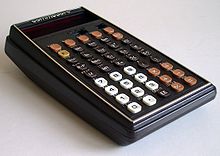 The company that would become Commodore Business Machines, Inc. was founded in 1954 in Toronto as the Commodore Portable Typewriter Company by Polish immigrant and Auschwitz survivor Jack Tramiel
. For a few years he had been living in New York, driving a taxicab and running a small business repairing typewriters, when he managed to sign a deal with a Czechoslovakian company to manufacture their designs in Canada. He moved to Toronto to start production. By the late 1950s a wave of Japanese machines forced most North American typewriter companies to cease business, but Tramiel instead turned to adding machine
s.
In 1955, the company was formally incorporated as Commodore Business Machines, Inc. (CBM) in Canada. In 1962, Commodore went public at New York stock exchange under the name of Commodore International Limited. In the late 1960s history repeated itself when Japanese firms started producing and exporting adding machines. The company's main investor and chairman, Irving Gould
, suggested that Tramiel travel to Japan to understand how to compete. Instead, he returned with the new idea to produce electronic calculator
s, which were just coming on the market.
Commodore soon had a profitable calculator line and was one of the more popular brands in the early 1970s, producing both consumer as well as scientific/programmable calculators. However, in 1975, Texas Instruments
, the main supplier of calculator parts, entered the market directly and put out a line of machines priced at less than Commodore's cost for the parts. Commodore had to be rescued once again by an infusion of cash from Gould, which Tramiel used beginning in 1976 to purchase several second-source chip suppliers, including MOS Technology, Inc.
, in order to assure his supply. He agreed to buy MOS, which was having troubles of its own, only on the condition that its chip designer Chuck Peddle
join Commodore directly as head of engineering.
In December 2007 when Tramiel was visiting the Computer History Museum
in Mountain View, California
, for the 25th anniversary of the Commodore 64, he was asked why he called his company Commodore. He said: "I wanted to call my company General, but there's so many Generals in the U.S.: General Electric
, General Motors
. Then I went to Admiral, but that was taken. So I wind up in Berlin, Germany, with my wife, and we were in a cab, and the cab made a short stop, and in front of us was an Opel Commodore
." Tramiel gave this account in many interviews, but Opel's Commodore didn't debut until 1967, years after the company had been named.
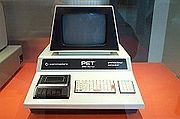 Once Chuck Peddle had taken over engineering at Commodore, he convinced Jack Tramiel that calculators were already a dead end and that they should turn their attention to home computer
s. Peddle packaged his single-board computer
design in a metal case, along with a full-travel QWERTY
keyboard, monochrome
monitor, and tape recorder
for program and data storage, to produce the Commodore PET
(Personal Electronic Transactor). From PET's 1977 debut, Commodore would be a computer company.
Commodore had been reorganized the year before into Commodore International, Ltd., moving its financial headquarters to the Bahamas and its operational headquarters to West Chester, Pennsylvania
, near to the MOS Technology site. The operational headquarters, where research and development of new products occurred, retained the name Commodore Business Machines, Inc.
The PET computer line was used primarily in schools, due to its tough all-metal construction (some models were labeled "Teacher's PET"), but did not compete well in the home setting where graphics and sound were important. This was addressed with the introduction of the VIC-20
in 1981, which was introduced at a cost of US$299 and sold in retail stores. Commodore took out aggressive ads featuring William Shatner
asking consumers "Why buy just a video game?" The strategy worked and the VIC-20 became the first computer to ship more than one million units. A total of 2.5 million units were sold over the machine's lifetime.
In 1982, Commodore introduced the Commodore 64
as the successor to the VIC-20. Thanks to a well-designed set of chips
designed by MOS Technology, the Commodore 64, (also referred to as C64), possessed remarkable sound and graphics for its time and is often credited with starting the computer demo scene. Its US$595 price was high compared with that of the VIC-20, but it was still much less expensive than any other 64K computer on the market. Early C64 ads boasted, "You can't buy a better computer at twice the price."
Australian ads used a tune speaking the words "Are you keeping up with the commodore? Because the commodore is keeping up with you. "
In 1983, Tramiel decided to focus on market share and cut the price of the VIC-20 and C64 dramatically, starting what would be called the "home computer war." TI responded by cutting prices on its TI-99/4A
, which had been introduced in 1981. Soon there was an all-out price war involving Commodore, TI, Atari
and practically every vendor other than Apple Computer
. By the end of this conflict, Commodore had shipped somewhere around 22 million C64s—making the C64 the best selling computer of all time.
 Commodore's board of directors were as impacted as anyone else by the price spiral and decided they wanted out. An internal power struggle resulted; in January 1984, Tramiel resigned. He founded a new company, Tramel Technology (spelled differently so people would pronounce it correctly), and hired away a number of Commodore engineers to begin work on a next-generation computer design.
Now it was left to the remaining Commodore management to salvage the company's fortunes and plan for the future. It did so by buying a small startup company called Amiga Corporation
in August 1984, for $25 million ($12.8 million in cash & 550,000 in common shares) which became a subsidiary of Commodore, called Commodore-Amiga, Inc. Commodore brought this new 32-bit
computer design (initially codenamed "Lorraine", later dubbed the Amiga 1000
) to market in the fall of 1985 for US $1295.
But Tramiel had beaten Commodore to the punch. His design was 95% completed by June (which fueled speculation that his engineers had taken technology with them from Commodore). In July 1984 he bought the consumer side of Atari Inc. from Warner Communications
which allowed him to strike back and release the Atari ST
earlier in 1985 for about $800.
During development in 1983, Amiga had exhausted venture capital and was desperate for more financing. Jay Miner
and company had approached former employer Atari
, and the "Warner owned" Atari had paid Amiga to continue development work. In return Atari was to get one-year exclusive use of the design as a video game console. After one year Atari would have the right to add a keyboard and market the complete Amiga computer. The Atari Museum has acquired the Atari-Amiga contract and Atari engineering logs revealing that the Atari Amiga was originally designated as the 1850XLD. As Atari was heavily involved with Disney at the time, it was later code-named "Mickey", and the 256K memory expansion board was codenamed "Minnie".
The following year, Tramiel discovered that Warner Communications
wanted to sell Atari, which was rumored to be losing about $10,000 a day. Interested in Atari's overseas manufacturing and worldwide distribution network for his new computer, he approached Atari and entered negotiations. After several on-again/off-again talks with Atari in May and June 1984, Tramiel had secured his funding and bought Atari's Consumer Division (which included the console and home computer departments) in July.
As more execs and researchers left Commodore after the announcement to join up with Tramiel's new company Atari Corp., Commodore followed by filing lawsuits against four former engineers for theft of trade secrets in late July. This was intended, in effect, to bar Tramiel from releasing his new computer.
One of Tramiel's first acts after forming Atari Corp. was to fire most of Atari's remaining staff, and to cancel almost all ongoing projects, in order to review their continued viability. In late July/early August, Tramiel representatives discovered the original Amiga contract from the previous fall. Seeing a chance to gain some leverage, Tramiel immediately used the contract to counter-sue Commodore through its new subsidiary, Amiga, on August 13.
The Amiga crew, still suffering serious financial problems, had sought more monetary support from investors that entire spring. At around the same time that Tramiel was in negotiations with Atari, Amiga entered into discussions with Commodore. The discussions ultimately led to Commodore's intentions to purchase Amiga outright, which would (from Commodore's viewpoint) cancel any outstanding contracts - including Atari Inc.'s. This "interpretation" is what Tramiel used to counter-sue, and sought damages and an injunction to bar Amiga (and effectively Commodore) from producing any resembling technology. This was an attempt to render Commodore's new acquisition (and the source for its next generation of computers) useless. The resulting court case lasted for several years, with both companies releasing their respective products. By March 1987 they had settled out of court, with all suits against Tramiel's engineers dropped. His "Business is War" tactics had succeeded again.
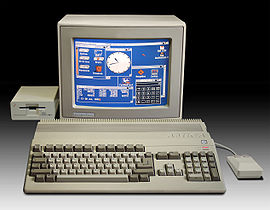 Throughout the life of the ST and Amiga platforms, a ferocious Atari-Commodore rivalry raged. While this rivalry was in many ways a holdover from the days when the Commodore 64 had first challenged the Atari 800 (among others) in a series of scathing television commercials, the events leading to the launch of the ST and Amiga only served to further alienate fans of each computer, who fought vitriolic holy wars on the question of which platform was superior. This was reflected in sales numbers for the two platforms until the release of the Amiga 500
in 1987 which led the Amiga sales to exceed the ST by about 1.5 to 1, despite reaching the market later. However, the battle was in vain, as neither platform captured a significant share of the world computer market and only the Apple Macintosh would survive the industry-wide shift to Microsoft Windows running on PC clones.
By the late 1980s, the personal computer market had become dominated by the IBM PC
and Apple Macintosh platforms. Commodore's marketing efforts for the Amiga were less competitive and seemed half-hearted and unfocused. The company also concentrated on consumer products that would not see a demand for another few years—including a digital TV system called CDTV
. As early as 1986, the mainstream press was predicting Commodore's demise. Nevertheless, The Philadelphia Inquirer's Top 100 Businesses annual continued to list several Commodore executives among the highest-paid in the region.
In the early 1990s, CBM continued selling Amigas with 7–14 MHz 68000
-family CPUs (even though Amiga 3000
with 25 MHz 68030 was in the market by that time), when PCs with 33 MHz 486
s, high-color graphics cards and SoundBlaster (or compatible) sound card
s offered comparable, and eventually higher, performance, albeit at higher prices. By way of contrast, when introduced in 1985, the Amiga had compared favorably against 286
-based systems with EGA
graphics and rudimentary sound capabilities that frequently cost 2–3 times as much.
In 1992, the production of the A600
seemed like a backward move; it replaced the A500
, yet it removed the numeric keypad, Zorro expansion slot, SCSI capability, and other functionality in favor of PCMCIA and a theoretically cost-reduced design. It was basically unexpandable and lasted less than a year. Productivity developers moved to PC and Macintosh, while the console wars took over the gaming market. David Pleasance, managing director of Commodore UK, described the A600 as a 'complete and utter screw-up'. (Smith, 1994)
In late 1992, Amiga hardware began to reach parity with PCs with the release of the A4000
and A1200
computers, which featured an improved graphics chipset, the AGA
. By this point, both the IBM PC and Apple Macintosh had a much larger market share than the Amiga platform. As software developers shifted to these platforms, the Amiga lost value for mainstream consumers. The custom-designed and custom-built AGA chipset also cost Commodore considerably more than the commodity chips used in IBM PCs, further reducing Commodore's profit margins. Common wisdom was that even though the AGA clearly improved upon the original chipset (OCS), it never returned to Amiga the clear dominance of multimedia computing that it once promised.
Software piracy
has often been given by trade publications and user groups as the reason for the Amiga's demise, but this view is controversial. For information on the specific challenges in the Amiga market of the time, see the Amiga Software article.
In 1994, the 'make or break' system, according to Pleasance, was the 32-bit CD-ROM
-based game console: the CD32
, but it was not sufficiently profitable to put Commodore back in the black.
In the early 1990s, all servicing and warranty repairs were outsourced to Wang Laboratories
. By 1994, only its operations in Germany
and the United Kingdom
were still profitable. Commodore declared bankruptcy on April 29, 1994, and its assets were liquidated. The former site of Commodore's operational headquarters in West Chester, Pennsylvania
, now houses the headquarters and broadcast studios of leading cable retailer QVC
, Inc. (On November 26, 2004, QVC became the first retailer to sell the DTV
, a "C64 in a joystick" designed by Jeri Ellsworth
.)
The company's computer systems, especially the C64 and Amiga series, retain a cult-following among their users years after its demise.
Commodore UK was the only subsidiary to survive the bankruptcy and even placed a bid to buy out the rest of the operation, or at least the former parent company. For a time it was considered the front runner in the bid, and numerous reports (all false), surfaced during the 1994–1995 time frame that Commodore UK had made the purchase. Commodore UK stayed in business by selling old inventory and making computer speakers and some other types of computer peripherals. However, Commodore UK lost its financial backing after several larger companies, including Gateway Computers and Dell Inc., became interested, primarily for Commodore's 47 patents relating to the Amiga. Ultimately, the successful bidder was German
PC conglomerate Escom, and Commodore UK was absorbed into Escom in mid-1995.
Escom paid US$14 million for Commodore International, primarily for the Commodore brand name. It separated the Commodore and Amiga operations into separate divisions and quickly started using the brand name on a line of PCs sold in Europe
. However, it soon started losing money due to over-expansion, went bankrupt on July 15, 1996, and was liquidated.
In September 1997, the Commodore brand name was acquired by Dutch computer maker Tulip Computers NV.
The Commodore brand name resurfaced in late 2003 on an inexpensive portable MP3
player made in the People's Republic of China
by Tai Guen Enterprise, sold mostly in Europe
. However, the device's connection to Tulip, the legal owners of the name, is unclear.
In July 2004, Tulip announced a new series of products using the Commodore name: fPET, a flash memory-based USB Flash drive; mPET, a flash-based MP3 Player and digital recorder; eVIC, a 20 GB music player. Also, it licensed the C64 trademark to the producers of the C64 DTV
.
In late 2004, Tulip sold the Commodore name to Yeahronimo Media Ventures for €22 million. The sale was completed in March 2005 after months of negotiations. Yeahronimo Media Ventures soon renamed itself to Commodore International Corporation and started an operation intended to relaunch the Commodore brand. The company launched its Gravel line of products: personal multimedia players equipped with Wi-Fi, with the hope the Commodore brand would help them take off. The Gravel was never a success and was discontinued. On June 24, 2009, CIC renamed itself to Reunite Investments. CIC's founder, Ben van Wijhe, bought a Hong Kong-based company called Asiarim, and Asiarim purchased the Commodore brand from Reunite. Asiarim then changed its name to Commodore Holdings Corporation (presumed to have become effective March 2011).
The Commodore Semiconductor Group (formerly MOS Technology, Inc.) was bought by its former management and in 1995, resumed operations under the name GMT Microelectronics, utilizing a troubled facility in Norristown, Pennsylvania
that Commodore had closed in 1992. By 1999 it had $21 million in revenues and 183 employees. However, in 2001 the United States Environmental Protection Agency
shut the plant down. GMT ceased operations and was liquidated.
Ownership of the Amiga line passed through a few companies, from Escom of Germany in 1995, and then to U.S. PC clone maker Gateway in 1997, before an exclusive lifetime license was made to Amiga, Inc., a Washington company founded by former Gateway employees Bill McEwen and Fleecy Moss in 2000. On March 15, 2004, Amiga, Inc. announced that on April 23, 2003 it had transferred its rights over past and future versions of the Amiga OS (but not over other intellectual property) to Itec, LLC, later acquired by KMOS, Inc., a Delaware company. On March 16, 2005, KMOS, Inc. announced that it had completed all registrations with the State of Delaware to change its corporate name to Amiga, Inc. Several companies produce Amiga hardware and software today.
Commodore Gaming was formed to reintroduce the brand to the booming gaming PC market, after jointly acquiring the Commodore name with Commodore International Corporation in 2005. At the CeBIT 2007 show in Germany, four new gaming geared PCs were introduced, named Cg, Cgs, Cgx and Cxx. These are described as ranging from an entry level gaming PC to an “extreme specification model”. Each x-86 machine has Microsoft Windows
as the default operating system with customization from a range of high end components and peripherals. Production has ceased.
In 2010 Commodore USA
launched as a start-up company that produced a replica of the Commodore 64 which began shipping in June 2011. Commodore USA also plan to bring back a range of high-end home theater PCs and workstations incorporating the Amiga brand in 2011. A Commodore Amiga 500 keyboard computer replica is also said to be in the design stage. Commodore USA machines will run a custom Linux derivative called Commodore OS which is said to feature classic software emulation.
Electronics
Electronics is the branch of science, engineering and technology that deals with electrical circuits involving active electrical components such as vacuum tubes, transistors, diodes and integrated circuits, and associated passive interconnection technologies...
manufacturer headquartered in West Chester, Pennsylvania
West Chester, Pennsylvania
The Borough of West Chester is the county seat of Chester County, Pennsylvania, United States. The population was 18,461 at the 2010 census.Valley Forge, the Brandywine Battlefield, Longwood Gardens, Marsh Creek State Park, and other historical attractions are near West Chester...
, which also housed Commodore's corporate parent company, Commodore International Limited. Commodore played a vital role in the development of the home
Home computer
Home computers were a class of microcomputers entering the market in 1977, and becoming increasingly common during the 1980s. They were marketed to consumers as affordable and accessible computers that, for the first time, were intended for the use of a single nontechnical user...
–personal computer
Personal computer
A personal computer is any general-purpose computer whose size, capabilities, and original sales price make it useful for individuals, and which is intended to be operated directly by an end-user with no intervening computer operator...
industry in the 1980s. Commodore developed and marketed the world's best-selling desktop computer, the Commodore 64
Commodore 64
The Commodore 64 is an 8-bit home computer introduced by Commodore International in January 1982.Volume production started in the spring of 1982, with machines being released on to the market in August at a price of US$595...
(1982). Commodore later released the Amiga
Amiga
The Amiga is a family of personal computers that was sold by Commodore in the 1980s and 1990s. The first model was launched in 1985 as a high-end home computer and became popular for its graphical, audio and multi-tasking abilities...
range of computers in 1985.
The company declared bankruptcy
Bankruptcy
Bankruptcy is a legal status of an insolvent person or an organisation, that is, one that cannot repay the debts owed to creditors. In most jurisdictions bankruptcy is imposed by a court order, often initiated by the debtor....
in April 1994. The company was bought by Escom which also went bankrupt. In 2005, the brand survived after mergers with Yeahronimo Media Ventures Inc., SATXS Communications BV and Tulip Computers.
Founding and early years
Jack Tramiel
Jack Tramiel is an American businessman, best known for founding Commodore International - manufacturer of the Commodore PET, Commodore 64, Commodore 128, Commodore Amiga, and other Commodore models of home computers.-Biography:...
. For a few years he had been living in New York, driving a taxicab and running a small business repairing typewriters, when he managed to sign a deal with a Czechoslovakian company to manufacture their designs in Canada. He moved to Toronto to start production. By the late 1950s a wave of Japanese machines forced most North American typewriter companies to cease business, but Tramiel instead turned to adding machine
Adding machine
An adding machine was a class of mechanical calculator, usually specialized for bookkeeping calculations.In the United States, the earliest adding machines were usually built to read in dollars and cents. Adding machines were ubiquitous office equipment until they were phased out in favor of...
s.
In 1955, the company was formally incorporated as Commodore Business Machines, Inc. (CBM) in Canada. In 1962, Commodore went public at New York stock exchange under the name of Commodore International Limited. In the late 1960s history repeated itself when Japanese firms started producing and exporting adding machines. The company's main investor and chairman, Irving Gould
Irving Gould
Irving Gould was a Canadian businessperson credited with both saving and sinking Commodore. He gave the necessary funding to Jack Tramiel to keep Commodore running during several periods of financial problems...
, suggested that Tramiel travel to Japan to understand how to compete. Instead, he returned with the new idea to produce electronic calculator
Calculator
An electronic calculator is a small, portable, usually inexpensive electronic device used to perform the basic operations of arithmetic. Modern calculators are more portable than most computers, though most PDAs are comparable in size to handheld calculators.The first solid-state electronic...
s, which were just coming on the market.
Commodore soon had a profitable calculator line and was one of the more popular brands in the early 1970s, producing both consumer as well as scientific/programmable calculators. However, in 1975, Texas Instruments
Texas Instruments
Texas Instruments Inc. , widely known as TI, is an American company based in Dallas, Texas, United States, which develops and commercializes semiconductor and computer technology...
, the main supplier of calculator parts, entered the market directly and put out a line of machines priced at less than Commodore's cost for the parts. Commodore had to be rescued once again by an infusion of cash from Gould, which Tramiel used beginning in 1976 to purchase several second-source chip suppliers, including MOS Technology, Inc.
MOS Technology
MOS Technology, Inc., also known as CSG , was a semiconductor design and fabrication company based in Norristown, Pennsylvania, in the United States. It is most famous for its 6502 microprocessor, and various designs for Commodore International's range of home computers.-History:MOS Technology, Inc...
, in order to assure his supply. He agreed to buy MOS, which was having troubles of its own, only on the condition that its chip designer Chuck Peddle
Chuck Peddle
Charles Ingerham Peddle is an American electrical engineer best known as the main designer of the MOS Technology 6502 microprocessor; the KIM-1 SBC; and its successor the Commodore PET personal computer, both based on the 6502....
join Commodore directly as head of engineering.
In December 2007 when Tramiel was visiting the Computer History Museum
Computer History Museum
The Computer History Museum is a museum established in 1996 in Mountain View, California, USA. The Museum is dedicated to preserving and presenting the stories and artifacts of the information age, and exploring the computing revolution and its impact on our lives.-History:The museum's origins...
in Mountain View, California
Mountain View, California
-Downtown:Mountain View has a pedestrian-friendly downtown centered on Castro Street. The downtown area consists of the seven blocks of Castro Street from the Downtown Mountain View Station transit center in the north to the intersection with El Camino Real in the south...
, for the 25th anniversary of the Commodore 64, he was asked why he called his company Commodore. He said: "I wanted to call my company General, but there's so many Generals in the U.S.: General Electric
General Electric
General Electric Company , or GE, is an American multinational conglomerate corporation incorporated in Schenectady, New York and headquartered in Fairfield, Connecticut, United States...
, General Motors
General Motors
General Motors Company , commonly known as GM, formerly incorporated as General Motors Corporation, is an American multinational automotive corporation headquartered in Detroit, Michigan and the world's second-largest automaker in 2010...
. Then I went to Admiral, but that was taken. So I wind up in Berlin, Germany, with my wife, and we were in a cab, and the cab made a short stop, and in front of us was an Opel Commodore
Opel Commodore
The Opel Commodore is an executive car produced by Opel. It is the six-cylinder variant of the Rekord with styling differences. The Commodore nameplate was used by Opel from 1967 to 1982. However, its lineage continues with the Australian Holden Commodore...
." Tramiel gave this account in many interviews, but Opel's Commodore didn't debut until 1967, years after the company had been named.
"Computers for the masses, not the classes"
Home computer
Home computers were a class of microcomputers entering the market in 1977, and becoming increasingly common during the 1980s. They were marketed to consumers as affordable and accessible computers that, for the first time, were intended for the use of a single nontechnical user...
s. Peddle packaged his single-board computer
Single-board computer
A single-board computer is a complete computer built on a single circuit board, with microprocessor, memory, input/output and other features required of a functional computer. Unlike a typical personal computer, an SBC may not include slots into which accessory cards may be plugged...
design in a metal case, along with a full-travel QWERTY
QWERTY
QWERTY is the most common modern-day keyboard layout. The name comes from the first six letters appearing in the topleft letter row of the keyboard, read left to right: Q-W-E-R-T-Y. The QWERTY design is based on a layout created for the Sholes and Glidden typewriter and sold to Remington in the...
keyboard, monochrome
Monochrome
Monochrome describes paintings, drawings, design, or photographs in one color or shades of one color. A monochromatic object or image has colors in shades of limited colors or hues. Images using only shades of grey are called grayscale or black-and-white...
monitor, and tape recorder
Datassette
The Commodore 1530 Datasette , was Commodore's dedicated computer tape drive.It provided access to an inexpensive storage medium for Commodore's 8-bit home/personal computers, notably the PET, VIC-20, and C64...
for program and data storage, to produce the Commodore PET
Commodore PET
The Commodore PET was a home/personal computer produced from 1977 by Commodore International...
(Personal Electronic Transactor). From PET's 1977 debut, Commodore would be a computer company.
Commodore had been reorganized the year before into Commodore International, Ltd., moving its financial headquarters to the Bahamas and its operational headquarters to West Chester, Pennsylvania
West Chester, Pennsylvania
The Borough of West Chester is the county seat of Chester County, Pennsylvania, United States. The population was 18,461 at the 2010 census.Valley Forge, the Brandywine Battlefield, Longwood Gardens, Marsh Creek State Park, and other historical attractions are near West Chester...
, near to the MOS Technology site. The operational headquarters, where research and development of new products occurred, retained the name Commodore Business Machines, Inc.
The PET computer line was used primarily in schools, due to its tough all-metal construction (some models were labeled "Teacher's PET"), but did not compete well in the home setting where graphics and sound were important. This was addressed with the introduction of the VIC-20
Commodore VIC-20
The VIC-20 is an 8-bit home computer which was sold by Commodore Business Machines. The VIC-20 was announced in 1980, roughly three years after Commodore's first personal computer, the PET...
in 1981, which was introduced at a cost of US$299 and sold in retail stores. Commodore took out aggressive ads featuring William Shatner
William Shatner
William Alan Shatner is a Canadian actor, musician, recording artist, and author. He gained worldwide fame and became a cultural icon for his portrayal of James T...
asking consumers "Why buy just a video game?" The strategy worked and the VIC-20 became the first computer to ship more than one million units. A total of 2.5 million units were sold over the machine's lifetime.
In 1982, Commodore introduced the Commodore 64
Commodore 64
The Commodore 64 is an 8-bit home computer introduced by Commodore International in January 1982.Volume production started in the spring of 1982, with machines being released on to the market in August at a price of US$595...
as the successor to the VIC-20. Thanks to a well-designed set of chips
Integrated circuit
An integrated circuit or monolithic integrated circuit is an electronic circuit manufactured by the patterned diffusion of trace elements into the surface of a thin substrate of semiconductor material...
designed by MOS Technology, the Commodore 64, (also referred to as C64), possessed remarkable sound and graphics for its time and is often credited with starting the computer demo scene. Its US$595 price was high compared with that of the VIC-20, but it was still much less expensive than any other 64K computer on the market. Early C64 ads boasted, "You can't buy a better computer at twice the price."
Australian ads used a tune speaking the words "Are you keeping up with the commodore? Because the commodore is keeping up with you. "
In 1983, Tramiel decided to focus on market share and cut the price of the VIC-20 and C64 dramatically, starting what would be called the "home computer war." TI responded by cutting prices on its TI-99/4A
Texas Instruments TI-99/4A
The Texas Instruments TI-99/4A was an early home computer, released in June 1981, originally at a price of USD $525. It was an enhanced version of the less-successful—and quite rare—TI-99/4 model, which was released in late 1979 at a price of $1,150...
, which had been introduced in 1981. Soon there was an all-out price war involving Commodore, TI, Atari
Atari
Atari is a corporate and brand name owned by several entities since its inception in 1972. It is currently owned by Atari Interactive, a wholly owned subsidiary of the French publisher Atari, SA . The original Atari, Inc. was founded in 1972 by Nolan Bushnell and Ted Dabney. It was a pioneer in...
and practically every vendor other than Apple Computer
Apple Computer
Apple Inc. is an American multinational corporation that designs and markets consumer electronics, computer software, and personal computers. The company's best-known hardware products include the Macintosh line of computers, the iPod, the iPhone and the iPad...
. By the end of this conflict, Commodore had shipped somewhere around 22 million C64s—making the C64 the best selling computer of all time.
Tramiel quits; The Amiga vs. ST battle
Now it was left to the remaining Commodore management to salvage the company's fortunes and plan for the future. It did so by buying a small startup company called Amiga Corporation
Amiga Corporation
Amiga Corporation was a United States computer company formed in the early 1980s as Hi-Toro. It is most famous for having developed the Amiga computer, code named Lorraine.-History:...
in August 1984, for $25 million ($12.8 million in cash & 550,000 in common shares) which became a subsidiary of Commodore, called Commodore-Amiga, Inc. Commodore brought this new 32-bit
32-bit
The range of integer values that can be stored in 32 bits is 0 through 4,294,967,295. Hence, a processor with 32-bit memory addresses can directly access 4 GB of byte-addressable memory....
computer design (initially codenamed "Lorraine", later dubbed the Amiga 1000
Amiga 1000
The A1000, or Commodore Amiga 1000, was Commodore's initial Amiga personal computer, introduced on July 23, 1985 at the Lincoln Center in New York City....
) to market in the fall of 1985 for US $1295.
But Tramiel had beaten Commodore to the punch. His design was 95% completed by June (which fueled speculation that his engineers had taken technology with them from Commodore). In July 1984 he bought the consumer side of Atari Inc. from Warner Communications
Time Warner
Time Warner is one of the world's largest media companies, headquartered in the Time Warner Center in New York City. Formerly two separate companies, Warner Communications, Inc...
which allowed him to strike back and release the Atari ST
Atari ST
The Atari ST is a home/personal computer that was released by Atari Corporation in 1985 and commercially available from that summer into the early 1990s. The "ST" officially stands for "Sixteen/Thirty-two", which referred to the Motorola 68000's 16-bit external bus and 32-bit internals...
earlier in 1985 for about $800.
During development in 1983, Amiga had exhausted venture capital and was desperate for more financing. Jay Miner
Jay Miner
Jay Glenn Miner , was a famous integrated circuit designer, known primarily for his work in multimedia chips and as the "father of the Amiga"...
and company had approached former employer Atari
Atari
Atari is a corporate and brand name owned by several entities since its inception in 1972. It is currently owned by Atari Interactive, a wholly owned subsidiary of the French publisher Atari, SA . The original Atari, Inc. was founded in 1972 by Nolan Bushnell and Ted Dabney. It was a pioneer in...
, and the "Warner owned" Atari had paid Amiga to continue development work. In return Atari was to get one-year exclusive use of the design as a video game console. After one year Atari would have the right to add a keyboard and market the complete Amiga computer. The Atari Museum has acquired the Atari-Amiga contract and Atari engineering logs revealing that the Atari Amiga was originally designated as the 1850XLD. As Atari was heavily involved with Disney at the time, it was later code-named "Mickey", and the 256K memory expansion board was codenamed "Minnie".
The following year, Tramiel discovered that Warner Communications
Warner Communications
Warner Communications or Warner Communications, Inc. was established in 1971 when Kinney National Company spun off its non-entertainment assets, due to a financial scandal over its parking operations and changed its name....
wanted to sell Atari, which was rumored to be losing about $10,000 a day. Interested in Atari's overseas manufacturing and worldwide distribution network for his new computer, he approached Atari and entered negotiations. After several on-again/off-again talks with Atari in May and June 1984, Tramiel had secured his funding and bought Atari's Consumer Division (which included the console and home computer departments) in July.
As more execs and researchers left Commodore after the announcement to join up with Tramiel's new company Atari Corp., Commodore followed by filing lawsuits against four former engineers for theft of trade secrets in late July. This was intended, in effect, to bar Tramiel from releasing his new computer.
One of Tramiel's first acts after forming Atari Corp. was to fire most of Atari's remaining staff, and to cancel almost all ongoing projects, in order to review their continued viability. In late July/early August, Tramiel representatives discovered the original Amiga contract from the previous fall. Seeing a chance to gain some leverage, Tramiel immediately used the contract to counter-sue Commodore through its new subsidiary, Amiga, on August 13.
The Amiga crew, still suffering serious financial problems, had sought more monetary support from investors that entire spring. At around the same time that Tramiel was in negotiations with Atari, Amiga entered into discussions with Commodore. The discussions ultimately led to Commodore's intentions to purchase Amiga outright, which would (from Commodore's viewpoint) cancel any outstanding contracts - including Atari Inc.'s. This "interpretation" is what Tramiel used to counter-sue, and sought damages and an injunction to bar Amiga (and effectively Commodore) from producing any resembling technology. This was an attempt to render Commodore's new acquisition (and the source for its next generation of computers) useless. The resulting court case lasted for several years, with both companies releasing their respective products. By March 1987 they had settled out of court, with all suits against Tramiel's engineers dropped. His "Business is War" tactics had succeeded again.
Amiga 500
The Amiga 500 - also known as the A500 - was the first “low-end” Commodore Amiga 16/32-bit multimedia home/personal computer. It was announced at the winter Consumer Electronics Show in January 1987 - at the same time as the high-end Amiga 2000 - and competed directly against the Atari 520ST...
in 1987 which led the Amiga sales to exceed the ST by about 1.5 to 1, despite reaching the market later. However, the battle was in vain, as neither platform captured a significant share of the world computer market and only the Apple Macintosh would survive the industry-wide shift to Microsoft Windows running on PC clones.
Demise and bankruptcy
In the 1970s and early 1980s, the computer press had often sought Commodore, one of the industry's leading players, and its colorful management for information, despite the company's notorious reputation. One columnist stated in April 1981 that "the microcomputer industry abounds with horror stories describing the way Commodore treats its dealers and its customers." The VIC-20 and C64, although aggressively marketed, were arguably more successful because of their price than their marketing. After Tramiel's departure, Commodore executives shied away from mass advertising and other marketing ploys, fearful of repeating past mistakes. Commodore also retreated from its earlier strategy of selling its computers to discount outlets and toy stores, and now favored authorized dealers.By the late 1980s, the personal computer market had become dominated by the IBM PC
IBM PC
The IBM Personal Computer, commonly known as the IBM PC, is the original version and progenitor of the IBM PC compatible hardware platform. It is IBM model number 5150, and was introduced on August 12, 1981...
and Apple Macintosh platforms. Commodore's marketing efforts for the Amiga were less competitive and seemed half-hearted and unfocused. The company also concentrated on consumer products that would not see a demand for another few years—including a digital TV system called CDTV
CDTV
The CDTV was a multimedia platform developed by Commodore International and launched in 1991. On a technological level it was essentially a Commodore Amiga 500 home computer in a Hi-Fi style case with a single-speed CD-ROM drive. Commodore marketed the machine as an all-in-one home multimedia...
. As early as 1986, the mainstream press was predicting Commodore's demise. Nevertheless, The Philadelphia Inquirer's Top 100 Businesses annual continued to list several Commodore executives among the highest-paid in the region.
In the early 1990s, CBM continued selling Amigas with 7–14 MHz 68000
Motorola 68000
The Motorola 68000 is a 16/32-bit CISC microprocessor core designed and marketed by Freescale Semiconductor...
-family CPUs (even though Amiga 3000
Amiga 3000
The Commodore Amiga 3000, or A3000, was the third major release in the Amiga computer family. Released in June 1990, it features improved processing speed, improved rendering of graphics, and a new revision of the operating system...
with 25 MHz 68030 was in the market by that time), when PCs with 33 MHz 486
Intel 80486
The Intel 80486 microprocessor was a higher performance follow up on the Intel 80386. Introduced in 1989, it was the first tightly pipelined x86 design as well as the first x86 chip to use more than a million transistors, due to a large on-chip cache and an integrated floating point unit...
s, high-color graphics cards and SoundBlaster (or compatible) sound card
Sound card
A sound card is an internal computer expansion card that facilitates the input and output of audio signals to and from a computer under control of computer programs. The term sound card is also applied to external audio interfaces that use software to generate sound, as opposed to using hardware...
s offered comparable, and eventually higher, performance, albeit at higher prices. By way of contrast, when introduced in 1985, the Amiga had compared favorably against 286
Intel 80286
The Intel 80286 , introduced on 1 February 1982, was a 16-bit x86 microprocessor with 134,000 transistors. Like its contemporary simpler cousin, the 80186, it could correctly execute most software written for the earlier Intel 8086 and 8088...
-based systems with EGA
Enhanced Graphics Adapter
The Enhanced Graphics Adapter is the IBM PC computer display standard specification which is between CGA and VGA in terms of color and space resolution. Introduced in October 1984 by IBM shortly after its new PC/AT, EGA produces a display of 16 simultaneous colors from a palette of 64 at a...
graphics and rudimentary sound capabilities that frequently cost 2–3 times as much.
In 1992, the production of the A600
Amiga 600
The Amiga 600, also known as the A600 , is a home computer that was introduced at the CeBIT show in March 1992. The A600 was Commodore International's final model based on the Motorola 68000 CPU and the ECS chipset. It is essentially a redesign of the Amiga 500 Plus, with the option of an internal...
seemed like a backward move; it replaced the A500
Amiga 500
The Amiga 500 - also known as the A500 - was the first “low-end” Commodore Amiga 16/32-bit multimedia home/personal computer. It was announced at the winter Consumer Electronics Show in January 1987 - at the same time as the high-end Amiga 2000 - and competed directly against the Atari 520ST...
, yet it removed the numeric keypad, Zorro expansion slot, SCSI capability, and other functionality in favor of PCMCIA and a theoretically cost-reduced design. It was basically unexpandable and lasted less than a year. Productivity developers moved to PC and Macintosh, while the console wars took over the gaming market. David Pleasance, managing director of Commodore UK, described the A600 as a 'complete and utter screw-up'. (Smith, 1994)
In late 1992, Amiga hardware began to reach parity with PCs with the release of the A4000
Amiga 4000
The Commodore Amiga 4000, or A4000, is the successor of the A2000 and A3000 computers. There are two models, the A4000/040 released in October 1992 with a Motorola 68040 CPU, and the A4000/030 released in April 1993 with a Motorola 68EC030....
and A1200
Amiga 1200
The Amiga 1200, or A1200 , was Commodore International's third-generation Amiga computer, aimed at the home market...
computers, which featured an improved graphics chipset, the AGA
Advanced Graphics Architecture
Advanced Graphics Architecture is the third generation Amiga graphic chip set, first used in the Amiga 4000 in 1992. AGA was codenamed the Pandora chipset by Commodore International internally....
. By this point, both the IBM PC and Apple Macintosh had a much larger market share than the Amiga platform. As software developers shifted to these platforms, the Amiga lost value for mainstream consumers. The custom-designed and custom-built AGA chipset also cost Commodore considerably more than the commodity chips used in IBM PCs, further reducing Commodore's profit margins. Common wisdom was that even though the AGA clearly improved upon the original chipset (OCS), it never returned to Amiga the clear dominance of multimedia computing that it once promised.
Software piracy
Copyright infringement of software
Copyright infringement of software=The copyright infringement of software refers to several practices which involve the unauthorized copying of computer software. Copyright infringement of this kind varies globally...
has often been given by trade publications and user groups as the reason for the Amiga's demise, but this view is controversial. For information on the specific challenges in the Amiga market of the time, see the Amiga Software article.
In 1994, the 'make or break' system, according to Pleasance, was the 32-bit CD-ROM
CD-ROM
A CD-ROM is a pre-pressed compact disc that contains data accessible to, but not writable by, a computer for data storage and music playback. The 1985 “Yellow Book” standard developed by Sony and Philips adapted the format to hold any form of binary data....
-based game console: the CD32
Amiga CD32
The Amiga CD32, styled "CD32" , was the first 32-bit CD-ROM based video game console released in western Europe, Australia, Canada and Brazil. It was first announced at the Science Museum in London, United Kingdom on 16 July 1993, and was released in September of the same year...
, but it was not sufficiently profitable to put Commodore back in the black.
In the early 1990s, all servicing and warranty repairs were outsourced to Wang Laboratories
Wang Laboratories
Wang Laboratories was a computer company founded in 1951 by Dr. An Wang and Dr. G. Y. Chu. The company was successively headquartered in Cambridge , Tewksbury , and finally in Lowell, Massachusetts . At its peak in the 1980s, Wang Laboratories had annual revenues of $3 billion and employed over...
. By 1994, only its operations in Germany
Germany
Germany , officially the Federal Republic of Germany , is a federal parliamentary republic in Europe. The country consists of 16 states while the capital and largest city is Berlin. Germany covers an area of 357,021 km2 and has a largely temperate seasonal climate...
and the United Kingdom
United Kingdom
The United Kingdom of Great Britain and Northern IrelandIn the United Kingdom and Dependencies, other languages have been officially recognised as legitimate autochthonous languages under the European Charter for Regional or Minority Languages...
were still profitable. Commodore declared bankruptcy on April 29, 1994, and its assets were liquidated. The former site of Commodore's operational headquarters in West Chester, Pennsylvania
West Chester, Pennsylvania
The Borough of West Chester is the county seat of Chester County, Pennsylvania, United States. The population was 18,461 at the 2010 census.Valley Forge, the Brandywine Battlefield, Longwood Gardens, Marsh Creek State Park, and other historical attractions are near West Chester...
, now houses the headquarters and broadcast studios of leading cable retailer QVC
QVC
QVC is a multinational corporation specializing in televised home shopping. Founded in 1986 by Joseph Segel in West Goshen Township, Pennsylvania, United States, QVC broadcasts in five countries as QVC US, QVC UK, QVC Germany, QVC Japan and – QVC Italy to 200 million households...
, Inc. (On November 26, 2004, QVC became the first retailer to sell the DTV
C64 Direct-to-TV
The C64 Direct-to-TV, called C64DTV for short, is a single-chip implementation of the Commodore 64 computer, contained in a joystick with 30 built-in games. The design is similar to the Atari Classics 10-in-1 TV Game...
, a "C64 in a joystick" designed by Jeri Ellsworth
Jeri Ellsworth
Jeri Ellsworth is an American entrepreneur and self-taught computer chip designer. She is best known for creating a Commodore 64 emulator within a joystick, in 2004, called Commodore 30-in-1 Direct to TV...
.)
The company's computer systems, especially the C64 and Amiga series, retain a cult-following among their users years after its demise.
Post-Commodore International, Ltd.
Following its liquidation, Commodore's former assets went their separate ways, with none of the descendant companies repeating Commodore's early success.Commodore UK was the only subsidiary to survive the bankruptcy and even placed a bid to buy out the rest of the operation, or at least the former parent company. For a time it was considered the front runner in the bid, and numerous reports (all false), surfaced during the 1994–1995 time frame that Commodore UK had made the purchase. Commodore UK stayed in business by selling old inventory and making computer speakers and some other types of computer peripherals. However, Commodore UK lost its financial backing after several larger companies, including Gateway Computers and Dell Inc., became interested, primarily for Commodore's 47 patents relating to the Amiga. Ultimately, the successful bidder was German
Germany
Germany , officially the Federal Republic of Germany , is a federal parliamentary republic in Europe. The country consists of 16 states while the capital and largest city is Berlin. Germany covers an area of 357,021 km2 and has a largely temperate seasonal climate...
PC conglomerate Escom, and Commodore UK was absorbed into Escom in mid-1995.
Escom paid US$14 million for Commodore International, primarily for the Commodore brand name. It separated the Commodore and Amiga operations into separate divisions and quickly started using the brand name on a line of PCs sold in Europe
Europe
Europe is, by convention, one of the world's seven continents. Comprising the westernmost peninsula of Eurasia, Europe is generally 'divided' from Asia to its east by the watershed divides of the Ural and Caucasus Mountains, the Ural River, the Caspian and Black Seas, and the waterways connecting...
. However, it soon started losing money due to over-expansion, went bankrupt on July 15, 1996, and was liquidated.
In September 1997, the Commodore brand name was acquired by Dutch computer maker Tulip Computers NV.
The Commodore brand name resurfaced in late 2003 on an inexpensive portable MP3
MP3
MPEG-1 or MPEG-2 Audio Layer III, more commonly referred to as MP3, is a patented digital audio encoding format using a form of lossy data compression...
player made in the People's Republic of China
People's Republic of China
China , officially the People's Republic of China , is the most populous country in the world, with over 1.3 billion citizens. Located in East Asia, the country covers approximately 9.6 million square kilometres...
by Tai Guen Enterprise, sold mostly in Europe
Europe
Europe is, by convention, one of the world's seven continents. Comprising the westernmost peninsula of Eurasia, Europe is generally 'divided' from Asia to its east by the watershed divides of the Ural and Caucasus Mountains, the Ural River, the Caspian and Black Seas, and the waterways connecting...
. However, the device's connection to Tulip, the legal owners of the name, is unclear.
In July 2004, Tulip announced a new series of products using the Commodore name: fPET, a flash memory-based USB Flash drive; mPET, a flash-based MP3 Player and digital recorder; eVIC, a 20 GB music player. Also, it licensed the C64 trademark to the producers of the C64 DTV
C64 Direct-to-TV
The C64 Direct-to-TV, called C64DTV for short, is a single-chip implementation of the Commodore 64 computer, contained in a joystick with 30 built-in games. The design is similar to the Atari Classics 10-in-1 TV Game...
.
In late 2004, Tulip sold the Commodore name to Yeahronimo Media Ventures for €22 million. The sale was completed in March 2005 after months of negotiations. Yeahronimo Media Ventures soon renamed itself to Commodore International Corporation and started an operation intended to relaunch the Commodore brand. The company launched its Gravel line of products: personal multimedia players equipped with Wi-Fi, with the hope the Commodore brand would help them take off. The Gravel was never a success and was discontinued. On June 24, 2009, CIC renamed itself to Reunite Investments. CIC's founder, Ben van Wijhe, bought a Hong Kong-based company called Asiarim, and Asiarim purchased the Commodore brand from Reunite. Asiarim then changed its name to Commodore Holdings Corporation (presumed to have become effective March 2011).
The Commodore Semiconductor Group (formerly MOS Technology, Inc.) was bought by its former management and in 1995, resumed operations under the name GMT Microelectronics, utilizing a troubled facility in Norristown, Pennsylvania
Norristown, Pennsylvania
Norristown is a municipality in Montgomery County, Pennsylvania, northwest of the city limits of Philadelphia, on the Schuylkill River. The population was 34,324 as of the 2010 census. It is the county seat of Montgomery County...
that Commodore had closed in 1992. By 1999 it had $21 million in revenues and 183 employees. However, in 2001 the United States Environmental Protection Agency
United States Environmental Protection Agency
The U.S. Environmental Protection Agency is an agency of the federal government of the United States charged with protecting human health and the environment, by writing and enforcing regulations based on laws passed by Congress...
shut the plant down. GMT ceased operations and was liquidated.
Ownership of the Amiga line passed through a few companies, from Escom of Germany in 1995, and then to U.S. PC clone maker Gateway in 1997, before an exclusive lifetime license was made to Amiga, Inc., a Washington company founded by former Gateway employees Bill McEwen and Fleecy Moss in 2000. On March 15, 2004, Amiga, Inc. announced that on April 23, 2003 it had transferred its rights over past and future versions of the Amiga OS (but not over other intellectual property) to Itec, LLC, later acquired by KMOS, Inc., a Delaware company. On March 16, 2005, KMOS, Inc. announced that it had completed all registrations with the State of Delaware to change its corporate name to Amiga, Inc. Several companies produce Amiga hardware and software today.
Commodore Gaming was formed to reintroduce the brand to the booming gaming PC market, after jointly acquiring the Commodore name with Commodore International Corporation in 2005. At the CeBIT 2007 show in Germany, four new gaming geared PCs were introduced, named Cg, Cgs, Cgx and Cxx. These are described as ranging from an entry level gaming PC to an “extreme specification model”. Each x-86 machine has Microsoft Windows
Microsoft Windows
Microsoft Windows is a series of operating systems produced by Microsoft.Microsoft introduced an operating environment named Windows on November 20, 1985 as an add-on to MS-DOS in response to the growing interest in graphical user interfaces . Microsoft Windows came to dominate the world's personal...
as the default operating system with customization from a range of high end components and peripherals. Production has ceased.
In 2010 Commodore USA
Commodore USA
Commodore USA, LLC is a computer company based in Pompano Beach, Florida, with additional facilities in Fort Lauderdale, Florida. Commodore USA, LLC was founded in April 2010...
launched as a start-up company that produced a replica of the Commodore 64 which began shipping in June 2011. Commodore USA also plan to bring back a range of high-end home theater PCs and workstations incorporating the Amiga brand in 2011. A Commodore Amiga 500 keyboard computer replica is also said to be in the design stage. Commodore USA machines will run a custom Linux derivative called Commodore OS which is said to feature classic software emulation.
Calculators
774D, 9R23, C110, F4146R, MM3, M55, P50, PR100, SR1800, SR4120D, SR4120R, SR4148D, SR4148R, SR4190R, SR4212, SR4912, SR4921RPN, SR5120D, SR5120R, SR5148D, SR5148R, SR5190R, SR59, SR7919, SR7949, SR9150R, SR9190R, US*3, S61(The Statistician).Computers
(listed chronologically)- Commodore KIM-1KIM-1The KIM-1, short for Keyboard Input Monitor, was a small 6502-based single-board computer developed and produced by MOS Technology, Inc. and launched in 1976...
- single board computer - Commodore PET/CBMCommodore PETThe Commodore PET was a home/personal computer produced from 1977 by Commodore International...
range - Commodore VIC-20Commodore VIC-20The VIC-20 is an 8-bit home computer which was sold by Commodore Business Machines. The VIC-20 was announced in 1980, roughly three years after Commodore's first personal computer, the PET...
- aka VC-20 and VIC-1001 - Commodore CBM-IICommodore CBM-IIThe Commodore CBM-II series was a short-lived range of 8-bit personal computers from Commodore Business Machines , intended as a follow-on to the Commodore PET series, released in 1982.-Technical description:...
range - aka B-range aka 600/700 range - Commodore MAX MachineCommodore MAX MachineThe Commodore MAX Machine, also known as Ultimax in the United States and VC-10 in Germany, was a home computer designed and sold by Commodore International in Japan, beginning in early 1982, a predecessor to the popular Commodore 64...
- Predecessor to C64 - Commodore 64Commodore 64The Commodore 64 is an 8-bit home computer introduced by Commodore International in January 1982.Volume production started in the spring of 1982, with machines being released on to the market in August at a price of US$595...
- including C64C - Commodore Educator 64Commodore Educator 64The Educator 64, also known as the PET 64 and Model 4064,' was a microcomputer made by Commodore Business Machines in 1983. It was sold to schools as a replacement for aging Commodore PET systems...
- 64 in a PET 40xx case - Commodore SX-64Commodore SX-64The Commodore SX-64, also known as the Executive 64, or VIP-64 in Europe, is a portable, briefcase/suitcase-size "luggable" version of the popular Commodore 64 home computer and holds the distinction of being the first full-color portable computer....
- all-in-one portablePortable computerA portable computer is a computer that is designed to be moved from one place to another and includes a display and keyboard. Portable computers, by their nature, are generally microcomputers. Portable computers, because of their size, are also commonly known as 'Lunchbox' or 'Luggable' computers...
C64 including screen and disk drive - Commodore 16Commodore 16The Commodore 16 was a home computer made by Commodore with a 6502-compatible 8501 CPU, released in 1984. It was intended to be an entry-level computer to replace the VIC-20 and it often sold for 99 USD...
- including C116, incompatible with C64 - Commodore Plus/4Commodore Plus/4The Commodore Plus/4 was a home computer released by Commodore International in 1984. The "Plus/4" name refers to the four-application ROM resident office suite ; it was billed as "the productivity computer with software built-in"...
- compatible with C16 - Commodore LCDCommodore LCDThe Commodore LCD was an LCD-equipped laptop made by Commodore International. It was presented at the January 1985 Consumer Electronics Show, but never released...
- LCDLiquid crystal displayA liquid crystal display is a flat panel display, electronic visual display, or video display that uses the light modulating properties of liquid crystals . LCs do not emit light directly....
-equipped laptop (never released) - Commodore 128Commodore 128The Commodore 128 home/personal computer was the last 8-bit machine commercially released by Commodore Business Machines...
- including 128D and 128DCR - Commodore 65Commodore 65The Commodore 65 was a prototype computer created by Fred Bowen and others at Commodore Business Machines in 1990–91...
- C64 successor (never released) - Commodore 900Commodore 900The Commodore 900 was a prototype microcomputer intended for business computing and CAD purposes, and created by German Division of Commodore in 1985. The project was cancelled when Commodore bought Amiga. All of the prototypes were sold as scrap to 3rd party distributors...
(never released) - Commodore Amiga range
- Amiga 1000Amiga 1000The A1000, or Commodore Amiga 1000, was Commodore's initial Amiga personal computer, introduced on July 23, 1985 at the Lincoln Center in New York City....
- Amiga 500Amiga 500The Amiga 500 - also known as the A500 - was the first “low-end” Commodore Amiga 16/32-bit multimedia home/personal computer. It was announced at the winter Consumer Electronics Show in January 1987 - at the same time as the high-end Amiga 2000 - and competed directly against the Atari 520ST...
- incl A500+ - Amiga 1500Amiga 1500The Commodore Amiga 1500, also known as the A1500, was a 16/32-bit home/personal computer released in 1990. It originally sold for £999. It was a variation of the Amiga 2000, and was released only in the United Kingdom. It differed from the A2000 by having two internal floppy drives instead of one,...
- Amiga 2000Amiga 2000The Amiga 2000, or A2000, is a personal computer released by Commodore in 1986. It is the successor to the Amiga 1000.-Features:Aimed at the high-end market, the original Europe-only model adds a Zorro II backplane, implemented in programmable logic, to the custom Amiga chipset used in the Amiga 1000...
- incl A2000HD - Amiga 2500Amiga 2500The Amiga 2500, also known as the A2500, was not a distinct Amiga model, but simply a marketing name for a Commodore Amiga 2000 bundled with a Motorola 68020 or 68030-based accelerator card. The accelerator cards used by the A2500 were also available separately as upgrades for the A2000...
- Amiga 3000Amiga 3000The Commodore Amiga 3000, or A3000, was the third major release in the Amiga computer family. Released in June 1990, it features improved processing speed, improved rendering of graphics, and a new revision of the operating system...
- incl A3000UX & A3000T - Commodore CDTV
- Amiga 600Amiga 600The Amiga 600, also known as the A600 , is a home computer that was introduced at the CeBIT show in March 1992. The A600 was Commodore International's final model based on the Motorola 68000 CPU and the ECS chipset. It is essentially a redesign of the Amiga 500 Plus, with the option of an internal...
- Amiga 1200Amiga 1200The Amiga 1200, or A1200 , was Commodore International's third-generation Amiga computer, aimed at the home market...
- Amiga 4000Amiga 4000The Commodore Amiga 4000, or A4000, is the successor of the A2000 and A3000 computers. There are two models, the A4000/040 released in October 1992 with a Motorola 68040 CPU, and the A4000/030 released in April 1993 with a Motorola 68EC030....
- incl A4000T
- Amiga 1000
- Commodore PC compatible systemsCommodore PC compatible systemsThe Commodore PC compatible systems were a range of IBM PC compatible personal computers introduced in 1984 by home computer manufacturer Commodore Business Machines. Incompatible with Commodore's prior PET and Commodore 64 series, they were generally regarded as good, serviceable workhorse PCs...
- Commodore Colt, PC1, PC10, PC20, PC30, PC40, ..., 486SX-LTC
Games Consoles
- Commodore TV Game 2000K/3000H
- Commodore 64 Games SystemCommodore 64 Games SystemThe Commodore 64 Games System was the cartridge-based game console version of the popular Commodore 64 home computer. It was released by Commodore in December 1990 as a competitor in the booming console market...
- Amiga CD32Amiga CD32The Amiga CD32, styled "CD32" , was the first 32-bit CD-ROM based video game console released in western Europe, Australia, Canada and Brazil. It was first announced at the Science Museum in London, United Kingdom on 16 July 1993, and was released in September of the same year...
Software
- AmigaOSAmigaOSAmigaOS is the default native operating system of the Amiga personal computer. It was developed first by Commodore International, and initially introduced in 1985 with the Amiga 1000...
- Operating system for the Amiga range; multitasking, microkernel, GUI - Amiga UnixAmiga UnixCommodore-Amiga, Inc., in 1990, did a full port of AT&T Unix System V Release 4 for the Amiga computer family , informally known as Amix. Bundled with the Amiga 3000UX, Commodore's Unix was one of the first ports of SVR4 to the 68k architecture...
- Operating system for the Amiga, based on Unix System V Release 4UNIX System VUnix System V, commonly abbreviated SysV , is one of the first commercial versions of the Unix operating system. It was originally developed by American Telephone & Telegraph and first released in 1983. Four major versions of System V were released, termed Releases 1, 2, 3 and 4... - Commodore BASICCommodore BASICCommodore BASIC, also known as PET BASIC, is the dialect of the BASIC programming language used in Commodore International's 8-bit home computer line, stretching from the PET of 1977 to the C128 of 1985...
- BASIC interpreter for the 8-bit range, ROM resident; based on Microsoft BASICMicrosoft BASICMicrosoft BASIC was the foundation product of the Microsoft company. It first appeared in 1975 as Altair BASIC, which was the first BASIC, and the first high level programming language available for the MITS Altair 8800 hobbyist microcomputer.... - Commodore DOSCommodore DOSCommodore DOS, aka CBM DOS, was the disk operating system used with Commodore's 8-bit computers. Unlike most other DOS systems before or since—which are booted from disk into the main computer's own RAM at startup, and executed there—CBM DOS was executed internally in the drive: the DOS...
- Disk operating system for the 8-bit range; embedded in disk drive ROMs - KERNALKERNALThe KERNAL is Commodore's name for the ROM-resident operating system core in its 8-bit home computers; from the original PET of 1977, followed by the extended but strongly related versions used in its successors; the VIC-20, Commodore 64, Plus/4, C16, and C128...
- Core OS routines for the 8-bit range; ROM resident - Simons' BASICSimons' BASICSimons' BASIC was an extension to BASIC 2.0 for the Commodore 64 home computer. Written by 16-year-old British programmer David Simons in 1983, it was distributed by Commodore in cartridge format.-Features:...
- BASIC extension for the C64; cartridge-based - Super ExpanderSuper ExpanderThe VIC-1211 Super Expander was a cartridge for the Commodore VIC-20 home computer. It was designed to provide several extensions to the BASIC interpreter on the computer, mostly to help with programming graphics and sound. It also provided 3KB of extra RAM...
- BASIC and memory extension for the VIC-20; cartridge-based - Super Expander 64Super Expander 64The Super Expander 64 was a cartridge-based extension to the built in BASIC V2 interpreter of the then immensely popular Commodore 64 home computer: Since the 64 was developed in a hurry, Commodore simply adapted the BASIC V2 from the PET line of computers and the VIC 20 for their new machine, with...
- BASIC extension for the C64
External links
- Commodore International Corporation - Commodore Asia. Co-owner of the Commodore brand.
- Commodore Gaming - Co-owner of the Commodore brand and maker of Commodore-branded gaming PCs.
- Commodore World
- Software Archive
- Chronological History of Commodore Computer – by Larry Anderson
- The Canonical List of Commodore Products – by Jim Brain, maintained by Bo Zimmerman