
All Topics  
Commer

 
Commer

   Email Print
   Bookmark   Link


Commer


Commer was a British manufacturer of commercial vehicles which existed from 1905 until 1979. Commer vehicles included car derived vans, light vans, medium to heavy commercial trucks, military vehicles and buses. The Commer brand was exported widely, with examples, albeit collectors' vehicles, still running far from the UK manufacturing base.


Discussion
Ask a question about 'Commer'
Start a new discussion about 'Commer'
Answer questions from other users
Full Discussion Forum


Encyclopedia


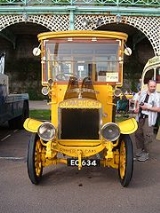
Commer Bus Reg Eo 634
Commer was a British manufacturer of commercial vehicles which existed from 1905 until 1979. Commer vehicles included car derived vans, light vans, medium to heavy commercial trucks, military vehicles and buses. The Commer brand was exported widely, with examples, albeit collectors' vehicles, still running far from the UK manufacturing base. Commer designed and built its own diesel engine for its heavy commercial vehicles.

History

The company was formed as the Commercial Car Company based in small premises in Lavender Hill, South London. In order to go into volume production a site was bought at Biscot Road, Biscot
Biscot

Biscot is an area of Luton close to the town centre. The name of Biscot can be traced back to the Domesday Book where it is recorded as Bissopescote which meens 'King's land'....
, Luton
Luton

Luton is a large town in the East of England England, 32 miles north of London. Historically, Luton is within the county of Bedfordshire, and since 1997, the town has been a unitary authority....
, where production of the first truck, the 3 ton RC type started in 1907. In 1909 the first bus was made. With the outbreak of First World War
World War I

World War I, or the First World War , was a global military conflict which involved the Great powers, organized into two opposing military alliances: the Allies of World War I and the Central Powers....
 the factory turned to the manufacture of military vehicles for the British Army and by 1919 over 3000 had been made.

In 1926, after being in receivership several times, Commer was taken over by Humber
Humber (car)

Humber was a United Kingdom automobile marque which could date its beginnings to Thomas Humber's bicycle company founded in 1868. In 1931 it was taken over by the Rootes brothers to become part of the Rootes Group....
, which in 1931 became part of the Rootes Group
Rootes

The Rootes Group was a British automobile manufacturer, which was based in the English Midlands and south of England. Rootes was the parent company of many well-known British marques, including Hillman, Humber , Singer , Sunbeam Car Company, Talbot, Commer and Karrier....
.

The Commer name was replaced by the Dodge name during the 1970s following the takeover of Rootes by Chrysler Europe
Chrysler Europe

In the 1960s, Chrysler Corporation sought to become a world producer of automobiles. The company had never had much success outside North America, contrasting with Ford Motor Company's worldwide reach and General Motors Corporation' success with Opel, Vauxhall Motors, Holden and Bedford Vehicles....
. After Peugeot
Peugeot

Peugeot is a major France automobile brand, part of PSA Peugeot Citro?n. Its parent company PSA Peugeot Citro?n is the second largest carmaker in Europe, behind Volkswagen....
 purchased Chrysler Europe in 1978, the Commer factory was run in partnership with the truck division of Renault
Renault

Renault S.A. is a French automaker producing cars, vans, buses, tractors, and trucks. Due to its alliance with Nissan Motor Co., Ltd., it is currently the world's 4th largest automaker.It owns the Romanian automaker Dacia and the Korean automaker Renault Samsung Motors....
, Renault Trucks
Renault Trucks

Renault Trucks is a France truck manufacturer with its corporate headquarters at Saint-Priest, Rh?ne near Lyon.Since 2001 it has been owned by Volvo Group....
. It continued to produce the Dodge commercial truck range for some time, with Renault badges and a small amount of product development, eventually these were cancelled in favour of mainstream Renault models and switching production at the factory to production of Renault truck and bus engines in the early 1990s.

Many Commer vans and lorries are notable for being fitted with the Rootes TS3 engine
Internal combustion engine

The internal combustion engine is an engine in which the combustion of a fuel occurs in a combustion chamber inside and integral to the engine. In an internal combustion engine it is always the expansion of the high temperature and pressure gases that are produced by the combustion which apply force to the movable component of the engine, such as...
, a two-stroke diesel three-cylinder horizontally-opposed piston engine, which came to be known as the "Commer Knocker" due to the unique noise it produced. Newer Commer vehicles had Perkins and Cummins
Cummins

Cummins Inc. is a corporation of complementary business units that design, manufacture, distribute and service diesel engines and natural gas engines and related technologies, including fuel systems, controls, air handling, filtration, emission solutions and electrical power generation systems....
 diesel engines, and less commonly Mercedes
Mercedes-Benz

Mercedes-Benz is a German manufacturer of automobiles, buses, coach es, and trucks. It is currently a division of the parent company, Daimler AG , after previously being owned by Daimler-Benz....
 diesel engines.

Trucks


Karrier

Commer acquired the Karrier company as part of Rootes acquisition of Karrier in 1934. In 1965 production moved to Dunstable
Dunstable

Dunstable is a market town in Bedfordshire, England. It lies on the eastward tail spurs of the Chiltern Hills, 30 miles north of London. These geographical features form several steep chalk escarpments most noticeable when approaching Dunstable from the north....
 where Commer, Dodge (UK) and Karrier were all brought together.

The Karrier trademark is owned by Peugeot.

Buses

Commer produced buses and is recorded as delivering four to Widnes
Widnes

Widnes is an industrial town within the Halton , in Cheshire, England, with an urban area population of 57,663 in 2004. It is located on the northern bank of the River Mersey where the estuary narrows to form the River Mersey#Runcorn Gap....
 in 1909. The Commando was released after WW2, and the Avenger on 28 February 1948, deploying the TS3 engine in the Avenger in 1954.

Small commercial and recreational vehicles


Cob

The Cob was a small delivery van based upon the Hillman Husky
Hillman Husky

Hillman Husky can refer to several different vehicles produced by United Kingdom car manufacturer, the Rootes group, under their Hillman marque....
. Later models were based upon the Hillman Imp
Hillman Imp

The Hillman Imp is a compact, rear-engined sedan that was manufactured under the Hillman marque by the Rootes from 1963 to 1976. An estate version known as the Hillman Husky was produced from 1967....
.

Spacevan

Commer became known in later years as a maker of vans for the British Post Office — particularly the Commer FC which was introduced in 1960 with many body styles, including a 1500 cc van. After engine and interior upgrades it was renamed the PB in 1967 and the SpaceVan in 1974. As noted above, it would be sold as a Dodge
Dodge

Dodge is a United States-based brand of automobiles, minivans, sport utility vehicles, and trucks, manufactured and marketed by Chrysler LLC in more than 60 different countries and territories worldwide....
 and Fargo
Fargo (truck)

Fargo was a brand of truck manufactured and sold in Canada by the Chrysler Corporation. Fargo trucks were almost identical to Dodge trucks, save for trim and name, and were sold by Chrysler-Plymouth dealers....
 model until 1976, when both Commer and Fargo names were dropped. These were rounded-front forward control vans with narrow front track — a legacy of their Humber
Humber (car)

Humber was a United Kingdom automobile marque which could date its beginnings to Thomas Humber's bicycle company founded in 1868. In 1931 it was taken over by the Rootes brothers to become part of the Rootes Group....
 car-derived suspension. Utilising at first the Hillman
Hillman

Hillman was a famous British automobile marque, manufactured by the Rootes. It was based in Ryton-on-Dunsmore, near Coventry, England, from 1907 to 1976....
-derived 1500 cc 4-cylinder engine in the PA series, then the larger 1600 cc, and from 1968 onwards the 1725 cc unit in the PB, only the cast iron head version of this engine were used. A Perkins 4108 diesel was also available.

The "1725 cc engine" (as it is known; it actually displaces 1724 cc) was available in the 1970s with a Borg Warner (BW) Model 35 3-speed automatic transmission
Automatic transmission

An automatic transmission is an automobile gearbox that can change gear ratios automatically as the vehicle moves, freeing the driver from having to shift gears manual transmission....
 with a dashboard mounted selector. This was not a popular option and few were built.

The 4-speed gearbox on manual transmission
Manual transmission

A manual transmission is a type of Transmission used in automotive applications. It generally utilizes a driver-operated clutch operated by a pedal or lever, for regulating torque transfer from the engine to the transmission, and a gear-shift either operated by hand or by foot ....
 models was based on those fitted to contemporary Hillman Minx
Hillman Minx

The Hillman Minx was a series of middle-sized family cars produced under the Hillman marque by the Rootes between 1932 and 1970. There have been many versions of the Minx over the years, as well as various badge-engineered versions which were sold under the Humber , Singer , and Sunbeam Car Company marques....
 (of the "Audax" generation) and later Rootes Arrow series cars such as the Hillman Hunter.

An unusual feature of the model was that the handbrake operated on the front drum brakes.

One of the reasons that the van was less popular with fleet operators than the Bedford and Ford Transit models it sold against was like the BMC J2 and J4 models the forward-control design made engine changes labour intensive, the only way to remove the engine without dropping the suspension subframe was to remove the windscreen and crane the engine out through the passenger door.

Reportedly, one condition of the bailout of Chrysler's British operations was a commitment to upgrade the Spacevan, which was praised for its brakes, cornering, and price, but criticized for its power, comforts, and top speed. A revised Spacevan was thus introduced in 1977, using the same mechanicals but with numerous cosmetic changes, conveniences, and a new interior. Although outdated by its demise in 1982, by which time Commer had been taken over by Peugeot, the Spacevan remained a familiar sight in the UK thanks to its role with British Telecom and the Post Office — which were almost solely responsible for it remaining in production for so long. By this time, there were three engines: two 1.7 L petrol engine
Petrol engine

A Petrol engine or Gasoline engine is an internal combustion engine with spark-ignition engine designed to run on petrol and similar volatile fuels....
s of 37 kW (with low compression) and 42 kW (with high compression), and a small diesel engine
Diesel engine

A diesel engine is an internal combustion engine which operates using the diesel cycle . Diesel engines have the highest thermal efficiency compared to any internal combustion or external combustion engine....
 (31 kW), with a four-speed manual transmission and no automatic available. The last Spacevan was built in 1983..

Military vehicles

Commer made a range of military vehicles for WW2, with the range still in use in the 1980s.

Engines

Commer designed and manufactured its own diesel engines for its heavy commercial vehicles and buses. They were low profile units designed to be deployed under the floor of the cab.

TS3

The TS3 engine was a two stroke diesel unit with three cylinders each containing a pair of pistons arranged with the combustion chamber formed between the crown of the piston pair and the cylinder walls. It was designed specifically for the Commer range of trucks. The TS3 and derivative TS4 were unique in using rockers to deliver power to the single crankshaft.

TS4

The TS4 engine ran 1.2million miles as a pre-production prototype. It was a 4 cylinder version of the TS3.

See also

  • Dodge 50 series
    Dodge 50 Series

    The Dodge 50 Series, later known as the Renault 50 Series were light commercial vehicles produced in the United Kingdom by Chrysler Europe and later Renault V?hicules Industriels between 1979 and 1993....
  • Dodge 500
    Dodge 500

    The Dodge 500 was a heavy duty truck introduced in 1964 and built in the United Kingdom by Dodge....
     trucks


External links