
All Topics  
Collared Peccary

 
Collared Peccary

   Email Print
   Bookmark   Link


Collared Peccary


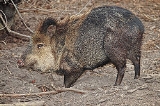
Collared Peccary, Pecari tajacu, is a peccary
Peccary

Peccaries are medium-sized mammals of the family Tayassuidae. Peccaries are members of the artiodactyl suborder Suina, as are swine and possibly Hippopotamidae....
 species found in North
North America

North America is the northern continent of the Americas, situated in the Earth's northern hemisphere and almost totally in the western hemisphere....
, Central
Central America

Central America is a central geography region of the Americas. It is the southernmost, isthmus portion of the North American continent, which connects with South America on the southeast....
, South America
South America

South America is the southern continent of the Americas, situated entirely in the Western Hemisphere and mostly in the Southern Hemisphere, with a relatively small portion in the Northern Hemisphere....
 and Trinidad
Trinidad

Trinidad is the larger and more populous of the two major islands and islands of Trinidad and Tobago which make up the country of Trinidad and Tobago....
, living in many habitats, such as the Sonoran desert
Sonoran Desert

The Sonoran Desert is a North American desert which straddles part of the United States-Mexico border and covers large parts of the U.S. states of Arizona and California and the Mexican states of Sonora and Baja California....
, chaco
Chaco

Chaco may refer to:South America:*Gran Chaco, a region in South America*Chaco Province, Argentina in the northeastern part of the country*Chaco Department, historical in Paraguay and proposed in Bolivia...
, deep rainforest
Rainforest

Rainforests are forests characterized by high rainfall, with definitions setting minimum normal annual rainfall between 1750?2000 mm . The monsoon trough, alternately known as the intertropical convergence zone, plays a significant role in creating Earth's tropical rain forests....
, caatinga
Caatinga

Caatinga is a type of vegetation, and an ecoregion characterized by this vegetation in the northeastern part of Brazil. The name "Caatinga" is a Tupi word meaning "white forest" or "white vegetation" ....
, cerrado
Cerrado

The cerrado is a vast tropical savanna ecoregion of Brazil. The cerrado is characterised by an enormous range of plant and animal biodiversity....
, pantanal
Pantanal

The Pantanal is a tropical wetland in South America, mostly within the Brazilian states of Mato Grosso and Mato Grosso do Sul, and also portions in Bolivia and Paraguay....
 and deciduous forest. They are commonly referred to as javelina, although this term is also used to describe the other two species of peccary. The species is also referred to as the Mexican hog (although it is no longer classified in the family Suidae
Suidae

'Suidae' is the biological family to which pigs and their relatives belong. Up to sixteen species are currently recognized, including the domestic pig Sus scrofa or S....
).

Collared peccaries are diurnal
Diurnal animal

Scientific term refered to as an animal behavior, diurnality indicates an animal that is active during the daytime and rests during the night. Animals that are not diurnal might be Nocturnality or crepuscular .  Many animal species are diurnal, including many mammals, insects and birds....
 and live in groups of 1 to 20 individuals, usually 6 to 9.


Discussion
Ask a question about 'Collared Peccary'
Start a new discussion about 'Collared Peccary'
Answer questions from other users
Full Discussion Forum


Recent Posts


Encyclopedia


Collared Peccary, Pecari tajacu, is a peccary
Peccary

Peccaries are medium-sized mammals of the family Tayassuidae. Peccaries are members of the artiodactyl suborder Suina, as are swine and possibly Hippopotamidae....
 species found in North
North America

North America is the northern continent of the Americas, situated in the Earth's northern hemisphere and almost totally in the western hemisphere....
, Central
Central America

Central America is a central geography region of the Americas. It is the southernmost, isthmus portion of the North American continent, which connects with South America on the southeast....
, South America
South America

South America is the southern continent of the Americas, situated entirely in the Western Hemisphere and mostly in the Southern Hemisphere, with a relatively small portion in the Northern Hemisphere....
 and Trinidad
Trinidad

Trinidad is the larger and more populous of the two major islands and islands of Trinidad and Tobago which make up the country of Trinidad and Tobago....
, living in many habitats, such as the Sonoran desert
Sonoran Desert

The Sonoran Desert is a North American desert which straddles part of the United States-Mexico border and covers large parts of the U.S. states of Arizona and California and the Mexican states of Sonora and Baja California....
, chaco
Chaco

Chaco may refer to:South America:*Gran Chaco, a region in South America*Chaco Province, Argentina in the northeastern part of the country*Chaco Department, historical in Paraguay and proposed in Bolivia...
, deep rainforest
Rainforest

Rainforests are forests characterized by high rainfall, with definitions setting minimum normal annual rainfall between 1750?2000 mm . The monsoon trough, alternately known as the intertropical convergence zone, plays a significant role in creating Earth's tropical rain forests....
, caatinga
Caatinga

Caatinga is a type of vegetation, and an ecoregion characterized by this vegetation in the northeastern part of Brazil. The name "Caatinga" is a Tupi word meaning "white forest" or "white vegetation" ....
, cerrado
Cerrado

The cerrado is a vast tropical savanna ecoregion of Brazil. The cerrado is characterised by an enormous range of plant and animal biodiversity....
, pantanal
Pantanal

The Pantanal is a tropical wetland in South America, mostly within the Brazilian states of Mato Grosso and Mato Grosso do Sul, and also portions in Bolivia and Paraguay....
 and deciduous forest. They are commonly referred to as javelina, although this term is also used to describe the other two species of peccary. The species is also referred to as the Mexican hog (although it is no longer classified in the family Suidae
Suidae

'Suidae' is the biological family to which pigs and their relatives belong. Up to sixteen species are currently recognized, including the domestic pig Sus scrofa or S....
).

Collared peccaries are diurnal
Diurnal animal

Scientific term refered to as an animal behavior, diurnality indicates an animal that is active during the daytime and rests during the night. Animals that are not diurnal might be Nocturnality or crepuscular .  Many animal species are diurnal, including many mammals, insects and birds....
 and live in groups of 1 to 20 individuals, usually 6 to 9. They feed on fruits, roots, tubers, palm nuts, grasses, invertebrates and small vertebrates. They usually sleep at night in burrows, usually under the roots of trees.

It is sometimes called a "musk hog" because of the very strong odor it releases, especially when alarmed. In some areas of the Southwestern United States they have become habituated to human beings and live in relative harmony with them in such areas as the suburbs of cities where there are still relatively large areas of brush and undergrowth to move through.

They will defend themselves if they feel threatened but otherwise tend to ignore human beings. They defend themselves with their long tusks, which sharpen themselves whenever their mouths open or close.