

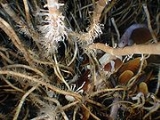
Cold seep

Encyclopedia
A cold seep is an area of the ocean floor where hydrogen sulfide
, methane
and other hydrocarbon
-rich fluid seepage occurs, often in the form of a brine pool
. Cold seeps constitute a biome
supporting several endemic species.
Cold seeps develop unique topography over time, where reactions between methane and seawater create carbonate
rock formations and reefs. These reactions may also be dependent on bacterial activity. Ikaite
, a hydrous calcium carbonate, can be associated with oxidizing methane at cold seeps.
and methane
"seep" out of those fissures, get diffused by sediment, and emerge over an area several hundred meters wide.
Methane is the main component of what we commonly refer to as natural gas
. But in addition to being an important energy source for humans, methane also forms the basis of a cold seep ecosystem
.
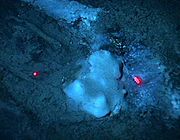 Organisms living in cold seeps are known as extremophile
s. Biological research in cold seeps and hydrothermal vents has been mostly focused on the microbiology
and the prominent chemosynthetic macro-invertebrates. Much less research has been done on the smaller benthic fraction at the size of the meiofauna (<1 mm).
Community composition's orderly shift from one set of species to another is called ecological succession
:
The first type of organism to take advantage of this deep-sea energy source is bacteria
. Aggregating into bacterial mats at cold seeps, these bacteria metabolize methane and hydrogen sulfide
(another gas that emerges from seeps) for energy. This process of obtaining energy from chemicals is known as chemosynthesis
.
During this initial stage, when methane is relatively abundant, dense mussel
beds also form near the cold seep. Mostly composed of species in the genus Bathymodiolus
, these mussels do not directly consume food. Instead, they are nourished by symbiotic bacteria that also produce energy from methane, similar to their relatives that form mats. Chemosynthetic bivalves are prominent constituents of the fauna of cold seeps and are represented in that setting by five families: Solemyidae
, Lucinidae
, Vesicomyidae
, Thyasiridae
and Mytilidae
.
This microbial activity produces calcium carbonate
(Ca
C
O
3), which is deposited on the seafloor and forms a layer of rock. During a period lasting up to several decades, these rock formations attract siboglinid
tubeworms
, which settle and grow along with the mussels. Like the mussels, tubeworms rely on chemosynthetic bacteria (in this case, a type that needs hydrogen sulfide
instead of methane) for survival. True to any symbiotic relationship, a tubeworm also provides for their bacteria by appropriating hydrogen sulfide from the environment. The sulfide not only comes from the water, but is also mined from the sediment through an extensive "root" system a tubeworm "bush" establishes in the hard, carbonate substrate. A tubeworm bush can contain hundreds of individual worms, which can grow a meter or more above the sediment.
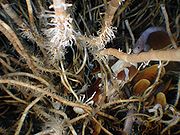
Cold seeps do not last indefinitely. As the rate of gas seepage slowly decrease, the shorter-lived, methane-hungry mussels (or more precisely, their methane-hungry bacterial symbionts) start to die off. At this stage, tubeworms become the dominant organism in a seep community. As long as there is some sulfide in the sediment, the sulfide-mining tubeworms can persist. Individuals of one tubeworm species Lamellibrachia luymesi
have been estimated to live for over 250 years in such conditions.
s are communities that do not rely on photosynthesis
for food and energy production. These systems are largely driven by chemosynthetic derived energy. Both systems share common characteristics such as the presence of reduced chemical compounds (H2S
and hydrocarbonates), local hypoxia
or even anoxia, a high abundance and metabolic activity of bacterial populations, and the production of autochthonous, organic material by chemoautotrophic bacteria. Both hydrothermal vents and cold seeps show regularly, highly increased levels of metazoan biomass in association with a low local diversity. This is explained through the presence of dense aggregations of foundation species and epizooic animals, living within these aggregations.
However, hydrothermal vents and cold seeps differ also in many ways. Compared to the more stable cold seeps, vents are characterized by locally high temperatures, strongly fluctuating temperatures, pH, sulfide and oxygen concentrations, often the absence of sediments, a relatively young age, and often unpredictable conditions, such as waxing and waning of vent fluids or volcanic eruptions. Unlike hydrothermal vents, which are volatile and ephemeral
environments, cold seeps emit at a slow and dependable rate. Likely owing to the cooler temperatures and stability, many cold seep organisms are much longer-lived than those inhabiting hydrothermal vents.
s to settle on the now exposed carbonate substrate. The corals do not rely on hydrocarbons seeping out of the seafloor. Studies on Lophelia pertusa
suggest they derive their nutrition primarily from the ocean surface. Chemosynthesis plays only a very small role, if any, in their settlement and growth. While deepwater corals do not seem to be chemosynthesis-based organisms, the chemosynthetic organisms that come before them enable the corals' existence. This hypothesis about establishment of deep water coral
reefs is called hydraulic theory.
at a depth of 3200 metres (10,498.7 ft). Since then, seeps have been discovered in other parts of the world's oceans. They have also been grouped into several biogeographic provinces: Gulf of Mexico, Atlantic, Mediterranean, East Pacific, West Pacific and under an ice shelf
in Antarctica. Those localities include the Monterey Canyon
just off Monterey Bay, California, the Sea of Japan
, off the Pacific coast of Costa Rica
, in the Atlantic off of Africa
and in waters off the coast of Alaska
. The deepest seep community known is found in the Japan trench at a depth of 7326 m (24,035.4 ft).
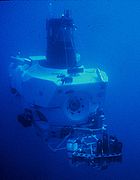
Communities were discovered in the Eastern Gulf of Mexico in 1983 using the manned submersible DSV Alvin
, during a cruise investigating the bottom of the Florida Escarpment in areas of “cold” brine seepage, where they unexpectedly discovered tubeworms
and mussels (Paull et al., 1984).
Two groups fortuitously discovered chemosynthetic communities in the Central Gulf of Mexico concurrently in November 1984. During investigations by Texas A&M University
to determine the effects of oil seepage on benthic ecology (until this investigation, all effects of oil seepage were assumed to be detrimental), bottom trawls unexpectedly recovered extensive collections of chemosynthetic organisms, including tube worms and clams (Kennicutt et al., 1985). At the same time, LGL Ecological Research Associates was
conducting a research cruise as part of the multiyear MMS
Northern Gulf of Mexico Continental Slope Study (Gallaway et al., 1988). Bottom photography (processed on board the vessel) resulted in clear images of vesicomyid
clam chemosynthetic communities coincidentally in the same manner as the first discovery by camera sled in the Pacific in 1977. Photography during the same LGL/MMS cruise also documented tube-worm communities in situ in the Central Gulf of Mexico for the first time (not processed until after the cruise; Boland, 1986) prior to the initial submersible investigations and firsthand descriptions of Bush Hill
in 1986 (Rosman et al., 1987a; MacDonald et al., 1989b). The site was targeted by acoustic “wipeout” zones or lack of substrate structure caused by seeping hydrocarbons. This was determined using an acoustic pinger system during the same cruise on the R/V Edwin Link (the old one, only 113 ft (34 m)), which used one of the Johnson Sea Link
submersibles. The site is characterized by dense tubeworm and mussel accumulations, as well as exposed carbonate outcrops with numerous gorgonian and Lophelia coral colonies. Bush Hill has become one of the most thoroughly studied chemosynthetic sites in the world.
The northern Gulf of Mexico slope includes a stratigraphic section more than 10 km (6 mi) thick and has been profoundly influenced by salt movement. Mesozoic
source rocks from Upper Jurassic to Upper Cretaceous generate oil in most of the Gulf slope fields (Sassen et al., 1993a and b). Migration conduits supply fresh hydrocarbon materials through a vertical scale of 6–8 km (4-5 mi) toward the surface. The surface expressions of hydrocarbon migration are referred to as seeps. Geological evidence demonstrates that hydrocarbon and brine seepage persists in spatially discrete areas for thousands of years.
The time scale for oil and gas migration (combination of buoyancy and pressure) from source systems is on the scale of millions of years (Sassen, 1997). Seepage from hydrocarbon sources through faults towards the surface tends to be diffused through the overlying sediment, carbonate outcroppings, and hydrate
deposits so the corresponding hydrocarbon seep communities tend to be larger (a few hundred meters wide) than
chemosynthetic communities found around the hydrothermal vents of the Eastern Pacific (MacDonald, 1992). There are large differences in the concentrations of hydrocarbons at seep sites. Roberts (2001) presented a spectrum of responses to be expected under a variety of flux rate conditions varying from very slow seepage to rapid venting. Very slow seepage sites do not support complex chemosynthetic communities; rather, they usually only support simple microbial mats (Beggiatoa
sp.).
In the upper slope environment, the hard substrates resulting from carbonate precipitation can have associated communities of nonchemosynthetic animals, including a variety of sessile cnidarians such as coral
s and anemone
s. At the rapid flux end of the spectrum fluidized sediment generally accompanies hydrocarbons and formation fluids arriving at the seafloor. Mud volcano
es and mud flows result. Somewhere between these two end members exists the conditions that support densely populated and diverse communities of chemosynthetic organisms (microbial mats, siboglinid
tube worms, bathymodioline
mussels, lucinid
and vesycomyid
clams, and associated organisms). These areas are frequently associated with surface or near-surface gas hydrate deposits. They also have localized areas of lithified seafloor, generally authigenic carbonates but sometimes more exotic minerals such as barite
are present.
The widespread nature of Gulf of Mexico chemosynthetic communities was first documented during contracted investigations by the Geological and Environmental Research Group (GERG) of Texas A&M University for the Offshore Operators Committee (Brooks et al., 1986). This survey remains the most widespread and comprehensive, although numerous additional communities have been documented since that time. Industry exploring for energy reserves in the Gulf of Mexico
has also documented numerous new communities through a wide range of depths, including the deepest known occurrence in the Central Gulf of Mexico in Alaminos Canyon Block 818 at a depth of 2,750 m (9,022 ft). The occurrence of chemosynthetic organisms dependent on hydrocarbon seepage has been documented in water depths as shallow as 290 m (951 ft) (Roberts et al., 1990) and as deep as 2,744 m (9,003 ft) (Allen, personal communication, 2005). This depth range specifically places chemosynthetic communities in the deepwater region of the Gulf of Mexico, which
is defined as water depths greater than 305 m (1,000 ft).
Chemosynthetic communities are not found on the continental shelf
although they do appear in the fossil record in water shallower than 200 m (656 ft). One theory explaining this is that predation
pressure has varied substantially over the time period involved (Callender and Powell 1999). More than 50 communities are now known to exist in 43 OCS blocks. Although a systematic survey has not been done to identify all chemosynthetic communities in the Gulf of Mexico, there is evidence indicating that many more such communities may exist. The
depth limits of discoveries probably reflect the limits of exploration (lack of submersibles capable of depths over 1,000 m (3,281 ft)).
MacDonald et al. (1993 and 1996) have analyzed remote-sensing images from space that reveal the presence of oil slicks across the north-central Gulf of Mexico. Results confirmed extensive natural oil seepage in the Gulf of Mexico, especially in water depths greater than 1,000 m (3,281 ft). A total of 58 additional potential locations were documented where seafloor sources were capable of producing perennial oil slicks (MacDonald et al., 1996). Estimated seepage rates ranged from 4 oilbbl/d to 70 oilbbl/d compared to less than 0.1 oilbbl/d for ship discharges (both normalized for 1,000 mi2 (640,000 ac)). This evidence considerably increases the area where chemosynthetic communities dependent on hydrocarbon seepage may be expected.
The densest aggregations of chemosynthetic organisms have been found at water depths of around 500 m (1,640 ft) and deeper. The best known of these communities was named Bush Hill by the investigators who first described it (MacDonald et al., 1989b). It is a surprisingly large and dense community of chemosynthetic tube worms and mussels at a site of natural petroleum and gas seepage over a salt diapir in Green Canyon Block 185. The seep site is a small knoll that rises about 40 m (131 ft) above the surrounding seafloor in about 580-m (1,903-ft) water depth.
s at chemosynthetic communities has been greatly underestimated. The biological alteration of frozen gas hydrates was first discovered during the MMS
study "Stability and Change in Gulf of Mexico Chemosynthetic Communities". It is hypothesized (MacDonald, 1998b) that the dynamics of hydrate alteration could play a major role as a mechanism for regulation of the release of hydrocarbon gases to fuel biogeochemical processes and could also play a substantial role in community stability. Recorded bottom-water temperature excursions of several degrees in some areas such as the Bush Hill site (4-5 °C at 500-m (1,640-ft) depth) are believed to result
in dissociation of hydrates, resulting in an increase in gas fluxes (MacDonald et al., 1994). Although not as destructive as the volcanism
at vent sites of the mid-ocean ridge
s, the dynamics of shallow hydrate formation and movement will clearly affect sessile animals that form part of the seepage barrier. There is potential of a catastrophic event where an entire layer of shallow hydrate could break free of the bottom and result in considerable impact to local communities of chemosynthetic fauna. At deeper depths (>1,000 m, >3,281 ft), the bottom-water temperature is colder (by approximately 3 °C) and undergoes less fluctuation. The formation of more stable and probably deeper hydrates influences the flux of light hydrocarbon gases to the sediment surface, thus influencing the surface morphology and characteristics of chemosynthetic communities. Within complex communities such as Bush Hill, petroleum
seems less important than previously thought (MacDonald, 1998b).
Through taphonomic
studies (death assemblages of shells) and interpretation of seep assemblage composition from cores, Powell et al. (1998) reported that, overall, seep communities were persistent over periods of 500-1,000 years and probably throughout the entire Pleistocene
. Some sites retained optimal habitat
over geological time scales. Powell reported evidence of mussel and clam communities persisting in the same sites for 500-4,000 years. Powell also found that both the composition of species and trophic
tiering of hydrocarbon seep communities tend to be fairly constant across time, with temporal variations only in numerical abundance. He found few cases in which the community type changed (from mussel to clam communities, for example) or had disappeared completely. Faunal succession
was not observed. Surprisingly, when recovery occurred after a past destructive event, the same chemosynthetic species reoccupied a site. There was little evidence of catastrophic burial events, but two instances were found in mussel communities in Green Canyon Block 234. The most notable observation reported by Powell (1995) was the uniqueness of each chemosynthetic community site.
Precipitation of authigenic
carbonates and other geologic events will undoubtedly alter surface seepage patterns over periods of many years, although through direct observation, no changes in chemosynthetic fauna distribution or composition were observed at seven separate study sites
(MacDonald et al., 1995). A slightly longer period (19 years) can be referenced in the case of Bush Hill, the first Central Gulf of Mexico community described in situ
in 1986. No mass die-offs or large-scale shifts in faunal composition have been observed (with the exception of collections for scientific purposes) over the19-year history of research at this site.
All chemosynthetic communities are located in water depths beyond the impact of severe storms, including hurricanes, and there would have been no alteration of these communities caused from surface storms, including hurricanes.
c.f. barhami and Escarpia spp.), mytilid
mussels (Seep Mytilid Ia, Ib, and III, and others), vesicomyid
clams (Vesicomya cordata and Calyptogena ponderosa), and infaunal lucinid
or thyasirid
clams (Lucinoma sp. or Thyasira sp.). Bacterial mats are present at all sites visited to date. These faunal groups tend to display distinctive characteristics in terms of how they aggregate, the size of aggregations, the geological and chemical properties of the habitats in which they occur and, to some degree, the heterotrophic fauna that occur with them. Many of the species found at these cold seep communities in the Gulf of Mexico are new to science and remain undescribed.
Individual lamellibranchid tube worms
, the longer of two taxa found at seeps can reach lengths of 3 m (10 ft) and live hundreds of years (Fisher et al., 1997; Bergquist et al., 2000). Growth rates determined from recovered marked tube worms have been variable, ranging from no growth of 13 individuals measured one year to a maximum growth of 9.6 cm/yr (3.8 in/yr) in a Lamellibrachia
individual (MacDonald, 2002). Average growth rate was 2.19 cm/yr (0.86 in/yr) for the Escarpia-like species and 2.92 cm/yr (1.15 in/yr) for lamellibrachids. These are slower growth rates than those of their hydrothermal vent
relatives, but Lamellibrachia individuals can reach lengths 2-3 times that of the largest known hydrothermal vent species. Individuals of Lamellibrachia sp. in excess of 3 m (10 ft) have been collected on several occasions, representing probable ages in excess of 400 years (Fisher, 1995). Vestimentiferan tube worm spawning is not seasonal and recruitment is episodic.
Tubeworms are either male or female. One recent discovery indicates that the spawning of female Lamellibrachia appears to have produced a unique association with the large bivalve Acesta bullisi, which lives permanently attached to the anterior tube opening of the tubeworm, and feeds on the periodic egg release (Järnegren et al., 2005). This close association between the bivalves and tubeworms was discovered in 1984 (Boland, 1986) but not fully explained. Virtually all mature Acesta individuals are found on female rather than male tubeworms. This evidence and other experiments by Järnegren et al. (2005) seem to have solved this mystery.
Growth rates for methanotrophic mussels at cold seep sites have been reported (Fisher, 1995). General growth rates were found to be relatively high. Adult mussel growth rates were similar to mussels from a littoral environment at similar temperatures. Fisher also found that juvenile mussels at hydrocarbon seeps initially grow rapidly, but the growth rate drops markedly in adults; they grow to reproductive size very quickly. Both individuals and communities appear to be very long lived. These methane
-dependent mussels have strict chemical requirements that tie them to areas of the most active seepage in the Gulf of Mexico. As a result of their rapid growth rates, mussel recolonization of a disturbed seep site could occur relatively rapidly. There is some evidence that mussels also have some requirement of a hard substrate and could increase in numbers if suitable substrate is increased on the seafloor (Fisher, 1995). Two associated species are always found associated with mussel beds – the gastropod Bathynerita naticoidea
and a small Alvinocarid
shrimp – suggesting these endemic species have excellent dispersal abilities
and can tolerate a wide range of conditions (MacDonald, 2002).
Unlike mussel beds, chemosynthetic clam beds may persist as a visual surface phenomenon for an extended period without input of new living individuals because of low dissolution rates and low sedimentation rates. Most clam beds investigated by Powell (1995) were inactive. Living individuals were rarely encountered. Powell reported that over a 50-year timespan, local extinctions and
recolonization should be gradual and exceedingly rare. Contrasting these inactive beds, the first community discovered in the Central Gulf of Mexico consisted of numerous actively plowing clams. The images obtained of this community were used to develop length/frequency and live/dead ratios as well as spatial patters (Rosman et al., 1987a).
Extensive bacterial mats of free-living bacteria
are also evident at all hydrocarbon seep sites. These bacteria may compete with the major fauna for sulfide
and methane
energy sources and may also contribute substantially to overall production (MacDonald, 1998b). The white, nonpigmented mats were found to be an autotrophic sulfur bacteria Beggiatoa
species, and the orange mats possessed an unidentified nonchemosynthetic metabolism (MacDonald, 1998b).
Heterotrophic species at seep sites are a mixture of species unique to seeps (particularly molluscs and crustacean
invertebrates) and those that are a normal component from the surrounding environment. Carney (1993) first reported a potential imbalance that could occur as a result of chronic disruption. Because of sporadic recruitment patterns, predators could gain an advantage, resulting in exterminations in local populations of mussel beds. It is clear that seep systems do interact with the background fauna but conflicting evidence remains as to what degree outright predation on some specific community components such as tubeworms occurs (MacDonald, 2002). The more surprising results from this recent work is why background species do not utilize seep production more than seems to be evident. In fact, seep-associated consumers such as galatheid crabs and nerite
gastropods had isotopic signatures, indicating that their diets were a mixture of seep and background production. At some sites, endemic seep invertebrates that would have been expected to obtain much if not all their diet from seep production actually consumed as much as 50 percent of their diets from the background.
have also been described from a few dives on mud volcanoes and diapirs between 1000 and 5000 m depth in the Barbados accretionary prism area and from the Blake Ridge diapir off North Carolina. More recently seep communities have been discovered in the eastern Atlantic, on a giant pockmark cluster in the Gulf of Guinea near the Congo deep channel, also on other pockmarks of the Congo margin, Gabon margin and Nigeria margin and in the Gulf of Cádiz
.
The occurrence of chemosymbiotic biota in the extensive mud volcano fields of the Gulf of Cádiz was first reported in 2003. The chemosymbiotic bivalves collected from the mud volcanoes of the Gulf of Cadiz were reviewed in 2011.
Cold seeps are also available in Northern Atlantic Ocean. (map shows three localities there)
Extensive faunal sampling has been conducted from 400 to 3300 m in the Atlantic Equatorial Belt from the Gulf of Mexico to the Gulf of Guinea
including Barbados
accretionary prism, the Blake Ridge diapir, and in the Eastern Atlantic from the Congo and Gabon margins and the recently explored Nigeria margin during Census of Marine Life
ChEss
project. Of the 72 taxa identified at the species level, a total of 9 species or species complexes are identified as amphi-Atlantic.
The Atlantic Equatorial Belt seep megafauna community structure is influenced primarily by depth rather than by geographic distance. The bivalves Bathymodiolinae (within Mytilidae
) species or complexes of species are the most widespread in the Atlantic. The Bathymodiolus boomerang complex is found at the Florida escarpment site, the Blake Ridge diapir, the Barbados prism and the Regab site of Congo. The Bathymodiolus childressi
complex is also widely distributed along the Atlantic Equatorial Belt from the Gulf of Mexico across to the Nigerian Margin, although not on the Regab or Blake ridge sites. The commensal polynoid, Branchipolynoe seepensis is known from the Gulf of Mexico, Gulf of Guinea and Barbados. Other species with distributions extending from the eastern to western Atlantic are: gastropod Cordesia provannoides
, the shrimp Alvinocaris muricola, the galatheids Munidopsis geyeri and Munidopsis livida and probably the holothurid Chiridota heheva.
There have been found cold seeps also in Amazon
deepsea fan. High-resolution seismic profiles near the shelf edge show evidence of near-surface slumps and faulting 20–50 m in the subsurface and concentrations (about 500 m2) of methane gas. Several studies (e.g., Amazon Shelf Study—AMASEDS, LEPLAC, REMAC, GLORIA, Ocean Drilling Program
) indicate that there is evidence for gas seepage on the slope off the Amazon fan based on the incidence of bottom-simulating reflections (BSRs), mud volcanoes, pock marks, gas in sediments, and deeper hydrocarbon occurrences. The existence of methane at relatively shallow depths and extensive areas of gas hydrates have been mapped in this region. Also, gas chimney
s have been reported, and exploratory wells have discovered subcommercial gas accumulations and pock marks along fault planes. A sound geological and geophysical understanding of the Foz do Amazonas Basin is already available and used by the energy companies.
Exploration of new areas, such as potential seep sites off of the east coast of the U.S. and the Laurentian
fan where chemosynthetic communities are known deeper than 3500 m, and shallower sites in the Gulf of Guinea are need to study in the future.
was the presence of Lucinidae
and Vesicomyidae
bivalve shell
s cored on the top of the Napoli mud volcano
, located at 1,900 m depth on the Mediterranean Ridge
in the subduction zone of the African plate
. This was followed by the description of a new Lucinidae bivalve species, Lucinoma kazani, associated with bacterial endosymbiont
s. In the southeastern Mediterranean, communities of polychaete
s and bivalves were also found associated with cold seeps and carbonates near Egypt
and the Gaza Strip
at depths of 500–800 m, but no living fauna was collected. The first in situ
observations of extensive living chemosynthetic communities in the Eastern Mediterranean Sea prompted cooperation between biologists, geochemists, and geologists. During submersible
dives, communities comprising large fields of small bivalves (dead and alive), large siboglinid tube worms, isolated or forming dense aggregations, large sponges, and associated endemic fauna were observed in various cold seep habitats associated with carbonate crusts at 1,700–2,000 m depth. Two mud volcano fields were first explored, one along the Mediterranean Ridge, where most of them were partially (Napoli, Milano mud volcanoes) or totally (Urania, Maidstone mud volcanoes) affected by brines
, and the other on the Anaximander mounds south of Turkey
. The latter area includes the large Amsterdam mud volcano, which is affected by recent mudflow
s, and the smaller Kazan or Kula mud volcanoes. Gas hydrates have been sampled at the Amsterdam and Kazan mud volcanoes, and high methane levels have been recorded above the seafloor. Several provinces of the Nile
deep-sea fan have been explored recently. These include the very active brine seepage named the Menes Caldera in the eastern province between 2,500 m and 3,000 m, the pockmarks in the central area along mid- and lower slopes, and the mud volcanoes of the eastern province, as well as one in the central upper slope (North Alex area) at 500 m depth.
During these first exploratory dives, symbiont-bearing taxa that are similar to those observed on the Olimpi and Anaximander mud fields were sampled and identified. This similarity is not surprising, as most of these taxa were originally described from dredging in the Nile fan. Up to five species of bivalves harboring bacterial symbionts colonized these methane- and sulfide-rich environments. A new species of Siboglinidae
polychaete, Lamellibrachia anaximandri, the tubeworm colonizing cold seeps from the Mediterranean ridge to the Nile deep-sea fan, has just been described in 2010. Moreover, the study of symbioses revealed associations with chemoautotrophic Bacteria, sulfur oxidizers
in Vesicomyidae and Lucinidae bivalves and Siboglinidae tubeworms, and highlighted the exceptional diversity of Bacteria living in symbiosis with small Mytilidae. The Mediterranean seeps appear to represent a rich habitat characterized by megafauna species richness
(e.g., gastropods) or the exceptional size of some species such as sponges (Rhizaxinella pyrifera) and crabs (Chaceon mediterraneus), compared with their background counterparts. This contrasts with the low macro- and mega-faunal abundance and diversity of the deep Eastern Mediterranean
. Seep communities in the Mediterranean that include endemic chemosynthetic species and associated fauna differ from the other known seep communities in the world at the species level but also by the absence of the large size bivalve genera Calyptogena or Bathymodiolus
. The isolation of the Mediterranean seeps from the Atlantic Ocean after the Messinian crisis led to the development of unique communities, which are likely to differ in composition and structure from those in the Atlantic Ocean. Further expeditions involved quantitative sampling of habitats in different areas, from the Mediterranean Ridge to the eastern Nile deep-sea fan. Cold seeps discovered in the Sea of Marmara
in 2008 have also revealed chemosynthesis-based communities that showed a considerable similarity to the symbiont-bearing fauna of eastern Mediterranean cold seeps.
has been reported also in cold seeps in the northeastern continental slope of the South China Sea
and Chen et al. (2011) have proposed a theory of its origin as resulting by reduction
from tetrahydroxoaluminate Al(OH)4- to metallic aluminium by bacteria
.
are distributed along plate convergence
areas because of the accompanying tectonic
activity. Many seeps have been found in the Japan Trench
, Nankai Trough
, Ryukyu Trench
, Sagami Bay
and Suruga Bay
, and the Sea of Japan
. Many of species in cold seeps of Japan are endemic.
, shelf-edge instability is enhanced in some locations by cold seeps of methane-rich fluids that likewise support chemosynthetic faunas and carbonate concretions. Dominant animals are tube worms of the family Siboglinidae
and bivalves of families Vesicomyidae
and Mytilidae
(Bathymodiolus
). Numerous of its species appear to be endemic. The deep bottom trawling
has highly negative impact
on cold seep communities and those ecosystems are threatened. Depths down to 2,000 m including cold seeps belongs among as-yet-unmapped topographic and chemical complexity of habitats. The scale of new-species discovery in these poorly studied or unexplored ecosystems is likely to be high.
an margin through a complexity of ecosystems such as methane seeps and oxygen minimum zone
s reporting that such habitat heterogeneity may influence the biodiversity patterns of the local fauna. Seep fauna include bivalves of families Lucinidae
, Thyasiridae
, Solemyidae
(Acharax sp.), and Vesicomyidae
(Calyptogena gallardoi) and polychates Lamellibrachia
sp. and two other polychate species. Furthermore, in these soft reduced sediment
s below the oxygen minimum zone off the Chilean margin, a diverse microbial community composed by a variety of large prokaryote
s (mainly large multi-cellular filamentous “mega bacteria” of the genera Thioploca
and Beggiatoa
, and of “macrobacteria” including a diversity of phenotypes), protist
s (ciliates, flagellates, and foraminifers), as well as small metazoans (mostly nematodes and polychaetes) has been found. Gallardo et al. (2007) argue that the likely chemolithotrophic metabolism of most of these mega- and macrobacteria offer an alternative explanation to fossil
findings, in particular to those from obvious non-littoral origins, suggesting that traditional hypotheses on the cyanobacterial origin of some fossils may have to be revised.
Cold seeps (pockmark
) are also known from depths of 130 m in the Hecate Strait
, British Columbia
, Canada. Unobvious fauna (also unobvious for cold seeps) has been found there with these dominating species: sea snail Fusitriton oregonensis
, anemone Metridium giganteum, encrusting sponges and bivalve Solemya reidi.
Cold seeps with chemosynthetic communities along the USA Pacific coast occur in Monterey Canyon
, just off Monterey Bay
, California on a mud volcano
. There have been found, for example Calyptogena clams Calyptogena kilmeri and Calyptogena pacifica and foraminifera
n Spiroplectammina biformis.
s, cold seeps, and mud volcano
es. Other than the Antarctic Benthic Deep-Sea Biodiversity Project
(ANDEEP) cruises, little work has been done in the deep sea. There are more species waiting to be described.
s. Hydrocarbon seeps that allow chemosynthetic communities to exist do modify the geological characteristics in ways that can be remotely detected, but the time scales of co-occurring active seepage and the presence of living communities is always uncertain. These known sediment modifications include (1) precipitation of authigenic
carbonate in the form of micronodules, nodule
s, or rock masses; (2) formation of gas hydrates; (3) modification of sediment
composition through concentration of hard chemosynthetic organism remains (such as shell fragments and layers); (4) formation of interstitial gas bubbles or hydrocarbons; and (5) formation of depressions or pockmarks by gas expulsion. These features give rise to acoustic effects such as wipeout zones (no echoes), hard bottoms (strongly reflective echoes), bright spots (reflection enhanced layers), or reverberant layers (Behrens, 1988; Roberts and Neurauter, 1990). "Potential" locations for most types of communities can be determined by careful interpretation of these various geophysical modifications, but to date, the process remains imperfect and confirmation of living communities requires direct visual techniques.
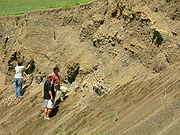 Cold seep deposits are found throughout the Phanerozoic rock record, especially in the Late Mesozoic
and Cenozoic
(see for example Kaim et al., 2008). These fossil
cold seeps are characterized by mound-like topography (where preserved), coarsely crystalline carbonates, and abundant mollusks and brachiopod
s.
Hydrogen sulfide
Hydrogen sulfide is the chemical compound with the formula . It is a colorless, very poisonous, flammable gas with the characteristic foul odor of expired eggs perceptible at concentrations as low as 0.00047 parts per million...
, methane
Methane
Methane is a chemical compound with the chemical formula . It is the simplest alkane, the principal component of natural gas, and probably the most abundant organic compound on earth. The relative abundance of methane makes it an attractive fuel...
and other hydrocarbon
Hydrocarbon
In organic chemistry, a hydrocarbon is an organic compound consisting entirely of hydrogen and carbon. Hydrocarbons from which one hydrogen atom has been removed are functional groups, called hydrocarbyls....
-rich fluid seepage occurs, often in the form of a brine pool
Brine pool
Brine pools are large areas of brine on the ocean basin. These pools are bodies of water that have a salinity three to five times greater than the surrounding ocean. For deep-sea brine pools, the source of the salt is the dissolution of large salt deposits through salt tectonics...
. Cold seeps constitute a biome
Biome
Biomes are climatically and geographically defined as similar climatic conditions on the Earth, such as communities of plants, animals, and soil organisms, and are often referred to as ecosystems. Some parts of the earth have more or less the same kind of abiotic and biotic factors spread over a...
supporting several endemic species.
Cold seeps develop unique topography over time, where reactions between methane and seawater create carbonate
Carbonate
In chemistry, a carbonate is a salt of carbonic acid, characterized by the presence of the carbonate ion, . The name may also mean an ester of carbonic acid, an organic compound containing the carbonate group C2....
rock formations and reefs. These reactions may also be dependent on bacterial activity. Ikaite
Ikaite
Ikaite is the mineral name for the hexahydrate of calcium carbonate, CaCO3·6H2O. It is only found in a metastable state, and decomposes rapidly once removed from near-freezing water. It is more commonly known through its pseudomorphs.-Distribution:...
, a hydrous calcium carbonate, can be associated with oxidizing methane at cold seeps.
Types
Types of cold seeps can be distinguished according to the depth, as shallow cold seeps and deep cold seeps. Cold seeps can also be distinguished in detail, as follows:- oil/gas seeps
- gas seeps: methaneMethaneMethane is a chemical compound with the chemical formula . It is the simplest alkane, the principal component of natural gas, and probably the most abundant organic compound on earth. The relative abundance of methane makes it an attractive fuel...
seeps - gas hydrate seeps
- brine seeps are forming brine poolBrine poolBrine pools are large areas of brine on the ocean basin. These pools are bodies of water that have a salinity three to five times greater than the surrounding ocean. For deep-sea brine pools, the source of the salt is the dissolution of large salt deposits through salt tectonics...
s - pockmarksPockmark (geology)Pockmarks are craters in the seabed caused by fluids erupting and streaming through the sediments. Pockmarks were discovered off the coasts of Nova Scotia, Canada in the late 1960s by Lew King and Brian McLean of the Bedford Institute of Oceanography. As pockmarks are uncommon on the land surface,...
- mud volcanoMud volcanoThe term mud volcano or mud dome are used to refer to formations created by geo-excreted liquids and gases, although there are several different processes which may cause such activity. Hot water mixes with mud and surface deposits. Mud volcanoes are associated with subduction zones and about 700...
s
Formation and ecological succession
Cold seeps occur over fissures on the seafloor caused by tectonic activity. OilOil
An oil is any substance that is liquid at ambient temperatures and does not mix with water but may mix with other oils and organic solvents. This general definition includes vegetable oils, volatile essential oils, petrochemical oils, and synthetic oils....
and methane
Methane
Methane is a chemical compound with the chemical formula . It is the simplest alkane, the principal component of natural gas, and probably the most abundant organic compound on earth. The relative abundance of methane makes it an attractive fuel...
"seep" out of those fissures, get diffused by sediment, and emerge over an area several hundred meters wide.
Methane is the main component of what we commonly refer to as natural gas
Natural gas
Natural gas is a naturally occurring gas mixture consisting primarily of methane, typically with 0–20% higher hydrocarbons . It is found associated with other hydrocarbon fuel, in coal beds, as methane clathrates, and is an important fuel source and a major feedstock for fertilizers.Most natural...
. But in addition to being an important energy source for humans, methane also forms the basis of a cold seep ecosystem
Ecosystem
An ecosystem is a biological environment consisting of all the organisms living in a particular area, as well as all the nonliving , physical components of the environment with which the organisms interact, such as air, soil, water and sunlight....
.
Chemosynthetic communities
Extremophile
An extremophile is an organism that thrives in physically or geochemically extreme conditions that are detrimental to most life on Earth. In contrast, organisms that live in more moderate environments may be termed mesophiles or neutrophiles...
s. Biological research in cold seeps and hydrothermal vents has been mostly focused on the microbiology
Microbiology
Microbiology is the study of microorganisms, which are defined as any microscopic organism that comprises either a single cell , cell clusters or no cell at all . This includes eukaryotes, such as fungi and protists, and prokaryotes...
and the prominent chemosynthetic macro-invertebrates. Much less research has been done on the smaller benthic fraction at the size of the meiofauna (<1 mm).
Community composition's orderly shift from one set of species to another is called ecological succession
Ecological succession
Ecological succession, is the phenomenon or process by which a community progressively transforms itself until a stable community is formed. It is a fundamental concept in ecology, and refers to more or less predictable and orderly changes in the composition or structure of an ecological community...
:
The first type of organism to take advantage of this deep-sea energy source is bacteria
Bacteria
Bacteria are a large domain of prokaryotic microorganisms. Typically a few micrometres in length, bacteria have a wide range of shapes, ranging from spheres to rods and spirals...
. Aggregating into bacterial mats at cold seeps, these bacteria metabolize methane and hydrogen sulfide
Hydrogen sulfide
Hydrogen sulfide is the chemical compound with the formula . It is a colorless, very poisonous, flammable gas with the characteristic foul odor of expired eggs perceptible at concentrations as low as 0.00047 parts per million...
(another gas that emerges from seeps) for energy. This process of obtaining energy from chemicals is known as chemosynthesis
Chemosynthesis
In biochemistry, chemosynthesis is the biological conversion of one or more carbon molecules and nutrients into organic matter using the oxidation of inorganic molecules or methane as a source of energy, rather than sunlight, as in photosynthesis...
.
During this initial stage, when methane is relatively abundant, dense mussel
Mussel
The common name mussel is used for members of several families of clams or bivalvia mollusca, from saltwater and freshwater habitats. These groups have in common a shell whose outline is elongated and asymmetrical compared with other edible clams, which are often more or less rounded or oval.The...
beds also form near the cold seep. Mostly composed of species in the genus Bathymodiolus
Bathymodiolus
Bathymodiolus is a genus of deep-sea chemosynthetic mussels.-Species:Modern species within the genus Bathymodiolus include:* Bathymodiolus childressi Gustafson, Lutz, Turner & Vrijenhoek, 1998* Bathymodiolus japonicus Hashimoto & Okutani, 1994...
, these mussels do not directly consume food. Instead, they are nourished by symbiotic bacteria that also produce energy from methane, similar to their relatives that form mats. Chemosynthetic bivalves are prominent constituents of the fauna of cold seeps and are represented in that setting by five families: Solemyidae
Solemyidae
Solemyidae is a family of protobranch bivalves in the order Solemyoida. .Solemyids are remarkable in that their digestive tract is either extremely small or non-existent, and their feeding appendages are too short to reach outside the shell ....
, Lucinidae
Lucinidae
Lucinidae is a family of saltwater clams, marine bivalve molluscs.These bivalves are remarkable for their endosymbiosis with sulphide-oxidizing bacteria.-Characteristics:...
, Vesicomyidae
Vesicomyidae
Vesicomyidae is a family of bivalves. Its genera, with some selected species, are:* Adulomya Kuroda, 1931 ** Adulomya elongata...
, Thyasiridae
Thyasiridae
Thyasiridae is a family of bivalve molluscs, including the cleft clams.-Genera and species:* Adontorhina S. S. Berry, 1947** Adontorhina cyclia S. S. Berry, 1947** Adontorhina similis Barry & McCormack, 2007...
and Mytilidae
Mytilidae
Mytilidae is a family of small to large saltwater mussels, marine bivalve mollusks in the order Mytiloida. It is the only family in the order...
.
This microbial activity produces calcium carbonate
Calcium carbonate
Calcium carbonate is a chemical compound with the formula CaCO3. It is a common substance found in rocks in all parts of the world, and is the main component of shells of marine organisms, snails, coal balls, pearls, and eggshells. Calcium carbonate is the active ingredient in agricultural lime,...
(Ca
Calcium
Calcium is the chemical element with the symbol Ca and atomic number 20. It has an atomic mass of 40.078 amu. Calcium is a soft gray alkaline earth metal, and is the fifth-most-abundant element by mass in the Earth's crust...
C
Carbon
Carbon is the chemical element with symbol C and atomic number 6. As a member of group 14 on the periodic table, it is nonmetallic and tetravalent—making four electrons available to form covalent chemical bonds...
O
Oxygen
Oxygen is the element with atomic number 8 and represented by the symbol O. Its name derives from the Greek roots ὀξύς and -γενής , because at the time of naming, it was mistakenly thought that all acids required oxygen in their composition...
3), which is deposited on the seafloor and forms a layer of rock. During a period lasting up to several decades, these rock formations attract siboglinid
Siboglinidae
Siboglinidae, also known as the beard worms, is a family of polychaete annelid worms whose members made up the former phyla Pogonophora and Vestimentifera. They are composed of about 100 species of vermiform creatures and live in thin tubes buried in sediments at ocean depths from 100 to 10,000 m...
tubeworms
Lamellibrachia
Lamellibrachia is a genus of tube worms related to the giant tube worm, Riftia pachyptila. It lives at deep-sea cold seeps where hydrocarbons are leaking out of the seafloor. It is entirely reliant on internal, sulfide-oxidizing bacterial symbionts for its nutrition.L...
, which settle and grow along with the mussels. Like the mussels, tubeworms rely on chemosynthetic bacteria (in this case, a type that needs hydrogen sulfide
Hydrogen sulfide
Hydrogen sulfide is the chemical compound with the formula . It is a colorless, very poisonous, flammable gas with the characteristic foul odor of expired eggs perceptible at concentrations as low as 0.00047 parts per million...
instead of methane) for survival. True to any symbiotic relationship, a tubeworm also provides for their bacteria by appropriating hydrogen sulfide from the environment. The sulfide not only comes from the water, but is also mined from the sediment through an extensive "root" system a tubeworm "bush" establishes in the hard, carbonate substrate. A tubeworm bush can contain hundreds of individual worms, which can grow a meter or more above the sediment.
Cold seeps do not last indefinitely. As the rate of gas seepage slowly decrease, the shorter-lived, methane-hungry mussels (or more precisely, their methane-hungry bacterial symbionts) start to die off. At this stage, tubeworms become the dominant organism in a seep community. As long as there is some sulfide in the sediment, the sulfide-mining tubeworms can persist. Individuals of one tubeworm species Lamellibrachia luymesi
Lamellibrachia luymesi
Lamellibrachia luymesi is a species of tube worms in the family Siboglinidae.It lives at deep-sea cold seeps where hydrocarbons are leaking out of the seafloor...
have been estimated to live for over 250 years in such conditions.
 |
Comparison with other communities
Cold seeps and hydrothermal ventHydrothermal vent
A hydrothermal vent is a fissure in a planet's surface from which geothermally heated water issues. Hydrothermal vents are commonly found near volcanically active places, areas where tectonic plates are moving apart, ocean basins, and hotspots. Hydrothermal vents exist because the earth is both...
s are communities that do not rely on photosynthesis
Photosynthesis
Photosynthesis is a chemical process that converts carbon dioxide into organic compounds, especially sugars, using the energy from sunlight. Photosynthesis occurs in plants, algae, and many species of bacteria, but not in archaea. Photosynthetic organisms are called photoautotrophs, since they can...
for food and energy production. These systems are largely driven by chemosynthetic derived energy. Both systems share common characteristics such as the presence of reduced chemical compounds (H2S
Hydrogen sulfide
Hydrogen sulfide is the chemical compound with the formula . It is a colorless, very poisonous, flammable gas with the characteristic foul odor of expired eggs perceptible at concentrations as low as 0.00047 parts per million...
and hydrocarbonates), local hypoxia
Hypoxia (environmental)
Hypoxia, or oxygen depletion, is a phenomenon that occurs in aquatic environments as dissolved oxygen becomes reduced in concentration to a point where it becomes detrimental to aquatic organisms living in the system...
or even anoxia, a high abundance and metabolic activity of bacterial populations, and the production of autochthonous, organic material by chemoautotrophic bacteria. Both hydrothermal vents and cold seeps show regularly, highly increased levels of metazoan biomass in association with a low local diversity. This is explained through the presence of dense aggregations of foundation species and epizooic animals, living within these aggregations.
However, hydrothermal vents and cold seeps differ also in many ways. Compared to the more stable cold seeps, vents are characterized by locally high temperatures, strongly fluctuating temperatures, pH, sulfide and oxygen concentrations, often the absence of sediments, a relatively young age, and often unpredictable conditions, such as waxing and waning of vent fluids or volcanic eruptions. Unlike hydrothermal vents, which are volatile and ephemeral
Ephemeral
Ephemeral things are transitory, existing only briefly. Typically the term is used to describe objects found in nature, although it can describe a wide range of things....
environments, cold seeps emit at a slow and dependable rate. Likely owing to the cooler temperatures and stability, many cold seep organisms are much longer-lived than those inhabiting hydrothermal vents.
End of cold seep community
Finally, as cold seeps become inactive, tubeworms also start to disappear, clearing the way for coralCoral
Corals are marine animals in class Anthozoa of phylum Cnidaria typically living in compact colonies of many identical individual "polyps". The group includes the important reef builders that inhabit tropical oceans and secrete calcium carbonate to form a hard skeleton.A coral "head" is a colony of...
s to settle on the now exposed carbonate substrate. The corals do not rely on hydrocarbons seeping out of the seafloor. Studies on Lophelia pertusa
Lophelia pertusa
Lophelia pertusa is a species of cold-water coral which grows in the deep waters throughout the North Atlantic ocean, as well as parts of the Caribbean Sea and Alboran Sea. L...
suggest they derive their nutrition primarily from the ocean surface. Chemosynthesis plays only a very small role, if any, in their settlement and growth. While deepwater corals do not seem to be chemosynthesis-based organisms, the chemosynthetic organisms that come before them enable the corals' existence. This hypothesis about establishment of deep water coral
Deep water coral
The habitat of deep water corals, also known as cold water corals, extends to deeper, darker parts of the oceans than tropical corals, ranging from near the surface to the abyss, beyond where water temperatures may be as cold as 4°C...
reefs is called hydraulic theory.
Distribution
Cold seeps were discovered in 1983 by Dr. Charles Paull in the Gulf of MexicoGulf of Mexico
The Gulf of Mexico is a partially landlocked ocean basin largely surrounded by the North American continent and the island of Cuba. It is bounded on the northeast, north and northwest by the Gulf Coast of the United States, on the southwest and south by Mexico, and on the southeast by Cuba. In...
at a depth of 3200 metres (10,498.7 ft). Since then, seeps have been discovered in other parts of the world's oceans. They have also been grouped into several biogeographic provinces: Gulf of Mexico, Atlantic, Mediterranean, East Pacific, West Pacific and under an ice shelf
Ice shelf
An ice shelf is a thick, floating platform of ice that forms where a glacier or ice sheet flows down to a coastline and onto the ocean surface. Ice shelves are only found in Antarctica, Greenland and Canada. The boundary between the floating ice shelf and the grounded ice that feeds it is called...
in Antarctica. Those localities include the Monterey Canyon
Monterey Canyon
Monterey Canyon, or Monterey Submarine Canyon, is a submarine canyon in Monterey Bay, California. It is the subject of ongoing study by the scientists at the Monterey Bay Aquarium Research Institute, the Moss Landing Marine Laboratories, and other oceanographic institutions.Monterey Canyon begins...
just off Monterey Bay, California, the Sea of Japan
Sea of Japan
The Sea of Japan is a marginal sea of the western Pacific Ocean, between the Asian mainland, the Japanese archipelago and Sakhalin. It is bordered by Japan, North Korea, Russia and South Korea. Like the Mediterranean Sea, it has almost no tides due to its nearly complete enclosure from the Pacific...
, off the Pacific coast of Costa Rica
Costa Rica
Costa Rica , officially the Republic of Costa Rica is a multilingual, multiethnic and multicultural country in Central America, bordered by Nicaragua to the north, Panama to the southeast, the Pacific Ocean to the west and the Caribbean Sea to the east....
, in the Atlantic off of Africa
Africa
Africa is the world's second largest and second most populous continent, after Asia. At about 30.2 million km² including adjacent islands, it covers 6% of the Earth's total surface area and 20.4% of the total land area...
and in waters off the coast of Alaska
Alaska
Alaska is the largest state in the United States by area. It is situated in the northwest extremity of the North American continent, with Canada to the east, the Arctic Ocean to the north, and the Pacific Ocean to the west and south, with Russia further west across the Bering Strait...
. The deepest seep community known is found in the Japan trench at a depth of 7326 m (24,035.4 ft).
In the Gulf of Mexico
Discoveries in the Gulf of Mexico
The chemosynthetic communities of the Gulf of Mexico have been studied extensively over the past 20 years, and communities first discovered on the upper slope are likely the best understood seep communities in the world. The history of the discovery of these remarkable animals has all occurred within the last 30 years. Interestingly, each major discovery was unexpected―from the first hydrothermal vent communities anywhere in the world to the first cold seep communities in the Gulf of Mexico.Communities were discovered in the Eastern Gulf of Mexico in 1983 using the manned submersible DSV Alvin
DSV Alvin
Alvin is a manned deep-ocean research submersible owned by the United States Navy and operated by the Woods Hole Oceanographic Institution in Woods Hole, Massachusetts. The vehicle was built by General Mills' Electronics Group in the same factory used to manufacture breakfast cereal-producing...
, during a cruise investigating the bottom of the Florida Escarpment in areas of “cold” brine seepage, where they unexpectedly discovered tubeworms
Lamellibrachia
Lamellibrachia is a genus of tube worms related to the giant tube worm, Riftia pachyptila. It lives at deep-sea cold seeps where hydrocarbons are leaking out of the seafloor. It is entirely reliant on internal, sulfide-oxidizing bacterial symbionts for its nutrition.L...
and mussels (Paull et al., 1984).
Two groups fortuitously discovered chemosynthetic communities in the Central Gulf of Mexico concurrently in November 1984. During investigations by Texas A&M University
Texas A&M University
Texas A&M University is a coeducational public research university located in College Station, Texas . It is the flagship institution of the Texas A&M University System. The sixth-largest university in the United States, A&M's enrollment for Fall 2011 was over 50,000 for the first time in school...
to determine the effects of oil seepage on benthic ecology (until this investigation, all effects of oil seepage were assumed to be detrimental), bottom trawls unexpectedly recovered extensive collections of chemosynthetic organisms, including tube worms and clams (Kennicutt et al., 1985). At the same time, LGL Ecological Research Associates was
conducting a research cruise as part of the multiyear MMS
Minerals Management Service
The Bureau of Ocean Energy Management, Regulation and Enforcement , formerly known as the Minerals Management Service , was an agency of the United States Department of the Interior that managed the nation's natural gas, oil and other mineral resources on the outer continental shelf...
Northern Gulf of Mexico Continental Slope Study (Gallaway et al., 1988). Bottom photography (processed on board the vessel) resulted in clear images of vesicomyid
Vesicomyidae
Vesicomyidae is a family of bivalves. Its genera, with some selected species, are:* Adulomya Kuroda, 1931 ** Adulomya elongata...
clam chemosynthetic communities coincidentally in the same manner as the first discovery by camera sled in the Pacific in 1977. Photography during the same LGL/MMS cruise also documented tube-worm communities in situ in the Central Gulf of Mexico for the first time (not processed until after the cruise; Boland, 1986) prior to the initial submersible investigations and firsthand descriptions of Bush Hill
Green Canyon
Green Canyon is an area in the Gulf of Mexico that is rich in oil fields and under the control of the BOEM. Many oil companies, including Shell, Exxon Mobil, ATP Oil and Gas, Devon Energy, W&T Offshore and Anadarko have leased the rights to drill for oil in this area.Green Canyon, block 185 is...
in 1986 (Rosman et al., 1987a; MacDonald et al., 1989b). The site was targeted by acoustic “wipeout” zones or lack of substrate structure caused by seeping hydrocarbons. This was determined using an acoustic pinger system during the same cruise on the R/V Edwin Link (the old one, only 113 ft (34 m)), which used one of the Johnson Sea Link
Johnson Sea Link
Johnson Sea Link was the name of a deep-sea scientific research submersible built by Edwin Albert Link in 1971. Link built the submersible at the request of his friend Seward Johnson, founder of the Harbor Branch Oceanographic Institution....
submersibles. The site is characterized by dense tubeworm and mussel accumulations, as well as exposed carbonate outcrops with numerous gorgonian and Lophelia coral colonies. Bush Hill has become one of the most thoroughly studied chemosynthetic sites in the world.
Distribution in the Gulf of Mexico
There is a clear relationship between known hydrocarbon discoveries at great depth in the Gulf slope and chemosynthetic communities, hydrocarbon seepage, and authigenic minerals including carbonates at the seafloor (Sassen et al., 1993a and b). While the hydrocarbon reservoirs are broad areas several kilometers beneath the Gulf, chemosynthetic communities occur in isolated areas with thin veneers of sediment only a few meters thick.The northern Gulf of Mexico slope includes a stratigraphic section more than 10 km (6 mi) thick and has been profoundly influenced by salt movement. Mesozoic
Mesozoic
The Mesozoic era is an interval of geological time from about 250 million years ago to about 65 million years ago. It is often referred to as the age of reptiles because reptiles, namely dinosaurs, were the dominant terrestrial and marine vertebrates of the time...
source rocks from Upper Jurassic to Upper Cretaceous generate oil in most of the Gulf slope fields (Sassen et al., 1993a and b). Migration conduits supply fresh hydrocarbon materials through a vertical scale of 6–8 km (4-5 mi) toward the surface. The surface expressions of hydrocarbon migration are referred to as seeps. Geological evidence demonstrates that hydrocarbon and brine seepage persists in spatially discrete areas for thousands of years.
The time scale for oil and gas migration (combination of buoyancy and pressure) from source systems is on the scale of millions of years (Sassen, 1997). Seepage from hydrocarbon sources through faults towards the surface tends to be diffused through the overlying sediment, carbonate outcroppings, and hydrate
Hydrate
Hydrate is a term used in inorganic chemistry and organic chemistry to indicate that a substance contains water. The chemical state of the water varies widely between hydrates, some of which were so labeled before their chemical structure was understood....
deposits so the corresponding hydrocarbon seep communities tend to be larger (a few hundred meters wide) than
chemosynthetic communities found around the hydrothermal vents of the Eastern Pacific (MacDonald, 1992). There are large differences in the concentrations of hydrocarbons at seep sites. Roberts (2001) presented a spectrum of responses to be expected under a variety of flux rate conditions varying from very slow seepage to rapid venting. Very slow seepage sites do not support complex chemosynthetic communities; rather, they usually only support simple microbial mats (Beggiatoa
Beggiatoa
Beggiatoa is a genus of bacteria in the order Thiotrichales. They are named after the Italian medic and botanist F.S. Beggiato. The organisms live in sulfur-rich environments...
sp.).
In the upper slope environment, the hard substrates resulting from carbonate precipitation can have associated communities of nonchemosynthetic animals, including a variety of sessile cnidarians such as coral
Coral
Corals are marine animals in class Anthozoa of phylum Cnidaria typically living in compact colonies of many identical individual "polyps". The group includes the important reef builders that inhabit tropical oceans and secrete calcium carbonate to form a hard skeleton.A coral "head" is a colony of...
s and anemone
Anemone
Anemone , is a genus of about 120 species of flowering plants in the buttercup family Ranunculaceae in the north and south temperate zones...
s. At the rapid flux end of the spectrum fluidized sediment generally accompanies hydrocarbons and formation fluids arriving at the seafloor. Mud volcano
Mud volcano
The term mud volcano or mud dome are used to refer to formations created by geo-excreted liquids and gases, although there are several different processes which may cause such activity. Hot water mixes with mud and surface deposits. Mud volcanoes are associated with subduction zones and about 700...
es and mud flows result. Somewhere between these two end members exists the conditions that support densely populated and diverse communities of chemosynthetic organisms (microbial mats, siboglinid
Siboglinidae
Siboglinidae, also known as the beard worms, is a family of polychaete annelid worms whose members made up the former phyla Pogonophora and Vestimentifera. They are composed of about 100 species of vermiform creatures and live in thin tubes buried in sediments at ocean depths from 100 to 10,000 m...
tube worms, bathymodioline
Bathymodiolus
Bathymodiolus is a genus of deep-sea chemosynthetic mussels.-Species:Modern species within the genus Bathymodiolus include:* Bathymodiolus childressi Gustafson, Lutz, Turner & Vrijenhoek, 1998* Bathymodiolus japonicus Hashimoto & Okutani, 1994...
mussels, lucinid
Lucinidae
Lucinidae is a family of saltwater clams, marine bivalve molluscs.These bivalves are remarkable for their endosymbiosis with sulphide-oxidizing bacteria.-Characteristics:...
and vesycomyid
Vesicomyidae
Vesicomyidae is a family of bivalves. Its genera, with some selected species, are:* Adulomya Kuroda, 1931 ** Adulomya elongata...
clams, and associated organisms). These areas are frequently associated with surface or near-surface gas hydrate deposits. They also have localized areas of lithified seafloor, generally authigenic carbonates but sometimes more exotic minerals such as barite
Barite
Baryte, or barite, is a mineral consisting of barium sulfate. The baryte group consists of baryte, celestine, anglesite and anhydrite. Baryte itself is generally white or colorless, and is the main source of barium...
are present.
The widespread nature of Gulf of Mexico chemosynthetic communities was first documented during contracted investigations by the Geological and Environmental Research Group (GERG) of Texas A&M University for the Offshore Operators Committee (Brooks et al., 1986). This survey remains the most widespread and comprehensive, although numerous additional communities have been documented since that time. Industry exploring for energy reserves in the Gulf of Mexico
Offshore oil and gas in the US Gulf of Mexico
Offshore oil and gas in the US Gulf of Mexico is a major source of oil and natural gas in the United States. The western and central Gulf of Mexico, which includes offshore Texas, Louisiana, Mississippi, and Alabama, is one of the major petroleum-producing areas of the United States...
has also documented numerous new communities through a wide range of depths, including the deepest known occurrence in the Central Gulf of Mexico in Alaminos Canyon Block 818 at a depth of 2,750 m (9,022 ft). The occurrence of chemosynthetic organisms dependent on hydrocarbon seepage has been documented in water depths as shallow as 290 m (951 ft) (Roberts et al., 1990) and as deep as 2,744 m (9,003 ft) (Allen, personal communication, 2005). This depth range specifically places chemosynthetic communities in the deepwater region of the Gulf of Mexico, which
is defined as water depths greater than 305 m (1,000 ft).
Chemosynthetic communities are not found on the continental shelf
Continental shelf
The continental shelf is the extended perimeter of each continent and associated coastal plain. Much of the shelf was exposed during glacial periods, but is now submerged under relatively shallow seas and gulfs, and was similarly submerged during other interglacial periods. The continental margin,...
although they do appear in the fossil record in water shallower than 200 m (656 ft). One theory explaining this is that predation
Predation
In ecology, predation describes a biological interaction where a predator feeds on its prey . Predators may or may not kill their prey prior to feeding on them, but the act of predation always results in the death of its prey and the eventual absorption of the prey's tissue through consumption...
pressure has varied substantially over the time period involved (Callender and Powell 1999). More than 50 communities are now known to exist in 43 OCS blocks. Although a systematic survey has not been done to identify all chemosynthetic communities in the Gulf of Mexico, there is evidence indicating that many more such communities may exist. The
depth limits of discoveries probably reflect the limits of exploration (lack of submersibles capable of depths over 1,000 m (3,281 ft)).
MacDonald et al. (1993 and 1996) have analyzed remote-sensing images from space that reveal the presence of oil slicks across the north-central Gulf of Mexico. Results confirmed extensive natural oil seepage in the Gulf of Mexico, especially in water depths greater than 1,000 m (3,281 ft). A total of 58 additional potential locations were documented where seafloor sources were capable of producing perennial oil slicks (MacDonald et al., 1996). Estimated seepage rates ranged from 4 oilbbl/d to 70 oilbbl/d compared to less than 0.1 oilbbl/d for ship discharges (both normalized for 1,000 mi2 (640,000 ac)). This evidence considerably increases the area where chemosynthetic communities dependent on hydrocarbon seepage may be expected.
The densest aggregations of chemosynthetic organisms have been found at water depths of around 500 m (1,640 ft) and deeper. The best known of these communities was named Bush Hill by the investigators who first described it (MacDonald et al., 1989b). It is a surprisingly large and dense community of chemosynthetic tube worms and mussels at a site of natural petroleum and gas seepage over a salt diapir in Green Canyon Block 185. The seep site is a small knoll that rises about 40 m (131 ft) above the surrounding seafloor in about 580-m (1,903-ft) water depth.
Stability
According to Sassen (1997) the role of hydrateHydrate
Hydrate is a term used in inorganic chemistry and organic chemistry to indicate that a substance contains water. The chemical state of the water varies widely between hydrates, some of which were so labeled before their chemical structure was understood....
s at chemosynthetic communities has been greatly underestimated. The biological alteration of frozen gas hydrates was first discovered during the MMS
Minerals Management Service
The Bureau of Ocean Energy Management, Regulation and Enforcement , formerly known as the Minerals Management Service , was an agency of the United States Department of the Interior that managed the nation's natural gas, oil and other mineral resources on the outer continental shelf...
study "Stability and Change in Gulf of Mexico Chemosynthetic Communities". It is hypothesized (MacDonald, 1998b) that the dynamics of hydrate alteration could play a major role as a mechanism for regulation of the release of hydrocarbon gases to fuel biogeochemical processes and could also play a substantial role in community stability. Recorded bottom-water temperature excursions of several degrees in some areas such as the Bush Hill site (4-5 °C at 500-m (1,640-ft) depth) are believed to result
in dissociation of hydrates, resulting in an increase in gas fluxes (MacDonald et al., 1994). Although not as destructive as the volcanism
Volcanism
Volcanism is the phenomenon connected with volcanoes and volcanic activity. It includes all phenomena resulting from and causing magma within the crust or mantle of a planet to rise through the crust and form volcanic rocks on the surface....
at vent sites of the mid-ocean ridge
Mid-ocean ridge
A mid-ocean ridge is a general term for an underwater mountain system that consists of various mountain ranges , typically having a valley known as a rift running along its spine, formed by plate tectonics. This type of oceanic ridge is characteristic of what is known as an oceanic spreading...
s, the dynamics of shallow hydrate formation and movement will clearly affect sessile animals that form part of the seepage barrier. There is potential of a catastrophic event where an entire layer of shallow hydrate could break free of the bottom and result in considerable impact to local communities of chemosynthetic fauna. At deeper depths (>1,000 m, >3,281 ft), the bottom-water temperature is colder (by approximately 3 °C) and undergoes less fluctuation. The formation of more stable and probably deeper hydrates influences the flux of light hydrocarbon gases to the sediment surface, thus influencing the surface morphology and characteristics of chemosynthetic communities. Within complex communities such as Bush Hill, petroleum
Petroleum
Petroleum or crude oil is a naturally occurring, flammable liquid consisting of a complex mixture of hydrocarbons of various molecular weights and other liquid organic compounds, that are found in geologic formations beneath the Earth's surface. Petroleum is recovered mostly through oil drilling...
seems less important than previously thought (MacDonald, 1998b).
Through taphonomic
Taphonomy
Taphonomy is the study of decaying organisms over time and how they become fossilized . The term taphonomy was introduced to paleontology in 1940 by Russian scientist Ivan Efremov to describe the study of the transition of remains, parts, or products of organisms, from the biosphere, to the...
studies (death assemblages of shells) and interpretation of seep assemblage composition from cores, Powell et al. (1998) reported that, overall, seep communities were persistent over periods of 500-1,000 years and probably throughout the entire Pleistocene
Pleistocene
The Pleistocene is the epoch from 2,588,000 to 11,700 years BP that spans the world's recent period of repeated glaciations. The name pleistocene is derived from the Greek and ....
. Some sites retained optimal habitat
Habitat
* Habitat , a place where a species lives and grows*Human habitat, a place where humans live, work or play** Space habitat, a space station intended as a permanent settlement...
over geological time scales. Powell reported evidence of mussel and clam communities persisting in the same sites for 500-4,000 years. Powell also found that both the composition of species and trophic
Trophic level
The trophic level of an organism is the position it occupies in a food chain. The word trophic derives from the Greek τροφή referring to food or feeding. A food chain represents a succession of organisms that eat another organism and are, in turn, eaten themselves. The number of steps an organism...
tiering of hydrocarbon seep communities tend to be fairly constant across time, with temporal variations only in numerical abundance. He found few cases in which the community type changed (from mussel to clam communities, for example) or had disappeared completely. Faunal succession
Ecological succession
Ecological succession, is the phenomenon or process by which a community progressively transforms itself until a stable community is formed. It is a fundamental concept in ecology, and refers to more or less predictable and orderly changes in the composition or structure of an ecological community...
was not observed. Surprisingly, when recovery occurred after a past destructive event, the same chemosynthetic species reoccupied a site. There was little evidence of catastrophic burial events, but two instances were found in mussel communities in Green Canyon Block 234. The most notable observation reported by Powell (1995) was the uniqueness of each chemosynthetic community site.
Precipitation of authigenic
Authigenic
An authigenic mineral or sedimentary rock deposit is one that was generated where it is found or observed. Authigenic sedimentary minerals form during sedimentation by precipitation or recrystallization instead of being transported from elsewhere by water or wind. Authigenic sediments are the main...
carbonates and other geologic events will undoubtedly alter surface seepage patterns over periods of many years, although through direct observation, no changes in chemosynthetic fauna distribution or composition were observed at seven separate study sites
(MacDonald et al., 1995). A slightly longer period (19 years) can be referenced in the case of Bush Hill, the first Central Gulf of Mexico community described in situ
In situ
In situ is a Latin phrase which translated literally as 'In position'. It is used in many different contexts.-Aerospace:In the aerospace industry, equipment on board aircraft must be tested in situ, or in place, to confirm everything functions properly as a system. Individually, each piece may...
in 1986. No mass die-offs or large-scale shifts in faunal composition have been observed (with the exception of collections for scientific purposes) over the19-year history of research at this site.
All chemosynthetic communities are located in water depths beyond the impact of severe storms, including hurricanes, and there would have been no alteration of these communities caused from surface storms, including hurricanes.
Biology
MacDonald et al. (1990) has described four general community types. These are communities dominated by Vestimentiferan tube worms (LamellibrachiaLamellibrachia
Lamellibrachia is a genus of tube worms related to the giant tube worm, Riftia pachyptila. It lives at deep-sea cold seeps where hydrocarbons are leaking out of the seafloor. It is entirely reliant on internal, sulfide-oxidizing bacterial symbionts for its nutrition.L...
c.f. barhami and Escarpia spp.), mytilid
Mytilidae
Mytilidae is a family of small to large saltwater mussels, marine bivalve mollusks in the order Mytiloida. It is the only family in the order...
mussels (Seep Mytilid Ia, Ib, and III, and others), vesicomyid
Vesicomyidae
Vesicomyidae is a family of bivalves. Its genera, with some selected species, are:* Adulomya Kuroda, 1931 ** Adulomya elongata...
clams (Vesicomya cordata and Calyptogena ponderosa), and infaunal lucinid
Lucinidae
Lucinidae is a family of saltwater clams, marine bivalve molluscs.These bivalves are remarkable for their endosymbiosis with sulphide-oxidizing bacteria.-Characteristics:...
or thyasirid
Thyasiridae
Thyasiridae is a family of bivalve molluscs, including the cleft clams.-Genera and species:* Adontorhina S. S. Berry, 1947** Adontorhina cyclia S. S. Berry, 1947** Adontorhina similis Barry & McCormack, 2007...
clams (Lucinoma sp. or Thyasira sp.). Bacterial mats are present at all sites visited to date. These faunal groups tend to display distinctive characteristics in terms of how they aggregate, the size of aggregations, the geological and chemical properties of the habitats in which they occur and, to some degree, the heterotrophic fauna that occur with them. Many of the species found at these cold seep communities in the Gulf of Mexico are new to science and remain undescribed.
Individual lamellibranchid tube worms
Lamellibrachia
Lamellibrachia is a genus of tube worms related to the giant tube worm, Riftia pachyptila. It lives at deep-sea cold seeps where hydrocarbons are leaking out of the seafloor. It is entirely reliant on internal, sulfide-oxidizing bacterial symbionts for its nutrition.L...
, the longer of two taxa found at seeps can reach lengths of 3 m (10 ft) and live hundreds of years (Fisher et al., 1997; Bergquist et al., 2000). Growth rates determined from recovered marked tube worms have been variable, ranging from no growth of 13 individuals measured one year to a maximum growth of 9.6 cm/yr (3.8 in/yr) in a Lamellibrachia
Lamellibrachia
Lamellibrachia is a genus of tube worms related to the giant tube worm, Riftia pachyptila. It lives at deep-sea cold seeps where hydrocarbons are leaking out of the seafloor. It is entirely reliant on internal, sulfide-oxidizing bacterial symbionts for its nutrition.L...
individual (MacDonald, 2002). Average growth rate was 2.19 cm/yr (0.86 in/yr) for the Escarpia-like species and 2.92 cm/yr (1.15 in/yr) for lamellibrachids. These are slower growth rates than those of their hydrothermal vent
Hydrothermal vent
A hydrothermal vent is a fissure in a planet's surface from which geothermally heated water issues. Hydrothermal vents are commonly found near volcanically active places, areas where tectonic plates are moving apart, ocean basins, and hotspots. Hydrothermal vents exist because the earth is both...
relatives, but Lamellibrachia individuals can reach lengths 2-3 times that of the largest known hydrothermal vent species. Individuals of Lamellibrachia sp. in excess of 3 m (10 ft) have been collected on several occasions, representing probable ages in excess of 400 years (Fisher, 1995). Vestimentiferan tube worm spawning is not seasonal and recruitment is episodic.
Tubeworms are either male or female. One recent discovery indicates that the spawning of female Lamellibrachia appears to have produced a unique association with the large bivalve Acesta bullisi, which lives permanently attached to the anterior tube opening of the tubeworm, and feeds on the periodic egg release (Järnegren et al., 2005). This close association between the bivalves and tubeworms was discovered in 1984 (Boland, 1986) but not fully explained. Virtually all mature Acesta individuals are found on female rather than male tubeworms. This evidence and other experiments by Järnegren et al. (2005) seem to have solved this mystery.
Growth rates for methanotrophic mussels at cold seep sites have been reported (Fisher, 1995). General growth rates were found to be relatively high. Adult mussel growth rates were similar to mussels from a littoral environment at similar temperatures. Fisher also found that juvenile mussels at hydrocarbon seeps initially grow rapidly, but the growth rate drops markedly in adults; they grow to reproductive size very quickly. Both individuals and communities appear to be very long lived. These methane
Methane
Methane is a chemical compound with the chemical formula . It is the simplest alkane, the principal component of natural gas, and probably the most abundant organic compound on earth. The relative abundance of methane makes it an attractive fuel...
-dependent mussels have strict chemical requirements that tie them to areas of the most active seepage in the Gulf of Mexico. As a result of their rapid growth rates, mussel recolonization of a disturbed seep site could occur relatively rapidly. There is some evidence that mussels also have some requirement of a hard substrate and could increase in numbers if suitable substrate is increased on the seafloor (Fisher, 1995). Two associated species are always found associated with mussel beds – the gastropod Bathynerita naticoidea
Bathynerita naticoidea
Bathynerita naticoidea is a species of small sea snail, a marine gastropod mollusc in the family Neritidae, the nerites. This species is endemic to underwater cold seeps in the northern Gulf of Mexico and in the Caribbean....
and a small Alvinocarid
Alvinocarididae
Alvinocarididae is a family of shrimp, originally described by M. L. Christoffersen in 1986 from samples collected by DSV Alvin, from which they derive their name. Shrimp of the family Alvinocarididae generally inhabit deep sea hydrothermal vent regions, and hydrocarbon cold seep environments....
shrimp – suggesting these endemic species have excellent dispersal abilities
Biological dispersal
Biological dispersal refers to species movement away from an existing population or away from the parent organism. Through simply moving from one habitat patch to another, the dispersal of an individual has consequences not only for individual fitness, but also for population dynamics, population...
and can tolerate a wide range of conditions (MacDonald, 2002).
Unlike mussel beds, chemosynthetic clam beds may persist as a visual surface phenomenon for an extended period without input of new living individuals because of low dissolution rates and low sedimentation rates. Most clam beds investigated by Powell (1995) were inactive. Living individuals were rarely encountered. Powell reported that over a 50-year timespan, local extinctions and
recolonization should be gradual and exceedingly rare. Contrasting these inactive beds, the first community discovered in the Central Gulf of Mexico consisted of numerous actively plowing clams. The images obtained of this community were used to develop length/frequency and live/dead ratios as well as spatial patters (Rosman et al., 1987a).
Extensive bacterial mats of free-living bacteria
Bacteria
Bacteria are a large domain of prokaryotic microorganisms. Typically a few micrometres in length, bacteria have a wide range of shapes, ranging from spheres to rods and spirals...
are also evident at all hydrocarbon seep sites. These bacteria may compete with the major fauna for sulfide
Sulfide
A sulfide is an anion of sulfur in its lowest oxidation state of 2-. Sulfide is also a slightly archaic term for thioethers, a common type of organosulfur compound that are well known for their bad odors.- Properties :...
and methane
Methane
Methane is a chemical compound with the chemical formula . It is the simplest alkane, the principal component of natural gas, and probably the most abundant organic compound on earth. The relative abundance of methane makes it an attractive fuel...
energy sources and may also contribute substantially to overall production (MacDonald, 1998b). The white, nonpigmented mats were found to be an autotrophic sulfur bacteria Beggiatoa
Beggiatoa
Beggiatoa is a genus of bacteria in the order Thiotrichales. They are named after the Italian medic and botanist F.S. Beggiato. The organisms live in sulfur-rich environments...
species, and the orange mats possessed an unidentified nonchemosynthetic metabolism (MacDonald, 1998b).
Heterotrophic species at seep sites are a mixture of species unique to seeps (particularly molluscs and crustacean
Crustacean
Crustaceans form a very large group of arthropods, usually treated as a subphylum, which includes such familiar animals as crabs, lobsters, crayfish, shrimp, krill and barnacles. The 50,000 described species range in size from Stygotantulus stocki at , to the Japanese spider crab with a leg span...
invertebrates) and those that are a normal component from the surrounding environment. Carney (1993) first reported a potential imbalance that could occur as a result of chronic disruption. Because of sporadic recruitment patterns, predators could gain an advantage, resulting in exterminations in local populations of mussel beds. It is clear that seep systems do interact with the background fauna but conflicting evidence remains as to what degree outright predation on some specific community components such as tubeworms occurs (MacDonald, 2002). The more surprising results from this recent work is why background species do not utilize seep production more than seems to be evident. In fact, seep-associated consumers such as galatheid crabs and nerite
Neritidae
Neritidae, common name the nerites, is a taxonomic family of small to medium-sized saltwater and freshwater snails which have a gill and a distinctive operculum, marine, brackish water and freshwater gastropod mollusks in the order Neritoida....
gastropods had isotopic signatures, indicating that their diets were a mixture of seep and background production. At some sites, endemic seep invertebrates that would have been expected to obtain much if not all their diet from seep production actually consumed as much as 50 percent of their diets from the background.
In the Atlantic Ocean
Cold-seep communities in the western Atlantic OceanAtlantic Ocean
The Atlantic Ocean is the second-largest of the world's oceanic divisions. With a total area of about , it covers approximately 20% of the Earth's surface and about 26% of its water surface area...
have also been described from a few dives on mud volcanoes and diapirs between 1000 and 5000 m depth in the Barbados accretionary prism area and from the Blake Ridge diapir off North Carolina. More recently seep communities have been discovered in the eastern Atlantic, on a giant pockmark cluster in the Gulf of Guinea near the Congo deep channel, also on other pockmarks of the Congo margin, Gabon margin and Nigeria margin and in the Gulf of Cádiz
Gulf of Cadiz
The Gulf of Cádiz is the arm of the Atlantic Ocean between Cape St. Vincent in Portugal and Cape Trafalgar at the western end of the Strait of Gibraltar...
.
The occurrence of chemosymbiotic biota in the extensive mud volcano fields of the Gulf of Cádiz was first reported in 2003. The chemosymbiotic bivalves collected from the mud volcanoes of the Gulf of Cadiz were reviewed in 2011.
Cold seeps are also available in Northern Atlantic Ocean. (map shows three localities there)
Extensive faunal sampling has been conducted from 400 to 3300 m in the Atlantic Equatorial Belt from the Gulf of Mexico to the Gulf of Guinea
Gulf of Guinea
The Gulf of Guinea is the northeasternmost part of the tropical Atlantic Ocean between Cape Lopez in Gabon, north and west to Cape Palmas in Liberia. The intersection of the Equator and Prime Meridian is in the gulf....
including Barbados
Barbados
Barbados is an island country in the Lesser Antilles. It is in length and as much as in width, amounting to . It is situated in the western area of the North Atlantic and 100 kilometres east of the Windward Islands and the Caribbean Sea; therein, it is about east of the islands of Saint...
accretionary prism, the Blake Ridge diapir, and in the Eastern Atlantic from the Congo and Gabon margins and the recently explored Nigeria margin during Census of Marine Life
Census of Marine Life
The Census of Marine Life was a global network of researchers in more than 80 nations engaged in a 10-year scientific initiative to assess and explain the diversity, distribution, and abundance of life in the oceans...
ChEss
Biogeography of Deep-Water Chemosynthetic Ecosystems
The Biogeography of Deep-Water Chemosynthetic Ecosystems is a field project of the Census of Marine Life programme . The main aim of ChEss is to determine the biogeography of deep-water chemosynthetic ecosystems at a global scale and to understand the processes driving these ecosystems...
project. Of the 72 taxa identified at the species level, a total of 9 species or species complexes are identified as amphi-Atlantic.
The Atlantic Equatorial Belt seep megafauna community structure is influenced primarily by depth rather than by geographic distance. The bivalves Bathymodiolinae (within Mytilidae
Mytilidae
Mytilidae is a family of small to large saltwater mussels, marine bivalve mollusks in the order Mytiloida. It is the only family in the order...
) species or complexes of species are the most widespread in the Atlantic. The Bathymodiolus boomerang complex is found at the Florida escarpment site, the Blake Ridge diapir, the Barbados prism and the Regab site of Congo. The Bathymodiolus childressi
Bathymodiolus childressi
Bathymodiolus childressi is a species of a deepwater mussel, a marine bivalve mollusk species in the family Mytilidae.Although this species has been known since 1985, it was formally described as a species in 1998.-Habitat:...
complex is also widely distributed along the Atlantic Equatorial Belt from the Gulf of Mexico across to the Nigerian Margin, although not on the Regab or Blake ridge sites. The commensal polynoid, Branchipolynoe seepensis is known from the Gulf of Mexico, Gulf of Guinea and Barbados. Other species with distributions extending from the eastern to western Atlantic are: gastropod Cordesia provannoides
Cordesia provannoides
Cordesia provannoides is a species of sea snail, a marine gastropod mollusk in the family Provannidae.Cordesia provannoides is the only species in the genus Cordesia.-Distribution:...
, the shrimp Alvinocaris muricola, the galatheids Munidopsis geyeri and Munidopsis livida and probably the holothurid Chiridota heheva.
There have been found cold seeps also in Amazon
Amazon Basin
The Amazon Basin is the part of South America drained by the Amazon River and its tributaries that drains an area of about , or roughly 40 percent of South America. The basin is located in the countries of Bolivia, Brazil, Colombia, Ecuador, Guyana, Peru, and Venezuela...
deepsea fan. High-resolution seismic profiles near the shelf edge show evidence of near-surface slumps and faulting 20–50 m in the subsurface and concentrations (about 500 m2) of methane gas. Several studies (e.g., Amazon Shelf Study—AMASEDS, LEPLAC, REMAC, GLORIA, Ocean Drilling Program
Ocean Drilling Program
The Ocean Drilling Program was an international cooperative effort to explore and study the composition and structure of the Earth's ocean basins. ODP, which began in 1985, was the direct successor to the highly successful Deep Sea Drilling Project initiated in 1968 by the United States...
) indicate that there is evidence for gas seepage on the slope off the Amazon fan based on the incidence of bottom-simulating reflections (BSRs), mud volcanoes, pock marks, gas in sediments, and deeper hydrocarbon occurrences. The existence of methane at relatively shallow depths and extensive areas of gas hydrates have been mapped in this region. Also, gas chimney
Methane chimney
A methane chimney or gas chimney is a rising column of natural gas, mainly methane within a water or sediment column. Large deposits of frozen methane, when thawing, release gas into the environment. In cases of sub-sea permafrost, the methane gas may be dissolved in the seawater before reaching...
s have been reported, and exploratory wells have discovered subcommercial gas accumulations and pock marks along fault planes. A sound geological and geophysical understanding of the Foz do Amazonas Basin is already available and used by the energy companies.
Exploration of new areas, such as potential seep sites off of the east coast of the U.S. and the Laurentian
Laurentian Abyss
The Laurentian Abyss is an underwater depression off the eastern coast of Canada in the Atlantic Ocean. Not a trench, but more of an "underwater valley", it is estimated to be at most ~6,000 meters in depth...
fan where chemosynthetic communities are known deeper than 3500 m, and shallower sites in the Gulf of Guinea are need to study in the future.
In the Mediterranean
The first biological evidence for reduced environments in the Mediterranean SeaMediterranean Sea
The Mediterranean Sea is a sea connected to the Atlantic Ocean surrounded by the Mediterranean region and almost completely enclosed by land: on the north by Anatolia and Europe, on the south by North Africa, and on the east by the Levant...
was the presence of Lucinidae
Lucinidae
Lucinidae is a family of saltwater clams, marine bivalve molluscs.These bivalves are remarkable for their endosymbiosis with sulphide-oxidizing bacteria.-Characteristics:...
and Vesicomyidae
Vesicomyidae
Vesicomyidae is a family of bivalves. Its genera, with some selected species, are:* Adulomya Kuroda, 1931 ** Adulomya elongata...
bivalve shell
Bivalve shell
A bivalve shell is part of the body, the exoskeleton or shell, of a bivalve mollusk. In life, the shell of this class of mollusks is composed of two parts, two valves which are hinged together...
s cored on the top of the Napoli mud volcano
Mud volcano
The term mud volcano or mud dome are used to refer to formations created by geo-excreted liquids and gases, although there are several different processes which may cause such activity. Hot water mixes with mud and surface deposits. Mud volcanoes are associated with subduction zones and about 700...
, located at 1,900 m depth on the Mediterranean Ridge
Mediterranean Ridge
The Mediterranean Ridge is a wide ridge in the bed of the Mediterranean Sea, running along a rough quarter circle from Calabria, south of Crete, to the southwest corner of Turkey, and from there eastwards south of Turkey, including Cyprus....
in the subduction zone of the African plate
African Plate
The African Plate is a tectonic plate which includes the continent of Africa, as well as oceanic crust which lies between the continent and various surrounding ocean ridges.-Boundaries:...
. This was followed by the description of a new Lucinidae bivalve species, Lucinoma kazani, associated with bacterial endosymbiont
Endosymbiont
An endosymbiont is any organism that lives within the body or cells of another organism, i.e. forming an endosymbiosis...
s. In the southeastern Mediterranean, communities of polychaete
Polychaete
The Polychaeta or polychaetes are a class of annelid worms, generally marine. Each body segment has a pair of fleshy protrusions called parapodia that bear many bristles, called chaetae, which are made of chitin. Indeed, polychaetes are sometimes referred to as bristle worms. More than 10,000...
s and bivalves were also found associated with cold seeps and carbonates near Egypt
Egypt
Egypt , officially the Arab Republic of Egypt, Arabic: , is a country mainly in North Africa, with the Sinai Peninsula forming a land bridge in Southwest Asia. Egypt is thus a transcontinental country, and a major power in Africa, the Mediterranean Basin, the Middle East and the Muslim world...
and the Gaza Strip
Gaza Strip
thumb|Gaza city skylineThe Gaza Strip lies on the Eastern coast of the Mediterranean Sea. The Strip borders Egypt on the southwest and Israel on the south, east and north. It is about long, and between 6 and 12 kilometres wide, with a total area of...
at depths of 500–800 m, but no living fauna was collected. The first in situ
In situ
In situ is a Latin phrase which translated literally as 'In position'. It is used in many different contexts.-Aerospace:In the aerospace industry, equipment on board aircraft must be tested in situ, or in place, to confirm everything functions properly as a system. Individually, each piece may...
observations of extensive living chemosynthetic communities in the Eastern Mediterranean Sea prompted cooperation between biologists, geochemists, and geologists. During submersible
Submersible
A submersible is a small vehicle designed to operate underwater. The term submersible is often used to differentiate from other underwater vehicles known as submarines, in that a submarine is a fully autonomous craft, capable of renewing its own power and breathing air, whereas a submersible is...
dives, communities comprising large fields of small bivalves (dead and alive), large siboglinid tube worms, isolated or forming dense aggregations, large sponges, and associated endemic fauna were observed in various cold seep habitats associated with carbonate crusts at 1,700–2,000 m depth. Two mud volcano fields were first explored, one along the Mediterranean Ridge, where most of them were partially (Napoli, Milano mud volcanoes) or totally (Urania, Maidstone mud volcanoes) affected by brines
Brine pool
Brine pools are large areas of brine on the ocean basin. These pools are bodies of water that have a salinity three to five times greater than the surrounding ocean. For deep-sea brine pools, the source of the salt is the dissolution of large salt deposits through salt tectonics...
, and the other on the Anaximander mounds south of Turkey
Turkey
Turkey , known officially as the Republic of Turkey , is a Eurasian country located in Western Asia and in East Thrace in Southeastern Europe...
. The latter area includes the large Amsterdam mud volcano, which is affected by recent mudflow
Mudflow
A mudslide is the most rapid and fluid type of downhill mass wasting. It is a rapid movement of a large mass of mud formed from loose soil and water. Similar terms are mudflow, mud stream, debris flow A mudslide is the most rapid (up to 80 km/h, or 50 mph) and fluid type of downhill mass...
s, and the smaller Kazan or Kula mud volcanoes. Gas hydrates have been sampled at the Amsterdam and Kazan mud volcanoes, and high methane levels have been recorded above the seafloor. Several provinces of the Nile
Nile
The Nile is a major north-flowing river in North Africa, generally regarded as the longest river in the world. It is long. It runs through the ten countries of Sudan, South Sudan, Burundi, Rwanda, Democratic Republic of the Congo, Tanzania, Kenya, Ethiopia, Uganda and Egypt.The Nile has two major...
deep-sea fan have been explored recently. These include the very active brine seepage named the Menes Caldera in the eastern province between 2,500 m and 3,000 m, the pockmarks in the central area along mid- and lower slopes, and the mud volcanoes of the eastern province, as well as one in the central upper slope (North Alex area) at 500 m depth.
During these first exploratory dives, symbiont-bearing taxa that are similar to those observed on the Olimpi and Anaximander mud fields were sampled and identified. This similarity is not surprising, as most of these taxa were originally described from dredging in the Nile fan. Up to five species of bivalves harboring bacterial symbionts colonized these methane- and sulfide-rich environments. A new species of Siboglinidae
Siboglinidae
Siboglinidae, also known as the beard worms, is a family of polychaete annelid worms whose members made up the former phyla Pogonophora and Vestimentifera. They are composed of about 100 species of vermiform creatures and live in thin tubes buried in sediments at ocean depths from 100 to 10,000 m...
polychaete, Lamellibrachia anaximandri, the tubeworm colonizing cold seeps from the Mediterranean ridge to the Nile deep-sea fan, has just been described in 2010. Moreover, the study of symbioses revealed associations with chemoautotrophic Bacteria, sulfur oxidizers
Sulfur-reducing bacteria
Sulfur-reducing bacteria get their energy by reducing elemental sulfur to hydrogen sulfide. They couple this reaction with the oxidation of acetate, succinate or other organic compounds....
in Vesicomyidae and Lucinidae bivalves and Siboglinidae tubeworms, and highlighted the exceptional diversity of Bacteria living in symbiosis with small Mytilidae. The Mediterranean seeps appear to represent a rich habitat characterized by megafauna species richness
Species richness
Species richness is the number of different species in a given area. It is represented in equation form as S.Species richness is the fundamental unit in which to assess the homogeneity of an environment. Typically, species richness is used in conservation studies to determine the sensitivity of...
(e.g., gastropods) or the exceptional size of some species such as sponges (Rhizaxinella pyrifera) and crabs (Chaceon mediterraneus), compared with their background counterparts. This contrasts with the low macro- and mega-faunal abundance and diversity of the deep Eastern Mediterranean
Eastern Mediterranean
The Eastern Mediterranean is a term that denotes the countries geographically to the east of the Mediterranean Sea. This region is also known as Greater Syria or the Levant....
. Seep communities in the Mediterranean that include endemic chemosynthetic species and associated fauna differ from the other known seep communities in the world at the species level but also by the absence of the large size bivalve genera Calyptogena or Bathymodiolus
Bathymodiolus
Bathymodiolus is a genus of deep-sea chemosynthetic mussels.-Species:Modern species within the genus Bathymodiolus include:* Bathymodiolus childressi Gustafson, Lutz, Turner & Vrijenhoek, 1998* Bathymodiolus japonicus Hashimoto & Okutani, 1994...
. The isolation of the Mediterranean seeps from the Atlantic Ocean after the Messinian crisis led to the development of unique communities, which are likely to differ in composition and structure from those in the Atlantic Ocean. Further expeditions involved quantitative sampling of habitats in different areas, from the Mediterranean Ridge to the eastern Nile deep-sea fan. Cold seeps discovered in the Sea of Marmara
Sea of Marmara
The Sea of Marmara , also known as the Sea of Marmora or the Marmara Sea, and in the context of classical antiquity as the Propontis , is the inland sea that connects the Black Sea to the Aegean Sea, thus separating Turkey's Asian and European parts. The Bosphorus strait connects it to the Black...
in 2008 have also revealed chemosynthesis-based communities that showed a considerable similarity to the symbiont-bearing fauna of eastern Mediterranean cold seeps.
In the West Pacific
Native aluminiumAluminium
Aluminium or aluminum is a silvery white member of the boron group of chemical elements. It has the symbol Al, and its atomic number is 13. It is not soluble in water under normal circumstances....
has been reported also in cold seeps in the northeastern continental slope of the South China Sea
South China Sea
The South China Sea is a marginal sea that is part of the Pacific Ocean, encompassing an area from the Singapore and Malacca Straits to the Strait of Taiwan of around...
and Chen et al. (2011) have proposed a theory of its origin as resulting by reduction
Redox
Redox reactions describe all chemical reactions in which atoms have their oxidation state changed....
from tetrahydroxoaluminate Al(OH)4- to metallic aluminium by bacteria
Bacteria
Bacteria are a large domain of prokaryotic microorganisms. Typically a few micrometres in length, bacteria have a wide range of shapes, ranging from spheres to rods and spirals...
.
Japan
Methane seep communities in JapanJapan
Japan is an island nation in East Asia. Located in the Pacific Ocean, it lies to the east of the Sea of Japan, China, North Korea, South Korea and Russia, stretching from the Sea of Okhotsk in the north to the East China Sea and Taiwan in the south...
are distributed along plate convergence
Convergent boundary
In plate tectonics, a convergent boundary, also known as a destructive plate boundary , is an actively deforming region where two tectonic plates or fragments of lithosphere move toward one another and collide...
areas because of the accompanying tectonic
Tectonics
Tectonics is a field of study within geology concerned generally with the structures within the lithosphere of the Earth and particularly with the forces and movements that have operated in a region to create these structures.Tectonics is concerned with the orogenies and tectonic development of...
activity. Many seeps have been found in the Japan Trench
Japan Trench
__notoc__The Japan Trench is an oceanic trench, a part of the Pacific Ring of Fire, in the floor of the northern Pacific Ocean off northeast Japan. It extends from the Kuril Islands to the Bonin Islands and is at its deepest. It is an extension of the Kuril-Kamchatka Trench to the north and the...
, Nankai Trough
Nankai Trough
The Nankai Trough is a submarine trough located south of Japan's island of Honshū, extending approximately 900 km offshore. In plate tectonics, the Nankai Trough marks a subduction zone that is caused by subduction of the Philippine Sea Plate beneath Japan, part of the Eurasian plate...
, Ryukyu Trench
Ryukyu Trench
The Ryukyu Trench is a 2,250 kilometer long oceanic trench along the southeastern edge of Japan's Ryukyu Islands in the Philippine Sea in the Pacific Ocean. It is located between northeastern Taiwan and southern Japan...
, Sagami Bay
Sagami Bay
Sagami Bay , also known as the Sagami Gulf or Sagami Sea, lies south of Kanagawa Prefecture in Honshū, central Japan, contained within the scope of the Miura Peninsula, in Kanagawa, to the east, the Izu Peninsula, in Shizuoka Prefecture, to the west, and the Shōnan coastline to the north, while the...
and Suruga Bay
Suruga Bay
Suruga Bay is a bay on the Pacific coast of Honshū in Shizuoka Prefecture, Japan. It is situated north of an imaginary line joining Omaezaki Point and Irōzaki Point at the tip of the Izu Peninsula and surrounded by Honshū to the southwest and west and the Izu Peninsula to the east.-Geology:Suruga...
, and the Sea of Japan
Sea of Japan
The Sea of Japan is a marginal sea of the western Pacific Ocean, between the Asian mainland, the Japanese archipelago and Sakhalin. It is bordered by Japan, North Korea, Russia and South Korea. Like the Mediterranean Sea, it has almost no tides due to its nearly complete enclosure from the Pacific...
. Many of species in cold seeps of Japan are endemic.
New Zealand
Off the mainland coast of the New ZealandNew Zealand
New Zealand is an island country in the south-western Pacific Ocean comprising two main landmasses and numerous smaller islands. The country is situated some east of Australia across the Tasman Sea, and roughly south of the Pacific island nations of New Caledonia, Fiji, and Tonga...
, shelf-edge instability is enhanced in some locations by cold seeps of methane-rich fluids that likewise support chemosynthetic faunas and carbonate concretions. Dominant animals are tube worms of the family Siboglinidae
Siboglinidae
Siboglinidae, also known as the beard worms, is a family of polychaete annelid worms whose members made up the former phyla Pogonophora and Vestimentifera. They are composed of about 100 species of vermiform creatures and live in thin tubes buried in sediments at ocean depths from 100 to 10,000 m...
and bivalves of families Vesicomyidae
Vesicomyidae
Vesicomyidae is a family of bivalves. Its genera, with some selected species, are:* Adulomya Kuroda, 1931 ** Adulomya elongata...
and Mytilidae
Mytilidae
Mytilidae is a family of small to large saltwater mussels, marine bivalve mollusks in the order Mytiloida. It is the only family in the order...
(Bathymodiolus
Bathymodiolus
Bathymodiolus is a genus of deep-sea chemosynthetic mussels.-Species:Modern species within the genus Bathymodiolus include:* Bathymodiolus childressi Gustafson, Lutz, Turner & Vrijenhoek, 1998* Bathymodiolus japonicus Hashimoto & Okutani, 1994...
). Numerous of its species appear to be endemic. The deep bottom trawling
Bottom trawling
Bottom trawling is trawling along the sea floor. It is also often referred to as "dragging".The scientific community divides bottom trawling into benthic trawling and demersal trawling...
has highly negative impact
Environmental effects of fishing
The environmental impact of fishing can be divided into issues that involve the availability of fish to be caught, such as overfishing, sustainable fisheries, and fisheries management; and issues that involve the impact of fishing on other elements of the environment, such as by-catch.These...
on cold seep communities and those ecosystems are threatened. Depths down to 2,000 m including cold seeps belongs among as-yet-unmapped topographic and chemical complexity of habitats. The scale of new-species discovery in these poorly studied or unexplored ecosystems is likely to be high.
In the East Pacific
In the deep sea the COMARGE project has studied the biodiversity patterns along and across the ChileChile
Chile ,officially the Republic of Chile , is a country in South America occupying a long, narrow coastal strip between the Andes mountains to the east and the Pacific Ocean to the west. It borders Peru to the north, Bolivia to the northeast, Argentina to the east, and the Drake Passage in the far...
an margin through a complexity of ecosystems such as methane seeps and oxygen minimum zone
Oxygen minimum zone
The Oxygen minimum zone , sometimes referred to as the shadow zone, is the zone in which oxygen saturation in seawater in the ocean is at its lowest. This zone occurs at depths of about 200 to 1,000 metres, depending on local circumstances....
s reporting that such habitat heterogeneity may influence the biodiversity patterns of the local fauna. Seep fauna include bivalves of families Lucinidae
Lucinidae
Lucinidae is a family of saltwater clams, marine bivalve molluscs.These bivalves are remarkable for their endosymbiosis with sulphide-oxidizing bacteria.-Characteristics:...
, Thyasiridae
Thyasiridae
Thyasiridae is a family of bivalve molluscs, including the cleft clams.-Genera and species:* Adontorhina S. S. Berry, 1947** Adontorhina cyclia S. S. Berry, 1947** Adontorhina similis Barry & McCormack, 2007...
, Solemyidae
Solemyidae
Solemyidae is a family of protobranch bivalves in the order Solemyoida. .Solemyids are remarkable in that their digestive tract is either extremely small or non-existent, and their feeding appendages are too short to reach outside the shell ....
(Acharax sp.), and Vesicomyidae
Vesicomyidae
Vesicomyidae is a family of bivalves. Its genera, with some selected species, are:* Adulomya Kuroda, 1931 ** Adulomya elongata...
(Calyptogena gallardoi) and polychates Lamellibrachia
Lamellibrachia
Lamellibrachia is a genus of tube worms related to the giant tube worm, Riftia pachyptila. It lives at deep-sea cold seeps where hydrocarbons are leaking out of the seafloor. It is entirely reliant on internal, sulfide-oxidizing bacterial symbionts for its nutrition.L...
sp. and two other polychate species. Furthermore, in these soft reduced sediment
Sediment
Sediment is naturally occurring material that is broken down by processes of weathering and erosion, and is subsequently transported by the action of fluids such as wind, water, or ice, and/or by the force of gravity acting on the particle itself....
s below the oxygen minimum zone off the Chilean margin, a diverse microbial community composed by a variety of large prokaryote
Prokaryote
The prokaryotes are a group of organisms that lack a cell nucleus , or any other membrane-bound organelles. The organisms that have a cell nucleus are called eukaryotes. Most prokaryotes are unicellular, but a few such as myxobacteria have multicellular stages in their life cycles...
s (mainly large multi-cellular filamentous “mega bacteria” of the genera Thioploca
Thioploca
Thioploca is a genus of filamentous sulfur bacteria which occurs along of coast off the west of South America. A large vacuole occupies more than 80% of their cell volume and contains sulfide and nitrate which they use to make energy for their metabolism by oxidising sulfate with nitrate...
and Beggiatoa
Beggiatoa
Beggiatoa is a genus of bacteria in the order Thiotrichales. They are named after the Italian medic and botanist F.S. Beggiato. The organisms live in sulfur-rich environments...
, and of “macrobacteria” including a diversity of phenotypes), protist
Protist
Protists are a diverse group of eukaryotic microorganisms. Historically, protists were treated as the kingdom Protista, which includes mostly unicellular organisms that do not fit into the other kingdoms, but this group is contested in modern taxonomy...
s (ciliates, flagellates, and foraminifers), as well as small metazoans (mostly nematodes and polychaetes) has been found. Gallardo et al. (2007) argue that the likely chemolithotrophic metabolism of most of these mega- and macrobacteria offer an alternative explanation to fossil
Fossil
Fossils are the preserved remains or traces of animals , plants, and other organisms from the remote past...
findings, in particular to those from obvious non-littoral origins, suggesting that traditional hypotheses on the cyanobacterial origin of some fossils may have to be revised.
Cold seeps (pockmark
Pockmark (geology)
Pockmarks are craters in the seabed caused by fluids erupting and streaming through the sediments. Pockmarks were discovered off the coasts of Nova Scotia, Canada in the late 1960s by Lew King and Brian McLean of the Bedford Institute of Oceanography. As pockmarks are uncommon on the land surface,...
) are also known from depths of 130 m in the Hecate Strait
Hecate Strait
Hecate Strait is a wide but shallow strait between the Haida Gwaii and the mainland of British Columbia, Canada. It merges with Queen Charlotte Sound to the south and Dixon Entrance to the north...
, British Columbia
British Columbia
British Columbia is the westernmost of Canada's provinces and is known for its natural beauty, as reflected in its Latin motto, Splendor sine occasu . Its name was chosen by Queen Victoria in 1858...
, Canada. Unobvious fauna (also unobvious for cold seeps) has been found there with these dominating species: sea snail Fusitriton oregonensis
Fusitriton oregonensis
The Oregon hairy triton, Fusitriton oregonensis, is a species of large predatory sea snail, a marine gastropod mollusk in the family Ranellidae, the tritons....
, anemone Metridium giganteum, encrusting sponges and bivalve Solemya reidi.
Cold seeps with chemosynthetic communities along the USA Pacific coast occur in Monterey Canyon
Monterey Canyon
Monterey Canyon, or Monterey Submarine Canyon, is a submarine canyon in Monterey Bay, California. It is the subject of ongoing study by the scientists at the Monterey Bay Aquarium Research Institute, the Moss Landing Marine Laboratories, and other oceanographic institutions.Monterey Canyon begins...
, just off Monterey Bay
Monterey Bay
Monterey Bay is a bay of the Pacific Ocean, along the central coast of California. The bay is south of San Francisco and San Jose, between the cities of Santa Cruz and Monterey....
, California on a mud volcano
Mud volcano
The term mud volcano or mud dome are used to refer to formations created by geo-excreted liquids and gases, although there are several different processes which may cause such activity. Hot water mixes with mud and surface deposits. Mud volcanoes are associated with subduction zones and about 700...
. There have been found, for example Calyptogena clams Calyptogena kilmeri and Calyptogena pacifica and foraminifera
Foraminifera
The Foraminifera , or forams for short, are a large group of amoeboid protists which are among the commonest plankton species. They have reticulating pseudopods, fine strands of cytoplasm that branch and merge to form a dynamic net...
n Spiroplectammina biformis.
In the Antarctic
The relatively few investigations to the Antarctic deep sea have shown the presence of deep-water habitats, including hydrothermal ventHydrothermal vent
A hydrothermal vent is a fissure in a planet's surface from which geothermally heated water issues. Hydrothermal vents are commonly found near volcanically active places, areas where tectonic plates are moving apart, ocean basins, and hotspots. Hydrothermal vents exist because the earth is both...
s, cold seeps, and mud volcano
Mud volcano
The term mud volcano or mud dome are used to refer to formations created by geo-excreted liquids and gases, although there are several different processes which may cause such activity. Hot water mixes with mud and surface deposits. Mud volcanoes are associated with subduction zones and about 700...
es. Other than the Antarctic Benthic Deep-Sea Biodiversity Project
Antarctic Benthic Deep-Sea Biodiversity Project
The Antarctic Benthic Deep-Sea Biodiversity Project is an international project to investigate deep-water biology of the Scotia and Weddell seas. Benthic refers to "bottom-dwelling" organisms that are known to exhibit unusual characteristics not normally seen in shallow-dwelling creatures...
(ANDEEP) cruises, little work has been done in the deep sea. There are more species waiting to be described.
Detection
With continuing experience, particularly on the upper continental slope in the Gulf of Mexico, the successful prediction of the presence of tubeworm communities continues to improve, however chemosynthetic communities cannot be reliably detected directly using geophysical techniqueGeophysical survey
Geophysical survey is the systematic collection of geophysical data for spatial studies. Geophysical surveys may use a great variety of sensing instruments, and data may be collected from above or below the Earth's surface or from aerial or marine platforms. Geophysical surveys have many...
s. Hydrocarbon seeps that allow chemosynthetic communities to exist do modify the geological characteristics in ways that can be remotely detected, but the time scales of co-occurring active seepage and the presence of living communities is always uncertain. These known sediment modifications include (1) precipitation of authigenic
Authigenic
An authigenic mineral or sedimentary rock deposit is one that was generated where it is found or observed. Authigenic sedimentary minerals form during sedimentation by precipitation or recrystallization instead of being transported from elsewhere by water or wind. Authigenic sediments are the main...
carbonate in the form of micronodules, nodule
Nodule (geology)
A nodule in petrology or mineralogy is a secondary structure, generally spherical or irregularly rounded in shape. Nodules are typically solid replacement bodies of chert or iron oxides formed during diagenesis of a sedimentary rock...
s, or rock masses; (2) formation of gas hydrates; (3) modification of sediment
Sediment
Sediment is naturally occurring material that is broken down by processes of weathering and erosion, and is subsequently transported by the action of fluids such as wind, water, or ice, and/or by the force of gravity acting on the particle itself....
composition through concentration of hard chemosynthetic organism remains (such as shell fragments and layers); (4) formation of interstitial gas bubbles or hydrocarbons; and (5) formation of depressions or pockmarks by gas expulsion. These features give rise to acoustic effects such as wipeout zones (no echoes), hard bottoms (strongly reflective echoes), bright spots (reflection enhanced layers), or reverberant layers (Behrens, 1988; Roberts and Neurauter, 1990). "Potential" locations for most types of communities can be determined by careful interpretation of these various geophysical modifications, but to date, the process remains imperfect and confirmation of living communities requires direct visual techniques.
Fossilized records
Mesozoic
The Mesozoic era is an interval of geological time from about 250 million years ago to about 65 million years ago. It is often referred to as the age of reptiles because reptiles, namely dinosaurs, were the dominant terrestrial and marine vertebrates of the time...
and Cenozoic
Cenozoic
The Cenozoic era is the current and most recent of the three Phanerozoic geological eras and covers the period from 65.5 mya to the present. The era began in the wake of the Cretaceous–Tertiary extinction event at the end of the Cretaceous that saw the demise of the last non-avian dinosaurs and...
(see for example Kaim et al., 2008). These fossil
Fossil
Fossils are the preserved remains or traces of animals , plants, and other organisms from the remote past...
cold seeps are characterized by mound-like topography (where preserved), coarsely crystalline carbonates, and abundant mollusks and brachiopod
Brachiopod
Brachiopods are a phylum of marine animals that have hard "valves" on the upper and lower surfaces, unlike the left and right arrangement in bivalve molluscs. Brachiopod valves are hinged at the rear end, while the front can be opened for feeding or closed for protection...
s.
Further reading
- Bright M., Plum C., Riavitz L. A., Nikolov N., Martínez Arbizu P. & Cordes E. E. & Gollner S. (2010). "Epizooic metazoan meiobenthos associated with tubeworm and mussel aggregations from cold seeps of the Northern Gulf of Mexico". Deep Sea Research Part II: Topical Studies in Oceanography 57(21-23): 1982-1989. doi:10.1016/j.dsr2.2010.05.003.
- German C. R., Ramirez-Llodra E., Baker M. C., Tyler P. A. & the ChEssBiogeography of Deep-Water Chemosynthetic EcosystemsThe Biogeography of Deep-Water Chemosynthetic Ecosystems is a field project of the Census of Marine Life programme . The main aim of ChEss is to determine the biogeography of deep-water chemosynthetic ecosystems at a global scale and to understand the processes driving these ecosystems...
Scientific Steering Committee (2011). "Deep-Water Chemosynthetic Ecosystem Research during the Census of Marine Life Decade and Beyond: A Proposed Deep-Ocean Road Map". PLoS ONEPLoS ONEPLoS ONE is an open access peer-reviewed scientific journal published by the Public Library of Science since 2006. It covers primary research from any discipline within science and medicine. All submissions go through an internal and external pre-publication peer review but are not excluded on the...
6(8): e23259. doi:10.1371/journal.pone.0023259. - Lloyd K. G., Albert D. B., Biddle J. F., Chanton J. P., Pizarro O. & Teske A. (2010). "Spatial Structure and Activity of Sedimentary Microbial Communities Underlying a Beggiatoa spp. Mat in a Gulf of Mexico Hydrocarbon Seep". PLoS ONEPLoS ONEPLoS ONE is an open access peer-reviewed scientific journal published by the Public Library of Science since 2006. It covers primary research from any discipline within science and medicine. All submissions go through an internal and external pre-publication peer review but are not excluded on the...
5(1): e8738. doi:10.1371/journal.pone.0008738. - Metaxas A. & Kelly N. E. (2010). "Do Larval Supply and Recruitment Vary among Chemosynthetic Environments of the Deep Sea?". PLoS ONEPLoS ONEPLoS ONE is an open access peer-reviewed scientific journal published by the Public Library of Science since 2006. It covers primary research from any discipline within science and medicine. All submissions go through an internal and external pre-publication peer review but are not excluded on the...
5(7): e11646. doi:10.1371/journal.pone.0011646. - Rodríguez E. & Daly M. (2010). "Phylogenetic Relationships among Deep-Sea and Chemosynthetic Sea Anemones: Actinoscyphiidae and Actinostolidae (Actiniaria: Mesomyaria)". PLoS ONEPLoS ONEPLoS ONE is an open access peer-reviewed scientific journal published by the Public Library of Science since 2006. It covers primary research from any discipline within science and medicine. All submissions go through an internal and external pre-publication peer review but are not excluded on the...
5(6): e10958. doi:10.1371/journal.pone.0010958. - Sibuet M. & Olu K. (1998). "Biogeography, biodiversity and fluid dependence of deep-sea cold-seep communities at active and passive margins". Deep Sea Research Part II: Topical Studies in Oceanography 45(1-3): 517-567. doi:10.1016/S0967-0645(97)00074-X.