
|
|
|
|
Coca-Cola Zero
|
| |
|
| |
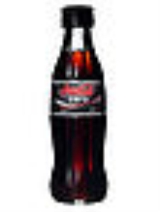
Coca-Cola Zero or Coke Zero is a product of the Coca-Cola Company. It is a sugar-free variation of Coca-Cola. It is marketed as having zero sugar, except in the United States and Canada, where it is marketed as having zero calories.
Coke Zero's formulation is intended to be a calorie-free alternative to Coca-Cola Classic.
Zero's stated ingredients vary in different markets, as seen in the chart below:
class="wikitable"> | | Ingredient Name | Australia; New Zealand | United States; Canada | Greece; | Latvia; Germany; Italy; Lithuania; Estonia; Poland | Austria | Spain | United Kingdom; Ireland | Norway; Finland; Denmark; Sweden | Belgium; Netherlands | Ecuador; Bolivia; Brazil; Colombia Costa Rica | France | Mexico; Chile; Argentina | Hong Kong | Taiwan |
|---|
| Carbonated water | Yes | Yes | Yes | Yes | Yes | Yes | Yes | Yes | Yes | Yes | Yes | Yes | Yes | Yes | | Color | E150d | Caramel | Caramel | E150d | Caramel | E150d | E150d | E150d | E150d | E150d | Caramel (E150d) | E150d | E150d | Caramel | | Acesulfame potassium | Yes | Yes | Yes | Yes | Yes | As E-950 | Yes | Yes | Yes | Yes | Yes | Yes | As E-950 | Yes | | Aspartame | Yes | Yes | Yes | Yes | Yes | As E-951 | Yes | Yes | Yes | Yes | Yes | Yes | As E-951 | Yes | | Caffeine | Yes | Yes | Yes | Yes | Yes | Yes | Yes | Yes | Yes | Yes | Yes | Yes | Yes | Yes | | Phosphoric acid | Yes | Yes | Yes | Yes | As E-338 | Yes | As E-338 | As E-338 | As E-338 | Yes | Yes | As E-338 | Yes | | Potassium benzoate | | Yes | | | | | | | | | | | | | | Potassium citrate | | Yes | | | | | | | | | | | | | | Sodium benzoate | Yes | | Yes | | | As E-211 | | As E-211 | | Yes | | Yes | As E-211 | Yes | | Sodium citrate | Yes | | Yes | Yes | Yes | As E-331 | As E-331 | As E-331 | As E-331 | As E-331 | Yes | Yes | As E-331 | Yes | | Sodium cyclamate | | | Yes | Yes | Yes | As E-952 | | | | | | | | | | Flavor | Yes | Natural flavors | Yes | Yes | Yes | Yes | Yes | Yes | Yes | Yes | Herbal extracts | Yes | Yes | Yes | Calories per 100 ml (3.4 US fl.

Discussion
Ask a question about 'Coca-Cola Zero'
Start a new discussion about 'Coca-Cola Zero'
Answer questions from other users
|
Encyclopedia
Coca-Cola Zero or Coke Zero is a product of the Coca-Cola Company. It is a sugar-free variation of Coca-Cola. It is marketed as having zero sugar, except in the United States and Canada, where it is marketed as having zero calories.
Coke Zero's formulation is intended to be a calorie-free alternative to Coca-Cola Classic.
Ingredients
Coke Zero's stated ingredients vary in different markets, as seen in the chart below:
Flavored variants
Coca-Cola Cherry Zero is a cherry-flavored variation of Coca-Cola Zero. In late January 2007, it was introduced to store shelves and was widely available throughout the United States before its official debut, which occurred on 7 February 2007 at New York City's Fashion Week.
Coca-Cola introduced a vanilla-flavored version, Coca-Cola Vanilla Zero, concurrently with the relaunch of the original Coca-Cola Vanilla in May 2007.
Coca-Cola has not stated if or when an expansion of the flavored variations of Zero to other countries might occur.
Distribution
Coke Zero is currently sold in:
Marketing
Coke Zero was Coca-Cola's biggest product launch in 22 years. It is primarily marketed towards young adult males.
The campaign was to attract male adults to drink the sugar free product of Coca Cola.
The launch started in Norway, on Monday 2 October 2006
In the U.S., advertising has been tailored to its targeted market by describing the drink as "calorie-free" rather than "diet", since young adult males are said to associate diet drinks with women. U.S marketing has also emphasized its similarity in taste to sugared Coca-Cola through a 2007 U.S. viral marketing campaign that suggested the company's executives were so angry over the drinks' similarities they were considering suing their coworkers for "taste infringement".
In Australia, the product was promoted by a fake front group; the campaign included outdoor graffiti and online spamming that mentioned a fake blog. Once exposed, consumer advocates assailed the campaign as misleading and established the Zero Coke Movement to comment on the ethics of Coke's activities.
In the UK, Girls Aloud singer Cheryl Cole was hired to launch the product in a campaign aimed at young men. A television advertisement was created featuring a group of men marching through a city saying "Why can't all the good things in life come without downsides?", ending with a huge banner being rolled down a building, reminiscent of a scene from the German film Good Bye Lenin! (The same TV ad has been used in other markets including Croatia and Belgium.)
In Finland, Coca-Cola called off the Zero marketing campaign on Internet due to its sexist implications. The campaign was deemed to objectify women as sex objects and hence endorse discriminatory attitudes toward women.
The Argentine campaign began in January 2007 with the taglines "Coca-Cola Zero, el sabor que nadie esperaba" (Coca-Cola Zero, the flavor nobody expected) and "El mismo sabor de siempre, zero azúcar" (The same taste as always, zero sugar). This tagline was also used in Brazil in the same month, but the product was only available in Porto Alegre, Rio Grande do Sul and was later introduced across the rest of Brazil. Months before the actual launch of Coca Cola Zero in Bolivia, posters and TV spots announced an "unknown" product with the words "Zero azúcar, con el sabor de siempre. ¿Qué será?" (Zero sugar, with the same taste as always. What could it be?). In the background one could notice the typical shape of a Coca Cola bottle, giving a hint about the upcoming product.
On 15 January 15 2007, television commercials for Zero appeared in Denmark and the product can be found in local stores. Coke Zero launched in Ireland on 8 February 2007, with Girls Aloud singer Sarah Harding as the face of the brand, as her bandmate Cheryl Cole was in the UK.
In the UK some Coke Zero advertising alluded to Pepsi Max, leading to a robust counter-campaign by Pepsi directly extolling the virtues of the concept of "maximum" over that of "zero."
In Canada, and possibly other markets, the "Anatomy Commercials" feature an eyeball with a French accent, and two tongues with Cockney British accents. There are several commercials. In one of them, the eyeball tells the tongues that what they are drinking is not Coke, and the tongues call him a 'big fat liar'. The eyeball gasps in shock and exclaims, 'I am not fat!'. In another, the tongues and eyeball are arguing yet again, then "Brain" comes along and tells them 'if you two don't get along, I'm going to make you eat dirt, and you'll have to wear the onion sombrero; All. Day. Long. Señor." In another, "Finger" says he'll "decide it", and rubs against the ridges of the bottle, saying "the bottle feels like Coke.", then proceeds to have the eyeball 'pull' him, and flatulate (pass gas) in the direction of the tongues who say 'absolutely delicious.' The ads all end with the eyeball saying the slogan in his classic French accent: "Real Coke taste, zero calories." An online game called "Coke Zero Dance Hero" based on the Anatomy Commercials was launched on iCoke.ca in Dec 2008.
Coca-Cola took part in an advertising campaign tied to the 22nd James Bond movie, Quantum Of Solace. For a short time around the release of the movie, Coke Zero was advertised as "Coke Zero Zero Seven". The commercial for this featured an instrumental version of the new Bond song "Another Way to Die" by Jack White and Alicia Keys.
Product logo
The Coca-Cola Zero logo has generally featured the script Coca-Cola logo in red with white trim on a black background, with the word "zero" underneath in lower case in the geometric typeface Avenir (or a customised version of it). Some details have varied from country to country. The British logo, for example, has the "o" taking a spiral form. In the U.S., the letters decline in weight over the course of the word. In Japan, the logo text is presented in solid white rather than red with a white trim.
The U.S. and Canada also appear to be the only countries in which the logo originally had a white background, with a black "zero". This was the face of the drink from its inception until late 2006, when a holiday theme triggered the switch. The black color was kept on 2-liter bottles into 2007, and was introduced on cans as the new year began. This tended to further differentiate the Diet Coke and Coke Zero containers. Twenty-ounce (591 ml) bottles remained white for some time afterwards, but black labels were phased in during February shortly after the launch of Cherry Coke Zero.
Dispute over the Zero name
In Norway the Brewery Ringnes claims that Bryggeriforeningen owns the right to the Zero name. The Zero name was used on a non alcoholic beverage from 1972 to 1996.
External links
-
- Originally an astroturfing website run by Coca-Cola, the site is now an overtly promotional vehicle.
-
-
-
-
-
-
-
-
-
-
-
-
|
| |
|
|