

Cladoselache

Overview
Cladoselache is a genus
of extinct
shark
. It appeared in the Devonian
period.
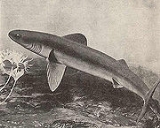
This primitive shark grew to be up to 6 feet (1.8 m) long and roamed the oceans of North America. It is known to have been a fast moving and fairly agile predator due to its streamlined body and deep forked tail. Cladoselache is one of the best known of the early sharks in part due to the well preserved fossil
s that were discovered on the 'Cleveland Shale' on the south shore of Lake Erie.
Genus
In biology, a genus is a low-level taxonomic rank used in the biological classification of living and fossil organisms, which is an example of definition by genus and differentia...
of extinct
Extinction
In biology and ecology, extinction is the end of an organism or of a group of organisms , normally a species. The moment of extinction is generally considered to be the death of the last individual of the species, although the capacity to breed and recover may have been lost before this point...
shark
Shark
Sharks are a type of fish with a full cartilaginous skeleton and a highly streamlined body. The earliest known sharks date from more than 420 million years ago....
. It appeared in the Devonian
Devonian
The Devonian is a geologic period and system of the Paleozoic Era spanning from the end of the Silurian Period, about 416.0 ± 2.8 Mya , to the beginning of the Carboniferous Period, about 359.2 ± 2.5 Mya...
period.
This primitive shark grew to be up to 6 feet (1.8 m) long and roamed the oceans of North America. It is known to have been a fast moving and fairly agile predator due to its streamlined body and deep forked tail. Cladoselache is one of the best known of the early sharks in part due to the well preserved fossil
Fossil
Fossils are the preserved remains or traces of animals , plants, and other organisms from the remote past...
s that were discovered on the 'Cleveland Shale' on the south shore of Lake Erie.
