

Cinema of Hong Kong

Encyclopedia
The cinema
of Hong Kong
is one of the three major threads in the history of Chinese language
cinema
, alongside the cinema of China
, and the cinema of Taiwan
. As a former British colony, Hong Kong
had a greater degree of political and economic freedom
than mainland China
and Taiwan
, and developed into a filmmaking hub for the Chinese-speaking world.
s, sequel
s and remake
s.
Hong Kong film derives a number of elements from Hollywood, such as certain genre parameters, a "thrill-a-minute" philosophy and fast pacing and editing
. But the borrowings are filtered through elements from traditional Chinese drama
and art
, particularly a penchant for stylisation and a disregard for Western standards of realism
. This, combined with a fast and loose approach to the filmmaking process, contributes to the energy and surreal imagination that foreign audiences note in Hong Kong cinema.
. In earlier days, beloved performers from the Chinese opera
stage often brought their audiences with them to the screen. For the past three or four decades, television has been a major launching pad for movie stardom, through acting courses and widely watched drama, comedy and variety series offered by the two major stations. Possibly even more important is the overlap with the Cantonese pop music industry
. Many, if not most, movie stars have recording sidelines, and vice versa; this has been a key marketing strategy in an entertainment industry where American-style, multimedia advertising campaigns have until recently been little used (Bordwell, 2000). In the current commercially troubled climate, the casting of young Cantopop idols (such as Ekin Cheng
and the Twins) to attract the all-important youth audience is endemic.
In the small and tightly knit industry, actors (as well as other personnel, such as directors) are kept very busy. During previous boom periods, the number of movies made by a successful figure in a single year could routinely reach double digit.
. A major release with a big star, aimed at "hit" status, will typically cost around US$5 million (Yang et al., 1997). A low-budget feature can go well below US$1 million. Occasional blockbuster
projects by the very biggest stars (Jackie Chan
or Stephen Chow
, for example) or international co-productions aimed at the global market, can go as high as US$20 million or more, but these are rare exceptions. Hong Kong productions can nevertheless achieve a level of gloss and lavishness greater than these numbers might suggest, given factors like lower wages, and the lower value of the Hong Kong dollar.
language.
For decades, films were typically shot silent
, with dialogue and all other sound dubbed
afterwards. In the hectic and low-budget industry, this method was faster and more cost-efficient than recording live sound, particularly when using performers from different dialect regions; it also helped facilitate dubbing into other languages for the vital export market. Many busy stars would not even record their own dialogue, but would be dubbed by a lesser-known performer. Shooting without sound also contributed to an improvisatory filmmaking approach. Movies often went into production without finished scripts, with scenes and dialogue concocted on the set; especially low-budget productions on tight schedules might even have actors mouth silently or simply count numbers, with actual dialogue created only in the editing process.
A trend towards sync sound
filming grew in the late 1990s and this method is now the norm, partly because of a widespread public association with higher quality cinema.
, particularly the city of Shanghai
, which was then the movie capital of the Chinese-speaking world. Very little of this work is extant: one count finds only four films remaining out of over 500 produced in Hong Kong before World War II
(Fonoroff, 1997). Detailed accounts of this period, especially those by non-Chinese speakers, therefore have inherent limitations and uncertainties.
 As in most of China, the development of early films was tightly bound to Chinese opera
, for centuries the dominant form of dramatic entertainment. Opera scenes were the source for what are generally credited as the first movies made in Hong Kong, two 1909 short comedies entitled Stealing a Roasted Duck and Right a Wrong with Earthenware Dish. The director was stage actor and director Liang Shaobo. The producer was an American, Benjamin Brodsky (sometimes transliterated 'Polaski'), one of a number of Westerners who helped jumpstart Chinese film through their efforts to crack China's vast potential market.
Credit for the first Hong Kong feature film
is usually given to Zhuangzi Tests His Wife
(1913), which also took its story from the opera stage, was helmed by a stage director and featured Brodsky's involvement. Director Lai Man-Wai
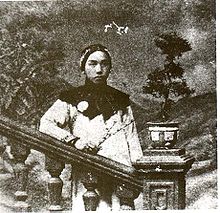
(Li Ming Wei or Li Minwei in Mandarin) was a theatrical colleague of Liang Shaobo's who would become known as the "Father of Hong Kong Cinema". In another borrowing from opera, Lai played the role of wife himself. His brother played the role of husband, and his wife a supporting role as a maid, making her the first Chinese woman to act in a Chinese film, a milestone delayed by longstanding taboos regarding female performers (Leyda, 1972). Zhuangzhi was the only film made by Chinese American Film, founded by Lai and Brodsky as the first movie studio in Hong Kong, and was never actually shown in the territory (Stokes and Hoover, 1999).
The following year, the outbreak of World War I
put a large crimp in the development of cinema in Hong Kong, as Germany was the source of the colony's film stock (Yang, 2003). It was not until 1923 that Lai, his brother and their cousin joined with Liang Shaobo to form Hong Kong's first entirely Chinese-owned-and-operated production company, the Minxin
(or China Sun) Company. In 1924, they moved their operation to the Mainland after government red tape blocked their plans to build a studio. (Teo, 1997)
, one of the most widely spoken, and political factors on the Mainland provided other opportunities. The government of the Kuomintang
or Nationalist Party wanted to enforce a "Mandarin-only" policy and was hostile to Cantonese filmmaking in China. It also banned the wildly popular wuxia
genre of martial arts
swordplay and fantasy, accusing it of promoting superstition and violent anarchy. Cantonese film and wuxia film remained popular despite government hostility, and the British colony of Hong Kong became a place where both of these trends could be freely served. The name (粵語長片, Jyutping
: jyut6 jyu5 coeng4 pin3*2) soon became the standard name for black and white Cantonese movies.
Filmed Cantonese opera
s proved even more successful than wuxia and constituted the leading genre of the 1930s. Major studios that thrived in this period were Grandview, Universal, Nanyue and Tianyi (the last an early incarnation of the Shaw family dynasty that would become the most enduring and influential in Chinese film). (Teo, 1997)
(1937) and Situ Huimin's March of the Partisans (1938). The genre and the film industry were further boosted by emigre film artists and companies when Shanghai was taken by the Japanese in 1937.
This of course came to an end when Hong Kong itself fell
to the Japanese in December 1941. But unlike on the Mainland, the occupiers were not able to put together a collaborationist film industry. They managed to complete just one propaganda movie, The Attack on Hong Kong (1942; aka The Day of England's Collapse) before the British returned in 1945 (Teo, 1997). A more important move by the Japanese may have been to melt down many of Hong Kong's pre-war films to extract their silver nitrate
for military use (Fonoroff, 1997).
(which had been on hold during the fight against Japan) and then the 1949 Communist
victory. These events definitively shifted the center of Chinese-language cinema to Hong Kong. The colony also did big business exporting films to Southeast Asia
n countries (especially but not exclusively due to their large Chinese expatriate
communities) and to Chinatown
s in Western countries (Bordwell, 2000).
, the dialect of most Hong Kong natives. Mandarin movies sometimes had much higher budgets and more lavish production. Reasons included their enormous export market; the expertise and capital of the Shanghai filmmakers. For decades to come, Cantonese films, though sometimes more numerous, were relegated to second-tier status (Leyda, 1972).
Another language-related milestone occurred in 1963: the British authorities passed a law requiring the subtitling of all films in English, supposedly to enable a watch on political content. Making a virtue of necessity, studios included Chinese subtitles as well, enabling easier access to their movies for speakers of other dialects. (Yang, 2003) Subtitling later had the unintended consequence
of facilitating the movies' popularity in the West.
on film dominated. The top stars were the female duo of Yam Kim Fai
and Pak Suet Sin (Yam–Pak for short). Yam specialised in male scholar roles to Pak's female leads. They made over fifty films together, The Purple Hairpin (1959) being one of the most enduringly popular (Teo, 1997).
Low-budget martial arts film
s were also popular. A series of roughly 100 kung fu movies starring Kwan Tak Hing
as historical folk hero Wong Fei Hung
were made, starting with The True Story of Wong Fei Hung (1949) and ending with Wong Fei Hung Bravely Crushing the Fire Formation (1970) (Logan, 1995). Fantasy wuxia
(swordplay) serials with special effects drawn on the film by hand, such as The Six-Fingered Lord of the Lute (1965) starring teen idol Connie Chan Po-chu
in the lead male role, were also popular (Chute and Lim, 2003, 3), as were contemporary melodrama
s of home and family life.
and Motion Picture and General Investments Limited
(MP&GI, later renamed Cathay) were the top studios by the 1960s, and bitter rivals. The Shaws gained the upper hand in 1964 after the death in a plane crash of MP&GI founder and head Loke Wan Tho
. The renamed Cathay faltered, ceasing film production in 1970 (Yang, 2003).
A musical genre called Huángméidiào
(黃梅調) was derived from Chinese opera
; the Shaws' record-breaking hit The Love Eterne
(1963) remains the classic of the genre. Historical costume epics often overlapped with the Huángméidiào, such as in The Kingdom and the Beauty (1959). (Both of the above examples were directed by Shaw's star director, Li Han Hsiang
). Romantic melodramas such as Red Bloom in the Snow (1956), Love Without End (1961), The Blue and the Black (1964) and adaptations of novels by Chiung Yao
were popular. So were Hollywood-style musicals
, which were a particular specialty of MP&GI/Cathay in entries such as Mambo Girl (1957) and The Wild, Wild Rose (1960).
In the second half of the 1960s, the Shaws inaugurated a new generation of more intense, less fantastical wuxia
films with glossier production values, acrobatic moves and stronger violence. The trend was inspired by the popularity of imported samurai
movies from Japan (Chute and Lim, 2003, 8), as well as by the loss of movie audiences to television. This marked the crucial turn of the industry from a female-centric genre system to an action movie orientation (see also the Hong Kong action cinema
article). Key trendsetters included Xu Zenghong's Temple of the Red Lotus (1965), King Hu
's Come Drink with Me
(1966) and Dragon Inn (1967, made in Taiwan; aka Dragon Gate Inn
), and Chang Cheh
's Tiger Boy (1966), The One-Armed Swordsman (1967) and Golden Swallow (1968).
The first spark was the ensemble comedy The House of 72 Tenants
, the only Cantonese film made in 1973, but a resounding hit. It was based on a well-known play and produced by the Shaws as a showcase for performers from their pioneering television station TVB (Yang, 2003).
The return of Cantonese really took off with the comedies of former TVB stars the Hui Brothers (actor-director-screenwriter Michael Hui
, actor-singer Sam Hui and actor Ricky Hui
). The rationale behind the move to Cantonese was clear in the trailer for the brothers' Games Gamblers Play
(1974): "Films by devoted young people with you in mind." This move back to the local audience for Hong Kong cinema paid off immediately. Games Gamblers Play initially made US$1.4 million at the Hong Kong box office, becoming the highest grossing film up to that point. The Hui movies also broke ground by satirising the modern reality of an ascendant middle class, whose long work hours and dreams of material success were transforming the colony into a modern industrial and corporate giant (Teo, 1997). Cantonese comedy thrived and Cantonese production skyrocketed; Mandarin hung on into the early 1980s, but has been relatively rare onscreen since.
and Leonard Ho
left to form their own studio, Golden Harvest
. The upstart's more flexible and less tightfisted approach to the business outmaneuvered the Shaws' old-style studio. Chow and Ho landed contracts with rising young performers who had fresh ideas for the industry, like Bruce Lee
and the Hui Brothers, and allowed them greater creative latitude than was traditional. By the end of the 1970s, Golden Harvest was the top studio, signing up Jackie Chan
, the kung fu comedy actor-filmmaker who would spend the next twenty years as Asia's biggest box office draw (Chan and Yang, 1998, pp. 164–165; Bordwell, 2000).
Meanwhile, the explosions of Cantonese and kung fu and the example of Golden Harvest had created more space for independent producers and production companies. The era of the studio juggernauts was past. The Shaws nevertheless continued film production until 1985 before turning entirely to television (Teo, 1997).
known as fengyue became a local staple (the name is a contraction of a Chinese phrase implying seductive decadence). Such material did not suffer as much of a stigma in Hong Kong as in most Western countries; it was more or less part of the mainstream, sometimes featuring contributions from major directors such as Chor Yuen
and Li Han Hsiang
and often crossbreeding with other popular genres like martial arts, the costume film
and especially comedy (Teo, 1997; Yang, 2003). Violence also grew more intense and graphic, particularly at the instigation of martial arts filmmakers.
Director Lung Kong blended these trends into the social-issue dramas which he had already made his specialty with late 1960s Cantonese classics like The Story of a Discharged Prisoner (1967) and Teddy Girls (1969). In the 1970s, he began directing in Mandarin and brought exploitation
elements to serious films about subjects like prostitution (The Call Girls
and Lina
), the atomic bomb (Hiroshima 28) and the fragility of civilised society (Yesterday, Today and Tomorrow, which portrayed a plague-decimated, near-future Hong Kong). (Teo, 1997)
The brief career of Tang Shu Shuen, the territory's first noted woman director, produced two films, The Arch
(1970) and China Behind (1974), that were trailblazers for a local, socially critical art cinema
. They are also widely considered forerunners of the last major milestone of the decade, the so-called Hong Kong New Wave
that would come from outside the traditional studio hierarchy and point to new possibilities for the industry (Bordwell, 2000).
A cinema of greater technical polish and more sophisticated visual style, including the first forays into up-to-date special effects technology, sprang up quickly. To this surface dazzle, the new cinema added an eclectic mixing and matching of genres, and a penchant for pushing the boundaries of sensationalistic content. Slapstick
comedy, sex, the supernatural, and above all action
(of both the martial arts
and cops-and-criminals varieties) ruled, occasionally all in the same film.
, Singapore
, Malaysia, Indonesia
and South Korea
. Taiwan
became at least as important a market to Hong Kong film as the local one; in the early 1990s the once-robust Taiwanese film industry
came close to extinction under the onslaught of Hong Kong imports (Bordwell, 2000). They even found a lesser foothold in Japan
, with its own highly developed and better-funded cinema
and strong taste for American movies; Jackie Chan
in particular became popular there.
Almost accidentally, Hong Kong also reached further into the West, building upon the attention gained during the 1970s kung fu craze. Availability in Chinatown
theaters and video shops allowed the movies to be discovered by Western film cultists
attracted by their "exotic" qualities and excesses. An emergence into the wider popular culture gradually followed over the coming years.
, founded in 1980 by comedians Karl Maka
, Raymond Wong and Dean Shek. It specialised in contemporary comedy and action, slickly produced according to explicitly prescribed commercial formulas. The lavish, effects-filled spy spoof Aces Go Places
(1982) and its numerous sequels epitomised the much-imitated "Cinema City style." (Yang, 2003)
Directors and producers Tsui Hark
and Wong Jing
can be singled out as definitive figures of this era. Tsui was a notorious Hong Kong New Wave
tyro who symbolised that movement's absorption into the mainstream, becoming the industry's central trendsetter and technical experimenter (Yang et al., 1997, p. 75). The even more prolific Wong is, by most accounts, the most commercially successful and critically reviled Hong Kong filmmaker of the last two decades, with his relentless output of aggressively crowd-pleasing and cannily marketed pulp films.
Other hallmarks of this era included the gangster or "Triad" movie fad launched by director John Woo
, producer and long-time actor Alan Tang
and dominated by actor Chow Yun-fat
; romantic melodramas and martial arts fantasies starring Brigitte Lin
; the comedies of stars like Cherie Chung
and Stephen Chow
; traditional kung fu movies dominated by Jet Li
; and contemporary, stunt
-driven kung fu action epitomised by the work of Jackie Chan
.
The government's introduction of a film ratings system
in 1988 had a certainly unintended effect on subsequent trends. The "Category III" (adults only) rating became an umbrella for the rapid growth of pornographic
and generally outré films; however, while considered graphic by Chinese standards, these films would be more on par with movies rated "R" or "NC-17" in the United States, and not "XXX". By the height of the boom in the early 1990s, roughly half of the theatrical features produced were Category III-rated softcore erotica descended from the fengyue movies of the 1970s. (Yang, 2003) A definitive example of a mainstream Category III hit was Michael Mak's Sex and Zen
(1991), a period
comedy inspired by The Carnal Prayer Mat, the seventeenth century classic of comic-erotic literature by Li Yu
(Dannen and Long, 1997). Naked Killer
(1992) also became an international cult classic
.
The rating also covered a fad for grisly, taboo-tweaking exploitation
and horror
films, often supposedly based on true crime stories, such as Men Behind the Sun (1988), Dr. Lamb
(1992), The Untold Story (1993) and Ebola Syndrome
(1996). Films depicting triad rituals would also receive a Category III rating, an example of this being Crime Story (1993) starring Jackie Chan
.
Since the mid-1990s, the trend has withered with the shrinking of the general Hong Kong film market and the wider availability of pornography in home video formats (Bordwell, 2000). But in 2000s, three Category III movies: Election
its sequel, Election 2
(aka Triad Election), and Mad Detective
still enjoyed surprising box office successes in Hong Kong.
, due at least in part to the influence of the New Wave
. Some New Wave filmmakers such as Ann Hui
and Yim Ho
continued to earn acclaim with personal and political films made at the edges of the mainstream.
The second half of the 1980s also saw the emergence of what is sometimes called a "Second Wave." These younger directors included names like Stanley Kwan
, Clara Law
and her partner Eddie Fong, Mabel Cheung
, Lawrence Ah Mon
and Wong Kar-wai
. Like the New Wavers, they tended to be graduates of overseas film schools and local television apprenticeships, and to be interested in going beyond the usual, commercial subject matters and styles (Teo, 1997).
These artists began to earn Hong Kong unprecedented attention and respect in international critical
circles and the global film festival
circuit. In particular, Wong Kar-wai
's works starring Leslie Cheung
, Tony Leung Chiu-Wai and Maggie Cheung
in the 1990s has made him an internationally acclaimed and award-winning filmmaker.
Numerous, converging factors have been blamed for the downturn:
The greater access to the Mainland that came with the July 1997 handover
to China was not as much of a boon as hoped, and presented its own problems, particularly with regard to censorship.
The industry had one of its darkest years in 2003. In addition to the continuing slump, a SARS virus outbreak kept many theaters virtually empty for a time and shut down film production for four months; only fifty-four movies were made (Li, 2004). The unrelated deaths of two of Hong Kong's famous singer/actors, Leslie Cheung
, 46, and Anita Mui
, 40, rounded out the bad news.
The Hong Kong Government in April 2003 introduced a Film Guarantee Fund as an incentive to local banks to become involved in the motion picture industry. The guarantee operates to secure a percentage of monies loaned by banks to film production companies. The Fund has received a mixed reception from industry participants, and less than enthusiastic reception from financial institutions who perceive investment in local films as high risk ventures with little collateral. Film guarantee legal documents commissioned by the Hong Kong Government in late April 2003 are based on Canadian documents, which have limited relevance to the local industry.
; greater use of Hollywood-style mass marketing techniques; and heavy reliance on casting teen-friendly Cantopop
music stars. Successful genre cycles in the late 1990s and early 2000s have included: American-styled, high-tech action pictures such as Downtown Torpedoes (1997), Gen-X Cops
and Purple Storm
(both 1999); the "Triad kids" subgenre launched by Young and Dangerous
(1996); yuppie
-centric romantic comedies like The Truth About Jane and Sam
(1999), Needing You... (2000), Love on a Diet (2001); and supernatural chillers like Horror Hotline: Big-Head Monster (2001) and The Eye (2002), often modeled on the Japanese horror films
then making an international splash.
In the 2000s, there have been some bright spots. Milkyway Image, founded by filmmakers Johnnie To
and Wai Ka-Fai
in the mid-1990s, has had considerable critical and commercial success, especially with offbeat and character-driven crime films like The Mission
(1999) and Running on Karma
(2003). An even more successful example of the genre was the blockbuster Infernal Affairs
trilogy (2002–2003) of police thrillers co-directed by Andrew Lau
and Alan Mak
(the Oscar winning movie, The Departed
, was based on this movie). Comedian Stephen Chow
, the most consistently popular screen star of the 1990s, directed and starred in Shaolin Soccer
(2001) and Kung Fu Hustle
(2004); these used digital special effects to push his distinctive humor into new realms of the surreal and became the territory's two highest-grossing films to date, garnering numerous awards locally and internationally. Johnnie To
's two Category III movies: Election
and Election 2
also enjoyed Hong Kong box office successes. Election 2
has even been released in the US
theatrically under the new title Triad Election
; this movie received very positive reviews in the United States, with a more than 90% "Fresh" rating on Rottentomatoes.com. Groundbreaking new films such as City Without Baseball
, Permanent Residence
and Amphetamine
followed the success of earlier 1990s films such as Bugis Street (a Hong Kong–Singapore co-production), and Hold You Tight
.
Still, some observers believe that, given the depressed state of the industry and the rapidly strengthening economic and political ties among Hong Kong, mainland China and Taiwan, the distinctive entity of Hong Kong cinema that emerged after World War II may have a limited lifespan. The lines between the mainland and Hong Kong industries are ever more blurred, especially now that China is producing increasing numbers of slick, mass-appeal popular films. Predictions are notoriously difficult in this rapidly changing part of the world, but the trend may be towards a more pan-Chinese cinema, as existed in the first half of the twentieth century.
Film awards:
Festivals:
Note that "[e]very year, since 1978, the HKIFF has published both a catalog of films released that year and a retrospective book—and sometimes, special interest publication or two in the form of books and pamphlets. In 1996, a 10th Anniversary special was issued, and from 1997 onward, there have been yearly 'Panorama' special interest books in addition to the annual catalogs, retrospective books, and occasional pamphlets. In 2003, the HKIFF started carrying publications of the Hong Kong Film Archive, as well."— Bibliography of Hong Kong International Film Festival Retrospective Books Related to Hong Kong Action Cinema
Movie theater
A movie theater, cinema, movie house, picture theater, film theater is a venue, usually a building, for viewing motion pictures ....
of Hong Kong
Hong Kong
Hong Kong is one of two Special Administrative Regions of the People's Republic of China , the other being Macau. A city-state situated on China's south coast and enclosed by the Pearl River Delta and South China Sea, it is renowned for its expansive skyline and deep natural harbour...
is one of the three major threads in the history of Chinese language
Chinese language
The Chinese language is a language or language family consisting of varieties which are mutually intelligible to varying degrees. Originally the indigenous languages spoken by the Han Chinese in China, it forms one of the branches of Sino-Tibetan family of languages...
cinema
Film
A film, also called a movie or motion picture, is a series of still or moving images. It is produced by recording photographic images with cameras, or by creating images using animation techniques or visual effects...
, alongside the cinema of China
Cinema of China
The Chinese-language cinema has three distinct historical threads: Cinema of Hong Kong, Cinema of China, and Cinema of Taiwan. Since 1949 the cinema of mainland China has operated under restrictions imposed by the Communist Party of China's State Administration of Radio, Film, and Television and...
, and the cinema of Taiwan
Cinema of Taiwan
The history of Chinese-language cinema has three separate threads of development: Cinema of Hong Kong, Cinema of Mainland China and Cinema of Taiwan . Taiwanese cinema grew up outside of the Hong Kong mainstream and the censorship of the People's Republic of China.Taiwanese cinema is deeply rooted...
. As a former British colony, Hong Kong
British Hong Kong
British Hong Kong refers to Hong Kong as a Crown colony and later, a British dependent territory under British administration from 1841 to 1997.- Colonial establishment :...
had a greater degree of political and economic freedom
Economic freedom
Economic freedom is a term used in economic and policy debates. As with freedom generally, there are various definitions, but no universally accepted concept of economic freedom...
than mainland China
Mainland China
Mainland China, the Chinese mainland or simply the mainland, is a geopolitical term that refers to the area under the jurisdiction of the People's Republic of China . According to the Taipei-based Mainland Affairs Council, the term excludes the PRC Special Administrative Regions of Hong Kong and...
and Taiwan
Taiwan
Taiwan , also known, especially in the past, as Formosa , is the largest island of the same-named island group of East Asia in the western Pacific Ocean and located off the southeastern coast of mainland China. The island forms over 99% of the current territory of the Republic of China following...
, and developed into a filmmaking hub for the Chinese-speaking world.
The Hong Kong industry
Unlike many film industries, Hong Kong has enjoyed little to no direct government support, through either subsidies or import quotas. It is a thoroughly commercial cinema: highly corporate, concentrating on crowd-pleasing genres like comedy and action, and relying heavily on formulaFormula fiction
In popular culture, formula fiction is literature in which the storylines and plots have been reused to the extent that the narratives are predictable. It is similar to genre fiction, which identifies a number of specific settings that are frequently reused...
s, sequel
Sequel
A sequel is a narrative, documental, or other work of literature, film, theatre, or music that continues the story of or expands upon issues presented in some previous work...
s and remake
Remake
A remake is a piece of media based primarily on an earlier work of the same medium.-Film:The term "remake" is generally used in reference to a movie which uses an earlier movie as the main source material, rather than in reference to a second, later movie based on the same source...
s.
Hong Kong film derives a number of elements from Hollywood, such as certain genre parameters, a "thrill-a-minute" philosophy and fast pacing and editing
Film editing
Film editing is part of the creative post-production process of filmmaking. It involves the selection and combining of shots into sequences, and ultimately creating a finished motion picture. It is an art of storytelling...
. But the borrowings are filtered through elements from traditional Chinese drama
Chinese opera
Chinese opera is a popular form of drama and musical theatre in China with roots going back as far as the third century CE...
and art
Chinese art
Chinese art is visual art that, whether ancient or modern, originated in or is practiced in China or by Chinese artists or performers. Early so-called "stone age art" dates back to 10,000 BC, mostly consisting of simple pottery and sculptures. This early period was followed by a series of art...
, particularly a penchant for stylisation and a disregard for Western standards of realism
Realism (arts)
Realism in the visual arts and literature refers to the general attempt to depict subjects "in accordance with secular, empirical rules", as they are considered to exist in third person objective reality, without embellishment or interpretation...
. This, combined with a fast and loose approach to the filmmaking process, contributes to the energy and surreal imagination that foreign audiences note in Hong Kong cinema.
The star system
As is common in commercial cinema, the industry's heart is a highly developed star systemStar system (film)
The star system was the method of creating, promoting and exploiting movie stars in Classical Hollywood cinema. Studios would select promising young actors and glamorise and create personas for them, often inventing new names and even new backgrounds...
. In earlier days, beloved performers from the Chinese opera
Chinese opera
Chinese opera is a popular form of drama and musical theatre in China with roots going back as far as the third century CE...
stage often brought their audiences with them to the screen. For the past three or four decades, television has been a major launching pad for movie stardom, through acting courses and widely watched drama, comedy and variety series offered by the two major stations. Possibly even more important is the overlap with the Cantonese pop music industry
Cantopop
Cantopop is a colloquialism for "Cantonese popular music". It is sometimes referred to as HK-pop, short for "Hong Kong popular music". It is categorized as a subgenre of Chinese popular music within C-pop...
. Many, if not most, movie stars have recording sidelines, and vice versa; this has been a key marketing strategy in an entertainment industry where American-style, multimedia advertising campaigns have until recently been little used (Bordwell, 2000). In the current commercially troubled climate, the casting of young Cantopop idols (such as Ekin Cheng
Ekin Cheng
Ekin Cheng is a Hong Kong actor and Cantopop singer. Early in his career he used the name Dior as a first name. He has also been referred to as Noodle Cheng, after a popular noodle product with a similar name...
and the Twins) to attract the all-important youth audience is endemic.
In the small and tightly knit industry, actors (as well as other personnel, such as directors) are kept very busy. During previous boom periods, the number of movies made by a successful figure in a single year could routinely reach double digit.
Budgets
Films are typically high-budget in comparison with American productCinema of the United States
The cinema of the United States, also known as Hollywood, has had a profound effect on cinema across the world since the early 20th century. Its history is sometimes separated into four main periods: the silent film era, classical Hollywood cinema, New Hollywood, and the contemporary period...
. A major release with a big star, aimed at "hit" status, will typically cost around US$5 million (Yang et al., 1997). A low-budget feature can go well below US$1 million. Occasional blockbuster
Blockbuster (entertainment)
Blockbuster, as applied to film or theatre, denotes a very popular or successful production. The entertainment industry use was originally theatrical slang referring to a particularly successful play but is now used primarily by the film industry...
projects by the very biggest stars (Jackie Chan
Jackie Chan
Jackie Chan, SBS, MBE is a Hong Kong actor, action choreographer, comedian, director, producer, martial artist, screenwriter, entrepreneur, singer and stunt performer. In his movies, he is known for his acrobatic fighting style, comic timing, use of improvised weapons, and innovative stunts...
or Stephen Chow
Stephen Chow
Stephen Chow Sing-Chi is a Hong Kong actor, comedian, screenwriter, film director and producer.- Professional career :Stephen Chow began as a temporary actor for TVB. He entered TVB in early 1980s, and was trained there, although he had few opportunities to appear in films. Chow graduated from...
, for example) or international co-productions aimed at the global market, can go as high as US$20 million or more, but these are rare exceptions. Hong Kong productions can nevertheless achieve a level of gloss and lavishness greater than these numbers might suggest, given factors like lower wages, and the lower value of the Hong Kong dollar.
Language and sound
Since the 1980s, films have been made mostly in the CantoneseStandard Cantonese
Cantonese, or Standard Cantonese, is a language that originated in the vicinity of Canton in southern China, and is often regarded as the prestige dialect of Yue Chinese....
language.
For decades, films were typically shot silent
MOS (film)
MOS is a standard filmmaking jargon abbreviation, used in production reports to indicate an associated film segment has no synchronous audio track...
, with dialogue and all other sound dubbed
Dubbing (filmmaking)
Dubbing is the post-production process of recording and replacing voices on a motion picture or television soundtrack subsequent to the original shooting. The term most commonly refers to the substitution of the voices of the actors shown on the screen by those of different performers, who may be...
afterwards. In the hectic and low-budget industry, this method was faster and more cost-efficient than recording live sound, particularly when using performers from different dialect regions; it also helped facilitate dubbing into other languages for the vital export market. Many busy stars would not even record their own dialogue, but would be dubbed by a lesser-known performer. Shooting without sound also contributed to an improvisatory filmmaking approach. Movies often went into production without finished scripts, with scenes and dialogue concocted on the set; especially low-budget productions on tight schedules might even have actors mouth silently or simply count numbers, with actual dialogue created only in the editing process.
A trend towards sync sound
Sync sound
Sync sound refers to sound recorded at the time of the filming of movies, and has been widely used in movies since the birth of sound movies.-History:...
filming grew in the late 1990s and this method is now the norm, partly because of a widespread public association with higher quality cinema.
1909 to World War II
During its early history, Hong Kong's cinema played second fiddle to that of the mainlandMainland China
Mainland China, the Chinese mainland or simply the mainland, is a geopolitical term that refers to the area under the jurisdiction of the People's Republic of China . According to the Taipei-based Mainland Affairs Council, the term excludes the PRC Special Administrative Regions of Hong Kong and...
, particularly the city of Shanghai
Shanghai
Shanghai is the largest city by population in China and the largest city proper in the world. It is one of the four province-level municipalities in the People's Republic of China, with a total population of over 23 million as of 2010...
, which was then the movie capital of the Chinese-speaking world. Very little of this work is extant: one count finds only four films remaining out of over 500 produced in Hong Kong before World War II
World War II
World War II, or the Second World War , was a global conflict lasting from 1939 to 1945, involving most of the world's nations—including all of the great powers—eventually forming two opposing military alliances: the Allies and the Axis...
(Fonoroff, 1997). Detailed accounts of this period, especially those by non-Chinese speakers, therefore have inherent limitations and uncertainties.
Pioneers from the stage
Chinese opera
Chinese opera is a popular form of drama and musical theatre in China with roots going back as far as the third century CE...
, for centuries the dominant form of dramatic entertainment. Opera scenes were the source for what are generally credited as the first movies made in Hong Kong, two 1909 short comedies entitled Stealing a Roasted Duck and Right a Wrong with Earthenware Dish. The director was stage actor and director Liang Shaobo. The producer was an American, Benjamin Brodsky (sometimes transliterated 'Polaski'), one of a number of Westerners who helped jumpstart Chinese film through their efforts to crack China's vast potential market.
Credit for the first Hong Kong feature film
Feature film
In the film industry, a feature film is a film production made for initial distribution in theaters and being the main attraction of the screening, rather than a short film screened before it; a full length movie...
is usually given to Zhuangzi Tests His Wife
Zhuangzi Tests His Wife
Zhuangzi Tests His Wife is a 1913 Hong Kong drama film directed by Li Minwei. It is the first ever feature film in Hong Kong cinema...
(1913), which also took its story from the opera stage, was helmed by a stage director and featured Brodsky's involvement. Director Lai Man-Wai
Lai Man-Wai
Lai Man-Wai , now known as Father of Hong Kong Cinema, was the director of the first Hong Kong movie Zhuangzi Tests His Wife in 1913...
(Li Ming Wei or Li Minwei in Mandarin) was a theatrical colleague of Liang Shaobo's who would become known as the "Father of Hong Kong Cinema". In another borrowing from opera, Lai played the role of wife himself. His brother played the role of husband, and his wife a supporting role as a maid, making her the first Chinese woman to act in a Chinese film, a milestone delayed by longstanding taboos regarding female performers (Leyda, 1972). Zhuangzhi was the only film made by Chinese American Film, founded by Lai and Brodsky as the first movie studio in Hong Kong, and was never actually shown in the territory (Stokes and Hoover, 1999).
The following year, the outbreak of World War I
World War I
World War I , which was predominantly called the World War or the Great War from its occurrence until 1939, and the First World War or World War I thereafter, was a major war centred in Europe that began on 28 July 1914 and lasted until 11 November 1918...
put a large crimp in the development of cinema in Hong Kong, as Germany was the source of the colony's film stock (Yang, 2003). It was not until 1923 that Lai, his brother and their cousin joined with Liang Shaobo to form Hong Kong's first entirely Chinese-owned-and-operated production company, the Minxin
Minxin Film Company
The Minxin Film Company or the China Sun Film Company was one of the earliest movie studios in the history of Chinese cinema.- History :...
(or China Sun) Company. In 1924, they moved their operation to the Mainland after government red tape blocked their plans to build a studio. (Teo, 1997)
The advent of sound
With the popularity of talkies in the early 1930s, the problem of China's various spoken dialects had to be grappled with. Hong Kong was a major center for CantoneseStandard Cantonese
Cantonese, or Standard Cantonese, is a language that originated in the vicinity of Canton in southern China, and is often regarded as the prestige dialect of Yue Chinese....
, one of the most widely spoken, and political factors on the Mainland provided other opportunities. The government of the Kuomintang
Kuomintang
The Kuomintang of China , sometimes romanized as Guomindang via the Pinyin transcription system or GMD for short, and translated as the Chinese Nationalist Party is a founding and ruling political party of the Republic of China . Its guiding ideology is the Three Principles of the People, espoused...
or Nationalist Party wanted to enforce a "Mandarin-only" policy and was hostile to Cantonese filmmaking in China. It also banned the wildly popular wuxia
Wuxia
Wuxia is a broad genre of Chinese fiction concerning the adventures of martial artists. Although wuxia is traditionally a form of literature, its popularity has caused it to spread to diverse art forms like Chinese opera, manhua , films, television series, and video games...
genre of martial arts
Martial arts
Martial arts are extensive systems of codified practices and traditions of combat, practiced for a variety of reasons, including self-defense, competition, physical health and fitness, as well as mental and spiritual development....
swordplay and fantasy, accusing it of promoting superstition and violent anarchy. Cantonese film and wuxia film remained popular despite government hostility, and the British colony of Hong Kong became a place where both of these trends could be freely served. The name (粵語長片, Jyutping
Jyutping
Jyutping is a romanization system for Cantonese developed by the Linguistic Society of Hong Kong in 1993. Its formal name is The Linguistic Society of Hong Kong Cantonese Romanization Scheme...
: jyut6 jyu5 coeng4 pin3*2) soon became the standard name for black and white Cantonese movies.
Filmed Cantonese opera
Cantonese opera
Cantonese opera is one of the major categories in Chinese opera, originating in southern China's Cantonese culture. It is popular in Guangdong, Guangxi, Hong Kong, Macau, Singapore and Malaysia. Like all versions of Chinese opera, it is a traditional Chinese art form, involving music, singing,...
s proved even more successful than wuxia and constituted the leading genre of the 1930s. Major studios that thrived in this period were Grandview, Universal, Nanyue and Tianyi (the last an early incarnation of the Shaw family dynasty that would become the most enduring and influential in Chinese film). (Teo, 1997)
The advent of war
Another important factor in the 1930s was the Sino-Japanese War. "National defense" films—patriotic war stories about Chinese resisting the Japanese invasion—became one of Hong Kong's major genres; notable titles included Kwan Man Ching's Lifeline (1935), Chiu Shu Sun's Hand to Hand CombatHand to hand combat
Hand-to-hand combat is a lethal or nonlethal physical confrontation between two or more persons at very short range that does not involve the use of firearms or other distance weapons...
(1937) and Situ Huimin's March of the Partisans (1938). The genre and the film industry were further boosted by emigre film artists and companies when Shanghai was taken by the Japanese in 1937.
This of course came to an end when Hong Kong itself fell
Battle of Hong Kong
The Battle of Hong Kong took place during the Pacific campaign of World War II. It began on 8 December 1941 and ended on 25 December 1941 with Hong Kong, then a Crown colony, surrendering to the Empire of Japan.-Background:...
to the Japanese in December 1941. But unlike on the Mainland, the occupiers were not able to put together a collaborationist film industry. They managed to complete just one propaganda movie, The Attack on Hong Kong (1942; aka The Day of England's Collapse) before the British returned in 1945 (Teo, 1997). A more important move by the Japanese may have been to melt down many of Hong Kong's pre-war films to extract their silver nitrate
Silver nitrate
Silver nitrate is an inorganic compound with chemical formula . This compound is a versatile precursor to many other silver compounds, such as those used in photography. It is far less sensitive to light than the halides...
for military use (Fonoroff, 1997).
The 1940s – 1960s
Postwar Hong Kong cinema, like postwar Hong Kong industries in general, was catalyzed by the continuing influx of capital and talents from Mainland China. This became a flood with the 1946 resumption of the Chinese Civil WarChinese Civil War
The Chinese Civil War was a civil war fought between the Kuomintang , the governing party of the Republic of China, and the Communist Party of China , for the control of China which eventually led to China's division into two Chinas, Republic of China and People's Republic of...
(which had been on hold during the fight against Japan) and then the 1949 Communist
Communist Party of China
The Communist Party of China , also known as the Chinese Communist Party , is the founding and ruling political party of the People's Republic of China...
victory. These events definitively shifted the center of Chinese-language cinema to Hong Kong. The colony also did big business exporting films to Southeast Asia
Southeast Asia
Southeast Asia, South-East Asia, South East Asia or Southeastern Asia is a subregion of Asia, consisting of the countries that are geographically south of China, east of India, west of New Guinea and north of Australia. The region lies on the intersection of geological plates, with heavy seismic...
n countries (especially but not exclusively due to their large Chinese expatriate
Expatriate
An expatriate is a person temporarily or permanently residing in a country and culture other than that of the person's upbringing...
communities) and to Chinatown
Chinatown
A Chinatown is an ethnic enclave of overseas Chinese people, although it is often generalized to include various Southeast Asian people. Chinatowns exist throughout the world, including East Asia, Southeast Asia, the Americas, Australasia, and Europe. Binondo's Chinatown located in Manila,...
s in Western countries (Bordwell, 2000).
Competing languages
The postwar era also cemented the bifurcation of the industry into two parallel cinemas, one in Mandarin, the dominant dialect of the Mainland emigres, and one in CantoneseStandard Cantonese
Cantonese, or Standard Cantonese, is a language that originated in the vicinity of Canton in southern China, and is often regarded as the prestige dialect of Yue Chinese....
, the dialect of most Hong Kong natives. Mandarin movies sometimes had much higher budgets and more lavish production. Reasons included their enormous export market; the expertise and capital of the Shanghai filmmakers. For decades to come, Cantonese films, though sometimes more numerous, were relegated to second-tier status (Leyda, 1972).
Another language-related milestone occurred in 1963: the British authorities passed a law requiring the subtitling of all films in English, supposedly to enable a watch on political content. Making a virtue of necessity, studios included Chinese subtitles as well, enabling easier access to their movies for speakers of other dialects. (Yang, 2003) Subtitling later had the unintended consequence
Unintended consequence
In the social sciences, unintended consequences are outcomes that are not the outcomes intended by a purposeful action. The concept has long existed but was named and popularised in the 20th century by American sociologist Robert K. Merton...
of facilitating the movies' popularity in the West.
Cantonese movies
During this period, Cantonese operaCantonese opera
Cantonese opera is one of the major categories in Chinese opera, originating in southern China's Cantonese culture. It is popular in Guangdong, Guangxi, Hong Kong, Macau, Singapore and Malaysia. Like all versions of Chinese opera, it is a traditional Chinese art form, involving music, singing,...
on film dominated. The top stars were the female duo of Yam Kim Fai
Yam Kim Fai
Yam Kim Fai , also known as Ren Jianhui was a renowned Cantonese opera actress in China and Hong Kong.She was most notable for her unique ability to sing in the lower register...
and Pak Suet Sin (Yam–Pak for short). Yam specialised in male scholar roles to Pak's female leads. They made over fifty films together, The Purple Hairpin (1959) being one of the most enduringly popular (Teo, 1997).
Low-budget martial arts film
Martial arts film
Martial arts film is a film genre. A sub-genre of the action film, martial arts films contain numerous fights between characters, usually as the films' primary appeal and entertainment value, and often as a method of storytelling and character expression and development. Martial arts are frequently...
s were also popular. A series of roughly 100 kung fu movies starring Kwan Tak Hing
Kwan Tak Hing
Kwan Tak-hing, MBE was a Hong Kong actor who played the role of martial artist folk hero Wong Fei-hung in at least 77 films, between the 1940s and the 1980s. No-one else in cinema history has portrayed the same person as many times. In total he made over 130 films. He was elected to be the...
as historical folk hero Wong Fei Hung
Wong Fei Hung
Wong Fei-hung was a Chinese martial artist, a traditional Chinese medicine physician, acupuncturist and revolutionary who became a folk hero and the subject of numerous television series and films. He was considered an expert in the Hung Gar style of Chinese martial arts. Wong is visibly the most...
were made, starting with The True Story of Wong Fei Hung (1949) and ending with Wong Fei Hung Bravely Crushing the Fire Formation (1970) (Logan, 1995). Fantasy wuxia
Wuxia
Wuxia is a broad genre of Chinese fiction concerning the adventures of martial artists. Although wuxia is traditionally a form of literature, its popularity has caused it to spread to diverse art forms like Chinese opera, manhua , films, television series, and video games...
(swordplay) serials with special effects drawn on the film by hand, such as The Six-Fingered Lord of the Lute (1965) starring teen idol Connie Chan Po-chu
Connie Chan Po-chu
Connie Chan Po-chu was born in 1946 to impoverished parents, one of at least nine siblings, in Guangdong, China. To increase their children's chances of survival, Chan's birth parents gave away some of their youngest to other families. As a result, Chan was adopted by Chan Fei-nung and his wife,...
in the lead male role, were also popular (Chute and Lim, 2003, 3), as were contemporary melodrama
Melodrama
The term melodrama refers to a dramatic work that exaggerates plot and characters in order to appeal to the emotions. It may also refer to the genre which includes such works, or to language, behavior, or events which resemble them...
s of home and family life.
Mandarin movies and the Shaws/Cathay rivalry
In Mandarin production, Shaw BrothersShaw Brothers Studio
The Shaw Brothers Studio , owned by Shaw Brothers Ltd., was the foremost and the largest movie production company of Hong Kong movies.From their distribution base in Singapore where they founded parent company Shaw Organization in 1924, and as a strategic development of their movie distribution...
and Motion Picture and General Investments Limited
Cathay Organisation
Cathay Organisation Holdings Limited is one of Singapore's leading leisure and entertainment groups. It has the first THX cinema hall and digital cinema in Singapore. The group has operations in Singapore and Malaysia.-The early years:...
(MP&GI, later renamed Cathay) were the top studios by the 1960s, and bitter rivals. The Shaws gained the upper hand in 1964 after the death in a plane crash of MP&GI founder and head Loke Wan Tho
Loke Wan Tho
Loke Wan Tho born in Kuala Lumpur , was a cinema magnate, ornithologist, and photographer. He was the founder of Cathay Organisation in Singapore and Malaysia, and Motion Picture and General Investments Limited in Hong Kong....
. The renamed Cathay faltered, ceasing film production in 1970 (Yang, 2003).
A musical genre called Huángméidiào
Huangmei Opera
Huangmei opera or Huangmei tone originated as a form of rural folksong and dance that has been in existence for the last 200 years and possibly longer. The music is performed with a pitch that hits high and stays high for the duration of the song...
(黃梅調) was derived from Chinese opera
Chinese opera
Chinese opera is a popular form of drama and musical theatre in China with roots going back as far as the third century CE...
; the Shaws' record-breaking hit The Love Eterne
The Love Eterne
The Love Eterne is a 1963 Hong Kong musical film of the Huangmei opera genre directed by Li Han Hsiang. It is based on the Chinese classic story The Butterfly Lovers, which is sometimes referred to as the Romeo and Juliet of the Far East...
(1963) remains the classic of the genre. Historical costume epics often overlapped with the Huángméidiào, such as in The Kingdom and the Beauty (1959). (Both of the above examples were directed by Shaw's star director, Li Han Hsiang
Li Han Hsiang
Richard Li Han Hsiang was a Chinese film director. Li directed more than 70 films in his career beginning in the 1950s and lasting till the 1990s....
). Romantic melodramas such as Red Bloom in the Snow (1956), Love Without End (1961), The Blue and the Black (1964) and adaptations of novels by Chiung Yao
Chiung Yao
Chiung Yao is the penname of a popular Taiwan romance novelist. Many of her works have been made and remade into movies and TV series. Films based on her books have been made in the Republic of China since the 1970s, and were very popular during their time...
were popular. So were Hollywood-style musicals
Musical film
The musical film is a film genre in which songs sung by the characters are interwoven into the narrative, sometimes accompanied by dancing. The songs usually advance the plot or develop the film's characters, though in some cases they serve merely as breaks in the storyline, often as elaborate...
, which were a particular specialty of MP&GI/Cathay in entries such as Mambo Girl (1957) and The Wild, Wild Rose (1960).
In the second half of the 1960s, the Shaws inaugurated a new generation of more intense, less fantastical wuxia
Wuxia
Wuxia is a broad genre of Chinese fiction concerning the adventures of martial artists. Although wuxia is traditionally a form of literature, its popularity has caused it to spread to diverse art forms like Chinese opera, manhua , films, television series, and video games...
films with glossier production values, acrobatic moves and stronger violence. The trend was inspired by the popularity of imported samurai
Samurai
is the term for the military nobility of pre-industrial Japan. According to translator William Scott Wilson: "In Chinese, the character 侍 was originally a verb meaning to wait upon or accompany a person in the upper ranks of society, and this is also true of the original term in Japanese, saburau...
movies from Japan (Chute and Lim, 2003, 8), as well as by the loss of movie audiences to television. This marked the crucial turn of the industry from a female-centric genre system to an action movie orientation (see also the Hong Kong action cinema
Hong Kong action cinema
Hong Kong action cinema is the principal source of the Hong Kong film industry's global fame. It combines elements from the action film, as codified by Hollywood, with Chinese storytelling and aesthetic traditions, to create a culturally distinctive form that nevertheless has a wide transcultural...
article). Key trendsetters included Xu Zenghong's Temple of the Red Lotus (1965), King Hu
King Hu
King Hu was a Hong Kong- and Taiwan-based Chinese film director whose Wuxia films brought Chinese cinema to new technical and artistic heights. His films Come Drink with Me , Dragon Gate Inn and A Touch of Zen inaugurated a new generation of wuxia films in the late 1960s...
's Come Drink with Me
Come Drink with Me
Come Drink with Me is a 1966 Hong Kong wuxia film directed by King Hu. Set during the Ming Dynasty, it stars Cheng Pei-pei and Yueh Hua as warriors with Chan Hung-lit as the villain, and features action choreography by Han Ying-chieh. It is widely considered one of the best Hong Kong films ever made...
(1966) and Dragon Inn (1967, made in Taiwan; aka Dragon Gate Inn
Dragon Gate Inn
Dragon Gate Inn, also known as Dragon Inn, is a 1967 Taiwanese wuxia film directed by King Hu. The film was remade in 1992, as New Dragon Gate Inn, and is again being remade as The Flying Swords of Dragon Gate, which is to be released in 2011.-Plot:Tsao, the emperor's first eunuch, has successfully...
), and Chang Cheh
Chang Cheh
Chang Cheh was Shaw Brothers Studio's best known and most prolific film director, with such films as the Five Venoms, the Brave Archer , the The One-Armed Swordsman, and other classics of wuxia and kung fu film.-Career:Referred to as "The Godfather of Hong Kong cinema", Chang Cheh directed over 100...
's Tiger Boy (1966), The One-Armed Swordsman (1967) and Golden Swallow (1968).
Years of transformation (1970s)
Mandarin-dialect film in general and the Shaw Brothers studio in particular began the 1970s in apparent positions of unassailable strength. Cantonese cinema virtually vanished in the face of Mandarin studios and Cantonese television, which became available to the general population in 1967; in 1972 no films in the local dialect were made (Bordwell, 2000). The Shaws saw their longtime rival Cathay ceasing film production, leaving themselves the only megastudio. The martial arts subgenre of the kung fu movie exploded into popularity internationally, with the Shaws driving and dominating the wave. But changes were beginning that would greatly alter the industry by the end of the decade.The Cantonese comeback
Paradoxically, television would soon contribute to the revival of Cantonese in a movement towards more down-to-earth movies about modern Hong Kong life and average people.The first spark was the ensemble comedy The House of 72 Tenants
The House of 72 Tenants
The House of 72 Tenants is a 1973 Hong Kong film directed by Chor Yuen. It is a remake of a 1963 Chinese film of the same name. It was the top box office film of 1973 in Hong Kong, surpassing Bruce Lee's Enter the Dragon.-Cast:...
, the only Cantonese film made in 1973, but a resounding hit. It was based on a well-known play and produced by the Shaws as a showcase for performers from their pioneering television station TVB (Yang, 2003).
The return of Cantonese really took off with the comedies of former TVB stars the Hui Brothers (actor-director-screenwriter Michael Hui
Michael Hui
Michael Hui Koon-Man is a Hong Kong comedian, scriptwriter and director. He is the eldest of the four Hui brothers who remain three of the most prominent figures in the Hong Kong entertainment circle during the 1970s and the 1980s...
, actor-singer Sam Hui and actor Ricky Hui
Ricky Hui
Ricky Hui Koon-Ying was a Hong Kong movie star. He and his brothers, Michael and Sam, made several comedy blockbusters in the 1970s and 1980s.-Biography:...
). The rationale behind the move to Cantonese was clear in the trailer for the brothers' Games Gamblers Play
Games Gamblers Play
Games Gamblers Play is a 1974 Hong Kong film directed by Michael Hui with action direction by Sammo Hung.-Cast:*Chan Lap Ban*Cheng Kwan-Min*Cheung Wah*Chiao Roy*Fung Ging Man*Ho Pak-Kwong*Michael Hui*Ricky Hui*Sam Hui*Benz Hui*Sammo Hung...
(1974): "Films by devoted young people with you in mind." This move back to the local audience for Hong Kong cinema paid off immediately. Games Gamblers Play initially made US$1.4 million at the Hong Kong box office, becoming the highest grossing film up to that point. The Hui movies also broke ground by satirising the modern reality of an ascendant middle class, whose long work hours and dreams of material success were transforming the colony into a modern industrial and corporate giant (Teo, 1997). Cantonese comedy thrived and Cantonese production skyrocketed; Mandarin hung on into the early 1980s, but has been relatively rare onscreen since.
Golden Harvest and the rise of the independents
In 1970, former Shaw Brothers executives Raymond ChowRaymond Chow
Raymond Chow Man-Wai is a Hong Kong film producer, and presenter and was responsible for successfully launching martial arts and the Hong Kong cinema onto the international stage...
and Leonard Ho
Leonard Ho
Leonard Ho was a Chinese movie producer. He formed Golden Harvest in 1970, with Raymond Chow, after leaving Shaw Brothers. The first movie he produced was A Man Called Tiger from 1973. In 1989, he was nominated for a Hong Kong Film Award for best picture for the movie Painted Faces, which was...
left to form their own studio, Golden Harvest
Golden Harvest
Golden Harvest is a film production, distribution, and exhibition company based in Hong Kong. It played a major role in becoming the first Chinese film company to successfully enter the western market for an extended period of time, especially with the films of Bruce Lee and Jackie Chan...
. The upstart's more flexible and less tightfisted approach to the business outmaneuvered the Shaws' old-style studio. Chow and Ho landed contracts with rising young performers who had fresh ideas for the industry, like Bruce Lee
Bruce Lee
Bruce Lee was a Chinese American, Hong Kong actor, martial arts instructor, philosopher, film director, film producer, screenwriter, and founder of the Jeet Kune Do martial arts movement...
and the Hui Brothers, and allowed them greater creative latitude than was traditional. By the end of the 1970s, Golden Harvest was the top studio, signing up Jackie Chan
Jackie Chan
Jackie Chan, SBS, MBE is a Hong Kong actor, action choreographer, comedian, director, producer, martial artist, screenwriter, entrepreneur, singer and stunt performer. In his movies, he is known for his acrobatic fighting style, comic timing, use of improvised weapons, and innovative stunts...
, the kung fu comedy actor-filmmaker who would spend the next twenty years as Asia's biggest box office draw (Chan and Yang, 1998, pp. 164–165; Bordwell, 2000).
Meanwhile, the explosions of Cantonese and kung fu and the example of Golden Harvest had created more space for independent producers and production companies. The era of the studio juggernauts was past. The Shaws nevertheless continued film production until 1985 before turning entirely to television (Teo, 1997).
Other transformative trends
The rapidly growing permissiveness in film content that was general in much of the world affected Hong Kong film as well. A genre of softcore eroticaErotica
Erotica are works of art, including literature, photography, film, sculpture and painting, that deal substantively with erotically stimulating or sexually arousing descriptions...
known as fengyue became a local staple (the name is a contraction of a Chinese phrase implying seductive decadence). Such material did not suffer as much of a stigma in Hong Kong as in most Western countries; it was more or less part of the mainstream, sometimes featuring contributions from major directors such as Chor Yuen
Chor Yuen
Zhang Baojian , better known as Chor Yuen, is a Hong Kong-based Chinese film director, screenwriter and actor.-As director:*Cold Blade *The House of 72 Tenants *The Jade Tiger...
and Li Han Hsiang
Li Han Hsiang
Richard Li Han Hsiang was a Chinese film director. Li directed more than 70 films in his career beginning in the 1950s and lasting till the 1990s....
and often crossbreeding with other popular genres like martial arts, the costume film
Costume drama
A costume drama or period drama is a period piece in which elaborate costumes, sets and properties are featured in order to capture the ambiance of a particular era.The term is usually used in the context of film and television...
and especially comedy (Teo, 1997; Yang, 2003). Violence also grew more intense and graphic, particularly at the instigation of martial arts filmmakers.
Director Lung Kong blended these trends into the social-issue dramas which he had already made his specialty with late 1960s Cantonese classics like The Story of a Discharged Prisoner (1967) and Teddy Girls (1969). In the 1970s, he began directing in Mandarin and brought exploitation
Exploitation film
Exploitation film is a type of film that is promoted by "exploiting" often lurid subject matter. The term "exploitation" is common in film marketing, used for all types of films to mean promotion or advertising. These films then need something to exploit, such as a big star, special effects, sex,...
elements to serious films about subjects like prostitution (The Call Girls
The Call Girls
The Call-Girls: A Tragi-Comedy with Prologue and Epilogue is a novel by Arthur Koestler. The plot tells the story of a group of academic scientists struggling to understand the human tendency towards self-destruction, while the group members gradually become more suspicious and aggressive towards...
and Lina
Lina
Lina is a common female given name in Sweden, especially among those born after 1980. It was initially used as a shortened form of names such as Karolina, Nikolina, Adelina and Evelina but eventually became a name in its own right. Since "-lina" is a diminutive suffix, it has no meaning of its own...
), the atomic bomb (Hiroshima 28) and the fragility of civilised society (Yesterday, Today and Tomorrow, which portrayed a plague-decimated, near-future Hong Kong). (Teo, 1997)
The brief career of Tang Shu Shuen, the territory's first noted woman director, produced two films, The Arch
The Arch
The Arch is a 1970 Hong Kong drama film directed by Tang Shu Shuen. The film was selected as the Hong Kong entry for the Best Foreign Language Film at the 42nd Academy Awards, but was not accepted as a nominee.-Cast:* Lisa Lu as Madame Tung...
(1970) and China Behind (1974), that were trailblazers for a local, socially critical art cinema
Art film
An art film is the result of filmmaking which is typically a serious, independent film aimed at a niche market rather than a mass market audience...
. They are also widely considered forerunners of the last major milestone of the decade, the so-called Hong Kong New Wave
Hong Kong New Wave
The Hong Kong New Wave was a blanket term applied to a number of young, groundbreaking Hong Kong filmmakers of the late 1970s and 1980s, many trained in overseas film programs and with experience in the territory's thriving television drama scene...
that would come from outside the traditional studio hierarchy and point to new possibilities for the industry (Bordwell, 2000).
1980s – early 1990s: the boom years
The 1980s and early 1990s saw seeds planted in the 1970s come to full flower: the triumph of Cantonese, the birth of a new and modern cinema, superpower status in the East Asian market, and the turning of the West's attention to Hong Kong film.A cinema of greater technical polish and more sophisticated visual style, including the first forays into up-to-date special effects technology, sprang up quickly. To this surface dazzle, the new cinema added an eclectic mixing and matching of genres, and a penchant for pushing the boundaries of sensationalistic content. Slapstick
Slapstick
Slapstick is a type of comedy involving exaggerated violence and activities which may exceed the boundaries of common sense.- Origins :The phrase comes from the batacchio or bataccio — called the 'slap stick' in English — a club-like object composed of two wooden slats used in Commedia dell'arte...
comedy, sex, the supernatural, and above all action
Hong Kong action cinema
Hong Kong action cinema is the principal source of the Hong Kong film industry's global fame. It combines elements from the action film, as codified by Hollywood, with Chinese storytelling and aesthetic traditions, to create a culturally distinctive form that nevertheless has a wide transcultural...
(of both the martial arts
Martial arts film
Martial arts film is a film genre. A sub-genre of the action film, martial arts films contain numerous fights between characters, usually as the films' primary appeal and entertainment value, and often as a method of storytelling and character expression and development. Martial arts are frequently...
and cops-and-criminals varieties) ruled, occasionally all in the same film.
The international market
During this period, the Hong Kong industry was one of the few in the world that thrived in the face of the increasing global dominance of Hollywood. Indeed, it came to exert a comparable dominance in its own region of the world. The regional audience had always been vital, but now more than ever Hong Kong product filled theaters and video shelves in places like ThailandThailand
Thailand , officially the Kingdom of Thailand , formerly known as Siam , is a country located at the centre of the Indochina peninsula and Southeast Asia. It is bordered to the north by Burma and Laos, to the east by Laos and Cambodia, to the south by the Gulf of Thailand and Malaysia, and to the...
, Singapore
Singapore
Singapore , officially the Republic of Singapore, is a Southeast Asian city-state off the southern tip of the Malay Peninsula, north of the equator. An island country made up of 63 islands, it is separated from Malaysia by the Straits of Johor to its north and from Indonesia's Riau Islands by the...
, Malaysia, Indonesia
Indonesia
Indonesia , officially the Republic of Indonesia , is a country in Southeast Asia and Oceania. Indonesia is an archipelago comprising approximately 13,000 islands. It has 33 provinces with over 238 million people, and is the world's fourth most populous country. Indonesia is a republic, with an...
and South Korea
South Korea
The Republic of Korea , , is a sovereign state in East Asia, located on the southern portion of the Korean Peninsula. It is neighbored by the People's Republic of China to the west, Japan to the east, North Korea to the north, and the East China Sea and Republic of China to the south...
. Taiwan
Taiwan
Taiwan , also known, especially in the past, as Formosa , is the largest island of the same-named island group of East Asia in the western Pacific Ocean and located off the southeastern coast of mainland China. The island forms over 99% of the current territory of the Republic of China following...
became at least as important a market to Hong Kong film as the local one; in the early 1990s the once-robust Taiwanese film industry
Cinema of Taiwan
The history of Chinese-language cinema has three separate threads of development: Cinema of Hong Kong, Cinema of Mainland China and Cinema of Taiwan . Taiwanese cinema grew up outside of the Hong Kong mainstream and the censorship of the People's Republic of China.Taiwanese cinema is deeply rooted...
came close to extinction under the onslaught of Hong Kong imports (Bordwell, 2000). They even found a lesser foothold in Japan
Japan
Japan is an island nation in East Asia. Located in the Pacific Ocean, it lies to the east of the Sea of Japan, China, North Korea, South Korea and Russia, stretching from the Sea of Okhotsk in the north to the East China Sea and Taiwan in the south...
, with its own highly developed and better-funded cinema
Cinema of Japan
The has a history that spans more than 100 years. Japan has one of the oldest and largest film industries in the world – as of 2009 the fourth largest by number of feature films produced. Movies have been produced in Japan since 1897, when the first foreign cameramen arrived...
and strong taste for American movies; Jackie Chan
Jackie Chan
Jackie Chan, SBS, MBE is a Hong Kong actor, action choreographer, comedian, director, producer, martial artist, screenwriter, entrepreneur, singer and stunt performer. In his movies, he is known for his acrobatic fighting style, comic timing, use of improvised weapons, and innovative stunts...
in particular became popular there.
Almost accidentally, Hong Kong also reached further into the West, building upon the attention gained during the 1970s kung fu craze. Availability in Chinatown
Chinatown
A Chinatown is an ethnic enclave of overseas Chinese people, although it is often generalized to include various Southeast Asian people. Chinatowns exist throughout the world, including East Asia, Southeast Asia, the Americas, Australasia, and Europe. Binondo's Chinatown located in Manila,...
theaters and video shops allowed the movies to be discovered by Western film cultists
Cult film
A cult film, also commonly referred to as a cult classic, is a film that has acquired a highly devoted but specific group of fans. Often, cult movies have failed to achieve fame outside the small fanbases; however, there have been exceptions that have managed to gain fame among mainstream audiences...
attracted by their "exotic" qualities and excesses. An emergence into the wider popular culture gradually followed over the coming years.
Leaders of the boom
The trailblazer was production company Cinema CityCinema City
Cinema City can mean:* Cinema City & Films Co. - the production company established in 1980 by actors Raymond Wong, Karl Maka and Dean Shek. See Hong Kong action cinema....
, founded in 1980 by comedians Karl Maka
Karl Maka
Karl Maka is a popular Hong Kong producer, director, actor and presenter. He was born on 29 February 1944 in Taishan, China. One of his popular movie is the Aces Go Places film series which he acted alongside Sam Hui....
, Raymond Wong and Dean Shek. It specialised in contemporary comedy and action, slickly produced according to explicitly prescribed commercial formulas. The lavish, effects-filled spy spoof Aces Go Places
Aces Go Places
Aces Go Places, , also known in the United States as Diamondfinger or Mad Mission 1, is a 1982 Hong Kong action/comedy film directed by Eric Tsang, and starring Sam Hui and Karl Maka.-Plot:...
(1982) and its numerous sequels epitomised the much-imitated "Cinema City style." (Yang, 2003)
Directors and producers Tsui Hark
Tsui Hark
Tsui Hark , born Tsui Man-kong, is a Hong Kong New Wave film director and producer. He is viewed as a major figure in the Golden Age of Hong Kong cinema .-Early life:...
and Wong Jing
Wong Jing
Wong Jing is a Hong Kong film director, producer, actor, presenter, and screenwriter. A prolific filmmaker possessed of strong instincts for crowd-pleasing and publicity, he is often cited as the most consistently successful filmmaker , in commercial terms, in the Hong Kong cinema of the last...
can be singled out as definitive figures of this era. Tsui was a notorious Hong Kong New Wave
Hong Kong New Wave
The Hong Kong New Wave was a blanket term applied to a number of young, groundbreaking Hong Kong filmmakers of the late 1970s and 1980s, many trained in overseas film programs and with experience in the territory's thriving television drama scene...
tyro who symbolised that movement's absorption into the mainstream, becoming the industry's central trendsetter and technical experimenter (Yang et al., 1997, p. 75). The even more prolific Wong is, by most accounts, the most commercially successful and critically reviled Hong Kong filmmaker of the last two decades, with his relentless output of aggressively crowd-pleasing and cannily marketed pulp films.
Other hallmarks of this era included the gangster or "Triad" movie fad launched by director John Woo
John Woo
John Woo Yu-Sen SBS is a Hong Kong-based film director and producer. Recognized for his stylised films of highly choreographed action sequences, Mexican standoffs, and use of slow-motion, Woo has directed several notable Hong Kong action films, among them, A Better Tomorrow, The Killer, Hard...
, producer and long-time actor Alan Tang
Alan Tang
Alan Tang Kwong-Wing was a Hong Kong film actor, producer and director.-Biography:Tang was born in Shunde, Guangdong, China, He is the youngest of four children, having two older brothers and one older sister...
and dominated by actor Chow Yun-fat
Chow Yun-Fat
Chow Yun-fat, SBS is an actor from Hong Kong. He is best known in Asia for his collaboration with filmmaker John Woo in heroic bloodshed genre films A Better Tomorrow, The Killer, and Hard Boiled; and to the West for his role as Li Mu-bai in Crouching Tiger, Hidden Dragon...
; romantic melodramas and martial arts fantasies starring Brigitte Lin
Brigitte Lin
Brigitte Lin or Brigitte Lin Ching Hsia is a Taiwanese actress. She was a popular actress, regarded as an icon of Chinese cinema, who acted in both Taiwanese and Hong Kong movies...
; the comedies of stars like Cherie Chung
Cherie Chung
Cherie Chung Chor-hung is a retired Hong Kong film actress.She is one of the top actresses in Hong Kong Film 1980s.InHakka descent, she participated in the Miss Hong Kong competition but won nothing...
and Stephen Chow
Stephen Chow
Stephen Chow Sing-Chi is a Hong Kong actor, comedian, screenwriter, film director and producer.- Professional career :Stephen Chow began as a temporary actor for TVB. He entered TVB in early 1980s, and was trained there, although he had few opportunities to appear in films. Chow graduated from...
; traditional kung fu movies dominated by Jet Li
Jet Li
The fame gained by his sports winnings led to a career as a martial arts film star, beginning in mainland China and then continuing into Hong Kong. Li acquired his screen name in 1982 in the Philippines when a publicity company thought his real name was too hard to pronounce...
; and contemporary, stunt
Stunt
A stunt is an unusual and difficult physical feat, or any act requiring a special skill, performed for artistic purposes in TV, theatre, or cinema...
-driven kung fu action epitomised by the work of Jackie Chan
Jackie Chan
Jackie Chan, SBS, MBE is a Hong Kong actor, action choreographer, comedian, director, producer, martial artist, screenwriter, entrepreneur, singer and stunt performer. In his movies, he is known for his acrobatic fighting style, comic timing, use of improvised weapons, and innovative stunts...
.
Category III films
- See also List of Category III films
The government's introduction of a film ratings system
Hong Kong motion picture rating system
The Hong Kong motion picture rating system is a legal system of movie screening and rating. An official government agency issues ratings for any movie that will be shown in Hong Kong movie theatres.-History:...
in 1988 had a certainly unintended effect on subsequent trends. The "Category III" (adults only) rating became an umbrella for the rapid growth of pornographic
Pornography
Pornography or porn is the explicit portrayal of sexual subject matter for the purposes of sexual arousal and erotic satisfaction.Pornography may use any of a variety of media, ranging from books, magazines, postcards, photos, sculpture, drawing, painting, animation, sound recording, film, video,...
and generally outré films; however, while considered graphic by Chinese standards, these films would be more on par with movies rated "R" or "NC-17" in the United States, and not "XXX". By the height of the boom in the early 1990s, roughly half of the theatrical features produced were Category III-rated softcore erotica descended from the fengyue movies of the 1970s. (Yang, 2003) A definitive example of a mainstream Category III hit was Michael Mak's Sex and Zen
Sex and Zen
Sex and Zen is a 1991 Hong Kong erotic comedy film directed by Michael Mak and starring Lawrence Ng and Amy Yip....
(1991), a period
Period piece
-Setting:In the performing arts, a period piece is a work set in a particular era. This informal term covers all countries, all periods and all genres...
comedy inspired by The Carnal Prayer Mat, the seventeenth century classic of comic-erotic literature by Li Yu
Li Yu (author)
Li Yu , also known as Li Liweng was a Chinese playwright, novelist and publisher. Born in Rugao, he lived in late-Ming and early-Qing dynasties....
(Dannen and Long, 1997). Naked Killer
Naked Killer
Naked Killer is a 1992 Hong Kong film written and produced by Wong Jing, and directed by Clarence Fok Yiu-leung. The film stars Chingmy Yau, Simon Yam and Carrie Ng.The film is regarded as a cult classic. -Plot:...
(1992) also became an international cult classic
Cult Classic
Cult Classic is a Blue Öyster Cult studio recording released in 1994, containing remakes of many of the band's previous hits.-Track listing:# " The Reaper" - 5:05# "E.T.I...
.
The rating also covered a fad for grisly, taboo-tweaking exploitation
Exploitation film
Exploitation film is a type of film that is promoted by "exploiting" often lurid subject matter. The term "exploitation" is common in film marketing, used for all types of films to mean promotion or advertising. These films then need something to exploit, such as a big star, special effects, sex,...
and horror
Horror film
Horror films seek to elicit a negative emotional reaction from viewers by playing on the audience's most primal fears. They often feature scenes that startle the viewer through the means of macabre and the supernatural, thus frequently overlapping with the fantasy and science fiction genres...
films, often supposedly based on true crime stories, such as Men Behind the Sun (1988), Dr. Lamb
Dr. Lamb
Dr. Lamb is a 1992 Category III Hong Kong film directed by Danny Lee and Billy Tang.-Cast and roles:* Danny Lee - Inspector Lee* Simon Yam - Lam Gor-Yu* Kent Cheng - Fat Bing* Chung Pik Yu * Hui Si Man * Eric Kei - Eric* Emily Kwan - Bo...
(1992), The Untold Story (1993) and Ebola Syndrome
Ebola Syndrome
Ebola Syndrome is a 1996 Hong Kong exploitation film starring Anthony Wong and directed by Herman Yau.-Plot synopsis:Ah Kai is a wanted convict from China who escapes to South Africa after killing his former boss and his boss's wife...
(1996). Films depicting triad rituals would also receive a Category III rating, an example of this being Crime Story (1993) starring Jackie Chan
Jackie Chan
Jackie Chan, SBS, MBE is a Hong Kong actor, action choreographer, comedian, director, producer, martial artist, screenwriter, entrepreneur, singer and stunt performer. In his movies, he is known for his acrobatic fighting style, comic timing, use of improvised weapons, and innovative stunts...
.
Since the mid-1990s, the trend has withered with the shrinking of the general Hong Kong film market and the wider availability of pornography in home video formats (Bordwell, 2000). But in 2000s, three Category III movies: Election
Election (2005 film)
Election |society of Triads]]), is a 2005 Hong Kong crime film directed by Johnnie To. Featuring a large ensemble cast, the film stars Simon Yam and Tony Leung Ka-Fai as two gang leaders engaged in a power struggle to become the new leader of the Hong Kong Triad society.The film premiered as an...
its sequel, Election 2
Election 2
Election 2 |Black Society]]: Value Peace Most), also known as Triad Election in the United States, is a 2006 Hong Kong crime film directed by Johnnie To with a large ensemble cast that includes Louis Koo, Simon Yam and Nick Cheung...
(aka Triad Election), and Mad Detective
Mad Detective
Mad Detective is a 2007 Hong Kong psychological crime thriller film produced and directed by Johnnie To and Wai Ka-Fai. The film centers on a schizophrenic, former police inspector , who decides to come out of retirement to help a rookie cop solve a complex murder case, involving a missing...
still enjoyed surprising box office successes in Hong Kong.
Alternative cinema
In this landscape of pulp, there remained some ground for an alternative cinema or art cinemaArt film
An art film is the result of filmmaking which is typically a serious, independent film aimed at a niche market rather than a mass market audience...
, due at least in part to the influence of the New Wave
Hong Kong New Wave
The Hong Kong New Wave was a blanket term applied to a number of young, groundbreaking Hong Kong filmmakers of the late 1970s and 1980s, many trained in overseas film programs and with experience in the territory's thriving television drama scene...
. Some New Wave filmmakers such as Ann Hui
Ann Hui
Ann Hui On-Wah is a Hong Kong film director, film producer and occasional screenwriter, one of the most critically acclaimed amongst the Hong Kong New Wave.-Early life:...
and Yim Ho
Yim Ho
Yim Ho is one of the most famous Hong Kong directors of the 1980s, and a leader of Hong Kong New Wave.He began his career in television production making television programs for RTHK, then became a film director in 1980....
continued to earn acclaim with personal and political films made at the edges of the mainstream.
The second half of the 1980s also saw the emergence of what is sometimes called a "Second Wave." These younger directors included names like Stanley Kwan
Stanley Kwan
Stanley Kwan is a Hong Kong Second Wave film director and producer.Kwan landed a job at the TVB after receiving a mass communications degree at Hong Kong Baptist College...
, Clara Law
Clara Law
Clara Law is a Hong Kong Second Wave film director, now having relocated to Australia before the 1997 Hong Kong handover....
and her partner Eddie Fong, Mabel Cheung
Mabel Cheung
Mabel Cheung is one of the leading film directors in Hong Kong. She was elected "Freshman's Queen" when she was studying undergrad at the University of Hong Kong, and was an avid sportswoman representing Lady Ho Tung Hall and HKU...
, Lawrence Ah Mon
Lawrence Ah Mon
Lawrence Ah Mon or Lawrence Lau Kwok Cheong is a Hong Kong film director. His films are famous for exploring youth problems in Hong Kong, such as Gangs , Spacked Out , Gimme Gimme and City Without Baseball...
and Wong Kar-wai
Wong Kar-wai
Wong Kar-wai BBS is a Hong Kong Second Wave filmmaker, internationally renowned as an auteur for his visually unique, highly stylized, emotionally resonant work, including Days of Being Wild , Ashes of Time , Chungking Express , Fallen Angels , Happy Together and 2046...
. Like the New Wavers, they tended to be graduates of overseas film schools and local television apprenticeships, and to be interested in going beyond the usual, commercial subject matters and styles (Teo, 1997).
These artists began to earn Hong Kong unprecedented attention and respect in international critical
Film criticism
Film criticism is the analysis and evaluation of films, individually and collectively. In general, this can be divided into journalistic criticism that appears regularly in newspapers, and other popular, mass-media outlets and academic criticism by film scholars that is informed by film theory and...
circles and the global film festival
Film festival
A film festival is an organised, extended presentation of films in one or more movie theaters or screening venues, usually in a single locality. More and more often film festivals show part of their films to the public by adding outdoor movie screenings...
circuit. In particular, Wong Kar-wai
Wong Kar-wai
Wong Kar-wai BBS is a Hong Kong Second Wave filmmaker, internationally renowned as an auteur for his visually unique, highly stylized, emotionally resonant work, including Days of Being Wild , Ashes of Time , Chungking Express , Fallen Angels , Happy Together and 2046...
's works starring Leslie Cheung
Leslie Cheung
Leslie Cheung Kwok-Wing , nicknamed elder brother , was a film actor and musician from Hong Kong. Cheung was considered as "one of the founding fathers of Cantopop", and "combining a hugely successful film and music career".In 2000, Cheung was named Asian Biggest Superstar by China Central...
, Tony Leung Chiu-Wai and Maggie Cheung
Maggie Cheung
Maggie Cheung Man yuk is a Chinese actress from Hong Kong. Raised in England and Hong Kong, she has over 70 films to her credit since starting her career in 1983...
in the 1990s has made him an internationally acclaimed and award-winning filmmaker.
The industry in crisis
During the 1990s, the Hong Kong film industry underwent a drastic decline from which it has not recovered. Domestic ticket sales had already started to drop in the late 1980s, but the regional audience kept the industry booming into the early years of the next decade (Teo, 1997). But by the mid-1990s, it went into freefall. Revenues were cut in half. By the decade's end, the number of films produced in a typical year dropped from an early 1990s high of well over 200 to somewhere around 100 (it should be noted, however, that a large part of this reduction was in the "Category III" softcore pornography area [Bordwell, 2000].) American blockbuster imports began to regularly top the box office for the first time in decades. Ironically, this was the same period during which Hong Kong cinema emerged into something like mainstream visibility in the U.S. and began exporting popular figures to Hollywood.Numerous, converging factors have been blamed for the downturn:
- The Asian financial crisis, which dried up traditional sources of film finance as well as regional audiences' leisure spending money.
- Overproduction, attended by a drop in quality control and an exhaustion of overused formulas (Yang, 2003).
- A costly early 1990s boom in building of modern multiplexes and an attendant rise in ticket prices (Teo, 1997).
- An increasingly cosmopolitan, upwardly mobile Hong Kong middle class that often looks down upon local films as cheap and tawdry.
- Rampant video piracy throughout East Asia.
- A newly aggressive push by Hollywood studios into the Asian market.
The greater access to the Mainland that came with the July 1997 handover
Transfer of the sovereignty of Hong Kong
The transfer of sovereignty over Hong Kong from the United Kingdom to the People's Republic of China, referred to as ‘the Return’ or ‘the Reunification’ by the Chinese and ‘the Handover’ by others, took place on 1 July 1997...
to China was not as much of a boon as hoped, and presented its own problems, particularly with regard to censorship.
The industry had one of its darkest years in 2003. In addition to the continuing slump, a SARS virus outbreak kept many theaters virtually empty for a time and shut down film production for four months; only fifty-four movies were made (Li, 2004). The unrelated deaths of two of Hong Kong's famous singer/actors, Leslie Cheung
Leslie Cheung
Leslie Cheung Kwok-Wing , nicknamed elder brother , was a film actor and musician from Hong Kong. Cheung was considered as "one of the founding fathers of Cantopop", and "combining a hugely successful film and music career".In 2000, Cheung was named Asian Biggest Superstar by China Central...
, 46, and Anita Mui
Anita Mui
Anita Mui Yim-fong was a popular Hong Kong singer and actress. During her prime years she made major contributions to the cantopop music scene, while receiving numerous awards and honours. She remained an idol throughout most of her career, and was generally regarded as a cantopop diva...
, 40, rounded out the bad news.
The Hong Kong Government in April 2003 introduced a Film Guarantee Fund as an incentive to local banks to become involved in the motion picture industry. The guarantee operates to secure a percentage of monies loaned by banks to film production companies. The Fund has received a mixed reception from industry participants, and less than enthusiastic reception from financial institutions who perceive investment in local films as high risk ventures with little collateral. Film guarantee legal documents commissioned by the Hong Kong Government in late April 2003 are based on Canadian documents, which have limited relevance to the local industry.
Recent trends
Efforts by local filmmakers to retool their product have had mixed results overall. These include technically glossier visuals, including much digital imageryComputer-generated imagery
Computer-generated imagery is the application of the field of computer graphics or, more specifically, 3D computer graphics to special effects in art, video games, films, television programs, commercials, simulators and simulation generally, and printed media...
; greater use of Hollywood-style mass marketing techniques; and heavy reliance on casting teen-friendly Cantopop
Cantopop
Cantopop is a colloquialism for "Cantonese popular music". It is sometimes referred to as HK-pop, short for "Hong Kong popular music". It is categorized as a subgenre of Chinese popular music within C-pop...
music stars. Successful genre cycles in the late 1990s and early 2000s have included: American-styled, high-tech action pictures such as Downtown Torpedoes (1997), Gen-X Cops
Gen-X Cops
Gen-X Cops is a 1999 Hong Kong action/crime film directed by Benny Chan, starring Nicholas Tse, Stephen Fung and Sam Lee.-Synopsis:Jet fuel is stolen by weapons smugglers. The fuel is reacquired by the Hong Kong police but then once again stolen by a yakuza boss named Akatora who is trying to sell...
and Purple Storm
Purple Storm (film)
Purple Storm is a 1999 Hong Kong science-fiction thriller directed by Teddy Chan was released on 25 October, 1999 and was officially released since on 25 November 1999...
(both 1999); the "Triad kids" subgenre launched by Young and Dangerous
Young and Dangerous
The Young and Dangerous film series is a collection of Hong Kong films about a group of triad young members, detailing their adventures, dangers and growth in a Hong Kong triad society...
(1996); yuppie
Yuppie
Yuppie is a term that refers to a member of the upper middle class or upper class in their 20s or 30s. It first came into use in the early-1980s and largely faded from American popular culture in the late-1980s, due to the 1987 stock market crash and the early 1990s recession...
-centric romantic comedies like The Truth About Jane and Sam
The Truth About Jane and Sam
The Truth About Jane and Sam is a 1999 Hong Kong film co-produced by Hong Kong's Film Unlimited and Singapore's Raintree Pictures...
(1999), Needing You... (2000), Love on a Diet (2001); and supernatural chillers like Horror Hotline: Big-Head Monster (2001) and The Eye (2002), often modeled on the Japanese horror films
J-Horror
Japanese horror, or J-Horror, is Japanese horror fiction in popular culture, noted for its unique thematic and conventional treatment of the horror genre in light of western treatments...
then making an international splash.
In the 2000s, there have been some bright spots. Milkyway Image, founded by filmmakers Johnnie To
Johnnie To
Johnnie To Kei-Fung, born 22 April 1955, is a Hong Kong film director and producer. Popular in his native Hong Kong, To has also found acclaim overseas...
and Wai Ka-Fai
Wai Ka-Fai
Wai Ka-Fai is a Hong Kong writer, filmmaker, producer and former TV director and producer.Wai is best known for his frequent collaborations with Johnnie To, another former TV turned film director and producer. In 1996, they formed Milkyway Image, which is now one of the most successful independent...
in the mid-1990s, has had considerable critical and commercial success, especially with offbeat and character-driven crime films like The Mission
The Mission (1999 film)
The Mission is a 1999 Hong Kong action film produced and directed Johnnie To, and starring Anthony Wong, Francis Ng, Jackie Lui, Lam Suet, and Simon Yam.-Plot:...
(1999) and Running on Karma
Running on Karma
Running on Karma , also known as An Intelligent Muscle Man, is a 2003 Hong Kong film, produced and directed by Johnnie To and Wai Ka-Fai. It is ultimately a Buddhist parable about the nature of karma. There were some cuts in the Mainland China edition to meet the requirements for release...
(2003). An even more successful example of the genre was the blockbuster Infernal Affairs
Infernal Affairs
Infernal Affairs is a 2002 Hong Kong crime-thriller film directed by Andrew Lau and Alan Mak. It tells the story of a police officer who infiltrates the triads, and a police officer secretly working for the same gang. The Chinese title means "the non-stop path", a reference to Avici, the lowest...
trilogy (2002–2003) of police thrillers co-directed by Andrew Lau
Andrew Lau
Andrew Lau Wai-Keung is a Hong Kong cinematographer and filmmaker. Lau began his career in the 1980s and 1990s, serving as a cinematographer to filmmakers such as Ringo Lam, Wong Jing and Wong Kar-wai. In the 1990s, Lau decided to have more creative freedom as a cinematographer by becoming a film...
and Alan Mak
Alan Mak
Alan Mak Siu-Fai , born on 1 January 1968 in Hong Kong, is a writer, director, actor and producer.-Biography:In 1986, Mak studied at the School of Drama in the Hong Kong Academy for Performance Arts. Upon graduation in 1990, he started his movie career....
(the Oscar winning movie, The Departed
The Departed
The Departed is a 2006 American crime thriller film, fashioned as a remake of the 2002 Hong Kong film Infernal Affairs. The film was directed by Martin Scorsese and written by William Monahan...
, was based on this movie). Comedian Stephen Chow
Stephen Chow
Stephen Chow Sing-Chi is a Hong Kong actor, comedian, screenwriter, film director and producer.- Professional career :Stephen Chow began as a temporary actor for TVB. He entered TVB in early 1980s, and was trained there, although he had few opportunities to appear in films. Chow graduated from...
, the most consistently popular screen star of the 1990s, directed and starred in Shaolin Soccer
Shaolin Soccer
Shaolin Soccer is a 2001 Hong Kong comedy film co-written, directed by and starring Stephen Chow. A former Shaolin monk reunites his five brothers, years after their master's death, to apply their superhuman martial arts skills to play soccer and bring Shaolin kung fu to the masses.In 2008 a...
(2001) and Kung Fu Hustle
Kung Fu Hustle
Kung Fu Hustle is a 2004 action comedy film directed and produced by, and starring Stephen Chow. The other film producers were Chui Po-chu and Jeffrey Lau, while the screenplay was written by Huo Xin, Chan Man-keung, and Tsang Kan-cheung...
(2004); these used digital special effects to push his distinctive humor into new realms of the surreal and became the territory's two highest-grossing films to date, garnering numerous awards locally and internationally. Johnnie To
Johnnie To
Johnnie To Kei-Fung, born 22 April 1955, is a Hong Kong film director and producer. Popular in his native Hong Kong, To has also found acclaim overseas...
's two Category III movies: Election
Election (2005 film)
Election |society of Triads]]), is a 2005 Hong Kong crime film directed by Johnnie To. Featuring a large ensemble cast, the film stars Simon Yam and Tony Leung Ka-Fai as two gang leaders engaged in a power struggle to become the new leader of the Hong Kong Triad society.The film premiered as an...
and Election 2
Election 2
Election 2 |Black Society]]: Value Peace Most), also known as Triad Election in the United States, is a 2006 Hong Kong crime film directed by Johnnie To with a large ensemble cast that includes Louis Koo, Simon Yam and Nick Cheung...
also enjoyed Hong Kong box office successes. Election 2
Election 2
Election 2 |Black Society]]: Value Peace Most), also known as Triad Election in the United States, is a 2006 Hong Kong crime film directed by Johnnie To with a large ensemble cast that includes Louis Koo, Simon Yam and Nick Cheung...
has even been released in the US
United States
The United States of America is a federal constitutional republic comprising fifty states and a federal district...
theatrically under the new title Triad Election
Election 2
Election 2 |Black Society]]: Value Peace Most), also known as Triad Election in the United States, is a 2006 Hong Kong crime film directed by Johnnie To with a large ensemble cast that includes Louis Koo, Simon Yam and Nick Cheung...
; this movie received very positive reviews in the United States, with a more than 90% "Fresh" rating on Rottentomatoes.com. Groundbreaking new films such as City Without Baseball
City Without Baseball
City Without Baseball is a 2008 Hong Kong movie drama starring Ron Heung and other members of the Hong Kong National Baseball Team. It is directed by South African-born Hong Kong filmmaker Lawrence Ah Mon, about a city where baseball is almost unknown, and where the team plays to empty stadia...
, Permanent Residence
Permanent Residence (film)
Permanent Residence is a 2009 Hong Kong movie starring Sean Li and Osman Hung, and directed by acclaimed Hong Kong Chinese film-maker Danny Cheng Wan-Cheung, whose stage name is Scud. It explores several themes traditionally regarded as 'taboo' in Hong Kong society, in an unusually open,...
and Amphetamine
Amphetamine (2009 film)
Amphetamine is a 2010 Hong Kong film starring Byron Pang and Thomas Price. It revolves around the story of a Chinese fitness trainer, Kafka, who meets Daniel, a business executive. The film is directed by acclaimed Hong Kong Chinese film-maker Scud, the stage name of Danny Cheng Wan-Cheung. It was...
followed the success of earlier 1990s films such as Bugis Street (a Hong Kong–Singapore co-production), and Hold You Tight
Hold You Tight
Hold You Tight is a multi-award-winning 1998 Hong Kong romantic drama film directed by Stanley Kwan....
.
Still, some observers believe that, given the depressed state of the industry and the rapidly strengthening economic and political ties among Hong Kong, mainland China and Taiwan, the distinctive entity of Hong Kong cinema that emerged after World War II may have a limited lifespan. The lines between the mainland and Hong Kong industries are ever more blurred, especially now that China is producing increasing numbers of slick, mass-appeal popular films. Predictions are notoriously difficult in this rapidly changing part of the world, but the trend may be towards a more pan-Chinese cinema, as existed in the first half of the twentieth century.
See also
- Cinema of the world
- Asian cinemaAsian cinemaAsian cinema refers to the film industries and films produced in the continent of Asia, and is also sometimes known as Eastern cinema. More commonly however, it is used to refer to the cinema of Eastern, Southeastern and Southern Asia. West Asian cinema is sometimes classified as part of Middle...
- Hong Kong in films
- Hong Kong Movie DataBaseHong Kong Movie DatabaseThe Hong Kong Movie DataBase is a bilingual website that was created in 1995 by Ryan Law to provide a repository for information about movies originating from Hong Kong and the people that created them....
- Heroic bloodshedHeroic bloodshedHeroic Bloodshed is a genre of Hong Kong action cinema revolving around stylized action sequences and dramatic themes such as brotherhood, duty, honour, redemption and violence. The term heroic bloodshed was coined by editor Rick Baker in the magazine Eastern Heroes in the late 1980s, specifically...
- Mo Lei tau comediesMo lei tauMo lei tau is a name given to a type of humour originating from Hong Kong during the late 20th century. It is a phenomenon which has grown largely from its presentation in modern film media. Its humour arises from the complex interplay of cultural subtleties significant in Hong Kong...
- Emperor Entertainment GroupEmperor Entertainment GroupEmperor Entertainment Group is one of the largest entertainment groups in Hong Kong founded by Albert Yeung Sau-Shing in and established in Wan Chai in 1986, along with Music Icon Entertainment Limited and Emperor Motion Picture Group, EEG operates under the major conglomerate Emperor Multimedia...
- List of Hong Kong films
- List of cinemas in Hong Kong
- Chinese AnimationChinese animationChinese animation or Manhua Anime, in narrow sense, refers to animations that are made in China. In broad sense, it may refers to animations that are made in any Chinese speaking countries such as People's Republic of China , Republic of China , Hong Kong, Singapore, Malaysia, etc.- History :The...
Film awards:
- Hong Kong Film AwardsHong Kong Film AwardsThe Hong Kong Film Awards , founded in 1982, are the most prestigious film awards in Hong Kong and among the most respected in mainland China and Taiwan. Award ceremonies are held annually, typically in April. The Awards recognize achievement in all aspects of filmmaking, such as directing,...
- Hong Kong Film Critics Society AwardsHong Kong Film Critics Society AwardsThe Hong Kong Film Critics Society Awards are the annual awards given by the Hong Kong Film Critics Society in Hong Kong, China since 1995. The awards are determined by votes cast in three rounds after a substantial discussion session between the members of the society...
Festivals:
- Hong Kong International Film FestivalHong Kong International Film FestivalThe Hong Kong International Film Festival is a platform for filmmakers, film professionals and filmgoers from all over the world to launch and experience new film work. There are seminars, conferences, exhibitions, and parties celebrating the festival community...
Hong Kong cinema
- Baker, Rick, and Toby Russell; Lisa Baker (ed.). The Essential Guide to Deadly China Dolls. London: Eastern Heroes Publications, 1996. ISBN 1-899252-02-9. Biographies of Hong Kong action cinema actresses.
- Baker, Rick, and Toby Russell; Lisa Tilston (ed.). The Essential Guide to Hong Kong Movies. London: Eastern Heroes Publications, 1994. ISBN 1899252002. Contains reviews, but is best for its Hong Kong Film Personalities Directory.
- Baker, Rick, and Toby Russell; Lisa Tilston (ed.). The Essential Guide to the Best of Eastern Heroes. London: Eastern Heroes Publications, 1995. ISBN 1-899252-01-1.
- Charles, John. The Hong Kong Filmography 1977–1997: A Complete Reference to 1,100 Films Produced by British Hong Kong Studios. Jefferson, N.C.: McFarland & Co., 2000. ISBN 0-7864-0842-1. Very comprehensive.
- Cheung, Esther M. K., and Yaowei Zhu (eds.). Between Home and World: A Reader in Hong Kong Cinema. Xianggang du ben xi lie. Oxford: Oxford University Press, 2004. ISBN 0195929691.
- Chu, Yingchi. Hong Kong Cinema: Coloniser, Motherland and Self. London: RoutledgeCurzon, 2003. ISBN 0700717463.
- Eberhard, Wolfram, The Chinese silver screen; Hong Kong & Taiwanese motion pictures in the 1960s, Taipei: Orient Cultural Service, 1972.
- Fitzgerald, Martin. Hong Kong's Heroic Bloodshed. North Pomfret, VT: Trafalgar Square, 2000. ISBN 1903047072.
- Fonoroff, Paul. At the Hong Kong Movies: 600 Reviews from 1988 Till the Handover. Hong Kong: Film Biweekly Publishing House, 1998; Odyssey Publications, 1999. ISBN 962-217-641-0, ISBN 962-8114-47-6.
- Fu, Poshek, and David Desser, eds. The Cinema of Hong Kong: History, Arts, Identity. Cambridge, UK: Cambridge University Press, July 2000. ISBN 0521772354.
- Glaessner, Verina. Kung Fu: Cinema of Vengeance. London: Lorimer; New York: Bounty Books, 1974. ISBN 0856470457, ISBN 0517518317.
- Hammond, Stefan. Hollywood East: Hong Kong Movies and the People Who Make Them. Contemporary Books, 2000. ISBN 0809225816.
- Hammond, Stefan, and Mike Wilkins. Sex and Zen & A Bullet in the Head: The Essential Guide to Hong Kong's Mind-bending Films. New York: Fireside Books, 1996. ISBN 0-684-80341-0, ISBN 1-85286-775-2.
- Jarvie, Ian C. Window on Hong Kong: A Sociological Study of the Hong Kong Film Industry and Its Audience, Hong Kong: Centre of Asian Studies, 1977.
- Jarvie, Ian C. "The Social and Cultural Significance of the Decline of the Cantonese Movie", Journal of Asian Affairs (SUNY Buffalo), Vol. III, No. 2, Fall 1979, 40-50.
- Jarvie, Ian C. "Martial Arts Films", in Erik Barnouw, ed., International Encyclopaedia of Communications, 1989, vol. 2, pp. 472–475.
- Kar, Law, and Frank Bren. Hong Kong Cinema: A Cross-Cultural View. Lanham, Md.: Scarecrow Press, 2004. ISBN 0810849860.
- Li, H. C. Chinese Cinema: Five Bibliographies. Hong Kong: Studio 8, 2003.
- Lo Che-ying (comp.). A Selective Collection of Hong Kong Movie Posters: 1950s–1990s. Hong Kong in Pictorials Series. Hong Kong: Joint Publishing (H.K.) Co., Ltd., 1992. ISBN 962-04-1013-0. Bilingual:
- O'Brien, Daniel. Spooky Encounters: A Gwailo's Guide to Hong Kong Horror. Manchester: Headpress, 2003. ISBN 1900486318.
- Pang, Laikwan, and Day Wong (eds.). Masculinities and Hong Kong Cinema. Hong Kong: Hong Kong University Press, 2005. ISBN 9622097375, ISBN 9622097383.
- Stokes, Lisa Odham, Jean Lukitsh, Michael Hoover, and Tyler Stokes. Historical Dictionary of Hong Kong Cinema. Historical dictionaries of literature and the arts, no. 2. Lanham, Md.: Scarecrow Press, 2007. ISBN 0810855208.
- Stringer, Julian. "Problems with the Treatment of Hong Kong Cinema as Camp". Asian Cinema 8, 2 (Winter 1996–97): 44–65.
- Stringer, Julian. Blazing Passions: Contemporary Hong Kong Cinema. London: Wallflower, 2008. ISBN 1905674309, ISBN 1905674295.
- Tobias, Mel C. Flashbacks: Hong Kong Cinema After Bruce Lee. Hong Kong: Gulliver Books, 1979. ISBN 9627019038.
- Wong, Ain-ling. The Hong Kong-Guangdong Film Connection. Hong Kong: Hong Kong Film Archive, 2005. ISBN 9628050338.
- Wong, Ain-ling. The Shaw Screen: A Preliminary Study. Hong Kong: Hong Kong Film Archive, 2003. ISBN 9628050214.
- Wood, Miles. Cine East: Hong Kong Cinema Through the Looking Glass. Guildford, Surrey: FAB Press, 1998. ISBN 0952926024. Interviews with Hong Kong film makers.
- Yau, Esther C. M., ed. At Full Speed: Hong Kong Cinema in a Borderless World. Minneapolis: University of Minnesota Press, 2001. ISBN 0816632340, ISBN 0816632359.
- Zhong, Baoxian. "Hollywood of the East" in the Making: The Cathay Organization Vs. the Shaw Organization in Post-War Hong Kong. [Hong Kong]: Centre for China Urban and Regional Studies, Hong Kong Baptist University, 2004. ISBN 9628804448.
- Zhong, Baoxian. Moguls of the Chinese Cinema: The Story of the Shaw Brothers in Shanghai, Hong Kong and Singapore, 1924–2002. Working paper series (David C. Lam Institute for East-West Studies); no. 44. Hong Kong: David C. Lam Institute for East-West Studies, Hong Kong Baptist University, 2005.
Note that "[e]very year, since 1978, the HKIFF has published both a catalog of films released that year and a retrospective book—and sometimes, special interest publication or two in the form of books and pamphlets. In 1996, a 10th Anniversary special was issued, and from 1997 onward, there have been yearly 'Panorama' special interest books in addition to the annual catalogs, retrospective books, and occasional pamphlets. In 2003, the HKIFF started carrying publications of the Hong Kong Film Archive, as well."— Bibliography of Hong Kong International Film Festival Retrospective Books Related to Hong Kong Action Cinema
Works which include Hong Kong cinema
- Access Asia Limited. Cinemas, Film Production & Distribution in China & Hong Kong: A Market Analysis. Shanghai: Access Asia Ltd, 2004. ISBN 1902815629.
- Berry, Chris (ed.). Perspectives on Chinese Cinema. London: British Film Institute, 1991. ISBN 0851702716, ISBN 0851702724.
- Berry, Michael. Speaking in Images: Interviews with Contemporary Chinese Filmmakers. New York: Columbia Univ. Press, 2004. ISBN 0231133308, ISBN 0231133316.
- Browne, Nick, et al. (eds.). New Chinese Cinemas: Forms, Identities, Politics. Cambridge: Cambridge University Press, 1996. ISBN 0521448778.
- Eberhard, Wolfram. The Chinese Silver Screen; Hong Kong & Taiwanese Motion Pictures in the 1960s. Asian folklore and social life monographs, v. 23. [Taipei: Orient Cultural Service], 1972.
- Fu, Poshek. Between Shanghai and Hong Kong: The Politics of Chinese Cinemas. Stanford, Calif: Stanford University Press, 2003. ISBN 080474517X, ISBN 0804745188.
- Hunt, Leon. Kung Fu Cult Masters: From Bruce Lee to Crouching Tiger. Columbia University Press, 2003. ISBN 1903364639.
- Julius, Marshall. Action!: The Action Movie A–Z. Bloomington: Indiana University Press; London: Batsford, 1996. ISBN 0253332443, ISBN 0253210917, ISBN 0713478519.
- Leung, Helen Hok-Sze. Undercurrents: Queer Culture and Postcolonial Hong Kong. Sexuality studies series. Vancouver: UBC Press, 2008. ISBN 0774814691.
- Lu, Sheldon Hsiao-peng, ed. Transnational Chinese Cinemas: Identity, Nationhood, Gender. Honolulu, HI: University of Hawaii Press, 1997. ISBN 0-8248-1845-8.
- Marchetti, Gina, and Tan See Kam (eds.). Hong Kong Film, Hollywood and the New Global Cinema: No Film Is an Island. London: Routledge, 2007. ISBN 0415380685, ISBN 0203967364.
- Meyers, Ric. Great Martial Arts Movies: From Bruce Lee to Jackie Chan and More. New York, NY: Citadel Press, 2001. ISBN 0806520264.
- Meyers, Richard, Amy Harlib, Bill and Karen Palmer. From Bruce Lee to the Ninjas: Martial Arts Movies. Secaucus, N.J.: Citadel Press, 1985 (reprinted 1991). ISBN 0806509503, ISBN 0806510099.
- Mintz, Marilyn D. The Martial Arts Film. South Brunswick, N.J.: A.S. Barnes, 1978. ISBN 0498017753.
- Mintz, Marilyn D. The Martial Arts Films. Rutland, VT: C.E. Tuttle, 1983. ISBN 0804814082.
- Palmer, Bill, Karen Palmer, and Ric Meyers. The Encyclopedia of Martial Arts Movies. Metuchen, N.J.: Scarecrow Press, 1995. ISBN 0810830272.
- Read, Pete. The Film and Television Market in Hong Kong. [Ottawa]: Canadian Heritage, 2005. ISBN 0662437675.
- Server, Lee. Asian Pop Cinema: Bombay to Tokyo. Chronicle Books, 1999. ISBN 0-8118-2119-6.
- Tasker, Yvonne. Spectacular Bodies: Gender, Genre and the Action Cinema. London: Routledge, November 2003. ISBN 041509223X, ISBN 0415092248.
- Thomas, Brian. Videohound's Dragon: Asian Action & Cult Flicks. Visible Ink Press, 2003. ISBN 1578591414.
- Tobias, Mel C. Memoirs of an Asian Moviegoer. Quarry Bay, Hong Kong: South China Morning Post Ltd., 1982. "The book is actually an updated, enlarged and revised edition of 'Flashbacks' which was first published in 1979. I have decided to change the book's title because it now has widened its scope in the world of cinema."—from the book's introduction.
- Tombs, Pete. Mondo Macabro: Weird and Wonderful Cinema Around the World. London: Titan Books, 1997; New York, NY: Griffin Books, 1998. ISBN 1852868651, ISBN 0-312-18748-3.
- Weisser, Thomas. Asian Cult Cinema. New York: Boulevard Books, 1997. ISBN 1572972289. Updated and expanded version of both volumes of Asian Trash Cinema: The Book; reviews and filmographies.
- Weisser, Thomas. Asian Trash Cinema: The Book (Part 2). Miami, Florida: Vital Sounds Inc./Asian Trash Cinema Publications, 1995.
- Weisser, Thomas. Asian Trash Cinema: The Book. Houston: Asian Trash Cinema/European Trash Cinema Publications, 1994.
- Weyn, Suzanne, and Ellen Steiber. From Chuck Norris to the Karate Kid: Martial Arts in the Movies. New York: Parachute Press, 1986. ISBN 0938753002. Juvenile audience.
French
- Armanet, François, and Max Armanet. Ciné Kung Fu. France: Ramsay, 1988. ISBN 2859566996.
- Fonfrède, Julien. Cinéma de Hong-Kong. Les élémentaires - une encyclopédie vivante series. Montréal: L'Ile de la tortue, 1999. ISBN 2-922369-03-X.
- Glaessner, Verina. Kung fu: La Violence au Cinéma. Montreal: Presses Select, 1976. Translation of Kung Fu: Cinema of Vengeance.
- Glaessner, Verina. Kung Fu: La Violence au Cinéma. Paris: Edit. Minoutstchine, 1975. ISBN 2856940064. Translation of Kung Fu: Cinema of Vengeance.
- Reynaud, Bérénice. Nouvelles Chines, nouveaux cinémas. Paris, France: éditions des Cahiers du Cinéma, 1999. ISBN 2866422260.
- Seveon, Julien. Category III, sexe, sang et politique à Hong Kong. Paris: Bazaar & Compagnie, 2009. ISBN 978-2-917339-03-9. EAN 9782917339039
German
- Kuhn, Otto. Der Eastern Film. Ebersberg/Obb.: Edition 8½, 1983. ISBN 3923979029, ISBN 3923979029.
- Morgan, Jasper P. Die Knochenbrecher mit der Todeskralle: Bruce Lee und der "Drunken Master" - Legenden des Eastern-Films. ("The Bone Crushers with the Death Claw: Bruce Lee and the Drunken Master: Legends of the Eastern Film".) Der Eastern-Film, Bd. 1. Hille: MPW, 2003. ISBN 3931608565, ISBN 978-3931608569.
- Umard, Ralph. Film Ohne Grenzen: Das Neue Hongkong Kino. Lappersdorf, Germany: Kerschensteiner, 1996. ISBN 3-931954-02-1.
Italian
- Bedetti, Simone, and Massimo Mazzoni. La Hollywood di Hong Kong Dalle Origini a John Woo ("Hollywood of the East: the Cinema of Hong Kong from the Beginning to John Woo"). Bologna: PuntoZero, 1996. ISBN 8886945019. Book + computer disk (3½ inch) filmography.
- Esposito, Riccardo F. Il Cinema del Kung-fu: 1970–1975. Rome, Italy: Fanucci Editore, March 1989. ISBN 88-347-0120-8.
- Esposito, Riccardo F. Il Drago Feroce Attraversa le Acque ("The Fierce Dragon Swim Across the Waters"). Florence: Tarab Edizioni, 1998. A "little handbook" about (selected) kung-fu movies released in Italy.
- Esposito, Riccardo, Max Dellamora and Massimo Monteleone. Fant'Asia: Il Cinema Fantastico dell'estremo Oriente ("The Fantastic Cinema of the Far East"). Italy: Grenade, 1994. ISBN 88-7248-100-7.
- Nazzaro, Giona A., and Andrea Tagliacozzo. Il Cinema di Hong Kong: Spade, Kung Fu, Pistole, Fantasmi ("The Cinema of Hong Kong: Swords, Kung Fu, Guns, Ghosts"). Recco (Genova): Le Mani, 1997. ISBN 88-8012-053-0.
- Parizzi, Roberta. Hong Kong: Il Futuro del Cinema Abita Qui. Parma: S. Sorbini, 1996. ISBN 8886883056. Notes: At head of title: Comune di Parma, Assessorato Alla Cultura, Ufficio Cinema; Cineclub Black Maria.
- Pezzotta, Alberto. Tutto il Cinema di Hong Kong: Stili, Caratteri, autori ("All the Cinema of Hong Kong: Styles, Characters, Authors"). Milan: Baldini & Castoldi, 1999. ISBN 88-8089-620-2.
Spanish
- Escajedo, Javier, Carles Vila, and Julio Ángel Escajedo. Honor, plomo y sangre: el cine de acción de Hong Kong. [S.l.]: Camaleón, 1997.
- (Tortosa,) Domingo López. Made in Hong Kong: Las 1000 Películas que Desataron la Fiebre Amarilla. Valencia: Midons Editorial, S.L.: 1997. ISBN 84-89240-34-5.
External links
- HKMDB.com—The largest and most comprehensive database of Hong Kong cinema in English and Chinese
- LoveHKFilm.com—Reviews the vast majority of the movies currently coming out of Hong Kong
- LoveAsianFilm.com—Celebrating Asian Films
- The Wonderful World of Hong Kong Action Cinema—includes an extensive bibliography on martial arts films.
- Chinese Film, Chinese Media, Print Culture 1—another extensive bibliography on Chinese film.
- Hong Kong CinemagicHong Kong CinemagicHong Kong Cinemagic, sometimes referred to as HKCinemagic, is a bilingual website providing a repository for information about Chinese language films from Hong Kong, China and Taiwan, and the people that created them. The website contains news, interviews, film reviews and a database of people,...
is a database of films and people blend with an editorial content, in English and French.