
All Topics  
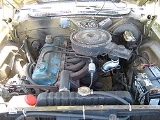
Chrysler Slant 6 engine


   Email Print
   Bookmark   Link


Chrysler Slant 6 engine


The Slant-6, known within Chrysler as the G-engine, is one of Chrysler
Chrysler

Chrysler LLC is an American automobile manufacturer that has manufactured automobiles since 1925. From 1998 to 2007, Chrysler and its subsidiaries were part of the German based DaimlerChrysler ....
's two best known automobile
Automobile

An automobile or motor car is a wheeled motor vehicle for transportation passengers, which also carries its own car engine or motor. Most definitions of the term specify that automobiles are designed to run primarily on roads, to have seating for one to eight people, to typically have four wheels, and to be constructed principally f...
 engine
Engine

An engine is a mechanical device that produces some form of output from a given input.An engine whose purpose is to produce kinetic energy output from a fuel is called a Wiktionary:prime mover; alternatively, a motor is a device which produces kinetic energy from a preprocessed "fuel" ....
s, along with the Hemi
Chrysler Hemi engine

A Chrysler Hemi engine, known by the trademark Hemi, is an internal combustion engine built by Chrysler that utilizes a Sphere combustion chamber....
 V8. The engine is an inline-6
Straight-6

The straight-6 or inline-6 engine is a six cylinder internal combustion engine with all six cylinder mounted in a straight line along the crankcase....
 piston engine specifically designed such that the cylinders are inclined at a 30-degree angle from vertical. The 30° inclination of the Slant-6 gave a lower height overall engine package, which enabled vehicle stylists to lower hoodlines, and also made room for the water pump to be mounted with a significant lateral offset, significantly shortening the engine's overall length.


Discussion
Ask a question about 'Chrysler Slant 6 engine'
Start a new discussion about 'Chrysler Slant 6 engine'
Answer questions from other users
Full Discussion Forum


Encyclopedia


The Slant-6, known within Chrysler as the G-engine, is one of Chrysler
Chrysler

Chrysler LLC is an American automobile manufacturer that has manufactured automobiles since 1925. From 1998 to 2007, Chrysler and its subsidiaries were part of the German based DaimlerChrysler ....
's two best known automobile
Automobile

An automobile or motor car is a wheeled motor vehicle for transportation passengers, which also carries its own car engine or motor. Most definitions of the term specify that automobiles are designed to run primarily on roads, to have seating for one to eight people, to typically have four wheels, and to be constructed principally f...
 engine
Engine

An engine is a mechanical device that produces some form of output from a given input.An engine whose purpose is to produce kinetic energy output from a fuel is called a Wiktionary:prime mover; alternatively, a motor is a device which produces kinetic energy from a preprocessed "fuel" ....
s, along with the Hemi
Chrysler Hemi engine

A Chrysler Hemi engine, known by the trademark Hemi, is an internal combustion engine built by Chrysler that utilizes a Sphere combustion chamber....
 V8. The engine is an inline-6
Straight-6

The straight-6 or inline-6 engine is a six cylinder internal combustion engine with all six cylinder mounted in a straight line along the crankcase....
 piston engine specifically designed such that the cylinders are inclined at a 30-degree angle from vertical. The 30° inclination of the Slant-6 gave a lower height overall engine package, which enabled vehicle stylists to lower hoodlines, and also made room for the water pump to be mounted with a significant lateral offset, significantly shortening the engine's overall length. In addition, the slanted cylinder block provided ample space under the hood for intake and exhaust manifolds with runners of longer and more nearly equal length compared to the "rake" or "log" style manifolds found on other inline engines. These manifolds give a more even cylinder-to-cylinder fuel distribution and are less restrictive for better airflow through the engine.

The engine was introduced in two sizes in 1960: The 170 cubic-inch (2.8 L) "LG" (Low-G, referring to the relatively short engine block casting and crankshaft stroke) in the Valiant
Plymouth Valiant

The Plymouth Valiant is an automobile manufactured by the Plymouth automobile division of Chrysler Corporation in the United States from 1960 to 1976....
, and the 225 CID
Cubic inch

A cubic inch is a non-International System of Units Units of measurement of volume, equal to the volume of a cube with sides of one inch.Cubic inches are still sometimes used as a unit of measurement in the United States and Canada, although SI is continuing to gradually displace non-SI usage....
 (3.7 L) "RG" (Raised-G, referring to the relatively tall engine block casting and crankshaft stroke) in full-size Plymouth
Plymouth (automobile)

Plymouth was a marque of automobile based in the United States, marketed by the Chrysler Corporation and DaimlerChrysler....
 and Dodge Dart
Dodge Dart

The Dodge Dart was an automobile built by the Dodge division of the Chrysler Corporation from 1960 to 1976. The Dart was introduced as a lower-priced, shorter wheelbase, full-size Dodge in 1960 and 1961, became a mid-size car for 1962, and finally was a compact car between 1963 and 1976....
 models. In 1960, the engine was referred to by Plymouth division as the "30-D Economy Six" engine, the "30-D" referring to the 30° cylinder block angle.

The G-engine was offered in various configurations in the North American market until 1983 in cars, 1987 in trucks, and 1991 for marine
Ocean

An ocean is a major body of Seawater, and a principal component of the hydrosphere. Approximately 71% of the Earth's surface is covered by ocean, a World Ocean that is customarily divided into several principal oceans and smaller seas....
, agricultural and industrial use. Replacement engines were still being built in Mexico as of 2000. In addition, the G-engine was used extensively by worldwide Chrysler divisions and subsidiaries in their locally-produced vehicles. It was also widely purchased by other original equipment manufacturers for installation in commercial vehicles, agricultural and industrial equipment, and boats.

The G-engine gained an enviable reputation for reliability and nearly unstoppable durability. The basic engine design incorporates much heavy-duty engineering, in part because the engine was designed from the start to be made of either iron or aluminum: The block is of a deep-skirt design, with the crankshaft axis well above the oil pan rails for structural rigidity. Although only four main bearings are used, they are of the same dimensions as those in the Hemi. Very efficient cooling and lubrication systems, a favorable rod ratio, and an extremely strong forged steel crankshaft (on engines made through mid-1976) all contributed to the engine's apparent indestructibility. In addition, the G-engine also provided better performance than most of its competition in the 1960s and 1970s. By the 1980s, the G-engine had been effectively strangled by continual addition of increasingly-restrictive exhaust emission control devices, without upgrades to the combustion chamber design, piston displacement or induction system, all of which were by that time quite antiquated. G-engine use in passenger cars was rapidly phased out in the early 1980s as Chrysler Corporation shifted to front wheel drive architecture.

Significant production changes

  • The combustion chamber shape was slightly modified for 1967 to promote more complete combustion and reduce exhaust emission toxicity.
  • All G engines used forge
    Forge

    A forge is the workplace of a smith or a blacksmith. A forge is sometimes referred to as a smithy.The basic smithy contains a forge, also known as a hearth, for heating metals....
    d steel
    Steel

    Steel is an alloy consisting mostly of iron, with a carbon content between 0.2% and 2.14% by weight , depending on grade. Carbon is the most cost-effective alloying material for iron, but various other alloying elements are used such as manganese, chromium, vanadium, and tungsten....
     crankshafts until the middle of model year 1976, when a less costly cast iron
    Cast iron

    Cast iron usually refers to Gray iron, but also identifies a large group of ferrous alloys, which solidify with a eutectic. The color of a fractured surface can be used to identify an alloy....
     crankshaft was introduced. The cast crankshaft uses a different block, different main and connecting rod bearings and different connecting rods.
  • The counterbore in the rear flange of the crankshaft was a 1¼-inch diameter until 1967. For 1968, it was enlarged to 1½ inches. This difference has implications when swapping engines and automatic transmissions across this date line.
  • All G-engines used solid valve lifters
    Tappet

    A tappet in mechanical engineering is a projection which imparts a linear motion to some other component within an assembly. Properly speaking, a tappet is only that part of a rocker arm which makes contact with an intake or exhaust poppet valve stem above the cylinder head of an internal combustion engine....
     through the 1980 model year, with the exception of a small production test of hydraulic lifters in the 1978 model year. For model year 1981, all North American G-engines received top-fed hydraulic lifters. Retrofitment in both directions is possible.
  • Emission control devices and systems, carburetor make and specification, and engine assembly details changed over the years to comply with market requirements and preferences.
  • Electronic ignition, which had been made available on V8 engines late in 1971, was made standard equipment on all engines including the RG in 1973.
  • Induction
    Induction heating

    Induction heating is the process of heating an electrically conducting object by electromagnetic induction, where eddy currents are generated within the metal and resistance leads to Joule heating of the metal....
    -hardened
    Hardening (metallurgy)

    In metallurgy, hardening describes techniques to increase the hardness of a material. There are five main hardening mechanisms:* Hall-Petch hardening, a hardening that result due to a decrease in grain size....
     exhaust valve seats and upgraded exhaust valves were made standard in 1973 to withstand prolonged operation on no-lead fuel.


Configuration variants


Different displacements


170 CID
Cubic inch

A cubic inch is a non-International System of Units Units of measurement of volume, equal to the volume of a cube with sides of one inch.Cubic inches are still sometimes used as a unit of measurement in the United States and Canada, although SI is continuing to gradually displace non-SI usage....
The 170-cubic inch (2.8 L) slant-6 engine was offered in model years 1960 through 1969 in North America
North America

North America is the northern continent of the Americas, situated in the Earth's northern hemisphere and almost totally in the western hemisphere....
, and through 1971 for export markets. The first vehicle to offer the 170 slant-6 was the 1960 Valiant. The engine has a bore of 3.40 inches (86 mm) and a stroke of 3.125 in (79 mm). The "LG" low-deck block was unique to the 170 engine.

198 CID
The 198-cubic inch (3.2 L) slant-6 was introduced in the North American market for model year 1970 as a more powerful base-model engine than the previous 170 CID base engine. The increased displacement gave improved base-model vehicle performance and lower manufacturing cost, for it was achieved by installing a crankshaft with 3.64-inch (92.5 mm) stroke into the tall RG block also used with the 225 CID (3.7 L) version of the engine. In this manner, manufacturing costs were eliminated that had been caused by previously using two different blocks for the two different available sizes of slant-6 engine. The 198 engine was available through the 1974 model year.

225 CID
The 225-cubic inch (3.7 L) Slant-6 used the RG (tall) block with a 3.40-inch (86 mm) bore and a 4.125-in (105 mm) stroke. This undersquare geometry was a departure from the emerging trend towards oversquare engines, and gave the 225 exceptionally strong low-RPM torque characteristics. The large amount of torque available at low RPMs caused the 225 to find favor not only as a responsive and driveable passenger car engine, but also in pickup and commercial trucks, school buses, motorhomes, forklifts, harvesters, swathers from the likes of John Deere
John Deere

John Deere was an American blacksmith and manufacturer who founded Deere & Company— the largest agricultural and construction equipment manufacturers in the world....
 and Massey-Ferguson, airplane tugs, and powerboats. The 225 was originally designed and introduced in 1960 for use in full-size models, and it eventually became the best known of the Slant Six engines.

Aluminum-block 225 CID
Between late model year 1961 and early model year 1963, approximately 52,000 die-cast aluminum RG blocks were produced and installed in passenger cars. These open-deck blocks used integrally-cast high-Nickel iron cylinder liners, and bolt-in iron upper and lower main bearing caps. Internal components (crank, rods, pistons, etc.) were the same as used in the iron engine, and an iron cylinder head was used with a special copper-asbestos gasket. The aluminum block weighs about 80 pounds (36 kg) less than the iron RG block.

High performance variants

Most G-engines were equipped with small-capacity carburetor
Carburetor

A carburetor or carburettor , is a device that blends Earth's atmosphere and fuel for an internal combustion engine. It was invented by Karl Benz before 1885 and patented in 1886....
s and exhaust systems adequate for standard passenger car usage at low altitudes, but which tended to hamper maximum available performance at high altitudes, in heavy or race-purpose vehicles and/or where quicker acceleration was desired. To meet the demand for improved responsiveness, modified engine configurations were made available in various markets over the years.

Hyper Pak
The Hyper Pak was a parts package made available from 1960 through 1962 at Chrysler Corporation dealer parts counters. The parts were made available to comply with the regulations of sanctioning bodies for racing events in which Valiants had been entered by factory-backed teams: All parts used had to be "stock" parts, the definition of which meant that they were available through normal factory parts channels. The Hyper Pak consisted of a very-long-ram intake manifold meant to accept a Carter AFB 4-barrel carburetor, the AFB carburetor itself and an appropriate air cleaner, dual (front-3 and rear-3) cast iron exhaust headers, a large-diameter exhaust Y-pipe to connect to these dual cast iron headers, a larger muffler, a 276°-duration camshaft with appropriate valve springs and pushrods, a heavier-duty clutch, a manual choke control, a starter motor modification template and, in the full-race version of the package, high-compression pistons designed to increase the engine's compression ratio to 10.5 from the stock 8.5. The Hyper Pak was recommended for installation only on vehicles equipped with manual transmissions, for the camshaft was of such characteristics that a high idle speed was required to prevent engine stall-out. The Hyper Pak was primarily intended for competition driving, its road manners involving rough idling and poor cold-engine driveability, a high power band and poor fuel economy. But, in competition events, it proved unbeatable. Eight factory-backed Valiants entered the 1960 NASCAR
NASCAR

The National Association for Stock Car Auto Racing is the largest sanctioning body of stock cars in the United States. The three largest racing series sanctioned by NASCAR are the Sprint Cup Series, the Nationwide Series and the Camping World Truck Series....
 compact car race at Daytona Beach, and humbled the competition; the Valiants came in first through eighth. After a similar performance the following year, the race was dropped. A high-fidelity reproduction of the Hyper Pak intake manifold was created by noted Slant-6 builder Doug Dutra in the late 1990s; subsequently the tooling was sold to a marketer of performance equipment for inline six-cylinder engines.

Multiple carburetors
For the 1965-1968 model years, Chrysler Argentina equipped Valiant GT models with a system of dual 1-barrel carburetors and other engine specification changes. Claimed output was 180 bhp
Horsepower

Horsepower is the name of several non-International System of Units units of power . It was originally defined to allow the output of steam engines to be measured and compared with the power output of draft horses....
 (134 kW), compared to the single-carburetor version of the engine producing 145 bhp (108 kW).

2-barrel carburetion

Export 2-barrel setup
For the 1967 model year, a 2-barrel carburetor setup was released for export production. This configuration, similar to that found on marine G-engines beginning in 1965, consisted of an iron intake manifold with open-plenum 2-barrel carburetor mounting pad, a Carter BBD carburetor, and associated air cleaner, linkage and plumbing changes. Also installed on these export 2-barrel engines was a slightly hotter camshaft (244° duration rather than 240°), and a distributor with modified advance curves. This engine, rated at , was popular in Central and South America, South Africa, Australia and New Zealand. Driveability characteristics were generally superior to those of the 1-barrel engine, but to avoid cutting into sales of the more expensive V8 engine, this 2-barrel setup was not offered in the North American market. Of particular note is the automatic choke design found in this export 2-barrel setup. Most Chrysler products used remote automatic chokes, with a bimetal
Bimetal

Bi-metal refers to an object that is composed of two separate metals joined together. Instead of being a mixture of two or more metals, like alloys, bimetallic objects consist of layers of different metals....
 coil spring mounted on the exhaust manifold, exposed to exhaust heat and operating a pushrod which rotated the choke lever on the carburetor. The export 2-barrel setup used an integral heat-tube style automatic choke: Air heated by the exhaust manifold was routed to a round bakelite housing on the carburetor air horn, which contained a bimetal spring acting directly on the choke lever.

Super Six
By the mid 1970s in the North American market, emission control regulations were reducing engine performance at the same time as safety regulations were making cars heavier. An increase in performance was required for the G-engine, so a 2-barrel setup was released for the 1976 model year. This was not the same as the export 2-barrel package described above; the intake manifold used a throttle-bored plenum rather than an open one, and had provisions for an EGR valve. The carburetor, a Carter BBD similar but not identical to the one used on Chrysler's 318
Chrysler LA engine

The LA engines are a family of pushrod engine Overhead valve 90? V-block gasoline engines built by Chrysler Corporation and factory-installed in passenger vehicles, trucks and vans, commercial vehicles, marine and industrial applications from 1964 through 2003....
 V8 engine, used a standard Chrysler-style remote automatic choke. A 2¼-inch exhaust headpipe was also provided, as well as 2-barrel-specific advance curves in the ignition distributor. This package, called "Super Six" by the marketing division, added between 10 and 15% to the engine's horsepower and significantly improved throttle response and driveability while maintaining compliance with emission laws.

Aftermarket
Many companies have provided aftermarket performance equipment for the G-engine through the years. A wide selection of camshafts, intake manifolds and carburetion setups, ignition components, internal engine parts and accessories are still available on today's market.

Applications


Passenger cars, trucks, vans


  • Chrysler LeBaron
    Chrysler LeBaron

    The Chrysler LeBaron was introduced in 1977 as Chrysler's lowest priced model, and the name was used on various Chryslers until 1995. The name originates from a 1930s coachworks bought out by Chrysler....
  • Dodge Aspen
    Dodge Aspen

    The Dodge Aspen, produced from 1976 to 1980, was a compact car from Chrysler Corporation's Dodge division; its Plymouth -Badge engineering counterpart was the Volar?....
  • Dodge Challenger
    Dodge Challenger

    Dodge Challenger is the name of three different automobile models marketed by the Dodge division of Chrysler LLC since 1970....
  • Dodge Charger
    Dodge Charger (B-body)

    The Dodge Charger was a car model of car produced by Dodge. The 1966 to 1974 Chargers were sporty models based on the Chrysler B platform that could be ordered with high-performance options....
  • Dodge Coronet
    Dodge Coronet

    The Coronet was a full-size car from Dodge in the 1950s, initially the division's highest trim line but, starting in 1955, the lowest trim line....
  • Dodge Dart
    Dodge Dart

    The Dodge Dart was an automobile built by the Dodge division of the Chrysler Corporation from 1960 to 1976. The Dart was introduced as a lower-priced, shorter wheelbase, full-size Dodge in 1960 and 1961, became a mid-size car for 1962, and finally was a compact car between 1963 and 1976....
  • Dodge Diplomat
    Dodge Diplomat

    The Dodge Diplomat was a mid-size car and it was manufactured from 1977 to 1989 by the Chrysler Corporation's Dodge brand and practically identical to the Chrysler LeBaron of 1977, the Plymouth Caravelle sold in Canada, and the Plymouth Gran Fury from 1982....
  • Dodge Lancer
    Dodge Lancer

    The Dodge Lancer is a Automobile from the Dodge division of Chrysler Corporation. Dodge used the Lancer name on three different vehicles over the years....
  • Dodge Mirada
    Dodge Mirada

    The Dodge Mirada was released in 1980 as the replacement for the Dodge Magnum until its end in 1983. It was a mid-sized, rear-wheel drive coupe, and was one of the three cars based on the Chrysler J platform, with the other models being the second generation Chrysler Cordoba and the Imperial ....
  • Dodge Monaco
    Dodge Monaco

    The Dodge Monaco was a full-size automobile built and sold by the Dodge division of the Chrysler Corporation between 1965 to 1978 and 1990 to 1992....
  • Dodge Polara
    Dodge Polara

    The Dodge Polara was an automobile introduced in the United States for the 1960 model year as Dodge's top-of-the-line full-size car; after the introduction of the Dodge Custom 880 in 1962, the Polara nameplate designated a step below the best trimmed Dodge model....
  • Dodge Ram
    Dodge Ram

    The Dodge Ram is a full-size pickup truck from Chrysler LLC's Dodge brand. The name was first used in 1981 on the redesigned Ram and Power Ram, though it came from the hood ornament used on 1930s and '40s Dodge vehicles....
  • Dodge St. Regis
    Dodge St. Regis

    The Dodge St. Regis is a full-size Dodge automobile built from 1979 to 1981. The St. Regis was based on Chrysler's rear wheel drive R-body platform, itself based on a modified version of the circa 1971 B-body design that provided the underpinnings for such cars as the Dodge Charger and the Chrysler Cordoba....
  • A-series truck and van
    Dodge A100

    The A100 line was a family of compact vans and trucks produced by Chrysler and sold under the Dodge and Fargo brands from 1964 through 1970, competing with the Ford Econoline and Chevrolet Van, all inspired by the Volkswagen Type 2....
  • D-series truck and van
  • W-series 4WD truck
  • Plymouth Barracuda
    Plymouth Barracuda

    The Plymouth Barracuda is a 2-door car that was manufactured by the Plymouth automobile division of the Chrysler Corporation from 1964 through 1974....
  • Plymouth Belvedere
    Plymouth Belvedere

    The Plymouth Belvedere was an American automobile produced by Plymouth automobile from 1951 through 1970....
  • Plymouth Duster
    Plymouth Duster

    The first Plymouth Duster was a semi-fastback version of the Plymouth Valiant automobile, produced in the United States from 1970 to 1976....
  • Plymouth Fury
    Plymouth Fury

    The Plymouth Fury was an automobile made by the Plymouth automobile division of the Chrysler Corporation from 1956 to 1978. The Fury was introduced as a premium-priced halo vehicle ....
  • Plymouth Satellite
    Plymouth Satellite

    The Plymouth Satellite was an automobile introduced in 1965 as the top model in Plymouth mid-size Belvedere line. The Satellite remained the top of the line model until the 1967 model year, where it became the mid-cost model with the GTX taking its place as the top model....
  • Plymouth Valiant
    Plymouth Valiant

    The Plymouth Valiant is an automobile manufactured by the Plymouth automobile division of Chrysler Corporation in the United States from 1960 to 1976....
  • Plymouth Volaré


External links

  • (technical Q&A/upgrade forum)
  • (information on the Slant 6)


See also

  • Straight-6
    Straight-6

    The straight-6 or inline-6 engine is a six cylinder internal combustion engine with all six cylinder mounted in a straight line along the crankcase....