
All Topics  
Chrysanthemum

 
Chrysanthemum

   Email Print
   Bookmark   Link


Chrysanthemum


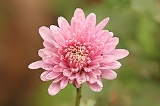
Chrysanthemums, often called 'mums', are a genus (Chrysanthemum) of about 30 species of perennial
Perennial plant

A perennial plant or perennial is a plant that lives for more than two years. When used by gardeners or horticulturalists, this term applies specifically to perennial herbaceous plants....
 flowering plant
Flowering plant

The flowering plants or angiosperms are the most widespread group of Embryophytes. The flowering plants and the gymnosperms are the only extant groups of Spermatophyte....
s in the family Asteraceae
Asteraceae

The family Asteraceae or Compositae is the largest family of flowering plants, in terms of number of species.The name 'Asteraceae' is derived from the type genus Aster , while 'Compositae', an older but still valid name, means composite and refers to the characteristic inflorescence, a special type of pseudanthium found in o...
, native to Asia
Asia

Asia is the world's largest and most populous continent. It covers 8.6% of the Earth's total surface area and, with over 4 billion people, it contains more than 60% of the world's current human population....
 and northeastern Europe
Europe

Europe is, conventionally, one of the world's seven continents. Comprising the westernmost peninsula of Eurasia, Europe is generally divided from Asia to its east by the water divide of the Ural Mountains, the Ural , the Caspian Sea, and by the Caucasus Mountains to the southeast....
.

genus once included many more species, but was split several decades ago into several genera; the naming of the genera has been contentious, but a ruling of the International Code of Botanical Nomenclature
International Code of Botanical Nomenclature

The International Code of Botanical Nomenclature is the set of rules and recommendations dealing with the formal botanical names that are given to plants....
 in 1999 resulted in the defining species of the genus being changed to Chrysanthemum indicum, thereby restoring the economically important florist's chrysanthemum to the genus Chrysanthemum.


Discussion
Ask a question about 'Chrysanthemum'
Start a new discussion about 'Chrysanthemum'
Answer questions from other users
Full Discussion Forum


Recent Posts


Encyclopedia


Chrysanthemums, often called 'mums', are a genus (Chrysanthemum) of about 30 species of perennial
Perennial plant

A perennial plant or perennial is a plant that lives for more than two years. When used by gardeners or horticulturalists, this term applies specifically to perennial herbaceous plants....
 flowering plant
Flowering plant

The flowering plants or angiosperms are the most widespread group of Embryophytes. The flowering plants and the gymnosperms are the only extant groups of Spermatophyte....
s in the family Asteraceae
Asteraceae

The family Asteraceae or Compositae is the largest family of flowering plants, in terms of number of species.The name 'Asteraceae' is derived from the type genus Aster , while 'Compositae', an older but still valid name, means composite and refers to the characteristic inflorescence, a special type of pseudanthium found in o...
, native to Asia
Asia

Asia is the world's largest and most populous continent. It covers 8.6% of the Earth's total surface area and, with over 4 billion people, it contains more than 60% of the world's current human population....
 and northeastern Europe
Europe

Europe is, conventionally, one of the world's seven continents. Comprising the westernmost peninsula of Eurasia, Europe is generally divided from Asia to its east by the water divide of the Ural Mountains, the Ural , the Caspian Sea, and by the Caucasus Mountains to the southeast....
.

Taxonomy

Img 2967
The genus once included many more species, but was split several decades ago into several genera; the naming of the genera has been contentious, but a ruling of the International Code of Botanical Nomenclature
International Code of Botanical Nomenclature

The International Code of Botanical Nomenclature is the set of rules and recommendations dealing with the formal botanical names that are given to plants....
 in 1999 resulted in the defining species of the genus being changed to Chrysanthemum indicum, thereby restoring the economically important florist's chrysanthemum to the genus Chrysanthemum. These species were, after the splitting of the genus but before the ICBN ruling, commonly treated under the genus name Dendranthema.

The other species previously treated in the narrow view of the genus Chrysanthemum are now transferred to the genus Glebionis
Glebionis

Glebionis is a small genus of flowering plants in the family Asteraceae, native to Europe and the Mediterranean region. The species were formerly treated in the genus Chrysanthemum, but a recent ruling of the International Code of Botanical Nomenclature has resulted in that genus being redefined to cover the species related to the eco...
. The other genera split off from Chrysanthemum include Argyranthemum
Argyranthemum

Argyranthemum is a genus of flowering plants belonging to the family Asteraceae. Members of this genus are sometimes also placed in the genus Chrysanthemum....
, Leucanthemopsis, Leucanthemum
Leucanthemum

Leucanthemum is a genus of about 70 flowering plants from the sunflower family . The name Leucanthemum derives from the Greek words leukos, "white," and anthemon, "flower"....
, Rhodanthemum, and Tanacetum
Tanacetum

Tanacetum is a genus of about 70 species of flowering plant in the family Asteraceae, native to temperate regions of the Northern Hemisphere....
.

The species of Chrysanthemum are herbaceous
Herbaceous

A herbaceous plant is a plant that has leaf and stem that die down at the end of the growing season to the soil level. A herbaceous plant may be Annual plant, Biennial plant or Perennial plant....
 perennial plant
Perennial plant

A perennial plant or perennial is a plant that lives for more than two years. When used by gardeners or horticulturalists, this term applies specifically to perennial herbaceous plants....
s growing to 50–150 cm tall, with deeply lobed leaves and large flowerheads, white, yellow or pink in the wild species.

Chrysanthemum species are used as food plants by the larva
Larva

A larva is a young form of animal with indirect developmental biology, going through or undergoing metamorphosis .The larva can look completely different from the adult form, for example, a caterpillar differs from a butterfly....
e of some Lepidoptera
Lepidoptera

Lepidoptera is an order of insect that includes moths and butterfly. It is one of the most speciose orders in the class Insecta, encompassing moths and the three superfamilies of butterfly, skipper , and Hedylidae....
 species — see list of Lepidoptera that feed on chrysanthemums.

Today’s flowers are not as bright or large as ‘show’ varieties.

History

Red Mums
Chrysanthemums were cultivated in China
China

China is a Culture of China, an ancient civilization, and, depending on perspective, a national or multinational entity extending over a large area in East Asia....
 as a flowering herb
Herb

A herb is a plant that is valued for qualities such as medicinal properties, flavor, scent, or the like....
 as far back as the 15th century BC. An ancient Chinese city was named Ju-Xian, meaning "chrysanthemum city". The plant is particularly significant during the Double Ninth Festival
Double Ninth Festival

The Double Ninth Festival , observed on the ninth day of the ninth month in the Chinese calendar , is a traditional Chinese holiday, mentioned in writing since before the East Han period ....
. The flower was introduced into Japan
Japan

Japan is an island country in East Asia. Located in the Pacific Ocean, it lies to the east of the Sea of Japan, People's Republic of China, North Korea, South Korea and Russia, stretching from the Sea of Okhotsk in the north to the East China Sea and Taiwan in the south....
 probably in the 8th century AD, and the Emperor
Emperor of Japan

The of Japan is the symbol of the state and of the unity of the Japanese people. He is the head of the Imperial House of Japan. Under Japan's present constitution, the Emperor is the "symbol of the state and the unity of the people," and is a ceremonial figurehead in a constitutional monarchy ....
 adopted the flower as his official seal
Imperial Seal of Japan

File:Imperial Seal of Japan.svgFile:Imperial Seal of Japan.jpgFile:JapanpassportNew10y.PNG The Imperial Seal of Japan is a Mon or crest used by members of the Japanese Imperial family....
. There is a "Festival of Happiness" in Japan that celebrates the flower.

The flower was brought to Europe in the 17th century. Linnaeus
Carolus Linnaeus

Carl Linnaeus was a Sweden botanist, physician, and zoologist, who laid the foundations for the modern scheme of binomial nomenclature. He is known as the father of modern alpha taxonomy, and is also considered one of the fathers of modern ecology....
 named it from the Greek
Greek language

Greek is an Indo-European languages native to the southern Balkan peninsula, the language of the Greek people. It forms an independent branch within Indo-European....
 word chrysous, "golden"(the colour of the original flowers), and -anthemon, meaning flower.

This plant is also a form Flower.

Economic uses


Ornamental uses

Modern chrysanthemums are much more showy than their wild relatives. The flower
Flower

A flower, sometimes known as a bloom or blossom, is the reproduction structure found in flowering plants . The biological function of a flower is to mediate the union of male sperm with female ovum in order to produce seeds....
s occur in various forms, and can be daisy-like, decorative, pompons or buttons. This genus contains many hybrids and thousands of cultivar
Cultivar

A cultivar is a cultivated plant that has been selected and given a unique name because of its decorative or useful characteristics; it is usually distinct from similar plants and when Plant propagation it retains those characteristics....
s developed for horticultural purposes. In addition to the traditional yellow, other colors are available, such as white, purple, and red. The most important hybrid is Chrysanthemum × morifolium (syn. C. × grandiflorum), derived primarily from C. indicum but also involving other species.

Chrysanthemums are broken into two basic groups, Garden Hardy and Exhibition. Garden hardy mums are perennials capable of being wintered over in the ground in most northern latitudes. Exhibition varieties are not usually as sturdy. Garden hardies are defined by their ability to produce an abundance of small blooms with little if any mechanical assistance (ie. staking) and withstanding wind and rain. Exhibition varieties on the other hand require staking, over-wintering in a relatively dry cool environment, sometimes with the addition of night lights.

The Exhibition varieties can be used to create many amazing plant forms; Large disbudded blooms, spray forms, as well as many artistically trained forms, such as: Thousand Bloom, Standard (trees), Fans, Hanging Baskets, Topiary, Bonsai, and Cascades.

Chrysanthemum blooms are divided into 13 different bloom forms by the US National Chrysanthemum Society, Inc., which is in keeping with the international classification system. The bloom forms are defined by the way in which the ray and disk florets are arranged.

Chrysanthemum blooms are composed of many individual flowers (florets), each one capable of producing a seed. The disk florets are in the center of the bloom head, and the ray florets are on the perimeter. The ray florets are considered imperfect flowers, as they only possess the female productive organs, while the disk florets are considered perfect flowers as they possess both male and female reproductive organs.

Irregular Incurve: These are the giants of the chrysanthemum world. Quite often disbudded to create a single giant bloom (ogiku), the disk florets are completely concealed, while the ray florets curve inwardly to conceal the disk and also hang down to create a 'skirt'.

Reflex: The disk florets are concealed and the ray florets reflex outwards to create a mop like appearance.

Regular Incurve: Similar to the irregular incurves, only usually smaller blooms, with nearly perfect globular form. Disk florets are completely concealed. They used to be called 'Chinese'.

Decorative: Similar to reflex blooms without the mop like appearance. Disk florets are completely concealed, ray florets usually don't radiate at more than a 90 degree angle to the stem.

Intermediate Incurve: These blooms are in-between the Irregular and Regular incurves in both size and form. They usually have broader florets and a more loosely composed bloom. Again, the disk florets are completely concealed.

Pompon: *Note the spelling, it is not pompom. The blooms are fully double, of small size, and almost completely globular in form.

Single/Semi-Double: These blooms have completely exposed disk florets, with between 1 and 7 rows of ray florets, usually radiating at not more than a 90 degree angle to the stem.

Anemone: The disk florets are prominently featured, quite often raised and overshadowing the ray florets.

Spoon: The disk florets are visible and the long tubular ray florets are spatulate.

Quill: The disk florets are completely concealed, and the ray florets are tube like.

Spider: The disk florets are completely concealed, and the ray florets are tube like with hooked or barbed ends, hanging loosely around the stem.

Brush & Thistle: The disk florets may be visible. The ray florets are often tube like, and project all around the flower head, or project parallel to the stem.

Exotic: These blooms defy classification as they possess the attributes of more than one of the other twelve bloom types.

Chrysanthemum leaves resemble its close cousin, the mugwort weed — so much so that mugwort is sometimes called wild chrysanthemum — making them not always the first choice for professional gardeners.

Culinary uses

Yellow or white chrysanthemum flowers are boiled to make a sweet drink in some parts of Asia. The resulting beverage is known simply as "chrysanthemum tea
Chrysanthemum tea

Chrysanthemum tea is a flower-based tisane made from chrysanthemum flowers of the species Chrysanthemum morifolium or Chrysanthemum indicum, which are most popular in East Asia....
" (???, pinyin
Pinyin

Pinyin, more formally Hanyu pinyin, is the most commonly used Romanization system for Standard Mandarin. Hanyu is the Chinese Language, and pinyin means "phonetics", or more literally, "spelling sound" or "spelled sound"....
: júhua chá, in Chinese
Chinese language

Chinese or the Sinitic language is a language family consisting of language mutually unintelligible to varying degrees. Originally the indigenous languages spoken by the Han Chinese in China, it forms one of the two branches of Sino-Tibetan languages of languages....
). Chrysanthemum tea has many medicinal uses, including an aid in recovery from influenza
Influenza

Influenza, commonly known as the flu, is an infectious disease that affects birds and mammals caused by RNA viruses of the biological family Orthomyxoviridae ....
. In Korea, a rice wine
Korean wine

Korean culture has a great variety of traditional alcoholic beverages, most of which are called by the Sino-Korean vocabulary ju ....
 flavored with chrysanthemum flowers is called gukhwaju.

Chrysanthemum leaves are steamed or boiled and used as greens, especially in Chinese cuisine.

Insecticidal uses

Pyrethrum
Pyrethrum

'Pyrethrum' refers to several Old World plants of the genus Chrysanthemum which are cultivated as ornamentals for their showy flower heads. It is also the name of a natural insecticide made from the dried flower heads of C....
 (Chrysanthemum [or Tanacetum
Tanacetum

Tanacetum is a genus of about 70 species of flowering plant in the family Asteraceae, native to temperate regions of the Northern Hemisphere....
] cinerariaefolium) is economically important as a natural source of insecticide
Insecticide

An insecticide is a pesticide used against insects in all developmental forms. They include ovicides and larvicides used against the Egg and larvae of insects respectively....
. The flowers are pulverized, and the active components called pyrethrin
Pyrethrin

The pyrethrins are a pair of natural organic compounds that have potent insecticidal activity. Pyrethrin I and pyrethrin II are structurally related esters with a cyclopropane core....
s, contained in the seed cases, are extracted and sold in the form of an oleoresin. This is applied as a suspension in water or oil, or as a powder. Pyrethrins attack the nervous systems of all insect
Insect

Insects are the biggest class of arthropods and the only ones with wings. They are the most diverse group of animals on the planet. They are most diverse at the equator and their diversity declines toward the poles....
s, and inhibit female mosquito
Mosquito

Mosquitoes are common flying insects in the family Culicidae that are found around the world. There are about 3,500 species. They have a pair of scaled wings, a pair of halteres, a slender body, and six long legs....
es from biting. When not present in amounts fatal to insects, they still appear to have an insect repellent
Insect repellent

An insect repellent is a substance applied to skin, clothing, or other surfaces which discourages insects from landing or climbing on that surface....
 effect. They are harmful to fish
Fish

A fish is any marine biology vertebrate animal that is typically ectothermic , covered with scale , and equipped with two sets of paired fins and several unpaired fins....
, but are far less toxic to mammal
Mammal

Mammals are a class of vertebrate animals whose name is derived from their distinctive feature, mammary glands, with which they feed their young....
s and bird
Bird

Birds are wing, Bipedalismal, endothermic , vertebrate animals that lay egg . There are around 10,000 living species, making them the most numerous tetrapod vertebrates....
s than many synthetic insecticides and are non-persistent, being biodegradable
Biodegradation

Biodegradation is the process by which organic compound substances are decomposition by the enzymes produced by living organisms. The term is often used in relation to ecology, waste management and natural environmental environmental remediation ....
 and also breaking down
Chemical decomposition

Chemical decomposition or analysis is the separation of a chemical compound into chemical element or smaller compounds. It is sometimes defined as the opposite of a chemical synthesis....
 easily on exposure to light. They are considered to be amongst the safest insecticides for use around food
Food

Food is any substance, usually composed of carbohydrates, fats, proteins and water, that can be Eating or Drinking by an animal or human for nutrition or pleasure....
. (Pyrethroid
Pyrethroid

A pyrethroid is a synthetic chemical compound similar to the natural chemical pyrethrins produced by the flowers of pyrethrums . Pyrethroids are common in commercial products such as household insecticides and insect repellents....
s are synthetic insecticides based on natural pyrethrum, e.g., permethrin
Permethrin

Permethrin is a common chemical synthesis chemical, widely used as an insecticide, acaricide, and insect repellent. It belongs to the family of synthetic chemicals called pyrethroids and functions as a neurotoxin, affecting neuron cell membranes by prolonging sodium channel activation....
.)

Environmental uses

Chrysanthemum plants have been shown to reduce indoor air pollution by the NASA Clean Air Study
NASA Clean Air Study

The NASA Clean Air Study has been led by the NASA in association with the Associated Landscape Contractors of America . Its results suggest that certain common indoor plants may provide a natural way of removing toxic agents such as benzene, formaldehyde and trichloroethylene from the air, helping neutralize the effects of sick building syndr...
.

Cultural significance and symbolism

In some countries of Europe
Europe

Europe is, conventionally, one of the world's seven continents. Comprising the westernmost peninsula of Eurasia, Europe is generally divided from Asia to its east by the water divide of the Ural Mountains, the Ural , the Caspian Sea, and by the Caucasus Mountains to the southeast....
 (e.g., France
France

France , officially the French Republic , is a country whose Metropolitan France is located in Western Europe and that also comprises various Overseas departments and territories of France....
, Poland
Poland

Poland , officially the Republic of Poland , is a country in Central Europe. Poland is bordered by Germany to the west; the Czech Republic and Slovakia to the south; Ukraine, Belarus and Lithuania to the east; and the Baltic Sea and Kaliningrad Oblast, a Russian Enclave and exclave, to the north....
, Croatia
Croatia

Croatia , officially the Republic of Croatia , is a Central European country at the crossroads of Pannonian Plain, Balkans, and the Mediterranean Sea....
), white chrysanthemums are symbolic of death
Death

Death is the permanent termination of the biological functions that define a life organism. It refers to both a particular event and to the condition that results thereby....
 and are only used for funerals or on graves - similarly, in China, white chrysanthemums are symbolic of lamentation and/or grief. In some other countries, it represents honesty. In the United States
United States

The United States of America is a Federal government constitutional republic comprising U.S. state and a federal district. The country is situated mostly in central North America, where its Contiguous United States and Washington, D.C., the Capital districts and territories, lie between the Pacific Ocean and Atlantic Oceans, Borders of the U...
, the flower is usually regarded as positive and cheerful.
  • The Chrysanthemum Throne
    Chrysanthemum Throne

    File:Emperor Tenji.jpgThe Chrysanthemum Throne is the English language term used to identify the throne of the Emperor of Japan. The term can refer to very specific seating, as in the raised thrones constructed in the Shishin-den for Emperor Showa and Empress Kojun on November 10, 1928 ....
     is the name given to the position of Japanese emperor.
  • Chrysanthemum crest (????, kikukamonsho or kikkamonsho) is a general term for a mon of chrysanthemum blossom design; there are more than 150 different patterns. The Imperial Seal of Japan
    Imperial Seal of Japan

    File:Imperial Seal of Japan.svgFile:Imperial Seal of Japan.jpgFile:JapanpassportNew10y.PNG The Imperial Seal of Japan is a Mon or crest used by members of the Japanese Imperial family....
     is a particularly notable one; it is used by members of the Japanese Imperial family. There are also a number of formerly state-endowed shrines (????, kankokuheisha) which have adopted a chrysanthemum crest.
  • The Supreme Order of the Chrysanthemum
    Order of the Chrysanthemum

    The Supreme Order of the Chrysanthemum is Japan's highest Order . The Grand Cordon of the Order was established in 1876 by Emperor Meiji of Japan; the collar of the Order was added on January 4, 1888....
    : a Japanese honor awarded by the emperor.
.
  • The chrysanthemum is one of the "Four Gentlemen
    Four Gentlemen

    The "Four Gentlemen", also called the Four Noble Ones or Four Friends, in Chinese art refers to four plants: the orchid, the bamboo, the chrysanthemum, and the Prunus mume blossom....
    " of China (the others being the plum blossom, the orchid, and bamboo
    Bamboo

    The bamboos are a group of woody perennial plant evergreen plants in the true grass family Poaceae, subfamily Bambusoideae, tribe Bambuseae....
    ). The chrysanthemum is said to have been favored by Tao Qian
    Tao Qian

    Tao Qian , also known as Tao Yuanming , born in modern Jiujiang, was one of the most influential pre-Tang Dynasty List of Chinese language poets....
    , an influential Chinese poet, and is symbolic of nobleness.
  • The chrysanthemum is the flower of the American musician fraternity Phi Mu Alpha Sinfonia
    Phi Mu Alpha Sinfonia

    Phi Mu Alpha Sinfonia is a collegiate social fraternity for men with an interest in music. The fraternity is also referred to as Phi Mu Alpha or Sinfonia, and its members are known as Sinfonians....
    .
  • The white chrysanthemum is the flower of Triangle Fraternity, a society of engineers, architects, and scientists.
  • Chrysanthemums were recognized as the official flower of the city of Chicago
    Chicago

    Chicago is the largest city in the U.S. state of Illinois and the Midwestern United States, as well as the List of United States cities by population city in the United States with more than 2.8 million residents....
     in 1961.
  • The term "chrysanthemum" is also used to refer to a certain type of firework shell that produces a pattern of trailing sparks similar to a chrysanthemum flower.
  • The chrysanthemum is also the flower of November.
  • A Chrysanthemum Festival is held each year in Tongxiang
    Tongxiang

    Tongxiang City is a county-level city, part of Jiaxing , in northern Zhejiang Province, China. Population : 109,976.The scenic town of Wuzhen is part of Tongxiang....
    , near Hangzhou
    Hangzhou

    is a sub-provincial city located in the Yangtze River Delta in the People's Republic of China, and the capital of Zhejiang Provinces of China....
    , China.
  • The "golden flower" referred to in the 2006 movie Curse of the Golden Flower
    Curse of the Golden Flower

    Curse of the Golden Flower , also known literally as When Golden Armour Covers the Entire City, is a Chinese films of the 2000s Cinema of China wuxia film directed by Zhang Yimou....
     is a chrysanthemum.
  • Chrysanthemums are common visual hallucinations induced by the psychoactive Dimethyltryptamine
    Dimethyltryptamine

    Dimethyltryptamine , also known as N,N-dimethyltryptamine, is a naturally-occurring tryptamine and potent psychedelic drug, found not only in many plants, but also in trace amounts in the human body where its natural function is undetermined....
    .
  • The Rock band Everclear
    Everclear

    Everclear may refer to:*Everclear , a rock band from Portland, Oregon*Everclear , a brand of grain alcohol*Everclear , an album by indie rock group American Music Club...
     has a song named after the flower.
  • The city of Nihonmatsu, Japan
    Japan

    Japan is an island country in East Asia. Located in the Pacific Ocean, it lies to the east of the Sea of Japan, People's Republic of China, North Korea, South Korea and Russia, stretching from the Sea of Okhotsk in the north to the East China Sea and Taiwan in the south....
     hosts the "Nihonmatsu Chrysanthemum Dolls Exhibition" every autumn in historical ruin of Kasumigajo castle.


See also

  • Chrysanthemum tea
    Chrysanthemum tea

    Chrysanthemum tea is a flower-based tisane made from chrysanthemum flowers of the species Chrysanthemum morifolium or Chrysanthemum indicum, which are most popular in East Asia....
  • Chrysanthemum Throne
    Chrysanthemum Throne

    File:Emperor Tenji.jpgThe Chrysanthemum Throne is the English language term used to identify the throne of the Emperor of Japan. The term can refer to very specific seating, as in the raised thrones constructed in the Shishin-den for Emperor Showa and Empress Kojun on November 10, 1928 ....
  • Daisy
    Daisy

    Daisy may refer to:...
  • Garland chrysanthemum
    Garland chrysanthemum

    Garland chrysanthemum , also known as chrysanthemum greens or edible chrysanthemum, is a leaf vegetable in the genus Leucanthemum....
  • Order of the Chrysanthemum
    Order of the Chrysanthemum

    The Supreme Order of the Chrysanthemum is Japan's highest Order . The Grand Cordon of the Order was established in 1876 by Emperor Meiji of Japan; the collar of the Order was added on January 4, 1888....
  • Persian powder
    Persian powder

    Persian powder is a powder used for the extermination of insects: especially the powdered flowers of certain species of Pyrethrum, a genus now merged in Chrysanthemum. Persian powder is also termed insect powder....
  • photoperiodism
    Photoperiodism

    Photoperiodicity is the physiological reaction of organisms to the length of day or night. It occurs in plants and animals....
  • Pyrethrin
    Pyrethrin

    The pyrethrins are a pair of natural organic compounds that have potent insecticidal activity. Pyrethrin I and pyrethrin II are structurally related esters with a cyclopropane core....
    s, natural compounds
  • Pyrethroid
    Pyrethroid

    A pyrethroid is a synthetic chemical compound similar to the natural chemical pyrethrins produced by the flowers of pyrethrums . Pyrethroids are common in commercial products such as household insecticides and insect repellents....
    s, synthetic versions


External links

  • [Genus Dendranthema. New Name for Chrysanthemum].
  • and care