
Home      Discussion      Topics      Dictionary      Almanac
Signup       Login
Choctaw Nation of Oklahoma

Choctaw Nation of Oklahoma

Overview
The Choctaw Nation of Oklahoma (commonly referred to as the Choctaw Nation) is a semi-autonomous
Autonomy
Autonomy is a concept found in moral, political and bioethical philosophy. Within these contexts, it is the capacity of a rational individual to make an informed, un-coerced decision...

 Native American homeland comprising twelve tribal districts. The Choctaw Nation maintains a special relationship with both the United States and Oklahoma
Government of Oklahoma
The government of the US State of Oklahoma, established by the Oklahoma Constitution, is a republican democracy modeled after the Federal government of the United States. The state government has three branches: the executive, legislative, and judicial...

 governments. Approximately 250,000 people live within the Choctaw Nation, of which 70,000 are enrolled Choctaw
Choctaw
The Choctaw are a Native American people originally from the Southeastern United States...

.
Discussion
Ask a question about 'Choctaw Nation of Oklahoma'
Start a new discussion about 'Choctaw Nation of Oklahoma'
Answer questions from other users
Full Discussion Forum
 
Unanswered Questions
Encyclopedia
The Choctaw Nation of Oklahoma (commonly referred to as the Choctaw Nation) is a semi-autonomous
Autonomy
Autonomy is a concept found in moral, political and bioethical philosophy. Within these contexts, it is the capacity of a rational individual to make an informed, un-coerced decision...

 Native American homeland comprising twelve tribal districts. The Choctaw Nation maintains a special relationship with both the United States and Oklahoma
Government of Oklahoma
The government of the US State of Oklahoma, established by the Oklahoma Constitution, is a republican democracy modeled after the Federal government of the United States. The state government has three branches: the executive, legislative, and judicial...

 governments. Approximately 250,000 people live within the Choctaw Nation, of which 70,000 are enrolled Choctaw
Choctaw
The Choctaw are a Native American people originally from the Southeastern United States...

.

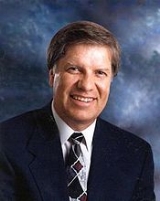
The chief of the Choctaw Nation is Gregory Eli Pyle
Gregory E. Pyle
Gregory E. Pyle is a leader of the Choctaw Nation of Oklahoma. He was elected as principal chief in 1997 and served until 2011. He has Choctaw, Cherokee and European ancestry.-Early life:...

. The Choctaw Nation Headquarters is located in Durant, Oklahoma
Durant, Oklahoma
Durant is a city in Bryan County, Oklahoma, United States. The population was 15,877 at the 2010 census. Durant is the principal city of the Durant Micropolitan Statistical Area, which had a population of 42,416 in 2010...

, though the Choctaw Capitol Building
Choctaw Capitol Building
The Choctaw Capitol Building is a historic site in Pushmataha County, Oklahoma two miles north of Tuskahoma, Oklahoma. The Choctaw National Council House is located here, as well as the Old Town Cemetery of Tuskahoma....

 is in Tuskahoma, Oklahoma
Tuskahoma, Oklahoma
Tuskahoma is a community in northern Pushmataha County, Oklahoma, four miles east of Clayton, Oklahoma.-History:A United States Post Office was established at Tushka Homma, Indian Territory on February 27, 1884. On October 28, 1891, the spelling changed to Tushkahomma. On December 6, 1910 the...

; it is now the Choctaw Museum and home to the Judicial Department Court System.

Another federally recognized tribe is the Mississippi Band of Choctaw Indians
Mississippi Band of Choctaw Indians
The Mississippi Band of Choctaw Indians is one of three federally recognized tribes of Choctaw Indians. On April 20, 1945, the tribe organized under the Indian Reorganization Act of 1934. Also in 1945 the Choctaw Indian Reservation was created in Neshoba and surrounding counties...

. These are descendants of Choctaw who chose to stay in Mississippi rather than relocate to Indian Territory. At the time, they were to accept US citizenship and federal and state laws. The Choctaw preserved much of their culture in small communities and reorganized as a tribal government under new laws after the Indian Reorganization Act of 1934.

Those Choctaw who removed to the Indian Territory, a process that went on into the early 20th century, are federally recognized as the Choctaw Nation of Oklahoma. The removals became known as the "Trail of Tears
Trail of Tears
The Trail of Tears is a name given to the forced relocation and movement of Native American nations from southeastern parts of the United States following the Indian Removal Act of 1830...

."

Geography


The Choctaw Nation of Oklahoma covers approximately 11000 square miles (28,489.9 km²) of land, encompassing eight whole counties and most of/portions of five counties in Southeastern Oklahoma; Atoka County
Atoka County, Oklahoma
Atoka County is a county located in the U.S. state of Oklahoma, and was formed in 1907 from Choctaw Lands. As of 2000, the population is 13,879. Its county seat is Atoka.-Geography:...

, most of Bryan County
Bryan County, Oklahoma
Bryan County is a county located in the U.S. state of Oklahoma. The population was 36,534 at the 2000 census. Its county seat is Durant. The county shares the same boundaries as the Durant Micropolitan Area. It is also home to the headquarters of the Choctaw Nation of Oklahoma located in Durant...

, Choctaw County
Choctaw County, Oklahoma
Choctaw County is a county located in the U.S. state of Oklahoma. As of 2000, the population was 15,342. Its county seat is Hugo.-Geography:According to the U.S. Census Bureau, the county has a total area of , of which is land and is water....

, most of Coal County
Coal County, Oklahoma
Coal County is a county located in the U.S. state of Oklahoma. As of 2000, the population is 6,031. Its county seat is Coalgate.-Geography:According to the U.S. Census Bureau, the county has a total area of , of which is land and is water....

, Haskell County
Haskell County, Oklahoma
Haskell County is a county located in the southeast quadrant of the U.S. state of Oklahoma. As of 2000, the population was 11,792. Its county seat is Stigler. The county is named in honor of Charles N. Haskell, who was the first governor of Oklahoma....

, half of Hughes County
Hughes County, Oklahoma
Hughes County is a county located in the U.S. state of Oklahoma. As of 2000, the population was 14,154. Its county seat is Holdenville.-Geography:...

, a portion of Johnston County
Johnston County, Oklahoma
Johnston County is a county located in the U.S. state of Oklahoma. As of 2000, the population was 10,513. Its county seat is Tishomingo.-Geography:...

, Latimer County
Latimer County, Oklahoma
Latimer County is a county located in the U.S. state of Oklahoma. As of 2000, the population was 10,692. Its county seat is Wilburton.-Geography:According to the U.S. Census Bureau, the county has a total area of , of which is land and is water....

, Le Flore County
Le Flore County, Oklahoma
Le Flore County is a county located in the U.S. state of Oklahoma. It is part of the Fort Smith, Arkansas-Oklahoma Metropolitan Statistical Area. As of 2000, the population was 48,109. Its county seat is Poteau. The United States District Court for the Eastern District of Oklahoma is the federal...

, McCurtain County
McCurtain County, Oklahoma
McCurtain County is a county located in the U.S. state of Oklahoma. As of 2010, the population was 33,151. Its county seat is Idabel.-Geography:...

, Pittsburg County
Pittsburg County, Oklahoma
Pittsburg County is a county located in the U.S. state of Oklahoma. As of 2000, the population was 43,953. Its county seat is McAlester.-Geography:According to the U.S. Census Bureau, the county has a total area of 3,569 km²...

, a portion of Pontotoc County
Pontotoc County, Oklahoma
Pontotoc County is a county located in the U.S. state of Oklahoma. As of 2000, the population was 35,143. Its county seat is Ada.-Geography:According to the U.S. Census Bureau, the county has a total area of 1,879 km²...

, and Pushmataha County
Pushmataha County, Oklahoma
-Administrative History:* Ca. 1000-1500: Caddoan Mississippian civilization at Spiro Mounds* 1492-1718: Spain* 1718-1763: France* 1763-1800: Spain* 1800-1803: France* 1803–present: United States...

.

Government


The Tribal Headquarters are located in Durant, Oklahoma
Durant, Oklahoma
Durant is a city in Bryan County, Oklahoma, United States. The population was 15,877 at the 2010 census. Durant is the principal city of the Durant Micropolitan Statistical Area, which had a population of 42,416 in 2010...

, consisting of a complex of three 3-story buildings, and several one-story buildings. The current chief is Gregory E. Pyle
Gregory E. Pyle
Gregory E. Pyle is a leader of the Choctaw Nation of Oklahoma. He was elected as principal chief in 1997 and served until 2011. He has Choctaw, Cherokee and European ancestry.-Early life:...

 and the assistant chief is Gary Batton. The current number of Choctaw memberships is approximately 188,000.

The Tribe is governed by the Choctaw Nation Constitution, which was ratified by the people on June 9, 1984. The Constitution provides for an Executive, a Legislative and a Judicial branch of government. The Chief of the Choctaw Tribe, elected every four years, is not a voting member of the Tribal Council. They are also elected for four years. The legislative authority of the Tribe is vested in the Tribal Council, which consists of 12 members.

Tribal Council


Members of the Tribal Council are elected by the Choctaw people. Twelve Council members are elected, one for each of the twelve districts in the Choctaw Nation.

Tribal Council Members

  • District 1 - Hap Ward
  • District 2 - Tony Messenger
  • District 3 - Kenny Bryant
  • District 4 - Delton Cox
  • District 5 - Ron Perry
  • District 6 - Joe Coley
  • District 7 - Jack Austin
  • District 8 - Perry Thompson
  • District 9 - Ted Dosh
  • District 10 - Anthony Dillard
  • District 11 - Bob Pate
  • District 12 - James Frazier

In order to be elected as a Council member, candidates must have resided in their respective districts for at least one year immediately preceding the election. Once elected, a Council member must remain a resident of the district from which he or she was elected during the term in office. This policy ensures the involvement and interaction of successful candidates with their constituency.

Once in office, the Tribal Council Members have regularly scheduled county council meetings. The presence of these tribal leaders in the Indian community creates a sense of understanding of their community and its needs. The Tribal Council is responsible for adopting rules and regulations which govern the Choctaw Nation, for approving all budgets, making decisions concerning the management of tribal property, and all other legislative matters. The Tribal Council Members are the voice and representation of the Choctaw people in the tribal government.

The Tribal Council's assists the community in its ability to implement an economic development strategy and to plan, organize, and direct Tribal resources in a comprehensive manner to achieve self-sufficiency. The Tribal Council is working to strengthen the Nation's economy, with efforts being focused on the creation of additional job opportunities through promotion and development. By planning and implementing its own programs and building a strong economic base, the Choctaw Nation applies its own fiscal, natural, and human resources to develop self-sufficiency.

Chiefs


Before Oklahoma
Oklahoma
Oklahoma is a state located in the South Central region of the United States of America. With an estimated 3,751,351 residents as of the 2010 census and a land area of 68,667 square miles , Oklahoma is the 28th most populous and 20th-largest state...

 was admitted to the union in 1907, the Choctaw Nation was divided into three districts: Apukshunnubbee
Apukshunnubbee District
Apukshunnubbee District was one of three administrative super-regions comprising the former Choctaw Nation in the Indian Territory. Also called the Second District, it encompassed the southeastern one-third of the nation....

, Moshulatubbee
Moshulatubbee District
Moshulatubbee District was one of three administrative super-regions comprising the former Choctaw Nation in the Indian Territory. Also called the First District, it encompassed the northern one-third of the nation....

, and Pushmataha
Pushmataha District
Pushmataha District was one of three administrative super-regions comprising the former Choctaw Nation in the Indian Territory. Also called the Third District, it encompassed the southwestern one-third of the nation....

. Each district had its own chief from 1834 to 1857; afterward, the three districts were put under the jurisdiction of one chief
Tribal chief
A tribal chief is the leader of a tribal society or chiefdom. Tribal societies with social stratification under a single leader emerged in the Neolithic period out of earlier tribal structures with little stratification, and they remained prevalent throughout the Iron Age.In the case of ...

. After statehood, these districts were abolished.

During Removal

  • Greenwood LeFlore
    Greenwood LeFlore
    Greenwood LeFlore or Greenwood Le Fleur was elected Principal Chief of the Choctaw in 1830 before removal. Before that, the nation was governed by three district chiefs and a council of chiefs...

    : 1830–1834


Indian Territory

  • Thomas LeFlore: 1834–1838; 1842–1850
  • James Fletcher: 1838–1842
  • George W. Harkins
    George W. Harkins
    George W. Harkins was an attorney and prominent chief of the Choctaw tribe during the Indian removals. Elected as principal chief after the national council deposed his maternal uncle, Greenwood LeFlore, in 1834 Harkins was elected judge of the Red River District in Indian Territory...

    : 1850–1857

Indian Territory

  • Moshulatubbe Amosholi: 1834–1836
  • Joseph Kincaid: 1836–1838
  • John McKinney: 1838–1842
  • Nathaniel Folsom (Choctaw chief): 1842–1846
  • Peter Folsom (Choctaw chief): 1846–1850
  • Cornelius McCurtain: 1850–1854
  • David McCoy: 1854–1857

Indian Territory

  • Nitakechi: 1834–1838
  • Pierre Juzan: 1841–1846
  • Isaac Folsom: 1841–1846
  • Silas Fisher: 1846–1850
  • George Folsom: 1850–1854
  • David McCoy: 1854–1857

After 1857

  • Alfred Wade: 1857–1858
  • Tandy Walker: 1858–1859
  • Basil LeFlore: 1859–1860
  • George Hudson: 1860–1862
  • Samuel Garland: 1862–1864
  • Peter Pitchlynn
    Peter Pitchlynn
    Peter Perkins Pitchlynn , or Hat-choo-tuck-nee , was a Choctaw chief of Choctaw and Anglo-American ancestry...

    : 1864–1866
  • Allen Wright: 1866–1870
  • William Bryant: 1870–1874
  • Coleman Cole: 1874–1878
  • Isaac Levi Garvin: 1878–1880
  • Jackson F. McCurtain: 1880–1884
  • Edmund McCurtain: 1884–1886
  • Thompson McKinney: 1886–1888
  • Ben Smallwood: 1888–1890
  • Wilson N. Jones: 1890–1894
  • Jefferson Gardner: 1894–1896
  • Green McCurtain
    Green McCurtain
    Greenwood "Green" McCurtain was Principal Chief of the Choctaw Nation and , serving four two-year terms. He was the third of his brothers to be elected as chief, and after 1906 and the dissolution of tribal governments under the Dawes Act, he was appointed as chief by the United States government...

    : 1896–1900; 1902–1910
  • Gilbert Wesley Dukes: 1900–1902
  • Victor Locke, Jr.: 1910–1918
  • William F. Semple
    William F. Semple
    William F. Semple, A dentist from Mount Vernon, Ohio is commonly referred to as the first person anywhere to patent a chewing gum. On December 28, 1869 Semple filed Patent No. 98,304 with the U.S. Commissioner of Patents.“To all whom it may concern:...

    : 1918–1922
  • William H. Harrison: 1922–1929
  • Ben Dwight: 1929–1937
  • William Durant
    William Durant
    William Durant is the name of:* Will Durant , historian and philosopher* William C. Durant , industrialist and founder of General Motors Corporation...

    : 1937–1948
  • Harry J. W. Belvin: 1948–1975
  • Clark David Gardner: 1975–1978
  • Hollis E. Roberts
    Hollis E. Roberts
    Hollis Earl Roberts was a leader of the Choctaw Nation of Oklahoma. He was elected as principal chief of the tribe in 1978, having served as a Hugo City councilman and as a member of the Oklahoma House of Representatives. His term as chief ended in 1997 when he was convicted of sex offences...

    : 1978–1997
  • Gregory E. Pyle
    Gregory E. Pyle
    Gregory E. Pyle is a leader of the Choctaw Nation of Oklahoma. He was elected as principal chief in 1997 and served until 2011. He has Choctaw, Cherokee and European ancestry.-Early life:...

    : 1997–Present

Economy


The Choctaw Nation's annual tribal economic impact is over $822,000,000. The Choctaw Nation employs about 8,000 people worldwide, 2,000 of those work in Bryan County, Oklahoma
Bryan County, Oklahoma
Bryan County is a county located in the U.S. state of Oklahoma. The population was 36,534 at the 2000 census. Its county seat is Durant. The county shares the same boundaries as the Durant Micropolitan Area. It is also home to the headquarters of the Choctaw Nation of Oklahoma located in Durant...

; the Choctaw Nation is also Durant's largest single employer. The nation's payroll
Payroll
In a company, payroll is the sum of all financial records of salaries for an employee, wages, bonuses and deductions. In accounting, payroll refers to the amount paid to employees for services they provided during a certain period of time. Payroll plays a major role in a company for several reasons...

 is about $180 million
Million
One million or one thousand thousand, is the natural number following 999,999 and preceding 1,000,001. The word is derived from the early Italian millione , from mille, "thousand", plus the augmentative suffix -one.In scientific notation, it is written as or just 106...

 per year, with total revenues
Revenue
In business, revenue is income that a company receives from its normal business activities, usually from the sale of goods and services to customers. In many countries, such as the United Kingdom, revenue is referred to as turnover....

 from tribal businesses and governmental entities topping $1 billion.

The nation has contributed to raising Bryan County's per capita income
Per capita income
Per capita income or income per person is a measure of mean income within an economic aggregate, such as a country or city. It is calculated by taking a measure of all sources of income in the aggregate and dividing it by the total population...

 to about $24,000. The Choctaw Nation has helped build water systems and towers
Water tower
A water tower or elevated water tower is a large elevated drinking water storage container constructed to hold a water supply at a height sufficient to pressurize a water distribution system....

, roads and other infrastructure, and has contributed to additional fire station
Fire station
A fire station is a structure or other area set aside for storage of firefighting apparatus , personal protective equipment, fire hose, fire extinguishers, and other fire extinguishing equipment...

s, EMS
Emergency medical services
Emergency medical services are a type of emergency service dedicated to providing out-of-hospital acute medical care and/or transport to definitive care, to patients with illnesses and injuries which the patient, or the medical practitioner, believes constitutes a medical emergency...

 units and law enforcement
Law enforcement agency
In North American English, a law enforcement agency is a government agency responsible for the enforcement of the laws.Outside North America, such organizations are called police services. In North America, some of these services are called police while others have other names In North American...

 needs that come with economic growth
Economic growth
In economics, economic growth is defined as the increasing capacity of the economy to satisfy the wants of goods and services of the members of society. Economic growth is enabled by increases in productivity, which lowers the inputs for a given amount of output. Lowered costs increase demand...

.

The Choctaw Nation operates several types of businesses, in Bryan County and elsewhere: casinos
Casino
In modern English, a casino is a facility which houses and accommodates certain types of gambling activities. Casinos are most commonly built near or combined with hotels, restaurants, retail shopping, cruise ships or other tourist attractions...

, travel plazas; Blue Ribbon Downs racetrack, a horse racing
Horse racing
Horse racing is an equestrian sport that has a long history. Archaeological records indicate that horse racing occurred in ancient Babylon, Syria, and Egypt. Both chariot and mounted horse racing were events in the ancient Greek Olympics by 648 BC...

 enterprise that provides satellite-signal access to races across the U.S.; a printing operation
Printing
Printing is a process for reproducing text and image, typically with ink on paper using a printing press. It is often carried out as a large-scale industrial process, and is an essential part of publishing and transaction printing....

, a corporate drug testing service, hospice care, a metal fabrication and manufacturing business, a document backup and archiving business, and a management services
Service management
Service management is integrated into supply chain management as the joint between the actual sales and the customer. The aim of high performance service management is to optimize the service-intensive supply chains, which are usually more complex than the typical finished-goods supply chain...

 company that provides staffing at military bases, embassies and other sites, among other enterprises.

Health System


The Choctaw Nation is the first indigenous tribe in the world to build their own hospital with their own funding. The Choctaw Nation Health Care Center, located in Talihina
Talihina, Oklahoma
Talihina is a town in Le Flore County, Oklahoma, United States, its name originating from two Choctaw words, tully and hena, meaning iron road. Iron road is reference to the railroad that the town was built around. It is part of the Fort Smith, Arkansas-Oklahoma Metropolitan Statistical Area...

, is a 145000 square feet (13,470.9 m²) health facility with 37 hospital beds for inpatient care and 52 exam rooms. The $22 million hospital is complete with $6 million worth of state-of-the-art equipment and furnishing. It serves 150,000 - 210,000 outpatient visits annually. The hospital also houses the Choctaw Nation Health Services Authority, the hub of the health care services covering the ten and a half-county area of Southeastern Oklahoma.

The tribe also operates eight Indian clinics, one each in Atoka
Atoka, Oklahoma
Atoka is a city in Atoka County, Oklahoma, United States. The population was 3,052 at the 2010 census. It is the county seat of Atoka County.-Geography:Atoka is located at ....

, Broken Bow
Broken Bow, Oklahoma
Broken Bow is a city in McCurtain County, Oklahoma, United States. The population was 4,230 at the 2000 census. It is named after Broken Bow, Nebraska, the former hometown of the city's founders, the Dierks brothers.-History:...

, Durant
Durant, Oklahoma
Durant is a city in Bryan County, Oklahoma, United States. The population was 15,877 at the 2010 census. Durant is the principal city of the Durant Micropolitan Statistical Area, which had a population of 42,416 in 2010...

, Hugo
Hugo, Oklahoma
Hugo is a city in the southeastern part of the U.S. state of Oklahoma, bordering Texas. Hugo is the county seat for Choctaw County and has a population of 5,395 as of 2009 estimates. The city serves as winter quarters for some circus performers...

, Idabel
Idabel, Oklahoma
Idabel is a city in McCurtain County, Oklahoma, United States. The population was 7,658 at the 2000 census. It is the county seat of McCurtain County. The town is located in the tourist area Kiamichi Country.-History:...

, McAlester
McAlester, Oklahoma
McAlester is a city in Pittsburg County, Oklahoma, United States. The population was 17,783 at the 2000 census. It is the county seat of Pittsburg County. It is currently the largest city in the Choctaw Nation of Oklahoma, followed by Durant....

, Poteau
Poteau, Oklahoma
Poteau is a city in Le Flore County, Oklahoma, United States. It is part of the Fort Smith, Arkansas-Oklahoma Metropolitan Statistical Area. The population was 8,520 at the 2010 census, ranking fifth in the Greater Fort Smith Area. It is the county seat of Le Flore County...

, and Stigler
Stigler, Oklahoma
Stigler is a city in Haskell County, Oklahoma, United States. The population was 2,731 at the 2000 census. It is the county seat of Haskell County.-Geography:Stigler is located at...

.

2008 Freedom Award


In July 2008, the United States Department of Defense
United States Department of Defense
The United States Department of Defense is the U.S...

 announced the 2008 Secretary of Defense Employer Support Freedom Award
Secretary of Defense Employer Support Freedom Award
The Secretary of Defense Employer Support Freedom Award is the highest recognition given by the U.S. Government to employers for their support of their employees who serve in the National Guard and Reserve...

 recipients. They are awarded the highest recognition given by the U.S. Government to employers for their outstanding support of employees who serve in the National Guard and Reserve.

The Choctaw Nation was one of 15 recipients of this year's Freedom Award, selected from 2,199 nominations. Their representatives received the award September 18, 2008 in Washington, D.C. The Choctaw Nation is the first Native American tribe to receive this award.

Treaty of Dancing Rabbit Creek (1830)


At Andrew Jackson's request, the United States Congress opened a fierce debate on an Indian Removal Bill. In the end, the bill passed, but the vote was very close. The Senate passed the measure 28 to 19, while in the House it narrowly passed, 102 to 97. Jackson signed the legislation into law June 30, 1830, and turned his focus onto the Choctaw in Mississippi Territory.

On August 25, 1830, the Choctaws were supposed to meet with Andrew Jackson in Franklin, Tennessee
Franklin, Tennessee
Franklin is a city within and the county seat of Williamson County, Tennessee, United States. The population was 62,487 as of the 2010 census Franklin is located approximately south of downtown Nashville.-History:...

, but Greenwood Leflore, a district Choctaw chief, informed Secretary of War John H. Eaton that the warriors were fiercely opposed to attending. President Jackson was angered. Journalist Len Green writes "although angered by the Choctaw refusal to meet him in Tennessee, Jackson felt from LeFlore's words that he might have a foot in the door and dispatched Secretary of War Eaton and John Coffee to meet with the Choctaws in their nation." Jackson appointed Eaton and General John Coffee as commissioners to represent him to meet the Choctaws at the Dancing Rabbit Creek near present-day Noxubee County, Mississippi
Noxubee County, Mississippi
-Demographics:As of the census of 2000, there were 12,548 people, 4,470 households, and 3,222 families residing in the county. The population density was 18 people per square mile . There were 5,228 housing units at an average density of 8 per square mile...

.
The commissioners met with the chiefs and headmen on September 15, 1830, at Dancing Rabbit Creek. In carnival-like atmosphere, the policy of removal was explained to an audience of 6,000 men, women, and children. The Choctaws would now face migration or submit to U.S. law as citizens. The treaty would sign away the remaining traditional homeland to the United States; however, a provision in the treaty made removal more acceptable.


On September 27, 1830, the Treaty of Dancing Rabbit Creek
Treaty of Dancing Rabbit Creek
The Treaty of Dancing Rabbit Creek was a treaty signed on September 27, 1830 between the Choctaw and the United States Government. This was the first removal treaty carried into effect under the Indian Removal Act...

 was signed. It represented one of the largest transfers of land that was signed between the U.S. Government and Native Americans without being instigated by warfare. By the treaty, the Choctaws signed away their remaining traditional homelands, opening them up for European-American settlement. Article 14 allowed for nearly 1,300 Choctaws to remain in the state of Mississippi and to become the first major non-European ethnic group to become U.S. citizens. Article 22 sought to put a Choctaw representative in the U.S. House of Representatives. The Choctaw at this crucial time split into two distinct groups: the Choctaw Nation of Oklahoma and the Mississippi Band of Choctaw Indians
Mississippi Band of Choctaw Indians
The Mississippi Band of Choctaw Indians is one of three federally recognized tribes of Choctaw Indians. On April 20, 1945, the tribe organized under the Indian Reorganization Act of 1934. Also in 1945 the Choctaw Indian Reservation was created in Neshoba and surrounding counties...

. The nation retained its autonomy, but the tribe in Mississippi submitted to state and federal laws.

Great Irish Famine aid (1847)


Midway through the Great Irish Famine (1845–1849), a group of Choctaws collected $710 (although many articles say the original amount was $170 after a misprint in Angie Debo
Angie Debo
Angie Elbertha Debo was an American historian who wrote 13 books and hundreds of articles about Native American and Oklahoma history...

's The Rise and Fall of the Choctaw Republic) and sent it to help starving Irish men, women and children. "It had been just 16 years since the Choctaw people had experienced the Trail of Tears
Trail of Tears
The Trail of Tears is a name given to the forced relocation and movement of Native American nations from southeastern parts of the United States following the Indian Removal Act of 1830...

, and they had faced starvation… It was an amazing gesture. By today's standards, it might be a million dollars," according to Judy Allen, editor of the Choctaw Nation of Oklahoma's newspaper, Bishinik. The paper is based at the Oklahoma Choctaw tribal headquarters in Durant, Okla. To mark the 150th anniversary, eight Irish people retraced the Trail of Tears.

Ferguson states, "1903 MISS: Three-hundred Mississippi Choctaws were persuaded to remove to the Nation [in Oklahoma]."

Territory Transition to Statehood (1900)


By the early twentieth century, the Choctaw had lost much of their sovereignty and tribal rights in preparation for the Indian Territory becoming the state of Oklahoma in 1907. The Dawes Commission
Dawes Commission
The American Dawes Commission, named for its first chairman Henry L. Dawes, was authorized under a rider to an Indian Office appropriation bill, March 3, 1893...

 registered tribal members in official rolls, and gave out individual land allotments.

Pioneering the Use of Code Talking (1918)


During World War I the American army fighting in France became stymied by the Germans' ability to intercept its communications. Even worse, after intercepting them the Germans were also able to decrypt the codes, reading the Americans' secrets and knowing in advance their every move.

Several Choctaw Indians serving in the 142nd Infantry came upon an idea: using their native tongue, the Choctaw language
Choctaw language
The Choctaw language, traditionally spoken by the Native American Choctaw people of the southeastern United States, is a member of the Muskogean family...

, to transmit army secrets. Their gambit proved very successful, and almost immediately contributed to a turn-around on the Muse-Argonne front. Captured German officers said they were baffled by the Choctaw words, which they were completely unable to translate. Historians credit these soldiers with helping bring World War I to a faster conclusion.

There were fourteen Choctaw Code Talkers
Choctaw Code Talkers
Choctaw code talkers were a group of Choctaw Indians from Oklahoma who pioneered the use of Native American languages as military code. Their exploits took place during the waning days of . The government of the Choctaw Nation maintains these men comprised the first code talkers ever to serve in...

. Their success was emulated during World War II, this time by soldiers from a number of American Indian tribes. Collectively these Indians are known as code talkers.

Self-determination (1970s)


The 1970s were a crucial and defining decade for the Choctaw. To a large degree, the Choctaw repudiated the more extreme Indian activism. They sought a local grassroots solution to reclaim their cultural identity and sovereignty as a nation.

On August 24, just hours before it would become law, Richard Nixon
Richard Nixon
Richard Milhous Nixon was the 37th President of the United States, serving from 1969 to 1974. The only president to resign the office, Nixon had previously served as a US representative and senator from California and as the 36th Vice President of the United States from 1953 to 1961 under...

 signed a bill repealing the Termination Act of 1959. This close call prompted some Oklahoma Choctaw to spearhead a grassroots movement to change the direction of the tribal government. In 1971, the Choctaw held their first popular election of a chief since Oklahoma entered the Union in 1907.

A group calling themselves the Oklahoma City Council of Choctaws, endorsed thirty-one year old David Gardner for chief, in opposition to the current chief, seventy-year-old Harry Belvin. Gardner campaigned on a platform of greater financial accountability, increased educational benefits, the creation of a tribal newspaper, and increased economic opportunities for the Choctaw people. Amid charges of fraud and rule changes concerning age, Gardner was declared ineligible to run as he did not meet the new minimum age requirement of thirty-five. Belvin was re-elected to a four-year term as chief.

In 1975, thirty-five-year-old David Gardner defeated Belvin to become the Choctaw Nation's second popularly elected chief. 1975 also marked the year that the United States Congress passed the landmark Indian Self-Determination and Education Assistance Act. This law revolutionized the relationship between Indian Nations and the federal government.

Native American tribes such as the Choctaw were granted the power to negotiate and contract directly for services, as well as to determine what services were in the best interest of their people. Under Gardner's term as chief, a tribal newspaper, Hello Choctaw, was established. Along with the Creek and Cherokee, the Choctaw successfully sued the federal and state government over riverbed rights to the Arkansas River
Arkansas River
The Arkansas River is a major tributary of the Mississippi River. The Arkansas generally flows to the east and southeast as it traverses the U.S. states of Colorado, Kansas, Oklahoma, and Arkansas. The river's initial basin starts in the Western United States in Colorado, specifically the Arkansas...

.

Discussions began on the issue of drafting and adopting a new constitution for the Choctaw people. A movement began to officially enroll more Choctaws, increase voter participation, and preserve the Choctaw language. In early 1978, David Gardner died of cancer at the age of thirty-seven. Hollis Roberts was elected chief in a special election, serving from 1978-1997.

A new publication, the Bishinik, replaced Hello Choctaw in June 1978. Spirited debates over a proposed constitution divided the people. In May 1979, they adopted a new constitution for the Choctaw nation.

Faced with termination as a sovereign nation in 1970, the Choctaws emerged a decade later as a tribal government with a constitution, a popularly elected chief, a newspaper, and the prospects of an emerging economy and infrastructure that would serve as the basis for further empowerment and growth. Due to their changes and achievements made during the 1970s, the Choctaw today are a progressive and successful people, facing the twenty-first century with renewed hope and optimism.

Notable tribal members


  • Marcus Amerman
    Marcus Amerman
    Marcus Amerman is an award-winning Choctaw bead artist, glass artist, painter, fashion designer, and performance artist, living north of Santa Fe, New Mexico. He is known for his highly realistic beadwork portraits.-Background:...

     (b. 1959), bead, glass, and performance artist
  • Michael Burrage (b. 1950), former U.S. District Judge
  • Steve Burrage
    Steve Burrage
    Steve Burrage is an American politician from Oklahoma and the former Oklahoma State Auditor and Inspector. Burrage was appointed as State Auditor by the Governor of Oklahoma Brad Henry on July 10, 2008, filling the vacancy created by the resignation of former State Auditor Jeff McMahan, serving...

     (b. 1952), Oklahoma State Auditor and Inspector
  • Choctaw Code Talkers
    Choctaw Code Talkers
    Choctaw code talkers were a group of Choctaw Indians from Oklahoma who pioneered the use of Native American languages as military code. Their exploits took place during the waning days of . The government of the Choctaw Nation maintains these men comprised the first code talkers ever to serve in...

    , World War I veterans
  • Clarence Carnes
    Clarence Carnes
    Clarence Victor Carnes known as The Choctaw Kid was a Choctaw Indian famous as the youngest inmate sentenced to Alcatraz, and for his participation in the bloody escape attempt known as the "Battle of Alcatraz".-Early life:Clarence Carnes was born in Daisy, Oklahoma, the oldest of five children...

     (1927–1988), Alcatraz inmate
  • Tobias William Frazier, Sr. (1892–1975), code talker
  • Kalyn Free
    Kalyn Free
    Kalyn Free is an American attorney, former political candidate, and a tribal member of the Choctaw Nation of Oklahoma.-Early legal and political career:...

    , attorney
  • Rosella Hightower
    Rosella Hightower
    Rosella Hightower was an American ballerina who achieved fame in both the United States and Europe.-Biography:...

     (1920–2008), prima ballerina
  • Phil Lucas
    Phil Lucas
    Phil Lucas was an American filmmaker of mostly Native American themes. He acted, wrote, produced, directed or edited more than 100 films/documentaries or television programs starting as early as 1979 when he wrote/co-produced and co-directed Images of Indians for PBS - a five-part series exploring...

     (1942–2007), filmmaker
  • Green McCurtain
    Green McCurtain
    Greenwood "Green" McCurtain was Principal Chief of the Choctaw Nation and , serving four two-year terms. He was the third of his brothers to be elected as chief, and after 1906 and the dissolution of tribal governments under the Dawes Act, he was appointed as chief by the United States government...

     (d. 1910), Chief from 1902–1910
  • Cal McLish
    Cal McLish
    Calvin Coolidge Julius Caesar Tuskahoma McLish was a starting pitcher in Major League Baseball who played for the Brooklyn Dodgers , Pittsburgh Pirates , Chicago Cubs , Cleveland Indians , Cincinnati Reds , Chicago White Sox and Philadelphia Phillies...

     (1925–2010), Major League Baseball pitcher
  • Devon A. Mihesuah
    Devon A. Mihesuah
    Devon Abbott Mihesuah is a Choctaw historian and writer, and a previous editor of the American Indian Quarterly.Mihesuah's non-fiction work concentrates on stereotypes and misrepresentations of Native American peoples, customs and beliefs in academic writing.-Fiction:*Document of Expectations *Big...

     (b. 1957), author, editor, historian
  • Peter Pitchlynn
    Peter Pitchlynn
    Peter Perkins Pitchlynn , or Hat-choo-tuck-nee , was a Choctaw chief of Choctaw and Anglo-American ancestry...

     (1806–1881), Chief from 1860–1866
  • Gregory E. Pyle
    Gregory E. Pyle
    Gregory E. Pyle is a leader of the Choctaw Nation of Oklahoma. He was elected as principal chief in 1997 and served until 2011. He has Choctaw, Cherokee and European ancestry.-Early life:...

     (b. 1949), current Chief of the Choctaw Nation
  • Seneca Scott  (b. 1977), current State Representative
  • Wallis Willis, composer and Choctaw freedman

See also


  • Choctaw culture
  • Choctaw mythology
    Choctaw mythology
    Choctaw mythology is related to Choctaws who are a Native American people originally from the Southeastern United States . In the 19th century, Choctaws were known as one of the "Five Civilized Tribes" because they had integrated numerous cultural and technological practices of their European...

  • Choctaw Trail of Tears
    Choctaw Trail of Tears
    The Choctaw Trail of Tears was the relocation of the Choctaw Nation from their country referred to now as the Deep South to lands west of the Mississippi River in Indian Territory in the 1830s...

  • Mississippi Band of Choctaw Indians
    Mississippi Band of Choctaw Indians
    The Mississippi Band of Choctaw Indians is one of three federally recognized tribes of Choctaw Indians. On April 20, 1945, the tribe organized under the Indian Reorganization Act of 1934. Also in 1945 the Choctaw Indian Reservation was created in Neshoba and surrounding counties...


External links