
All Topics  
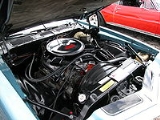
Chevrolet Small-Block engine


   Email Print
   Bookmark   Link


Chevrolet Small-Block engine


Chevrolet
Chevrolet

Chevrolet is a brand of automobile, produced by General Motors . It is the top selling GM marque, with "Chevrolet" or "Chevy" being at times synonymous with GM....
's small-block V8 is a not a single engine but a series of famous automobile engines built on the same basic small (for a V-8) engine block. Retroactively referred to as the "Generation I" small-block, it is distinct from subsequent GM
GM

GM may refer to:...
 "Generation II" LT
GM LT engine

General Motors Corporation' Generation II LT is a small block V8 engine. Making its debut in the 1992 Chevrolet Corvette, the new LT sought to draw upon the heritage of the ultimate small-block, the 1970 Chevrolet GM Small-Block engine#LT-1....
 and "Generation III" LE
GM LS engine

The LS series is a new design intended as the only V-8 engine utilized in General Motors Corporation' line of RWD cars and trucks. The LS series was a clean sheet design with little in common with the classic Chevrolet Small-Block engine....
 engines.

Production of the original small-block began in 1955 with a displacement of 265 ci., growing incrementally over time until reaching a full in 1970.


Discussion
Ask a question about 'Chevrolet Small-Block engine'
Start a new discussion about 'Chevrolet Small-Block engine'
Answer questions from other users
Full Discussion Forum


Encyclopedia


Chevrolet
Chevrolet

Chevrolet is a brand of automobile, produced by General Motors . It is the top selling GM marque, with "Chevrolet" or "Chevy" being at times synonymous with GM....
's small-block V8 is a not a single engine but a series of famous automobile engines built on the same basic small (for a V-8) engine block. Retroactively referred to as the "Generation I" small-block, it is distinct from subsequent GM
GM

GM may refer to:...
 "Generation II" LT
GM LT engine

General Motors Corporation' Generation II LT is a small block V8 engine. Making its debut in the 1992 Chevrolet Corvette, the new LT sought to draw upon the heritage of the ultimate small-block, the 1970 Chevrolet GM Small-Block engine#LT-1....
 and "Generation III" LE
GM LS engine

The LS series is a new design intended as the only V-8 engine utilized in General Motors Corporation' line of RWD cars and trucks. The LS series was a clean sheet design with little in common with the classic Chevrolet Small-Block engine....
 engines.

Production of the original small-block began in 1955 with a displacement of 265 ci., growing incrementally over time until reaching a full in 1970. Along the way several famous intermediate displacements appeared, such as a with mechanical fuel-injection that produced a then milestone one horsepower per cubic inch, and an even more powerful per cubic inch 327, but none caught on like the variant. Introduced as a performance engine in 1967, the 350 went on to be employed in high and low output variants across the entire Chevrolet product line.

Although all four of Chevrolet's General Motors
General Motors

General Motors Corporation , founded in 1908, is the world's second-largest automaker after Toyota, ranked by 2008 global unit sales. GM was the global sales leader for 77 consecutive calendar years from 1931 to 2008....
 siblings of the period designed their own V8s
Chevrolet Small-Block engine

Chevrolet's small-block V8 is a not a single engine but a series of famous automobile engines built on the same basic small engine block. Retroactively referred to as the "Generation I" small-block, it is distinct from subsequent GM "Generation II" GM LT engine and "Generation III" GM LS engine engines....
, the Chevrolet
Chevrolet

Chevrolet is a brand of automobile, produced by General Motors . It is the top selling GM marque, with "Chevrolet" or "Chevy" being at times synonymous with GM....
  small-block that became the GM corporate standard. Over the years, every American General Motors division except Saturn used it and its descendants in their vehicles.

Finally superseded by GM's Generation II LT
GM LT engine

General Motors Corporation' Generation II LT is a small block V8 engine. Making its debut in the 1992 Chevrolet Corvette, the new LT sought to draw upon the heritage of the ultimate small-block, the 1970 Chevrolet GM Small-Block engine#LT-1....
 and Generation III V8 in the early 2000s and discontinued in 2004, the engine is still made by a GM subsidiary in Mexico as an aftermarket replacement. In all, over 90,000,000 small-blocks have been built in carbureted and fuel injected forms since 1955.

The small-block family line was honored as one of the 10 Best Engines of the 20th Century
Ward's 10 Best Engines

World's 10 Best Engines is an annual list of the ten "best" internal combustion engine available in the U.S. market that are selected by Ward's AutoWorld magazine....
 by automotive magazine Ward's AutoWorld.

Confusion with LT and LE engines

The original Chevrolet-designed small-block is a specific family of engines manufacturerd originally in 1955 and installed as production powerplants by GM for 48 years.

Subsequent GM small block V-8 engine designs built on different blocks are often confused with the original small-block.

  • For more information on the Generation II small-block V8s, which differ mainly in their reverse-flow cooling system, see the GM LT engine
    GM LT engine

    General Motors Corporation' Generation II LT is a small block V8 engine. Making its debut in the 1992 Chevrolet Corvette, the new LT sought to draw upon the heritage of the ultimate small-block, the 1970 Chevrolet GM Small-Block engine#LT-1....
    .


  • For more information on the current family of Generation III/IV General Motors small-block V8s see the GM LS engine
    GM LS engine

    The LS series is a new design intended as the only V-8 engine utilized in General Motors Corporation' line of RWD cars and trucks. The LS series was a clean sheet design with little in common with the classic Chevrolet Small-Block engine....
    .


Overview

The first generation of Chevrolet small-blocks began with the 1955 Chevrolet V8 offered in the Corvette
Chevrolet Corvette

The Chevrolet Corvette is a sports car that has been manufactured by General Motors since 1953. The car was originally designed by Harley Earl, and named by Myron Scott after the fast corvette....
 and Bel Air
Bel Air

Bel Air may refer to:Places in the United States:* Bel-Air, Los Angeles, California, a district of the City of Los Angeles, California, United States...
. Soon after being introduced, it quickly gained popularity among stock car racers, becoming known as the "Mighty Mouse
Mighty Mouse

Mighty Mouse is an animation superhero mouse character created by the Terrytoons studio for 20th Century Fox....
" motor, after the popular cartoon character of the time.

By 1957 it had grown to . Fitted with the optional Rochester mechanical fuel injection, it became one of the first production engines ever to make one horsepower per cubic inch. The 283 would later be extended to other Chevrolet models, replacing the old style 265 V8s.

A high-performance variant followed, turning out as much as 375 hp and increasing horsepower per cubic inch to 1.15.

It was, however, the series that came to the best known Chevrolet small block. The engine's oversquare 4.00-inch bore and 3.48-inch stroke (102 mm by 88 mm) are nearly identical to the LS3 engine of today, but much has changed. Installed in everything from station wagons to sports cars, in commercial vehicles, and even in boats and (in highly modified form) airplanes, it is by far the most widely used small-block of all-time.

Though not offered in GM vehicles since 2004, it is still in production today at General Motors' Toluca, Mexico plant under the company's "Mr Goodwrench" brand.

From 1955-74, the small-block engine was known as the "Turbo-Fire V8".

Chevrolet
Chevrolet

Chevrolet is a brand of automobile, produced by General Motors . It is the top selling GM marque, with "Chevrolet" or "Chevy" being at times synonymous with GM....
 tested the small-block twice with no water and no oil at wide-open throttle. The first time it lasted an hour and 15 minutes and the second time it lasted two hours.

Original small-blocks

The small-block made its debut in 1955 and remained popular for over five decades for its relatively compact size, light weight, and extensive aftermarket support. Chronologically, the original series of small-blocks include:

265

The V8 was the first Chevrolet small block. Designed by Ed Cole
Ed Cole

Edward Nicholas Cole was an automotive executive for General Motors Corporation.The son of a dairy farmer, Cole aspired to be an automotive engineer and enrolled in General Motors Institute....
's group at Chevrolet
Chevrolet

Chevrolet is a brand of automobile, produced by General Motors . It is the top selling GM marque, with "Chevrolet" or "Chevy" being at times synonymous with GM....
 to provide a more powerful engine for the 1955 Corvette
Chevrolet Corvette

The Chevrolet Corvette is a sports car that has been manufactured by General Motors since 1953. The car was originally designed by Harley Earl, and named by Myron Scott after the fast corvette....
 than the model's original in-line six, the 2-barrel debut version went from drawings to production in just 15 weeks.

A pushrod cast-iron engine with hydraulic lifter
Lifter

Lifter can mean:* Ionocraft, a device that can generate thrust using ionised air with no moving parts* Tappet, part of an internal combustion engine that actuates a poppet valve through rocker arms and pushrods...
s, the small block was available with an optional 4-barrel Rochester carburetor
Carburetor

A carburetor or carburettor , is a device that blends Earth's atmosphere and fuel for an internal combustion engine. It was invented by Karl Benz before 1885 and patented in 1886....
, increasing engine output to . The oversquare (3.75 in (95 mm) bore, 3 in (76 mm) stroke) engine's 4.4 in (111.8 mm) bore spacing would continue in use for decades.

Also available in the Bel Air sedan, the basic passenger car version produced with a 2-barrel carburetor. Upgraded to a four-barrel Rochester, dual exhaust "Power Pack" version, the engine was conservatively rated at .

A shortcoming of the 1955 265 was that the engine had no provision for oil filtration built into the block, instead relying on an add-on filter mounted on the thermostat housing. In spite of its novel green-sand foundry construction, the '55 block's of adequate oil filtration leaves it typically only desirable to period collectors.

The 1956 Corvette introduced three versions of this engine - with a single 4-barrel carb, with twin 4-barrels, and with twin fours and a high-lift cam.

283

The 265 ci V-8 was bored out to 3.87 in (98 mm) in 1957, giving it a displacement. Five different versions between and were available, depending on whether a single carb, twin carbs, or fuel injection was used. Power was up a bit each year for 1958, 1959, and 1960.

The 1957 Ramjet mechanical fuel injection
Fuel injection

Fuel injection is a system for mixing fuel with air in an internal combustion engine. It has become the primary fuel delivery system used in gasoline Automobile engines, having almost completely replaced carburetors in the late 1980s....
 version produced an even per cubic inch, an impressive feat at the time. By 1961, a prolific was generated by this unit.

327

The V8, introduced in 1962, had a bore and stroke of 4 in (102 mm) by 3.25 in. Power ranged from L30 to depending on the choice of carburetor or fuel injection, camshaft, cylinder heads, pistons and intake manifold. In 1962, the Duntov solid lifter cam versions produced , with single Carter 4-brl, and , with Rochester mechanical fuel injection. In 1964, horsepower increased to for the now dubbed L76 version, and for the fuel injected L84 respectively, making the L84 the most powerful naturally aspirated, single-cam, production small block V8 until the appearance of the , Generation III LS6
LS6

LS6 or LS-6 may be:* Rolladen-Schneider LS6, glider * GM 2500 engine#LS6, straight-4 engine * GM LS engine#LS6, V8 engine * Chevrolet Big-Block engine#454, V8 engine ...
 in 2001. This block is one of three displacements that under went a major change in 1968/1969 when the main bearing size was increased from .

350

The 350 first appeared as a high-performance 295 hp L48 option for the 1967 Chevrolet Camaro
Chevrolet Camaro

The Chevrolet Camaro is a pony car manufactured by the Chevrolet division of General Motors. It went on sale on September 29, 1966 for the 1967 model year and was designed as a competing model to the Ford Mustang....
. A year later it was made available in the Nova
Chevrolet Nova

The Chevrolet Nova is an automobile produced in the United States from 1962 to 1979 by the Chevrolet division of General Motors and from 1985 to 1988 by the NUMMI, a joint venture between General Motors and Toyota....
, in 1969 the balance of the Chevrolet line. Many variants followed:

  • L48
Years: 1967-1980

The L-48 is the original , available only in the Camaro or Chevy II/Nova in '67 & '68. In '69 it was used in almost everything; Camaros, Corvettes, Impalas, Chevelles & Novas. From '75-'80 it was available only in the Corvette. L-48's use a Hyd Cam, 4bbl Qjet, Cast pistons, 2 bolt main caps, "Pink" Rods, #0014 Blocks & #993 heads. Power output ranges from 300HP(gross) down to 175HP(net).

The L48 was the standard engine in the 1971 Chevrolet Corvette
Chevrolet Corvette

The Chevrolet Corvette is a sports car that has been manufactured by General Motors since 1953. The car was originally designed by Harley Earl, and named by Myron Scott after the fast corvette....
. It produced and with an 8.5:1 compression ratio.

The 1976-1979 L48 was the standard Corvette engine and produced and . The 1980 L48 stood at and from 8.2:1 compression.

In 1972 the only way to get a L48 (4bbl V8) in a Chevy Nova was to get the Super Sport Package. This is indicated by the 5th digit in the VIN being a "K". 1972 was the only year you could verify the Super Sport package by the VIN.

In 1973 the "L-48" had cold air induction (throttle activated) and developed (net). Beginning in 1974 the hp was reduced for several years until it reached a low of (net) in 1975, before rising again.

  • ZQ3
Years: 1969, 1970, 1972-1975

The ZQ3 was the standard engine in the 1969-1970 Chevrolet Corvette
Chevrolet Corvette

The Chevrolet Corvette is a sports car that has been manufactured by General Motors since 1953. The car was originally designed by Harley Earl, and named by Myron Scott after the fast corvette....
. It was a version of the small-block, with 10.25:1 compression and hydraulic lifters. It used a Rochester "4MV" Quadra-Jet 4-barrel carburetor. This was the first block produced that featured the larger 2.45 inch main bearing versus the older 2.30 inch main bearing in 1968/1969.

The 1969 ZQ3 produced and with 8.5:1 compression, dropping another in 1973. 1975 saw the ZQ3 at and .

  • L46
Years: 1969, 1970

The L46 was an optional engine on the 1969-1970 Chevrolet Corvette
Chevrolet Corvette

The Chevrolet Corvette is a sports car that has been manufactured by General Motors since 1953. The car was originally designed by Harley Earl, and named by Myron Scott after the fast corvette....
. It was a , version of the ZQ3 with higher 11:1 compression.

  • LT-1
Years: 1970-1972

The LT-1 was the ultimate V8, becoming available in 1970. It used solid lifters, 11:1 compression, a high-performance camshaft, and a Holley four-barrel carburetor on a special aluminum intake to produce and . It was available on the Corvette
Chevrolet Corvette

The Chevrolet Corvette is a sports car that has been manufactured by General Motors since 1953. The car was originally designed by Harley Earl, and named by Myron Scott after the fast corvette....
 and Camaro Z28
Chevrolet Camaro

The Chevrolet Camaro is a pony car manufactured by the Chevrolet division of General Motors. It went on sale on September 29, 1966 for the 1967 model year and was designed as a competing model to the Ford Mustang....
. Power was down in 1971 to and with 9:1 compression, and again in 1972 (the last year of the LT-1, now rated using net, rather than gross, measurement) to and .

The "LT1" designation was later reused on a Generation II GM engine, the LT1
GM LT engine

General Motors Corporation' Generation II LT is a small block V8 engine. Making its debut in the 1992 Chevrolet Corvette, the new LT sought to draw upon the heritage of the ultimate small-block, the 1970 Chevrolet GM Small-Block engine#LT-1....
.

302

Chevrolet
Chevrolet

Chevrolet is a brand of automobile, produced by General Motors . It is the top selling GM marque, with "Chevrolet" or "Chevy" being at times synonymous with GM....
 produced a special engine for Trans Am
Trans-Am Series

Created in 1966, by SCCA President John Bishop, the Trans-American Sedan Championship was derived from the Sports Car Club of America's A & B Sedan amateur Club Racing classes, and was divided into 2 classes; the Over 2.0 Liter and Under 2.0 Liter , with both classes running together....
 racing from 1967-1969. It was the product of placing the 3-inch stroke crankshaft into a 4-inch bore block. Although the 283 also used a 3-inch stroke crankshaft, it was a low performance cast iron crankshaft. The crankshaft for the 302 was specially built of forged steel. This engine was used only in the first-generation Camaro Z28
Chevrolet Camaro

The Chevrolet Camaro is a pony car manufactured by the Chevrolet division of General Motors. It went on sale on September 29, 1966 for the 1967 model year and was designed as a competing model to the Ford Mustang....
. Conservatively rated at 290 hp (216 kW), actual output was around . This block is one of 3 displacements that underwent a transformation for the 1968/1969 period when the main bearing size was increased from 2.30 in to 2.45 in.

A letter from G.D. Thompson, Chevrolet Engineering Laboratory, dated June 5, 1967 to D.A. Martens, Engineering Department, subject Z-28 Service Pack Power Breakdown states "engine capable of 448 HP will deliver 432HP in full vehicle dress" .... "as installed data corrected to 100 degree brake and 29.52hg dry barometer yields a maximum of 403.8 HP. This correction more closely represents what is available when installed in a vehicle" *bhp@7400rpm

307

A version was produced from 1968 through 1973. Engine bore was 3.875 inches (98.4 mm) with a stroke.

The 307 replaced the 283 in Chevrolet cars and produced 200 hp (149 kW) SAE gross at 4600 rpm and of torque at 2400 rpm in the 1960s. The later emissions-modified versions produced just 115 hp (86 kW) SAE net, giving the engine one of the lowest power-per-displacement ratings of all time. Chevrolet never produced a high-performance version of this engine, though they did produce, for Outboard Marine Corporation, a high-performance marinized 307, rated at and SAE gross, depending on year, that shipped with the Corvette/Z-28's cast aluminum valve covers and Rochester QuadraJet carb. Chevy also built other versions of the OMC 307 rated at , and SAE gross.

400

A small-block was introduced in 1970 and produced for 10 years. It had a bore and a stroke. Initial output was and was only available equipped with a 2-barrel carburetor. In 1974 a 4-barrel version of the 400 was introduced,while the 2-barrel version stopped production in 1975. 1976 was the last year that the 400 was used in a Chevrolet Passenger car, available in both the A-Body and B-Body line. While popular with circle-track racers, the engine was prone to cooling troubles if cylinder heads without steam holes were used. They mostly put out 250 hp stock. Due to the way the block was designed, the 2 bolt main engines were stronger than the 4 bolt versions. The 509 2 bolt main block is the most desirable 400 block.

Later Small Blocks

Multiple variations of the original small-block were introduced after 1970's bore-out to 400 cubic inches, many based on the already much modified 350 design. Chronologically, they include:

350 variants

  • L82
Years: 1973-1980

The 1973-1974 L82 was a "performance" version of the 350 producing and from 9:1 compression. It was down to and for 1975. It was the optional engine again in 1976-1977, producing more. The 1978 L82 recovered somewhat, producing and , and then and more for 1979. 1980 saw yet another and .

  • L81
Years: 1981

The L81 was the only Corvette engine for 1981. It produced and from 8.2:1 compression, exactly the same as the 1980 L48, but added computer control spark advance, replacing the vacuum advance.

  • L83
Years: 1982, 1984

The 1982 L83 was again the only Corvette engine (and only available with an automatic transmission) producing and from 9:1 compression. This was again the only engine on the new 1984 Vette, at and . The L83 added Cross-Fire fuel injection
Fuel injection

Fuel injection is a system for mixing fuel with air in an internal combustion engine. It has become the primary fuel delivery system used in gasoline Automobile engines, having almost completely replaced carburetors in the late 1980s....
 (twin throttle-body fuel injection). Since GM did not assign a 1983 model year to production Corvettes, there was also no L83 for 1983.

  • L98
For the new Generation IV V8, see GM L98
GM LS engine

The LS series is a new design intended as the only V-8 engine utilized in General Motors Corporation' line of RWD cars and trucks. The LS series was a clean sheet design with little in common with the classic Chevrolet Small-Block engine....
.


Years: 1985-1992

The new 1985 L98 added tuned-port fuel injection "TPI", which produced and . It was standard on all 1985-1991 Corvettes (rated at - and -). Optional on 87-92 Chevrolet Camaro
Chevrolet Camaro

The Chevrolet Camaro is a pony car manufactured by the Chevrolet division of General Motors. It went on sale on September 29, 1966 for the 1967 model year and was designed as a competing model to the Ford Mustang....
 & Pontiac Firebird
Pontiac Firebird

The Pontiac Firebird was built by the Pontiac division of General Motors between 1967 and 2002.The Firebird was introduced the same year as its platform-sharing cousin, the Chevrolet Camaro....
 models (rated at - and -) 1987 versions had and more thanks to 9.5:1 compression and a change to hydraulic roller camshaft. Compression was up again in 1991 to 10:1 but output stayed the same.

  • LM1
The LM1 is the base with a 4-barrel carburetor (usually with a Rochester Quadrajet) in passenger cars until 1988. Throughout its lifespan, it received either a points, electronic, and/or computer-controlled spark system, to conventional and feedback carburetors.

LM1s were superseded with the LO5 powerplant after 1988.

  • L05
The L05 was introduced in 1987 for use in Chevrolet/GMC trucks in both the GMT400 (introduced in April 1987 as 1988 models) and the R/V series trucks such as the K5 Blazer, Suburban, and rounded-era pickups formerly classed as the C/K until 1996 which includes chassis cabs and 4-door crew cabs. Although usage was for trucks, vans, and 9C1-optioned Caprices, the L05 was also used with the following vehicles:

  • 1992/1993 Buick Roadmaster
    Buick Roadmaster

    The Roadmaster was an automobile built by the Buick division of General Motors. Buick first used the Roadmaster name between 1936 and 1958. In 1991, Buick again applied the Roadmaster name to its full-size rear-wheel drive sedan and station wagon models as a replacement for the Buick Estate....
     sedan and station wagon
  • 1991/1992 Cadillac Brougham
    Cadillac Brougham

    Cadillac has used the Brougham name since 1916. In the 1950s, the name appeared as the four-door designation for the Cadillac Eldorado. The Eldorado Brougham protoype model appeared in 1955, then as a limited production model from 1957 through 1960....
     (optional engine)
  • 1993 Cadillac Fleetwood
    Cadillac Fleetwood

    The Fleetwood Metal Body Company began business in Fleetwood, Pennsylvania on April 1, 1909 and continued as an independent automobile body builder until acquired in 1925 by the Fisher Body Company, a division of General Motors....
  • 1992/1993 Chevrolet Caprice
    Chevrolet Caprice

    The Chevrolet Caprice and Caprice Classic were full-sized automobiles produced by the Chevrolet division of General Motors in the United States and Canada from 1965 through 1996 model years and in Mexico from 1977 through 1983....
     Wagon (optional engine)
  • 1993 Chevrolet Caprice
    Chevrolet Caprice

    The Chevrolet Caprice and Caprice Classic were full-sized automobiles produced by the Chevrolet division of General Motors in the United States and Canada from 1965 through 1996 model years and in Mexico from 1977 through 1983....
     LTZ
  • 1992 Oldsmobile Custom Cruiser
    Oldsmobile Custom Cruiser

    Oldsmobile used the Custom Cruiser name on their large rear-wheel drive station wagons from 1971 to 1992. The Custom Cruiser wagon used the same GM B platform platform as the Chevrolet Caprice, and Buick Roadmaster wagons....
     Wagon (optional engine)


L05 usage was replaced by the GM LT1 after 1993 in GM B-Bodies
GM B platform

The B platform, or B-body, was General Motors Corporation' full-size car rear-wheel drive automobile platform. It was closely related to the GM C platform and GM D platform and was used for coup?s, sedan s, and station wagons....
 until production ceased in 1996.

In mid 1996 the L05 was equipped with Vortec heads used in the 1996 G30.

  • L31
The L31 replaced the LO5 in 1996 - known as the Vortec 5700
GM Vortec engine

Vortec is a trademarked name for a line of piston engines for General Motors Corporation trucks. The name first appeared in 1986 on a 4.3 L V6 but is now used on a wide range of different engines....
. Known as the GEN 1+, this was the final incarnation of the 1955-vintage small block, ending production in 2005 with the last vehicle being a Kodiak/Topkick HD truck. Volvo Penta and Mercury Marine still produces the L31. The "MARINE" intake is a potential upgrade for L31 trucks.

  • Mr. Goodwrench
The GM Goodwrench 350 crate engine comes in several variations. The lowest priced uses the pre-1986 four-bolt casting molds with two dipstick locations; pre-1980 on the driver's side and post-1980 on the passenger's side. This engine was produced in Mexico since 1981 as the Targetmaster 350, and now the GM Goodwrench 350.

262

The 1975-1976 262 was a 90° pushrod V8 with an iron block and heads. Bore and stroke were 3.67 in (93 mm) by 3.10 in (78.7 mm). Power output for 1975 was and . The 262 was underpowered and was replaced by the 305 the following year.

This was Chevrolet's second 4.3 L-displacement powerplant; two other Chevrolet engines displaced 4.3 L: the Vortec 4300
GM Vortec engine

Vortec is a trademarked name for a line of piston engines for General Motors Corporation trucks. The name first appeared in 1986 on a 4.3 L V6 but is now used on a wide range of different engines....
 (a V6 based on the Chevrolet 350, with two cylinders removed), and a derivative of the LT1 known as the L99
GM LT engine

General Motors Corporation' Generation II LT is a small block V8 engine. Making its debut in the 1992 Chevrolet Corvette, the new LT sought to draw upon the heritage of the ultimate small-block, the 1970 Chevrolet GM Small-Block engine#LT-1....
 (using the 305's 3.736-inch bore, 5.94-inch connecting rods, and a 3-inch crankshaft stroke).

This engine was used in the following cars:
  • 1975-1976 Chevrolet Monza
    Chevrolet Monza

    File:77 monza mirage.jpgThe Chevrolet Monza was a rear-wheel drive subcompact sporty Coupe introduced in the fall of 1974 as a 1975 model, along with H Body varients the Oldsmobile Starfire and the Buick Skyhawk....
  • 1975 Chevrolet Nova
    Chevrolet Nova

    The Chevrolet Nova is an automobile produced in the United States from 1962 to 1979 by the Chevrolet division of General Motors and from 1985 to 1988 by the NUMMI, a joint venture between General Motors and Toyota....


305

The 305 variant of the small-block Chevrolet introduced in 1975 had a displacement of with a 3.736-inch (95 mm) bore and 3.48-inch (88.4 mm) stroke. The 262 was considered underpowered for use in vehicles with a wheelbase greater than 110 inches, so GM engineers decided to increase the bore diameter from and increase the stroke from (from the 350). Some performance enthusiasts have noted a marked resistance to performance upgrades on the 305 because of its small bore, poor selection of aftermarket cylinder heads, and the relatively high availability of engines.

Induction systems for the 305 included carburetors (both 2 and 4-barrel), throttle-body injection (TBI), tuned-port fuel injection (TPI), and sequential fuel injection (GM Vortec).

The 305 was used in the following cars:
  • 1977-1993 Chevrolet Caprice
    Chevrolet Caprice

    The Chevrolet Caprice and Caprice Classic were full-sized automobiles produced by the Chevrolet division of General Motors in the United States and Canada from 1965 through 1996 model years and in Mexico from 1977 through 1983....
     (includes Impala)
  • 1977-1986 Pontiac Parisienne
    Pontiac Parisienne

    The Pontiac Parisienne was a full-size rear-wheel drive vehicle that was sold by Pontiac on the GM B platform in Canada from 1958 to 1986 and in the United States from 1983 to 1986....
  • 1976-1979 Chevrolet Monza
    Chevrolet Monza

    File:77 monza mirage.jpgThe Chevrolet Monza was a rear-wheel drive subcompact sporty Coupe introduced in the fall of 1974 as a 1975 model, along with H Body varients the Oldsmobile Starfire and the Buick Skyhawk....
  • 1976-1979 Chevrolet Nova
    Chevrolet Nova

    The Chevrolet Nova is an automobile produced in the United States from 1962 to 1979 by the Chevrolet division of General Motors and from 1985 to 1988 by the NUMMI, a joint venture between General Motors and Toyota....
     (also GM X-body clones after 1976)
  • 1976-1992 Chevrolet Camaro
    Chevrolet Camaro

    The Chevrolet Camaro is a pony car manufactured by the Chevrolet division of General Motors. It went on sale on September 29, 1966 for the 1967 model year and was designed as a competing model to the Ford Mustang....
  • 1976-1988 Chevrolet Malibu
    Chevrolet Malibu

    The Chevrolet Malibu is a mid-size car produced in the United States by General Motors. It is marketed in the United States, Canada, Mexico and Middle East....
    , Chevrolet El Camino
    Chevrolet El Camino

    The Chevrolet El Camino was a coupe utility vehicle / muscle car built by Chevrolet in the United States from 1959 to 1960, with production resuming in 1964 and continuing through 1987....
    , and Chevrolet Monte Carlo
    Chevrolet Monte Carlo

    The Chevrolet Monte Carlo was an American-made automobile. Originally introduced by Chevrolet for the 1970 model year , it has gone through six generations as of 2007....
  • 1978-1992 Pontiac Firebird
    Pontiac Firebird

    The Pontiac Firebird was built by the Pontiac division of General Motors between 1967 and 2002.The Firebird was introduced the same year as its platform-sharing cousin, the Chevrolet Camaro....
  • 1978-1980 Oldsmobile Cutlass
    Oldsmobile Cutlass

    The Oldsmobile Cutlass is an automobile made by the Oldsmobile division of General Motors. The Cutlass was introduced in 1961 as a unibody compact car....
     (US Market only, Canadian market 1978-1987)
  • 1991-1992 Oldsmobile Custom Cruiser
    Oldsmobile Custom Cruiser

    Oldsmobile used the Custom Cruiser name on their large rear-wheel drive station wagons from 1971 to 1992. The Custom Cruiser wagon used the same GM B platform platform as the Chevrolet Caprice, and Buick Roadmaster wagons....
  • 1981-1987 Pontiac Grand Prix
    Pontiac Grand Prix

    The Pontiac Grand Prix was an automobile produced by the Pontiac division of General Motors. First introduced as part of Pontiac's full-size model offering for the 1962 model year, the Grand Prix name was also applied to cars in the personal luxury car market segment and the mid-size offering, slotting below the large Pontiac Bonneville in th...
  • 1975-1979 Buick Skylark
    Buick Skylark

    The Buick Skylark was a passenger car produced by the Buick division of General Motors. The model was made in six production runs. In each run, the car design varied dramatically due to changing technology and tastes, as well as new standards implemented over the years....
  • 1977-2003 Chevrolet/GMC Trucks, SUVs, Vans
  • 1991-1992 Cadillac Brougham
    Cadillac Brougham

    Cadillac has used the Brougham name since 1916. In the 1950s, the name appeared as the four-door designation for the Cadillac Eldorado. The Eldorado Brougham protoype model appeared in 1955, then as a limited production model from 1957 through 1960....
  • 1978-1987 Buick Regal
    Buick Regal

    The Buick Regal is a mid-size car produced by General Motors' Buick division from 1973 through 2004, during which Buick also used the Buick Century name on mid-size models; the two frequently shared bodies and powertrains....


After 1996, its usage was limited to light trucks and SUVs as the Vortec 5000
GM Vortec engine

Vortec is a trademarked name for a line of piston engines for General Motors Corporation trucks. The name first appeared in 1986 on a 4.3 L V6 but is now used on a wide range of different engines....
.

Yearhp (kW)lb·ft (N·m)
1976140250w/2bbl.
1977145245w/2bbl.
1978140240w/2bbl.
1978160235w/4bbl.
1979130245w/2bbl.
1979†125235w/2bbl.
1980155240w/4bbl.
1981150240w/4bbl


† California Emissions

  • LG3
Years:1976-1980

Dualjet 2 bbl carb version with 8.5:1 compression.

267

The 267 was introduced in 1979 for GM F-Body(Camaro), G-bodies (Chevrolet Monte Carlo, El Camino, and Malibu Classic) and also used on GM B-body cars (Impala and Caprice models). The had the 350's crankshaft stroke of 3.48" and the smallest bore of any small-block, 3.500 in. The 3.500" bore was also used on the V6
Chevrolet 90-Degree V6 engine

The Chevrolet 90? V6 family of engines began in 1978 with the Chevrolet 200 cubic inch displacement V6 as the base engine for the all new 1978 Chevrolet Malibu....
, which was introduced a year earlier. (The 200 was a Chevrolet V6 engine based on the small block with the #3 and #6 cylinders removed).

It was available with a Rochester Dualjet 210 - effectively a Rochester Quadrajet with no rear barrels. After 1980, electronic feedback carburetion was used on the 267.

While similar in displacement to the other 4.3-4.4 L V8 engines produced by General Motors (including the Oldsmobile 260
Oldsmobile V8 engine

The Oldsmobile Rocket V8 was the first post-war Overhead valve V8 at General Motors Corporation. Production started in 1949, with a new generation introduced in 1964....
 and Pontiac 265
Pontiac V8 engine

From 1955 to 1981 the Pontiac Division of General Motors Corporation manufactured its own V8 engines, distinct from Buick, Cadillac, Chevrolet, or Oldsmobile....
, the small bore 267 shared no parts with the other engines and was phased out after the 1982 model year due to inability to conform to emission standards. Chevrolet vehicles eventually used the as its base V8 engine.

  • LG4
Years: 1980-1987

The LG4 was the "low output" (compared to the L69). It produced - and -. The addition of a knock sensor for the engine management system in 1985 allowed an increase in compression and a more aggressive spark timing map in the ECM. As a result power increased for the 1985 models to from the rating in 1984.

  • L69
Years: 1983-1986

The L69 was the last true H.O. engine. The High Output , featuring higher compression of 9.5:1 with heads of the to-be-discontinued LU5 Cross-Fire fuel injection
Fuel injection

Fuel injection is a system for mixing fuel with air in an internal combustion engine. It has become the primary fuel delivery system used in gasoline Automobile engines, having almost completely replaced carburetors in the late 1980s....
 engine, and utilizing camshaft and 4" catalytic converter of the L83
Chevrolet Small-Block engine

Chevrolet's small-block V8 is a not a single engine but a series of famous automobile engines built on the same basic small engine block. Retroactively referred to as the "Generation I" small-block, it is distinct from subsequent GM "Generation II" GM LT engine and "Generation III" GM LS engine engines....
 which was used on the Corvette of 1982 and 1984. Complete with a 2.75 inch exhaust system, topped by a recalibrated 4-barrel carburetor, dual snorkel air cleaner assembly, aluminum intake manifold, aluminum flywheel, electric cooling fan, and furthermore a knock sensor including more aggressive spark timing, this engine produced @ 4800 and of torque @ 3200 rpm. In most cases, being mated to a 3.73 or 3:42 ratio limited slip rear axle and a T5 5-speed or 700R4 automatic, this engine provided its driver with a wide range of rpm to play in.

  • LE9
Years: 1981-1986

The LE9 was the truck/van version of the High Output 305. It also had flattop pistons for a 9.5:1 compression ratio, the "929" truck 350 camshaft for more torque, 14022601 casting heads featuring 1.84/1.50" valves and 58 cc chambers, a specially calibrated 4bbl Q-Jet, the hybrid centrifugal/vacuum advance distributor with ESC knock sensor setup, and lower restriction exhaust. The engine made @ 4,600 and @ 2,000 rpm.

  • LB9
Years: 1985-1992

Introduced in 1985, the LB9 was the first Chevrolet small block to have tuned-port fuel injection (TPI). It was introduced with and and varied between - (with - of torque) over the years offered. It was an option on all 1985-1992 Chevrolet Camaro
Chevrolet Camaro

The Chevrolet Camaro is a pony car manufactured by the Chevrolet division of General Motors. It went on sale on September 29, 1966 for the 1967 model year and was designed as a competing model to the Ford Mustang....
 & Pontiac Firebird
Pontiac Firebird

The Pontiac Firebird was built by the Pontiac division of General Motors between 1967 and 2002.The Firebird was introduced the same year as its platform-sharing cousin, the Chevrolet Camaro....
 models.

  • L03
Years: 1987-95

The L03 was the "low output" (compared to the 305 TPI LB9). It produced and of torque ( at 4,400 rpm and at 2,400 in 1993-1995 GM trucks). This engine used throttle-body fuel injection. The TBI uses a unique injector firing scheme: for every rotation of the engine, each injector fired twice.

Major changes

The original design of the small block remained remarkably unchanged for its production run, which began in 1955 and ended, in passenger vehicles, in 2003. The engine is still being built today for many aftermarket applications, both to replace worn-out older engines and also by many builders as high-performance applications. The principal changes to it over the years include:

  • 1956 - Oil filtration was introduced, using a sock style filter in a canister.
  • 1957 - The engine came with only front mounts, the side mount bosses were present but not drilled and tapped leaving its retrofitting problematic.
  • 1962 - The block's cylinder wall casting was revised to allow four inch bores. Previously, only certain years of the 283 engine (1958-1962) could be bored safely to four inches.
  • 1968 - The main journal diameter was increased to 2.45 in from 2.30 in and the connecting rod journal diameter was increased to 2.10 in from 2.00 in. This allowed the use of cast iron crankshafts as the previous parts were made of forged steel. The rod bolts were changed from 11/32 in. diameter to 3/8 inch. Additionally, the canister/sock style oil filter was now converted to use spin on filters. The oil fill location was moved from a tube on the front of the intake manifold to a cap on either side valve cover.
  • 1986 - The rear main seal was changed from a 2-piece rubber design to a 1-piece rubber design that used a mounting appliance to hold it in place. This necessitated a change in the flywheel/flexplate bolt pattern as well.
  • 1987 - The valve cover surfaces were changed such that cylinder head mounting lip was raised and the bolt location was moved from 4 bolts on the perimeter, to 4 bolts down the centerline of the valve cover (this design debuted on the Corvette in 1985, and Chevrolet 4.3 L the year before). Also changed were the mounting angles of the center 2 bolts on each side of the intake manifold (from 90 degrees to 73 degrees) and the lifter bosses were increased in height to accept roller lifters. The alloy heads for use in the Corvette still retain the non-angled bolts (center 2 bolts attaching to the intake). Also all carburetors were done away with and replaced by TBI (throttle-body injection) fuel injection that acts some what like a carburetor.
  • 1996 - This was the last change for the Generation I engine, and continued through the end of the production run in 2003; all 1997-2003 Generation I engines were Vortec truck engines. The cylinder heads were redesigned using improved ports and combustion chambers similar to those in the Generation II LT1, resulting in significant power increases. The intake manifold bolt pattern was also changed from four bolts per cylinder head instead of the traditional six.and it was very crazy thing to have


See also

  • Buick V8 engine
    Buick V8 engine

    Like its sister General Motors Corporation divisions, Buick produced its own family of V8 engines to replace Buick Straight-8 engine. These engines came in many of the same displacements as those from other divisions, but were entirely different....
  • Cadillac V8 engine
    Cadillac V8 engine

    Cadillac was the first automobile maker to mass produce a V8 engine. The company has produced eight generations of V8s since 1914, and today is the only General Motors Corporation division to retain its own V8 design....
  • Oldsmobile V8 engine
    Oldsmobile V8 engine

    The Oldsmobile Rocket V8 was the first post-war Overhead valve V8 at General Motors Corporation. Production started in 1949, with a new generation introduced in 1964....
  • Pontiac V8 engine
    Pontiac V8 engine

    From 1955 to 1981 the Pontiac Division of General Motors Corporation manufactured its own V8 engines, distinct from Buick, Cadillac, Chevrolet, or Oldsmobile....
  • Chevrolet Big-Block engine
    Chevrolet Big-Block engine

    The Chevrolet big block is a series of large displacement V8 engines that were developed in the USA during the 1950s and 1960s. As American automobiles grew in size and weight following the Second World War the engines powering them had to keep pace....
  • GM LT engine
    GM LT engine

    General Motors Corporation' Generation II LT is a small block V8 engine. Making its debut in the 1992 Chevrolet Corvette, the new LT sought to draw upon the heritage of the ultimate small-block, the 1970 Chevrolet GM Small-Block engine#LT-1....
     - Generation II small block
  • GM LS engine
    GM LS engine

    The LS series is a new design intended as the only V-8 engine utilized in General Motors Corporation' line of RWD cars and trucks. The LS series was a clean sheet design with little in common with the classic Chevrolet Small-Block engine....
     - Generation III/IV small block
  • List of GM engines
    List of GM engines

    This is a list of GM engines, or more specifically a list of engine designs that General Motors Corporation has used in its various products....