
All Topics  
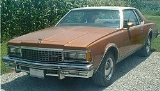
Chevrolet Caprice

 
Chevrolet Caprice

   Email Print
   Bookmark   Link


Chevrolet Caprice


The Chevrolet Caprice and Caprice Classic were full-sized automobile
Automobile

An automobile or motor car is a wheeled motor vehicle for transportation passengers, which also carries its own car engine or motor. Most definitions of the term specify that automobiles are designed to run primarily on roads, to have seating for one to eight people, to typically have four wheels, and to be constructed principally f...
s produced by the Chevrolet
Chevrolet

Chevrolet is a brand of automobile, produced by General Motors . It is the top selling GM marque, with "Chevrolet" or "Chevy" being at times synonymous with GM....
 division of General Motors
General Motors

General Motors Corporation , founded in 1908, is the world's second-largest automaker after Toyota, ranked by 2008 global unit sales. GM was the global sales leader for 77 consecutive calendar years from 1931 to 2008....
 in the United States
United States

The United States of America is a Federal government constitutional republic comprising U.S. state and a federal district. The country is situated mostly in central North America, where its Contiguous United States and Washington, D.C., the Capital districts and territories, lie between the Pacific Ocean and Atlantic Oceans, Borders of the U...
 and Canada
Canada

Canada is a country occupying most of northern North America, extending from the Atlantic Ocean in the east to the Pacific Ocean in the west and northward into the Arctic Ocean....
 from 1965 through 1996 model year
Model year

The model year of a product is a number used in North America to describe approximately when a product was produced.The model year and the actual calendar year of production do not always coincide....
s and in Mexico
Mexico

The United Mexican States , commonly known as Mexico , is a federalism constitutionalism republic in North America. It is bordered on the north by the United States; on the south and west by the Pacific Ocean; on the southeast by Guatemala, Belize, and the Caribbean Sea; and on the east by the Gulf of Mexico....
 from 1977 through 1983.

Throughout its life, the Caprice was the most expensive and luxurious model in the Chevrolet full-size car
Full-size car

A full-size car is a marketing term used in North America for an automobile larger than a mid-size car. In the United States, the United States Environmental Protection Agency uses "large car" to denote full-size cars....
 range, which during its lifetime also included the Biscayne
Chevrolet Biscayne

The Chevrolet Biscayne was a series of automobile produced by Chevrolet for model years 1958 through 1972....
, Bel Air
Chevrolet Bel Air

The Chevrolet Bel Air is an automobile series produced by the Chevrolet division of General Motors from 1953?75. From 1950?52, hardtops in Chevrolet's premium Chevrolet Deluxe model range were designated with the Bel Air name, but it was not a distinct series of its own....
 and Impala
Chevrolet Impala

The Chevrolet Impala is a Full-size car automobile built by General Motors for their Chevrolet division. Ed Cole, Chevrolet's chief engineer in the late 1950s, defined the Impala as a "prestige car within the reach of the average American citizen."...
. Its exit without replacement after the 1996 model year would leave the Ford Crown Victoria
Ford Crown Victoria

The Ford Crown Victoria is a rear-wheel drive Ford full-size first produced by the Ford Motor Company for the North American market in the mid-1950s....
, and its cousins the Mercury Grand Marquis
Mercury Grand Marquis

The Mercury Grand Marquis is a full-size rear-wheel drive sedan sold by the Mercury division of the Ford Motor Company. It is essentially Mercury's version of the Ford Crown Victoria with which it shares its Ford Panther platform along with the Lincoln Town Car....
 and Lincoln Town Car
Lincoln Town Car

The Lincoln Town Car is a full-size, rear-wheel drive luxury vehicles sedan sold by Ford Motor Company upscale Lincoln brand. The Town Car features a V8 engine and large exterior and interior dimensions....
, as the only traditional full-size American sedans.

1965-68
The Caprice began life in mid-1965 as a luxury trim package
Trim package

A trim package is an automotive package composed by a set of cosmetic embellishments to a vehicle. In some cases the trim package may include a specific model or ending name....
 for the Impala four-door hardtop sedan, in response to the successful Ford LTD
Ford LTD

The Ford LTD was a car model name that has been used by the Ford Motor Company in North America.The LTD designation is considered by some an abbreviation of "Luxury Trim Decor" and by others as a limited body style classification for the Ford Galaxie....
 series.


Discussion
Ask a question about 'Chevrolet Caprice'
Start a new discussion about 'Chevrolet Caprice'
Answer questions from other users
Full Discussion Forum


Recent Posts


Encyclopedia


The Chevrolet Caprice and Caprice Classic were full-sized automobile
Automobile

An automobile or motor car is a wheeled motor vehicle for transportation passengers, which also carries its own car engine or motor. Most definitions of the term specify that automobiles are designed to run primarily on roads, to have seating for one to eight people, to typically have four wheels, and to be constructed principally f...
s produced by the Chevrolet
Chevrolet

Chevrolet is a brand of automobile, produced by General Motors . It is the top selling GM marque, with "Chevrolet" or "Chevy" being at times synonymous with GM....
 division of General Motors
General Motors

General Motors Corporation , founded in 1908, is the world's second-largest automaker after Toyota, ranked by 2008 global unit sales. GM was the global sales leader for 77 consecutive calendar years from 1931 to 2008....
 in the United States
United States

The United States of America is a Federal government constitutional republic comprising U.S. state and a federal district. The country is situated mostly in central North America, where its Contiguous United States and Washington, D.C., the Capital districts and territories, lie between the Pacific Ocean and Atlantic Oceans, Borders of the U...
 and Canada
Canada

Canada is a country occupying most of northern North America, extending from the Atlantic Ocean in the east to the Pacific Ocean in the west and northward into the Arctic Ocean....
 from 1965 through 1996 model year
Model year

The model year of a product is a number used in North America to describe approximately when a product was produced.The model year and the actual calendar year of production do not always coincide....
s and in Mexico
Mexico

The United Mexican States , commonly known as Mexico , is a federalism constitutionalism republic in North America. It is bordered on the north by the United States; on the south and west by the Pacific Ocean; on the southeast by Guatemala, Belize, and the Caribbean Sea; and on the east by the Gulf of Mexico....
 from 1977 through 1983.

Throughout its life, the Caprice was the most expensive and luxurious model in the Chevrolet full-size car
Full-size car

A full-size car is a marketing term used in North America for an automobile larger than a mid-size car. In the United States, the United States Environmental Protection Agency uses "large car" to denote full-size cars....
 range, which during its lifetime also included the Biscayne
Chevrolet Biscayne

The Chevrolet Biscayne was a series of automobile produced by Chevrolet for model years 1958 through 1972....
, Bel Air
Chevrolet Bel Air

The Chevrolet Bel Air is an automobile series produced by the Chevrolet division of General Motors from 1953?75. From 1950?52, hardtops in Chevrolet's premium Chevrolet Deluxe model range were designated with the Bel Air name, but it was not a distinct series of its own....
 and Impala
Chevrolet Impala

The Chevrolet Impala is a Full-size car automobile built by General Motors for their Chevrolet division. Ed Cole, Chevrolet's chief engineer in the late 1950s, defined the Impala as a "prestige car within the reach of the average American citizen."...
. Its exit without replacement after the 1996 model year would leave the Ford Crown Victoria
Ford Crown Victoria

The Ford Crown Victoria is a rear-wheel drive Ford full-size first produced by the Ford Motor Company for the North American market in the mid-1950s....
, and its cousins the Mercury Grand Marquis
Mercury Grand Marquis

The Mercury Grand Marquis is a full-size rear-wheel drive sedan sold by the Mercury division of the Ford Motor Company. It is essentially Mercury's version of the Ford Crown Victoria with which it shares its Ford Panther platform along with the Lincoln Town Car....
 and Lincoln Town Car
Lincoln Town Car

The Lincoln Town Car is a full-size, rear-wheel drive luxury vehicles sedan sold by Ford Motor Company upscale Lincoln brand. The Town Car features a V8 engine and large exterior and interior dimensions....
, as the only traditional full-size American sedans.

1965-68


The Caprice began life in mid-1965 as a luxury trim package
Trim package

A trim package is an automotive package composed by a set of cosmetic embellishments to a vehicle. In some cases the trim package may include a specific model or ending name....
 for the Impala four-door hardtop sedan, in response to the successful Ford LTD
Ford LTD

The Ford LTD was a car model name that has been used by the Ford Motor Company in North America.The LTD designation is considered by some an abbreviation of "Luxury Trim Decor" and by others as a limited body style classification for the Ford Galaxie....
 series. This included a stiffer suspension, higher-grade cloth and vinyl seat and door trim (as well as thicker, higher-grade carpeting), walnut trim on the dashboard and door panels, pull straps on the doors, extra convenience lights, special full wheel covers and an optional vinyl top. The name for the Chevrolet Caprice was coined by Bob Lund (Chevrolet's General Sales Manager) after a classy restaurant he frequented in New York City
New York City

The City of New York is the List of United States cities by population in the United States, while the New York metropolitan area ranks among the List of urban areas by population....
. However, some say the Caprice was named after Caprice Chapman, daughter of auto executive and influential Indy-car official James P. Chapman.

The Caprice was very well received during its abbreviated first year in 1965. For 1966, the Caprice was expanded into a full top-line series to also include a two-door hardtop with a squared-off formal roofline (in contrast to the Impala/SS coupe's fastback roof) and a station wagon with simulated wood exterior trim - the first Chevy "woody" wagon since 1954. A V8 engine
V8 engine

A V8 engine is a V engine with eight cylinder s mounted on the crankcase in two banks of four cylinders, in most cases set at a right angle to each other but sometimes at a narrower angle, with all eight pistons driving a common crankshaft....
 was installed in every Caprice. While features such as an automatic transmission
Automatic transmission

An automatic transmission is an automobile gearbox that can change gear ratios automatically as the vehicle moves, freeing the driver from having to shift gears manual transmission....
, power steering
Power steering

Power steering is a system for reducing the steering effort on vehicles by using an external power source to assist in turning the wheel.The earliest known patent related to power steering was filed on August 30, 1932, by Francis W....
, white sidewall tires, and vinyl top were extra-cost options, virtually every Caprice was sold with them. It is interesting to note, however, that a few Caprices were ordered with the optional 4-speed manual transmission
Manual transmission

A manual transmission is a type of Transmission used in automotive applications. It generally utilizes a driver-operated clutch operated by a pedal or lever, for regulating torque transfer from the engine to the transmission, and a gear-shift either operated by hand or by foot ....
, few or no power accessories, and the 427 cubic-inch Turbo Jet V8. However most customers frequently ordered more civilized, but still powerful V8 engines such as the 396 cubic-inch Turbo Jet V8 to handle multitudes of luxury options such as air conditioning
Air conditioning

An air conditioner is an appliance, system, or Mechanism designed to extract heat from an area via a refrigeration cycle. In construction, a complete system of heating, Ventilation , and air conditioning is referred to as "HVAC." Its purpose, in a building or an automobile, is to provide comfort during either hot or cold...
, power windows, Cruise-Master speed control, power seat
Power seat

A power seat in an automobile is a front car seat which can be adjusted by using a switch or joystick and a set of small electric motors. Most cars with this feature have controls for the driver's seat only, though almost all luxury cars also have power controls for the front passenger seat....
s and stereo
Stereophonic sound

Stereophonic sound, commonly called stereo, is the reproduction of sound, using two or more independent Sound recording and reproduction channels, through a symmetrical configuration of loudspeakers, in such a way as to create a pleasant and natural impression of sound heard from various directions, as in natural hearing....
 radios; several automotive history books noted that a fully-optioned Caprice rivaled the appearance, comfort and convenience of the Cadillac DeVille
Cadillac DeVille

The DeVille name has been used on many of Cadillac's luxury car models. After the Cadillac Fleetwood was dropped from the Cadillac lineup the DeVille became the largest Cadillac sedan .The DeVille name was replaced by DTS for the 2006 model year....
 (which ironically was based on the Caprice and other B-body GM cars, but on a larger and more expensive C-body).

The 1966 Caprice received only minor detail changes from its 1965 predecessor that included a revised grille and new rectangular taillights which replaced the Chevrolet-traditional triple round tailights used in full-sized cars each year since 1958 with the exception of the bat-winged '59 model. New options for 1966 included the automatic "Comfortron" air conditioning system on which the driver could set a constant year-round temperature reading and a "Tilt and Telescopic" steering wheel that could be adjusted vertically in six positions as well as be telescoped further out from the steering column for improved driver comfort.

The Caprice sedan and coupe came standard with a luxurious cloth and vinyl bench seats with a folding center armrest in the rear seat. Optional on both models was a Strato bench seat which combined bucket-style seatbacks and center armrest with a bench cushion for six-passenger seating. Coupes could also be ordered with an all-vinyl interior featuring Strato bucket seats and center console with floor shifter, storage compartment, courtesy lighting and full instrumentation at the front end of the console that was integrated with the lower instrument panel - in essence a more luxurious Impala SS in a formal-roofed bodyshell. Station wagons featured an all-vinyl bench seat interior.

The 1967 Caprice received a heavier restyling with more rounded bodylines along with revised grilles and taillights, optional front fender corner lamps which illuminated with the headlamps and a revised instrument panel with round instruments along with a new steering wheel. Also new this year was a dual-master brake cylinder along with optional front disc brakes, with other new options including a stereo 8-track tape player, power door locks and a fiber optics monitoring system. The same seating selections continued as before with revisions to trim patterns plus the new addition of all-vinyl upholstery as a no-cost option for conventional and Strato bench seats in sedans and coupes. Engines/transmission offerings were a carryover from 1966 except that the 427 cubic-inch Turbo Jet V8 was no longer listed on the option list, leaving the 427 as the top power offering. Also the three-speed Turbo Hydramatic transmission previously only offered with the 396 and 427 cubic-inch V8s was now available with the 327 cubic-inch Turbo Fire V8.

A minor facelift was made on the 1968 Caprice that included a new grille with taillights set into the bumper and optional hidden headlamps
Hidden headlamps

Hidden headlamps are an automotive styling feature that conceals an automobile's headlamps when they are not in use. Depending on the design, the headlamps may be mounted in a housing that rotates so as to sit flush with the front end as on the Porsche 928, may retract into the hood and/or fenders as on the 1968 - 2004 Chevrolet Corvette, or...
, along with ventless front windows on coupes. Federally-mandated side marker lamps became standard on all US cars that year; the Caprice carried over the optional white corner marker lamps at the forward edge of the fenders in addition to the now-required amber parking lights which were illuminated with the headlights. Also, a new 307 cubic-inch Turbo Fire V8 rated at replaced the 283 small block as the standard engine. Inside, the instrument panel was revised with a return to the horizontal sweep speedometer and a revised three-spoke steering wheel. The horizontal sweep speedometer made adding an optional instrument cluster as was found on the Super Sport models a difficult proposition; this was solved by narrowing the speedometer within its opening and flanking it with engine-turned instruments in the place of warning lights. The fuel gauge, placed next to the speedometer within its own pod in the base models, was moved to its new place next to the speedometer. A tachometer took the place of the fuel gauge in the large opening left by the fuel gauge.

1969-70

The 1969 Caprice and other full-sized Chevrolets were restyled with crisper bodylines and front bumpers that wrapped around the grille (again with optional concealed headlights, for which headlight washers could be added as a new "one year only" option) along with ventless front windows on all models. The wheelbase, inner bodyshell and framework were carried over from the 1965 model - along with the rooflines of pillared four-door sedans (which were offered in lesser Impala, Bel Air and Biscayne series, but not on Caprices, which continued only in two- and four-door hardtop choices only). The station wagon was renamed the Kingswood Estate, but continued to use exterior woodgrain trim along with exterior and interior trim shared with Caprice sedans and coupes. Inside, front seat headrests were now standard equipment due to a federal safety mandate and the ignition switch moved from the dashboard to the steering column and doubled as a lock for the steering wheel when the key was removed, a Federal mandate that took effect with the 1970 models but introduced a year earlier on all General Motors cars.

The 1969 Caprice also offered a new GM-designed variable-ratio power steering unit as optional equipment along with a seldom-ordered "Liquid Tire Chain" option. The standard engine was enlarged to a 327 cubic-inch V8 with optional engine choices including a new 350 cubic-inch Turbo Fire V8 rated at 255 and , a 396 cubic-inch Turbo Jet V8, and 427 cubic-inch Turbo Jet V8s rated at 335 and . All V8 engines were now available with the three-speed Turbo Hydramatic transmission for the first time though the two-speed Powerglide was still offered with the 327 and 350 V8s.

The 1970 Caprice got a minor facelift featuring a more conventional under the grille bumper replacing the wrap-around unit used in 1969 along with new triple vertical taillights in the rear bumper. Power front disc brakes and fiberglass-belted tires on wheels were made standard equipment along with a larger 350 cubic-inch Turbo Fire V8. Optional V8s included a 350 and a new 400 cubic-inch Turbo Fire V8. At the top of the engine roster, the big block 427 was replaced by a new (and bored out) 454 cubic-inch Turbo Jet V8 offered in power ratings of and . Both the 250- and Turbo Fire engines were designed to use regular gasoline while the 350 Turbo Fire and both 454 Turbo Jet engines required premium fuel.

A three-speed manual transmission with column shift was standard equipment as in previous years but the floor-mounted four-speed manual with Hurst shifter was dropped from the option list for 1970 as were the Strato bucket seats and center console previously offered on coupes. Automatic transmission options included the two-speed Powerglide on 350 V8s and Turbo Hydramatic with all engines.

1971-76


The 1971 Caprice was completely restyled on a longer wheelbase and featured more rounded fuselage styling similar to that pioneered by Chrysler Corporation on its 1969 full-sized cars, along with new flush "pull-up" exterior door handles and double-shell roofs - both features first appearing on the 1970 1/2 Camaro and Pontiac Firebird. The basic "Full-Perimeter" frame and all-coil suspension were refined for improvements in ride and noise reduction. The new styling was highlighted by a Cadillac-like eggcrate grille with a "Caprice" emblem in the center and brushed metal trim surrounding the taillights on the rear deck.

Inside were revised interiors featuring a two-spoke cushioned steering wheel and new instrument panel with horizontal sweep speedometer and instrument placement similar to previous full-sized Chevrolets. Caprices continued to feature higher grade interiors than their Impala counterparts with luxurious cloth-and-vinyl upholstery on both sedans and coupes and a center front seat armrest on sedans, along with woodgrain trim on dash, steering wheel and door panels plus carpeting on floor and lower door panels.

Station wagons now used a unique 125" wheelbase and were bigger than ever before. As with the year before, station wagons contiuned to use unique model names, however, the Kingswood Estate wagon was considered to be equivalent to the Chevrolet Caprice being the top level wagon. Unlike the years previous, station wagons used unique rear suspension, using a solid axle with leaf springs as opposed to the sedans and coupes coil springs and trailering arms. Also new was the "Glide-Away" clamshell style disappearing tailgate. This design had the glass upper portion of the tailgate slide into the roof, and the lower steel portion slide into a compartment under the floor, providing a completely open space with no tailgate in sight.

The cargo capacity was the biggest it would ever be for a Chevrolet wagon, at 106.4 cubic feet. With from the front seat to the tailgate and between the rear wheels, these wagons could easily carry a 4 x 8 sheet of plywood with the tailgate closed. Kingswood wagons came in 2-seat or 3-seat variants. The 3-seat model had a forward facing rear seat that was placed over the rear axle area allowing for two additional occupants making them 8-passenger wagons. The Kingswood Estate had the same standaed 400 cubic-inch 2-barrel engine as the sedans, and the same engine options as the coupes and sedans. The station wagons were only available with single exhaust systems though so had the lesser power ratings.

Power front disc brakes were standard equipment, along with a larger 255-gross horsepower (170 net) 400 cubic-inch Turbo Fire V8
V8 engine

A V8 engine is a V engine with eight cylinder s mounted on the crankcase in two banks of four cylinders, in most cases set at a right angle to each other but sometimes at a narrower angle, with all eight pistons driving a common crankshaft....
. This engine, along with all optional powerplants, were designed to run on regular leaded, low-lead or unleaded gasoline of 91 research octane or higher. To achieve this, all engines had the compression ratios lowered to 8.5:1. General Motors was the first of the big three to have all engines run on regular fuel and these changes were made to help meet the increasing stringent emission regulations that were to come in to place in years to come.

Optional engines included 300 horsepower (206 net) 400 cubic-inch Turbo Jet V8 (not to be confused with the two-barrel 400 small block this engine actually displaced 402 cubic-inches) and 365-gross horsepower (285 net) 454 Turbo Jet V8 which came standard with dual exhaust. When equipped with dual exhaust, the 400 Turbo jet was rated at . At mid-year, the Turbo Hydramatic transmission and variable-ratio power steering became standard equipment on all Caprice (and Impala) models.

Chevrolet specifications included both "gross" and "net" horsepower figures in 1971, which was a year before the industrywide transition to SAE net horsepower
Horsepower

Horsepower is the name of several non-International System of Units units of power . It was originally defined to allow the output of steam engines to be measured and compared with the power output of draft horses....
 figues. The "gross" horsepower figures were based on the power rating of an engine as measured on a dynameter with no accessories, exhaust system or emissions equipment installed. These measurements were not standardized, inaccurate and some manufacturers deflated or inflate power ratings to their advantage. SAE net horsepower standardized horsepower ratings in accord with SAE standard J1349 figures to get a more accurate horsepower figure. "Net" horsepower was measured "as installed" in a vehicle with power using accessories and emission equipement installed, exhaust systems, and air cleaners, leading to lower horsepower ratings. For 1971, the 400 Turbo-Jet engine was rated at 300 gross horsepower with and without dual exhaust, while the more accurate net firgures show it rated at with single exhaust and 260 with dual exhaust. Beginning in 1972, automakers would follow SAE standard J1349 and the "net" horsepower ratings were the only advertised ratings.

In its May, 1971 issue Motor Trend
Motor Trend

File:motor trend cover.jpgMotor Trend is an automobile magazine. It first appeared in September 1949, issued by Petersen Publishing Company in Los Angeles, California, and bearing the tag line The Magazine for a Motoring World. Petersen Publishing was sold to British publisher EMAP in 1998, who sold the former Petersen magazines to...
 magazine published a comparison road test that included a Caprice Coupe and a Cadillac Sedan de Ville. The tested Caprice was powered by the 454 V8 and loaded with virtually all available options to provide a more equal test of the two cars and match the level of equipment and opulence of the Cadillac. Though M/T noted that the Cadillac had a higher level of quality than the Chevrolet along with a far more luxurious interior (the DeVille was upholstered in leather while the Caprice had the standard cloth trim), the magazine ultimately considered the Chevy as the better value in its loaded form at $5,550.35 (base price $3,740) compared to the Cadillac's $9,081 pricetag mainly due to the price spread of the two cars as tested and the fact that the $3,500 price difference bought only a bit more quality and a few more trick luxury options.

The 1972 Caprice received a revised grille that was lower in height than '71 but still in an eggcrate pattern flanked by a new bumper with increased protection one year ahead of the Federal mandate. This was done by a bumper within bumper design. Heavy gauge beams reinforce the bumper which are attached to the frame. The rear bumper also featured this design and now had the triple taillights now mounted in the bumper. Engine offerings were carried over from 1971 with the switch to "net" horsepower ratings including for the standard two-barrel 400 Turbo Fire V8, ( with optional dual exhaust) for the four-barrel Turbo Jet 400 big-block V8 and for the four-barrel dual exhaust 454 Turbo Jet V8 (rated at in wagons with single exhaust). Turbo Hydramatic transmission, variable-ratio power steering and power front disc brakes continued as standard equipment. New to the Caprice lineup was a pillared four-door sedan.

The Caprice was renamed the Caprice Classic for 1973, a year highlighted by a new cross-hatch grille over the new energy absorbing front bumper and revised square taillights, again mounted in the bumper. Increasingly stringent emission standards added EGR (exhasut gas recirculation) valves to engines, and accordingly horsepower figures continued to drop. The standard Turbo-Fire 400 two-barrel was now rated at while the only optional engine was the Turbo-Jet 454 V8 produced with dual exhaust ( with single exhaust used in station wagons). A convertible
Convertible

A convertible is a type of automobile in which the roof can retract and fold away, converting it from an enclosed to an open-air vehicle. Many different car body styles are manufactured and marketed in convertible form....
, brought over from the lesser Impala series, was moved to the Caprice lineup for the first time in 1973 and the woodgrained-trim station wagon known as the Kingswood Estate since 1969 was renamed the Caprice Estate. A new option on Caprice Classic sedans and coupes was a 50/50 bench seat with recliner on the passenger side.

A new grille and taillights moved above the new rear bumper highlighted the changes for the 1974 Caprice Classic along with new thick "B" pillars and fixed rear quarter opera windows on two-door coupes, which essentially eliminated pillarless hardtop design much like the GM intermediates did the previous year. Other bodystyles including the four-door pillared and hardtop sedans, convertible and Estate Wagon were carried over with only minor changes from 1973. New to the engine roster was a four-barrel version of the small block 400 cubic-inch Turbo Fire V8 rated at (which was the standard engine on wagons and all cars sold in California, optional on other models in 49 states). All other engines were carried over from 1973 although the 454 Turbo Jet lost , now rated at Also new for 1974 were integrated lap and shoulder seat belts and the unpopular "interlock" system that required the driver and front seat passengers to fasten seat belts in order to start the vehicle. The interlock mandate received so much public outcry that Congress rescinded it shortly after the introduction of the 1975 models. A new option this year was a remote control for the passenger-side outside rearview mirror.

For 1975, the Caprice Classic and Estate Wagon received revised grille and tailight trim along with six-window styling on four-door models with the third window on the four-door hardtop essentially an opera window. The dashboard, radio and climate control graphics were revised; the speedometer read up to , and had smaller numbers for kilometers per hour. The Caprice convertible would be discontinued after the 1975 model year along with its full-size B-body ragtop counterparts including the Oldsmobile Delta 88, Buick LeSabre
Buick LeSabre

The Buick LeSabre was a full-size car made by the Buick division of General Motors from 1959-2005. For many years, the LeSabre was considered the entry level full-size Buick, carrying the lowest base price in the Buick lineup....
 and Pontiac Grand Ville
Pontiac Grand Ville

The Pontiac Grand Ville was the top-line luxury car in the division's full-sized line from 1971 to 1975. It displaced the Pontiac Bonneville which had served as Pontiac's flagship since 1957....
. Just about 8,350 Caprice Classic rag tops found buyers in 1975, and both surviving Caprice Classic (1973 to 75) and Impala (1971, 1972) ragtops have demonstrated quite an appreciation in value. This depends on the car's overall condition with a low mileage, unmolested original, always being highly coveted by collectors and fans.

1976 Chevrolet Caprice Classic Landau
As fuel economy became a bigger priority among Americans following the Arab Oil Embargo of late 1973 and early 1974, Chevy made the smaller 350 cubic-inch small block V8 with two-barrel carburetor standard on all Caprice models except wagons for 1975 for sedans and coupes. In California, the four-barrel 350 V8 was the base engine and this engine was unavailable elsewhere. Optional engines included the 400 small block V8 (standard on wagons) and 454 big block, the latter not available in California. All engines except for the 454 were single exhaust systems with the introduction of the catalytic converter. Station wagons that used the 454 now featured dual exhaust as well. Also introduced this year were GM's "High Energy" electronic ignition and radial tires that were advertised as part of "Chevrolet's New Efficiency System." The theme of economy continued through to the new options this year: A new "Econominder" gauge package included a temperature gauge and a "fuel econominder," the latter being a gauge alerting drivers as to when their driving habits caused the engine to use more or less fuel. Also new on the options list: intermittent windshield wipers, and 50/50 seating options on the Impala coupe/sedan and Caprice Classic convertible models.

The "Landau" model was also introduced in 1975, and was primarily an appearance package. Carried over unchanged into 1976, the Landau featured a choice of special paint colors, sports-styled dual remote outside rearview mirrors, color-keyed wheel covers, a landau
Landau

Landau or Landau in der Pfalz is an autonomous city surrounded by the S?dliche Weinstra?e district of southern Rhineland-Palatinate, Germany....
 vinyl roof
Vinyl roof

Vinyl roof refers to a vinyl covering for an automobile's top. This covering was originally designed to give the appearance of a convertible to models with a fixed roof, but eventually it evolved into a styling statement in its own right....
 (with chrome band across the roof), a vinyl bodyside molding insert, and pinstriping. Inside there were color-keyed seat belts and floormats. Fender and dashboard emblems rounded out the package. With minor changes, the Landau would be carried over into the 1977-era coupe models.

The 1976 Caprice Classic marked the sixth and final year of a body style introduced in 1971. The '76 Caprice weighed approximately 4314 pounds and was 222.9 in. (5.66 m) long, growing considerbly from the 1971's 4040 pounds and length. Only minor changes were made for '76, including an eggcrate grille similar to that of the 1976 Cadillac Calais
Cadillac Calais

The Calais is a full-size luxury car made by Cadillac from 1965 to 1976. In 1965, Cadillac renamed the entry-level Cadillac Series 62 the Calais, after the French resort town of Calais....
/DeVille
Cadillac DeVille

The DeVille name has been used on many of Cadillac's luxury car models. After the Cadillac Fleetwood was dropped from the Cadillac lineup the DeVille became the largest Cadillac sedan .The DeVille name was replaced by DTS for the 2006 model year....
/Fleetwood
Cadillac Fleetwood

The Fleetwood Metal Body Company began business in Fleetwood, Pennsylvania on April 1, 1909 and continued as an independent automobile body builder until acquired in 1925 by the Fisher Body Company, a division of General Motors....
 flanked by new rectangular headlights, along with revised exterior and interior trimmings. Engine options remained unchanged, and the 350 2-barrel remained standard in everywhere but California (which had the 350 4-barrel as standard)and the small block 400 4 barrell was still available. Power ratings were unchanged except for the 350 4-barrel engine was now rated at and the dual exhaust equipped 454 was rated at (still unavailable in Californaia). The was the final year for the big block 454 V8 to be offered, along with hardtop body styles and the clamshell-tailgate design for the station wagon.

1977-1990


The 1977 Chevrolet Caprice Classic and its b-body siblings were drastically downsized, which greatly reduced its weight and exterior dimensions, while increasing usable interior space compared to 1976 models. GM called its downsizing program Project 77 and invested $600 million to develop the most changed full-size Chevrolet to date. The weight difference between the 1976 and 1977 models was for coupes, for sedans and pounds for wagons. The 1977 Caprice was over shorter in coupe and sedan form, and over shorter in wagon form. Wheelbases were reduced to for all models from the for coupes and sedans and for wagons. Width was reduced by for sedans and coupes; wagon's width remained virtually unchanged. The only dimensions the increased were the height which increased by and trunk capacity which went up to 20.2 cubic feet for sedans and 19.8 cubic feet for coupes.

Although by modern standards the 1977 downsized Chevrolet cars are quite large, the new Chevrolet had exterior dimensions closer to the intermediates of its day. In fact the 1977 Caprice shared the same 116" wheelbase of the intermediate sized Chevrolet Chevelle. The introduction of such a small full-size car was considered quite a risk for General Motors. To help ensure the car was a success, preview clinics were held by Chevrolet which returned very positive results. Furthermore, the design process for this car was revolutionized. No longer would the design be focussed towards the longer, lower, wider trend the GM had followed for many years. Designers started with a passenger compartment that was larger and more comfortable than the 1976 models and then worked outward to the exterior. Wind tunnel testing was used to help define the shape of the new Chevrolet rather than fix aerodynamic problems that cropped up after the design was completed as in previous years.

Ford would respond with creative badge-engineering by applying a full-size nameplate to its intermediate line creating the 1977 LTD II
Ford LTD II

The Ford LTD II was a mid-size car built by the Ford Motor Company between 1977 and 1979 for the North American market. It was based on the Ford Torino, which it replaced, and used the same platform as the concurrent Ford Thunderbird, which was downsized and dramatically reduced in price for 1977 to occupy the market position of the 1974-76...
, which was basically a reskinned and renamed Torino
Ford Torino

The Ford Torino is an mid-size car car produced bythe Ford Motor Company for the North American market between 1968 and 1976. It was initially an upscale version of the intermediate sized Ford Fairlane, which Ford produced between 1962 and 1970....
. Ford hoped customers would be turned off with Chevrolets small full-size models and advertisements of the day showed how Ford offered a choice of a large or smaller full-size sedan (LTD or LTD II). Ford hoped the LTD II would steal customers who wanted a smaller full-size car, but in reality the LTD II had poor space efficiency and didn't compare well with the Chevrolet fullsize models. In 1979 Ford released a true downsized full-size car with the introduction of the 1979 Ford LTD. Chrysler responded in 1979 when it re-engineered its intermediate B-body cars, and designated them the full-size R-bodies
Chrysler R platform

The Chrysler R platform was essentially a slightly modernized version of Chrysler's circa 1971 Chrysler B platform introduced in 1979. It was a response to the downsized Chevrolet Caprice and Ford LTD....
. However, these were not true downsized cars like GM and Ford introduced.

All Chevrolet Caprice models were called Caprice Classic for 1977, as had been the case since 1973. The Caprice Classic was available as a 4-door sedan, a 2-door sedan, a 6-passenger 2-seat station wagon and a 8-passenger 3-seat station wagon. All models were pillared sedans, and all doors had window frames. No more hardtop models were offered.

The 2-door models featured a unique rear window that created a semi-fastback. This glass had sharp corners giving it three sides. This was done through "hot-wire" bending process. The Caprice was available as the sport coupe or as the Landau coupe. The Landau coupe featured a partially covered vinyl roof.

Station wagon models received a new three-way tailgate for 1977; the clamshell tailgate was gone. The 3-seat models featured a rear facing third seat for two occupants making these cars 8-passenger models. The cargo capacity was reduced to 87 cubic feet, and although the station wagon could still carry a 4' x 8' sheet of plywood, this could now only be done with the tailgate down. Station wagons used the coil spring suspension in the rear, like the sedans and coupes.

The 1977 Caprice Classic was not only smaller in overall dimensions, but also in engine size. For the first time since the Caprice was introduced in 1965, a V8 engine was no longer standard equipment. The base engine for 1977 Chevrolet Caprice coupes and sedans was Chevy's long-running 250 cu in
Chevrolet Straight-6 engine

The Chevrolet straight-6 of the 1930s through 1970s was the base engine in many popular cars, including the Chevrolet Camaro....
 six-cylinder powerplant
Straight-6

The straight-6 or inline-6 engine is a six cylinder internal combustion engine with all six cylinder mounted in a straight line along the crankcase....
 rated at . This engine was last available in a full-size Chevy in 1973 in the lower-line Bel Air. Standard on station wagons and optional on other Caprice models was a 2-barrel 305 cu in version of the Chevy's small-block V8. This was the first year the 305 cu in had been used in a full-size Chevrolet; it was first introduced in 1976 in compact and mid-sized Chevrolet lines. A 350 cu in V8 with four-barrel carburetion was now the top engine offering as the larger 400 and 454 V8s were discontinued.

With the new lighter weight and smaller engines, Chevrolet promised increase fuel economy without great loss of performance compared to 1976 models. The EPA estimates for 1977 Chevrolet was 17 MPG city and 22 MPG highway for 6 cylinder models. Ford's 1977 LTD was rated at 15 MPG city and 19 MPG highway with its smallest engine, the 302 V8. By the same EPA estimates, Plymouth's Gran Fury returned 13 MPG city and 18 MPG highway with the 318 V8. Performance was good when comparing the smaller 1977 Caprice to the 1976 Caprice. A 1976 350 2-bbl powered Chevrolet ran 0-60 in 12.9 seconds, while a 400 powered model ran 10.7 seconds. 1977 models ran 11.4 seconds to with the 305 engine and 10.8 seconds with the 350 engine. Car and Driver tested a 1977 Chevrolet Impala with the 350 engine and 3.08:1 axle running a 9.6 second 0-60 time and obtaining a top speed. The 350 was available with a 2.56:1 axle ratio and a 3.08 axle ratio which may explain the difference in performance times.

EPA Fuel Economy Ratings For 1977 Fullsize Cars
MakeModelEngineEPA CityEPA HwyEPA Comb
ChevroletCaprice/Impala250 L6 17 MPG22 MPG19 MPG
ChevroletCaprice/Impala305 V8 16 MPG21 MPG18 MPG
ChevroletCaprice/Impala350 V8 15 MPG20 MPG17 MPG
FordLTD302 V8 15 MPG19 MPG17 MPG
FordLTD351 V8 13 MPG19 MPG15 MPG
FordLTD400 V8 13 MPG18 MPG15 MPG
FordLTD460 V8 11 MPG16 MPG13 MPG
PlymouthGran Fury318 V8 13 MPG18 MPG15 MPG
PlymouthGran Fury360 V8 12 MPG18 MPG14 MPG
PlymouthGran Fury400 V8 11 MPG18 MPG13 MPG
PlymouthGran Fury440 V8 9 MPG17 MPG11 MPG


In 1976 the full-size Chevrolet was the third best selling car in the United states, while the 1977 models became the number one selling car in the United States. More than 660,000 full-size Chevrolets were produced in 1977, with the most popular model being the 4-door Caprice Classic sedan (212,840 produced). By 1978 more than 1 million downsized Chevrolets were produced, when another 612,000 cars were produced. Not only did the public take to the new downsized Chevrolet's but so did the auto publications. Motor Trend
Motor Trend

File:motor trend cover.jpgMotor Trend is an automobile magazine. It first appeared in September 1949, issued by Petersen Publishing Company in Los Angeles, California, and bearing the tag line The Magazine for a Motoring World. Petersen Publishing was sold to British publisher EMAP in 1998, who sold the former Petersen magazines to...
 named the Caprice its Car of the Year
Car of the Year

Car of the Year is a phrase usually considered to have been invented by Motor Trend magazine in the 1950s for their annual award for best automobile....
 for 1977 and Car and Driver declared "Even the most jaded car critics are in fact tripping over each other trying to be the first to anoint this sedan to be the best full-sized Chevrolet ever made." Car and Driver went further to comment on the F41 suspension option which included stiffer springs, larger sway bars wheels and tires to say it will "make you think your Chevy came from the Black Forest instead of Detroit."

78capricecoupe
Only minor revisions were performed to the 1978 Chevrolet Caprice Classic. Front and rear styling were revised slightly. The engine line-up remained unchanged, but numerically lower axle ratios were used in an attempt to boost fuel economy. The 305 and 350 engines went from a standard 2.56:1 axle in 1977 (2.73:1 for wagons), to a 2.41:1 axle in 1978 (2.56:1 for wagons). An optional 3.08 axle was also available for 350 powered Caprices. The 305 V8 engine received an aluminum intake manifold which reduced engine weight by 35 pounds. A larger brake booster was also added to help reduce braking effort. New options included a steel sliding moonroof and 40-channel CB radio built into the AM/FM radio.

79 Caprice Rear
For 1979 the Caprice Classic continued with only minor refinements. Again the front and rear styling was refreshed slightly. The 250 six gained five horsepower, while the 305 V8 lost . The change to the 305 was a result of switching from the larger Rochester 2GC carburetor to the smaller Rochester Dualjet carburetor. The 350 engine was unchanged.

The 1980 Caprice Classic saw its first major revision since the 1977 downsized. To further improve the fuel economy of the car, efforts were made to reduce weight and improve aerodynamics. The Caprice received all new exterior sheet metal, without drastically changing the look of the car. To improve aerodynamics the hood was tapered lower, while the trunk area was higher. The grille was now a egg crate style while the tail-light panel featured three separate square lights per side. All the doors and components within were redesigned to be lighter, including the window crank mechanisms, which now used a tape drive mechanism. Greater use of aluminum including in bumper reinforcement and in sedan/coupe radiators helped to further reduce the overall weight of the vehicle. 1980 models were approximately 100 pounds lighter than 1979 models.

The new styling increased the trunk capacity of both coupes and sedans to 20.9 cubic feet. This increase was also partially achieved with a now standard compact spare tire on a wheel. A new frame lift jack replaced the bumper mounted model. A larger 25 US gallon fuel tank was standard equipment in sedans and coupes. Easy-roll radial tires, improved anti-corrosion measures, low friction ball joints and larger front suspension bushings were also new for 1980. Puncture-sealant tires and cornering lights were new options.

The 250 six, was replaced by a new 90 degree Chevrolet 3.8 L (229 cu in)
Chevrolet 90-Degree V6 engine

The Chevrolet 90? V6 family of engines began in 1978 with the Chevrolet 200 cubic inch displacement V6 as the base engine for the all new 1978 Chevrolet Malibu....
 V6 as the base engine for sedans and coupes. This engine shared the same bore and stoke as the 305 cu in V8. California emission cars used the Buick
Buick

Buick is a marque of automobile sold in the United States, Canada, China, Taiwan, Qatar, Kuwait, and Israel by General Motors Corporation. Since the demise of Oldsmobile in 2004, it is GM's only North America-based entry-level luxury brand....
 3.8 L (231 cu in) V6 engine. The Chevrolet 3.8L was rated at while the Buick V6 engine had a rating. Although the 3.8 L V6 had the same horsepower rating as the 250 six used in 1979, the 250 had more torque than the 3.8 L (200 ft·lbf vs 175 ft-lbs). The 3.8 L V6 did boost Chevrolet Caprice's fuel economy to and EPA estimated 18 MPG city and 26 MPG highway, the highest a full-size Chevrolet had been rated to date.

The base V8 engine was new for 1980. The 4.4L 267 cu in
Chevrolet Small-Block engine

Chevrolet's small-block V8 is a not a single engine but a series of famous automobile engines built on the same basic small engine block. Retroactively referred to as the "Generation I" small-block, it is distinct from subsequent GM "Generation II" GM LT engine and "Generation III" GM LS engine engines....
 V8 rated at and was the standard engine for station wagons. This engine had a 2-barrel carburetor Rochester Dualjet carburetor, and was not available in California. The 2-barrel carburetor on the 305 cu in V8 was replaced with a 4-barrel increasing the 305's output to . This was now the most powerful engine option (standard on California station wagons), as the 350 cu in V8 was no longer available, except as part of the police package option. The Oldsmobile-built 350 cubic-inch Diesel V8
Oldsmobile V8 engine

The Oldsmobile Rocket V8 was the first post-war Overhead valve V8 at General Motors Corporation. Production started in 1949, with a new generation introduced in 1964....
 was added to the option list for station wagons. This engine was rated at and . To further increase fuel economy, all transmissions were equipped with an electronically controlled lock-up torque converter clutch.

1981 saw only minor revisions to the Caprice Classic. Styling was unchanged other than the grille which remained egg crate style but now had larger sections. Refinements included redesigned front disc brakes for less drag and a translucent plastic master cylinder reservoir. The cruise control became equipped with a resume feature, while wire wheel covers had locking bolts to secure them in place.

The engine line-up remained unchanged, although the 3.8 L 229 cu in V6 was now rated at and the 5.0 L 305 cu in V8 was rated at . All engines were updated with the Computer Command Control (CCC) system which included an electronically metered carburetor. This change occurred in 1980 for California emission cars and did not occur to Canadian emission cars until 1987. A new four-speed automatic overdrive transmission with lock-up torque converter joined the powertrain line-up. This transmission helped boost highway fuel economy, while improving city performance by with a 3.08:1 rear axle ratio. The overdrive transmission was only available with the 305 cu in V8, and was a mandatory option for this engine.

Few changes occurred to the 1982 Chevrolet Caprice Classic. Styling remained unchanged from 1981. The model line-up was reduced by one, with the Caprice Landau coupe leaving. Remaining were the Caprice Classic Sedan, Caprice Classic sport coupe, Caprice Classic 6-passenger wagon and the Caprice Classic 8-passenger wagon.

The engine line-up and power ratings remained unchanged. The 350 cubic-inch Diesel V8
Oldsmobile V8 engine

The Oldsmobile Rocket V8 was the first post-war Overhead valve V8 at General Motors Corporation. Production started in 1949, with a new generation introduced in 1964....
 engine was now available on all models. The automatic overdrive transmission was available with both the 267 cu in V8 and the 305 cu in V8 engine. This transmission was no longer a mandatory option for the 305 cu in engine, which now came standard with the three-speed automatic (except for California models).

1983 was marked with the fewest Chevrolet Caprice models to date. No two-door Caprice models were produced, leaving only the Caprice Classic 4-door and the 8-passenger Caprice Classic station wagon, since the 6-passenger Caprice wagon also left the line-up. The 4.4L 267 cu in engine was discontinued, but all other engines remained unchanged. The 305 cu in engine and the automatic overdrive transmission was standard on station wagons. The 350 cu in diesel was available with the automatic overdrive transmission at extra cost, while the 305 cu in V8 came equipped only with the automatic overdrive transmission. The 1983 Chevrolet Caprice Classic was selected on the Car and Driver Ten Best
Car and Driver Ten Best

Car and Driver magazine annually nominates a list of what it considers the Ten Best cars and Five Best trucks.All production vehicles for sale in that calendar year are considered with these restrictions:...
 list.

The Chevrolet Caprice Classic 2-door sport coupe returned for the 1984 model year making the line-up consist of three models. Styling still remained unchanged, and 1984 models were virtually identical to 1981 models. The windshield washer controls were moved from the dashboard to the turn signal stalk to create the multi-stalk. The optional cruise control (which continued to be mounted on the turn signal stalk) now featured acceleration/deceleration in increments. An optional Landau package included a vinyl roof, sport mirrors and reveal moldings.

Powertrain availability and power ratings were unchanged for 1984. The 350 cu in diesel engine came standard with an automatic overdrive transmission when equipped in station wagons.

For 1985 the Chevrolet Caprice received minor updates while styling remained unchanged. The interior of the Caprice was updated for 1985, marking its most significant update since 1977. The simulated woodgrain applique used on the dash was replaced with a simulated silver metallic applique. The shaft-style radio was replaced with a more modern double DIN style radio, while the pull-out headlight switch was replaced by a push button style switch. The climate controls were updated with rotary switches for the fan and rear window defroster replacing the toggle style switches. The instruments were updated to have a more modern appearance, with a horizontal speedometer while a round speedometer was included with the optional gauge package.

The engine line-up saw major changes for 1985. The 4.3 L V6 engine (262 cu in)
Chevrolet 90-Degree V6 engine

The Chevrolet 90? V6 family of engines began in 1978 with the Chevrolet 200 cubic inch displacement V6 as the base engine for the all new 1978 Chevrolet Malibu....
 replaced both 3.8 L V6s in 1985 as the base engine for sedans and coupes. The 4.3 L engine was rated at and , producing more than the 229 cu in V6. The 4.3L V6 shared its bore and stroke with the 350 cu in Chevrolet V8. This engine came standard with a three-speed automatic but was available with the four-speed automatic overdrive transmission. The 5.0 L 305 cu in V8 engine received an electronic spark control and compression was increased from 8.6:1 to 9.5:1. This caused the 305's output to jump to . The 350 cu in diesel engine remained unchanged.

1986 marked the first time the Caprice saw a major exterior restyle since 1980. The front fascia was restyled to have a more aerodynamic look. The Caprice emblem was no longer a hood ornament, and was mounted directly to the centre of the front fascia. A new smaller sleeker grille with prominent vertical chrome divider bars replaced the egg crate style used in 1985. The rear tail lights were restyled to look more modern, but continued to have three lights per side. The sheet metal remained unchanged, however the new front and rear restyles updated the appearance of the Caprice.

With the Chevrolet Impala
Chevrolet Impala

The Chevrolet Impala is a Full-size car automobile built by General Motors for their Chevrolet division. Ed Cole, Chevrolet's chief engineer in the late 1950s, defined the Impala as a "prestige car within the reach of the average American citizen."...
 no longer being produced, a new base Caprice 4-door model was introduced. The Caprice Classic was still available as a 4-door sedan, coupe and 8-passenger station wagon, while a new Caprice Classic Brougham 4-door sedan joined the model line-up. Brougham models featured a 55/45 front seat with armrest, and a new "pillow design" with velour fabrics. Broughams featured woodgrain applique on its dash fascia, a dome map light, front door courtesy lights and 20-oz carpeting. Power window controls for all model moved from the door panel to the armrest for improved ergonomics.

The 4.3L V6 engine received a boost, rated at . The 305 cu in engine was unchanged and remained standard on station wagons. Station wagons built after approximatley November 1st 1985 came equipped with the Oldsmobile
Oldsmobile

Oldsmobile was a brand name of automobile produced for most of its existence by General Motors. It was founded by Ransom E. Olds in 1897. In its 107-year history, it produced 35.2 million cars, including at least 14 million built at its Lansing, Michigan factory....
-built 307 cu in
Oldsmobile V8 engine

The Oldsmobile Rocket V8 was the first post-war Overhead valve V8 at General Motors Corporation. Production started in 1949, with a new generation introduced in 1964....
 engine. After this point the 305 cu in was no longer available in station wagons. This engine was used in all GM b-body station wagons from this point on to simplify production. The 307 cu in was equipped with a 4-barrel carburetor and was rated at and . The 350 cu in diesel engine was discontinued.

After the restyle the previous year the 1987 Chevrolet Caprice saw only minor styling revisions. All models came equipped with new modern composite lights and a stand-up hood ornament returned. A woodgrain applique was used on the dashboards for all models. The model line-up was slightly revised, and now included a base level Caprice 8-passenger wagon, and a Caprice Classic Brougham LS 4-door sedan. The Brougham LS featured all the Brougham amenities, plus a padded vinyl roof, opera lights and LS monograms. Leather upholstery was a new available option for Brougham and Brougham LS sedans.

The engine line-up received only minor changes. The 4.3 L V6 and the 305 cu in V8 were updated with roller lifters and center bolt valve covers. The 305 cu in had a rating increase and was now rated at and . The 307 cu in Oldsmobile built V8 remained unchanged and was the only available engine for the station wagons. Some Canadian sold Chevrolet Caprice sedans used the 307 cu in Oldsmobile built V8 in place of the Chevrolet built 305 cu in engine during the 1987 model year.

Few changes were performed for the 1988 Chevrolet Caprice. The model line-up was again revised, with the Caprice Classic sport coupe dropped, making the 1987 Caprice Classic sport coupe the last full-size 2-door Chevrolet. The station wagon line-up was reduced to one model, the Caprice Classic 8-passenger wagon. Engines remained unchanged, but the four-speed automatic overdrive transmission was standard on all engines and models. Standard equipment for all models included tinted glass, a remote control drivers mirror, automatic headlight on/off, and an AM/FM stereo.

1989 marked the first year the Chevrolet Caprice was equipped with fuel injection on a V8 engine. The Ford LTD Crown Victoria
Ford LTD Crown Victoria

The Ford LTD Crown Victoria was a Ford full-size rear-wheel drive sedan produced by the Ford Motor Company from 1983 to 1991. It was renamed the Ford Crown Victoria after 1992, but while receiving a completely different body and drivetrain, it used the same platform....
 had been equipped with fuel injection on its V8s since 1983. The 305 cu in V8 was updated with throttle body electronic fuel-injection. This engine was rated at and , which was only a slight increase in torque over the carbureted engine. However, the cold weather starts, drivability, fuel economy and emissions were all improved as a result of fuel injection. The 4.3L V6 was no longer the base engine, and was now only available in Taxi and Police optioned Caprices. The 307 engine remained unchanged for station wagons. Rear seat passengers received shoulder belts for the outboard positions and air conditioning was standard on all models.

1990 was essentially a carryover year for the Chevrolet Caprice and it marked the last year for the 1977 downsized body style. New for 1990 were door mounted front seat belts, quick connect fuel lines for the 305 cu in engine, and Scotchgard protected interior fabrics. The door mounted belts were installed to meet Federal Government passive restraint requirements for the 1990 model year. The model line-up and engine line-up were unchanged. The 1990 Caprice was only produced until the end of 1989 when production was shut-down to prepare for the redesigned 1991 models.

Police Package Chevrolet Caprice

The 1977 downsized Chevrolet Caprice was not available as with Chevrolet's 9C1 police package option. This package was only available on the lower Line Impala
Chevrolet Impala

The Chevrolet Impala is a Full-size car automobile built by General Motors for their Chevrolet division. Ed Cole, Chevrolet's chief engineer in the late 1950s, defined the Impala as a "prestige car within the reach of the average American citizen."...
 and Bel Air
Chevrolet Bel Air

The Chevrolet Bel Air is an automobile series produced by the Chevrolet division of General Motors from 1953?75. From 1950?52, hardtops in Chevrolet's premium Chevrolet Deluxe model range were designated with the Bel Air name, but it was not a distinct series of its own....
 (Bel Air only sold in Canadian market). Although the downsized Chevrolets had excellent performance, police fleets still had Ford and Chrysler's larger models with big block engines to choose from. As Ford and Chrysler phased these models out, the smaller Chevrolet became more competitive in the police market.

The 1986 model year was the first year that that the Chevrolet Caprice was available with the 9C1 police package. With the Impala phased out after 1985, the new base Caprice became the logical choice for the police pacakge. The 9C1 Caprice was avaialble with the 4.3 L V6 or the 350 cid V8 engine only. Both engines were equipped the Turbo-hydramatic 700R-4 transmission and a 3.08:1 axle.

In 1986 Michigan State Police tests, the Chevrolet Caprice was competitive with the Ford LTD Crown Victoria
Ford LTD Crown Victoria

The Ford LTD Crown Victoria was a Ford full-size rear-wheel drive sedan produced by the Ford Motor Company from 1983 to 1991. It was renamed the Ford Crown Victoria after 1992, but while receiving a completely different body and drivetrain, it used the same platform....
, Dodge Diplomat
Dodge Diplomat

The Dodge Diplomat was a mid-size car and it was manufactured from 1977 to 1989 by the Chrysler Corporation's Dodge brand and practically identical to the Chrysler LeBaron of 1977, the Plymouth Caravelle sold in Canada, and the Plymouth Gran Fury from 1982....
 and Plymouth Gran Fury
Plymouth Gran Fury

The Plymouth automobile Gran Fury was an automobile manufactured by the Chrysler Corporation from 1975 to 1977, and again from 1980 to 1989.Before 1975, the top line models in Plymouth's Fury series were known as the "Fury Gran Coupe" and "Fury Gran Sedan"?....
. The Caprice had the fastest quarter mile times of the three, and the best fuel economy. The Dodge and Plymouth out ran the Caprice in the 0-100 MPH times, while it placed last in the road course times. However, there was only a 1/3 second difference between the fastest and slowest on the road course. All four cars were very close in competition for 1986, and there was little performance difference.

For 1987 the 9C1 Caprice remained with few changes. The 350-4bbl engine received a boost in compression, roller lifters and new center bolt valve covers. The rating of this engine helped set the Caprice's performance above its competition. The 4.3 L engine remained available, but was marketed towards urban police departments with little need for performance.

Michigan State Police tests had the Chevrolet Caprice beating out its competition from Ford, Dodge and Plymouth in almost every category. The Caprice had the quickest quarter mile times and 0-100 MPH times, the highest top speed, the fastest road course time, and the best fuel economy. The Plymouth and Dodge beat out the Chevrolet with shorter braking distances. The 1987 Chevrolet Caprice won the contract for the Michigan State police and would hold this contract until 1996 with the Caprice was discontinued.

For 1988, the 9C1 Caprice was unchanged. Michigan State Police tests proved to be more competitive, with the Ford LTD Crown Victoria show a strong improvement in performance. The Plymouth and Dodge models continued unchanged and were not competitive with the Chevrolet and Ford. 1988 tests showed the Caprice with the fastest quarter mile and 0-100 MPH times, the best fuel economy, the fastest road course time (although it tied with the Ford) and the best ergonomics. The Ford edged out the Chevrolet with a faster top speed, and better brakes, but the Chevrolet scored second place for both those categories. Overall the Chevrolet scored the highest in the competition, followed by the Ford, Dodge and Plymouth.

For 1989 the 9C1 Caprice saw some major changes to the drivetrain. All engines were now equipped with Throttle-body fuel-injection, and the 305 cu in engine was now added to the option list. The available engines were now the 4.3 L V6, the 305 cu in V8 and the 350 cu in V8. The 4.3 L and 350 engines were equipped with TH700-R4 transmissions while the 305 engine used the TH200-4R transmission. The 4.3 L and the 305 used the 3.08:1 axle ratio, while the 350 powered cars now used a 3.42:1 axle ratio.

The 4.3 L remained at , while the 305 TBI engine was rated at , and the 350 TBI engine was rated at . The 350 powered Caprice did well again at Michigan State Police tests for pursuit rated cars. It had the fastest 0-100 MPH, the fastest road course time, the highest top speed and the best fuel economy. The Dodge Diplomat and Ford LTD Crown Victoria out braked the Caprice, and the Plymouth Fury and Dodge Diplomat had better ergonomics than the Caprice.

1990 was a carry-over year for the 9C1 Caprice with the only major change being door mounted seat-belts. In Michigan State Police tests, the Dodge Diplomat and Plymouth Fury were no longer produced, so the only competition was from the LTD Crown Victoria. The Caprice won all six categories for 1990, having the quickest 0-100 times, the fastest road course times, the best brakes, highest top speed, the best fuel economy and the best interior ergonomics. This was the first time any car had won all six categories in Michigan State Police tests.

1991-1996


The 1991 model had a substantial restyle, and was awarded the Motor Trend
Motor Trend

File:motor trend cover.jpgMotor Trend is an automobile magazine. It first appeared in September 1949, issued by Petersen Publishing Company in Los Angeles, California, and bearing the tag line The Magazine for a Motoring World. Petersen Publishing was sold to British publisher EMAP in 1998, who sold the former Petersen magazines to...
 Car of the Year
Car of the Year

Car of the Year is a phrase usually considered to have been invented by Motor Trend magazine in the 1950s for their annual award for best automobile....
 award when it was introduced. It replaced the 1977-based rectilinear design with more aerodynamic sheetmetal, although the chassis
Chassis

A chassis consists of a Frame that supports an inanimate object, analogous to an animal's skeleton, for example in a motor vehicle or a firearm....
 frame and many other mechanicals were carried over from the previous model. Two trim levels were initially offered, base, and upscale Classic, replacing the previous Classic and Brougham models. While the Caprice was a larger car, General Motors
General Motors

General Motors Corporation , founded in 1908, is the world's second-largest automaker after Toyota, ranked by 2008 global unit sales. GM was the global sales leader for 77 consecutive calendar years from 1931 to 2008....
 hoped to join the trend towards aerodynamic styling and regain the top spot as America's favorite automobile.

The car's styling was outside the box, and for 1993 there were some revisions, the most obvious being the removal of the skirted rear wheel wells in favor of more conventional, open wheel wells. This applied only to the sedan model; station wagons retained the skirted wheel wells until the end of production.

In 1994 the Caprice received the new-generation GM engines, including an optional detuned version of the Corvette
Chevrolet Corvette

The Chevrolet Corvette is a sports car that has been manufactured by General Motors since 1953. The car was originally designed by Harley Earl, and named by Myron Scott after the fast corvette....
's LT1 350 cu in (5.7 L) engine that put out 260 hp (194 kW) and 330 ft·lbf (447 N·m) of torque. The standard engine in all sedans even the 9C1 police cars, was the 200hp, L99 265 (4.3 L) V8. The LT1 was optional in the 9C1 police-package and standard in the wagon. The LT1 350 was standard in the civilian sedans, with the addition of the B4U towing package. The towing package also gave a heavy duty suspension nearly identical to the 9C1 police car suspension. 2.93 gears, and positraction were standard with the towing package. The 265 (4.3 L) L99, and 350 (5.7 L) LT1 look nearly identical externally. Many 4.3 L99 equiped sedans are passed off as 5.7 LT1 cars. The 8th digit in the VIN number is the Engine code. W: 4.3 L L99, P: 5.7 L LT1. The 1994 Caprice's interior had a redesign which featured a Camaro
Chevrolet Camaro

The Chevrolet Camaro is a pony car manufactured by the Chevrolet division of General Motors. It went on sale on September 29, 1966 for the 1967 model year and was designed as a competing model to the Ford Mustang....
 steering wheel, digital speedometer and a new console. In 1994 Chevrolet also revived the Impala SS
Chevrolet Impala

The Chevrolet Impala is a Full-size car automobile built by General Motors for their Chevrolet division. Ed Cole, Chevrolet's chief engineer in the late 1950s, defined the Impala as a "prestige car within the reach of the average American citizen."...
 name by upgrading the 9C1 (police package) with a special body-colored grille, spoiler, C-pillar trim, special interior treatment and 17" alloy rims made by ROH on BF Goodrich 255/50/17 tires. In 1995 the sedan's rear quarter windows were redesigned to match the style of the Impala SS, and new wing mirrors were fitted. In 1996, the Impala SS was improved by moving the shifter to the floor console and adding analog gauges as opposed to digital gauges in the standard Caprice.

The Caprice 9C1 with the LT1 engine became one of the fastest and most popular modern day police vehicles. This vehicle established such strong devotion by many police
Police

Police are agents or agencies, usually of the executive , empowered to enforce the law and to ensure public and social order through the legitimized use of force....
 departments that a cottage industry thrived in refurbishing Caprices for continued police service after GM discontinued production of the car.

The last-generation Caprice did not hold on to high sales numbers, and eventually the car's production was stopped in 1996. In 1997, the Lumina LTZ was introduced to take the Caprice's place as Chevrolet's premium passenger car. It was a corporate decision that more money could be made offering sport utility vehicles than full size family sedans. The assembly plant that had built the cars in Arlington, Texas
Arlington, Texas

Arlington is a city in Tarrant County, Texas, Texas within the Dallas?Fort Worth Metroplex. According to a U.S Census Bureau release, as of July 1, 2007 Arlington has an estimated population of 371,038....
 was converted to SUV production. This specific plant built the Cadillac Fleetwood
Cadillac Fleetwood

The Fleetwood Metal Body Company began business in Fleetwood, Pennsylvania on April 1, 1909 and continued as an independent automobile body builder until acquired in 1925 by the Fisher Body Company, a division of General Motors....
, the Caprice sedan and wagon, Buick Roadmaster
Buick Roadmaster

The Roadmaster was an automobile built by the Buick division of General Motors. Buick first used the Roadmaster name between 1936 and 1958. In 1991, Buick again applied the Roadmaster name to its full-size rear-wheel drive sedan and station wagon models as a replacement for the Buick Estate....
 sedan and wagon, and Oldsmobile Custom Cruiser
Oldsmobile Custom Cruiser

Oldsmobile used the Custom Cruiser name on their large rear-wheel drive station wagons from 1971 to 1992. The Custom Cruiser wagon used the same GM B platform platform as the Chevrolet Caprice, and Buick Roadmaster wagons....
 wagon. The new product line was to be the GMC Denali
GMC Denali

The GMC Denali nameplate is used by General Motors' light truck division, GMC , on its top-of-the-line luxury car. The name applies to the luxury version of all Sport utility vehicles as well as pick-up trucks in the GMC line-up....
 and Yukon
GMC Yukon

The GMC Yukon refers to the basic platform used in both long and short versions of the truck chassis. Its main articles are here:*Chevrolet Tahoe ...
, the Chevrolet Tahoe
Chevrolet Tahoe

The Chevrolet Tahoe is a full-size SUV from General Motors. Chevrolet and GMC sold two different-sized SUVs under their Chevrolet K5 Blazer model names through the early 1990s....
 and Suburban
Chevrolet Suburban

The Chevrolet Suburban is a large sport utility vehicle from Chevrolet. It is the longest-lived continuous automobile nameplate still in production, dating from 1935 and is likely to be produced under this name for the foreseeable future....
, and more profitably the Cadillac Escalade and Escalade EXT
Cadillac Escalade

The Cadillac Escalade is a full-size luxury sport utility vehicle sold by the General Motors luxury car brand, Cadillac. It was the division's first major entry into the popular SUV market....
.

With the exit of the Caprice, the Ford Crown Victoria
Ford Crown Victoria

The Ford Crown Victoria is a rear-wheel drive Ford full-size first produced by the Ford Motor Company for the North American market in the mid-1950s....
, continued as the sole traditional rear-drive body-on-frame V8-powered American (Canadian built) sedan until the Dodge Charger
Dodge Charger (LX)

The Dodge Charger, is a rear-wheel drive full-size automobile built by Chrysler LLC for its North American Dodge brand. The Charger name is a historic one, borne by many other Dodge Charger models in the past....
 arrived in 2006. It would soon dominate fleet sales to police departments and taxi fleets. The Chevrolet Impala
Chevrolet Impala

The Chevrolet Impala is a Full-size car automobile built by General Motors for their Chevrolet division. Ed Cole, Chevrolet's chief engineer in the late 1950s, defined the Impala as a "prestige car within the reach of the average American citizen."...
 has since moved upmarket to the position as Chevrolet's large family sedan. In its latest revision, it also offers a powerful V8, though in a front wheel drive configuration.

1999–present (Middle East)


General Motors revived the Chevrolet Caprice nameplate in the Middle East markets on imported Holden Statesman/Caprice
Holden Statesman

The Holden Statesman and Caprice are a series of Full-size car luxury vehicles produced by the Australian General Motors division of Holden since 1990....
 built by its Australian subsidiary Holden
Holden

GM Holden Ltd is an Australian Automotive industry based in Port Melbourne, Victoria. The company was originally independent, but since 1931 has been a subsidiary of General Motors ....
. The Holden WH Statesman was the first Statesman to be engineered to support both left- and right-hand drive (Middle Eastern market being LHD while Australia right-hand drive) in order to allow for manufacturing of export versions. Same was true for the related short-wheelbase Holden VT Commodore
Holden VT Commodore

The Holden VT Commodore, released in 1997, was the tenth model of the Holden Commodore, a full-size car built by Holden, the Australian subsidiary of General Motors....
, whose left-hand drive version became the Chevrolet Lumina
Chevrolet Lumina

The Chevrolet Lumina sedan and minivan were first introduced in 1989 for the 1990 model year as a new range of vehicles from the Chevrolet brand of General Motors to replace both the Chevrolet Celebrity sedan and coupe, and the Chevrolet Monte Carlo coupe....
 in the Middle East.

The Middle Eastern Caprice came out in 2000 in four versions, base LS, standard mid-range LTZ, a sporty SS and the range topper Royale (introduced in 2002). Differences between the models were mostly equipment and slight styling tweaks. The base LS and LTZ came standard with a 5.7 litre Gen III V8, the SS and Royale came with a version of the same engine. In 2003, Holden launched a revised and facelifted Statesman and Caprice, which was reflected in their Middle Eastern versions for the 2004 model year. The new models sported new front and rear fascias and completely redesigned interior. Engines carried over unchanged.

In November 2006, Chevrolet launched a completely redesigned Caprice lineup, again based on the recently introduced Holden WM Statesman. The new Caprice lineup includes the base LS, LTZ, SS and Royale, all sporting the new LS2 6.0 litre V8. The Holden-sourced Chevrolet Caprice has become GM's top selling vehicle in the region.

In the 1970s, the Chevrolet Caprice name was also used in South Africa
South Africa

The Republic of South Africa, also known by Official names of South Africa, is a country located at the southern tip of the continent of Africa....
 for a version of the Holden
Holden

GM Holden Ltd is an Australian Automotive industry based in Port Melbourne, Victoria. The company was originally independent, but since 1931 has been a subsidiary of General Motors ....
's Statesman
Statesman (automobile)

Statesman was an automotive marque created by Holden , the Australian subsidiary of General Motors in 1971. Statesman vehicles were sold through General Motors-Holden's dealerships, and were initially based on the mainstream Holden HQ models, but offered more luxury and considerably extended length....
.

Awards

The Caprice was twice honored with the Motor Trend
Motor Trend

File:motor trend cover.jpgMotor Trend is an automobile magazine. It first appeared in September 1949, issued by Petersen Publishing Company in Los Angeles, California, and bearing the tag line The Magazine for a Motoring World. Petersen Publishing was sold to British publisher EMAP in 1998, who sold the former Petersen magazines to...
 Car of the Year
Motor Trend Car of the Year

In the USA, Motor Trend magazine was the first to give a Car of the Year award, doing so to Cadillac in 1949 . It has since expanded the award category to include the Truck and SUV of the Year, awarding these separately from the Car of the Year....
 award, in 1977 and 1991. The Caprice Classic was also on Car and Driver
Car and Driver

Car and Driver is an United States automobile enthusiast magazine. Its total Magazine circulation is 1.31 million. It is owned by Hachette Filipacchi M?dias....
 magazine's Ten Best list
Car and Driver Ten Best

Car and Driver magazine annually nominates a list of what it considers the Ten Best cars and Five Best trucks.All production vehicles for sale in that calendar year are considered with these restrictions:...
 for 1983.

Engines for United States models

GenerationYearsEnginePowerTorque
I1965-1967283 cu in Small-Block
Chevrolet Small-Block engine

Chevrolet's small-block V8 is a not a single engine but a series of famous automobile engines built on the same basic small engine block. Retroactively referred to as the "Generation I" small-block, it is distinct from subsequent GM "Generation II" GM LT engine and "Generation III" GM LS engine engines....
 V8
 
1965-1969327 cu in Small-Block
Chevrolet Small-Block engine

Chevrolet's small-block V8 is a not a single engine but a series of famous automobile engines built on the same basic small engine block. Retroactively referred to as the "Generation I" small-block, it is distinct from subsequent GM "Generation II" GM LT engine and "Generation III" GM LS engine engines....
 V8
 
1965-1969396 cu in Big-Block
Chevrolet Big-Block engine

The Chevrolet big block is a series of large displacement V8 engines that were developed in the USA during the 1950s and 1960s. As American automobiles grew in size and weight following the Second World War the engines powering them had to keep pace....
 V8
 
1966-1969427 cu in Big-Block
Chevrolet Big-Block engine

The Chevrolet big block is a series of large displacement V8 engines that were developed in the USA during the 1950s and 1960s. As American automobiles grew in size and weight following the Second World War the engines powering them had to keep pace....
 V8
 
1968307 cu in Small-Block
Chevrolet Small-Block engine

Chevrolet's small-block V8 is a not a single engine but a series of famous automobile engines built on the same basic small engine block. Retroactively referred to as the "Generation I" small-block, it is distinct from subsequent GM "Generation II" GM LT engine and "Generation III" GM LS engine engines....
 V8
 
1969-1970350 cu in Small-Block
Chevrolet Small-Block engine

Chevrolet's small-block V8 is a not a single engine but a series of famous automobile engines built on the same basic small engine block. Retroactively referred to as the "Generation I" small-block, it is distinct from subsequent GM "Generation II" GM LT engine and "Generation III" GM LS engine engines....
 V8
 
1970400 cu in Small-Block
Chevrolet Small-Block engine

Chevrolet's small-block V8 is a not a single engine but a series of famous automobile engines built on the same basic small engine block. Retroactively referred to as the "Generation I" small-block, it is distinct from subsequent GM "Generation II" GM LT engine and "Generation III" GM LS engine engines....
 V8
 
II1971-1976350 cu in Small-Block
Chevrolet Small-Block engine

Chevrolet's small-block V8 is a not a single engine but a series of famous automobile engines built on the same basic small engine block. Retroactively referred to as the "Generation I" small-block, it is distinct from subsequent GM "Generation II" GM LT engine and "Generation III" GM LS engine engines....
 V8
 
1971-1976400 cu in Small-Block
Chevrolet Small-Block engine

Chevrolet's small-block V8 is a not a single engine but a series of famous automobile engines built on the same basic small engine block. Retroactively referred to as the "Generation I" small-block, it is distinct from subsequent GM "Generation II" GM LT engine and "Generation III" GM LS engine engines....
 V8
 
1971-1972400 cu in Big-Block
Chevrolet Big-Block engine

The Chevrolet big block is a series of large displacement V8 engines that were developed in the USA during the 1950s and 1960s. As American automobiles grew in size and weight following the Second World War the engines powering them had to keep pace....
 V8
 
1970-1976454 cu in Big-Block
Chevrolet Big-Block engine

The Chevrolet big block is a series of large displacement V8 engines that were developed in the USA during the 1950s and 1960s. As American automobiles grew in size and weight following the Second World War the engines powering them had to keep pace....
 V8
 
1976305 cu in Small-Block
Chevrolet Small-Block engine

Chevrolet's small-block V8 is a not a single engine but a series of famous automobile engines built on the same basic small engine block. Retroactively referred to as the "Generation I" small-block, it is distinct from subsequent GM "Generation II" GM LT engine and "Generation III" GM LS engine engines....
 V8
 
III1977-1979250 cu in Chevrolet Straight-6
Chevrolet Straight-6 engine

The Chevrolet straight-6 of the 1930s through 1970s was the base engine in many popular cars, including the Chevrolet Camaro....
1977-1978305 cu in Small-Block
Chevrolet Small-Block engine

Chevrolet's small-block V8 is a not a single engine but a series of famous automobile engines built on the same basic small engine block. Retroactively referred to as the "Generation I" small-block, it is distinct from subsequent GM "Generation II" GM LT engine and "Generation III" GM LS engine engines....
 V8
1977-1979350 cu in Small-Block
Chevrolet Small-Block engine

Chevrolet's small-block V8 is a not a single engine but a series of famous automobile engines built on the same basic small engine block. Retroactively referred to as the "Generation I" small-block, it is distinct from subsequent GM "Generation II" GM LT engine and "Generation III" GM LS engine engines....
 V8
1979305 cu in Small-Block
Chevrolet Small-Block engine

Chevrolet's small-block V8 is a not a single engine but a series of famous automobile engines built on the same basic small engine block. Retroactively referred to as the "Generation I" small-block, it is distinct from subsequent GM "Generation II" GM LT engine and "Generation III" GM LS engine engines....
 V8
1980-1984229 cu in Chevrolet V6
1980-1984 (CA only)231 cu in Buick V6
Buick V6 engine

The Buick V6, initially marketed as Fireball at its introduction in 1962, is a large V6 engine used by General Motors Corporation. The block is made of cast iron and all use two-valve-per-cylinder iron heads, actuated by pushrods....
1980-1982267 cu in Small-Block
Chevrolet Small-Block engine

Chevrolet's small-block V8 is a not a single engine but a series of famous automobile engines built on the same basic small engine block. Retroactively referred to as the "Generation I" small-block, it is distinct from subsequent GM "Generation II" GM LT engine and "Generation III" GM LS engine engines....
 V8
1980305 cu in LG4 Small-Block
Chevrolet Small-Block engine

Chevrolet's small-block V8 is a not a single engine but a series of famous automobile engines built on the same basic small engine block. Retroactively referred to as the "Generation I" small-block, it is distinct from subsequent GM "Generation II" GM LT engine and "Generation III" GM LS engine engines....
 V8
1980-1985350 cu in LF9 Oldsmobile
Oldsmobile V8 engine

The Oldsmobile Rocket V8 was the first post-war Overhead valve V8 at General Motors Corporation. Production started in 1949, with a new generation introduced in 1964....
 Diesel
Diesel

Diesel or diesel fuel in general is any fuel used in diesel engines. The most common is a specific fractional distillation of petroleum fuel oil, but alternatives that are not derived from petroleum, such as biodiesel, biomass to liquid or gas to liquid diesel, are increasingly being developed and adopted....
 V8
1980-1988 (police)350 cu in LM1 Small-Block
Chevrolet Small-Block engine

Chevrolet's small-block V8 is a not a single engine but a series of famous automobile engines built on the same basic small engine block. Retroactively referred to as the "Generation I" small-block, it is distinct from subsequent GM "Generation II" GM LT engine and "Generation III" GM LS engine engines....
 V8
 
1981-1984305 cu in LG4 Small-Block
Chevrolet Small-Block engine

Chevrolet's small-block V8 is a not a single engine but a series of famous automobile engines built on the same basic small engine block. Retroactively referred to as the "Generation I" small-block, it is distinct from subsequent GM "Generation II" GM LT engine and "Generation III" GM LS engine engines....
 V8
1985262 cu in Chevrolet V6
1985-1986305 cu in LG4 Small-Block
Chevrolet Small-Block engine

Chevrolet's small-block V8 is a not a single engine but a series of famous automobile engines built on the same basic small engine block. Retroactively referred to as the "Generation I" small-block, it is distinct from subsequent GM "Generation II" GM LT engine and "Generation III" GM LS engine engines....
 V8
1986-19884.3 L/262 cu in Chevrolet V6
1986-19905.0 L/307 cu in LV2 Oldsmobile
Oldsmobile V8 engine

The Oldsmobile Rocket V8 was the first post-war Overhead valve V8 at General Motors Corporation. Production started in 1949, with a new generation introduced in 1964....
 V8
1987-885.0 L/305 cu in LG4 Small-Block
Chevrolet Small-Block engine

Chevrolet's small-block V8 is a not a single engine but a series of famous automobile engines built on the same basic small engine block. Retroactively referred to as the "Generation I" small-block, it is distinct from subsequent GM "Generation II" GM LT engine and "Generation III" GM LS engine engines....
 V8
1989-19905.0 L/305 cu in LO3
Chevrolet Small-Block engine

Chevrolet's small-block V8 is a not a single engine but a series of famous automobile engines built on the same basic small engine block. Retroactively referred to as the "Generation I" small-block, it is distinct from subsequent GM "Generation II" GM LT engine and "Generation III" GM LS engine engines....
 V8
1989-1990 (police)5.7 L/350 cu in LO5 Small-Block
Chevrolet Small-Block engine

Chevrolet's small-block V8 is a not a single engine but a series of famous automobile engines built on the same basic small engine block. Retroactively referred to as the "Generation I" small-block, it is distinct from subsequent GM "Generation II" GM LT engine and "Generation III" GM LS engine engines....
 V8
IV1991-19935.0 L/305 cu in LO3 Small-Block
Chevrolet Small-Block engine

Chevrolet's small-block V8 is a not a single engine but a series of famous automobile engines built on the same basic small engine block. Retroactively referred to as the "Generation I" small-block, it is distinct from subsequent GM "Generation II" GM LT engine and "Generation III" GM LS engine engines....
 V8
1991 (police)5.7 L/350 cu in LO5 Small-Block
Chevrolet Small-Block engine

Chevrolet's small-block V8 is a not a single engine but a series of famous automobile engines built on the same basic small engine block. Retroactively referred to as the "Generation I" small-block, it is distinct from subsequent GM "Generation II" GM LT engine and "Generation III" GM LS engine engines....
 V8
1992-19935.7 L/350 cu in LO5 Small-Block
Chevrolet Small-Block engine

Chevrolet's small-block V8 is a not a single engine but a series of famous automobile engines built on the same basic small engine block. Retroactively referred to as the "Generation I" small-block, it is distinct from subsequent GM "Generation II" GM LT engine and "Generation III" GM LS engine engines....
 V8
1992-1993 (police)5.7 L/350 cu in LO5 Small-Block
Chevrolet Small-Block engine

Chevrolet's small-block V8 is a not a single engine but a series of famous automobile engines built on the same basic small engine block. Retroactively referred to as the "Generation I" small-block, it is distinct from subsequent GM "Generation II" GM LT engine and "Generation III" GM LS engine engines....
 V8
1994-19964.3 L/263 cu in L99 Small-Block
GM LT engine

General Motors Corporation' Generation II LT is a small block V8 engine. Making its debut in the 1992 Chevrolet Corvette, the new LT sought to draw upon the heritage of the ultimate small-block, the 1970 Chevrolet GM Small-Block engine#LT-1....
 V8
1994-19965.7 L/350 cu in LT1 Small-Block
GM LT engine

General Motors Corporation' Generation II LT is a small block V8 engine. Making its debut in the 1992 Chevrolet Corvette, the new LT sought to draw upon the heritage of the ultimate small-block, the 1970 Chevrolet GM Small-Block engine#LT-1....
 V8
Impala SS1994-19965.7 L/350 cu in LT1 Small-Block
GM LT engine

General Motors Corporation' Generation II LT is a small block V8 engine. Making its debut in the 1992 Chevrolet Corvette, the new LT sought to draw upon the heritage of the ultimate small-block, the 1970 Chevrolet GM Small-Block engine#LT-1....
 V8

Transmissions for U.S. cars

  • 3-speed manual: standard 1965-early 1971
  • 4-speed manual: optional 1965-1969
  • Powerglide
    Powerglide

    The Powerglide is a two speed automatic transmission designed by General Motors. It was available primarily on Chevrolet automobiles from 1950 through the early 1970s, although a few Pontiac models in the 1950s also used this automatic transmission....
    , 2-speed automatic: optional 1965-1970
  • Turbo Hydra-Matic 350 and 400, 3-speed automatic: Optional 1965-early 1971, standard late-1971-1988
  • Turbo Hydra-Matic 200-4R and 700R4/4L60, 4-speed overdrive automatic: Optional 1981-1988 models, standard 1989-1993
  • 4L60-E electronically controlled 4 speed automatic w/overdrive, standard 1994-1996