

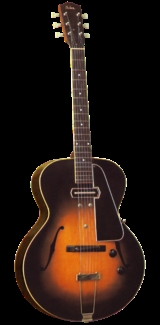
Charlie Christian

Encyclopedia
Charles Henry "Charlie" Christian (July 29, 1916 – March 2, 1942) was an American swing and jazz guitarist.
Christian was an important early performer on the electric guitar, and is cited as a key figure in the development of bebop
and cool jazz
. He gained national exposure as a member of the Benny Goodman
Sextet and Orchestra from August 1939 to June 1941. His single-string technique combined with amplification helped bring the guitar out of the rhythm section and into the forefront as a solo instrument. John Hammond
and George T. Simon
called Christian the best improvisational talent of the swing era
. In the liner notes to the 1972 Columbia album Solo Flight: The Genius of Charlie Christian
, Gene Lees writes that "many critics and musicians consider that Christian was one of the founding fathers of bebop, or if not that, at least a precursor to it".
Christian's influence reached beyond jazz and swing — in 1990 he was inducted into the Rock and Roll Hall of Fame
. Christian was raised in Oklahoma City
and was one of many musicians who jammed along the city's "Deep Deuce
" section on N.E. Second Street. In 2006 Oklahoma City renamed a street in its Bricktown
entertainment district Charlie Christian Avenue.
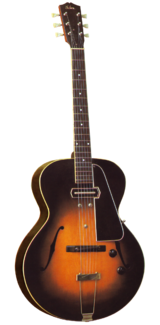 Christian was born in Bonham, Texas
, but his family moved to Oklahoma City, Oklahoma
when he was a small child. His parents were musicians and he had two brothers, Edward, born in 1906, and Clarence, born in 1911. All three sons were taught music by their father, Clarence Henry Christian. Clarence Henry was struck blind by fever, and in order to support the family he and the boys would work as buskers, on what the Christians called "busts." He would have them lead him into the better neighborhoods where they would perform for cash or goods. When Charles was old enough to go along, he first entertained by dancing. Later he learned guitar, inheriting his father's instruments upon his death when Charles was 12.
He attended Douglass School in Oklahoma City, and was further encouraged in music by instructor Zelia Breaux. Charles wanted to play tenor saxophone
in the school band, but she insisted he try trumpet
instead. Because he believed playing the trumpet would disfigure his lip, he quit to pursue his interest in baseball, at which he excelled.
In a 1978 interview with Charlie Christian biographer Craig McKinney, Clarence Christian said that in the 1920s and '30s Edward Christian led a band in Oklahoma City as a pianist and had a shaky relationship with trumpeter James Simpson. Around 1931, he took guitarist "Bigfoot" Ralph Hamilton and began secretly schooling the younger Charles on jazz. They taught him to solo on three songs, "Rose Room
", "Tea for Two
", and "Sweet Georgia Brown
". When the time was right they took him out to one of the many after-hours jam sessions along "Deep Deuce
", Northeast Second Street in Oklahoma City.
"Let Charles play one," they told Edward. "Ah, nobody wants to hear them old blues," Edward replied. After some encouragement, he allowed Charles to play. "What do you want to play?" he asked. All three songs were big in the early 1930s and Edward was surprised that Charles knew them. After two encores, Charles had played all three and "Deep Deuce" was in an uproar. He coolly dismissed himself from the jam session, and his mother had heard about it before he got home.
Charles fathered a daughter, Billie Jean Christian, born December 23, 1932, with Margretta Lorraine Downey of Oklahoma City, Oklahoma. They never married. Billie Jean (Christian) Johnson died 19 July 2004.
Charles soon was performing locally and on the road throughout the Midwest, as far away as North Dakota
and Minnesota
. By 1936 he was playing electric guitar and had become a regional attraction. He jammed with many of the big name performers traveling through Oklahoma City including Teddy Wilson
and Art Tatum
. It was Mary Lou Williams
, pianist for "Andy Kirk and His Clouds of Joy
", who told record producer John Hammond
about Charlie Christian.
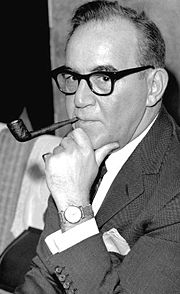 In 1939 Christian auditioned for John Hammond, who recommended him to bandleader Benny Goodman
. Goodman was the fourth white bandleader to feature black musicians in his live band: the first was Jimmy Durante
, for whom Achille Baquet
, a light-skinned black clarinetist who could pass as white, played and recorded in Durante's Original New Orleans Jazz Band (1918–1920); the second was violinist Arthur Hand, who led the California Ramblers, which from 1922-1925 included light-skinned black trumpeter Bill Moore, who was billed as The Hot Hawaiian. The third was Ben Bernie, whose band from 1925-1928 also featured Bill Moore. Goodman became the fourth by bringing Teddy Wilson
in on piano in 1935, and Lionel Hampton
on vibraphone
in 1936. Goodman hired Christian to play with the newly formed Goodman Sextet in 1939. It has been often stated that Goodman was initially uninterested in hiring Christian because the electric guitar was a relatively new instrument. Goodman had been exposed to the instrument with Floyd Smith and Leonard Ware
among others, none of whom had the ability of Charlie Christian. There is a report of Goodman unsuccessfully trying to buy out Floyd Smith
's contract from Andy Kirk
. However, Goodman was so impressed by Christian's playing that he hired him instead.
There are several versions of the first meeting of Christian and Goodman on August 16, 1939. The encounter that afternoon at the recording studio had not gone well. Charles recalled in a 1940 Metronome magazine
article, "I guess neither one of us liked what I played", but Hammond decided to try again — without consulting Goodman (Christian says Goodman invited him to the show that evening); he installed Christian on the bandstand for that night's set at the Victor Hugo restaurant in Los Angeles
. Displeased at the surprise, Goodman called "Rose Room", a tune he assumed that Christian would be unfamiliar with. Unknown to Goodman, Charles had been reared on the tune, and he came in with his solo — which was to be the first of about twenty, all of them different, all unlike anything Goodman had heard before. That version of "Rose Room" lasted forty minutes; by its end, Christian was in the band. In the course of a few days, Christian went from making $2.50 a night to making $150 a week.
Christian was placed in Goodman's new sextet, which included Lionel Hampton
, Fletcher Henderson, Artie Bernstein
and Nick Fatool
. By February 1940 Christian dominated the jazz and swing guitar polls and was elected to the Metronome All Stars. In the spring of 1940 Goodman let most of his entourage go in a reorganization move. He retained Charlie Christian, and in the fall of that year Goodman led a sextet with Charlie Christian, Count Basie
, longtime Duke Ellington
trumpeter Cootie Williams
, former Artie Shaw
tenor saxophonist Georgie Auld
and later drummer Dave Tough
. This all-star band dominated the jazz polls in 1941, including another election to the Metronome All Stars for Christian. Johnny Guarnieri
, who replaced Fletcher Henderson in the first sextet, filled the piano chair in Basie's absence.
In 1966, 24 years after his death, Christian was inducted into the Down Beat
Jazz Hall of Fame
.
 Christian's solos are frequently referred to as "horn-like", and in that sense he was more influenced by horn players such as Lester Young
and Herschel Evans
than by early acoustic guitarists like Eddie Lang
and jazz/bluesman
Lonnie Johnson
, although they both had contributed to the expansion of the guitar's role from "rhythm section" instrument to a solo
instrument. Christian admitted he wanted his guitar to sound like a tenor saxophone
. Belgian gypsy jazz guitarist Django Reinhardt
had little influence on Christian, but he was obviously familiar with some of his recordings. Guitarist Mary Osborne recalled hearing him play Django's solo on "St. Louis Blues" note for note, but then following it with his own ideas. By 1939 there had already been electric guitar soloists—Leonard Ware
, George Barnes
, trombonist/composer ("Topsy") Eddie Durham
had recorded with Count Basie
's Kansas City
Six, Floyd Smith recorded "Floyd's Guitar Blues" with Andy Kirk
in March 1939, using an amplified lap steel guitar, and Texas Swing pioneer Eldon Shamblin
was using amplified electric guitar with Bob Wills
. However, Charles Christian was the first great soloist on the amplified guitar.
Guitarists who followed Christian and who were influenced by him include Oscar Moore
(Nat King Cole
trio), Les Paul
, Tiny Grimes
, Barney Kessel
, Herb Ellis
, Jimmy Raney
, Tal Farlow
, Kenny Burrell
, Grant Green
, Wes Montgomery
, and Jim Hall
. Tiny Grimes, who made several records with Art Tatum
, can often be heard quoting Christian note-for-note.
Christian paved the way for the modern electric guitar sound that was followed by other pioneers, including T-Bone Walker
, Eddie Cochran
, Cliff Gallup
, Scotty Moore
, Franny Beecher
, B.B. King, Chuck Berry
, Carlos Santana
and Jimi Hendrix
. For this reason Christian was inducted in 1990 into the Rock and Roll Hall of Fame
as an "Early Influence".
Christian's exposure was so great in the brief period he played with Goodman that he influenced not only guitarists, but other musicians as well. The influence he had on "Dizzy" Gillespie, Charlie Parker
, Thelonious Monk
and Don Byas
can be heard on their early "bop
" recordings "Blue'n Boogie" and "Salt Peanuts
". Other musicians, such as trumpeter Miles Davis
, cite Christian as an early influence. Indeed, Christian's "new" sound influenced jazz as a whole. He reigned supreme in the jazz guitar polls up to two years after his death.
". Private recordings made in September 1939 in Minneapolis, Minnesota
by Goodman aficionado Jerry Newhouse capture the newly hired Christian while on the road with Goodman and feature Goodman tenor sax man Jerry Jerome
and then local bass man Oscar Pettiford
. Taking multiple solos, Christian shows much the same improvisational skills later captured on the Minton's and Monroe's recordings in 1941, suggesting that he had already matured as a musician. The Minneapolis recordings include "Stardust
", "Tea for Two
" and "I've Got Rhythm", the latter a favorite piece of bop composers and jammers.
More of the unrestrained Christian is apparent in recordings of the partial Goodman Sextet made in March 1941. With Goodman and bassist Artie Bernstein absent, Christian and the rest of the Sextet recorded for nearly 20 minutes as the engineers tested equipment. Two recordings were released from that session years later: "Blues in B" and "Waiting for Benny", which showed hints of bop jam session
s. The free flow of these sessions contrasts with the more formal swing music recorded after Goodman had arrived at the studio. Other Goodman Sextet records that foretell bop are "Seven Come Eleven" (1939) and "Air Mail Special" (1940 and 1941).
An even more striking example is a series of recordings made at Minton's Playhouse
, an after-hours club located in the Hotel Cecil at 210 West 118th Street in Harlem
by Columbia
student Jerry Newman on a portable disk recorder in 1941. Newman captured Christian, accompanied by Joe Guy on trumpet, Kenny Kersey
on piano and Kenny Clarke
on drums, stretching out far beyond what the confines of the 78 RPM record would allow. His work on "Swing to Bop", a later Esoteric Records company re-title of Eddie Durham's "Topsy," is an example of what Christian was capable of creating "off the cuff."
His use of tension and release
, a technique employed by Lester Young
, Count Basie
and later bop musicians, is also present on "Stompin' at the Savoy", included among the Newman recordings. The collection also includes recordings made at Clark Monroe's Uptown House, another late-night jazz haunt in the Harlem of 1941 that include Oran "Hot Lips" Page
. Other recordings include tenor sax man Don Byas
. The Minton's recordings were long rumored to feature "Dizzy" Gillespie and Thelonious Monk, but that has since been proven untrue, although both were regulars at the jam sessions, with Monk a regular in the Minton's house band.
Kenny Clarke claimed that "Epistrophy
" and "Rhythm-a-ning" were Charlie Christian compositions that Christian played with Clarke and Thelonious Monk
at Minton's jam sessions. The "Rhythm-a-ning" line can be heard on "Down on Teddy's Hill
" and behind the introduction on "Guy's Got To Go" from the Newman recordings, but it is also a line from Mary Lou Williams
' "Walkin' and Swingin'".
Clarke said Christian first showed him the chords to "Epistrophy
" on a ukulele
. These recordings have been packaged under a number of different titles, including "After Hours" and "The Immortal Charlie Christian." While the recording quality of many of these sessions is poor, they show Christian stretching out much longer than he could on the Benny Goodman sides. On the Minton's and Monroe's recordings, Christian can be heard taking multiple choruses on a single tune, playing long stretches of melodic ideas with ease.
Christian was just as adept with understatement as well. His work on the Goodman sextet sides "Soft Winds", "Till Tom Special", and "A Smo-o-o-oth One", show his use of very few, well placed melodic notes. His work on the Sextet's recordings of ballads "Stardust
", "Memories of You
", "Poor Butterfly
", "I Surrender Dear
" and "On the Alamo" as well as his work on "Profoundly Blue" with the Edmond Hall
Celeste Quartet (1941) show hints of what was later to be called "cool jazz
". Although credited for very few, Christian composed many of the original tunes recorded by the Benny Goodman Sextet.
and in early 1940 was hospitalized for a short period in which the Goodman group was on hiatus due to Benny's back trouble. Goodman was hospitalized in the summer of 1940 after the band's brief stay at Santa Catalina Island, California
, where the group stayed when on the west coast. Christian returned home to Oklahoma City
, in late July 1940 before returning to New York City in September 1940. In early 1941, Christian resumed his hectic lifestyle, heading to Harlem for late-night jam sessions after finishing gigs with the Goodman Sextet and Orchestra in New York City. In June 1941 he was admitted to Seaview, a sanitarium on Staten Island
in New York City. He was reported to be making progress, and Down Beat
magazine reported in February 1942 that he and Cootie Williams
were starting a band.
After a visit that same month to the hospital by tap dancer and drummer Marion Joseph "Taps" Miller, Christian declined in health and died March 2, 1942. He was 25 years old. He was buried in an unmarked grave in Bonham, Texas
, and a Texas State Historical Commission Marker and headstone were placed in Gates Hill Cemetery in 1994. The location of the historical marker and headstone has been disputed.
, Benny Goodman
, Lionel Hampton
, Fred Astaire
, Eddy Howard
, Edmond Hall
, Metronome All Stars 1940-1941, Kansas City Six with Buck Clayton
and Lester Young
, Helen Forrest
.
Christian was an important early performer on the electric guitar, and is cited as a key figure in the development of bebop
Bebop
Bebop differed drastically from the straightforward compositions of the swing era, and was instead characterized by fast tempos, asymmetrical phrasing, intricate melodies, and rhythm sections that expanded on their role as tempo-keepers...
and cool jazz
Cool jazz
Cool is a style of modern jazz music that arose following the Second World War. It is characterized by its relaxed tempos and lighter tone, in contrast to the bebop style that preceded it...
. He gained national exposure as a member of the Benny Goodman
Benny Goodman
Benjamin David “Benny” Goodman was an American jazz and swing musician, clarinetist and bandleader; widely known as the "King of Swing".In the mid-1930s, Benny Goodman led one of the most popular musical groups in America...
Sextet and Orchestra from August 1939 to June 1941. His single-string technique combined with amplification helped bring the guitar out of the rhythm section and into the forefront as a solo instrument. John Hammond
John H. Hammond
John Henry Hammond II was an American record producer, musician and music critic from the 1930s to the early 1980s...
and George T. Simon
George T. Simon
George Thomas Simon was an American jazz writer and occasional drummer. He began as a drummer and was an early drummer in Glenn Miller's orchestra...
called Christian the best improvisational talent of the swing era
Swing Era
The Swing era was the period of time when big band swing music was the most popular music in the United States. Though the music had been around since the late 1920s and early 1930s, being played by black bands led by such artists as Duke Ellington, Jimmie Lunceford, Benny Moten, Ella Fitzgerald,...
. In the liner notes to the 1972 Columbia album Solo Flight: The Genius of Charlie Christian
Solo Flight: The Genius of Charlie Christian
Solo Flight: The Genius of Charlie Christian is a 1972 double album collecting many of the few recordings that captured performances by Charlie Christian. Most of the selections are from sessions with Benny Goodman's bands...
, Gene Lees writes that "many critics and musicians consider that Christian was one of the founding fathers of bebop, or if not that, at least a precursor to it".
Christian's influence reached beyond jazz and swing — in 1990 he was inducted into the Rock and Roll Hall of Fame
Rock and Roll Hall of Fame
The Rock and Roll Hall of Fame and Museum is a museum located on the shore of Lake Erie in downtown Cleveland, Ohio, United States. It is dedicated to archiving the history of some of the best-known and most influential artists, producers, engineers and others who have, in some major way,...
. Christian was raised in Oklahoma City
Oklahoma city
Oklahoma City is the capital and largest city of the U.S. state of Oklahoma.Oklahoma City may also refer to:*Oklahoma City metropolitan area*Downtown Oklahoma City*Uptown Oklahoma City*Oklahoma City bombing*Oklahoma City National Memorial...
and was one of many musicians who jammed along the city's "Deep Deuce
Deep Deuce
Deep Deuce historic neighborhood is a district in Downtown Oklahoma City, Oklahoma. It consists mostly of low-rise apartment buildings and formerly vacant mixed-use buildings and shops....
" section on N.E. Second Street. In 2006 Oklahoma City renamed a street in its Bricktown
Bricktown (Oklahoma City)
Bricktown is an entertainment district just east of downtown Oklahoma City, Oklahoma . It was formerly a major warehouse district. The major attractions of the district are the AT&T Bricktown Ballpark, the navigable Bricktown Canal, and the 16-screen Harkins movie theatre...
entertainment district Charlie Christian Avenue.
Early life
Bonham, Texas
Bonham is a city in Fannin County, Texas, United States. The population was 10,127 at the 2010 census. It is the county seat of Fannin County. James Bonham sought the aid of James Fannin at the Battle of the Alamo....
, but his family moved to Oklahoma City, Oklahoma
Oklahoma City, Oklahoma
Oklahoma City is the capital and the largest city in the state of Oklahoma. The county seat of Oklahoma County, the city ranks 31st among United States cities in population. The city's population, from the 2010 census, was 579,999, with a metro-area population of 1,252,987 . In 2010, the Oklahoma...
when he was a small child. His parents were musicians and he had two brothers, Edward, born in 1906, and Clarence, born in 1911. All three sons were taught music by their father, Clarence Henry Christian. Clarence Henry was struck blind by fever, and in order to support the family he and the boys would work as buskers, on what the Christians called "busts." He would have them lead him into the better neighborhoods where they would perform for cash or goods. When Charles was old enough to go along, he first entertained by dancing. Later he learned guitar, inheriting his father's instruments upon his death when Charles was 12.
He attended Douglass School in Oklahoma City, and was further encouraged in music by instructor Zelia Breaux. Charles wanted to play tenor saxophone
Tenor saxophone
The tenor saxophone is a medium-sized member of the saxophone family, a group of instruments invented by Adolphe Sax in the 1840s. The tenor, with the alto, are the two most common types of saxophones. The tenor is pitched in the key of B, and written as a transposing instrument in the treble...
in the school band, but she insisted he try trumpet
Trumpet
The trumpet is the musical instrument with the highest register in the brass family. Trumpets are among the oldest musical instruments, dating back to at least 1500 BCE. They are played by blowing air through closed lips, producing a "buzzing" sound which starts a standing wave vibration in the air...
instead. Because he believed playing the trumpet would disfigure his lip, he quit to pursue his interest in baseball, at which he excelled.
In a 1978 interview with Charlie Christian biographer Craig McKinney, Clarence Christian said that in the 1920s and '30s Edward Christian led a band in Oklahoma City as a pianist and had a shaky relationship with trumpeter James Simpson. Around 1931, he took guitarist "Bigfoot" Ralph Hamilton and began secretly schooling the younger Charles on jazz. They taught him to solo on three songs, "Rose Room
Rose Room
"Rose Room", also known as "In Sunny Roseland", is a 1917 jazz standard by Art Hickman and Harry Williams. The name of the song's lyricist is unknown, and it is usually performed as an instrumental...
", "Tea for Two
Tea for Two (song)
"Tea for Two" is a song from the 1925 musical No, No, Nanette with music by Vincent Youmans and lyrics by Irving Caesar. It is a duet sung by Nanette and Tom in Act II as they imagine their future.-Analysis:...
", and "Sweet Georgia Brown
Sweet Georgia Brown
"Sweet Georgia Brown" is a jazz standard and pop tune written in 1925 by Ben Bernie and Maceo Pinkard and Kenneth Casey .The tune was first recorded on March 19, 1925 by bandleader Ben Bernie, resulting in a five-week No. 1 for Ben Bernie and his Hotel Roosevelt Orchestra...
". When the time was right they took him out to one of the many after-hours jam sessions along "Deep Deuce
Deep Deuce
Deep Deuce historic neighborhood is a district in Downtown Oklahoma City, Oklahoma. It consists mostly of low-rise apartment buildings and formerly vacant mixed-use buildings and shops....
", Northeast Second Street in Oklahoma City.
"Let Charles play one," they told Edward. "Ah, nobody wants to hear them old blues," Edward replied. After some encouragement, he allowed Charles to play. "What do you want to play?" he asked. All three songs were big in the early 1930s and Edward was surprised that Charles knew them. After two encores, Charles had played all three and "Deep Deuce" was in an uproar. He coolly dismissed himself from the jam session, and his mother had heard about it before he got home.
Charles fathered a daughter, Billie Jean Christian, born December 23, 1932, with Margretta Lorraine Downey of Oklahoma City, Oklahoma. They never married. Billie Jean (Christian) Johnson died 19 July 2004.
Charles soon was performing locally and on the road throughout the Midwest, as far away as North Dakota
North Dakota
North Dakota is a state located in the Midwestern region of the United States of America, along the Canadian border. The state is bordered by Canada to the north, Minnesota to the east, South Dakota to the south and Montana to the west. North Dakota is the 19th-largest state by area in the U.S....
and Minnesota
Minnesota
Minnesota is a U.S. state located in the Midwestern United States. The twelfth largest state of the U.S., it is the twenty-first most populous, with 5.3 million residents. Minnesota was carved out of the eastern half of the Minnesota Territory and admitted to the Union as the thirty-second state...
. By 1936 he was playing electric guitar and had become a regional attraction. He jammed with many of the big name performers traveling through Oklahoma City including Teddy Wilson
Teddy Wilson
Theodore Shaw "Teddy" Wilson was an American jazz pianist whose sophisticated and elegant style was featured on the records of many of the biggest names in jazz, including Louis Armstrong, Lena Horne, Benny Goodman, Billie Holiday and Ella Fitzgerald.-Biography:Wilson was born in Austin, Texas in...
and Art Tatum
Art Tatum
Arthur "Art" Tatum, Jr. was an American jazz pianist and virtuoso who played with phenomenal facility despite being nearly blind.Tatum is widely acknowledged as one of the greatest jazz pianists of all time...
. It was Mary Lou Williams
Mary Lou Williams
Mary Lou Williams was an American jazz pianist, composer, and arranger. Williams wrote hundreds of compositions and arrangements, and recorded more than one hundred records...
, pianist for "Andy Kirk and His Clouds of Joy
Andy Kirk
Andrew Dewey Kirk was a jazz saxophonist and tubist best known as a bandleader of the "Twelve Clouds of Joy," popular during the swing era....
", who told record producer John Hammond
John H. Hammond
John Henry Hammond II was an American record producer, musician and music critic from the 1930s to the early 1980s...
about Charlie Christian.
National fame
Benny Goodman
Benjamin David “Benny” Goodman was an American jazz and swing musician, clarinetist and bandleader; widely known as the "King of Swing".In the mid-1930s, Benny Goodman led one of the most popular musical groups in America...
. Goodman was the fourth white bandleader to feature black musicians in his live band: the first was Jimmy Durante
Jimmy Durante
James Francis "Jimmy" Durante was an American singer, pianist, comedian and actor. His distinctive clipped gravelly speech, comic language butchery, jazz-influenced songs, and large nose helped make him one of America's most familiar and popular personalities of the 1920s through the 1970s...
, for whom Achille Baquet
Achille Baquet
Achille Joseph Baquet was an American jazz clarinetist and saxophonist. He was an early musician on the New Orleans jazz scene....
, a light-skinned black clarinetist who could pass as white, played and recorded in Durante's Original New Orleans Jazz Band (1918–1920); the second was violinist Arthur Hand, who led the California Ramblers, which from 1922-1925 included light-skinned black trumpeter Bill Moore, who was billed as The Hot Hawaiian. The third was Ben Bernie, whose band from 1925-1928 also featured Bill Moore. Goodman became the fourth by bringing Teddy Wilson
Teddy Wilson
Theodore Shaw "Teddy" Wilson was an American jazz pianist whose sophisticated and elegant style was featured on the records of many of the biggest names in jazz, including Louis Armstrong, Lena Horne, Benny Goodman, Billie Holiday and Ella Fitzgerald.-Biography:Wilson was born in Austin, Texas in...
in on piano in 1935, and Lionel Hampton
Lionel Hampton
Lionel Leo Hampton was an American jazz vibraphonist, pianist, percussionist, bandleader and actor. Like Red Norvo, he was one of the first jazz vibraphone players. Hampton ranks among the great names in jazz history, having worked with a who's who of jazz musicians, from Benny Goodman and Buddy...
on vibraphone
Vibraphone
The vibraphone, sometimes called the vibraharp or simply the vibes, is a musical instrument in the struck idiophone subfamily of the percussion family....
in 1936. Goodman hired Christian to play with the newly formed Goodman Sextet in 1939. It has been often stated that Goodman was initially uninterested in hiring Christian because the electric guitar was a relatively new instrument. Goodman had been exposed to the instrument with Floyd Smith and Leonard Ware
Leonard Ware
Leonard Ware was an American jazz guitar player and composer, who was one of the early electric guitarists in jazz....
among others, none of whom had the ability of Charlie Christian. There is a report of Goodman unsuccessfully trying to buy out Floyd Smith
Floyd Smith
Ronald Floyd Smith was a Canadian professional ice hockey centre who played 13 seasons in the National Hockey League for the Boston Bruins, New York Rangers, Detroit Red Wings, Toronto Maple Leafs and Buffalo Sabres and who coached for 4 seasons in the National Hockey League for the Buffalo Sabres...
's contract from Andy Kirk
Andy Kirk
Andrew Dewey Kirk was a jazz saxophonist and tubist best known as a bandleader of the "Twelve Clouds of Joy," popular during the swing era....
. However, Goodman was so impressed by Christian's playing that he hired him instead.
There are several versions of the first meeting of Christian and Goodman on August 16, 1939. The encounter that afternoon at the recording studio had not gone well. Charles recalled in a 1940 Metronome magazine
Metronome magazine
Metronome Magazine was a music-guide magazine published from the 1881 until 1961.The magazine in its early years catered for musicians in marching and then dance bands, but from the swing era, Metronome focused primarily on the genre of Jazz music appealing to fans...
article, "I guess neither one of us liked what I played", but Hammond decided to try again — without consulting Goodman (Christian says Goodman invited him to the show that evening); he installed Christian on the bandstand for that night's set at the Victor Hugo restaurant in Los Angeles
Los Ángeles
Los Ángeles is the capital of the province of Biobío, in the commune of the same name, in Region VIII , in the center-south of Chile. It is located between the Laja and Biobío rivers. The population is 123,445 inhabitants...
. Displeased at the surprise, Goodman called "Rose Room", a tune he assumed that Christian would be unfamiliar with. Unknown to Goodman, Charles had been reared on the tune, and he came in with his solo — which was to be the first of about twenty, all of them different, all unlike anything Goodman had heard before. That version of "Rose Room" lasted forty minutes; by its end, Christian was in the band. In the course of a few days, Christian went from making $2.50 a night to making $150 a week.
Christian was placed in Goodman's new sextet, which included Lionel Hampton
Lionel Hampton
Lionel Leo Hampton was an American jazz vibraphonist, pianist, percussionist, bandleader and actor. Like Red Norvo, he was one of the first jazz vibraphone players. Hampton ranks among the great names in jazz history, having worked with a who's who of jazz musicians, from Benny Goodman and Buddy...
, Fletcher Henderson, Artie Bernstein
Artie Bernstein
Arthur "Artie" Bernstein was an American jazz bassist.Born in Brooklyn, New York, he started his musical career playing cello on board cruise ships to South America, and also studied law at New York University. However, by 1929 he had started playing bass, and began performing in clubs around New...
and Nick Fatool
Nick Fatool
Nick Fatool was an American jazz drummer.Fatool first played professionally in Providence, Rhode Island, which he followed with time in Joe Haymes's band in 1937 and Don Beston's in Dallas soon after. In 1939 he played with Bobby Hackett briefly, and then became a member of the Benny Goodman...
. By February 1940 Christian dominated the jazz and swing guitar polls and was elected to the Metronome All Stars. In the spring of 1940 Goodman let most of his entourage go in a reorganization move. He retained Charlie Christian, and in the fall of that year Goodman led a sextet with Charlie Christian, Count Basie
Count Basie
William "Count" Basie was an American jazz pianist, organist, bandleader, and composer. Basie led his jazz orchestra almost continuously for nearly 50 years...
, longtime Duke Ellington
Duke Ellington
Edward Kennedy "Duke" Ellington was an American composer, pianist, and big band leader. Ellington wrote over 1,000 compositions...
trumpeter Cootie Williams
Cootie Williams
Charles Melvin "Cootie" Williams was an American jazz, jump blues, and rhythm and blues trumpeter.-Biography:...
, former Artie Shaw
Artie Shaw
Arthur Jacob Arshawsky , better known as Artie Shaw, was an American jazz clarinetist, composer, and bandleader. He was also the author of both fiction and non-fiction writings....
tenor saxophonist Georgie Auld
Georgie Auld
Georgie Auld was a jazz tenor saxophonist, clarinetist and bandleader.Auld was born John Altwerger in Toronto...
and later drummer Dave Tough
Dave Tough
Dave Tough was an American jazz drummer associated with both Dixieland and swing jazz in the 1930s and 1940s...
. This all-star band dominated the jazz polls in 1941, including another election to the Metronome All Stars for Christian. Johnny Guarnieri
Johnny Guarnieri
Johnny Guarnieri was an American virtuoso jazz and stride pianist, born in New York City, perhaps best known for his big band stints with Benny Goodman in 1939 and with Artie Shaw in 1940...
, who replaced Fletcher Henderson in the first sextet, filled the piano chair in Basie's absence.
In 1966, 24 years after his death, Christian was inducted into the Down Beat
Down Beat
Down Beat is an American magazine devoted to "jazz, blues and beyond" to indicate its expansion beyond the jazz realm which it covered exclusively in previous years. The publication was established in 1934 in Chicago, Illinois...
Jazz Hall of Fame
Down Beat
Down Beat is an American magazine devoted to "jazz, blues and beyond" to indicate its expansion beyond the jazz realm which it covered exclusively in previous years. The publication was established in 1934 in Chicago, Illinois...
.
Style and influences
Lester Young
Lester Willis Young , nicknamed "Prez", was an American jazz tenor saxophonist and clarinetist. He also played trumpet, violin, and drums....
and Herschel Evans
Herschel Evans
Herschel "Tex" Evans , was a tenor saxophonist who worked in the Count Basie Orchestra. He had also worked with Lionel Hampton and Buck Clayton...
than by early acoustic guitarists like Eddie Lang
Eddie Lang
Eddie Lang was an American jazz guitarist, regarded as the Father of Jazz Guitar. He played a Gibson L-4 and L-5 guitar, providing great influence for many guitarists, including Django Reinhardt.-Biography:...
and jazz/bluesman
Blues
Blues is the name given to both a musical form and a music genre that originated in African-American communities of primarily the "Deep South" of the United States at the end of the 19th century from spirituals, work songs, field hollers, shouts and chants, and rhymed simple narrative ballads...
Lonnie Johnson
Lonnie Johnson
Alonzo "Lonnie" Johnson was an American blues and jazz singer/guitarist and songwriter who pioneered the role of jazz guitar and is recognized as the first to play single-string guitar solos...
, although they both had contributed to the expansion of the guitar's role from "rhythm section" instrument to a solo
Solo (music)
In music, a solo is a piece or a section of a piece played or sung by a single performer...
instrument. Christian admitted he wanted his guitar to sound like a tenor saxophone
Tenor saxophone
The tenor saxophone is a medium-sized member of the saxophone family, a group of instruments invented by Adolphe Sax in the 1840s. The tenor, with the alto, are the two most common types of saxophones. The tenor is pitched in the key of B, and written as a transposing instrument in the treble...
. Belgian gypsy jazz guitarist Django Reinhardt
Django Reinhardt
Django Reinhardt was a pioneering virtuoso jazz guitarist and composer who invented an entirely new style of jazz guitar technique that has since become a living musical tradition within French gypsy culture...
had little influence on Christian, but he was obviously familiar with some of his recordings. Guitarist Mary Osborne recalled hearing him play Django's solo on "St. Louis Blues" note for note, but then following it with his own ideas. By 1939 there had already been electric guitar soloists—Leonard Ware
Leonard Ware
Leonard Ware was an American jazz guitar player and composer, who was one of the early electric guitarists in jazz....
, George Barnes
George Barnes (musician)
George Barnes was a world-renowned swing jazz guitarist, who claimed he played the first electric guitar in 1931, preceding Charlie Christian by six years. George Barnes made the first recording of an electric guitar in 1938 in sessions with Big Bill Broonzy.-Biography:George Barnes was born in...
, trombonist/composer ("Topsy") Eddie Durham
Eddie Durham
Eddie Durham was an American jazz guitarist, trombonist, composer and musical arranger of the swing music medium born in San Marcos, Texas, probably best known for his work with musicians like Cab Calloway, Willie Bryant, Andy Kirk, Glenn Miller, Jimmie Lunceford and Count Basie, among others...
had recorded with Count Basie
Count Basie
William "Count" Basie was an American jazz pianist, organist, bandleader, and composer. Basie led his jazz orchestra almost continuously for nearly 50 years...
's Kansas City
Kansas City, Missouri
Kansas City, Missouri is the largest city in the U.S. state of Missouri and is the anchor city of the Kansas City Metropolitan Area, the second largest metropolitan area in Missouri. It encompasses in parts of Jackson, Clay, Cass, and Platte counties...
Six, Floyd Smith recorded "Floyd's Guitar Blues" with Andy Kirk
Andy Kirk
Andrew Dewey Kirk was a jazz saxophonist and tubist best known as a bandleader of the "Twelve Clouds of Joy," popular during the swing era....
in March 1939, using an amplified lap steel guitar, and Texas Swing pioneer Eldon Shamblin
Eldon Shamblin
Eldon Shamblin was an American guitarist and arranger, particularly important to the development of Western swing music as one of the first electric guitarists in a popular dance band....
was using amplified electric guitar with Bob Wills
Bob Wills
James Robert Wills , better known as Bob Wills, was an American Western Swing musician, songwriter, and bandleader, considered by music authorities as the co-founder of Western Swing and universally known as the pioneering King of Western Swing.Bob Wills' name will forever be associated with...
. However, Charles Christian was the first great soloist on the amplified guitar.
Guitarists who followed Christian and who were influenced by him include Oscar Moore
Oscar Moore
Oscar Moore was an American swing jazz guitarist.Moore was an integral part of the Nat King Cole Trio during 1937–1947, appearing on virtually all of Cole's records during the period. A superb and influential guitarist, Moore was himself influenced by Charlie Christian...
(Nat King Cole
Nat King Cole
Nathaniel Adams Coles , known professionally as Nat King Cole, was an American musician who first came to prominence as a leading jazz pianist. Although an accomplished pianist, he owes most of his popular musical fame to his soft baritone voice, which he used to perform in big band and jazz genres...
trio), Les Paul
Les Paul
Lester William Polsfuss —known as Les Paul—was an American jazz and country guitarist, songwriter and inventor. He was a pioneer in the development of the solid-body electric guitar which made the sound of rock and roll possible. He is credited with many recording innovations...
, Tiny Grimes
Tiny Grimes
Lloyd "Tiny" Grimes was an American jazz and R&B guitarist. He was a member of the Art Tatum Trio from 1943 to 1944, was a backing musician on recording sessions, and later led his own bands, including a recording session with Charlie Parker...
, Barney Kessel
Barney Kessel
Barney Kessel was an American jazz guitarist born in Muskogee, Oklahoma, USA. Generally considered to be one of the greatest jazz guitarists of the 20th century, he was noted in particular for his vast knowledge of chords and inversions and chord-based melodies...
, Herb Ellis
Herb Ellis
Mitchell Herbert "Herb" Ellis was an American jazz guitarist. Perhaps best known for his 1950s membership in the trio of pianist Oscar Peterson, Ellis was also a staple of west-coast studio recording sessions, and was described by critic Scott Yanow as "an excellent bop-based guitarist with a...
, Jimmy Raney
Jimmy Raney
Jimmy Raney was an American jazz guitarist born in Louisville, Kentucky most notable for his work from 1951–1952 and 1962–1963 with Stan Getz and for his work from 1953–1954 with the Red Norvo trio, replacing Tal Farlow. In 1954 and 1955 he won the Down Beat critics poll for guitar...
, Tal Farlow
Tal Farlow
Talmage Holt Farlow was an American jazz guitarist. Nicknamed the "Octopus", Farlow's extremely large hands spread over the fretboard as if they were tentacles. He is considered one of the all-time great jazz guitarists. Michael G...
, Kenny Burrell
Kenny Burrell
Kenneth Earl "Kenny" Burrell is an American jazz guitarist. His playing is grounded in bebop and blues; he has performed and recorded with a wide range of jazz musicians.-Biography:...
, Grant Green
Grant Green
Grant Green was a jazz guitarist and composer....
, Wes Montgomery
Wes Montgomery
John Leslie "Wes" Montgomery was an American jazz guitarist. He is widely considered one of the major jazz guitarists, emerging after such seminal figures as Django Reinhardt and Charlie Christian and influencing countless others, including Pat Martino, George Benson, Russell Malone, Emily...
, and Jim Hall
Jim Hall (musician)
James Stanley Hall is an American jazz guitarist.-Biography:Educated at the Cleveland Institute of Music, Hall moved to Los Angeles where he began to attract national, and then international, attention in the late 1950s...
. Tiny Grimes, who made several records with Art Tatum
Art Tatum
Arthur "Art" Tatum, Jr. was an American jazz pianist and virtuoso who played with phenomenal facility despite being nearly blind.Tatum is widely acknowledged as one of the greatest jazz pianists of all time...
, can often be heard quoting Christian note-for-note.
Christian paved the way for the modern electric guitar sound that was followed by other pioneers, including T-Bone Walker
T-Bone Walker
Aaron Thibeaux "T-Bone" Walker was a critically acclaimed American blues guitarist, singer, songwriter and multi-instrumentalist, who was one of the most influential pioneers and innovators of the jump blues and electric blues sound. He is the first musician recorded playing blues with the...
, Eddie Cochran
Eddie Cochran
Eddie Cochran , was an American rock and roll pioneer who in his brief career had a small but lasting influence on rock music through his guitar playing. Cochran's rockabilly songs, such as "C'mon Everybody", "Somethin' Else", and "Summertime Blues", captured teenage frustration and desire in the...
, Cliff Gallup
Cliff Gallup
Clifton E. "Cliff" Gallup was an American electric guitarist, who played rock and roll in the band Gene Vincent and his Blue Caps in the 1950s.-Biography:...
, Scotty Moore
Scotty Moore
Winfield Scott "Scotty" Moore III is an American guitarist. He is best known for his backing of Elvis Presley in the first part of his career, between 1954 and the beginning of Elvis' Hollywood years...
, Franny Beecher
Franny Beecher
Francis "Franny" Beecher , also known as Frank Beecher, was lead guitarist for Bill Haley & His Comets from 1954 to 1962, and is best remembered for his innovative guitar solos combining elements of country music and jazz...
, B.B. King, Chuck Berry
Chuck Berry
Charles Edward Anderson "Chuck" Berry is an American guitarist, singer, and songwriter, and one of the pioneers of rock and roll music. With songs such as "Maybellene" , "Roll Over Beethoven" , "Rock and Roll Music" and "Johnny B...
, Carlos Santana
Carlos Santana
Carlos Augusto Alves Santana is a Mexican rock guitarist. Santana became famous in the late 1960s and early 1970s with his band, Santana, which pioneered rock, salsa and jazz fusion...
and Jimi Hendrix
Jimi Hendrix
James Marshall "Jimi" Hendrix was an American guitarist and singer-songwriter...
. For this reason Christian was inducted in 1990 into the Rock and Roll Hall of Fame
Rock and Roll Hall of Fame
The Rock and Roll Hall of Fame and Museum is a museum located on the shore of Lake Erie in downtown Cleveland, Ohio, United States. It is dedicated to archiving the history of some of the best-known and most influential artists, producers, engineers and others who have, in some major way,...
as an "Early Influence".
Christian's exposure was so great in the brief period he played with Goodman that he influenced not only guitarists, but other musicians as well. The influence he had on "Dizzy" Gillespie, Charlie Parker
Charlie Parker
Charles Parker, Jr. , famously called Bird or Yardbird, was an American jazz saxophonist and composer....
, Thelonious Monk
Thelonious Monk
Thelonious Sphere Monk was an American jazz pianist and composer considered "one of the giants of American music". Monk had a unique improvisational style and made numerous contributions to the standard jazz repertoire, including "Epistrophy", "'Round Midnight", "Blue Monk", "Straight, No Chaser"...
and Don Byas
Don Byas
Carlos Wesley "Don" Byas was an American jazz tenor saxophonist, long-resident in Europe.- Oklahoma and Los Angeles :...
can be heard on their early "bop
Bebop
Bebop differed drastically from the straightforward compositions of the swing era, and was instead characterized by fast tempos, asymmetrical phrasing, intricate melodies, and rhythm sections that expanded on their role as tempo-keepers...
" recordings "Blue'n Boogie" and "Salt Peanuts
Salt Peanuts
"Salt Peanuts" is a bebop tune reportedly composed by Dizzy Gillespie in 1942, credited "with the collaboration of" bebop drummer Kenny Clarke...
". Other musicians, such as trumpeter Miles Davis
Miles Davis
Miles Dewey Davis III was an American jazz musician, trumpeter, bandleader, and composer. Widely considered one of the most influential musicians of the 20th century, Miles Davis was, with his musical groups, at the forefront of several major developments in jazz music, including bebop, cool jazz,...
, cite Christian as an early influence. Indeed, Christian's "new" sound influenced jazz as a whole. He reigned supreme in the jazz guitar polls up to two years after his death.
Bebop and Minton's Playhouse
Charlie Christian was an important contributor to the music that became known as "bop" or "BebopBebop
Bebop differed drastically from the straightforward compositions of the swing era, and was instead characterized by fast tempos, asymmetrical phrasing, intricate melodies, and rhythm sections that expanded on their role as tempo-keepers...
". Private recordings made in September 1939 in Minneapolis, Minnesota
Minneapolis, Minnesota
Minneapolis , nicknamed "City of Lakes" and the "Mill City," is the county seat of Hennepin County, the largest city in the U.S. state of Minnesota, and the 48th largest in the United States...
by Goodman aficionado Jerry Newhouse capture the newly hired Christian while on the road with Goodman and feature Goodman tenor sax man Jerry Jerome
Jerry Jerome
Jerry Jerome was the 1912 Australian middleweight boxing champion. Born just outside Dalby, Queensland he was the first Indigenous Australian to win a major boxing title. He died in Cherbourg, Queensland. In his professional career he had 24 losses and 40 wins, with 34 by knock-out.- References :...
and then local bass man Oscar Pettiford
Oscar Pettiford
Oscar Pettiford was an American jazz double bassist, cellist and composer known particularly for his pioneering work in bebop.-Biography:...
. Taking multiple solos, Christian shows much the same improvisational skills later captured on the Minton's and Monroe's recordings in 1941, suggesting that he had already matured as a musician. The Minneapolis recordings include "Stardust
Stardust (song)
"Stardust" is an American popular song composed in 1927 by Hoagy Carmichael with lyrics added in 1929 by Mitchell Parish. Originally titled "Star Dust", Carmichael first recorded the song at the Gennett Records studio in Richmond, Indiana...
", "Tea for Two
Tea for Two (song)
"Tea for Two" is a song from the 1925 musical No, No, Nanette with music by Vincent Youmans and lyrics by Irving Caesar. It is a duet sung by Nanette and Tom in Act II as they imagine their future.-Analysis:...
" and "I've Got Rhythm", the latter a favorite piece of bop composers and jammers.
More of the unrestrained Christian is apparent in recordings of the partial Goodman Sextet made in March 1941. With Goodman and bassist Artie Bernstein absent, Christian and the rest of the Sextet recorded for nearly 20 minutes as the engineers tested equipment. Two recordings were released from that session years later: "Blues in B" and "Waiting for Benny", which showed hints of bop jam session
Jam session
Jam sessions are often used by musicians to develop new material, find suitable arrangements, or simply as a social gathering and communal practice session. Jam sessions may be based upon existing songs or forms, may be loosely based on an agreed chord progression or chart suggested by one...
s. The free flow of these sessions contrasts with the more formal swing music recorded after Goodman had arrived at the studio. Other Goodman Sextet records that foretell bop are "Seven Come Eleven" (1939) and "Air Mail Special" (1940 and 1941).
An even more striking example is a series of recordings made at Minton's Playhouse
Minton's Playhouse
Minton’s Playhouse is a jazz club and bar located on the first floor of the Cecil Hotel at 210 West 118th Street in Harlem. Minton’s was founded by tenor saxophonist Henry Minton in 1938...
, an after-hours club located in the Hotel Cecil at 210 West 118th Street in Harlem
Harlem
Harlem is a neighborhood in the New York City borough of Manhattan, which since the 1920s has been a major African-American residential, cultural and business center. Originally a Dutch village, formally organized in 1658, it is named after the city of Haarlem in the Netherlands...
by Columbia
Columbia University
Columbia University in the City of New York is a private, Ivy League university in Manhattan, New York City. Columbia is the oldest institution of higher learning in the state of New York, the fifth oldest in the United States, and one of the country's nine Colonial Colleges founded before the...
student Jerry Newman on a portable disk recorder in 1941. Newman captured Christian, accompanied by Joe Guy on trumpet, Kenny Kersey
Ken Kersey
Ken Kersey was a Canadian jazz pianist who spent most of his life working in the United States....
on piano and Kenny Clarke
Kenny Clarke
Kenny Clarke , born Kenneth Spearman Clarke, nicknamed "Klook" and later known as Liaqat Ali Salaam, was a jazz drummer and an early innovator of the bebop style of drumming...
on drums, stretching out far beyond what the confines of the 78 RPM record would allow. His work on "Swing to Bop", a later Esoteric Records company re-title of Eddie Durham's "Topsy," is an example of what Christian was capable of creating "off the cuff."
His use of tension and release
Tension and release
Tension and Release is an often used term for analyzing music, to describe how music keeps the interest of a listener. In Western tonal music, ranging from European classical music to modern pop, tension is often thought to derive from the dominant chord...
, a technique employed by Lester Young
Lester Young
Lester Willis Young , nicknamed "Prez", was an American jazz tenor saxophonist and clarinetist. He also played trumpet, violin, and drums....
, Count Basie
Count Basie
William "Count" Basie was an American jazz pianist, organist, bandleader, and composer. Basie led his jazz orchestra almost continuously for nearly 50 years...
and later bop musicians, is also present on "Stompin' at the Savoy", included among the Newman recordings. The collection also includes recordings made at Clark Monroe's Uptown House, another late-night jazz haunt in the Harlem of 1941 that include Oran "Hot Lips" Page
Oran Page
Oran Thaddeus Page was an American jazz trumpeter, singer, and bandleader born in Dallas, Texas, United States. He was better known as Hot Lips Page by the public, and Lips Page by his fellow musicians...
. Other recordings include tenor sax man Don Byas
Don Byas
Carlos Wesley "Don" Byas was an American jazz tenor saxophonist, long-resident in Europe.- Oklahoma and Los Angeles :...
. The Minton's recordings were long rumored to feature "Dizzy" Gillespie and Thelonious Monk, but that has since been proven untrue, although both were regulars at the jam sessions, with Monk a regular in the Minton's house band.
Kenny Clarke claimed that "Epistrophy
Epistrophy
"Epistrophy" is a jazz standard composed by Thelonious Monk and Kenny Clarke in 1942. It has been called "the first classic, modern jazz composition."Its 'A' section is based on a pattern of alternating chords a semitone apart....
" and "Rhythm-a-ning" were Charlie Christian compositions that Christian played with Clarke and Thelonious Monk
Thelonious Monk
Thelonious Sphere Monk was an American jazz pianist and composer considered "one of the giants of American music". Monk had a unique improvisational style and made numerous contributions to the standard jazz repertoire, including "Epistrophy", "'Round Midnight", "Blue Monk", "Straight, No Chaser"...
at Minton's jam sessions. The "Rhythm-a-ning" line can be heard on "Down on Teddy's Hill
Teddy Hill
Teddy Hill was a big band leader and the manager of Minton's Playhouse, a seminal jazz club in Harlem...
" and behind the introduction on "Guy's Got To Go" from the Newman recordings, but it is also a line from Mary Lou Williams
Mary Lou Williams
Mary Lou Williams was an American jazz pianist, composer, and arranger. Williams wrote hundreds of compositions and arrangements, and recorded more than one hundred records...
' "Walkin' and Swingin'".
Clarke said Christian first showed him the chords to "Epistrophy
Epistrophy
"Epistrophy" is a jazz standard composed by Thelonious Monk and Kenny Clarke in 1942. It has been called "the first classic, modern jazz composition."Its 'A' section is based on a pattern of alternating chords a semitone apart....
" on a ukulele
Ukulele
The ukulele, ; from ; it is a subset of the guitar family of instruments, generally with four nylon or gut strings or four courses of strings....
. These recordings have been packaged under a number of different titles, including "After Hours" and "The Immortal Charlie Christian." While the recording quality of many of these sessions is poor, they show Christian stretching out much longer than he could on the Benny Goodman sides. On the Minton's and Monroe's recordings, Christian can be heard taking multiple choruses on a single tune, playing long stretches of melodic ideas with ease.
Christian was just as adept with understatement as well. His work on the Goodman sextet sides "Soft Winds", "Till Tom Special", and "A Smo-o-o-oth One", show his use of very few, well placed melodic notes. His work on the Sextet's recordings of ballads "Stardust
Stardust (song)
"Stardust" is an American popular song composed in 1927 by Hoagy Carmichael with lyrics added in 1929 by Mitchell Parish. Originally titled "Star Dust", Carmichael first recorded the song at the Gennett Records studio in Richmond, Indiana...
", "Memories of You
Memories of You
"Memories of You" is a popular song with lyrics written by Andy Razaf and music composed by Eubie Blake and published in 1930.-Song history:The song was introduced by singer Minto Cato in the Broadway show Lew Leslie's Blackbirds of 1930...
", "Poor Butterfly
Poor Butterfly
"Poor Butterfly" is a popular song. It was inspired by Giacomo Puccini's opera Madame Butterfly and contains a brief musical quote from the act 2 duet Tutti i fior in the verse....
", "I Surrender Dear
I Surrender Dear
"I Surrender Dear" is a song composed by Harry Barris with lyrics by Gordon Clifford. It was first performed by Bing Crosby in the film I Surrender Dear and became his first solo hit. It has been covered by a large number of artists, making it a jazz and pop standard...
" and "On the Alamo" as well as his work on "Profoundly Blue" with the Edmond Hall
Edmond Hall
Edmond Hall was an American jazz clarinetist and bandleader. His father Edward Blainey Hall and mother Caroline Duhe had eight children, Priscilla , Moretta , Viola , Robert , Edmond , Clarence , Edward and Herbert .-Early life:Born in Reserve, Louisiana, about...
Celeste Quartet (1941) show hints of what was later to be called "cool jazz
Cool jazz
Cool is a style of modern jazz music that arose following the Second World War. It is characterized by its relaxed tempos and lighter tone, in contrast to the bebop style that preceded it...
". Although credited for very few, Christian composed many of the original tunes recorded by the Benny Goodman Sextet.
Health
In the late 1930s Christian had contracted tuberculosisTuberculosis
Tuberculosis, MTB, or TB is a common, and in many cases lethal, infectious disease caused by various strains of mycobacteria, usually Mycobacterium tuberculosis. Tuberculosis usually attacks the lungs but can also affect other parts of the body...
and in early 1940 was hospitalized for a short period in which the Goodman group was on hiatus due to Benny's back trouble. Goodman was hospitalized in the summer of 1940 after the band's brief stay at Santa Catalina Island, California
Santa Catalina Island, California
Santa Catalina Island, often called Catalina Island, or just Catalina, is a rocky island off the coast of the U.S. state of California. The island is long and across at its greatest width. The island is located about south-southwest of Los Angeles, California. The highest point on the island is...
, where the group stayed when on the west coast. Christian returned home to Oklahoma City
Oklahoma city
Oklahoma City is the capital and largest city of the U.S. state of Oklahoma.Oklahoma City may also refer to:*Oklahoma City metropolitan area*Downtown Oklahoma City*Uptown Oklahoma City*Oklahoma City bombing*Oklahoma City National Memorial...
, in late July 1940 before returning to New York City in September 1940. In early 1941, Christian resumed his hectic lifestyle, heading to Harlem for late-night jam sessions after finishing gigs with the Goodman Sextet and Orchestra in New York City. In June 1941 he was admitted to Seaview, a sanitarium on Staten Island
Staten Island
Staten Island is a borough of New York City, New York, United States, located in the southwest part of the city. Staten Island is separated from New Jersey by the Arthur Kill and the Kill Van Kull, and from the rest of New York by New York Bay...
in New York City. He was reported to be making progress, and Down Beat
Down Beat
Down Beat is an American magazine devoted to "jazz, blues and beyond" to indicate its expansion beyond the jazz realm which it covered exclusively in previous years. The publication was established in 1934 in Chicago, Illinois...
magazine reported in February 1942 that he and Cootie Williams
Cootie Williams
Charles Melvin "Cootie" Williams was an American jazz, jump blues, and rhythm and blues trumpeter.-Biography:...
were starting a band.
After a visit that same month to the hospital by tap dancer and drummer Marion Joseph "Taps" Miller, Christian declined in health and died March 2, 1942. He was 25 years old. He was buried in an unmarked grave in Bonham, Texas
Bonham, Texas
Bonham is a city in Fannin County, Texas, United States. The population was 10,127 at the 2010 census. It is the county seat of Fannin County. James Bonham sought the aid of James Fannin at the Battle of the Alamo....
, and a Texas State Historical Commission Marker and headstone were placed in Gates Hill Cemetery in 1994. The location of the historical marker and headstone has been disputed.
As leader
Although Christian never recorded professionally as a leader, compilations have been released of his sessions as a sideman where he is a featured soloist, of practice and warm-up recordings for these sessions, and some lower-quality recordings of Christian's own groups performing in nightclubs, by amateur technicians.- Solo Flight: The Genius of Charlie ChristianSolo Flight: The Genius of Charlie ChristianSolo Flight: The Genius of Charlie Christian is a 1972 double album collecting many of the few recordings that captured performances by Charlie Christian. Most of the selections are from sessions with Benny Goodman's bands...
(Columbia, 1972) - Solo Flight (live performances as member of the Benny GoodmanBenny GoodmanBenjamin David “Benny” Goodman was an American jazz and swing musician, clarinetist and bandleader; widely known as the "King of Swing".In the mid-1930s, Benny Goodman led one of the most popular musical groups in America...
Sextet, Vintage Jazz Classics, 2003) - Genius of the Electric Guitar (Columbia, 1939-1941 recordings)
- Guitar Wizard (LeJazz, 1993 Charly Holdings Inc.)
- Live At Minton's Playhouse 1941
As sideman
Appearances on recordings by Ida CoxIda Cox
Ida Cox was an African American singer and vaudeville performer, best known for her blues performances and recordings...
, Benny Goodman
Benny Goodman
Benjamin David “Benny” Goodman was an American jazz and swing musician, clarinetist and bandleader; widely known as the "King of Swing".In the mid-1930s, Benny Goodman led one of the most popular musical groups in America...
, Lionel Hampton
Lionel Hampton
Lionel Leo Hampton was an American jazz vibraphonist, pianist, percussionist, bandleader and actor. Like Red Norvo, he was one of the first jazz vibraphone players. Hampton ranks among the great names in jazz history, having worked with a who's who of jazz musicians, from Benny Goodman and Buddy...
, Fred Astaire
Fred Astaire
Fred Astaire was an American film and Broadway stage dancer, choreographer, singer and actor. His stage and subsequent film career spanned a total of 76 years, during which he made 31 musical films. He was named the fifth Greatest Male Star of All Time by the American Film Institute...
, Eddy Howard
Eddy Howard
Eddy Howard was an American vocalist and bandleader who was popular during the 1940s and 1950s.-Biography:...
, Edmond Hall
Edmond Hall
Edmond Hall was an American jazz clarinetist and bandleader. His father Edward Blainey Hall and mother Caroline Duhe had eight children, Priscilla , Moretta , Viola , Robert , Edmond , Clarence , Edward and Herbert .-Early life:Born in Reserve, Louisiana, about...
, Metronome All Stars 1940-1941, Kansas City Six with Buck Clayton
Buck Clayton
Buck Clayton was an American jazz trumpet player who was a leading member of Count Basie’s "Old Testament" orchestra and a leader of mainstream-oriented jam session recordings in the 1950s. His principal influence was Louis Armstrong...
and Lester Young
Lester Young
Lester Willis Young , nicknamed "Prez", was an American jazz tenor saxophonist and clarinetist. He also played trumpet, violin, and drums....
, Helen Forrest
Helen Forrest
Helen Forrest was one of the most popular female jazz vocalists during America's Big Band era. She was born Helen Fogel to a Jewish family in Atlantic City, New Jersey on April 12, 1917...
.
Filmography
- 2005 Solo Flight: The Genius of Charlie Christian
- 2007 Charlie Christian- The Life & Music of the Legendary Jazz Guitarist (Grossman Guitar Workshop)