
All Topics  
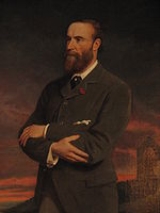
Charles Stewart Parnell

 
Charles Stewart Parnell

   Email Print
   Bookmark   Link


Charles Stewart Parnell


Charles Stewart Parnell (27 June 1846 – 6 October 1891) was an Irish
Irish people

The Irish people are a Western European ethnic group who originate in Ireland, in north western Europe. Ireland has been populated for around 9,000 years , with the Irish people's earliest ancestors recorded as the Nemedians, Fomorians, Fir Bolgs, Tuatha D? Danann and the Milesians ?the last group supposedly representing the "pure" Gaelic a...
 Protestant
Church of Ireland

The Church of Ireland is an autonomous province of the Anglican Communion, operating across the island of Ireland. Like other Anglican churches, it considers itself to be both Catholicism and Protestant Reformation....
 landowner, nationalist
Irish nationalism

Irish nationalism comprises political and social movements and sentiment inspired by a love for Culture of Ireland, Gaelic language and History of Ireland, and a sense of pride in Ireland and the Irish people....
 political leader
Politician

A politician is an individual who is involved in influencing public decision making through the influence of politics or a person who influences the way a society is governed....
, land reform agitator, Home Rule MP
Member of Parliament

A Member of Parliament, or MP, is a representative of the voters to a parliament. In many countries the term applies specifically to members of the lower house, as upper houses often have a unique title, such as senate, and thus also have unique titles for its members, such as senators....
 in the Parliament
Palace of Westminster

The Palace of Westminster, also known as the Houses of Parliament or Westminster Palace, in London, is where the two Houses of the Parliament of the United Kingdom meet....
 of the United Kingdom of Great Britain and Ireland
United Kingdom of Great Britain and Ireland

The United Kingdom of Great Britain and Ireland was the formal name and the state form of the United Kingdom from 1 January 1801 until 12 April 1927....
 and founder and leader of the Irish Parliamentary Party
Irish Parliamentary Party

The Irish Parliamentary Party was formed in 1882 by Charles Stewart Parnell, the leader of the Nationalist Party , replacing the Home Rule League, as official parliamentary party for Irish nationalist Members of Parliament elected to the House of Commons of the United Kingdom at Palace of Westminster within the United Kingdom of Great Brit...
. He was one of the most important figures in 19th century Ireland and Great Britain
Great Britain

Great Britain is an island lying to the northwest of Continental Europe. It is the List of islands by area, and the largest in Europe. With a population of 58.9 million people it is List of islands by population....
 and described by Prime Minister
Prime minister

A prime minister is the most senior minister of Cabinet in the Executive branch of government in a parliamentary system. The position is usually held by, but need not always be held by, a politician....
 William Gladstone
William Ewart Gladstone

William Ewart Gladstone was a United Kingdom of Great Britain and Ireland Liberal Party statesman and four times Prime Minister of the United Kingdom ....
 as the most remarkable person he had ever met. Another future Liberal
Liberal Party (UK)

The Liberal Party was one of the two major British political parties from the early 19th century until the rise of the Labour Party in the 1920s, and a third party of varying strength and importance up to 1988, when it merged with the Social Democratic Party to form a new party which would become known as the Liberal Democrats....
 Prime Minister, Herbert Asquith, described him as one of the three or four greatest men of the nineteenth century, while Lord Haldane described him as the strongest man the British House of Commons
British House of Commons

The House of Commons is the lower house of the Parliament of the United Kingdom, which also comprises the British monarchy and the House of Lords ....
 had seen in 150 years.

les Stewart Parnell was born in Avondale, County Wicklow
County Wicklow

County Wicklow is a Counties of Ireland on the east coast of Republic of Ireland, immediately south of Dublin. The county is bordered by the Irish Sea and the counties of County Carlow, County Kildare, County Wexford, as well as two parts of what was County Dublin, County of Dun Laoghaire-Rathdown and County of South Dublin....
, of gentry stock.


Discussion
Ask a question about 'Charles Stewart Parnell'
Start a new discussion about 'Charles Stewart Parnell'
Answer questions from other users
Full Discussion Forum


Encyclopedia


Charles Stewart Parnell (27 June 1846 – 6 October 1891) was an Irish
Irish people

The Irish people are a Western European ethnic group who originate in Ireland, in north western Europe. Ireland has been populated for around 9,000 years , with the Irish people's earliest ancestors recorded as the Nemedians, Fomorians, Fir Bolgs, Tuatha D? Danann and the Milesians ?the last group supposedly representing the "pure" Gaelic a...
 Protestant
Church of Ireland

The Church of Ireland is an autonomous province of the Anglican Communion, operating across the island of Ireland. Like other Anglican churches, it considers itself to be both Catholicism and Protestant Reformation....
 landowner, nationalist
Irish nationalism

Irish nationalism comprises political and social movements and sentiment inspired by a love for Culture of Ireland, Gaelic language and History of Ireland, and a sense of pride in Ireland and the Irish people....
 political leader
Politician

A politician is an individual who is involved in influencing public decision making through the influence of politics or a person who influences the way a society is governed....
, land reform agitator, Home Rule MP
Member of Parliament

A Member of Parliament, or MP, is a representative of the voters to a parliament. In many countries the term applies specifically to members of the lower house, as upper houses often have a unique title, such as senate, and thus also have unique titles for its members, such as senators....
 in the Parliament
Palace of Westminster

The Palace of Westminster, also known as the Houses of Parliament or Westminster Palace, in London, is where the two Houses of the Parliament of the United Kingdom meet....
 of the United Kingdom of Great Britain and Ireland
United Kingdom of Great Britain and Ireland

The United Kingdom of Great Britain and Ireland was the formal name and the state form of the United Kingdom from 1 January 1801 until 12 April 1927....
 and founder and leader of the Irish Parliamentary Party
Irish Parliamentary Party

The Irish Parliamentary Party was formed in 1882 by Charles Stewart Parnell, the leader of the Nationalist Party , replacing the Home Rule League, as official parliamentary party for Irish nationalist Members of Parliament elected to the House of Commons of the United Kingdom at Palace of Westminster within the United Kingdom of Great Brit...
. He was one of the most important figures in 19th century Ireland and Great Britain
Great Britain

Great Britain is an island lying to the northwest of Continental Europe. It is the List of islands by area, and the largest in Europe. With a population of 58.9 million people it is List of islands by population....
 and described by Prime Minister
Prime minister

A prime minister is the most senior minister of Cabinet in the Executive branch of government in a parliamentary system. The position is usually held by, but need not always be held by, a politician....
 William Gladstone
William Ewart Gladstone

William Ewart Gladstone was a United Kingdom of Great Britain and Ireland Liberal Party statesman and four times Prime Minister of the United Kingdom ....
 as the most remarkable person he had ever met. Another future Liberal
Liberal Party (UK)

The Liberal Party was one of the two major British political parties from the early 19th century until the rise of the Labour Party in the 1920s, and a third party of varying strength and importance up to 1988, when it merged with the Social Democratic Party to form a new party which would become known as the Liberal Democrats....
 Prime Minister, Herbert Asquith, described him as one of the three or four greatest men of the nineteenth century, while Lord Haldane described him as the strongest man the British House of Commons
British House of Commons

The House of Commons is the lower house of the Parliament of the United Kingdom, which also comprises the British monarchy and the House of Lords ....
 had seen in 150 years.

Family background


Charles Stewart Parnell was born in Avondale, County Wicklow
County Wicklow

County Wicklow is a Counties of Ireland on the east coast of Republic of Ireland, immediately south of Dublin. The county is bordered by the Irish Sea and the counties of County Carlow, County Kildare, County Wexford, as well as two parts of what was County Dublin, County of Dun Laoghaire-Rathdown and County of South Dublin....
, of gentry stock. He was the third son and seventh child of John Henry Parnell (1811-1859), a wealthy Anglo-Irish
Anglo-Irish

"Anglo-Irish" was a term used historically to describe a privileged social class in Ireland, whose members were the descendants and successors of the Protestant Ascendancy, mostly belonging to the Anglicanism Church of Ireland, which was the established church of Ireland until 1871, or to a lesser extent one of the English Dissenters churches...
 landowner, and his American wife Delia Tudor Stewart (1816-1898); of Bordentown, New Jersey
Bordentown, New Jersey

Bordentown City is in Burlington County, New Jersey, New Jersey, United States. As of the United States 2000 Census, the city population was 3,969; which had fallen to 3,953 as of the 2006 census estimate....
), daughter of the American naval hero, Admiral Charles Stewart (1778-1869)
Charles Stewart (1778-1869)

Charles Stewart was an officer in the United States Navy.Born at Philadelphia, Pennsylvania, Stewart went to sea at the age of thirteen as a cabin boy and rose through the grades to become master of a merchantman....
 (the stepson of one of George Washington
George Washington

George Washington was the leader of the Continental Army in the American Revolutionary War and served as the List of Presidents of the United States President of the United States of the United States of Americas ....
's bodyguards). There were eleven children in all: five boys and six girls. Admiral Stewart's mother, Parnell's great-grandmother, belonged to the Tudor
Tudor dynasty

The House of Tudor was a prominent European royal house that ruled the Kingdom of England and its realms from 1485 until 1603. Founded by Henry VII of England, who, though his paternal family was Welsh people ?his grandfather was Owen Tudor? was himself also a legitimized descendent of the royal House of Lancaster....
 family so had a distant relationship with the British Royal Family
British Royal Family

The British Royal Family is the group of close relatives of the Monarchy of the United Kingdom. The term is also commonly applied to the same group of people as the relations of the monarch in his or her Commonwealth realm#The Crown in the Commonwealth realmss, thus sometimes at variance with official national terms for the family....
. John Henry Parnell himself was a cousin of one of Ireland's leading aristocrats, Viscount Powerscourt
Powerscourt Estate

Powerscourt Estate , located near Enniskerry, County Wicklow, Republic of Ireland, is a large country estate which is noted for its country house and landscaped gardens, today occupying 19 hectares ....
, and also the grandson of a Chancellor of the Exchequer in Grattan’s Parliament
Henry Grattan

Henry Grattan was a member of the Irish House of Commons and a campaigner for legislative freedom for the Parliament of Ireland in the late 18th century....
, Sir John Parnell, who lost office in 1799 when he opposed the Act of Union .

The Parnells of Avondale were descended from an English merchant family, which came to prominence in Congleton
Congleton

Congleton is a town and civil parish in Cheshire, England, on the banks of the River Dane, and to the west of the Macclesfield Canal. It has a population of 22,763....
, Cheshire
Cheshire

Cheshire is a Counties of England in North West England. The county town, and the location of the county council, is the City status in the United Kingdom of Chester, although Cheshire's largest town in terms of area and population is Warrington....
, early in the seventeenth century where as Baron Congleton
Baron Congleton

Baron Congleton, of Congleton in the County Palatine of Chester, is a title in the Peerage of the United Kingdom. It was created in 1841 for the Whig Party politician and former Secretary at War and Paymaster of the Forces Sir Henry Brook Parnell, 4th Baronet....
 two generations held the office of Mayor of Congleton before moving to Ireland. The family produced a number of notable figures, including Thomas Parnell
Thomas Parnell

Thomas Parnell was a poet and clergyman, born in Dublin and educated at Trinity College, Dublin. He was a friend of both Alexander Pope and Jonathan Swift, participating in the Scriblerus Club, contributing to The Spectator , and aiding Pope in his translation of The Iliad....
 (1679-1718), the Irish poet and Henry Parnell, 1st Baron Congleton (1776-1842) the Irish politician. Parnell’s grandfather William Parnell (1780-1821), who inherited the Avondale Estate in 1795, was a liberal Irish MP for Wicklow from 1817-1820. Thus, from birth, Charles Stewart Parnell possessed an extraordinary number of links to many elements of society; he was linked to the old Irish Parliamentary tradition via his great-grandfather and grandfather, to the American War of Independence via his grandfather, to the War of 1812
War of 1812

The War of 1812, between the United States of America and the British Empire , was fought from 1812 to 1815.There were several immediate stated causes for the U.S....
 (where his grandfather had been awarded a gold medal by the United States Congress
United States Congress

The United States Congress is the Bicameralism legislature of the Federal government of the United States of the United States of America, consisting of two houses, the United States Senate and the United States House of Representatives....
 for gallantry); he belonged to the disestablished Church of Ireland
Church of Ireland

The Church of Ireland is an autonomous province of the Anglican Communion, operating across the island of Ireland. Like other Anglican churches, it considers itself to be both Catholicism and Protestant Reformation....
 (its members mostly unionists) though in later years he was to drop away from formal church attendance ; he was connected with the aristocracy through the Powerscourts and distantly connected to the Royal Family. Yet it was as a leader of Irish Nationalism
Irish nationalism

Irish nationalism comprises political and social movements and sentiment inspired by a love for Culture of Ireland, Gaelic language and History of Ireland, and a sense of pride in Ireland and the Irish people....
 that Parnell established his fame.

Parnell's parents separated when he was six and as a boy was sent to different schools in England, where he spent an unhappy youth. His father died in 1859 and he inherited the Avondale estate. The young Parnell studied at Magdalene College, Cambridge
Magdalene College, Cambridge

Magdalene College redirects here, see also Magdalen College, OxfordMagdalene College was founded in 1428 as a Benedictine hostel, in time coming to be known as Buckingham College, before being refounded in 1542 as the College of St Mary Magdalene, a constituent college of the University of Cambridge....
 (1865-9) but forced by the troubled financial circumstances of the estate he inherited he was absent a great deal and never completed his degree. In 1871 he joined his elder brother John Howard Parnell
John Howard Parnell

John Howard Parnell was an older brother of the Irish nationalism leader Charles Stewart Parnell and after his brother?s death was himself a Parnellite Nationalist Member of Parliament, for South Meath from 1895 to 1900....
 (1843-1923) who farmed in Alabama
Alabama

Alabama is a state located in the Southern United States of the United States of America. It is bordered by Tennessee to the north, Georgia to the east, Florida and the Gulf of Mexico to the south, and Mississippi to the west....
 (later Irish Parnellite MP and heir to the Avondale estate), on an extended tour of the United States. Their travels took them mostly through the South
Southern United States

The Southern United States—commonly referred to as the American South, Dixie, or simply the South—constitutes a large distinctive region in the southeastern and south-central United States....
 and apparently the brothers neither spent much time in centres of Irish immigration nor sought out Irish-Americans.

In 1874 he became High Sheriff of his home county of Wicklow in which he was also officer in the Wicklow militia. He was noted as an improving landowner who played an important part in opening the south Wicklow area to industrialisation . Perhaps due to lack of interest in other enterprises, his attention was drawn to the theme dominating the Irish political scene of the mid-1870s, Isaac Butt
Isaac Butt

Isaac Butt 6 September 1813 – 5 May 1879) was an Irish people barrister, politician, Member of Parliament in the British House of Commons of the United Kingdom of Great Britain and Ireland and the founder and first leader of a number of Irish nationalist parties and organizations, including the Irish Metropolitan Conservative Society i...
’s Home Rule League
Home Rule League

The Home Rule League, sometimes called the Home Rule Party, was a political party which campaigned for home rule for the island of Ireland from 1873 to 1882, when it was replaced by the Irish Parliamentary Party....
 formed in 1873 to campaign for a moderate degree of self-government. It was in support of this movement that Parnell first tried to stand for election in Wicklow, but as high sheriff was disqualified. He failed again in 1874 as home rule candidate in a County Dublin
County Dublin

County Dublin , or more correctly today the Dublin Region , is the area that contains the city of Dublin, the Capital of Republic of Ireland as well as the largest city on the island of Ireland; and the modern counties of County of Dun Laoghaire-Rathdown, County of Fingal and County of South Dublin....
 by-election. His chance came when in an 1875 by-election backed by Fenian Patrick Egan
Patrick Egan (land reformer and diplomat)

File:Patrick Egan .JPGPatrick Egan was an Ireland and United States political leader.Egan was born in Ballymahon, Co. Longford, Ireland. His family later moved to Dublin and at the age of fourteen he entered the office of an extensive grain and milling firm, the North City Milling Company, in Dublin, and before he was twenty had been prom...
  he entered parliament for County Meath
County Meath

County Meath is a county in Republic of Ireland, often informally called The Royal County. The county town is Navan, where the county hall and government are located, although Trim, County Meath, the former county town, has historical significance and remains a sitting place of the courts of the Republic of Ireland....
. He subsequently sat for the constituency of Cork City from 1880 until 1891.

Member of Parliament

Charles Stewart Parnell was first elected to the House of Commons
British House of Commons

The House of Commons is the lower house of the Parliament of the United Kingdom, which also comprises the British monarchy and the House of Lords ....
 (the lower level of British legislature), as a Home Rule League
Home Rule League

The Home Rule League, sometimes called the Home Rule Party, was a political party which campaigned for home rule for the island of Ireland from 1873 to 1882, when it was replaced by the Irish Parliamentary Party....
 MP for Meath
Meath (UK Parliament constituency)

Meath was a former United Kingdom constituencies UK Parliament constituency in Ireland, returning two Members of Parliament ....
, on April 21, 1875. He replaced the deceased League MP, veteran Young Ireland
Young Ireland

Young Ireland was a political, cultural and social movement, which was to revolutionise the way that Irish nationalism was perceived as a political force in Irish society....
er John Martin
John Martin (Ireland)

John Martin was an Irish nationalist activist who progressed from early militant support for Young Ireland and Repeal , to non-violent alternatives such as support for tenant farmers' rights and eventually as the first Home Rule League MP, for Meath 1871-1875....
. During his first year remained a reserved observer of parliamentary proceedings.

He first came to attention in the public eye when in 1876 he claimed in the Commons that he did not believe that any murder had been committed by Fenians in Manchester
Manchester Martyrs

The Manchester Martyrs were Fenians, members of the Irish Republican Brotherhood executed for killing a policeman during a prison escape. William O'Mera Allen, Michael Larkin, and William O'Brien were hanged in Manchester, England on 23 November 1867....
. This drew the interest of the Irish Republican Brotherhood
Irish Republican Brotherhood

The Irish Republican Brotherhood was a secret oath-bound fraternal organisation dedicated to the establishment of an "independent democratic Republic" in the mid nineteenth and early twentieth centuries....
 (IRB), a physical force
Physical force Irish republicanism

Physical force Irish republicanism is a term used to describe the recurring appearance of non-parliamentary violent insurrection in Ireland between 1798 and the present....
 Irish organisation that had staged a rebellion in 1867 . Parnell made it his business to cultivate Fenian sentiments both in Britain and Ireland and became associated with the more radical wing of the Home Rule League, which included Joseph Biggar (MP for Cavan
Cavan

Cavan is the county town of County Cavan in Republic of Ireland. The town lies in the northeast of the Ireland, along the border with Northern Ireland....
 from 1874), John O'Connor Power
John O'Connor Power

John O'Connor Power was an Irish people Irish Republican Brotherhood and a Home Rule League and Irish Parliamentary Party politician and as Member of Parliament in the British House of Commons of the United Kingdom of Great Britain and Ireland represented Mayo from June 1874 to 1885....
 (MP for County Mayo from 1874) (both, although constitutionalists, had links with the IRB), Edmund Dwyer-Gray
Edmund Dwyer Gray (Irish politician)

Edmund Dwyer Gray was an Irish people newspaper proprietor, politician and Member of Parliament in the British House of Commons of the United Kingdom of Great Britain and Ireland....
 (MP for Tipperary
Tipperary

Tipperary is the name of a town in the south-west of County Tipperary, Republic of Ireland . The name "Tipperary" is derived from a well in the townland of Glenbane in the parish of Lattin and Cullen where the river "Arra" rises....
 from 1877), and Frank Hugh O'Donnell
Frank Hugh O'Donnell

Frank Hugh O'Donnell , born Francis Hugh MacDonald was an Irish people writer, journalist and Irish nationalism politician....
 (MP for Dungarvan
Dungarvan

Dungarvan is a town and harbour on the south coast of Republic of Ireland in the province of Munster. Dungarvan is the administrative centre of County Waterford....
 from 1877). He engaged with them and played a leading role in a policy of obstructionism
Obstructionism

Obstructionism or policy of obstruction denotes the deliberate interference with the progress of a legislation by various means such as filibustering or slow walking which may depend on the respective parliamentary procedures....
  (i.e., the use of technical procedures to disrupt the House of Commons' ability to function) to force the House to pay more attention to Irish issues, which had previously been ignored. This behaviour was opposed by the less aggressive chairman (leader) of the Home Rule League, Isaac Butt.

Parnell visited America that year accompanied by O’Connor Power. The question of his closeness to the IRB, and whether indeed he ever joined the organisation, has been a matter of academic debate for a century. The evidence suggests that later, following the signing of the Kilmainham Treaty
Kilmainham Treaty

The Kilmainham Treaty was an agreement between the British government under William Ewart Gladstone and the Irish nationalist leader Charles Stewart Parnell....
, Parnell did take the IRB oath, possibly for tactical reasons Jackson, Alvin Home Rule: An Irish History 1800—2000 p. 45, Phoenix Press (2003) ISBN 0-75381-767-5 . What is known is that IRB involvement in the League's sister organisation, the ‘’Home Rule Confederation of Great Britain’’, led to the moderate Butt's ousting from its presidency (even though he had founded the organisation) and the election of Parnell in his place on 28 August 1877. Parnell was a restrained speaker in the House but his organisational, analytical and tactical skills earned wide praise, enabling him to take on the British organisation's presidency. Butt died in 1879 and was replaced as chairman of the Home Rule League by the Whig
British Whig Party

The Whigs are often described as one of two political party in Kingdom of England and later the United Kingdom from the late 17th to the mid-19th centuries....
-orientated William Shaw
William Shaw (Irish politician)

William Shaw was an Irish people Protestant Nationalist politician, Member of Parliament in the Westminster Palace of the United Kingdom of Great Britain and Ireland and one of the founders of the Irish home rule movement....
. Shaw's victory was temporary, however.

New paradigm

From August 1877 Parnell held a number of private meetings with prominent Fenian
Fenian

The Fenians, both the Fenian Brotherhood and Irish Republican Brotherhood, were fraternal organisations dedicated to the establishment of an independent Irish Republic in the nineteenth and early twentieth century....
 leaders. He visited Paris where he met John O’Leary and J. J. O'Kelly
James Joseph O'Kelly

James Joseph O'Kelly was an Irish people Irish nationalism journalist, politician and Member of Parliament in the British House of Commons of the United Kingdom of Great Britain and Ireland and as member of the Irish Parliamentary Party represented the Roscommon constituency between 1880 and 1916....
 both of whom were impressed by him and reported positively to the most capable and militant Leader of the American
United States

The United States of America is a Federal government constitutional republic comprising U.S. state and a federal district. The country is situated mostly in central North America, where its Contiguous United States and Washington, D.C., the Capital districts and territories, lie between the Pacific Ocean and Atlantic Oceans, Borders of the U...
 republican Clan na Gael
Clan na Gael

For the Celtic Rock band formerly known as Clan na Gael, see Seven Nations.The Clan na Gael was an Irish republicanism organization in the United States in the late 19th and early 20th centuries....
 organization, John Devoy
John Devoy

John Devoy was an Ireland rebel leader and exile....
. . In December at a reception for Michael Davitt
Michael Davitt

Michael Davitt was an Ireland Irish republicanism and Irish nationalism agarian agitator, a Social movement , Trades union, journalist, Irish Home Rule Bill constitutional politician and Member of Parliament in the British House of Commons of the United Kingdom of Great Britain and Ireland, who founded the Irish National Land League....
 on his release from prison, he met William Carrol who assured him of Clan na Gael’s support in the struggle for Irish self-government. This led to a meeting in March 1878 between influential constitutionalists, Parnell and Frank Hugh O’Donnell, and leading Fenians O’Kelly, O’Leary and Carroll. This was followed by a telegram from John Devoy in October 1878 which offered Parnell a "New Departure
New Departure (Ireland)

The term New Departure has been used to describe several initiatives in the late 19th century where Irish republicanism, who were committed to independence from Britain through use of Physical force Irish republicanism, attempted to find a common ground for cooperation with groups committed to Irish Home Rule Bill through constitutional means...
" deal of separating militancy from the constitutional movement as a path to all-Ireland self-government, under certain conditions: abandonment of a federal solution in favour of separatist self-government, vigorous agitation in the land question on the basis of peasant proprietorship, exclusion of all sectarians issues, collective voting by party members and energetic resistance to coercive legislation .

Parnell preferred to keep all options open without clearly committing himself when he spoke in 1879 before Irish Tenant Defence Associations at Ballinasloe
Ballinasloe

Ballinasloe is a town in the eastern extremity of County Galway in Republic of Ireland.The town developed as a crossing point on the River Suck, a tributary of the River Shannon....
 and Tralee
Tralee

Tralee is the county town of County Kerry, in the southwest corner of Republic of Ireland. The name Tralee comes from the Irish 'Tr? L?', or 'Tr? Laoi', which means 'strand of the Lee' , although some believe it comes from the Irish 'Tr? Liath' meaning 'grey strand'....
. It was not until Davitt persuaded him to address a second meeting at Westport County Mayo in June that he began to grasp the potential of the land reform
Land reform

Land reforms is an often-Land reform#Arguments for and against land reform alteration in the societal arrangements whereby government administers possession and use of land....
 movement. At a national level several approaches were made which eventually produced the 'New Departure' of June 1879, endorcing the foregone informal agreement which asserted an understanding binding them to mutual support and a shared political agenda. In addition, the 'New Departure' asserted the integrity of the Fenian movement and its armed strategies Jackson, Alvin Home Rule: An Irish History 1800—2000 p.48, Phoenix Press (2003) ISBN 0-75381-767-5 . Working together with Davitt who was impressed by Parnell, he now took on the role of leader of the New Departure, holding platform after platform meetings around the country. Throughout the autumn of 1879 he repeated the message to tenants: "you must show the landlord that you intend to keep a firm grip on your homesteads and lands. You must not allow yourselves be dispossessed as you were dispossessed in 1847," after the long depression left them without income for rent. He was elected president of Davitt’s newly founded Irish National Land League
Irish National Land League

The Irish Land League was an Ireland political organization of the late 19th century which sought to help poor tenant farmers. Its primary aim was to abolish Absentee landlord in Ireland and enable tenant farmers to own the land they worked on....
 in Dublin on 21 October 1879, signing a militant Land League address campaigning for land reform
Land reform

Land reforms is an often-Land reform#Arguments for and against land reform alteration in the societal arrangements whereby government administers possession and use of land....
. At the age of thirty-two and after just over four years in parliament he had put into place a political coalition without precedent in Irish politics.

Land League leader

He was elected president of Davitt’s newly founded Irish National Land League
Irish National Land League

The Irish Land League was an Ireland political organization of the late 19th century which sought to help poor tenant farmers. Its primary aim was to abolish Absentee landlord in Ireland and enable tenant farmers to own the land they worked on....
 in Dublin on 21 October 1879, signing a militant Land League address campaigning for land reform
Land reform

Land reforms is an often-Land reform#Arguments for and against land reform alteration in the societal arrangements whereby government administers possession and use of land....
. In so doing he linked the mass movement to the parliamentary agitation, with profound consequences for both of them. Andrew Kettle
Andrew Kettle

Andrew J. Kettle : was an Ireland Irish nationalism politician, progressive farmer, agrarian agitator and founder member of the Irish Land League....
, his 'right-hand man' became honorary secretary.

In a bout of activity, he left for America in December 1879 with John Dillon
John Dillon

John Dillon was an Ireland land reform agitator, Irish Home Rule Bill activist, Irish nationalism politician, Member of Parliament in the British House of Commons of the United Kingdom of Great Britain and Ireland and last leader of the Irish Parliamentary Party....
 to raise funds for famine relief and secure support for Home Rule. Timothy Healy
Timothy Michael Healy

Timothy Michael Healy, King's Counsel was an Ireland Irish nationalism politician, journalist, author, barrister and one of the most controversial Irish Member of Parliament in the British House of Commons of the United Kingdom of Great Britain and Ireland, with a career that spanned the period from Charles Stewart Parnell's leadership of th...
 followed to cope with the press and the collected £70,000 for distress in Ireland. During Parnell’s highly successful tour he had an audience with the American President Rutherford B. Hayes
Rutherford B. Hayes

Rutherford Birchard Hayes was an Politics of the United States, Law of the United States, Military of the United States and the List of Presidents of the United States President of the United States ....
, on 2 February 1880 he addressed the House of Representatives
United States House of Representatives

The United States House of Representatives, commonly referred to as "the House", is one of the bicameralism of the United States Congress; the other is the United States Senate....
 on the state of Ireland and spoke in sixty-two cities including in Canada
Canada

Canada is a country occupying most of northern North America, extending from the Atlantic Ocean in the east to the Pacific Ocean in the west and northward into the Arctic Ocean....
, where he was so well received in Toronto
Toronto

Toronto is the List of the 100 largest municipalities in Canada by population in Canada and the Provinces and territories of Canada Provincial and territorial capitals of Canada of Ontario....
, that Healy dubbed him "the uncrowned king of Ireland" . He strove to retain Fenian support but insisted when asked by a reporter that he personally could not join a secret society . Central to his whole approach to politics was ambiguity in that he allowed his hearers to remain uncertain. During his tour he seemed to be saying that there were virtually no limits. To abolish landlordism
Absentee landlord

Absentee landlord is an economics term for a person who owns and rentings out a profit -earning property, but does not live within the property's local economic region....
, he asserted, would be to undermine English misgovernment, and he is alleged to have added:
"When we have undermined English misgovernment we have paved the way
for Ireland to take her place amongst the nations of the earth.
And let us not forget that that is the ultimate goal at which all we Irishmen aim.
None of us whether we be in America or in Ireland . . . . will be satisfied
until we have destroyed the last link which keeps Ireland bound to England."


His activities came to an abrupt end when the United Kingdom general election, 1880
United Kingdom general election, 1880

The UK general election of 1880 was a general election in the United Kingdom held from March to April 1880.At the culmination of Midlothian campaign, the Liberals, led by the fierce oratory of retired former Liberal Party leader William Gladstone in attacking the supposedly immoral foreign policy of the Benjamin Disraeli, 1st Earl of Beaco...
 was announced for April and he returned to fight it. The Conservatives
Conservative Party (UK)

The Conservative and Unionist Party, more commonly known as the Conservative Party, is a conservative political party in the United Kingdom....
 were defeated by the Liberal Party
Liberal Party (UK)

The Liberal Party was one of the two major British political parties from the early 19th century until the rise of the Labour Party in the 1920s, and a third party of varying strength and importance up to 1988, when it merged with the Social Democratic Party to form a new party which would become known as the Liberal Democrats....
, William Ewart Gladstone
William Ewart Gladstone

William Ewart Gladstone was a United Kingdom of Great Britain and Ireland Liberal Party statesman and four times Prime Minister of the United Kingdom ....
 was again Prime Minister. Sixty-three Home Rulers were elected, twenty-seven Parnell supporters, Parnell being returned for three seats in Cork, Mayo and Meath. He chose to sit for the Cork seat. His triumph facilitated his nomination in May in place of Shaw as leader of a new Home Rule League Party, faced with a country on the brink of a land war.

Although the League discouraged violence, agrarian outrages grew widely from 863 incidents in 1879 to 2590 in 1880 after evictions increased from 1,238 to 2,110 in the same period. Parnell saw the need to replace violent agitation with country-wide mass meetings and the application of Davitt’s Captain Boycott
Captain Boycott

Captain Boycott is a 1947 UK historical film drama film directed by Frank Launder and starring Stewart Granger, Kathleen Ryan, Mervyn Johns, Alastair Sim and Cecil Parker....
, also as a means of achieving his objective of self-government. Gladstone was alarmed at the power of the Land League at the end of 1880 . He attempted to defuse the land question with Balfour
Arthur Balfour

Arthur James Balfour, 1st Earl of Balfour, Order of the Garter, Order of Merit , Privy Council of the United Kingdom was a United Kingdom Conservative Party politician and statesman....
’s dual ownership Second Land Act of 1881
Irish Land Acts

United Kingdom of Great Britain and Ireland Prime Minister William Gladstone had taken up the "Irish question" in part to win the general election of 1868 by uniting the Liberal Party behind this single issue....
 but it failed to eliminate tenant evictions.

Kilmainham crossroads

Parnell’s own newspapers, the United Ireland, attacked the Land Act and he was arrested on 13 October 1881 together with his party lieutenants, William O'Brien
William O'Brien

William O'Brien was an Ireland Irish nationalism, journalist, agrarian agitator, social revolutionary, politician, party leader, newspaper publisher, author and Member of Parliament in the British House of Commons of the United Kingdom of Great Britain and Ireland ....
, John Dillon, Michael Davitt and Willie Redmond
William Hoey Kearney Redmond

William Hoey Kearney Redmond was an Ireland Irish nationalism politician and Member of Parliament in the British House of Commons of the United Kingdom of Great Britain and Ireland and Irish Parliamentary Party member for 34 years, land reform agitator imprisoned three times, determined advocate of Irish Home Rule Bill, barrister and Fi...
 who had also conducted a bitter verbal offensive. They were imprisoned under a proclaimed Coercion Act
Irish Coercion Act

Coercion Acts were acts of state of emergency law passed by the Palace of Westminster of United Kingdom of Great Britain and Ireland between 1801 and 1922, in an attempt to establish law and order in Ireland....
 in Kilmainham Gaol
Kilmainham Gaol

Kilmainham Gaol is a former prison, located in Kilmainham in Dublin, which is now a museum. It has been run since the mid-1980s by the Office of Public Works , an Irish Government agency....
 for "sabotaging the Land Act", from where the No-Rent Manifesto, which Parnell and the others signed, was issued calling for a national tenant farmer rent strike
Rent strike

A rent strike is a method of protest commonly employed against large landlords. In a rent strike, a group of tenants come together and agree to refuse to pay their Renting en masse until a specific list of demands is met by the landlord....
. The Land League was suppressed immediately.

Whilst in gaol, Parnell moved in April 1882 to make a deal with the government, negotiated through Captain William O'Shea MP., that, provided the government settled the "rent arrears" question allowing 100,000 tenants to appeal for fair rent before the land courts, then withdrawing the manifesto and undertaking to move against agrarian crime, after he realised militancy would never win Home Rule. His release on 2 May following the so-called Kilmainham Treaty
Kilmainham Treaty

The Kilmainham Treaty was an agreement between the British government under William Ewart Gladstone and the Irish nationalist leader Charles Stewart Parnell....
  marked a critical turning point in the development of Parnell’s leadership when he returned to the parameters of parliamentary and constitutional politics Jackson, Alvin Home Rule: An Irish History 1800—2000 p. 53, Phoenix Press (2003) ISBN 0-75381-767-5 , and resulted in losing the support of Devoy’s American-Irish. However, his political diplomacy preserved the national Home Rule movement after the Phoenix Park Murders
Phoenix Park Murders

The term Phoenix Park Murders is used to refer to the assassination in 1882 of Thomas Henry Burke and the newly appointed Chief Secretary for Ireland, Lord Frederick Cavendish by members of an organisation called the "Irish National Invincibles"....
 of the Chief Secretary
Chief Secretary for Ireland

The Chief Secretary was the key office-holder of state in the United Kingdom administration in Ireland. Towards the end of Crown rule in Ireland, he operated in a manner similar to that of the Prime Minister in the English and later British Parliament....
 Lord Cavendish
Lord Frederick Cavendish

Lord Frederick Charles Cavendish was an England The Liberal Party politician and prot?g? of the Prime Minister of the U.K., William Ewart Gladstone, who was appointed to the post of Chief Secretary for Ireland in May 1882....
, and his Under-Secretary, T.H. Burke
Thomas Henry Burke (Irish politician)

Thomas Henry Burke was Permanent Under Secretary at the Chief Secretary for Ireland for many years before being killed during the Phoenix Park Murders on Saturday May 6, 1882....
 on 6 May. Parnell was shocked to the extent that he offered Gladstone to resign his seat as MP . The militants Invincibles
Irish National Invincibles

The Irish National Invincibles , usually known as "the Invincibles" were a radical Irish Republican Brotherhood splinter group active in Dublin during the 1880s....
 responsible, fled to America which allowed him break links with radical Land Leaguers. In the end it resulted in a Parnell - Gladstone alliance working closely together. Davitt and other prominent members left the IRB and many rank and file Fenians drifted into the Home Rule movement. For the next 20 years the IRB ceased to be an important force in Irish politics (M.E. Collins ref. ), leaving Parnell and his party leaders of the nationalist movement in Ireland .

Party restructured

Parnell now sought to use his experience and huge support to advance his pursuit of Home Rule and resurrected the suppressed Land League on 17 October 1882 as the Irish National League (INL). It combined moderate agrarianism, a Home Rule programme with electoral functions, was hierarchical and autocratic in structure with Parnell wielding immense authority and direct parliamentary control Jackson, Alvin Home Rule: An Irish History 1800—2000 p. 54, Phoenix Press (2003) ISBN 0-75381-767-5 . Parliamentary constitutionalism was the future path. The informal alliance between the new, tightly disciplined INL and the Catholic Church was one of the main factors for the revitalisation of the national Home Rule cause after 1882. Parnell saw that the explicit endorsement of Catholicism was of vital importance to the success of this venture and worked in close co-operation with the Catholic hierarchy in consolidating its hold over the Irish electorate . The leaders of the Catholic Church largely recognised the Parnellite party as guardians of church interests, despite uneasiness with a powerful lay leadership . At the end of 1885 the highly centralised organisation had 1,200 branches spread around the country, though less in Ulster . Parnell left the day-to-day running of the INL in the hands of his lieutenants Timothy Harrington
Timothy Charles Harrington

Timothy Charles Harrington , born in County Kerry, was an Ireland journalist, barrister, Irish nationalism politician and Member of Parliament in the British House of Commons of the United Kingdom of Great Britain and Ireland and as member of the Irish Parliamentary Party represented Westmeath from February 1883 to November 1885....
 as Secretary, William O’Brien editor of its newspaper United Ireland and Timothy Healy. Its continued agrarian agitation led to the passing of several Irish Land Acts
Irish Land Acts

United Kingdom of Great Britain and Ireland Prime Minister William Gladstone had taken up the "Irish question" in part to win the general election of 1868 by uniting the Liberal Party behind this single issue....
 that over three decades which changed the face of Irish land ownership, replacing large Anglo-Irish
Anglo-Irish

"Anglo-Irish" was a term used historically to describe a privileged social class in Ireland, whose members were the descendants and successors of the Protestant Ascendancy, mostly belonging to the Anglicanism Church of Ireland, which was the established church of Ireland until 1871, or to a lesser extent one of the English Dissenters churches...
 estates with tenant ownership.
Parnellsitting
Parnell next turned to the Home Rule League Party of which he was to remain the re-elected leader for over a decade, spending most of his time at Westminster, Henry Campbell
Henry Campbell (MP)

Henry Campbell was an Ireland Irish nationalism politician and Member of Parliament in the British House of Commons of the United Kingdom of Great Britain and Ireland and member of the Irish Parliamentary Party for South Fermanagh , 1885-92, private secretary to the Irish leader Charles Stewart Parnell, 1880-91, and Town Clerk of Dublin, 18...
 his personal secretary. He fundamentally changed the party, replicated the INL structure within it and created a well-organised grass roots structure, introduced membership to replace “ad hoc” informal groupings in which MPs with little commitment to the party voted differently on issues or if they did, often voted against their own party . Or they simply did not attend the House of Commons at all (some citing expense, given that MPs were unpaid until 1911 and the journey to Westminster
Palace of Westminster

The Palace of Westminster, also known as the Houses of Parliament or Westminster Palace, in London, is where the two Houses of the Parliament of the United Kingdom meet....
 both costly and arduous).

In 1882 he changed its name to the Irish Parliamentary Party
Irish Parliamentary Party

The Irish Parliamentary Party was formed in 1882 by Charles Stewart Parnell, the leader of the Nationalist Party , replacing the Home Rule League, as official parliamentary party for Irish nationalist Members of Parliament elected to the House of Commons of the United Kingdom at Palace of Westminster within the United Kingdom of Great Brit...
 (IPP). A central aspect of Parnell's reforms was a new selection procedure to ensure the professional selection of party candidates committed to taking their seats. In 1884 he imposed a firm ‘party pledge’ which obliged and ensured, that party MPs voted as a bloc in parliament on all occasions. The creation of a strict party whip
Whip (politics)

Whip is a role in party-based politics whose primary purpose is to ensure control of the formal decision-making process in a parliamentary legislature....
 and formal party structure was unique in party politics. The Irish Parliamentary Party is generally seen as the first modern political party, its efficient structure and control contrasting with the loose rules and flexible informality found in the main British parties, which came to model their party structures on the Parnellite model.

The changes impacted on the nature of candidates chosen. Under Butt, the party's MPs were a mixture of Catholic
Catholic

Catholic is an adjective derived from the Greek language adjective , meaning "whole" or "complete". In the context of Christianity ecclesiology, it has a rich history and several usages....
 and Protestant, landlord
Landlord

Landlord is the owner of a house, apartment, condominium, or real estate which is Rentinged or leased to an individual or business, who is called a Leasehold estate ....
 and others, Whig
British Whig Party

The Whigs are often described as one of two political party in Kingdom of England and later the United Kingdom from the late 17th to the mid-19th centuries....
, Liberal
Liberal Party (UK)

The Liberal Party was one of the two major British political parties from the early 19th century until the rise of the Labour Party in the 1920s, and a third party of varying strength and importance up to 1988, when it merged with the Social Democratic Party to form a new party which would become known as the Liberal Democrats....
 and Tory
Tory

In the political tradition of some List of countries where English is an official language, the term Tory may refer to a variety of Political party and creeds since it was originally used in the late 17th century to describe opponents to the Whig Party ....
, often leading to disagreements in policy that meant that MPs split in votes. Under Parnell, the number of Protestant and landlord MPs dwindled, as did the number of Tories seeking election. The parliamentary party became much more Catholic and middle class, with a large number of journalists and lawyers elected and the disappearance of Protestant Ascendancy
Protestant Ascendancy

The Protestant Ascendancy is a convenient phrase used when referring to the political, economic, and social domination of the former Kingdom of Ireland by a minority of great landowners, establishment clergy, and professionals, all members of the Established Church during the 17th, 18th, and 19th centuries....
 landowners and Tories from it.

Towards home rule

Parnell’s party emerged swiftly as a tightly disciplined and, on the whole, energetic body of parliamentarians Jackson, Alvin Home Rule: An Irish History 1800—2000 p. 56, Phoenix Press (2003) ISBN 0-75381-767-5 . By 1885 he was leading a party well-poised for the next general election, his statements on Home Rule designed to secure the widest possible support. Speaking in Cork on 21 January 1885 :
"We cannot ask the British constitution for more than the restitution of Grattan’s parliament
Henry Grattan

Henry Grattan was a member of the Irish House of Commons and a campaigner for legislative freedom for the Parliament of Ireland in the late 18th century....
, but no man has the right to fix the boundary of a nation.
No man has the right to say to his country, "Thus far shalt thou go and no further", and we have never attempted
to fix the "ne plus ultra" to the progress of Ireland’s nationhood, and we never shall"
.


Parnell's unified Irish bloc had come to dominate British politics, making and unmaking Liberal
Liberal Party (UK)

The Liberal Party was one of the two major British political parties from the early 19th century until the rise of the Labour Party in the 1920s, and a third party of varying strength and importance up to 1988, when it merged with the Social Democratic Party to form a new party which would become known as the Liberal Democrats....
 and Conservative
Conservative Party (UK)

The Conservative and Unionist Party, more commonly known as the Conservative Party, is a conservative political party in the United Kingdom....
 governments in the mid-1880s as it fought for self government for Ireland, initially of course within the United Kingdom of Great Britain and Ireland
United Kingdom of Great Britain and Ireland

The United Kingdom of Great Britain and Ireland was the formal name and the state form of the United Kingdom from 1 January 1801 until 12 April 1927....
. Both UK parties discovered common ground on which they could negotiate political understanding with Parnell. When Gladstone’s government fell in June 1885, the delayed November general elections, (boundaries were being redrawn) brought a complete Parnellite dominance of 86 Irish Home Rule MPs. holding the balance of power in the Commons. Parnell’s task was now to win acceptance of the principle of a Dublin parliament.

He at first supported a coalition with the Conservatives but after renewed agrarian distress arose when agricultural prices fell and unrest developed during 1885 the Conservative government announced coercion measures in January 1886. Parnell switched his support to the Liberals and the government fell . The Liberals regained power, their leader Gladstone now under Parnell’s sway moving towards Home Rule, which Gladstone’s son revealed publicly under what became known as the "flying of the Hawarden Kite
Hawarden Kite

The Hawarden Kite was a famous United Kingdom Scoop of 1885, an apparent instance of Fly a kite , when Herbert Gladstone, son of the then Leader of the Opposition William E....
".

The prospects shocked Unionists. The Orange Order, revived in the 1880s to oppose the Land League now openly opposed Home Rule. On 20 January the Irish Unionist Party
Irish Unionist Party

The Irish Unionist Alliance was a Unionism in Ireland party founded in Ireland in the second half of the 19th century to oppose plans for William Gladstone and Charles Stewart Parnell Irish Home Rule bills for Ireland....
 was established in Dublin . By 28 January Salisbury’s government had resigned. On 8 April 1886 Gladstone introduced the First Irish Home Rule Bill, his object to establish an Irish legislature, although large imperial issues were to be reserved to the Westminster parliament . The Conservatives now emerged as enthusiastic unionists, Lord Randolph Churchill
Lord Randolph Churchill

Lord Randolph Henry Spencer Churchill was a United Kingdom statesman.Lord Randolph was the third son of the John Winston Spencer-Churchill, 7th Duke of Marlborough and his wife Frances Anne Emily Vane-Tempest , daughter of the Charles William Vane, 3rd Marquess of Londonderry....
 declared The Orange card is the one to play . Gladstone committed the more progressive section of his party to support the cause of Irish Home Rule. In the course of a long and fierce debate he made a remarkable Home Rule Speech, beseeching parliament to pass the bill. However, Unionist anti-home rule protest demonstrations resulted in a split between pro- and anti-home rulers within the Liberal Party and the defeat of the bill on its second reading in June by 341 to 311 votes.

Parliament was dissolved and elections called, Irish Home Rule the central issue. The result of the July 1886 general election
United Kingdom general election, 1886

The 1886 UK general election took place from 1–27 July 1886. It resulted in a major reversal of the results of the United Kingdom general election, 1885 as the Conservative Party , led by Robert Arthur Talbot Gascoyne-Cecil, 3rd Marquess of Salisbury in an electoral pact with the breakaway Unionist wing of the Liberals -...
 was again Liberal defeat, the Conservative anti-Home-Rulers and the Liberal Unionist Party
Liberal Unionist Party

The Liberal Unionists were a United Kingdom political party that split away from the Liberal Party in 1886. Led by Spencer Compton Cavendish, 8th Duke of Devonshire and Joseph Chamberlain the party formed a political alliance with the Conservative Party in opposition to Ireland Home Rule#Irish home rule ....
 returned with a majority of 118 over the combined Gladstonian Liberals and the retained 85 Irish Party seats.

The Piggott forgeries

Parnell next became the centre of public attention when in March 1887 he found himself accused by the British newspaper The Times
The Times

The Times is a daily national newspaper published in the United Kingdom since 1785 when it was known as The Daily Universal Register.The Times and its sister paper The Sunday Times are published by Times Newspapers Limited, a subsidiary of News International....
 of support for the brutal murders in May 1882 of the Chief Secretary for Ireland, Lord Cavendish and the Under-Secretary Burke in Dublin’s Phoenix Park
Phoenix Park

The Phoenix Park is the largest enclosed urban public park in Europe located 3 km to the north west of Dublin city centre in Ireland. It measures , with a walled circumference of 16 km that contains large areas of grassland and tree-lined avenues....
, and of the general involvement of his movement with crime (i.e., with illegal organisations such as the IRB
Irish Republican Brotherhood

The Irish Republican Brotherhood was a secret oath-bound fraternal organisation dedicated to the establishment of an "independent democratic Republic" in the mid nineteenth and early twentieth centuries....
). Letters were published which suggested Parnell was complicit in the murders. Below is the most important one. However, a Commission of Enquiry
Parnell Commission

The Parnell Commission was a judicial inquiry in the late 1880's into allegations of crimes by Irish parliamentarian Charles Stewart Parnell which resulted in his vindication....
 which Parnell requested revealed in February 1889 after 128 sessions that the letters were in fact a fabrication created by Richard Piggott
Richard Piggott

Richard Piggott was a journalist for The Times, well known for the 'Piggott forgeries'.Piggott produced fake letters, which purported to indicate that Charles Stewart Parnell supported the Phoenix Park murders....
, a disreputable anti-Parnellite rogue journalist, who broke down under cross-examination after the letter was showed to be a forgery by him with his characteristic spelling mistakes. He fled to Madrid where he committed suicide. Parnell was vindicated, the Tories and their Prime Minister Lord Salisbury having hoped to demonstrate otherwise.Jackson, Alvin Home Rule: An Irish History 1800—2000 pp. 85-86, Phoenix Press (2003) ISBN 0-75381-767-5 The extraordinary document, dated 15 May, 1882, ran as follows:

Dear Sir, - I am not surprised at your friend's anger, but he and you should know that to denounce the murders was the only course open to us. To do that promptly was plainly our best policy. But you can tell him, and all others concerned, that, though I regret the accident of Lord Frederick Cavendish's death, I cannot refuse to admit that Burke got no more than his deserts. You are at liberty to show him this, and others whom you can trust also, but let not my address be known. He can write to House of Commons. Yours very truly, Chas S. Parnell.

The 35-volume commission report published in February 1890, did not however clear Parnell's movement of criminal involvement. Parnell then took
The Times to court and the newspaper paid him £5,000 damages in an out-of-court settlement. When Parnell entered parliament on 1 March 1890 after he was cleared, he received a standing ovation from his fellow MPs led by Gladstone. It had been a dangerous crisis in his career, yet Parnell had at all times remained calm, relaxed and unperturbed which greatly impressed his political friends. For while he was vindicated in triumph, links between the Home Rule movement and militancy, had been established. This he could have politically survived were it not for the crisis to follow.

Pinnacle of power

During the period 1886-90 Parnell continued to pursue Home Rule, striving to reassure English voters that it would be of no threat to them. In Ireland unionist resistance, (especially after the Irish Unionist Party was formed), became increasingly organised . Parnell pursued moderate and conciliatory tenant land purchase and still hoped to retain a sizeable landlord support for home rule. During the agrarian crisis which intensified in 1886 and launched the Plan of Campaign
Plan of Campaign

The Plan of Campaign was a strategy adopted in Ireland between 1886 and 1891, co-ordinated by Irish people politicians for the benefit of tenant farmers, against mainly absentee landlord and rack-rent landlords....
 organised by Parnell’s lieutenants, he chose in the interest of Home Rule not to associate himself with it .

All that remained, it seemed, was to work out details of a new home rule bill with Gladstone. They held two meetings, one in March 1888 and a second more significant meeting at Gladstone’s home in Hawarden
Hawarden

Hawarden is a town in Flintshire, North Wales, approximately 5 miles from the city of Chester. Hawarden forms part of the Deeside conurbation on the Wales-England border....
 on 18-19 December 1889. On each occasion Parnell’s demands were entirely within the accepted parameters of Liberal thinking, Gladstone noting that he was one of the best people he had known to deal with . A remarkable transition from an inmate at Kilmainham to an intimate at Hawarden in just over seven years Jackson, Alvin
Home Rule: An Irish History 1800—2000 p. 87, Phoenix Press (2003) ISBN 0-75381-767-5 . This was the high point of Parnell’s career. In the early part of 1890 he still hoped to advance the situation on the land question which a substantial section of his party were displeased with, insufficient achieved for the tenantry of the smaller tenants

The divorce crisis

Parnellgrave
Parnell’s leadership was first put to the test in February 1886 when he forced the candidature for a Galway seat by-election of Captain William O'Shea who had negotiated the Kilmainham Treaty. He rode roughshod over his lieutenants Healy, Dillon and O’Brien who were not in favour of O’Shea. Galway was the harbinger of the fatal crisis to come . O’Shea had already separated from his wife Mrs Katharine O’Shea but would not divorce her as she was expecting a substantial inheritance. Parnell first had contact to Mrs. O’Shea when she acted as liaison in 1885 with Gladstone during proposals for the First Home Rule Bill . He later took up residence with her in Eltham, Surrey
Surrey

Surrey is a counties of England in the South East England of England and is one of the Home Counties. The county borders Greater London, Kent, East Sussex, West Sussex, Hampshire, and Berkshire....
 in the summer of 1886 . When Mrs O’Shea’s aunt died in 1899, her money was left in trust (later inherited by cousins).

On 24 December 1889 Captain O’Shea filed for divorce, citing Parnell as co-respondent, although the case did not come for trial until 15 November 1890. It was soon 'revealed' (though it had been widely known among politicians at Westminster) that Parnell had been the long term partner of Mrs O'Shea (also known derogatively as "Kitty") and had fathered three of her children. . Meanwhile Parnell assured the Irish Party there was no need to fear the verdict; he would be exonerated. During January 1890 resolutions of confidence in his leadership were passed throughout the country .

Parnell did not contest the divorce case on 15 November so as to assure that it would be granted in order that he could marry Mrs O’Shea; so Capt. O’Shea’s allegations went unchallenged. A divorce decree was granted on the 17th of November 1890 and Parnell’s two children placed in O’Shea’s custody (his first child had died when he was in Kilmainham gaol). The next day the Irish National League passed a resolution upholding his leadership. The Catholic Church hierarchy
Catholic Church hierarchy

In the Catholic Church, the term hierarchy has a variety of related usages. Literally, "holy ordering", the term is employed in different instances. There is a Hierarchy of Truths, which refers to the levels of solemnity of the official teaching of the faith....
 in Ireland was largely silent, some bishops explicitly declaring the issue to be purely political , though divorce is forbidden under Catholic doctrine and most of Parnell's supporters were members of the Catholic Church. As co-respondent, Parnell was legally the apparent cause of the divorce, so that it was rather the ‘nonconformist conscience
Nonconformism

Nonconformism is the refusal to conform to common standards, conventions, rules, customs, traditions, norms, or laws. In specific usage Nonconformism , however, refers to the Protestant Christians of England and Wales who refused to "conform", or follow the governance and usages of the Church of England....
’ in England which openly rebelled against him , and resulted in Gladstone’s warning, given to Justin McCarthy
Justin McCarthy

Justin McCarthy was an Ireland Irish nationalism historian, novelist politician and Member of Parliament in the British House of Commons of the United Kingdom of Great Britain and Ireland, from 1879 as a Liberal Irish Home Rule Bill....
 as intermediary, that if Parnell retained leadership it would mean the loss of the next election, the end of their alliance and also of Home Rule. When the annual party leadership election was held on the 25th, this threat was not conveyed to the members whom Parnell managed to control, until they loyally re-elected their 'chief' in his office . Gladstone published his warning in a letter the next day; subsequently, angry members demanded a new meeting, called for 1 December.

Party divides

Parnell issued a manifesto ‘To the people of Ireland’ on the 29 November saying a section of the party had lost its independence, and Gladstone’s terms for Home Rule were inadequate. A total of 73 members were present for the fateful meeting in committee room 15 at Westminster. The party tried desperately to achieve a compromise on Parnell retiring temporarily. But Parnell, a proud and passionate man, refused, saying
"If I go, I go forever". He vehemently insisted that the independence of the Irish party could not be compromised either by Gladstone or by the Catholic hierarchy and as chairman blocked any motion to remove him. On 6 December after five days of debating a majority of 44 present led by Justin McCarthy walked out to found a new organisation, thus creating rival Parnellite and Anti-Parnellite parties. The minority of 28 who remained true to their embattled 'Chief' continued in the Irish National League under John Redmond
John Redmond

John Edward Redmond was an Irish nationalism politician, barrister, Member of Parliament in the British House of Commons of the United Kingdom of Great Britain and Ireland and leader of the Irish Parliamentary Party from 1900 to 1918....
, the vast majority of Anti-Parnellites forming the Irish National Federation
Irish National Federation

The Irish National Federation was a Irish nationalism political party in Ireland. It was founded in March 1891 by former members of the National League who had left the Irish Parliamentary Party in protest when Charles Stewart Parnell refused to resign the party leadership as a result of his involvement in the divorce proceedings of Kat...
, later led by John Dillon and supported by the Catholic Church. See also: Diocese of Meath
Diocese of Meath

The Diocese of Meath was established in A.D. 552.At the time of the Reformation, it was reconstituted into a Church of Ireland diocese, and from then on a Roman Catholic Diocese of Meath existed in parallel....
.

During the meeting, when Parnell had challenged Gladstone's intervention with the question, "Who is the master of the party?"; Timothy Healy
Timothy Healy

Timothy Healy may refer to:* Timothy Michael Healy , Irish politician* Timothy S. Healy , president of Georgetown University...
, a notoriously waspish MP, responded with the legendary quip "Who is the mistress of the party?", Parnell retorted, how dare he in an assembly of Irishmen insult a woman . Healy continued in public with a series of polemics to viciously attack Parnell, articulating an aggressively Catholic nationalism. Parnell in contrast had insisted in a major speech in Belfast in May 1891
"It is undoubtedly true that until the prejudices of the Protestant and Unionist minority are conciliated …..
Ireland can never enjoy perfect freedom, Ireland can never be united."


All of his former close associates, Michael Davitt, John Dillon, William O’Brien and Timothy Healy deserted him to join the Anti-Parnellites. The bitterness of the split was to tear the country apart and resonated well into the next century.

Undaunted defiance, death

On 10 December Parnell arrived in Dublin to a hero’s welcome . He and his followers later forcibly seized the offices of the party paper
United Irishman. His prestige had risen to unprecedented heights but the crisis crippled this support, and most rural nationalists turned against him. In the December north co. Kilkenny
County Kilkenny

County Kilkenny is a landlocked counties of Ireland in Republic of Ireland. The county takes its name from the Cities in Ireland of Kilkenny and has a population of 87,558....
 by-election he attracted Fenian
Fenian

The Fenians, both the Fenian Brotherhood and Irish Republican Brotherhood, were fraternal organisations dedicated to the establishment of an independent Irish Republic in the nineteenth and early twentieth century....
 "hillside men" to his side. This ambiguity shocked former adherents, who clashed physically with his supporters, his candidate beaten by almost two to one . Deposed as leader, he fought a long and fierce campaign for re-instatement. He conducted a political tour of Ireland to re-establish popular support. In a north Sligo
County Sligo

County Sligo is a county in the provinces of Ireland of Connacht in the west of Republic of Ireland....
 by-election the defeat of his candidate by 2,493 votes to 3,261 was less resounding, the clergy not united .

He fulfilled his loyalty to Katharine when they married on 25 June, 1891 in Steyning
Steyning

Steyning is a small town and civil parish in the Horsham District of West Sussex, England. It is located at the north end of the River Adur gap in the South Downs, four miles north of Shoreham-by-Sea....
 registry office , West Sussex
West Sussex

West Sussex is a county in the south of England, bordering onto East Sussex , Hampshire and Surrey. The county of Sussex has been divided into East and West since the 12th century, and obtained separate county councils in 1888, but it remained a single ceremonial counties of England until 1974 and the coming into force of the Local Government...
, after Parnell unsuccessfully sought a church wedding. On which day the Catholic hierarchy, worried by the number of priests who had supported him in north Sligo, issued a near-unanimous condemnation of his conduct (only Bishop Edward O'Dwyer of Limerick
Limerick

Limerick is the third largest city in the Republic of Ireland and the county seat of County Limerick in the province of Munster, in the midwest of Republic of Ireland....
 withheld his signature). The Parnells took up residence in Brighton
Brighton

Brighton is a city on the south coast of England and, with its neighbours Hove and Portslade, forms the Brighton and Hove.The ancient settlement of Brighthelmston dates from before the Domesday Book , but it emerged as a health resort during the 18th Century and became a destination for day-trippers after the arrival of the railway in...
.

He returned to fight the third and last by-election in co. Carlow
County Carlow

County Carlow is a counties of Ireland in Republic of Ireland located towards the south east of Ireland, in the province of Leinster. It has an overall population of 50,349, as of April 2006....
 having lost the support of the
Freeman's Journal when its proprietor Edmund Dwyer-Gray
Edmund Dwyer-Gray

Sir Edmund John Chisholm Dwyer-Gray was an Ireland-Australian politician, who was the 29th Premier of Tasmania from 11 June to 18 December 1939....
 deflected to the anti-Parnellites. On the difficult campaign trail, his health visibly faded since Kilmainham gaol and seriously deteriorating during the year, quicklime was thrown at his eyes by a hostile crowd in Castlecomer
Castlecomer

Castlecomer is the main town in north County Kilkenny, Republic of Ireland. It is located in the Provinces of Ireland of Leinster at the meeting of N78 road and R694 road roads about roads north of Kilkenny in the south-east of the island of Ireland....
, co. Kilkenny. Fr. PJ Ryan, a Land League protagonist, called in medical aid given by his brother, Dr Valentine Ryan of Carlow Town, a Home Rule sympathiser. Parnell continued the exhausting life of an Irish public agitator, refused to regard parliamentary pressure as outmoded and looked to the next election
United Kingdom general election, 1892

The 1892 UK general election was held from 4 July ? 26 July 1892. It saw the Conservatives, led by Robert Arthur Talbot Gascoyne-Cecil, 3rd Marquess of Salisbury, win the greatest number of seats, but not enough for an overall majority as William Gladstone's Liberals won many more seats than in the United Kingdom general election, 1886....
 to restore his fortunes. On 27 September rather than disappoint his followers in the west he addressed a crowd in pouring rain at Creggs on the Galway
County Galway

County Galway is located on the west coast of Ireland. It is in the Provinces of Ireland of Connacht. The county takes its name from the city of Galway....
Roscommon
County Roscommon

County Roscommon is a county located in central Ireland. Area: . Roscommon is in the Provinces of Ireland of Connacht. It is the only county in Connacht that does not have a shoreline....
 border, subjecting himself to a severe soaking . This was to take a great risk with his health, for Parnell was suffering from a serious kidney disease .

He returned to Dublin, departing by mail boat on 30 September ("I shall be all right. I shall be back next Saturday week."). He died in his home at 10 Walsingham Tce, Brighton on 6 October 1891 of a heart attack and in the arms of his wife, Katharine . He was only 45 years of age. Though an Anglican
Church of England

The Church of England is the State religion Christianity Ecclesia in England, the Mother Church of the worldwide Anglican Communion and the oldest among the communion's thirty-eight independent national and regional churches....
, his funeral to the Irish National Catholic Glasnevin Cemetery
Glasnevin Cemetery

Glasnevin Cemetery , also known as Prospect Cemetery, is the main Catholic cemetery in Dublin, the capital of Republic of Ireland. It first opened in 1832....
 in Dublin on 11 October was attended by more than 200,000 people . Such was his reputation that his gravestone of unhewn Wicklow
County Wicklow

County Wicklow is a Counties of Ireland on the east coast of Republic of Ireland, immediately south of Dublin. The county is bordered by the Irish Sea and the counties of County Carlow, County Kildare, County Wexford, as well as two parts of what was County Dublin, County of Dun Laoghaire-Rathdown and County of South Dublin....
 granite, erected in 1940, carries just one word in large lettering: PARNELL.

His brother John Howard
John Howard Parnell

John Howard Parnell was an older brother of the Irish nationalism leader Charles Stewart Parnell and after his brother?s death was himself a Parnellite Nationalist Member of Parliament, for South Meath from 1895 to 1900....
 inherited the Avondale estate which he found heavily mortgaged and eventually sold it in 1899. Five years later, at the suggestion of Horace Plunkett
Horace Curzon Plunkett

Sir Horace Curzon Plunkett, , was an Anglo-Irish Unionism , later Irish nationalist, agricultural reformer, pioneer of agricultural co-operative, politician and Member of Parliament in the United Kingdom of Great Britain and Ireland, author and Irish patriot....
 it was purchased by the State. It is open to public view and is where the "Parnell Society" holds its annual August summer school. The "Parnell National Memorial Park" is in nearby Rathdrum, County Wicklow
Rathdrum, County Wicklow

Rathdrum is a village in County Wicklow, Republic of Ireland. It is situated high on the western side of the beautiful Avonmore Valley and offers the tourist majestic views of the River Avonmore, which flows through the Vale of Clara....
. The capital city Dublin
Dublin

Dublin is both the largest city and capital of Republic of Ireland. It is located near the midpoint of Ireland's east coast, at the mouth of the River Liffey and at the centre of the Dublin Region....
 commemorated Parnell with the naming of Parnell Street
Parnell Street

Parnell Street is located on Dublin's Northside and runs from Capel Street in the west to Gardiner Street in the east at the north end of O'Connell Street....
 and Parnell Square. At the north end of O'Connell Street
O'Connell Street

O'Connell Street is Dublin's main thoroughfare. One of Europe's widest streets, it measures 49m in width at its southern end, 46m at the north, and is 500m in length....
 stands the Parnell Monument. This was planned and organised by John Redmond
John Redmond

John Edward Redmond was an Irish nationalism politician, barrister, Member of Parliament in the British House of Commons of the United Kingdom of Great Britain and Ireland and leader of the Irish Parliamentary Party from 1900 to 1918....
, who chose the American Augustus Saint Gaudens to sculpt the statue, and which was eventually completed in 1911.

He is also commemorated on the first Sunday after the anniversary of his death on October 6th, known as "Ivy Day", which originated when the mourners at his funeral in 1891, taking their cue from a wreath of ivy sent by a Cork woman "as the best offering she could afford", took ivy leaves from the walls and stuck them in their lapels. Ever after, the ivy leaf became the Parnellite emblem, worn by his followers when then gathered to honour their lost leader.

Personal politics

Parnell's personal political views remained an enigma. An effective communicator he was skilfully ambivalent and matched his words depending on circumstances and audience though he would always first defend constitutionalism on which basis he sought to bring about change. But he was hampered by the crimes that hung around the Land League, and by the opposition of landlords aggravated by attacks on their property .

Yet he condoned radical republican
Republicanism

Republicanism is the ideology of governing a nation as a republic, where the head of state is appointed by other means than hereditary, often elections....
 and atheist Charles Bradlaugh
Charles Bradlaugh

Charles Bradlaugh was a political activist and one of the most famous England atheism of the 19th century. He founded the National Secular Society in 1866....
 and associated with the Roman Catholic Church
Roman Catholic Church

The Roman Catholic Church, officially known as the Catholic Church is the world's largest Christianity Ecclesia , representing over half of all Christians and one-sixth of the world population....
, was linked both with the landed aristocracy class and the Irish Republican Brotherhood
Irish Republican Brotherhood

The Irish Republican Brotherhood was a secret oath-bound fraternal organisation dedicated to the establishment of an "independent democratic Republic" in the mid nineteenth and early twentieth centuries....
, with speculation in the 1990s that he may have even joined the latter organisation. The historian Andrew Roberts argues that he was sworn into the IRB in the old library at Trinity College Dublin in May 1882 and that this was concealed for 40 years . He was conservative by nature, leading some historians to suggest that personally he would have been closer to the Conservative rather than to the Liberal Party, but for political needs. Andrew Kettle
Andrew Kettle

Andrew J. Kettle : was an Ireland Irish nationalism politician, progressive farmer, agrarian agitator and founder member of the Irish Land League....
, Parnell's right hand man, who shared a lot of his opinions, wrote of his own views:
I confess that I felt [in 1885], and still feel, a greater leaning towards the British Tory party than I ever could have towards the so-called Liberals. .
Historians believe Parnell and Timothy Healy shared that viewpoint . In later years the double effect of the Phoenix Park trauma and the O’Shea affair reinforced the conservative side of his nature .

Overall assessment

Charles Stewart Parnell possessed the remarkable attribute of charisma, was an enigmatic personality, politically gifted and is regarded as one of the most extraordinary figures in Irish and British politics. He began the process that undermined his own Anglo-Irish caste and destroyed landlordism
Absentee landlord

Absentee landlord is an economics term for a person who owns and rentings out a profit -earning property, but does not live within the property's local economic region....
. He created single-handedly in the Irish Party the first modern disciplined political party machine with its whip, holding together all strands of Irish nationalism and harnessing Irish-America into the Irish cause. He had the power to make and unmake governments in the United Kingdom and converted the British Prime Minister Gladstone to Irish Home Rule.

Over a century after his death he is still surrounded by public interest. His early death, and the divorce upheaval which preceded it, gave him a public appeal and interest that other contemporaries, such as Timothy Healy or John Dillon, could not match. Historians speculate as to whether, had Parnell lived and home rule been granted a decade earlier, All-Ireland independence could have, in time, flowed from such a settlement and have meant there would have been no Easter Rising
Easter Rising

The Easter Rising was a rebellion staged in Ireland during Easter Week, 1916. The Rising was an attempt by militant Irish republicanism to win independence from United Kingdom of Great Britain and Ireland....
, no Anglo-Irish War
Irish War of Independence

The Irish War of Independence from January 1919 to July 1921 was a guerrilla warfare mounted against the United Kingdom of Great Britain and Ireland in Ireland by the Irish Republican Army ....
, no independent twenty-six county Free State
Irish Free State

The Irish Free State was the state established as a Dominion on 6 December 1922 under the Anglo-Irish Treaty, signed by the British government and Irish representatives exactly twelve months beforehand....
 and no ensuing Civil War
Irish Civil War

The Irish Civil War was a conflict that accompanied the establishment of the Irish Free State as an entity independence from the United Kingdom within the British Empire....
. The enactment of
All-Ireland independence could certainly only have taken place with the consent of all of Ulster, its inclusion in an All-Ireland parliament, at the time, a debatable issue. However, after Edward Carson the Ulster leader, backed by the Ulster Covenant
Ulster Covenant

The Ulster Covenant was signed by just under half a million of men and women from Ulster, on and before September 28, 1912, in protest against the Third Home Rule Bill, introduced by the British Government in that same year....
 and his armed Ulster Volunteers, forced through his amending "exclusion of Ulster Bill" to the 1914 Third Home Rule Act, and with the establishment of a Northern Ireland
Northern Ireland

conventional_long_name = Northern Ireland|native_name= Tuaisceart ?ireannNorlin Airlann|motto =|image_map = Europe location N-IRL2.png...
 Home Rule Government in Belfast
Belfast

Belfast is the capital city of Northern Ireland and the seat of Devolution#United Kingdom Northern Ireland Executive and legislative Northern Ireland Assembly in Northern Ireland....
 under the Government of Ireland Act 1920
Government of Ireland Act 1920

An Act to Provide for the Better Government of Ireland, more usually the Government of Ireland Act 1920, was an Act of Parliament of the Parliament of the United Kingdom of the United Kingdom of Great Britain and Ireland....
, Unionist opposition since 1885 to "All-Ireland independence" proved itself to be extremely resilient and steadfast.

The scale of Parnell's impact can be seen in the fact that parties from Fianna Fáil
Fianna Fáil

Fianna F?il ? The Republican Party , shortened to Fianna F?il is the largest political party in the Republic of Ireland. It is the leading party in a coalition government with the Green Party , which also has the support of five Independent Teachta D?la including two former Progressive Democrats ....
 and Fine Gael
Fine Gael

Fine Gael ? The United Ireland Party, shortened to Fine Gael is the second largest political party in the Republic of Ireland. It claims a membership of 30,000, and is the largest parliamentary opposition party in the Oireachtas, the Irish parliament....
 have tried to claim him as "one of their own", as more recently have some in Sinn Féin
Sinn Féin

Sinn F?in is a political party in Ireland. The current party, led by Gerry Adams, was formed following a split in January 1970 and traces its origins back to the original Sinn F?in party formed in 1905....
. The uniqueness of his appeal was shown when, in the early 1890s two visiting members of the Royal Family, the Duke of Clarence
Prince Albert Victor, Duke of Clarence

Prince Albert Victor, Duke of Clarence and Avondale was a member of the British Royal Family. He was the eldest son of Edward VII of the United Kingdom and Alexandra of Denmark , and the grandson of the reigning monarch, Queen Victoria....
 and the Duke of York
George V of the United Kingdom

George V was the first British monarch belonging to the House of Windsor, which he created from the British branch of the German House of Saxe-Coburg and Gotha....
 (later King George V), paid a private visit to the grave of the "uncrowned king of Ireland" in Glasnevin.

Ultimately the O'Shea divorce issue and Parnell's premature death changed the shape of late nineteenth century politics, to an extent that can be but speculated. He had been prepared to sacrifice everything for his love to Mrs O’Shea, including the cause to which he had devoted his political life. For generations of Irish people, his life as the “lost leader” was highly dramatic and deeply tragic, against whose mythical reputation no later leader who lived a normal lifespan and who faced the practicalities of governance that Parnell never faced, could hope to prevail.

Portrayal in fiction

Cbi   Series C   Hundred Pound Note
* Charles Stewart Parnell was played by a clean-shaven Clark Gable
Clark Gable

Clark Gable was an Cinema of the United States, nicknamed "The King of Hollywood" in his heyday. In , the American Film Institute named Gable seventh among the AFI's 100 Years......
 in
Parnell
Parnell (film)

Parnell is a 1937 film starring Clark Gable as Charles Stewart Parnell, the famous Irish politician.It is considered Gable's worst film, and is classified in The Fifty Worst Films of All Time....
, a 1937 MGM movie about the Irish leader. This film was notable as Gable's biggest flop and occurred at the height of his career, when almost every other Gable movie was a smash hit.
  • In 1954 Patrick McGoohan
    Patrick McGoohan

    Patrick Joseph McGoohan was an American-born actor, raised in Ireland and England, with an extensive stage and film career, most notably in the 1960s television series Danger Man , and the Cult television classic The Prisoner....
     played Parnell in "The Fall of Parnell (December 6, 1890)", an episode of the historical television series
    You Are There.
  • Parnell is the subject of a discussion in James Joyce's
    James Joyce

    James Augustine Aloysius Joyce was an Ireland expatriate author of the 20th century. He is best known for his landmark novel Ulysses and its controversial successor Finnegans Wake , as well as the short story collection Dubliners and the semi-autobiographical novel A Portrait of the Artist as a Young Man ....
     first chapter of
    A Portrait of the Artist as a Young Man
    A Portrait of the Artist as a Young Man

    A Portrait of the Artist as a Young Man is a autobiography novel by James Joyce, first serialized in The Egoist from 1914 to 1915 and published in book form in 1916 in literature....
    , and appears in several stories in Dubliners
    Dubliners

    Dubliners is a collection of 15 short stories by James Joyce, first published in 1914. The fifteen stories were meant to be a naturalistic depiction of the Ireland middle class life in and around Dublin in the early years of the 20th century....
    . Finnegans Wake
    Finnegans Wake

    Finnegans Wake is a work of Comic novel by Irish literature James Joyce, which is recognised for its difficulty for the reader and its experimental style....
    s main character, HCE, is partially based on Parnell; among other resemblances, both are accused of transgressions in Phoenix Park.
  • Parnell's death shocks the character Eleanor in Virginia Woolf
    Virginia Woolf

    Adeline Virginia Woolf was an England novelist and essayist, regarded as one of the foremost modernist literature literature figures of the twentieth century....
    's Novel "The Years
    The Years

    The Years is a 1937 in literature novel by Virginia Woolf, the last she published in her lifetime. It traces the history of the genteel Pargiter family from the 1880s to the "present day" of the mid-1930s....
    ." "...how could he be dead? It was like something fading in the sky."
  • Parnell is toasted in the famous poem by William Butler Yeats
    William Butler Yeats

    File:William Butler Yeat by George Charles Beresford.jpgWilliam Butler Yeats was an Irish people poet and dramatist and one of the foremost figures of 20th century in literature....
    , "Come Gather Round Me, Parnellites" . He is also referred to in "To a Shade".
  • Though generally called the "uncrowned king of Ireland", Parnell was in fact the second to be described as such. The same term was applied 30 years earlier to Daniel O'Connell
    Daniel O'Connell

    Daniel O'Connell , known as The Liberator, or The Emancipator, was an Ireland political leader in the first half of the nineteenth century....
    .


Bibliographic sources

  • Henry Harrison
    Henry Harrison (MP)

    Captain Henry Harrison was an Irish people politician and Member of Parliament in the British House of Commons of the United Kingdom of Great Britain and Ireland and as member of the Irish Parliamentary Party represented Mid Tipperary from 1890 to 1892....
    , Parnell Vindicated: the lifting of the veil, London, Constable, 1931
    Harrison’s two books defending Parnell were published in 1931 and 1938. They have had a major impact on Irish historiography, leading to a more favourable view of Parnell’s role in the O’Shea affair. F. S. L. Lyons
    F. S. L. Lyons

    Francis Stewart Leland Lyons was one of Ireland's premier historians. He was born in Derry, Northern Ireland and was educated at Royal Tunbridge Wells, The High School, Dublin and Trinity College, Dublin....
     (below, p.324) commented that he "did more than anyone else to uncover what seems to have been the true facts" about the Parnell-O'Shea liaison.
  • F. S. L. Lyons
    F. S. L. Lyons

    Francis Stewart Leland Lyons was one of Ireland's premier historians. He was born in Derry, Northern Ireland and was educated at Royal Tunbridge Wells, The High School, Dublin and Trinity College, Dublin....
    , Charles Stewart Parnell, Collins London (1977)
  • Paul Bew
    Paul Bew

    Paul Anthony Elliott Bew, Baron Bew of Donegore is a Northern Ireland historian. He has worked at Queen's University Belfast since 1979, and is currently Professor of Irish Politics, a position he has held since 1991....
    , Charles Stewart Parnell (1981)
  • Robert Kee
    Robert Kee

    Robert Kee CBE is a British broadcaster, journalist and writer, known for his historical works on World War II and Ireland....
    , The Green Flag (Penguin, 1972–2000), ISBN 0-14-029165-2
  • Robert Kee, The Laurel and the Ivy (Penguin, 1994), ISBN 0-14-023962-6
  • Claude Berube and John Rodgaard, "A Call to the Sea: Captain Charles Stewart of the USS Constitution" (Potomac Books Inc, 2005), ISBN 1-57488-518-9
  • Katherine O'Shea
    Katherine O'Shea

    Katharine O'Shea, also known as Katie O'Shea, Kitty O'Shea or following her second marriage Katharine Parnell was an England woman of aristocratic background, whose family relationship over many years with Charles Stewart Parnell eventually caused his political downfall....
     (Mrs Charles Stewart Parnell), The Uncrowned King of Ireland: Charles Stewart Parnell - His Love Story and Political Life (Nonsuch Books, Dublin, 2005 (first published 1914)), ISBN 1-84588534-1 ISBN-13 978-184588534-2
  • R Barry O'Brien The Life of Charles Stewart Parnell with a preface by John Redmond and contains a black and white portrait frontispiece of Parnell.
  • Oxford Dictionary of National Biography, Oxford University Press, (2004)
  • Donal McCartney & Pauric Travers, The Ivy Leaf, The Parnells Remembered: Commemorative Essays, U.C.D. Press (2006) ISBN 978-1904558590


Footnotes


See also

  • List of people on stamps of Ireland
    List of people on stamps of Ireland

    This is a list of people on the postage stamps of the Irish Free State between 1922 and 1937 and on the postage stamps ofRepublic of Ireland since 1937, including the years when they appeared on a stamp....


External links